



At TechTide Solutions, we think the dark programming language story still matters because it tried to erase a whole layer of backend chores. Instead of asking developers to stitch together a language, runtime, editor, deployment pipeline, queues, and storage, Darklang asked whether one system could own the entire backend experience. Gartner projected that by 2025 70% of new applications developed by organizations would use low-code or no-code technologies, and we read Darklang as part of that same hunger for less setup and more direct building.
That is why Darklang deserves a close look, even after its uneven path. It was ambitious, opinionated, and unusually clear about the pain it wanted to remove. It also became a cautionary story about product maturity, platform dependence, and how fast the developer tools market can shift under a team’s feet.
What Darklang Is and Why It Exists
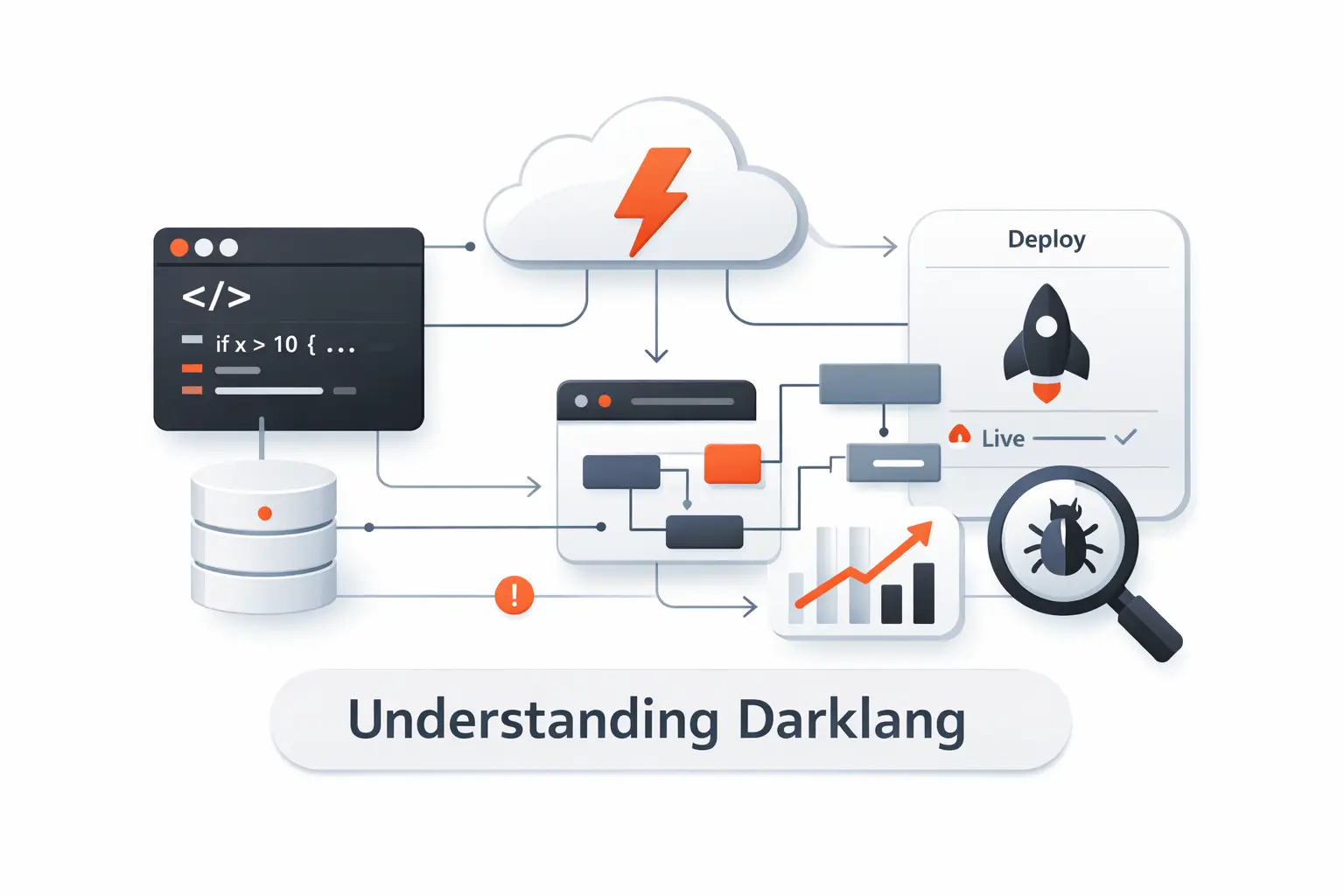
We should start with the plain version. Classic Darklang described itself as an integrated language, framework, and editor for web backends, covering REST endpoints, background workers, scheduled jobs, and persistent storage, while letting developers work from real request traces. That simple definition explains both what it was and why it stood out.
1. Modern Backend Complexity
Most backend projects force us to line up many parts before business logic even begins. We choose a framework, configure deployment, wire queues, provision a database, and try to keep local and cloud behavior in sync. Darklang existed because its creators thought that stack had become too fragmented for the kinds of apps many teams actually need.
2. A Simpler Approach to Setup, Tooling, and Deployment
Darklang’s answer was bold. You wrote code inside a canvas, created handlers for HTTP, workers, scheduled jobs, or data, and the platform made them live without a separate deployment ritual. The original team called that idea “deployless,” and it sat at the center of the product’s pitch from the start.
3. Early Interest in Darklang
That pitch drew real attention. Dark announced $3.5M in seed funding and said it had been building quietly before coming out of stealth.
The same announcement said early customers had already shipped products on Dark, including Altitude, which tells us the enthusiasm was not just theoretical. People were testing Darklang against real startup constraints, especially the need to move fast without a dedicated infrastructure team.
Recommended reading: What Is C? Understanding the C Programming Language
The Core Ideas Behind Darklang
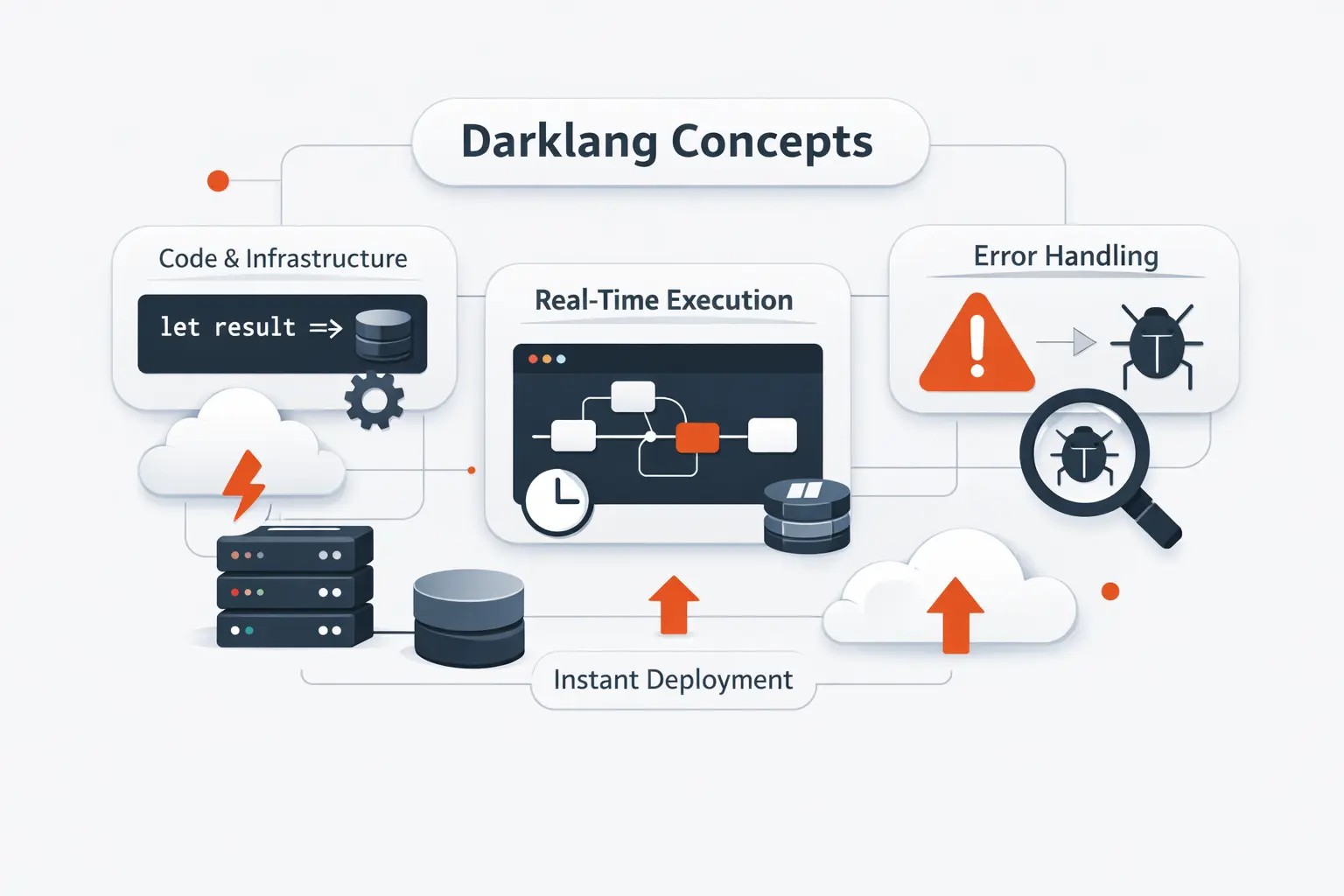
What made Darklang interesting was not its syntax alone. In our view, the real hook was the worldview. Darklang treated backend development as one continuous environment, from incoming requests to stored data to background work, and it tried to keep those pieces visible on one canvas.
1. Simplicity Over Tool Sprawl
The founders were blunt about this. The Classic FAQ said users could not keep their existing editor and tooling because the point of Darklang was the holistic environment. We do not think most teams want that tradeoff by default, but we do see why it appealed to people tired of stitching together five products before writing useful code.
2. Visual Development and Connected Components
The canvas model mattered. Handlers, datastores, REPLs, and functions lived side by side, and request traces appeared directly in the editor. That let developers click a live request, inspect values as code ran, and build against real input instead of guessing at payload shapes. For beginners, that is unusually concrete.
3. A Cloud-Native Focus on Business Logic
Darklang was never trying to be a language for every job. The docs were clear that it focused on web applications, HTTP APIs, data storage, background work, and third-party HTTP calls. Even the current site still frames the next version around instant cloud deployment, built-in DBs, endpoints, worker queues, and local or cloud execution.
Recommended reading: Computer Programming Languages: Types, Use Cases, and How to Choose
Key Components of the Darklang Platform
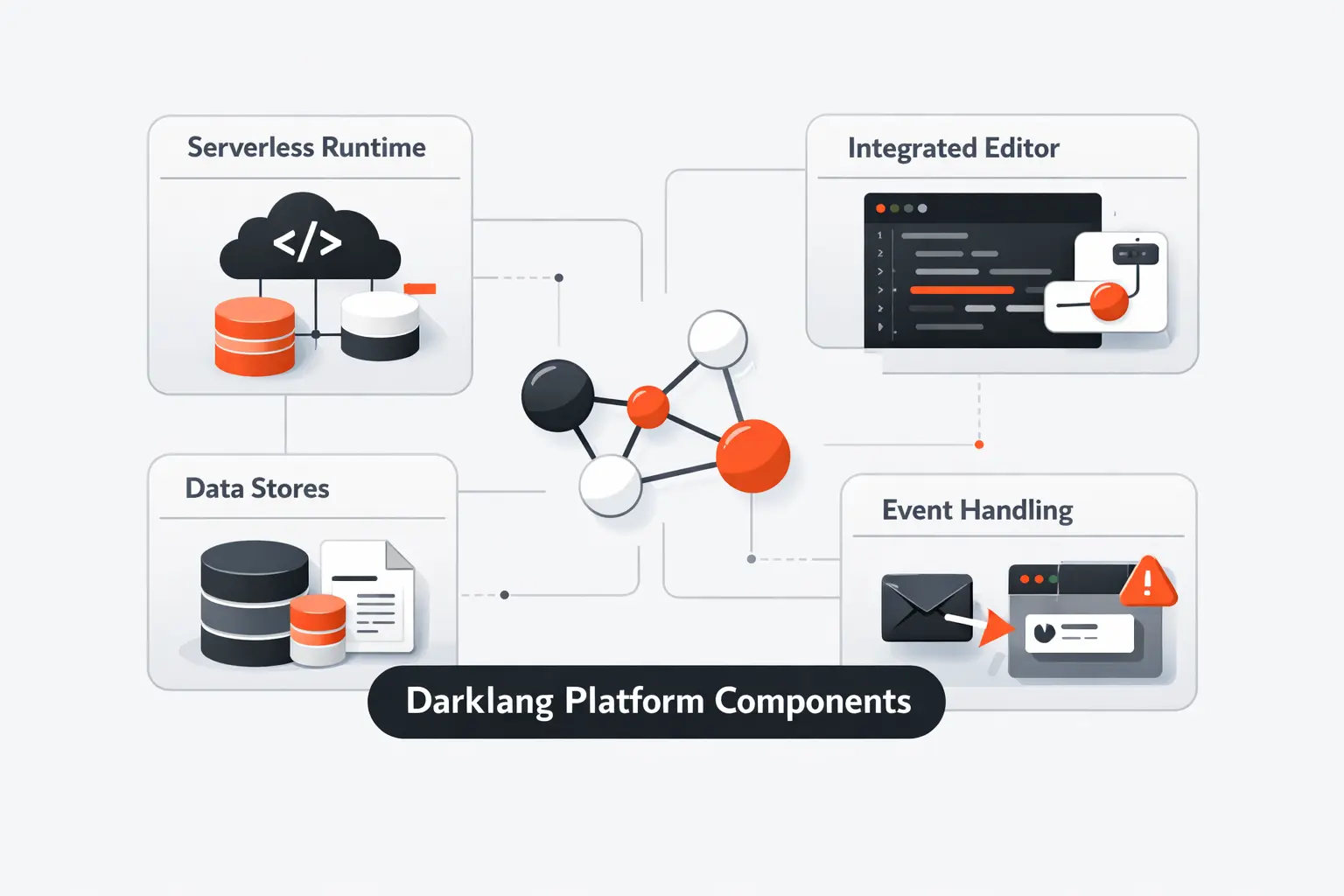
Once we strip away the pitch, the platform itself was fairly easy to describe. Darklang gave developers a small set of backend primitives and tried to make them enough. That restraint was part of the appeal.
1. API Endpoints and Reusable Functions
HTTP handlers were first-class. Requests were automatically routed to handlers on the canvas, unmatched routes were saved as traces you could turn into handlers, and dynamic path segments became variables inside the handler. In practice, that made it fast to sketch an API and then pull repeated logic into reusable functions.
2. Background Workers and Scheduled Jobs
Workers handled asynchronous jobs. Other code emitted messages into a worker queue, and the worker processed them roughly in order, though not with strict ordering or exactly-once delivery. Cron handlers covered timed jobs, but the docs also warned that schedules were approximate and overlapping runs could happen. That is useful, but it also shows Darklang was opinionated, not magical.
3. Built-In Datastores and Internal Tools
Datastores were built in as key-value stores with a declared schema, and internal REPLs gave developers a place to run manual operations. The platform also had a package system for API integrations, though the Classic docs said package publishing was still tightly controlled. So the platform felt unified, but it was not fully open-ended in the way mature ecosystems are.
Recommended reading: Hardest Programing Language: How Difficulty Works and Which Languages Challenge Developers Most
What You Can Build with Darklang
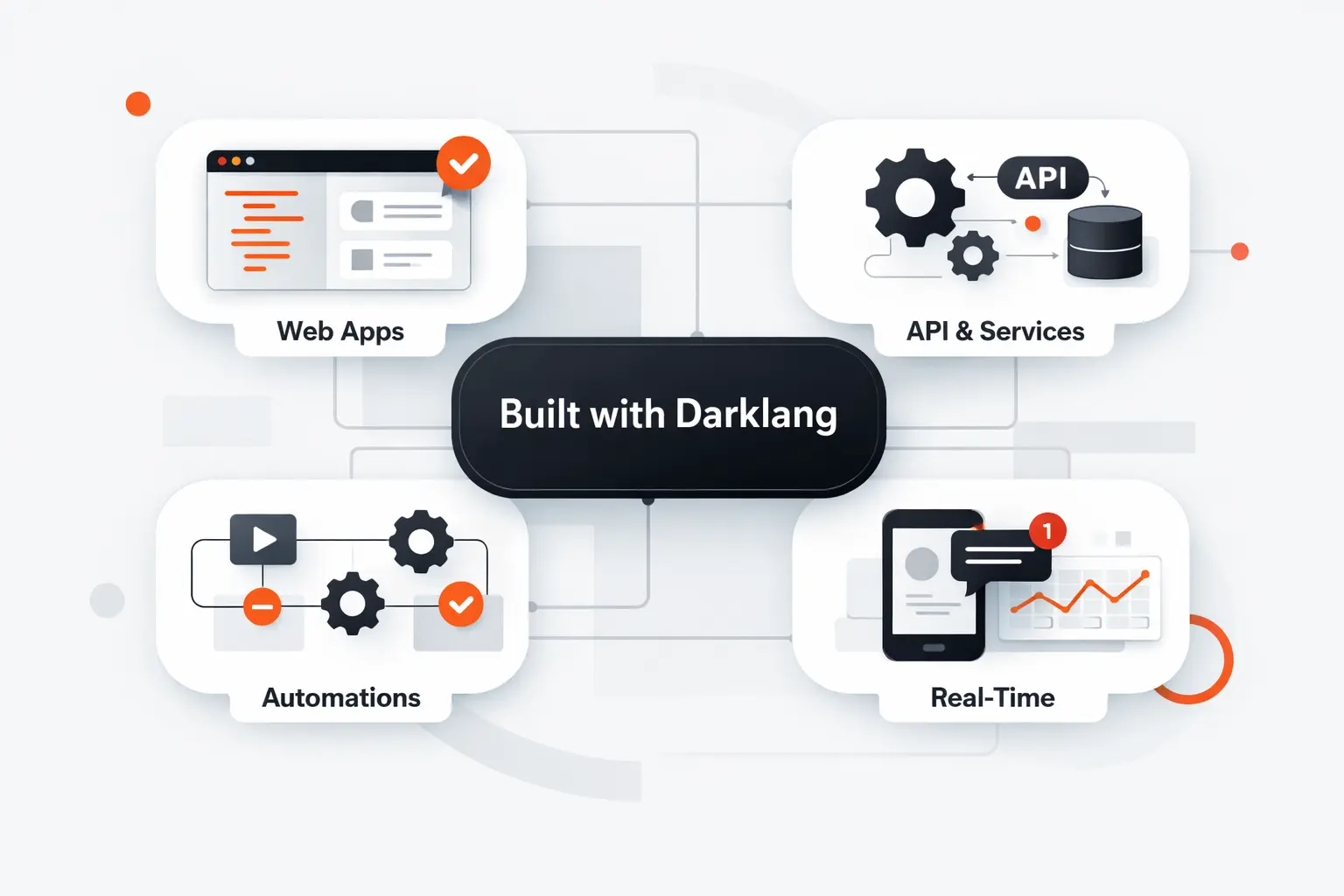
This is where Darklang gets practical. The docs never claimed it was right for everything. They said it was best for web backends that speak HTTP, store data, run background work, and talk to outside services. That is a narrower lane than “general purpose language,” but it is still a useful lane.
1. Backend Services and Simple APIs
If we needed a quick backend for a mobile app, a webhook receiver, or a modest CRUD service, we can see the appeal immediately. The Classic site pitched REST APIs, CRUD apps, internal tools, and bots as the sweet spot, and that fits what the rest of the docs show. Darklang wanted the first working endpoint to happen fast.
2. ETL and Data Processing Workflows
We also think the platform made sense for lightweight ETL work. The docs include an Airtable walkthrough that fetches records over HTTP, moves them into a datastore, and sends updates back out through a worker. That is exactly the kind of glue code many teams need and rarely enjoy writing in heavier stacks.
3. Internal Tools and Automation Workflows
Internal tooling may have been the cleanest fit of all. The Classic site explicitly called out Slack bots and internal automation, and the package docs show integrations for services like Slack, Asana, Mailchimp, and Stripe. When a product mostly reacts to webhooks, writes records, and triggers follow-up jobs, Darklang’s model looks sensible.
Recommended reading: Top Trending Programming Languages: 2026 Rankings, Hiring Demand, and What to Learn Next
The Appeal of the Dark Programming Language
We understand why the dark programming language made developers curious. It promised to cut setup time, reduce moving parts, and keep the feedback loop tight. That is a strong promise in any era.
1. Faster Project Setup
One part of the attraction was speed at the front door. In the Classic overview, a simple handler became available in the cloud as soon as it was created, and traces showed up as soon as requests hit the canvas. For founders, solo builders, and tiny product teams, that kind of immediate feedback can feel like a cheat code.
2. Fewer Tools and Dependencies
We also think Darklang benefited from a wider market mood. Forrester surveyed more than 2,000 North American developers and described low-code as a first-class development technology. Darklang was not standard low-code, in our view, but it chased the same outcome: fewer layers between intent and working software.
3. A Shorter Path from Idea to Working Software
The trace-driven model shortened the path from idea to proof. Instead of writing code, deploying it, reproducing a request, and checking logs, Darklang let developers start from the request itself and inspect live values in place. We still think that design choice is one of its smartest ideas.
Recommended reading: Web Development Languages: The 2026 Guide to Choosing What to Learn and Build With
Who May Benefit Most from Darklang
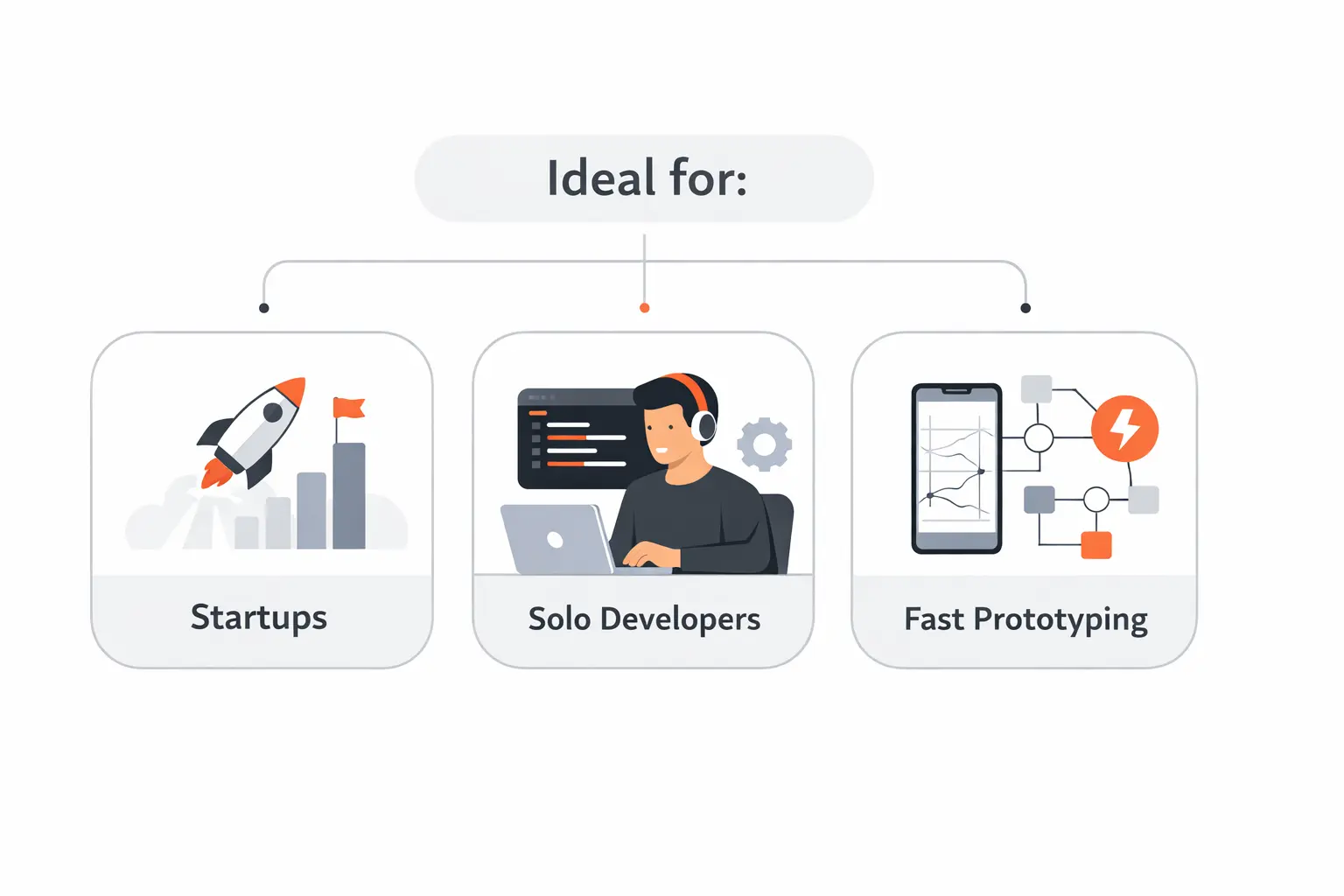
Darklang was never a universal answer. Even its own docs pushed people to use it for well-scoped web backends, not giant platforms or exotic workloads. So the better question is not who likes the idea, but who gets real leverage from its constraints.
1. New Developers with Less Infrastructure Experience
Newer developers often hit environment setup problems before they hit code problems. Darklang tried to erase much of that early pain by keeping requests, handlers, data, and background work in one place. For someone learning how backends fit together, that can make the mental model much clearer.
2. Teams Seeking Lower Development Overhead
Small teams with narrow product needs were the obvious audience. The docs repeatedly frame Darklang as a fit for modest web applications and warn that collaboration and scale were limited in Classic. That is not a flaw if your goal is a contained internal tool or a first version of a service. It becomes a problem once the team or the system grows.
3. Educators Seeking a Self-Contained Learning Environment
We can also imagine educational value here. A live, expression-based editor with traces, autocomplete, and visible values gives beginners a direct way to see cause and effect. That does not replace mainstream tools, but it can teach backend ideas without making students learn several unrelated systems on day one.
What Happened to Darklang
Here is the short version. In June 2025, Dark Inc. said it had run out of money, sold the Darklang assets to a new company formed by former employees, open-sourced the repositories, and began winding down Classic. By July 16, 2025, the Classic service said it was in limited-user mode, no longer accepted signups, and was in maintenance mode with no ongoing development.
1. Early Buzz and Attention
That outcome felt jarring because the earlier story looked promising. Dark had funding, a memorable product thesis, and a design that many developers noticed because it felt genuinely different from the usual language-plus-framework recipe. In other words, it had real buzz, not just obscurity.
2. Questions About Updates, Releases, and Public Visibility
Still, the public signals turned mixed over time. The 2025 wind-down note says Classic had not received real feature updates for years, which explains why some developers started asking whether the project was stalled. From our point of view, this is a familiar pattern. Interesting tools can survive for a long time in a gray zone between alive and growing.
3. Darklang Classic and the Shift in Direction
The new stewards did not simply keep the old plan. They moved toward open source, local-first execution, optional cloud deployment, and closer alignment with mainstream editors and AI-assisted workflows. That pivot also reflects the market around them. In Stack Overflow’s 2025 survey, 84% saying they use or plan to use AI tools helps explain why the current Darklang site now talks about Copilot, CLIs, safe execution of incomplete programs, and editor integration instead of the old hosted-only canvas story. The repo is public, but it also says the new version is not yet ready for production use.
Risks and Tradeoffs Around Darklang
We like ambitious tools, but we do not like pretending their tradeoffs do not exist. Darklang’s story makes those tradeoffs impossible to ignore. The same traits that made it distinctive also made it risky.
1. Product Maturity and Long-Term Confidence
Product maturity is the first concern. The published Classic FAQ says the team did not feel ready to call Darklang production ready, and the current GitHub repo says the next version is not ready for production use either. That is a long time to spend in an in-between state, especially for teams that need a stable platform bet.
2. Vendor Lock-In and Platform Dependence
Lock-in is the second concern. The team originally built the system as a hosted-only platform, and even after the move to open source, the docs and migration notes still say self-hosting takes work because Classic depended on their hosting assumptions. The move to the Apache License 2.0 is a meaningful improvement, but it does not erase the architectural dependence that the first version created.
3. Enterprise Adoption Concerns
Enterprise teams should be extra cautious. The Classic FAQ says Darklang was not suitable for organizations that needed serious privacy or compliance guarantees, and the usage guide framed it as a fit for limited scale and smaller teams. That does not make it bad. It makes it specific. Enterprises usually need boring confidence more than elegant ideas.
How to Evaluate Darklang for Real Projects
If a team is still curious, we would not dismiss Darklang outright. We would evaluate it the way we evaluate any niche platform, with a narrow test, a clear exit plan, and sharp questions about fit. That is the practical path.
1. Questions to Ask Before a Trial
First, ask whether your project really matches Darklang’s sweet spot. Do you mostly need HTTP endpoints, background jobs, stored records, and third-party API calls. Or do you need heavy libraries, unusual protocols, intense performance, strict compliance, or broad team collaboration. Darklang’s own docs answer those questions pretty bluntly.
2. Small Pilots Before Full Commitment
Second, run a small pilot before you make a bigger bet. We would start with an internal tool, a webhook worker, or a modest API layer. If the product begins to fight your requirements, that is useful information. If it stays calm and clear, then maybe you have found a real fit.
3. Signals to Watch in Future Progress
Third, watch the project’s signals. We would look for release cadence, clear migration paths from Classic, evidence that the local-first story keeps improving, and stronger guidance on self-hosting and production readiness. The good news is that the current project is more open than before. The hard part is proving that openness can mature into a dependable platform.
Frequently Asked Questions About the Dark Programming Language
These are the questions readers usually ask after hearing the story. We will answer them directly and keep the nuance where it matters.
1. What Is the Dark Programming Language?
Darklang is a programming language and platform that originally bundled language, editor, runtime, and cloud infrastructure for backend work. In Classic, that meant HTTP handlers, workers, scheduled jobs, datastores, traces, and a browser canvas. In the current project, the public messaging has shifted toward open source, local-first development, CLIs, optional cloud deployment, and editor integration.
2. What Can You Build with Darklang?
You can build web backends, APIs, webhook consumers, scheduled jobs, lightweight ETL flows, and internal automation. The docs consistently frame Darklang as strong for HTTP-centered business logic and weak for workloads that need specialized native libraries, extreme performance, or non-web environments.
3. What Happened to Darklang?
The original company ran out of money, the assets moved to a new employee-led company in 2025, Classic entered limited-user maintenance mode, and the new owners repositioned the project around open source and a new local-first direction.
4. Is Darklang Ready for Production Use?
Our answer is cautious. The published Classic FAQ stopped short of calling Classic production ready, and the current repo says the next version is not ready for production use. So we would treat Darklang as something to pilot carefully, not as a default stack for a mission-critical launch.
5. Why Does Darklang Get Compared with Older Programming Ideas Like Smalltalk?
In our view, the comparison comes from a shared instinct. Smalltalk emphasized an integrated development environment and a system that stayed live, while Darklang tried to unify language, environment, and runtime for backend work. They are not the same thing, but the family resemblance is easy to see.
How TechTide Solutions Helps Teams Build Custom Software
At TechTide Solutions, this is where we zoom out. Most teams do not need a clever platform for its own sake. They need software that matches their workflow, risk tolerance, and growth plan. That is the lens we use when we evaluate anything from a niche language to a very boring, very reliable stack.
1. Translating Business Goals into Custom Web and Mobile Products
We start with the job the software must do. Who uses it. What decisions it supports. Where data enters. Where it gets stuck. That keeps the project grounded. A clean mobile app or web product matters, but it only matters if the backend model reflects the real business behind it.
2. Designing Backend Systems Around Real Workflows
We design backend systems around the actual flow of work, not around whatever tool is fashionable this quarter. Sometimes that means a conventional stack with clear service boundaries, managed databases, and background jobs. Sometimes it means a faster internal tool. Either way, we favor clarity, maintainability, and an exit path.
3. Delivering Software Solutions Tailored to Specific Requirements
We do not force every project into the same mold. If a niche platform is a sharp fit, we will say so. If a proven stack is the safer answer, we will say that too. In our experience, the best software decisions come from honest fit analysis, not tool evangelism.
Conclusion: The Dark Programming Language and the Road Ahead
1. The Original Vision
We still admire the original vision. Darklang tried to remove setup, deployment friction, and infrastructure drift by treating backend development as one living system. The live traces, unified handlers, and tight loop from request to code were not gimmicks. They were thoughtful design choices.
2. The Main Reasons for Caution
The caution is just as real. The original company ran out of money, Classic moved into maintenance mode, and the next version is still not positioned as production ready. Add the historical lock-in concerns and enterprise gaps, and it becomes clear why many teams would hesitate.
3. The Practical Takeaway for Readers
Our practical takeaway is simple. Treat Darklang as a serious idea with a turbulent history, not as a punchline and not as a default bet. If your use case is small, HTTP-centered, and exploratory, it may still be worth a careful pilot. If your project needs long-term certainty, broad hiring flexibility, or hard compliance guarantees, we would choose a safer path and keep Darklang on the watch list instead.


