


If you are asking what is C, we think the cleanest answer is this: the C programming language is a small, compiled language built for writing software close to the machine. At TechTide Solutions, we still respect it because it makes memory, functions, data layout, and execution cost visible instead of hiding them behind a large runtime.
That matters beyond computer science classes. Connected devices are forecast to reach over 31 billion in 2030, and much of that world still relies on firmware frameworks, device SDKs, and native libraries where C remains the default mental model. So we will treat C as a living tool, not a relic. We will explain what it is, how it works, where it is used, and why it still earns respect from serious engineers.
What Is C?
We like to define C from both history and practice. It started in system work, yet grew into a general tool. That mix is why the language feels simple on the surface and demanding underneath.
1. The Basic Definition of C
C is a programming language designed in the early 1970s at Bell Labs as a system implementation language for Unix. That origin still explains the language better than any slogan does.
2. Why C Is a General-Purpose Procedural Language
We think the phrase general-purpose procedural scares beginners more than it should. It means you solve problems with step-by-step instructions and functions that call other functions, not with a huge framework doing magic for you. Ritchie’s history places C in the traditional procedural family, and Bell Labs later described it as useful across many kinds of software.
3. Why C Is Known for Control and Efficiency
C is known for control because it lets you work close to memory and data layout. It is known for efficiency because its abstractions are thin, and compilers can turn small amounts of source into fast native code. That is why we still see it in places where overhead is not welcome.
Recommended reading: Computer Programming Languages: Types, Use Cases, and How to Choose
Key Characteristics of C
These traits are why C survives hard engineering work. When a system must run fast, fit into tight memory, or speak clearly to hardware, C still shows its age in a good way.
1. High Performance in Critical Applications
High performance in C does not come from tricks. It comes from compilation to native code, predictable data structures, and a language that does not hide much from the programmer. That combination is why kernels, drivers, libraries, and runtime components still use it when predictable behavior matters more than comfort.
2. Low-Level Memory Access and Hardware Control
Pointers are the heart of this story. The GNU manual explains that a pointer value is the numeric address of data in memory, which is exactly why C can work so close to hardware registers, buffers, and memory-mapped devices. We teach this carefully, because the same power that enables control can also create bugs.
3. Portability across Different Systems
Portability in C is real, but it is earned. The Bell Labs history explains that portability between machines could be achieved with care, and later work on retargetable compilers helped C spread across architectures and operating systems. In practice, good C travels well when developers stay close to the standard and respect platform boundaries.
Recommended reading: Hardest Programing Language: How Difficulty Works and Which Languages Challenge Developers Most
What Is C Used For?
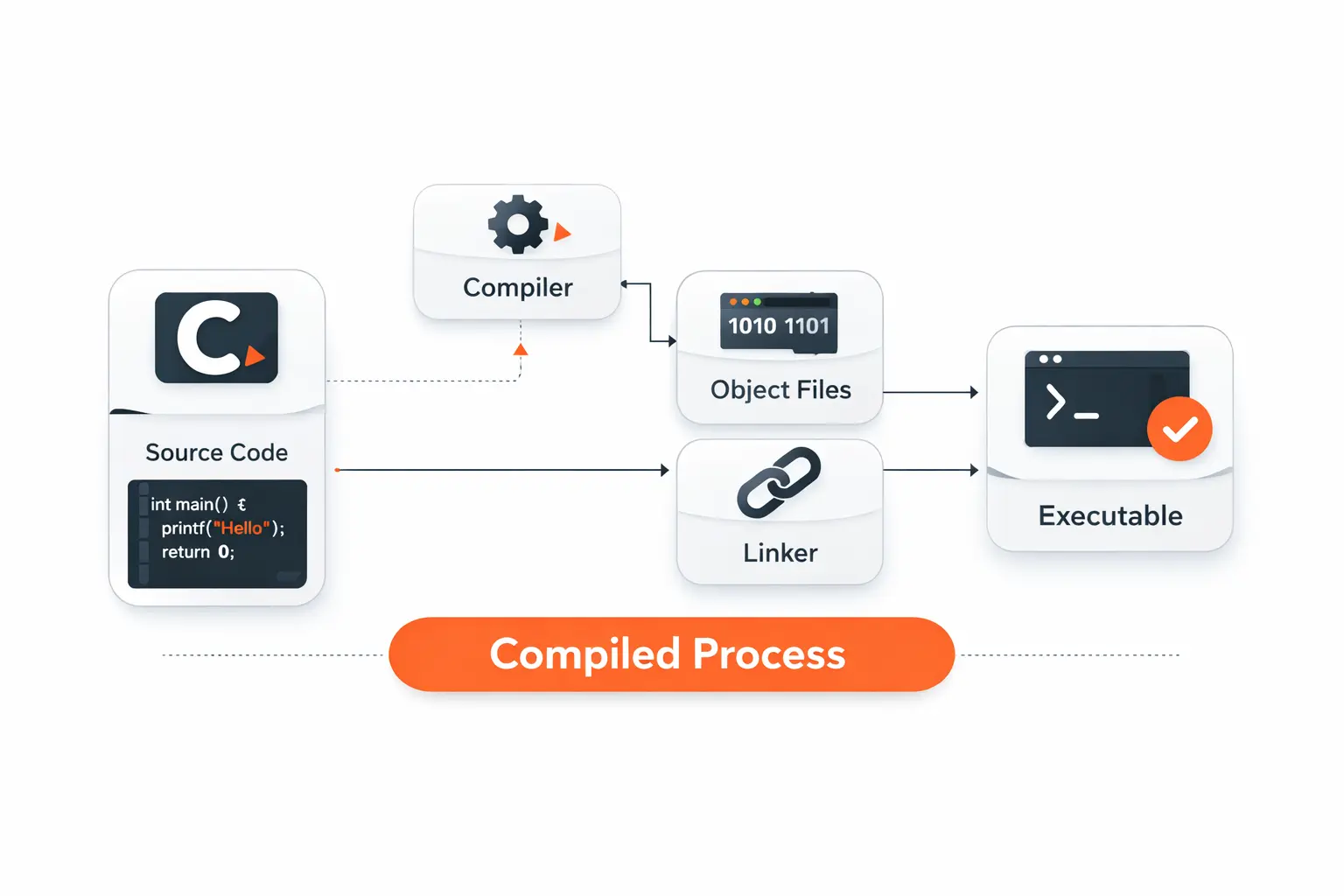
This is the section that usually makes the language click for beginners. C is not just for textbooks. It sits under operating systems, microcontrollers, libraries, databases, and countless tools we touch without noticing.
1. Operating Systems and System Programming
System software is C’s ancestral home. The kernel documentation for Linux still says the kernel is written in C and typically compiled with GCC, which tells you how central the language remains in low-level operating system work.
2. Embedded Systems and IoT Devices
We see C stay strongest where hardware is small and constraints are real. Espressif’s official framework for ESP32 chips is a good example, because it shows how embedded development still centers on C APIs, memory awareness, build configuration, and direct device interaction.
3. Games, Compilers, Databases, and Desktop Applications
Beyond kernels and firmware, C also appears in game libraries, language tools, database engines, and desktop utilities. SQLite describes itself as an embedded SQL engine, which captures C’s usual role well. It often powers the layer users never see, but depend on every day.
Recommended reading: Top Trending Programming Languages: 2026 Rankings, Hiring Demand, and What to Learn Next
How C Works as a Compiled Language
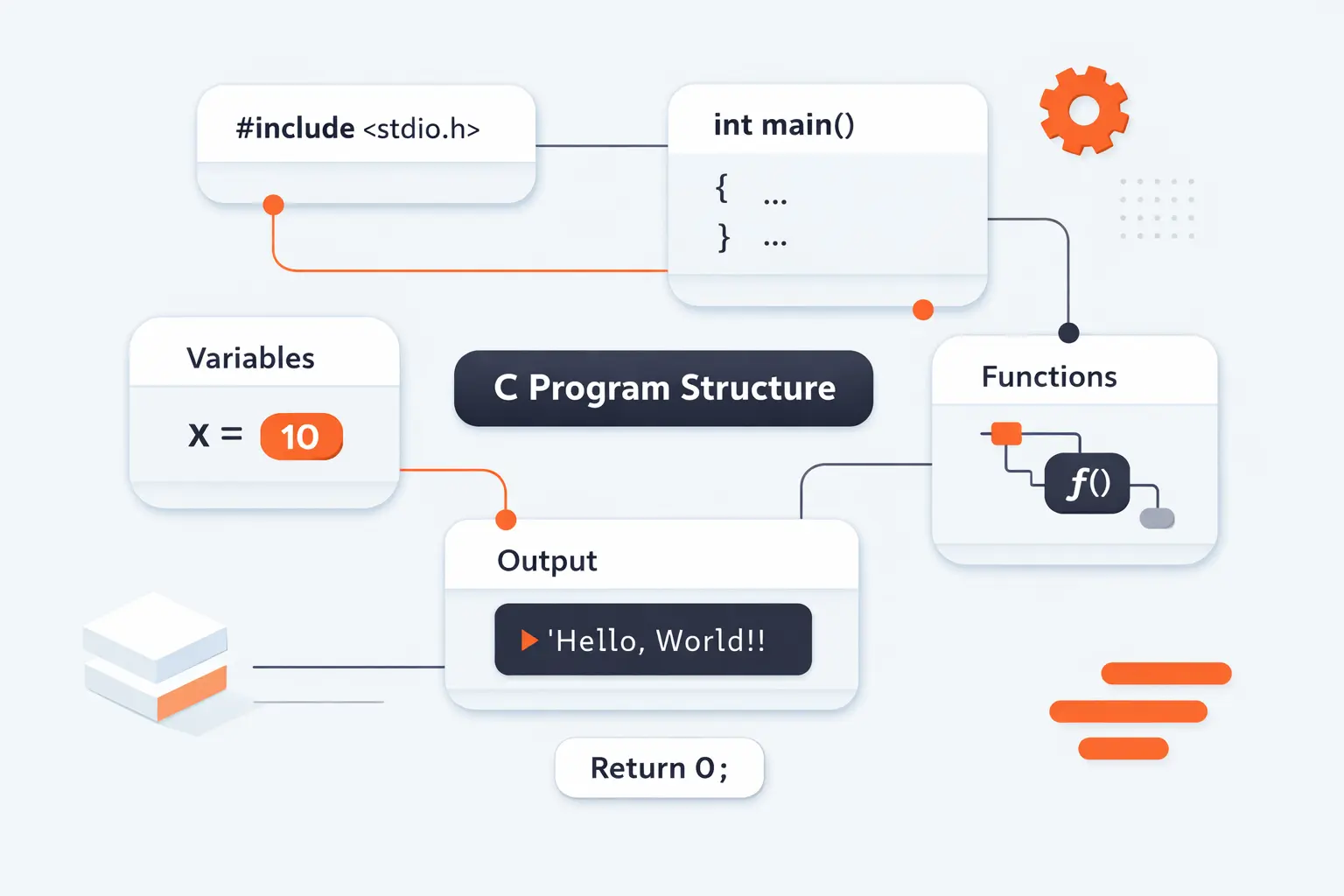
One reason C feels different from scripting languages is the build step. You write source code, run it through a compiler, and get machine code that the operating system can execute.
1. How Source Code Becomes an Executable Program
At a high level, compilation turns source files into object files and a single executable. That flow matters, because it explains why even a small C program has separate build stages.
2. What a C Compiler Does
A C compiler reads the source, checks syntax and types, works with preprocessor output, and generates code for a target machine. It may also optimize, which is why build flags matter. Even when the command looks simple, the toolchain is doing more than one job.
3. What You Need to Compile and Run C Code
To get started, you need a text editor or IDE, a compiler, and access to the needed headers and libraries. On Windows, Microsoft says MSVC works best from a developer command prompt so the toolchain can find the right paths. On Linux or macOS, GCC or Clang is a common place to start.
Recommended reading: Web Development Languages: The 2026 Guide to Choosing What to Learn and Build With
The Basic Structure of a C Program
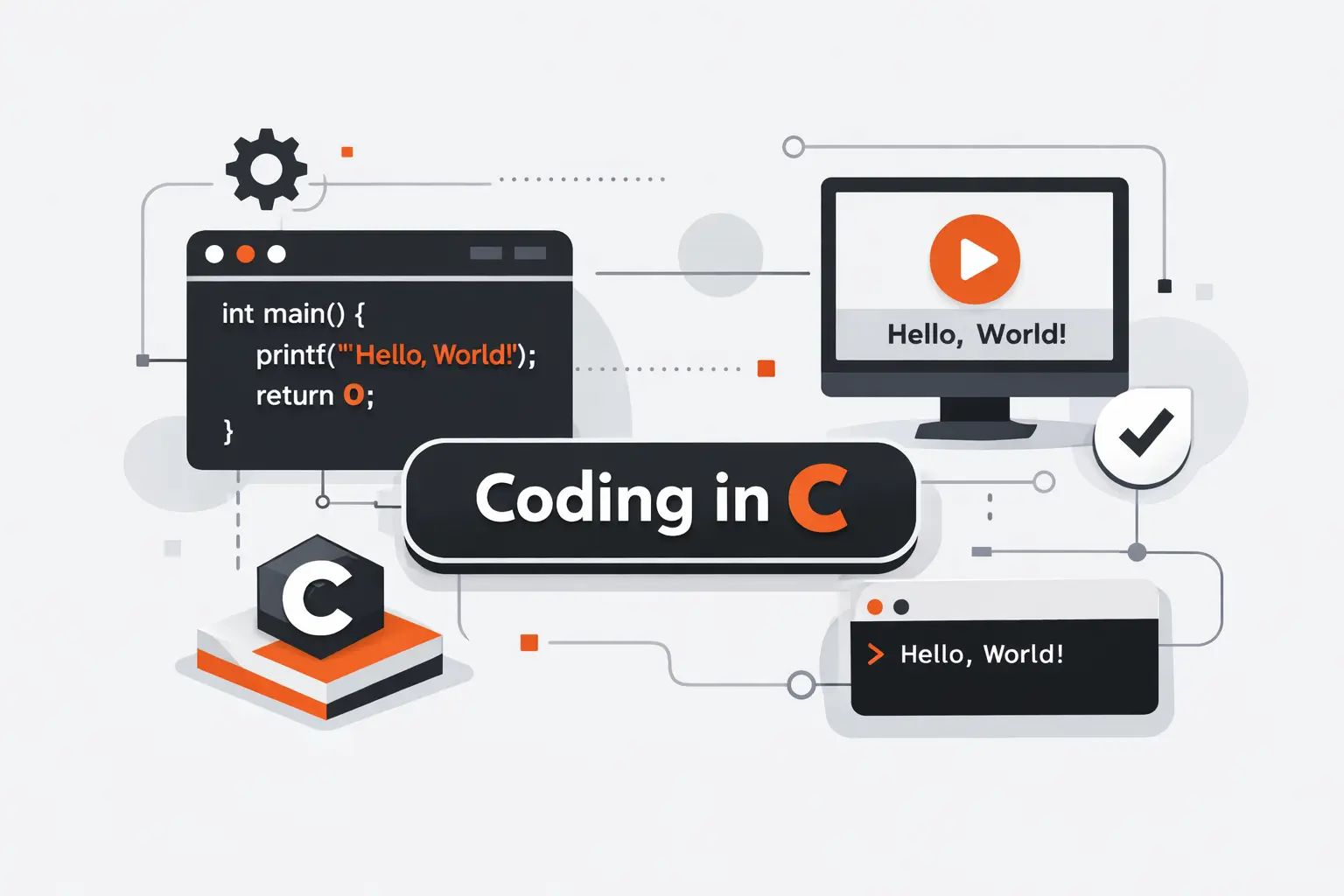
C looks strict at first, but the pattern is stable. You usually start with headers, define functions, write statements inside braces, and return a value from main.
1. Header Files and Preprocessor Directives
Lines that start with # are preprocessor directives. The GNU manual explains that preprocessing handles jobs like including header files, expanding macros, and conditional compilation before the main compilation step. That is why #include <stdio.h> appears above the rest of many programs.
2. The Main Function and Program Body
Every complete executable program needs a main function, because that is where execution begins from the programmer’s point of view. The body of main sits inside braces, and that body holds the declarations and statements that do the actual work.
3. Statements, Comments, and Return Values
Statements are the instructions C executes. Comments explain the code to people and have no effect on program behavior. The return statement ends a function immediately, and when a value is expected, it sends that value back to the caller.
Recommended reading: Ruby Programming Language: Features, Use Cases, and What’s New in Ruby 4.0
Your First Program in C
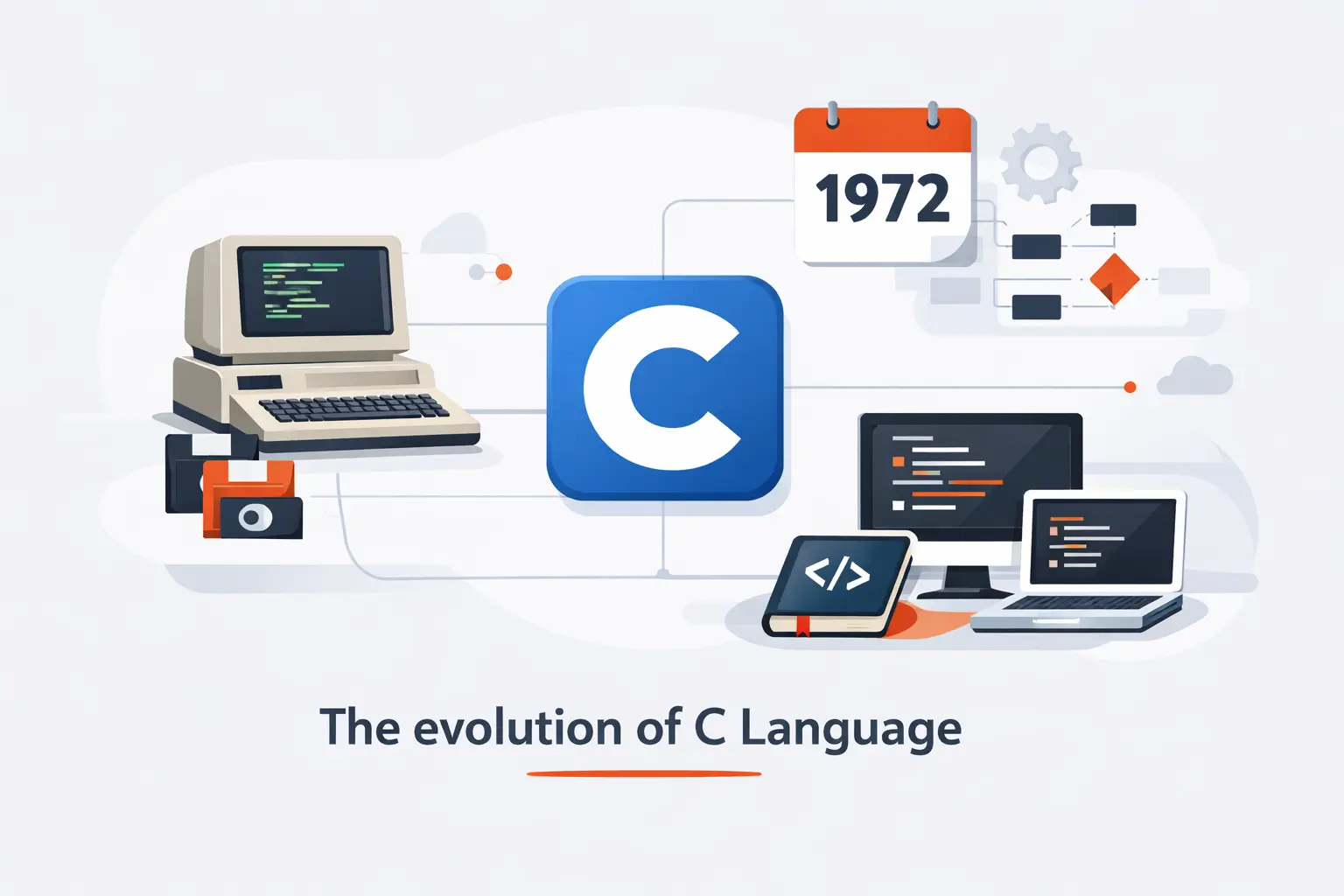
We always tell beginners to stop reading and run something small. A tiny working program teaches more than a long passive explanation.
1. Hello World in C
Here is the classic example:
#include <stdio.h>int main(void){ printf("Hello, world!"); return 0;}This example pulls in the standard I/O header, enters main, prints a line of text, and then returns a status code. It is tiny, but it already shows the shape of a real C program.
2. How the Program Produces Output
printf writes to standard output, which is why you see text in the terminal. After that, return 0 signals successful completion to the operating system. Small program, big lesson.
3. Text Editors, Compilers, and Development Environment Basics
You can learn C with a plain editor and a compiler, then move to an IDE when you want debugging and project management. Microsoft’s command-line walkthrough uses Notepad and the command line, which we like because it removes the mystery. If you can save a file and run a compile command, you can start.
The History of the C Programming Language
C has lasted because it kept solving real problems. It was not born as an academic exercise. It was built to make operating system work more practical, and that purpose still shows.
1. How Dennis Ritchie Developed C at Bell Labs
Dennis Ritchie developed C at Bell Labs while Unix was taking shape. His history explains that C grew out of earlier work with B and BCPL and was created as a practical language for system implementation, not as a classroom exercise.
2. Why C Became a Core Part of UNIX
The big shift came when Unix was rewritten in C. That made the system far easier to move between machines, and Ritchie argued that portability was the reason real growth followed. In other words, C did not spread because it was elegant alone. It spread because it solved a hard engineering problem.
3. How C Evolved through ANSI C, C99, C11, and C23
The standard did not stop with the first ANSI work. WG14’s project history shows the current standard was adopted in 2024, after later revisions refined the language, its libraries, and its portability story. That matters because modern C is still maintained, clarified, and implemented by active toolchains.
Frequently Asked Questions about C
By this point, the usual questions get much simpler. We hear the same ones again and again from beginners who want the short version without the fluff.
1. What Does C Refer to in Programming?
It refers to a specific programming language named C, which followed B and became central to Unix and systems software. The name is short, but the influence is huge.
2. How Would You Explain C to a Beginner?
We would call it a language that lets you tell the computer what to do with very little cushioning. You write functions, control memory more directly, compile the code, and get a native program at the end.
3. Is C a Compiled Language?
Yes. In normal practice, C source files are compiled into object files and then linked into an executable program.
4. What Is C Used For?
If someone asks us what is C used for, our short answer is this: systems, firmware, libraries, databases, drivers, and utility software. Linux, ESP32 development, and SQLite are easy examples of that spread.
5. Why Is C Still Used Today?
Because it gives tight control over memory, maps cleanly to hardware, and stays portable when engineers write with care. It also carries decades of compilers, libraries, and production code behind it.
6. What Tools Do You Need to Start with C?
Start with a text editor, a compiler, and a terminal. Add a debugger and a build system as your projects grow. That is enough to learn the fundamentals the right way.
How TechTide Solutions Builds Custom Software Solutions
This part is our house view. At TechTide Solutions, we do not force low-level technology into high-level business problems. We match the stack to the job, the users, and the performance limits that actually matter.
1. Custom Planning around Business Requirements
We start with goals, workflows, constraints, integration points, and failure risks. If a product truly needs native speed or low-level control, we may choose C for the right layer. If it does not, we will not force it just because it sounds impressive.
2. Web, Mobile, and Software Development for Specific Use Cases
Most real products need a mix of technologies. We often combine web or mobile interfaces with APIs, databases, automation, and native components, choosing each part for a specific reason. That keeps the system easier to maintain and easier to explain.
3. Scalable Solutions for Performance and Growth
When growth becomes the challenge, we look at the exact pressure points: response times, memory use, background jobs, query cost, traffic spikes, and device limits. Then we improve code paths, data access, caching, and deployment choices based on measurements, not wishful thinking.
Final Thoughts on What Is C
1. The Core Ideas to Remember about C
If you remember only the essentials, remember this. C is small, procedural, compiled, and close to memory. You write functions, include headers, manage data carefully, and build source into a native program.
2. The Biggest Reasons C Has Endured
C endured because it found a rare balance between efficiency and portability. It gave engineers enough control to replace assembly in many places, but enough structure to carry large codebases across systems. We think that balance, not nostalgia, is the real reason it still survives.
3. Where to Go after Learning the Basics
After the basics, write small utilities, read simple library code, and practice compiling from the command line until the build process feels ordinary. Learn pointers slowly. Learn debugging early. If you do that, C stops looking intimidating and starts feeling honest.

