


We do not think a list of the hottest AI startups should read like a hype parade. At TechTide Solutions, we care about a narrower question: which companies are actually useful when a buyer needs to pick a platform, a workflow tool, or an infrastructure partner that can survive contact with real teams, real data, and real budgets.
Quick Comparison of Hottest AI Startups
If you only have a few minutes, start here. We use this table to cut through the noise fast and spot which tools belong on a serious shortlist for buyers, builders, and enterprise teams.
| Tool | Best for | From price | Trial/Free | Key limits |
|---|---|---|---|---|
| OpenAI | Broad enterprise AI | Paid plans | Free trial | API billed separately |
| Anthropic | Careful reasoning work | Paid plans | Free tier | Team needs 5 seats |
| Perplexity | Web research | Paid plans | Limited free | API separate |
| Cursor | AI coding | Paid plans | Free hobby | Usage overages |
| Databricks | Governed data + AI | Free / paygo | 14-day trial | Free edition quotas |
| Mistral AI | Open model flexibility | Free / paygo | Free plan | Admin features gated |
| xAI | Large-context Grok API | Paygo | Consumer app separate | Spend-based tiers |
| Glean | Internal search | Custom | Demo | Best at broad rollout |
| Harvey | Legal AI | Custom | Demo | Legal-only fit |
| Cohere | Private enterprise AI | Trial / paygo | Free trial key | Trial keys not for prod |
Recommended reading: Top 20 Engineering Project Management Software Tools for Engineering Teams and Firms
Top 20 Hottest AI Startups Worth Shortlisting in 2026
We did not rank these companies by valuation gossip alone. We ranked them by buyer heat, product depth, and how likely they are to matter once you move from experimenting to buying, building, and rolling out AI at work. That question matters because Gartner forecast worldwide generative AI spending would reach $644 billion in 2025, which tells us buyers are funding real programs, not just pilot decks.
1. OpenAI
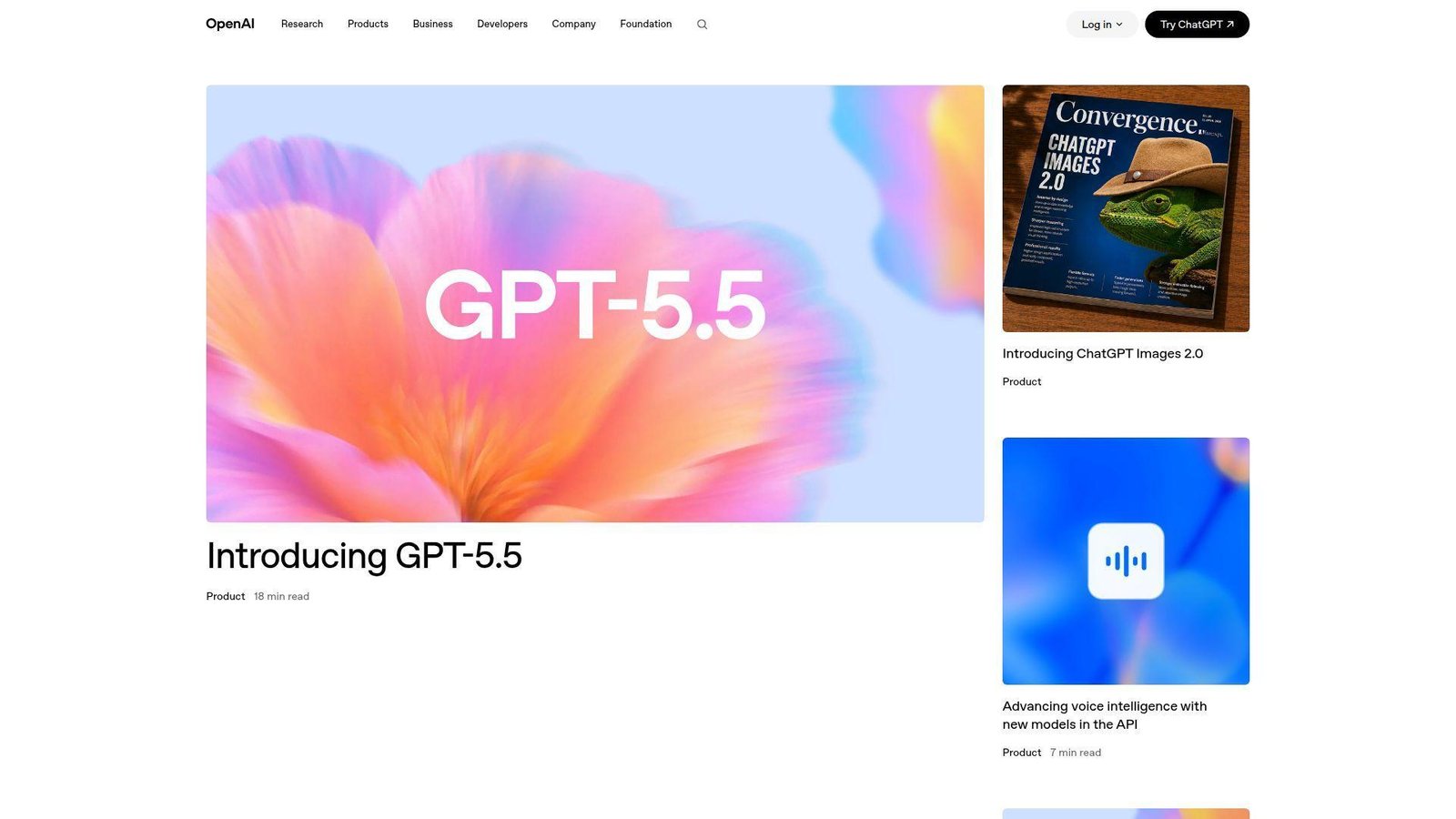
OpenAI is still the clearest example of a lab that became a full product company. Its team now spans research, chat workspaces, enterprise sales, and developer APIs, which matters because buyers increasingly want one vendor for multiple AI jobs. Best for: enterprise product teams and software startups that want one stack for internal copilots and customer-facing AI.
- ChatGPT Business plus shared workspaces and advanced analysis turns scattered files into answers your team can act on.
- API tools like web search, containers, and realtime services remove several integration steps before the first serious prototype.
- Self-serve setup is fast, so many teams get useful output on day one and a production pilot in the next sprint.
Pricing & limits: From $20 per user per month for ChatGPT Business on annual billing, with a free trial. Business includes unlimited messages under abuse guardrails, a 32K non-reasoning context window, and a 196K reasoning context window. Enterprise pricing is custom, and API billing is separate.
Honest drawbacks: OpenAI’s breadth can create governance headaches fast. Costs also climb when teams mix seat licenses, premium models, and API traffic. It beats xAI on enterprise maturity, but Anthropic often feels steadier for cautious long-form drafting.
Verdict: If you want the broadest all-around AI shortlist candidate, this helps you move from pilot to real adoption in weeks, not quarters.
2. Anthropic
Anthropic feels more opinionated than OpenAI, and for many buyers that is a strength. The company and its Claude team lean hard into reasoning quality, admin controls, and enterprise trust. Best for: legal and finance knowledge workers, plus engineering teams that want a more deliberate writing and analysis partner.
- Extended thinking and Projects help analysts work through long briefs with less prompt babysitting.
- Google Workspace connections and remote MCP support reduce copy-paste work across docs, email, and internal tools.
- The Team plan gets small groups moving quickly, then hands off to SSO, SCIM, and audit controls when rollout expands.
Pricing & limits: From $25 per user per month on annual Team billing, or $30 monthly. Team requires at least five members. When users hit included limits, admins can enable extra usage at standard pricing. Enterprise pricing is custom.
Honest drawbacks: The five-seat minimum is awkward for tiny teams. Usage caps can still feel less transparent than straight API billing. It beats OpenAI at restrained drafting for many buyers, but Cursor is still the better pure coding surface.
Verdict: If you care about careful reasoning, safer rollout, and strong enterprise controls, this helps you get dependable results fast without feeling reckless.
3. Perplexity
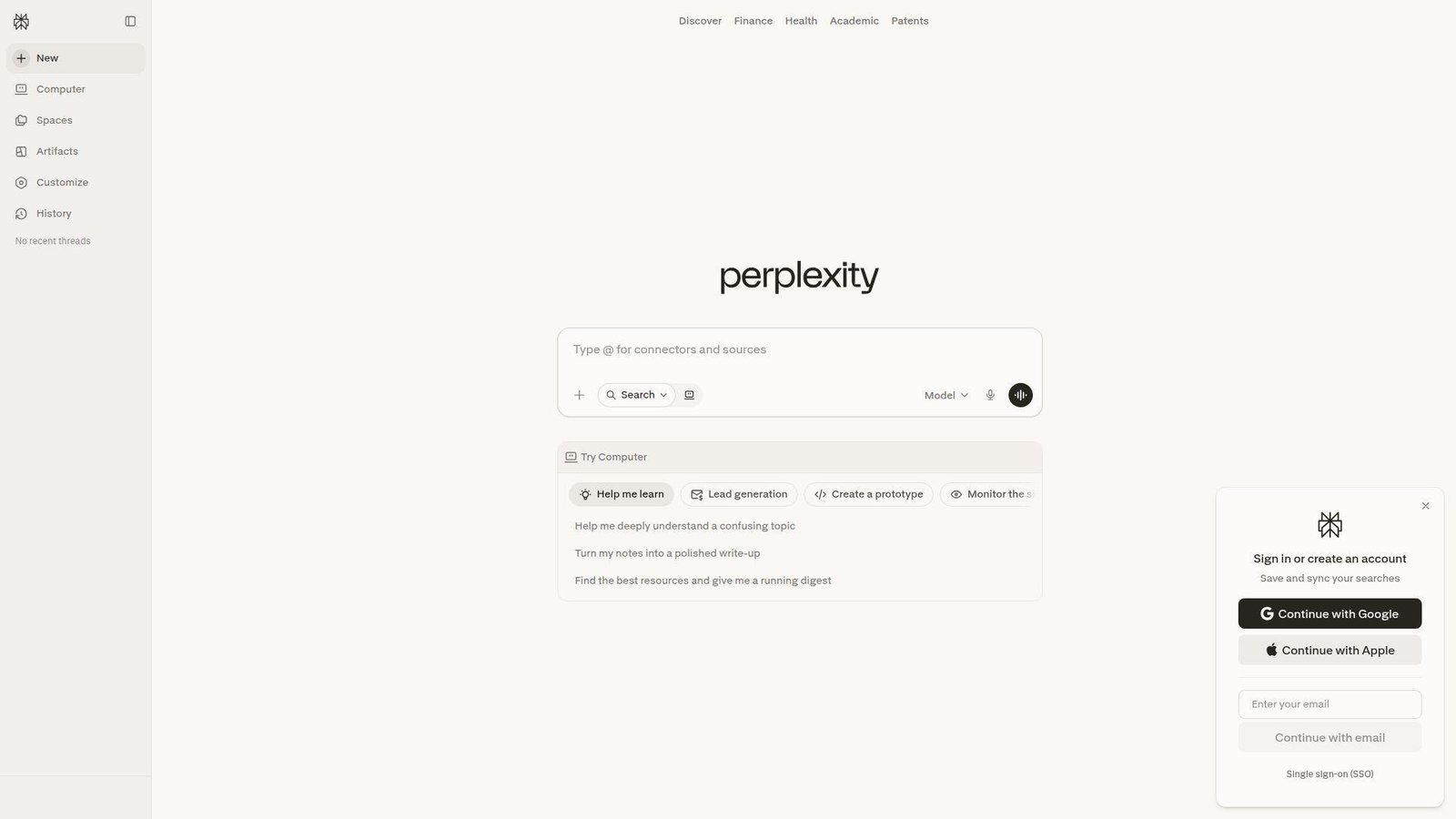
Perplexity turned answer-engine UX into a real software category. We see it less as a generic chatbot and more as a research surface built around speed, sources, and decision support. Best for: strategy teams, analysts, and operators who live in browser tabs and need sourced answers quickly.
- Pro search and file analysis make it easier to move from vague question to cited briefing without juggling three tools.
- Model switching and API access options cut down the time spent re-running the same query across different vendors.
- The web app is simple enough that most teams can test a real workflow the same day they buy seats.
Pricing & limits: From $40 per seat per month for Enterprise Pro, or $400 per year. Enterprise Max jumps much higher. API credits are billed separately, and enterprise seats have their own billing rules and onboarding terms.
Honest drawbacks: Perplexity is stronger on open-web research than internal knowledge. Citations help, but they do not replace judgment. It beats ChatGPT at fast sourced answers, but trails Glean when the answer lives behind company permissions.
Verdict: If your goal is faster market research and better-informed decisions, this helps you cut hours of browsing down to one review pass.
4. Cursor
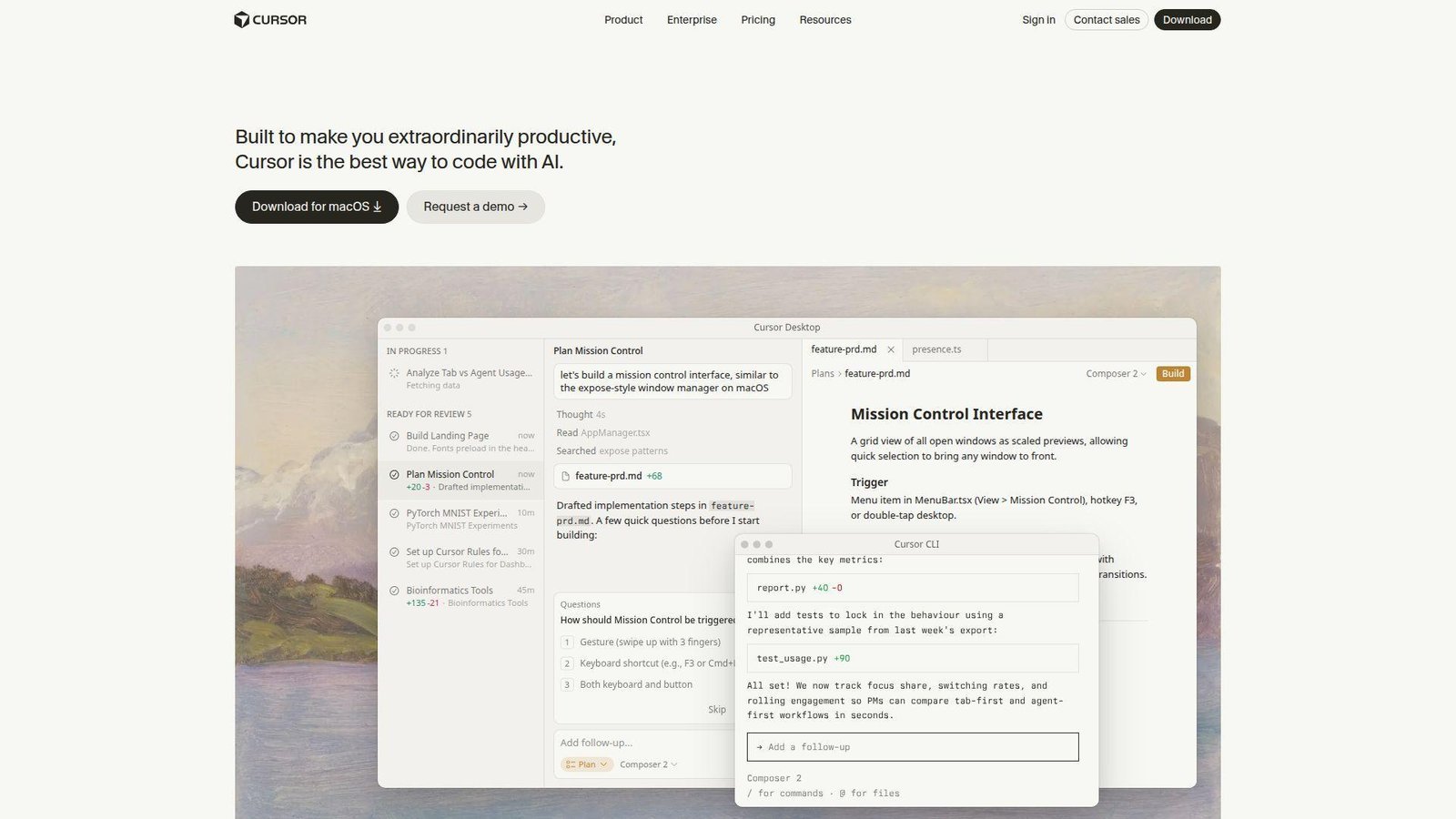
Cursor has gone from coder obsession to serious buyer conversation because it focuses on developer flow, not generic chat. The early team pedigree shows in the product. Best for: startup engineers and software product teams that want AI directly inside the coding loop.
- Repo-aware agents and chat help developers inspect code, patch bugs, and draft changes without bouncing between tools.
- Shared chats, commands, rules, and admin controls save handoff time and make team-wide coding patterns easier to enforce.
- Privacy Mode and team controls mean many dev teams can see value inside an hour, then expand carefully into background agents.
Pricing & limits: From $20 per month for Pro. Teams starts at $40 per user per month, includes $20 of monthly usage per seat, and adds centralized billing, analytics, and SSO. Enterprise is custom. Background agents and Max mode can create extra usage costs.
Honest drawbacks: Max mode costs can surprise teams that do a lot of heavy reasoning. Background agents also deserve a real security review before broad rollout. Cursor beats most general copilots on code flow, but Databricks is still better when governance is the main issue.
Verdict: If you want developers shipping code faster without leaving the editor, this helps you get first measurable wins in the next sprint.
5. Databricks
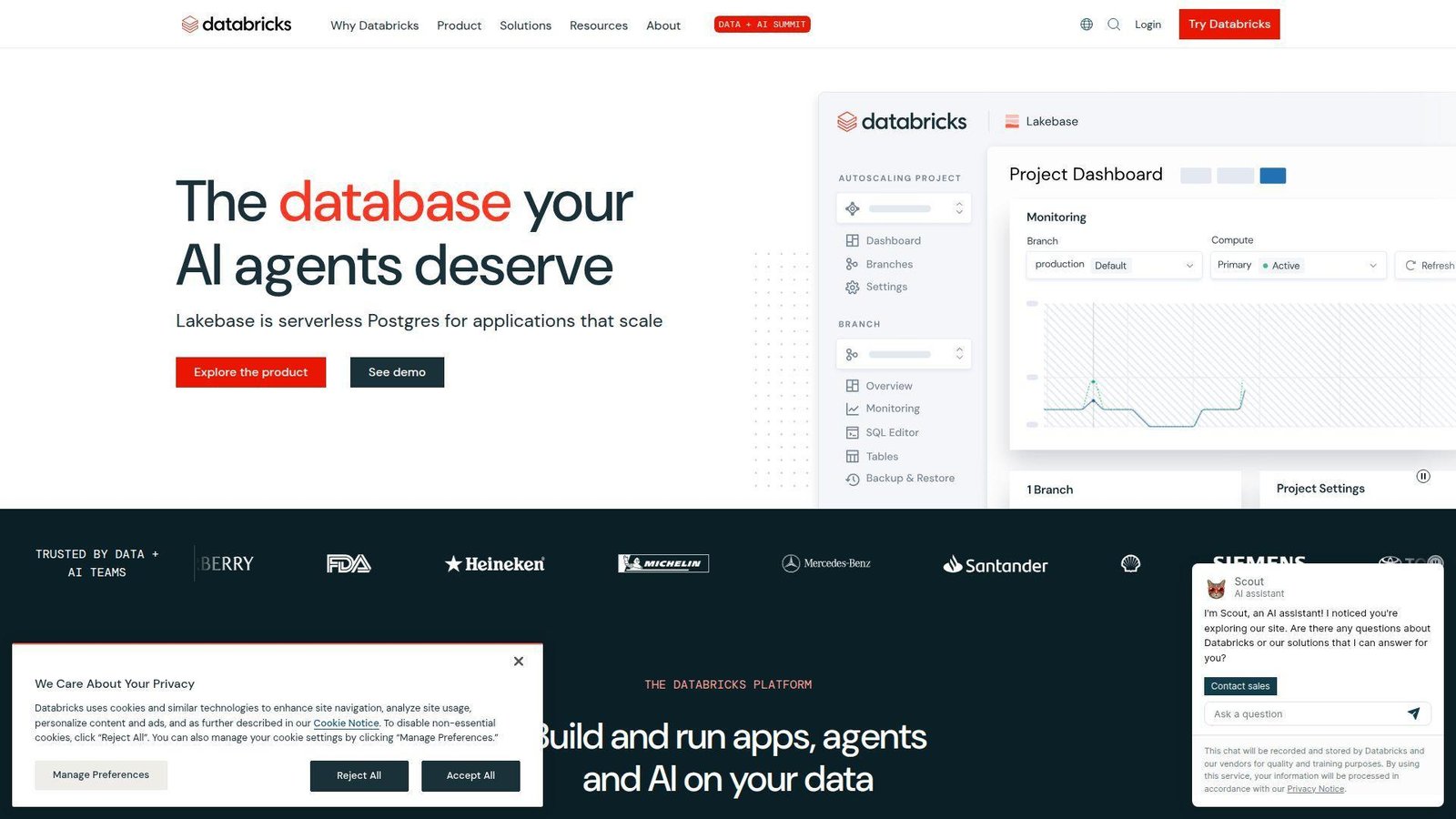
Databricks is no longer just a lakehouse story. The company now wants to be the governed home for data engineering, analytics, and AI apps. That broader ambition is why we keep it near the top of this shortlist. Best for: data platform leaders and enterprise AI programs that already care about governance.
- Lakehouse architecture plus Unity Catalog gives teams one place to manage data, models, dashboards, and AI assets.
- Agent Bricks and adjacent AI tooling remove handoffs between experimentation, evaluation, deployment, and monitoring.
- If your data already lives here, first value can come quickly because you are extending an existing platform instead of replacing one.
Pricing & limits: From $0 with Databricks Free Edition, and the formal free trial provides credits for 14 days. Free Edition is serverless-only, quota-limited, has no SLA, and allows one Databricks App per account. Production pricing is usage-based.
Honest drawbacks: Databricks can be too much platform for a small app. Teams new to its billing and architecture need real design discipline or costs get muddy. It beats point tools at governed scale, but Lovable is obviously faster for raw prototype speed.
Verdict: If your AI roadmap depends on governed data, this helps you move from scattered pilots to a real operating platform without re-platforming later.
6. Mistral AI
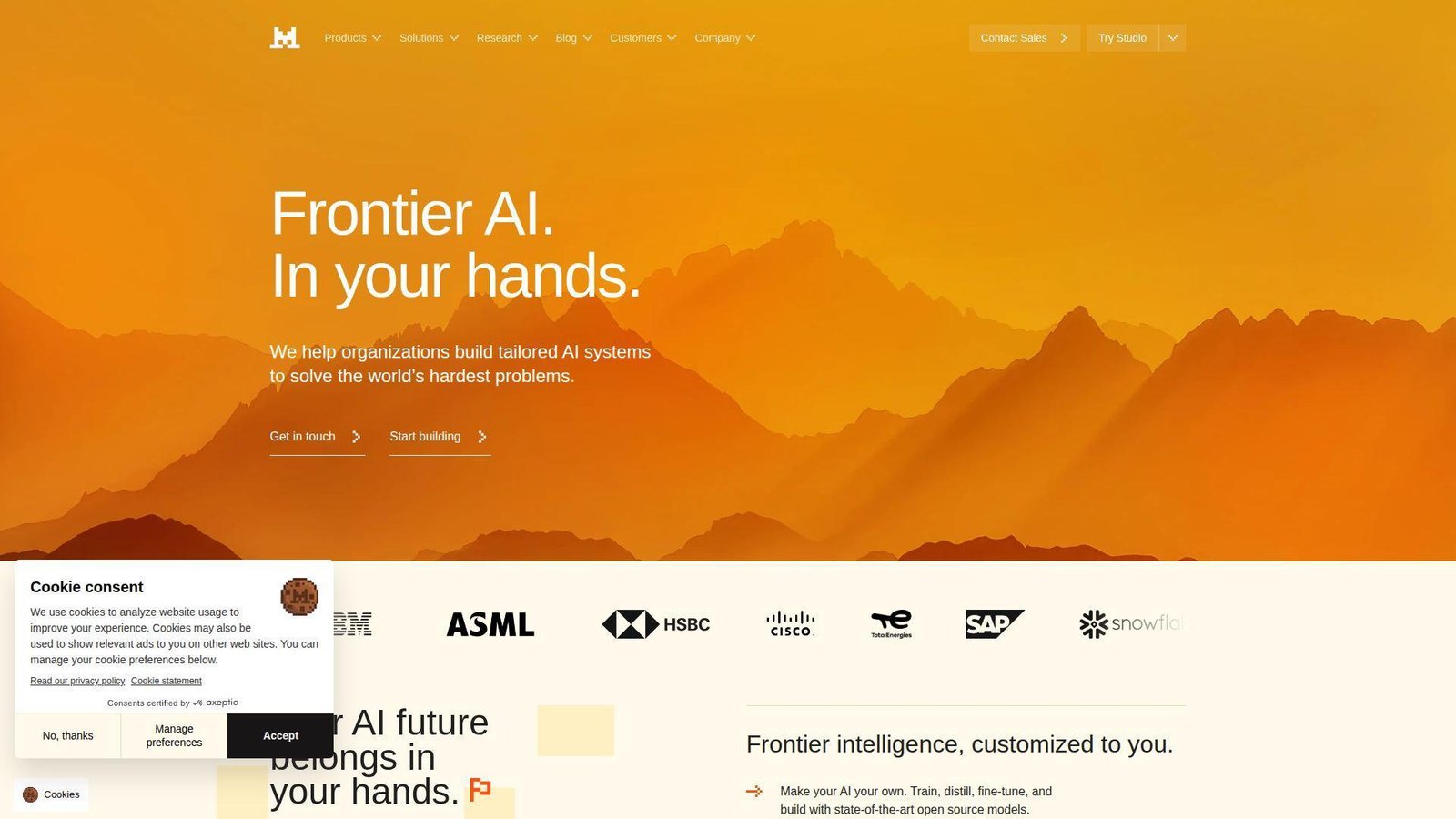
Mistral AI is one of the few frontier labs that still feels strategically distinct. The Paris-based team pushes efficient models, open releases, and flexible enterprise deployment options. Best for: European enterprises, platform teams, and buyers who want more control over how they deploy and mix models.
- Open and efficient model strategy gives builders more room to fine-tune cost, latency, and deployment choices.
- Le Chat combines search, projects, memories, image generation, and connectors, which turns it into more than a demo bot.
- Teams can start with the free assistant on day one, then expand into API and enterprise controls when the workflow is proven.
Pricing & limits: From $0 per month on the free Le Chat plan. Free includes access to flagship models, image generation, projects, and up to 500 memories. Pro adds more messages, more research capacity, up to 15GB of document storage, and up to 1,000 projects.
Honest drawbacks: The enterprise ecosystem is still smaller than OpenAI’s. Admin and security depth grows as you move up-market, so procurement needs may outgrow the free experience quickly. It beats xAI on openness, but Anthropic still feels more polished for conservative enterprise buying.
Verdict: If you want frontier capability with a stronger control story, this helps you validate a serious path without locking your whole strategy to one closed stack.
7. xAI

xAI ships like a company in a hurry. That can be a feature or a headache, depending on your team. Its Grok lineup is moving fast on context size, tooling, and multimodal APIs. Best for: builders who want frontier capability and can tolerate a platform that changes quickly.
- A very large context window makes long documents, complex codebases, and bigger agent prompts less painful to manage.
- The API supports tools, voice, images, and OpenAI-style integration patterns, which cuts adapter work for developers.
- Spend tiers unlock automatically, so teams can start small and ramp without a long procurement loop.
Pricing & limits: Usage is pay-as-you-go, with Grok 4.3 listed at $1.25 per 1M input tokens and $2.50 per 1M output tokens. API rate tiers are tied to cumulative spend, and provisioned throughput uses a 30-day minimum commitment.
Honest drawbacks: Product shifts can force extra testing. Consumer Grok and the API are separate products, which can confuse buying conversations. xAI beats many peers on large-context experimentation, but OpenAI and Anthropic still feel stronger for conservative enterprise governance.
Verdict: If you want fast-moving frontier APIs and can handle change, this helps you test ambitious workloads quickly and learn fast.
8. Glean
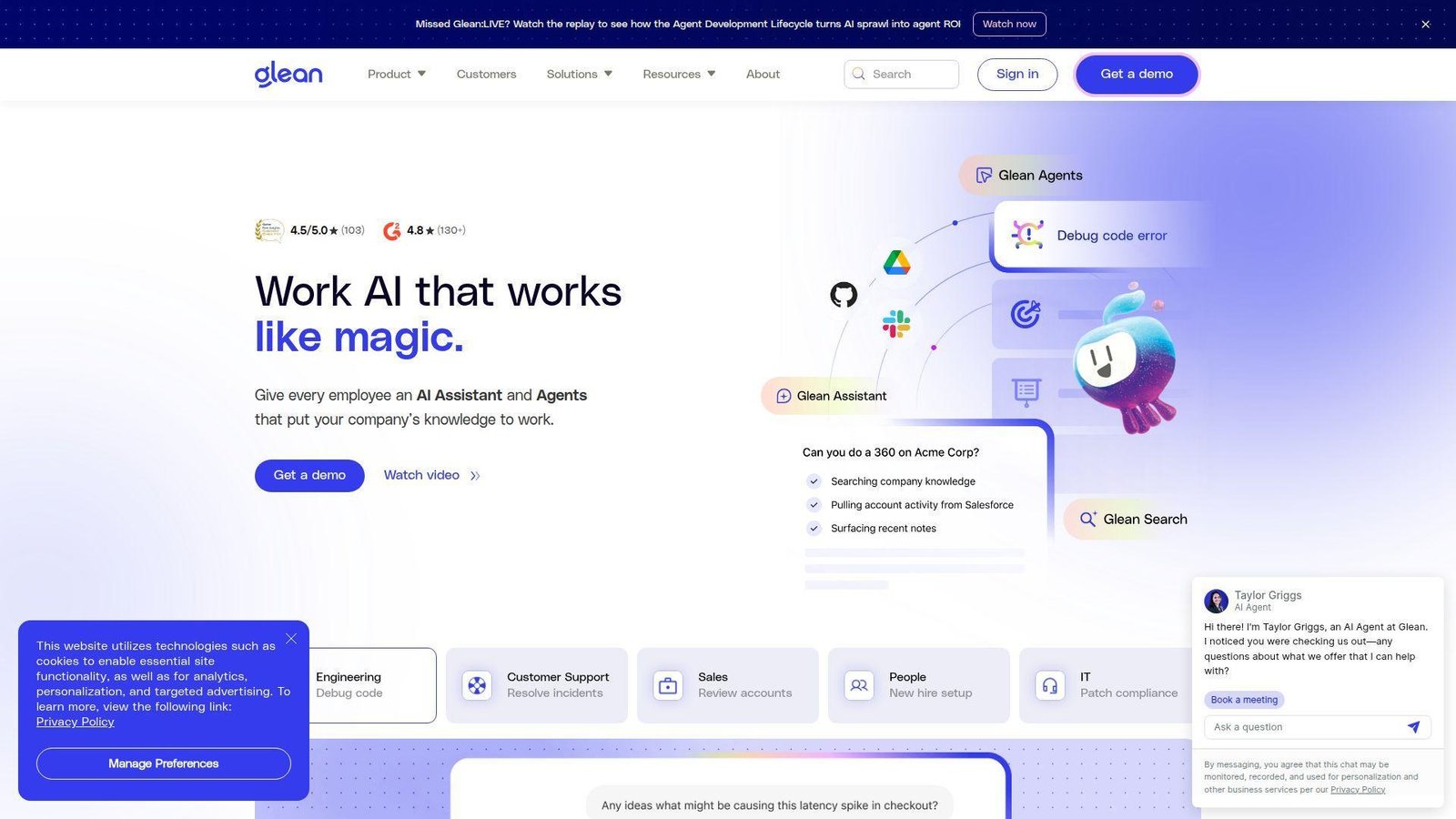
Glean was founded by former Google search engineers, and that background shows. It is built for enterprise context, permissions, and internal relevance rather than open-web curiosity. Best for: mid-market and enterprise teams that lose too much time hunting across docs, chat, tickets, and people.
- Permissions-enforced search across more than 100 apps gives employees a real chance of finding the answer on the first try.
- Assistant and agent tooling sit on top of that graph, which cuts down on manual copying between search, drafting, and follow-up actions.
- Once connectors and identity rules are mapped, teams usually feel first value quickly because the core problem is so visible.
Pricing & limits: From custom pricing. We did not find a public self-serve trial for the full platform. Operationally, Glean says most connected apps update within about 15 minutes, with slower windows for some restricted systems like Zendesk and Salesforce.
Honest drawbacks: Glean works best when rolled out broadly, which raises both budget and change-management work. If identity and permissions are messy, results can feel noisy. It beats Perplexity at internal search, but Writer is still stronger when brand governance is the center of the buying case.
Verdict: If your team wastes time searching for internal truth, this helps you shorten the gap between question and answer almost immediately after rollout.
9. Harvey
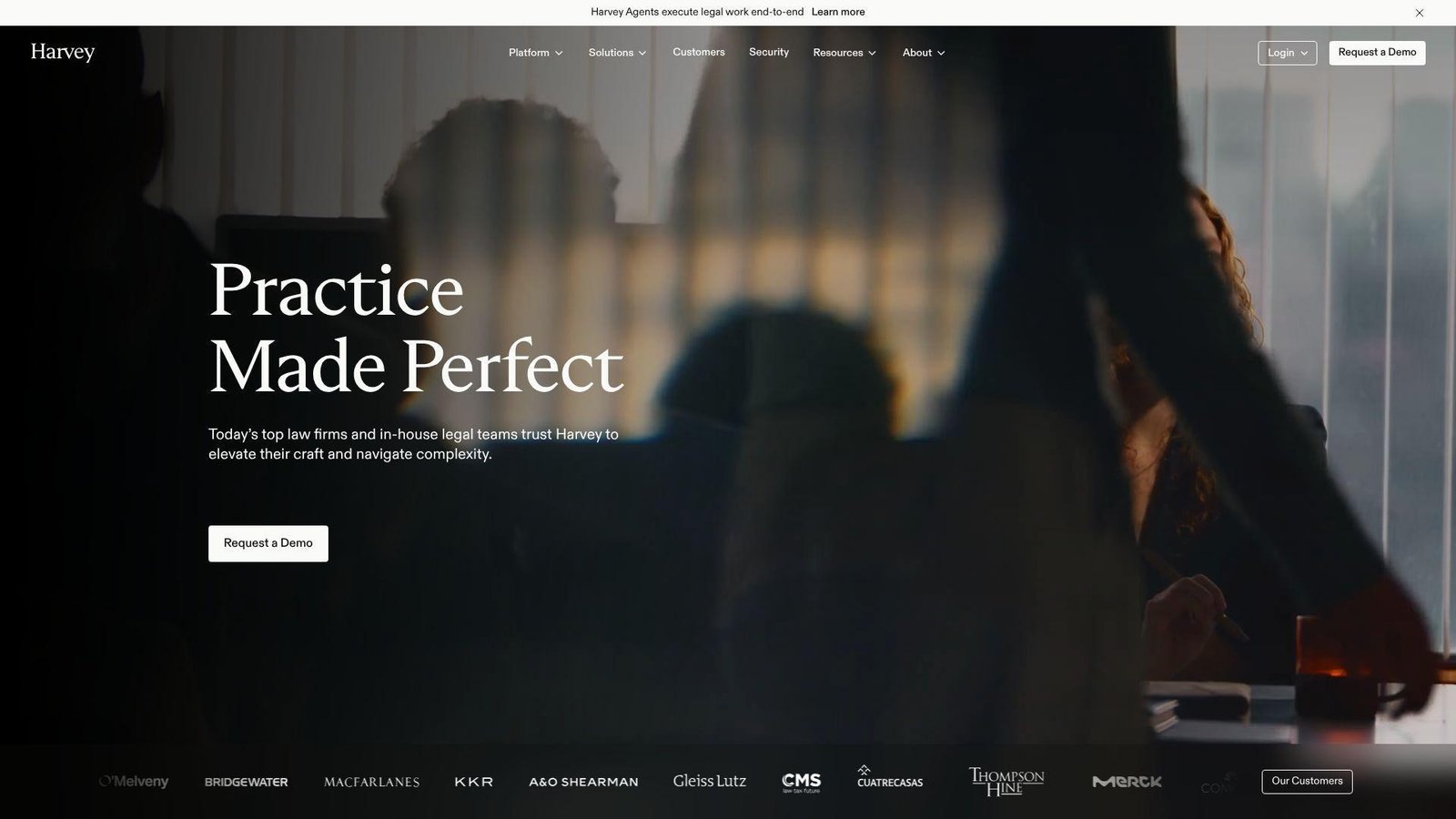
Harvey is one of the best arguments for vertical AI. The company built for legal and professional services first, then expanded its platform around real practice workflows. Best for: in-house legal teams and law firms that need legal-specific research, drafting, and document work rather than a generic chatbot.
- Assistant supports legal research, drafting, and source-grounded analysis in one interface, which keeps lawyers in one workflow longer.
- Vault, Knowledge, and Workflow Agents reduce the manual shuffling of contract sets, research files, and repeatable legal tasks.
- Pilots can start with one practice group, so teams often feel value early without forcing a firm-wide rollout on day one.
Pricing & limits: From custom pricing. Harvey routes buyers into a demo-led sales process, and on the official pages we reviewed we did not find a public self-serve price or public trial plan.
Honest drawbacks: The legal focus is the point, but it also narrows the fit. Smaller firms may find the rollout heavy. Harvey beats general LLMs on legal depth, but OpenAI still has broader horizontal utility across the rest of the company.
Verdict: If you want AI that is tuned to legal work instead of loosely adapted to it, this helps you get from research to draft with less cleanup.
10. Cohere
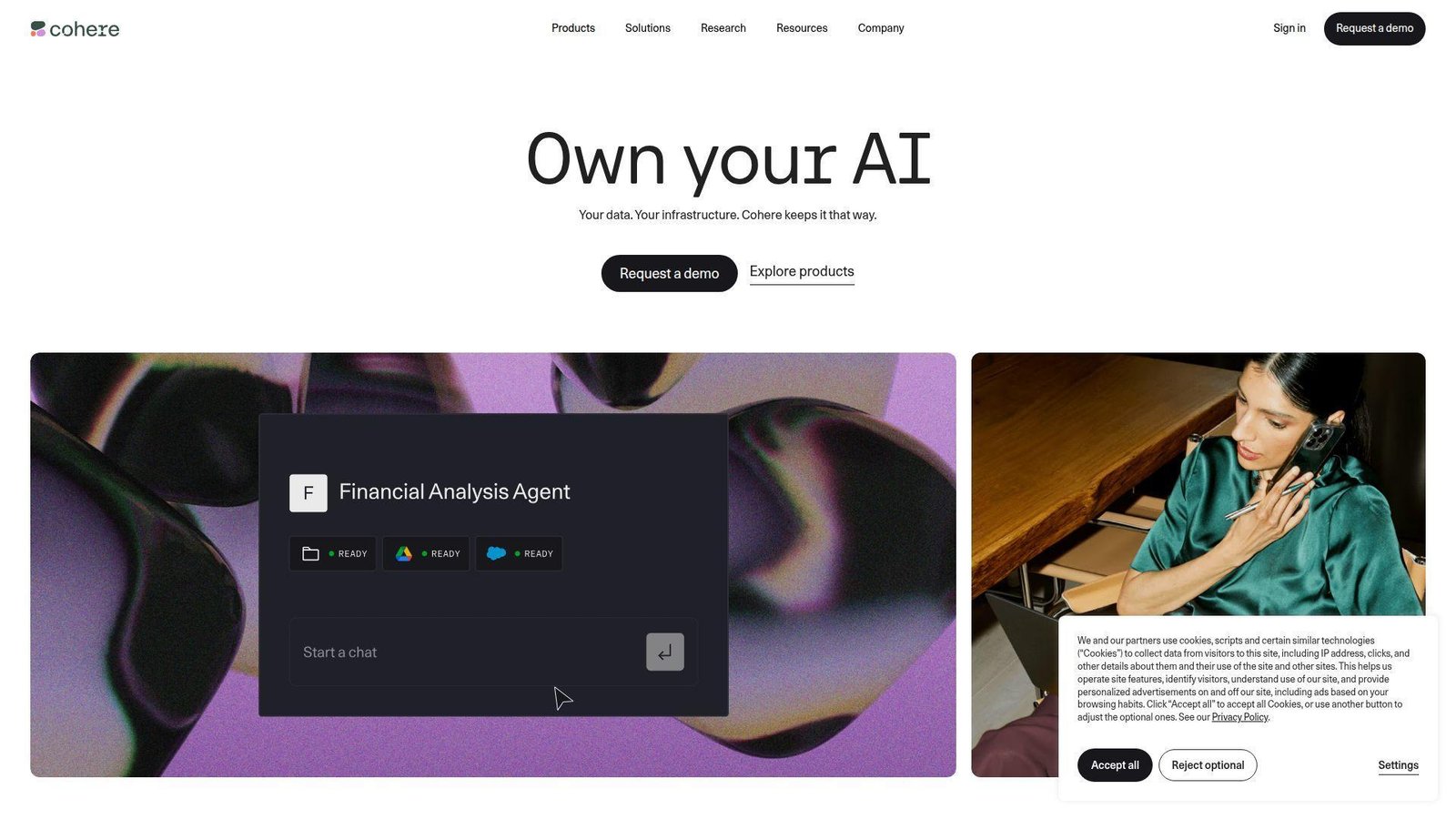
Cohere has stayed more enterprise-focused than many AI labs. Its Toronto team sells retrieval, reranking, workplace AI, and private deployment options instead of chasing pure consumer buzz. Best for: regulated enterprises and teams building private knowledge tools where retrieval quality matters.
- North, Compass, Embed, and Rerank give teams a tighter enterprise search stack than a generic text model alone can offer.
- Model Vault provides dedicated managed deployment, which removes several procurement objections around shared infrastructure.
- The platform is straightforward enough that many teams can test a meaningful retrieval workflow in the same week.
Pricing & limits: Trial API keys are free but rate-limited and not for production. Production usage is pay-as-you-go, and Cohere lists Command input pricing at $1 per 1M tokens. Model Vault starts at $4 per hour for smaller dedicated instances.
Honest drawbacks: The portfolio can feel split between API products and higher-level workplace tools. Cohere also has less everyday mindshare than OpenAI, which means internal champions may need to explain the choice more clearly.
Verdict: If you want enterprise AI with a retrieval-first mindset and a stronger private deployment story, this helps you build trust faster in regulated environments.
11. Scale AI
Scale AI still matters because AI quality is not just a model problem. It is a data, evaluation, and operations problem. Scale sits closer to that pain than most labs. Best for: model builders and large enterprises creating domain-specific AI that must be measured, tuned, and governed carefully.
- GenAI Data Engine gives teams curated data, evaluations, and RLHF-style workflows that translate directly into model quality gains.
- The platform combines API, SDK, and web frontend, which removes extra stitching between experimentation and deployment.
- Teams can start with one evaluation or data program quickly, then expand into a broader model improvement loop as the case proves out.
Pricing & limits: Pricing is largely usage-based and project-based. Scale Rapid bills per completed task and provides a dashboard estimator, while bigger GenAI Platform programs are sold more like enterprise infrastructure than a simple seat plan.
Honest drawbacks: This is not the fastest tool for hobby experiments. Services-heavy scope can get expensive. Scale beats OpenRouter on human-in-the-loop model improvement, but Together AI is easier when you just want self-serve model and GPU access.
Verdict: If accuracy, evaluation, and custom data matter more than novelty, this helps you raise model quality in a way leadership can actually defend.
12. Runway

Runway remains one of the few AI media companies that feels research-led and product-led at the same time. The team keeps shipping new creative workflows, but the real appeal is control, not novelty. Best for: brand studios, agencies, and creators who need video they can iterate, not just admire.
- Gen-4’s consistency across scenes makes character, location, and style continuity far easier than most quick-hit video tools.
- Third-party video and image models inside the same workspace cut down on export-import loops and tool switching.
- Most creative teams can start generating on day one, then refine a repeatable house process over the next few projects.
Pricing & limits: From $0 per month free forever with 125 one-time credits, 3 video editor projects, and 5GB of storage. Paid plans start at $12 per user per month billed annually. Higher tiers increase credits, storage, users per workspace, and export options.
Honest drawbacks: Credits vanish fast when a team moves from testing to production. Explore Mode on Unlimited trades turnaround time for volume. Runway beats most AI video tools on world consistency, but a real editor still wins for final finishing.
Verdict: If you need AI video that can support real campaign work, this helps you get to usable scenes much faster than a pure experimentation tool.
13. ElevenLabs
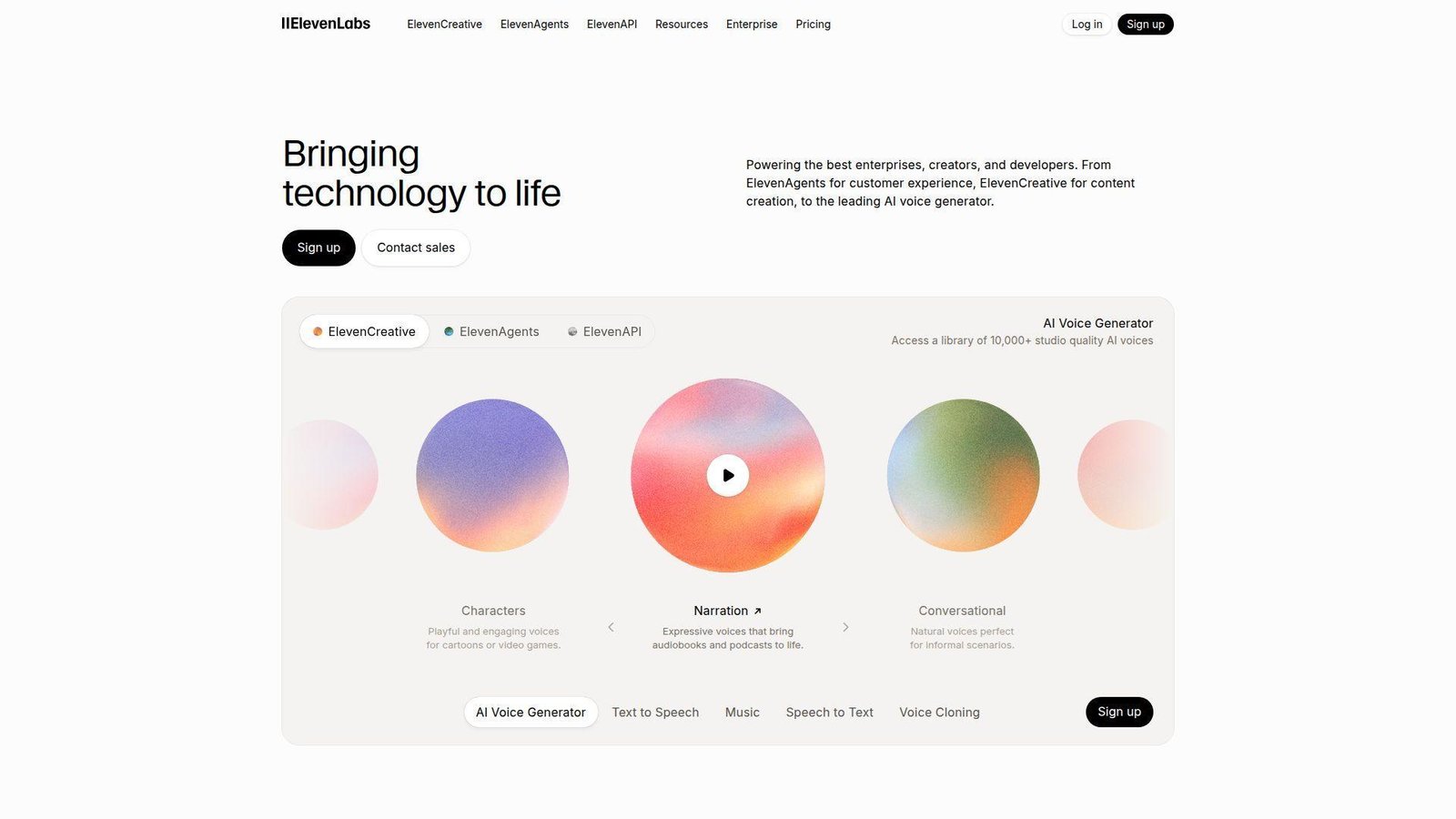
ElevenLabs took a narrow problem, synthetic voice that sounds human, and turned it into a broad audio platform. That expansion is why we keep it high on this shortlist. Best for: media teams, localization teams, and app builders shipping voice-heavy products.
- Text to speech, voice cloning, dubbing, and conversational agents let teams consolidate most audio generation work in one place.
- Usage-based billing on higher plans makes it easier to avoid manual top-ups during launches and larger content pushes.
- Setup is quick enough that solo teams can hear production-grade output in under an hour, which is a huge adoption advantage.
Pricing & limits: From $6 per month for Starter, with a free tier available. Public plans then step up through Creator, Pro, Scale, and Business, and higher tiers unlock bigger monthly credit pools plus overage billing options. Enterprise is custom.
Honest drawbacks: Voice rights, consent, and brand controls require real policy work. Costs can climb fast on heavy dubbing or agent traffic. ElevenLabs beats Runway on voice depth, but it is not trying to be your full video production stack.
Verdict: If voice is the product or a major part of it, this helps you get believable audio into production quickly and at real quality.
14. Together AI
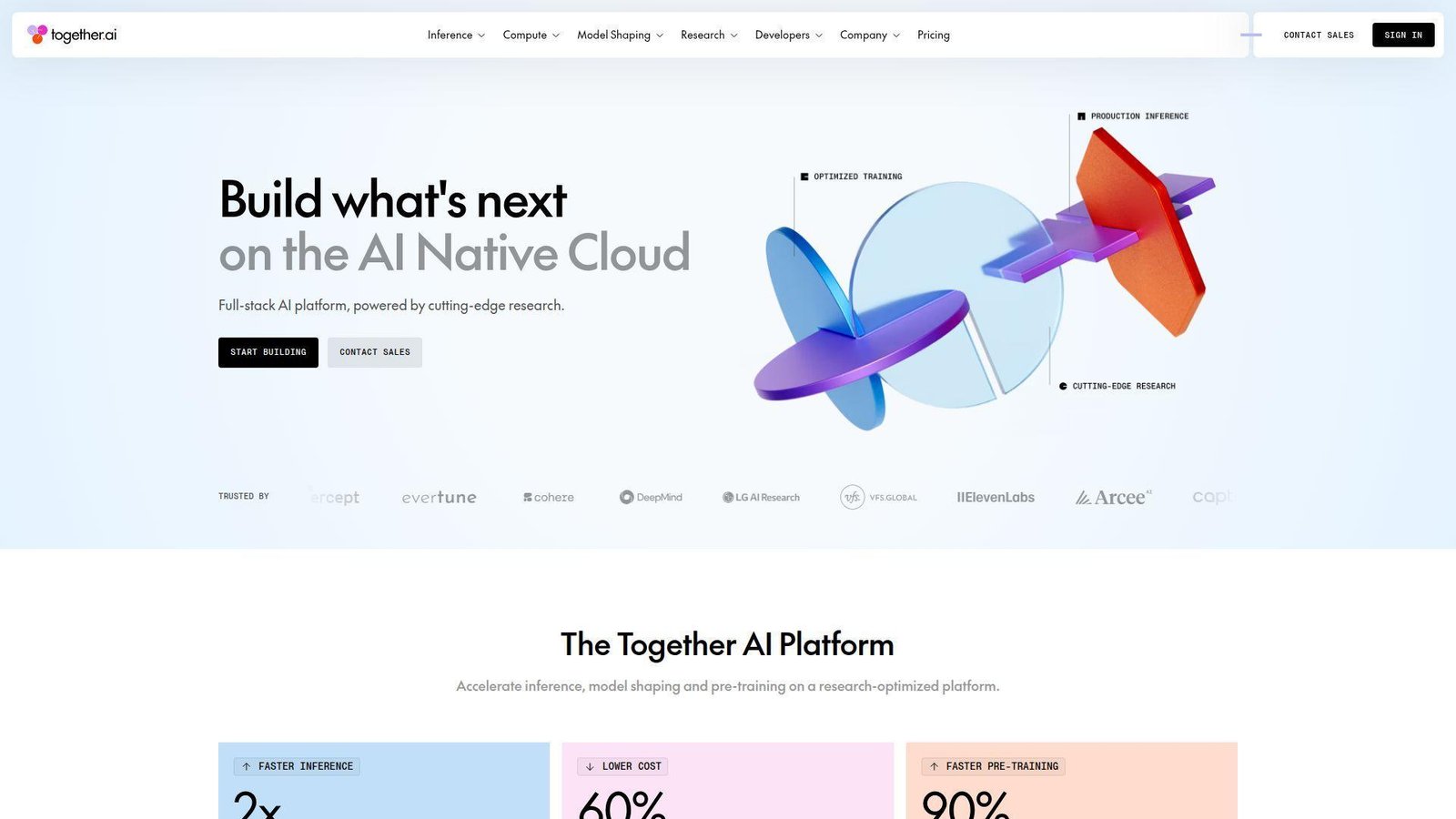
Together AI is one of our favorite picks for builders who want serious AI infrastructure without marrying one closed vendor. The company is building what it calls an AI native cloud, and that positioning fits the product. Best for: AI startups and platform teams that want open-model speed with real infrastructure behind it.
- Inference, fine-tuning, GPU clusters, and dedicated deployments live in one stack, which trims a lot of vendor sprawl for builders.
- Batch and model pricing options give teams multiple paths to lower cost, especially for async or experimental workloads.
- Most developers can get first value in a day because the product is clearly aimed at shipping, not just browsing benchmarks.
Pricing & limits: Public pricing is pay-as-you-go. Low-cost models and embeddings start cheaply, and on-demand H100 GPU clusters start at $3.49 per hour, while dedicated H100 inference starts at $3.99 per hour. Usage analytics and limits are handled in-platform.
Honest drawbacks: The pricing matrix is dense. Non-technical buyers can get lost in model choice. Together AI beats Hugging Face on managed infrastructure convenience, but Databricks is still easier to sell internally when governance is the headline issue.
Verdict: If you need open-model infrastructure that is ready for production, this helps you move fast without over-committing to one vendor’s roadmap.
15. Hugging Face
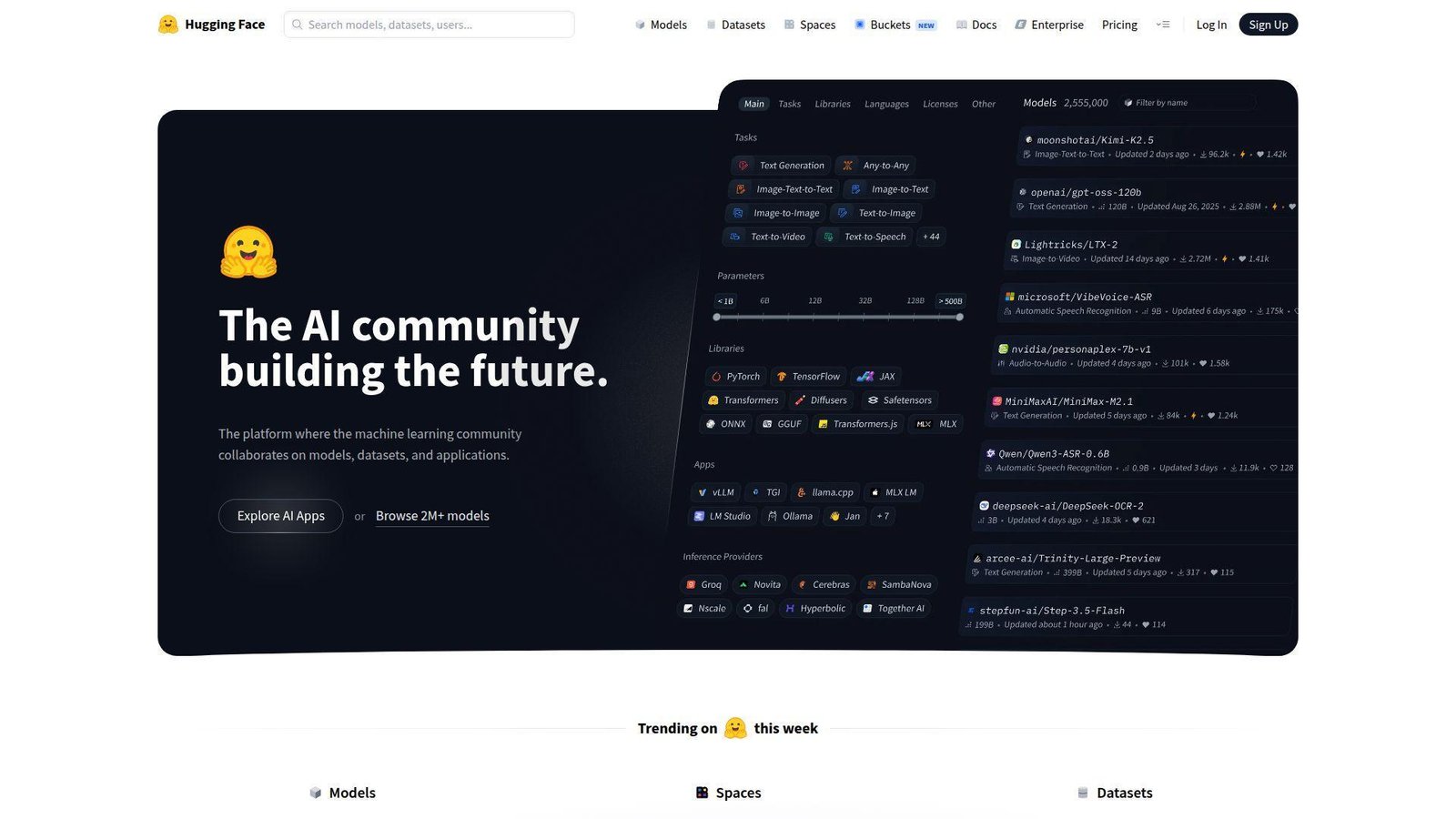
Hugging Face still owns the center of gravity for open model discovery. What began as a community hub has become a real collaboration layer for teams building with open models and datasets. Best for: ML engineers, research teams, and enterprises that want an open ecosystem first.
- The Hub gives teams a fast way to find models, datasets, demos, and starter apps without rebuilding basic discovery from scratch.
- Team and Enterprise plans add managed collaboration and private storage, which shortens the jump from public experimentation to internal work.
- Developers can start using the platform immediately, so first value usually comes the same day the search for a model begins.
Pricing & limits: From free on the Hub. Paid Team and Enterprise plans add advanced organization features, and Team and Enterprise documentation says they include 1TB of private storage per seat. Hardware-backed workloads on the Hub are billed hourly by instance type.
Honest drawbacks: Hugging Face is great for builders, but less turnkey for business buyers. Open assets vary in quality. It beats almost everyone on ecosystem reach, but Cohere and Databricks are easier when a buyer wants a tighter enterprise package.
Verdict: If your team wants maximum model choice and strong open-model gravity, this helps you shorten research and prototyping almost immediately.
16. Writer
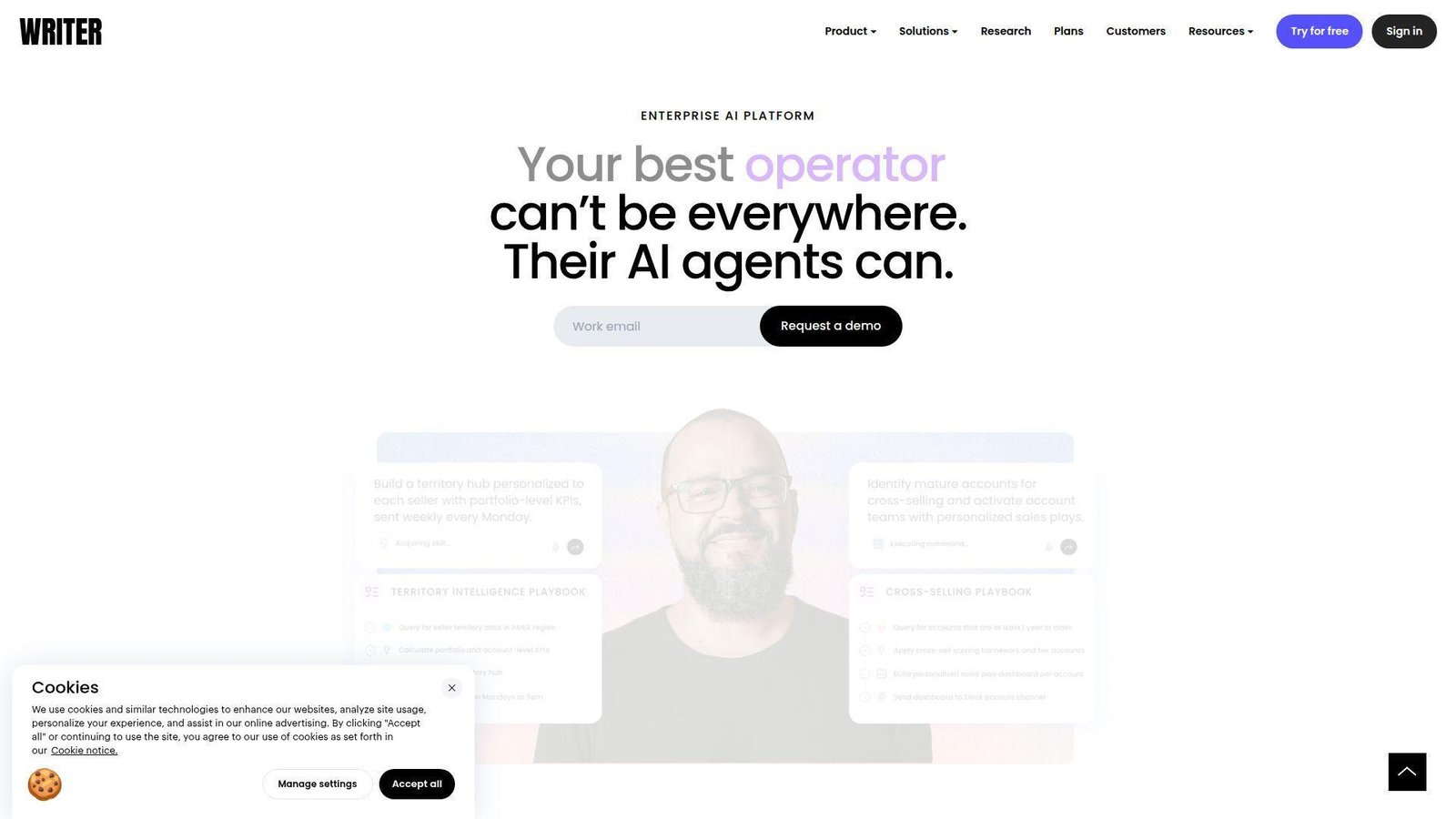
Writer took a different path from the biggest labs. It built around enterprise writing, brand governance, and now agentic work rather than mass-market chat hype. Best for: content operations leaders and enterprise AI teams that need controlled, brand-safe output across departments.
- Brand and voice controls help teams reduce rewrite loops and keep content closer to approved style on the first draft.
- Writer positions itself as an end-to-end platform for agentic work, which is more useful to buyers than another generic chat window.
- Teams that already have heavy content review processes can often feel first value quickly because the workflow pain is obvious.
Pricing & limits: From custom pricing. Writer publishes plan guidance and discount information, but on the public pages we reviewed the exact self-serve seat price was not clear, so buyers should expect a more sales-led motion for serious deployments.
Honest drawbacks: Writer is less compelling for open-model tinkerers. Public pricing opacity slows fast budgeting. It beats Glean on brand control, but trails Perplexity when the main need is open-web research.
Verdict: If you need enterprise AI that respects brand, approvals, and writing standards, this helps you get more usable output with less editorial cleanup.
17. Abridge
Abridge is not trying to be a general AI platform, and that focus is exactly why it stands out. The company is built around structuring and summarizing medical conversations so clinicians can spend less time on clerical work. Best for: health systems and clinical leaders fighting after-hours charting and documentation drag.
- Conversation-to-structured-note workflows turn the visit itself into documentation input, which is the outcome clinicians actually care about.
- Abridge Inside for orders connects the documentation layer more tightly to real clinical action, not just passive summaries.
- Because the product is so workflow-specific, pilots often show value quickly once a specialty or setting is chosen.
Pricing & limits: Pricing works more like enterprise healthcare software than self-serve SaaS, so buyers should expect custom scoping around deployment, integrations, and coverage rather than a swipe-a-card plan.
Honest drawbacks: This is only relevant if you live in clinical workflows. EHR integration, privacy review, and rollout planning take time. Abridge beats generic scribes on clinical fit, but it is not the right tool for broader enterprise automation.
Verdict: If your goal is reducing clinician documentation burden in a real care setting, this helps you create measurable workflow relief faster than general-purpose AI tools.
18. Ambience Healthcare
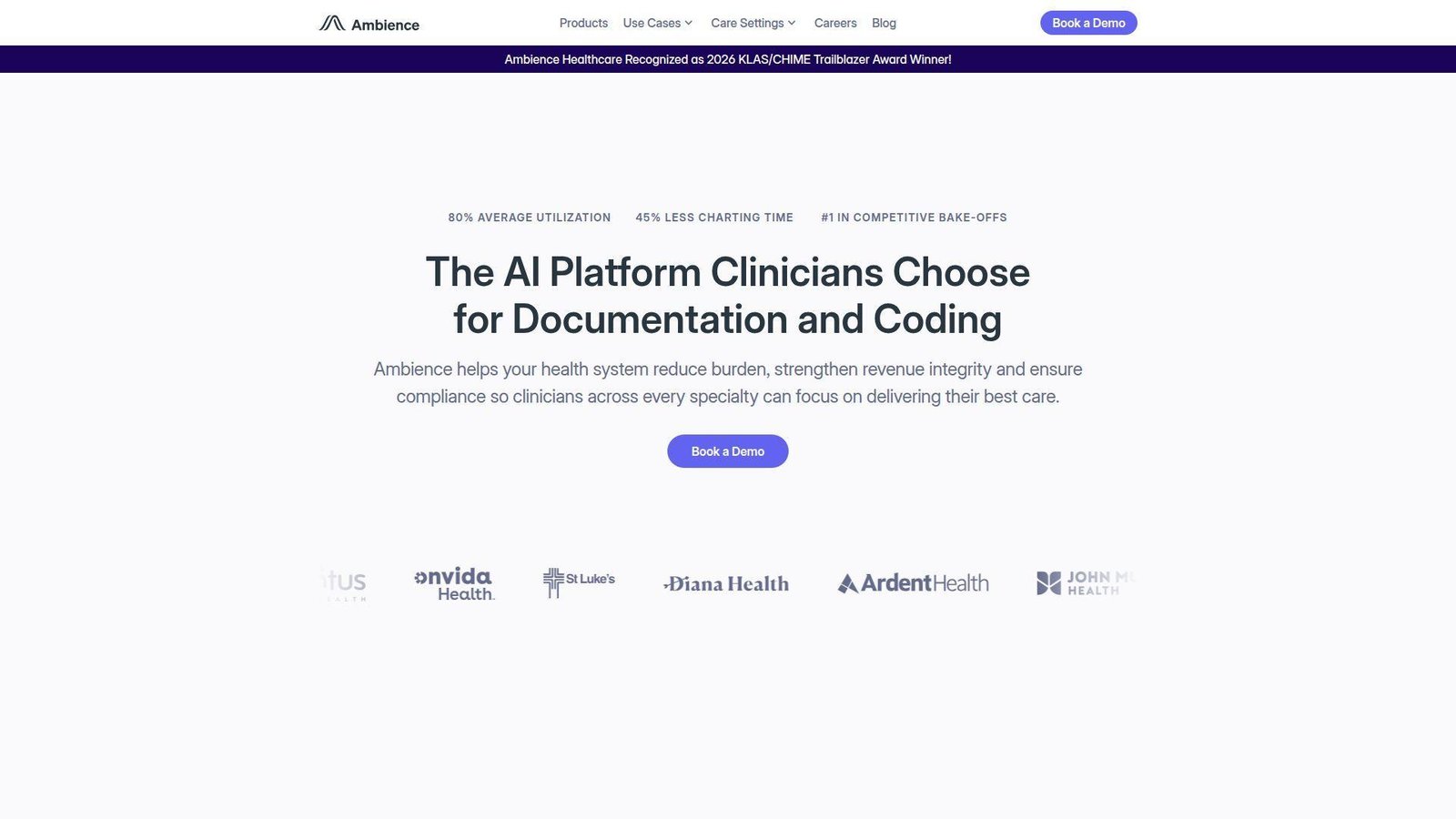
Ambience Healthcare goes beyond ambient note taking. Its platform pitch is broader, covering documentation, coding, and clinical documentation integrity in one connected system. Best for: large health systems and revenue-conscious clinical operations teams that want more than a scribe layer.
- Real-time note generation, order support, and patient instructions pull more of the visit workflow into one system.
- Documentation, coding, and CDI in the same platform create a clearer path to revenue integrity than note tools alone.
- Because the product is built for health systems, the fastest value usually comes from a tightly scoped specialty pilot.
Pricing & limits: Ambience is sold like enterprise healthcare software, so buyers should expect custom pricing, scoped rollout planning, and integration-led implementation rather than a public seat plan.
Honest drawbacks: The platform is probably too heavy for small clinics. Rollout depends on EHR access, compliance approval, and specialty validation. It beats simple ambient tools on breadth, but that same breadth makes buying and implementation more involved.
Verdict: If you need ambient AI tied to documentation quality and financial integrity, this helps you justify rollout with stronger operational upside.
19. Lovable
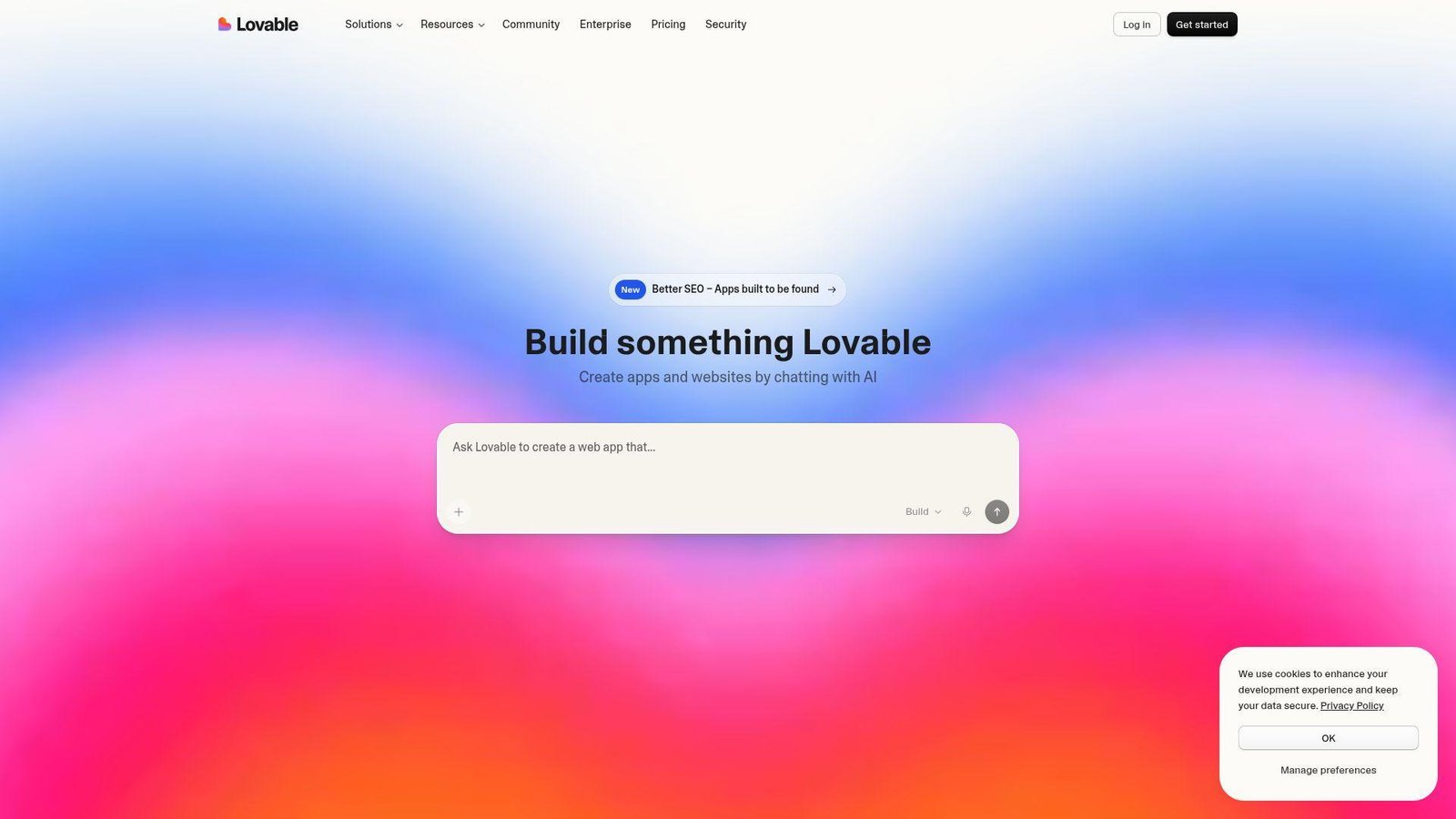
Lovable is one of the hottest AI startups because it makes software feel closer to product design than traditional coding. That is a big deal for teams that need to test ideas now, not after a long sprint plan. Best for: non-technical founders and product teams prototyping web apps quickly.
- Prompt-to-app generation helps teams move from idea to working UI fast enough to test demand before a full build cycle.
- Cloud deployment and AI generation in one product remove a lot of setup work that usually slows early product experiments.
- The free plan is generous enough to show real value quickly, which is why Lovable spreads fast inside startup circles.
Pricing & limits: From $0 per month with 5 daily credits, capped monthly. Pro starts at $25 per month on annual billing and includes monthly credits plus rollovers and top-ups. Business starts at $50 per month on annual billing. The free plan acts as the trial.
Honest drawbacks: Generated apps still need human review before production. Complex auth, data modeling, and edge cases can still force manual fixes. Lovable beats Databricks on raw prototype speed, but Cursor is better once code-level control becomes the main need.
Verdict: If you need to validate a product concept fast, this helps you get from idea to clickable app in hours instead of weeks.
20. OpenRouter
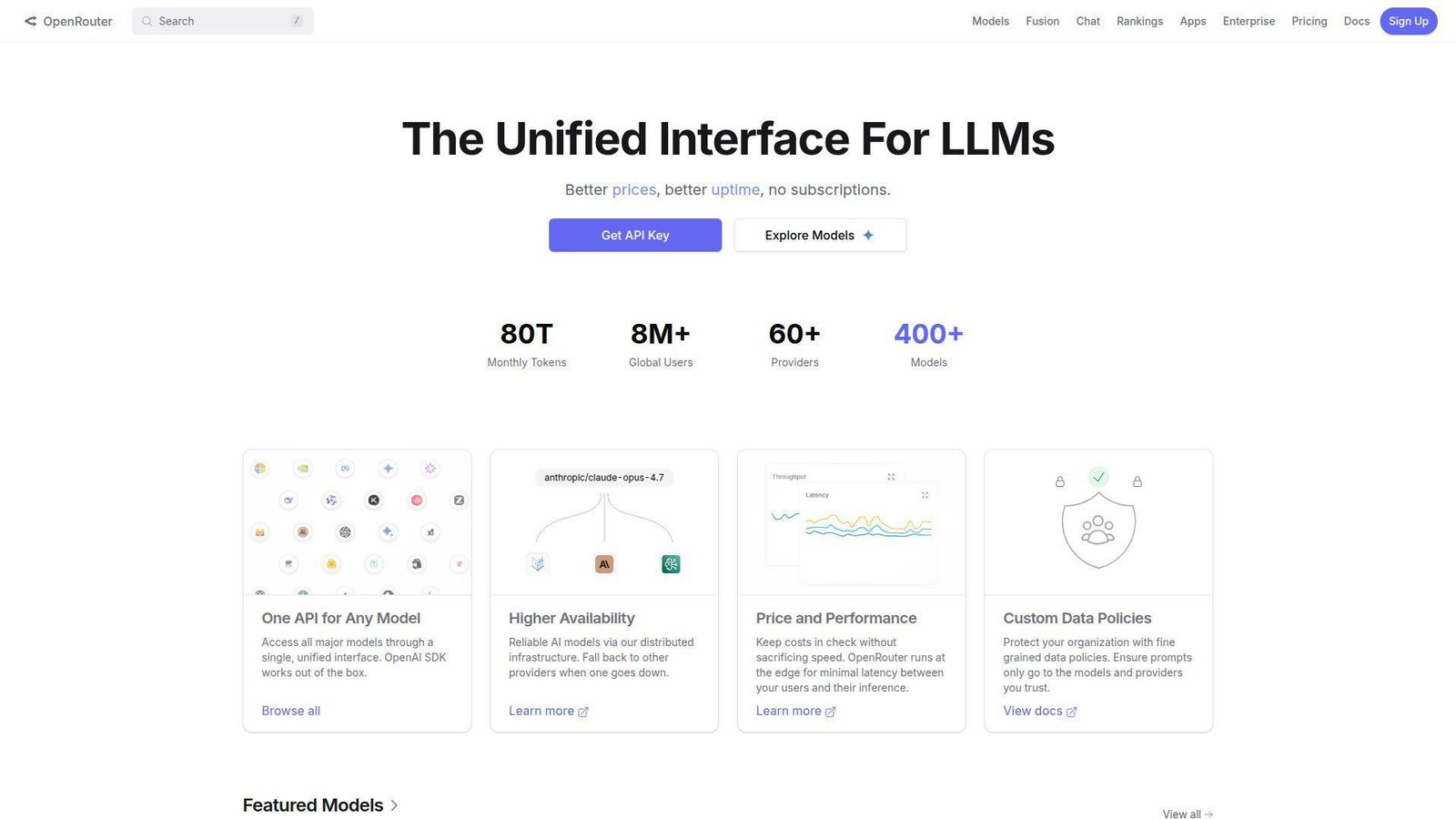
OpenRouter has become the practical answer to model sprawl. Instead of wiring every provider separately, it gives builders one gateway across a huge share of the market. Best for: AI startups, internal platform teams, and developers who hate vendor lock-in.
- One OpenAI-compatible interface across hundreds of models and dozens of providers removes a lot of adapter and maintenance work.
- Routing, fallback, BYOK, and policy controls reduce downtime risk and make multi-vendor cost management less painful.
- Developers can start almost immediately, so first value often comes in under an hour for teams already testing multiple models.
Pricing & limits: From free with 50 requests per day. Pay-as-you-go adds a 5.5% platform fee and no minimum spend, while BYOK includes 1M free requests per month before an added fee. Enterprise adds SSO, policy routing, and custom limits.
Honest drawbacks: A gateway adds another vendor to security review. The huge catalog can also distract teams that really need one approved model and one stable path. OpenRouter beats direct SDK juggling at breadth, but Together AI is stronger when you also need fine-tuning and GPU infrastructure.
Verdict: If your team wants model optionality without integration chaos, this helps you keep moving while the vendor landscape keeps shifting.
Recommended reading: Top 20 Cloud Based CRM Software Platforms for Modern Businesses
How We Ranked the Hottest AI Startups

Hot does not mean loud. We ranked these companies by buyer relevance, repeatable product value, and category position. In other words, we asked whether we would actually put them in front of a client based on need, budget shape, and rollout risk.
1. Adoption, Revenue, and Early Enterprise Pilots
We care more about repeat use than launch-day buzz. Named customers, expanding seats, usage across departments, and a believable path from pilot to renewal mattered more to us than social media hype. A startup can be impressive and still not be buyable.
2. Funding Momentum Without Ignoring Product Substance
Funding matters in AI because compute, safety work, enterprise support, and go-to-market all cost real money. Still, we discount pure funding headlines if the product feels half-built, unclear, or hard to govern. Capital should amplify a strong product, not hide a weak one.
3. Product Differentiation, Category Leadership, and Technical Depth
We looked for a real edge. Sometimes that edge is model quality. Sometimes it is retrieval, workflow design, GPU economics, or vertical expertise. If we felt a startup could be replaced with one prompt, a wrapper, and a weekend of glue code, it dropped down our list.
4. Investor Quality, Ecosystem Visibility, and Buyer Trust
Buyers do not purchase magic. They purchase trust. We looked at integrations, docs, admin controls, security signals, ecosystem gravity, and how clearly each company communicates limits. The hottest AI startups still need to look credible when procurement shows up.
Recommended reading: Top 20 Marketing Project Management Software for Smarter Campaign Planning in 2026
Which AI Startup Categories Are Heating Up
McKinsey came at the same market from a different angle and estimated generative AI could add $2.6 trillion to $4.4 trillion annually across the use cases it analyzed. That is why our shortlist mixes frontier labs, vertical apps, and builder infrastructure instead of pretending one category will win everything.

We see four clear lanes in the market right now. That matters because buyers usually make better decisions when they first decide which lane they are actually shopping in.
1. Vertical AI Software for Legal, Healthcare, and Enterprise Search
Harvey, Abridge, Ambience Healthcare, and Glean show why vertical AI is getting real traction. Buyers move faster when AI is tuned to an expensive workflow with obvious stakes. Legal teams want legal reasoning. Clinicians want less charting. Enterprises want internal answers they can trust.
2. AI Agents and Copilots for Workflows and Automation
OpenAI, Anthropic, Writer, and Glean are pushing beyond chat toward action. The buying question is no longer only, “Can it write?” It is, “Can it complete work with the right guardrails, context, and admin control?” That shift is why agents are heating up.
3. Infrastructure, GPU Cloud, and Model Access for Builders
Together AI, Databricks, Scale AI, Hugging Face, OpenRouter, and Mistral AI are hot because builders want options. Teams do not want to be trapped by one provider, one model family, or one way to deploy. Control, routing, governance, and GPU economics now matter as much as raw model quality.
4. Creative and Multimodal AI for Video, Voice, and Music
Runway and ElevenLabs stand out because creative teams are buying AI for production work, not just concept play. That is a major shift. Video consistency, believable voice, and localization quality now affect campaign timelines, studio workflows, and product experiences directly.
Recommended reading: Top 20 Free Website Hosting Providers and Builders for Beginners and Small Businesses
How to Choose the Right AI Startup for Your Use Case
The buying shift is already visible. OpenAI says it now serves more than 7 million ChatGPT workplace seats, while Anthropic now frames Claude Enterprise around named rollouts like Moody’s and Smartsheet rather than abstract promise. Buyers are past the toy stage.
Our simplest advice is to start with one workflow, one owner, and one success metric. Once you do that, the hottest AI startups stop looking interchangeable and the shortlist gets smaller fast.
1. For Frontier Models and Enterprise LLMs: OpenAI, Anthropic, xAI, Mistral AI, and Cohere
Choose this group when you need the model itself to be the buying center. We would start with OpenAI for breadth, Anthropic for careful reasoning and enterprise posture, xAI for fast-moving large-context experimentation, Mistral AI for deployment flexibility, and Cohere for private enterprise retrieval and deployment. If governance and rollout matter more than novelty, Anthropic and Cohere deserve extra weight. If ecosystem breadth matters most, OpenAI still leads.
2. For Search, Knowledge, and Writing: Perplexity, Glean, and Writer
Perplexity is the strongest pick when the answer lives on the web and speed matters. Glean is the better pick when the answer lives inside your company systems. Writer belongs on the shortlist when controlled writing, brand governance, and structured content workflows are the main pain. We would not treat these as substitutes. They solve different parts of the same knowledge problem.
3. For Builders and Data Teams: Cursor, Databricks, Scale AI, Together AI, Hugging Face, OpenRouter, and Lovable
Cursor is the best pick here when your bottleneck is shipping software. Databricks is strongest when governed data is the bottleneck. Scale AI helps when data quality and evaluation are the bottleneck. Together AI, Hugging Face, and OpenRouter matter when model access and flexibility are the bottleneck. Lovable is the outlier, and we like it most when the bottleneck is simply getting a product idea in front of users fast.
4. For Vertical and Creative Work: Harvey, Abridge, Ambience Healthcare, Runway, and ElevenLabs
This is where specialization wins. Harvey is the legal pick. Abridge and Ambience Healthcare are the healthcare picks, though they solve different flavors of clinical workflow pain. Runway is the video pick. ElevenLabs is the voice pick. If your workflow is expensive, repetitive, and domain-heavy, we would usually test these before forcing a general LLM to act specialized.
5. When Open Models, Governance, or Vendor Lock-In Should Change Your Shortlist
If lock-in worries you, move Mistral AI, Hugging Face, Together AI, and OpenRouter up the list. Anthropic, Databricks, Cohere, Glean, and Writer up if governance is the non-negotiable issue. If you may eventually need to self-host, route across vendors, or enforce region and policy rules, do not ignore that early. A cheap pilot can become an expensive trap if the exit path is vague.
Recommended reading: Top 20 Best Website Builder Platforms for Your Next Site
FAQ About Hottest AI Startups
These are the questions we hear most when buyers try to turn a trend-heavy shortlist into a practical decision.
1. How Do You Compare Hottest AI Startups Without Overrating Funding News?
We start with usage, not headlines. Ask who is using the product weekly, what workflow improved, where human review still eats time, and what happens after the pilot. Funding matters because AI is expensive to build and support. Still, a huge round should confirm product substance, not replace it.
2. Are Vertical AI Startups a Better Fit Than General-Purpose AI Platforms?
Often, yes. If your workflow is costly, regulated, and full of domain nuance, vertical tools usually reach value faster. Harvey is a better legal shortlist pick than a generic assistant. Abridge and Ambience are better healthcare picks than broad-purpose note tools. General platforms win when the work is cross-functional and still changing fast.
3. What Should Enterprises Ask Before Buying From a Fast-Growing AI Startup?
Ask about data retention, model update policies, SSO and SCIM, audit logs, pricing triggers, support terms, export paths, and how human review fits into the workflow. Also ask what breaks first at scale. Buyers get in trouble when they only ask what a startup can do, not where the edges are.
4. Which Hottest AI Startups Stand Out for Search, Coding, Creative Work, and Healthcare?
For search, we would split the answer between Perplexity for external research and Glean for internal knowledge. Cursor is the cleanest pick on this list for coding. For creative work, Runway leads in AI video and ElevenLabs leads in voice. For healthcare, Abridge and Ambience are the two most obvious names to take seriously.
5. When Does Building a Custom AI Product Make More Sense Than Buying a Startup Tool?
Build when your workflow crosses multiple systems, uses proprietary data in a unique way, or needs a customer-facing experience that off-the-shelf tools cannot express cleanly. Buy when speed matters more than uniqueness. Compose when the right answer is using several startups as building blocks inside your own product.
How TechTide Solutions Helps Teams Build Custom AI Solutions

Sometimes the right answer is not buying one tool. It is designing the right system around your workflow, users, and data. That is where we come in as TechTide Solutions.
1. Plan a Custom AI Product Around Your Business, Workflow, and Data
We start by mapping the workflow, the user role, the data sources, the approval steps, and the business outcome that matters. That keeps teams from buying a flashy tool for the wrong problem. We also help decide where a startup product is enough, where a custom layer is smarter, and where full custom software is the better move.
2. Build Web, Mobile, and SaaS Experiences With the Right AI Stack
We design and build web, mobile, and SaaS products that use the right model, retrieval layer, workflow logic, and human review path for the job. That can mean connecting frontier models to a custom product, adding AI to an existing app, or creating a new AI-native experience from scratch.
3. Scale From Prototype to Production With Secure Software Development
Shipping a demo is easy. Shipping software people trust is harder. We help teams add authentication, permissions, observability, evaluation, cost controls, fallback logic, and secure deployment practices so an AI prototype becomes a maintainable product, not a fragile experiment.
Final Verdict on the Hottest AI Startups
1. Best Overall Picks for Broad Adoption
If we had to start with the broadest shortlist for 2026, we would begin with OpenAI, Anthropic, Databricks, and Glean. Those four cover the widest span of real buyer needs, from enterprise assistants to governed data platforms and internal knowledge systems.
2. Best Picks for Specialized Workflows
For specialized work, our strongest picks are Harvey for legal, Abridge and Ambience Healthcare for clinical workflows, Runway for AI video, and ElevenLabs for voice. These are the companies that make the best case for buying workflow depth instead of generic flexibility.
3. Best Picks for Builders Who Need More Control
For builders, we would keep Together AI, Hugging Face, OpenRouter, Mistral AI, Cursor, and Lovable close. They serve different layers of the stack, but all six help teams keep more control over model choice, product speed, or deployment shape.
If your shortlist still feels crowded, ask one question first: are you buying a model, a workflow, or a faster way to ship software? Once you answer that, the right AI startup usually becomes much easier to spot.

