

From our seat at TechTide Solutions, Vietnam looks like a practical springboard for ambitious software programs, especially as global IT budgets keep expanding toward $6.08 trillion in 2026. That rising tide changes expectations, compresses timelines, and rewards delivery partners who blend disciplined engineering with cultural fluency. We have shipped products with Vietnamese teams for years, and we will share what helps buyers separate signal from noise.
Why Vietnam is a smart choice for outsourcing software development companies in vietnam
Vietnam’s developer ecosystem has matured at pace, with the domestic software market projected to reach US$644.03m in 2025. That steady base matters because a healthy local market usually correlates with richer capability stacks, better product sensibilities, and stronger engineering communities. On the ground, we see that maturity reflected in well-run delivery centers, pragmatic solution design, and a growing bench of product-minded engineers.
1. Cost-Effective
Cost arbitrage alone no longer tells the story. Real savings flow from smart scoping, ruthless de‑risking, and lean communication overhead. Vietnamese partners compete on all three fronts. Many maintain stable teams with low attrition relative to other hubs, which cuts re‑training costs and protects institutional knowledge. Several vendors also bring consulting depth that reduces rework by clarifying requirements early.
In our projects, blended teams in Ho Chi Minh City and Da Nang have delivered clean increments with minimal management drag. When demand spikes, providers scale with cross‑trained engineers, not only junior additions. That combination reduces coordination churn and helps keep velocity predictable.
2. Access to Expertise
Vietnam’s strength is breadth and depth together. Buyers can find partners for digital banking cores, public cloud platform work, semiconductors, data engineering, and modern front ends. Beyond service breadth, we value product sensibility. Many engineers cut their teeth on global products, then bring that product-thinking back into client programs.
To make your scouting easier, we curated a cross‑section of thirty reputable vendors active in export markets. We look at their delivery histories, hiring practices, engineering leadership, and community engagement. The list blends large, mid, and specialist firms so you can triangulate options across your risk and capability envelope.
No list is definitive, yet this spread captures the contours we see daily. Shortlist by fit, not fame. Your roadmap deserves a partner whose strengths map tightly to your stack, domain, and product ambition.
3. Increased Efficiency
Efficiency gains come from repeatable rhythms, not heroics. Vietnamese teams excel when they can operate in well‑defined increments, align tightly on acceptance criteria, and release through automated pipelines. That discipline reduces context switching and stabilizes lead time. When joint steering rituals stay short and decisive, teams spend their energy on code, not ceremony.
We advise carving value slices that matter to the business and keeping governance light but sharp. In practice, we structure squads around product surfaces rather than technical layers. That structure lowers handoffs and clarifies ownership. Vietnamese partners that adopt this model ramp faster, especially when paired with a crisp platform team on the client side.
4. Time Zone Advantage
Vietnam bridges Asia and the West. That geography supports follow‑the‑sun delivery without bruising calendars. We usually schedule high‑stakes conversations during overlapping hours, then let teams run autonomous work blocks. As delivery matures, fewer meetings are needed, and updates shift to async artifacts. That transition preserves flow while keeping stakeholders informed.
For multi‑region programs, a Vietnam hub often complements teams in Europe or the Americas. Design discovery and backlog framing can happen earlier in the client day. Implementation, test, and deployment can then progress while the client sleeps. The result feels like compounding progress without cognitive overload.
5. Flexibility in Service and Pricing Models
Vietnamese providers are comfortable moving between fixed outcomes and elastic capacity. That agility serves product leaders who must flex as market signals change. Many vendors support discovery sprints before committing to larger scopes. Others run build‑operate‑transfer patterns when you intend to internalize capabilities later. We value how fast vendors pivot between consulting, engineering, and managed operations.
Clarity on exit ramps, knowledge transfer, and IP license terms matters more than labels. When those elements are explicit, switching from a feature factory to a product partner happens smoothly. Vietnamese partners used to global clients generally honor that clarity because it reduces friction for both sides.
6. Cultural and Communication Compatibility
Communication habits shape velocity. Teams that write clearly, document choices, and escalate early avoid rework. Many Vietnamese firms invest heavily in English training, domain literacy, and cross‑cultural coaching. That investment shows up in thoughtful technical notes, grounded estimates, and transparent trade‑off conversations. We also see healthy respect for process without rigidity.
Great communication is bidirectional. If clients communicate product intent clearly, Vietnamese teams reciprocate with pragmatic options and elegant compromises. Respectful challenge is prized. We encourage partners to push back when assumptions invite risk. Healthy friction now beats surprise later.
7. High Quality and Quick Turnaround Time
Quality is a habit, not an event. Strong Vietnam vendors bring test pyramids, security scanning, and proactive incident playbooks. Many carry ISO or sector certifications, yet the telling signs are everyday practices. Watch how teams write tests, review pull requests, and triage ambiguous defects. That craft separates teams that merely code from teams that build robust systems.
Turnaround accelerates when environments are ready, data sets are realistic, and stakeholders decide quickly. Vietnamese teams typically move fast once guardrails are clear. We have seen complex integrations land smoothly because teams insisted on realistic sandbox data and dry runs before production cutovers. That insistence saves launch week nerves.
8. Exposure to the Latest Tools and Technologies
Tooling maturity in Vietnam has leapt forward. Engineers are comfortable with cloud services, infrastructure as code, secure CI, and quality gates. Several providers also maintain close partnerships with hyperscalers and enterprise platform vendors. Those links help de‑risk architecture choices and unlock escalation channels when gnarly issues arise.
We also see momentum around applied AI, from retrieval‑augmented generation to code assistants wired to private repos. The best teams treat AI as a productivity amplifier rather than a silver bullet. They design prompts carefully, keep humans in the loop, and document the boundaries of automation. That mindset pairs ambition with prudence.
Quick Comparison of outsourcing software development companies in vietnam
Across our recent RFP work, procurement interest in outsourcing remained resilient, with 80% of surveyed executives planning to maintain or increase third‑party investment. That aligns with what we see in Vietnam as buyers rebalance in‑house product teams with specialized external squads. The table below offers a concise, vendor‑agnostic snapshot to jumpstart due diligence.
| Company/Service | Best for | From price | Trial/Free | Key limits |
|---|---|---|---|---|
| FPT Software | Complex enterprise programs and global rollouts | Custom quote | Discovery call | Enterprise focus over boutique intimacy |
| KMS Technology | Product builds with strong QA automation | Mid‑range | Pilot sprint | Limited ultra‑niche hardware work |
| NashTech Vietnam | Legacy modernization and global delivery | Custom quote | Assessment workshop | Change control can feel formal |
| TMA Solutions | Telecom and large enterprise portfolios | Mid‑range | Discovery call | Design craft varies by squad |
| Rikkeisoft | Japan‑facing delivery and embedded software | Custom quote | Pilot sprint | Consumer design depth is uneven |
| Savvycom | Healthcare, fintech, and CX‑driven builds | Mid‑range | Consultation | Enterprise platform scope may stretch |
| SotaTek | Blockchain, web3, and data engineering | Custom quote | POC option | Narrower outside core specialties |
| Axon Active | Agile delivery with embedded Scrum coaching | Mid‑range | Pilot sprint | Product strategy support is lighter |
| Orient Software | Cloud‑native web and mobile platforms | Mid‑range | Consultation | Deep ERP work may require partners |
| CMC Global | Cybersecurity and large enterprise programs | Premium enterprise | Assessment workshop | Less suited for lean startups |
Use this table as a briefing note, not a verdict. Fit depends on stack, domain nuance, governance culture, and how you like decisions made. We suggest a brief discovery together with each finalist to test team chemistry and decision latency.
Top 30 outsourcing software development companies in Vietnam to consider
Vietnam’s outsourcing market has matured from cost arbitrage to value creation. Today, the best teams here balance robust engineering fundamentals with practical product sense, a strong DevOps culture, and an appetite for taking on long-running, mission‑critical programs. As Techtide Solutions, we’ve worked shoulder‑to‑shoulder with many of these firms—sometimes as collaborators, sometimes as friendly competitors—and we’ve seen what makes each one tick.
Time‑zone overlap with APAC and workable windows for Europe and North America help, but the differentiator is execution: how quickly teams stabilize velocity, how they manage risk, and how they translate ambiguity into delivery plans. In that spirit, this guide profiles 30 Vietnam‑based or Vietnam‑anchored vendors worth shortlisting, with our reflections on where each shines.
For every company, we outline the focus areas, rough scale, years in operation where clear, and headquarters city, followed by service depth, evidence of maturity we’ve observed in the market, and the buyer profiles that usually get the best outcomes. Use this as an informed starting point; then test for fit with pilot sprints and architecture reviews before you scale.
1. FPT Software
FPT Software is Vietnam’s largest pure‑play software engineering company, serving automotive, BFSI, telecom, healthcare, and manufacturing. The firm employs tens of thousands of engineers, has operated since 1999 (~25+ years), and anchors from Hanoi with major delivery campuses in Da Nang and Ho Chi Minh City. Its breadth ranges from embedded systems and enterprise applications to cloud, analytics, and RPA, making it a default option for scale‑hungry enterprises.
Services & proof: At their size, we see well‑run programs that combine consulting, agile delivery, managed services, and strong platform partnerships. Typical wins include multi‑region cloud migrations to AWS or Azure, SAP S/4HANA transformations, and safety‑critical software in mobility where standards like ASPICE and ISO 26262 matter. Their global PMO functions, bench strength for ramping teams, and mature test automation practices are recurring signals of readiness for complex, multi‑year roadmaps.
Ideal Fit: Enterprises and upper‑mid‑market brands needing large squads, multi‑tower engagement (apps, data, QA, infra), and strong governance will find FPT Software a steady hand. It suits organizations that value accelerators, certifications, and the ability to scale a product line from pilot to hundreds of engineers without losing cadence.
2. TMA Solutions
TMA Solutions is a long‑standing Ho Chi Minh City heavyweight focused on telecommunications, networking, fintech, and enterprise software. With thousands of engineers and roots going back to the late 1990s (~25+ years), TMA has grown methodically, building deep R&D services for carriers, networking OEMs, and data‑heavy verticals, complemented by application development and testing capabilities for global clients.
Services & proof: We’ve seen TMA shine in protocol‑level engineering, 5G/Edge integrations, and large‑scale QA where coverage and reproducibility matter. Their delivery often blends C/C++ and Rust for systems work with Java/Kotlin/.NET for services layers, plus Python for data pipelines. The organization’s structure supports long‑horizon maintenance contracts, and their labs culture translates well for clients that need proof‑of‑concepts hardened into production systems.
Ideal Fit: Product companies and telco vendors seeking dedicated R&D pods, device/firmware integration, and continuous validation pipelines benefit most. If your roadmap spans low‑level performance work through to cloud orchestration and observability, TMA’s end‑to‑end approach is a practical match.
3. TechTide Solutions
We are a boutique Vietnam‑anchored engineering partner focused on product development, data platforms, and cloud‑native modernization. Our team size is intentionally compact compared with giants on this list—think specialist squads rather than armies—so we can stay close to decisions and uphold a high bar on code readability, testability, and operability. We operate from Vietnam with leadership presence spanning APAC and North America, and we’ve been building for several years across fintech, healthtech, and SaaS.
Services & proof: Our sweet spot is turning unclear product intent into a clean architecture, then delivering working software in tight feedback loops. We prefer event‑driven designs, gRPC where latency matters, and pragmatic TypeScript/Go/Java stacks with Infrastructure as Code on AWS or GCP. We’ve built order‑management engines, consent‑aware health data services, and streaming analytics where backpressure and cost envelopes are first‑class concerns. We back this with CI/CD, DORA metrics, and shared playbooks for incident response.
Ideal Fit: Seed to Series C companies and digital units within enterprises that value senior engineers on calls, transparent burndown, and proactive roadmap risks. If you want a partner who will push back constructively and ship production‑ready code rather than demos, that’s our wheelhouse.
4. Orient Software
Orient Software operates primarily from Ho Chi Minh City with a footprint in Da Nang and Europe, focusing on custom application development, QA, and data engineering. After nearly two decades in the market (~2005 onward), Orient has grown to a few hundred engineers. The company covers web and mobile, enterprise integrations, and cloud‑centric builds for retail, logistics, and healthcare.
Services & proof: We’ve encountered Orient teams delivering pragmatic web platforms, test automation layers, and data pipelines where cost control is as important as throughput. Their engineers are comfortable with Java/.NET backends, modern front‑end frameworks, and automated regression to stabilize releases. Orientation toward maintainability—well‑documented APIs, living design systems, and consistent test data—often stands out in their deliverables.
Ideal Fit: Mid‑market clients seeking steady delivery on greenfield apps or modernization projects. If you need a partner to clean up integration debt and build a sustainable QA baseline while incrementally delivering features, Orient is a sensible, low‑drama option.
5. CMC Global
CMC Global—part of the CMC Corporation—offers enterprise‑grade services across application development, cloud, cybersecurity, and SAP. Headquartered in Hanoi with delivery centers across Vietnam, the company has scaled to several thousand engineers during its years of operation and actively targets BFSI, manufacturing, and public sector transformation programs.
Services & proof: We’ve observed CMC Global’s emphasis on platform partnerships and secure delivery. Their SAP, cloud migration, and SOC operations fold into cohesive programs where compliance and auditability are non‑negotiable. The teams blend agile development with ITIL‑aligned managed services, which suits organizations that want both new build velocity and post‑go‑live stability.
Ideal Fit: Regulated enterprises, especially banks and insurers, that require rigorous controls, onboarding discipline, and predictable service levels. If your roadmap has both modernization and steady‑state operations, CMC Global’s structure can absorb that complexity.
6. fram^
fram^ is a Scandinavian‑founded, Vietnam‑built technology partner based largely in Ho Chi Minh City, focusing on product development for e‑commerce, fintech, and SaaS. Operating for around a decade, fram^ runs a few hundred engineers and emphasizes product thinking, design, and agile delivery rather than pure staff augmentation.
Services & proof: We’ve met fram^ teams where product managers, UX designers, and engineers operate as one unit. They are comfortable with discovery sprints, hypothesis‑driven development, and measurable outcomes—conversion lift, cycle‑time reductions, or error‑budget adherence. On the engineering side, they default to cloud‑native, API‑first builds and put effort into observability from day one.
Ideal Fit: Digital businesses seeking an integrated product team, not just coders. If you want research, design, and build under one roof with strong stakeholder engagement, fram^ is a good cultural fit.
7. S3 Corporation
S3 Corporation is a Ho Chi Minh City software house known for custom development and quality assurance. In operation for well over a decade, S3 employs a few hundred engineers and engages across healthcare, multimedia, and enterprise applications, often taking on end‑to‑end lifecycle responsibilities or bolstering existing teams with QA muscle.
Services & proof: We’ve seen S3 deliver in projects where functional correctness and regression control are key. Their teams are practiced with automated testing, CI/CD, and release management, which reduces production surprises. For multimedia and data‑heavy apps, they handle streaming constraints, caching strategies, and database tuning without losing sight of user experience.
Ideal Fit: Companies that need a dependable dev‑plus‑QA partner to stabilize releases while adding features. If your pain points are flaky tests, slow deployments, and unpredictable releases, S3’s discipline can help turn the tide.
8. LogiGear
LogiGear has U.S. roots with substantial delivery from Ho Chi Minh City and Da Nang, focusing on software testing, test automation, and DevOps alignment. With decades in operation, the company runs hundreds of engineers specialized in QA strategy, tools, and frameworks that plug into enterprise pipelines across finance, retail, and technology.
Services & proof: We’ve worked alongside LogiGear teams that overhaul QA from manual regression to risk‑based, automation‑first approaches. Their strengths include test data management, parallelization to cut cycle time, and CI integrations that make quality gates meaningful. When Dev and QA cadence misalign, LogiGear is good at forcing clarity on Definition of Done and non‑functional requirements.
Ideal Fit: Organizations that have grown fast and now need test strategy, coverage, and stability to catch up. If your board asks for fewer escaped defects and faster release trains at the same time, this is the kind of specialist you want.
9. KMS Technology
KMS Technology blends U.S. product DNA with Vietnam delivery, centering on product development, cloud services, and quality engineering. Headcount sits in the thousands across Vietnam and the U.S., and the company has been operating since the late 2000s. KMS also incubates products, which gives its teams empathy for life after launch—support, onboarding, and monetization.
Services & proof: We value their balance between product and platform engineering. In the wild, we’ve seen KMS handle microservices transitions, data platform builds, and test automation at scale. Their playbooks for API governance, feature flagging, and trunk‑based development help maintain velocity without letting tech debt snowball.
Ideal Fit: Venture‑backed SaaS and mid‑enterprise digital teams that want a “builder” mindset and DevEx attention. If your KPIs track activation, retention, and deployment frequency, KMS tends to line up with those incentives.
10. NashTech
NashTech, part of Nash Squared (formerly Harvey Nash Group), operates large delivery centers across Vietnam with governance structures tuned for enterprise work. With thousands of engineers and more than two decades in the Vietnam market, NashTech runs programs in BFSI, retail, logistics, and public sector, often combining application modernization with data and integration backbones.
Services & proof: Their operations feel like global consulting meets offshore engineering: think portfolio‑level planning, shared services for architecture and security, and steady managed services. We’ve seen NashTech succeed with legacy remediation—strangling monoliths, rationalizing service catalogs, and introducing SRE practices that reduce MTTR while protecting change velocity.
Ideal Fit: Enterprises that value layered governance, strong stakeholder communication, and the ability to coordinate multiple streams without chaos. If your roadmap is a moving target across several business units, NashTech is built for that reality.
11. Saigon Technology
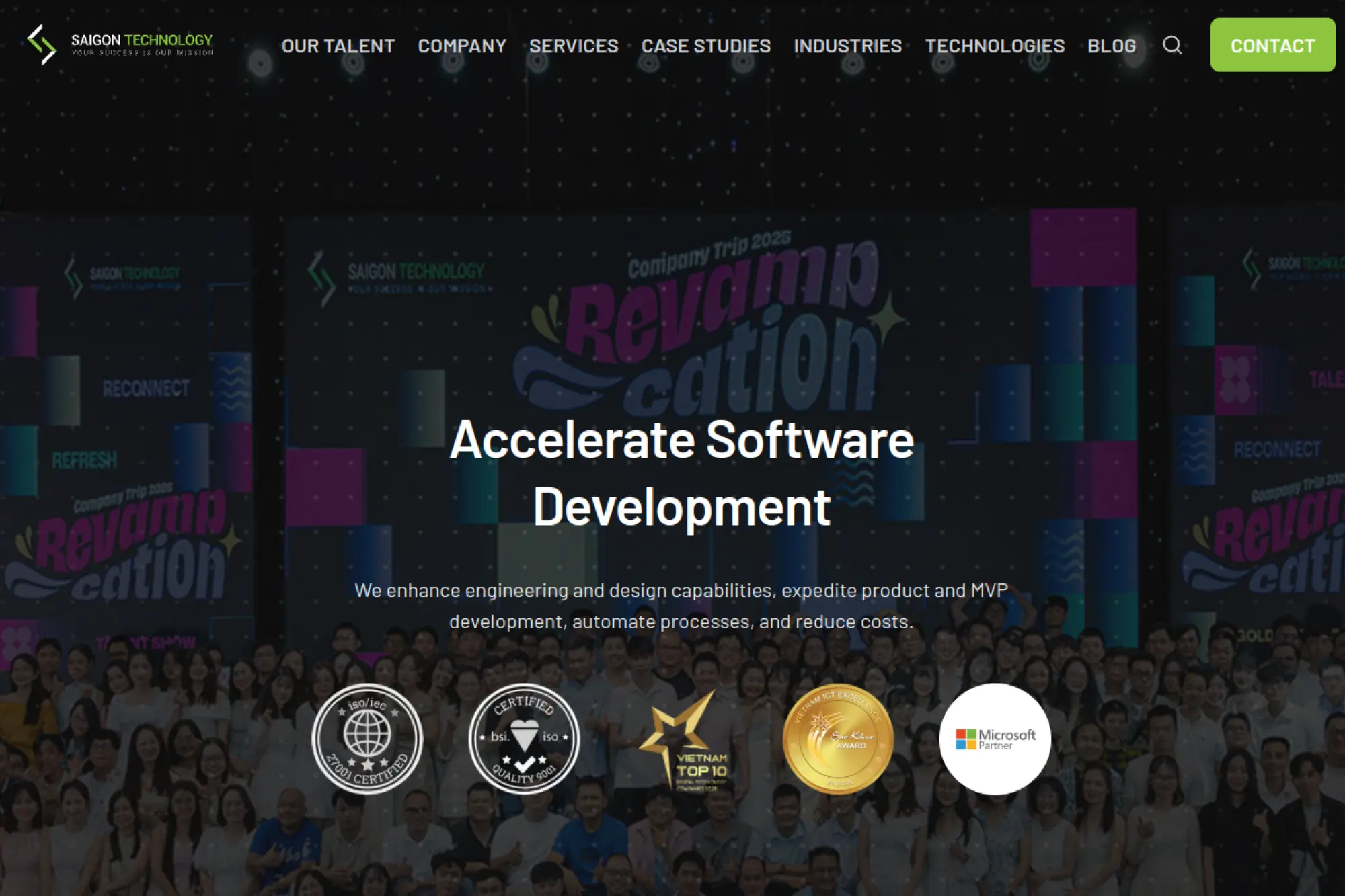
Saigon Technology is a Ho Chi Minh City‑based custom software firm with a strong presence in web, mobile, and cloud application development. In operation for over a decade, the company employs hundreds of engineers and leans into fintech, e‑commerce, and logistics, with English‑proficient teams used to high‑touch collaboration with Western clients.
Services & proof: We’ve observed Saigon Technology deliver pragmatic MVPs and iterative enhancements, introducing CI/CD, Infrastructure as Code, and observability along the way. They handle common modernization pain points—refactoring unstable modules, tightening test harnesses, and getting release trains predictable—while keeping stakeholders engaged through transparent demos and metrics.
Ideal Fit: Startups and mid‑market businesses wanting solid engineering discipline without enterprise overhead. If you’re aiming for a 3‑ to 6‑month runway to validate product‑market fit, their cadence is a match.
12. TECHVIFY

TECHVIFY is a Hanoi‑based vendor focused on application development, cloud services, and AI/ML experimentation. With a few hundred engineers and several years in operation, the company works across fintech, manufacturing, and retail. The teams often mix Java/.NET backends with modern JavaScript front‑ends, layered with data pipelines for reporting and personalization.
Services & proof: In our interactions, TECHVIFY leans into discovery, architecture spikes, and POCs to reduce delivery risk. They set up GitOps workflows, build CI pipelines that surface quality metrics, and automate performance testing where needed. The result is software you can iterate on without brittle dependencies or opaque build steps.
Ideal Fit: Product owners who want a partner to validate assumptions quickly, then scale what works. If you need both experimentation and guardrails, TECHVIFY offers a healthy middle ground.
13. SmartOSC
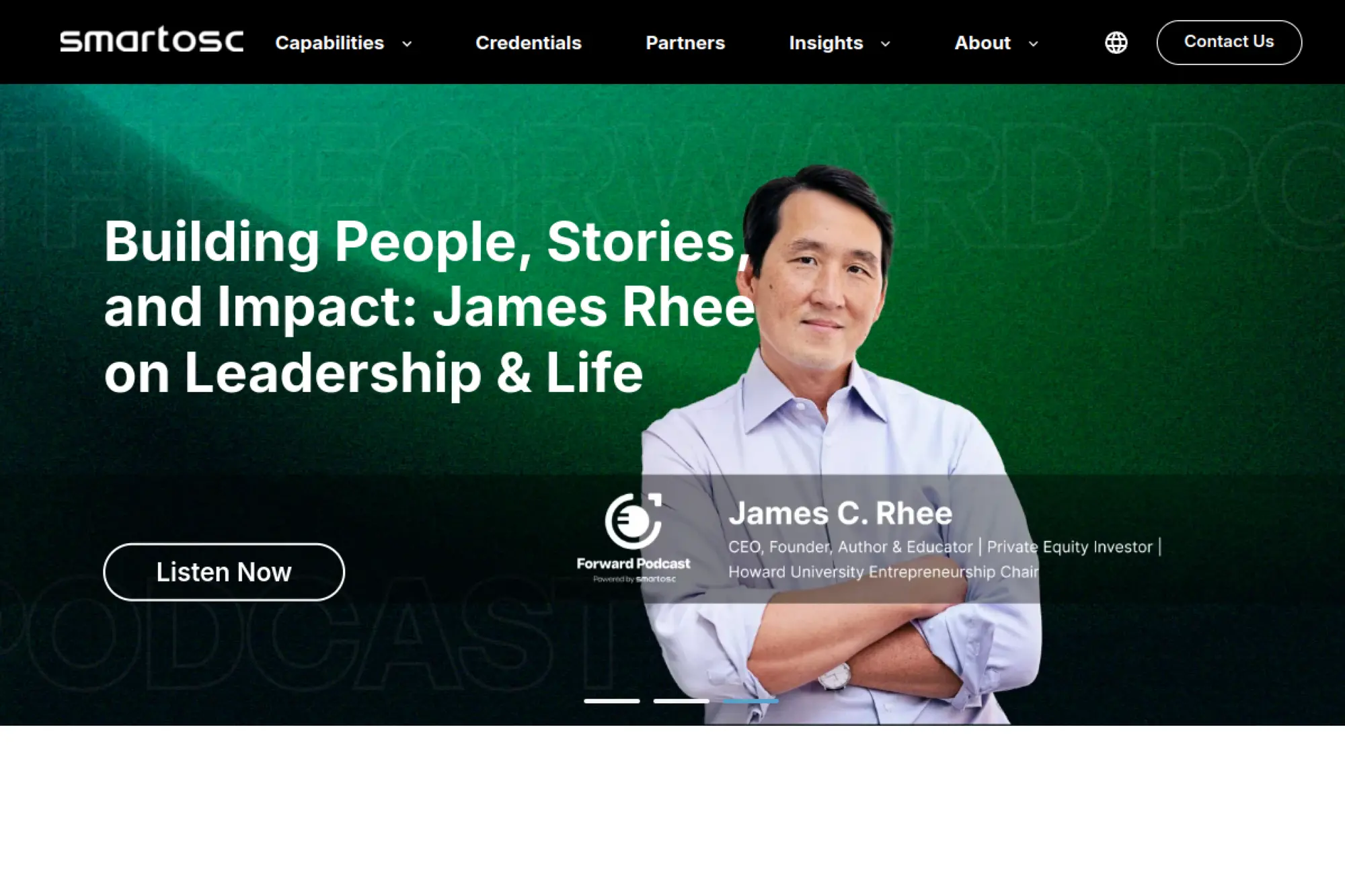
SmartOSC is a Hanoi‑rooted, e‑commerce‑centric partner that has grown to well over a thousand professionals spanning Vietnam and international offices. With ~15+ years in the market, SmartOSC focuses on mid‑to‑large retail and D2C brands, orchestrating storefronts, OMS, PIM, and the integration fabric that keeps catalogs, inventory, and payments in lockstep.
Services & proof: We’ve seen SmartOSC handle platform builds and replatforms with disciplined project controls. They excel at marrying commerce platforms with custom services for loyalty, promotions, and search, and they pay attention to page performance budgets and accessibility. Their testing and release management reduces peak‑season surprises when traffic spikes.
Ideal Fit: Commerce leaders who value a partner that blends platform know‑how with custom engineering. If your backlog spans SEO, merchandising UX, and backend resiliency, SmartOSC can field a full stack team to match.
14. WATA Software
WATA Software is a Ho Chi Minh City vendor serving fintech, logistics, healthcare, and media with web/mobile development and QA. Operating for several years and counting a few hundred engineers, WATA builds from discovery through to deployment and support, often becoming an extension of in‑house product and platform teams.
Services & proof: We’ve encountered WATA on projects where rapid prototyping is essential, followed by hardening for production. They set up CI/CD with sensible branching strategies, adopt IaC for reproducible environments, and focus on test automation to control regression. Their teams collaborate well across time zones with crisp daily updates.
Ideal Fit: Product teams that need quick wins but can’t compromise on long‑term maintainability. If you’re turning a promising prototype into a dependable service, WATA’s approach is a fit.
15. SHIFT ASIA
SHIFT ASIA, headquartered in Ho Chi Minh City and connected to Japan’s SHIFT group, specializes in software quality assurance, test automation, and security testing. With hundreds of engineers, the company serves enterprise clients that need rigorous validation and repeatable processes, strongly informed by Japanese quality standards and documentation discipline.
Services & proof: We’ve seen SHIFT ASIA implement risk‑based testing, build robust automation suites, and integrate security scanning into CI pipelines. Their emphasis on measurable coverage, defect prevention, and root‑cause analysis reflects a manufacturing mindset applied to software. For clients battling flaky tests and high escaped defect ratios, their methods are corrective and scalable.
Ideal Fit: Enterprises and ISVs that treat QA as a first‑class citizen. If your product’s brand rests on reliability—fintech, healthcare, industrial—SHIFT ASIA is a compelling specialist.
16. Bestarion
Bestarion operates from Ho Chi Minh City with strengths in data engineering, BI, and custom applications for healthcare, logistics, and retail. With a few hundred engineers and more than a decade in business, Bestarion focuses on building pipelines, analytics layers, and lightweight services that surface insights where business users can act on them.
Services & proof: We’ve worked near Bestarion teams that build secure ETL/ELT flows, dimensional models, and dashboards with attention to lineage and cost control. They standardize on IaC and automated tests for data quality, and they help clients move from ad‑hoc reports to governed, reusable datasets.
Ideal Fit: Organizations eager to monetize data but wary of runaway cloud bills. If you want pragmatic analytics—with attention to SLAs and change management—Bestarion’s data focus is on point.
17. Logix Technology
Logix Technology (Logixtek) is a Ho Chi Minh City‑based engineering firm with capabilities in custom development, cloud services, and product engineering. In operation for several years with a few hundred staff, the company supports clients in fintech, education, and logistics, often stepping in to accelerate delivery on tight deadlines.
Services & proof: We’ve seen Logixtek squads that adopt modern stacks—TypeScript/Node.js, .NET, React/Vue—with Docker/Kubernetes foundations. They engage with discovery sprints, write living API docs, and build CI pipelines that help small teams punch above their weight. Their engineers are comfortable inheriting partially built codebases and stabilizing them.
Ideal Fit: Product leaders who need to rescue momentum or staff up quickly without sacrificing code quality. If your backlog suffers from integration debt, Logixtek brings the right habits.
18. Trustify Technology
Trustify Technology is a Vietnam‑based custom software partner serving startups and mid‑market clients across web, mobile, and cloud. With a growing team in the hundreds and years of steady operation, Trustify focuses on pragmatic builds that balance feature delivery with long‑term maintainability for fintech, retail, and B2B SaaS.
Services & proof: We’ve interacted with Trustify engineers who prioritize clean contracts between services, reproducible environments, and measurable delivery KPIs. Expect well‑paced sprints, API‑first design, and a bias toward automated testing. They often step in where internal teams need extra muscle but also process coaching.
Ideal Fit: Founders and product owners who want clarity—story mapping, metrics, and visible progress every sprint. If you need a team that brings order to a fast‑moving roadmap, Trustify fits.
19. Dev Station Technology
Dev Station Technology is a newer entrant with Vietnam‑based teams focused on custom development and staff augmentation. With a compact headcount in growth mode and several years in the market, Dev Station works across fintech, media, and logistics, helping clients increase velocity while introducing modern engineering practices.
Services & proof: We’ve seen them excel in greenfield builds and modernization of Node.js/.NET backends, mobile apps, and data services. Their delivery tends to include IaC, CI/CD, and observability from early sprints, which reduces surprises at launch. For teams struggling with release jitters, their playbooks shorten feedback loops.
Ideal Fit: Early‑stage companies and mid‑market tech teams that need a pragmatic partner to turn product ideas into working software quickly, with a clear path to hardening for production.
20. ISB Vietnam Co Ltd
ISB Vietnam, part of Japan’s ISB Group, operates from Ho Chi Minh City and supports embedded systems, enterprise applications, and QA. With over a decade in operation and hundreds of engineers, ISB Vietnam bridges Japanese process rigor with Vietnam’s engineering talent, serving manufacturing, mobility, and enterprise IT.
Services & proof: We’ve seen ISB Vietnam deliver firmware‑to‑cloud integrations, enterprise application builds, and disciplined testing that meets stringent quality targets. Their bilingual teams and documentation habits benefit clients who need traceability and formal reviews alongside agile delivery.
Ideal Fit: Companies that sell into Japan or adopt Japanese quality expectations, and product teams that require meticulous documentation, change control, and stable long‑term maintenance.
21. SoftWorld VietNam Ltd
SoftWorld Vietnam delivers custom software and mobile solutions from Ho Chi Minh City, working with clients in education, retail, and services. Operating for several years with a compact team in the hundreds or fewer, SoftWorld’s projects often focus on clean UX, mobile performance, and reliable integrations with third‑party services.
Services & proof: We’ve encountered SoftWorld teams who move quickly on native and cross‑platform mobile, backed by secure APIs and CI for repeatable builds. When needed, they introduce feature flagging, analytics, and A/B testing to connect engineering effort to product outcomes like activation and retention.
Ideal Fit: Product leaders who want mobile‑first delivery with an eye on UX and instrumentation. If your roadmap is heavy on mobile experiences with steady iteration, SoftWorld is a practical pick.
22. SSA Group
SSA Group is a European software engineering company with distributed delivery, including teams aligned to Vietnam’s time zones for collaboration. With many years in operation and hundreds of engineers, SSA serves finance, healthcare, and manufacturing clients with custom development, QA, and data services.
Services & proof: We’ve seen SSA Group handle complex integrations, data‑centric platforms, and QA frameworks that can be shared across portfolios. Their strengths include predictable cadence, documentation that travels well across teams, and steady SRE practices that support uptime and performance SLAs.
Ideal Fit: Organizations that need a blended near‑/offshore model with the ability to coordinate across continents. If your stakeholders are in Europe but your product needs round‑the‑clock progress, SSA’s operating model helps.
23. MOR Software
MOR Software is a Hanoi‑centered vendor with hundreds of engineers delivering web/mobile apps, cloud services, and QA. Founded in the mid‑2010s, MOR has grown steadily on the back of fintech, healthcare, and enterprise projects, often serving as the long‑term extension of an in‑house product team.
Services & proof: We see MOR emphasize agile discipline, clean architecture, and automation. Expect IaC, CI, and quality gates as standard, with teams comfortable in modern stacks and pragmatic with cloud cost controls. Their delivery style suits stakeholders who want regular demos and transparent burn‑down.
Ideal Fit: Mid‑market companies that need a dependable partner to scale features without destabilizing the product. If your North Star is predictable delivery and fewer production surprises, MOR is a sound option.
24. Waverley Software
Waverley Software blends U.S. leadership with strong Vietnam delivery centers in Ho Chi Minh City and Da Nang. With decades in business and hundreds of engineers, Waverley tackles embedded software, IoT, cloud applications, and UI engineering for consumer and industrial use cases across healthcare, consumer electronics, and mobility.
Services & proof: We’ve seen Waverley balance firmware, mobile, and cloud skill sets in one program, which is rare. They are comfortable with BLE/IoT integrations, secure APIs, and mobile apps that respect device constraints. Their DevOps practices—monitoring, canary releases, and incident response—tighten the loop between shipped code and field feedback.
Ideal Fit: Companies with physical‑digital products that need cross‑disciplinary engineering. If your roadmap spans device firmware, native apps, and cloud analytics, Waverley is a strong match.
25. Rikkeisoft
Rikkeisoft is a Hanoi‑headquartered engineering company with thousands of professionals working across application development, digital commerce, and AI/ML. Founded in the early 2010s (~2012), Rikkeisoft has grown quickly, adding innovation labs and regional presence to support customers in Japan, the U.S., and APAC.
Services & proof: We’ve seen Rikkeisoft thrive in modernization, e‑commerce builds, and data platforms. They introduce component libraries and API gateways to tame complexity and use IaC with automated compliance checks to reduce drift. Their bilingual delivery makes cross‑border collaboration smoother.
Ideal Fit: Organizations that need scale with a product mindset—retailers, fintechs, and enterprises ready to rationalize legacy while launching new digital lines. If you need predictable throughput plus experimentation space, Rikkeisoft calibrates well.
26. SotaTek
SotaTek is a Hanoi‑grown vendor with over a thousand engineers, active in blockchain, fintech, and full‑stack web/mobile development. In operation since the mid‑2010s, SotaTek has delivered high‑traffic consumer apps and B2B platforms, with a reputation for rapid ramp‑ups and energetic delivery.
Services & proof: We’ve interacted with SotaTek teams that handle complex transaction systems, from payment gateways to digital asset platforms, with attention to security and throughput. They implement modern architectures, performance budgets, and API observability that helps diagnose issues early in the cycle.
Ideal Fit: Fintech and Web3 players who need speed without sacrificing security or auditability. If your backlog includes low‑latency services and compliance constraints, SotaTek has relevant patterns.
27. Positive Thinking
Positive Thinking Company operates globally with a sizable Vietnam presence, focusing on product development, cloud modernization, and data/AI. With thousands of professionals and a decade‑plus in the market, the company brings consulting structure and experience running distributed teams across continents and time zones.
Services & proof: We’ve seen Positive Thinking combine discovery and delivery, mapping outcomes to measures like lead time, error budgets, and customer‑journey KPIs. They’re strong on platform engineering—golden paths, internal developer platforms, and DevSecOps—so product teams can move fast without breaking guardrails.
Ideal Fit: Enterprises and scale‑ups that want an end‑to‑end partner with global muscle but cost‑effective Vietnam delivery. If your transformation spans multiple business units, their governance helps align teams.
28. Savvycom
Savvycom is a Hanoi‑based partner in custom software, mobile apps, and cloud solutions, active since the late 2000s. With hundreds of engineers, Savvycom serves healthcare, fintech, and retail, bringing a design‑conscious approach to user‑facing applications and the APIs that power them.
Services & proof: We’ve seen Savvycom deliver crisp mobile experiences backed by stable services and well‑tuned data models. Their delivery culture includes sprint rituals, automated testing, and reproducible builds, which pays off in predictable releases and measurable improvements to user engagement.
Ideal Fit: Product owners who prize UX and steady iteration. If you’re building customer‑facing journeys where performance and polish matter, Savvycom is worth shortlisting.
29. Axon Active

Axon Active is a Swiss‑founded company with major Vietnam delivery hubs in Ho Chi Minh City, Da Nang, and Can Tho. With hundreds of engineers and more than a decade of Vietnam operations, Axon Active is known for dedicated Scrum teams, agile coaching, and long‑running partnerships in finance, health, and industrial domains.
Services & proof: We’ve worked near Axon Active squads that run disciplined Scrum with visible metrics—velocity, lead time, and escaped defects—turning them into levers for improvement rather than vanity numbers. They prefer clean architectures, strong CI pipelines, and infrastructure that supports frequent, low‑risk releases.
Ideal Fit: Product companies that want a stable, long‑term nearshore squad and coaching to uplevel in‑house agile practices. If you value cadence and teamwork continuity, Axon Active’s model fits well.
30. Second Talent
Second Talent operates as a talent‑first engineering partner with Vietnam‑based delivery capacity. With a compact, scaling team and several years of operation, they focus on placing seasoned engineers into blended squads for startups and mid‑market clients across fintech, media, and SaaS, emphasizing cultural fit and communication.
Services & proof: We’ve seen Second Talent run staff‑augmentation and pod‑based models with strong screening and a bias for senior ICs who can lead by example. They enable clients to start lean, then add skills—cloud, data, QA—just‑in‑time, while maintaining quality guards via CI/CD and code review standards.
Ideal Fit: Founders and CTOs who want hands‑on seniors to set the technical bar, establish good habits, and deliver features without heavy management overhead. If your roadmap changes quickly, their flexible engagement style is a plus.
Curious which two or three of these firms best match your stack, budget, and delivery style? Tell us your target architecture, timelines, and in‑house capacity, and we’ll help you shortlist and craft a low‑risk pilot to validate the fit before you scale.
How to choose among outsourcing software development companies in vietnam
Tooling and culture drive outcomes more than slogans. In our experience, top performers invest early in the developer experience, a finding echoed by McKinsey’s research that companies with strong tooling are 65 percent more innovative. Treat vendor selection as a systems decision, not a price decision. The right choice compounds value with each release.
1. Experience and Expertise
Start with evidence of domain fluency. Case studies should describe constraints, not just outcomes. We look for how teams reasoned about trade‑offs, not only the destination. Ask for architecture decisions, rollback plans, and integration lessons. Teams that explain their missteps clearly are usually the safest hands.
Signals to probe
- Design choices that balanced build speed with operability and risk.
- Examples where product direction changed and teams adapted gracefully.
- Stories of aging systems revived without shutdowns or missed cutovers.
2. Capacity and Resources
Capacity involves talent readiness, not just headcount. Bench depth matters when you need specialists on short notice. Ask how vendors cross‑train and manage succession. The best partners show transparent skill matrices and honest gaps. You want partners who tell you when to involve a niche expert early.
What we validate
- Up‑to‑date skill inventories mapped to your stack and roadmap.
- Clear pathways for onboarding, shadowing, and escalation to principals.
- Named backups for key roles to avoid single points of failure.
3. Culture and Working Style Alignment
Velocity rises when cultures align. Some teams prefer concise written updates; others thrive in whiteboard sessions. Decide where you sit. Then test fit through a short discovery. We favor partners who ask hard questions early and document agreements in plain language. That approach prevents slow‑burn misalignment.
Field heuristics
- Product narratives that are business‑first, not tool‑first.
- Backlogs shaped as decisions, not chores.
- Respectful pushback when scope threatens delivery integrity.
4. Cost and Pricing Models
Choose pricing that matches uncertainty. Fixed‑price fits well‑bounded scopes with stable dependencies. Elastic teams make sense when discovery is ongoing. Outcome‑based contracts suit platforms with measurable service levels. We also value simple renewal mechanics and transparent rate cards, even when engagement is outcome‑led.
Trade‑offs to weigh
- Price certainty versus change agility as the roadmap evolves.
- Short sprints to de‑risk estimates before committing to larger scopes.
- Guardrails around change control to avoid scope inflation.
5. Company Scale and Global Delivery Footprint
Scale affects resilience and attention. Large providers handle complex, multi‑region programs. Smaller firms often move faster with sharper focus. Many buyers choose a portfolio: one enterprise partner for heavy lifts, complemented by specialists for speed and innovation. Orchestrate that ecosystem explicitly to avoid overlap and misaligned incentives.
Ecosystem patterns
- Core platform with an enterprise partner and satellite squads for features.
- Specialist data or security teams embedded as shared services.
- Rotational exchanges to spread practices and retain context.
6. Industry Certifications and Quality Standards
Certifications validate process hygiene, yet daily practice reveals more. Ask to see test strategies, CI configurations, and on‑call playbooks. The most reliable teams demo environments live. They show how issues move from detection to resolution. Transparency here reduces integration risk and operational surprises.
Artifacts to inspect
- Automated quality gates within the delivery pipeline.
- Threat modeling and dependency scanning routines.
- Post‑incident reports that demonstrate learning loops.
7. Client Reviews and Retention
References matter when they reveal decision patterns under stress. Seek stories about scope changes, late discoveries, and production incidents. Notice how the vendor handled trade‑offs and communication. Strong partners own problems without defensiveness and stabilize quickly. Retention grows from that posture.
Reference questions we ask
- How did the team respond when priorities shifted suddenly?
- What did the first incident teach about the team’s character?
- Would you hire the same team lead again for your next program?
8. Security and Compliance Practices
Security cannot be an afterthought. Choose vendors who treat it as a product feature. We examine how secrets are handled, how access is provisioned, and how data moves between environments. The best partners design for least privilege and make audit trails easy to follow.
Controls to confirm
- Segregated environments and reproducible infrastructure definitions.
- Automated scanning of code, containers, and dependencies.
- Explicit data residency and retention policies aligned to your obligations.
Pricing, engagement models, and collaboration setups

Across the outsourcing landscape, the same Deloitte survey highlights buyers leaning toward value‑based, outcome‑aligned models over purely transactional staffing. That shift lines up with what we observe in Vietnam, where providers increasingly blend discovery, build, and run into cohesive product teams. Choosing well means pairing the model to uncertainty and speed needs.
1. Fixed-Price Projects
Fixed scope fits when requirements are stable and dependencies are low risk. It can work for contained modules, well‑defined integrations, or compliance‑driven changes. To succeed, define acceptance criteria early and pin down environment readiness. We insist on milestone‑based payments, because they keep focus on outcomes rather than hours.
How we de‑risk fixed scope
- Short discovery to sharpen assumptions and surface constraints.
- Prototype key flows before final estimates to validate complexity.
- Clear change mechanisms to protect delivery integrity.
2. Time and Materials
Elastic teams match evolving product discovery. Pricing maps to effort, and governance centers on velocity and value. This model thrives with strong product ownership, lean rituals, and transparent metrics. Trust grows when vendors expose delivery telemetry and highlight impediments early.
When T&M shines
- Rapidly shifting roadmaps that favor learning over certainty.
- Platform work where dependencies unfold as you build.
- Programs that reward measured experiments and fast iteration.
3. Dedicated Teams and Offshore Development Centers
Dedicated squads feel like part of your company. They internalize culture, toolchains, and customer context. That continuity pays off in reduced onboarding and stronger architectural memory. Vietnamese providers run such models well, especially when staffed with stable core leads and cross‑functional roles.
Keys to success
- Shared rituals, coding standards, and product principles.
- Joint hiring and rotation to maintain quality and morale.
- Explicit knowledge bases and onboarding trails for new members.
4. Hybrid Models
Real programs rarely fit a single model. We often blend outcome‑priced increments for predictable features with elastic teams for emerging work. Another pattern pairs a fixed discovery with subsequent elastic delivery. Hybrid keeps risk and flexibility in balance as the roadmap evolves.
Orchestration patterns
- Fixed discovery followed by elastic execution under shared guardrails.
- Core platform under dedicated squad plus specialist sprints as needed.
- Outcome‑based modules for known value slices within a broader agile program.
5. Project Scoping and Team Assembly
Scope is a strategy choice. Start with the business bet and shape technical work around it. We assemble teams to mirror product surfaces and minimize cross‑team dependencies. The goal is fewer handoffs and clearer accountability. Vietnamese partners with product chops lean into this pattern quickly.
Assembly checklist
- Define product surfaces and map squads accordingly.
- Choose shared services deliberately to avoid hidden queues.
- Plan for shadowing and knowledge transfer from day one.
6. Agile Delivery and Communication Rhythms
Agility is a rhythm, not a brand. We keep planning light, feedback loops short, and documents living. Async updates carry the load; meetings solve ambiguity. Vietnamese teams versed in this style maintain flow while staying visibly accountable. The result is steady progress without ceremony fatigue.
Rituals that scale
- Concise, decision‑oriented planning notes instead of heavy decks.
- Weekly demos focused on learning, not theater.
- Retro actions that actually change how the next sprint runs.
Risks and mitigation when outsourcing to Vietnam
Good partners reduce risk by design, yet no geography is risk‑free. The Deloitte survey we cited earlier calls out governance gaps as a common barrier to realizing AI‑enabled outsourcing benefits. We see the same pattern: risk rises when scope is fuzzy, communication drifts, or security controls lag delivery speed. Each risk is manageable with intent.
1. Set Clear Scope, Milestones, and SLAs
Clarity prevents rework. Define outcomes, not activities. Write acceptance criteria in language product owners and engineers both trust. Keep milestones value‑linked rather than task‑linked. When intent is explicit, teams move faster and conflict drops. Vietnamese vendors attuned to global clients usually welcome this rigor.
Practical moves
- Align on outcomes and define how to measure success.
- Draft user‑centric acceptance criteria with edge cases included.
- Connect payments to delivered value slices, not busywork.
2. Ensure Strong Communication and English Proficiency
Communication gaps are solvable with structure. Require concise written updates and shared decision logs. Encourage early escalation when assumptions wobble. Many Vietnamese teams already operate this way; they appreciate when clients reciprocate with crisp product narratives. Mutual clarity beats heavy ceremony.
What we standardize
- Short weekly memos that capture risks, decisions, and blockers.
- Shared glossaries for domain terms to prevent drift.
- Agreed escalation paths with named contacts on both sides.
3. Choose Vendors with Certifications and Security Controls
Security posture should be demonstrable. Ask to see pipeline scans, audit logs, and access policies. Look for least‑privilege access and disciplined handling of secrets. Vietnamese providers serving regulated industries often meet these bars already. Validate with artifacts, not promises.
Controls that matter
- Documented change control across environments with traceable approvals.
- Automated dependency scanning and patching pipelines.
- Clear data handling rules, including masking and residency boundaries.
4. Plan Overlapping Hours for Time Zones
Plan minimal but sufficient overlap. Reserve it for decisions, design debates, and incident review. Keep status async to protect flow. Vietnamese teams respond well when calendars reflect intent rather than habit. Time discipline avoids fatigue while sustaining momentum.
Calendar hygiene
- Reserve overlap for decisions and unblockers, not status reports.
- Cluster sessions on predictable days to reduce scatter.
- Record demos and keep notes searchable for everyone’s benefit.
5. Start with a Pilot Before Scaling
Pilots expose reality faster than slideware. Use them to test rituals, team chemistry, and architecture bets. A focused pilot de‑risks estimates and reveals how the vendor learns. Vietnamese partners confident in their craft welcome this approach because it sets both sides up to succeed.
Pilot design
- Choose a slice with real user value and visible integration edges.
- Measure learning, not just output, to inform next steps.
- Decide scale‑up criteria before the pilot starts.
How TechTide Solutions helps you build custom software aligned to your needs

Our approach mirrors the research linking developer experience, tooling, and culture to superior outcomes, as highlighted by the same McKinsey analysis. We operate as builders and translators, aligning engineering to business truths. Vietnamese partners extend that capability with depth and scale, provided the engagement is shaped to your goals.
1. Discovery and solution design tailored to your business goals
Discovery is where waste is either born or killed. We start by unpacking your bets, constraints, and non‑negotiables. Then we create a product narrative everyone can point to. Engineers get crisp problem statements; leaders get visible trade‑offs. Vietnamese teams slot in quickly when discovery speaks their language.
What we deliver
- Product narratives that link business goals to engineering scope.
- Service maps that clarify interfaces, data flows, and responsibilities.
- Decision logs that survive leadership changes and program pivots.
2. Agile full‑stack development, integration, and quality assurance
We ship in small, valuable slices. Our squads blend product, design, engineering, and QA as one unit. Quality checks live in the pipeline, not at the end. When Vietnamese vendors join these squads, we align on coding standards, test strategies, and operational guardrails. That alignment keeps releases reliable.
How we keep velocity sustainable
- Automation for build, test, and deployment to remove toil.
- Architecture decisions recorded and revisited as the system evolves.
- Security and performance treated as shared continuous concerns.
3. Ongoing support, scaling, and continuous improvement
After launch, product health depends on strong operations. We shape incident playbooks, define error budgets, and keep feedback loops close to users. Vietnamese teams with on‑call discipline integrate cleanly here. Improvement then becomes routine rather than a special project.
Operating system
- Live dashboards tracking product health and user experience.
- Regular retros with actions that stick and reduce future toil.
- Planned capacity for technical debt to protect long‑term velocity.
Conclusion: finding the right outsourcing software development companies in vietnam
The vendor you choose should be ready for modern realities, including applied AI surfacing across every product surface. Market watchers report AI‑native startups dominate new unicorn creation this year, with 53% of fresh billion‑dollar entrants built around AI. That shift matters for buyers because it sets the bar for speed, quality, and intelligent automation in everyday software.
Vietnam’s providers can meet that bar when engagements are designed well. Focus on outcomes, insist on clarity, and test team chemistry through a short pilot. Where you find real partnership, you will find speed and resilience. Shall we map your shortlist, design a pilot, and turn intent into shipped value?