
Choosing among custom application development companies is not a logo contest. At TechTide Solutions, we care more about delivery model, system complexity, and day-two support than a polished homepage. A team that is perfect for a consumer app MVP can be the wrong fit for an insurance workflow rebuild.
The market is still expanding, which means buyers are seeing more options and more noise at the same time. The U.S. custom software market is projected to grow at 18.5% CAGR, so the shortlist problem is getting harder, not easier. The spending backdrop matters too. Gartner forecast worldwide IT spending to grow 7.9% in 2025, which helps explain why more teams are funding modernization, integrations, and internal tools instead of waiting for packaged software vendors to catch up.
AI has raised the bar again. McKinsey found 88 percent of organizations use AI in at least one business function. So when we compare providers now, we expect judgment around data quality, workflow redesign, and governance, not just code output. We see that split clearly in real projects. Utility’s Airbnb work centered on live event UX and coordination, while Simform’s Privilee example focused on subscription billing modernization and ERP integration. Both live under the “app development” umbrella, but the buying criteria are completely different.
Quick Comparison of Custom Application Development Companies
We built this table for the first pass, not the final decision. Use it to cut noise fast, then dig into discovery quality, technical ownership, and post-launch accountability.
| Agency | Best for | Strength | Potential drawback | Good question to ask |
|---|---|---|---|---|
| Simform | Modernization and long-term engineering | Cloud and architecture depth | May be bigger than a small MVP needs | Who owns architecture after kickoff? |
| Mercury Development | Multi-platform mobile products | Execution strength across devices | Less strategy-led than some boutiques | Who drives product decisions on our side? |
| TechTide Solutions | Cross-platform product builds with direct access | Clear scoping and practical delivery | Smaller bench than giant vendors | How do you handle roadmap changes mid-build? |
| Goji Labs | UX-heavy MVPs and discovery | Strategy-first product thinking | Not the first pick for very large backend programs | How much of the engagement is discovery first? |
| Langate | Healthtech and regulated software | Compliance-aware engineering | Vertical tilt may be too specific for some buyers | What regulated systems have you shipped recently? |
| Buildable | SMB workflow tools and practical web apps | Small US-based team and pragmatic mindset | Limited bench for very large programs | Which roles stay hands-on through launch? |
| Chetu | Large-scale resourcing and many stack options | Bench depth across industries | Needs tight governance from the client | Who exactly will be assigned to our account? |
| RipenApps | Startup launches and mobile-first products | Launch pace and visual polish | Need to verify senior engineering depth | Can you show complex backend work, not just UI? |
| Utility | Consumer experiences and brand-led apps | Strong product design and storytelling | May be costly for internal tools | How do you balance design ambition with roadmap reality? |
| Blackthorn Vision | .NET, Azure, and discovery-led products | Structured discovery and technical ownership | Less ideal for style-led consumer campaigns | What do we get at the end of discovery? |
Recommended reading: Top 20 Ecommerce App Development Companies in Vietnam for Shopify, Magento, and Custom Commerce Apps
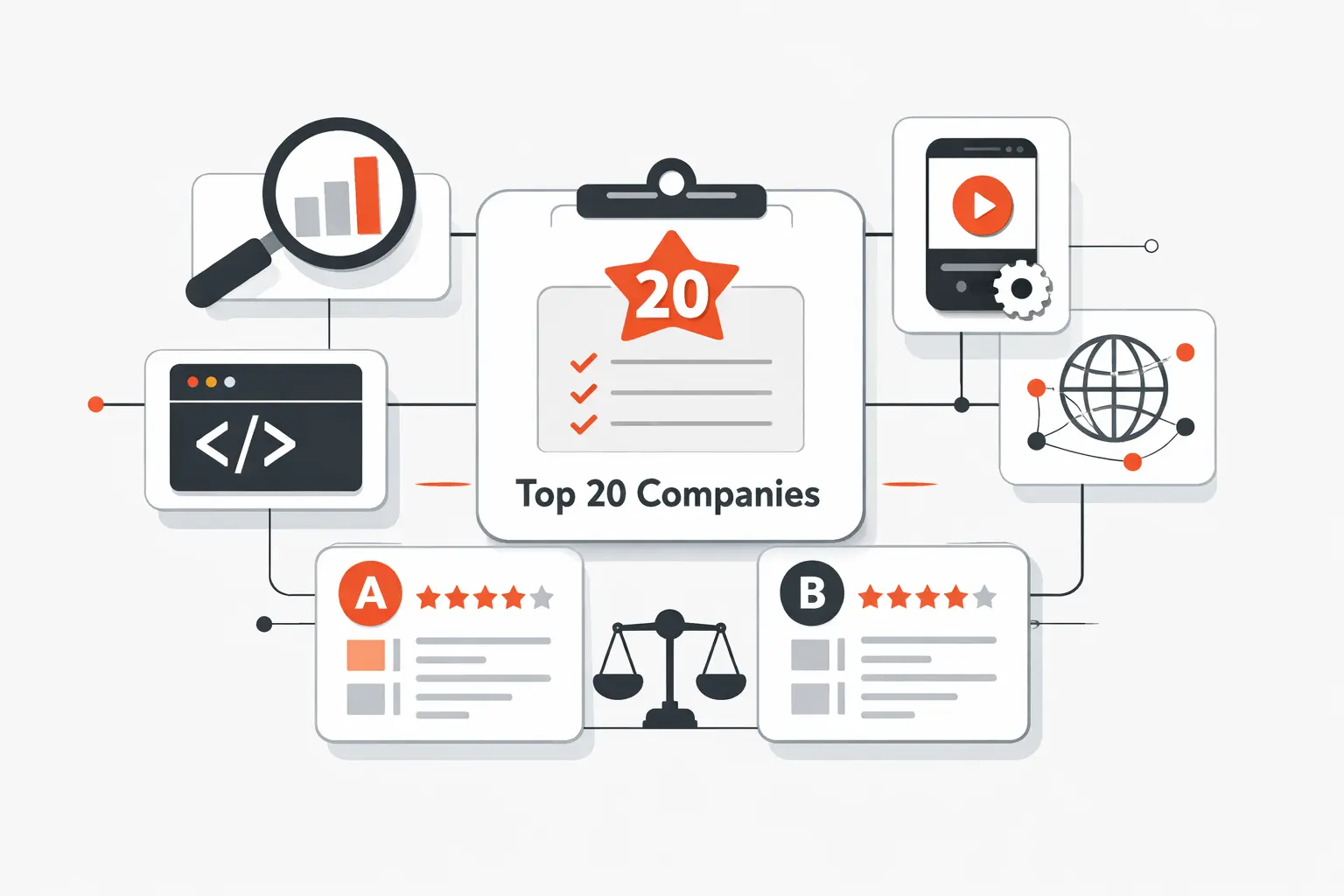
Top 20 Custom Application Development Companies to Shortlist
Below is how we would shortlist each firm if a client asked us to compare them side by side today. We focus on the part buyers usually miss, not “can they code?” but “what kind of project are they built to carry?”
1. Simform
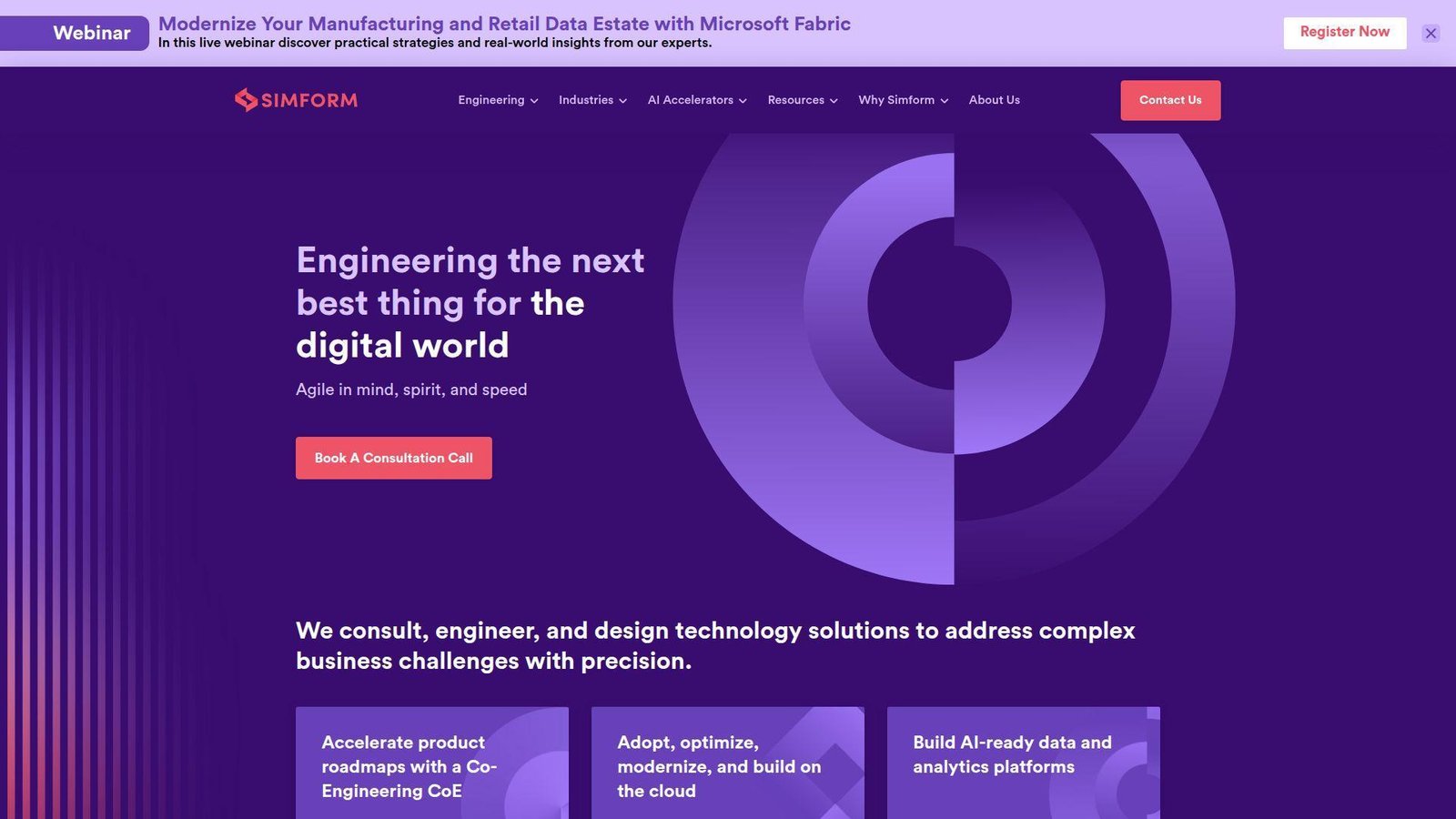
Simform sits firmly in the product-engineering category. The company says it was founded in 2010, has more than 1,200 employees, and operates from Orlando, Florida with a broad delivery footprint. We would shortlist it for cloud-heavy web platforms, application modernization, data work, and long-term engineering partnerships, especially when the app is only one part of a larger platform program.
What stands out to us is the co-engineering model. That usually works best when a client already has domain context but needs architectural muscle and reliable execution. Their public Privilee example points to strength in billing, migration, and ERP-connected systems. The trade-off is size. Small founders looking for a lightweight MVP studio may feel over-served here.
- Service scope: Product engineering, cloud, data, AI, UX, modernization.
- Industry specialization: High-tech, fintech, healthcare, supply chain, retail.
- Ideal client size: Scale-ups, ISVs, mid-market firms, enterprise teams.
- Pricing model: Custom statement of work or ongoing team engagement.
- Onboarding process: Technical consultation, team-fit calls, then squad onboarding.
- Communication style: Structured, pod-based, engineering-heavy.
- Proof/case-study requirements: Ask for modernization work close to your stack.
- Red flags to check before hiring: Staffing flexibility without a named architecture owner.
- Questions to ask before signing: Who owns system design, backlog priority, and production support?
2. Mercury Development
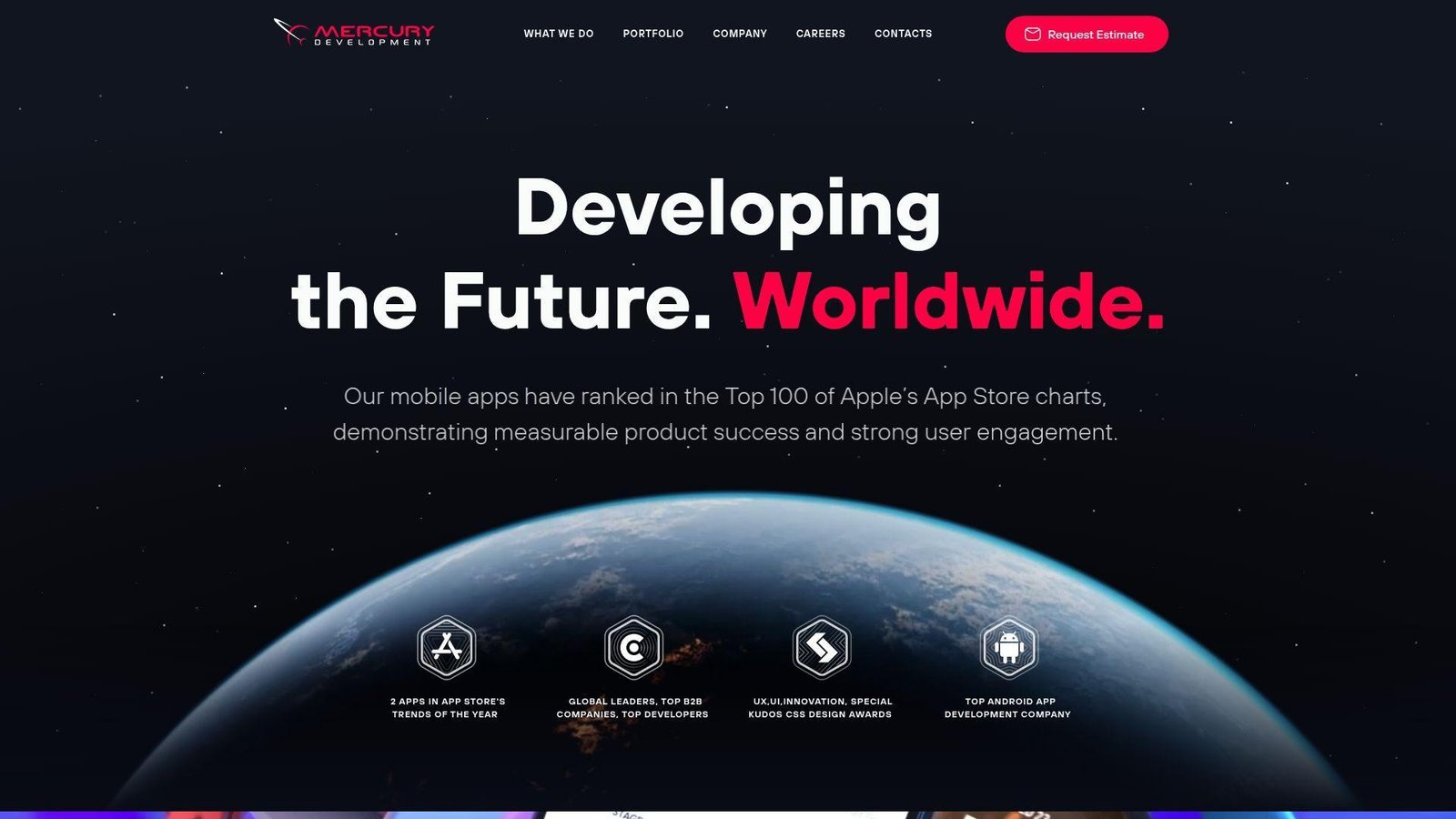
Mercury Development feels like an execution-first engineering house with deep mobile roots. It has operated since 1999, lists roughly 500 experts, and shows a Florida headquarters with multiple US and international offices. We pay attention to Mercury when a project spans mobile, wearables, web, and QA because its public portfolio includes Fitbit and other high-usage consumer products.
We would not hire Mercury for strategy theater. We would hire it when a backlog needs throughput, stable cross-platform delivery, and a team comfortable with staff extension. That makes it attractive to funded startups and enterprise teams with strong internal product leadership. The risk is simple. If you need a partner to rewrite the business case itself, other firms on this list lead with that better.
- Service scope: Mobile, web, AI/ML, QA, discovery, staff augmentation.
- Industry specialization: High-tech, fitness, retail, healthcare, fintech, IoT.
- Ideal client size: Startups through enterprise product teams.
- Pricing model: Custom estimates and team-extension engagements.
- Onboarding process: Requirements review, estimate, then scalable team setup.
- Communication style: Direct, delivery-focused, pace-oriented.
- Proof/case-study requirements: Ask for multi-platform work with real user load.
- Red flags to check before hiring: No clear product owner on the client side.
- Questions to ask before signing: Which functions stay in-house versus embedded with us?
3. TechTide Solutions
We know our own process best, so we can be clear about fit. TechTide Solutions presents itself as a software development company with 150+ professionals, headquarters in Ho Chi Minh City, and experience across software, web, and mobile delivery for fintech, blockchain, healthcare, and insurance. We fit best when a buyer wants one practical team that can move across interface work, backend logic, and product scoping without unnecessary handoffs.
Our honest take is that we are not the right choice for every project. If you need a giant vendor bench, a procurement-heavy enterprise structure, or a pure brand agency, there are better matches below. Where we do well is clear scoping, direct communication, and product builds that need calm execution more than hype. We would want clients to screen us as hard as they screen everyone else.
- Service scope: Custom software, web, mobile, UI/UX, R&D, prototyping.
- Industry specialization: Fintech, blockchain, healthcare, insurance.
- Ideal client size: Startups, growth firms, and focused mid-market teams.
- Pricing model: Custom quote after scope and roadmap review.
- Onboarding process: Discovery, scoping session, UI review, then build plan.
- Communication style: Direct, practical, and hands-on.
- Proof/case-study requirements: Ask us for workflow-heavy builds, not just visuals.
- Red flags to check before hiring: A mismatch between your scale needs and our bench size.
- Questions to ask before signing: Which senior people stay involved after scope approval?
4. Goji Labs
Goji Labs is one of the cleaner choices for strategy-first product work. The firm says it has 70+ team members, 12 years in business, and a Los Angeles base with New York presence. We would pull Goji into an early shortlist when discovery, UX, feature framing, and launch sequencing matter more than raw bench size. It looks especially relevant for startups, nonprofits, and public-sector teams that need help deciding what to build first.
Our view is simple. Goji is strongest when the hard problem is clarity. If your team has an idea but not yet a sharp product definition, this is the kind of studio that can reduce waste early. The trade-off is backend scale. For highly integrated enterprise systems or large modernization programs, we would compare Goji against heavier engineering partners before deciding.
- Service scope: Product strategy, UX/UI, app development, dedicated teams.
- Industry specialization: Startups, nonprofits, public sector, marketplaces, SaaS.
- Ideal client size: Founders, innovation teams, small to mid-size organizations.
- Pricing model: Project-based discovery and build engagements.
- Onboarding process: Discovery call, strategy alignment, then design and build.
- Communication style: Collaborative, consultative, product-led.
- Proof/case-study requirements: Ask for cases where scope changed after research.
- Red flags to check before hiring: Assuming they are a cheap dev shop. They are not positioned that way.
- Questions to ask before signing: What did discovery remove from the roadmap in similar projects?
5. Langate
Langate stands out because it publicly leans into healthcare and regulated software. LinkedIn lists the company at 51 to 200 employees, founded in 1996, with headquarters in New York, while its site shows a broader US and Ukraine footprint and a strong Microsoft-centered delivery story. We would look at Langate first for healthtech platforms, modernization, cloud migration, and data-sensitive systems where compliance language is part of the day-to-day work.
That focus is the upside and the limitation. If your product lives in patient data, payer workflows, or medical operations, Langate’s specialization is useful. If you are building a consumer lifestyle app with no regulatory complexity, some of that discipline may be more than you need. We would ask them to show the exact line between product consulting, modernization, and ongoing engineering support.
- Service scope: Custom software, cloud, DevOps, design, integration, modernization.
- Industry specialization: Healthcare first, with finance and enterprise support.
- Ideal client size: Healthtech vendors, hospitals, startups, regulated SMBs.
- Pricing model: Custom project pricing and team extension.
- Onboarding process: Sales intake, technical review, then recruitment or project plan.
- Communication style: Transparent and domain-aware.
- Proof/case-study requirements: Demand compliance-heavy examples close to your workflow.
- Red flags to check before hiring: Broad promises without named healthcare references.
- Questions to ask before signing: Who handles security, compliance mapping, and release governance?
6. Buildable
Buildable is small on purpose, and that is the point. Public profiles place it in the 11 to 50 employee range, founded in 2008, with headquarters in McMinnville, Oregon. We see Buildable as a practical US-based option for companies that need custom web apps, ERP-style workflow tools, mobile support, and a team that talks like operators, not pitch-deck writers.
We would compare Buildable when the project is operational and grounded. Internal tools, workflow cleanup, and business software for real teams are a better fit here than trend-chasing consumer apps. The obvious trade-off is bench size. Buildable is unlikely to be the right answer for massive multi-stream enterprise programs, but it can be a very solid answer for a mid-size company that wants senior attention.
- Service scope: Web, mobile, ERP, UX/UI, software engineering.
- Industry specialization: Operational business software across industries.
- Ideal client size: SMBs and mid-market firms.
- Pricing model: Custom project pricing.
- Onboarding process: Contact intake, collaborative planning, agile delivery.
- Communication style: Straightforward, practical, low-fluff.
- Proof/case-study requirements: Ask for process-heavy tools, not just marketing sites.
- Red flags to check before hiring: Overloading them with parallel workstreams they are not staffed for.
- Questions to ask before signing: Which engineers stay assigned after launch and fixes?
7. Chetu
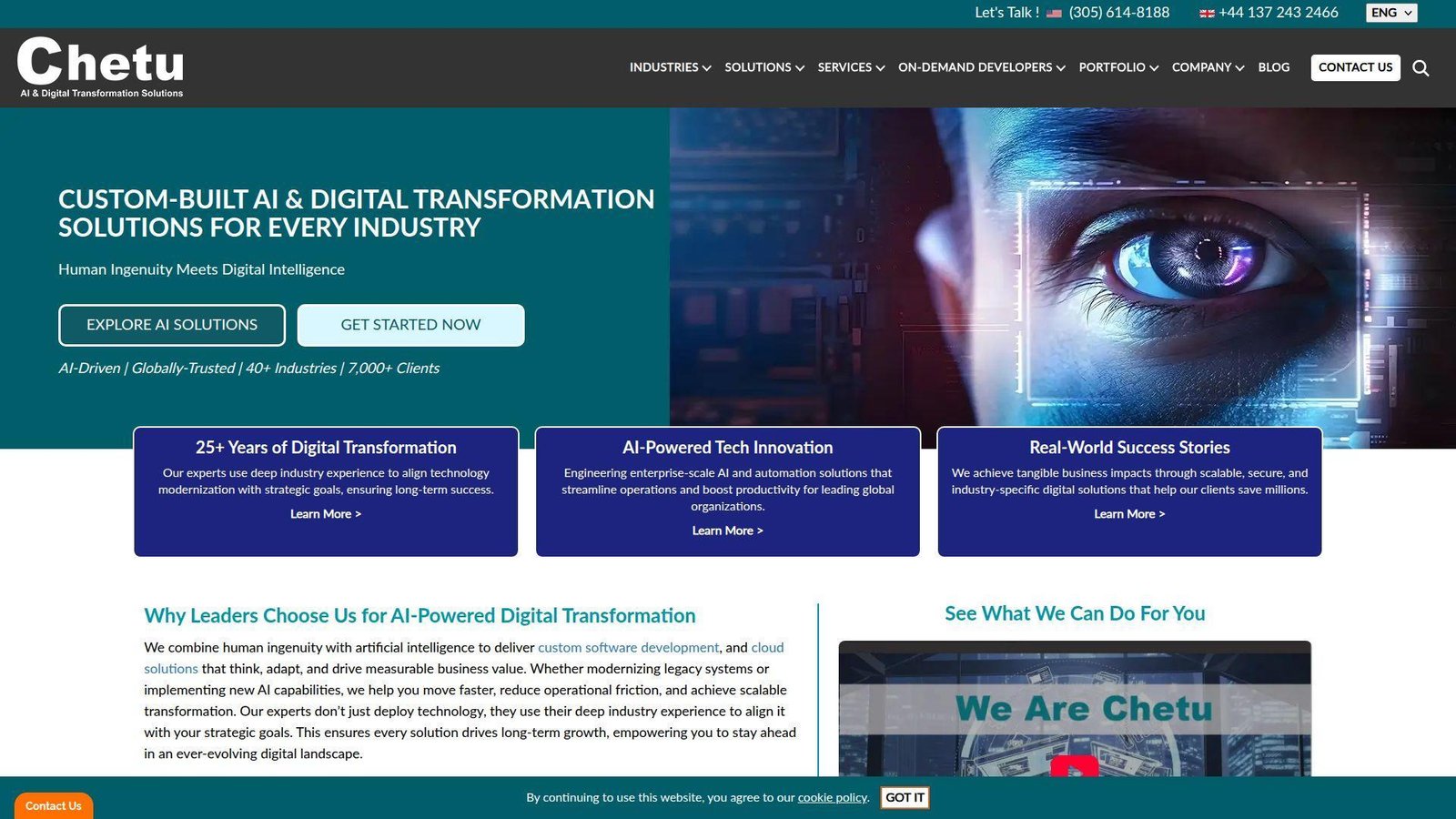
Chetu is the bench-heavy option on this list. It was founded in 2000, lists headquarters in Sunrise, Florida, and shows a company size of 1,001 to 5,000 employees on LinkedIn. We pay attention to Chetu when a buyer needs scale across many stacks, many industries, or multiple concurrent workstreams and does not want to build that hiring pipeline internally.
The upside is obvious. There is broad industry coverage and large resourcing capacity. The risk is also obvious. Large benches only work when governance is tight. We would not sign with Chetu until we knew exactly who would be on the account, who the delivery owner was, and how continuity is handled if team members change. For the right client, it solves a real scaling problem.
- Service scope: Custom software, mobile, web, AI, QA, integration, support.
- Industry specialization: Broad industry-specific software delivery.
- Ideal client size: SMBs, enterprise teams, and firms needing rapid capacity.
- Pricing model: Custom project quotes and dedicated developer models.
- Onboarding process: Sales qualification, team assignment, then delivery ramp-up.
- Communication style: Process-driven and account-managed.
- Proof/case-study requirements: Ask for the exact domain and stack, not a generic category.
- Red flags to check before hiring: No named lead engineer or unclear team makeup.
- Questions to ask before signing: What protections do we have against talent rotation mid-project?
8. RipenApps
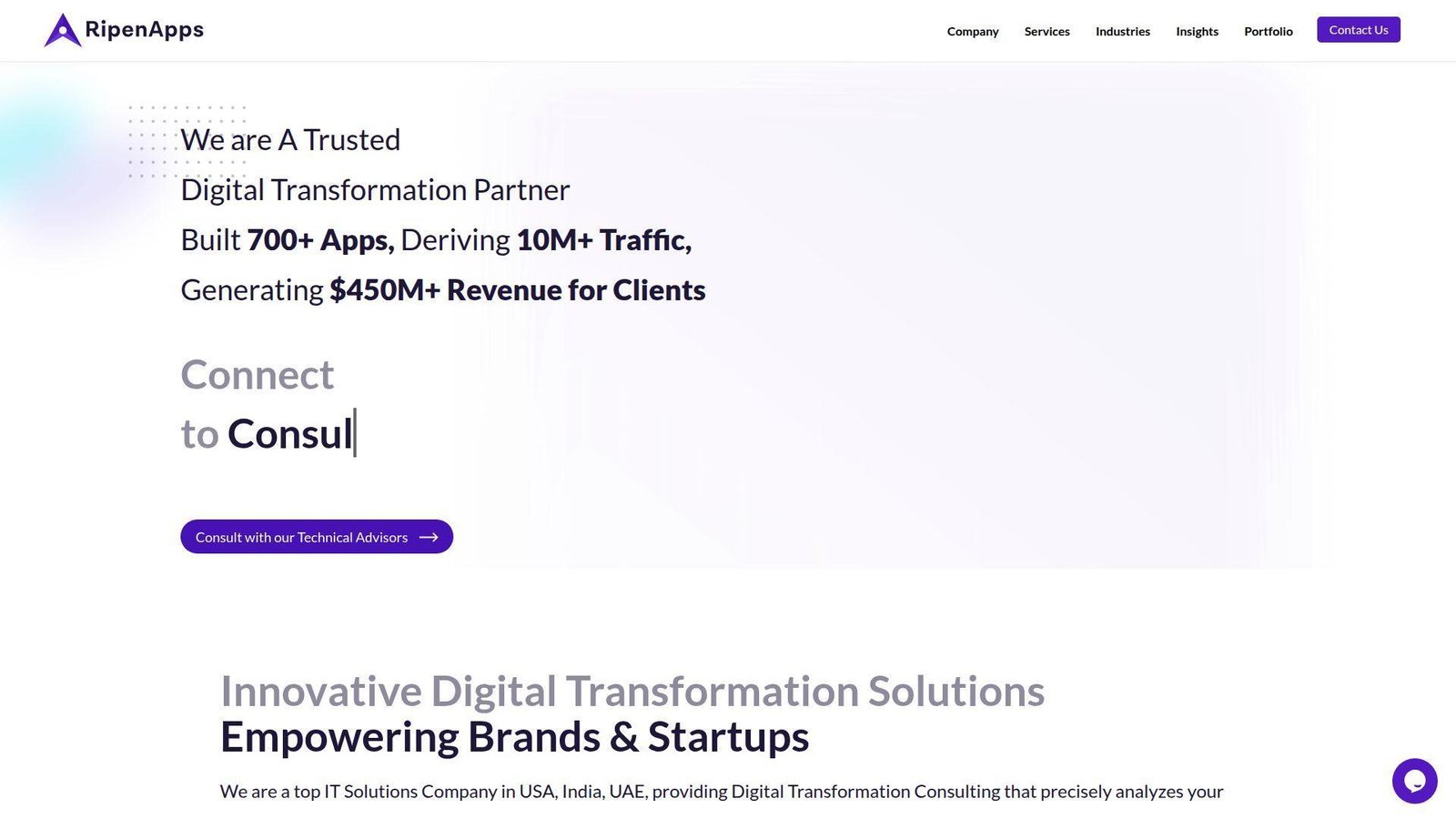
RipenApps leans mobile-first and startup-friendly. Its public material points to 150+ experts, a Noida, India base, and at least eight years of experience, with a broader international presence. We notice RipenApps most for launch-stage products, consumer-facing mobile apps, and founders who want one vendor to handle product thinking, design, development, and rollout.
The upside is pace and mobile fluency. The caution is that the brand voice is marketing-heavy, so we would verify senior engineering depth, not just attractive screens and awards. Ask for examples involving payments, analytics, retention, admin workflows, or messy backend integration. That usually tells you more than a polished home screen ever will.
- Service scope: Mobile apps, web products, consulting, modernization, scaling.
- Industry specialization: Startups, consumer apps, e-learning, healthcare, ecommerce.
- Ideal client size: Founders, startups, and growth brands.
- Pricing model: Custom proposal by scope and product stage.
- Onboarding process: Consultation, proposal, product planning, then build.
- Communication style: Frequent, client-facing, launch-oriented.
- Proof/case-study requirements: Ask for backend complexity, not just design polish.
- Red flags to check before hiring: Too much emphasis on awards over technical specifics.
- Questions to ask before signing: Who makes architecture calls if the MVP grows quickly?
9. Utility
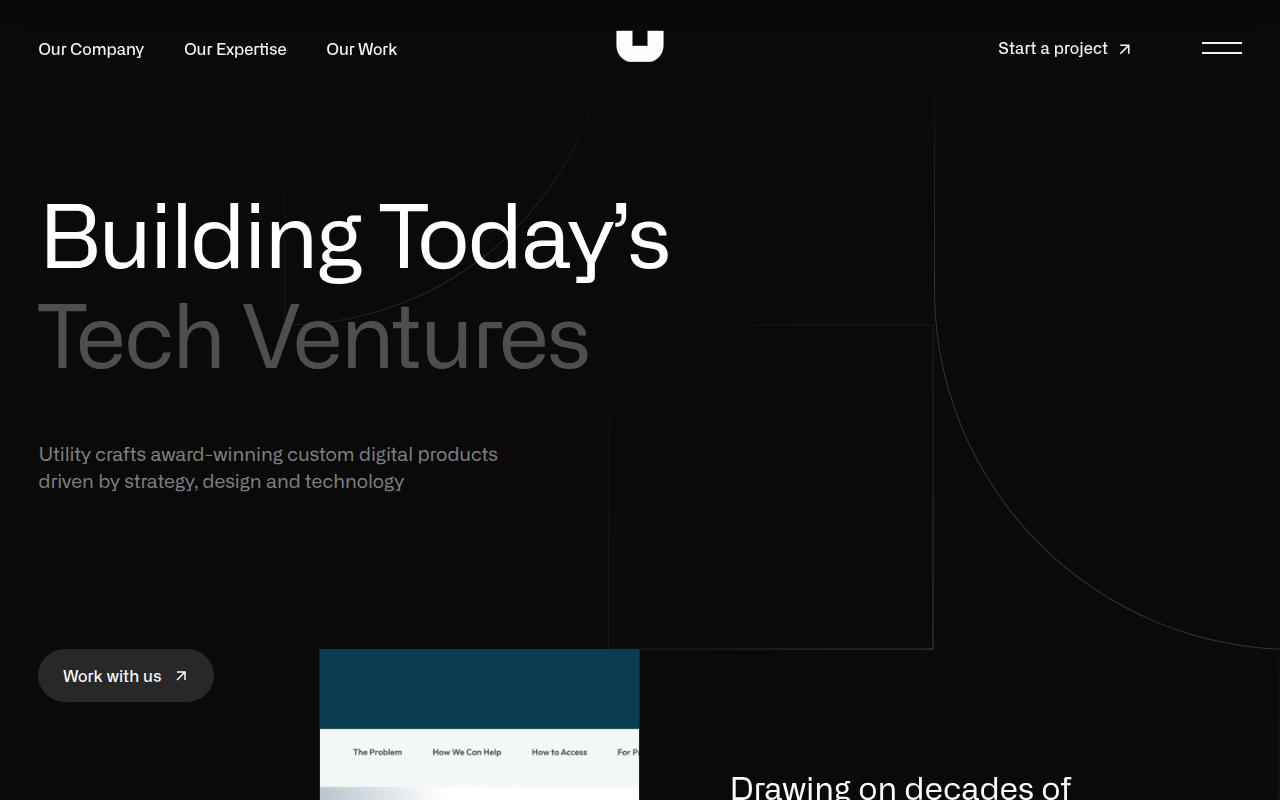
Utility is best understood as a product studio with strong design instincts and consumer-experience chops. The agency says it was founded in 2013, has about 100 employees, and operates from New York and Los Angeles. We would shortlist Utility for customer-facing apps, brand-led digital products, and situations where UX, visual clarity, and product positioning are central to adoption.
The real attraction here is experience design backed by delivery. Utility’s Airbnb, Bleacher Report, and long-term consumer work suggest strength in high-visibility products that people actually touch every day. The trade-off is fit. If you are rebuilding an internal claims engine or a dull but complex enterprise workflow, this may not be the most efficient choice. We would compare it against more technical delivery houses before deciding.
- Service scope: Product design, app development, AI solutions, growth support.
- Industry specialization: Consumer products, media, hospitality, events, wellness.
- Ideal client size: Startups, innovation teams, and consumer brands.
- Pricing model: Premium project-based engagements.
- Onboarding process: Contact intake, strategy discussion, then design and build plan.
- Communication style: Collaborative, creative, partner-like.
- Proof/case-study requirements: Ask how design decisions changed business outcomes.
- Red flags to check before hiring: Using them for a purely back-office workflow project.
- Questions to ask before signing: How much research happens before visual design starts?
10. Blackthorn Vision
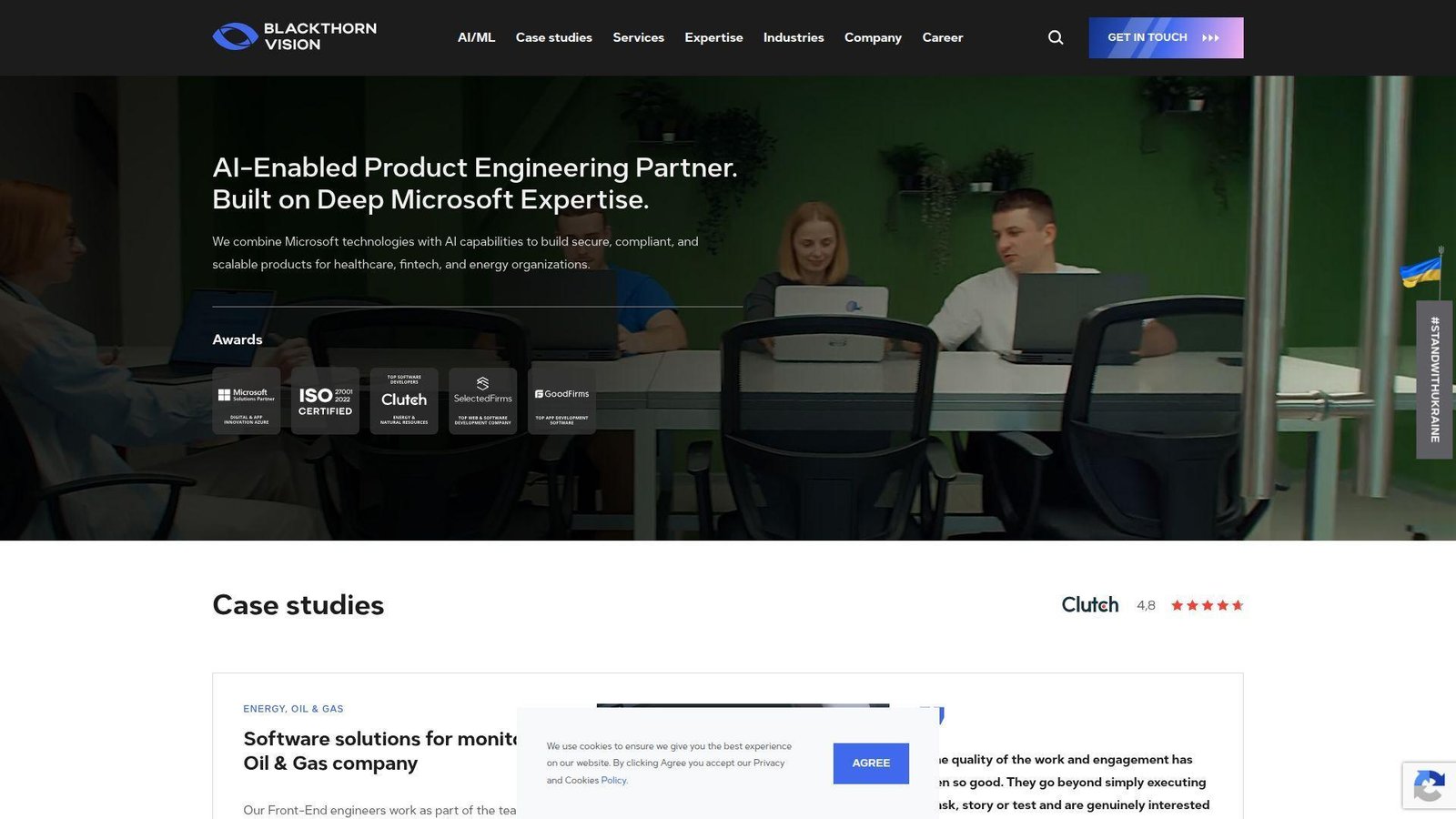
Blackthorn Vision earns attention from us because it looks like a true discovery-led engineering partner rather than a generic dev shop. The company says it has provided services since 2009, operates from Lviv with other European offices, and presents itself as a 100+ engineer team with strong product development and .NET depth. We would shortlist it for complex web platforms, Azure or Microsoft-heavy environments, and product builds that need structure before code.
We especially like how explicit Blackthorn is about discovery deliverables. Interactive prototypes, cost estimates, core features, and team recommendations are the kind of outputs buyers should demand before serious build work starts. Their case material in healthcare and industrial software reinforces that technical-product angle. The trade-off is style. If your real need is brand storytelling, other studios fit better.
- Service scope: Product discovery, web, mobile, desktop, cloud, ML/AI, QA.
- Industry specialization: Healthcare, biotech, energy, manufacturing, hospitality.
- Ideal client size: Product firms, scale-ups, and enterprise units.
- Pricing model: Discovery-led project work and dedicated teams.
- Onboarding process: Discovery, requirements analysis, roadmap, then implementation.
- Communication style: Transparent, analytical, engineering-led.
- Proof/case-study requirements: Ask to see discovery artifacts before development started.
- Red flags to check before hiring: Skipping discovery because the first estimate looks attractive.
- Questions to ask before signing: What exactly do we receive at the end of discovery?
11. Unified Infotech
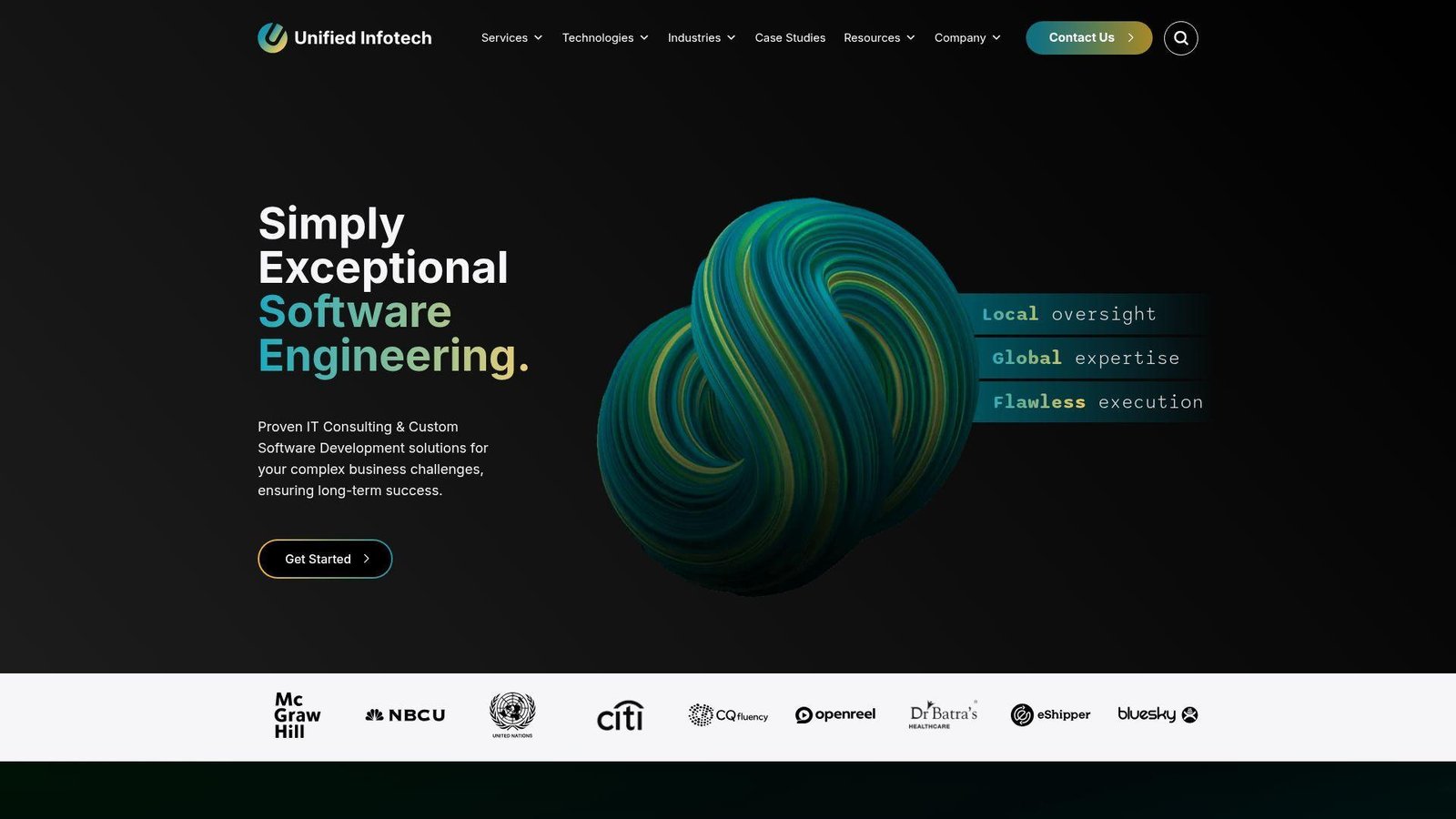
Unified Infotech sits in the digital-transformation middle ground between design shop and engineering partner. The company says it was founded in 2010, has 250+ tech experts, and operates from New York with a large base in Kolkata. We would shortlist Unified when a buyer wants software engineering, UX, consulting, cloud work, and support under one roof rather than stitching together multiple vendors.
What we like is that Unified publicly offers structured entry points, including a pilot and dedicated-developer trial models. That tells us the team understands buying friction. The risk is breadth. When an agency does many things, buyers should verify what it is best at for their exact project. We would ask for the closest possible case study, not the most impressive-looking one.
- Service scope: Software engineering, UX, cloud, AI/ML, data, support.
- Industry specialization: Media, retail, education, SaaS, digital transformation.
- Ideal client size: Startups, SMBs, and enterprise modernization teams.
- Pricing model: Pilot, dedicated developer, or custom project engagement.
- Onboarding process: Consultation, feasibility, then pilot or team match.
- Communication style: Consultative and process-aware.
- Proof/case-study requirements: Ask for measurable before-and-after business outcomes.
- Red flags to check before hiring: Broad service claims without a clear best-fit lane.
- Questions to ask before signing: Which service line actually leads our engagement day to day?
12. Intellectsoft
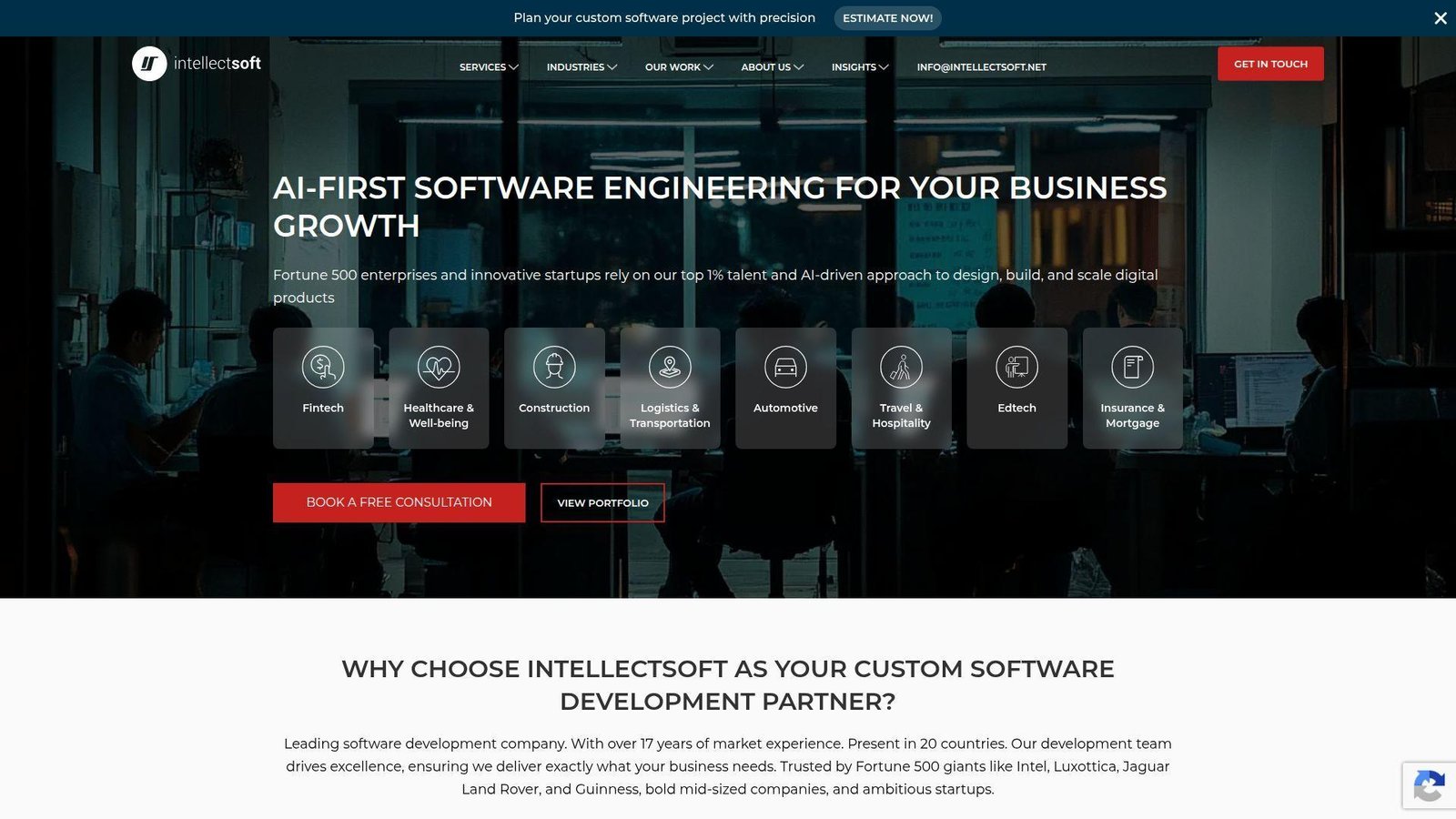
Intellectsoft plays in the enterprise transformation lane. Public sources place it in business since 2007, with a footprint tied to New York and Palo Alto, and an employee range of roughly 50 to 200 on LinkedIn. We would shortlist Intellectsoft for enterprise software, digital transformation, consulting-led application work, and clients that want one firm to cover strategy, engineering, and lifecycle support.
To us, Intellectsoft makes the most sense when the buyer is mature enough to benefit from consulting structure. That is good for modernization, platform design, or cross-functional enterprise rollouts. It can feel heavy if you are a very early startup just trying to get a narrow MVP out the door. We would ask them where they add value beyond a good internal product and engineering lead.
- Service scope: Enterprise software, mobile, AI, IoT, UX, DevOps, consulting.
- Industry specialization: Enterprise, healthcare, fintech, construction, mobility.
- Ideal client size: Mid-market and enterprise organizations.
- Pricing model: Custom consulting and delivery engagements.
- Onboarding process: Idea intake, solution fit, NDA option, then engagement plan.
- Communication style: Formal, responsive, stakeholder-friendly.
- Proof/case-study requirements: Demand examples with enterprise adoption, not just launch.
- Red flags to check before hiring: Hiring them without internal decision-makers to match their structure.
- Questions to ask before signing: What parts of the roadmap do you expect us to own internally?
13. Master of Code Global
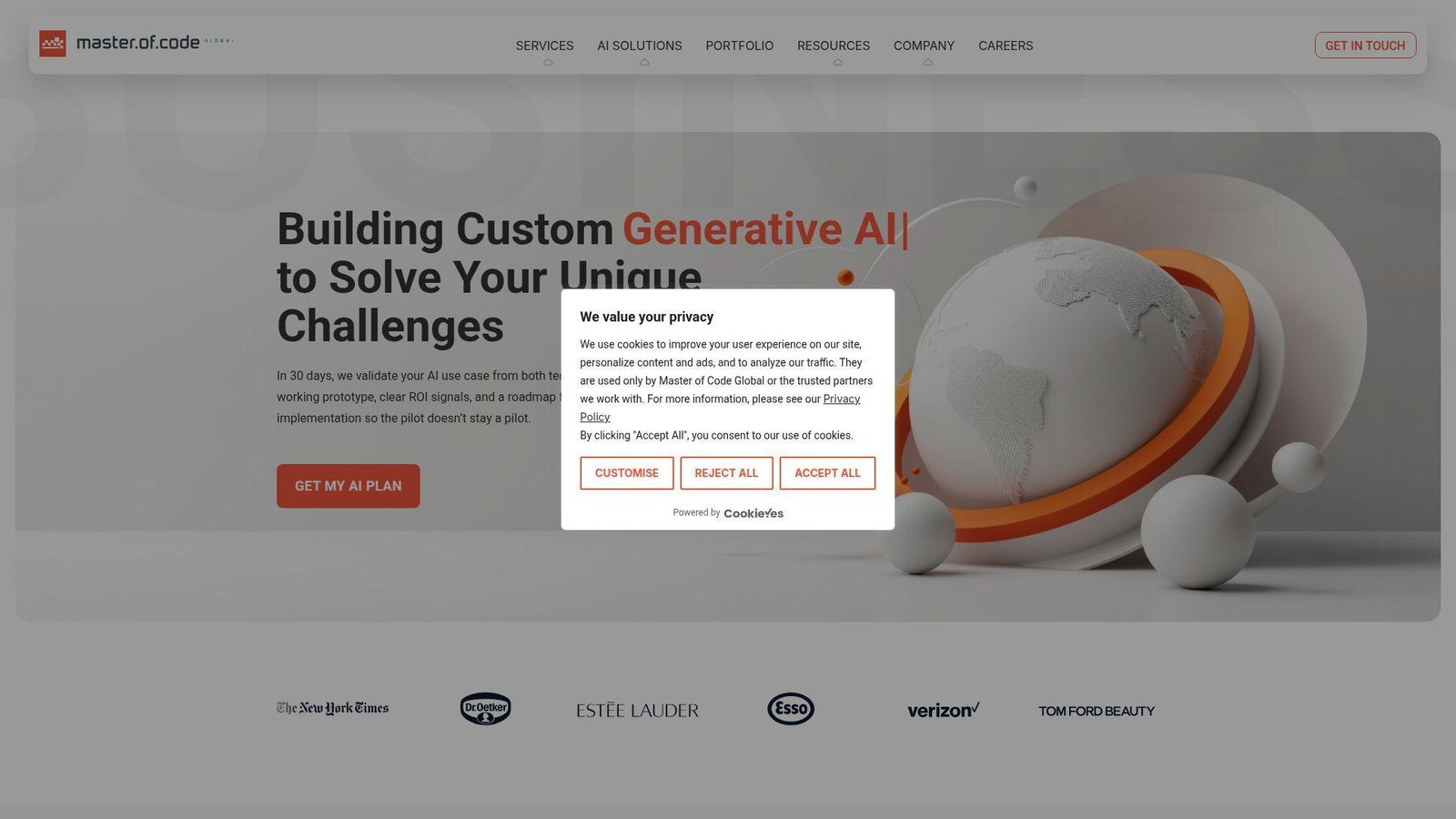
Master of Code Global is not a generalist first. It is an AI and conversational-experience specialist that reports 21 years in business, 200+ team members, and a headquarters presence in Redwood City, California with broader global offices. We would shortlist it when the center of gravity is chat, voice, AI agents, customer support automation, or enterprise AI experiences that need more than a basic API wrapper.
This is the kind of partner we would compare for AI-first programs, not ordinary CRUD software. That focus is exactly why it deserves a place on the list. Public case material around Tom Ford Beauty, banking voicebots, and support agents suggests a mature practice in experience design plus AI delivery. If your project is mostly a standard internal business app, though, other firms may be a cleaner fit.
- Service scope: Conversational AI, voice, agentic systems, web and mobile support.
- Industry specialization: Retail, beauty, banking, hospitality, telecom, support operations.
- Ideal client size: Brands and enterprises with AI customer experience needs.
- Pricing model: Custom AI consulting and solution delivery.
- Onboarding process: Discovery, use-case validation, proof of concept, then rollout.
- Communication style: Consultative and outcome-focused.
- Proof/case-study requirements: Ask for production AI metrics, not just demos.
- Red flags to check before hiring: Using them for a plain software build with no AI depth needed.
- Questions to ask before signing: How do you measure adoption and value after the pilot ends?
14. Merixstudio
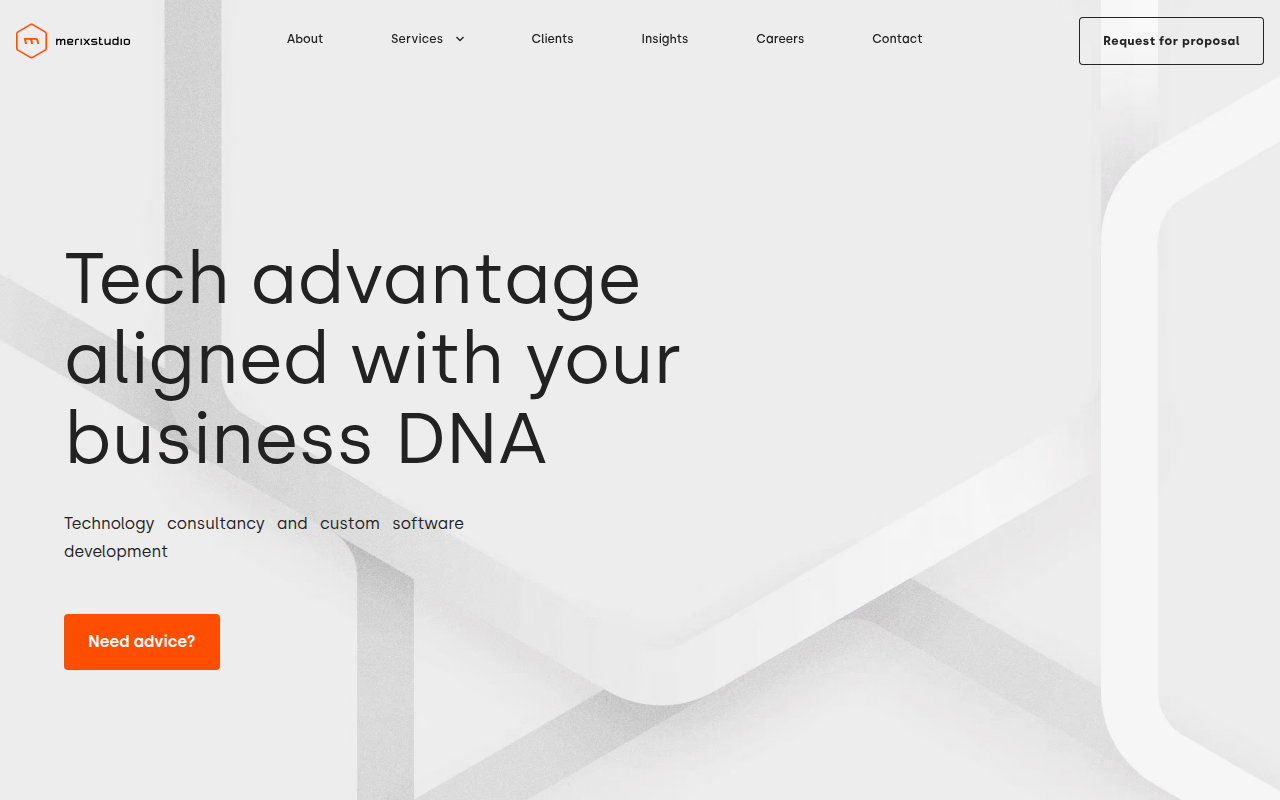
Merixstudio behaves more like a technology consultancy than a pure outsourcing vendor. The firm says it has 25 years of market presence, around 100 expert-level talents, and headquarters in Poznań, Poland, while public profiles place it in the low hundreds overall. We would shortlist Merixstudio for serious web platforms, product consulting, and modernization work where seniority matters more than a giant bench.
We like Merixstudio most when buyers want hard questions early. Their public language is outcome-driven and business-oriented, which is a good sign for mid-market and enterprise clients trying to avoid building the wrong thing. The trade-off is that this is unlikely to be the cheapest option. High-seniority teams rarely are, and that is often fine if the app carries core business risk.
- Service scope: Consulting, design, software engineering, discovery, modernization.
- Industry specialization: Digital products across enterprise and growth companies.
- Ideal client size: Mid-market firms and enterprise-facing product teams.
- Pricing model: Consultancy-led custom projects.
- Onboarding process: Business analysis, scoping, then tailored team setup.
- Communication style: Senior, direct, and advisory.
- Proof/case-study requirements: Ask how their guidance changed product direction.
- Red flags to check before hiring: Choosing them if you only want low-cost task execution.
- Questions to ask before signing: Which senior specialists stay involved after discovery?
15. Computools
Computools brings a broad consulting-plus-engineering proposition. Public sources describe it as founded in 2013, based in New York, and staffed with 250+ engineers working across finance, retail, logistics, healthcare, energy, and manufacturing. We would shortlist Computools when a buyer wants digital transformation, custom software, automation, and a partner comfortable talking about both business process and technology delivery.
We see Computools as a strong candidate for mid-market firms that need cross-functional support and care about certifications, delivery process, and broad industry exposure. The caution is familiar. Big claims require precise validation. We would ask to meet the actual proposed team, understand solution ownership, and review case studies that resemble our workflow, not just our vertical label.
- Service scope: Consulting, custom software, AI, data, cloud, modernization.
- Industry specialization: Finance, retail, logistics, healthcare, energy, manufacturing.
- Ideal client size: Mid-market and enterprise transformation teams.
- Pricing model: Custom project pricing and consulting engagements.
- Onboarding process: Discovery, business process review, then team assignment.
- Communication style: Structured and business-process aware.
- Proof/case-study requirements: Ask for measurable operational outcomes.
- Red flags to check before hiring: No clarity on who owns solution architecture.
- Questions to ask before signing: How do you translate consulting findings into build priorities?
16. Instinctools
*instinctools combines product development and consulting with a distributed global delivery model. The company says it has built solutions since 2000, has 400+ professionals, and operates from Potomac, Maryland and Stuttgart, Germany, with development centers across Europe, Asia, and Latin America. We would shortlist it for companies that want self-managed cross-functional teams and dependable time-zone overlap.
That operating model matters. If you want a partner that can carry a workstream with limited hand-holding, *instinctools is interesting. If you want everyone in one room with a hyper-local feel, less so. We would especially compare it for mid-market and enterprise software where global team coverage, technical breadth, and process maturity matter more than boutique brand personality.
- Service scope: Product development, consulting, data and AI, cloud, QA.
- Industry specialization: Finance, healthcare, manufacturing, ecommerce, logistics, media.
- Ideal client size: Businesses of all sizes, especially mid-market and enterprise.
- Pricing model: Dedicated teams and custom solution engagements.
- Onboarding process: Discovery, team recommendation, overlap planning, then kickoff.
- Communication style: Transparent and globally coordinated.
- Proof/case-study requirements: Ask for examples of self-managed delivery.
- Red flags to check before hiring: No internal owner to coordinate with a distributed team.
- Questions to ask before signing: Who is accountable if priorities shift across time zones?
17. Zco Corporation
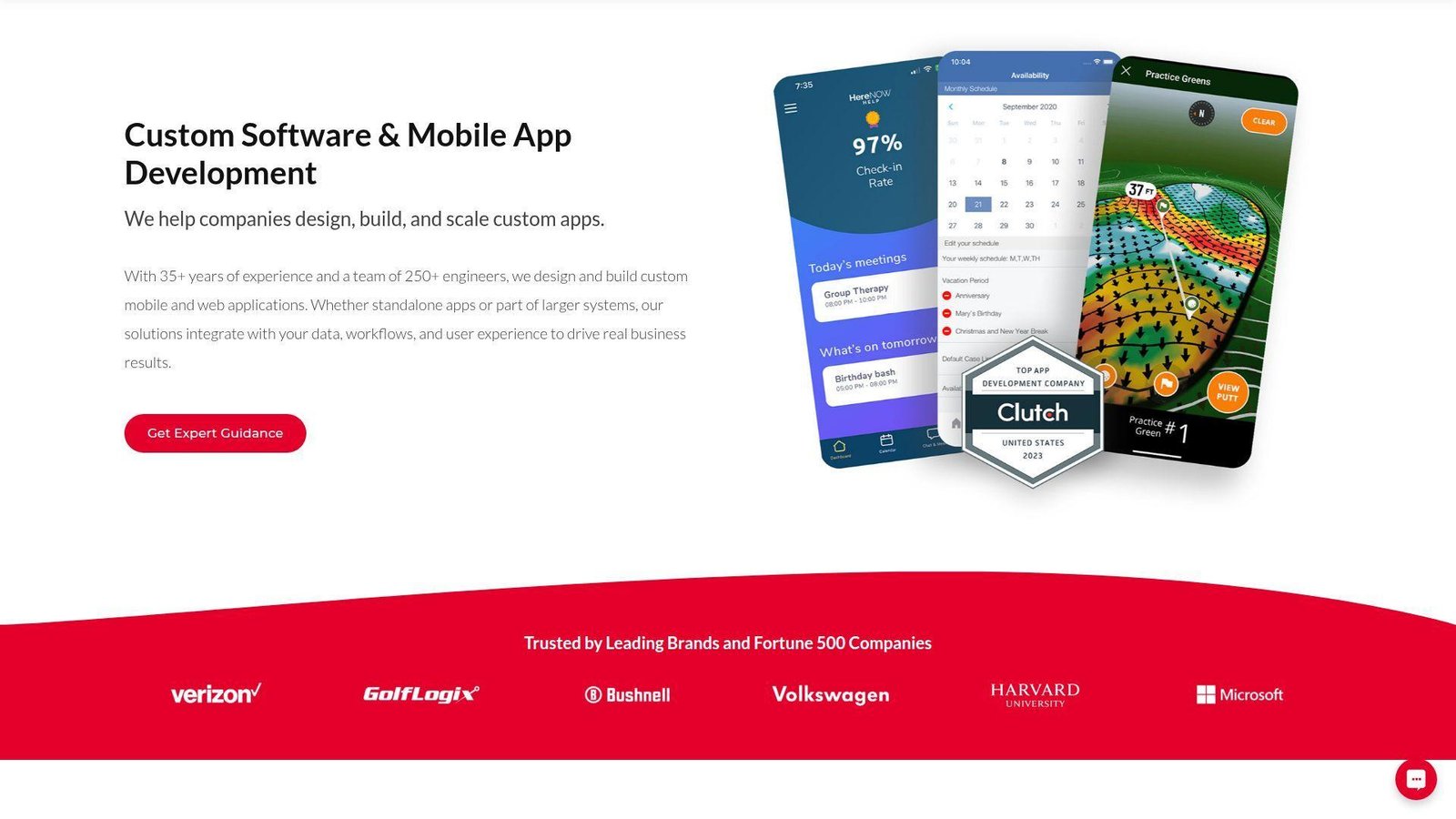
Zco is the veteran on this list. The company says it was founded in 1989, has 250+ programmers, artists, and project managers, and is headquartered in Nashua, New Hampshire. We would shortlist Zco for mobile apps, custom web products, AR, AI-enabled application work, and buyers who want a long-running US-based execution partner with a documented delivery process.
What we like is the clarity. Zco openly describes its process, talks about NDAs up front, and positions itself as a developer-for-hire rather than a revenue-share dream seller. That honesty is helpful. Our main caution is fit. Zco feels more execution-first than strategy-consultancy-first, so buyers who need deep product discovery should ask how much upfront research is included before estimates are finalized.
- Service scope: Mobile, web, AI, AR, enterprise software, staff augmentation.
- Industry specialization: Healthcare, finance, education, retail, logistics, entertainment.
- Ideal client size: Startups through enterprise teams.
- Pricing model: Developer-for-hire, milestone-based custom estimates.
- Onboarding process: NDA, requirements discussion, wireframing, design, build, QA, launch.
- Communication style: Clear, execution-oriented, milestone-driven.
- Proof/case-study requirements: Ask for products with similar platform mix and risk level.
- Red flags to check before hiring: Assuming strategy is fully included without confirming scope.
- Questions to ask before signing: How much discovery happens before pricing is locked?
18. AppIt Ventures
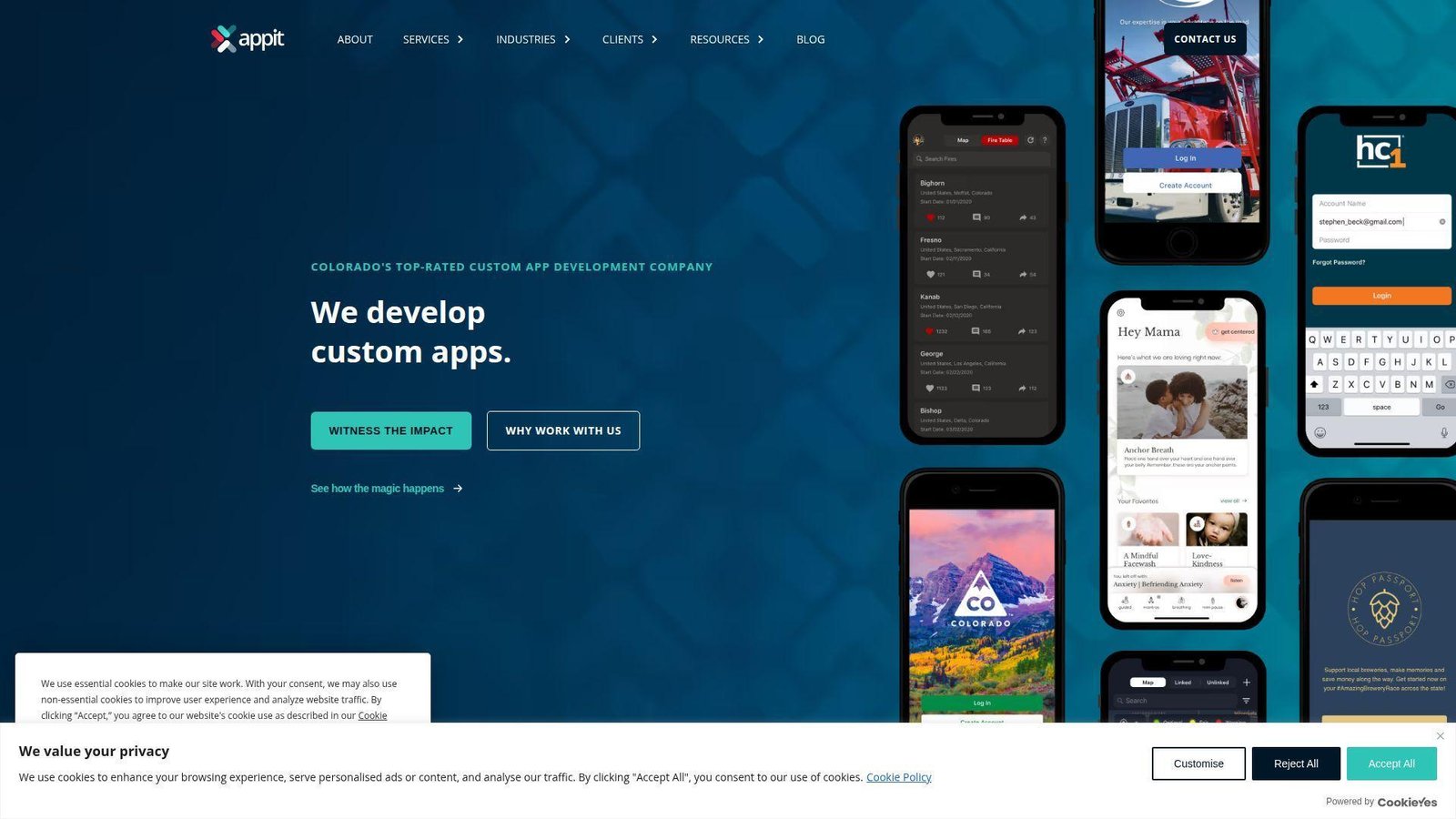
AppIt Ventures is a smaller US-based option that deserves attention because its positioning is unusually practical. Public sources place it at roughly 40 to 50 employees, founded around 2012, and based in Denver. We would shortlist AppIt for organizations that want product design, custom app development, and a team that still talks openly about up-front fixed-fee bids when scope is clear enough.
We like AppIt for SMBs and mid-market buyers who want a more direct relationship and do not need a giant vendor layer. The caution is the same reason some buyers will love it. Fixed-fee work only holds up when discovery is real. So if you consider AppIt, ask how they protect both sides when requirements shift after learning starts. That answer matters more than the initial price.
- Service scope: Custom apps, web, mobile, AI/BI, code reviews, augmentation.
- Industry specialization: Business apps, enterprise tools, product design-led builds.
- Ideal client size: SMBs, mid-market firms, and product-minded founders.
- Pricing model: Fixed-fee bids where scope is defined, plus custom engagements.
- Onboarding process: Project call, requirement review, then proposal and support plan.
- Communication style: Direct and research-oriented.
- Proof/case-study requirements: Ask how fixed scope changed after discovery findings.
- Red flags to check before hiring: Treating fixed bid as a substitute for serious scoping.
- Questions to ask before signing: What happens contractually if discovery changes the build?
19. Queppelin
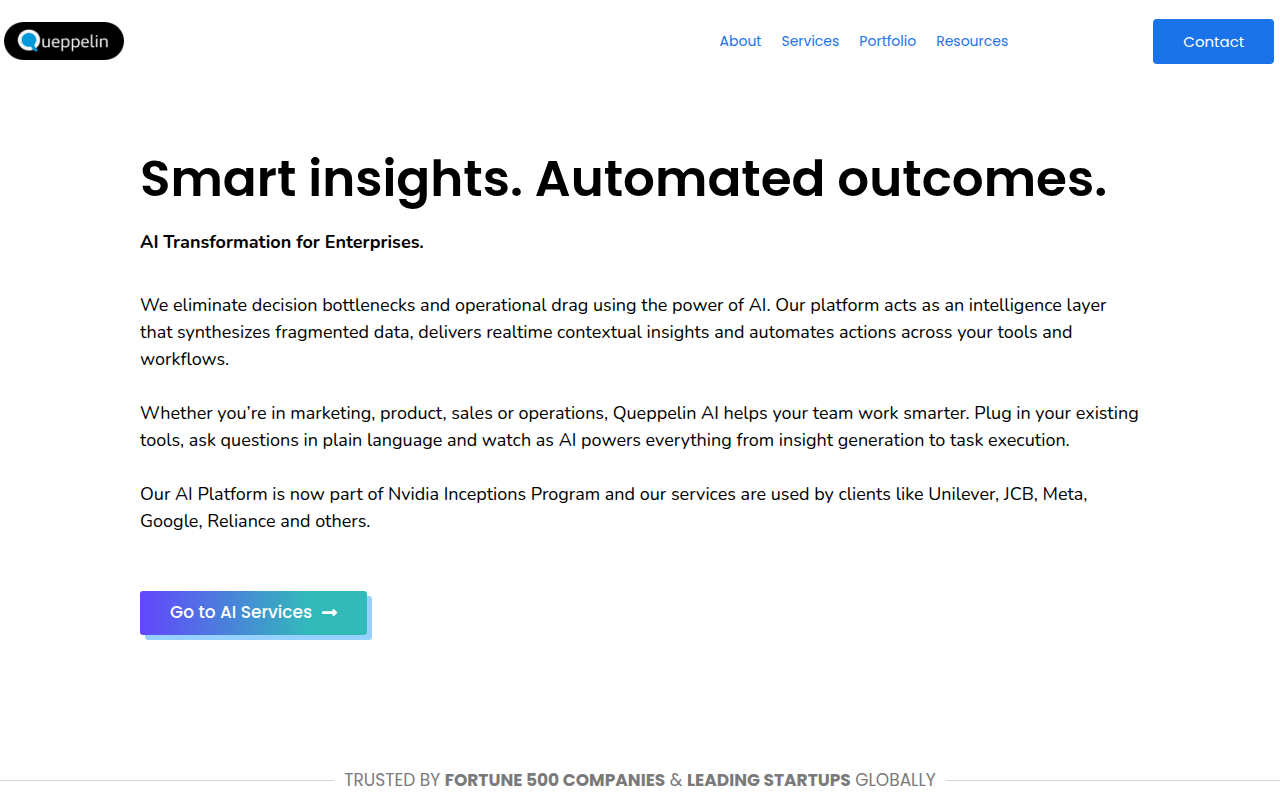
Queppelin is different from almost every other name here because its public identity is rooted in immersive tech. LinkedIn lists the company at 51 to 200 employees, founded in 2010, and based in Gurugram, India with New York presence. We would shortlist Queppelin when the project centers on AR, VR, spatial experiences, metaverse-style environments, or AI-led experiential products rather than a standard internal business app.
That specialization can be a real edge. If you are a brand, institution, or enterprise team building an immersive training or customer experience layer, Queppelin is more relevant than a generic app shop. If you just need a reliable claims portal or back-office workflow system, the fit is weaker. We would ask them how much of their team and method is dedicated to ordinary software delivery versus experience-led builds.
- Service scope: AI, AR/VR, immersive products, SaaS, product development.
- Industry specialization: Immersive tech, enterprise AI, branded digital experiences.
- Ideal client size: Brands, innovation teams, and enterprise experience programs.
- Pricing model: Custom project engagements.
- Onboarding process: Initial contact, NDA-backed validation, then solution planning.
- Communication style: Vision-led, consultative, future-tech focused.
- Proof/case-study requirements: Ask for shipping proof, not concept videos.
- Red flags to check before hiring: Choosing them for a plain business system with no immersive need.
- Questions to ask before signing: What percentage of your work looks like our exact use case?
20. BoTree Technologies
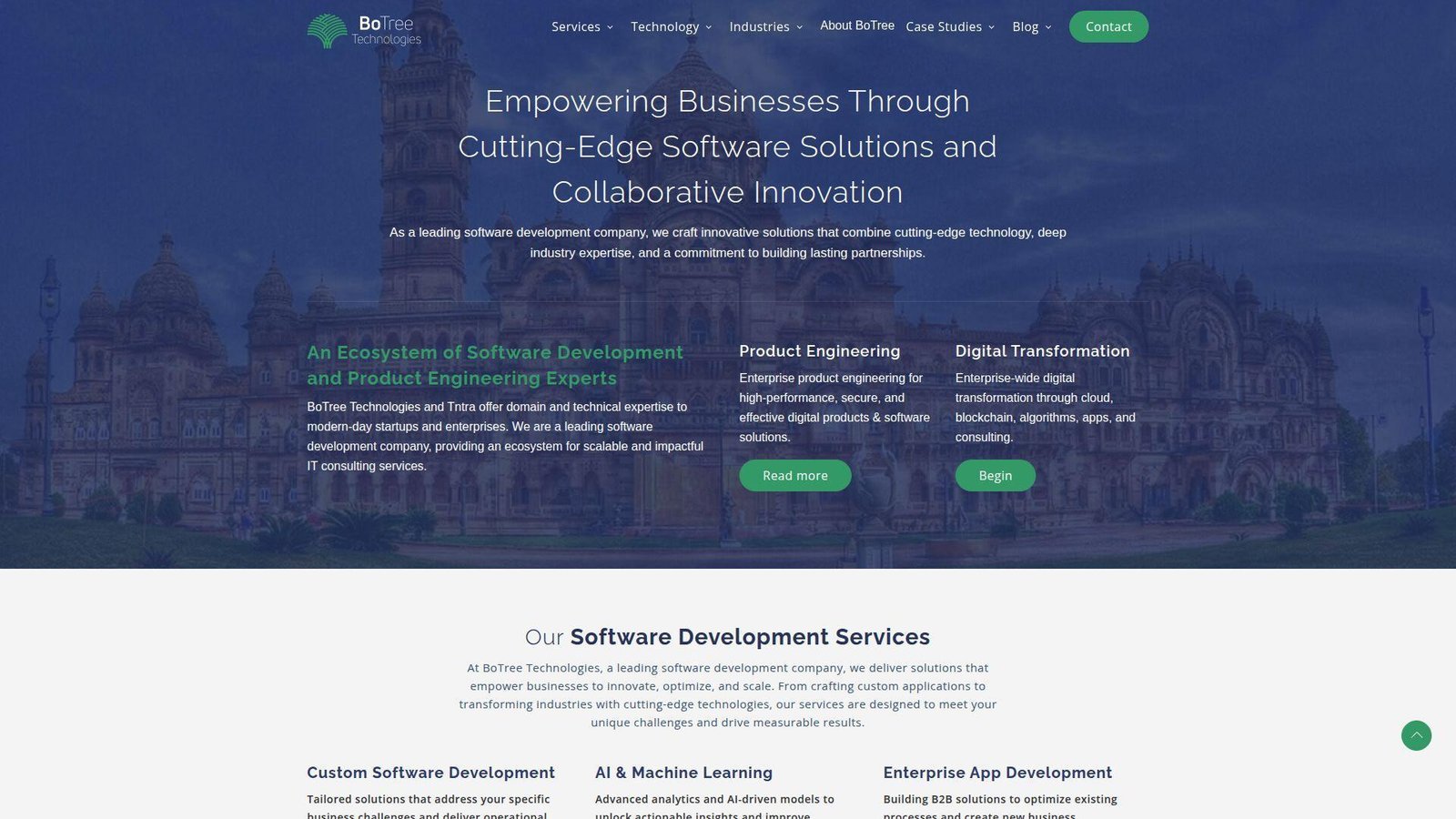
BoTree Technologies is a useful shortlist candidate for product engineering and business software, especially in the startup to mid-market band. Public sources describe it as founded in 2013, headquartered in Ahmedabad, India, and supported by a team positioned around 100+ experts. Its public material emphasizes healthcare, fintech, logistics, real estate, SaaS, and IoT, which is a healthy mix for practical custom application work.
We would compare BoTree when a buyer wants a hands-on partner for product engineering, app development, and ongoing iteration rather than a huge consulting wrapper. The positive signal is long-term partnership language and a fairly broad technical service set. The caution is one we would apply to any mid-size shop. Make sure there is a named architecture lead and a clear support model after release.
- Service scope: Product engineering, mobile, custom software, AI/ML, DevOps.
- Industry specialization: Healthcare, fintech, logistics, real estate, SaaS, IoT.
- Ideal client size: Startups, growth companies, and mid-market teams.
- Pricing model: Custom project pricing and ongoing development support.
- Onboarding process: Consultation, scope alignment, then cross-functional delivery team.
- Communication style: Partnership-first and engineering-led.
- Proof/case-study requirements: Ask for post-launch support and iteration examples.
- Red flags to check before hiring: No clear plan for maintenance ownership after launch.
- Questions to ask before signing: Who stays accountable after version one ships?
Recommended reading: Top 20 App Development in Singapore Companies to Compare Before You Hire
Which Type of Custom Application Development Company Fits Your Project?
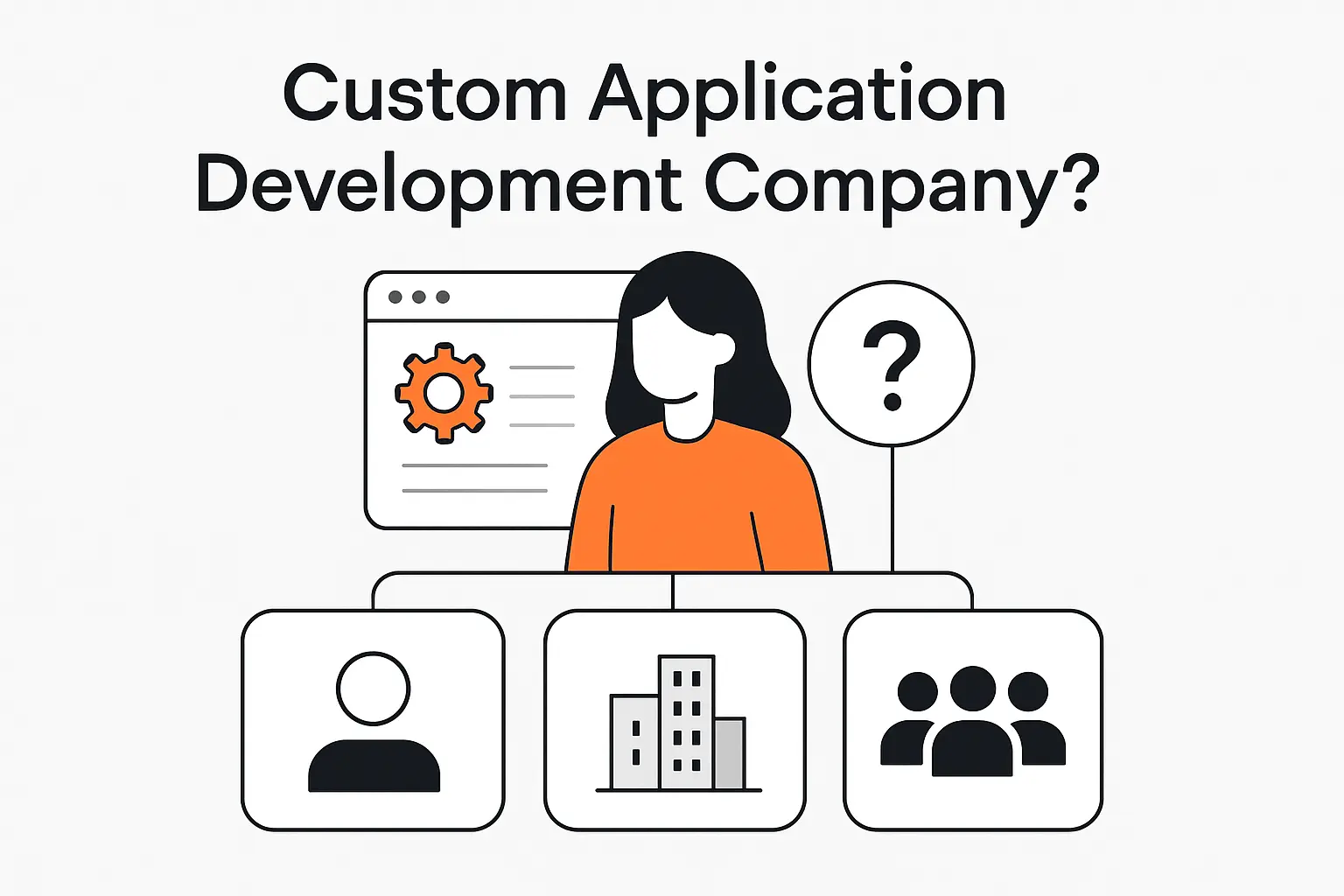
The biggest buying mistake is choosing by reputation before choosing by operating model. We divide this market into three broad buckets because the wrong model creates more pain than the wrong framework ever will.
1. Managed Partners When You Need Discovery, Delivery, and Long-Term Support
Managed partners are the safest option when you need someone to shape discovery, run delivery, and stay after launch. On this list, Simform, Unified Infotech, Intellectsoft, and *instinctools fit that lane better than brand-led studios because their public positioning emphasizes architecture, cross-functional teams, modernization, and longer support cycles. If your internal team is thin on product leadership or technical direction, this category usually lowers risk.
The trade-off is weight. These firms usually bring more process, more planning, and more cost than a smaller boutique. We think that is a good trade when the system is core to revenue, compliance, or operations.
2. Boutique Studios When UX, MVP Speed, or Niche Tech Is the Priority
Boutique studios make more sense when clarity, UX, and speed are the real blockers. Goji Labs, Utility, AppIt Ventures, Queppelin, and, in our own case, TechTide Solutions, fit better when the job calls for sharper product framing, closer founder access, or a niche angle such as immersive tech or sector-focused product work. These teams are often easier to work with when the roadmap is narrow and the stakes are user adoption, not internal program governance.
The catch is scale. Once integrations, compliance, data migration, and multi-team coordination pile up, some boutiques start feeling stretched. That does not make them weak. It just means you should know what game you are playing.
3. Staff Augmentation Firms When You Already Have Product and Engineering Leadership
Staff augmentation or execution-led partners work best when you already know what to build and who will make product calls. Mercury Development, Chetu, Langate, and Zco each show some version of this strength, whether through large benches, dedicated teams, or developer-for-hire positioning. If you have a capable internal product manager and an architect who can keep scope honest, these partners can move very efficiently.
If you do not have that internal leadership, though, this model can backfire. Someone still has to own trade-offs, approvals, priorities, and business logic. Vendors cannot guess that for you.
Recommended reading: Top 20 Android App Development Companies in USA for Startups and Enterprises
What to Compare Before You Sign With a Custom Application Development Company
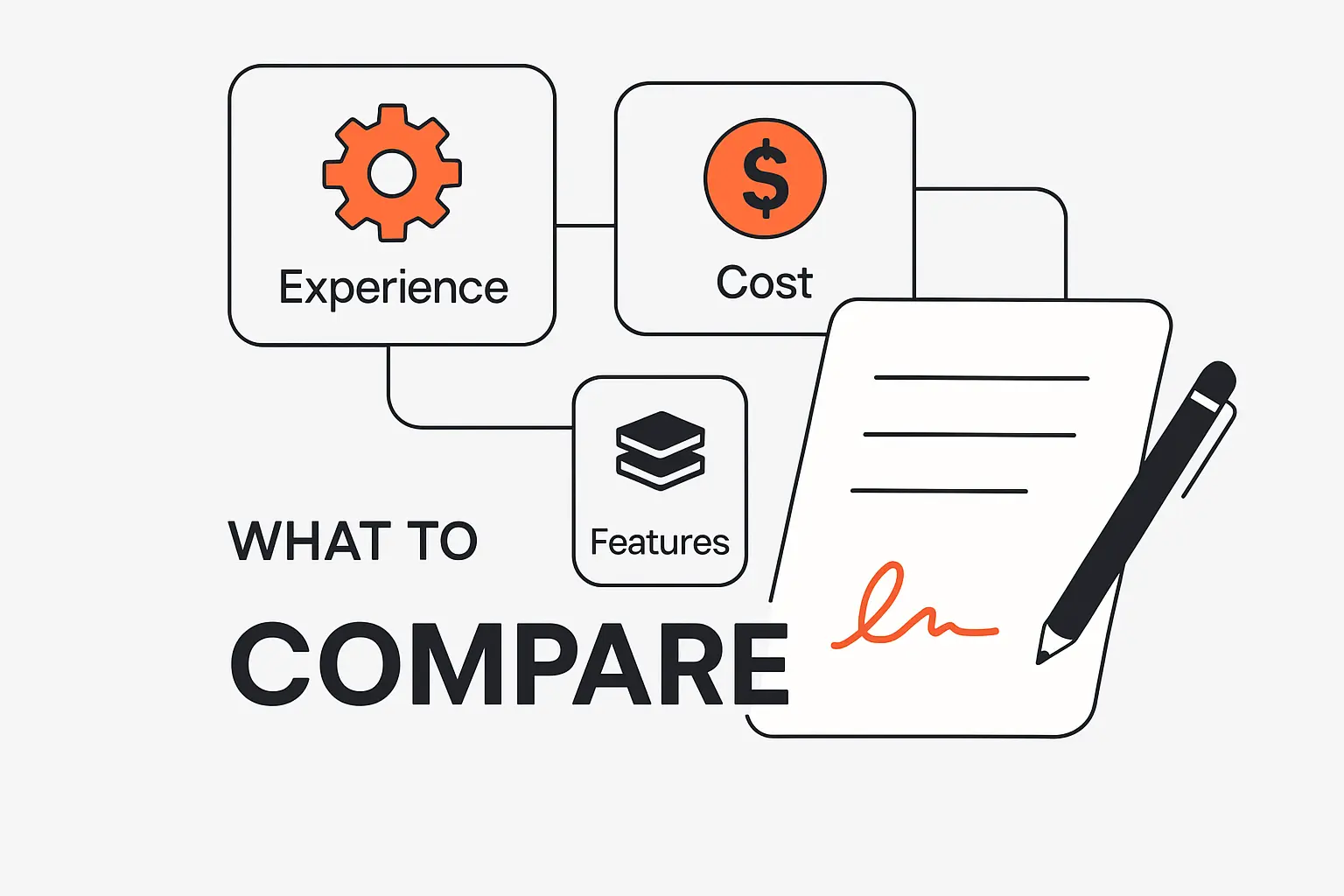
A good shortlist gets stronger when you compare how firms think, not just what they sell. We suggest screening five things before you get impressed by a deck.
1. Budget, Tech Stack, Industry Fit, and Verified Reviews
Start with fit, not hope. If your product depends on Epic integration, field-service routing, or payment disputes, ask who has actually shipped that kind of work. Then check whether the stack match is real or superficial. We would rather see one boring insurance workflow case study than ten glossy food-delivery clones. Also look for reviews that describe what the vendor was like during ambiguity, not only after launch.
2. Discovery Quality, Case Studies, and Measurable Business Outcomes
Discovery is the earliest signal of how the relationship will feel later. Strong partners narrow scope, surface risks, and challenge assumptions. Weak ones rush to estimate. We suggest asking every provider the same question: what did you remove, change, or delay in a similar project after discovery? That answer tells you whether they know how to save you from yourself.
3. Communication Style, Time-Zone Overlap, Security, and Post-Launch Support
Communication style is not a soft issue. It changes project speed. Some teams are structured and formal. Others are fast and chatty. Neither is automatically better. What matters is whether it matches your internal pace. On top of that, confirm time-zone overlap, security responsibility, warranty terms, maintenance ownership, and knowledge transfer. If those feel vague before signing, they will feel worse after launch.
Recommended reading: Top 20 Sydney Web Design Companies for Businesses That Want Better Results
Platform Choices That Change Which Company Is Right for You
Platform choice changes vendor fit more than many buyers expect. A firm that shines on customer mobile apps may be the wrong answer for an integration-heavy web platform or a desktop tool tied to legacy systems.
1. Web, Mobile, Desktop, AI, and Integration-Heavy Builds
For web and integration-heavy platforms, we lean toward Simform, Unified Infotech, Computools, or *instinctools because their public material points to broader engineering coverage and modernization depth. For mobile-first consumer products, Mercury, Zco, RipenApps, and Utility are easier to justify. For AI-first conversational work, Master of Code Global and Intellectsoft deserve more attention than generalist app shops.
2. Native, Cross-Platform, and Hybrid Development Trade-Offs
Native is still the safest route when hardware access, performance, or platform nuance matters. Cross-platform makes more sense when speed and budget discipline matter more than device-specific polish. We usually ask vendors to defend the platform choice in plain English. If they cannot explain the trade-off without jargon, that is a warning sign. A good partner should tell you where shared code saves money and where it creates hidden costs later.
3. When UX/UI Design and Workflow Mapping Matter More Than Feature Count
Sometimes the app does not fail because it lacks features. It fails because the workflow is clumsy. In those cases, design-led studios such as Goji Labs, Utility, AppIt Ventures, and smaller product-minded teams like ours can outperform bigger benches. We would choose that route when adoption, clarity, and task flow matter more than raw engineering scale.
Budget and Timeline Reality Check
Most custom software projects do not blow up because the code is impossible. They blow up because the scope is fuzzy, the workflow is misunderstood, or the client expects enterprise behavior on an MVP budget. We prefer to talk about ranges in terms of complexity, not fantasy certainty.
1. MVP Budgets and Shorter Timelines
MVP work moves fastest when the scope is narrow and the core workflow is clear. That usually means one user type, one primary job to be done, and minimal legacy integration. If a provider starts packing admin portals, analytics, messaging, and AI into the first release, your “MVP” is already drifting. We advise buyers to pay for clarity first, then code.
2. Mid-Market Builds With APIs, Analytics, and Complex Integrations
This is where project cost jumps. APIs, role-based access, reporting, audit trails, and third-party dependencies introduce real coordination overhead. Buyers often underestimate how much time gets consumed by edge cases, permissions, and data mapping. If your project lives here, choose a company that can show how it handles integration risk, not just screens.
3. Enterprise Programs With Compliance, Legacy Systems, and Larger Teams
Enterprise software moves on the longest timeline because the software is only half the job. Security review, change management, data migration, procurement, stakeholder alignment, and release governance all slow the path. In that environment, boring discipline is a strength. We would rather have a provider with fewer flashy ideas and better release control.
Red Flags That Separate a Good Shortlist From a Bad One
Some warning signs show up in nearly every bad vendor process. None of them guarantee failure on their own, but together they usually tell a clear story.
1. Generic Portfolios With No Clear Business Results
If every project description sounds the same, be careful. “We built a scalable app” tells you almost nothing. We want to know what changed after launch. Did onboarding improve? Did manual work drop? Did a team replace spreadsheets, reduce support load, or simplify a claims flow? If the portfolio is all adjectives and no consequences, the signal is weak.
2. Fixed Quotes and Delivery Dates Before a Serious Discovery Phase
We get why buyers like fixed quotes. They feel safe. But safety without discovery is fake. Any estimate produced before workflow mapping, integration review, and role definition is just a sales artifact. The only exception is a very small, very clear scope. Even then, we would still ask what assumptions the quote depends on and what invalidates it.
3. Thin QA, Weak Maintenance Plans, or No Knowledge Transfer
Launch is not the finish line. If the vendor cannot explain regression testing, release checks, monitoring, bug triage, and handoff, your team will inherit chaos. We recommend asking for the post-launch plan before the build plan. It forces everyone to reveal how serious they are about ownership.
FAQ
These are the five questions we hear most often from buyers comparing custom application development companies. We answer them the same way we would in a live scoping call, plainly and without vendor fluff.
1. How Do I Choose Between a Custom Application Development Company and Off-the-Shelf Software?
Choose off-the-shelf software when your workflow is common and does not create competitive advantage. Choose custom when your process is unusual, customer-facing, compliance-heavy, or central to how you make money. The key test is simple. If your team keeps bending a packaged tool into shapes it was not built for, custom software may already be cheaper than the workaround.
2. How Much Does Custom Application Development Cost?
Cost follows complexity, not hype. A narrow MVP with one workflow and few integrations is the least expensive path. A mid-market platform with multiple roles, APIs, reporting, and support logic costs much more. Enterprise programs are in a different category again because you are paying for governance, migration, security, and coordination as much as coding. If a quote ignores those things, it is probably too low.
3. How Long Does Custom Application Development Take?
That depends on how much uncertainty is left at the start. A tightly scoped MVP can move quickly. A platform with integration work, multiple user roles, and compliance review takes much longer. In our experience, the fastest projects are not the ones with the biggest team. They are the ones with the fewest unresolved assumptions.
4. Should I Build for Web, iOS, Android, or Cross-Platform First?
Start where the core workflow lives. If people use the product at a desk all day, web may come first. If the experience depends on camera access, notifications, movement, or field work, mobile may lead. Cross-platform is a smart first step when speed matters and device-specific behavior is limited. We advise buyers to choose the platform that proves demand fastest, not the one that sounds most complete.
5. What Should I Ask About Security, Integrations, and Support?
Ask who owns security decisions, who maps the integrations, how failures are tested, how releases are approved, and what support looks like after launch. Also ask where credentials live, how audit trails are handled, and how knowledge is transferred if the engagement ends. Strong partners answer those quickly. Weak ones drift back to general promises.
How TechTide Solutions Helps You Build Custom Solutions Around Your Needs
After comparing this list, some readers will want a smaller, more direct partner. That is where we fit best. Our bias is toward practical product scope, strong workflow design, and delivery teams that stay close to the problem instead of hiding behind layers of account management.
1. Software, Web, and Mobile Development for One Product Roadmap
We build across software, web, and mobile so clients do not have to split one roadmap across disconnected vendors. That matters when the customer-facing app, the admin panel, and the backend workflow all affect one another. We do not think in isolated deliverables. We think in operating products.
2. Scoping, UI/UX, and Prototyping Before Heavy Development Starts
We prefer to make hard decisions early. That means scoping sessions, UI review, product design, and rapid prototyping before development gets expensive. It is a quieter way to work, but it saves money because it exposes bad assumptions while they are still cheap to change.
3. Industry-Focused Solutions for Fintech, Healthcare, Blockchain, and Insurance
We are most useful when the product sits in a sector where workflow logic matters. Our public positioning is strongest in fintech, healthcare, blockchain, and insurance, and that is exactly where we think structured scoping and steady execution matter most. If your project lives there, we are comfortable helping define the product and then building it.
Final Thoughts on Choosing Among Custom Application Development Companies
A good shortlist should feel smaller and sharper after you read a guide like this. If it still has ten agencies on it, the real problem is probably not research volume. It is unclear project definition. Write down the workflow, the users, the systems involved, the compliance constraints, and the owner on your side.
Then hand that same brief to three firms and ask each one to restate the problem in its own words. The company that clarifies the problem, not just the proposal, is usually the one worth taking to the next call. Which three are you willing to pressure-test first?