
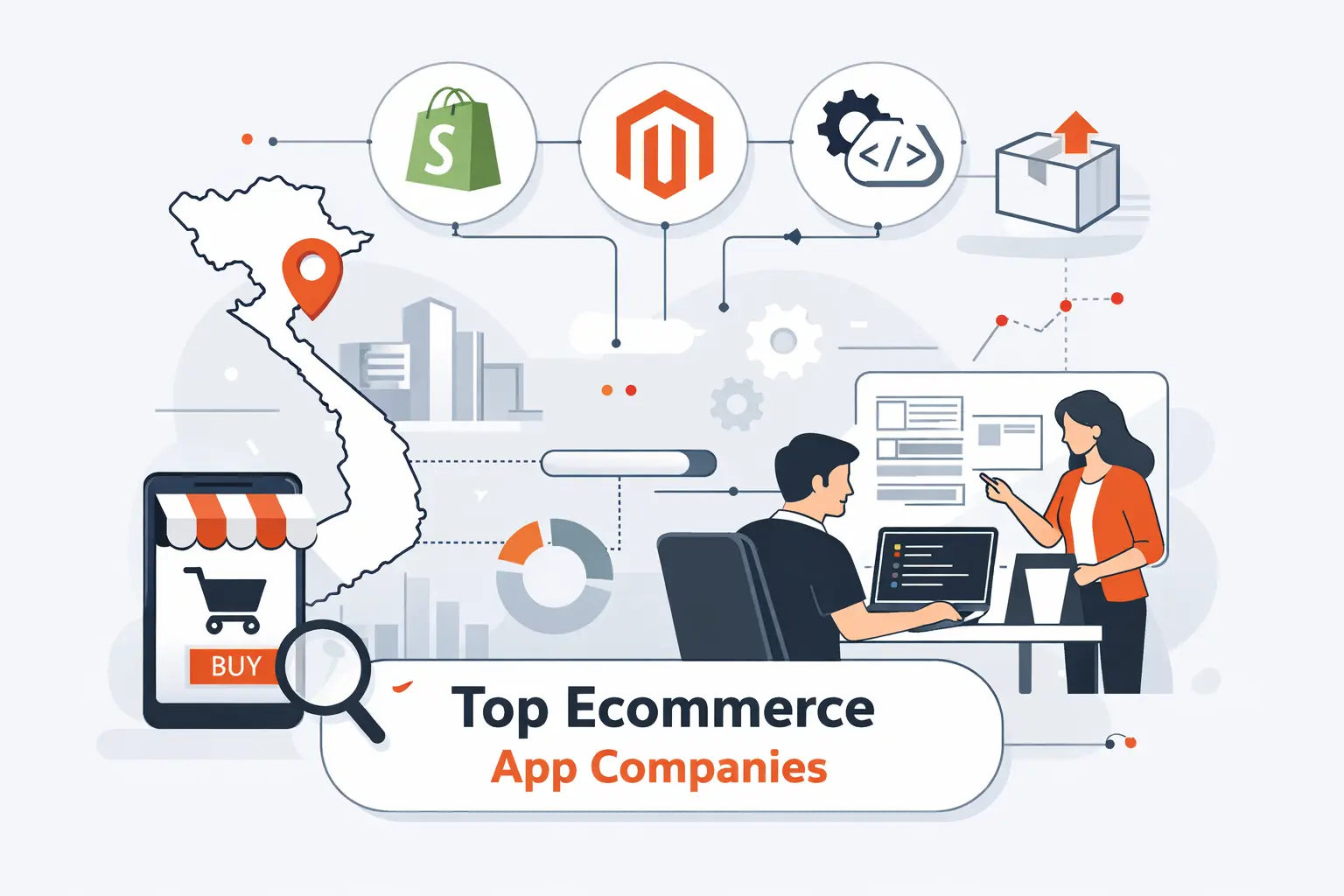
When brands search for ecommerce app development companies in Vietnam, we think the real question is not “Who can code?” It is “Who can build the right commerce system for our catalog, customers, operations, and growth plan?” That is a tougher call. Shopify app work, Adobe Commerce customization, and a fully custom mobile commerce product each require very different strengths.
That decision matters because digital commerce is still expanding. Statista projects a market volume of US$4.96tn by 2030, so buyers are not just hiring developers anymore. They are choosing long-term product and operations partners.
Vietnam is worth a serious look on its own. Statista projects the country’s ecommerce market at US$13.81bn in 2025, and we can already see local firms doing real commerce work for recognized brands. SECOMM highlights work tied to Changi Airport Group, while Magenest points to projects for names such as Heineken and Trung Nguyen Legend.
The regional backdrop is also supportive. Google, Temasek, and Bain estimated Southeast Asia’s digital economy at US$263 billion in 2024, which helps explain why Vietnam keeps appearing on serious shortlists for Shopify, Magento, and custom commerce builds.
Quick Comparison of Ecommerce App Development Companies in Vietnam
We built this quick view for buyers who want a fast filter before reading the full reviews. The table is deliberately short. It tells you what each firm is most likely to do well, where we would be cautious, and one smart question to bring into the first call.
| Agency | Best for | Strength | Potential drawback | Good question to ask |
|---|---|---|---|---|
| Tigren | Magento-first merchants | Deep ecommerce platform focus | Narrower outside commerce | Who handles extension conflicts and migration risk? |
| Kyanon Digital | Enterprise omnichannel programs | Strategy plus engineering | Can be too heavy for simple stores | Who owns architecture after discovery? |
| TechTide Solutions | Custom commerce products | Integration-led custom builds | Younger public company footprint | How do you scope business logic before coding? |
| Magenest JSC | Adobe Commerce plus business systems | ERP and CRM alignment | May be more than small stores need | Who handles ERP data and cutover? |
| Secomm | Commerce build plus operations | Full-service ecommerce lens | Less ideal for deep product R&D | Who owns post-launch support and growth work? |
| CMSMART | Fast SMB launches | Packaged commerce solutions | Templates can limit flexibility | What is custom and what is prebuilt? |
| Relia Software | Startup custom apps | Product-minded delivery | Commerce is not its only lane | Can you show a live checkout app? |
| Saigon Technology | Dedicated engineering teams | Scale and process maturity | More generalist than specialist | Which team has direct retail and payment experience? |
| TMA Solutions | Large enterprise programs | Huge engineering bench | Process can feel heavy | How will my project stay visible internally? |
| Rikkeisoft | Global delivery at scale | Large team and regional reach | Broad portfolio can blur fit | Which squad has direct commerce experience? |
Recommended reading: Top 20 App Development in Singapore Companies to Compare Before You Hire
Top 20 Ecommerce App Development Companies in Vietnam
We did not rank these firms by marketing polish alone. We looked for platform depth, delivery fit, proof of commerce work, likely communication quality, and the kind of client each team seems built to serve. In our view, the biggest divide is not “cheap versus expensive.” It is “platform specialist versus broad software vendor” and “delivery partner versus true commerce advisor.”
1. Tigren
We see Tigren as one of the clearest specialist picks in this list. It is an ecommerce-focused development company with roughly 50 to 100 employees, founded in 2012, and headquartered in Hanoi. That specialization matters. If your brief is centered on Magento, Adobe Commerce, Shopify apps, or WooCommerce, Tigren looks far more relevant than a broad outsourcing firm trying to cover everything.
- Service scope: Magento development, migration, PWA work, Shopify app work, WooCommerce builds, extensions, and ongoing support.
- Industry specialization: Retail, D2C, catalog-heavy stores, and merchants upgrading from older Magento setups.
- Ideal client size: Small to mid-sized merchants and lean in-house teams that need hands-on execution.
- Pricing model: Usually project-based and more approachable than enterprise-heavy firms.
- Onboarding process: Best when requirements are concrete and the current stack is already known.
- Communication style: Direct and practical.
- Proof/case-study requirements: Ask for recent migration, extension, and mobile checkout work that matches your SKU count and integration load.
- Red flags to check before hiring: Weak QA around third-party extensions, vague performance promises, or no clear owner for post-launch fixes.
- Questions to ask before signing: Who handles extension conflicts, rollback planning, mobile speed testing, and ERP or payment integration issues?
2. Kyanon Digital
Kyanon Digital sits in a different category from the pure ecommerce boutiques. It is a broader digital and technology company with roughly 250 to 500-plus experts, founded in 2012, and headquartered in Ho Chi Minh City. We would shortlist Kyanon when commerce is part of a bigger transformation brief, especially if the project also touches logistics, data, customer portals, or omnichannel operations.
- Service scope: Strategy, custom software, web and mobile development, ecommerce solutions, AI, big data, system integration, and ongoing support.
- Industry specialization: Retail, logistics, enterprise operations, and digital transformation.
- Ideal client size: Mid-market and enterprise buyers with multiple systems in play.
- Pricing model: Usually discovery-led, then project-based or dedicated-team delivery.
- Onboarding process: More structured than a small shop, often with workshops and planning before engineering ramps.
- Communication style: Organized and executive-friendly.
- Proof/case-study requirements: Ask for enterprise ecommerce or loyalty programs with measurable operating impact, not just website launches.
- Red flags to check before hiring: If you only need a simple Shopify store, the engagement may feel too large.
- Questions to ask before signing: Who owns solution architecture, how change requests are handled, and what support looks like once the initial launch is done?
3. TechTide Solutions
Because this is our own company, we want to keep the judgment plain. TechTide Solutions is a software development company with a younger public footprint, founded in 2022 and based in Ho Chi Minh City, with a publicly visible team size that appears to sit roughly in the 50 to 150 range. We are not the pick for a basic template tweak. We are strongest when the real problem is custom commerce logic, connected systems, or a mobile and web product that has to fit the way a business actually operates.
- Service scope: Custom web apps, mobile apps, commerce backends, admin panels, API integrations, and ongoing product development.
- Industry specialization: Custom software and commerce workflows that do not fit a standard storefront alone.
- Ideal client size: Startups, growing brands, and mid-sized operators with non-standard requirements.
- Pricing model: Usually scoped discovery first, then sprint-based or milestone delivery.
- Onboarding process: We start with the business model, data flow, and operational constraints before we talk stack.
- Communication style: Collaborative and practical.
- Proof/case-study requirements: Ask us for architecture thinking, integration planning, release approach, and how we measure business impact after launch.
- Red flags to check before hiring: If a client only wants the cheapest store launch, our custom focus may not be the best fit.
- Questions to ask before signing: Who owns product decisions, how we handle third-party dependencies, what support cadence follows launch, and what should stay custom versus stay on platform?
4. Magenest JSC
Magenest is one of the most commerce-system-oriented firms in this list. It operates more like a digital business systems partner than a narrow app shop. Publicly, it appears to have roughly 100 to 200 employees, it was founded around 2015, and it is headquartered in Hanoi. We like Magenest when the job is not just “build a store,” but “connect commerce with ERP, CRM, marketing, and cloud infrastructure.”
Service scope: Adobe Commerce and Magento work, ERP and CRM implementation, cloud services, mobile app support, and digital transformation consulting. Industry specialization: Retail, D2C, multi-channel commerce, and business process digitization. Ideal client size: Mid-market brands and larger organizations that need system alignment. Pricing model: Usually custom-quoted and more consultative than low-cost boutiques. Onboarding process: Often starts with solution assessment and system mapping.
Communication style: Consultative and business-process aware. Proof/case-study requirements: Ask for examples where ecommerce, inventory, CRM, and operations were tied together successfully. Red flags to check before hiring: If mobile product UX is central, verify that the same strength exists on the app side, not only on the business systems side. Questions to ask before signing: Who owns the data model, what the migration path looks like, and how post-launch support is split across storefront, integrations, and internal systems?
5. Secomm
SECOMM stands out because it presents itself as a full-service ecommerce solution provider, not just a development vendor. It appears to have roughly 50 to 100 employees, was founded in 2014, and is headquartered in Ho Chi Minh City. We would consider SECOMM when a brand wants build work, platform advice, and a partner who seems comfortable talking about operations, growth, and channel execution in the same conversation.
Service scope: Ecommerce consulting, platform development, operational optimization, and related digital services. Industry specialization: Retail and ecommerce-heavy businesses, especially merchants scaling across channels or regions. Ideal client size: Growing brands and mid-market merchants that need more than development tickets. Pricing model: Often project-led with room for longer-term support or retainer work. Onboarding process: Usually strongest when there is time for an audit and business review, not just a rushed dev handoff.
Communication style: Business-oriented and commerce-aware. Proof/case-study requirements: Ask for evidence tied to conversion, fulfillment, catalog complexity, or operational improvements. Red flags to check before hiring: If your roadmap is heavily product-engineering-led, confirm the depth of the technical team behind the consulting layer. Questions to ask before signing: Who owns support after launch, how analytics and conversion work are handled, and whether the team can manage both daily operations and bigger platform changes?
6. CMSMART
CMSMART feels very different from the more enterprise-facing agencies. It is closer to an ecommerce solutions vendor with packaged offers and customization services layered on top. Public sources suggest a Hanoi base, operation since around 2012, and a team that likely falls in the 50 to 100 range. We think CMSMART fits best when speed, affordability, and proven store patterns matter more than bespoke architecture from day one.
Service scope: WooCommerce and marketplace solutions, product customization tools, print and personalized commerce setups, plugins, and related custom development. Industry specialization: SMB ecommerce, personalized products, marketplaces, print shops, and fast-launch commerce models. Ideal client size: Founders, smaller merchants, and niche operators. Pricing model: Package-based plus add-ons and custom work. Onboarding process: Usually quicker than larger firms because much of the offer starts from existing assets.
Communication style: Practical and launch-focused. Proof/case-study requirements: Ask for live stores that are still performing well, not only demo environments. Red flags to check before hiring: Heavy dependence on prebuilt packages can create future limits in UX, performance, or code cleanliness. Questions to ask before signing: What code you own, what is reusable template logic, how updates are handled, and what the path looks like if the business outgrows the starter setup?
7. Relia Software
Relia Software is more of a product development shop than a strict ecommerce specialist. It appears to have roughly 50 to 100 employees, was founded in 2011, and is headquartered in Ho Chi Minh City. We like Relia when the brief is a custom app or marketplace-style product where ecommerce features sit inside a broader mobile or web experience. We would be more cautious if you want a deep Adobe Commerce specialist.
Service scope: Mobile app development, web apps, QA, DevOps, AI work, and custom software delivery. Industry specialization: Startups, product teams, and firms across sectors including ecommerce, fintech, and healthcare. Ideal client size: Startups and mid-sized businesses that need product thinking alongside engineering. Pricing model: Usually project-based or dedicated-team delivery. Onboarding process: Strongest when discovery, design, and sprint planning are part of the engagement.
Communication style: Responsive and product-minded. Proof/case-study requirements: Ask for live commerce, marketplace, or transaction-heavy apps with real user flows. Red flags to check before hiring: Because ecommerce is one category among several, team-level commerce depth can vary. Questions to ask before signing: Who handles payment flows, test coverage, release management, analytics, and post-launch iteration once the MVP is live?
8. Saigon Technology
Saigon Technology is one of the larger and more mature delivery organizations in the list. Public profiles place it in the several-hundred-engineer range, founded in 2012, with headquarters in Ho Chi Minh City. In our view, its strength is not narrow platform specialization. It is structured delivery, scalable engineering capacity, and the ability to field dedicated teams for custom products, including retail and commerce-related apps.
Service scope: Custom software, mobile and web development, offshore development centers, staff augmentation, QA, and AI-related work. Industry specialization: Broad, with ecommerce and retail included among several verticals. Ideal client size: Scale-ups and enterprises that need a multi-role team rather than a few freelance-like developers. Pricing model: Mid-market to upper-mid-market, depending on team shape. Onboarding process: Usually structured and process-led, which can reduce chaos in larger projects.
Communication style: Professional and predictable. Proof/case-study requirements: Ask for retail, order management, loyalty, or commerce app work, and confirm the senior people who would actually be on your account. Red flags to check before hiring: If you need a true Shopify or Magento specialist, a broad engineering firm may still need outside platform depth. Questions to ask before signing: Which team members have payment, catalog, and integration experience, and how post-launch ownership is maintained?
9. TMA Solutions
TMA Solutions is the heavyweight in this list from a pure scale standpoint. It was established in 1997, has around 4,000 engineers publicly associated with the business, and is headquartered in Ho Chi Minh City. We would not think of TMA first for a small store or a founder-led MVP. We would think of it for very large programs, long timelines, multi-team delivery, or enterprise environments where governance and depth matter as much as speed.
Service scope: Broad software outsourcing, web and mobile development, QA, data, AI, telecom, IoT, and ecommerce-related engineering. Industry specialization: Large enterprise technology programs across many industries. Ideal client size: Enterprise buyers with complex stakeholder structures. Pricing model: Custom and engagement-specific. Onboarding process: Formal, documented, and process-heavy, which is a plus for some buyers and a drag for others.
Communication style: Structured and corporate. Proof/case-study requirements: Ask for commerce programs that resemble your own complexity, not just broad corporate capability decks. Red flags to check before hiring: Smaller buyers can get lost inside a very large delivery organization. Questions to ask before signing: How visible your project will be, who your day-to-day decision-makers are, and whether a leaner specialist might move faster for your scope.
10. Rikkeisoft
Rikkeisoft looks like a strong option for brands that need scale, regional coverage, and a team used to working across markets, especially Japan. Public materials place it well above 1,000 employees, founded in 2012, and headquartered in Hanoi. We see Rikkeisoft as a serious contender when commerce sits inside a broader digital program, such as loyalty, fintech-adjacent customer experiences, B2B platforms, or multinational rollout work.
Service scope: Web and mobile development, cloud systems, AI, blockchain, embedded systems, and broader software services. Industry specialization: Broad technology delivery with visible work in ecommerce, loyalty, and digital customer systems. Ideal client size: Mid-market to enterprise, especially firms that need sustained engineering capacity. Pricing model: Competitive for large delivery programs. Onboarding process: Usually team-based and structured, with room for dedicated models.
Communication style: Suited to international clients and multi-office coordination. Proof/case-study requirements: Ask for direct commerce app, marketplace, or catalog management proof, not just generic digital transformation slides. Red flags to check before hiring: A broad service portfolio can make it harder to tell which exact team owns your domain. Questions to ask before signing: Who leads UX, how release management works, and which people on the proposed squad have direct commerce experience?
11. KMS Technology
KMS Technology is a product engineering company first, and that distinction matters. It was founded in 2009, has grown past the 1,000-person mark globally, and now operates as a global organization with a major Vietnam delivery base that started in Ho Chi Minh City. We would not call KMS a classic ecommerce app shop. We would call it a strong fit when the underlying product quality, QA rigor, platform modernization, or long-term software engineering standard is the core buying concern.
Service scope: Product engineering, software development, mobile apps, QA, DevOps, AI, data, and modernization work. Industry specialization: Software companies, enterprise platforms, and complex digital products. Ideal client size: Mid-market software businesses, PE-backed firms, and enterprises. Pricing model: Usually premium compared with small boutiques. Onboarding process: More rigorous and quality-led than speed-led.
Communication style: Mature and well structured. Proof/case-study requirements: Ask for retail or transaction-heavy product teams, especially where release quality or platform change was the hard part. Red flags to check before hiring: If your need is a simple storefront launch, KMS may be more engineering horsepower than you need. Questions to ask before signing: What percentage of the team sits in Vietnam, how senior the proposed squad is, and how QA and product ownership will be split?
12. AgileTech
AgileTech is a mid-sized Hanoi-based firm that seems to fit buyers who want a flexible custom software partner without going all the way up to enterprise-scale vendors. Public information puts it in the rough 100-person range, founded in 2015, with a headquarters in Hanoi. We would consider AgileTech for startups and SMEs that need web and mobile delivery with room for future AI or data work, but we would still test its direct ecommerce depth carefully.
Service scope: Website and mobile development, AI, big data, blockchain, DevOps, and outsourcing support. Industry specialization: Broad software delivery across sectors including retail. Ideal client size: Startups, growing companies, and cost-aware mid-market buyers. Pricing model: Usually budget-friendly to mid-market. Onboarding process: Faster than large firms and often more founder-friendly.
Communication style: Agile and relatively direct. Proof/case-study requirements: Ask for real ecommerce examples with payment flows, admin tools, and post-launch support, not only mobile app screenshots. Red flags to check before hiring: Overemphasis on trendy technologies when your actual need is stable checkout, inventory sync, and testing. Questions to ask before signing: Who writes specs, how QA is staffed, and what support looks like after the launch window ends?
13. Wiki Solution

Wiki Solution is one of the smallest but most clearly specialized names in this group. Public profiles describe it as a Ho Chi Minh City company founded in 2015 with roughly 10 to 49 employees. We like this kind of firm when a merchant wants direct access to a focused Magento team rather than a large generalist vendor. Small size can be a weakness, but it can also mean sharper attention and less account-layer noise.
Service scope: Magento development, theming, extension work, hosting-related support, consulting, and operations help. Industry specialization: Ecommerce, especially Magento-centered stores. Ideal client size: SMB and lower mid-market merchants with a clear Magento or Adobe Commerce problem. Pricing model: Typically more affordable than larger enterprise-oriented shops. Onboarding process: Usually direct and technically focused.
Communication style: Close to the dev team and less corporate. Proof/case-study requirements: Ask for current Magento 2 work, upgrade support, code review practices, and emergency support examples. Red flags to check before hiring: Small bench size can become a risk if you need parallel workstreams or 24/7 coverage. Questions to ask before signing: Who handles security patches, what happens during peak season incidents, and how backups, monitoring, and release approvals are managed?
14. CMC Global
CMC Global is another large-scale option, and we would treat it as an enterprise technology partner rather than a niche ecommerce agency. Publicly, the team size is well into the thousands, the company has been operating for about nine years, and its headquarters is in Hanoi. We see CMC Global as a fit for buyers with broad transformation programs, cross-border delivery needs, and strict security or governance expectations.
Service scope: Software development, mobile apps, QA, AI, cloud work, and digital transformation services. Industry specialization: Large enterprise work across finance, logistics, retail, and other sectors. Ideal client size: Enterprises and large regional organizations. Pricing model: Usually custom-scoped and enterprise-oriented. Onboarding process: Formal and process-driven, with more emphasis on standards than speed.
Communication style: Structured and stakeholder-friendly. Proof/case-study requirements: Ask for direct retail or commerce platform work that shows how they handle scale, testing, and integrations. Red flags to check before hiring: Startups may find the process too heavy and the account attention too diffuse. Questions to ask before signing: Who owns solution design, how change requests move through governance, and how much access you will have to senior engineering leaders once delivery starts?
15. NTQ Solution
NTQ Solution has grown into a sizable international delivery company with a very visible global expansion story. It was founded in 2011, appears to have around 1,500 employees, and is headquartered in Hanoi. We think NTQ makes sense when a buyer wants a scaled engineering partner that can cover more than storefront work, especially if the project spans consulting, multiple markets, or ongoing product development.
Service scope: IT consulting, software development, web and mobile apps, AI, cloud, blockchain, and related digital services. Industry specialization: Broad, with visible capability in ecommerce, manufacturing, and enterprise systems. Ideal client size: Mid-market and enterprise clients that need growth room in the relationship. Pricing model: Usually mid-market custom quoting. Onboarding process: Mature and structured, but not as heavy as the largest outsourcers.
Communication style: Internationally oriented and fairly polished. Proof/case-study requirements: Ask for commerce-specific mobile or web work and the exact people who delivered it. Red flags to check before hiring: A wide service catalog can make specialization look deeper on paper than it is on the ground. Questions to ask before signing: Which proposed team members have hands-on commerce experience, how product ownership is handled, and whether support will stay with the same squad after launch.
16. Sun Asterisk Inc.
Sun Asterisk is one of the more product-oriented names here, and that changes how we would buy from it. Public materials suggest roughly 1,500 to 2,000 people across the group, about 13 years in operation, and a major Vietnam presence centered in Hanoi with offices in other cities as well. We would consider Sun* when the buyer wants product thinking, venture-style collaboration, and a team that talks about business models and user experience, not just development tickets.
Service scope: Product strategy, design, engineering, talent support, web and mobile development, and broader digital product work. Industry specialization: Product creation across sectors, including fintech, startup products, and platform experiences. Ideal client size: Startups, innovation teams, and enterprises exploring new digital products. Pricing model: Mid-market to premium, depending on team shape and discovery depth. Onboarding process: Collaborative and workshop-heavy.
Communication style: Product-led and idea-driven. Proof/case-study requirements: Ask for direct commerce proof if that is your core need, especially checkout, loyalty, and operations-heavy systems. Red flags to check before hiring: Product language can sound exciting, but buyers still need concrete delivery structure and measurable milestones. Questions to ask before signing: Who owns backlog decisions, how UX research is run, and how the team balances discovery with the need to ship on time?
17. Savvycom
Savvycom is another established Vietnam technology brand with broad international ambitions. Public profiles put it in the 500 to 900 range, though company messaging often points to a 700-plus professional base. It was founded in 2009 and is headquartered in Hanoi. We see Savvycom as a fit for larger, more consultative digital projects where commerce sits beside integration, modernization, or enterprise process work.
Service scope: Custom software, mobile and web apps, IT consulting, AI-enabled transformation, system integration, and staffing support. Industry specialization: Fintech, healthcare, manufacturing, retail, and enterprise software. Ideal client size: Mid-market and enterprise organizations. Pricing model: Usually upper-mid-market and custom-quoted. Onboarding process: Consultative, with more emphasis on planning than on fast tactical fixes.
Communication style: Executive-friendly and polished. Proof/case-study requirements: Ask for retail and ecommerce examples that show measurable transaction, support, or operational outcomes. Red flags to check before hiring: For a small store or narrow app feature set, Savvycom may be more partner than you need. Questions to ask before signing: Who the day-to-day delivery owner is, how support will be staffed, and whether the proposed team has direct experience with commerce operations rather than only generic digital transformation.
18. InApps
InApps looks like a strong candidate for startups and SMEs that want custom app work without paying enterprise-vendor overhead. Public information places the company in the 100 to 200 range, founded in 2016, and headquartered in Ho Chi Minh City. We like InApps for custom mobile commerce, marketplace, and staff-augmentation-style relationships, especially when the buyer already knows what needs to be built and wants an efficient execution partner.
Service scope: Mobile and web development, ecommerce development, staff augmentation, cloud, DevOps, and broader custom software work. Industry specialization: Startup and SME digital products across sectors, with visible ecommerce examples. Ideal client size: Early-stage firms, growing digital products, and lean mid-market teams. Pricing model: Competitive and flexible, often with project or team-extension options. Onboarding process: Fairly quick and execution-oriented.
Communication style: Responsive and practical. Proof/case-study requirements: Ask to see transaction-heavy apps, admin backends, and post-launch support history, not just design screens. Red flags to check before hiring: If strategy is fuzzy, make sure InApps is expected to help shape the product and not only provide capacity. Questions to ask before signing: Who owns QA, how feature trade-offs are decided, and what the support plan looks like after the first release goes live?
19. Kaopiz
Kaopiz has grown fast and now looks much closer to a scaled technology group than a small outsourcing shop. Public company material points to roughly 800 to 1,000 staff, a founding year of 2014, and headquarters in Hanoi. We see Kaopiz as a good match for buyers who want a larger delivery organization with strength in custom software, cloud, and AI, but who still want a Vietnam-based partner that can move faster than some legacy giants.
Service scope: Custom software development, AI, cloud, blockchain, mobile and web development, and offshore delivery. Industry specialization: Broad, with visible emphasis on Japanese market work, education, healthcare, and enterprise systems. Ideal client size: Mid-market and enterprise firms that want room to scale the account. Pricing model: Usually custom and mid-market. Onboarding process: Structured, with stronger emphasis on account management than a small boutique can offer.
Communication style: Best suited to organized buyer teams, especially cross-border ones. Proof/case-study requirements: Ask for commerce-specific examples and the exact team that would run them, because Kaopiz’s visible portfolio is wider than ecommerce alone. Red flags to check before hiring: Rapid growth can sometimes stretch focus. Questions to ask before signing: Who leads the project day to day, how English communication works across roles, and how security, maintenance, and release support are handled after rollout.
20. CO-WELL Asia
CO-WELL Asia is a long-running Japan-connected IT services company with a strong Vietnam base. Public information places it in the 450 to 500-plus employee range, founded in 2011, and headquartered in Hanoi. We think CO-WELL is especially relevant for enterprise ecommerce, testing-heavy programs, and buyers who care about process discipline and bilingual or Japan-facing delivery structure.
Service scope: Ecommerce development, business solutions, web and app development, AR and VR work, and software testing. Industry specialization: Large customer projects, especially where ecommerce and enterprise systems meet. Ideal client size: Mid-market and enterprise clients, particularly those with Japan-related business needs. Pricing model: Usually custom and service-led rather than package-led. Onboarding process: Disciplined, with a clear delivery structure and strong testing orientation.
Communication style: Process-driven and reliable for formal client environments. Proof/case-study requirements: Ask for enterprise ecommerce builds with real integration and QA complexity, not only brochure-level capability claims. Red flags to check before hiring: If you need very fast founder-style iteration, a more structured vendor may feel slower than a startup-focused shop. Questions to ask before signing: Who owns bilingual communication, how bug triage and maintenance are staffed, and whether the same team will stay involved after launch.
Recommended reading: Top 20 Android App Development Companies in USA for Startups and Enterprises
Why Vietnam Stands Out for Ecommerce App Development
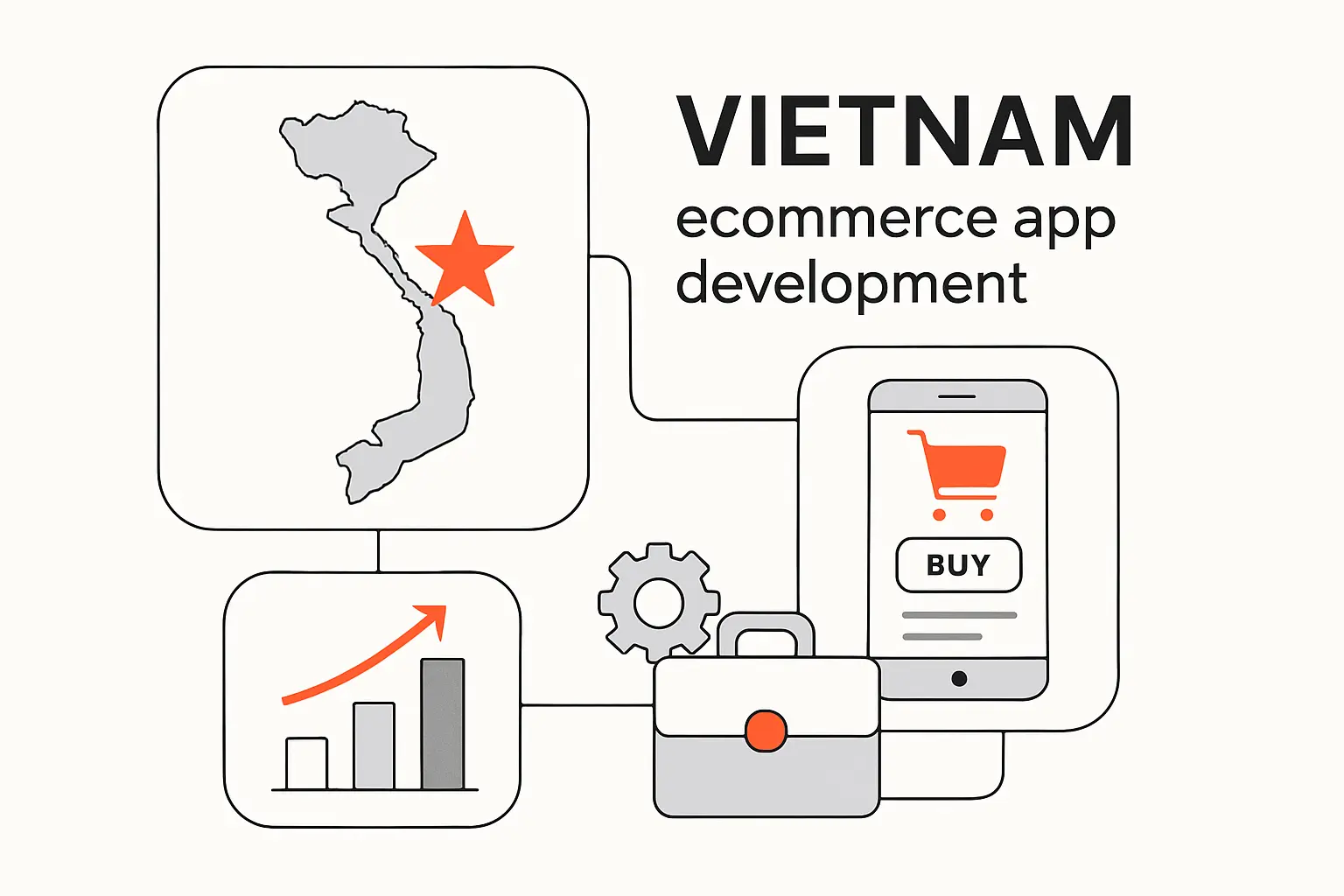
We like Vietnam for a practical reason. It gives buyers access to both ecommerce specialists and broad engineering firms in the same market. That helps because commerce is increasingly shaped by mobile behavior, creator discovery, and omnichannel buying. Deloitte notes that 64% of digital buyers discover brands via social media, so the best partners now need stronger app, API, and content-commerce judgment than a classic web shop.
1. Cost-Effective Talent and Deep Technical Range
Vietnam is no longer interesting only because it can be cheaper than Western markets. We think the stronger reason is range. In one market, buyers can find Magento-focused boutiques like Tigren and Wiki Solution, business-systems firms like Magenest, and large engineering organizations like TMA Solutions, CMC Global, and Rikkeisoft.
That mix matters when a project changes shape halfway through. A simple Shopify app can turn into a loyalty system. A mobile storefront can suddenly need ERP sync, returns management, or warehouse visibility. Vietnam gives buyers a better chance of finding the right delivery shape without changing countries or rebuilding a vendor shortlist from scratch.
2. A Young Developer Base and Better Digital Infrastructure
We also think Vietnam benefits from a labor pool that is comfortable with mobile-first behavior, API-led products, and cross-border work. Many firms here do not treat mobile as an add-on. They treat it as a core customer touchpoint, which is exactly what commerce teams need now.
Infrastructure has also improved enough that clients can ask for more mature delivery. Better office networks, broader cloud adoption, more common use of Jira and modern CI pipelines, and stronger familiarity with global time-zone collaboration all make vendor risk easier to manage than it was a decade ago.
3. A Mature Outsourcing Market with Real Mobile Commerce Experience
Vietnam’s outsourcing market is not new anymore, and that is good for buyers. Mature vendors have seen failed migrations, unstable plugins, messy catalogs, payment outages, and post-launch support gaps. Experience with those problems is often more valuable than flashy pitch decks.
We also notice that many Vietnam firms have moved beyond simple website outsourcing. They now show work in loyalty apps, marketplace products, custom admin tools, delivery integration, and omnichannel operations. That real-world commerce exposure is why Vietnam belongs on the shortlist when the project has more moving parts than a standard store theme.
Recommended reading: Top 20 Sydney Web Design Companies for Businesses That Want Better Results
How We Compared Ecommerce App Development Companies in Vietnam
We did not compare these firms by design style alone. Buyers need evidence that a partner can handle the harder parts of commerce, including operations, integrations, and post-launch iteration. That is becoming more urgent as buyer expectations rise. McKinsey notes U.S. ecommerce sales saw 18 percent annual growth between 2019 and 2023, and that kind of pressure tends to push merchants toward faster releases and better post-purchase systems.
1. Check Platform Depth across Shopify, Magento, WooCommerce, and Custom Builds
We always start with platform depth. Some vendors say “ecommerce” when they really mean theme work. Others can handle extension architecture, catalog rules, migration planning, headless frontends, and mobile app integration. That difference is huge.
If your business already knows it needs Adobe Commerce or a Magento-heavy stack, we would lean toward specialists like Tigren, Magenest, or Wiki Solution. If the project is a custom commerce product with a native app, loyalty engine, or back-office workflow layer, broader custom teams like TechTide Solutions, Relia Software, Saigon Technology, or Kyanon Digital may be a better fit.
2. Review Portfolios, Communication, and Post-Launch Support
Portfolios matter, but we care more about what they prove. We look for checkout flows, account areas, inventory sync, customer service tooling, payment handling, and support evidence after launch. A vendor with ten pretty landing pages is not the same as a vendor that has lived through Black Friday issues or migration cutovers.
Communication is equally important. We rate firms higher when they ask about SKU complexity, returns, payment providers, promotions, content operations, and support staffing. Those questions tell us the team understands commerce as a business system, not just a design project.
3. Compare Team Size, Budget Floor, and Delivery Model Early
Many failed vendor searches happen because buyers ask the wrong companies to bid. A 4,000-engineer outsourcer is rarely the right fit for a narrow Shopify app. A 15-person specialist may struggle if the roadmap spans backend services, mobile apps, analytics, and enterprise integrations all at once.
We prefer to sort vendors early by delivery model. Is this a specialist shop, a product team, a dedicated-team provider, or a digital transformation company? Once that is clear, the shortlist usually gets much better fast.
Recommended reading: Top 20 IT Outsourcing Companies for Growth, Innovation, and Scale
Which Type of Vietnam Partner Fits Your Project Best
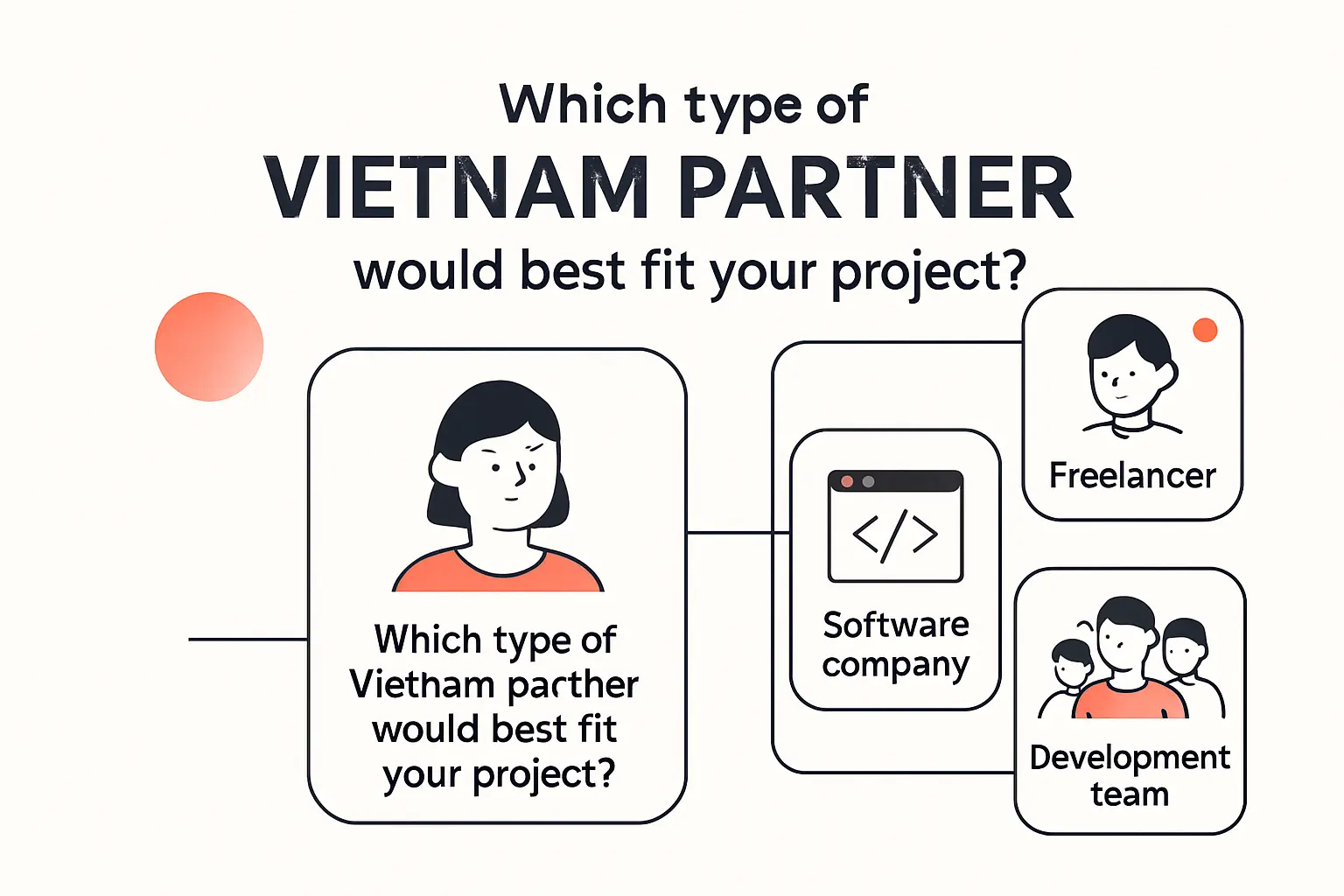
In our view, there is no universal “best Vietnam partner.” There is only the best match for the kind of commerce problem you actually have. That is why we recommend choosing the vendor type first and the brand name second.
1. Best for Shopify Stores
If your business already runs on Shopify or Shopify Plus, we would lean toward teams that understand store operations, app behavior, and practical merchandising changes. That often means a more focused ecommerce firm rather than a giant outsourcing provider. Tigren, SECOMM, CMSMART, and Magenest are the names we would look at first for this type of work.
The main trade-off is depth versus scale. A specialist may move faster on app logic, storefront changes, and conversion work. A broader software company may be stronger if the “Shopify project” is really a bigger product build with custom services, customer apps, or complex internal tooling around it.
2. Best for Magento, Adobe Commerce, and Complex Catalogs
Magento and Adobe Commerce projects reward specialization. Catalog rules, extension conflicts, data migration, layered pricing, B2B logic, and performance tuning can punish a generalist team very quickly. For those projects, we would usually favor Tigren, Magenest, or Wiki Solution first, with SECOMM also worth a look for broader commerce support.
We would ask harder questions here than in any other category. Who owns upgrade strategy? How are third-party modules vetted? What happens if checkout breaks after a release? A firm that answers those questions clearly is already ahead of half the market.
3. Best for Custom Mobile Commerce, Loyalty, and Omnichannel Products
Once the brief includes native apps, customer wallets, reward systems, marketplaces, in-store linkage, or complex back-office workflows, the best partner often shifts from platform specialist to custom product team. That is where we would look harder at TechTide Solutions, Kyanon Digital, Relia Software, Saigon Technology, Rikkeisoft, or InApps.
The trade-off is simple. You gain more engineering flexibility, but you must work harder to verify commerce domain depth. A strong mobile team is not automatically a strong commerce team. We always ask for proof around transactions, customer accounts, order states, refunds, and operational reporting before we move anyone onto the final shortlist.
What Pricing, Team Size, and Scope Usually Signal
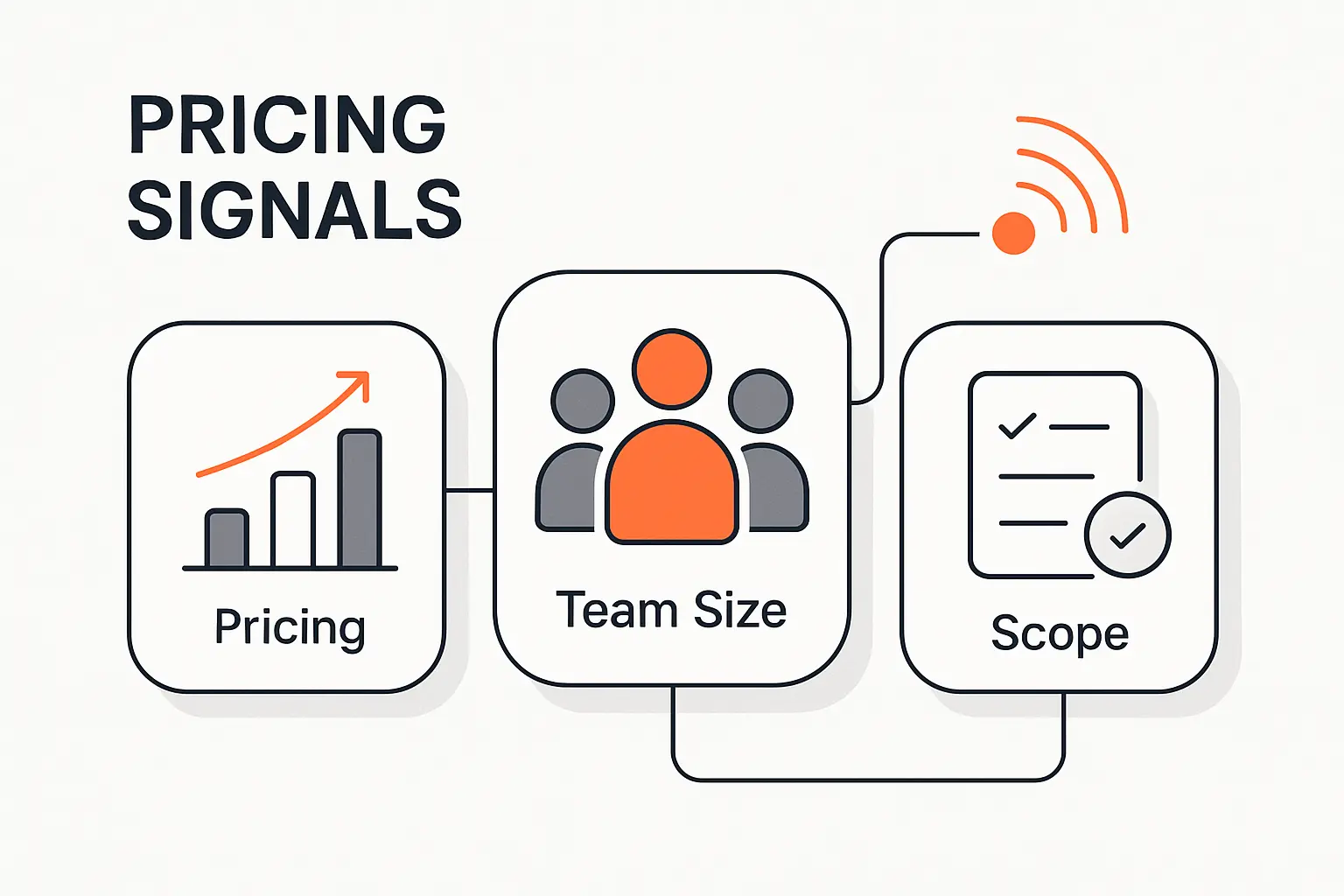
We would not choose a vendor on hourly rate alone. In commerce projects, the real cost usually shows up later in rework, delayed launches, unstable integrations, or missing support. Team size and minimum scope often tell us more than the headline rate does.
1. Under $25 Teams versus $25 to $49 Specialists
Lower-rate teams can be a good fit when the work is well defined, the platform is familiar, and the buyer can provide strong product direction. That is often enough for fixes, extensions, admin tooling, or a focused store build.
Once you move into migration risk, business-rule complexity, multi-system integration, or mobile commerce products, we usually prefer the slightly more expensive specialist. A higher rate can be cheaper if it reduces the number of avoidable mistakes. Commerce bugs are expensive because they affect revenue, support load, and customer trust all at once.
2. Small Boutiques versus 250-Plus Engineer Firms
Small boutiques often win on focus, attention, and direct access to the people doing the work. That is valuable for Shopify apps, Magento troubleshooting, and founder-led builds where speed matters. The risk is capacity. A small team can struggle with parallel workstreams, heavy QA, or round-the-clock support.
Larger firms bring process, staffing depth, and resilience. They are usually stronger for enterprise programs, dedicated-team models, and long roadmaps. The catch is that some large firms are better at selling capacity than delivering commerce insight. We want both.
3. Why Minimum Project Size Matters as Much as Hourly Rate
Minimum project size is a signal buyers often ignore. It tells you what kind of account a vendor wants. If your project is below that floor, the team may still take it, but you may not get the attention or seniority you expect.
We recommend matching scope to the vendor’s natural shape. A narrow brief belongs with a focused team. A multi-phase rollout with app, backend, integration, analytics, and support belongs with a partner built for that complexity. When the fit is wrong, price debates stop mattering because the delivery model itself is off.
Red Flags That Should Disqualify a Vendor
We would rather cut a vendor early than rescue a bad fit later. Commerce projects fail in familiar ways. The warning signs usually show up in the first call if you know what to listen for.
1. Strong Sales Pitch, Weak Ecommerce Proof
If a vendor talks endlessly about “digital transformation” but cannot show checkout logic, promotions, order management, returns flows, subscription handling, or integration-heavy commerce work, we move on fast. Nice brand language does not replace domain proof.
We also get cautious when every case study sounds the same. Good commerce vendors can explain what made one client hard. Maybe it was catalog complexity, ERP sync or app-store release coordination. Specific pain points usually signal real experience.
2. No Clear Plan for Integrations, QA, or Maintenance
Any vendor can promise to build features. The better question is how they keep those features alive. Commerce systems rarely fail because the homepage looked bad. They fail because data sync breaks, promotions misfire, payment flows time out, or support ownership is fuzzy after launch.
We disqualify vendors that treat QA like a final checklist or maintenance like an optional add-on with no staffing plan. If the team cannot explain release control, bug triage, monitoring, and integration testing in plain language, we do not trust the pitch.
3. Generic Discovery Calls with No Questions About Conversion or Operations
A weak discovery call is one of the most reliable red flags we know. If the vendor never asks about average order value, repeat purchase behavior, fulfillment steps, returns handling, promotions, customer service workload, or catalog management, they are probably thinking like a dev shop, not a commerce partner.
We want vendors who ask awkward but useful questions. What breaks during peak traffic? Who owns product data? How are refunds approved? Where do support tickets pile up? Those questions show a team understands that ecommerce apps are tied to daily operations, not just front-end screens.
FAQ About Hiring Ecommerce App Development Companies in Vietnam
These are the questions we hear most often from founders, retailers, and product teams comparing Vietnam vendors. The short answer is that Vietnam can be a very strong market to hire from, but only if the vendor type matches the project.
1. Why Do Brands Outsource Ecommerce App Development to Vietnam?
We think brands outsource to Vietnam for three main reasons. First, they can choose between specialists and scaled engineering teams in the same market. Second, they often get better cost-to-skill value than in many Western markets. Third, many Vietnam firms already work with clients in the U.S., Australia, Singapore, Japan, and Europe, so cross-border delivery is no longer unusual.
The strongest reason, though, is practical fit. Vietnam has enough ecommerce specialists to handle platform work and enough mature software companies to handle custom commerce products.
2. How Much Does an Ecommerce App Cost in Vietnam?
There is no single price because “ecommerce app” can mean three very different things. A light Shopify app or storefront support project may sit at the lower end. A Magento migration with integrations lands in the middle. A custom mobile commerce product with loyalty, backend services, and admin tooling is a different budget entirely.
We tell buyers to price the problem, not the label. Payment complexity, catalog rules, integrations, and post-launch support usually drive cost more than screen count.
3. Should I Choose a Shopify Specialist, a Magento Specialist, or a Custom Product Team?
You should choose a Shopify specialist when Shopify is your center of gravity and you mostly need store, app, or operations expertise. Choose a Magento or Adobe Commerce specialist when catalog logic, B2B features, or migration risk are the hard parts. And a custom product team when the real need is a broader customer product that happens to include commerce.
In our experience, many companies waste time because they choose the platform first and the business model second. The order should usually be reversed.
4. What Services Should a Vietnam Ecommerce App Partner Cover Beyond Build?
We want a partner to cover discovery, architecture, UX, QA, release planning, analytics setup, maintenance, and support handoff at a minimum. For more complex work, we also want help with integrations, data migration, performance review, and operational reporting.
If the vendor only wants to code tickets, the client will end up owning too much invisible work. That is where launches start slipping.
5. How Do I Vet Communication, Support, and Long-Term Reliability?
We ask three things. First, who exactly will be on the team, and how senior are they? Second, what does support look like after go-live, including response times and ownership? Third, can the vendor show a project that lasted long enough to prove reliability, not just a launch screenshot?
We also watch the early meetings closely. Clear questions, clear follow-ups, and honest pushback are good signs. Overpromising is not.
How TechTide Solutions Helps You Build Custom Ecommerce Solutions
Our own view is simple. Good ecommerce software starts with the business model, not a theme library. We work best when a client needs custom workflows, connected systems, and a product that has to fit how the company sells, ships, supports, and grows.
1. Start with Your Business Model, Not a Rigid Template
We begin by mapping the business first. That means customers, catalogs, fulfillment rules, promotions, approvals, and support operations. We do this because many commerce problems are not really UI problems. They are workflow and data problems hiding behind a storefront request.
When we scope a project, we try to separate what should stay on platform from what truly needs custom logic. That keeps the build smaller, clearer, and easier to maintain.
2. Connect Mobile Apps, Web Apps, Admin Panels, and Third-Party Systems
We are most useful when commerce does not live in one screen. Many brands need a mobile app, a web experience, an internal dashboard, and integrations with payment tools, shipping systems, CRMs, or inventory software. That is where custom development starts paying off.
We design around those connections early. If the integrations are treated like an afterthought, the product may launch, but operations will still hurt.
3. Scale with Ongoing Development, Optimization, and Support
Launch is only the first useful checkpoint. After release, most commerce products need iteration on search, checkout friction, user flows, backend tools, and operational visibility. We prefer working in a way that leaves room for those improvements rather than pretending version one is the finish line.
If your roadmap includes experimentation, integrations, and product growth after launch, that is usually where we add the most value.
Final Thoughts on Choosing Ecommerce App Development Companies in Vietnam
Vietnam has enough depth now that buyers can be selective. That is the good news. The harder part is staying honest about what kind of partner you need. If your project is platform-heavy, hire a specialist. And if it is product-heavy, hire a custom team. It is operations-heavy and enterprise-wide, hire a firm that can support that weight.
We were making the shortlist today, we would pick three vendors from different categories, run a focused discovery call with each, and compare how they think about your business, not just how they price the build. Which kind of partner does your project really need: a store expert, a systems integrator, or a product team?