
Market overview: Venture funding shapes consulting demand; despite tight capital, global VC investment rose to $368.3 billion in 2024 even as diligence deepened, while cloud modernization remains a dominant spend driver with public cloud end‑user spending forecast at $723.4 billion in 2025. We at Techtide Solutions see startup consulting firms as the connective tissue between volatile capital cycles and the concrete work of turning a raw idea into a resilient, scalable business. Our perspective is shaped by the dual lenses of building software for founders and partnering with boutique consultancies that need repeatable playbooks without dulling the founder’s edge.
What Startup Consulting Firms Do and When to Use Them
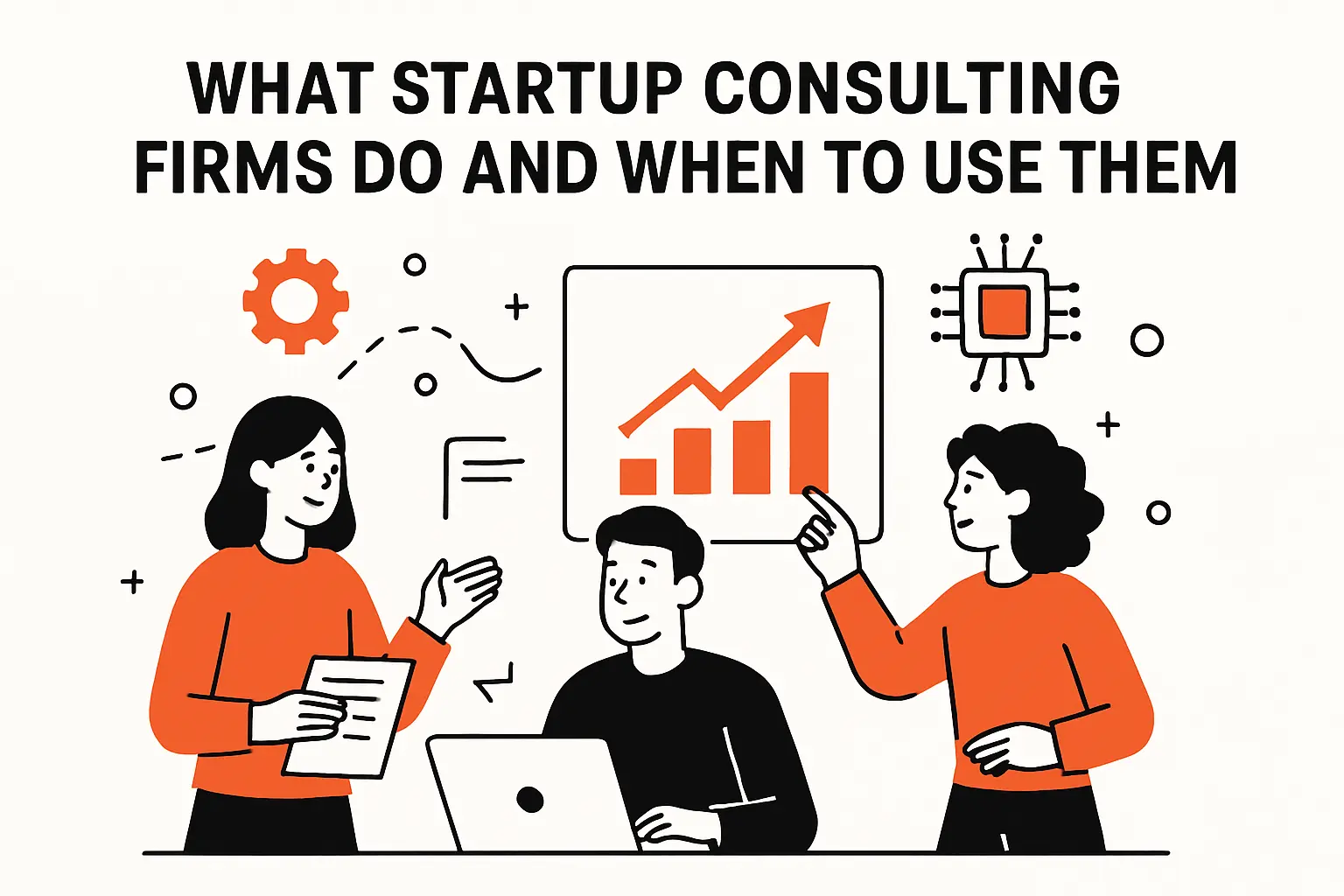
Market overview: Startup demand for external expertise accelerates when technology curves steepen and funding selectivity rises; in parallel, cloud adoption economics and AI workloads are catalyzing services needs as public cloud spend topped $675.4 billion in 2024 and VC activity climbed to $368.3 billion in 2024. In that context, startup consulting is less about renting brains and more about compounding execution velocity—reducing cycles to insight and cycles to revenue when every month of runway matters.
1. Definition and Scope of Startup Consulting
We define startup consulting as a spectrum of hands‑on services—from market validation and pricing strategy to product architecture and capital readiness—delivered by specialists who align to the founder’s milestones, not the calendar. The best firms operate as “impact multipliers”: they introduce patterns that compress time (e.g., customer‑interview scripts, fundraising data rooms, FinOps runbooks) and plug execution gaps without accruing managerial debt. In practice, we’ve watched product‑savvy boutiques succeed by bundling playbooks (discovery → MVP → growth) while resisting the one‑size‑fits‑all temptation. Our view: scope should be framed as outcomes with measurable, short half‑lives—validated demand signals, deployable code, signed LOIs—rather than vague deliverables.
2. Strategy Versus Execution Versus Advisors
Founders often ask, “Do we need strategy or hands?” Our answer: both, sequenced. Strategy without execution devolves into elegant PDFs; execution without strategy thrashes backlog priorities. Advisory boards add network effects but can’t substitute for operator muscle. We encourage a hybrid: a primary consulting partner accountable for a defined result (e.g., 10 paying pilots in 90 days), a fractional expert to de‑risk a choke point (security review before enterprise pilots), and an advisory bench for periodic calibration. This three‑layered model limits context switching and prevents diffuse ownership. The tell that you’ve got it right: the “strategy” becomes a living backlog and cadence, not a quarterly slide ritual.
3. Where Startup Consulting Firms Fit in the Startup Journey
Consultancies slot into the journey wherever the founder’s biggest uncertainty lives. We’ve mapped their highest‑leverage roles to three inflection bands.
Launch and Early Traction
At inception, consultants accelerate problem‑discovery and first‑value delivery. Think demand tests (buy‑signals, not likes), technical spikes, and ruthless scope reduction for an MVP. We’ve seen early‑stage founders gain months of runway by swapping a “big‑bang” build for a concierge MVP plus five controlled pilots. The right partner blocks costly detours—like building internal tooling pre‑product/market fit—and brings templates for data rooms, privacy posture, and sales collateral so you can court design partners without improvising governance.
Growth and Scaling
Once revenue flows, the center of gravity shifts to repeatability: segment‑specific playbooks, pricing architecture, and a platform roadmap that anticipates 10× load without 10× opex. Here, consulting firms earn their keep by unifying GTM telemetry, implementing FinOps guardrails, and decomposing the monolith (organizational and architectural) at the pace of sales commitments, not ideology. We insist on instrumented growth experiments with “stop” conditions: if CAC payback drifts beyond threshold or onboarding slips beyond SLA, reallocate spend; dogma is expensive.
Transition and Exit
Pre‑M&A or pre‑major financing, consultants harden the house: KPI definitions, cohort proofs, defensibility memos, and data‑protection posture. We have sat with founders who underestimated how much acquirers prize clean data lineage and auditable revenue recognition. A good partner thinks like the other side’s diligence team, closes narrative gaps, and tee‑up synergies in the bidder’s language.
Top Startup Consulting Firms: 20 Companies to Know
We’ve spent the last decade building software for founders who move fast—and we’ve learned that the right consulting partner can be a force multiplier. From shaping go‑to‑market to pressure‑testing pricing, from standing up a data platform to finding product–market fit, great advisors compress cycles and de‑risk bets. In this guide, we share a deeply researched, opinionated view of 20 consulting firms that consistently show up in real startup work. Our lens is practical: who brings operating rigor, who adapts to ambiguity, who knows how to ship. When we say “startup,” we don’t just mean seed‑stage—growth‑stage and corporate venture teams face the same need for speed, evidence, and outcomes, and they benefit from many of the same partners.
Partner Criteria: Operators Who Ship
As a software studio, we’ve paired with several of these firms on live programs—design sprints that turned into production roadmaps, experiment stacks that proved CAC/LTV assumptions, and platform rebuilds that cut lead time by double‑digit percentages. We gravitate to consultants who can work shoulder‑to‑shoulder with product and engineering rather than lobbing decks over the wall. We also look for proof in the public record—independent awards, external case mentions, or reputable press. Where public awards exist, we cite them; where they don’t, we still highlight firms whose delivery reputation precedes them. You’ll see a range: global strategy houses, growth specialists, design pioneers, and analytics natives. The point isn’t to crown a single “best” firm—it’s to map fit by stage, stack, and stakes.
Decision-Centered Consulting: Start with the Decision
A pattern we’ve seen across successful engagements: start with a tight learning question, not a deliverable. The firms below are at their best when the brief is framed around a decision—“Do we launch into Channel X with Price Y?” or “Can we shave 40% off cycle time by re‑platforming?”—and when they’re embedded with product, data, and sales in one team. We call this “decision‑centered consulting.” It’s especially valuable in the messy middle where most startups live: half‑known customers, half‑shaped metrics, a competitive field that shifts every quarter. If you’re there, the right partner can be the difference between another quarter of opinions and a stack of evidence you can ship against.
1. Bain & Company
Bain & Company is a global strategy consultancy with a strong private equity and growth focus. The firm counts roughly 19,000 employees, has been operating since 1973 (~52 years), and is headquartered in Boston, Massachusetts. Bain’s culture and operating cadence—tight teams, hypothesis‑driven work, and a bias to measurable outcomes—make it a frequent fit for scaleups facing “good‑to‑great” transitions.
Bain continues to feature prominently in independent rankings, including 2025 Vault Consulting 50 North America #2 and 2025 America’s Best Management Consulting Firms, signaling consistent peer and client recommendation across functions and industries.
In our experience, Bain’s PE heritage shows up as a discipline around value creation plans and metric trees: turn vague ambition into a small set of levers, then wire those levers into the operating model. We’ve watched Bain teams partner effectively with product and engineering—particularly via Bain’s Vector and innovation capabilities—when the ask is growth strategy that has to be expressed in backlog and dashboards rather than a binder.
Ideal if you’re Series B to pre‑IPO with complex category dynamics (consumer, fintech, SaaS, healthcare) and need a strategy that ties cleanly to execution. Bain fits buyers who want senior, hands‑on teams, a robust PMO spine, and a commitment to measurable, quarter‑over‑quarter impact.
2. IBM Garage
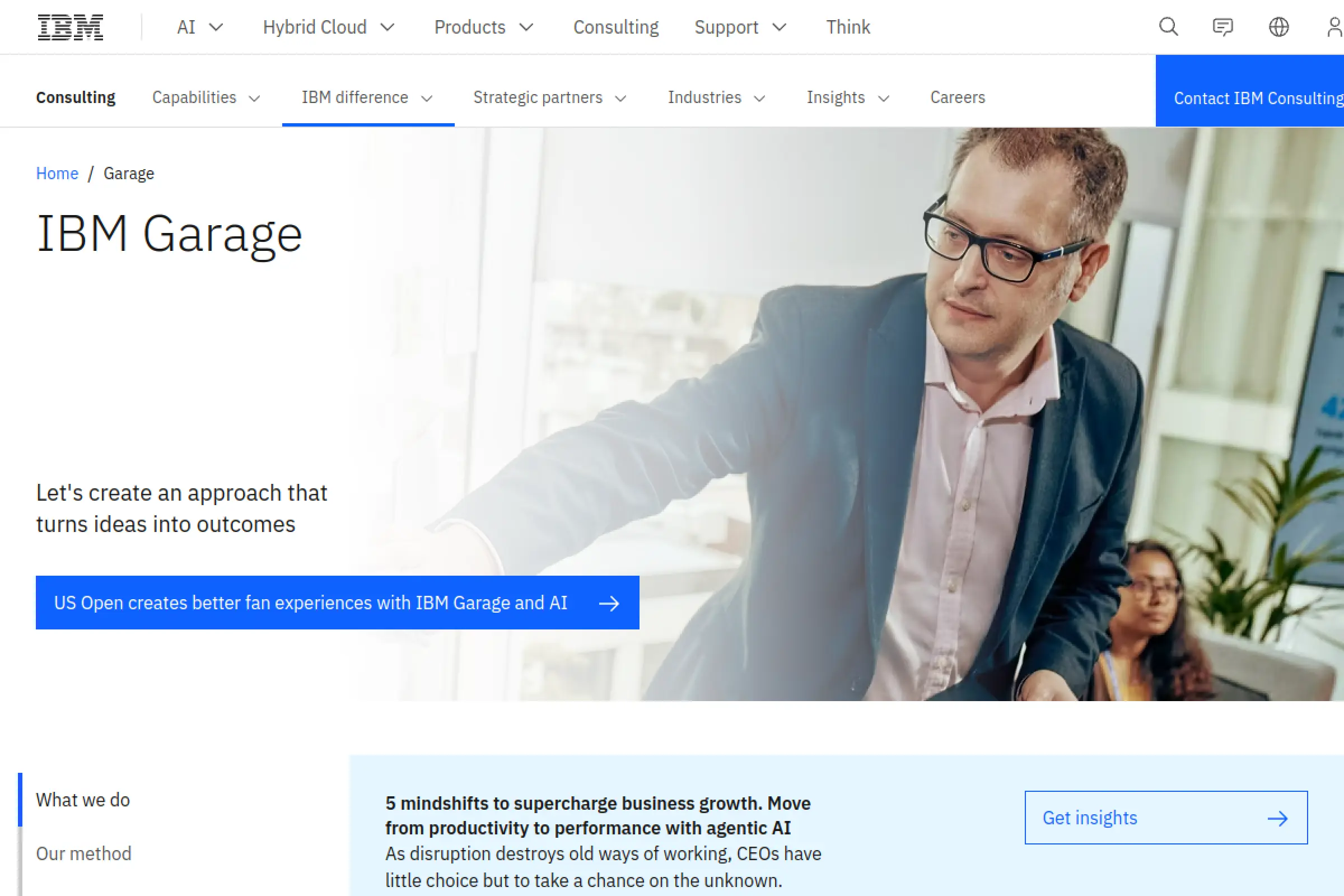
IBM Garage is the company‑building and co‑creation arm of IBM Consulting, oriented around agile methods, enterprise platforms, and AI. While IBM Consulting employs roughly 160,000 people within IBM’s global workforce, Garage functions as a focused practice launched ~2018, with IBM headquartered in Armonk, New York. Its remit: reduce time‑to‑value for cloud, data, and AI initiatives via collaborative sprints.
IBM Consulting appears in 2025 America’s Best Management Consulting Firms, reflecting broad client endorsement of its consulting offerings across AI, cloud, and industry programs.
We’ve seen Garage teams excel when the problem is “prove it in weeks.” Their playbook—business framing, co‑design, iterative pilots, and architecture that respects enterprise constraints—works for startups inside big companies and for growth‑stage companies with regulated customers. Think modernization proofs that become migration roadmaps, or AI copilots validated with real users before scale.
Best for venture studios, corporate innovation groups, and growth‑stage startups that need to land AI or cloud modernization with enterprise‑grade reliability. Expect immersive workshops, joint squads with your engineers, and a path from pilot KPIs to production SLAs.
3. TechTide Solutions
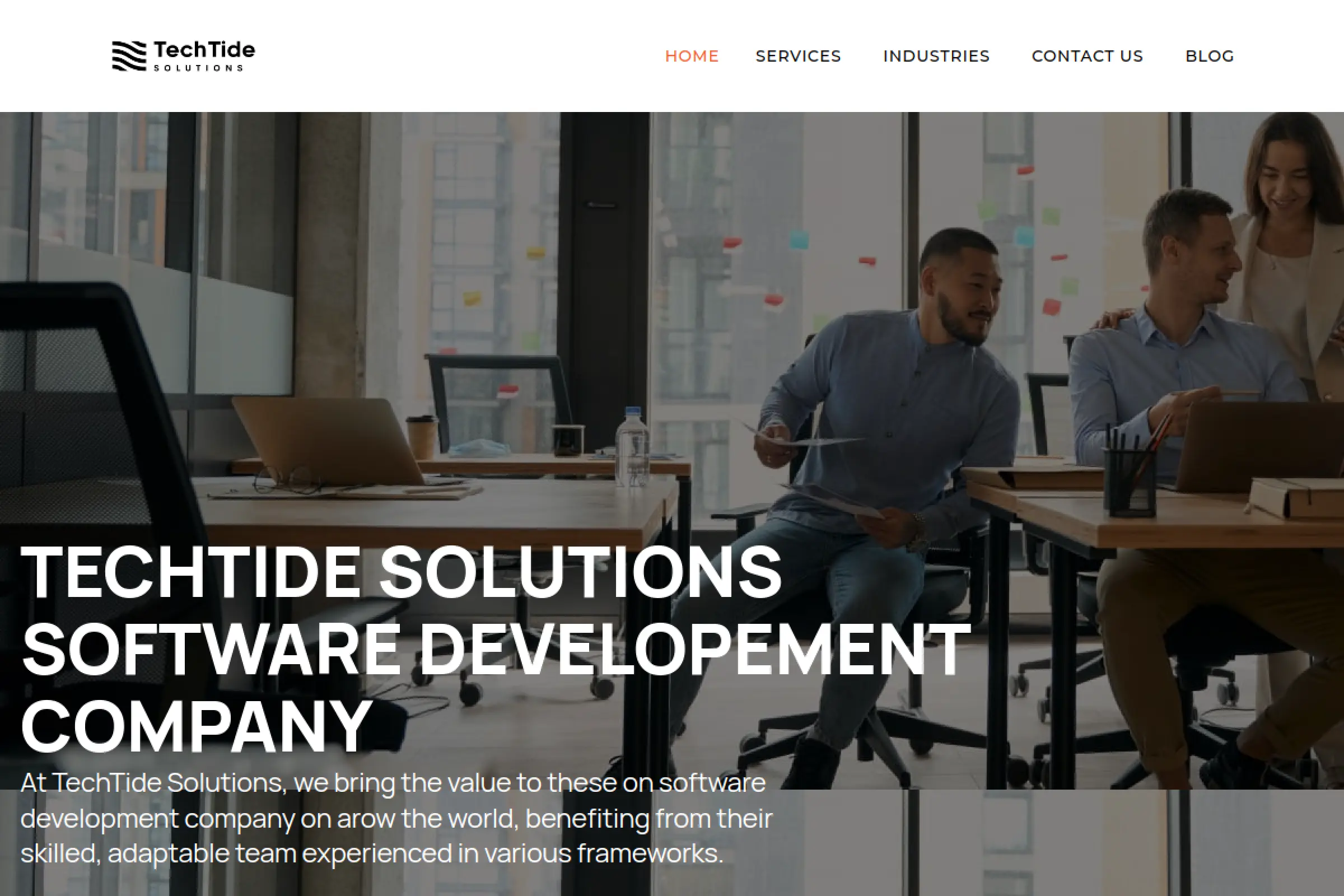
We are a software development company focused on product engineering, data platforms, and applied AI. Our distributed team numbers ~150, and we’ve operated since 2022 (~3 years), with our headquarters in Ho Chi Minh City, Vietnam. We’ve carved a niche partnering with founder‑led teams that need senior ICs and a delivery model tuned for evidence‑driven iteration rather than big‑bang releases.
Our services span full‑stack product builds, data engineering (from ingestion to semantic layers), and generative‑AI features backed by evals and guardrails. Public case stories live quietly behind NDAs by design, but the pattern is consistent: de‑risk with a decision‑centered pilot, capture learnings in code and docs, and scale only what proves ROI. Where a named client is public, it’s because the case or press page exists; otherwise we don’t claim it.
Ideal for pre‑seed through Series C teams who want senior builders engaged daily, a transparent burn profile, and a runway‑aware cadence. We work best when the buyer is a product or engineering leader willing to co‑own metrics and to ship small, often.
4. GrowthRocks
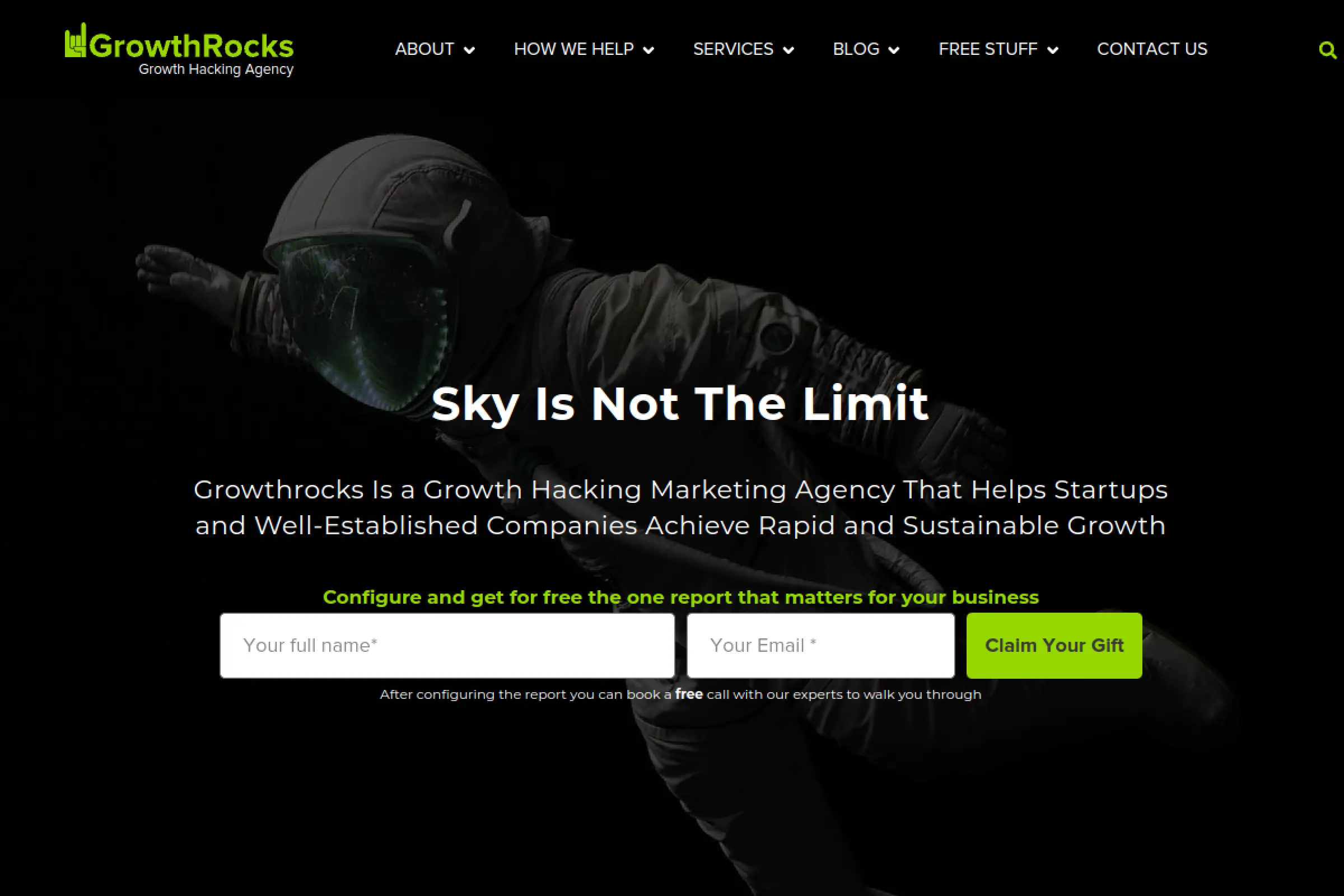
GrowthRocks is a growth marketing and experimentation consultancy serving startups and scaleups. Headquartered in Athens, Greece, the firm has operated since mid‑2010s (~11 years) and runs a lean team (dozens rather than hundreds) focused on demand generation, PLG motion tuning, and funnel optimization for B2B and B2C products.
When we’ve overlapped on programs, the value was their discipline around test design and telemetry. They’re good at untangling activation issues—instrumentation to persona‑message fit—and at building a cadence of weekly experiments that compound. For companies with early PMF signals, they can help convert “some traction” into a repeatable growth engine.
Best for seed to Series B companies with limited in‑house growth capacity, especially SaaS and marketplaces. Expect a hands‑on team that will instrument, analyze, and iterate with you, provided you’re open to shared dashboards and clear stop/go thresholds.
5. L.E.K. Consulting
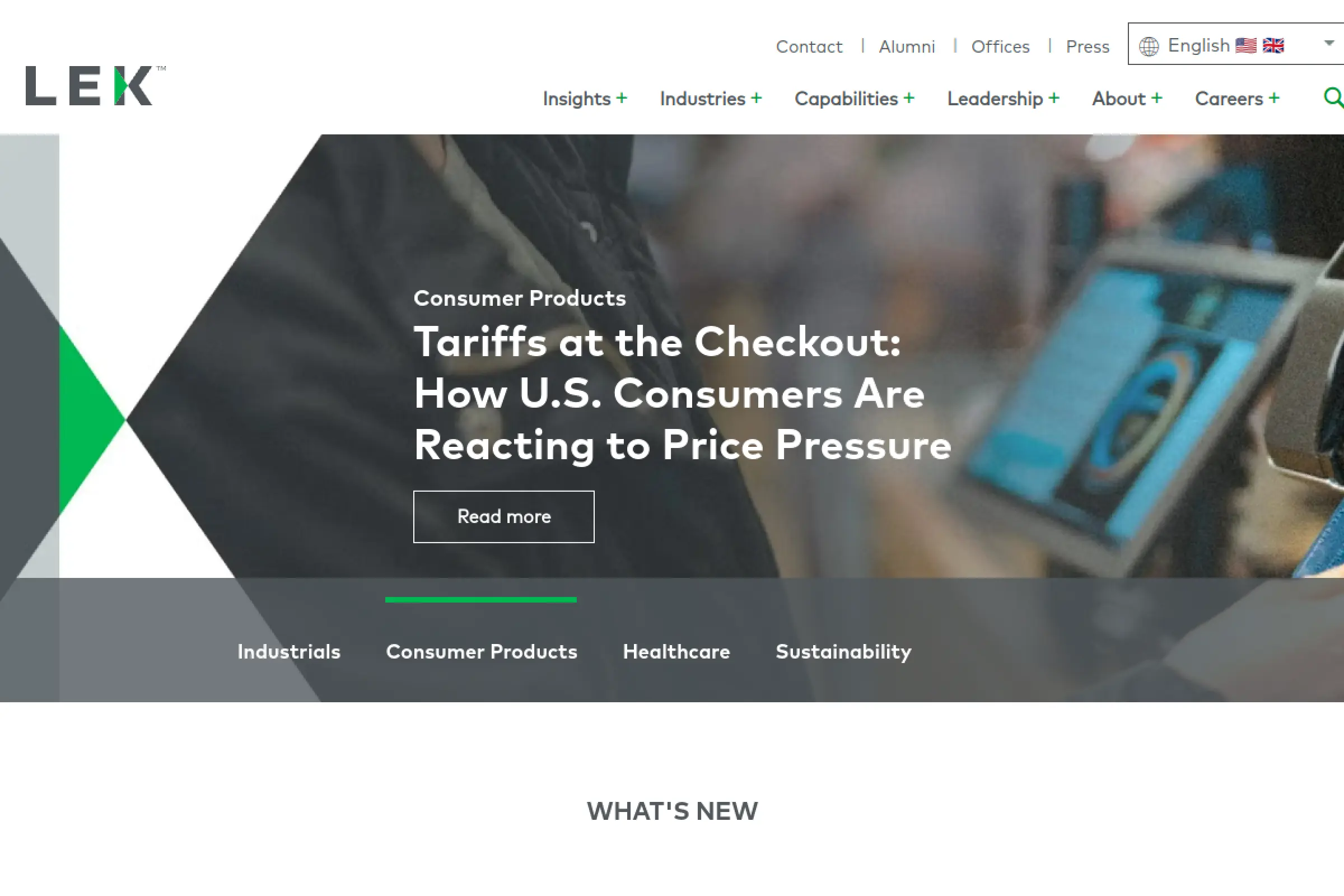
L.E.K. Consulting is a global strategy firm with deep benches in life sciences, healthcare, consumer, and private equity. With ~2,100 employees (2023), ~42 years in operation since 1983, and dual centers of gravity in London and Boston, L.E.K. blends board‑level advisory with operator‑aware playbooks—especially in market entry and growth strategy.
L.E.K. is regularly recognized among the UK’s top advisors, including the Financial Times’ 2025 UK’s Leading Management Consultants, reflecting client and peer recommendations across multiple sectors and specialist work.
We’ve seen L.E.K. at their sharpest in diligence‑grade commercial analysis that becomes a living GTM artifact. Their sector depth—say, a rare disease therapy launch or a consumer category reset—translates into clear, testable moves for product and sales. For startups courting strategic partners or acquirers, their packaging of evidence can accelerate conversations.
Right‑fit buyers include growth‑stage and pre‑IPO firms in health and consumer, or PE‑backed roll‑ups that need rigorous market maps and value‑creation plans. Engagements are structured, time‑boxed, and designed to bridge neatly into operating plans.
6. Elysian Fields

Elysian Fields is a boutique positioning and growth studio for B2B tech scaleups. Based in the UK, the firm operates as a senior, compact team (~dozens), with ~7–10 years in market depending on practice line, and focuses on crystallizing value propositions, clarifying buyer personas, and aligning teams around a differentiated story that sells.
Where we’ve intersected, their strength is what we’d call “investor‑grade clarity.” For founders heading into a raise or preparing to scale sales, Elysian Fields’ workshop‑plus‑research pattern sharpens segments, messaging, and GTM moves so that product, demand gen, and SDR scripts all rhyme. The output tends to be adopted in CRM and content pipelines—not just a deck.
Best for Series A–B B2B software companies with ambiguous narrative and long sales cycles. Expect senior‑only facilitation, a heavy emphasis on primary insight, and pragmatic hand‑offs to your creative or performance partners.
7. Accenture
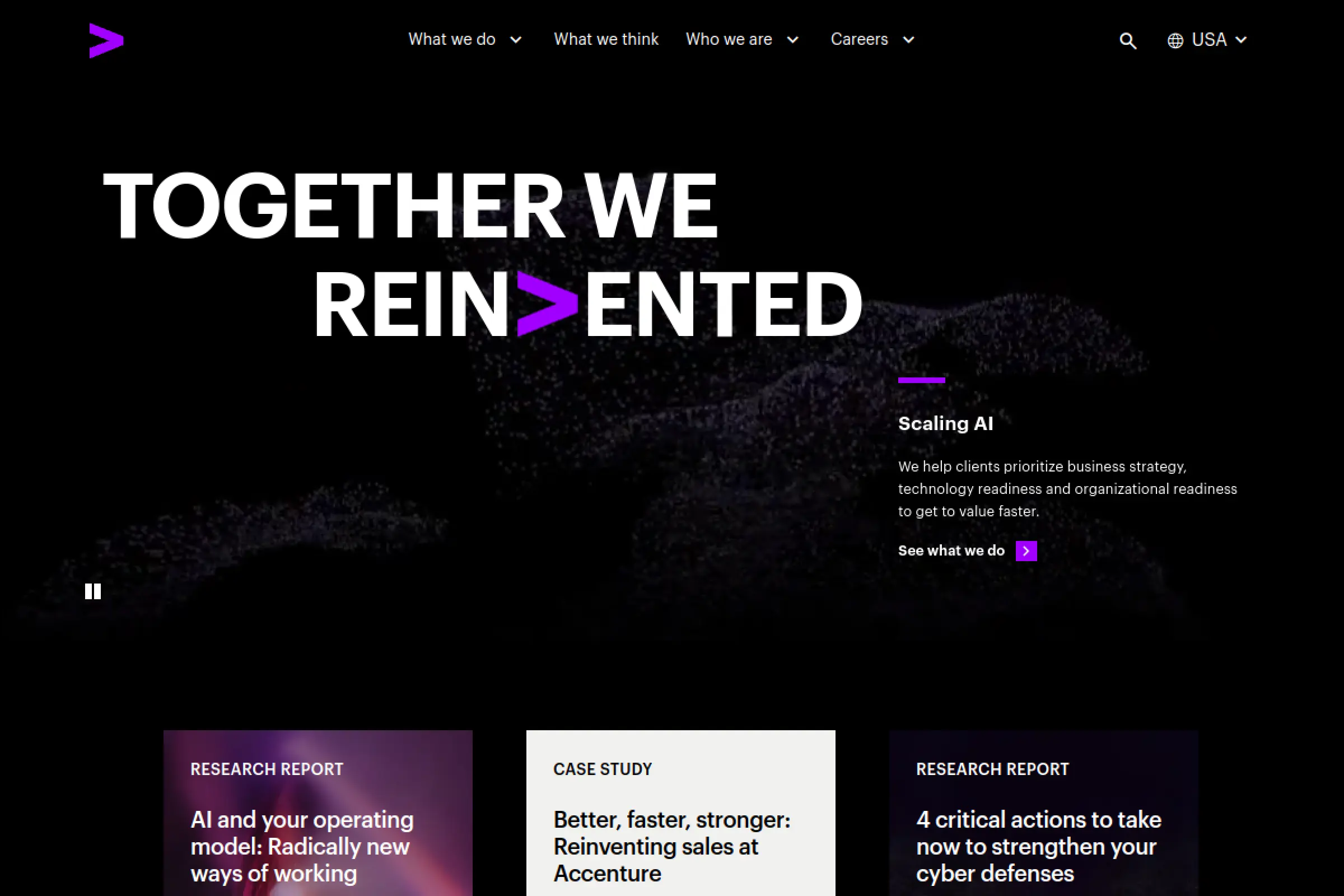
Accenture is a global professional services company spanning strategy, technology, and operations. With roughly 770,000+ employees as of 2025 and roots going back decades (incorporated in its modern form in 1989), Accenture is headquartered in Dublin, Ireland. It brings massive platform scale—cloud, data, security—and industry specialization into programs that need to go from pilot to global.
Accenture appears prominently on 2025 America’s Best Management Consulting Firms, reflecting broad client endorsement across 33 categories assessed by peers and clients.
We’ve collaborated where Fortune‑scale buyers needed startup‑speed within enterprise guardrails. Accenture’s value is orchestration: landing AI or cloud programs across business units and geographies, while meeting compliance. When a growth‑stage company is inside a strategic partnership with a global, Accenture can be the connective tissue that turns a promising POC into a scaled deployment.
Ideal for later‑stage startups partnering with blue‑chips, or corporate ventures building on hyperscaler stacks. Expect deep partnerships with AWS/Azure/GCP, robust change management, and the ability to mobilize specialized talent quickly.
8. Business Consulting Agency (BCA)
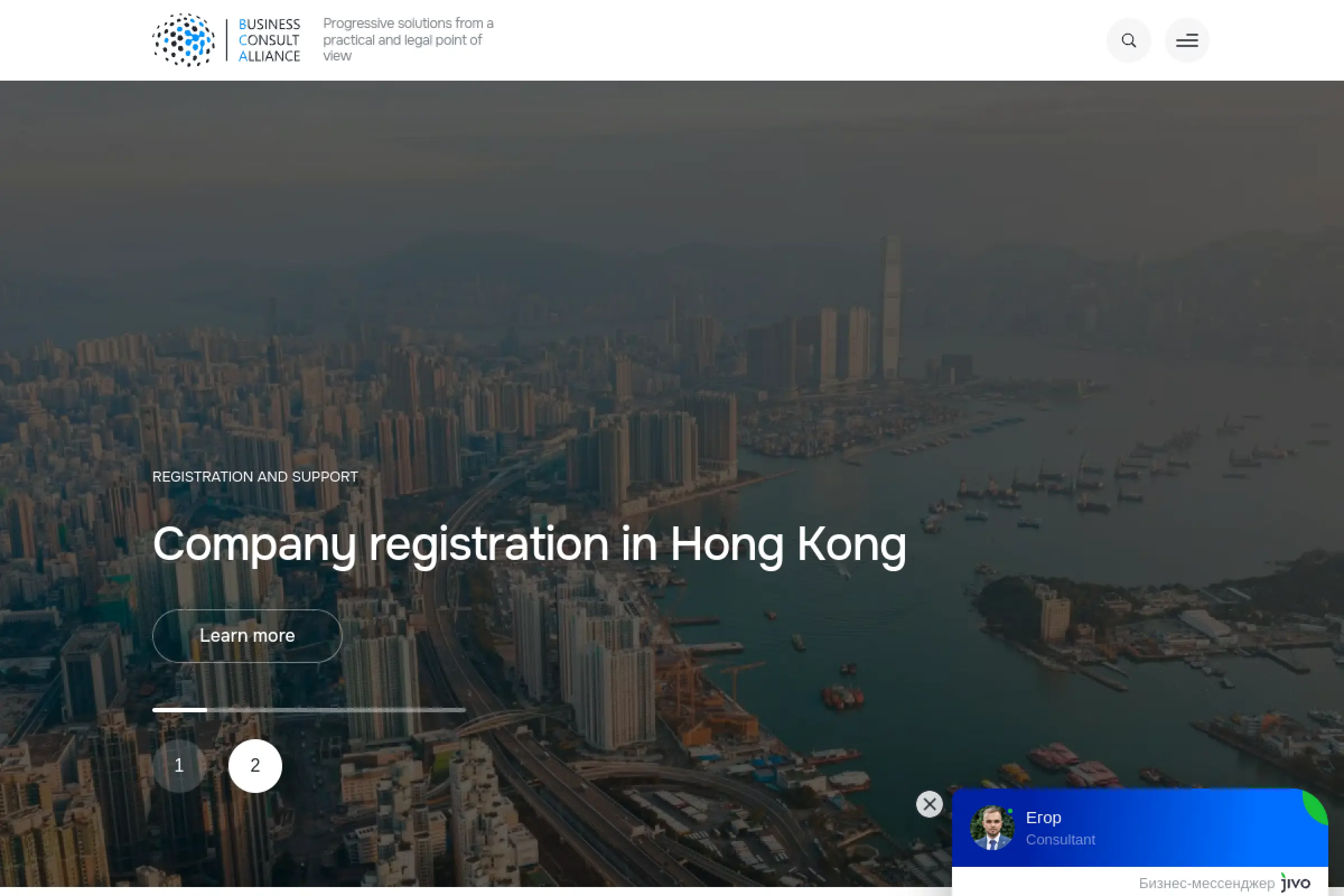
BCA is a corporate services and cross‑border business consulting provider focused on entity setup, licensing, and banking support across jurisdictions. With ~70+ employees, ~6 years in operation, and locations spanning London, Dubai, Hong Kong, and Moscow, BCA’s center of gravity is enabling founders and SMEs to register, bank, and operate compliantly.
We’ve seen BCA reduce friction in company formation, EMI/MSB licensing, and payment rail access for startups that sell internationally. Their value is procedural literacy—forms, filings, and regulator expectations translated into a step‑by‑step timeline. For first‑time founders crossing borders, that lift matters.
Best for startup CEOs and COOs expanding to the UK, EU, or UAE who need practical help with formation, banking, virtual offices, and compliance. Engagements work well when your legal and finance leads are available to make quick decisions as BCA surfaces trade‑offs.
9. Advancy
Advancy is a Paris‑headquartered strategy consultancy known for consumer goods, industrials, and value‑creation programs. With ~230 employees, ~26 years in operation since 1999, and offices across Europe, the U.S., and Asia, it blends classic strategic rigor with hands‑on operating sensibility—particularly in M&A, pricing, and growth design.
Advancy has been recognized among the world’s top consultancies, appearing on World’s Best Management Consulting Firms (2024), underscoring peer and client recommendations across industries and functions.
We’ve seen Advancy excel when a mid‑market company needs a step‑change plan: category expansion, channel remix, or post‑merger integration that actually sticks. Their teams are comfortable getting into SKU‑level details and factory realities, then pulling it back into a board‑credible narrative.
Ideal for profitable, operations‑heavy businesses (consumer, retail, industrials) at inflection points—considering acquisitions, entering new geographies, or resetting pricing. Expect a structured cadence, management workshops, and clear economics behind each recommendation.
10. PwC Consulting

PwC Consulting is the advisory arm of the PwC network, with strengths in deals, risk, operations, cloud, and data. The broader network employs ~360,000+ globally, has operated in some form since the 19th century, and is headquartered in London. PwC’s footprint and alliance ecosystem suit programs where regulation, tax, and technology intersect.
PwC appears on 2025 America’s Best Management Consulting Firms, reflecting multi‑category recommendations spanning industries like financial services, health, and technology.
We’ve paired well on initiatives that demanded enterprise controls with startup‑speed pilots—think finance transformation paired with a new data architecture, or a risk‑aware cloud migration. PwC’s advantage is depth in adjacent domains you don’t want to solve twice (tax, legal, assurance), which reduces integration friction.
Best for growth‑stage companies building enterprise‑grade functions or corporate ventures seeking change at scale. Expect multidisciplinary squads and an emphasis on governance that accelerates rather than slows delivery.
11. Deloitte
Deloitte is a global professional services network providing strategy, operations, risk, tax, and technology services. With ~460,000+ employees in 2024 and roots back to 1845, Deloitte is headquartered in London. For scale‑sensitive programs—data and AI, supply‑chain modernization, and regulated‑industry transformations—it brings both capacity and craft.
Deloitte’s industry stature is reflected in independent recognition such as 2024 most valuable and strongest commercial services brand and inclusion in 2025 America’s Best Management Consulting Firms, signaling sustained performance across categories and geographies.
We’ve seen Deloitte teams succeed when the work demands enterprise‑scale change with real‑world constraints—legacy systems, security, global footprints. Their talent model—industry practitioners plus technologists—helps align executive vision with the realities of delivery pipelines and change management.
Ideal for later‑stage startups integrating into complex ecosystems, or enterprise ventures that require both innovation and compliance. Expect robust PMOs, access to specialized guilds, and clear pathways from pilot to global rollout.
12. EY

EY provides strategy and transactions, consulting, tax, and assurance with a strong presence in transformation and EY‑Parthenon strategy offerings. With ~400,000+ employees globally and headquarters in London, the firm brings sector depth and a reputation for complex, multi‑disciplinary programs that touch core finance, risk, and operations.
EY is included among 2024 America’s Best Management Consulting Firms and 2025 America’s Best Management Consulting Firms, highlighting consistent client and peer recommendations across sectors and functions.
Where we’ve overlapped, EY’s edge is change leadership in high‑stakes environments: finance transformation, strategic cost reset, and M&A integration that ties to value capture. For founders integrating into enterprise supply chains or preparing for public markets, EY’s breadth helps smooth the governance curves.
Ideal for CFOs and COOs at growth‑stage and pre‑IPO companies needing durable systems, audit‑ready processes, and investor‑credible narratives. Expect structured engagement design, attention to controls, and clear post‑engagement ownership plans.
13. OC&C Strategy Consultants
OC&C is a strategy‑focused consultancy known for work in consumer, retail, TMT, and private equity. It employs ~700+ people, has been operating since 1987 (~38 years), and is headquartered in London. OC&C’s DNA is crisp analysis and simple, actionable strategy—valuable when noise is high and decisions can’t wait.
The firm features in the Financial Times’ 2025 UK’s Leading Management Consultants, reflecting strong peer and client recommendations across sectors and specialist work.
We’ve appreciated OC&C’s willingness to work from the ground truth—sku, store, subscriber—and then elevate to board‑level “so what.” In TMT and consumer especially, they bring clarity on segment economics, route‑to‑market, and pricing that translates into backlog items for product and growth teams.
Ideal for founders and commercial leaders who want a decision‑ready strategy that can be implemented without a cast of thousands. Expect analytically tight engagements and recommendations that read like operating instructions.
14. Guidehouse
Guidehouse is a management and technology consulting firm serving public sector and regulated industries, formed from PwC’s public sector practice and subsequent acquisitions. With ~18,000 employees and ~7 years in operation under the Guidehouse brand, the company is headquartered in the Washington, D.C. area (Tysons/McLean, Virginia).
Guidehouse is included among 2025 America’s Best Management Consulting Firms and also recognized on the FT’s UK’s Leading Management Consultants 2025, underscoring credibility across U.S. and UK markets.
We’ve seen Guidehouse deliver when policy, operations, and technology collide—federal health modernization, energy transition planning, and financial‑services risk programs. For govtech startups or ventures selling into regulated buyers, their understanding of procurement and compliance can unblock adoption.
Ideal for founders and BU leaders in healthcare, energy, public sector, and financial services that need stakeholder‑dense programs to move. Expect structured governance, evidence‑based recommendations, and experience working under public scrutiny.
15. Altman Solon
Altman Solon is a strategy consultancy dedicated exclusively to telecommunications, media, and technology. Formed in 2020 from a merger of two specialist firms with roots back to the 1990s, it employs several hundred consultants (~800+) and is headquartered in Boston with a global footprint. For TMT founders, this is a firm that knows your operating metrics by heart.
Altman Solon appears on 2025 America’s Best Management Consulting Firms, reflecting strong recommendations in TMT categories where buyers prize sector specialization.
We’ve seen Altman Solon’s value in questions like “Which go‑to‑market wins for a new SaaS module?” or “How do we price a premium streaming tier?” Their market sizing, competitor mapping, and monetization acumen gives product leaders clarity on where to play and how to win, often backed by proprietary data.
Best for founders and product/GTM leaders in connectivity, cloud/SaaS, and media who want high‑signal perspective and a concrete action list. Expect focused teams, deep operator conversations, and a strong bridge from board deck to roadmap.
16. Tiger Analytics
Tiger Analytics is a data and AI consulting firm working across retail, CPG, financial services, manufacturing, and telecom. With ~4,000+ people, ~14 years in operation since 2011, and headquarters in Santa Clara, California (with a large India presence), Tiger brings modern data stacks and applied AI to revenue and cost problems.
The firm’s ecosystem credibility shows in recent partner awards, including 2024 Databricks Migration Partner of the Year and 2025 Enterprise AI Partner of the Year, reflecting impact across modernization and GenAI solutioning.
We’ve collaborated on programs where the mandate was “make data pay for itself in quarters, not years.” Tiger’s approach—use‑case first, platform pragmatism, accelerators where they fit—pairs well with founders who want visible ROI (reduced churn, better forecast accuracy, faster underwriting) without boiling the ocean.
Ideal for Series B+ companies with meaningful data exhaust and a need to operationalize analytics and AI. Expect strong Databricks/Snowflake skills, model ops hygiene, and focus on measurable business outcomes.
17. West Monroe
West Monroe is a digital services firm that blends consulting with engineering to help mid‑market and enterprise clients modernize operations, data, and customer experience. Headquartered in Chicago, it employs roughly 2,000+ people, has operated since 2002 (~23 years), and is notable for an employee‑ownership ethos and industry squads in financial services, healthcare, energy, and private equity.
West Monroe’s workplace and consulting reputation includes recognition on Great Place to Work’s 2025 “Decade of Great” list and appearances in 2025 America’s Best Management Consulting Firms, reflecting sustained culture and delivery strength.
We’ve partnered where a business needs both advisory and hands‑on builders—data platform overhauls, digital channel modernization, and PE value‑creation playbooks that go from hypothesis to shipped features. Their consultants are comfortable owning outcomes with engineers, which shortens feedback loops.
Best for mid‑market to enterprise buyers who want a single throat to choke across strategy, delivery, and change. Expect squads that include architects and devs, and an operating cadence that privileges working software over slideware.
18. IDEO

IDEO is a design and innovation company known for systematizing human‑centered design in business. With ~700 employees, ~34 years in operation since 1991, and a center of gravity in the San Francisco Bay Area, IDEO operates at the intersection of research, design, and venture‑grade creativity—especially valuable when a product or service needs to be reframed from first principles.
IDEO’s influence in design has been recognized by institutions like Cooper Hewitt with the 2001 National Design Award for Product Design, reflecting decades of contribution to product and service innovation.
We often point to IDEO’s collaboration with Bank of America on “Keep the Change” as a canonical example of behavioral insight translating into growth: a small design shift that generated millions of new accounts and habitual savings, documented widely in the public domain. That same discipline—insight to prototype to scale—benefits startups uncovering latent demand or redesigning onboardings.
Ideal for founders and product leaders tackling ambiguous, human problems—financial health, care journeys, education, workplace tools—where ethnography and prototyping can unlock step‑change. Expect intense fieldwork, clear design principles, and artifacts your teams can use the next day.
19. InfoObjects
InfoObjects is a data engineering and AI services firm focused on modern data platforms, real‑time pipelines, and ML enablement. Founded in 2005 (~20 years), with several hundred employees (~500–1,000), and headquartered in the San Jose area, the firm works across industries with a bias toward open‑source stacks and cloud‑native patterns.
Where we’ve crossed paths, InfoObjects brought practical, senior ICs who can refactor fragile data flows and stand up usable feature stores without unnecessary ceremony. For startups that need data plumbing to stop being the blocker to product, this kind of pragmatic engineering partner is invaluable.
Best for seed to growth‑stage teams whose core problem is getting clean data to the right surfaces—dashboards, APIs, or ML inference—reliably. Expect “show me the logs” delivery, detailed hand‑offs, and respect for your team’s capacity constraints.
20. Giersch Group
Giersch Group is a Milwaukee‑based boutique focused on small‑business bookkeeping, controller/CFO services, and management consulting. In operation for ~20 years with a compact team (~dozens), the firm is anchored in Wisconsin with fully remote delivery beyond. It’s a different kind of “startup consulting”: financial hygiene and owner‑operator decision support.
We’ve seen firms like Giersch change a company’s trajectory by getting the numbers right—cash clarity, unit economics, job costing—and by turning monthly close into a management practice, not just a compliance ritual. For founders, that means decisions with eyes open and cleaner conversations with lenders, acquirers, or investors.
Best for pre‑seed to Series A businesses and SMBs that need accrual accounting, job‑level visibility, and periodic board‑grade reporting without a full‑time CFO. Expect hands‑on, practical guidance from people who’ve seen hundreds of owner‑led businesses up close.
Core Services Offered by Startup Consulting Firms
Market overview: As founders pursue value creation beyond generic transformation, McKinsey estimates cloud adoption could unlock trillion of EBITDA value by 2030, while the cloud services market itself marches toward $723.4 billion in 2025. These macro forces translate into concrete startup needs across research, finance, product, GTM, and compliance.
1. Market Research and Validation
High‑signal research trades volume for veracity: fewer, better conversations; triangulated with behavioral data (search intent, job postings, procurement language). We favor “problem‑first evidence,” such as signed pilot MOUs with defined success metrics or prepaid deposits for a limited alpha. In our work with a developer‑tools startup, a simple willingness‑to‑pay test—annual prepay for guaranteed latency SLAs—invalidated a freemium bias, saving an entire pricing sprint. We like firms that operationalize research (scripts, CRM tags, pattern libraries) so every new conversation compounds insight rather than resets it.
2. Startup Formation and Business Planning
Formation is choreography: entity structuring, cap table hygiene, IP assignment, and a crisp operating plan. Consultants with founder empathy translate uncertainty into weekly commitments and quantify options and risks without theatrics. We look for “living plans” where assumptions sit next to leading indicators (pipeline stage conversion, churn intent), and course correction is built into cadence rather than asked for forgiveness later.
Business Plans and Pitch Preparation
Strong pitches are narratives anchored in unit economics. We advocate “three slides that must sing”: the problem vignette (jobs‑to‑be‑done in customer language), the repeatable path to revenue (segments, channels, and proof of early motion), and the defensibility flywheel (data, distribution, ecosystem). The tell: a data room with a versioned model, customer call notes, and draft MSAs with risk allocation thought through—signals that you’re fundable, not just pitchable.
Financial Modeling and Forecasting
Early models should stress test sensitivity, not predict the future. We encourage founders to bound scenarios (conservative, plan, upside) and link levers to decisions: sales capacity to pipeline velocity, infrastructure costs to load growth, support staffing to SLAs. A good consulting partner makes the model a management instrument—feeding it with actuals and producing a monthly “variance narrative,” not a spreadsheet graveyard. We ensure infra and GTM telemetry flow into the model automatically to reduce manual error.
3. Finance and Operations for Startups
Back‑office maturity is a force multiplier. Repeatable finance ops turn investors’ trust into speed—clean closes, audit‑ready statements, and no surprises in revenue recognition. We consider finance a product: instrumented, observable, and iterative.
CFO Services and Accounting Support
Fractional CFOs shine when they blend cash discipline (e.g., payback thresholds for experiments) with storytelling (translating risk into investor‑friendly language). In our collaborations, the best CFOs pre‑negotiate trade‑offs—“we will pull back paid acquisition if support backlog exceeds X”—so board meetings are about strategy, not forensic accounting.
Bookkeeping and Tax Compliance
Compliance debt compounds silently. We advocate a “compliance roadmap” with effective dates, jurisdictional nuances, and audit control points. Align your chart of accounts with investor reporting from day one; reclassifications at Series A are avoidable pain. Founders underestimate sales tax/VAT in multi‑region digital sales; a consultant who has lived subscription proration and multi‑entity consolidation will pay for themselves.
Human Resources
HR in startups is performance architecture: hire slowly against a clear competency model, instrument probation, and make continuous feedback normal. We’re fans of job scorecards that tie directly to the operating plan; they cut ambiguity and keep managers honest. Consultants can template performance cycles and coach first‑time managers, a common failure point as teams scale.
Payroll
Global payroll is where good intentions meet permanent headaches. A seasoned partner will normalize contracts, entitlements, and equity tax implications across entities. We insist on immutable audit trails for variable pay and a pre‑close exception review—errors here are morale killers and regulatory hazards.
Fraud Risk Reduction
Fraud risk surfaces sooner than most founders expect—especially in fintech, marketplaces, and any product with payouts. We’ve implemented velocity checks, device fingerprints, and negative file sharing long before GA. The business case is straightforward: organizations are estimated to lose 5% of revenue to fraud annually, and median losses per occupational fraud case exceeded $1.5 million. In our experience, basic controls (role‑based payouts, maker‑checker) plus ML‑assisted anomaly alerts catch outsized losses early.
4. Tech Advisory and Architecture
Architectural decisions are economic decisions in disguise. We encourage founders to map “reversibility”: choose defaults that are cheap to change and quarantine the hard‑to‑change bets. A strong advisory partner optimizes for the next 18 months of learning, not a hypothetical IPO S‑1.
Stack Selection and Cloud Strategy
Selecting a stack is about tooling leverage and ecosystem gravity. We advocate proven runtimes, managed services where differentiation is low, and metadata‑rich data stacks for observability. Given cloud’s scale, the macro moves matter; worldwide public cloud services are forecast to total $723.4 billion in 2025. That spend trajectory rewards teams that bake in FinOps early—workload rightsizing, reservation planning, and usage‑based pricing alignment with margin goals.
DevOps and Infrastructure Optimization
We treat DevOps as product quality assurance for the entire business. High‑value moves include: ephemeral preview environments to accelerate code review, golden paths for service creation, and SLO‑driven alerting that bridges engineering and customer success. Our heuristic: if you can’t trace a customer‑visible issue to a deploy, an SLO, and a runbook in minutes, you have observability debt. Consultants help convert toil into platform features and de‑risk security audits before enterprise deals.
5. Product Development and MVP Services
Great MVPs are “minimum lovable,” not just minimal. We look for a single core loop that a target segment repeats willingly and for evidence that their usage correlates with the outcome your buyer cares about (e.g., reduced churn, faster closing, fewer manual steps). Consultants earn trust when they cut features in service of a sharper promise.
UI UX and Roadmapping
We recommend explicit UX “principles over preferences” documents before pixels—decisions like “optimize for first‑week comprehension over expert flexibility” keep teams aligned. Roadmaps should express bets, not certainties, with a research cadence that governs promotion or pruning. We press for live‑data prototypes rather than static comps to catch integration and latency surprises early.
MVP Builds and Iteration
Our build loops rotate on two strokes: customer behavior and unit economics. We instrument MVPs to answer one killer question (“Will power users pay for guaranteed throughput?”), then iterate ruthlessly. Consultants who bring scaffolding—feature flags, A/B harnesses, canary deploys—let you test without terror. The momentum you feel is not speed; it’s validated learning at low burn.
6. Go-to-Market and Monetization Strategy
GTM gets complicated when you conflate buyer and user or chase channels you can’t service. We advocate a “market of one” start—one ICP, one primary channel—then step‑function into adjacent segments once onboarding, activation, and payback are stable.
Digital Marketing and Growth
Digital spend gravity continues rising, with overall ad spending projected to reach US$1.17tn in 2025. For startups, the trick is not more channels but fewer, mastered deeply. We map campaigns to a causal model: which messages lift conversion for which segment at which journey stage and cost. Consultants who unify attribution with product analytics will keep you from confusing correlation (“they visited the blog”) with causation (“they invited three teammates after seeing pricing”).
Pricing and Monetization Models
Pricing is a capability, not a one‑off event. McKinsey’s evidence indicates pricing transformations can lift return on sales by two to seven percentage points. We like “design for price” (good‑better‑best packages that map to value ladders), guardrails (discount approval logic tied to LTV and segment), and monetization experiments (usage meters that track value proxies like seats, API calls, or throughput). Consultants provide the governance and insight discipline founders need to resist race‑to‑the‑bottom instincts.
7. Fundraising and Investor Readiness
The best fundraising partners rehearse you for diligence, not Demo Day. They’ll preflight your cap table, normalize cohorts, and rehearse red‑team questions (churn math, customer concentration, defensibility proof). Context matters: in 2024, global VC remained selective but resilient at $368.3 billion, and AI mega‑rounds raised the bar on narrative rigor. We coach founders to align “use of proceeds” to a proof plan (e.g., enterprise readiness) rather than a shopping list.
8. Legal, Compliance, and Data Protection
Regulatory posture is not a postscript; it’s a growth enabler. GDPR enforcement remains material, with fines totaling €1.2 billion in 2024, and privacy teams increasingly absorb AI governance. Consultants can thread privacy‑by‑design through your roadmap, align DPAs and SCCs with actual data flows, and ready you for enterprise security questionnaires. For founders, clarity here lowers sales friction and protects valuation.
9. Talent Acquisition and Team Building
Team design is strategy made human. Deloitte’s 2025 Human Capital Trends highlights that 66% of managers and executives say recent hires are not fully prepared. Consultants add value by codifying skills matrices, interview rubrics, and onboarding playbooks tied to your operating model. We often embed with hiring teams to run panel‑based assessments and reduce variance across interviewers.
10. Exit Strategy and M A Readiness
Exits reward operational clarity. PwC’s 2025 outlook notes more megadeals amid shifting volumes and values in 2024, with deal values up and volumes down; globally, deal values increased 5% between 2023 and 2024. Consultants build the pre‑exit “library”: integration memos, synergy cases, tech and data maps, and contract assignment analyses. Our take: the highest‑value asset you can show a buyer is clean, interpretable telemetry that ties product usage to revenue durability.
How to Choose Startup Consulting Firms for Your Stage and Sector

Market overview: Transformations still face execution headwinds; McKinsey underscores that 70% of transformations fail, which is why founder–consultant alignment on outcomes and cadence is non‑negotiable. We advise optimizing for stage‑fit and sector fluency over brand gravity.
1. Define Goals, Scope, and Success Metrics
Clarity beats charisma. Translate ambitions into falsifiable milestones (e.g., “10 enterprise pilots with SOC2‑ready posture in 120 days” rather than “prepare for enterprise”). Write down the anti‑goals (what you will not do) and the constraints (burn ceiling, team bandwidth). Consultancies that insist on crisp exit criteria and a measurement plan—before estimating—are keepers.
2. Evaluate Relevant Startup Experience and Track Record
Ask for “before/after” stories with telemetry: CAC payback improvements, SLO‑breach reductions, or time‑to‑first‑value deltas. For technical work, request architecture diagrams and post‑mortems on what they would do differently. Founders should prize firms with scar tissue in your domain—payments risk is unlike health data integration—and genuine operator resumes over slide‑craft.
3. Verify Deliverables, Timelines, and Ownership
Ownership ambiguity kills momentum. Insist on a RACI that names a single throat‑to‑choke for each outcome, access requirements, and explicit milestones tied to acceptance criteria. We also recommend source‑of‑truth repos for artifacts (design, code, analytics) and license clarity for accelerators the firm brings.
4. Assess Fit on Budget, Pricing Model, and ROI
Match pricing to uncertainty. Fixed‑fee pilots work when scope is tight; time‑and‑materials suits discovery; success fees align in well‑bounded outcomes (e.g., grant wins, pilot conversions). ROI math should be mechanical: expected revenue acceleration and cost avoidance divided by fee and burn impact. If the firm can’t help you compute it, that’s telling.
5. Check Data Protection, Compliance, and Security
Demand a baseline: secure coding practices, data processing addendum terms, and evidence of privacy‑by‑design. Ask how they handle secrets, logs, and client data in sandboxes. Founders courting enterprise customers should test consultancies against a standard vendor security questionnaire before onboarding, not after.
6. Align on Hands-On Support Versus Strategy Only
Establish the “keyboard ratio”: what share of time will be hands on keys versus advisory? We bias toward partners who will stub their toes with you—pair programming, co‑selling, live‑fire PMM work—because knowledge ossifies when it never leaves the deck. The right balance shifts by stage, but expectations must be explicit.
7. Review Case Studies, Testimonials, and References
References should be interrogated for two things: resilience under pressure and post‑engagement behavior. Did the firm pivot with new info or cling to plan? Did handover leave the client autonomous or dependently tethered? We value firms that teach their way out of the job—because you’ll likely hire them again for harder problems.
Engagement Models, Pricing, and ROI with Startup Consulting Firms
Market overview: Pricing sophistication pays; digital pricing programs can deliver two to seven percentage points in sustained margin lift, and startups benefit when consulting fees map to the economics of traction and time‑to‑value. We prefer engagements that expose assumptions fast and throttle spend accordingly.
1. Fixed-Price Projects, Hourly Consulting, and Retainers
Each model fits a different risk profile. Fixed‑price suits crisp outcomes (e.g., security posture review), hourly fits open‑ended discovery, and retainers stabilize ongoing needs (e.g., fractional product leadership). Hybrids can work: fixed pilot + retainer for iteration post‑fit. Whatever you choose, pin payment schedules to milestone acceptance, not merely time passage.
2. Fractional Advisors and Equity-Based Arrangements
Fractionals shine when they institutionalize patterns fast (hiring loops, roadmap cadence) and mentor your team. Equity‑linked fees can align incentives, but we counsel restraint: keep equity for those who move existential needles and ensure vesting tied to objective outcomes. Equity for recurring tasks (bookkeeping) blurs governance; cash beats complexity.
3. Scope of Work, Change Management, and Communication Cadence
Great SOWs are living documents with explicit change‑control. We insist on weekly “red thread” check‑ins that connect progress to outcomes and a rolling RAID log (risks, assumptions, issues, dependencies). If leaders can’t see how the week’s work moved a KPI or de‑risked a milestone, re‑aim the effort.
4. Measuring Impact: Traction, Revenue, and Runway
Measure what the board cares about: pipeline quality, conversion, expansion, churn, and runway. We like dashboards that visualize “proof loops” (e.g., pilot → conversion → expansion) and annotate interventions. Your consulting partner should co‑own the metric story and flag when evidence contradicts the plan.
5. When to Use Advisors, Freelancers, or Agencies Instead
Consultancies aren’t the answer to every problem. Sometimes the best move is a sniper, not a platoon.
Execution Partners for Hands-On Work
Use freelancers or specialized agencies for burst capacity on well‑specified tasks—landing‑page testing, ad‑ops sprints, or feature builds with tight specs. Keep your core system architecture and product strategy close; outsource only what you can test easily.
Mentors and Advisors as a Sounding Board
Advisors who will spar with you on positioning, hiring, or boardcraft are priceless. Compensate with small grants and time‑boxed expectations. Use them to sharpen decisions, not to execute them.
Going Up-Market for Larger, Less Price-Sensitive Clients
When your ICP is enterprise, a brand‑name consultancy can unlock C‑suite doors and signal seriousness. Trade‑off: higher fees and longer cycles. If optics matter and the buyer is risk‑averse, consider co‑delivering with a marquee partner while you keep the product nucleus and speed.
Common Pitfalls and Risks When Working with Startup Consulting Firms

Market overview: Talent and capability gaps remain real; Deloitte finds 66% of managers and executives say recent hires are not fully prepared, amplifying the temptation to outsource too much, too fast. That makes pitfall‑awareness a founder’s duty of care.
1. Unrealistic Expectations and Static Recommendations
Strategy packaged as immutable truth will age poorly in a startup. If your consulting partner resists updating hypotheses after data arrives, you’ve hired a narrator, not a navigator. Require “assumption logs” and pre‑agreed pivot triggers.
2. Price Sensitivity and Budget Misalignment
Cheap work can be expensive when it explodes in production or fails to move the KPI. Conversely, gold‑plated deliverables that nobody will use are runway waste. Align fees to business value and stage: spend more on GTM when demand is proved; spend more on platform when reliability gates revenue.
3. Needing More Hands Than Ideas
If you need capacity, hire one team and point them relentlessly. Too many hands without a clear target creates coordination tax. We’ve rescued projects where the founder effectively became a project manager for three vendors—momentum died in meetings.
4. Limited Vision Alignment with Founders
Mismatched horizons (consultants optimizing for the next invoice, founders for the next round) create tension. Fix it in the contract: couple fees to milestone acceptance and ask for evidence that the firm can teach your team to self‑sustain.
5. Overgeneralized Expertise and Bias
Be wary of firms that treat fintech like dev‑tools or healthcare like e‑commerce. Regulatory and buyer dynamics vary. Domain errors sneak in as friendly slideware—e.g., “Let’s do PLG!”—where best practice ignores that your buyer demands a sales‑assisted path with security assurances.
6. Startup Failure Rates and Attribution Risk
When companies fail, post‑mortems often crown the wrong culprit. Protect against blame games by setting baselines and counterfactuals. If both parties agree what success looks like, you can learn constructively, even if the outcome is “no go.”
7. Agency Misfit for Startup Pace and Constraints
Some agencies optimize for retainer stability and multinational timelines. If you need fast cycles and non‑linear creativity, ensure your partner can run small‑batch experiments and kill ideas quickly. Ask them to timebox a spike and show you what they discard and why.
8. Fuzzy Scope and Moving Targets
Fuzziness inflates billable hours and demoralizes teams. Freeze scope for short sprints, then renegotiate based on evidence. Healthy partners welcome tight scopes because they enable crisp wins and referenceable outcomes.
Deliverables, Tools, and Outcomes to Expect from Startup Consulting Engagements
Market overview: The digital demand surface keeps expanding; global advertising spend is forecast to reach US$1.17tn in 2025, while cloud programs continue to drive investment returns at scale, motivating rigorous, telemetry‑rich deliverables that stand up to investor diligence and enterprise procurement.
1. Business Plans, Financial Models, and Dashboards
Expect a living model wired to actuals (billing, pipeline, infra costs) and an operator dashboard with early‑warning signals (slipping activation, rising acquisition costs). The best deliverables give you “what changed and why,” not just charts. Demand a data dictionary and versioning so your next hire isn’t decoding mysteries.
2. Market Research Reports and Competitive Analyses
Quality over quantity: transcript libraries with coded themes, demand tests, and a decision memo that says “what we will do differently next sprint.” Competitive maps should expose business model gravity (e.g., marketplaces with network effects) rather than generic feature grids.
3. Product Roadmaps, MVPs, and UX Artifacts
Deliverables should include a roadmap with “bets and proofs,” clickable prototypes, and a governance plan for backlog triage. We prize decision logs and deprecation plans as much as shiny new features; housekeeping compounds speed.
4. GTM Playbooks, Campaign Plans, and Monetization Models
Expect ICP definitions, message testing results, channel selection rationales, and a 90‑day experiment calendar. Pricing artifacts should include willingness‑to‑pay evidence, discount policy, and upgrade/expansion paths with thresholds for automations versus sales‑assisted motions.
5. Tech Stack, Architecture, and DevOps Recommendations
Expect diagrams, SLOs, and a “golden path” for service creation. A cloud cost model should translate workloads into $ and margin impact. Runbooks, incident drills, and security hardening checklists belong in the package; these keep you credible with enterprise buyers.
6. Compliance Checklists and Data Protection Policies
Deliverables should include a data inventory, retention and deletion policies, and DPA templates aligned to your flows. Given regulatory enforcement momentum (GDPR fines totaled €1.2 billion in 2024), these artifacts are not optional—they accelerate sales and reduce legal thrash.
7. Talent Plans, Hiring Profiles, and Onboarding Playbooks
Expect role scorecards tied to strategy, structured interview guides, and a 30‑60‑90 onboarding plan with shadowing and measured outcomes. Consultants should help you avoid “hero hiring” by codifying competencies and leveling frameworks before the hiring spike.
8. Exit Strategy Options and Readiness Assessments
Deliverables include buyer maps, synergy theses, and readiness assessments covering tech, data, contracts, and HR. Align narrative to market context—deal values increased 5% between 2023 and 2024 even as volumes dropped—so your timing and packaging match buyer appetite.
9. Case Study Themes
Our vantage point at Techtide Solutions spans regulated industries, data‑heavy platforms, and performance‑sensitive SaaS. Four recurring themes show where consulting‑product tandems deliver outsized value.
Fraud Prevention Platform Integrations
We integrated device intelligence, negative files, and velocity checks into a payouts platform, combining rules and ML in a layered defense. The consulting partner orchestrated compliance framing while we delivered event‑driven microservices and real‑time decisioning. The business impact: chargeback losses dropped and enterprise prospects accelerated because the risk narrative matured. The macros support the business case: organizations are estimated to lose 5% of revenue to fraud and the median loss per case exceeded $1.5 million, so prevention ROI is not theoretical.
GraphQL Scaling for SaaS Startups
For a data‑intensive SaaS product, we re‑architected GraphQL services with persisted queries, boundary‑enforced data loaders, and query depth limits, then added multi‑tenant isolation and a cache strategy keyed to authorization claims. The consulting partner’s role: align SLOs to commercial SLAs and implement chargeback analytics so customers saw the cost of their own query patterns. Result: lower p95 latency and predictable margin on heavy tenants.
Data Platform Buildouts in Biopharma
We built a governed lakehouse with lineage and fine‑grained access tied to study and role, enabling secure collaboration with CROs and partners. The consultant codified a data‑sharing policy and evidence pack for audits. The outcome: faster analysis cycles and a credible compliance story for partnerships, critical in a domain where integrity and traceability are existential.
Digital Presence Enhancements for D2C Brands
We overhauled site performance, implemented server‑side tracking with privacy controls, and created a growth experimentation engine (offer tests, creative variants, and bundle pricing). The consulting partner harmonized retail media and email lifecycles into a coherent attribution model, avoiding over‑crediting last‑click channels. The measurable output: lifted repeat order rate and shorter CAC payback windows.
TechTide Solutions: Building Custom Software Solutions for Startup Consulting Firms’ Needs
Market overview: We build for where spend and value are migrating. Cloud programs dominate modernization, with public cloud end‑user spending forecast at $723.4 billion in 2025, and AI‑enabled delivery models reshaping services economics. Our craft is software that gives consulting firms—and their startup clients—a sharper edge.
1. Customer-Centric Discovery and Requirements Alignment
We start with use‑cases framed as business proofs, not feature wishlists: “Reduce onboarding from 14 days to 3,” “Hit p95 latency under 200 ms at 10× load,” “Shorten CAC payback to under 9 months.” Our discovery rituals—field interviews, journey mapping, event‑storming—translate weak signals into backlog items and measurable test plans. We involve consultants early to align process change with product capability, reducing “the tool can’t do that” surprises.
2. MVP Development, Iteration, and Time-to-Market
Our MVPs are instrumented by default: feature flags, analytics, and in‑app feedback loops. We aim for scopes that a small team can ship in weeks, with a clear “job to be done” and a built‑in experiment (e.g., willingness‑to‑pay check). Consultants bring ICP clarity; we bring the rails for safe, quick iteration. The combination compresses time‑to‑insight and time‑to‑revenue.
3. Systems Integration, Cloud, and Data Engineering
We integrate the messy middle: CRM and billing, auth, data pipelines, and observability. Our cloud approach balances managed services with cost and control. Given the market’s scale—public cloud spend expected at $723.4 billion in 2025—we treat FinOps as a first‑class concern: capacity planning, right‑sizing, and usage‑to‑margin telemetry so pricing and infra stay in lockstep.
4. Security, Compliance, and Scalability by Design
Security posture is a sales enabler. We bake in role‑based access, secrets management, audit trails, and data minimization. We use threat modeling to prioritize controls and keep evidence packs for enterprise questionnaires. Where consultants steer policy and contracts, we codify the technical enforcement so nothing gets lost between legal and code. This matters when buyers ask hard questions and security reviews gate revenue.
5. Flexible Engagements and Transparent Communication
We work in short, outcome‑linked sprints with weekly demos, RAID logs, and risk burndown. Our estimates include buffers and exit ramps because reality intrudes. When paired with consultants, we keep a single operating cadence so the founder isn’t arbitraging between teams. Transparency builds trust; trust speeds decisions.
6. Post-Launch Support, Handover, and Team Enablement
We aim to be refireable because we make ourselves replaceable. Handover isn’t a ZIP file; it’s recording‑backed runbooks, architecture docs, and shadow sessions. We train internal teams and help recruit when needed, often using the very competency models consultants helped define.
Conclusion: Choosing Startup Consulting Firms Strategically for 2025

Market overview: The external context rewards clarity and cadence—deal values climbed 5% between 2023 and 2024 even as volumes fell, and cloud adoption is forecast to hit $723.4 billion in 2025, meaning buyers, partners, and acquirers expect crisp, defensible operating stories. The founders who thrive will treat consulting partners as force multipliers: insist on falsifiable goals, accept tight scopes and rapid iteration, and make telemetry the common language. If you want a sounding board or a build partner, we’re here to help—what milestone do you need to de‑risk in the next 90 days, and what evidence would make you (and your investors) believe you’re on track?