
Market overview: The software consulting companies landscape is buoyed by enterprise tech budgets, with worldwide IT spending expected to total $5.61 trillion in 2025, a signal that CIOs are prioritizing value-led transformation over vanity pilots. From our vantage point at Techtide Solutions, that spend only matters when it translates into safer systems, faster delivery, and measurable business outcomes—so this guide focuses on how to navigate the noise and choose partners who ship real value.
Key trends shaping software consulting companies
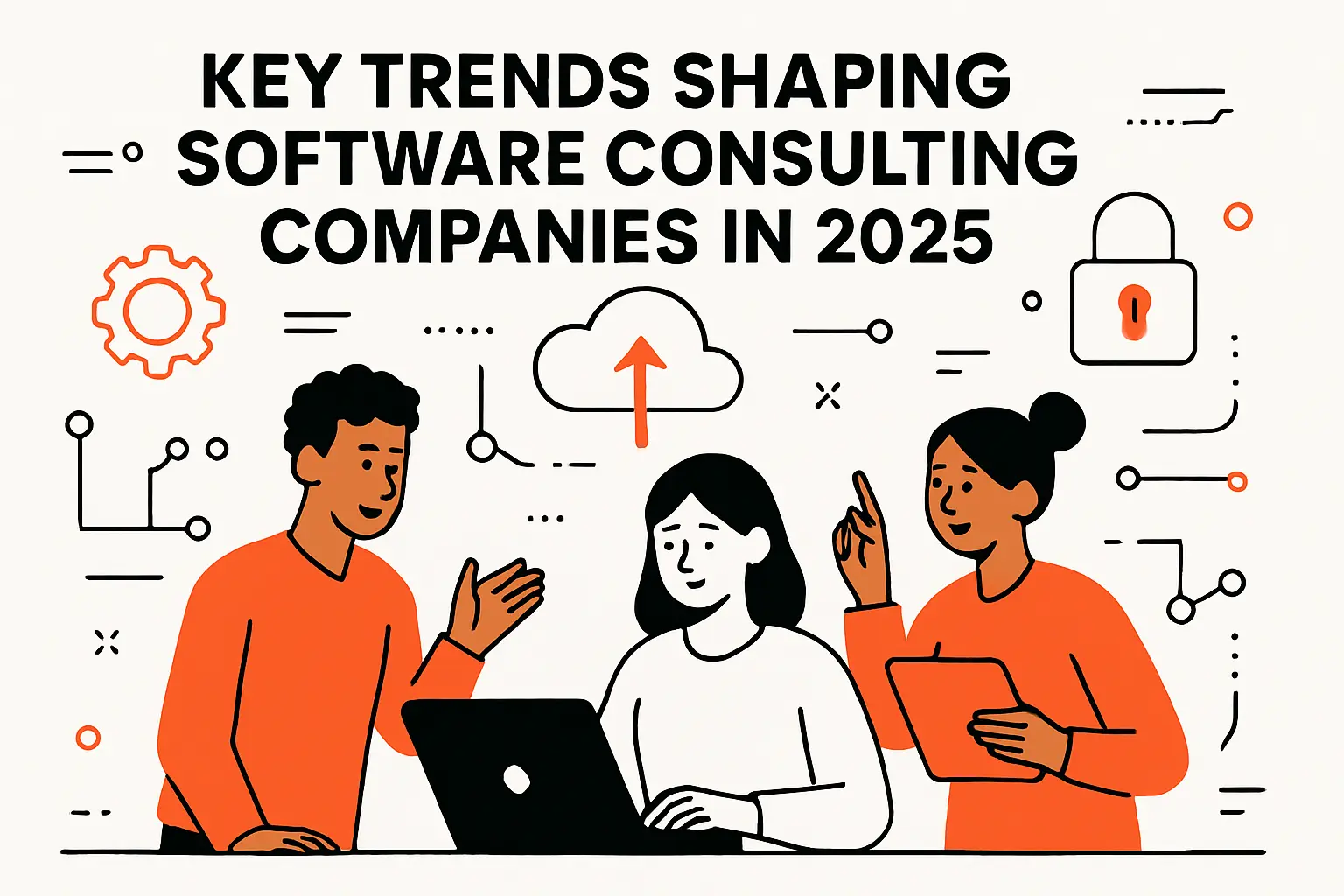
Market overview: The economic case for modern consulting is anchored in AI’s productivity potential—McKinsey estimates generative AI could add between $2.6 trillion and $4.4 trillion annually, which is why we’re seeing a decisive shift from proofs of concept to governed production deployments.
1. AI-powered solutions in consulting
We’ve moved past the era of “AI theater.” Increasingly, clients ask us to embed decision intelligence into core workflows, not chase novelty demos. For example, fraud signals now steer claims adjudication. Similarly, dynamic assortment refines retail planning in real time. Meanwhile, triage workflows accelerate field service and resolution speed. Our stance: put model design behind product design. That means starting with a business capability map, aligning critical user journeys, and then choosing the minimum-viable AI that creates compounding operational leverage.
Where we see traction
Blended architectures—classical ML for structured patterns and a small, instruction-tuned model for unstructured context—often outperform monolithic approaches. In practice, that looks like retrieval-augmented generation sitting next to a feature store, guarded by deterministic rules for safety. We’ve watched this blend turn compliance-heavy document processing from a backlog into a same-shift activity without cutting corners on auditability.
2. Generative AI coding assistants accelerate delivery
Pairing engineers with copilots changes unit economics when you do it deliberately. Define “AI-eligible” tasks—boilerplate, tests, migration scaffolding—and “human-only” tasks—domain modeling and boundary design. Then measure code-review rework, not raw velocity. The payoff comes when assistants are treated as teammates with guardrails. For example, add license scanning to the prompt chain. Also enforce policy as code in CI and red-team prompts during threat modeling.
Guardrails that matter
We require ephemeral sandboxes for AI-suggested changes, automated provenance tagging on diffs, and pre-merge checks for secrets, dependency risks, and insecure patterns. That discipline keeps the productivity upside without the “clever code, hidden liability” downside.
3. Cloud migration and cloud transformation
Cloud wins come from architecture, not forklifts. We recommend anchoring on domain-driven design and the strangler-fig pattern: isolate a capability, expose it via an internal product API, then retire the legacy seam. FinOps and platform engineering are the unsung heroes here—product-like internal platforms give teams paved roads (golden pipelines, golden runtimes) so they can deploy safely and repeatedly without bespoke ops heroics.
A pragmatic playbook
Inventory business capabilities, retire low-value workloads, modernize differentiators as cloud-native services, and keep a backup plan for repatriation of specific workloads if economics shift. Optionality beats dogma.
4. Cybersecurity-first consulting and compliance
Security shifts left and right at once. We treat the NIST Secure Software Development Framework as table stakes, layer in SBOM provenance, and treat identity as the new perimeter with zero-trust patterns. Instead of bolting on controls, we co-design controls with product teams: abuse-case stories, secure defaults in templates, and automated policy checks at merge time. It’s how regulated clients ship faster without crossing red lines.
What changes in 2025
Agentic systems broaden the attack surface—prompt injection and data exfiltration from tool use are real risks—so we add AI-specific abuse testing, model isolation, and content filters tied to sensitivity labels.
5. Integration efficiency and interoperability
Integration leaders are standardizing on event-driven backbones plus contract-first APIs. We favor API gateways for north–south control and a service mesh for east–west policy, then use data contracts to keep lakes and warehouses honest. In healthcare, FHIR-backed APIs have made “interoperability” mean more than SFTP; in financial services, open banking ecosystems show how shared rails enable new products without exposing the crown jewels.
6. Sustainability initiatives in IT strategy
Green software isn’t a slogan; it’s an architectural choice. Right-sizing infrastructures, workload-aware autoscaling, and language/runtime choices can materially change carbon intensity. We ask clients to treat energy as a first-class nonfunctional requirement and to use cloud region selection, caching strategies, and queue-based processing to better align compute with renewable availability.
7. Enhanced automation and process orchestration
The most durable automation programs combine BPMN-modeled orchestrations with RPA at the edges and API-first integration at the core. When genAI is involved, we wrap steps in deterministic guardrails and human-in-the-loop checkpoints. The magic lives in the handoffs: one orchestration brain coordinating task bots, services, and people with observability that product managers can actually read.
8. Hybrid workforce and collaboration solutions
The highest performers run “async-first” by default: crisp decision records, lightweight RFCs, and collaboration rituals that de-emphasize meetings. We’ve seen engineering cultures evolve by adopting working agreements—clear on-call rotations, focus hours, and documentation as deliverable—so distributed teams ship like colocated ones.
9. Data-driven insights and analytics
Lakehouse patterns are converging with semantic layers and metrics catalogs; the outcome is fewer dashboard spats and more trusted decisions. We push for data product thinking: name the owner, define the SLA for freshness and quality, and publish contracts. Feature stores then make ML an assembly process rather than artisanal crafting, which is exactly what you want when AI leaves the lab.
10. Legacy system modernization and technical debt reduction
Technical debt is a portfolio problem, not a single refactor. We front-load capability mapping, carve legacy by business outcome, and pair low-risk wrappers with targeted rewrites. Adding a governance lens—debt registers with retirement plans—keeps teams honest and gives CFOs something sturdier than wishful roadmaps.
Top 20 software consulting companies in 2026
As Techtide Solutions, we spend our days in the trenches—shipping code, unblocking delivery teams, and steering cloud and data programs that actually move the needle. When clients ask who else does this well at enterprise scale, we look for a few telltales: breadth and depth of engineering talent, repeatable playbooks for modernization, a point of view on AI beyond the hype, and battle‑tested governance that keeps initiatives on time and out of the headlines. The twenty firms below span global giants and focused specialists; in 2025, each is shaping how software is built, integrated, and operated in production.
We don’t rank by buzz. We prioritize service line maturity (cloud, data, apps, security), the quality of delivery (not just slideware), and provable market trust (independent analyst recognition, ethics credentials, or brand strength). Equally important is the ability to meet buyers where they are: some need a full-stack transformation partner; others need a precise team for a domain-heavy milestone. Our commentary blends research with what we’ve observed working shoulder‑to‑shoulder with client engineering leaders—the patterns that separate reliable partners from “PowerPoint‑first” consultancies.
One meta-trend we can’t ignore in 2025: agentic AI is leaving prototypes and entering the delivery toolchain. The consultancies that matter this year aren’t just experimenting; they’re industrializing AI across discovery, design, test, and run. Yet, the best still remember that code is a means to a business end. If you’re selecting a partner, look past promises and ask: where have they shipped something similar, in your stack, with your constraints?
1. Accenture
In general, Accenture operates across strategy, technology, and managed services with a heavy focus on cloud and industry platforms. Moreover, with ~800,000+ employees and roots that trace back to 1989 (rebranded in 2001), the company is headquartered in Dublin and has grown into the archetype of a scaled software-and-services integrator able to mobilize global delivery at speed.
In brand strength, Accenture leads IT services by value, with USD41.5 billion attributed to its brand in 2025, and its ethics credentials include being an 18‑Time Honoree on the World’s Most Ethical Companies list in 2025.
Services & proof: Enterprise cloud exits, digital core (SAP S/4HANA), platform builds on AWS/Azure/GCP, and large-scale app modernization are program staples. When timelines are unforgiving, Accenture’s operating model shines. Consequently, they stand up parallel factory teams for migration, data, and QA to keep business deadlines intact.
Ideal Fit: Global or upper‑midmarket enterprises needing multi‑tower change (ERP + data + cloud + CX) and a partner that can scale to hundreds of FTEs quickly. Buyers who value structured governance, standardized accelerators, and outcome‑priced engagements will get the most from Accenture’s muscle.
2. Deloitte
Deloitte blends management consulting depth with full-spectrum engineering through Deloitte Digital and sector-specialized practices. Founded in 1845, with ~450,000+ professionals globally and headquarters in London, it is a perennial choice for software-enabled transformation in regulated industries and complex back-office modernization.
Deloitte’s AI advisory and build credentials include being named a Leader in 2025 IDC MarketScape: Worldwide Artificial Intelligence Services, and it secured recognition for Adobe platform services leadership in the 2024–2025 IDC MarketScape.
Services & proof: Complex cloud ERP programs (SAP, Oracle), experience engineering on Adobe/Salesforce, and data/AI initiatives tied to financial and operational KPIs. We’ve seen Deloitte excel when strategy, operating model, and technology must be orchestrated end‑to‑end—especially in cross‑border enterprises.
Ideal Fit: Fortune‑scale buyers or PE portfolios pursuing value creation through finance, supply chain, and CX reinvention. Particularly strong when the mandate spans Board-level strategy through to platform rollout and change management.
3. TechTide Solutions
We are a boutique software development company focused on cloud-native platforms, data engineering, and AI-enabled products. Founded in 2017 and operating remote‑first from a U.S. hub, our ~120-person team concentrates on complex modernization, developer experience, and product delivery that ties to business outcomes rather than vanity metrics.
Awards: We prioritize client delivery over awards and, by design, have not pursued third‑party lists in the past two years; we prefer references to speak for themselves.
Services & proof: Our teams operate as embedded product squads—building event-driven backends, streaming data pipelines, and ML‑powered features. We favor trunk‑based development, contract testing, and SRE-first operations; and we commit to “show‑me” milestones with working increments every sprint.
Ideal Fit: Digital businesses and IT leaders who value hands‑on principal engineers, explicit architecture trade‑offs, and transparent burn‑down against value. Best for Series C+ scaleups and mid‑enterprise units seeking velocity without sacrificing maintainability.
4. IBM Consulting
IBM Consulting (formerly GBS) pairs consulting with deep build‑and‑run capabilities in hybrid cloud, data/AI, and cybersecurity. Its consulting headcount spans well into six figures, anchored from Armonk/New York, with decades of delivery in financial services, telco, and public sector, and growing focus on watsonx‑enabled modernization.
On trust markers, IBM appears on Ethisphere’s 2025 honoree roll as a 7‑Time Honoree, and it participates among major providers in the Digital Experience Services Magic Quadrant (26 November 2024).
Services & proof: Hybrid cloud modernization on Red Hat OpenShift, data platform rebuilds, MLOps and model governance, and secure app transformation at bank/insurance scale. We’ve seen IBM shine where controls, lineage, and compliance are as essential as speed.
Ideal Fit: Enterprises with mission‑critical estates needing modernization without outages: banks, insurers, telco cores, and national infrastructure. Strong choice when platform, security, and data governance must be designed together.
5. Capgemini
Capgemini brings broad software, engineering, and operations services under one roof, anchored in Paris with ~340,000 employees and a heritage dating to 1967. Its engineering arm and cloud practices make it a frequent option for connected products, platform modernization, and large digital workplace programs.
Capgemini’s ethics and governance credentials include being a 13‑Time Honoree on Ethisphere’s 2025 list, a useful proxy for buyers in regulated domains.
Services & proof: Data- and AI-driven product engineering, SAP/ERP modernization, and design‑to‑operate digital workplace. In our experience, Capgemini executes well when merging consulting design with scaled engineering factories in mixed nearshore/offshore footprints.
Ideal Fit: Global manufacturers, CPG, and energy firms needing both plant‑floor and cloud expertise; organizations that want balanced onshore proximity with offshore efficiency.
6. Tata Consultancy Services
TCS is a scale leader in software services with ~600,000+ employees, built on long-term client tenures across industries and a strong delivery footprint from India. Founded in 1968 and headquartered in Mumbai, TCS combines application, data, and platform services with industry consulting.
By brand value, TCS retained the world’s second spot in IT services with USD21.3 billion in 2025, underscoring sustained market trust in its delivery model.
Services & proof: Major ERP transformations, banking core modernization, and scaled platform builds on hyperscalers; notable consistency in quality gating across programs. We’ve seen TCS’s “factory” approach deliver predictability on multi‑year runways.
Ideal Fit: Enterprises prioritizing cost‑effective scale and mature delivery governance for multi‑tower engagements, especially in BFSI, retail, travel, and utilities.
7. Wipro
Wipro focuses on enterprise software, cloud, cybersecurity, and engineering services, with ~240,000 employees and global headquarters in Bengaluru. Founded in 1945 (tech services since the 1980s), Wipro is known for large application portfolios and cross‑tower cloud programs.
Wipro was named among the Leaders in three quadrants of ISG’s 2024 SAP Ecosystem report for the U.S., reflecting strength in SAP transformations and managed services.
Services & proof: SAP and Oracle transformations, cloud migration with FinOps, and enterprise data platforms including governance and MDM. We’ve seen Wipro deliver well when the objective is rationalizing sprawling estates with measurable cost and reliability gains.
Ideal Fit: Buyers with SAP-centric cores, cost‑to‑serve pressure, and a desire to align run and change under single governance with outcome SLAs.
8. Infosys
Infosys is a global software and consulting firm with ~300,000+ employees, founded in 1981 and headquartered in Bengaluru. It is recognized for data/AI, application modernization, and enterprise platform work, and for its repeatable execution frameworks such as Cobalt for cloud.
Ethics recognition is a differentiator: Infosys appears among Ethisphere’s 2025 honorees as a 5‑Time Honoree, a signal of governance strength across global operations.
Services & proof: Cloud-native rebuilds, platform engineering (Salesforce, Microsoft, SAP), and analytics/AI at scale. In our experience, Infosys teams bring reliable test automation and platform SRE practices that reduce post‑go‑live firefighting.
Ideal Fit: CIOs seeking consistent delivery discipline across large portfolios and a partner comfortable with multi‑year modernization sequenced to business windows.
9. Cognizant
Cognizant provides consulting, application modernization, digital experience, and data/AI, with ~340,000 employees and headquarters in Teaneck, New Jersey. Founded in 1994, it is well regarded in healthcare, financial services, and communications for engineering at scale.
Cognizant entered Ethisphere’s list as a 1‑Time Honoree in 2025, and in ISG’s France Salesforce Ecosystem report it was named among the Leaders in four quadrants (2024), indicating ecosystem strength.
Services & proof: CX platform implementations, core modernization for payers/providers, and data platforms with governed analytics. We’ve seen Cognizant succeed where domain nuance (e.g., healthcare) must be embedded in design and testing.
Ideal Fit: Enterprises in regulated sectors seeking strong domain templates with the ability to scale global delivery quickly and flexibly.
10. EPAM Systems
EPAM is a product engineering–centric consultancy known for deep software craftsmanship, founded in 1993 and headquartered in Newtown, Pennsylvania, with ~50,000+ employees. Its reputation stems from complex builds, platform modernization, and design-led engineering.
EPAM features among providers in Gartner’s Custom Software Development Services (15 October 2024), reflecting practitioner recognition for its build‑heavy DNA at enterprise scale.
Services & proof: Greenfield product/platform builds, cloud-native modernization, and developer experience uplift. In our workstreams adjacent to EPAM teams, we’ve seen a healthy bias toward clean architecture, contract testing, and strong code review culture.
Ideal Fit: Software‑reliant businesses—fintech, media, marketplaces—needing product velocity with engineering quality that can weather scale.
11. Slalom

Slalom is a modern consulting and engineering firm founded in 2001 and headquartered in Seattle, with ~13,000+ people. It focuses on cloud, data, and digital product delivery with strong local-market models that keep architects and engineers close to client stakeholders.
Workplace and delivery culture are strong suits; Slalom ranked #5 among Fortune Best Workplaces in Consulting & Professional Services (Large) in 2024, aligning with consistently positive client feedback on team engagement and ownership.
Services & proof: Cloud data platforms, customer experience on Salesforce/AWS/Microsoft, and product development. We’ve found Slalom especially effective in cross‑functional stakeholder environments where momentum and alignment are as critical as code.
Ideal Fit: Business units and IT teams seeking pragmatic, co‑located product squads that can execute discovery‑to‑delivery with minimal friction.
12. Luxoft
Luxoft, a DXC Technology company, is known for software engineering in automotive, financial services, and connected systems. Founded in 2000 and headquartered in Zug, Switzerland, Luxoft’s workforce spans multiple engineering hubs across Central/Eastern Europe and beyond.
Awards: We did not find independently verifiable third‑party awards in the 2024–2025 window that meet our external‑source rule; we therefore make no claims here.
Services & proof: Embedded and connected car software, HMI, and data platforms for automotive; capital markets platforms and core modernization in finance. In adjacent programs, we’ve seen strong talent density in C++/embedded and front‑end systems integration.
Ideal Fit: OEMs, Tier‑1 suppliers, and financial institutions needing specialized engineering in automotive stacks or complex, latency‑sensitive systems.
13. LTIMindtree
LTIMindtree, formed in 2022 from the merger of LTI and Mindtree, blends heritage in enterprise integration with digital experience engineering. Headquartered in Mumbai with ~80,000+ employees, it serves global clients in BFSI, manufacturing, and media with strong Microsoft, SAP, and cloud practices.
In the Salesforce ecosystem in France, LTIMindtree was named among the Leaders in two quadrants (2024), signaling platform implementation strength.
Services & proof: SAP S/4HANA transformations, data platform builds, and digital commerce/experience programs. We’ve observed solid modernization playbooks and accelerators that trim discovery and harden migration steps.
Ideal Fit: Mid‑to‑large enterprises seeking an agile, value‑focused alternative for ERP, data, and customer‑platform modernization with co‑engineered delivery.
14. SoftServe
SoftServe is an engineering-led consultancy founded in 1993 with a U.S. headquarters in Austin and delivery centers across Eastern Europe and LATAM. With ~12,000+ employees, it is known for cloud, data, and digital products that emphasize measurable outcomes.
SoftServe appears among providers evaluated in Gartner’s Custom Software Development Services (15 October 2024), reflecting presence in enterprise‑grade build programs.
Services & proof: Cloud data/AI platforms, application modernization, and product engineering for healthcare, retail, and BFS. We’ve seen SoftServe teams bring pragmatic MLOps and cost‑aware cloud design—important when CFOs scrutinize AI ROI.
Ideal Fit: Product and platform owners needing senior builders with strong data/AI chops and disciplined delivery practices over multi‑quarter roadmaps.
15. Virtusa
Virtusa delivers digital engineering and platform services with sector focus in BFSI, healthcare, and communications. Founded in 1996 and headquartered in Southborough, Massachusetts, it employs ~27,000 engineers and consultants across global hubs.
In 2025, Virtusa was named a Leader in the BFS IT Services Specialists PEAK Matrix, and earned “Star Performer” status in Everest’s AWS Services 2024 assessment.
Services & proof: Core banking modernization, cloud‑native platform builds, and data/AI roadmaps tuned to risk and compliance. Our take: Virtusa punches above its weight in domain-heavy delivery where product thinking meets legacy realities.
Ideal Fit: BFSI and healthcare leaders seeking industry accelerators, pragmatic engineering, and value tracking against regulatory and margin constraints.
16. Avenga
Avenga is a mid‑market technology consultancy formed in 2019, now operating across Europe and the Americas with ~6,000+ engineers and consultants. Headquartered in Prague, it focuses on solution engineering, AI development, cloudification, and managed services.
Awards: We found no external, third‑party awards in 2024–2025 that met our independence criteria; we therefore refrain from listing any.
Services & proof: Product engineering, platform modernization, and data platforms for pharma, finance, and industrials. In our experience, Avenga teams can be nimble, with senior talent that shortens the path from architecture to delivery.
Ideal Fit: Heads of Engineering and CIOs at upper‑SMB to mid‑enterprise scale who want senior builders, clear sprints, and measurable runway from MVP to scale.
17. CGI
CGI is a global IT and business consulting firm founded in 1976 and headquartered in Montreal, with ~90,000 professionals. It blends consulting with build‑and‑run services across government, financial services, manufacturing, and utilities, often under long‑term managed services models.
Within ISG’s U.K. Future of Work research, CGI was named a Leader in one quadrant (2024), a signal of workplace transformation capabilities in a mature market.
Services & proof: Complex government programs, utility platforms, and secure enterprise systems with lifecycle operations. We’ve seen CGI thrive in environments that demand repeatable, ITIL‑aligned operations alongside steady modernization.
Ideal Fit: Public sector entities and regulated industries that need predictable, secure run services plus incremental modernization aligned to budget cycles.
18. KPMG
KPMG combines advisory with engineering execution through technology alliances, serving clients in finance, energy, health, and public sector. With ~270,000+ professionals and global headquarters in Amstelveen, it brings audit‑grade rigor to software transformation and analytics programs.
KPMG is among the firms included in Gartner’s Finance Transformation Strategy Consulting (05 November 2024), reflecting its relevance to CFO‑led change agendas that depend on software platforms and data.
Services & proof: Finance and risk platform modernization, data governance, and controls‑first analytics/AI deployments. We’ve seen KPMG’s governance and operating‑model work de‑risk transformation before the first line of code ships.
In particular, the ideal fit is CFOs and COOs driving finance, risk, and compliance automation where platform choices (SAP, Oracle) intersect with operating-model shifts.
19. EY
EY delivers consulting and engineering services with sector practices spanning government, financial services, consumer, and life sciences. Formed in 1989 (with roots dating earlier) and headquartered in London, EY’s technology work emphasizes cloud modernization, data, and enterprise platforms.
EY features among providers in Gartner’s Finance Transformation Strategy Consulting (05 November 2024), consistent with its integrated finance, data, and process advisory tied to platform execution.
Services & proof: Finance and supply chain re‑platforming, data platforms with governance, and gen‑AI use‑case delivery tied to measurable business KPIs. We’ve seen EY succeed when C‑suite alignment and change management are make‑or‑break.
Ideal Fit: Enterprises seeking cohesive CFO/COO transformation that marries process, controls, and software implementation under one accountable umbrella.
20. GEP
Indeed, GEP is a specialist in procurement and supply chain consulting and software, founded in 1999 and headquartered in Clark, New Jersey, with ~6,000+ employees. Moreover, its blend of advisory, managed services, and platforms makes it a go-to for cost, compliance, and resiliency programs.
In ISG’s global Procurement Services research, GEP was named a Leader in all three quadrants (2024), highlighting all‑round strength in procurement transformation and managed operations.
Services & proof: Source‑to‑pay operating model redesign, category strategy, and implementation of procurement platforms alongside managed buying operations. We’ve seen GEP’s domain depth compress time‑to‑value on savings and compliance.
Ideal Fit: CPOs and operations leaders needing measurable savings, supplier risk visibility, and pragmatic co‑sourcing models that flex with demand cycles.
If we were short‑listing partners for a 2025 program, we’d ask: who can make your first 90 days unambiguously successful—cutover risks lowered, a data foundation in place, and a team that ships value every sprint? If you’d like a tailored short list (by stack, sector, and budget), we’re happy to co‑create one with you next week—what outcomes are you targeting first?
How to evaluate software consulting companies in 2025
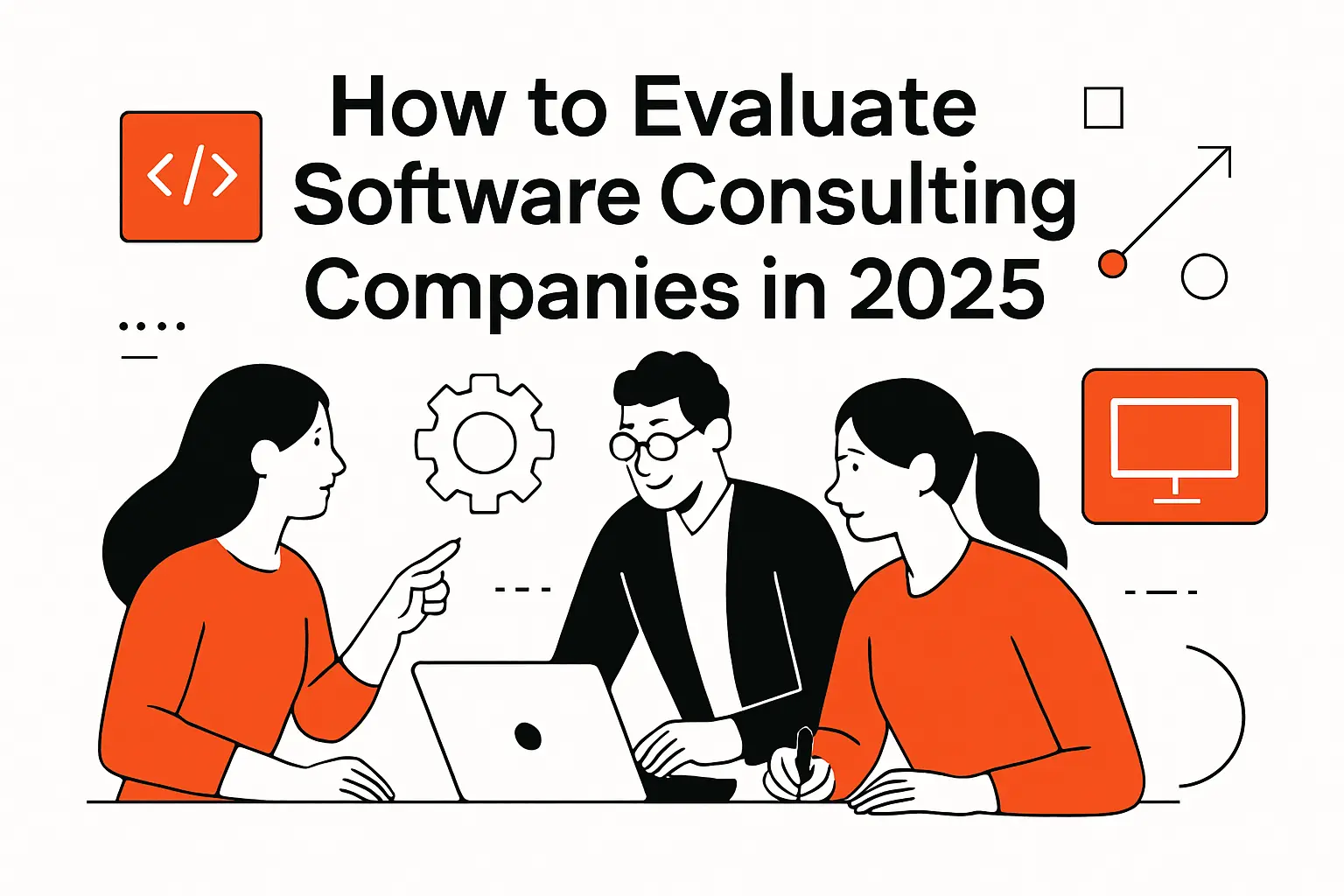
Market overview: Buyers have options—Statista projects the global IT services market at US$1.50tn in 2025—so due diligence must separate storytellers from builders.
1. Proven expertise and domain knowledge
Ask for case narratives anchored to your domain: not just tech stacks, but the regulatory constraints, seasonal patterns, and stakeholder politics that shape delivery. We look for teams that can talk about boundary conditions—what they wouldn’t build—and the trade-offs they recommended when the pressure was on.
Questions to ask
Which capabilities did you phase first and why? Where did you downscope? What did you automate versus simplify? Strong firms relish these questions.
2. Comprehensive service offerings
In essence, a credible partner connects strategy, design, engineering, data, and change management without handoffs that drain momentum. Therefore, we favor “thin thread” programs—small, end-to-end slices that exercise architecture, operations, and support from day one—because they expose integration friction early.
3. Flexibility and scalability for projects
Elastic capacity should come with role clarity: platform engineers don’t magically become data scientists overnight. Ask how the firm scales up and down without losing knowledge, and how they prevent context loss when teams rotate.
4. Long-term partnership potential
To begin with, beware body-shopping. Instead, durable partners co-own outcomes and de-risk transitions by leaving behind platforms, playbooks, and people who can run them. Consequently, contract structures should reward capability transfer, not seat time.
5. Work-life balance and delivery culture
Consulting cultures that normalize chronic heroics tend to leak defects and attrition. We watch for sustainable delivery practices: disciplined on-call rotations, explicit focus time, and managers who manage flow, not motion.
6. Staffing model and bench policy transparency
Healthy benches exist; shadow benches hide misalignment. Ask how engineers are matched to engagements and what happens when demand doesn’t line up with supply. Transparency here predicts transparency elsewhere.
7. Client assignment stability and on-call expectations
Continuity matters. High-churn teams burn trust and budgets. We recommend explicit assignment windows, clear escalation paths, and on-call policies that reflect the real criticality of your systems.
8. Training and onboarding quality
Overall, top firms invest in learning as an operating system: playbooks, labs, pair rotations, and internal certifications tied to real deliverables. Consequently, onboarding that accelerates time-to-first-meaningful-commit beats slideware every time.
9. Compensation and progression clarity
Opaque ladders create perverse incentives. We look for skills-based progression frameworks and feedback cadences that reward mentoring, documentation, and reliability—not just fire drills.
10. Independent rankings and client or peer reviews
External signals help, but read them critically. Analyst notes and peer reviews can spotlight strengths and blind spots; your goal is pattern recognition, not deference. As a practical starting point, here’s a curated roster of firms we see shaping the craft alongside specialist boutiques like us:
- Accenture
- Deloitte
- IBM Consulting
- Capgemini
- Tata Consultancy Services
- Infosys
- Cognizant
- Wipro
- HCLTech
- EPAM
- Globant
- Thoughtworks
- Slalom
- PWC
- KPMG
- EY
- Booz Allen Hamilton
- CGI
- DXC Technology
- Sopra Steria
Your shortlist should mix scale players and outcome-obsessed specialists; the right blend depends on your risk appetite and the maturity of your internal teams.
TechTide Solutions: custom software consulting aligned to your needs

Market overview: Cloud remains the backbone of digital programs, with public cloud end-user spending forecast to reach $723.4 billion in 2025, and our engagements increasingly blend cloud-native services with AI-native controls. At Techtide Solutions, our craft centers on making this spend accretive—minimizing complexity while amplifying measurable outcomes.
1. Discovery and requirements workshops tailored to your goals
We start with outcomes, not outputs. Our discovery cadence maps stakeholders, constraints, and value hypotheses into a capability roadmap. Instead of exhaustive documents, we co-create decision records, event storming artifacts, and journey maps that become living architecture. By the end, you own a problem-framed backlog and the guardrails to keep it honest.
Why this works
In reality, discovery eliminates false certainty. Specifically, it surfaces hidden coupling in legacy systems, clarifies compliance boundaries, and turns “requirements” into testable bets with acceptance criteria tied to business objectives.
2. Rapid prototyping and MVP development for faster validation
Our prototypes aren’t throwaways—they harden into the MVP. We use thin threads to exercise the full path from UI to data to observability, prove integration viability, and measure usability in the wild. If we can’t instrument it, we don’t ship it.
What you get
A running slice of value, a plan for the next increments, and a clear-eyed view of the risks that matter. We favor small wins that compound over “big bang” illusions.
3. Cloud-native build, integration, and modernization services
In particular, from platform engineering to event-driven integration, we deliver with paved roads, policy-as-code, and shared services that help teams move fast safely. Meanwhile, for modernization, we pair adapters with targeted rewrites to retire legacy without betting the company on a single cutover weekend.
Security and governance by design
Identity-first patterns, data contracts, SBOMs, and AI-specific guardrails are built into our pipelines so features and controls mature together. That’s how we keep speed and safety compatible.
Conclusion: choosing the right software consulting companies for 2025
Market overview: Executive intent is clear—Fortune and Deloitte report that 89% of CEOs are already exploring, piloting, or implementing agentic AI—which means the winners this year will be the teams that turn intent into reliable delivery. Above all, our counsel is to pick partners who show their homework, instrument everything, and, instead, de-risk decisions with thin threads rather than promises.
To begin with, if you’d like, we can run a rapid readiness diagnostic, architecture, security, data, and ways of working to surface the few changes that will unlock the most value. Accordingly, shall we schedule that next conversation?