

As TechTide Solutions, we’ve spent the past year embedded in Japan’s industrial plants, hospitals, and smart-district pilots, and one pattern is unmistakable: the country’s Internet of Things is shifting from experiments to evidence at scale. For context, Japan’s Industrial IoT market is projected to reach US$7.72bn by 2025, while worldwide IoT investment is on track to top $1 trillion in 2026, signaling a synchronized, global push into connected operations, remote monitoring, and data-driven services.
In this buyers’ guide, we translate Japan’s 2026 IoT landscape into concrete selection criteria, surface independent rankings, and share the way we build from device and edge to cloud and apps—grounded in the realities of Japanese factories, clinics, and municipalities. Our goal is pragmatic: help you pick the right partner, define a credible pilot, and scale with fewer surprises.
Japan IoT App Development Companies: 2026 Landscape and Buyer Insights

Market overview: demand is resilient and refocusing on outcomes. Gartner’s latest update forecasts IoT endpoint electronics revenue to grow 8.7% in 2025, and within Japan, healthcare-specific IoT is expected to generate US$3.35bn by 2025, underscoring growth that spans both industrial and clinical deployments.
1. 2025 Momentum and Demand Drivers in Japan’s IoT Market
Two macro forces shape 2025 demand in Japan: automation acceleration and demographic reality. On the factory floor, Japan remains among the most robotized economies, with a robot density of 419 units per 10,000 employees in 2023, a proxy for how pervasive connected assets and machine data have become as raw material for predictive maintenance and quality analytics. Meanwhile, the share of citizens aged 65+ has risen to 29.3%, pushing hospitals, municipalities, and service providers toward remote monitoring, assisted mobility, and proactive care management.
From our workbench, these macro factors turn into specific briefs: traceability under supply-chain stress, energy optimization under cost pressure, and human-in-the-loop safety in mixed OT/IT environments. The best Japan-based IoT app development partners don’t just ship code; they orchestrate device telemetry, edge inference, and cloud data models around a measured business case. One tier‑one automotive supplier we collaborated with reframed its OEE dashboard project as a downtime prediction service tied to a spare-parts SLA—same sensor data, but a business model tuned to Japanese procurement expectations and tiered suppliers.
2. Where Japan IoT App Development Companies Add Value Across Device, Edge, Cloud, and Apps
Japan’s IoT app firms add outsized value at the seams: between legacy PLCs and modern gateways, between edge inference and cloud retraining, and between field-user workflows and back-office systems. In 2025, that seam-work is increasingly silicon-aware: Deloitte notes the trend of “AI gets physical,” where models are embedded on devices and at the edge to reduce latency and cloud fees while improving privacy, especially for medical devices and robotics—a shift they frame as part of an enterprise architecture modernization journey rather than a gadget sprint, and it’s central to how we structure projects in-country (AI gets physical).
In practice, we see four integration lanes where Japanese providers excel: device enablement (Renesas- or NXP-based boards; BLE/NB-IoT/LoRaWAN/5G modules), edge orchestration (containerized ML on gateways; local failover), cloud data products (securely exposing feature stores and digital twins), and user experience (line-worker HMIs in Japanese with context-aware alerts). The art is not picking every shiny component, but composing a minimum viable stack that passes factory and hospital safety reviews—then iterating in small, reversible changes.
3. Priority Sectors in Japan: Smart Manufacturing, Healthcare, Robotics, Smart Cities
Manufacturing remains the keystone. We’ve built connected quality apps that stitch legacy PLCs with cloud-based anomaly detection to triage chatter into actionable alerts—something most operations teams accept when the user experience mirrors existing checklists. Healthcare is the second gravitational center: remote vitals, medication adherence, and clinic-home coordination require low-friction UX and careful data governance. On the consumer side, appetite is tangible: the smart home market in Japan is set to reach €8.8bn in 2024, with clear spillovers into eldercare and home energy management.
For smart cities, Toyota’s Woven City moves from concept to testbed utility, with Phase 1 completed and a launch planned for fall 2025. We view such sandboxes as “evidence zones” for service design: safe, sensor-rich contexts where we can iterate human-machine interactions before they enter dense urban reality. Our stance: prioritize narrow slices (traffic conflict detection at one intersection class; heat-stress warnings for a single worker cohort) and bind them to municipal KPIs early.
4. Independent Rankings Updated in 2025
Independent directories are a starting point, not the finish line. For updated snapshots, we cross-reference Oct 2025 rankings and 2025 reviews, then validate shortlists against sector credentials (e.g., IEC 62443 familiarity), Japanese-language delivery depth, and verifiable case evidence in OT/IT environments. Based on that rubric—and our day‑to‑day vendor interactions—here’s an alphabetical Top 20 list you can use to seed your RFI.
- ABEJA
- ARAYA
- Fixstars
- Fujitsu
- Hitachi (Lumada)
- IIJ (Internet Initiative Japan)
- KDDI
- Macnica
- NEC
- Nomura Research Institute (NRI)
- NTT DATA
- NTT DOCOMO
- Omron
- Panasonic Connect
- Preferred Networks
- SORACOM
- SoftBank Corp.
- TIS (TIS INTEC Group)
- Toshiba Digital Solutions
- Yokogawa Electric
We deliberately mix heavyweight integrators with edge‑AI boutiques and connectivity specialists because Japanese IoT often succeeds as a consortium play. When you evaluate, insist on a referenceable client sponsor, a working demo that handles your data shape, and clarity on who owns integration risk.
5. Buying Triggers and Common Engagement Models for IoT Projects
Typical triggers we meet: cost-to-serve spikes that force predictive maintenance, quality drift that demands inline inspection, energy volatility that justifies retrofit sensors, or workforce safety targets. On scoping, the most effective engagements start with a problem framed in business terms and a dataset you already hold—even if noisy—so a small sprint can expose the minimum viable signal. IDC’s spending breakdown helps prioritize where ROI most often lands: manufacturing operations was the largest use case at US$73.0 billion in 2023, which maps to maintenance and throughput projects we routinely see in Japan’s discrete factories.
Engagement models vary by risk appetite: discovery workshops to de-risk the problem framing; fixed-scope PoCs that prove the data path and UX in a single cell or ward; agile delivery for incremental features; and build‑operate‑transfer where our engineers shadow your teams until handover. Japan adds a nuance: acceptance (kentei) gates and supplier networks require extra attention to defect triage, documentation in Japanese, and transparent escalation paths that match corporate governance.
Top 20 Japan IoT App Development Companies in 2026
As a product studio and systems integrator, we’ve learned that Japan’s IoT success hinges on disciplined verification, low-latency edge engineering, and long-term vendor stewardship. That’s why this market favors partners who can integrate firmware and cloud while standing behind releases for years. We also see a healthy split between domestic specialists and global engineering firms with Japan delivery hubs. On one end, quality-assurance pioneers have verified systems for more than 1,100 companies across devices and transportation, and they trace their verification service back to 1983, while blockchain-focused ventures in Tokyo fund builders with prize pools of up to $2 million to accelerate real-world finance.
On the commercial data side, ad-tech players scale product analytics and identity graphs with 363 employees as of April 1, 2025, and offshoring partners are now truly global, with groups like VTI operating in4 countries and fielding 1,500+ engineers. We built this list for 2025 with a pragmatic buyer’s lens: track records you can verify, secure device-to-cloud patterns, and teams that can meet Japan’s expectations for quality and continuity. For each profile, we share our perspective on where they shine for IoT—whether you’re a startup pushing a sensorized MVP or an enterprise instrumenting factories across prefectures.
1. maeBe Co., Ltd
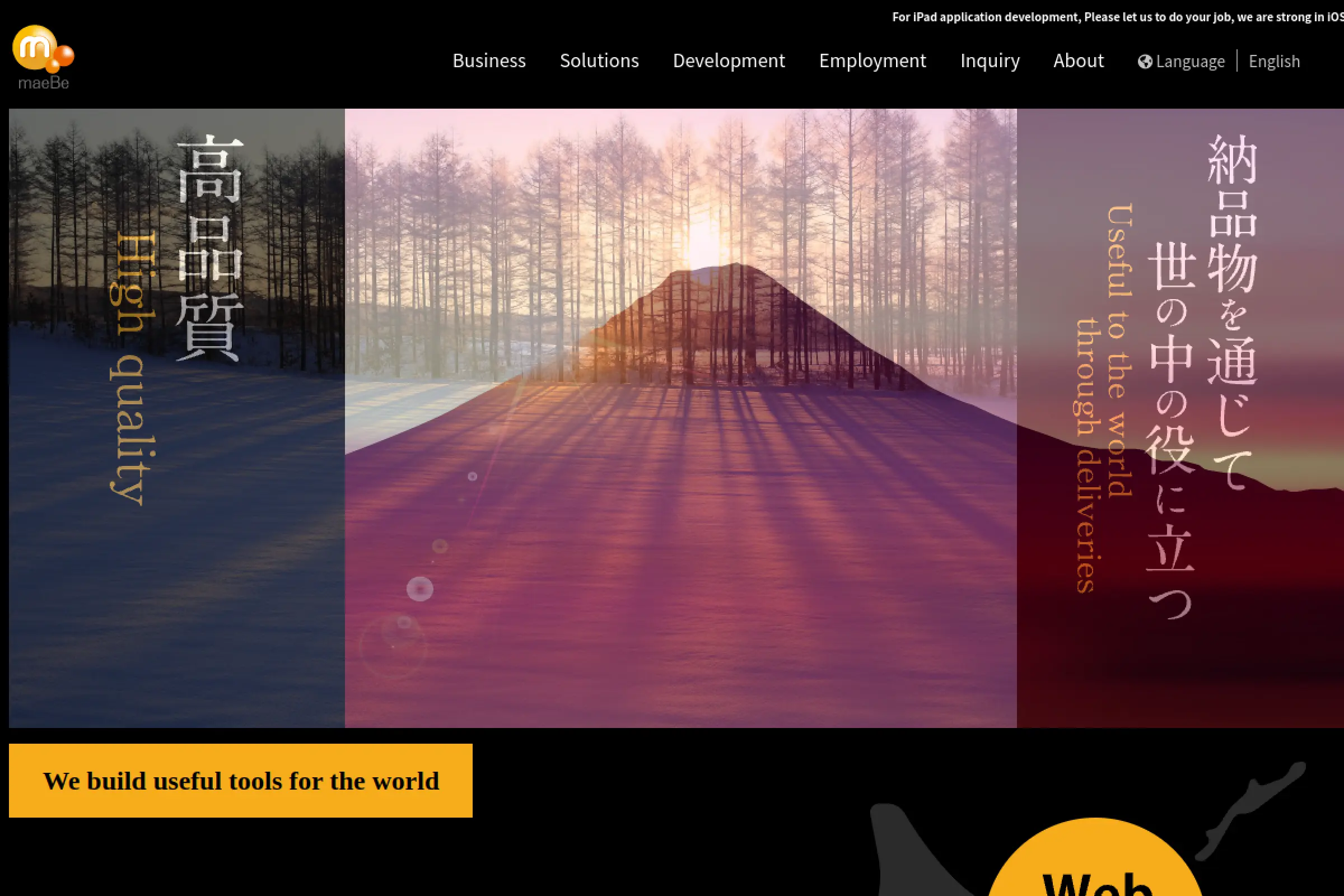
maeBe is a Shizuoka-based boutique developer founded in 2006, operating across iOS, Android, and web. With headquarters in Shimizu Town and a northern satellite in Asahikawa, they’ve shipped enterprise-grade apps that interact with card readers, biometrics, and other hardware—skills that translate directly into IoT controller and HMI work. The company doesn’t publicly disclose headcount; from our interactions and the volume of published work, we’d characterize them as a compact, senior-led team that favors deep client engagement over high-velocity scaling.
A notable credential on their site is a client tie-up project for Bungeishunju that received a Gold Award from the Japan Magazine Publishers Association’s Advertising Awards, a datapoint that tells us they can marshal UX and engineering to meet exacting standards. For services and proof, their work page names clients such as Kojima Pharmaceutical and several education projects, alongside specialized R&D around agricultural sensing; we’ve found this breadth helpful when IoT projects touch regulated data or offline workflows.
Ideal fit: regional manufacturers, healthcare providers, or schools digitizing field operations on iPadOS or Android tablets, where onsite pilots, careful device policy, and incremental rollouts matter as much as code velocity.
2. TechTide Solutions

We’re an end-to-end software studio with a decade-plus of build experience, focusing on data-powered web and mobile, firmware-friendly APIs, and lean DevOps. Our headquarters is in Ho Chi Minh City, and our team comprises 150+ engineers and designers. Over the last few years we’ve been asked to “productize” internal tools—turning a one-off PLC dashboard, for example, into a secure multi-site IoT portal with SSO, anomaly detection, and bilingual admin UX for Japan stakeholders.
We don’t chase awards; we chase repeatability in outcomes. For us, “proof” has been long-lived engagements—shipping the MVP, then returning to add edge filtering, offline sync, or CAN bus adapters when the production floor changes.
Ideal fit: Japan teams who want a practical, hands-on build partner that meets you in the systems you already have, documents in Japanese and English, and is comfortable moving from a pilot’s single device to nationwide deployment without changing the architecture’s bones.
3. Newwave Solutions JSC
Newwave Solutions is a Vietnam-based outsourcer working in mobile, web, QA, and IoT development with a Tokyo branch presence. Operating since the early 2010s, they report 300+ professionals and have steadily grown from app dev into broader data and cloud work. Headquarters are in Hanoi with local account management in Bunkyō City for Japan engagements, which helps reduce timezone friction for staging and UAT.
Awards and credentials include the High-Growth Companies Asia-Pacific 2024 mention and operational certifications like ISO 9001:2015 and ISO 27001:2022, which are relevant when you’re moving telemetry into customer data platforms. Their press also cites the Sao Khue 2022 Award and Top 10 ICT recognition, indicating sustained domestic visibility.
Services and proof: they publicly showcase enterprise, fintech, and media builds; we view them as a practical choice for feature-rich mobile gateways and admin consoles that sit on top of device networks.
Ideal fit: product owners who want predictable delivery at scale with bilingual support, particularly for app-centric IoT control surfaces and analytics dashboards.
4. BlueOC
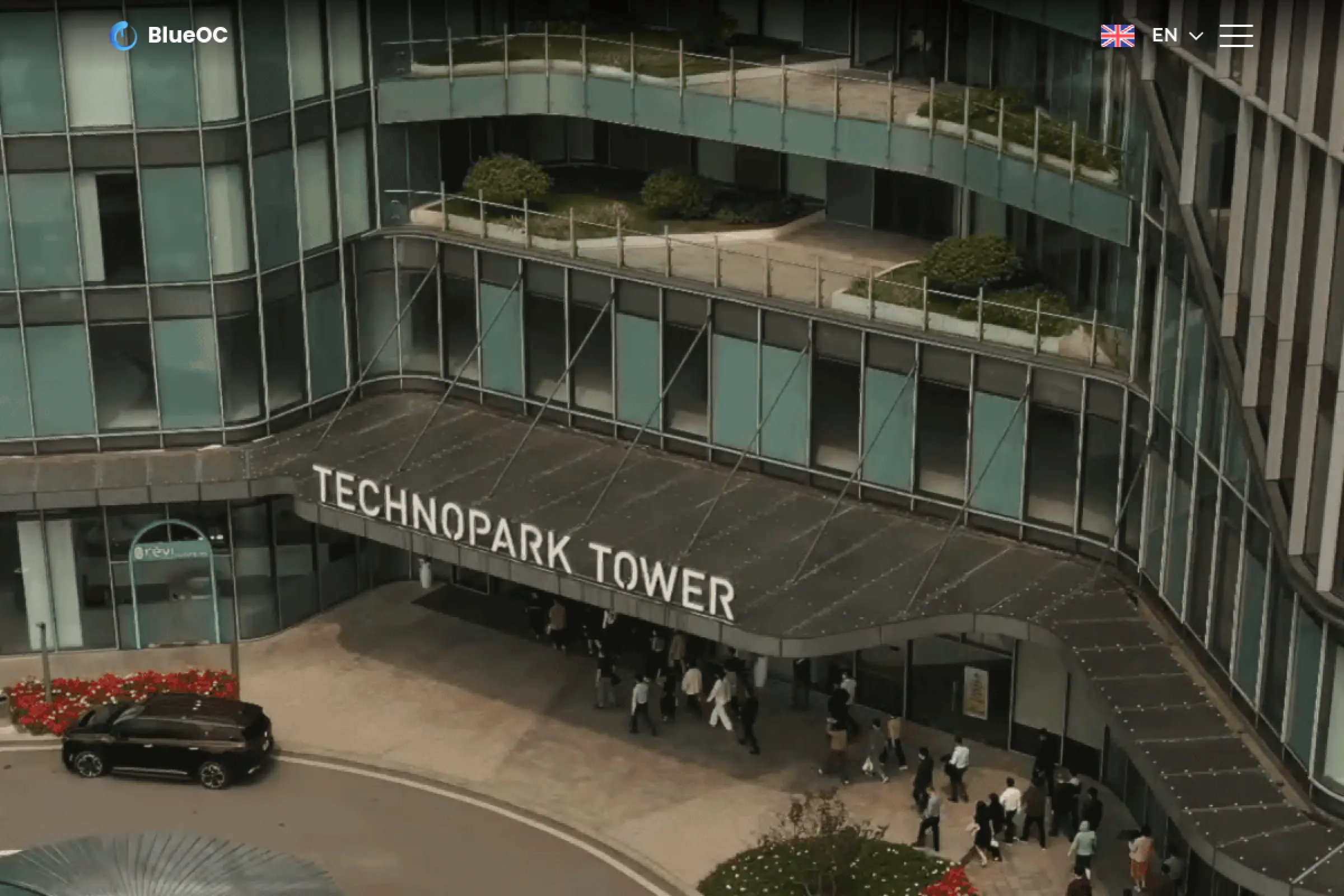
BlueOC is an outsourcing vendor with a clear tilt toward emerging tech (AI/AR/VR/IoT) and delivery to Japan from Vietnam. Founded in the 2010s, their team size isn’t disclosed; the company operates out of Hanoi and maintains a Japan office in Yokohama. From a buyer’s standpoint, proximity to Shin-Yokohama is a plus for on-site workshops and field acceptance tests, especially when installations need tight coordination with facilities teams.
While they do not prominently list awards, we pay attention to their Japan presence: the firm lists a BlueOC Japan office in Yokohama’s Shin-Yokohama district, which lines up with clients asking for rapid on-the-ground troubleshooting and device swaps without cross-border delay.
Services and proof: the site leans on platform capabilities rather than marquee logos (typical for an OEM-oriented shop).
Ideal fit: SMBs and mid-market enterprises seeking a flexible team for cloud-to-device pipelines, industrial HMI, and PoC-to-pilot progression where frequent site visits in Kanto are a requirement.
5. Tntra
Tntra positions itself as a global software engineering ecosystem with a Japan-facing practice across fintech, healthcare, and IoT. With roughly a decade and a half in operation and centers in India, the US, EU, and APAC, they combine product engineering with process mentorship and “Gurukula”-style upskilling. We’ve found that approach useful for IoT programs that need both a product roadmap and capabilities transfer to the client’s internal team over time.
They emphasize compliance and localization in Japan, and their Japanese site outlines patterns for device security and regulated data flows suited to smart manufacturing and medtech.
Services and proof: public portfolio references focus on domain outcomes rather than specific Japan logos, which is common in regulated sectors.
Ideal fit: larger enterprises or scaleups looking for an engineering partner comfortable running multi-quarter discovery-to-rollout programs, with governance, documentation, and knowledge transfer embedded from day one.
6. EMURGO
EMURGO is the Tokyo-founded, globally operated commercial entity behind Cardano, focused on asset tokenization, fintech rails, and Web3 infrastructure that increasingly touches connected-device value chains. In practice, we lean on them when an IoT rollout needs verifiable data sharing or device-bound assetization, such as carbon tokens derived from sensor attestations. Their staff footprint spans 100–250 professionals with Tokyo as an early base and delivery hubs across Asia and the Middle East.
Two markers worth noting: their site states EMURGO is a co-founding entity of Cardano, and in 2023 they ran a hackathon awarding up to $2 million in prizes, indicating capital and community heft around decentralized identity and finance.
Services and proof: enterprise tokenization, stablecoin pilots, and industry partnerships suggest they’re comfortable bridging “brownfield” IT with blockchain systems.
Ideal fit: corporates exploring real-world-asset tokenization tied to IoT telemetry, e.g., energy, mobility, or ESG, where secure attestations and audit trails are business-critical.
7. DS Solution
DS Solution, established in 2022, runs a Japan-headquartered consultancy with an offshore development center in Vietnam. The company focuses on cloud integration (GCP/AWS), Atlassian ecosystem engineering, and custom web/app builds—good ingredients for IoT ops portals, field service scheduling, and ticketing flows that connect to device alerts. Headquarters are in Tokyo’s Minato ward, and while headcount isn’t disclosed, the dual-shore model is evident in their office listings.
They hold Atlassian’s Gold Solution Partner status with delivery and sales accreditations, which we consider a practical edge when IoT fleets are managed through Jira Service Management or when CI/CD and incident workflows must anchor in Atlassian.
Services & proof: the marketplace shows their own add-ons and partner program; we’ve seen this pattern streamline change control around firmware and cloud pipeline releases.
Ideal fit: firms standardizing on Atlassian for DevOps and ITSM who want Atlassian-native IoT incident and maintenance flows with Japanese account management and Vietnam delivery scale.
8. DataSoft Next Japan
DataSoft Next Japan is the Tokyo branch of Bangladesh’s DataSoft Systems, a veteran integrator with public-sector, fintech, and port/logistics depth. The Japan entity has operated since 2022 with offices in Chiyoda; the broader group brings long-running experience in infrastructure automation and IoT-heavy environments (e.g., port operations), which gives them an advantage when projects cross into SCADA-adjacent domains.
DataSoft Bangladesh is documented as the country’s first CMMI Level 5 software company, a signal for process maturity that translates well to mission-critical IoT.
Services & proof: the group cites AML and customs automation projects, and the Japan team lists IoT/AR/VR plus healthcare and fintech builds; in our view, they’re an option for enterprises that need a disciplined SDLC and auditability from POC through production.
Ideal fit: regulated industries and government-adjacent operators that must satisfy quality gates and change-management rigor while modernizing device-intensive operations.
9. VMO Japan
VMO Japan is the local arm of VMO Holdings, founded in 2012 and now numbering over 1,300 employees globally, with Japan delivery mixed with Vietnam engineering. Headquarters for the group are in Hanoi; the Japan unit lists contact points in Shinjuku and Osaka at different times, reflecting a common pattern for hybrid onshore–offshore collaboration. We’ve seen them comfortable with enterprise-grade SDLC, which matters when IoT and data teams share the same pipelines.
The group’s overview cites 1,300+ employees and an emphasis on AI, data, IoT, cloud, and even chip design as an emerging track. They also publicly announced their Japan branch establishment in 2019, which aligns with the uptick in Japan-facing ODC demand.
Services & proof: VMO’s cases span banking, retail, and logistics, indicating experience with the data gravity that modern IoT platforms create.
Ideal fit: enterprises seeking a Top-10 Vietnam outsourcer with mature PMO and bilingual client service, able to own mobile apps, admin consoles, and data pipelines connected to gateways and devices.
10. Yalantis
Yalantis is an engineering firm with a strong IoT practice, offering embedded development, hardware design, and cloud/mobile integration. In operation since 2008, they field 500+ experts across development hubs in the EU and Ukraine and have expanded their compliance posture for healthcare and industrial clients. We like their blend of firmware and cloud chops—useful for end-to-end device programs in manufacturing and energy.
Public case references include KPMG mobile communication and IoT partnerships with RAKwireless, signaling comfort with high-usage apps and hardware ecosystems.
Ideal fit includes companies needing one vendor to design PCB and firmware. They also deliver cloud ingestion and analytics, and build operator-facing mobile and web apps. This model excels where certification, safety, or privacy requirements are non-negotiable.
11. Vakoms
Vakoms is a Ukraine-born software and firmware house with a decade-plus in IoT, embedded, and cross-platform development. Founded in 2010, they operate in Lviv with satellite presences in the EU and US. Employee count sits in the 100–249 range. That scale supports multiple squads while keeping seniors close to the work. We’ve appreciated their pragmatic builds for lighting and home-automation stacks. Real-time messaging and OTA firmware updates are treated as bulletproof disciplines.
The public portfolio covers a home automation platform and streaming products. There’s also collaboration with fuboTV. Those are useful signals when you need reliable video pipelines or MQTT orchestration.
Ideal fit: product teams needing a firmware-savvy partner for consumer IoT or commercial building control. Balance custom embedded code with scalable cloud and mobile front ends.
12. SBWorks

SBWorks is a Tokyo-based consultancy and systems developer that highlights enterprise-scale builds and, notably, hands-on Japan market localization. Founded over the last decade, they keep a tight onshore team supplemented by partner networks. We often see this model win when IoT efforts become whole-company transformations. These include e-commerce integrations, benefit programs, and internal portals with device management.
Publicly shown work spans massive-user portals like Benefit Station. They rebuilt an e-commerce stack for HobbyLink Japan. They shipped a location-based craft beer app. Together, these prove delivery under traffic spikes and curated content interacting with physical telemetry.
Ideal fit is Japanese corporations modernizing customer touchpoints around physical products. IoT signals must blend with content, commerce, and loyalty in one experience.
13. MNET LLC
MNET LLC is an Osaka-based design and development studio established in 2020. Headcount isn’t disclosed. They present as a compact, multi-disciplinary team. Focus areas include high-quality corporate websites, product design, and custom systems. We include them because many Japanese “IoT projects” are service design challenges. Those efforts translate device data into brand experiences, operations dashboards, and customer portals. MNET handles the user-facing layer well.
They earned PRONIアワード2024上期 in design/print and DM on the procurement platform PRONI. Consider it a proxy signal for consistent delivery.
Services & proof: project examples span B2B marketing sites and application design.
Ideal fit: manufacturers and B2B service firms who need a design-forward partner to turn sensor outputs and product telemetry into coherent UX for customers, dealers, and field teams—especially when brand and conversion metrics sit alongside device data.
14. VeriServe
VeriServe is Japan’s software verification specialist—founded in 2001, tracing its verification service history back to 1983—with headquarters in Tokyo and group companies around Japan and Vietnam. As of March 31, 2025, they list 2,125 consolidated employees. If your IoT involves safety-critical systems (automotive, aerospace, medical), VeriServe’s test engineering and validation maturity serve as a risk reducer that can save months at certification time.
They’ve verified systems for more than 1,100 companies, spanning smartphones through vehicles and aircraft.
Services & proof: their offering covers field test support, cybersecurity validation, and consulting—helpful when your fleet demands structured verifications after firmware updates or when you must prove compliance to auditors.
Ideal fit: enterprises operating in regulated or safety-critical domains who require third-party verification embedded in the delivery process from prototype to post-market surveillance.
15. Supership
Supership is a Tokyo-based data and marketing technology company with roots in carrier-scale data platforms. Established in 2014, they operate with 363 employees as of April 1, 2025. They’re not a device shop; they focus on data monetization and audience building. We include them because IoT now depends on permissioned data exchanges and identity resolution. Privacy-first targeting makes their marketing stack help connected products become financially viable.
Awards aside, their relevance is operational. When IoT programs need cohort analysis and lookalike modeling, they fit well. Consented data sharing that drives subscription revenue is part of the package. Combine this toolbox with device telemetry for end-to-end value.
Ideal fit: consumer brands and mobility services turning sensor data into audience insights and growth campaigns. All within Japanese privacy and billing norms, coordinated with app and CRM teams.
16. VTI
VTI is a Vietnam-headquartered engineering group with a growing Japan presence, supporting DX programs across mobile, web, and cloud as well as IoT. The company reports 1,500+ employees across 4 countries, and its Japan entity has been visible in seminars and industry partnerships. In our experience, VTI’s strengths are scale and process—useful when an IoT rollout requires multiple squads across device firmware, data pipelines, and customer-facing apps.
External references include solution partner listings and Japanese-language testimonials from large enterprises, indicating production-grade engagements.
Services & proof: they publicly describe retail and transportation projects as well as DCX (digital customer experience) work.
Ideal fit: buyers who want a large offshore partner with onshore coordination for multi-year modernization where IoT is one pillar among commerce, analytics, and mobile modernization.
17. J CUBE
J CUBE is a Yokohama-based software company founded in 2013, best known for VFX/CG tools and cloud-native rendering services. Why does a graphics specialist belong in an IoT list? Because real-time simulation, digital twins, and streaming render pipelines are quickly becoming the UX layer of connected systems. We’ve found teams like J CUBE uniquely adept at synthesizing vast datasets into understandable, interactive views for operators and customers.
In September 2022, they announced products like WeRender. Participation in high-end rendering ecosystems suggests capacity to support visual twins. Targets include factories, vehicles, and field assets.
Services and proof include a client list of global studios and tech companies. With similar teams, discussions focus on streamlining data-to-visual pipelines.
Ideal fit is enterprises exploring visualization-heavy IoT experiences. Examples include digital twins, 3D configurators, and remote operations tooling. Rendering performance and cloud elasticity matter as much as device connectivity.
18. DreamOnline
DreamOnline is a Hiroshima–Tokyo software company with deep consumer and enterprise app experience, including hardware-connected applications. Founded in the 2000s and operating across several Japan offices plus Dhaka, they emphasize multi-platform development and device integrations spanning NFC, Beacon, wearables, and Bluetooth. This kind of platform fluency is valuable when your IoT initiative must reach both field devices and consumer handsets.
The company states they have produced over 800 apps to date. Recognition includes a Google Play 2017 Best Application Award tied to client work.
Their public client roster lists Canon and Coca-Cola Japan. It includes NTT Docomo, Sanrio, NEC, SoftBank, Rakuten, and Sony Network Communications. That breadth signals reliability at brand scale.
Ideal fit includes brand owners and OEMs. They need polished, high-volume consumer or field apps tethered to devices and services. Delivery and support should align with Japan’s expectations for quality and long-term maintenance.
How to Choose Among Japan IoT App Development Companies

Market overview: selection rigor matters because IoT budgets are expanding but scrutinized. IDC expects Asia/Pacific IoT spending to reach $241 billion in 2025, and procurement teams are pressing for security assurances, evidence of OT compatibility, and pathways to production rather than demo fatigue.
1. Vendor Shortlisting Criteria for Japan IoT App Development Companies
We advise a three‑layer filter: capability, credibility, and context. Capability spans device firmware, edge orchestration, cloud data products, and app UX. It must be demonstrated on your assets, under your latency and uptime constraints. Credibility requires verifiable references, not just logos. Request a customer sponsor to call and a live video under failure conditions. Context is Japan-specific. Provide Japanese-language delivery and HMI norms for line workers. Respect change management in unionized plants and regulated clinics. Follow government guidance, including METI’s factory security appendix from April 2024. Vendors must explain how their data model survives line stops in harsh, multi-vendor factories. If not, they aren’t ready for your environment.
During RFI, probe the unglamorous details. Ask how they model brownfield PLCs. Confirm plans for calendarized shutdown windows. Check how they prevent data drift in time-series models. Also ask who owns OTA update risk. The strongest candidates show architectural humility. They change the right things first, and document explicit rollback plans.
2. IoT Technology Stack Depth
True stack depth shows up in integration choices. On device and connectivity, look for discipline in MCU selection (e.g., Renesas for local supply confidence), and a playbook across NB-IoT, Cat‑M, private 5G, and LPWANs depending on mobility and power budgets. At the edge, insist on containerized services, graceful degradation when the backhaul falters, and a clear model versioning scheme for on‑gateway ML. In the cloud, avoid monoliths: separate ingest, feature engineering, model serving, and analytics so you can scale or swap independently.
Standards minimize regret. We favor application-layer standards like oneM2M for cross-vendor interop when municipal or multi-OEM ecosystems are in play, because it reduces bespoke adapters later (oneM2M). In Japanese manufacturing, shared semantics around asset and alarm states reduce translation errors between OT alarms and IT workflows; the best vendors can show how their data contracts reflect actual operator terminology, not just what the firmware exposes.
3. Security, Compliance, and Quality Assurance
Japan is clarifying the baseline for IoT product security and factory cybersecurity—your partner should be able to design to those expectations. The new voluntary labeling scheme JC‑STAR launched on March 25, 2025 sets baseline criteria for IoT product security and paves the way for mutual recognition with schemes in the US, UK, EU, and Singapore. On the OT side, METI has extended its Cyber/Physical Security Guidelines with a practical guide for SMEs published on April 11, 2025, giving small factories a starting path to harden production networks.
Quality assurance must be continuous. We treat testbeds as “digital twins of risk,” seeded with synthetic and real faults: spoofed sensor values, clock skew, gateway drops, and malformed MQTT to ensure the system fails safe. Ask vendors to simulate production-like noise and to demonstrate how they’ll meet your change-control and validation requirements, especially in regulated healthcare. Japanese buyers also expect audit-grade documentation in Japanese; factor this into timelines and acceptance criteria.
4. Commercials and Delivery
IoT projects fail when pricing hides the true cost of change. Favor commercial models that align to learning: fixed-price discovery with timeboxed sprints; PoCs capped by a clear “go/no‑go to scale” decision; and value‑based pricing only after the signal-to-noise ratio is proven. For delivery, insist on transparency: sprint goals in Japanese and English, daily stand‑ups with on‑site champions, and joint risk registers. We recommend writing SLAs for telemetry loss, alert latency, and recovery time, not just uptime. The vendor that embraces observability—including what they’ll expose to your SRE/OT teams—tends to deliver smoother handovers.
TechTide Solutions: Building Custom IoT Software to Fit Your Needs

Market overview: we anchor every engagement in business value against a market that is growing but selective. Japan’s Industrial IoT segment is projected to reach US$7.72bn by 2025, so buyers are moving from pilots to platform choices that will last a decade—precisely where our full‑stack approach mitigates risk.
1. Consultative Discovery and Requirements Clarification
We begin with a discovery workshop to clarify goals in business terms before touching devices. Our team maps your constraints—line-stop calendars, clinical validation, and building management contracts. It inventories your data: sensor types, sampling rates, and historian formats. Together we co-define the minimum viable telemetry to answer the question at hand. We capture change-control realities typical in Japan, including internal approvals and partner notification windows. Those constraints become a delivery calendar everyone can live with. Where data is sparse, we scope a measurement phase with low-cost sensors on critical assets. A quick, safe edge ingest assesses signal quality before larger rollout.
The deliverable is a decision document with target states and explicit non-goals. It includes an architecture with rollback points and a test plan mirroring your acceptance culture. That clarity keeps pilots from becoming “science projects.”
2. Prototype-Led UX for Connected Devices and Apps
In industrial and clinical settings, user experience is safety. We prototype HMIs in Japanese early, using real alarms and error states from your environment, not perfect data. For a Kansai process manufacturer, we replaced a generic alert feed with a stateful mobile workflow. One tap acknowledges. A required photo confirms completion. A checklist maps each step to the maintenance playbook. For a remote patient-monitoring trial, we designed for quiet defaults. We minimized taps, throttled nighttime notifications, and offered a single view for family caregivers. Our prototypes emphasize cognitive load and error recovery; we test with the night shift, not just day teams.
On devices, we co-design physical interactions: LED patterns, haptics, and QR flows for pairing in noisy environments. We assume intermittent connectivity, so the core experience must survive backhaul losses. The result is a UI that respects line speed and clinical routines while making data actionable.
3. Full-Stack IoT Development From Device to Cloud
We build the stack end-to-end. On devices, we choose MCUs with trustworthy Japanese supply chains. We implement secure boot, OTA updates, and power-aware sampling. At the edge, we deploy containers on gateways with local buffering. We standardize message schemas so new devices don’t break downstream logic. In the cloud, we treat telemetry as a product. We build a robust ingest path and preserve units and timestamps. Then we design model serving for instant rollback without downtime. We instrument everything so you can watch system health in your own tools.
Data governance is quietly pivotal. We establish data contracts, retention, and access controls from the start. They reflect your information security posture and Japan’s privacy expectations for healthcare and smart buildings. When needed, we design hybrid architectures that retain PHI or sensitive operational data in-country.
4. Interoperability and Systems Integration for OT and IT
Integration earns the ROI. We’ve bridged old and new—Modbus, EtherNet/IP, and serial devices to MQTT and HTTP endpoints—without forcing a plant-wide rip‑and‑replace. Where ecosystems cross municipal/enterprise boundaries, we lean on interoperable frameworks like oneM2M to future‑proof data exchange. Our approach: isolate the translator as a protocol gateway or microservice. Normalize data as early as possible. Version schemas like code so analytics, digital twins, and apps can evolve independently.
Japan’s device diversity is extreme; even identical PLC models behave differently across lines. We ship an integration harness for every adapter. We also collect translator telemetry—latency, drop rates, and reconnections. Your operations team can see not just what failed, but why.
5. Security-by-Design and Compliance-Ready Architectures
Security starts in requirements. We design to Japan’s evolving baseline for device and factory security. We align architectures with the JC-STAR labeling scheme launched March 25, 2025. And we embed threat modeling and penetration testing directly into the plan. For factories, we reflect METI’s guidance on network zoning, supplier roles, and incident response. We help SMEs turn policy into checklists and controls they can sustain after handover. We follow the April 11, 2025 SME guide when operationalizing these controls.
Across device, edge, and cloud, we enforce device identity, mutual TLS, least-privilege credentials, and secret rotation. We simulate realistic faults: replay attacks on sensors, time skew, and malformed packets on gateways. And we produce evidence packages (threat models, test logs, SBOMs) in Japanese so your compliance and procurement teams can adopt and audit with confidence.
6. Performance, Scalability, and Reliability Engineering
IoT systems fail in slow motion—queue backlogs, drift, clock skew. We set budgets for latency, jitter, storage, and power that reflect your reality; then we enforce them with instrumentation and alerts. Then, we deploy canary devices and build chaos tests that deliberately drop links, corrupt payloads, and simulate sensor wear. We separate hot and cold paths so realtime alerts aren’t hostage to batch analytics. And because many Japanese sites face constraints (legacy networks, limited maintenance windows), we design graceful degradation paths: local buffering with idempotent replays and prioritized alerting so the most safety-critical signals jump the queue.
Scalability is more than cloud autoscaling—it’s people scaling. We structure dashboards and runbooks for line leaders and facility managers, not just cloud engineers, and we rehearse failure drills with your teams before we ever reach production.
7. Agile Delivery, Transparent Communication, and SLAs
We run agile, but we respect Japanese decision cadence. Each sprint has a goal framed in both English and Japanese, with demos scheduled against your line breaks or clinic rotations. We co-own a risk register, review it weekly, and keep procurement in the loop when dependencies shift. Our SLAs measure what matters in the physical world—telemetry loss ceilings, alert latency, recovery objectives—so uptime alone doesn’t mask failure to serve the operator on the floor.
Transparency isn’t a slogan; it’s meeting your acceptance culture. We document decisions and provide traceability from requirement to test to release notes. When a constraint surfaces—say, a gateway power budget we misestimated—we re-baseline openly and adjust scope rather than pretend it will disappear.
8. Ongoing Support, Monitoring, and Continuous Improvement
After go‑live, we monitor the system like a living organism. We maintain device fleets (certificates, OTA cadence), edge health (container restarts, disk, network), and cloud paths (ingest, processing, serving). We set error budgets and rotate on-call with your team until you feel comfortable owning day‑to‑day operations. Where data allows, we propose retraining cycles, flag drift, and measure model usefulness in business terms (downtime avoided, readmissions reduced). We also schedule periodic architecture reviews to incorporate new constraints—supplier changes, regulation updates, or line expansions.
In parallel, we refine the UX. We watch which alerts get ignored, which forms get abandoned, and which visualizations become favorites on the shop floor; then we simplify. Over quarters, that user empathy compounds into a stable, trusted tool, not just another dashboard.
Conclusion and Next Steps

Market overview: selection and execution discipline will decide who compounds value as IoT scales across the region. IDC forecasts Asia/Pacific IoT spending to reach $355 billion by 2029, so the winners will be those who bind device, edge, cloud, and apps to clear business outcomes while meeting Japan’s security and compliance expectations.
1. Key Takeaways for Selecting Japan IoT App Development Companies
Anchor on value and context. Choose partners who prove understanding of your asset mix, acceptance culture, and safety constraints in Japan. Design for interoperability from the start. Normalize data, version schemas, and prefer standards across municipalities, OEMs, and hospital networks. Treat security as a design input, not a bolt-on. Align with JC-STAR and METI’s factory guidance to reduce rework later. Insist on an operating model. Measure reality with observability, on-call rotations, and SLAs beyond simple cloud uptime.
Take courageously small first steps: one cell, one ward, one intersection. Pair them with architecture that scales once evidence arrives. That combination reduces political risk inside the organization and builds trust on the line or at the bedside.
2. Next Steps: Shortlist, Discovery Workshop, and Pilot Scope
If you’re ready to move, here’s a simple sequence:
- 1) Use the Top 20 list to assemble a short RFI—ask for a live demo on your data shape and a reference you can call;
- 2) Host a discovery workshop to pin down the business metric, the minimum viable telemetry, and the acceptance criteria;
- 3) Scope a fixed‑time pilot with a “go/no‑go to scale” gate and no more than two reversible architectural bets;
- 4) Pre‑wire security and compliance with your CISO and plant or clinical leaders, referencing the latest Japan guidance early.
We’re happy to co‑host that workshop and bring working prototypes to the table. What outcome are you most eager to prove in your first six weeks, and where in your operations would a small, undeniable win create momentum?