
We at Techtide Solutions have spent the last decade building and scaling connected systems across factories, fleets, buildings, and retail. The reason we keep coming back to IoT is simple: the economic upside keeps compounding. McKinsey now estimates IoT could unlock $5.5 trillion to $12.6 trillion in 2030, a range big enough to justify hard work on integration, security, and change management in even the most complex environments.
What IoT Companies Do and Why They Matter
As practitioners, we see IoT companies as translators between messy physical reality and crisp digital decisioning. That translation is not just a buzzword; it is a market with real weight. Statista projects global IoT revenue to reach €965.00bn by 2025, with industrial use cases commanding the largest slice, a reminder that operations—not apps—often drive the biggest returns.
Boards rarely buy technology; they buy resilient outcomes. Think higher yields, safer facilities, fewer truck rolls, richer telemetry, faster recalls. IoT matters because it packages many disciplines into one survivable program. Embedded design, connectivity, cloud, edge AI, and security operate as a single team. Consider quick-service food safety: a thousand refrigerators under mixed connectivity and high staff churn. A franchisor coordinates dozens of vendors across varied networks and aging equipment. Winners aren’t the best sensor or the slickest dashboard in isolation. Winners consolidate data models across brands and deliver OTA updates over flaky links. They can reconcile an FDA audit without a fire drill.
The best IoT companies act like operations partners, not software vendors. They negotiate roaming SLAs with carriers and own connectivity outcomes. Teams wire OT gateways to legacy PLCs without disrupting production. Security foundations include certificate policies established with the CISO. When needed, someone shows up at 5 a.m. to recalibrate a vibration sensor. First-shift maintenance gets a clean start, not another blocked line. The quiet truth is that “IoT” is mostly systems engineering and governance wrapped around patient, iterative value capture. When it works, it changes the physics of a business.
Top IoT Companies to Watch

From factory floors and power grids to city streets and homes, IoT is modern operations’ connective tissue. As a product engineering studio, we at Techtide Solutions integrate sensors, networks, edge runtimes, and cloud services. At night, we study postmortems and case studies to learn what scales. In 2025, the best IoT companies align outcomes with reliability, security, and sustainability. They also prove it with measurable results. The 20 companies below are our focus this year. They exemplify those traits across connectivity, platforms, devices, analytics, and secure operations.
Two caveats to calibrate expectations. IoT is not a monolith. An Industrial IoT leader may differ from a home security leader. A connectivity provider’s impact differs from an APM or observability vendor’s. Our perspective is practitioner-first. We value verifiable customer evidence, credible recognition, and architectures proven in brownfield environments over slideware. Where awards are noted, we link to the announcement; where client proofs exist publicly, we reference them descriptively. We also include estimated employee counts, tenure, and headquarters to anchor each company’s scale and staying power. In the end, our list is opinionated—because in the field, trade-offs are real, and choices matter.
1. Samsara

Samsara focuses on connected operations software across fleet management, video telematics, asset tracking, and equipment monitoring. Industries include transportation, construction, energy, utilities, and the public sector. Founded in 2015 and headquartered in San Francisco, the company reported about 3,500 employees for fiscal 2025. Its platform stitches vehicle and asset sensor data into safety, efficiency, and compliance workflows leaders can act on.
In 2025, customers again ranked Samsara No. 1 across multiple G2 categories. Fall reports cite Fleet Management, Asset Management, and Asset Tracking as leading placements. Earlier, the Summer 2025 grids also placed Samsara atop Fleet Management and nine related Connected Operations categories.
Public case studies highlight consolidation and savings at scale. DHL consolidated seven point tools into Samsara’s platform. Mohawk Industries reports multimillion annual savings from targeted expense optimizations. That pattern matches fleet-heavy ROI narratives: centralize systems and prove measurable cost reductions. Best fit includes organizations with 50 to over 10,000 assets and safety-critical operations. Multi-state compliance needs and an ops-led adoption bias benefit most from Samsara’s unified cloud.
2. PTC
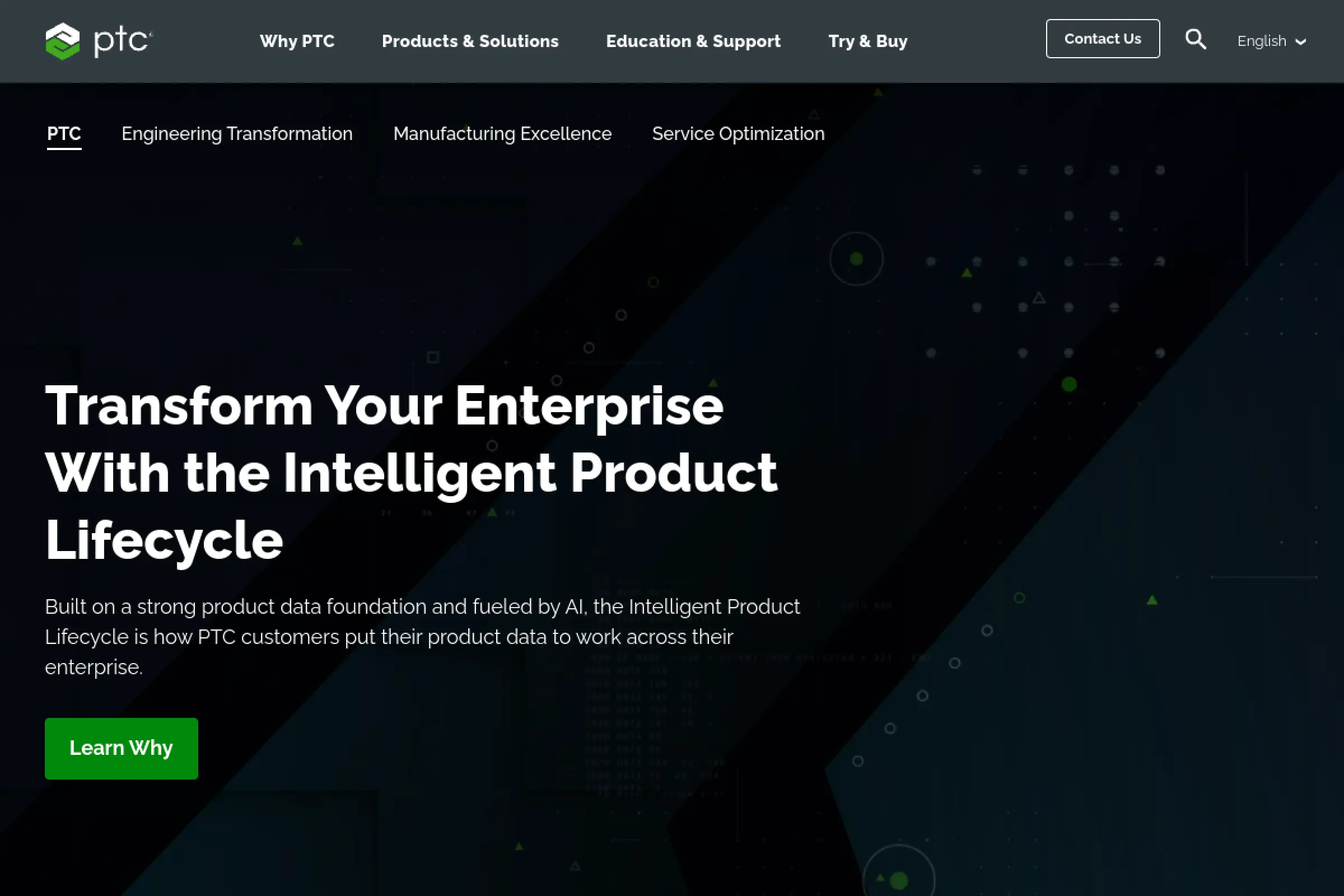
Overview: PTC, founded in 1985 and headquartered in Boston, anchors industrial digital threads. The portfolio spans CAD/PLM with Creo and Windchill, industrial connectivity via Kepware, and the ThingWorx IIoT platform. The company reports about 7,500 employees. It remains a staple in discrete and process manufacturing, where bridging IT/OT is a survival strategy.
Awards: Independent analysts continue to validate PTC’s leadership: it was named a Leader in the IDC MarketScape: Worldwide Industrial IoT and Applications 2024 (announced January 2025). PTC has also been recognized historically in Gartner’s Industrial IoT Platforms research, reinforcing its long-running momentum in IIoT.
Services and proof; ideal fit. Case studies span smart factories at CIMC, with WIP reduced 16% and unplanned downtime down 30%. Bharat Forge achieved OEE gains of 15%+ via ThingWorx apps on Kepware data. We’ve seen ThingWorx succeed when teams already invest in standardizing plant-floor data and want role-based apps delivered quickly.
Best fit: mid-market to global manufacturers with brownfield assets, MES/SCADA, and a mandate to scale condition monitoring and digital workflows.
3. TechTide Solutions

Overview: We build reliable IoT and edge applications across firmware, data pipelines, and cloud backends. We also ship integrations that turn pilots into production. Headquartered in Ho Chi Minh City, Vietnam. Our team has 150+ people and roughly a decade. The site cites “10+ years” of practice. We collaborate with product owners needing discipline and depth.
Awards: We avoid claims we cannot independently verify. Our focus is shipping robust software and proving value in production.
Services & proof: We thrive when we own reliability budgets: crash rates, OTA success, and packet loss. SLOs are co-designed with business stakeholders.
Ideal Fit: Ideal collaborations are with device makers and industrials valuing long-term partnerships. Think Series B+ startups needing firmware or SDK acceleration. Also mid-market enterprises scaling edge analytics or telemetry ingestion.
4. Cisco
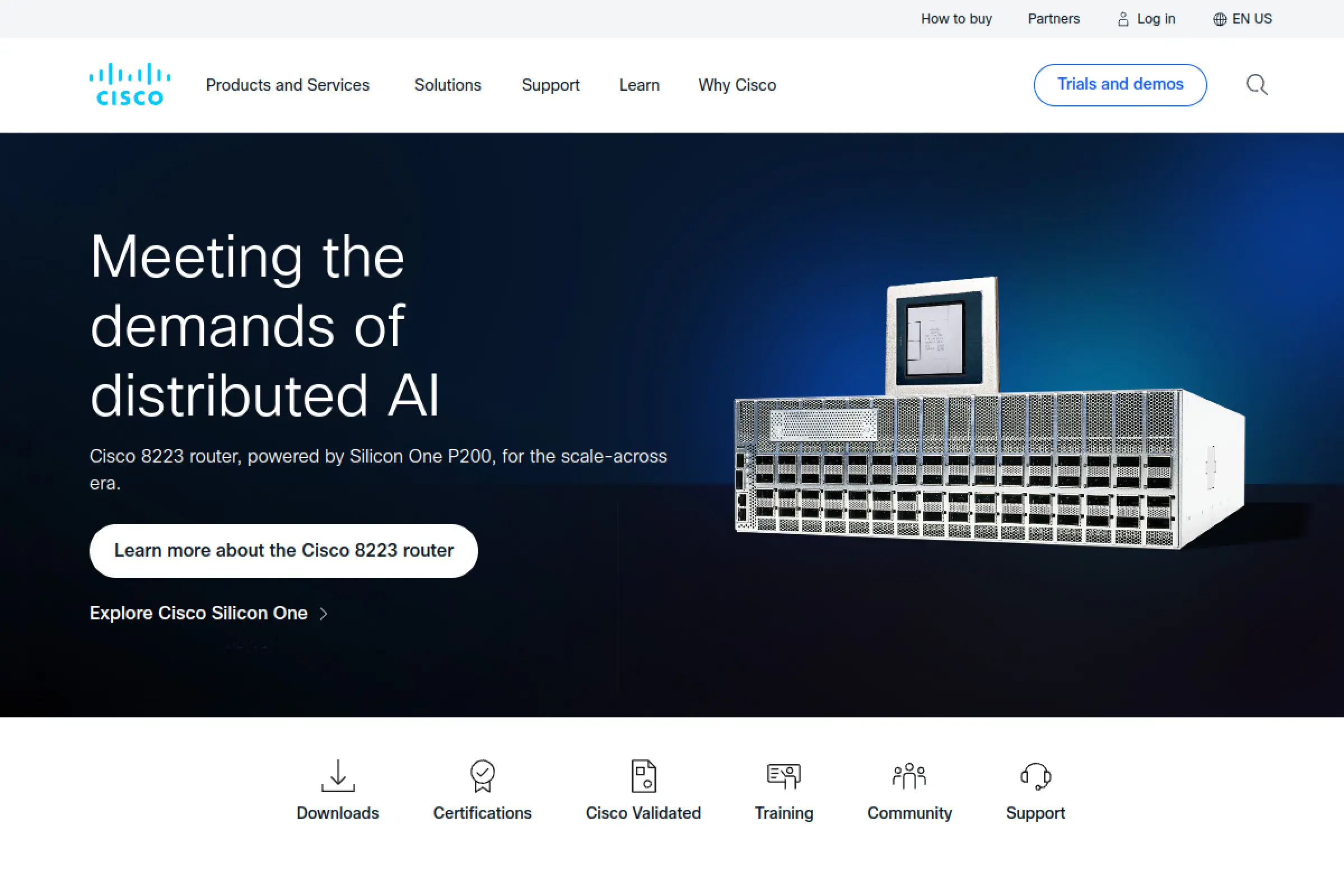
Overview: Cisco’s industrial networking, security, and observability stack—ruggedized IE switches, IoT Operations Dashboard, and ThousandEyes—underpins critical infrastructure worldwide. Founded in 1984 and headquartered in San Jose, Cisco employs about 86,200 people. It pairs networking and security with a deep partner ecosystem. That combination keeps Cisco a go-to for industrial and utility-grade connectivity.
Awards: In 2025, Cisco was named “Industrial IoT Company of the Year” by the IoT Breakthrough Awards. It’s also a multi‑year Leader in Gartner’s SD‑WAN Magic Quadrant, reflecting the firm’s edge-to-cloud strengths for distributed enterprises. Gartner MQ 2024 (SD‑WAN).
Services & proof: We pay attention when network modernization aligns with operational outcomes. Recent example: Verizon and Nokia chose Cisco-aligned private infrastructure to modernize Thames Freeport with 5G for automation and AI analytics. It highlights the ecosystems Cisco frequently operates within.
Ideal Fit: Multi-site enterprises and critical-infrastructure operators standardizing secure connectivity (LAN/WAN/5G), zero trust segmentation, and telemetry at scale.
5. Verizon

Overview: Verizon couples nationwide cellular (LTE/5G) with IoT device management and a growing portfolio of private 5G and edge services. Headquartered in the New York–New Jersey region, the company employs a six-figure workforce. Its IoT story centers on reliable, secure connectivity. Operational wrappers include SIM lifecycle, analytics, and enterprise-grade SLAs.
Awards: In March 2025, Verizon was named a Leader in the Gartner Magic Quadrant for Managed IoT Connectivity Services, Worldwide; it also earned Leader status in the first Gartner MQ for 4G and 5G Private Mobile Network Services the same year.
Services and proof. Recent wins include building private 5G at the UK’s Thames Freeport with Nokia. Verizon’s private wireless and edge approach is resonating across logistics and industrial campuses. And its expanded partnership with AST SpaceMobile to extend coverage directly from space speaks to a “connect anywhere” thesis.
Ideal Fit: large enterprises and public-sector agencies needing managed global IoT connectivity, private 4G/5G, and edge compute with carrier-grade support.
6. Johnson Controls
Overview: Johnson Controls builds a digital nervous system for buildings. It covers HVAC, fire and safety, access control, and OpenBlue apps that optimize energy and operations. Founded in 1885, the company is Irish-domiciled with a global headquarters in Cork. Its North American headquarters is in Glendale, Wisconsin. In 2024, Johnson Controls employed about 94,000 people across more than 150 countries.
Awards: In 2025, Johnson Controls made TIME’s Best Companies for Future Leaders list and was named toForbes’ America’s Best Employers for Company Culture 2025.
Services and proof; ideal fit: A Forrester study reported up to 155% three-year ROI for OpenBlue deployments. That’s the kind of proof CFOs want during portfolio modernization. Johnson Controls suits multi-site owners and operators in healthcare, education, airports, and Class A offices. They prioritize decarbonization, predictive maintenance, and occupant experience in one integrated platform.
7. GE Digital
Overview: GE Digital, founded in 2015, is GE Vernova’s software arm. It focuses on grid and asset performance software for utilities and energy. Core products include APM, ADMS, SCADA/HMI, and historian. After GE’s 2024 split, GE Vernova set a global HQ in Cambridge, Massachusetts. It employs about 75,000 people across roughly 100 countries. That scale underpins GE Digital’s electrification software.
Awards: Rather than trophy-chasing, the digital brand emphasizes operational readiness—grid reliability, DER integration, and energy transition milestones. Those priorities are showcased at major industry events like DISTRIBUTECH 2025.
Services and proof; ideal fit: The portfolio suits utilities and power generators modernizing grids and orchestrating distributed energy resources. It also targets plant reliability under regulatory scrutiny and long time horizons. Results are strongest when IT and OT co-fund shared data models. Teams adopt reliability-centered maintenance with measurable KPIs. Track SAIDI, SAIFI, unplanned downtime, and fuel savings.
8. Sierra Wireless

Overview: Sierra Wireless, founded in 1993, pioneered cellular modules, gateways, and connectivity services. It operates as a Semtech subsidiary. The company employs about 1,000 people. Headquarters are in Richmond, British Columbia. From rugged routers in fleets and utilities to embedded modules in industrial devices, it delivers proven building blocks for IoT.
Awards: At the parent level, Semtech’s IoT programs earned recognition such as the 2024 IoT Excellence Award for LoRa-based sensing—relevant to customers standardizing on Sierra Wireless hardware and Semtech connectivity.
Services & proof: Sierra Wireless fits industrial OEMs and operators. They value carrier-certified hardware and device-to-cloud integration. They want global SIM and connectivity plans from one vendor.
Ideal Fit: Utilities, public safety, and transportation benefit most. Choose it when uptime, ruggedization, and certification matter above all.
9. Arm

Overview: Arm designs the CPU/GPU/NPU IP at the heart of billions of connected devices, from sensors to servers. Founded in 1990, headquartered in Cambridge (UK), and reporting 8,330 employees as of March 31, 2025, Arm’s licensing model and ecosystem define the de facto compute platform for mobile and IoT.
Awards: In March 2025, Arm ranked No. 7 on Fast Company’s Most Innovative Companies in AI, underscoring its central role in AI at the edge and in the data center.
Services and proof; ideal fit. Arm shines for device makers needing power-efficient compute and a broad vendor ecosystem. That spans MCUs through application processors. For cloud-scale inference and networking, Neoverse design wins are expanding. It’s a strategic choice for teams standardizing compute from edge to cloud.
10. Memfault
Overview: Memfault offers a device reliability engineering platform for embedded Linux, RTOS, and Android devices. It provides over-the-air updates, fleet observability, and crash analytics. Founded in 2018 and based in San Francisco, the startup focuses on faster root-cause analysis and higher release confidence.
Awards: Memfault has garnered recognition including the 2023 IoT Breakthrough Award (IoT Emerging Company of the Year, Consumer) and a 2023 Stratus Award for Cloud Computing.
Services and proof; ideal fit. Public testimonials cite Logitech, Airthings, and Latch improving reliability and speeding fixes. Those wins match pain points across wearables, consumer electronics, and industrial gateways.
Ideal fit: device teams with frequent firmware releases, constrained field diagnostics, and the mandate to do “OTA without bricking.”
11. Armis
Overview: Armis secures IT, OT, IoT, medical, and cyber-physical systems by discovering unmanaged assets and mitigating exposure. Headquartered in San Francisco with global operations, it is a shortlist default for visibility from plant floor to campus.
Awards: In 2025, Armis was named a Leader in The Forrester Wave: IoT Security Solutions (Q3 2025). It was also named a Leader in Gartner’s Magic Quadrant for CPS Protection Platforms. It also received Morgan Stanley’s 2025 Innovation Award for its IoT security partnership.
Services & proof; Ideal Fit: We recommend Armis for enterprises with heterogeneous environments (hospitals, manufacturers, financials) that need agentless visibility, exposure management, and policy enforcement integrated with existing SIEM/SOAR. It’s especially compelling where safety and uptime matter as much as classic IT risk—for example, clinical settings and production lines.
12. Xage Security
Overview: Xage delivers zero‑trust access, privileged access management, and secure data exchange for OT/ICS, critical infrastructure, and space systems. Headquartered in Palo Alto and operating for roughly eight years, Xage’s mesh‑based Fabric overlays environments to enforce least‑privilege policies across legacy and modern assets.
Awards: In 2025, Xage won a Fortress Cybersecurity Award for Zero Trust excellence and was highlighted repeatedly in Gartner Hype Cycles related to CPS security and IoT authentication—signals of sustained analyst attention. Gartner Hype Cycle 2025.
Services & proof; Ideal Fit: Public programs include a $17M U.S. Space Force contract and U.S. Navy SBIR work; customer stories call out Kinder Morgan and Petrobras—use cases where DDIL operations and legacy equipment make zero trust non‑negotiable. Best fit: industrials and defense with segmented networks, vendor access needs, and a mandate to move from VPNs to fine‑grained, identity‑centric controls.
13. Alarm.com

Overview: Alarm.com is the connective platform behind many professionally installed, monitored smart security and property systems for homes and SMBs. Founded in 2000, headquartered in Tysons, VA, and employing about ~2,000 people, it integrates cameras, sensors, access, and energy management under one app—with distribution via authorized service providers.
Awards: In the IoT security arena, Alarm.com earned “IoT Security Innovation of the Year” in the 2025 IoT Breakthrough Awards, and showcased AI Deterrence and perimeter solutions at CES 2025—an innovation arc toward proactive intervention. CES 2025 announcement.
Services & proof; Ideal Fit: The company’s strength is the professional channel—buyers who prefer expert installation, integrated monitoring, and devices that “just work.” Ideal fit: multi‑site small businesses (retail, restaurants) and homeowners that want privacy‑conscious, UL‑aligned, service‑backed systems rather than self‑install kits.
14. Vivint
Overview: Vivint, an NRG company, delivers integrated smart home security with professional consultation, installation, and 24/7 monitoring. Founded in 1997 and headquartered in Provo, Utah, Vivint serves over 2 million customers and employs more than 12,000 people across the U.S.
Awards: In January 2025, Vivint was named “Connected Home Company of the Year” in the IoT Breakthrough Awards, recognizing its AI‑driven automation and security portfolio.
Services & proof; Ideal Fit: Vivint is best for homeowners who want an end‑to‑end experience—design, install, service—and for utilities or energy providers thinking about demand response/home energy integrations through a trusted home platform.
15. Telit Cinterion
Overview: Telit Cinterion (formed via Telit’s 2023 combination with Thales’ Cinterion) supplies cellular modules, modems, and an edge‑to‑cloud device platform (deviceWISE), with HQ in Irvine, California and ~1,100 employees as of late 2023. It’s a consistent choice for OEMs standardizing on multi‑radio, global‑certified connectivity.
Awards: In 2025, Telit Cinterion’s CMB100 series earned an IoT Evolution Product of the Year and its deviceWISE/NExT platform took home Merit Awards (Telecom) honors for IoT Software—reflecting its platform’s traction among industrial adopters.
Services & proof; Ideal Fit: We see Telit Cinterion excel where product teams need full‑stack enablement—module + connectivity + device management—with predictable global certification. Ideal fit: industrial OEMs, telematics makers, healthcare device vendors, and any team scaling SKUs across regions.
16. Spectrum

Overview: Spectrum (Charter Communications’ brand) supports enterprise connectivity that underlies many IoT initiatives—fiber internet, Ethernet, SD‑WAN, managed Wi‑Fi, and private networking. Charter, headquartered in Stamford, CT, reported ~94,500 employees in 2024, signaling the scale at which Spectrum Enterprise delivers network foundations for smart spaces and industrial sites.
Awards: While Spectrum’s accolades skew toward broadband and WAN services, its relevance in IoT stems from delivering predictable, SLA‑backed connectivity for device fleets and telemetry‑heavy applications.
Services & proof; Ideal Fit: Spectrum Enterprise publishes reference architectures for managed IoT platforms, “smart spaces,” SD‑WAN, and managed LAN—useful for facilities teams that want one provider to design, deploy, and run the network envelope around their IoT estate. Ideal buyers: multi‑site enterprises (hospitality, healthcare, manufacturing) prioritizing uptime, segmentation, and support.
17. Cooler Screens

Overview: Cooler Screens (Chicago; founded 2017) turns refrigerated/freezer doors into IoT‑enabled digital storefronts—merchandising products, pricing, and ads with real‑time content. As a venture‑backed startup with a team measured in dozens, it represents a physical retail media bet: move the precision of e‑commerce into the aisle.
Awards: We have not found independent, recent award citations we trust; what makes Cooler Screens notable in 2025 is market impact and the debate it has sparked about in‑store digitization and shopper experience.
Services & proof; Ideal Fit: Public reporting documents large‑scale deployments and legal disputes with Walgreens, with references to presence in other retailers—clear evidence that the model is battle‑tested, even if contentious. The concept fits retailers/CPGs seeking closed‑loop, in‑store media at scale, provided operational fit (store power, cooler age, CX) is proven first.
18. Augury
Overview: Augury applies industrial AI to Machine Health and Process Health—listening to rotating equipment and optimizing lines to eliminate downtime and waste. With dual hubs in New York and Haifa and a team of several hundred, Augury’s offer blends domain‑trained AI, sensors, and guarantees that tie value to performance.
Awards: In October 2025, Verdantix recognized Augury as a Leader in its inaugural Green Quadrant for Industrial AI Analytics; Frost & Sullivan previously honored the company with a Global Company of the Year (Industrial Analytics) award.
Services & proof; Ideal Fit: Augury’s public customer highlights span global manufacturers (e.g., Colgate‑Palmolive and PepsiCo sites honored in its Spotlight Awards), with quantified wins in downtime avoidance and maintenance savings. Best fit: multi‑site plants serious about predictive programs, where uptime, energy, and yield are strategic KPIs—not side projects.
19. Motive
Overview: Motive (formerly KeepTruckin) provides fleet safety, tracking, and spend automation for physical operations—from trucking to construction. Founded in 2013 and headquartered in San Francisco, the company reports ~3,300 employees and serves 120k+ customers, reflecting its expansion from ELDs into AI‑dashcams, cargo monitoring, and workflows that move the bottom line.
Awards: In 2025, Motive appears as a G2 category leader across Fleet Management cohorts (enterprise, mid‑market, SMB), signaling strong user satisfaction and market presence. G2 2025 leadership (Motive).
Services & proof; Ideal Fit: Buyers with mixed fleets, insurance incentives, and fuel/maintenance cost pressure can leverage Motive’s AI safety plus spend controls to tighten margins. We see good fit in 50–2,000 vehicle fleets with centralized operations teams and a bias for rapid coaching loops based on video and telematics.
20. Chamberlain Group
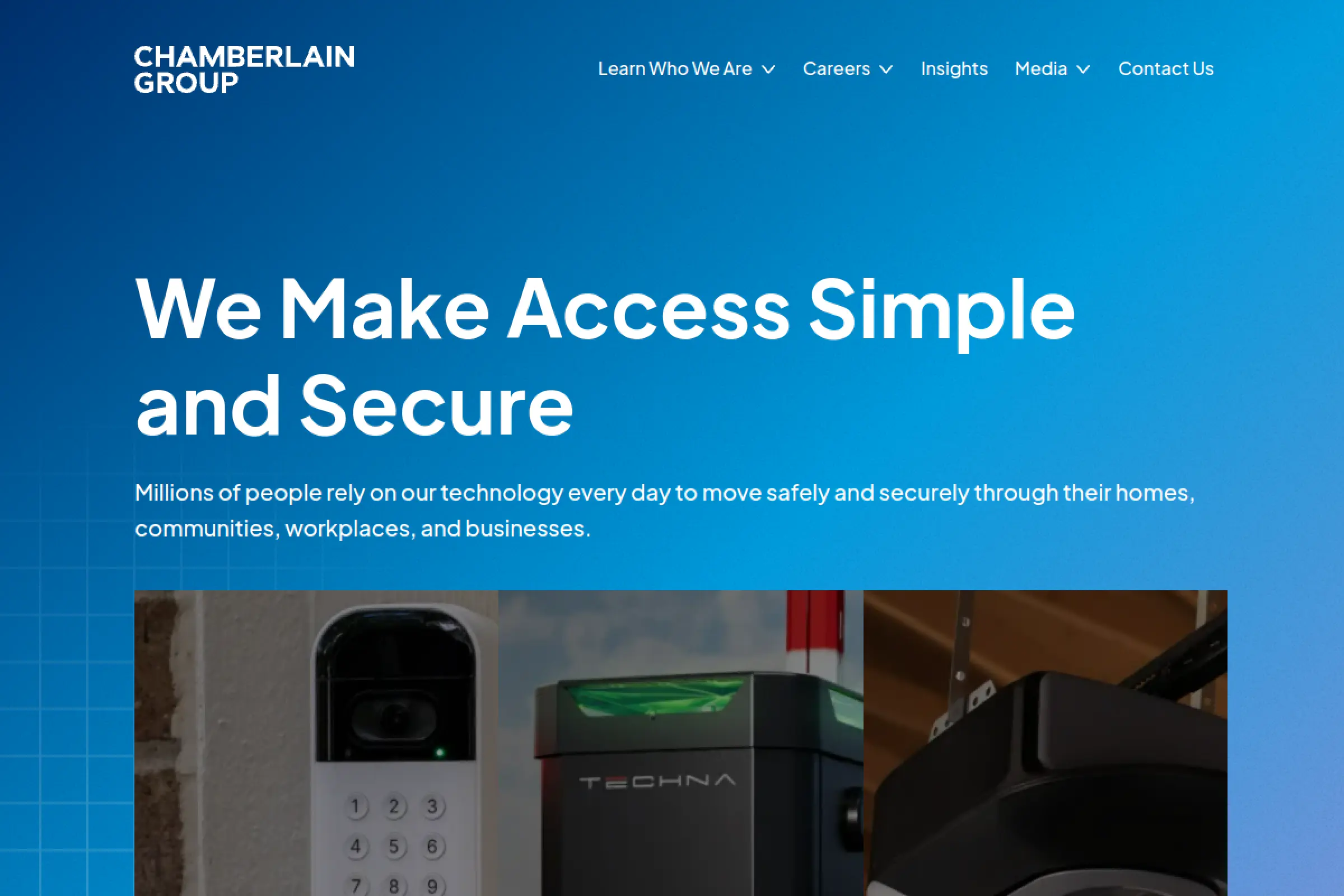
Overview: Chamberlain Group (CG), the company behind LiftMaster, Chamberlain, and the myQ platform, builds intelligent access for homes, communities, and businesses. Headquartered in Oak Brook, Illinois and founded in 1954, CG operates with 5,000+ employees and an installed base counted in tens of millions of door operators—an IoT footprint hiding in plain sight.
Awards: CG earned a spot on Built In’s 2025 Best Places to Work (Chicago), reflecting a culture that supports the software scale‑up needed for a platform that now counts 10–12 million daily myQ users.
Services & proof; Ideal Fit: The myQ ecosystem gives property owners and managers app‑level control and APIs that integrate with delivery providers, auto makers, and proptech services. Ideal fit: residential builders, multifamily operators, and small businesses who want access as a managed digital service, not just hardware.
How the IoT Companies Ecosystem Is Structured
From our seat, the market layers are becoming clearer each year. The electronics base is strengthening even in a supply chain hangover: Gartner’s latest 2Q25 update expects IoT endpoint electronics revenue to grow 8.7% in 2025, a mid-cycle tailwind that helps component and module makers absorb compliance and certification costs while keeping SKUs fresh.
1. Connectivity and Carriers
Connectivity is no longer a commodity checkbox; it’s a design decision with strategic consequences. Operators are racing into new network forms—standalone 5G cores, RedCap for mid-tier devices, and private 5G for plants—while eUICC/eSIM and even iSIM compress the logistics of global deployment. GSMA Intelligence pegs overall 5G connections on a steep curve, rising to 5.5 billion by 2030, and notes enterprise IoT already edges out consumer IoT in connections.
How does that translate to the shortlist? Major MNOs increasingly package managed IoT with cross-border plans and eUICC. Examples include AT&T, Verizon, Vodafone, Telefónica, Orange, Deutsche Telekom, and China Mobile. Specialist MVNOs and platforms differentiate via simple pricing, global bootstrap profiles, traffic steering, and policy controls. Notables include 1NCE, Soracom, KORE, Eseye, EMnify, BICS, Hologram, and 1GLOBAL. The quiet winner is often customers using multi-route designs. Think dual SIMs or eSIM profiles, plus a fallback radio like LTE Cat 1 bis with NB-IoT. Add store-and-forward at the edge to outsmart brownouts and roaming hiccups. For fleets and remote assets, that redundancy protects continuous telemetry and exposes hidden warranty and safety issues.
2. Device Silicon, Modules, and Firmware
The heart of any IoT product remains the silicon-module-firmware stack. We maintain an opinionated roster: MCU suppliers (STMicro, NXP, Renesas, TI, Microchip) for deterministic control; application SoCs and NPUs when on-device AI earns its keep; radio modules from Quectel, Telit Cinterion, u‑blox, Fibocom for cellular; and Nordic/Infineon/NXP/TI for BLE, Thread, and Wi‑Fi. The volume tailwind is real—Bluetooth forecasts show shipments surpassing 5.3 billion units in 2025, and that matters because dual-radio designs (BLE plus cellular) increasingly win on user experience and serviceability.
Firmware is where risk and differentiation meet. We push for signed images, secure boot with rollback, staged rollouts, and semantic versioning. On constrained devices, Zephyr RTOS and FreeRTOS remain production workhorses, with Rust and TinyML carving out specific niches. Our rule of thumb: if your firmware update plan fits on one slide, it’s not ready—include bricking contingencies, bandwidth budgeting, and a diagnostic mode to capture packet traces under field constraints. We also favor runtime policy engines at the edge (e.g., feature flags and rate limiting) to defuse surprises from cloud changes.
3. Platforms and Industrial IoT
Buyers still face a broad menu of hyperscaler primitives and industrial IoT stacks. Choices include AWS IoT Core, SiteWise, Azure IoT Hub, DPS, and GCP’s data plane. Industrial stacks range from PTC ThingWorx and Siemens Industrial IoT to AVEVA/OSIsoft, Hitachi, Bosch, and ABB. Asset visibility platforms include Armis, Claroty, Nozomi, and Microsoft Defender for IoT. The right answer is usually a blend. Pair cloud ingestion and data services with an industry-specific execution layer. Add an edge runtime tied to your controls environment. When evaluating, anchor on three tests. Use a domain model for your asset class, not a generic device twin. Make data contracts explicit enough for stable analytics. Demand a well-trodden path to production: connectors, pilots, and references in your vertical. Industrial buyers should also probe OPC UA semantics and ISA-95 alignment. Examine how the platform handles change management during shift handoffs on the line.
4. Security and Asset Visibility
IoT security is no longer an IT-only function; it’s operational risk management. Network micro‑segmentation, certificate-based identity, hardware roots of trust, and agentless discovery should form a baseline. One reason: the enterprise side of IoT is larger than most realize—GSMAi estimates enterprise installs already account for 10.7 billion connections and skews heavily to smart buildings and manufacturing, where visibility gaps quickly become safety or downtime events.
In our rollouts, we integrate IoT NAC policies with DHCP fingerprinting and passive OT sensors on SPAN/TAP ports. Deep protocol inspection covers Modbus, Profinet, and BACnet. A ticketing bridge ensures unresolved findings land in maintenance windows, not midnight firefights. SBOMs help only when mapped to a remediation playbook, not a compliance binder. We insist on cryptographic identities per device or function and short-lived, edge-rotated credentials. Cloud API keys alone are insufficient. Attackers exploit lateral movement through forgotten service accounts and default credentials in field gear.
5. Smart Buildings and Homes
Building owners now price energy volatility and decarbonization into every capex debate, which is why responsive control systems win. The consumer side is also a locomotive: the global smart home market is projected to hit US$174.0bn in 2025, and that momentum spills into commercial portfolios through occupant expectations (access, comfort, personalization) and FM pressure to do more with fewer technicians.
We’ve had success merging BACnet/IP, Modbus, and newer Matter/Thread endpoints into a uniform telemetry layer with a semantic model for zones, equipment, and comfort KPIs. The details—sensor placement, calibration drift, and deadband tuning—decide whether the CFO sees savings or hand‑waving. Our design pattern: keep local control loops near the equipment (air handlers don’t wait on the cloud), but let cloud models arbitrate schedules and detect anomalies. During a recent retrofit across multitenant offices, we dialed-in zone setpoints using a hybrid occupancy inference (badged entries plus CO2 patterns), cutting after-hours waste without touchy PIR false positives that anger occupants.
6. Fleet, Logistics, and Field Operations
Fleets are a crucible for IoT maturity: tough RF environments, theft, compliance, and the need to prove ROI quarterly. We see three categories thriving—video telematics (safety and insurance), mixed-asset trackers (reefers to roll‑offs), and workflow digitization for field labor. The connected-vehicle domain is scaling fast; Statista’s automotive IoT forecast shows the category growing toward €348.20bn by 2029, reflecting OEM connectivity, ADAS telemetry, and logistics integrations that tighten planning cycles.
Our shortlist usually includes Samsara, Geotab, Motive, Verizon Connect, and OEM platforms like Scania, Volvo, and GM when richer CANbus streams are critical. Budget for backhaul and video retention—smart bucketing by incident type helps—and treat driver coaching as change management, not a checkbox. Multimodal tracking—BLE beacons for yard inventory, cellular for over-the-road, and satellite for true remote—keeps ETAs honest and shrink under control.
IoT Security Considerations for IoT Companies
Security spend and threat velocity are both rising. Gartner forecasts worldwide end‑user spending on information security to reach $213 billion in 2025, while it also projects that 17% by 2027 of all cyberattacks will involve generative AI—two forces that force IoT programs to tighten authentication, segmentation, and monitoring from day one.
1. Network and Device Monitoring
Good monitoring is designed, not installed. Start by discovering everything—IT, OT, and “shadow” devices—then create minimal viable identities: each device has a certificate, each flow a policy, each exception a ticket. If you can’t enumerate your estate, you can’t defend it. Cellular footprints alone are massive; independent trackers show cellular IoT connections surpassed 4 billion in 2024, and the enterprise slice of IoT is broadening into facilities and production networks where unmanaged devices abound.
We recommend an agentless baseline (SPAN/TAP) for east‑west visibility, augmented by lightweight device telemetry (syslogs, counters, selective packet captures) at the edge. Use traffic shaping and backpressure to avoid clobbering thin pipes. For investigation, embed a “quarantine lane” with policy‑controlled internet access so engineers can reproduce faults safely, and insist on golden images plus drift detection so firmware anomalies surface in hours, not quarters. In practice, the hardest problems are organizational: who owns remediation windows, who signs off on downtime, who reprioritizes production when security says “patch now.” Write those answers into the runbook before you discover a hard‑coded password on a live device.
2. Zero Trust for Industrial Environments
Zero trust is finally crossing from webinars into plants and substations. Gartner’s 2024 survey found 63% of organizations have at least partially implemented a zero‑trust strategy, but industrial rollouts demand a translation layer: zones and conduits (IEC 62443) meet identity‑aware gateways, just‑in‑time access for vendors, and policy decision points that understand PLC cycles.
In our deployments, we map equipment to risk tiers and shape controls accordingly. Safety‑critical loops run isolated with data diodes or unidirectional gateways feeding historians. Vendor maintenance gets recorded sessions through bastions, not jump servers with static creds. Certificates are minted with short lifetimes and device‑bound keys; human access rides phishing‑resistant authentication. And when management asks what zero trust “delivers,” we point to fewer lateral movements and measurable incident containment—think blast radius as a KPI, not a slogan.
3. Privacy and Smart Premises
Smart premises raise privacy stakes because sensors and software live where people eat, sleep, and work. The baseline is clear language and data minimization; the differentiator is doing more on‑device (e.g., redaction, occupancy inference without video) and attaching retention TTLs to every data class. Surveys show risk perceptions are rising: Deloitte’s 2025 Connected Consumer study reports 70% of respondents worry about data privacy and security when using digital services, a sentiment that bleeds into expectations for home and building devices.
We’ve made privacy posture a feature in RFPs: provide a data dictionary with purposes, retention, and processors; expose a purge endpoint; support local-only modes; and ship with default‑off microphones/cameras unless explicitly enabled. For workplace deployments, we add worker councils and HR early. If you treat privacy as an add‑on, you’ll spend project time writing rebuttals to fear; bake it in, and you’ll win trust at procurement and renewal.
Connectivity, Edge, and Hardware Enablers
The physical and “near‑physical” layers—radios, gateways, edge compute—decide whether IoT is robust or brittle. IDC estimates edge computing spend will reach about $261 billion in 2025 on its way to $380 billion by 2028, mirroring a shift toward local inference, resilient autonomy, and network cost control.
1. Cellular and Managed Connectivity
Cellular remains the backbone for roaming assets and “brownfield” sites. We design around tiered radios—NB‑IoT/LTE‑M for sleepy sensors, LTE Cat 1 bis for mid‑bandwidth devices, and 5G for video or control‑adjacent endpoints. Bootstrap profiles via eUICC and steering policies at the CMP (connectivity management platform) reduce surprises at borders. The macro context helps: 5G adoption continues, with connections rising to 5.5 billion by 2030, and that brings RedCap, slicing, and private networks into reach for mid‑tier devices and plants.
We prize practical touches: a watchdog that flips radios during RSRP dips, a persistent queue to ride out cell blackouts, and field‑friendly diagnostics (AT command snapshots, PDP context histories) exposed in your support portal. For cross‑border compliance, plan for per‑market certifications (e.g., ANATEL, MIC, SRRC) and keep BOM variants lean—more SKUs, more pain.
2. Embedded and Mesh Hardware
Mesh and short‑range tech carry much of the campus load. Bluetooth LE is the lingua franca for tags and peripherals; Thread and Zigbee thrive in dense sensor meshes; Wi‑Fi 6/7 delivers high‑density backhaul. The device economy is vibrant—Bluetooth shipments are projected to surpass 5.3 billion units in 2025—and that density makes device identity, commissioning, and RF hygiene first‑class concerns.
Our principle: build for multi‑radio coexistence. That means antenna isolation on the board, airtime fairness settings on APs, and channel plans that respect local spectrum maps. Commissioning UX is also strategic: QR codes with mTLS bootstrap, BLE‑assisted Wi‑Fi onboarding, and a “headless” fallback so field teams can recover without laptops. When we see smart‑home standards like Matter bleeding into commercial settings, we don’t resist; we containerize the bridge and put it behind industrial auth.
3. Edge Debugging and Fleet Device Health
Edge devices are not “install and forget.” Plan for entropy. We embed health checks at three layers: hardware (voltage, temperature, watchdog resets), radio (RSRP/RSRQ, retries), and software (crash loops, queue depth, memory pressure). Treat logs like a scarce resource: structured, ring‑buffered, and sampled. Your SRE team will love you if you publish OpenTelemetry traces from the edge—thinned to survive narrowband links. The investment is aligned with market momentum; IDC expects service providers’ edge infrastructure outlays for MEC/CDN/VNFs to approach almost $100 billion by 2028, which we read as a rising bar for uptime and observability.
We also design a “safe mode” for controlled remote access—serial‑over‑IP consoles behind policy gateways—so field engineers can intervene without dispatching hands. Finally, a note on firmware bugs: add a canary cohort, stage traffic, and be willing to halt rollouts within minutes when kernels panic in the wild. The team that can roll back cleanly wins trust fast.
Industrial and Enterprise IoT Platforms and Use Cases
“Enterprise IoT” is not a monolith; it’s a spectrum of maturity and domain specificity. For a sense of scale, Statista expects Industrial IoT revenue to reach US$275.70bn in 2025, concentrated in factory, energy, transport, and logistics settings where continuous uptime and safety co‑dominate the requirements.
1. Asset Performance and Machine Health
Condition‑based maintenance is a favorite because it compresses the distance between data and dollars. We’ve delivered accelerometer‑based vibration monitoring on gearboxes, air pressure profiling for pneumatics, and temperature drift detection for ovens—work that reduced catastrophic failures and spared overtime. The upside is often larger than teams expect: in McKinsey’s granular sizing, the factory setting alone could create $1.4 trillion to $3.3 trillion by 2030, with operation‑management use cases leading the charge.
Two patterns keep recurring. First, models must respect physics—spectral features and process context often beat generic classifiers. Second, plants need workflow, not dashboards: a CMMS ticket with probable cause and parts list, not a heatmap. This is where IoT companies differentiate: delivering domain models (bearings, pumps, ovens), streaming feature stores at the edge, and change‑management programs that get maintenance crews to trust and act on alerts. Don’t underestimate the need for craft interventions such as mounting geometry and transducer calibration; math can’t fix a poorly coupled sensor.
2. Industrial IoT Platforms and Digital Operations
Digital operations succeed when platforms encode the “shape” of work. We look for strong OPC UA support, flexible time‑series schemas, and opinionated twin models that connect to production KPIs (OEE, scrap, energy). On the orchestration side, GitOps for edge gateways and policy‑driven deploys keep fleets manageable. As a macro signal, the electronics pipeline that feeds these platforms is healthy—Gartner sees IoT endpoint electronics revenue climbing 8.7% in 2025—creating room for vendors to invest in better connectors, semantics, and offline‑first capabilities.
Our “digital thread” recipe is simple, if not easy: align production data to a common ontology, avoid opaque ETL, and give data back to operators in the language of their line, not abstractions. In a discrete manufacturing program, we mapped test stand signals to failure codes and implemented a closed‑loop with design engineering; warranty returns fell and the voice of the plant started informing engineering roadmaps, not just vice versa.
3. Fleet and Field Operations
Field service needs fewer truck rolls and better first‑time fix rates. We pair asset telemetry with mobile workflows, image capture for parts verification, and dynamic routing. The automotive IoT growth arc—heading toward €348.20bn by 2029—isn’t just cars getting smarter; Sonatus’s software-defined vehicle solutions help fleets, depots, and vehicles communicate seamlessly, improving efficiency and reducing downtime.
On the ground, we recommend: event‑driven integrations (webhooks over polls), standardized geofencing semantics, and an exception‑first UX so dispatchers spend time on anomalies, not maps. Don’t forget reverse logistics; returnable containers, racks, and tools all benefit from low‑cost tags and handhelds that reconcile inventory during the messy edges of operations.
4. Retail, Buildings, and Facilities
Retailers, campuses, and municipalities are converging on resilience and experience—shorter queues, safer spaces, lower kWh per square foot. Smart‑city spend provides a bellwether: Statista expects revenue of US$79.94bn in 2025, with the United States leading in scale, and that capital often co‑funds energy, safety, and accessibility projects that share infrastructure with private facilities.
In practice, that means occupancy sensing and HVAC orchestration, safer docks, inventory intelligence that collapses shrink, and campus wayfinding that doubles as emergency routing. We like computer vision at the edge for queue and shelf analytics—with privacy overlays—and BLE beacons to bridge the last ten meters for assets. The trick is operationalizing: give store and facility managers controls they actually use, not a passel of laurels for the IT team.
TechTide Solutions: How We Can Help your Business

Our role sits at the seams: we integrate embedded, connectivity, and cloud into programs that survive factories, freezers, and freeways. We also design for regional realities—carriers’ quirks in the U.S., module certification in the EU, and license rules in APAC. The U.S. remains the revenue heavyweight in IoT, with Statista estimating €346.20bn in 2025, so many global programs still pilot in North America before scaling across EMEA and Asia.
Context in the IoT Companies Landscape
We’ve learned to avoid false dichotomies—“build vs. buy,” “edge vs. cloud,” “pilot vs. platform”—because durable programs mix and match. On one recent engagement, a multi‑brand QSR group needed food safety, energy savings, and equipment uptime. We chose cellular backhaul for audited cold chain, Wi‑Fi for store workflows, and BLE for equipment tagging; we ran edge logic for local alarms and cloud analytics for fleet‑wide optimization; and we built “thin” integrations to the CMMS and BMS so swapping vendors later wouldn’t rip out the spine. This is how we orient in the landscape: fit the stack to outcomes, then translate outcomes into contracts and SLAs everyone can live with.
Evaluation Questions for Fit and Differentiation
Problem-to-Outcome Fit
- What outcome will you demonstrate in phase one that convinces a skeptical operator to change behavior? Not clicks—downtime avoided, spoilage prevented, theft curtailed. We ask vendors to model variance as much as averages, because real sites aren’t tidy. We also test vendor appetite for off‑label deployment realities—noisy RF, messy installs, rotating staff—since polished demos rarely survive first contact with a freezer coil vibrating at odd harmonics.
Integration and Data Flow
- Will your platform speak the dialects we already run—OPC UA, BACnet/IP, Modbus, CAN, HL7—and keep data contracts stable as versions shift? We prefer vendors that publish their ontologies and version their event schemas like APIs. Bonus points if your edge runtime can enforce data hygiene (units, timestamps, quality flags) before upstream analytics eat garbage. A change‑controlled connector to our CMMS or WMS beats a bespoke integration that dies with staff turnover.
Security and Compliance Scope
- Do you ship with device identities, mutual TLS, and a credible plan for certificate rotation in the field? Can you segment by policy (e.g., ISA‑95 zones, least privilege) and produce audit artifacts without a fire drill? Map your security narrative to the buyer’s regulator: HIPAA, FDA, SOX, NERC CIP, or local data protection. We push for agentless discovery of OT/IoT, asset risk scoring, and a remediation pipeline that respects maintenance windows. If the story hinges on “we’ll add 802.1X later,” we keep looking.
Deployment and Lifecycle
- What does day‑2 look like? We probe return logistics, RMA thresholds, canary cohorts for firmware, and playbooks for disasters (cell outages, CA compromise). We need to see a clean rollback path, metrics for rollouts (success/failure by cohort, battery impact), and a support portal exposing edge diagnostics that L2 can act on. The best IoT companies describe their lifecycle like a product, not a project.
Conclusion: Choosing Among IoT Companies

The 2025 IoT market is big, noisy, and full of genuine opportunity. Forecasts point to continued growth—Statista expects the worldwide IoT market to expand to €1,420.00bn by 2029—but the winners won’t be those with the flashiest pilots; they’ll be the ones that translate field constraints into stable, governed, evolving systems.
Our counsel as builders is to choose for outcomes and operability. Demand explicit domain models and data contracts. Ask security to co‑design identity and segmentation from the first backlog. Favor platforms that let you change vendors later. Insist on field serviceability: commissioning UX, diagnostics, and resilient OTA. Above all, stage value—prove savings, reinvest, expand scope—so the program earns its right to live long enough to absorb better radios, cheaper modules, and smarter models.
If you want a structured way to cut the noise, we’re happy to run a two‑week “IoT Fit Sprint” that pressure‑tests requirements against the market and produces a shortlist with staged value plans. Shall we schedule a discovery call to explore your assets, constraints, and desired outcomes?