


At TechTide Solutions, we treat DDoS resilience as core product engineering, not as an afterthought bolted onto hosting. The market signal is impossible to ignore: Gartner projected $212 billion in 2025 in global information security end-user spending, while Statista recorded around 512,000 DDoS attacks in Q4 2024. Public incidents show how quickly “unlikely” becomes painfully real, from GitHub’s 1.35 Tbps attack in 2018 to Google’s mitigation of 46 million requests per second in 2022. From our perspective, that is why availability belongs in the same design conversation as security.
We have learned the hard way that there is no single silver bullet. The best protection against DoS attacks and DDoS attacks is a multilayered posture spanning DNS, load balancing, WAF rules, bot controls, caching, origin lockdown, and incident response. In practice, we design for three things at once: seeing bad traffic early, absorbing what we can at the edge, and keeping the origin narrow enough that a noisy attack never becomes a full-blown outage.
What a DDoS Attack Is and How It Works
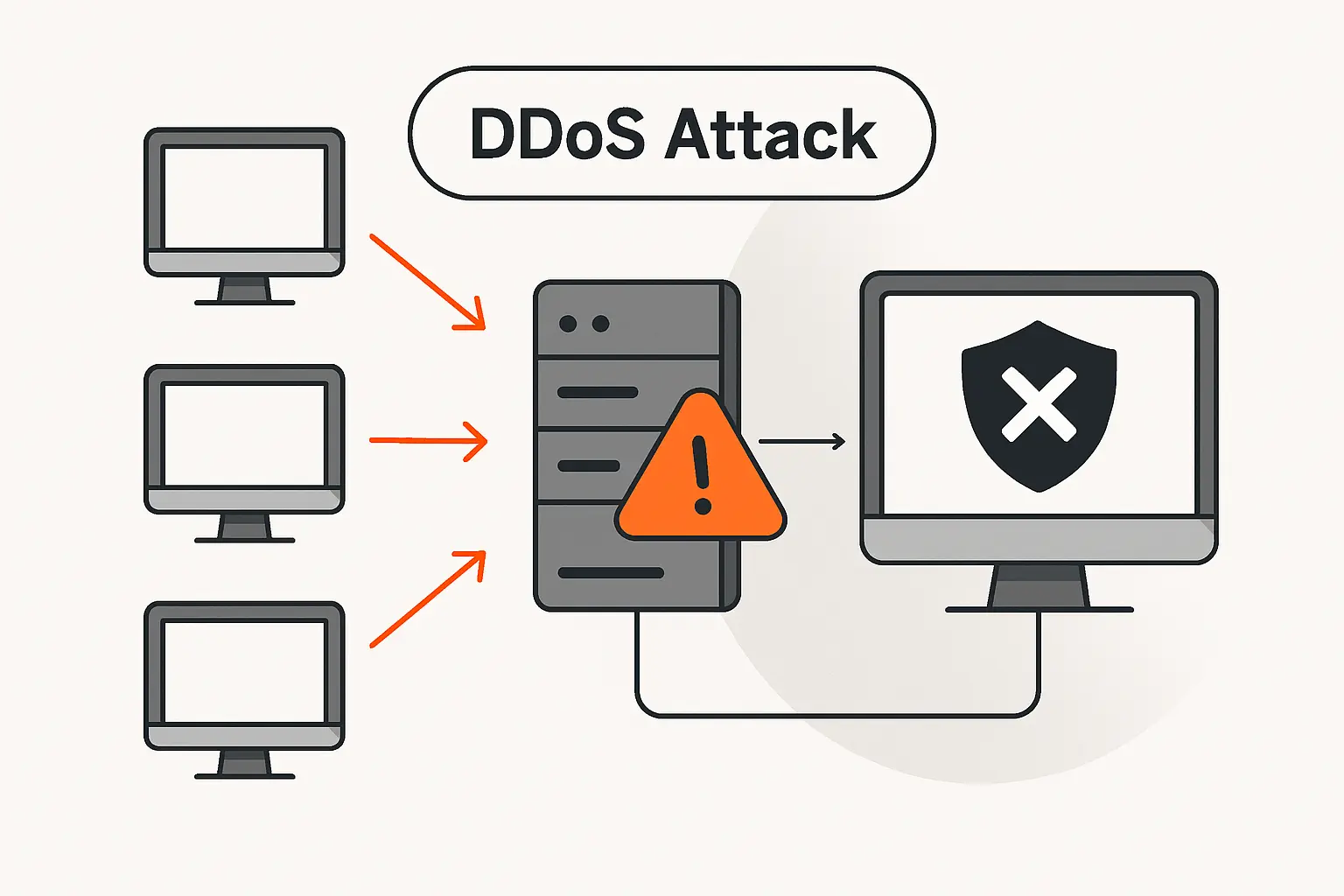
1. How Botnets and Malicious Traffic Overwhelm Targets
At its core, a DDoS attack uses multiple sources to orchestrate an attack against a target. Those sources are often botnets built from compromised computers, routers, and IoT devices, which means the hostile traffic is geographically scattered and annoyingly redundant. From our seat, that distribution is what makes DDoS so different from a single abusive client; the defender is forced to separate bad traffic from good traffic at scale, not one IP at a time.
2. Application Layer, Protocol, and Volumetric Attack Types
Broadly speaking, CISA’s guidance highlights three different types of DDoS techniques, a distinction we translate operationally into application, protocol, and volumetric attacks because each class tries to exhaust a different choke point. Application-layer floods strain login flows, search, carts, or APIs; protocol attacks burn connection state on load balancers and network devices; volumetric floods simply try to fill the pipe. We find this taxonomy useful because it prevents a classic mistake: buying one control for the wrong layer.
3. Why Malicious Requests Can Look Like Normal Traffic
Unfortunately, individual requests can be malicious even when they appear as normal, fully formed requests. Attackers deliberately imitate real browsers, valid HTTP methods, and believable user journeys, especially on application-layer campaigns. That is why we care as much about behavior, sequence, and deviation from baseline as we do about packet volume.
Recommended reading: Cloud API Security Guide: Best Practices for Modern Applications
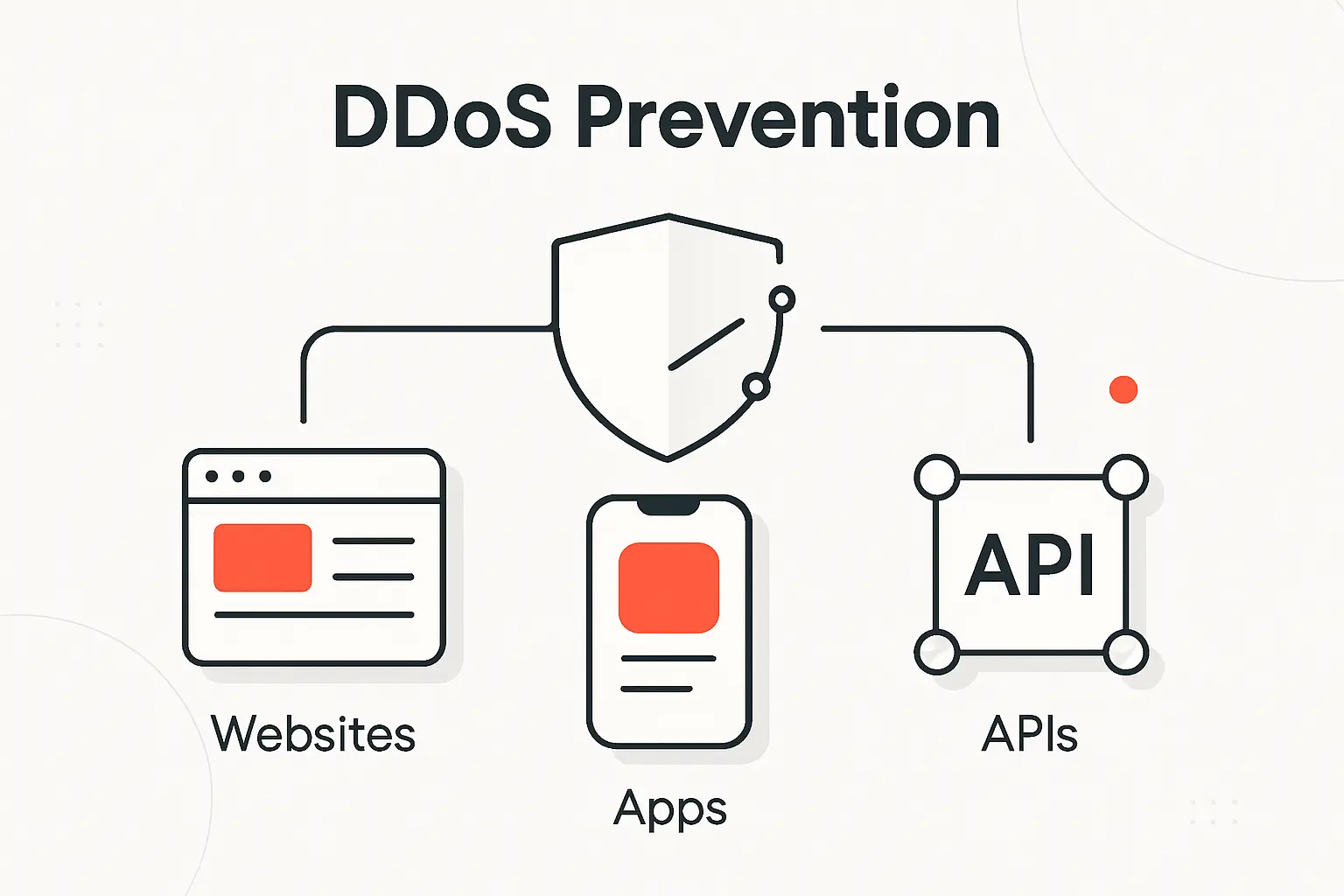
Why DDoS Prevention Matters for Websites, Apps, and APIs
1. Downtime, Lost Revenue, and Reputation Damage
Once a flood reaches origin capacity, the site can slow down or even crash. For an online business, the visible symptom is technical, but the consequence is commercial: abandoned checkouts, support tickets, anxious executives, and a brand that suddenly looks brittle. We generally remind clients that users do not distinguish between “security incident” and “service failed”; to them, the product simply stopped working.
2. Service Continuity Risks for Online Businesses
Modern APIs are especially exposed because successful attacks can lead to Denial of Service or an increase of operational costs. In other words, DDoS prevention is not just about homepages; it is about preserving authentication, mobile backends, partner integrations, and the business flows that sit behind them. We see this most clearly in platforms where one stressed endpoint can cascade into queues, retries, and database contention elsewhere.
3. How DDoS Can Distract Teams From Other Threats
During a live event, building a security incident response process around DDoS is crucial because engineers otherwise burn critical time improvising. While that scramble is happening, patching, fraud monitoring, abuse handling, and other security work often slips. In our experience, attackers benefit from that chaos even when the denial-of-service wave is not the only objective on the board.
Recommended reading: TLS vs SSL: What Changes with TLS, HTTPS, and Modern Certificates
How to Prevent DDoS With a Layered Strategy
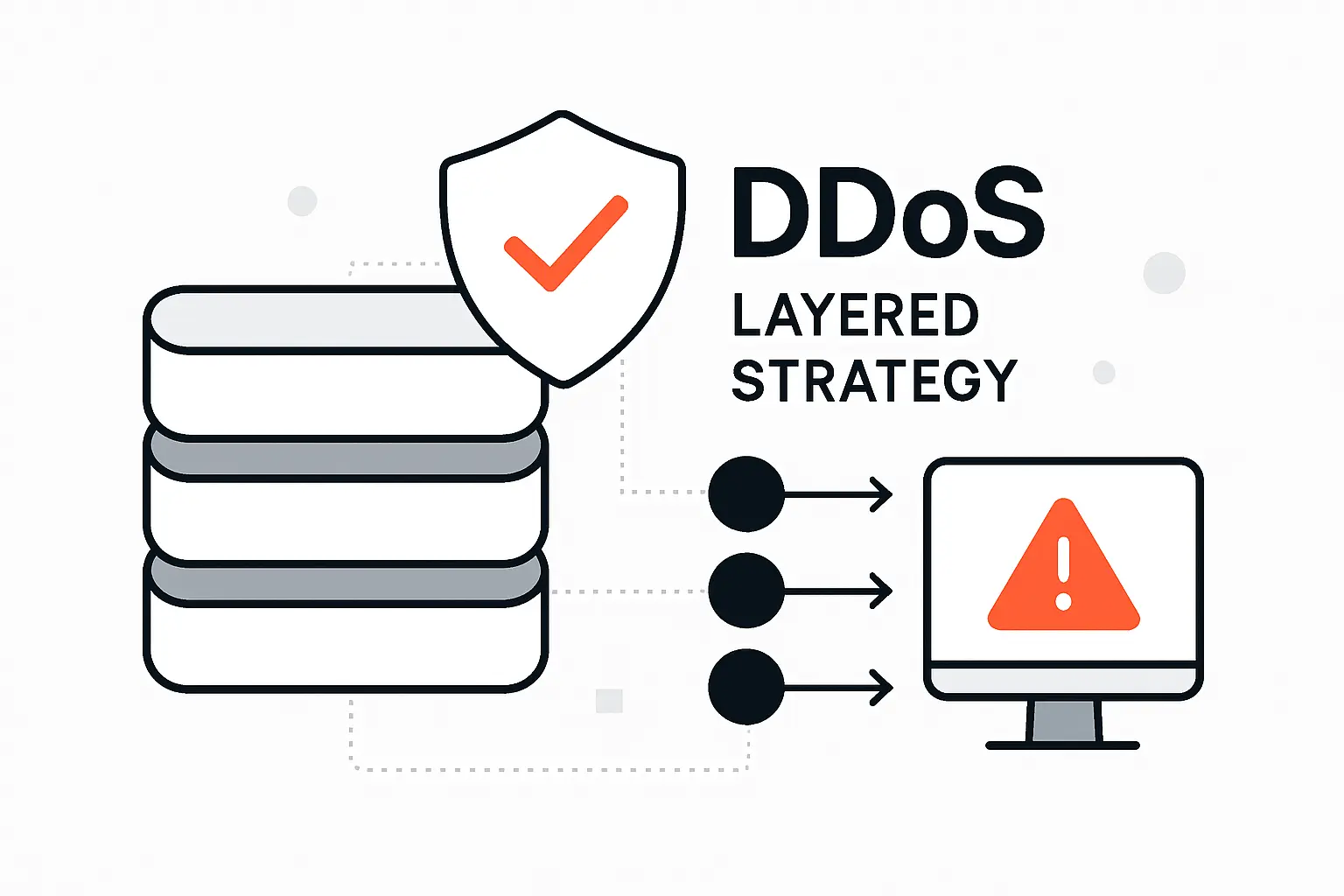
1. Reduce Attack Surface Across Ports, Protocols, Endpoints, and Locations
Before we talk about clever detection, we shrink exposure first: packets that target a port or port range that you did not specify will be dropped in a well-scoped edge configuration. The same principle holds at the application layer—unused endpoints, stale subdomains, openly reachable admin panels, and direct-to-origin access are all gifts to an attacker. Whenever we can, we limit accepted paths, lock origins to trusted proxies, and keep public surfaces intentionally boring.
2. Know Your Normal Traffic Baseline and Detect Anomalies Early
Detection gets far better once you establish a baseline of expected traffic patterns before an attack begins. Marketing launches, payroll runs, login peaks, and API batch jobs all create legitimate spikes, so a baseline must reflect your actual business rhythm rather than a generic threshold. We like to treat baselining as operational memory: it tells the security stack what “busy but healthy” looks like.
3. Build Prevention, Mitigation, and Response Into the Same Plan
Done well, a defense stack should detect anomalous activity, generate a signature, and generate a custom WAF rule as parts of one workflow. Prevention without response is theory; response without detection is guesswork. Our preference is to connect alerting, logs, rate controls, WAF actions, comms playbooks, and rollback steps so the handoff from observation to action is almost frictionless.
Recommended reading: What Is CVV2 Security Code: How Card Verification Works, Where to Find It, and How to Use It Safely
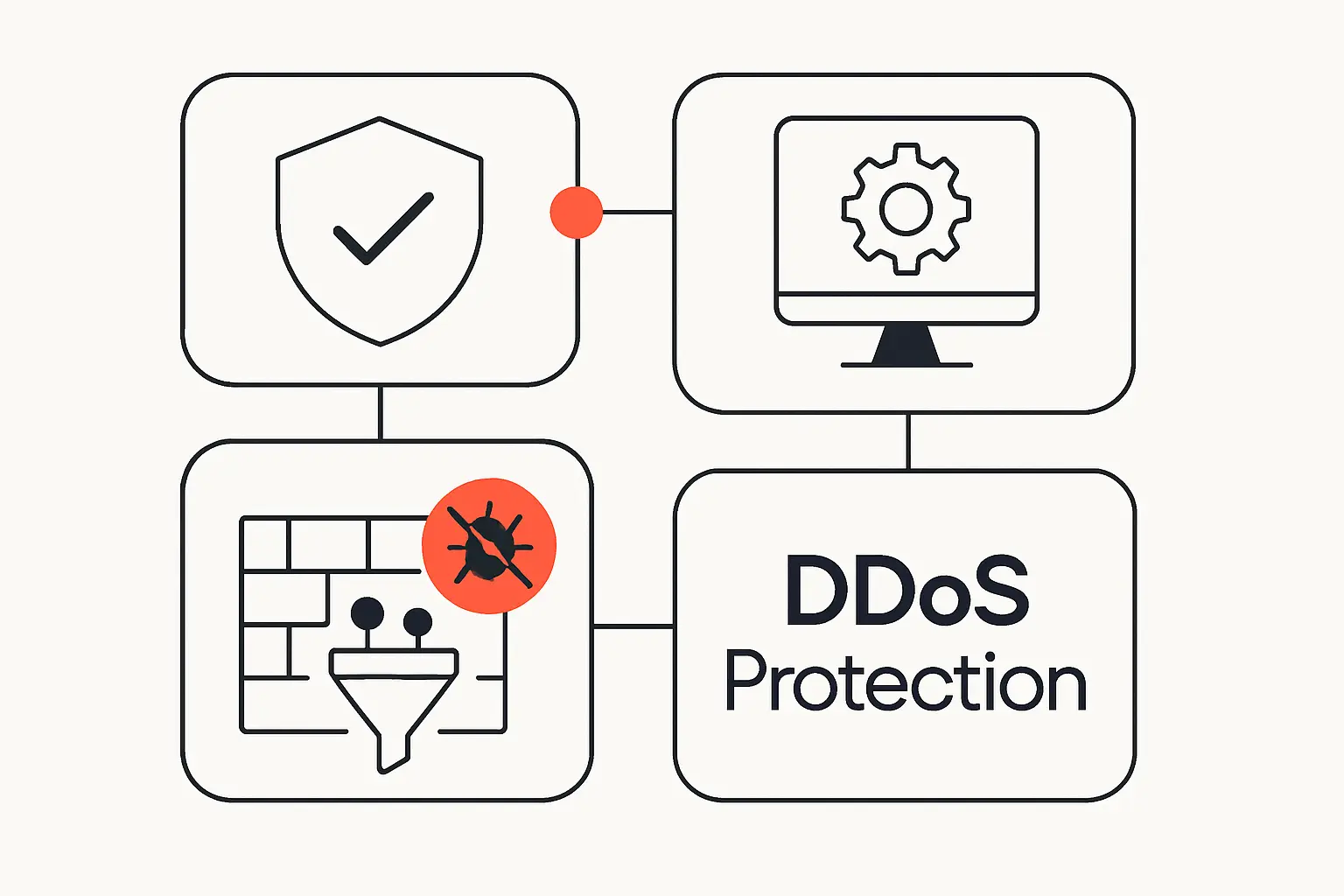
Core Tools That Help Prevent DDoS Attacks
1. Rate Limiting, Load Balancing, and Extra Bandwidth
At the request layer, rate-based rules are the cornerstone of a defense-in-depth WAF configuration against HTTP floods. Load balancers help spread pressure across healthy backends, while spare bandwidth and autoscaling room reduce the odds that a sudden surge immediately becomes user-visible pain. We usually frame these controls as shock absorbers: they do not solve every attack, but they buy precious time and preserve headroom.
2. Anycast Networks, CDNs, Caching, and Traffic Distribution
Network geography matters because Anycast also fans out DDoS traffic to many edge locations instead of concentrating it in one place. Pair that with CDN caching, and many repeat requests never have to touch the origin at all. We like this combination because it turns global scale into a defensive advantage rather than a billing surprise.
3. WAFs, Bot Management, Protocol Filtering, and Traffic Scrubbing
On the filtering side, dynamic rules can scan for attack patterns, suspicious patterns, protocol violations, origin errors, and excessive traffic hitting the origin or cache in real time. WAFs handle hostile HTTP semantics, protocol filters reject junk that should never arrive, and traffic scrubbing removes bulk abuse before clean traffic is forwarded. Our view is simple: if these tools are deployed as silos, gaps appear; if they operate as a chain, bad traffic has to beat several gates in a row.
4. Automated Detection, Device Fingerprinting, and Always-On Protection
Increasingly, machine learning, analysis of bot behavior, and fingerprinting are used to identify and classify bots. That matters when attackers rotate IPs faster than a human analyst can respond, or when many requests look superficially legitimate. We are particularly bullish on always-on protection here, because the opening moments of an attack are usually the worst time to be turning services on by hand.
Recommended reading: Protect Your Brand: A Practical Guide to Trademarks, Online Defense, and Reputation
Infrastructure Best Practices for Stronger DDoS Resilience
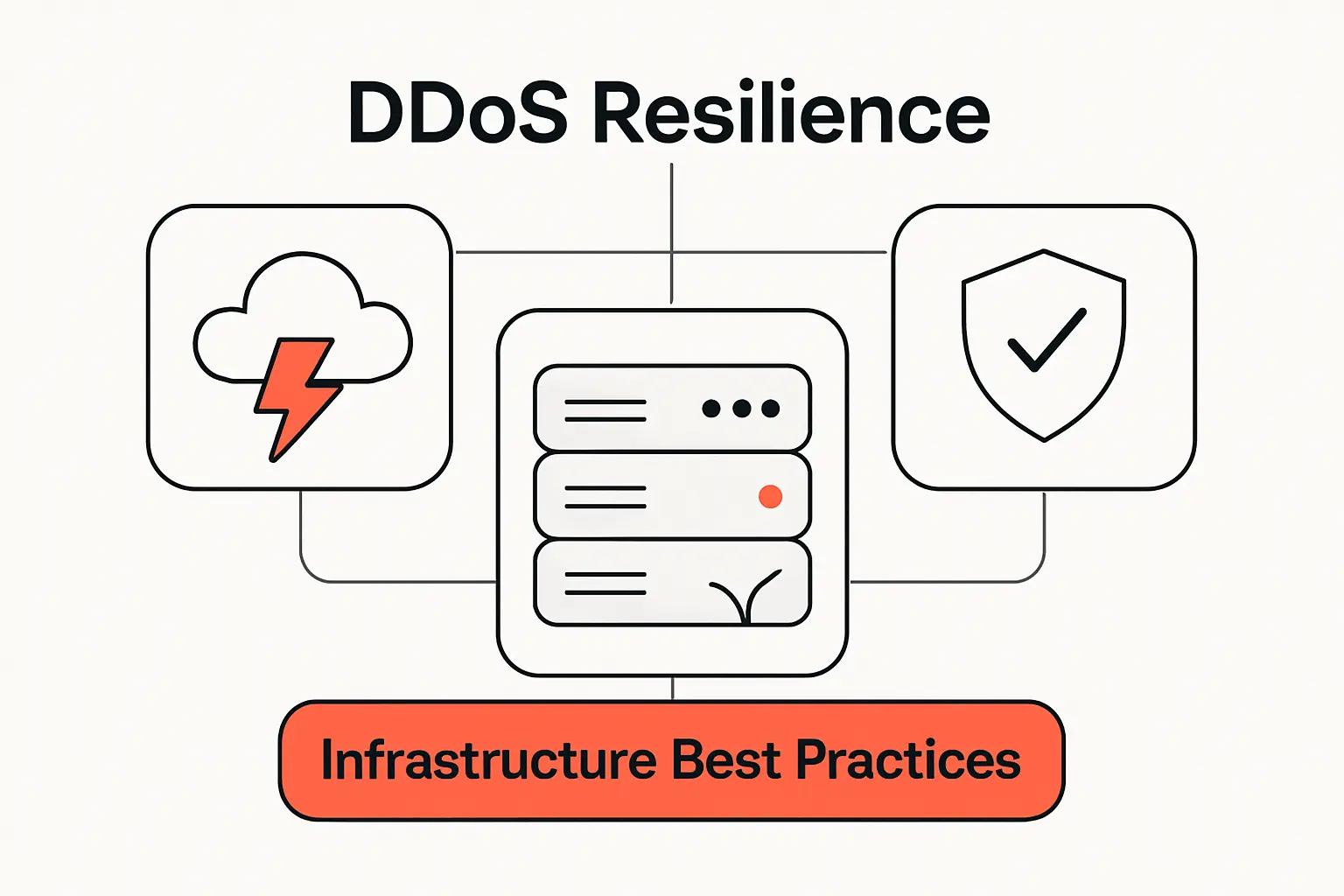
1. Create a DDoS Response Plan With Roles, Escalation Paths, and Communications
Long before the sirens start, develop runbooks and response plans for responding to an incident so the team is not inventing roles mid-crisis. The essentials are unglamorous but vital: technical owner, executive sponsor, vendor contacts, escalation paths, customer messaging, legal touchpoints, and a clear threshold for declaring incident status. We advise teams to practice the communications path as hard as the mitigation path, because confused silence can damage trust almost as fast as downtime.
2. Design Resilient Infrastructure Across Data Centers, DNS, and Cloud Resources
Resilience improves sharply when shuffle sharding and anycast striping can help users access your application even if DNS is targeted by a DDoS attack. Add health-checked failover, multi-region capacity, and diverse cloud or data center paths, and an attacker has a much harder time pushing the whole platform off the table. We design availability around the assumption that some component will be stressed, degraded, or unreachable; the architecture should bend, not shatter.
3. Practice Good Cyber Hygiene and Harden Exposed Services
Just as important, scan for publicly exposed systems to gain visibility into your organization’s online footprint. Hardening exposed services, closing unused ports, patching internet-facing software, rotating stale credentials, and removing forgotten endpoints all reduce the surface area that attackers can discover and hammer. We often say that DDoS resilience begins with housekeeping, and that is not a platitude—it is architecture discipline.
How to Choose the Right DDoS Protection Approach
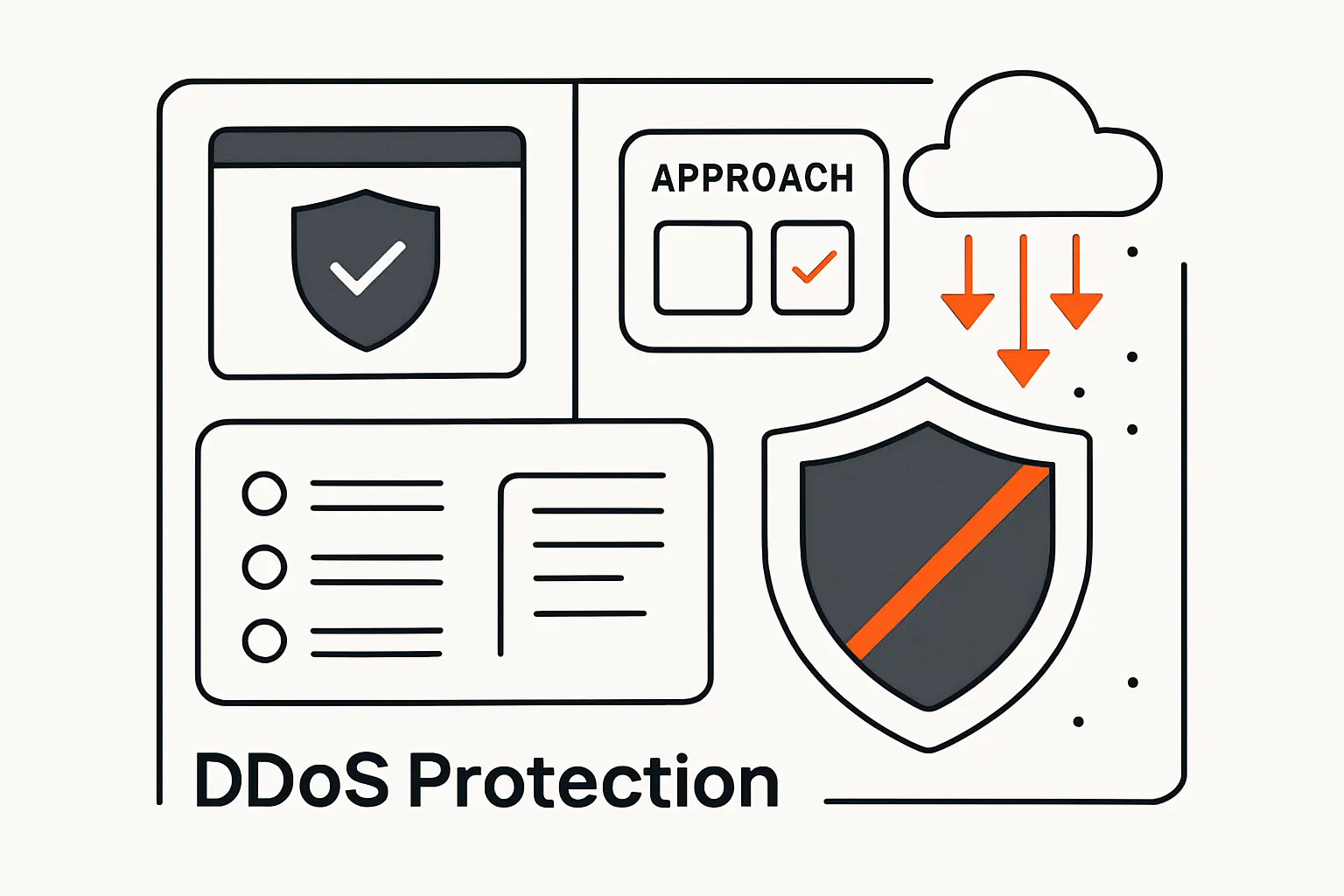
1. When Cloud-Based and Outsourced Mitigation Make Sense
For most internet-facing businesses, always-on outsourced mitigation is best suited for cloud-hosted applications and organizations constantly under DDoS attacks. Outsourced mitigation also makes sense when you need global edge reach, scrubbing capacity, and specialized expertise that would be expensive to build in-house. We typically recommend this route for public web platforms, SaaS products, and API estates where scale and geographic distribution matter more than owning every appliance.
2. When On-Premises Appliances Fit Low-Latency Environments
There are still cases where on-prem or hybrid defense earns its keep, especially when low latency for high volume traffic is a hard business requirement. Voice, video, gaming, and other near-real-time services may not want routine traffic detouring through distant scrubbing paths when jitter and delay affect the user experience. In those environments, we usually prefer a hybrid posture: local mitigation for smaller or faster attacks, cloud backup for the monsters.
3. Why Traditional Firewalls Alone Are Not Enough
Even now, many teams overestimate the old perimeter, but legacy hardware appliances and “firewall helpers” are no longer sufficient against sophisticated threats. A traditional firewall can still be valuable for policy enforcement, segmentation, and ingress control. What it cannot do alone is replace globally distributed capacity, specialized scrubbing, behavioral analysis, and application-aware mitigation during a serious distributed event.
Common Signs That a DDoS Attack May Be Starting
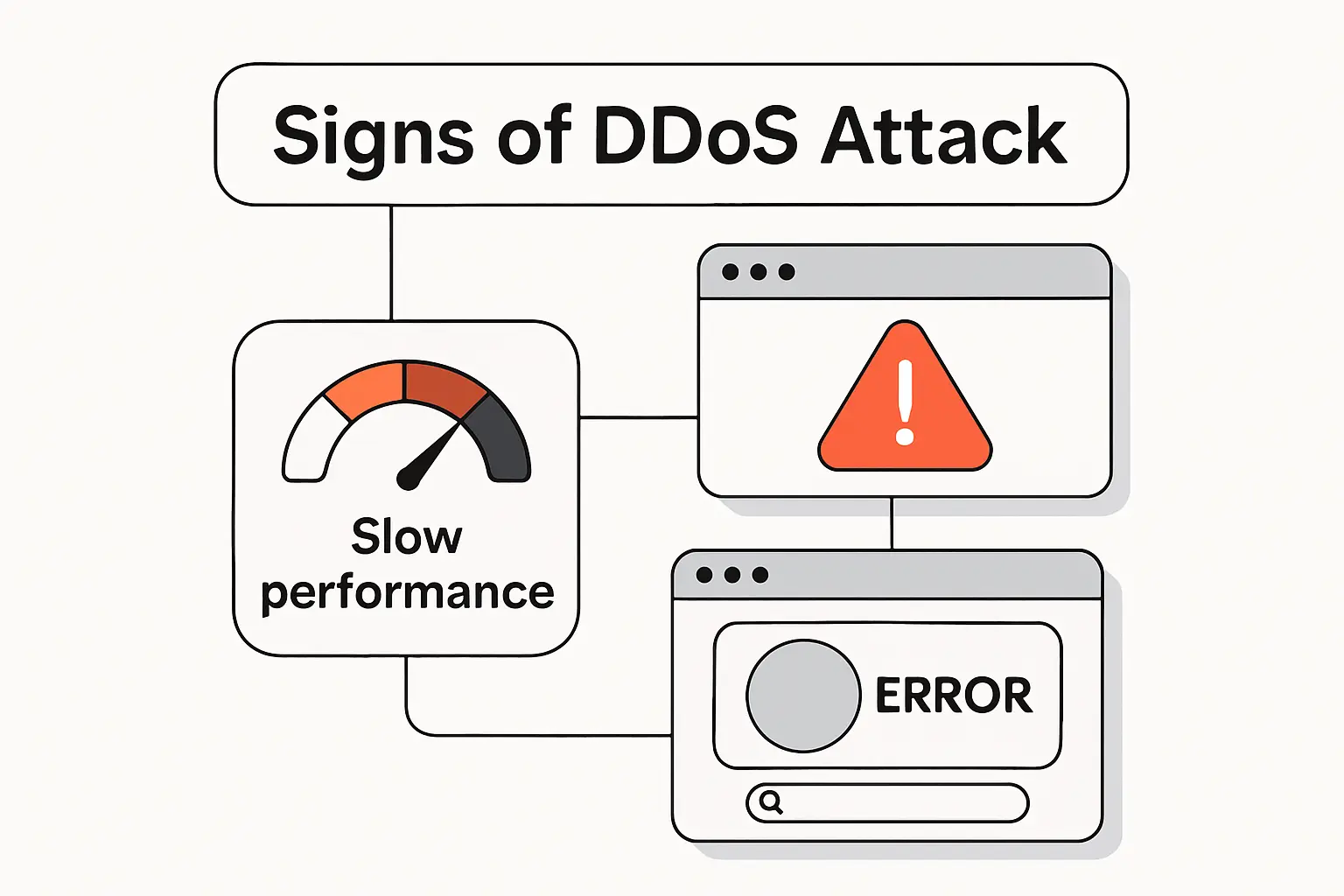
1. Slow Performance, Outages, and Poor Connectivity
The most obvious clue is still the oldest one: website or service unavailability is the most common symptom of a DDoS attack. Sometimes the failure is dramatic; just as often, it begins as timeouts, unexplained latency, or “the app feels weird today” reports from users. We urge teams to treat those soft signals seriously when they coincide with traffic anomalies.
2. Heavy Demand on a Single Page, Endpoint, or Service
Another giveaway is disproportionate pressure on one resource, which is why rate limits can be keyed to a specific path such as /login. Attackers love expensive endpoints—login, search, checkout, password reset, and data-rich API routes—because every request extracts more compute from the target. In practice, hotspot analysis often reveals the attack objective faster than total bandwidth graphs do.
3. Sudden Traffic Patterns That Do Not Match Normal Behavior
Beyond raw volume, infrastructure and application metrics can reveal changes that indicate a DDoS attack. Watch for odd source diversity, strange request methods, sudden country shifts, cache-bypass bursts, or synchronized retries that do not resemble your regular customer base. We trust anomaly detection most when it is paired with human context; a dashboard can flag the deviation, but the business team often knows whether it is a sale, a launch, or trouble.
FAQ

1. How Can You Help Prevent DDoS Attacks?
Start with the basics and then stack outward. A practical checklist comes from proactive steps to reduce the likelihood and impact of DDoS attacks: reduce exposed surfaces, place applications behind a protective edge, tune rate limits, monitor baselines, and rehearse response. From our perspective, the biggest upgrade is cultural: product, infrastructure, and security teams need to treat availability as a shared design goal, not as a handoff.
2. What Is the Best Security Strategy for a DDoS Attack?
We do not think there is a credible “best” single product, but there is a best posture: minimizing the time from detection to mitigation usually favors always-on coverage combined with rate controls, WAF policies, traffic distribution, and a tested incident plan. If we had to boil it down, we would choose layered, automated, and rehearsed over clever but manual every single time.
3. Can a Firewall Stop a DDoS Attack?
Only partially. A Web Application Firewall creates a shield between a web app and the Internet and filters undesired traffic, so it can blunt many application-layer attacks. Still, a firewall or WAF alone does not replace bandwidth, anycast distribution, CDN caching, bot controls, or lower-layer mitigation for protocol and volumetric floods. We treat it as one layer in the stack, not the stack itself.
4. What Are the Early Signs of a DDoS Attack?
Usually, the earliest useful indicators are performance degradation, request spikes, and log patterns that do not match normal visitors. A related best practice is to enable tooling that can issue notifications for different types of DDoS attack alerts so humans are not the first detector. Once those signals line up—slow pages, sudden bandwidth growth, and weird endpoint concentration—we tell teams to shift from curiosity to containment.
5. Is DDoS Illegal in the United States?
Yes. Unauthorized DDoS activity can fall under the Computer Fraud and Abuse Act, and federal enforcement has included guilty pleas tied to the Mirai botnet. That said, the exact exposure depends on facts, intent, and jurisdiction, so organizations dealing with an incident should preserve evidence and get qualified legal counsel rather than wing it.
How TechTide Solutions Builds Custom Platforms With Stronger DDoS Resilience
1. Custom Web and Software Solutions Designed for Availability
At TechTide Solutions, we build availability into application shape, not just infrastructure shape. For instance, Google front ends only send packets to backends for the configured load balancer IP and port, which illustrates a design principle we like: expose only what must exist, and make every other path impossible by default. When we build custom platforms, we carry that thinking into route design, endpoint cost, caching strategy, authentication flows, and origin access controls.
2. Scalable Cloud Architecture, Monitoring, and Traffic Control Integrations
From there, we integrate the platform edge because modern load balancers can integrate with DDoS protection, WAF, and CDN services instead of forcing traffic control into disconnected layers. We wire logs, analytics, alerting, rate policies, bot signals, and autoscaling telemetry into one operational picture, so defenders are not tab-hopping in the middle of a live incident. That kind of observability is not flashy, but it is often the difference between a short scare and a very long day.
3. Tailored Development Roadmaps Aligned With Your Business and Security Needs
Finally, we do not force every client into the same security mold. Instead, we align roadmaps to business risk, compliance pressure, latency tolerance, and team maturity, while borrowing from proactive monitoring and mitigation practices that reduce exposure to threats. Some teams need a fast edge-first rollout; others need hybrid architecture, protected APIs, or staged hardening of legacy origins. If your platform has to stay up while it grows, we can help you design the path instead of hoping one appears under pressure.
Conclusion
1. How to Prevent DDoS by Combining Visibility, Resilience, and Layered Protection
In the end, we prevent DDoS the same way we build reliable software: with layered systems, sharp telemetry, and calm operational habits. As low-and-slow attacks can consume resources like CPU cycles, memory, and database connections while evading simple volume thresholds, the winning strategy is rarely one giant control. Rather, it is the combination of visibility, distribution, filtering, origin protection, and practiced response that keeps real users served when attack traffic starts knocking. If you are serious about resilience, the next useful step is simple: map your exposed paths, baseline your normal traffic, and ask where your platform would bend first—not where you hope it would not.

