


The market backdrop is unambiguous: Gartner forecasts public cloud end-user spending to reach $723.4 billion in 2025, while recent breach disclosures show how much pressure now rides on API discipline. T-Mobile said a single unauthorized API exposed data from 37 million current postpaid and prepaid customer accounts, and Australia’s privacy regulator later alleged Optus failed to protect the data of approximately 9.5 million Australians. When modern applications depend on SaaS, partner services, mobile apps, and AI tooling, APIs become both the circulatory system of the business and the shortest path to systemic failure.
At TechTide Solutions, we treat cloud API security as a full-stack operating discipline rather than a narrow gateway feature. In practice, that means designing for identity, authorization, encryption, inventory, observability, and change management all at once. Put differently, we are not trying to make endpoints merely reachable; we are trying to make every request explainable, every privilege intentional, and every integration defensible when the architecture shifts under real production pressure.
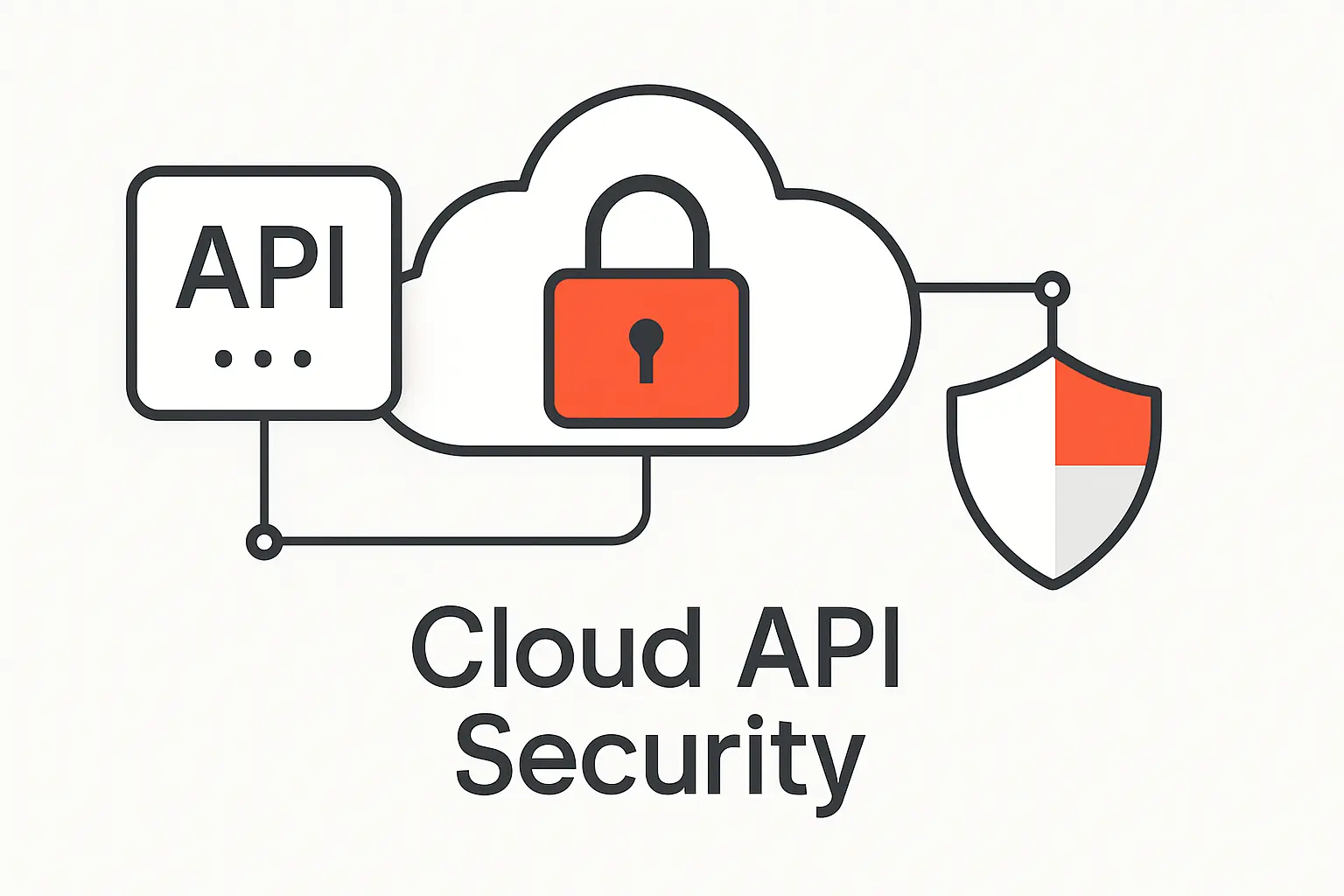
What Is Cloud API Security?
1. How Cloud API Security Differs From Traditional API Security
Traditional API security often assumed slower release cycles, clearer network boundaries, and fewer external dependencies. Cloud API security starts from tougher premises: services are elastic, environments multiply, versions overlap, and ownership can blur across internal teams, cloud providers, and third parties. As a result, the control model shifts away from static perimeter thinking and toward continuous verification of who is calling, what they may access, and whether the live interface still matches what the organization believes it has deployed.
2. Why Cloud Environments and External Dependencies Add More Risk
Cloud estates accumulate webhooks, partner APIs, queues, mobile backends, admin consoles, and data-sharing workflows, and each dependency enlarges both trust and blast radius. OWASP now treats unsafe third-party API consumption and improper inventory management as core risks for good reason: teams frequently validate end-user input more carefully than partner data, and they often document the current production route while forgetting staging hosts, deprecated versions, or vendor-facing data flows. Meanwhile, regulators examining major incidents have explicitly stressed the need for clear ownership over internet-facing assets, which tells us this is no longer a purely technical housekeeping problem.
3. How Security Supports Safe and Seamless Data Exchange
Done well, security friction is nearly invisible to legitimate users and wonderfully precise for machines. Short-lived tokens, mutual TLS, and contract-driven schemas make data exchange safer because each call arrives with identity, context, and structure instead of vague trust. We often say that strong API security is not a brake pedal; it is power steering. It lets systems exchange data confidently, helps teams automate without guessing, and reduces the operational drag that appears when no one can clearly prove what an endpoint should accept or return.
Recommended reading: TLS vs SSL: What Changes with TLS, HTTPS, and Modern Certificates
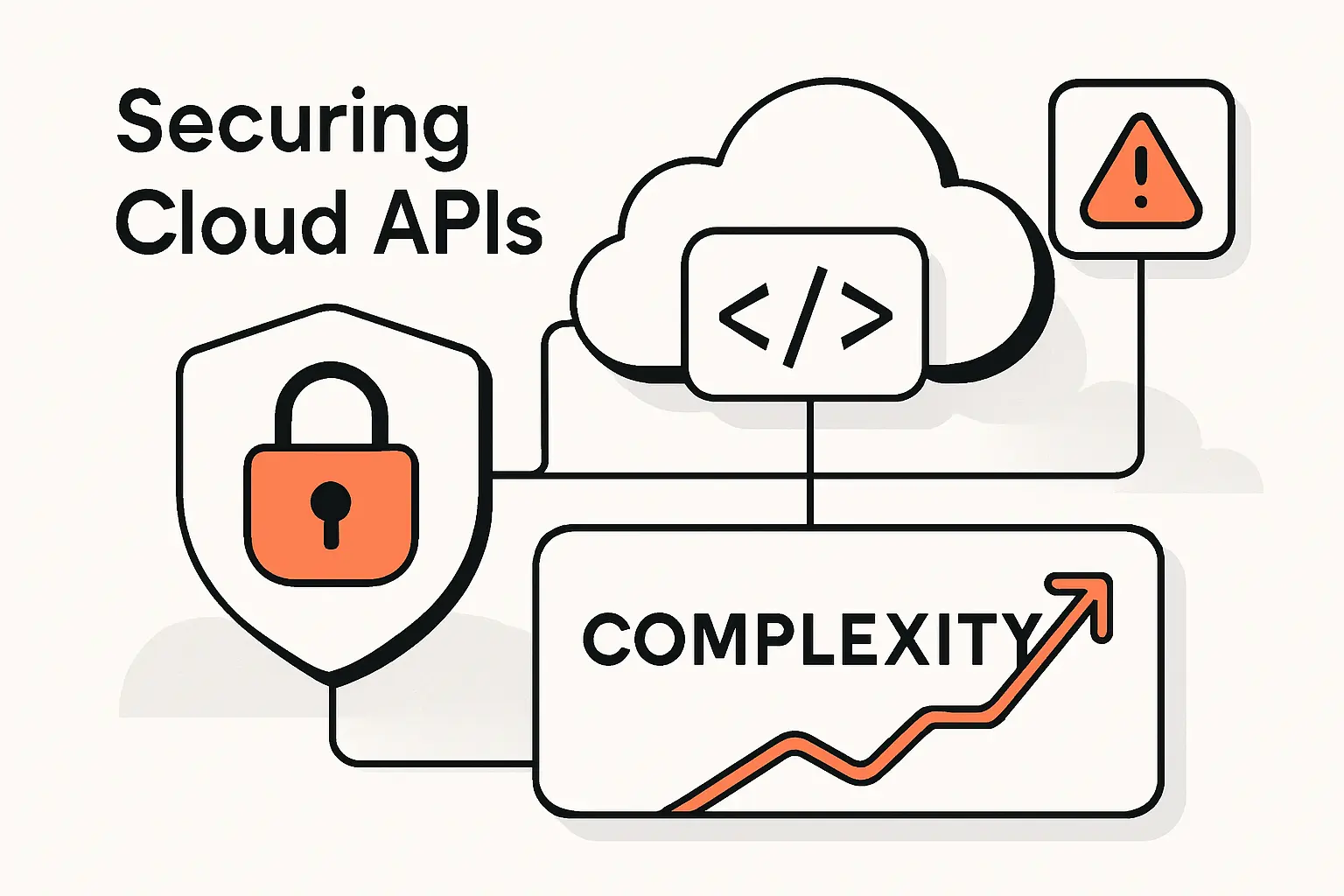
Why Securing Cloud APIs Is More Complex Than Ever
1. Public APIs and Machine to Machine Traffic Expand the Attack Surface
Public APIs are obvious targets, but machine-to-machine traffic is where many organizations quietly lose visibility. Service accounts, mobile clients, background jobs, and partner integrations call APIs continuously, which means broken authentication, object-level authorization failures, and business-flow abuse can all be exploited without a browser ever opening. From our perspective, the modern attack surface is not just the login page. Instead, it is every automated route that can move money, mutate records, trigger workflows, or impersonate a trusted system at scale.
2. Shadow, Zombie, and Orphaned APIs Create Hidden Security Gaps
Shadow APIs are undocumented interfaces that still receive traffic. Zombie APIs are deprecated versions that never quite die. Orphaned APIs are live endpoints with no clear owner, no retirement plan, and no one watching behavior closely enough to notice drift. OWASP’s inventory guidance is blunt here: if you do not know the host, environment, version, exposure level, and data flow, you cannot patch it, govern it, or retire it with confidence. Hidden APIs do not merely create clutter; they create uninsured business risk.
3. AI Driven Integrations Change the Threat Model
AI integrations raise the stakes because models increasingly read external content, call tools, and pass outputs into downstream APIs. NIST’s generative AI risk work explicitly identifies prompt injection as a security risk, and OWASP’s latest LLM risk list places prompt injection at the top because malicious content can steer seemingly valid workflows into unsafe actions or data exposure. Once an AI agent becomes an API client, the core question changes from “is the request well formed?” to “is the request aligned with intent, policy, and least privilege?”
Recommended reading: What Is CVV2 Security Code: How Card Verification Works, Where to Find It, and How to Use It Safely
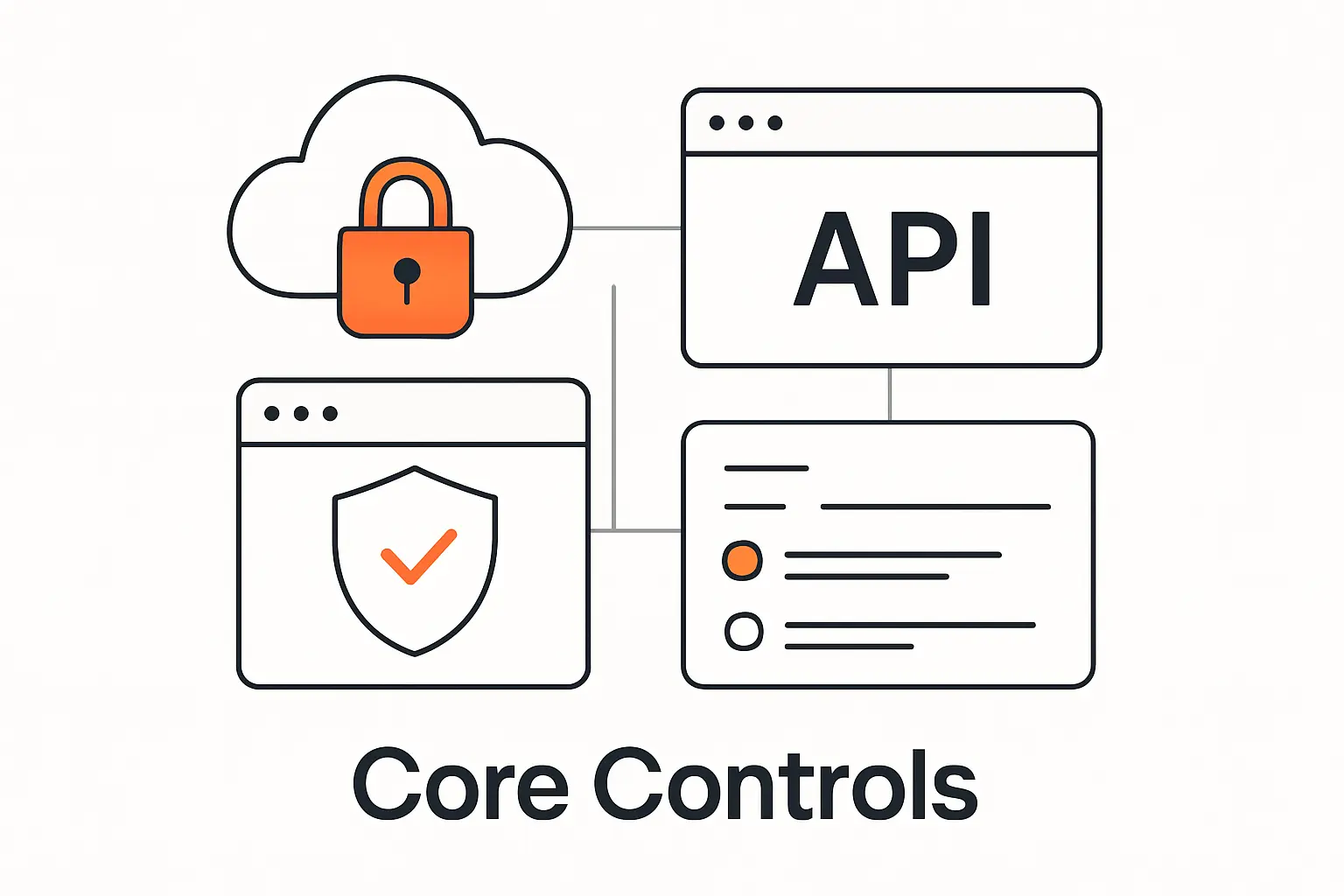
Core Controls for Cloud API Security
1. Encrypt Data in Transit and at Rest
Encryption is table stakes, but the nuance matters. In transit, modern TLS protects calls between clients, gateways, services, and partner systems; at rest, sound cryptographic protection lowers the damage from compromised storage, leaked snapshots, or mishandled backups. Even so, encryption is only a foundation. It does not fix overbroad permissions, unsafe sharing, or broken business logic. We advise clients to treat encryption as the baseline that makes every other control more credible, not as a shiny shortcut to “secure enough.”
2. Strengthen Identity Controls With Multifactor Authentication, Short Lived Tokens, and mTLS
Human administrators should authenticate strongly, ideally with multifactor controls, while workloads should rely on short-lived, narrowly scoped credentials rather than static shared secrets. Current OAuth guidance pushes implementers toward stronger patterns, and sender-constrained tokens bound through mutual TLS materially reduce token replay risk when machine identities talk to protected resources. In real systems, we separate human identity, workload identity, and client identity because each one fails in a different way, each one produces different logs, and each one deserves its own control plane.
3. Enforce Authorization With RBAC, ABAC, and Least Privilege
Authentication answers who is calling. Authorization decides what that caller may actually do. RBAC remains useful for mapping business roles to permissions, ABAC adds finer context through attributes such as tenant, environment, or data sensitivity, and least privilege keeps both models honest by granting only what is necessary. That blend matters because many API incidents are not failures to recognize a user at all; they are failures to stop an authenticated user from touching the wrong record, property, or administrative function.
Recommended reading: Protect Your Brand: A Practical Guide to Trademarks, Online Defense, and Reputation
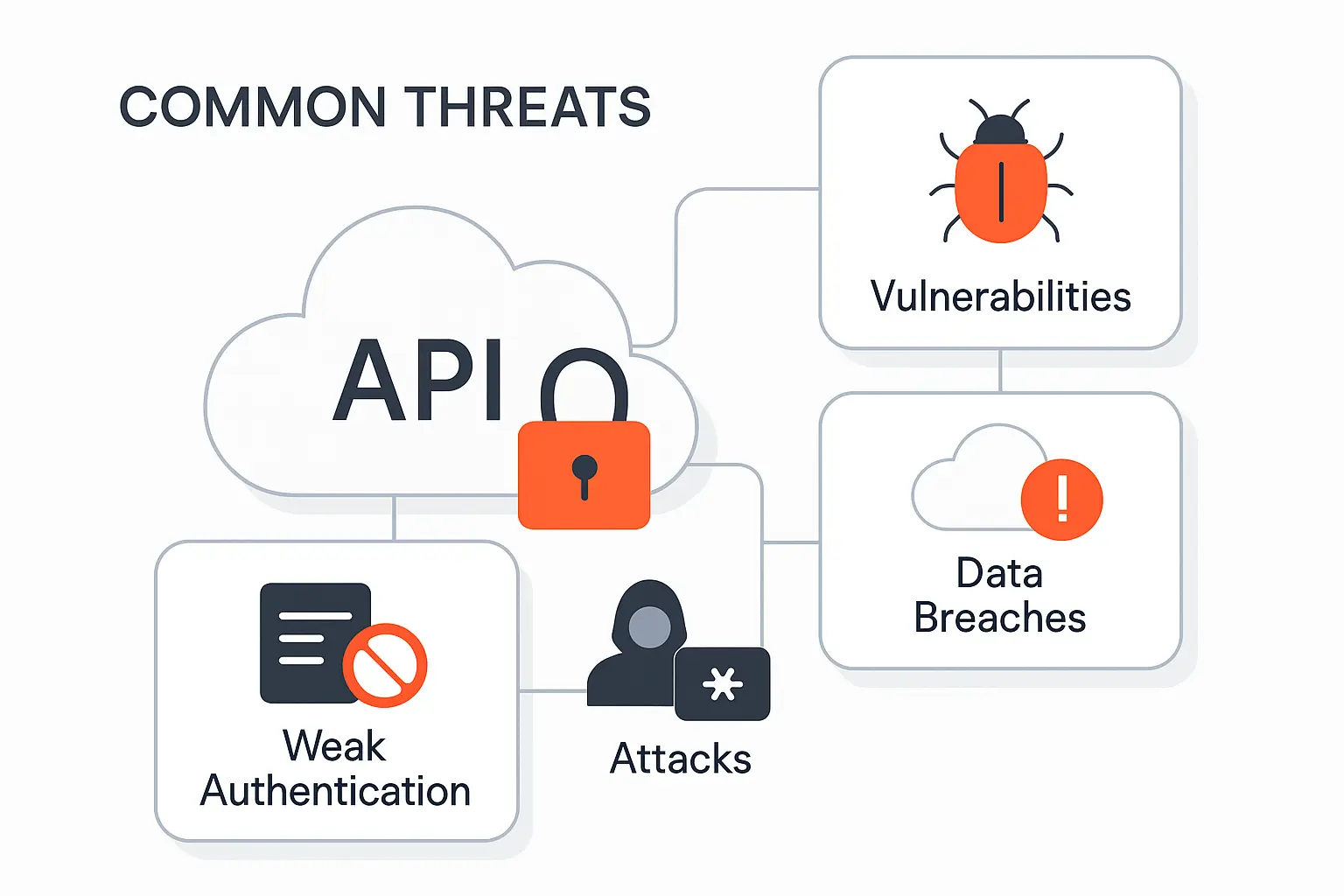
Common Threats to Cloud API Security
1. Broken Access Control and Authentication Failures
Broken object-level authorization, broken function-level authorization, and broken authentication remain the heavy hitters in API security because they align so neatly with how applications are built. Attackers manipulate identifiers, abuse weak token handling, or discover privileged actions hiding beside regular routes. Because APIs are structured and predictable, those paths are often easier to script than comparable UI abuse. We therefore test authorization at object, property, and function levels, not just at login, because the real breach often begins after authentication has already succeeded.
2. Injection, Insecure Design, and Security Misconfiguration
Injection did not disappear when teams moved to JSON, microservices, and cloud-native stacks. It merely changed accents. Unsafely consumed partner data, missing input validation, permissive CORS, insecure defaults, verbose errors, and weak abuse-case design can all turn a polished API into an easy foothold. The pattern we see again and again is architectural optimism: teams design for the happy path first and ask the rude questions later. Secure design flips that habit by asking upfront what can be enumerated, replayed, overposted, redirected, or weaponized.
3. Outdated Components, Logging Gaps, and Server Side Request Forgery
Outdated components and thin logging make a nasty pair because one creates the opening and the other erases the trail. OWASP treats missing patches, stale versions, and poor inventory as first-class API risks, while SSRF remains especially dangerous in cloud environments where internal metadata and management channels often sit behind predictable HTTP routes. If your services can fetch remote URLs, call internal control planes, or consume third-party APIs without tight egress rules and rich telemetry, you are handing attackers both a crowbar and the floor plan.
Cloud API Security Best Practices for Prevention and Detection
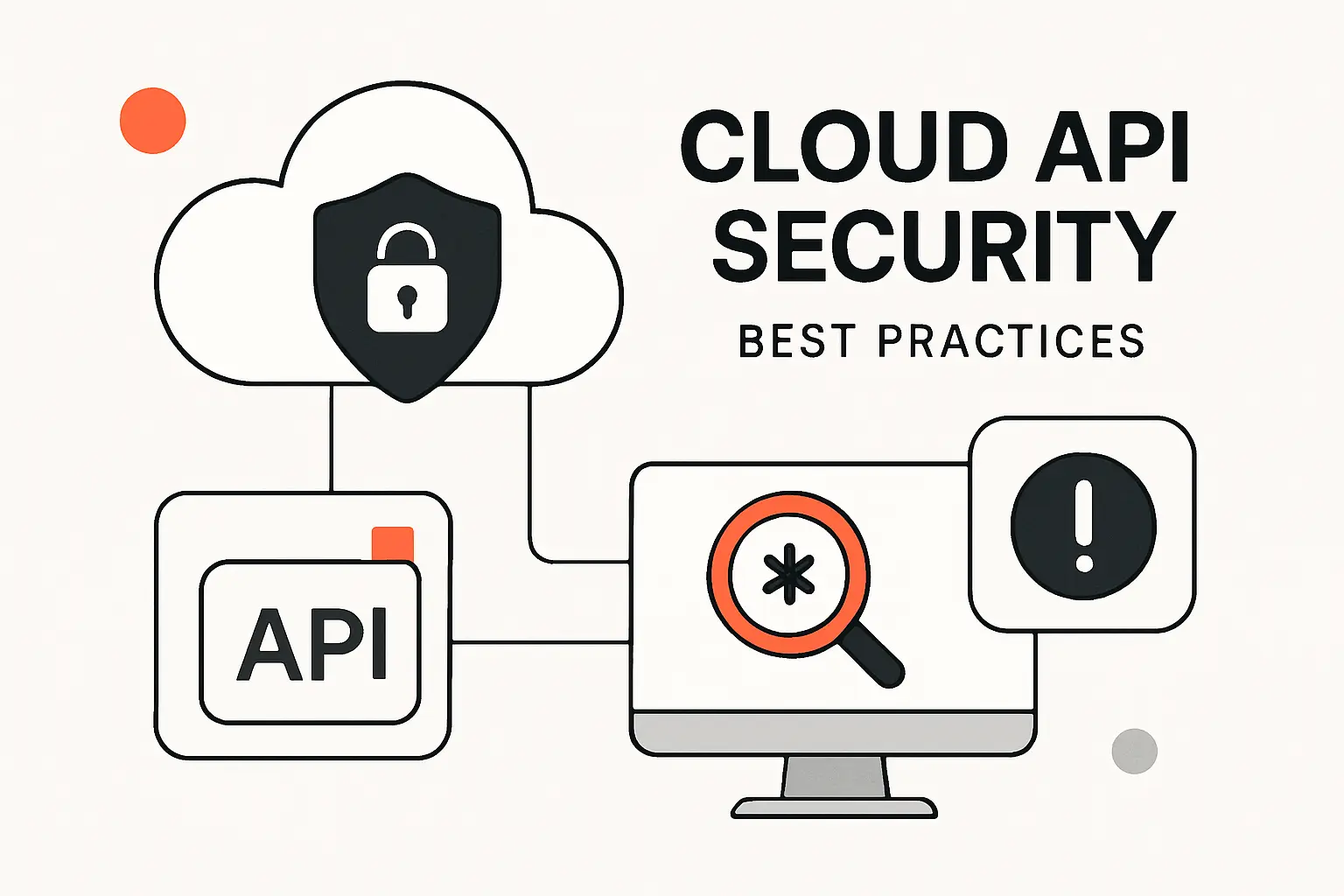
1. Validate Input, Encode Output, and Use Secure Coding Practices
We prefer boring, explicit, defensive code because it ages better under pressure. Validate input against allowlisted formats and schemas, encode output for the destination context, parameterize data access, and fail closed when payloads do not match contract. OWASP’s coding guidance still captures the right instinct: never trust inbound data, and never assume internal or partner-sourced data is automatically safer than user input. Beyond security, disciplined validation also cuts integration bugs, brittle parsing, and the support noise that quietly drains engineering time.
2. Apply Rate Limiting, Throttling, Quotas, and Anomaly Detection
Rate limiting is not merely a performance feature; it is an economic control. It slows credential attacks, curbs brute force, protects costly endpoints, and helps prevent business-flow abuse such as spam, scalping, and automated reservation hoarding. Naive limits, however, are easy to dodge through batching, distribution across clients, or forgotten side paths. For that reason, we recommend layered thresholds by user, application, token, endpoint, and business action, with anomaly detection tuned to behavior and intent rather than raw request volume alone.
3. Patch Dependencies, Manage Versions, and Monitor Continuously
Patch hygiene only works when version hygiene works. Teams need dependency visibility, retirement plans for old API versions, CI/CD gates, and runtime monitoring that can spot drift between intended and actual behavior. NIST’s secure development framework is helpful precisely because it treats preparation, protection, production, and response as one lifecycle instead of disconnected chores. In our experience, the strongest API programs make it harder to ship unknown code and much easier to see unknown behavior before customers or attackers do.
Architecture Patterns That Strengthen Cloud API Security
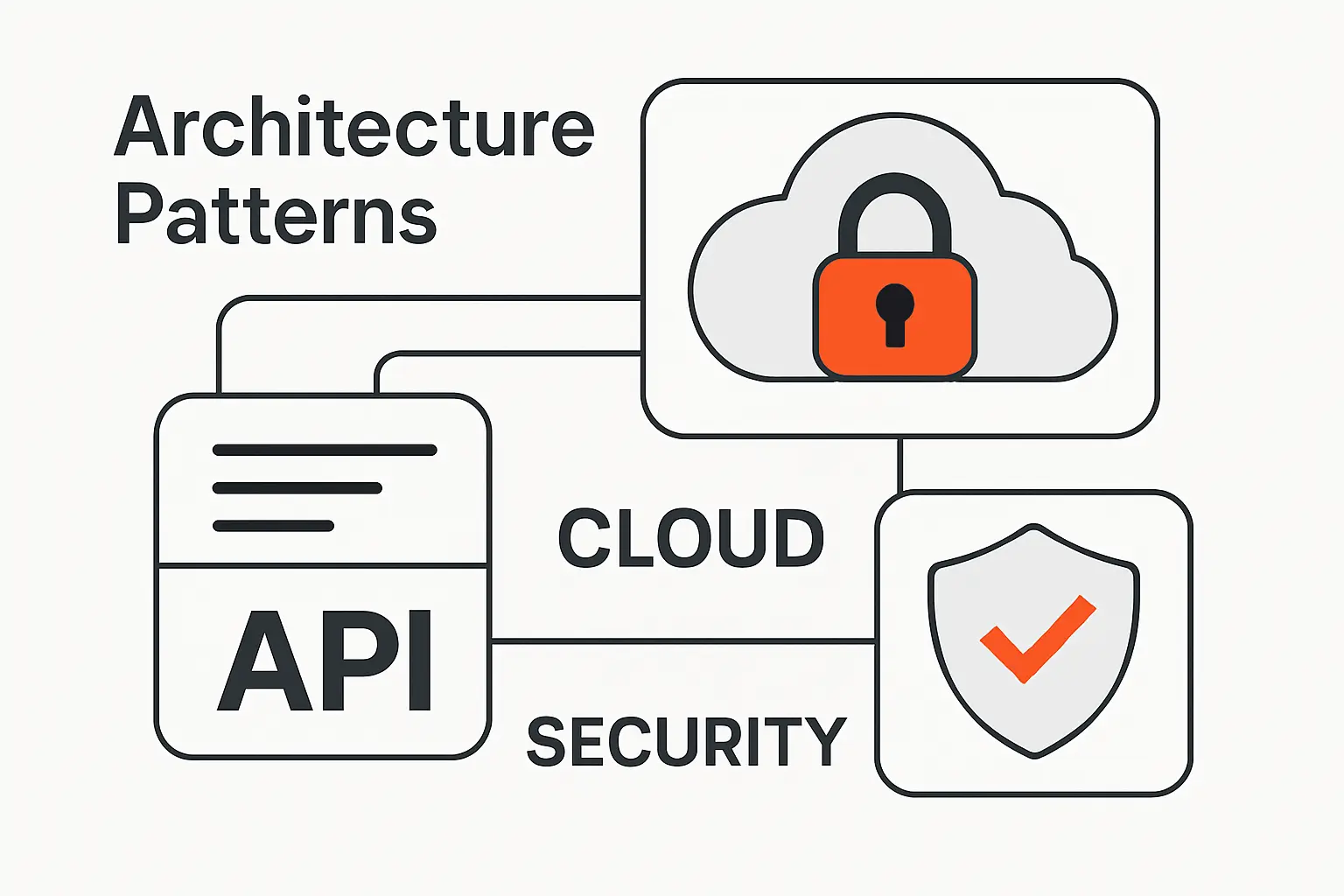
1. Put an API Gateway or Proxy Layer in Front of Backend Services
An API gateway or proxy gives organizations a central place to enforce token validation, routing policy, schema checks, rate limits, and consistent logging before traffic reaches backend services. We favor that pattern because it reduces duplicated security logic and makes policy changes faster to roll out. Even so, a gateway is not a silver bullet. Business authorization still belongs close to the data and function being protected, or the gateway becomes a polished front desk with no authority behind it.
2. Layer WAF, DDoS Protection, and Bot Defense Across Exposed Endpoints
We never treat a WAF as a complete API security strategy. It is valuable for noisy commodity attacks and known bad patterns, while DDoS controls preserve availability and bot defenses help tame automated abuse. Yet broken object authorization, sensitive business-flow exploitation, and unsafe partner trust frequently ride inside perfectly valid-looking requests. The lesson is simple and worth repeating: perimeter defenses are useful, but they must sit beside identity, authorization, quotas, and behavioral monitoring rather than pretending to replace them.
3. Use Caching, Load Balancing, and CDN Support for Resilience
Performance architecture can strengthen security when it is designed thoughtfully. Caching and CDN distribution can absorb benign spikes, load balancing can isolate failure domains, and origin shielding can reduce direct pressure on backend services. At the same time, sloppy cache rules can leak personalized responses or stale authorization decisions, which is how resilience work can accidentally become data exposure work. We design those layers as a pair: fast paths for safe content, tight policies for sensitive payloads, and explicit invalidation whenever identity or access context changes.
Cloud API Security in the AI Era
1. Why Signature Based Detection Is No Longer Enough
Signature-based detection still has a role, but it does not understand intent. AI-assisted attacks can vary payloads endlessly, and prompt injection or tool misuse may generate requests that look syntactically normal while still violating business policy. NIST’s generative AI guidance and OWASP’s LLM risk work both point in the same direction: defending AI-connected systems now requires context, provenance, and policy validation, not pattern matching alone. Said plainly, “looks normal” is no longer the same thing as “is safe.”
2. Use Positive Security Models With OpenAPI Specs and Schema Validation
We increasingly favor positive security models for APIs: define what good looks like, then reject the rest. The OpenAPI Specification is powerful here because it gives humans and machines a shared contract for endpoints, parameters, payloads, and responses, which makes schema validation and policy automation far more reliable. Contract-first security is not glamorous, but it is effective. When the allowed shape of traffic is explicit, drift, abuse, and accidental overexposure become much easier to catch early.
3. Detect API Drift, Data Exfiltration, and Adversarial AI Abuse
AI-era monitoring has to watch more than status codes and latency. We want alerts for undocumented endpoints, newly observed parameters, abnormal egress patterns, unexpected model-to-tool calls, and sudden shifts in what data leaves a service. Drift matters because the live API often departs from the approved contract faster than teams admit, while exfiltration matters because AI agents can turn quiet read access into large-scale extraction. Runtime security now has to understand contracts, data flows, and action chains together, or it will always arrive a beat too late.
Operationalizing Cloud API Security Across the Lifecycle
1. Build a Real Time API Inventory and Clear API Ownership Model
Inventory is the root control because everything else depends on it. We recommend a living catalog that records each API host, environment, version, exposure level, data classification, upstream and downstream dependencies, and most importantly, an accountable owner. That last field is not bureaucracy for its own sake. Regulators examining major breaches have explicitly emphasized clear ownership and responsibility over internet-facing domains, which aligns neatly with OWASP’s warning about inventory blind spots. When no one owns an API, everyone simply assumes it is covered.
2. Embed API Scanning, Spec Validation, and Dependency Checks Into CI/CD
Security reviews that happen only after deployment are already late. CI/CD should lint specs, diff contracts, scan dependencies, test authentication and authorization paths, and fail builds when high-risk changes appear without approval. OWASP explicitly recommends generating documentation automatically from open standards and including that build in the pipeline, while NIST’s secure development guidance frames these steps as repeatable practice instead of heroic exception. That is the model we trust: automate the guardrails so engineers do not have to remember them under deadline stress.
3. Strengthen Incident Response With Enriched Logging and Team Training
Fast response depends on logs that answer real forensic questions: who called, with which identity, from where, against which object, through which route, using which dependency, and what data moved as a result. NIST’s log management and incident response guidance remains highly relevant because cloud incidents hop across gateways, services, queues, and vendors in a hurry. Training matters just as much. Tabletop exercises for token theft, partner compromise, SSRF, and AI-agent misuse keep teams from improvising when every minute suddenly matters.
Compliance and Governance for Cloud APIs
1. Align Controls With GDPR, HIPAA, and PCI DSS Requirements
Compliance should not dictate architecture, but it should absolutely shape evidence and control mapping. For cloud APIs, that usually means aligning encryption, access control, logging, retention, incident response, and vendor oversight with GDPR security-of-processing duties, HIPAA Security Rule safeguards, and PCI DSS control requirements. We urge clients to map API-specific controls to these obligations early, because retrofitting evidence after launch is where costs rise, timelines slip, and exceptions multiply.
2. Maintain Audit Trails Across Dynamic Cloud Environments
Dynamic cloud systems break auditability when logs are scattered, fields are inconsistent, or service identities cannot be reconciled across platforms. Strong audit trails require correlation identifiers, time consistency, sensible retention, and consistent enrichment from identity providers, gateways, workloads, and cloud-native services. Without that stitching, compliance reports become theater and incident response slows to a crawl. Good audit design is less about collecting everything and more about preserving the relationships that let investigators reconstruct what actually happened.
3. Document Secure API Usage, Ownership, and Change Management
Good governance lives in the places engineers actually use, not in dusty policy binders. That means consumer-facing usage rules, internal runbooks, versioning policy, deprecation timelines, change approval criteria, and ownership records that survive team reorganizations. OWASP’s inventory guidance is direct about the risk of documentation blind spots, and we agree wholeheartedly. If documentation lags the deployed API, the organization is already operating on borrowed time whether or not the dashboard still looks green.
Cloud API Security FAQ
1. What Is the Difference Between API Security and Cloud API Security
API security covers the protection of any application programming interface, regardless of where it runs. Cloud API security adds the realities of elastic infrastructure, multiple environments, provider-managed services, and fast-changing dependencies, so visibility, identity, version governance, and runtime monitoring become much more central. In short, cloud API security is API security under conditions of constant change.
2. What Is a Cloud API and Why Does It Need Extra Protection
A cloud API is an interface exposed by or for a cloud-hosted service, application, or resource. It needs extra protection because it often sits in internet-reachable or partner-reachable paths, drives automation across services, and can bridge sensitive data flows between internal systems and external dependencies. One weak route can therefore ripple quickly through storage, business workflows, and downstream integrations.
3. What Are the Most Important Best Practices for Securing APIs in the Cloud
Start with inventory and ownership, then enforce strong authentication, least privilege, encryption, schema-based validation, rate limits, dependency hygiene, and continuous monitoring. If we had to prioritize, we would fix visibility and authorization first, because teams cannot secure what they do not know exists and attackers usually monetize what the application already trusts. After that, lifecycle automation and incident readiness make the program durable.
4. Are WAFs Enough to Protect Cloud APIs on Their Own
No. WAFs are useful for filtering known malicious input and reducing noise, but they do not understand every object relationship, role boundary, or sensitive business flow inside the application. APIs commonly fail at the logic layer rather than the perimeter, so WAFs should complement gateways, identity controls, authorization checks, quotas, and runtime monitoring instead of standing in for them.
5. How Do AI Driven APIs Change Cloud API Security Priorities
AI-driven APIs raise priority on prompt-injection resilience, outbound policy, tool permission design, contract validation, and data exfiltration monitoring. Once models can call tools or interpret external content, defenders must verify intent and scope continuously rather than authenticating a request once and hoping the rest of the chain behaves. That is why AI changes the threat model even when the underlying API surface looks familiar.
How TechTide Solutions Helps Build Secure Custom Cloud Solutions
1. Custom Web, Mobile, and Software Development With Secure API Design
At TechTide Solutions, we build custom web, mobile, and software platforms with security designed into the API contract, not painted on after launch. Our default pattern is contract-first design, threat modeling around business flows, clear authentication boundaries, and testable authorization rules at both object and function levels. That approach keeps security close to real product behavior, which is exactly where cloud API programs either earn trust quietly or lose it loudly.
2. Tailored Integrations, Automation, and Monitoring for Cloud Environments
We also design integrations the way they will actually live in production: with partner APIs, webhooks, queues, mobile clients, admin tooling, and growing observability needs. For us, that means short-lived credentials, structured logging, outbound controls, schema validation, and monitoring that can spot drift across environments before customers notice symptoms. Secure automation should feel smooth to the business and thoroughly inhospitable to abuse.
3. Scalable Custom Solutions Aligned With Business Goals and Compliance Needs
Security only sticks when it matches the business model. We therefore align API controls with the data an organization holds, the regulators it answers to, the integrations it depends on, and the performance envelope its users expect. Sometimes the right move is tighter scopes and deeper telemetry. In other cases, it is cleaner versioning, faster retirement of legacy endpoints, or sharper separation between customer and admin flows. Either way, we build for scale without pretending that scale excuses ambiguity.
Conclusion
1. Key Takeaways for a Stronger Cloud API Security Strategy
Cloud API security is no longer a side quest for the platform team; it is a core operating discipline for any business that ships modern software. Inventory every interface, authenticate strongly, authorize precisely, validate by contract, limit abuse economically, and monitor runtime behavior for drift and exfiltration. If you want a practical next step, begin with a live API inventory and threat-model a high-value business flow end to end. That exercise usually reveals more truth than a month of generic checklists. And once you see the gaps clearly, the real question becomes obvious: which API in your estate is trusted today simply because nobody has looked closely enough?

