
We at Techtide Solutions see the Android landscape continuing to set the pace for mobile-first growth in the U.S. and beyond; globally, Android’s mobile OS share reached 71.7% in 2024, a reminder that enterprise roadmaps should treat Android as a primary channel, not a secondary port.
Top 20 Android app development companies in USA

We have shipped Android apps long enough to spot vendors who only code requests. A true product partner prevents costly mistakes before they happen. At Techtide Solutions, we have worn every hat in the mobile lifecycle. Founder, integrator, and rescuer of projects gone sideways all describe our roles. We built this list for executives who need dependable Android outcomes, not demos. Inside, you will find enterprise stalwarts and design forward boutiques. Our criteria stayed pragmatic and field tested. We require repeated delivery of production scale Android apps. Teams must be fluent in Kotlin, Jetpack Compose, KMP, or React Native. We expect credible security and compliance practices, and strong product thinking. Finally, they must maintain and evolve apps as platforms and rules change. That includes the Play Store, privacy obligations, and device capabilities.
Android Today: Ecosystem, Trade-offs, and Total Cost
Android today is ecosystem orchestration, not just app building. It spans CI/CD pipelines, crash analytics, ANR budgets, offline first data layers, edge privacy, and nuanced publishing. You also face persistent device fragmentation across vendors and form factors. In the past year, teams were bitten by background work limits. Notification permission changes also surprised releases. Lax dependency vetting caused preventable incidents. Good partners anticipate these potholes. Great ones show how choices affect total cost of ownership. Consider Compose navigation versus fragments, coroutines versus RxJava, and on device ML versus server inference. Expect impact over three to five years. That “total cost” lens—staffing, release cadence, infrastructure, and deprecation tax—is what separates sustainable Android programs from prototypes.
How to Choose: Surprises Handled, “No’s” Explained
We also weighed whether firms could collaborate across disciplines. The Android team you hire should show more than iOS feature parity. Expect platform native flourishes. Material You theming should respect dynamic color. Per device performance tuning must be demonstrated. Accessibility should go beyond passing checks. For regulated industries, we favor teams with a clear paper trail. Show HIPAA, SOC 2, or PCI alignment. Demonstrate a culture of threat modeling and SCA scans. For venture backed products, show evidence of product market fit work. Include event instrumentation and A/B experiments. Build app growth mechanics into roadmaps, not bolted on later.
You’ll notice we include ourselves—transparency matters. We tell prospects who else we’d hire if we weren’t available, and why. Use this guide to shortlist, then sit down with finalists and ask about two things: how they handle surprises, and how they decide what not to build. The best Android partners excel at both.
1. BuildFire

Overview: A no-code/low-code mobile platform with a professional services arm, BuildFire focuses on SMBs and mid-market organizations that want faster time-to-market without sacrificing extensibility. Estimated headcount is a few dozen specialists with a decade-plus in operation (~2014) and an emphasis on California roots (notably San Diego) alongside distributed staff. Their Android work often sits atop their plugin ecosystem when speed and cost trump fully custom builds.
Awards: BuildFire has been recognized as a category Leader in G2’s Winter 2022 Grid for drag‑and‑drop app builders, an external signal of sustained customer satisfaction and market presence earlier in the platform’s life.
Services & proof: Beyond DIY app builder tooling, their in‑house team tackles full-cycle Android projects, from scope and UX to publishing and maintenance. App resellers and agencies also white‑label the platform for repeatable vertical solutions. In our experience, BuildFire fits when teams value predictable delivery and ongoing content control more than bespoke, deeply native feature sets.
Ideal Fit: Nontechnical founders, marketing-led teams, and operations groups that need a branded Android app quickly (events, membership, education, field service) and prefer a configurable foundation with optional custom modules over greenfield custom code. Engagements run smoother when the buyer embraces the platform’s opinionated patterns and plans for periodic template refreshes.
2. ScienceSoft
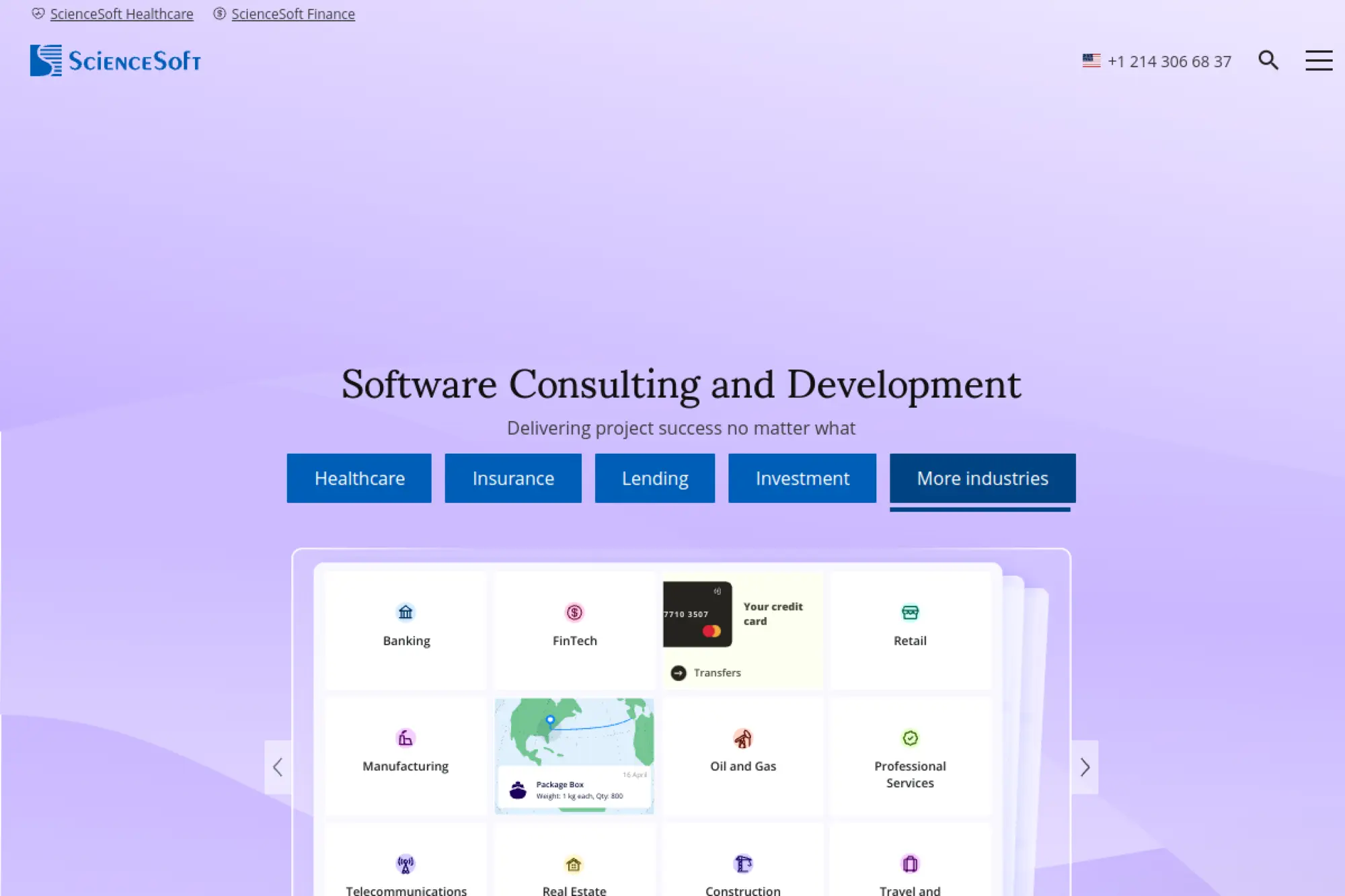
Overview: An enterprise software consultancy with a sizable US footprint, ScienceSoft serves healthcare, finance, retail, and industrials with Android, web, and backend programs. We estimate 700–800+ employees, founded in 1989 (~35+ years), with US headquarters in McKinney, Texas and global delivery hubs. Their Android work often pairs with cloud migrations, data platforms, and security hardening for regulated clients.
Awards: ScienceSoft was named to the Financial Times’ 2024 list of The Americas’ Fastest-Growing Companies, and has been included in IAOP’s 2024 Global Outsourcing 100, both independent validations relevant to large buyers assessing resilience and delivery maturity.
Services & proof: Their Android portfolio spans patient apps, fintech wallets, and enterprise utilities, often delivered under ISO‑certified quality and security processes. We’ve seen them succeed when Android is one workstream in a multi-team program (e.g., EHR portals plus analytics plus DevSecOps) rather than a standalone mobile app.
Ideal Fit: Mid‑market and enterprise buyers in compliance‑heavy domains who want a long‑term partner to modernize legacy stacks while shipping polished Android experiences. Expect methodical discovery, rigorous QA, and change‑managed releases over “move fast and break things.”
3. TechTide Solutions
We are a product minded software studio. We focus on pragmatic Android builds. Start with lean MVPs that can scale. We bring cloud, analytics, and automation. Those choices keep apps fast and teams confident. Our core team spans a few dozen people. Engineers, designers, and data specialists work in distributed pods. Combined Android experience spans over ten years. Domains include marketplaces, healthcare tools, and industrial apps. We run Kotlin first, Compose for modern UI, and KMP selectively when the economics make sense.
Services and proof. We have led greenfield Android launches. Our team has rescued apps plagued by ANRs and brittle Rx chains. We refactored codebases into modular architectures that multiple squads can extend safely. When a named logo is appropriate, we cite only public case studies. Otherwise we keep NDAs and emphasize what mattered: latency budgets, crash free sessions, and business KPIs achieved.
Ideal fit: Seed to Series C product teams that want a candid build measure learn partner. Mid market operations leaders replacing spreadsheets and legacy handhelds. Enterprise groups modernizing one slice of a larger platform. We work best with stakeholders who want pushback grounded in data. They measure success by retention, task completion, and total cost of change, not lines of code.
4. Naked Development
Overview: A design‑forward product agency, Naked Development blends brand, UX, and full‑stack engineering for startup and SMB apps. Roughly 10–50 people with ~7+ years in operation (since late 2010s), they’re anchored in Irvine, California, with leadership steeped in founder empathy and go‑to‑market storytelling that pairs well with early-stage Android launches.
Awards: DesignRush named Naked Development 1. in a November 2023 mobile app development ranking, and the firm has also been highlighted in subsequent 2024 lists by the same outlet, reinforcing their visibility among creative-first buyers.
Services & proof: They specialize in concept-to-launch programs—product strategy, UI/UX, and Android builds that cohere with brand and growth plans. First, Naked performs when founders need a polished v1 to validate demand. Then they pivot those learnings into a measured v2 road map.
Ideal fit: vision led startups, consumer brands, and marketing teams that value refined visuals and onboarding polish. They want a partner who can stress test positioning while building. Engagements hum when leadership is available for weekly iteration and quick decisions.
5. Trango Tech
Trango Tech operates as a full spectrum consultancy across mobile, web, and enterprise solutions. Headcount sits in the hundreds, backed by about twenty years of corporate lineage across regions. Headquarters are in the UAE, with offices in Salt Lake City and Chicago. The Android team mixes native Kotlin and cross platform builds for budget sensitive timelines.
Services & proof: Their public reviews highlight Android deliveries for wellness, edtech, and logistics; we’ve seen their teams slot into staff‑aug roles where internal product managers steer roadmaps and Trango provides velocity. Expect pragmatic choices—Firebase Auth, off‑the‑shelf analytics, and cloud-managed backends—over bespoke infrastructure.
Ideal Fit: SMBs and agencies seeking flexible bandwidth for Android initiatives; founders needing cost‑effective v1s; or enterprises prototyping utility apps to validate internal demand before scaling. Clear scope and product ownership on the client side increase the odds of success.
6. Zco Corporation
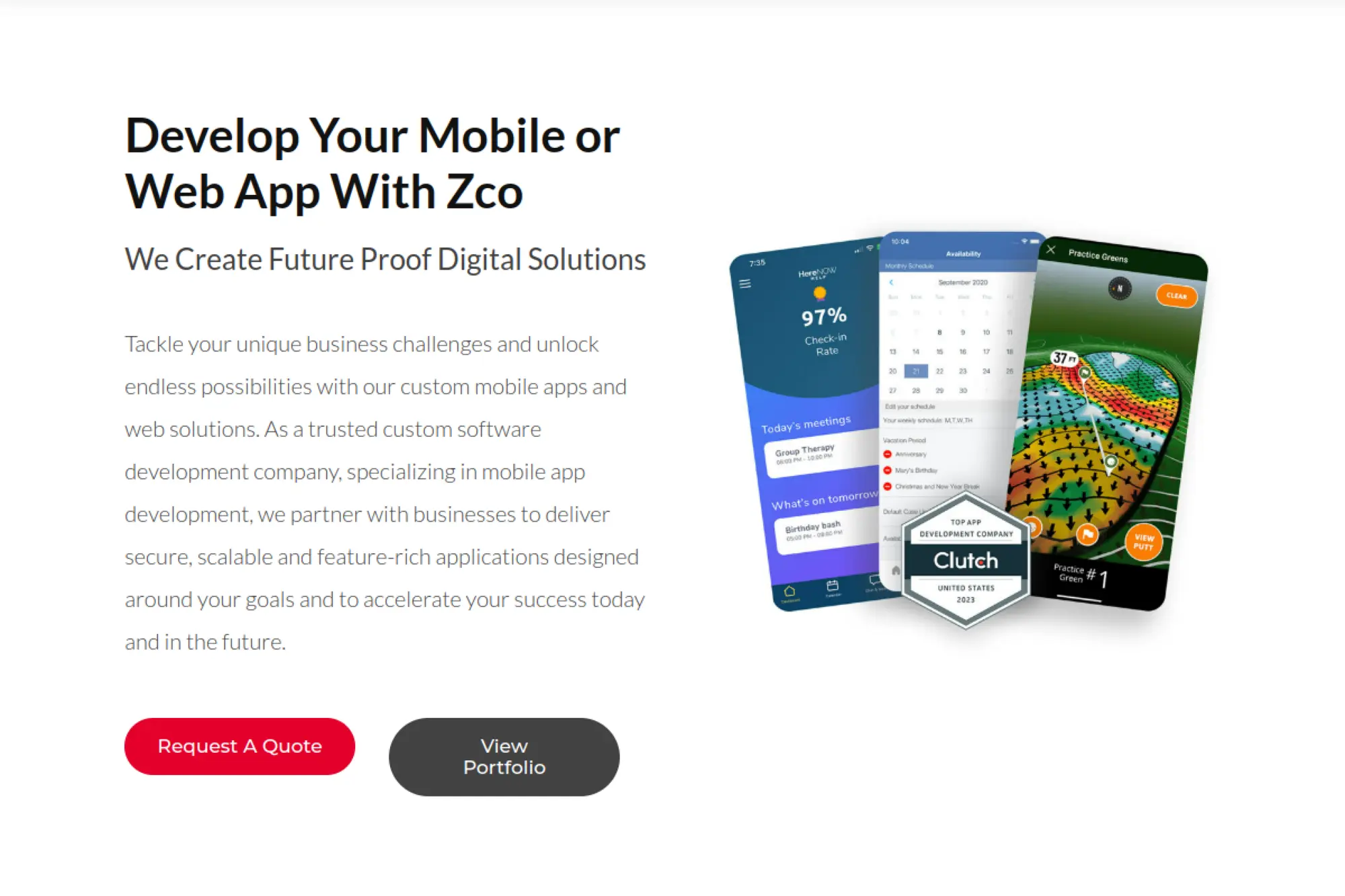
Overview: Zco is one of the longest running custom development shops in the United States. Founded in 1989, the company has over 35 years of continuous delivery. Headquarters are in Nashua, New Hampshire, with satellite offices supporting a 250 plus team. The Android practice spans native apps, AR and VR, and complex hardware integrated enterprise systems.
Awards: In Clutch’s Android developers ranking, Zco appeared 9. in the 2020 Android App Developers list, a signal of early, durable excellence among US peers.
Services & proof: Public case work has included consumer and enterprise apps and integrations with wearables and custom devices; for example, golf tech and safety wearables appear in their portfolio. We’ve seen Zco excel when projects demand cross‑disciplinary coordination (firmware teams, product compliance, multi‑platform rollouts) and steady velocity.
Ideal Fit: Enterprises and upper mid‑market buyers that need a seasoned Android partner comfortable with long roadmaps, multiple stakeholder groups, and strict acceptance criteria. They slot especially well when Android is part of a multi‑modality experience with web, iOS, and hardware in tow.
7. Lounge Lizard
Overview: Founded in 1998, this New York born agency blends brand strategy, UX, and mobile development. It serves companies that want Android apps both marketable and maintainable. Team size sits at a few dozen with a bicoastal presence. The portfolio favors marketing led products that still meet real performance constraints.
Services & proof: Their published work includes end‑to‑end mobile launches in media and consumer categories; one example shows a positivity‑driven social app taken from discovery to iOS/Android implementation with an emphasis on viral loops and content moderation mechanics. In our experience, they balance visual craft with the practicalities of Play Store compliance and growth analytics.
Ideal Fit: Growth‑oriented brands and funded startups that want a unified brand experience from site to Android app, and an agency capable of iterating quickly based on cohort behavior and LTV/CAC math. Strong collaboration with internal marketing is the key unlock.
8. Chop Dawg
Overview: Philadelphia‑based and operating since 2009 (~15+ years), Chop Dawg is a product studio of a few dozen folks known for clear communication, fixed‑budget planning, and “owner’s mindset” execution. Their Android builds lean into React Native where speed is paramount and Kotlin when platform‑specific performance or device APIs dictate it.
Services & proof: The firm’s public work includes launching consumer‑scale apps and municipal/community utilities; for instance, their team helped modernize a legacy brand’s customer engagement with Android apps and saw seven‑figure adoption within months. We’ve seen them shine when asked to own post‑launch ops—crash care, feature prioritization, and release conditioning.
Ideal Fit: Non‑technical founders and lean product teams seeking a long‑term build‑and‑grow relationship; organizations that value cadence and predictability over chasing trends. Success correlates with empowered product owners and a willingness to say “not yet” to distracting features.
9. Swensen He
Overview: Los Angeles–based product engineers with a reputation for polished, performance‑minded apps, Swensen He has been active since the mid‑2010s (~10+ years) with a team size in the 50–100 range. Their Android portfolio spans healthtech, marketplaces, and consumer utilities with a bias toward native stacks and data‑driven iteration.
Services & proof: We’ve seen their team execute Android projects where reliability and attention to edge cases matter—offline behavior, battery usage, and long‑tail device support—and collaborate closely with client PMs and data teams to tune funnels and retention.
Ideal Fit: Growth‑stage companies that want a trusted build partner to scale Android without bloating headcount; health and wellness ventures needing quality and compliance; consumer products moving from MVP to resilient v2.
10. Jafton
Overview: A New York–based firm active since the early 2010s (~10+ years), Jafton focuses on product strategy plus mobile engineering across consumer and logistics segments. Team size appears in the dozens to low hundreds with bi‑coastal presence. Their Android development toggles between Kotlin, Flutter, and React Native depending on runway and integration risk.
Services & proof: Public commentary around the firm emphasizes speed to market and iteration, especially for ventures testing monetization models. In our due diligence, teams like Jafton earn their keep when they protect founders from over‑building and keep telemetry front and center from day one.
Ideal Fit: Founders needing an Android partner who can pressure‑test business assumptions, then ship a v1 that’s measurable and maintainable; SMBs with clear workflows that benefit from thoughtful automation and mobile access.
11. The NineHertz

Overview: Operating since 2008 (~15+ years) with a global team in the hundreds, The NineHertz serves clients worldwide from India with US client service hubs (including the Midwest). Their Android teams mix native and cross‑platform, and the company is comfortable delivering high‑volume, budget‑sensitive projects where documentation and cadence matter.
Services & proof: Their public portfolio shows on‑demand, e‑commerce, and media projects. We’ve seen success from firms like NineHertz when product scope is nailed down and long‑term maintenance is planned up front—especially when multiple OS targets and web are in scope.
Ideal Fit: Cost‑conscious buyers with structured requirements, clear acceptance criteria, and the desire to trade maximal custom feel for speed and coverage across Android, iOS, and web.
12. Glorium Technologies
Overview: A healthtech and proptech‑leaning studio founded in 2010 (~15+ years), Glorium is headquartered in New Jersey with several hundred specialists. Their Android work often intersects with medical devices, remote patient monitoring, and property operations where compliance, integrations, and data pipelines are as important as UI polish.
Services & proof: Their public cases span FDA‑adjacent work and enterprise deployments; in our assessments, teams like Glorium excel when Android is one facet of a regulated platform and when the client prioritizes risk management and documentation alongside velocity.
Ideal Fit: Healthcare ventures, proptech operators, and B2B platforms seeking a US‑anchored partner that can map Android decisions to privacy, uptime, and auditability requirements without slowing the roadmap.
13. Goji Labs
Overview: Los Angeles–based and product‑oriented, Goji Labs couples research, UX, and engineering for startups and nonprofits. Operating for ~10+ years with a team in the dozens, they lean into discovery and design sprints that de‑risk Android builds, then move into iterative development with a strong focus on analytics hygiene.
Services & proof: We’ve seen projects of theirs in civic tech and education where constraints are hard, budgets real, and success hinges on onboarding clarity plus reliable notifications and background work. They’re also comfortable coaching founders on experimentation frameworks and incremental release plans.
Ideal Fit: Mission‑driven startups and nonprofits seeking a thoughtful, research‑backed Android partner; orgs that value evidence‑based decisions and user testing as much as velocity.
14. The BHW Group
Overview: An Austin studio founded around 2005 (~20 years), BHW focuses on Android, web, and backend for clients in energy, construction, and services. Team size sits around a few dozen, and the culture leans toward long‑tenured engineers and pragmatic architectures that clients can grow into.
Services & proof: Published projects show field apps, workflow automation, and executive dashboards. We like shops like BHW for Android because they’re comfortable with the unglamorous pieces—role‑based access, offline sync, reliable background tasks—and ship toolchains clients’ internal teams can maintain.
Ideal Fit: Operational leaders digitizing paper processes or replacing aging handheld workflows; buyers who prize stability and clarity over flash and churn.
15. Eight Bit Studios
Overview: Chicago‑based since 2008 (~15+ years), Eight Bit Studios blends product strategy, design, and engineering with a startup‑friendly ethos. The team is a few dozen strong and known for collaborative workshops that sharpen product narratives before Kotlin code is cut.
Services & proof: Their public work spans marketplaces and B2B tools, and we’ve seen them advocate for disciplined MVP scoping, event schemas, and guardrails that let Android and iOS teams move independently without diverging product logic.
Ideal Fit: Founding teams and innovation groups looking for a facilitative partner—one who helps say “no” for the right reasons—and who treats post‑launch growth as part of the job, not an afterthought.
16. AppIt Ventures

Overview: Denver‑based and active since 2012 (~12+ years), AppIt delivers Android, iOS, and web solutions for healthcare, manufacturing, and services clients. Their team is a few dozen professionals, and their engineering choices tend to emphasize maintainability and sensible abstractions over cutting‑edge for its own sake.
Services & proof: We’ve seen them succeed when client subject-matter experts collaborate closely—AppIt translates nuanced business rules into pragmatic Android features, from role‑specific flows to robust data validation, while keeping release trains on time.
Ideal Fit: Mid‑market operators and funded SMBs with concrete processes to codify and a desire for a durable Android codebase that internal teams can own later with minimal friction.
17. Mercury Development
Overview: With roots back to 1999 (~25+ years) and 400–600+ engineers globally, Mercury Development is known for large‑scale mobile programs across finance, retail, and media. Aventura/Miami is the US anchor. Their Android teams are equally comfortable with bleeding‑edge device APIs and long‑tail device support, which matters for apps with millions of MAUs.
Awards: In Clutch’s independent Android ranking, Mercury appeared 13. in the 2020 Android App Developers list, reflecting broad industry recognition among mobile peers.
Services & proof: Mercury’s public footprint includes enterprise‑grade Android apps with complex integrations, performance budgets, and multi‑region release ops. We’ve seen them shine when Android is core to a client’s revenue engine and performance regressions would be costly.
Ideal Fit: Enterprises and high‑scale consumer products that need a dependable Android partner with battle‑tested processes, performance engineering strengths, and the ability to coordinate multiple squads and streams in parallel.
18. Wve Labs
Overview: A California‑based studio founded in 2015 (~10 years) with a lean team (dozens), Wve Labs positions at the intersection of brand, product, and engineering. Their Android work spans consumer and B2B with increasing emphasis on AI‑adjacent features that leverage on‑device inference and thoughtful background work.
Services & proof: Their public materials highlight sizable user reach across portfolios and strong client retention. In our experience, teams like Wve hit stride when they can pair discovery with rapid Android prototyping, then convert test learnings into sharp v1s that respect platform constraints.
Ideal Fit: Product leaders who want a nimble partner to co‑create Android features with measurable outcomes—activation, retention, monetization—without losing sight of maintainability and iteration cost.
19. Lickability
Overview: A New York micro‑studio (roughly 10–20 people) founded in 2009 (~15+ years), Lickability is best known for mobile craftsmanship and code quality. Historically iOS‑first, they’ve supported Android initiatives for brands seeking parity with refined, native‑feeling experiences and disciplined CI/CD, testing, and code review practices.
Services & proof: Public clients include well‑known media and consumer apps on iOS; on Android, they apply the same obsession with performance budgets, accessibility, and maintainable architectures. We’ve watched teams like Lickability add disproportionate value by improving app ergonomics and removing friction from critical user journeys.
Ideal Fit: Product teams that value engineering nuance and want senior attention on details—touch targets, motion, talkback, and perf—while keeping a tight scope. Best for high‑leverage features and parity projects rather than brute‑force scale builds.
20. Suffescom Solutions Inc
Overview: Suffescom runs cross‑functional practices in mobile, blockchain/web3, and AI, with several hundred staff and ~10+ years of operations. While headquartered in India, the company maintains US offices (e.g., New York and Delaware) and serves a steady stream of North American buyers looking for Android builds connected to emerging tech.
Awards: DesignRush’s independent ranking placed Suffescom 2. in a January 2024 top app development list, a third‑party nod that reflects ongoing visibility among marketplace analysts.
Services & proof: Their Android output includes marketplace, fintech, and logistics apps, often coupled with smart‑contract or tokenization features when the use case justifies it. We’ve seen them deliver reliably when clients keep scope disciplined and align on measurable product metrics early.
Ideal Fit: Cost‑sensitive projects that still need Android polish; ventures exploring AI or web3 features in otherwise conventional apps; and teams that want to scale up quickly with clear acceptance criteria and agile cadences.
Android work lives or dies by the questions you ask before writing a line of Kotlin: What’s the minimum lovable product? What’s the on‑device data model and sync strategy? What’s your crash‑free session target, ANR budget, and release cadence, and who owns them? If you want a hand stress‑testing those assumptions—or introductions to any of the teams above—tell us what you’re building and when you need to ship. Which two or three from this list best fit your constraints so we can help you compare their approaches apples‑to‑apples?
How to choose the best Android app development company in USA
Selection mistakes are expensive; large IT initiatives on average run 45 percent over budget, and mobile programs are not immune—so we front‑load diligence to reduce delivery risk before code is written.
1. Evaluate portfolios and case studies
Look for outcomes, not just glossy UI. Strong case studies unpack constraints, trade‑offs, and “what we’d do differently next time.” Ask to see code structure or architecture diagrams under NDA; modularity, test strategy, and naming discipline reveal more than demo reels. We also probe for platform leverage—did the team exploit Android‑native capabilities to create an advantage, or did they ship a generic cross‑platform surface?
How we curate and refresh our “top 20” list
- Independent reference checks that focus on recovered failures, not just successes.
- Repository walk‑throughs to gauge maintainability and testability.
- Policy literacy: ability to operationalize Play policy changes without release turbulence.
- Cross‑functional maturity across product, design, engineering, and cloud operations.
2. Check verified client reviews and ratings
Third‑party reviews are directional, not definitive. We cross‑reference public feedback with executive‑sponsor interviews and product analytics where possible. A vendor that welcomes this scrutiny signals confidence and transparency.
3. Match experience to your app type and industry
Domain literacy is a force multiplier. A shop that has shipped regulated fintech flows, HIPAA‑sensitive care journeys, or high‑concurrency media will anticipate pitfalls your team might not see. Ask for narrowly relevant examples: “Have you implemented secure card provisioning with device‑bound tokens?” reveals far more than “Do you do payments?”
4. Assess product strategy discovery and prototyping
Effective discovery aligns business goals with user jobs‑to‑be‑done and technical feasibility. We expect clickable prototypes that test risky assumptions and clear acceptance criteria that measure behavior change, not just feature completion. Great partners will push back—politely—when the brief is at odds with user reality.
5. Validate security privacy and compliance readiness
Beyond checklists, ask for evidence: threat models for critical flows, secure key management on device, and an incident response playbook that includes comms and rollback. For regulated sectors, insist on documented controls that map to your governance framework and request a dry‑run of a security fix through the release pipeline.
6. Confirm agile process communication and tooling
Cadence and clarity beat heroic sprints. We look for working‑software demos on a reliable rhythm, transparent backlog hygiene, and a culture that treats telemetry as part of the definition of done. Tooling alignment matters—shared boards, shared dashboards, shared alerting.
7. Plan for ongoing support SLAs and scaling
Post‑launch is where reputations are made. We define ownership boundaries for bug classes, set up onward maintenance with progressive delivery, and rehearse disaster recovery to compress mean time to recovery when things go sideways. Capacity planning should anticipate traffic asymmetry and seasonal spikes.
8. Clarify scope budget timelines and change control
Ambiguity inflates cost. We prefer product roadmaps expressed as outcomes with measurable signals, risk burndown plans for unknowns, and change control that protects velocity without sacrificing accountability. A shared glossary prevents misunderstandings that become rework.
9. Consider location versus remote collaboration
Great distributed teams exist; what matters is how they operate. Look for timezone coverage plans, decision logs, and rituals that keep alignment tight. On‑site immersion at inflection points—discovery kickoff, major pivots, pre‑launch—can pay outsized dividends.
10. Compare vendor size capacity and staffing models
Bench strength matters, but so does fit. Larger partners can absorb multiple workstreams; boutique studios often bring sharper focus and senior attention. Ask who will actually staff your project, what their continuity plan is, and how the vendor backfills key roles without disrupting momentum.
How TechTide Solutions helps build custom Android solutions in the USA
We design for where users are going: consumer behavior keeps shifting toward AI‑assisted experiences on mobile, with a recent Deloitte study reporting that 53% are experimenting with or using gen AI, so we embed privacy‑respecting AI patterns and edge inference into product blueprints where they create real utility.
1. Custom Android app development aligned to your business goals
Our product framing clarifies the outcome, not just the output. We translate goals into user jobs, map those to capabilities, and pick the right technical approach—native when the interaction is core to differentiation; cross‑platform when consistent parity matters most. Every engagement bakes in observability and governance from the first sprint so success can be demonstrated, not asserted.
2. Systems integration cloud scalability and performance engineering
We build with resilience in mind: circuit breakers, graceful degradation, and server‑driven UI controls to adapt to back‑end variance. On the cloud side, we optimize cost and latency together—right‑sizing compute, caching hot paths, and tuning data access—because mobile users feel inefficiency immediately. Our team can own the whole stack or collaborate with your platform group via clear contracts and shared SLOs.
3. Agile delivery QA and lifecycle support from idea to launch
We ship predictably through discovery, build, hardening, and release, then stay to operate and iterate. Security reviews are continuous; compliance updates are tracked as product work; and when store policies shift, we translate them into actionable engineering tasks. The result: fewer surprises, more impact.
Market overview and service landscape
Service menus have broadened from “build my app” to platform programs that span product strategy, design systems, on-device ML, and cloud reliability engineering; the backbone enabling this has only grown more muscular, with public cloud end‑user spending forecast to total $723.4 billion in 2025, which shapes expectations for scalability, security, and velocity across Android portfolios.
1. Native Android development Kotlin and Java
When performance, battery life, and platform reach matter, we favor Kotlin-first builds with judicious Java interop. Coroutines and flows give us structured concurrency, letting us express cancellation and backpressure in ways that prevent subtle lifecycle leaks. We design multi‑module architectures that keep domain and presentation separate, leaning on Hilt for dependency injection, WorkManager for resilient jobs, and baseline profiles to reduce cold‑start friction. Jetpack libraries are invaluable, but we prune them aggressively—fewer transitive dependencies means fewer surprises at release time.
We have repeatedly seen native pay off in thorny domains. Bluetooth peripherals often demand deterministic reconnection behavior. Advanced camera pipelines may require zero copy surfaces. Offline first field operations need domain aware conflict resolution, not merely last write wins. Our view remains simple. If an interaction is core to your moat, keep it native. Examples include on device computer vision, low latency audio, and secure credential flows.
2. Cross‑platform options Flutter and React Native for Android
Cross‑platform is pragmatic when brand parity and feature cadence across Android and iOS trump absolute peak performance. Flutter’s Skia‑based rendering buys visual consistency and expressive motion, while React Native rewards teams with strong JavaScript skills and web‑native delivery culture. We scope bridges carefully: sensors, media, crypto, and background tasks often benefit from native modules with thin cross‑platform façades. The decision frame we use is simple: choose cross‑platform for product surfaces where design cohesion and shared logic are the priority; drop to native for security‑sensitive, performance‑critical, or hardware‑adjacent features.
3. UI UX design for Android experiences
Material You dynamic color and responsive layouts help us craft interfaces that feel native on phones, tablets, cars, and foldables. We pair motion design with semantic accessibility from day one, not as a retrofit. TalkBack and switch access patterns shape component choices, hit areas, and focus order. Predictive back, full bleed layouts, and large screen patterns redefine navigation structure and gesture affordances. During discovery, we prototype wayfinding before pixels and codify decisions in a cross platform design token system. That shared vocabulary keeps Android and iOS evolving in lockstep.
4. Backend APIs cloud integration and data architectures
Android quality is bounded by backend quality. We emphasize idempotent APIs, explicit timeouts, and server‑driven UI schemas to reduce client churn. Our reference stack mixes event‑driven services with read‑optimized views, while mobile gateways handle auth flows, rate shaping, and schema versioning. Observability is full stack. Distributed tracing tags mobile session IDs. That correlation links a user’s slow complaint to a specific upstream hop. For data sync, we prefer conflict aware CRDT style merges only where business semantics demand them. Elsewhere, we simplify with domain specific reconciliation rules.
Integration patterns we recommend
- Server‑driven pagination and filtering to avoid over‑fetching on constrained networks.
- Feature flags with kill‑switches wired to remote config for rapid rollbacks without a store update.
- Contract testing between client stubs and APIs to keep breaking changes out of production.
5. Quality assurance performance and security testing
We combine unit, instrumentation, and macro benchmarks to measure what users feel—first interaction time, animation smoothness, and battery impact during real workflows. Security is continuous: dependency and SDK scanning, secrets hygiene, certificate pinning with fallback, and device integrity checks. We align with the OWASP MASVS. Moreover, privacy by design is a product requirement, not a legal afterthought. From experience, rehearse the incident runbook on a staging build. Use synthetic crashes and blocked endpoints. Finally, you will discover gaps long before users do.
6. Google Play compliance release and ASO
Policy compliance is a product constraint. Data safety forms must mirror actual code paths; SDK declarations should document runtime behaviors; and scoped storage hygiene avoids unpleasant review surprises. We favor staged rollouts, crash and ANR gates, and Play Console experiments for store listing assets. For ASO, semantic clustering of keywords inside value‑forward copy works better than keyword stuffing; creatives should tell a story across screenshots, preview video, and what’s‑new notes that map to the journey users experience post‑install.
7. Post‑launch maintenance analytics and iteration
Apps are living systems. We wire analytics events to decision points, not every tap; attach them to product questions in your roadmap so analysis returns answers, not dashboards. Feature flags, progressive rollouts, and cohort‑based A/B tests keep risk bounded. We operationalize feedback loops: crash clustering feeds backlog triage; reviews with verified repro steps get prioritized; and we close the loop with “you asked, we shipped” updates that build trust.
8. Pricing models fixed price time and materials dedicated teams
We map pricing to uncertainty. Fixed price fits when scope is stable and discovery is complete. Meanwhile, time and materials supports iterative discovery and evolving priorities. Finally, dedicated teams deliver the highest throughput and context retention for product programs. Regardless of model, we insist on lightweight governance. That includes a definition of done with telemetry and explicit change control. Also, we maintain a visible risk register. In our experience, alignment on economic model is about culture as much as contracts. Therefore, choose the arrangement that matches how your organization makes decisions.
Conclusion
Market momentum favors disciplined builders. Capital is flowing, but selectively—the latest State of Venture shows global funding reached $121B in Q1’25, which means buyers should expect vendors to be choosy too; a crisp brief and credible product vision will attract better partners.
1. Shortlist 3 to 5 vendors from the top 20
Start from a curated longlist and create a focused shortlist based on domain relevance, evidence of platform leverage, and cultural fit. Run structured evaluations with the same brief so you can compare apples to apples.
2. Define budget MVP scope and success criteria
Express scope as user behaviors to change and technical constraints to respect. Pair that with a testable definition of success and a clear risk burndown plan; you’ll get sharper estimates and fewer surprises.
3. Schedule discovery calls and evaluate technical fit
Use discovery calls to test for first‑principles thinking. Ask how they’d derisk your riskiest assumption, how they’d instrument the app to prove value, and how they’d react if a core dependency broke the week before launch. Ready to see how our team would approach your Android roadmap? Let’s pick a use case and pressure‑test it together.