


As practitioners at Techtide Solutions, we see Vietnam’s cyber priorities accelerating alongside global budgets. Worldwide end‑user spending on information security is forecast to reach $213 billion in 2025, and that macro tide is lifting Southeast Asian demand as digital public services and cashless commerce scale.
Quick Comparison of cybersecurity companies in Vietnam
Selection begins with fit, not fame. Globally, spending on cyber products and services is expected to grow 13 percent annually up to 2025, yet winners earn trust by connecting controls with outcomes. We evaluate vendors on threat coverage, integration depth, and the realism of their remediation guidance.
| Company/Service | Best for | From price | Trial/Free |
|---|---|---|---|
| Viettel Cyber Security (VCS) | Critical infrastructure, red team, national‑scale SOC | Quote‑based | No |
| VNPT Cyber Immunity | Telecom and BFSI compliance programs | Quote‑based | No |
| BKAV | Endpoint security for public sector and SMB | Per seat | Yes |
| FPT Software (MDR/MSS) | Managed detection with cloud coverage | Quote‑based | No |
| FPT Information System (FPT IS) | Large‑enterprise SIEM and SOC builds | Quote‑based | No |
| CMC Cyber Security | Managed services, malware analysis | Quote‑based | No |
| CyRadar | Threat intelligence and email defenses | Per domain | Yes |
| VSEC | Deep VAPT and adversary emulation | Per engagement | No |
| VNCS | MSSP with DLP and forensics options | Quote‑based | No |
| VNETWORK | DDoS protection, CDN, WAF | Tiered | Yes |
| SAVIS | PKI, time‑stamping, trust services | Quote‑based | No |
| Mi2 Security | Integration and SOC enablement | Quote‑based | No |
| NetNam | Government‑grade network SOC | Quote‑based | No |
| VinCSS | Passwordless authentication and IoT trust | Per user | Yes |
| Vina Aspire | Risk consulting and incident response | Per engagement | No |
| Kaspersky | Endpoint and SMB suites | Per seat | Yes |
| Trend Micro | Workload and email protection | Per workload | Yes |
| Fortinet | Secure networking with strong NGFW | Appliance bundle | No |
| Palo Alto Networks | Enterprise firewalls and XDR | Per module | No |
Recommended reading: Top 30 Cheap Email Service Providers for Email Hosting and Marketing
Top 30 cybersecurity companies in Vietnam
As a Vietnam-based software studio that lives and breathes secure-by-design engineering, we at Techtide Solutions spend a lot of time in security war rooms and post‑incident retros. The patterns we see—from attackers abusing misconfigured cloud policies to ransomware crews living off the land in OT networks—make one thing clear: which partner you pick in Vietnam’s fast‑maturing cybersecurity market matters. Below, we profile 30 firms shaping security outcomes in 2025.
We focus on what buyers really need to know: industry focus, approximate scale, longevity, and centers of gravity; independently verifiable recognitions; credible proof of services; and a candid view of where each shines. We’ve mixed in field notes from our own build–measure–secure cycles, because tools and badges only go so far—execution, domain fit, and collaboration style decide whether risk actually comes down. Read this as a buyer’s field guide: short, opinionated paragraphs designed to help you shortlist faster, negotiate smarter, and deploy controls that stand up to real adversaries.
1. Qualysec Technologies
Qualysec focuses on offensive security—web, mobile, API, and cloud penetration testing—supported by secure SDLC advisory. Operating ~5 years, the company is headquartered in Bengaluru with an additional office in Bhubaneswar, and typically fields a boutique team size that scales per engagement. In Vietnam, they serve primarily as a remote specialist for fast‑moving product teams needing independent pentest attestations and remediation coaching without heavy managed services overhead.
In our experience, Qualysec’s value shows up when founders or product leaders need crisp, reproduction‑ready exploit narratives and patch‑planning that dovetails with sprint cadences. We’ve seen their testers adapt to modern app stacks (React/Next.js front ends, containerized back ends, and API gateways) and provide pragmatic fixes instead of generic CWE copy‑paste. They skew toward point‑in‑time testing rather than persistent blue‑team support, which is fine when you already operate a SOC or rely on a managed detection provider.
Ideal fit: Seed to Series C SaaS, fintech, and Web3 teams pushing frequent releases and preparing for enterprise procurement or compliance milestones (SOC 2, ISO 27001, PCI DSS). Buyers who want deep manual testing, dev‑friendly reporting, and time‑boxed assessments that minimize developer disruption will get the most from this shop.
2. Viettel Cyber Security
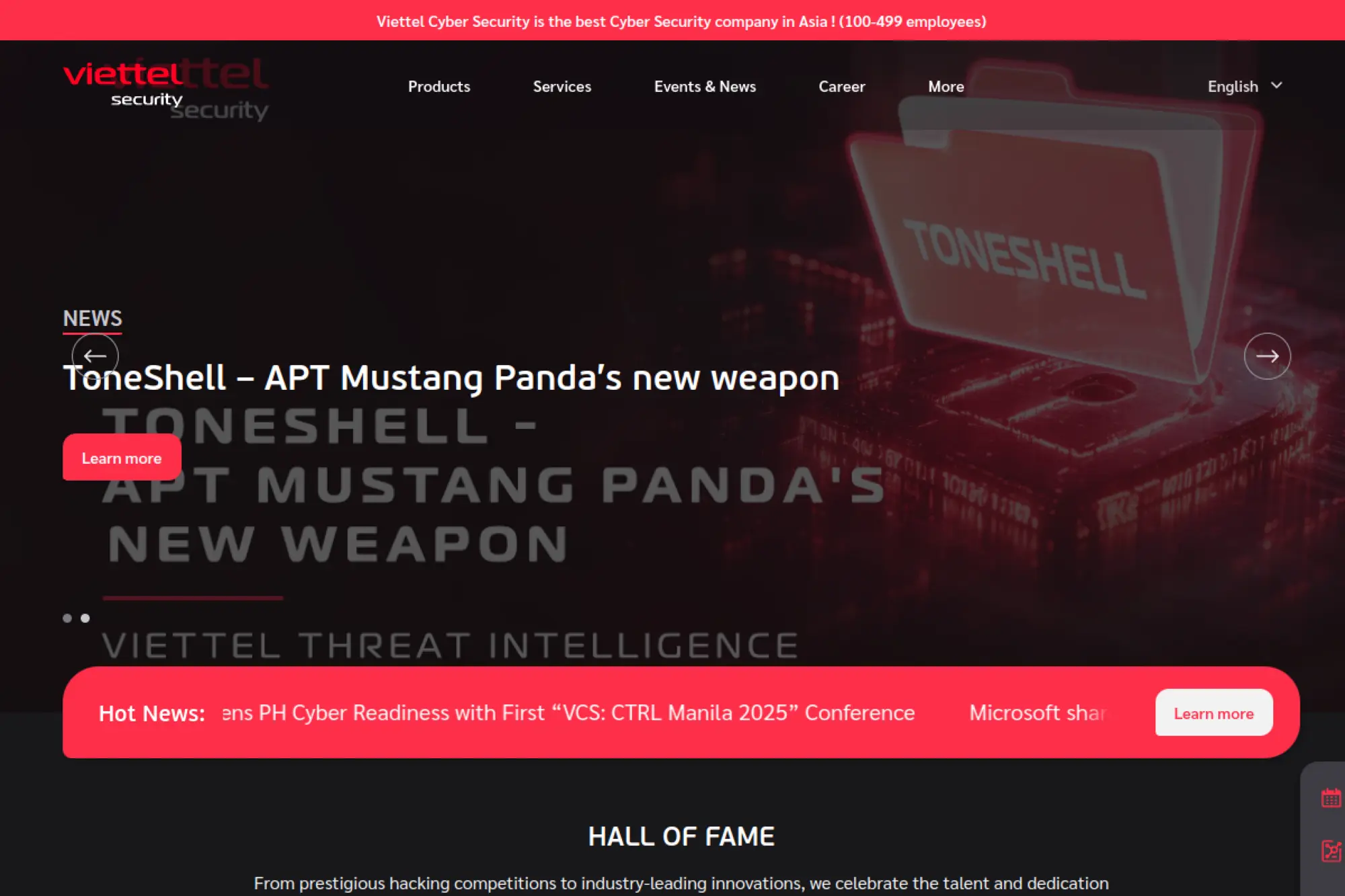
Viettel Cyber Security (VCS) is the security arm of Viettel Group with headquarters in Hanoi, established in 2018 (~7 years). Scale matters here: a 300+ engineering bench and national infrastructure footprint allow VCS to run large‑scope incident response, threat intel, and critical‑infrastructure SOC operations. Their engineering culture includes exploit research and red teams that regularly stress‑test enterprise and industrial environments.
Notable accolades include winning the Pwn2Own Toronto 2023 championship—an elite, exploit‑driven global contest—and sustaining world‑class placements thereafter ( Pwn2Own 2023 champion; runner‑up at Pwn2Own Berlin 2025).
Beyond competitions, we’ve seen VCS excel on national‑scale telemetry (DNS, BGP, and sinkhole feeds) and structured IR playbooks for regulated sectors. Their purple‑team exercises have helped enterprises validate zero‑trust designs against real TTPs. Where global coverage is needed, VCS integrates with manufacturer PSIRTs and shares intel that shortens patch windows in Vietnamese fleets.
Ideal fit: Ministries, telecoms, banks, and critical infrastructure operators needing deep telemetry, 24/7 SOC with threat intel enrichment, red/purple teaming, and regulatory alignment. Also a strong choice for enterprises building in‑country cyber ranges and breach‑and‑attack simulation programs.
3. TechTide Solutions
We are TechTide Solutions—secure‑by‑design software developers who grew into a boutique cybersecurity practice to close the “build versus defend” gap. Founded in 2016 (~9 years) and headquartered in Ho Chi Minh City, our 60+ team blends product engineers with security architects to ship features and controls together. For clients, that means fewer hand‑offs and more hardening embedded in CI/CD.
Our services emphasize application security engineering (threat modeling, SAST/DAST/SCA integration), cloud security baseline enforcement (Terraform guardrails, least‑privilege IAM, and drift detection), and offensive testing targeted at business‑critical paths. We’ve hardened payment flows, healthcare pipelines, and high‑scale marketplaces—often stepping in to codify policies as code and create developer‑centric secure coding playbooks that actually get read.
Ideal fit: Product companies and digital units of large enterprises that want one accountable partner to build, break, and fix—especially for cloud‑native platforms (Kubernetes, serverless, event‑driven) where security gates must align with release trains. We thrive with hands‑on product owners, security champions, and teams ready to automate toil away.
4. CMC Cyber Security
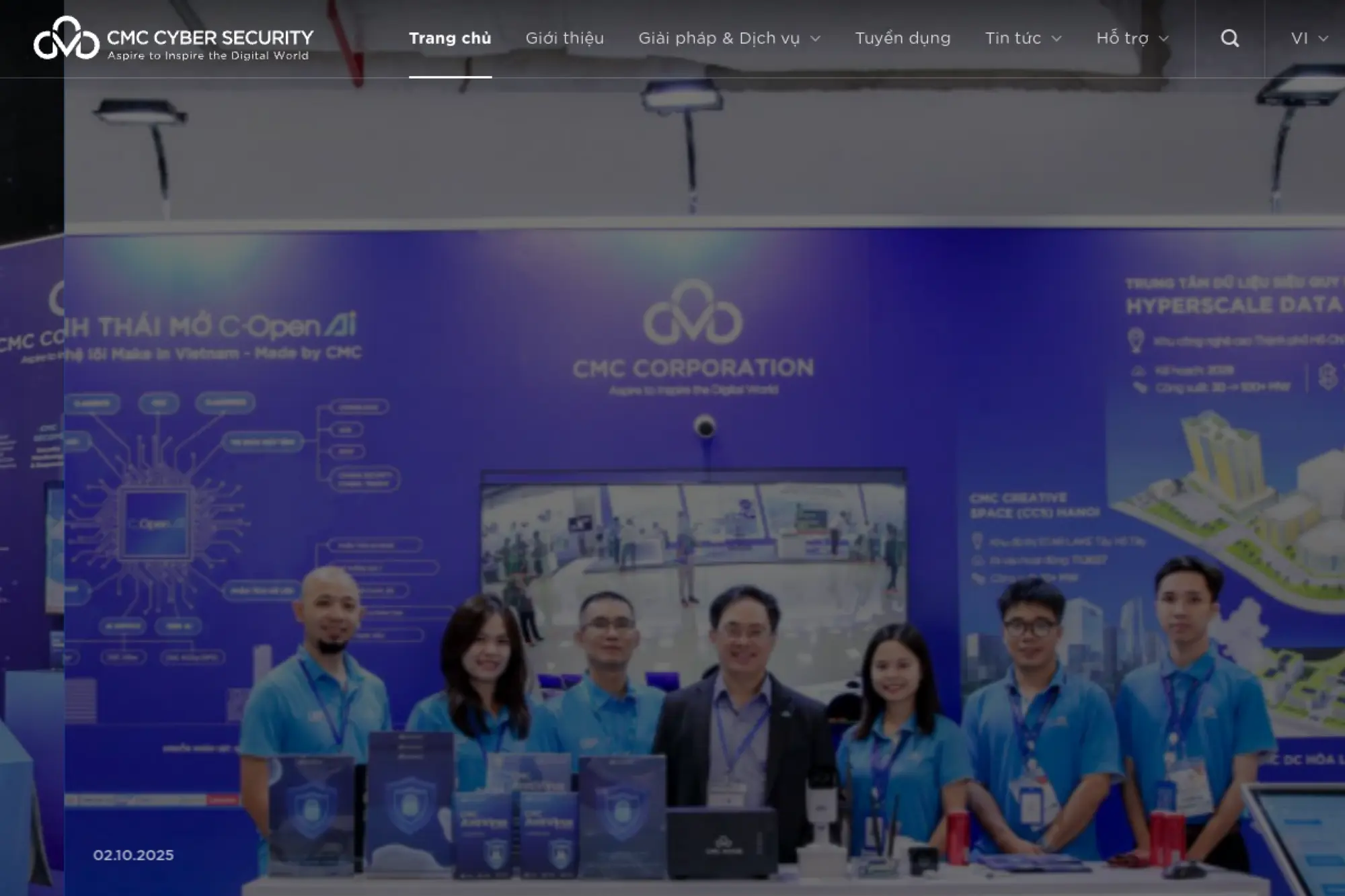
CMC Cyber Security (part of CMC Corporation) offers SOC services, endpoint and malware defense, red/blue teaming, and compliance in regulated environments. Headquartered in Ho Chi Minh City and operating for ~15 years, CMC CS typically fields a few hundred specialists and leverages the broader CMC group’s integration capabilities to deliver end‑to‑end programs (networking, data centers, and cloud). Their SOC and malware analysis pedigree is a differentiator for domestic ransomware and banking‑trojan campaigns.
Among industry recognitions, the CMC group has been honored within VINASA’s “Top 10 Digital Technology Companies” program recognizing information‑security leaders ( VINASA Top 10 Digital Technology Companies 2023).
We’ve seen CMC’s value in engagements that mix build‑out and run, such as turning on SIEM rules at scale, integrating intel feeds relevant to Vietnam’s threat landscape, and co‑authoring IR playbooks that legal, comms, and ops can actually follow. Their malware lab has helped triage loader families targeting local SaaS and finance apps.
Ideal fit: Medium‑to‑large Vietnamese enterprises and public sector bodies needing an MSSP with strong local presence, practical IR muscle, and the ability to coordinate with infrastructure teams to close tickets, not just raise them.
5. FPT Information System (FIS) Security
FPT IS Security sits inside FPT’s systems integration powerhouse (HQ: Hanoi; FPT IS founded 1994; security services maturing for 10+ years). With several hundred security professionals embedded across FPT’s cloud, identity, and integration lines, the team blends vendor‑agnostic architecture with “Made by FPT” platforms (e.g., EagleEye) for detection, pentesting, and compliance. The group is comfortable landing complex deployments in banking, telecom, and government.
FPT units were recognized across multiple categories at VNISA’s national “Golden Key 2024” program, including top Vietnamese enterprises for testing/assessment and crypto/authentication ( Golden Key 2024 honors).
For proof of scale, FPT’s security teams publicly cite banks and financial institutions using their trust services and assessments (e.g., Techcombank, FE Credit, Home Credit, HD Saison) via FPT communications. In practice, we’ve seen the FPT bench prove useful when buyers need a security program that spans IDaaS, PKI, SOC, and enterprise networking with predictable PMO discipline.
Ideal fit: Large regulated entities needing a one‑throat‑to‑choke prime for multi‑tower security programs—especially where digital signature, identity, and SOC overlap with hybrid cloud modernization.
6. Bkav
Bkav is Vietnam’s original cybersecurity brand (founded 1995; HQ: Hanoi), best known for endpoint protection and security appliances alongside IoT and smartphone initiatives. With a 25+ year footprint and a large local user base, Bkav’s threat telemetry and community reach give it outsized influence on citizen, SMB, and agency hygiene.
Historical third‑party recognition includes being named among Vietnam’s top technology brands by the Ministry of Science and Technology channels ( BKAV named top technology brand).
On the ground, Bkav’s endpoint and gateway stack shows up in widespread small‑office deployments and public sector fleets, where ease of roll‑out and local support matter. We’ve seen them complement, not replace, global EDR in enterprises: Bkav handles commodity malware and policy enforcement while EDR covers advanced detection and response.
Ideal fit: Public sector agencies, provincial education/health networks, and SMEs needing Vietnamese‑language support, affordable licensing at scale, and integrated AV/firewall/control tooling with simple ops.
7. CyRadar
CyRadar (founded 2015; HQ: Hanoi) focuses on network‑centric threat detection, domain intelligence, and endpoint coverage with a research flavor—its team comes from Vietnam’s early malware and network‑forensics community. Employee scale is typically in the dozens, enabling agile product iteration and SOC collaboration with integrators.
Early industry validation included VNISA’s “High‑quality Information Security Product” recognition for its advanced threat detection platform ( VNISA High‑quality Product 2015).
We’ve seen CyRadar used as an extra pair of eyes on web and DNS telemetry in large networks, enriching SIEM pipelines with reputation and anomaly signals to catch phishing infrastructure and C2 staging early. When paired with blue‑teamers, its indicators help accelerate domain takedowns and harden mail flows.
Ideal fit: Enterprises and ISPs that want local‑context intelligence on malicious domains/IPs, plus pragmatic EDR/NDR that plays well with existing SIEM/SOAR stacks.
8. VSEC Vietnam Security Network
VSEC (founded 2003; HQ: Hanoi) is one of Vietnam’s longest‑running MSSPs, with services covering pentest/red team, SOC/MDR, DFIR, and training. The team size sits in the low‑hundreds, and its culture is steeped in assessment craft and SOC runbooks tuned for local banks and fintechs. VSEC also invests in community and academic pipeline development, which shows up in hiring quality.
VSEC is the first Vietnamese provider publicly recognized with dual CREST certifications for Pentest and SOC—independently reported by national media outlets ( CREST certifications reported by Vietnamnet).
On delivery, we’ve watched VSEC handle “all‑hazards” IR in banks—from BEC to ransomware—with a mix of forensic discipline and regulator‑friendly documentation. Their managed SIEM work benefits from playbooks that reflect Vietnamese fraud patterns, not just MITRE ATT&CK atoms.
Ideal fit: Financial services, e‑commerce, and SaaS with 24/7 monitoring needs, executive‑level incident reporting requirements, and recurring red‑team validation of detection baselines.
9. HPT Vietnam Corporation
HPT (founded 1995; HQ: Ho Chi Minh City) is a seasoned systems integrator with a dedicated information‑security practice spanning data security, threat management, and IR. With several hundred staff and three decades of enterprise relationships, HPT can run both architecture refreshes and operations services, frequently in partnership with global OEMs.
HPT has been named among top Vietnamese enterprises for monitoring and incident response in VNISA’s Golden Key 2024 program ( Golden Key 2024 honors).
We’ve seen HPT’s strength in stitching together OEM platforms (e.g., data protection, SIEM/XDR) and training internal ops teams to run them sustainably. Their long co‑selling history with hardware and security vendors helps when buyers want balanced point‑of‑view across competing stacks.
Ideal fit: Enterprises modernizing legacy networking and security simultaneously, who prefer a Vietnamese prime contractor to orchestrate multiple vendors and deliver measurable risk reduction.
11. Savvycom
Savvycom (founded 2009; HQ: Hanoi) is a 700+ person digital engineering firm with growing cyber practices in identity, data protection, and security testing, especially for healthcare and fintech. Their global delivery footprint is useful for projects spanning Vietnam and ASEAN, and they tend to formalize governance in compliance‑sensitive lanes.
Savvycom was recognized among Vietnam’s Top 100 Sustainable Enterprises (CSI 2024), an ESG‑centric award program co‑organized with VCCI and ministries ( CSI 2024 recognition).
Service proof includes digital‑identity and compliance projects with international brands cited in Savvycom’s communications; we’ve observed robust secure‑data handling patterns in their healthcare builds—PHI minimization, tokenization, and auditable consent flows that pass third‑party scrutiny.
Ideal fit: BFSI and healthcare programs requiring ISO 27001‑aligned delivery, third‑party risk assurances for global partners, and the ability to integrate privacy engineering into product roadmaps.
12. Sunbytes
Sunbytes is a Dutch‑Vietnamese engineering provider (12+ years; Vietnam delivery hubs; team size in the low hundreds) that has formalized security and privacy practices for EU and global clients. Beyond custom development, they offer secure hosting and DevSecOps capabilities for content‑heavy and data‑sensitive platforms.
Third‑party validations include ISO 27001 certification and the Netherlands’ FD Gazelle 2024 growth award ( FD Gazelle 2024 and ISO 27001).
We appreciate Sunbytes’ operational maturity on data residency and access control—particularly for EU clients who need Vietnamese development while keeping audit trails clean. Their engineering‑ops approach makes it easier to pass partner security reviews without creating friction for product teams.
Ideal fit: European and multinational organizations outsourcing to Vietnam that require ISO‑aligned processes, clear DPA terms, and DevSecOps with auditable control evidence.
13. Cyber Cops

Cyber Cops operates as a nimble security services shop in Vietnam, focusing on network security hardening, compliance readiness, and managed cybersecurity for SMEs. The team size is small (dozens) and engagement models tend to be outcome‑based: quick hardening sprints, incident cleanups, and light‑weight monitoring overlays for small IT teams.
We’ve seen firms like Cyber Cops succeed when owners want practical controls—MFA everywhere, PAM for admins, email security tuning, and EDR roll‑outs—without a months‑long consulting detour. They’re effective at packaging compliance steps (ISO 27001 basics, SOC 2 readiness) into achievable checklists.
Ideal fit: Local SMEs, clinics, schools, and fast‑growing startups that need foundational security and audit readiness with predictable fees and quick execution.
14. CyberSafeHaven Consulting
CyberSafeHaven is a micro‑consultancy (under 20 staff) focused on risk, governance, and security engineering for mid‑market buyers in Vietnam. While the firm is boutique in size, their senior‑led model emphasizes tailored programs over tooling sprawl—think access control clean‑ups, data‑classification rollouts, and tabletop exercises that translate into executable runbooks.
They are listed among Vietnam‑serving cybersecurity firms on an independent marketplace and carry strong client reviews for project management and communication ( Clutch Vietnam cybersecurity rankings).
We like boutiques for sensitive remediation (e.g., revoking risky third‑party access, segmenting production data, or restructuring break‑glass accounts) where trust and discretion matter more than badge counts. CyberSafeHaven consultancies tend to leave clients with fewer standing exceptions and clearer owner maps.
Ideal fit: Founders and CISOs seeking senior time on risk structure, policies and controls modernization, and a partner who will design for how teams actually work rather than a textbook target state.
15. Madison Technologies
Madison is a product engineering company with a security‑by‑architecture stance, operating since 2019 (~6 years) with a Da Nang technology center and regional presence. Team size is in the 70–90 range; they bring design, cloud infrastructure, and product delivery under one roof. While they’re not a pure‑play MSSP, Madison’s super‑app and fintech work requires disciplined data protection patterns and secure infra‑as‑code.
We’ve seen Madison‑style teams reduce breach risk by baking in least‑privilege IAM, API contract testing, and golden‑path environment creation so security is the path of least resistance. That matters when you scale super‑apps where microservices, third‑party SDKs, and data flows compound risk with each new feature.
Ideal fit: Fintech and proptech teams scaling to millions of users who want product speed without sacrificing guardrails—especially when consolidating multiple vendors into one accountable build partner.
16. CyStack
CyStack (founded 2017; HQ: Ho Chi Minh City) blends offensive services (pentest, red team), managed security, and its WhiteHub bug‑bounty/vulnerability‑management platform. Team size is in the dozens, with an emphasis on product‑enabled security operations and community‑driven testing that goes beyond scripted scans.
WhiteHub earned a five‑star ranking at the Sao Khue 2025 awards, as reported by VINASA channels ( Sao Khue 2025 – WhiteHub).
Service proof includes a published bug‑bounty campaign for One Mount Group (VinID and VinShop), detailing triage and remediation dynamics that many buyers struggle to operationalize. We’ve found WhiteHub‑style programs useful to keep regression pressure on critical apps between formal pentests.
Ideal fit: Digital retailers, fintech, and marketplaces that want both scheduled pentests and persistent crowd‑sourced testing, with reporting and metrics that product and security leadership can track over time.
17. ITC Group
ITC JSC (founded 1995; HQ: Hanoi) is a long‑standing systems integrator with security among its core practices—network segmentation, secure data‑center builds, and enterprise access control. With a team commonly in the 25–100 range and three decades of telco/IT experience, they’re suited to infrastructure refreshes where security design must dovetail with networking and compute modernization.
We’ve seen integrators like ITC make a dent by enforcing consistent configurations (e.g., firewall object hygiene, standard ACLs, validated backup/restore patterns), which is where many breaches start. They’re particularly relevant when buyers want to uplift an on‑prem estate while adding cloud safely.
Ideal fit: Enterprises and public bodies upgrading core networks and data centers that need security embedded in the build, not tacked on later, with pragmatic SLAs and training for internal ops teams.
18. NetNam
NetNam (pioneering ISP since 1994; HQ: Hanoi) offers enterprise Internet, managed Wi‑Fi, event connectivity, and increasingly, managed security services (SOC‑style monitoring, EDR/NDR overlays). Employee scale is a few hundred, and a nationwide presence helps for multi‑site rollouts and events. Their managed detection services aim to fill the talent gap for mid‑market IT teams.
We’ve seen NetNam’s NetGuardX‑style offerings slot into organizations that can’t justify a full SOC: central log collection, curated detection rules, and high‑signal alerting that cuts false positives. The same ops muscle that delivers live event networks translates into quick incident containment under pressure.
Ideal fit: Multi‑branch enterprises, hotels, venues, and fast‑growing SMEs that want one provider for connectivity plus foundational detection/response without building a SOC from scratch.
19. MeU Solutions INC
MeU Solutions (HQ: Ho Chi Minh City; ~10+ years) is a QA/Testing specialist that added security testing—web/mobile pentesting, API fuzzing, and secure test‑data management—to its portfolio. Headcount is typically 50–100. Their engineering process borrows from QA rigor: reproducible test cases, stable environments, and high‑signal defect reports that developers accept.
MeU has been included in independent rankings of leading B2B firms serving Vietnam, highlighting quality and client feedback ( Clutch Greater Asia Leaders 2018).
We’ve seen QA‑first shops excel when embedding security checks into regression cycles—e.g., adding authz boundary tests to smoke suites or injecting malicious payloads into API test harnesses. That lowers the cost of catching security bugs before release.
Ideal fit: Product teams that already treat QA as a first‑class citizen and want to fold security assertions into test automation without creating a separate “security ticket factory.”
20. Fire Bee Techno Services
Fire Bee is a small Vietnam‑based development company (founded ~2020; HQ: Ho Chi Minh City; team in the tens) that emphasizes secure web and mobile delivery for startups and SMEs. While not a pure security vendor, their projects often include admin hardening, secrets hygiene, and secure deployment pipelines—essentials for teams without in‑house security staff.
We’ve seen boutiques like Fire Bee reduce real risk by insisting on SSO/MFA from day one, formalizing secrets rotation, and using IaC to make secure environments reproducible. When budgets are tight, those basics move the needle more than fancy dashboards.
Ideal fit: Early‑stage startups and SMBs launching v1.0 products who need cost‑conscious engineering with security fundamentals and are open to opinionated defaults.
21. AXON ACTIVE

Axon Active is a Swiss‑owned engineering company with large Vietnam delivery centers (est. 2008; HQ Vietnam: Ho Chi Minh City; 500–1,000 staff in‑country). Security is woven through Agile development and testing services, with ISO‑aligned processes for clients in finance, logistics, and insurance. They bring strong PMO and quality culture to long‑running enterprise programs.
We’ve seen Axon‑style teams reduce vulnerability backlogs through definition‑of‑done changes (e.g., dependency upgrade gates, secure code review checklists, and mandatory negative tests). For enterprises, this often costs less than stand‑alone pentesting while raising the bar release after release.
Ideal fit: Enterprises needing stable, long‑term development capacity with ISO‑caliber practices and the appetite to make secure coding part of Agile rituals, not a side activity.
22. AOZ Software Technology Solution JSC
AOZ Software (founded 2020; HQ: Ho Chi Minh City; small‑to‑mid team) provides custom development with offerings for website protection and malware cleanup for SMEs. Their “security as upkeep” approach—patching, WAF/CDN, and vulnerability scanning—suits organizations that need someone to mind the store and keep sites off blacklists while core staff focus elsewhere.
We’ve seen SMEs get disproportionate value from routine hygiene: remove default admin paths, force MFA for CMS logins, auto‑renew TLS, and set up DMARC/SPF/DKIM correctly. AOZ‑type providers make this a subscription with clear ownership.
Ideal fit: SMEs and retailers with limited IT who need monthly security care for web properties and light compliance asks from partners or payment providers.
23. TECHLAB Corporation
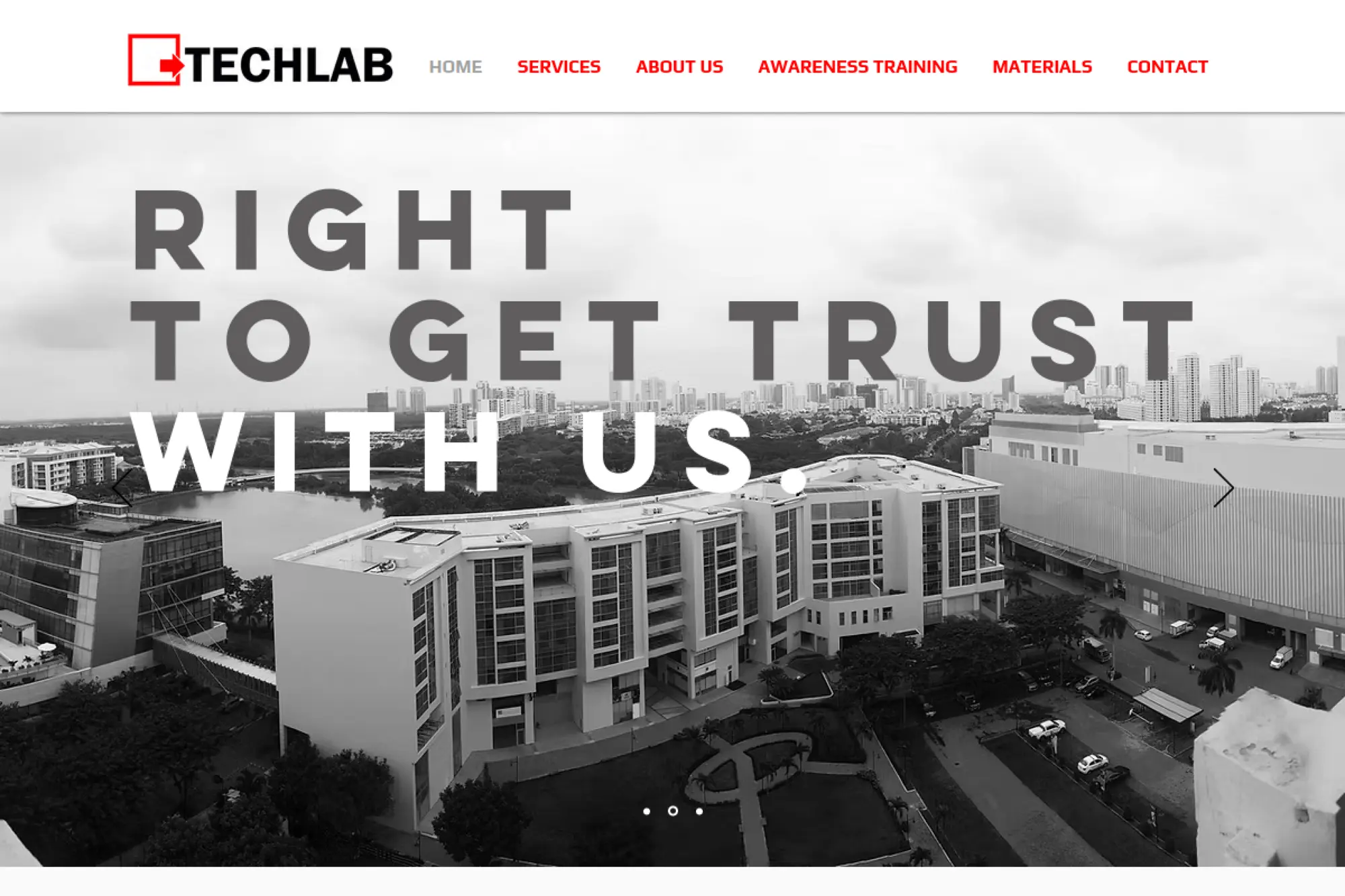
TECHLAB (HQ: Ho Chi Minh City; ~10–50 consultants) is a cyber boutique focused on assessments (pentest, red team), security awareness at scale, and governance uplift. The firm operates a lab for tooling and exploit development and tends to staff senior practitioners on complex tests, including ICS/OT assessments and source‑code reviews for high‑impact services.
In our projects, TECHLAB‑style boutiques excel when buyers want sharper adversary simulation and culturally effective awareness programs (measured click‑through reductions, real password‑hygiene improvements). Their independence from large resale quotas helps keep recommendations product‑neutral.
Ideal fit: Mid‑market to large enterprises seeking deeper offensive testing and measurable human‑risk reduction, with leadership that values frank findings over vendor politeness.
24. Neotiq
Neotiq (founded 2006; Vietnam presence formalized 2019 in Hanoi) is a data and software consultancy that incorporates security architecture and privacy by design into analytics and integration projects. With a small team (~25–30), they punch above their weight on data pipeline hardening and access governance.
We’ve seen data consultancies reduce breach blast radius by enforcing column‑level encryption, implementing role‑based access with just‑enough privileges, and building reproducible data environments for analysts. Those moves not only limit insider risk but also speed up audits.
Ideal fit: Organizations modernizing data stacks (lakehouses, reverse ETL, BI) that want strong guardrails on identity, secrets, and data minimization from the outset.
25. VNCS Vietnam Cyberspace Security Technology
VNCS (founded 2011; HQ: Hanoi) runs a D‑S‑D model (distribution, services, development) with a growing international footprint via VNCS Global. Team size sits in the low hundreds. Services cover SOC, pentest/red team, incident response, and threat intel, while distribution alliances give enterprises access to top‑tier OEM tooling with local support.
On delivery, we’ve seen VNCS tackle sector‑wide uplift by pairing OEM platforms (e.g., DDoS, WAF, endpoint) with local playbooks and training. Their expansion into ASEAN and Japan brings exposure to diverse threat patterns that feed back into Vietnamese defenses.
Ideal fit: Enterprises wanting a combined distributor‑integrator that can deliver both technology and services, particularly for DDoS/WAF hardening, endpoint rollouts, and standing up modern SOC practices.
26. Dirox
Dirox (founded 2003; HQ: Ho Chi Minh City with global offices; 100–200 staff) is a product engineering house with a people‑centric security services practice (penetration tests, security training, and outsourced security leadership roles). Their approach emphasizes behavior change—aligning security with how teams work to increase adoption of controls.
We’ve seen Dirox‑type teams succeed by integrating security rituals into agile ceremonies (threat‑model checkpoints in backlog grooming, secure coding katas, and fast remediation SLAs). That tends to shrink vulnerability half‑life more than one‑off scans do.
Ideal fit: Organizations that want a balanced mix of product delivery and practical security enablement, and those seeking interim or fractional security leadership alongside engineering capacity.
27. SHIFT ASIA
SHIFT ASIA (founded 2016; HQ Vietnam: Ho Chi Minh City; offices also in Hanoi) is a QA and software testing company that achieved ISO‑aligned ISMS and extends into application security testing for global clients. Team size is several hundred, with strengths in test automation and QA operations that translate well into security testing rigor.
We’ve watched QA‑native teams like SHIFT ASIA cut false positives by tightening test data, stabilizing environments, and automating negative tests—giving developers high‑signal issues that get fixed fast. A mature QA organization also helps enforce security gates without torching velocity.
Ideal fit: Enterprises that already invest in QA and want to scale security testing without reinventing their delivery pipeline, particularly for mobile and enterprise web apps.
28. AHT Tech
AHT Tech (HQ: Hanoi; ~500 staff; 10+ years) is a digital engineering firm that has formalized information security with ISO 27001 and ISO 9001 certifications. While the company’s core is e‑commerce and enterprise build‑outs, its secure delivery posture—access governance, change control, and vulnerability management—helps clients meet partner security reviews.
AHT’s ISO certifications have been independently noted by Vietnamese certification bodies ( ISO 27001/9001 certification announcement).
We’ve seen AHT‑type teams help retailers and manufacturers manage third‑party risk: standardizing vendor access, enforcing secrets hygiene, and instrumenting logs required by auditors. It’s the unglamorous work that keeps integrations safe.
Ideal fit: Enterprises with complex partner ecosystems that need a build partner whose processes are audit‑ready and whose security basics won’t be the reason procurement says no.
29. Hodfords

Hodfords (founded 2000; HQ: Hong Kong; Vietnam office in Da Nang; ~50–100 global staff) is a cross‑border software consultancy with a growing AI and security posture. While not a managed security provider, Hodfords’ long‑running delivery for global brands means disciplined data handling and secure architecture reviews come standard, with Da Nang as a cost‑effective engineering base.
We’ve observed that cross‑jurisdiction teams like Hodfords can simplify global rollouts—harmonizing privacy expectations, securing data flows across regions, and building with least‑privilege from the start. For clients expanding abroad, that experience reduces unpleasant surprises.
Ideal fit: Export‑oriented Vietnamese brands and international firms needing a Vietnam build team that understands overseas compliance, secure data flows, and cost‑effective delivery.
30. NCS Vietnam National Cyber Security Technology Corporation
NCS (established ~2022; HQ: Hanoi; 200–500 staff) is a newer national cybersecurity company building a “Make in Vietnam” product‑plus‑services ecosystem—next‑gen firewall, EDR, threat‑intelligence, and SOC operations—combined with incident response and industrial (OT/ICS) security. Their thesis: modern monitoring plus AI‑enriched intel and local R&D can meet Vietnamese sovereignty and resilience needs.
Media and industry channels have covered NCS’s launch of an AI‑based cybersecurity ecosystem aimed at national‑scale protection and rapid incident response ( ecosystem announcement (Make in Vietnam)).
In practice, we’ve seen NCS‑style offerings address a hard reality: many Vietnamese organizations lack full‑time security staff. Pre‑integrated stacks with threat intel, response orchestration, and Vietnamese‑language procedures help teams move from alerting to action without vendor sprawl.
Ideal fit: Public sector and local enterprises prioritizing in‑country technology, wanting a domestic vendor to co‑build SOC capabilities, and aiming for rapid uplift against phishing, ransomware, and data‑exfiltration threats.
There’s no one‑size‑fits‑all in security. Our rule of thumb as builders: aim for the simplest architecture that demonstrably reduces risk for your business model, then pressure‑test it with independent eyes. Ready to turn this landscape into a shortlist? Share your use case and constraints—we’ll map two or three partner mixes that can measurably move your risk curve in the next 90 days.
Recommended reading: Top 20 IoT Companies: 2026 Landscape and Regional Spotlights
Vietnam’s cybersecurity landscape in 2025: what’s driving demand
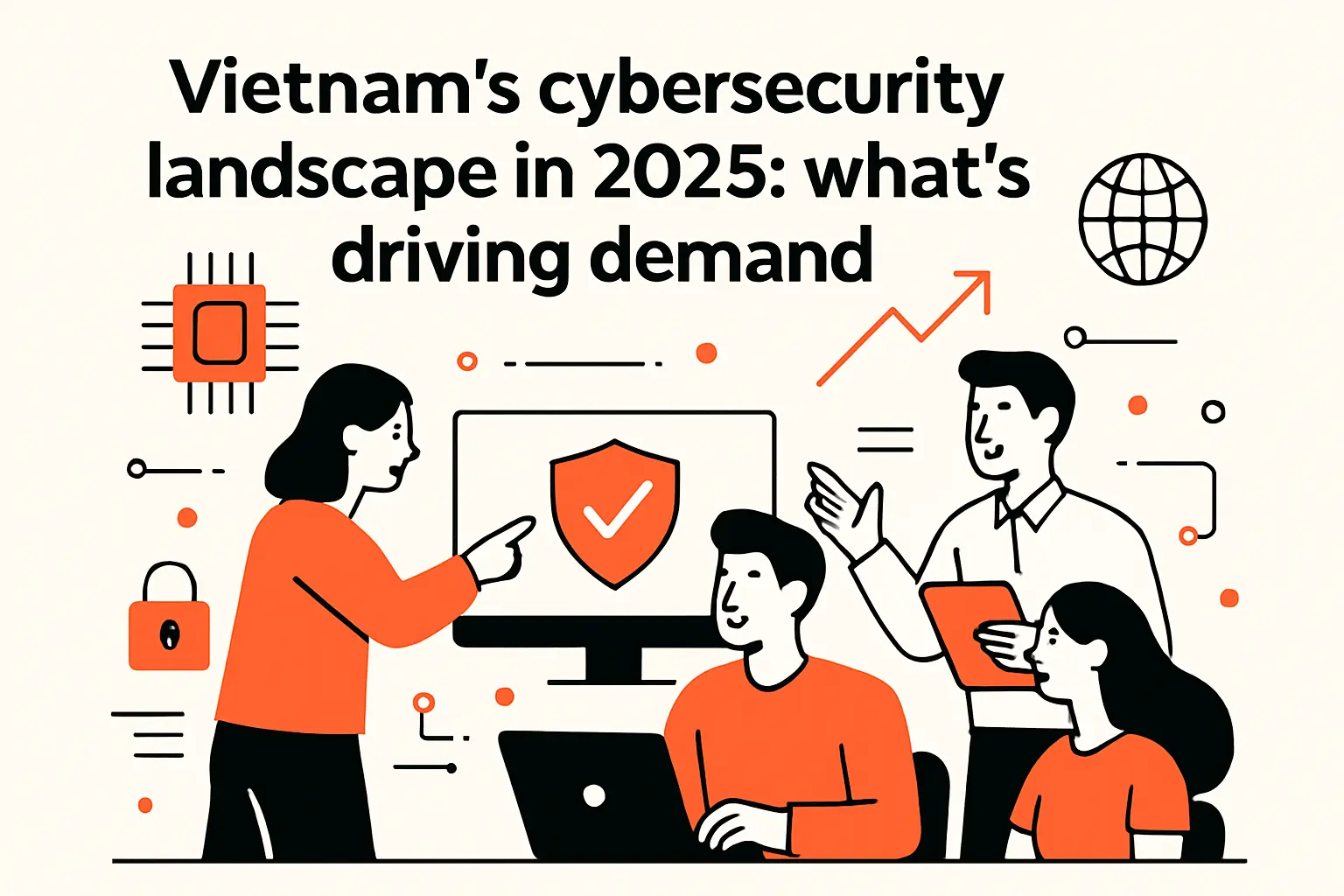
Vietnam’s market is no longer a footnote on Asia maps. Analysts project domestic cybersecurity revenue of US$320.76m in 2025, reflecting momentum from cloud adoption, fintech proliferation, and modernized government platforms. In our engagements, breaches now trigger board‑level reviews rather than quiet IT fixes, and that shift changes vendor selection dynamics.
1. Vietnam ranked Tier 1 by ITU for cybersecurity readiness (score 99.74)
Tier‑1 status reshapes executive conversations. Rather than debating whether cyber deserves a seat at strategy tables, leaders ask how to sustain capability gains with measurable controls. We see ministries and regulated enterprises translating national ambition into continuous testing, defense‑in‑depth, and SOC modernization. That tone from the top drives better procurement models and clearer performance metrics for vendors.
From our vantage point, the downstream effect is practical. RFPs increasingly specify red team maturity, active threat hunting, and telemetry quality, not just tool brand names. Teams want integrators who can fuse threat intel, detection logic, and incident playbooks into repeatable routines that survive audits and staff turnover.
2. 659K+ cybersecurity issues recorded in 2024 affected ~46% of organizations
Volume is one story; operational fatigue is another. We help clients triage alert storms by collapsing duplicate signals, tagging root causes, and automating low‑risk closures. That discipline turns noise into an intake funnel that analysts trust. It also reveals chronic weaknesses faster, such as stale IAM roles, brittle API gateways, and under‑scoped logging in legacy workloads.
Our fieldwork shows that attacker dwell time drops when teams practice quick containment rituals. Simple patterns matter: isolate endpoints fast, revoke risky tokens, rotate keys on known‑bad services, and push near‑real‑time communications to business leaders. Those steps sound basic. In reality, reliable muscle memory separates firms that recover within days from those that limp for weeks.
3. Law on Data effective July 1, 2025 raises cross‑border data compliance
Vietnam’s new data regime pushes security teams beyond perimeter thinking. We see clients map data categories to processing locations, then design transfer pathways with explicit legal bases. Data discovery and lineage tooling now influence architecture choices. Encryption, key custody, and tokenization patterns become design constraints rather than afterthoughts.
In practical terms, roadmaps prioritize readiness artifacts. Organizations build registers for processing activities, draft transfer assessments, and codify retention rules into CI/CD gates. Vendors that can translate legal obligations into guardrails for developers, data engineers, and marketing operations win trust faster.
4. Public sector mandate: at least 10% of IT spend on cybersecurity (2020–2025)
A mandated minimum budget share changes vendor behavior. We notice tighter outcome definitions, from uptime targets for SOC services to retest commitments after remediation. Provincial agencies also push for shared platforms to stretch budgets. That favors providers with multi‑tenant SOC designs, reusable playbooks, and clear demarcation of responsibilities between in‑house and contracted teams.
Budget guardrails still require stewardship. Without strong governance, money drifts toward shelfware or fragmented controls. We help agencies build portfolio views that align spend to capability gaps, not just procurement cycles. That view aligns controls with mission risks and avoids tool sprawl.
5. Market outlook: ~$335M in 2025, projected to ~$511M by 2029
Different sources use different scopes and currency baselines, so figures vary. What matters for buyers is not the headline number but where the growth concentrates. In Vietnam, we see activity densest around managed detection, data protection aligned to sector rules, and secure cloud landing zones. Those areas generate the most sustained contracts and the quickest wins in measurable risk reduction.
We also see vendors pivot from point projects to multi‑year programs with embedded success metrics. That shift supports skill transfer, overtime trend analysis, and deeper integration with enterprise data platforms. Clients gain resilience while simplifying vendor management.
6. International cooperation and VNISA anti‑phishing campaigns bolster defenses
Public‑private campaigns build societal antibodies against scams and malware. We have contributed curriculum modules that move beyond slogans. People learn how lures map to kill‑chain stages, how device posture affects risk, and how to use verification playbooks at work and at home. Those habits cut through fatigue and enable faster reporting.
Cross‑border cooperation also helps vendors benchmark playbooks against sophisticated threats. When a neighboring CERT publishes a pattern that matches a local incident, we translate it into detections the same day. That speed matters when attackers reuse infrastructure across the region with minor edits.
Recommended reading: Top 30 Best Open Source Iot Platform Picks for Building Scalable Iot Solutions
Core cybersecurity services offered by companies in Vietnam
Buyers are not only purchasing tools; they seek outcomes framed by budgets and regulation. A majority of organizations plan to raise security spending, with 57% of respondents signaling higher budgets. In that climate, local and global vendors differentiate by the quality of guidance and the realism of their implementation plans.
1. Penetration testing across web, mobile, network, IoT, and APIs
We emphasize adversary realism over checklist scans. That means chaining minor weaknesses into business‑impacting scenarios. Teams that simulate phish‑to‑persistence‑to‑data exfiltration teach leaders where controls collapse under pressure.
Our testers frequently find gaps in API authorization and device onboarding for IoT fleets. The fix is often a design tweak rather than a new tool: consistent service accounts, stronger token lifetimes, and clear separation between administrative and data planes.
2. Managed SOC and 24/7 monitoring with SIEM/SOAR and XDR
Managed operations succeed when fundamentals are boringly consistent. We tune data pipelines, maintain parsers, and tag assets with business context. Those steps reduce false positives and shorten triage loops.
Vendors should show how detection content updates, how playbooks adapt, and how handoffs to internal responders work. We ask providers to demonstrate failure modes and recovery paths, not only happy‑path demos.
3. Red Teaming and organization‑wide compromise assessments
Red teams create urgency around gaps that tabletop drills often miss. We scope objectives with senior leaders, then align defenses around containment speed and recovery sequence. Realistic campaigns surface brittle identity policies and shadow admin routes.
Compromise assessments help leaders reset baselines. After a noisy incident, we verify whether dormant backdoors remain. That certainty matters before large migrations or M&A activities.
4. Incident response and digital forensics to contain and recover
Good incident response blends discipline with empathy for disrupted teams. We bring prebuilt runbooks, legal coordination templates, and communications guides. That package protects trust while technical teams work.
Forensics should answer three questions: what happened, what could have happened, and how to prevent recurrence. Reports that cover only the first question invite repeat events and erode confidence.
5. Threat intelligence, malware analysis, and kill‑chain detection
Threat intel earns its keep when it shapes concrete detections and blocks. We tune data to client sectors and known attacker tradecraft. Contextual alerts help analysts act faster and explain decisions to non‑technical leaders.
Malware analysis, even at triage depth, reveals persistence tricks and lateral movement patterns. That insight feeds purple‑team loops and keeps controls honest.
6. Security audits and compliance for PCI‑DSS, ISO 27001, SWIFT
Audits are most valuable when they fuel continuous improvement. We map findings to architecture guardrails and developer checklists. That turns annual pressure into routine practice.
In Vietnam, sector rules intersect with global frameworks. Vendors who translate overlapping obligations into one control map reduce friction. That consolidation accelerates remediation and eases board communication.
7. Security consulting, risk assessment, and governance programs
Strategy engagements should not produce static binders. We deliver roadmaps with owners, milestones, and success measures tied to business metrics. That approach helps finance teams understand why specific investments matter this quarter.
Governance only works when operational teams participate. We design steering cadences that include developers, data stewards, and service owners. Cross‑functional rituals actually keep programs alive.
8. Source code review and secure SDLC enablement
We embed code review into developer workflows rather than side channels. Secure patterns, lint rules, and pre‑commit hooks help reduce regressions. Training becomes a dialogue anchored in a real codebase, not generic slides.
Strong SDLCs surface risk earlier. Threat models, service catalogs, and dependency audits shrink later surprises. The payoff shows up in smoother releases and calmer weekends.
9. OT and ICS security assessments and staff awareness training
Factory and utility environments reward patient mapping. We catalog assets, analyze protocol risks, and define safe segmentation. Success balances uptime, safety, and realistic monitoring points.
Training grounds this work. Simulated drills show operators where to stand during an incident, figuratively and literally. Clear roles avoid panic and missteps.
10. Cloud security hardening and cloud SOC for AWS Azure GCP
Cloud security succeeds when identities and network paths are clean. We disable risky defaults, enforce least privilege, and codify policies. That foundation limits blast radius and clarifies incident actions.
Cloud SOCs depend on clear telemetry strategy. We standardize event schemas, attach business tags, and calibrate alerts to real workloads. That discipline stops fatigue from overwhelming small teams.
Recommended reading: Top 20 Providers Gaming Website Design: A Strategic Outline For High‑Impact Game Sites
How to choose among cybersecurity companies in Vietnam: evaluation criteria
Procurement in 2025 operates amid shifting risks and tooling claims. IDC expects only 25% by 2027 of consumer‑facing firms in Asia/Pacific to adopt AI‑powered identity at scale, underscoring integration headwinds. We therefore prioritize fit, interoperability, and measurable outcomes over bold marketing.
1. Demonstrated Vietnam‑specific experience and relevant case studies
Local context matters. Providers who understand sector rules, regulator expectations, and vendor ecosystems move faster. We ask for case studies that show constraints similar to ours, not generic wins in distant markets.
We also value teams who collaborate with local incident responders and sector ISACs. That network shortens response times and raises signal quality in monitoring pipelines.
2. Full‑stack portfolio spanning VAPT, SOC, IR, and consulting
Single‑project vendors often struggle with continuity. A provider with assessment, operations, and advisory coverage can trace findings through to closure. That continuity prevents whiplash between audits and day‑to‑day defense.
We evaluate whether the vendor’s engineers and advisors communicate well. Shared views on risk and remediation speed up decisions and reduce confusion during incidents.
3. Recognized certifications and authorizations (ISO 27001, PCI‑DSS)
Certifications do not guarantee outcomes, yet they reduce baseline uncertainty. We check scope statements and how the controls align with our environment. Providers who treat certification as a living program tend to maintain stronger hygiene.
Authorization to handle sensitive data or operate in regulated sectors also signals readiness. We verify those claims with references and light technical validations.
4. Data Law 2025 and cross‑border compliance readiness
We favor vendors who translate legal language into engineering guardrails. Data mapping, transfer assessments, and retention automation must sit inside delivery plans. Providers who bring privacy and security leaders together avoid rework and audit surprises.
Cross‑border readiness is now mission‑critical. We examine key custody options, tokenization strategies, and transparent subprocessors with clear escalation paths.
5. Tooling depth (EDR, SIEM, XDR) and integration capability
Tooling should disappear into workflows. We assess parser coverage, automation hooks, and ease of enriching alerts with context. Vendors who ship opinionated starter packs accelerate time to value.
Integration talent separates great partners from resellers. We test how teams navigate messy identity systems, legacy logs, and hybrid networks. Strong integrators make existing tools more valuable.
6. Clear reporting, remediation guidance, and retesting support
Reports must help leaders act. We insist on prioritized findings, root‑cause narratives, and target states. Retesting should confirm closure rather than restate earlier scans.
Guidance should include effort estimates and dependency notes. Those details prevent teams from under‑scoping fixes or over‑promising timelines.
7. 24/7 SLAs, response times, and ongoing customer success
Commitments must map to real capacity. We look for transparent staffing models, on‑call rotations, and escalation ladders. Customer success teams should track hygiene metrics and coach improvements.
Strong partners celebrate shared wins and acknowledge misses. That candor builds trust and improves programs faster than polished dashboards alone.
Recommended reading: Top 30 Best Freelance Websites to Find Freelance Work and Clients in 2026
Policy, spending, and market trends shaping Vietnam’s cyber posture
Vietnam sits within a fast‑growing regional landscape. Across ASEAN, cybersecurity spend is estimated at US$5.51 billion in 2025, with managed services buoyed by skills gaps and regulatory obligations. We see local buyers blending global products with Vietnamese expertise to balance control and cost.
1. 10% public‑sector IT spend earmarked for cybersecurity (2020–2025)
Mandated allocations create stable demand signals for SOC builds, training, and audits. The best outcomes emerge when leaders link budget to measurable capabilities and track progress quarterly. That discipline resists tool creep and focuses scarce talent on the biggest risks.
Vendors should come prepared with portfolio planning methods and clean metrics. Teams that forecast maturity gains, not just tool deployment, align better with oversight bodies.
2. New data governance: outbound processing controls starting July 2025
Outbound data controls reshape architectures. We train developers to categorize data, pick transfer mechanisms, and implement protective patterns with minimal friction. That approach keeps product teams moving while reducing regulatory exposure.
Leadership must also prepare communications playbooks. Stakeholders want clarity on obligations, timelines, and acceptable alternatives. Clear messaging reduces panic when new rules land.
3. Global cooperation (e.g., US, Australia) and VNISA anti‑phishing drives
Regional exercises and shared indicators lift baseline readiness. We incorporate these artifacts into detection logic and awareness campaigns. That loop shifts culture from passive warnings to active verification habits.
Community efforts also surface fraud patterns faster. When people understand how scams evolve, reports arrive earlier, and loss windows shrink.
4. Tier‑1 ITU ranking reinforces investment in skills and capability
A strong national score encourages budgets for training, certification, and open collaboration. We see more joint testing with regulators and industry groups. Those forums convert policy intent into repeatable practice.
Talent programs now include purple‑team labs, cloud attack simulations, and data governance clinics. This breadth reflects how modern security blends code, law, and operations.
5. Expanding market size fuels growth in products and managed services
As buyers mature, they avoid monolithic stacks. Teams select best‑fit components and weave them together with clear accountability. Providers who show empathy for migration pains build durable relationships.
We also observe more emphasis on resilience and recovery. Firms invest in drills, backup integrity, and crisis communications. These investments pay off during real incidents.
How TechTide Solutions helps you build custom cybersecurity solutions
Programs must balance ambition with constraints. Many organizations intend to increase security budgets, with 77% expect their cyber budget to increase, yet every dollar still demands outcomes. We therefore design roadmaps that align to threat models, not buzzword checklists.
1. Discovery and threat modeling tailored to your stack, risks, and KPIs
We begin with discovery sprints that map assets, data flows, and trust boundaries. Threat models turn that map into prioritized risks that executives understand. These artifacts guide tooling choices and establish measurable targets.
Our teams co‑create scenarios with client engineers. This collaboration grounds models in real systems and avoids abstract diagrams that gather dust. Leaders gain visibility into risk hot spots and remediation paths.
2. Bespoke VAPT, Red Teaming, and secure SDLC integration for faster fixes
We tailor tests to mimic credible adversaries and local crime patterns. Findings arrive with exploit chains, business impact, and stepwise fixes. Developers receive targeted examples in their codebases to accelerate learning.
Secure SDLC integration embeds guardrails into pipelines. Pre‑commit checks, dependency hygiene, and infrastructure‑as‑code policies reduce regressions. The result is resilience that grows stronger with every release.
3. SOC integrations, SIEM dashboards, and guided remediation to fit budgets
We right‑size monitoring by mapping telemetry to business priorities. Parsers, use cases, and playbooks ship as living assets, not one‑off handovers. Analysts gain context, and leaders see trends in language that resonates.
Remediation is where programs live or die. We embed coaches who help operations teams practice containment and communicate clearly. That partnership builds confidence and shortens recovery during real incidents.
Conclusion: picking the right partner among cybersecurity companies in vietnam
Choosing well demands clarity about threats, data obligations, and operating realities. Global budgets continue to expand, as seen in the same Gartner forecast noted above, yet success depends on converting spend into disciplined routines. We encourage teams to favor partners who teach, integrate, and measure rather than simply deploy.
If you had to change only one thing this quarter, would you refine your threat model or overhaul your monitoring pipeline first? Tell us your constraints, and we will help design a path that matches your risks and your ambition.

