



At TechTide Solutions, we think AI-driven decision making is a practical way to make business choices with live data. A company still sets the goal, the limits, and the rules. The software helps score options, spot patterns, and recommend the next step faster than a person could alone. Gartner forecasts worldwide AI spending will total $2.52 trillion in 2026, but the market size is only background noise if that spend does not lead to better approvals, forecasts, routes, and interventions.
That is why we focus on the decision itself, not the hype around the model. Good systems turn data into action, then measure what happened next. When the workflow is clear and the feedback loop is real, AI-driven decision making stops feeling abstract. It becomes the quiet engine behind fraud checks, inventory moves, support routing, care prioritization, and many other daily choices.
Understanding AI-Driven Decision Making
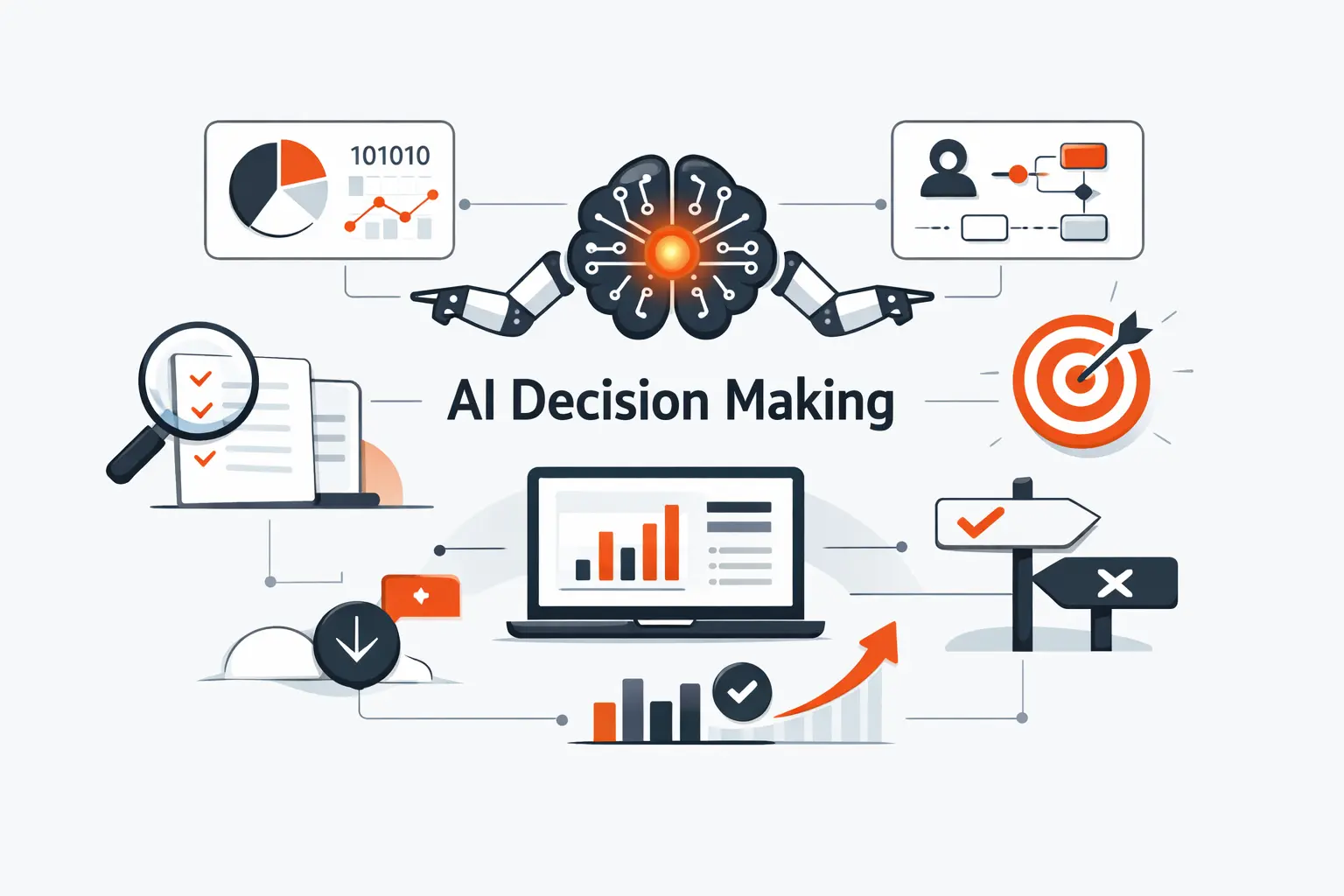
Before we dive into models, we need a plain definition. We see AI-driven decision making as a system that observes signals, weighs options, recommends or takes an action, and then learns from the result.
1. How Decision Making Has Evolved from Gut Instinct to Data-Backed Systems
For years, companies leaned on instinct, manager experience, and static reports. That still has value. Seasoned people notice context that dashboards miss. But gut feel struggles when decisions arrive constantly and across many channels. Data-backed systems changed that. First came reporting. Then came dashboards and alerts. Now we can predict demand, rank leads, flag unusual behavior, and route work before a human opens a spreadsheet. The shift is not from humans to machines. It is from isolated judgment to shared, measurable judgment.
2. What Makes AI-Driven Decisions Different from Rule-Based Automation
Rule-based automation follows instructions that never change unless someone rewrites them. If an order exceeds a limit, send it for review. If a payment fails twice, lock the account. Those rules are useful, but brittle. AI adds pattern recognition. A model can weigh many signals at once and return a score or probability. That means the software can treat similar cases differently when the context changes. We like rules for policy. We like models for uncertainty. In production, the strongest systems usually combine both.
3. How AI Decisioning Enables Continuous Learning at Scale
The real advantage appears after deployment. Every decision produces an outcome. Did the customer convert? Did the claim prove fraudulent? And did the route arrive on time? Good AI systems capture that answer and feed it back into training, thresholds, and monitoring. Over time, the system gets better at the specific decision it supports. That is what makes AI decisioning different from a clever demo. It creates a loop. At scale, that loop becomes a kind of organizational memory that does not disappear when a senior employee leaves.
Recommended reading: DSPy vs LangChain: Key Differences, Best Use Cases, and How to Choose
Why AI-Driven Decision Making Matters
Once the definition is clear, the value becomes easier to see. In our view, the payoff comes from speed, consistency, and the ability to remember what happened after each choice.
1. Faster Decisions in Real Time
In many businesses, waiting is expensive. A late fraud check can mean a lost payment. A late stock decision can mean an empty shelf and a late dispatch call can mean missed service levels. AI-driven decision making helps by scoring options as events arrive, not hours later in a report. That speed matters most when the action is built into the workflow. A score sitting in a dashboard helps no one. A score that reroutes work, prioritizes a case, or asks for review at the right moment changes outcomes.
2. Greater Accuracy, Consistency, and Efficiency
This is one reason adoption keeps rising. In a recent McKinsey global survey, 88 percent of respondents said their organizations regularly use AI in at least one business function. That tells us the technology has moved far beyond lab curiosity. In day-to-day operations, the appeal is simple. A well-tested model applies the same standard every time. It does not get distracted, forget a step, or improvise policy. That makes teams more consistent, especially in high-volume work.
3. Risk Reduction and Stronger Organizational Memory
There is another benefit we think people underrate. Good decision systems keep records. They store the input, the recommendation, the action taken, and the outcome. That makes audits easier. It also helps teams learn from mistakes instead of repeating them. Over time, this creates stronger organizational memory. New employees can see how decisions were made, when humans overrode the model, and where policy needs to change. That is risk management in a very practical form.
Recommended reading: What Is ChromaDB? A Practical Guide to Features, Use Cases, and Trade-Offs
Building the Data Foundation for AI-Driven Decision Making
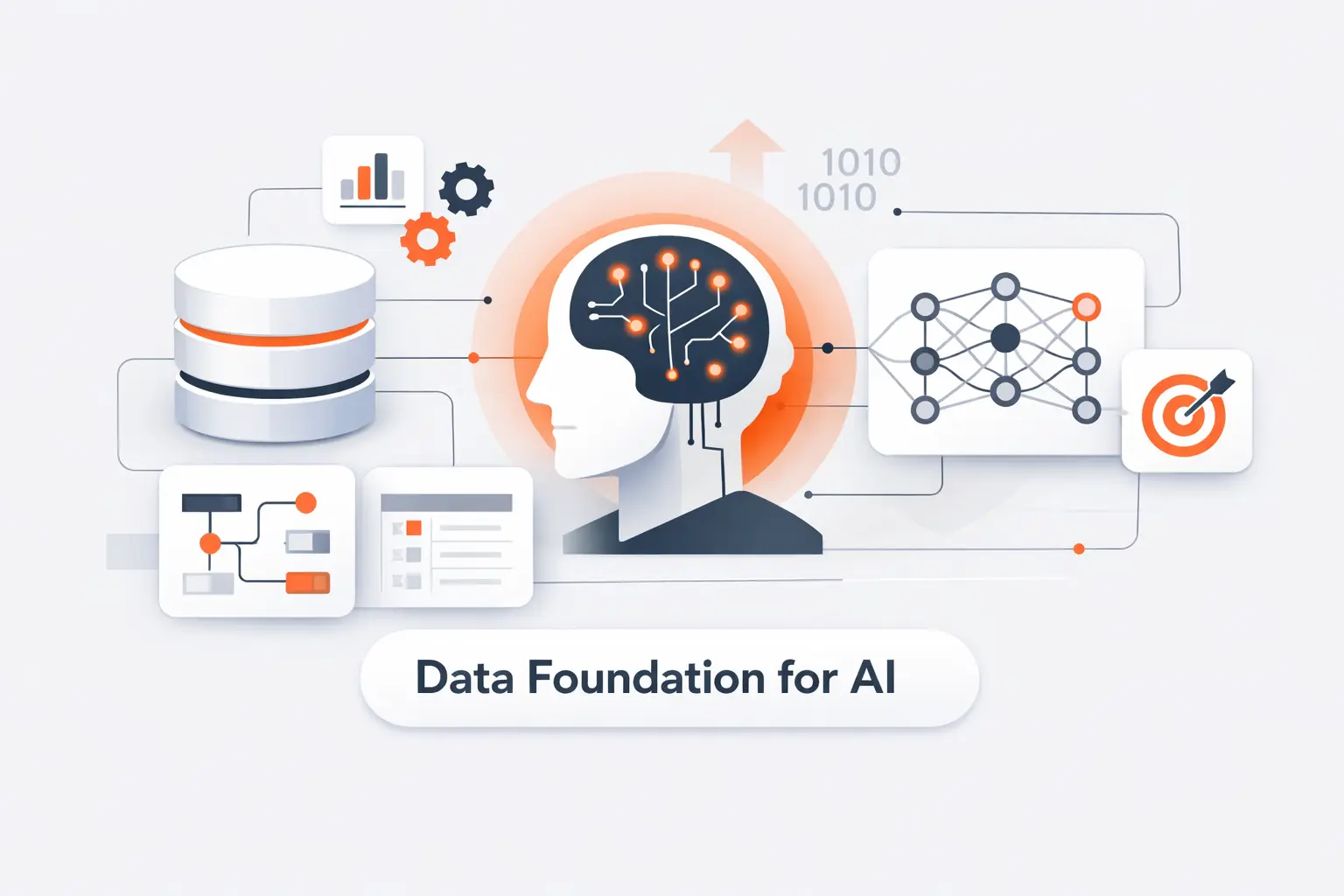
No model rescues messy foundations. If the data is late, mislabeled, or missing the business context, the decision will drift or fail.
1. Turning Raw Data into Actionable Insights
Raw data is just exhaust until someone structures it. A useful system needs clean events, reliable timestamps, business context, and clear outcomes. We usually start by asking basic questions. What decision are we supporting? What signals are available at decision time? Then what outcome proves the choice was good or bad? That sounds simple, but it is where many teams stumble. Clicks, tickets, orders, or sensor readings matter only when they are tied to a decision and a measurable result.
2. Improving Data and AI Literacy across Teams
Data and AI literacy should not live with data scientists alone. Product managers need to understand tradeoffs. Operations teams need to know what a score means and when to override it. Compliance teams need clear records. Leaders need to know the limits of a model before they promise too much. We have found that plain-language training beats jargon every time. If people cannot explain what the system does, they will not trust it when pressure rises.
3. Connecting First-Party Data, Platforms, and Business Workflows
By first-party data, we mean signals you collect directly from customers and operations. That is often the best starting point because it reflects your real processes and constraints. But value appears only when that data connects to the tools people already use. CRM records, ERP transactions, support tickets, warehouse scans, and mobile inputs should not live in isolated silos. AI-driven decision making works best when models, APIs, business rules, and human approvals sit inside the same flow. If the insight lives outside the workflow, it usually dies in a dashboard.
Recommended reading: How to Build a Rag Chatbot: A Practical Rag and Langchain Blueprint From Prototype to Production
How AI-Driven Decision Making Works
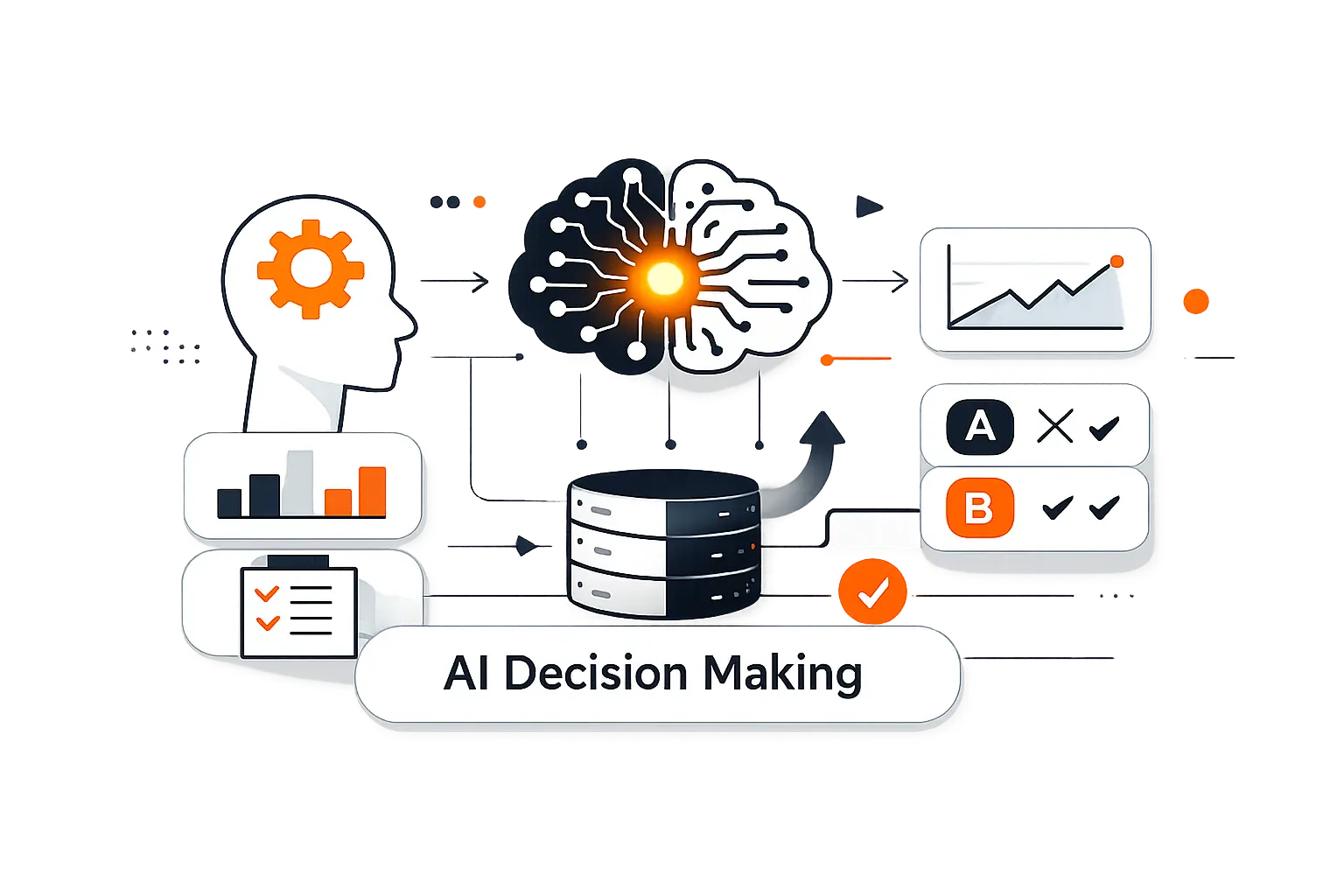
Under the hood, most production systems use a small set of ideas. The mechanics can be technical, but the logic is easier than many people expect.
1. Using Supervised Learning to Predict Outcomes
Supervised learning starts with labeled history. The model sees past examples and learns the relationship between inputs and outcomes. From there, it can estimate the chance of churn, default, fraud, delay, or conversion on new cases. In plain terms, it asks, “Given what we have seen before, how likely is this outcome now?” We use this approach often because it is measurable and direct. If you have reliable historical outcomes, supervised learning is usually the cleanest path from data to a decision score.
2. Applying Reinforcement Learning to Optimize Choices over Time
Reinforcement learning is better for choices that unfold over time. Instead of learning from a fixed right answer, the system learns from rewards and penalties. Think of a recommendation engine, a pricing system, or a routing system that tries an option, observes the result, and adjusts its strategy. The hard part is designing the reward well. If you reward only clicks, you may hurt long-term value. If you reward only speed, you may harm quality. That is why we treat the reward function as a business policy, not just a math setting.
3. Combining AI Agents and Large Language Models for Context and Personalization
Large language models help when the input is messy text, conversation, policy documents, or mixed context. They can summarize, classify, extract fields, and draft recommendations. AI agents go a step further. They can understand context, coordinate multiple steps, and move work toward a goal. In creative production, an invideo agent can work from existing materials such as scripts, PDFs, references, videos, and brand documents, using that understanding to support decisions throughout the filmmaking process rather than starting from isolated prompts. Used carefully, this is powerful. A support agent can read a complaint, pull order history, suggest a refund path, and ask a manager for approval when the case crosses policy. The catch is discipline. Agents need bounded permissions, approved sources, and clear handoff rules.
Recommended reading: What Is Retrieval Augmented Generation: A Practical Guide to RAG for Building Grounded AI
Balancing AI Automation and Human Judgment
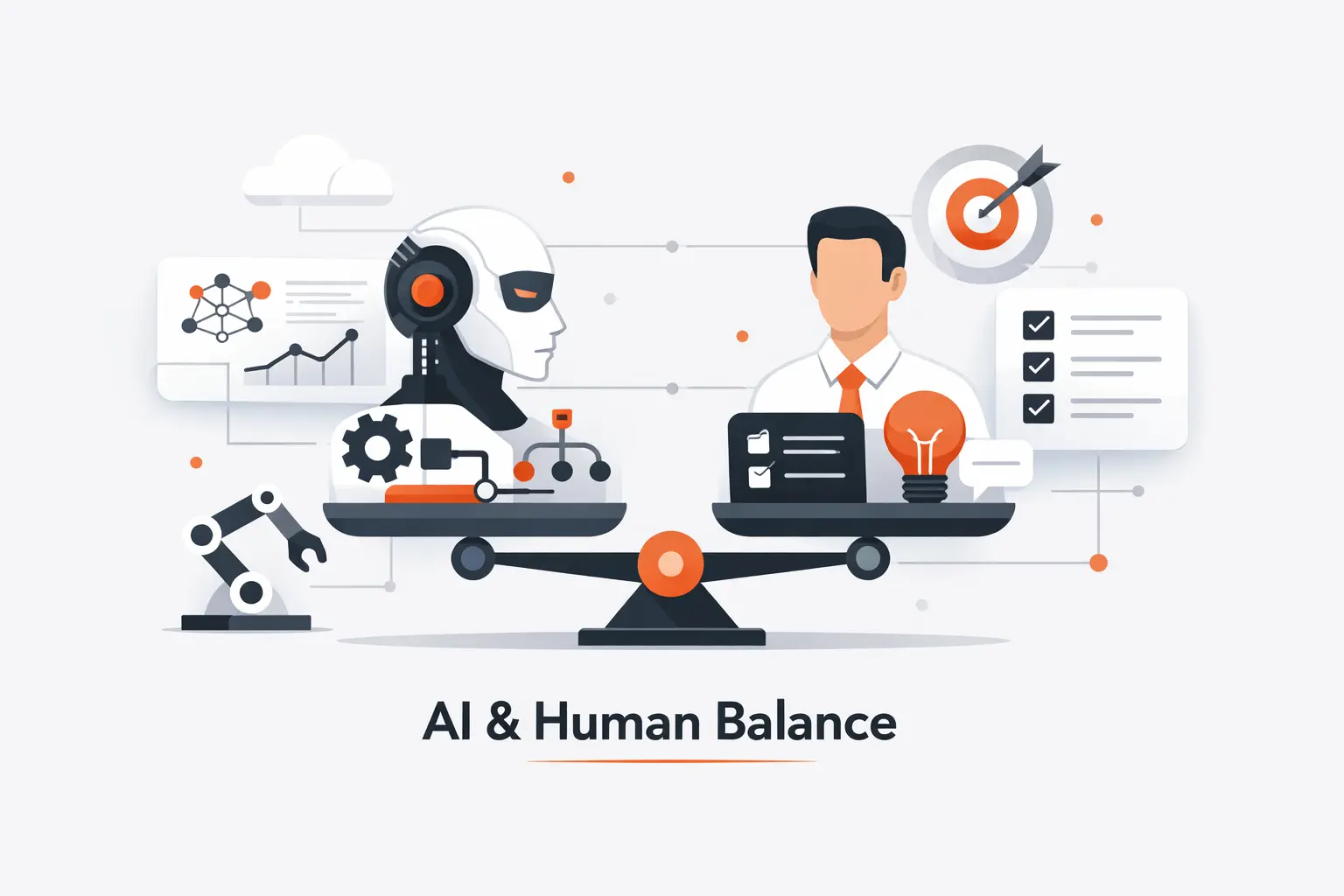
This is where judgment matters most. We do not believe every decision should be automated, and we do not think every model needs a person staring over its shoulder.
1. When AI Can Automate Low-Stakes Decisions
Low-stakes, high-volume decisions are the best place to automate. Good examples include sorting support tickets, ranking recommendations, classifying invoices, or choosing the next outreach sequence within fixed rules. These decisions are frequent, reversible, and easy to measure. If the model underperforms, the team can tune thresholds or roll back the change. That is the sweet spot. Let the software handle repetition, and let people focus on the exceptions.
2. When Human Oversight Should Remain in Control
When a decision can affect fairness, safety, access, income, or health, humans should stay in control. Lending, hiring, insurance denials, medical triage, and safety incidents all deserve review. AI can still help. It can summarize evidence, highlight anomalies, and rank cases by urgency. But the final call should sit with someone accountable. In our view, the line is clear. If the harm from a bad decision is hard to reverse, keep a human in the loop.
3. Why Explainability and Calibrated Trust Matter
Trust should be earned, not assumed. That is why explainability matters. Users need to know what the system looked at, how confident it is, and when the answer is weak. Calibrated trust is the goal. If a model says it is highly confident, it should prove reliable in cases like that over time. If confidence is low, the system should say so and ask for help. We would rather ship a modest model with honest signals than a flashy one nobody understands.
Recommended reading: What Is AI Integration: How to Embed AI Into Existing Systems, Apps, and Workflows
Real-World AI-Driven Decision Making Use Cases
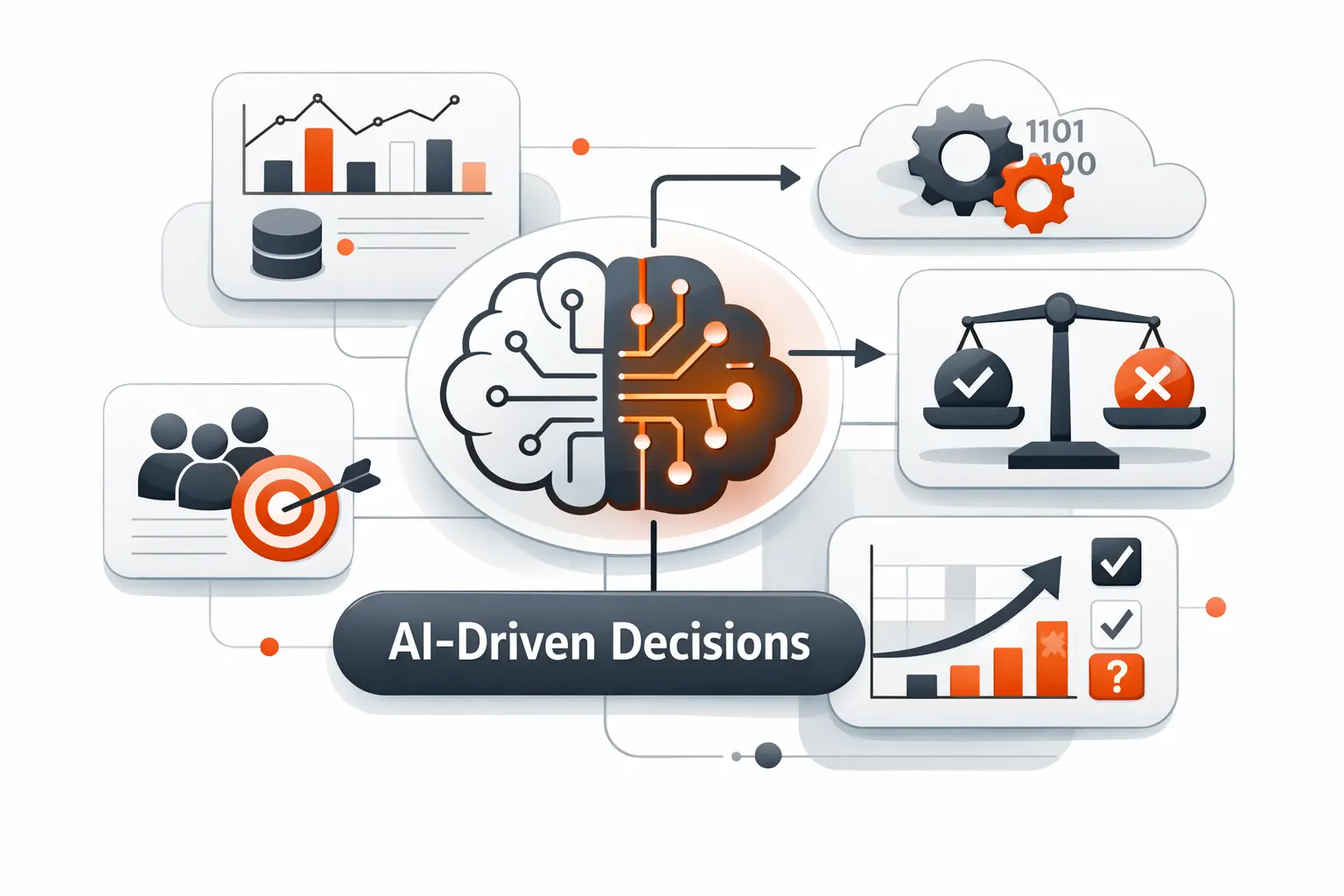
The easiest way to understand AI-driven decision making is to see it at work. The pattern repeats across industries, even when the stakes and data look very different.
1. Retail Operations, Marketing, and Personalized Customer Journeys
In retail, decisioning touches both the customer side and the operations side. Models rank products, time promotions, personalize recommendations, and decide which message a shopper should see next. They also forecast demand, allocate stock, and adjust routes when conditions change. We like retail examples because the feedback loop is fast. Teams can see quickly whether the model improved conversion, availability, or fulfillment.
Walmart says its route optimization technology helped avoid 30 million unnecessary miles, which is the kind of outcome we want to see. The model is not interesting because it exists. It is interesting because it changes real delivery choices, trims waste, and helps products reach stores when they should.
2. Credit Risk, Fraud Detection, and Financial Decision Support
Financial use cases are some of the clearest. Credit risk models estimate how likely a borrower is to repay. Fraud models look for unusual combinations of amount, merchant, device, location, and behavior. Decision support tools help analysts spot borderline cases faster. Mastercard says its Decision Intelligence system helps banks score and safely approve 143 billion transactions a year. That shows what production scale looks like when latency and accuracy both matter.
3. Healthcare, Agriculture, and Mobility Applications
Healthcare demands more caution, but it also shows the value of structured support. We would never treat a model as a stand-in for clinical judgment. Still, the FDA keeps its public device list for authorized AI-enabled medical tools, which tells us the field is moving through real regulatory channels. In practice, the useful role is often triage, image review, prioritization, or documentation support, not blind automation.
Agriculture is a great example of AI in the field, literally. John Deere reported 59% average herbicide savings in 2024 from its See & Spray system. That result came from a narrow decision done well, identify weeds and spray only where needed. We find that lesson useful. Narrow, high-frequency choices often deliver more value than grand promises. Mobility makes the stakes even clearer. Waymo’s safety dashboard reports 92% fewer serious injury or worse crashes against local human benchmarks in its operating areas. Whether one agrees with every method or not, the example shows what modern decision systems look like in the wild, constant sensing, continuous prediction, and strict safety review around each action.
How to Implement AI-Driven Decision Making at Scale
Knowing the use cases is one thing. Making them dependable across teams, products, and regions is another.
1. Start Small with High-Value Use Cases and Clear Outcomes
We tell clients to start with a narrow decision that hurts today and can be measured tomorrow. Choose a use case with clear inputs, a clear action, and a clear outcome. Then compare the model against the current process. A shadow rollout works well. The system makes recommendations in the background while humans keep control. That lets you learn before you automate. It also keeps the project honest because the score must beat the baseline, not just sound impressive.
2. Build Trust through Transparency, Governance, and Change Management
Trust grows when people can see the rules of engagement. Document what the model is for, what it is not for, who owns it, how overrides work, and what happens when the system fails. Train the teams who will actually use it. Show examples of good and bad cases. Communicate changes early. In our experience, resistance is rarely about math. It is usually about hidden process change. Good governance and change management make the system feel accountable instead of mysterious.
3. Integrate AI into Existing Systems with Cross-Functional Collaboration
AI works best when it lives inside the software people already depend on. That means integration, not isolation. The scoring service may run in the background, but the result should appear in the CRM screen, the warehouse tool, the mobile app, or the review queue where work already happens. This is also why cross-functional collaboration matters. Product, engineering, data, operations, security, and legal all shape the final decision flow, and each group sees different failure modes.
Governance and Risk in AI-Driven Decision Making
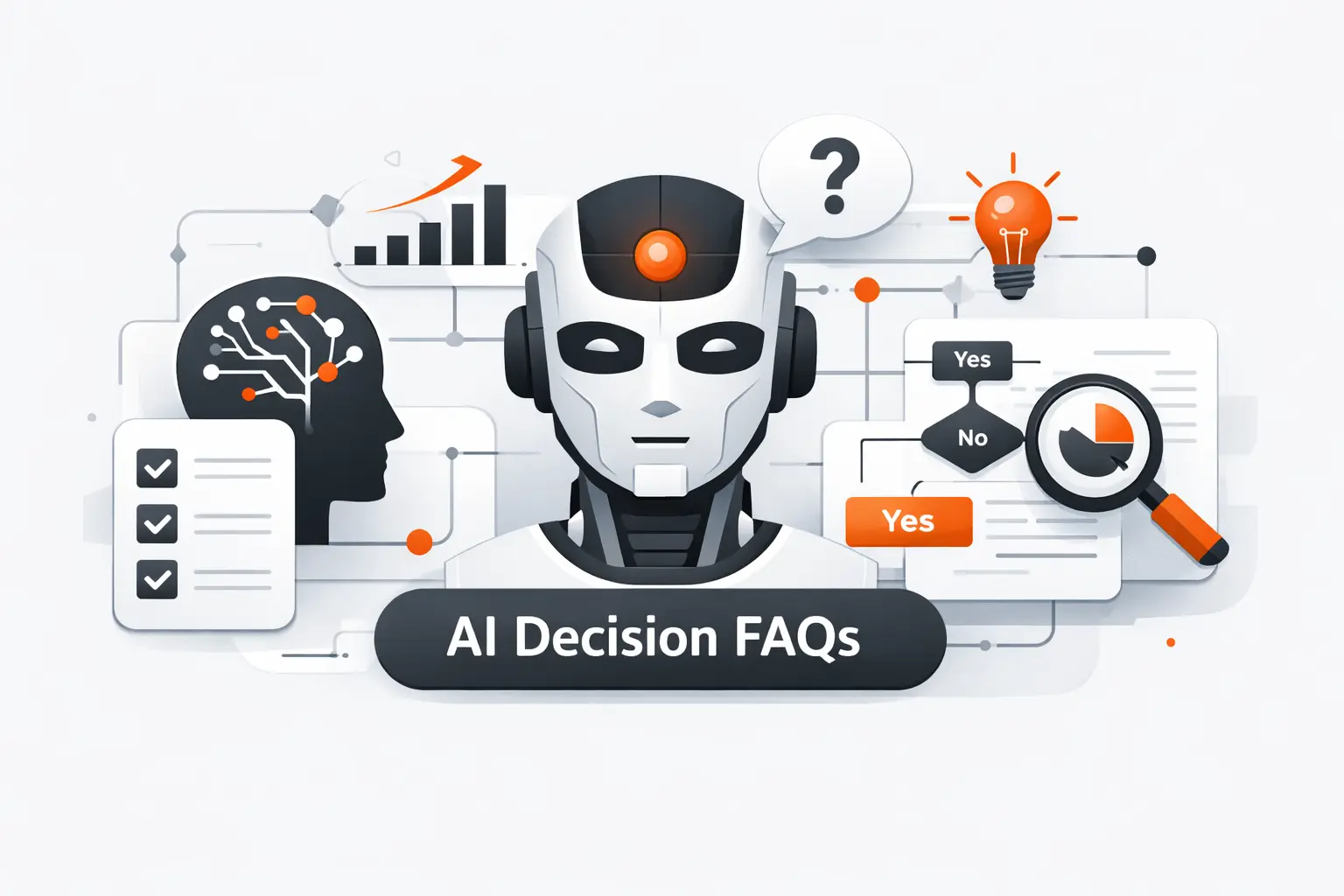
We think governance is where serious teams separate themselves from demo culture. A model in production is not a science project. It is part of operations.
1. Bias, Fairness, and High-Risk Use Cases
Bias rarely announces itself. It often hides in training data, proxy fields, or uneven outcomes across groups. Teams need to test performance by segment, check which variables drive recommendations, and design appeal paths for affected users. High-risk use cases deserve tighter review, stronger documentation, and more conservative automation. A model that improves the average while harming a vulnerable group is not good enough. We believe fairness work should begin before launch, not after a complaint.
2. MLOps, Monitoring, and Incident Reporting
MLOps is the practice of keeping models healthy after release. It covers deployment, version control, monitoring, rollback, and retraining. We also watch for data drift, missing inputs, slow responses, and unusual override patterns. Incident reporting matters just as much. If a model causes harm, degrades suddenly, or behaves outside policy, the team needs a clear path to pause it, investigate, and communicate. Fancy models fail in ordinary ways. Most problems look like stale data, broken pipes, or silent drift.
3. Metrics, Calibration, and Ongoing Model Improvement
The right metric depends on the decision. Sometimes precision matters more than recall and a false negative costs more than a false positive. Sometimes business value matters more than raw accuracy. Calibration adds another layer. If a model says a case is high risk, the observed outcomes should roughly match that confidence over time. We prefer steady improvement over one-time heroics. Monitor the model, compare it with newer candidates, adjust thresholds, and keep learning from real outcomes.
AI-Driven Decision Making FAQ
We get a few recurring questions on this topic, so here are straight answers without the fluff.
1. What Does AI-Driven Decision Making Mean for Modern Teams?
For modern teams, AI-driven decision making means software can assist or automate repeatable choices using live data. It might rank leads, route tickets, flag anomalies, or recommend the next action inside a product. The team still sets goals and policy. The model adds speed and pattern recognition. Done well, this changes everyday work more than strategy slides do.
2. How Is AI Applied to Everyday Business Decisions?
AI shows up in ordinary business decisions more often than people expect. It can choose which customer gets which offer, which order needs review, which asset needs maintenance, or which support case should jump the queue. The common thread is simple. There is a defined action, available data, and an outcome the team can learn from.
3. Can AI Replace Human Judgment in High-Impact Decisions?
No, not in high-impact situations. AI can support human judgment, and sometimes it should automate low-risk routine tasks. But when a choice affects health, safety, fairness, legal exposure, or major financial outcomes, people should retain final authority. For organizations managing health and safety risks at scale, EHS management software can centralize incident data, risk assessments, audits, and reporting so decision-makers have a consistent view of operational risk. The right goal is not replacement. It is better judgment with better tools.
4. What Does an Effective AI Decisioning System Need?
An effective system needs reliable data, a clear decision target, measurable outcomes, business rules, monitoring, and a feedback loop. It also needs good software around the model. Users need screens, alerts, audit trails, approval paths, and fallback behavior when the model is uncertain or unavailable. The model is only one piece of the system.
How TechTide Solutions Builds Custom Software for AI-Driven Decision Making
At TechTide Solutions, we build AI-driven decision making as part of custom software, not as a disconnected experiment. We start with the decision, the people involved, and the business result that matters.
1. Tailoring Decision Workflows to Your Business Goals
We first map the decision flow. Who triggers it? What data is available at that moment? What action follows the score? Who can override it? What counts as success? That framing keeps the project grounded. We are not interested in dropping a model into the middle of a business and hoping the rest sorts itself out. We design around your goals, policies, and failure tolerance from the start.
2. Building Web, Mobile, and Software Solutions around Your Data
From there, we build the surrounding product. That may be a web dashboard for analysts, a mobile app for field teams, or a backend service that scores events in real time. We connect the interface to the data pipelines, APIs, and business logic already in place. The result should feel like part of your product, because it is. Good AI systems need solid software engineering before they need impressive demos.
3. Connecting Data Sources, Models, and Human Oversight into One System
Our best work brings data sources, models, and human review into one operating loop. We connect databases, third-party tools, model endpoints, and approval queues so the right person can step in when needed. We also build logging, audit trails, role-based access, and monitoring into the flow. That way, the system can move fast when confidence is high and slow down when judgment needs a closer look.
Conclusion: Making Better Decisions with AI and Human Judgment
We believe the future of AI-driven decision making belongs to teams that know the difference between automation and abdication. The goal is not to hand every choice to a model. The goal is to decide better, faster, and with clearer evidence. That requires clean data, tight workflows, governance, and honest human oversight.
When those pieces come together, AI becomes less mysterious. It becomes a practical decision layer across your business, from operations to customer experience to risk control. At TechTide Solutions, that is the standard we build toward. Smarter software should help people make better calls, not remove them from the process.


