


If you are asking what DSPy is, we at TechTide Solutions see it as a cleaner way to build AI features that must keep working after the demo. Instead of hand-tuning one giant prompt, we define the task, the expected inputs and outputs, and the way we will judge success. That gives us code we can test, inspect, and improve over time.
That shift matters because AI is already part of normal product work. McKinsey found 88% of organizations regularly use AI in at least one business function. Once AI moves into real workflows, fragile prompt strings stop being clever and start becoming maintenance debt.
What Is DSPy and Why It Matters
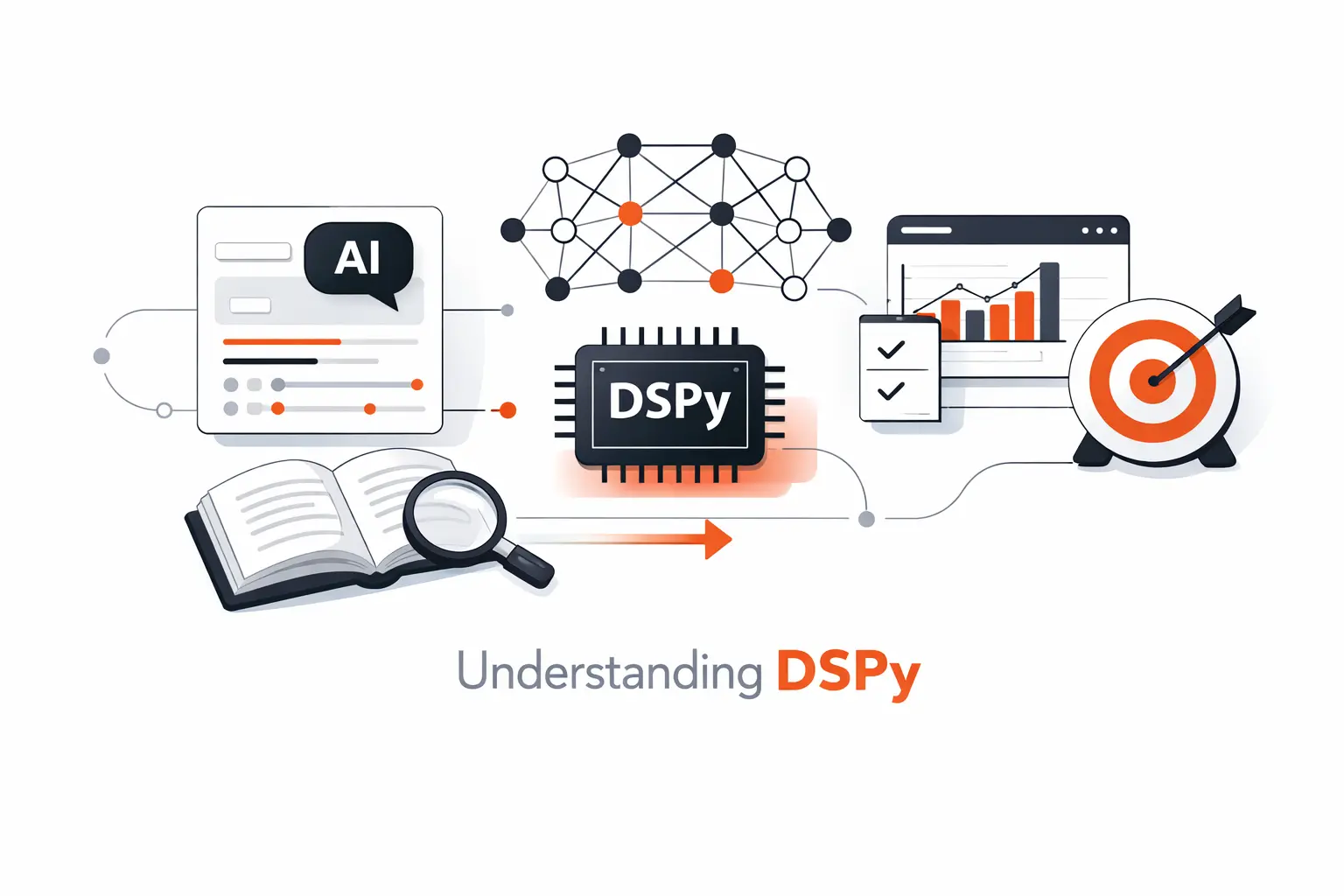
DSPy came out of research on multi-step language model systems, but its main idea is simple. We program model behavior as structured components, then optimize those components against a metric. In our view, that matters because it treats AI work more like software and less like guesswork with prompts.
1. Programming Language Models Instead of Writing Fragile Prompts
Traditional prompt engineering often means cramming instructions, examples, formatting rules, and edge cases into one string. That can work for a prototype. It gets painful when the task grows, the model changes, or another engineer has to maintain it. DSPy moves that logic into code, where each model call has a clear job and each job can improve without rewriting the whole system.
2. How DSPy Shifts Focus From Prompt Wording to Task Intent
The biggest shift is mental. We stop obsessing over the perfect sentence and focus on the task itself. A signature is the heart of that shift. It lets us define work with short string specs like question -> answer or document -> summary. The field names carry meaning, so the system knows what roles the inputs and outputs play.
3. Why Prompt Chains Often Break as Models Evolve
Prompt chains often break because they mix too many concerns. The prompt is doing task definition, formatting, reasoning style, and provider-specific quirks all at once. Change the model, the context, the output format, or the tool behavior, and the whole chain can wobble. DSPy separates those concerns, so changing one part does not force us to rediscover everything by hand.
Recommended reading: Is Vibe Coding Legal for Businesses, Founders, and Developers
How DSPy Works
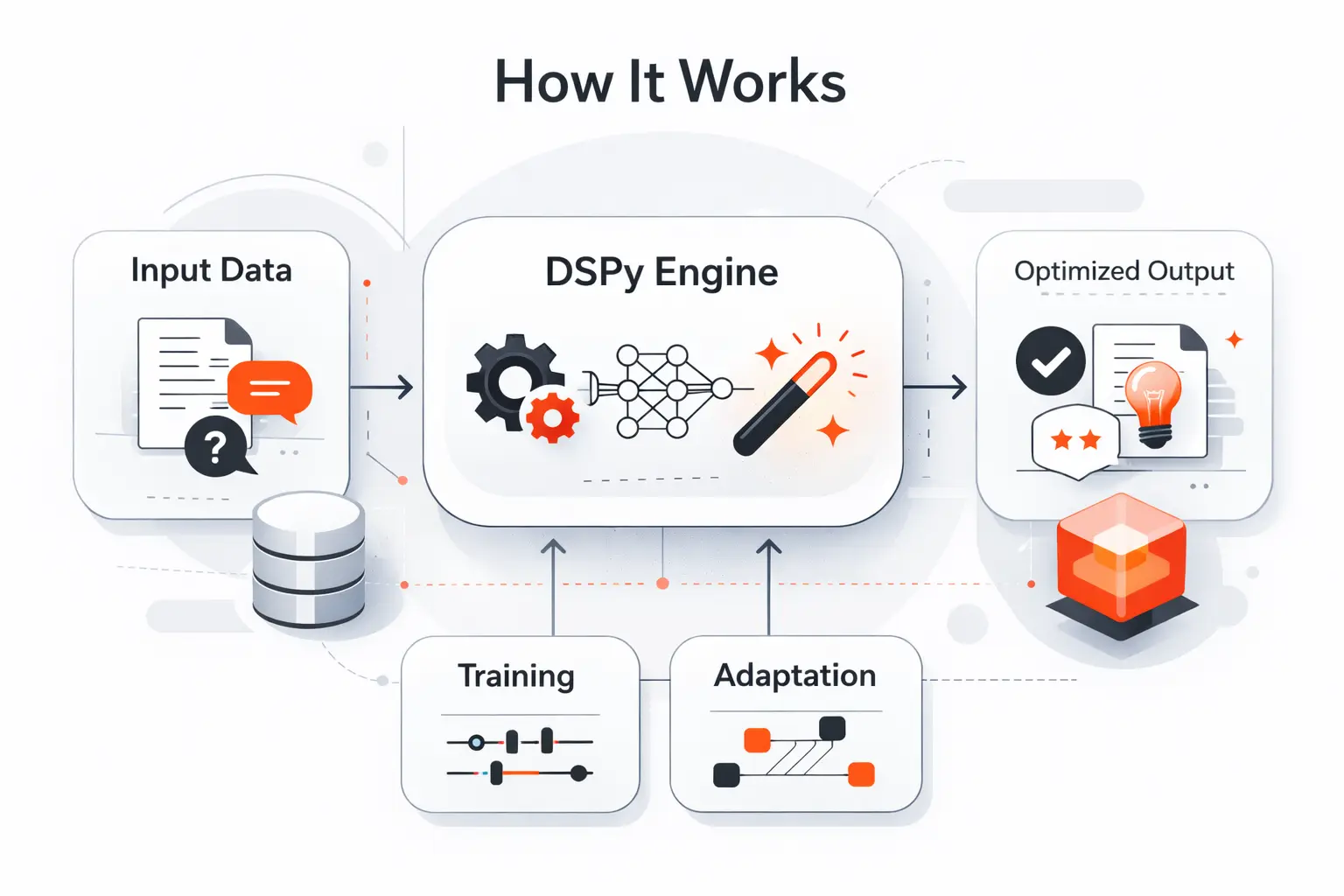
Under the hood, DSPy still uses prompts and model calls. The difference is how we express and improve them. The normal loop is straightforward. Define the task, write a small program, create a metric, run evaluations, and compile the program so an optimizer can tune it.
1. Define Clear Inputs, Outputs, and Success Metrics
We usually start with a task contract. What comes in and must come out? What makes an answer good enough to ship? DSPy pushes us to answer those questions early. A metric can be simple, like accuracy, or more nuanced, like checking whether a long answer covers the right facts without drifting. Without that target, optimization is just tuning by feel.
2. Use Signatures and Modules to Build AI Pipelines
Next come signatures and modules. Signatures say what a step should do. Modules say how that step will behave. Modules are the moving parts. They carry learnable parameters, and we can combine them into bigger Python programs. A basic Predict step is fine for simple tasks. A ChainOfThought or ReAct step makes more sense when reasoning or tool use matters.
3. Compile, Evaluate, and Optimize Results Over Time
Compilation is where DSPy starts to feel different from ordinary prompt work. Here, compile does not mean turning Python into bytecode. It means running an optimizer that searches for better instructions, demonstrations, or even model weight updates based on the metric we chose. We evaluate, inspect the failures, adjust the program, and compile again. That loop is where most of the value shows up.
Recommended reading: AI-Driven Decision Making: How It Works, Benefits, and Real-World Use Cases
The Core DSPy Concepts to Understand First
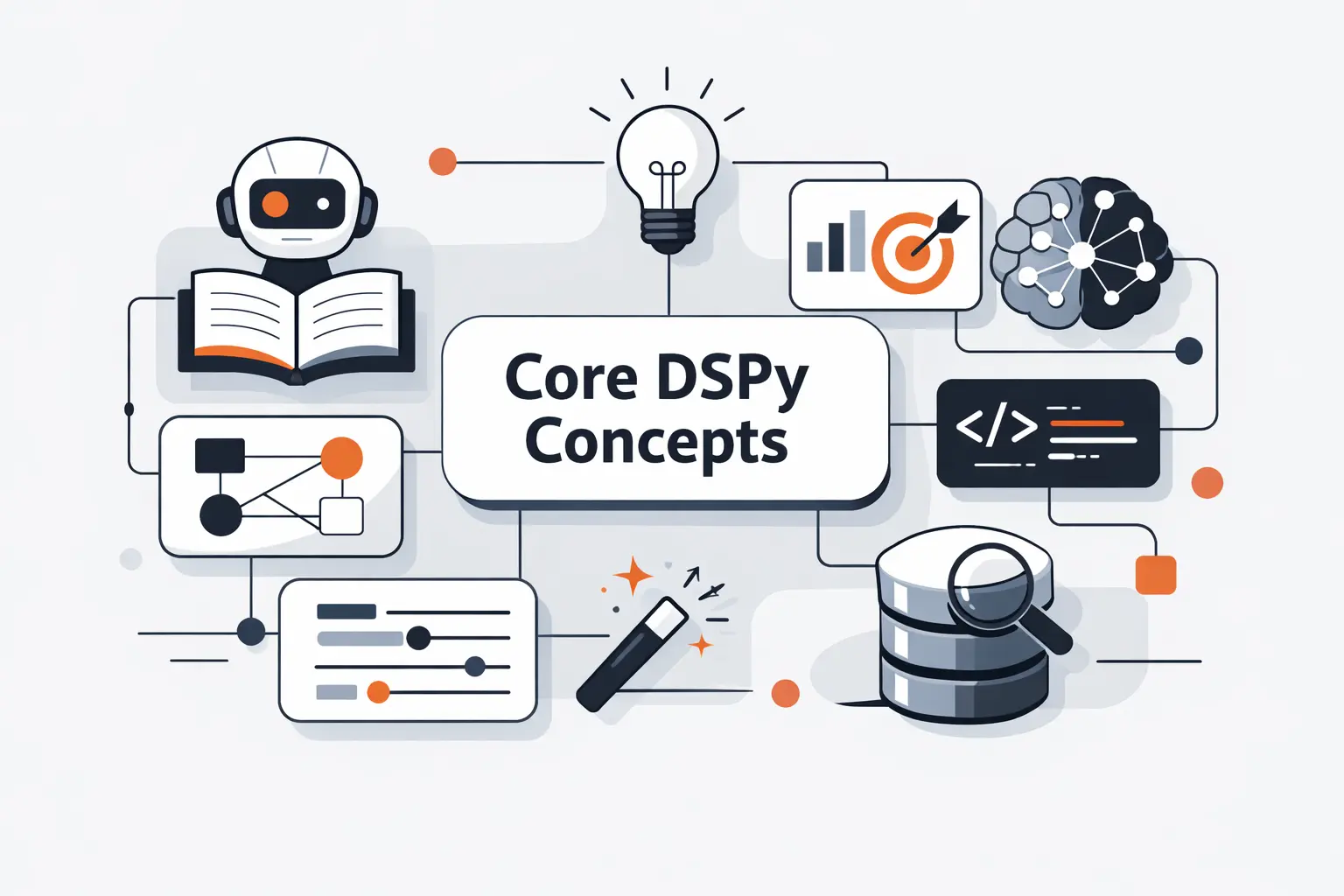
Beginners do not need every DSPy feature on day one. We think a small set of ideas carries most of the weight. Language models generate outputs. Signatures define intent. Modules implement behavior. Optimizers improve results against a metric. Once those ideas click, the rest becomes much easier.
1. Language Models, Signatures, and Modules
A language model is the engine. A signature is the contract. A module is the strategy that uses the engine to fulfill that contract. We explain it to clients like this: the signature says the job, and the module says the working style. That split makes DSPy readable. It also makes AI pipelines easier to swap, test, and reason about.
2. Optimizers, Metrics, and Compilation
Optimizers and metrics form the feedback layer. A metric gives the system a target. An optimizer searches for prompt instructions, few-shot examples, or fine-tuning paths that improve that target. Compilation is the act of applying that search to your program. If we skip the metric, optimization becomes guesswork dressed up as engineering.
3. Structured Outputs and Custom Modules
Structured outputs matter more than most teams expect. They let us ask for lists, typed fields, booleans, custom objects, and multi-part responses instead of one blob of text. That is a big deal for extraction, classification, and downstream automation. Custom modules matter too. Once a task needs retrieval, ranking, validation, or post-processing, plain Python composition becomes a real advantage.
Recommended reading: DSPy vs LangChain: Key Differences, Best Use Cases, and How to Choose
Why Teams Use DSPy Instead of Handcrafted Prompts
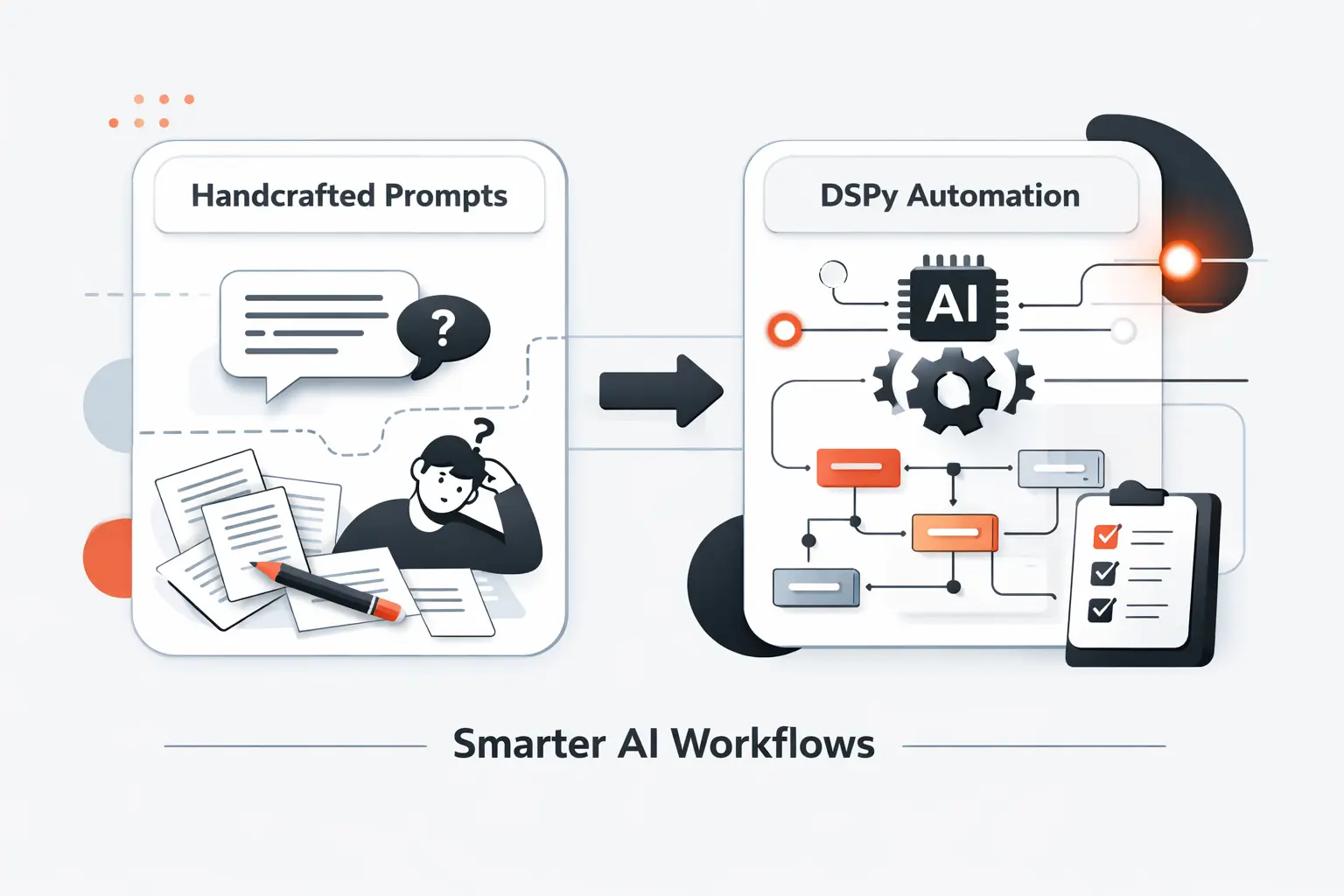
When teams outgrow a one-prompt demo, DSPy becomes attractive very quickly. We like it when the task has real failure modes, several moving parts, and a clear way to judge quality. In those cases, handcrafted prompts tend to become brittle, opaque, and expensive to revisit.
1. Better Reliability and Maintainability
Reliability improves because the system has structure. We can read a signature and know what a step is supposed to do. We can inspect outputs by field and trace failures back to a module, instead of digging through a giant prompt. Maintainability improves for the same reason. The logic lives in code, not in prompt archaeology.
2. Faster Iteration Across Models and Use Cases
Iteration is faster because the task definition survives changes. We can switch models, change reasoning style, add a tool, or update the metric without throwing away the whole design. That does not mean zero rework. It means the rework is usually local. In practice, that difference saves a lot of frustration when cost, latency, or provider choice changes.
3. Flexible Building Blocks for Complex AI Systems
DSPy is also good at compound systems. We can chain retrieval with reasoning, add an evaluator, call tools, and branch on results, all in ordinary Python. That makes it a better fit for serious AI features than a single prompt with heroic instructions. We would choose this style whenever the task has steps, dependencies, or internal checks.
Recommended reading: What Is ChromaDB? A Practical Guide to Features, Use Cases, and Trade-Offs
Common DSPy Use Cases
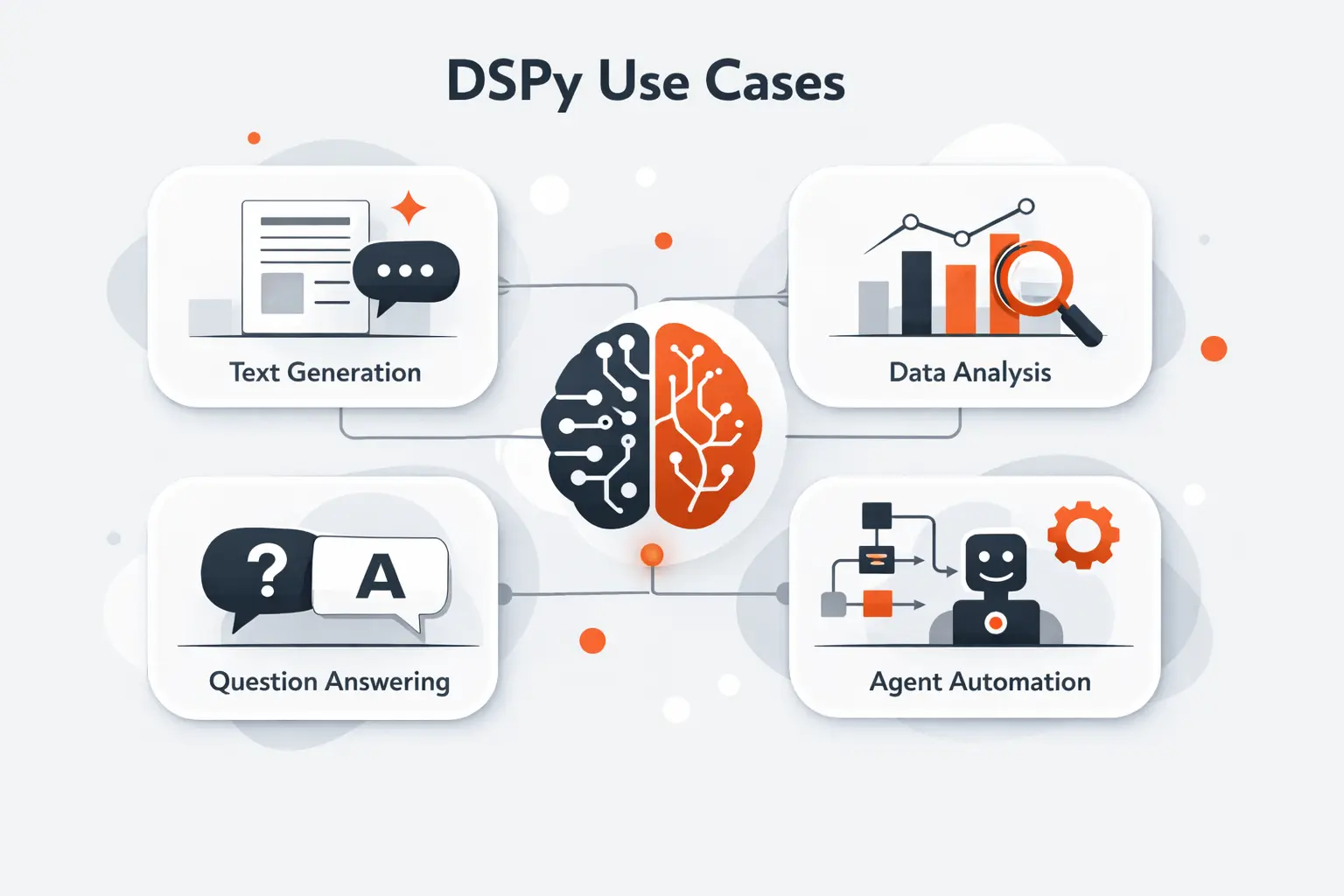
The use cases tell the story. DSPy is not just for chatbots. We see it as a practical fit for search, question answering, extraction, agents, ranking, and any workflow where output quality has to improve through measurement.
1. Question Answering, RAG, and Multi-Step Reasoning
Question answering and RAG are natural fits because they combine retrieval, reasoning, and evaluation. DSPy lets us express those as explicit steps instead of hiding them inside one prompt. That matters when answers are long and faithfulness matters. In an official tutorial, a RAG pipeline moved from around 42% to approximately 61% on its evaluation metric after optimization. That is the kind of improvement that gets a team’s attention.
2. Summarization, Classification, Translation, and Extraction
Summarization, classification, translation, and extraction also benefit from DSPy’s typed outputs. If we want a sentiment label, a short summary, a translated passage, or a list of entities, signatures make those expectations explicit. This is where DSPy feels refreshingly practical. We ask for the shape we need, then improve it with examples and metrics instead of squeezing everything out of prompt wording alone.
3. Agents, Tool Use, and Domain-Specific Workflows
Agents and tool-heavy workflows are another strong fit. DSPy’s ReAct-style modules can call search, calculators, databases, or custom business tools. The same pattern scales into real companies. Shopify reported ~550× cost reduction for structured metadata extraction, and public examples also mention Dropbox, JetBlue, AWS, Moody’s, and healthcare workflows. We like those examples because they are boring in the best possible way. They solve concrete business problems.
Recommended reading: How to Build a Rag Chatbot: A Practical Rag and Langchain Blueprint From Prototype to Production
How to Get Started With DSPy
If you want to learn DSPy, our advice is simple. Start small. Do not begin with an agent, a dozen tools, and five evaluation dimensions. Start with a single task you can judge by eye, then add structure only when it earns its keep.
1. Install DSPy and Configure a Model
The first step is installation and model setup. Use pip install -U dspy, create an LM, and call dspy.configure(lm=lm). We recommend starting with a model you already know, so you can tell whether DSPy’s structure is helping. Keep the provider choice boring at first. The point is to learn the workflow, not win a benchmark.
2. Build a Simple Predict or Chain of Thought Workflow
Next, build the smallest useful program you can. A good first move is dspy.Predict("question -> answer") or dspy.ChainOfThought("question -> answer"). Feed it a small set of real examples. Read the outputs carefully. If the failure pattern is obvious, tighten the signature or split the task into steps. That discipline matters more than clever prompt wording.
3. Add Evaluation, Observability, and Optimization
Then add a metric, some visibility, and only then optimization. Use development examples to score outputs. Inspect call history when answers look odd. Add tracing if the system has several components. Beginners often think they need a huge labeled dataset before optimization. They do not. Some optimizers can start with 5 or 10 examples, which is enough to expose obvious failure patterns and make the search less blind.
How DSPy Compares With Prompt Engineering and Other LLM Frameworks
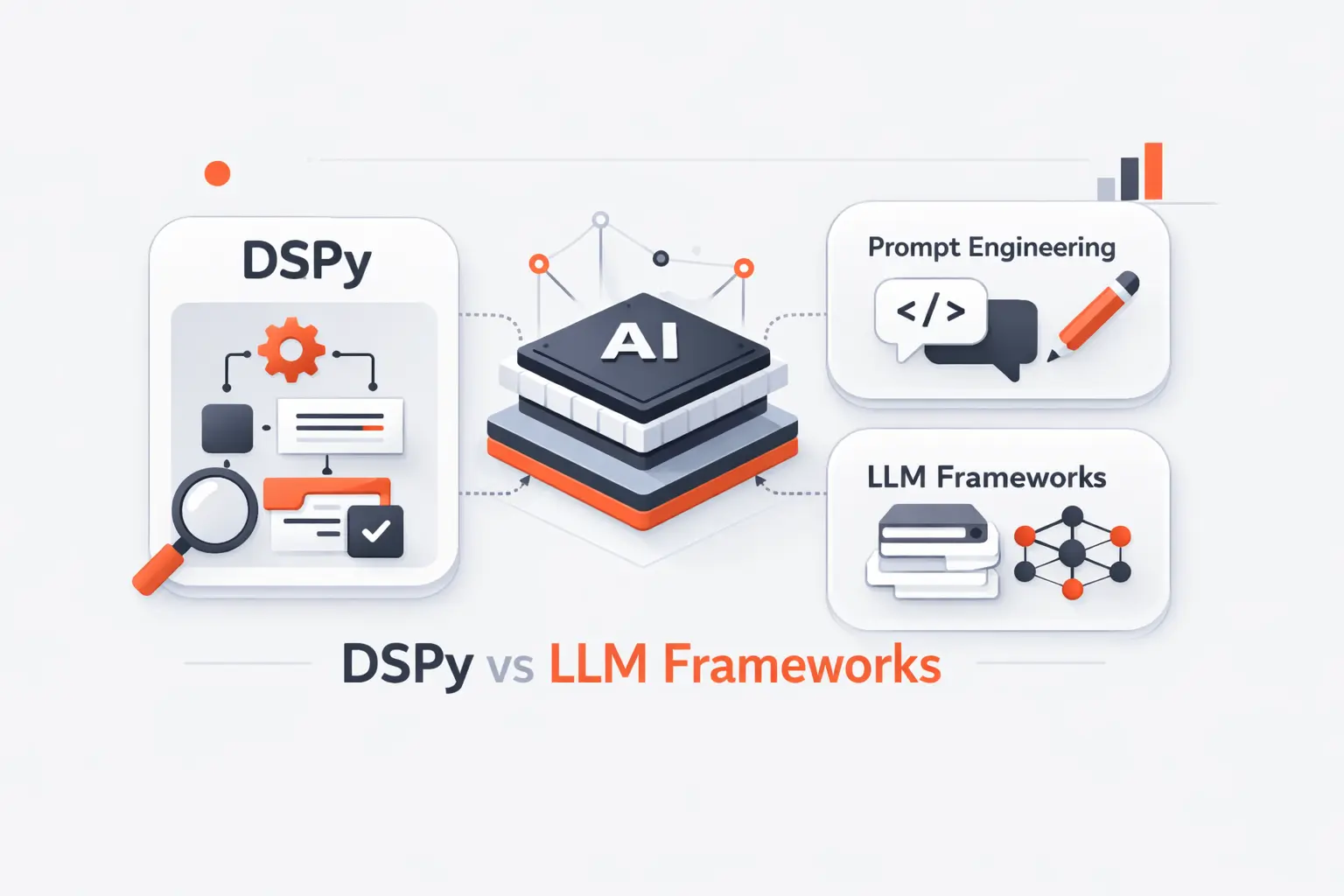
We do not see DSPy and prompt engineering as enemies. They solve different layers of the problem. We also do not think every team must replace its existing framework. The smarter question is where DSPy adds the most value in your stack.
1. Where DSPy Feels More Declarative and Modular
DSPy feels more declarative because we specify behavior and success criteria, then let the compiler tune the low-level details. That is different from LangChain, which describes itself as an open source framework with a prebuilt agent architecture and many integrations. If we want task-specific optimization and modular LM programs, DSPy feels closer to our goal. If we want a fast starting point with lots of connectors, LangChain can feel easier upfront.
2. Where Prompt Engineering Still Plays a Role
Prompt engineering still matters. We still choose meaningful field names write instructions when the task needs them. We still describe tools clearly and design good evaluation prompts. DSPy simply moves that effort up a level. Instead of babysitting every final prompt string, we shape the task contract and let the system handle more of the tedious tuning.
3. Why DSPy Is Not a Total Replacement Yet
DSPy is not a total replacement yet because real systems need more than optimization. Teams still need deployment patterns, tracing, permissions, UI work, data plumbing, and product logic. DSPy’s ecosystem is growing, but it is smaller and more opinionated than broader application frameworks. We often see it as one strong piece in a larger architecture, not the whole toolbox.
Common Misconceptions and Challenges
A lot of confusion around DSPy comes from the word compile. People hear it and imagine magic. We think the healthier view is simpler. DSPy gives you a disciplined loop for building and tuning LM programs, but it still needs clear tasks, examples, and judgment.
1. DSPy Does Not Remove Prompts Behind the Scenes
DSPy does not remove prompts behind the scenes. It reorganizes them. Signatures express intent. Modules express strategy. Adapters and optimizers turn that into actual prompts and parses. That is good news, not bad news. It makes prompt design more systematic and less fragile.
2. You Do Not Need Large Datasets to Start Optimizing
Another misconception is that DSPy requires a huge labeled dataset before it becomes useful. It does not. You can start with a small, representative set and learn a lot. More data still helps. Better data helps even more. What matters first is that your examples reflect the real failures you care about.
3. Why Optimizers and Compilation Can Feel Hard to Understand
Optimizers and compilation feel hard because several ideas are moving at once. There is search, scoring, bootstrapping, and sometimes tool traces or fine-tuning. That is a lot. Our advice is to make the program tiny, inspect its history, compare before and after outputs, and treat the optimizer like an experiment, not an oracle.
Frequently Asked Questions About DSPy
Below are the short answers we give most often. They are blunt on purpose. DSPy is easier to understand when we stop dressing it up.
1. What Is DSPy Used For?
DSPy is used for modular AI systems where output quality matters. That includes question answering, RAG, extraction, classification, summarization, agents, and custom tool use. If the work can be described as several clear steps with a measurable result, DSPy is usually worth a look.
2. How Does DSPy Compare With LangChain?
Compared with LangChain, DSPy is less about prebuilt app scaffolding and more about optimizing LM programs for a specific task. LangChain gives you broad integrations and agent ergonomics. DSPy gives you signatures, modules, metrics, and compilation. We sometimes use both, with DSPy handling the task logic that needs careful tuning.
3. Can DSPy Improve Real-World LLM Workflows?
Yes, DSPy can improve real-world LM workflows, but only when the workflow is measurable. If you have examples and a metric, you can often make a weak pipeline materially better. The public tutorials and production cases make that clear. Without evaluation, though, DSPy is just another abstraction layer.
4. Is DSPy Easy to Learn If You Already Know Python?
If you already know Python, the syntax will feel friendly. Most of the surface area is classes, functions, and module composition. The harder part is not the API. The harder part is learning how to define metrics and build a useful evaluation set. That is where real progress happens.
5. Do You Still Need Prompt Engineering With DSPy?
Yes, you still need prompt engineering with DSPy. You just do less string babysitting. We still define instructions, choose field names, describe tools, and write evaluation criteria. The difference is that those choices live inside a clearer programming model.
How TechTide Solutions Helps Build Custom AI and Software Solutions

At TechTide Solutions, we treat DSPy as one option in a broader product toolkit. Sometimes it is the right move. Sometimes a plain model call is enough. The key is matching the technique to the business problem, not chasing the newest abstraction.
1. Planning LLM Workflows Around Your Business Goals
When we plan LLM workflows, we start with the business goal, the failure cost, and the review path. If the task is simple, we keep it simple. If the task is multi-step, quality-sensitive, and likely to change, we consider DSPy because its evaluation and optimization loop gives us better control. That saves clients from rebuilding the same brittle prompt chain every quarter.
2. Developing Web, Mobile, and Software Products Tailored to Your Needs
We also build the surrounding product, not just the model call. That includes web apps, mobile apps, internal tools, APIs, permissions, dashboards, and human review flows. In our experience, AI features fail when they are isolated from the rest of the software. Good product work joins the model, the data, and the user interface into one coherent system.
3. Integrating Evaluation, Optimization, and Ongoing Iteration Into Custom Solutions
Our process always includes iteration. We create an evaluation set from real documents, tickets, or workflow examples. We add tracing so failures are visible and revise signatures and modules when requirements change. Then we re-run optimization and regression checks after model or provider updates. That is how custom AI features stay useful after launch.
Final Thoughts on What Is DSPy
1. When DSPy Makes Sense for Modern AI Development
DSPy makes sense when modern AI development needs more than clever prompt writing. If the task is multi-step, the output has business consequences, and quality can be measured, DSPy gives us a better way to work. If the task is trivial and disposable, it may be overkill. We like it best where reliability has a price tag.
2. What to Explore Next as You Learn DSPy
If you want to learn next, start with signatures, build a tiny module, define a simple metric, and run a small evaluation. Then explore RAG and tool use. Finally, read through public production examples and ask a hard question: where is your current prompt chain most likely to snap first? That is often the exact place where DSPy earns its keep.

