


When clients ask us about DSPy vs LangChain, we start with a blunt question: are we mostly wiring an AI application, or mostly improving how a model behaves inside it? That one choice shapes architecture, testing, and long-term cost. It also matters more now than it did a year ago, because generative AI spending is projected to reach $644 billion in 2025, which tells us framework choices are no longer side bets for prototype teams.
At TechTide Solutions, we do not treat these tools as interchangeable. We see LangChain as the stronger fit when orchestration, integrations, memory, and agent workflow control are the hard part. We see DSPy as the stronger fit when answer quality, reasoning quality, and repeatable improvement through evaluation are the real problem. In many production systems, the best answer is not either-or. It is a careful split between the two.
DSPy vs LangChain at a Glance
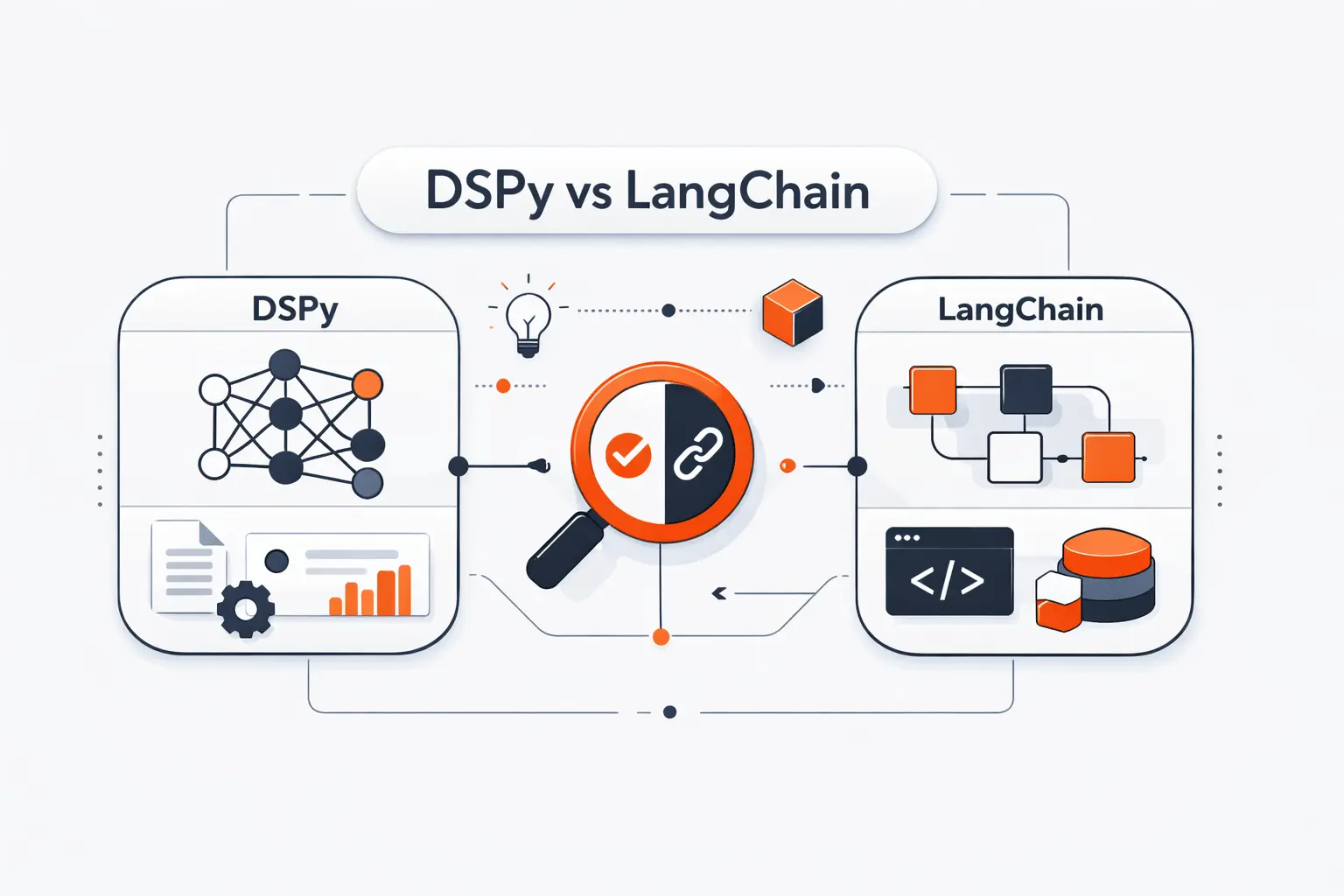
Here is our short version. If your system lives or dies by tools, APIs, memory, and control flow, LangChain is usually the safer first choice. If it lives or dies by measured output quality on a known task, DSPy deserves a hard look. And if both are true, a hybrid stack often makes the most sense.
1. Choose LangChain for Orchestration and Integrations
We choose LangChain first when the job is to connect a lot of moving parts. That includes model providers, retrievers, tools, memory, state, approvals, and deployment concerns. In plain terms, it is better when the software workflow around the model is the main challenge. For product teams, that usually means a faster path from concept to working system.
2. Choose DSPy for Eval-Driven Optimization
We choose DSPy when we have a task we can score. That might be question answering, classification, retrieval-augmented generation, or a multi-step reasoning pipeline. DSPy is built around signatures, modules, and compilation, so it fits best when we want to improve outputs with representative examples and a metric instead of hand-editing prompts over and over.
3. Choose a Hybrid Approach for Complex AI Systems
For serious applications, we often mix them. LangChain or LangGraph can manage the outer workflow, while DSPy optimizes a high-value inner component such as an answer generator, a classifier, or a planning step. That split keeps orchestration logic readable and still gives us an evaluation-driven path for the parts where model quality is the bottleneck. In our view, this is often the most practical production shape.
Recommended reading: What Is ChromaDB? A Practical Guide to Features, Use Cases, and Trade-Offs
The Core Difference Between DSPy and LangChain
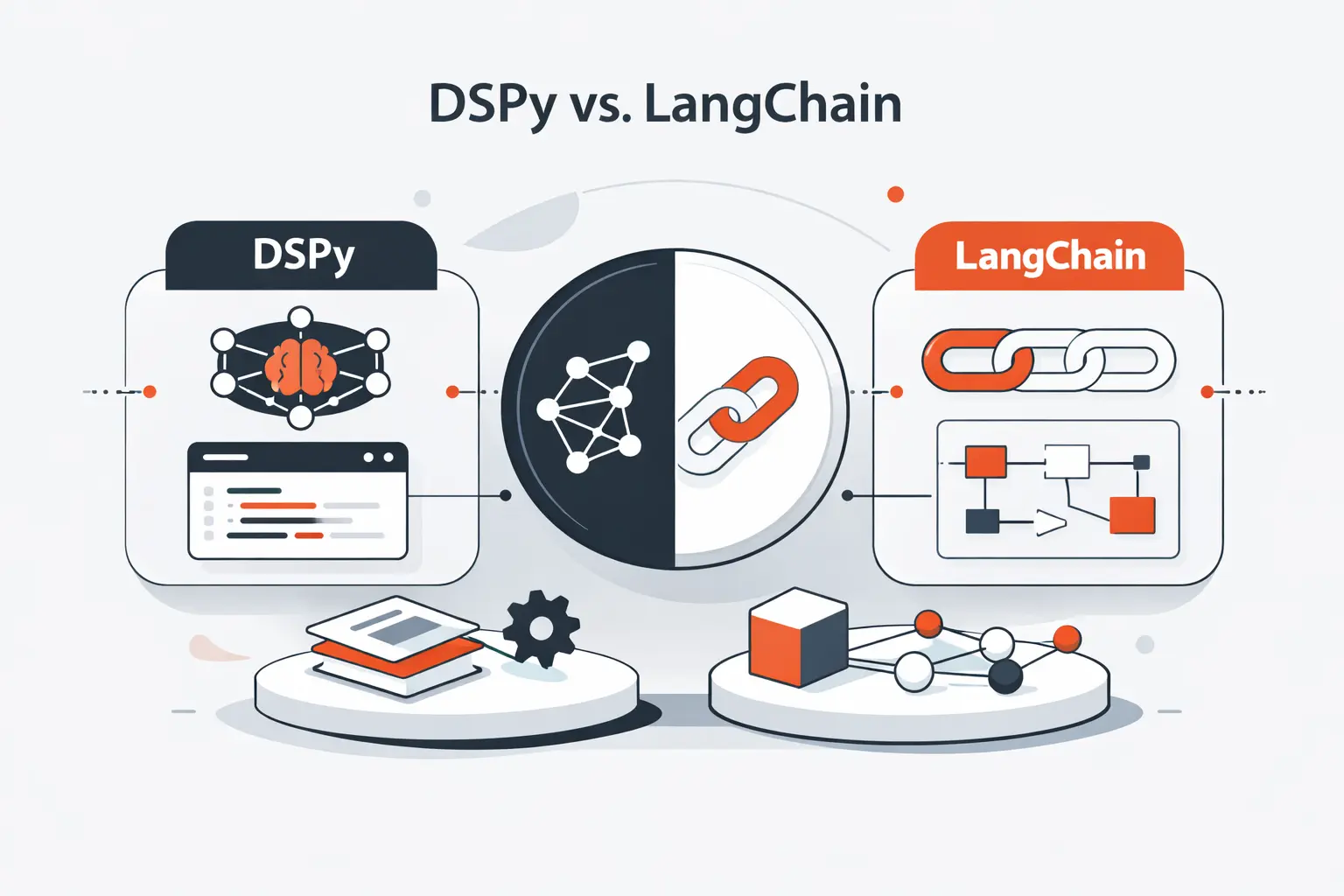
The core difference is not marketing. It is abstraction. LangChain organizes the problem around application flow. DSPy organizes it around task behavior and optimization. Once we frame the comparison that way, most of the confusion disappears.
1. LangChain as an Orchestration Framework
We think of LangChain as an orchestration framework. Its docs describe a single, unified API across model providers, and that sits beside agent abstractions, retrieval, tools, memory, and runtime support. In practice, that means we can swap providers, add tools, or change retrieval strategy without rebuilding the whole application from scratch.
2. DSPy as a Prompt Programming Framework
We think of DSPy as a prompt programming framework. Its center of gravity is code, not strings. We define signatures and modules, then let DSPy expand that structure into prompts, parse outputs, and optimize behavior against a metric. That is a very different mental model from keeping prompt templates in a pile of strings and patching them whenever a model shifts.
3. Why This Difference Changes Development and Maintenance
This difference changes how teams build and maintain systems. In LangChain projects, we usually spend more time on graph structure, tool contracts, state handling, and tracing. In DSPy projects, we spend more time on examples, metrics, and compilation runs. One stack manages application flow. The other tries to improve model behavior inside that flow. That sounds subtle, but it changes who owns quality, how tests are written, and how releases are validated.
Recommended reading: How to Build a Rag Chatbot: A Practical Rag and Langchain Blueprint From Prototype to Production
How LangChain Works in Practice
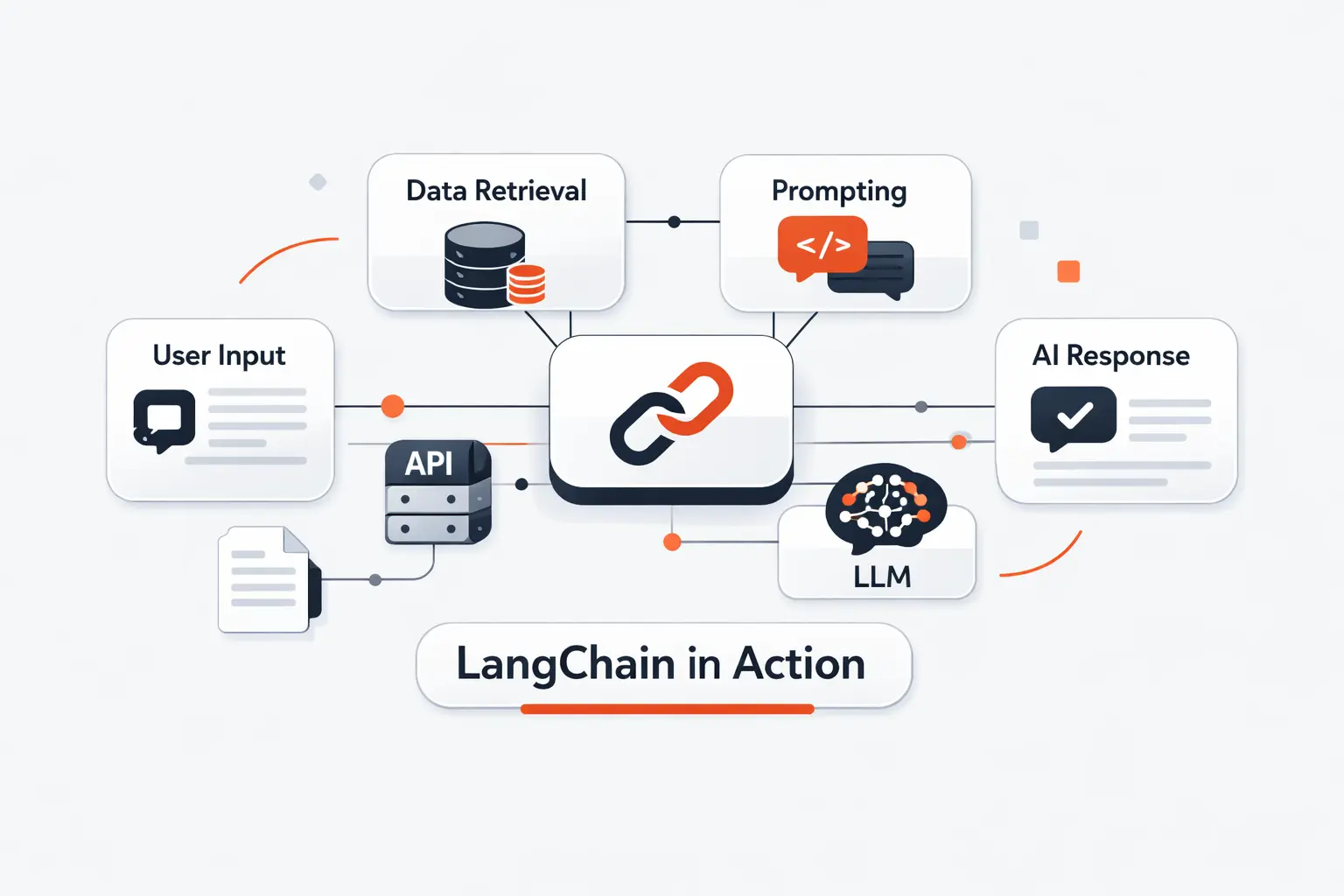
A normal LangChain build starts with application plumbing. We pick a model, shape the input and output, add retrieval if private knowledge is needed, expose tools, and decide how state moves from step to step. That is one reason software teams tend to find it familiar.
1. Model I/O, Retrieval, and Composition
For simpler systems, LangChain uses runnables and composition. The LangChain Expression Language lets us connect steps in sequence or in parallel, and retrievers return documents for unstructured queries. That is the backbone of straightforward retrieval-augmented generation, or RAG, where the app fetches documents first and then asks the model to answer from that context. It is simple, visible, and usually a good place to start.
2. LCEL, Agents, Memory, and Control Flow
When the system gets more agent-like, LangChain adds higher-level agent patterns on top of LangGraph. Memory can live across turns or across sessions through LangGraph stores, and control flow can branch based on tool results, retries, or human review. That matters when an assistant has to look something up, call a function, inspect the result, and then decide what to do next.
3. LangGraph and LangSmith in the LangChain Ecosystem
The production story gets stronger when we reach LangGraph. That runtime centers on durable execution, streaming, human-in-the-loop, and persistence, which is exactly what long-running agents need when they pause, fail, or wait on people. We see that as one of LangChain’s strongest advantages for real software teams.
LangSmith sits beside that stack as the tracing and evaluation layer. Because it is framework-agnostic, teams can use it with LangChain, LangGraph, or a mixed stack that also includes DSPy. That separation is useful. It means the orchestration layer and the inspection layer do not have to be the same thing, which gives production teams more room to evolve.
Recommended reading: What Is Retrieval Augmented Generation: A Practical Guide to RAG for Building Grounded AI
How DSPy Works in Practice
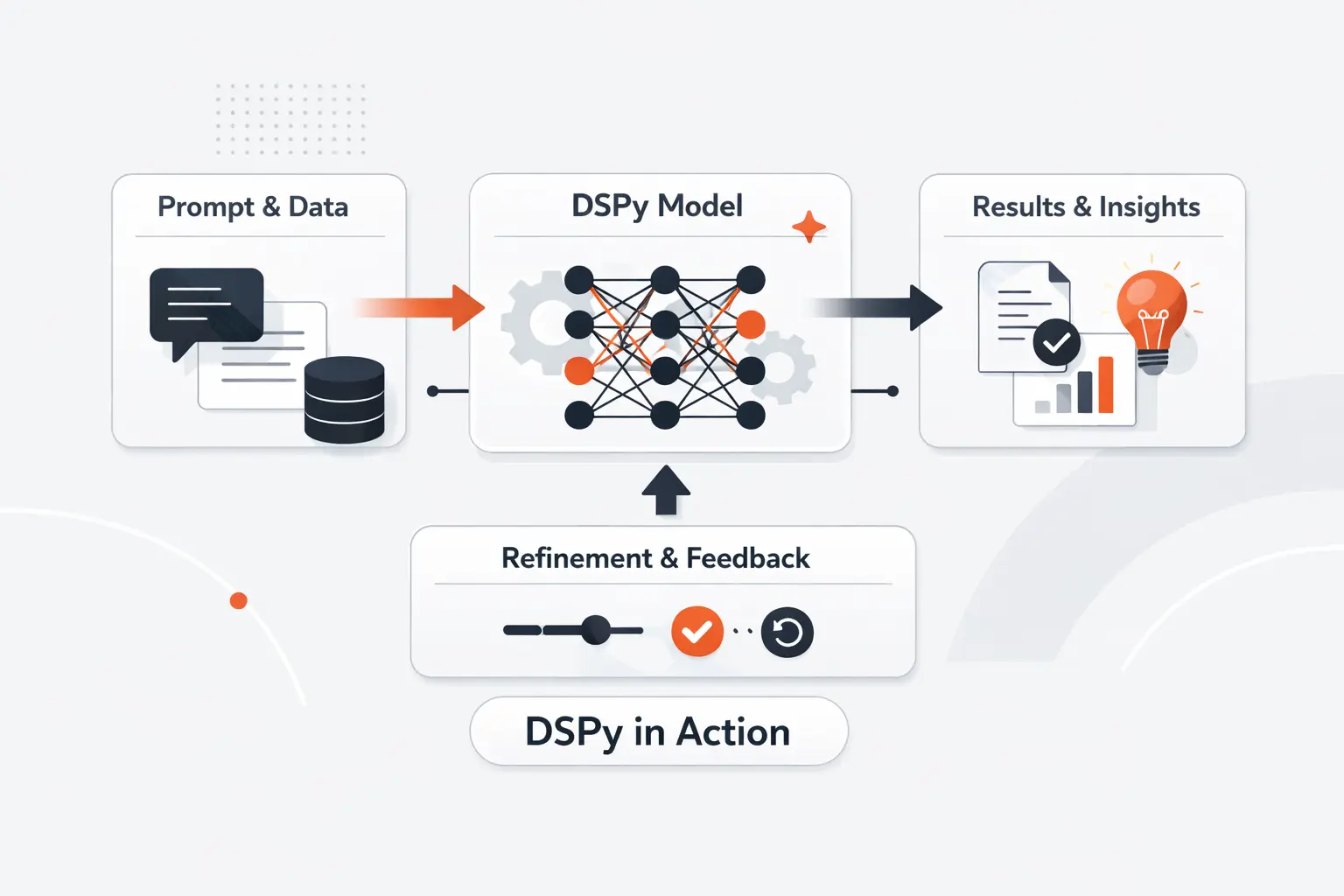
DSPy works from the other end. We begin by describing what each component should do, not by hand-writing the exact prompt text. Then we define how success will be measured. That pulls evaluation much closer to the center of development.
1. Signatures and Declarative Task Design
A signature is the contract for a task. It says what goes in and what should come out, sometimes with structured fields or types. From there, a DSPy module turns that contract into a model call. We like this because the interface stays stable even when the hidden prompt strategy changes, which makes refactoring much less brittle than raw prompt files.
2. Modules Such as Chain of Thought, ReAct, and Program of Thought
DSPy includes modules such as ChainOfThought, ReAct, and ProgramOfThought. ChainOfThought is useful when explicit intermediate reasoning helps. ReAct fits tool-using loops. ProgramOfThought is a better match when the model should separate reasoning from computation by producing code-like steps for the computational part. For complex reasoning tasks, that menu of modules is one of DSPy’s biggest practical strengths.
3. Optimizers, Metrics, and Compilation
The optimizer layer is what makes DSPy special. Given representative inputs and a metric, DSPy can compile a program, search for better instructions or demonstrations, and even compose optimizers. In the original paper, the reported case studies showed gains generally over 25% on GPT-3.5, which is why we take DSPy seriously for stable, measurable tasks instead of treating it like another prompt wrapper.
Recommended reading: What Is AI Integration: How to Embed AI Into Existing Systems, Apps, and Workflows
DSPy vs LangChain Side by Side
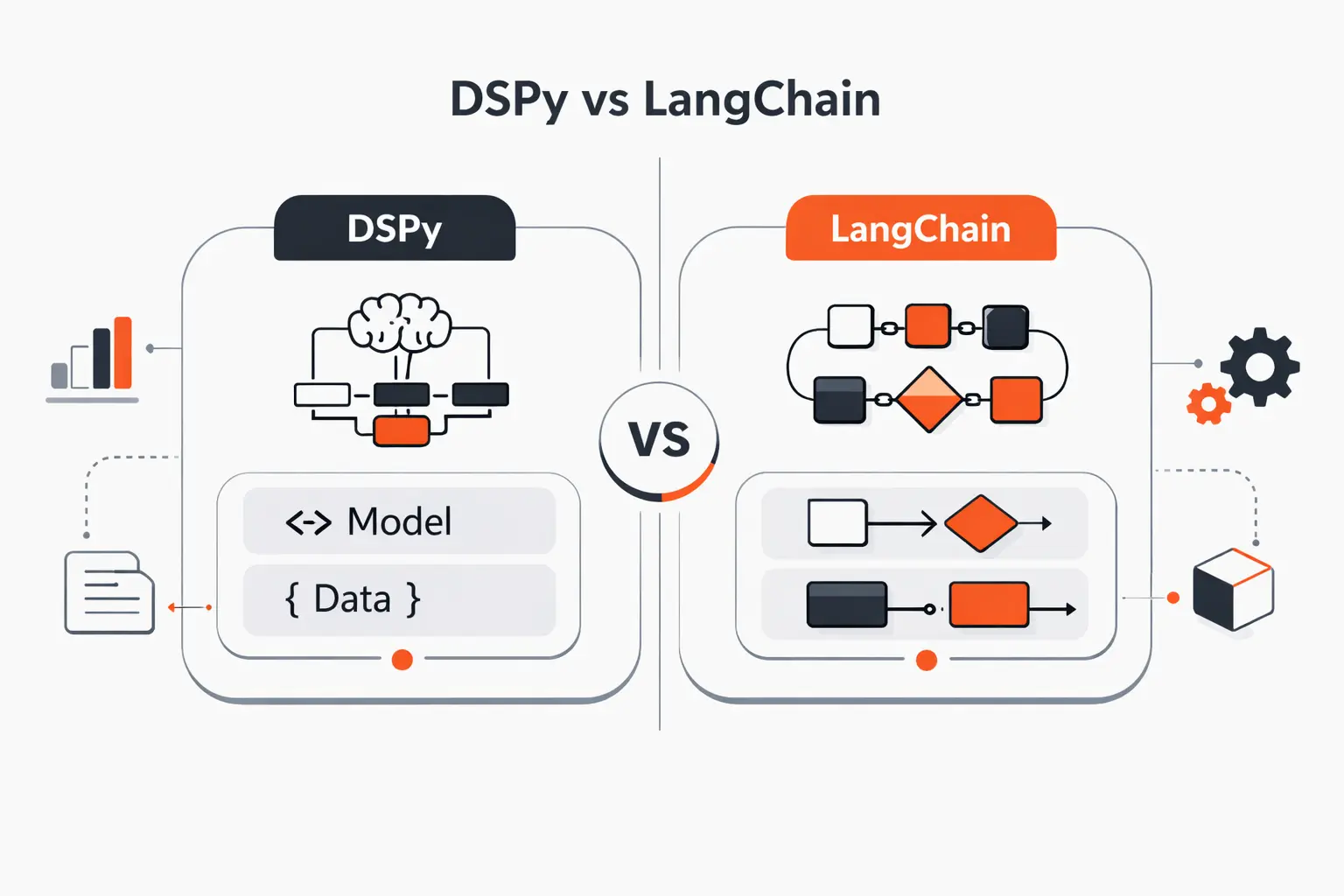
When we compare DSPy vs LangChain side by side, we do not ask which one is more powerful in the abstract. We ask where the complexity lives. That question usually decides the winner faster than any feature checklist.
1. Architecture, Flexibility, and Learning Curve
LangChain has the broader application surface area. That can make early prototypes feel easier, especially for product engineers. DSPy has fewer app-level pieces, but it asks teams to think in signatures, metrics, and compilation. In our experience, LangChain feels more familiar on day one, while DSPy often feels cleaner once the team is already serious about evaluation.
2. Ecosystem, Integrations, and Documentation
From what is publicly visible, LangChain has the broader ecosystem around integrations, runtime tooling, and customer-facing deployment stories. DSPy can still work with many providers, including OpenAI-compatible endpoints and providers routed through LiteLLM, but its public identity is clearly centered on modules and optimizers. That is not a bug. It is simply a narrower and more research-oriented focus.
3. Agent Workflows, Debugging, and Developer Experience
For agent debugging, LangChain plus LangSmith gives a strong story around traces, datasets, offline evaluation, and production monitoring. DSPy gives a stronger story for improving the prompt program itself and recompiling against a target metric. We often summarize it this way: LangChain helps us see what happened, while DSPy helps us improve what should happen next.
Recommended reading: Case Studies of AI in Healthcare: Real-World Applications, Risks, and Lessons
Where LangChain Wins
LangChain wins when the software system around the model is the real challenge. That is common in business applications. Most production work is not one brilliant prompt. It is a lot of moving pieces that need to stay coordinated.
1. Tool-Heavy Agents and External Integrations
If an agent needs calendars, CRMs, databases, APIs, file access, and approval steps, we lean LangChain. Its abstractions are built around tool calling and control flow, and LangGraph adds the runtime features we need when those workflows run long or pause for humans. That makes it a natural fit for enterprise assistants and back-office automation.
2. Rapid Prototyping and Multi-Service Workflows
LangChain is also strong when a team needs a first working version quickly and expects to wire in more services over time. That is the sort of workload where orchestration matters more than perfect prompt tuning. In one official case study, C.H. Robinson reports 5,500 orders a day automated in a logistics flow that had to read emails, fetch missing information, and create orders, which is exactly the kind of messy workflow we see in real operations.
3. Chatbots, Assistants, and Straightforward RAG
For chatbots, assistants, and straightforward RAG, LangChain is often the better first build. We can add a retriever, a memory store, a few tools, and tracing without adopting a full optimization discipline on day one. If the first goal is a dependable product, not a benchmark result, that is usually enough to ship and learn.
Where DSPy Wins
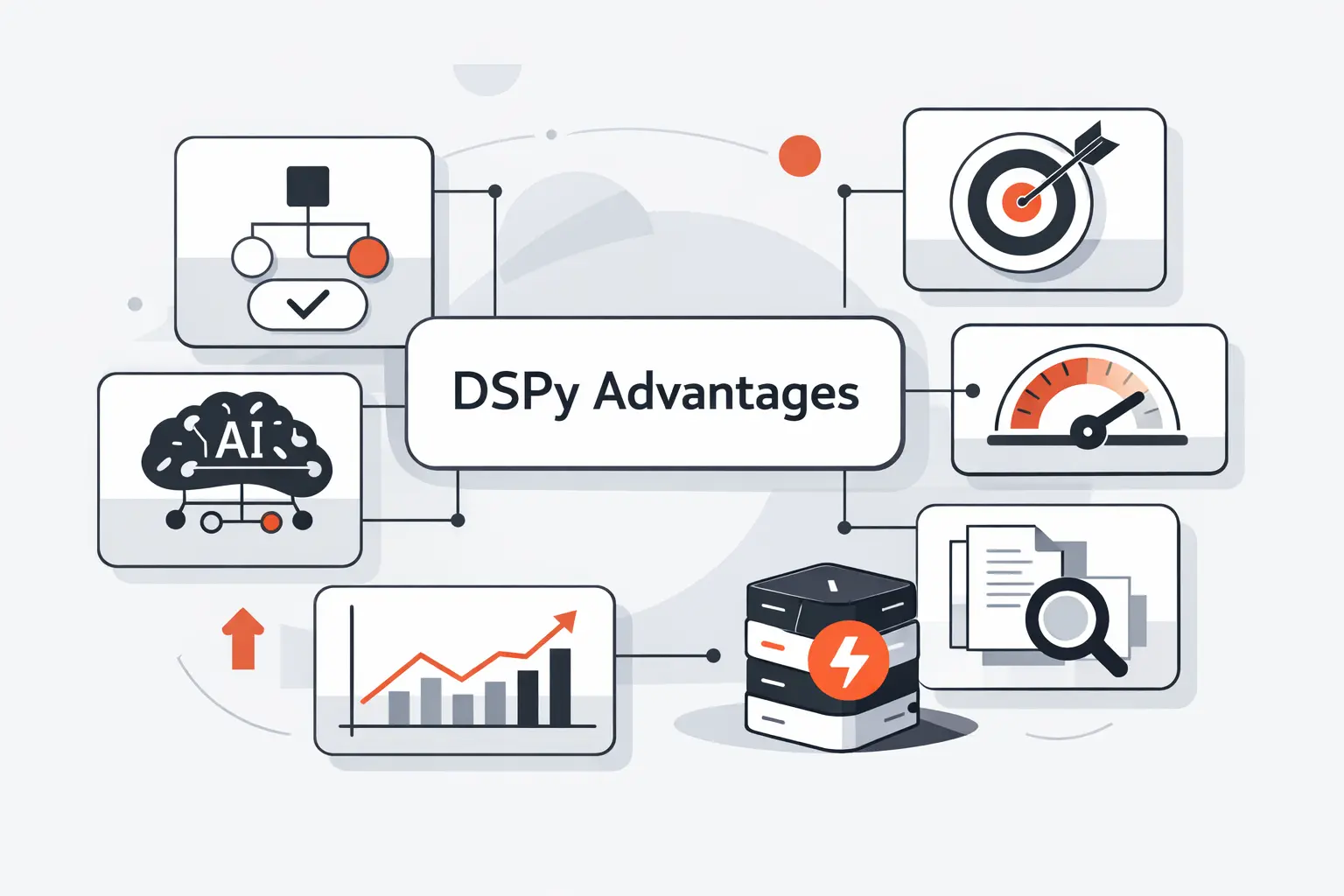
DSPy wins when quality improvement is the main problem and success can be described with examples or metrics. That is where manual prompting starts to wear thin. A cleaner program plus an optimizer can beat a growing pile of prompt edits.
1. Eval-Driven RAG and Question Answering
We especially like DSPy for RAG systems that answer from private documents. If we can score groundedness, exact match, or answer quality, DSPy gives us a direct path to tune the answerer against that signal. The built-in metrics and optimization examples make this concrete, which matters because many teams get stuck between a toy RAG demo and a trustworthy one.
2. Complex Reasoning and Multi-Step Pipelines
DSPy also shines in multi-step reasoning tasks. When a pipeline needs retrieval, decomposition, intermediate reasoning, and a final answer, signatures keep the parts legible and optimizers can tune across the full chain. We have found this especially appealing when one weak middle step keeps poisoning the final output, because DSPy is designed to optimize systems, not just single prompts.
3. Prompt Iteration, Reproducibility, and Model Migration
This is the quiet advantage that often matters most later. DSPy separates the task interface from the exact prompt implementation, so model migration hurts less. When a provider changes behavior, we would rather re-run evaluation and compile again than start another round of manual prompt surgery. That is one of the clearest long-term benefits DSPy offers.
Performance, Cost, and Production Tradeoffs
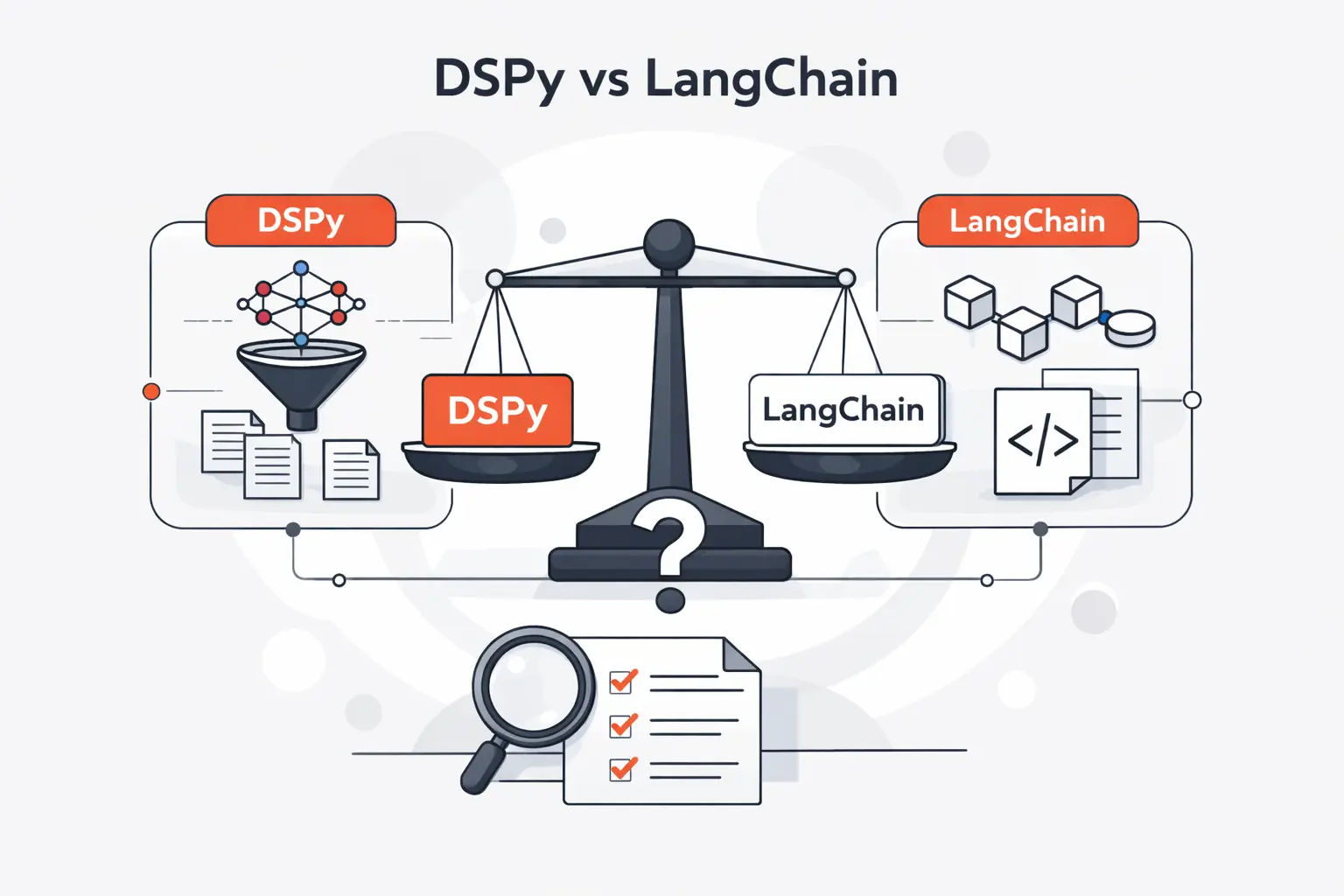
Neither framework gives a free lunch. One can save time and still cost quality. The other can improve quality and still cost time. Production teams need to see those tradeoffs clearly before they commit.
1. Prompt Quality vs Orchestration Breadth
LangChain gives broader orchestration. DSPy gives deeper prompt optimization. If answer quality is already good enough, DSPy may be extra process you do not need. If the workflow is simple but the answers are weak, more orchestration will not solve the root issue. That is why we always test the bottleneck first instead of arguing in the abstract.
2. Upfront Optimization Costs vs Long-Term Efficiency
DSPy usually asks for more effort up front because compilation depends on representative inputs and a meaningful metric. LangChain usually gets to a usable first version faster. Over time, though, DSPy can reduce the churn of endless prompt editing if the task stays stable and the evaluation loop is healthy. The tradeoff is simple. DSPy invests earlier so quality work becomes more repeatable later.
3. Observability, Traceability, and Production Readiness
For production, we care less about demos and more about feedback loops. LangSmith formalizes offline and online evaluations, and because it is framework-agnostic, we can use that layer whether the core application is LangChain, DSPy, or both. In our view, that makes LangSmith one of the most practical companions to either framework.
Can You Use DSPy and LangChain Together?
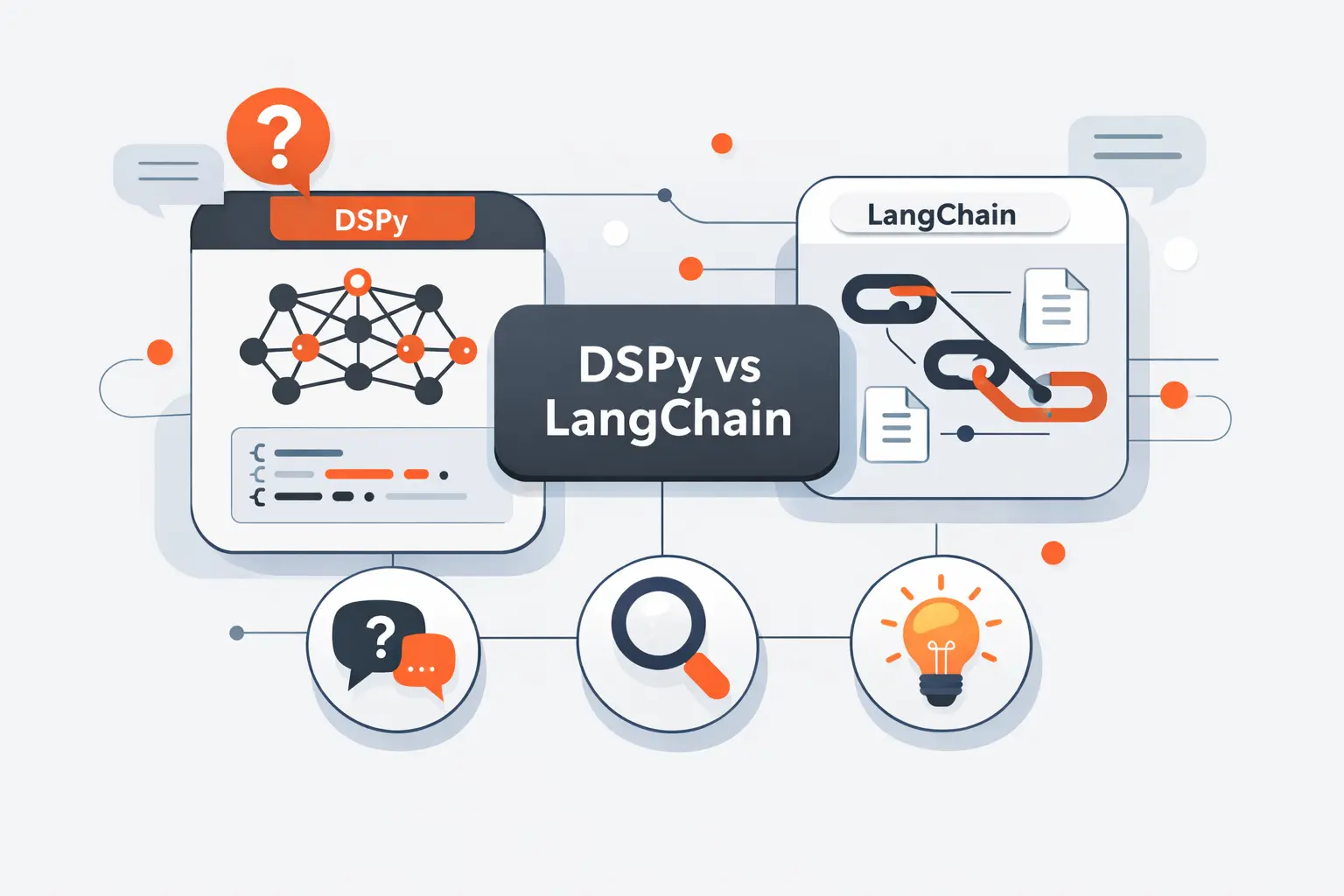
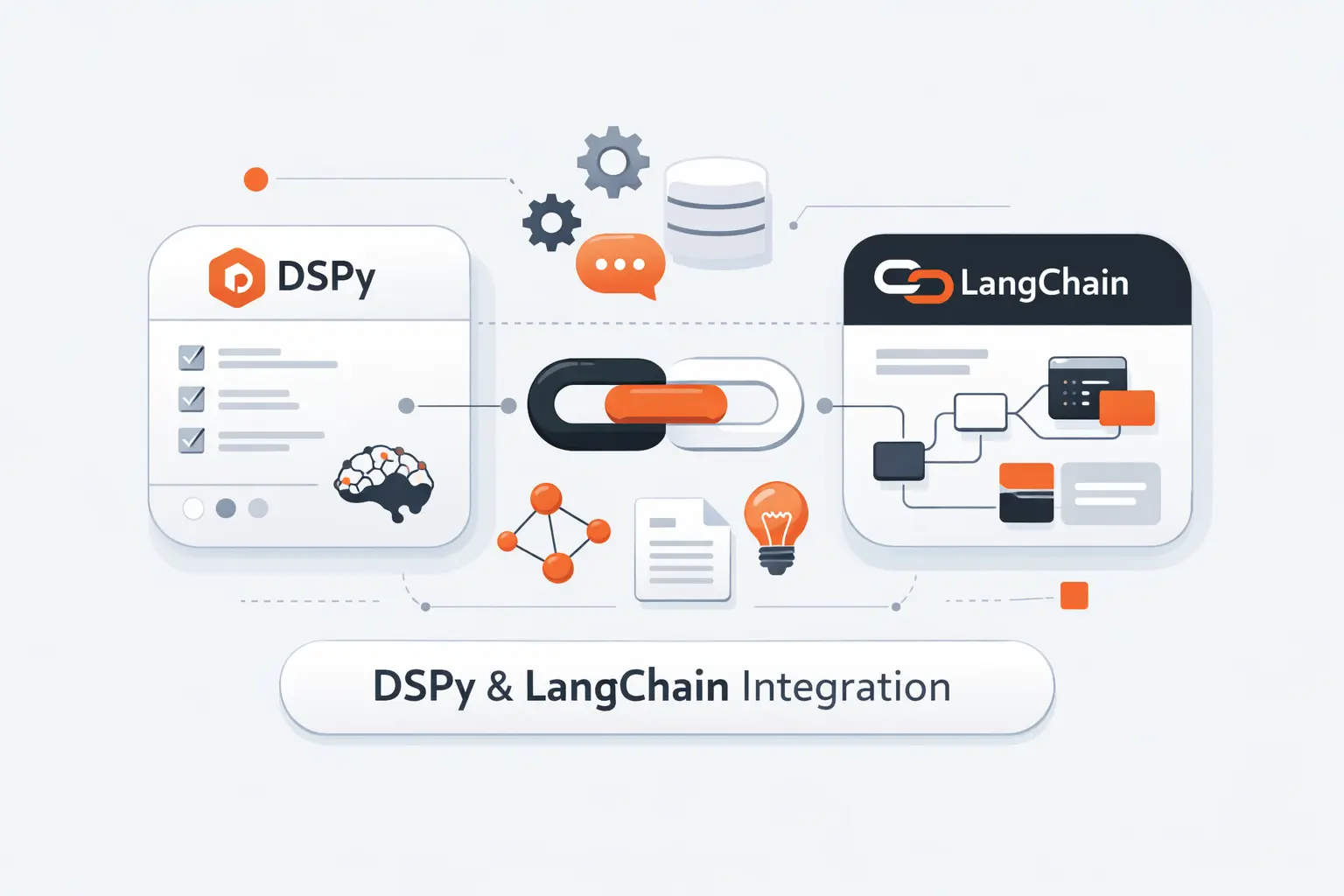
Yes, and we think many serious teams eventually will. The split is clean if you design boundaries early. One stack handles the application flow. The other optimizes critical model behaviors inside that flow.
1. LangChain for Orchestration and DSPy for Optimized Components
The most sensible hybrid is simple. Use LangChain or LangGraph for routing, memory, tools, retries, and approvals. Use DSPy inside a classifier, reranker, answer generator, or planner that benefits from signatures and optimization. That keeps each framework in its lane, which is usually the best way to keep a production codebase understandable.
2. When a Hybrid Stack Makes Sense
We reach for a hybrid stack when the outer workflow is messy but one or two inner components are clear performance bottlenecks. A support assistant is a good example. The agent may need policy lookup, CRM tools, and handoff logic, while the answer selection step still needs careful evaluation and tuning. That is not theory. It is a pattern we expect to see more often.
3. Migration Considerations for Existing Projects
If you already have LangChain in production, we would not rewrite everything. We would start with the weak link. Add datasets from traces, define a metric, wrap that component in DSPy, and compare results before expanding the change. That incremental path is usually cheaper, safer, and much easier to defend inside a roadmap review.
How to Choose Between DSPy and LangChain
Our rule of thumb is blunt. Choose the framework that attacks your biggest source of failure first. Everything else is secondary. Once you know what is actually breaking the system, the choice usually gets much easier.
1. Choose Based on Project Type and Architecture Needs
Pick LangChain when the architecture needs many moving pieces and the model is only one part of a larger software workflow. Pick DSPy when the workflow is already known but the quality bar is hard to hit. If both statements are true, start with a hybrid design so you do not have to bend one tool into doing the other tool’s job.
2. Choose Based on Team Skills and Evaluation Data
Team shape matters. Product engineers usually move faster in LangChain because the abstractions look like normal application development. Teams comfortable with experiments, datasets, and rubrics often get more value from DSPy. No evaluation data does not make DSPy useless, but it does weaken the optimizer story considerably.
3. Choose Based on Speed, Reliability, and Scale
If you need speed to first release, LangChain usually wins. DSPy becomes more attractive if you need repeatable quality at scale. If you need both, use LangChain with strong tracing first and add DSPy to the highest-value component once you can see where failures cluster. That is usually the least risky path.
Frequently Asked Questions About DSPy vs LangChain
These are the questions we hear most often when teams are trying to choose a stack or justify one to leadership. The short answers are below, and we will keep them plain.
1. Is DSPy Better Than LangChain for Every Project?
No. DSPy is better for evaluation-driven optimization on defined tasks. LangChain is better when orchestration, integrations, memory, and agent flow are the main problems. Treating one as a universal winner is the fastest way to pick the wrong tool.
2. Is DSPy Production Ready for Real-World Use?
Yes, with caveats. The public project shows active maintenance and ongoing releases, but production readiness still depends on your own evaluation, tracing, fallbacks, and operational discipline. A framework can help, but it will not rescue a weak feedback loop.
3. What Is DSPy Best Used For?
We think DSPy is best used for eval-driven RAG, question answering, classification, and multi-step reasoning pipelines where quality can be measured. It is also useful when teams want a cleaner way to manage prompt iteration and model migration without hand-editing fragile prompt templates.
4. Does DSPy Need Training or Evaluation Data?
To get the most from optimizers, yes, you need representative inputs and some way to score outputs. That does not always mean a massive labeled dataset. Small curated examples, human review, or a well-designed rubric can be enough to start, as long as the metric reflects what good actually means for the task.
5. Which Framework Is Better for RAG and AI Agents?
We usually prefer LangChain and LangGraph for simple or tool-heavy agents. For RAG systems where answer quality is the bottleneck and evaluation data exists, DSPy often has the edge. Finally, for research assistants, support systems, and other mixed applications, the best answer is often a hybrid stack.
6. Can You Start With LangChain and Add DSPy Later?
Yes. In fact, that is often the safest route. Start with LangChain for the outer workflow, then add DSPy to the component that most needs measurable improvement. Doing it in that order lets you learn from real traces before you invest in optimization.
How TechTide Solutions Builds Custom AI and Software Solutions
This is how we approach the decision in client work. We do not force a favorite framework onto every project. We map the business problem, the data reality, and the failure modes first, then choose the architecture that gives the cleanest path to a stable result.
1. Custom Architecture for DSPy and LangChain Workflows
We design around boundaries. If the main risk is orchestration, we build that layer cleanly with tools, state, and deployment in mind. If the main risk is answer quality, we carve out the model component so it can be evaluated and tuned properly. That is how we keep systems flexible without turning them into spaghetti.
2. RAG, Agent, and Automation Development Tailored to Your Needs
We build document assistants, workflow agents, internal copilots, and back-office automation with the same practical lens. What should the system know, what should it do, and how will we know when it is wrong? Those questions matter more than framework loyalty. Once those answers are clear, the stack choice becomes much more grounded.
3. Integration, Optimization, and Scaling Support for Long-Term Growth
We also plan for what happens after launch. That means traceability, evaluation, versioned changes, rollback paths, and a process for improving weak components without destabilizing the whole product. Whether that means LangChain, DSPy, or a combined approach, our goal is the same: software that holds up when usage gets real.
Final Verdict on DSPy vs LangChain
If we had to reduce DSPy vs LangChain to one line, it would be this: LangChain is the stronger default for wiring AI applications, and DSPy is the stronger choice for improving model behavior with evidence. Neither one cleanly replaces the other. They solve different layers of the same problem.
At TechTide Solutions, our practical advice is simple. Start with the bottleneck. If the pain is orchestration, pick LangChain and for quality on a well-defined task, pick DSPy. If the product needs both, build around LangChain or LangGraph and let DSPy optimize the components that carry the accuracy burden. That is the bet we would make most often.

