


At TechTide Solutions, we have learned that companies rarely ask for software because they want an app. They ask because revenue leaks through manual handoffs, data sits inside disconnected systems, or growth is being throttled by tools that no longer fit the business. The market signals how central this has become: Statista’s market forecast put global enterprise software revenue at US$316.69 billion in 2025, which tells us software now shapes strategy as much as operations.
In our view, software development services are business transformation services delivered through product thinking, engineering discipline, and operational rigor. This guide explains the major types of software development services, the lifecycle behind them, and the tradeoffs businesses should understand before they commit budget and time.
What Are Software Development Services?
1. How software development services solve real business problems
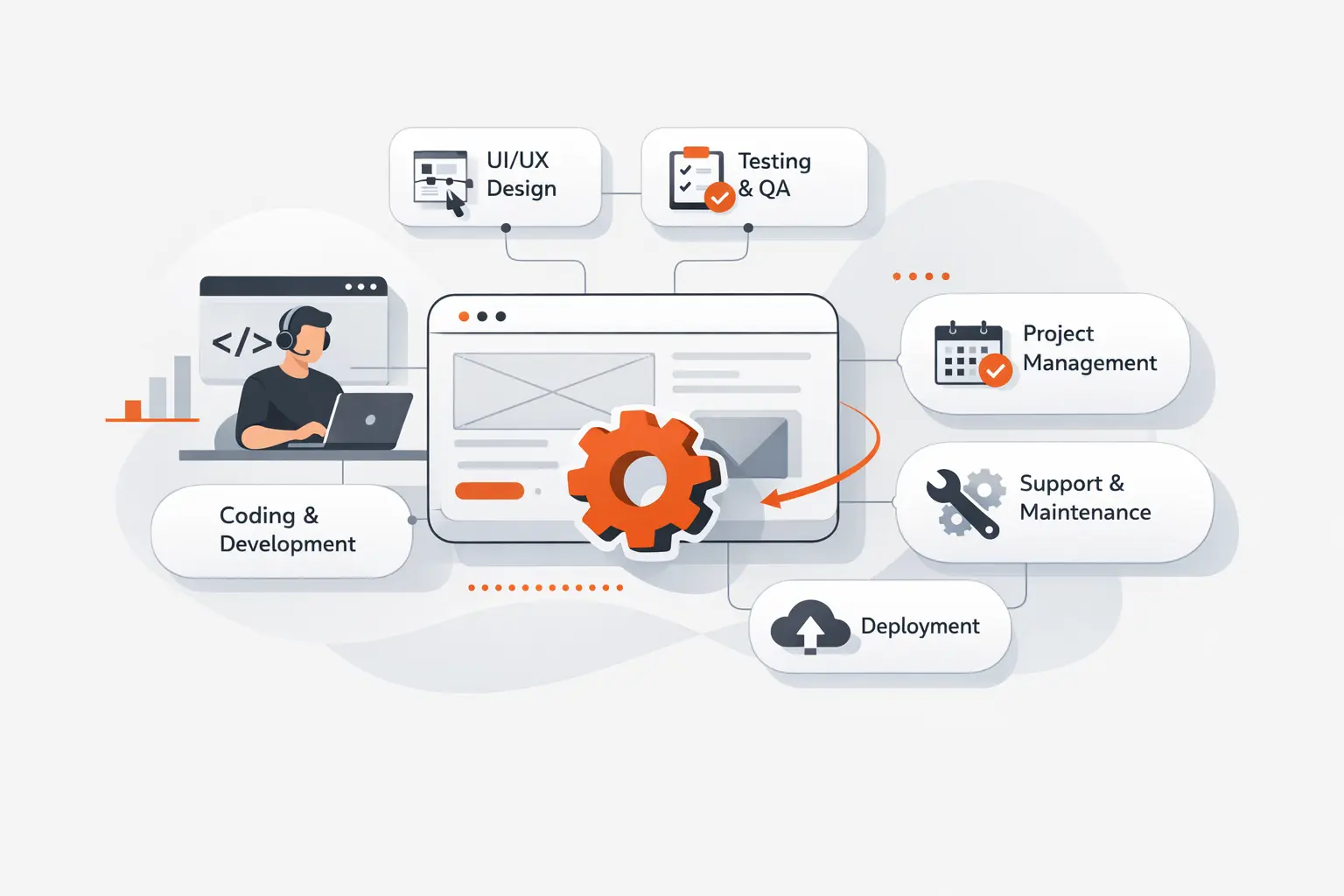
Software development services translate business needs into systems that can be executed repeatedly and reliably. A retailer may need inventory updates to synchronize across stores and ecommerce, a clinic may need patient intake and scheduling to feed the same audit trail, and a logistics team may need route changes reflected instantly across dispatch, billing, and driver apps. We think the real value is not the code itself but the reduction in delay, duplication, and decision ambiguity.
2. When companies need custom software instead of off the shelf tools
Off-the-shelf tools are excellent for standard functions such as payroll, accounting, email, or basic ticketing workflows. Trouble begins when a business forces its unique process into someone else’s data model, release cycle, permissions, and reporting logic. Custom software is better when differentiation lives in the workflow, integrations are mission-critical, or compliance and audit needs exceed configuration.
3. What is included from discovery and design to launch and support
A serious software engagement covers far more than development alone. Discovery defines goals, users, constraints, integrations, and success metrics. Design shapes user journeys and architecture. Engineering implements the product. QA hardens it. DevOps ships it safely. Support keeps it useful after launch. From our standpoint, the strongest software development services go further. They include documentation, training, analytics, incident response, and roadmap guidance. That helps the product evolve with the business.
Recommended reading: What Is Outsourcing? Definition, Types, Benefits, Risks, and Best Practices
The Software Development Lifecycle Behind Every Service
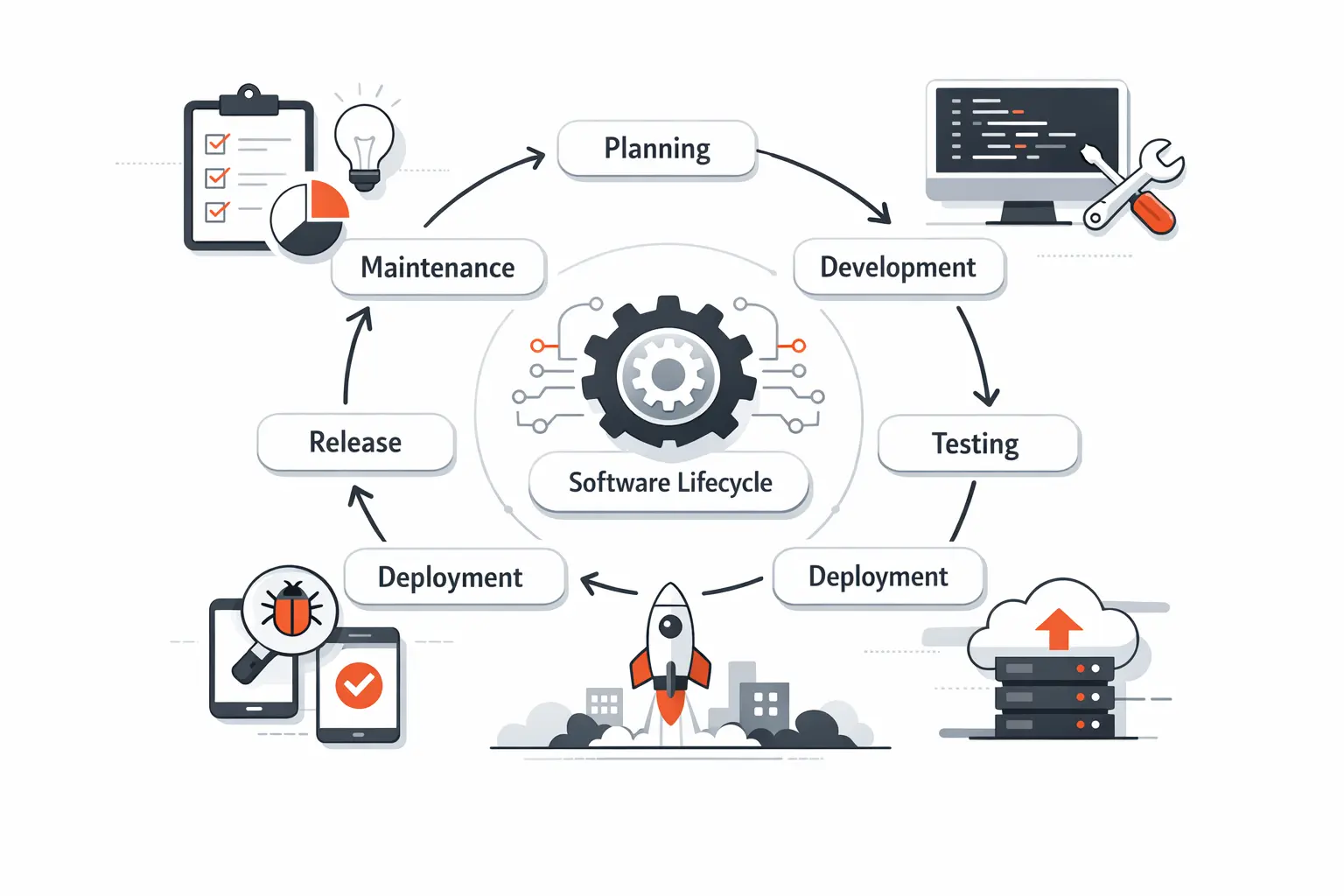
McKinsey reported that 78% of organizations use AI in at least one business function. But behind every AI-powered feature, customer portal, internal tool, or digital service is a structured software development lifecycle that turns ideas into reliable, scalable products.
1. Requirement analysis and business planning
Requirement analysis is where weak projects either become clear or collapse under assumptions. We map user roles, exceptions, approvals, integrations, security boundaries, and measurable outcomes before we debate frameworks or vendor stacks. That discipline matters because a feature that looks efficient on a slide can still damage reporting, compliance, or operational flow once real users touch it.
2. System design and prototyping
Design turns requirements into structure. At this stage, we define domain models, service boundaries, data ownership, API contracts, and interface logic. We pair that architecture with prototypes showing how the product will actually feel. Early prototypes expose ambiguity cheaply. They do that long before teams spend months engineering the wrong workflow.
3. Development, testing, and quality control
Development works best in short, reviewable increments protected by automated checks. Code review, unit tests, integration tests, contract validation, and performance baselines keep delivery fast without making it reckless. We prefer quality gates embedded in CI pipelines rather than manual heroics at the end, because defects are always cheaper to prevent than to rediscover in production.
4. Deployment, integration, and user adoption
Launch is both a technical event and a change-management event. Teams need environment promotion, secrets management, data migration, observability, rollback plans, and integration validation. They also need user communication, staged rollout logic, feature flags, and training. In our experience, adoption fails less because software is wrong and more because release workflows are immature.
5. Maintenance, monitoring, and continuous improvement
After launch, software begins generating the evidence that should shape the next release. Logs, metrics, traces, support tickets, and usage analytics reveal friction points, underused features, scaling problems, and hidden security gaps. We view maintenance as an active engineering function that includes patching, dependency updates, cost control, performance tuning, and continuous roadmap refinement.
Recommended reading: What Is Software Architecture? A Practical Guide to Structures, Decisions, and Patterns
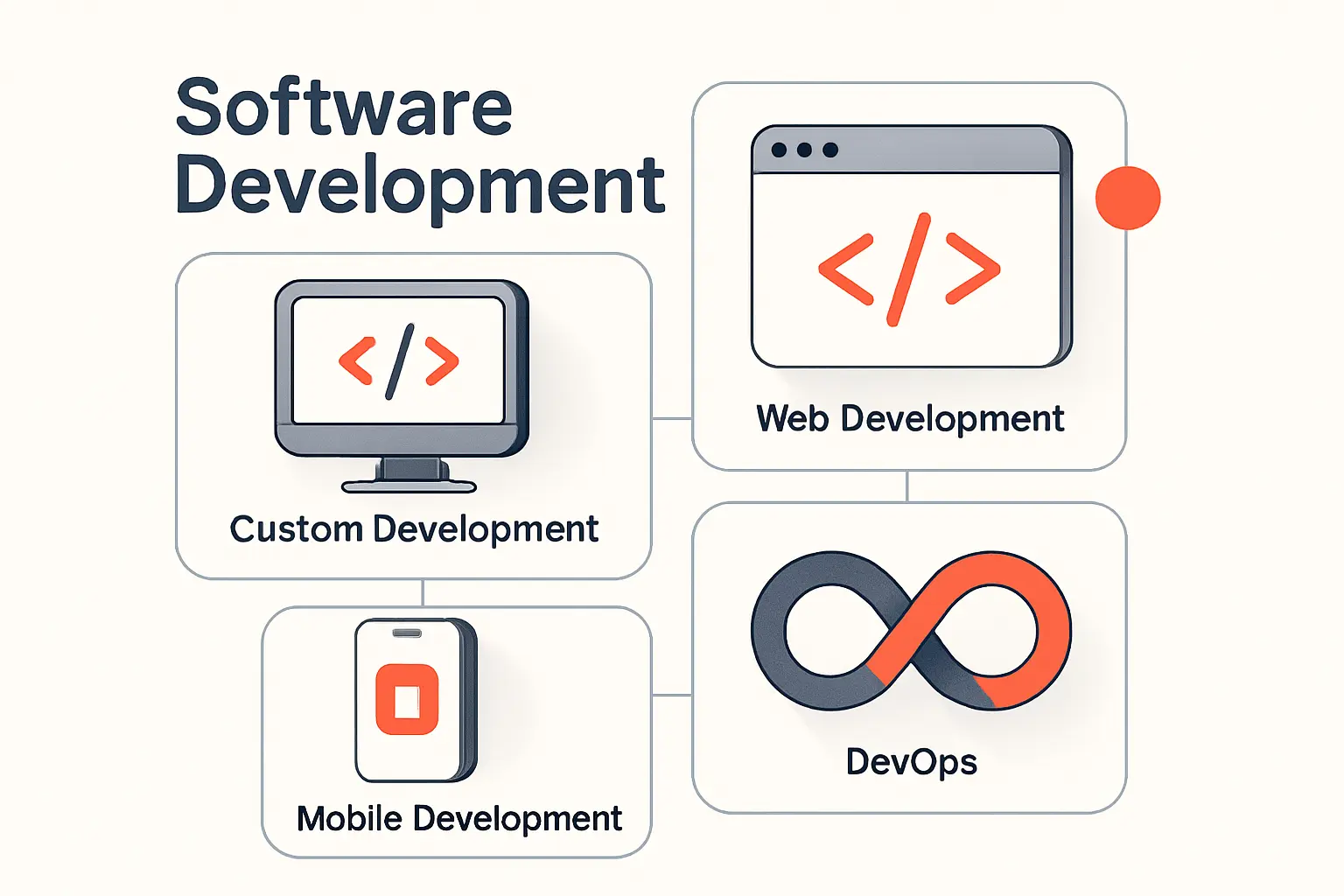
3 Foundational Types of Software Development Services
1. Custom software development for unique workflows and competitive advantage
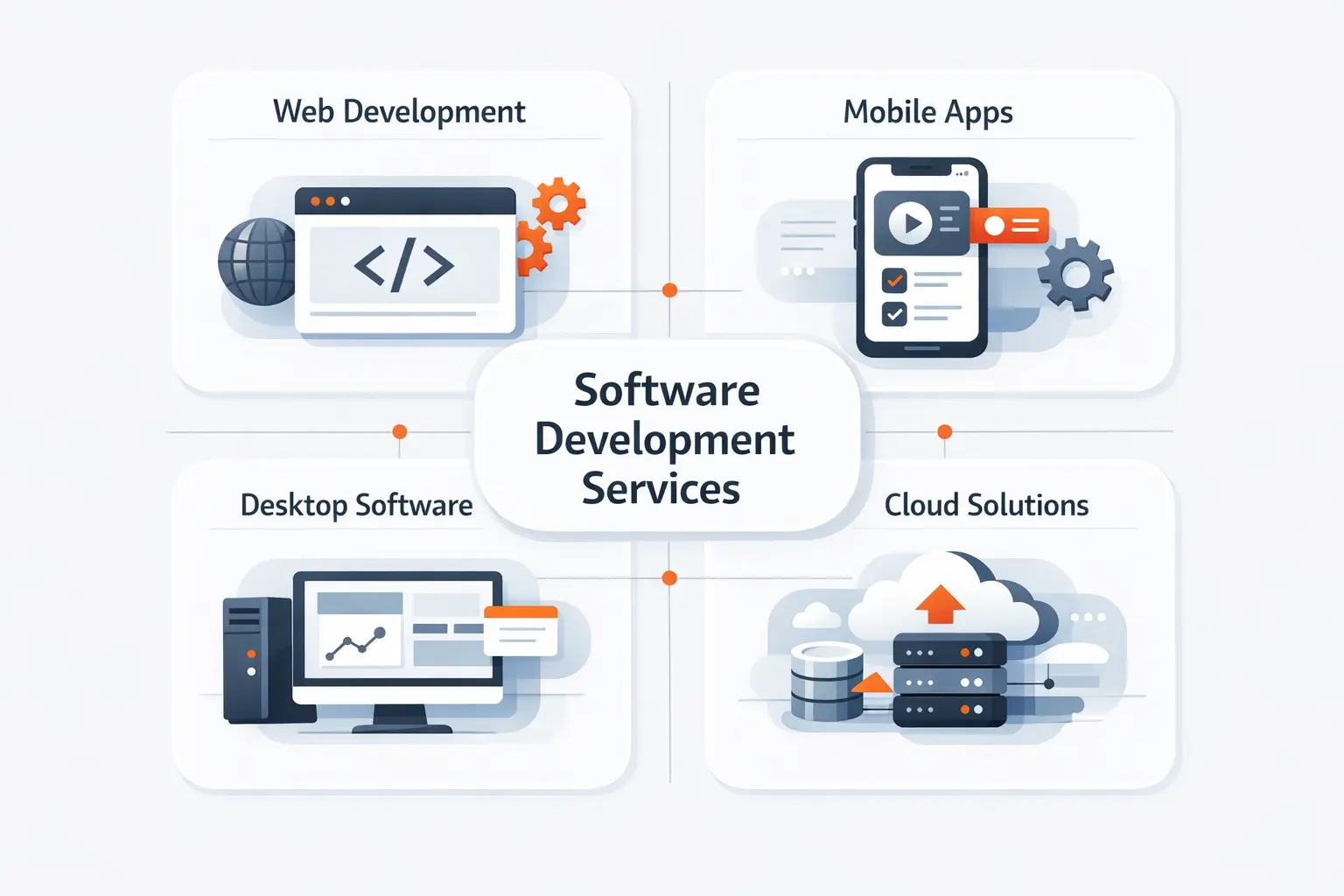
Custom software development is the broadest service category because it can cover internal platforms, customer portals, workflow engines, decision-support tools, and specialized digital products. Businesses choose it when off-the-shelf software creates workarounds instead of leverage. Our view is straightforward: if the workflow is part of the competitive moat, the software supporting it should usually be designed around the business rather than the other way around.
2. Web development for websites, portals, and web apps
Web development spans marketing sites, self-service portals, dashboards, B2B extranets, and full-featured web applications. The technical questions go much deeper than “should it be a website,” because teams still need to decide on rendering strategy, accessibility, authentication, performance budgets, caching, content architecture, admin tooling, and SEO. Because the browser is the most universal delivery surface, web products often become the first serious layer of digital transformation.
3. Mobile app development for iOS, Android, and cross-platform products
Mobile app development matters when context, immediacy, and device capabilities change the user experience. Push notifications, offline sync, camera capture, biometrics, geolocation, and wallet integration often justify native or cross-platform apps even when a web app already exists. A strong real-world example is Starbucks, where 31% of total transactions came through mobile orders in its U.S. company-operated stores, showing how mobile software can reshape demand, loyalty, and store operations.
Recommended reading: Right Product and Product Right: A Practical Outline to Build the Right Thing the Right Way
Growth Focused Software Development Services
1. Cloud software development for scalability, flexibility, and remote access
Cloud development gives teams elastic infrastructure, managed services, remote access, automation, and faster provisioning, but only if the architecture fits the workload. We frequently weigh containers, serverless functions, managed databases, event buses, and identity services against latency, compliance, and lock-in risk. Cost discipline matters just as much as scalability, especially when 85% of organizations say managing cloud spend remains a top challenge, which is why we design with FinOps guardrails, lifecycle policies, and observability from the start.
2. SaaS and enterprise software development for long-term growth
SaaS and enterprise software development focus on repeatability at scale. These systems need clear tenancy decisions, role based access, audit trails, onboarding flows, subscription logic, analytics, billing controls, and a safe upgrade path. We often tell operators the hardest architecture problem is not the first release. It is building later releases without turning every new customer into a custom branch of the product.
3. eCommerce software development for online sales and omnichannel experiences
Commerce platforms now sit at the intersection of catalog management, checkout, payments, tax, promotions, search, inventory, fulfillment, and customer data. That stack deserves strategic treatment, not plugin sprawl, especially when eMarketer’s forecast put online channels at 20.5% of total global retail sales in 2025. From our perspective, the strongest ecommerce systems unify content, pricing, operations, and post-purchase workflows so the business can sell consistently across web, mobile, marketplaces, and stores.
4. MVP and low-code development for faster validation and launch
MVP and low-code development are useful when a business needs learning speed more than architectural perfection. Low-code platforms work well for internal workflow apps, approvals, dashboards, and operational automations. A focused MVP can also validate demand before a larger investment. Even so, we treat speed as a hypothesis, not a shortcut. If the product needs complex integrations, unique data structures, or heavy scale, plan beyond rapid tooling early.
5 Advanced Software Development Service Types
1. AI and machine learning development for automation and prediction
AI and machine learning services are most valuable when they automate a bounded task or improve a decision with measurable business impact. Common use cases include demand forecasting, document classification, recommendation systems, anomaly detection, support assistants, and data extraction from unstructured inputs. We are enthusiastic about AI, but we remain skeptical of vague AI roadmaps; the work only pays off when models are paired with clean data, evaluation loops, human oversight, and clear failure handling.
2. API and system integration for connected business ecosystems
APIs and integrations are where software ecosystems either compound value or create bottlenecks. ERP, CRM, identity, payments, inventory, analytics, and partner platforms all need versioning, idempotency, safe retry behavior, access control, and failure recovery that can survive real business traffic. The case is stronger than many teams realize: 65% of organizations now generate revenue from their APIs, which means integration quality increasingly affects product strategy, partnerships, and monetization.
3. DevOps services for faster releases and more reliable deployments
DevOps services align development and operations so teams can ship more frequently with less chaos. That work includes CI/CD pipelines, infrastructure as code, automated testing, environment parity, secrets management, release orchestration, rollback readiness, and observability that is actually actionable. The pressure is only rising because More than 75 percent of respondents said that they rely on AI for at least one daily professional responsibility in Google Cloud’s DORA research, and faster code generation only creates business value when release engineering is equally mature.
4. Embedded systems and IoT development for smart devices and real-time operations
Embedded systems and IoT projects combine software with physical constraints, which changes everything from architecture to testing strategy. These systems must handle firmware, device identity, sensor calibration, and intermittent connectivity. They also need over the air updates, edge processing, and real time events. All of that must work under strict reliability and power limits. We find them especially powerful in manufacturing, healthcare devices, logistics fleets, and smart facilities. In those environments, software decisions directly shape physical operations.
5. Cybersecurity focused software development for safer digital products
Security-focused development treats risk as a design input, not a post-launch checklist. Threat modeling, least-privilege access, secure defaults, dependency scanning, software bills of materials, and secret rotation should appear from the first sprint. That rigor is not optional when IBM and Ponemon put the global average cost of a breach at $4.4 million in 2025, so we build around the Secure Software Development Framework and push controls into architecture, review, testing, and deployment.
3 Supporting Services That Keep Software Reliable
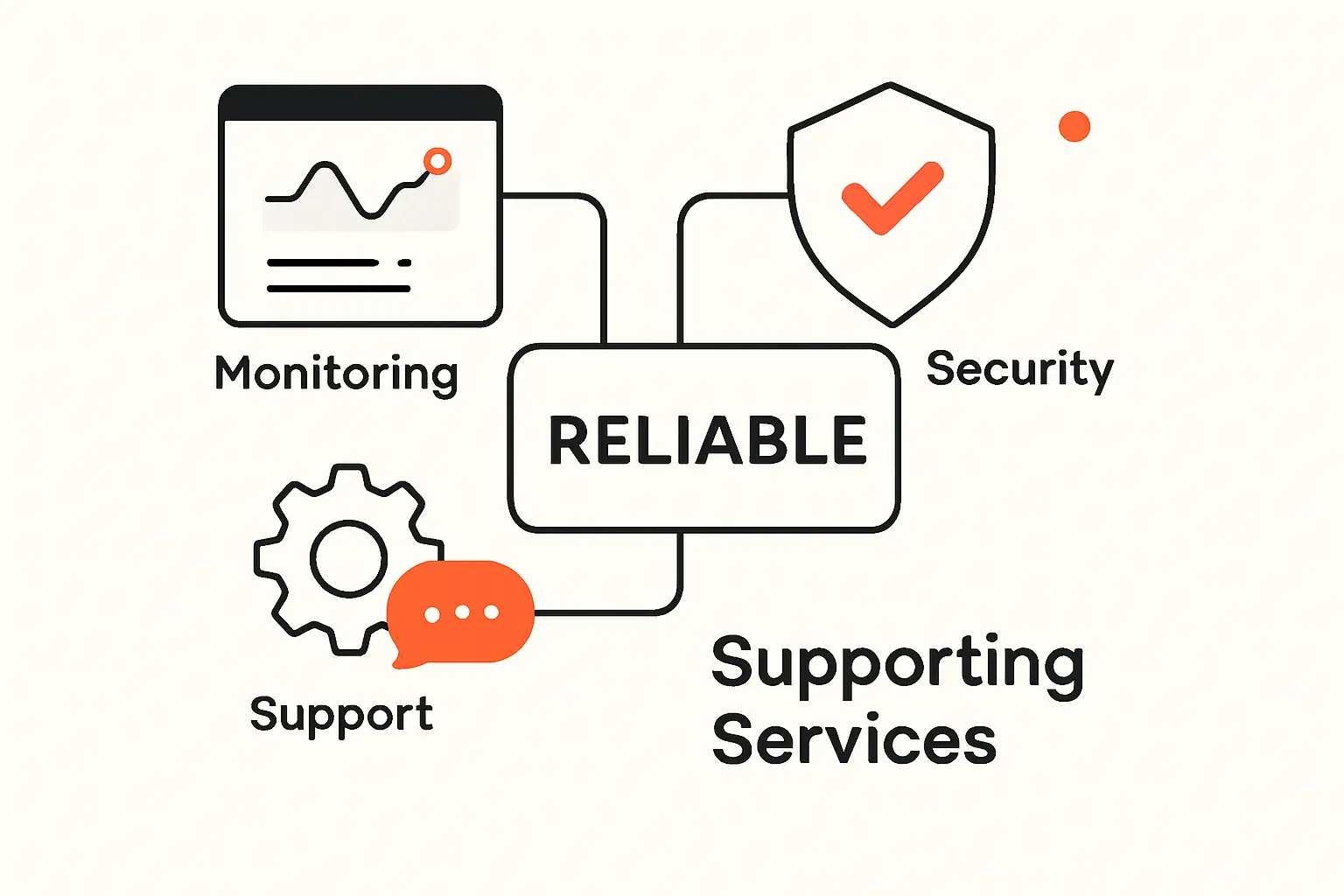
1. Software testing and quality assurance across the full lifecycle
Testing is not a separate lane that begins after engineering ends. Strong QA spans requirement reviews, acceptance criteria, automated regression, contract validation, accessibility checks, cross-browser coverage, load testing, and exploratory scenarios that humans still catch better than machines. We invest heavily here because CISQ estimated that poor software quality cost the U.S. economy at least $2.41 trillion in 2022, and most businesses feel that burden as rework, outages, support pain, and lost momentum.
2. Software maintenance and support after launch
Maintenance keeps software compatible with new browsers, devices, cloud services, dependencies, and security expectations. Support adds structured incident response, root-cause analysis, user issue triage, knowledge base updates, and planned enhancements that prevent the product from drifting out of alignment with the business. In our experience, the healthiest teams budget for maintenance as an operating capability instead of treating it as leftover effort.
3. Legacy modernization, performance optimization, and software rescue
Legacy modernization is rarely about rewriting everything. Sometimes the right move is a strangler pattern around one brittle module; other times it is database redesign, API wrapping, query tuning, caching, or decomposing a monolith into clearer domains. Software rescue begins with hard honesty about architecture debt, delivery dysfunction, and missing product decisions, because a troubled project is usually suffering from all three at once.
Delivery Models for Software Development Services
1. In-house development for direct control and deep internal alignment
In-house teams offer strong context, direct control, and close alignment with company culture. They are often the right choice when the product is central to the business and leadership is ready to invest in recruiting, technical management, and long-term capability building. The tradeoff is that specialized skills, delivery spikes, and new platform needs can outpace the speed of internal hiring.
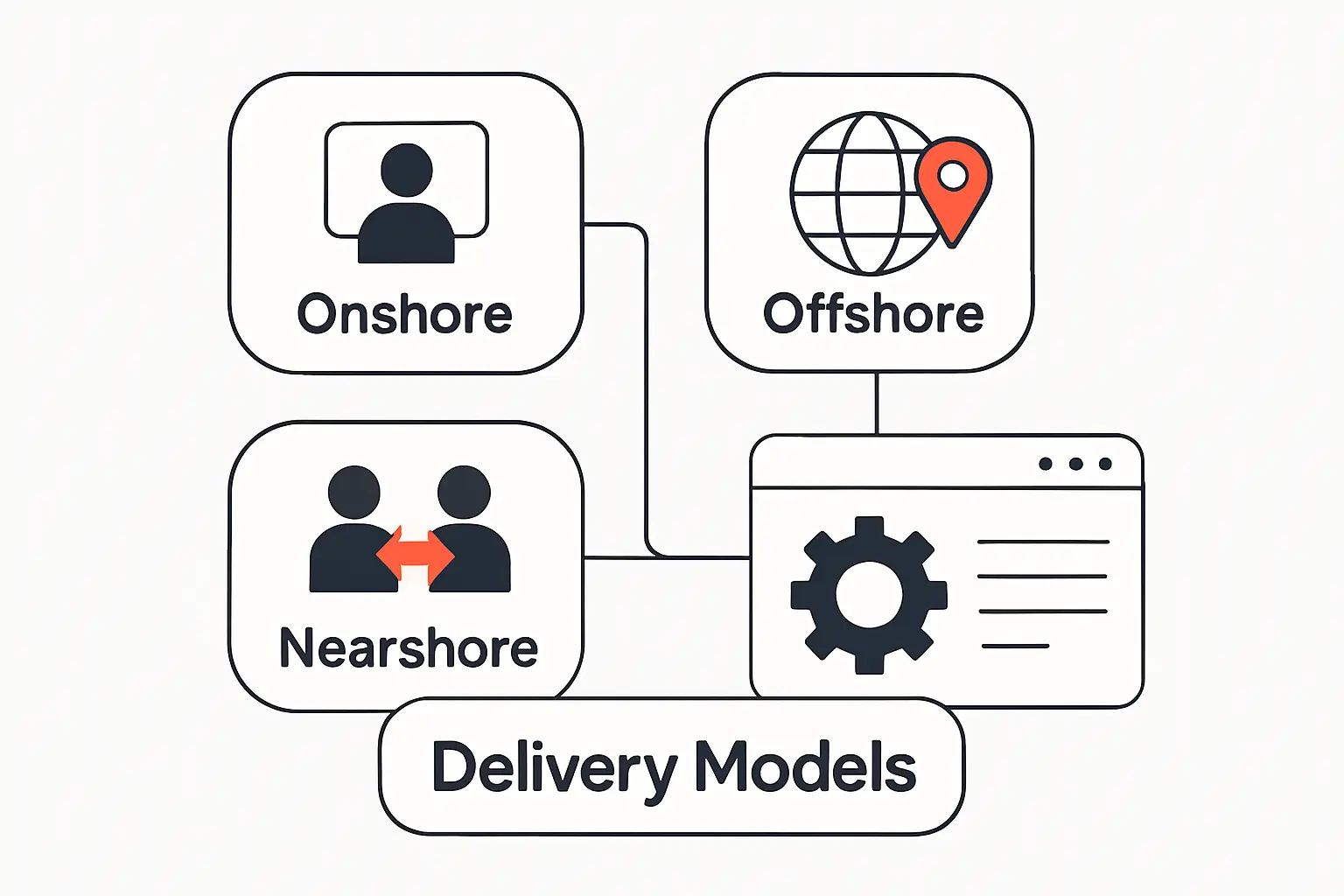
2. Onshore, nearshore, and offshore outsourcing options
Outsourcing models let businesses flex talent capacity and access skills that may be scarce locally. Onshore teams typically maximize communication ease, nearshore teams often balance cost with timezone overlap, and offshore teams can extend coverage and lower labor cost when collaboration practices are strong. From our perspective, the best model depends less on geography and more on governance, clarity, and shared execution standards.
3. How the collaboration model affects cost, speed, and scalability
A team-augmentation model works when leadership already owns product direction and mainly needs more delivery bandwidth. Dedicated cross-functional teams fit better when a company wants end-to-end execution without building every role internally, while fixed-scope projects can work for well-bounded deliverables. Cost, speed, and scalability shift dramatically based on who controls backlog decisions, architecture, and acceptance criteria, so the collaboration model is never just a staffing choice.
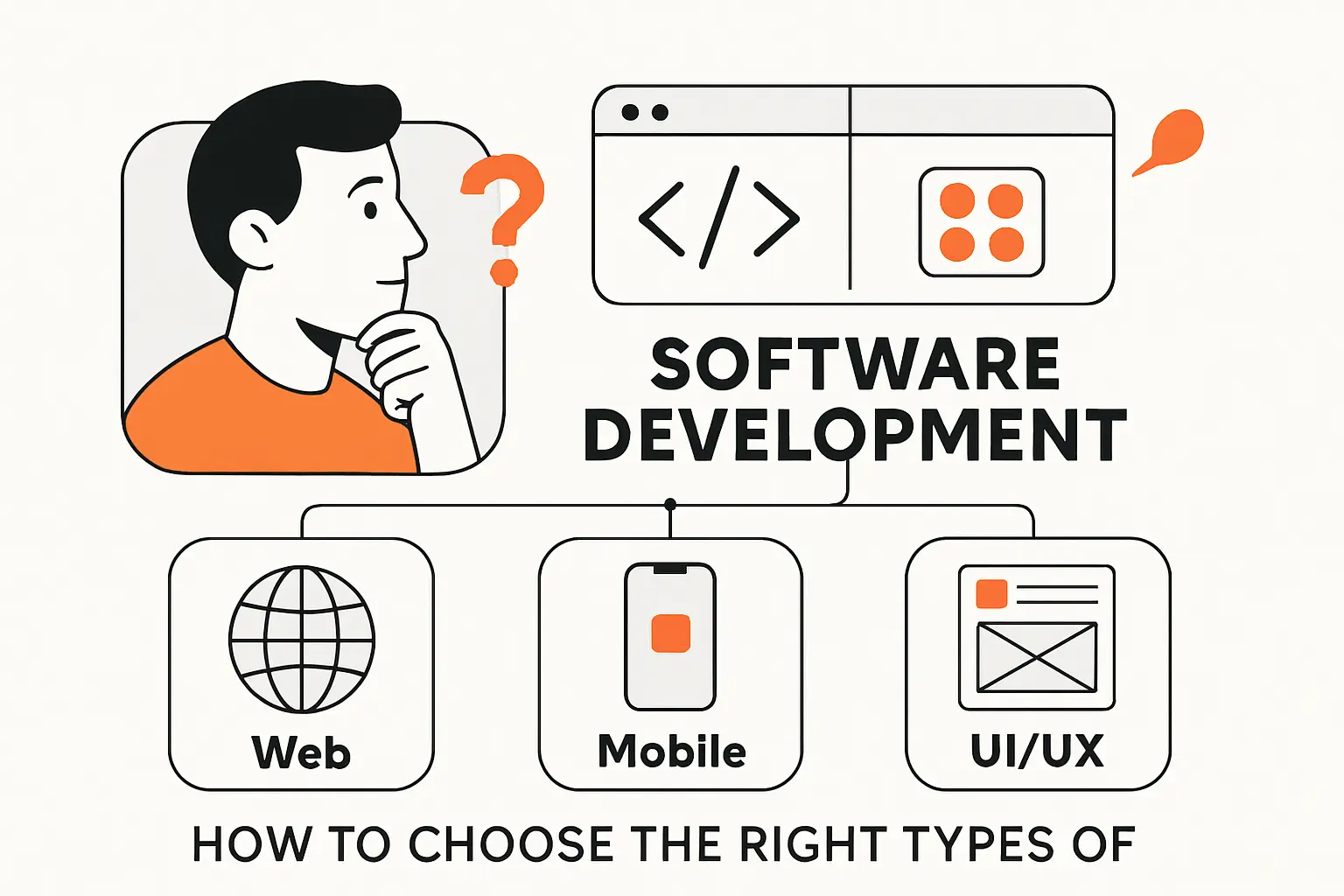
How to Choose the Right Types of Software Development Services
1. Match the service type to your business goals and user needs
The right service choice starts with the problem, not the technology trend. If the goal is faster quoting, fewer support tickets, better field reporting, or new digital revenue, the service mix should map directly to that outcome and the user journey behind it. We usually recommend defining the bottleneck, the affected users, and the measurable business result before discussing mobile, AI, cloud, or integration priorities.
2. Evaluate scalability, compliance, security, and integration requirements
Scalability is not only about traffic. Teams must think about tenant growth, data volume, concurrency, reporting load, audit retention, identity federation, partner connectivity, and any industry rules that shape architecture choices. A system that works for a single department can still fail at broader scale if permissions, observability, or integration design were treated as afterthoughts.
3. Balance cost, timeline, ownership, and future flexibility
Cheap software can become expensive when code ownership is unclear, customizations are trapped inside a vendor, or the architecture cannot absorb change without breaking. Future flexibility usually comes from clean data boundaries, documented infrastructure, stable contracts, and a roadmap that separates urgent fixes from strategic capabilities. In our view, the most expensive build is the one that solves today’s pain while blocking tomorrow’s move.
What Affects Software Development Cost and Timeline
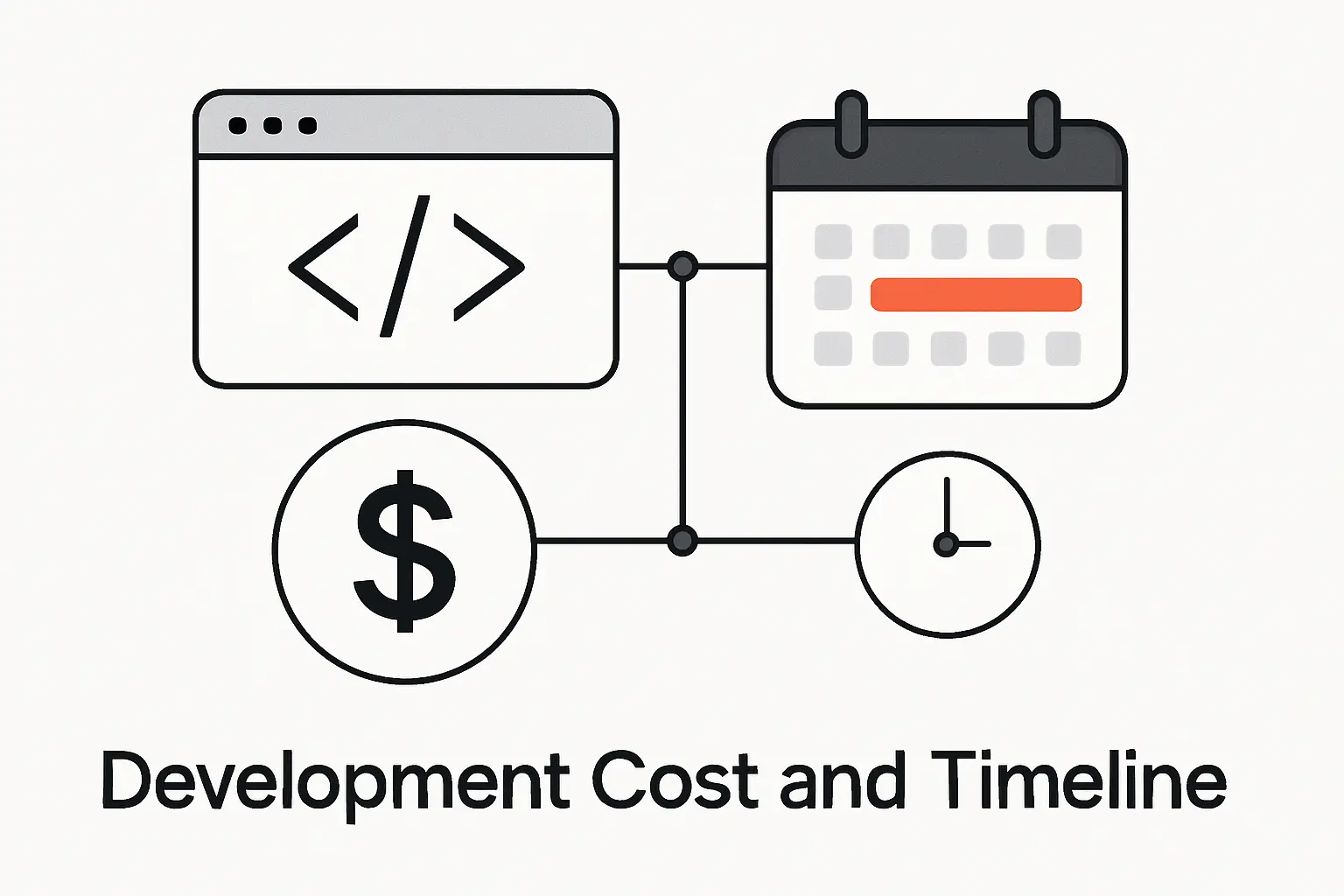
1. Project scope, feature complexity, and technical architecture
Scope is the first major cost driver, but complexity changes the budget more than feature count alone. A single workflow with rules engines, approvals, document generation, and audit logging may demand more engineering than several straightforward screens. Architecture choices such as real-time processing, offline mode, event-driven messaging, or multi-tenant design also reshape the timeline because they affect testing, data modeling, and operational readiness.
2. Platform choice, integrations, and compliance requirements
Building for web, iOS, Android, kiosks, or embedded devices changes effort immediately. Integrations add coordination risk because third-party APIs, legacy databases, identity providers, payment rails, or ERP systems often hide brittle behavior and undocumented constraints. Compliance requirements multiply work as well, especially when validation, traceability, encryption, audit evidence, or external assessments become part of the release criteria.
3. Ongoing support, maintenance, and total cost of ownership
Total cost of ownership includes far more than the initial build. Hosting, observability, support coverage, cloud efficiency, licenses, security reviews, upgrades, and improvement cycles all determine whether the software remains affordable and reliable over time. We encourage businesses to budget for the full operating model, because underfunded support is one of the fastest ways to turn a promising product into a fragile one.
Industry Specific Software Development Service Examples
1. Healthcare, biotech, and education solutions
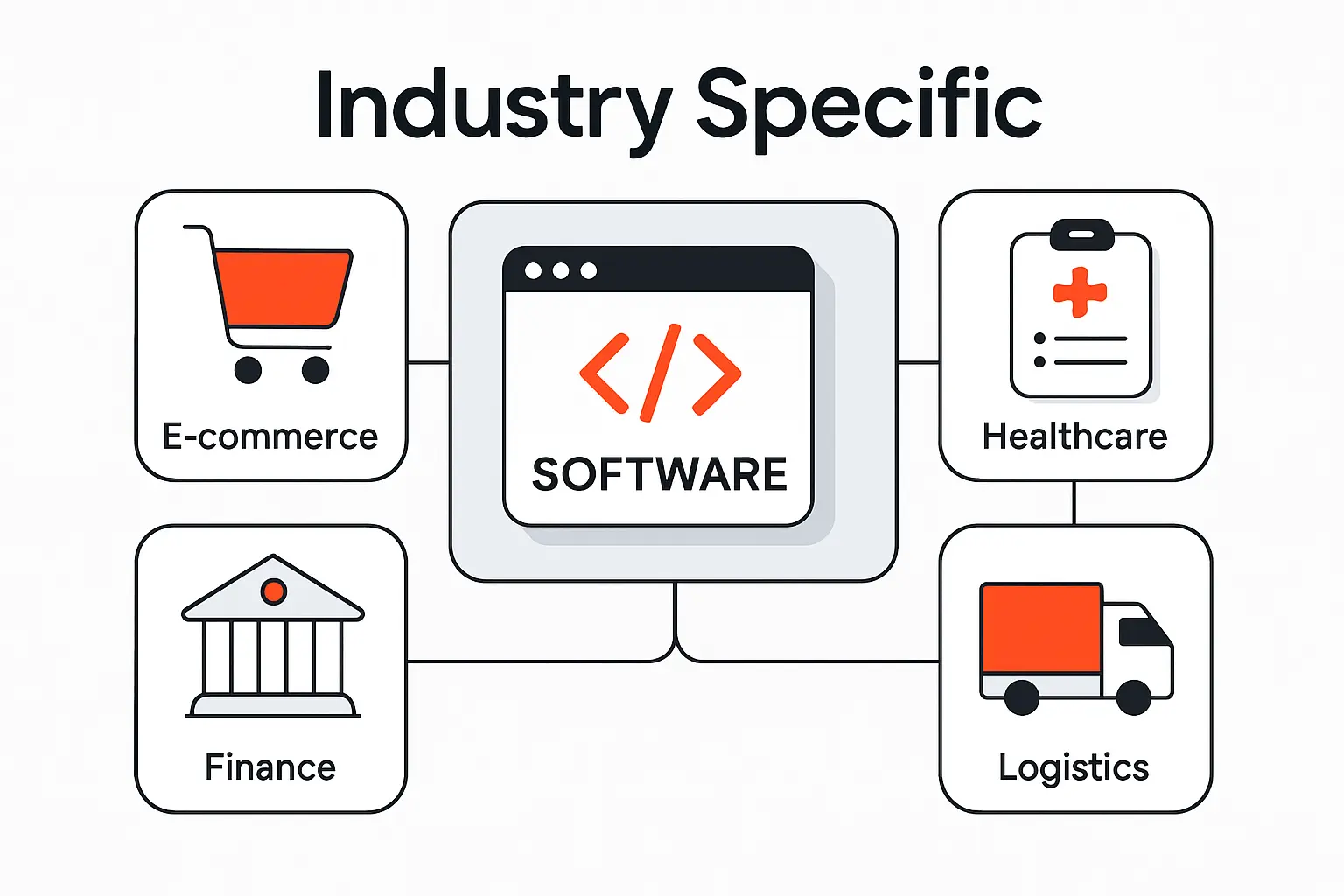
Healthcare and biotech platforms often need secure intake, patient or participant portals, lab workflows, consent tracking, data lineage, and analytics that respect the HIPAA Security Rule. When software crosses into regulated clinical use, teams may also need to account for FDA expectations around Software as a Medical Device. Education products, meanwhile, lean heavily on identity, accessibility, content delivery, assessment integrity, and role-based experiences across students, faculty, and administrators.
2. Finance, insurance, and compliance heavy platforms
Financial services software lives under relentless scrutiny because trust, money movement, and auditability are inseparable. That usually means secure identity, ledger accuracy, policy and claims workflows, underwriting automation, fraud controls, and payment handling aligned with PCI DSS where card data is involved. We have found that the hardest part is often not the interface but the decision logic, approvals, and evidence trails behind it.
3. Retail, travel, manufacturing, and logistics systems
Retail and travel teams need fast search, availability, pricing, checkout or booking, loyalty, and post-purchase orchestration across channels. Manufacturing and logistics systems add warehouse flows, equipment telemetry, route planning, asset tracking, and real-time exception handling that tie software directly to physical throughput. These sectors benefit most when front-end experience, operations data, and integration architecture are designed as one system rather than as separate projects.
Frequently Asked Questions About Software Development Services
1. What do software development services include?
Most engagements include discovery, business analysis, UX and UI design, architecture, development, testing, deployment, integration, and post-launch support. Depending on the product, they may also include DevOps, security engineering, data migration, analytics, and product strategy.
2. Which software development service types are most common today?
Today, the most common types are custom software, web development, mobile app development, cloud development, SaaS product development, API integration, AI and machine learning implementation, and QA or support services. We see the strongest programs combine several of these rather than treating them as isolated workstreams.
3. What stages are involved in the software development lifecycle?
A typical lifecycle includes requirements analysis, design, prototyping, development, testing, deployment, adoption, monitoring, and iteration. Strong teams treat launch as the midpoint, not the finish line.
4. How can a business choose the right development service?
Businesses should start with the user problem, desired outcome, and operational constraints, then choose the service mix that best fits. Security, compliance, integration needs, internal capability, and ownership expectations should be evaluated before selecting tools or delivery partners.
5. What factors affect custom software development cost?
Cost usually changes with feature depth, architecture, platform count, integrations, regulatory requirements, data migration, and support expectations. The same interface can be inexpensive or highly complex depending on the systems and rules behind it.
6. How long does a custom software project usually take?
Timeline depends on scope, dependencies, decision speed, and regulatory complexity. A focused MVP can move quickly when the surface area is controlled, while an enterprise platform takes longer because integrations, testing, approvals, and rollout plans add substantial effort. We prefer to estimate after discovery, because realistic schedules come from constraints, not optimism.
How TechTide Solutions Helps Businesses Build Custom Solutions
1. Software discovery and planning tailored to your business goals
At TechTide Solutions, we start by understanding how your business actually works, not how a template says it should work. We run discovery sessions around goals, workflows, users, systems, and constraints, then turn that into a prioritized roadmap, architecture direction, and delivery plan leadership can trust. That early clarity is where good budgets and sane timelines are created.
2. Custom web, mobile, and software development built around your workflows
From there, we design and build custom web platforms, mobile apps, internal systems, and customer-facing products that reflect the way your teams and users operate. Our engineering focus stays practical: resilient architecture, clean APIs, strong QA, secure delivery, and interfaces that reduce friction instead of hiding complexity. We care just as much about maintainability as launch speed, because real business value arrives after the first release.
3. Integration, scaling, and long-term support for evolving business needs
We also help businesses integrate with existing systems, scale cloud environments, improve release reliability, and support products after launch. That includes observability, performance tuning, modernization planning, and ongoing iteration as business needs change. If your software must connect departments, vendors, devices, and customers over time, we build with that evolution in mind from the start.
Final Thoughts on Types of Software Development Services
Choosing the right service mix for innovation, efficiency, and long-term growth.
There is no universally best type of software development service; there is only the mix that best matches your business model, operational pain points, users, and growth stage. Custom software, web platforms, mobile apps, AI, integration, DevOps, and modernization all matter most when they are composed deliberately rather than purchased as buzzwords. If you are deciding what to build next, we suggest starting with a discovery-led assessment of workflows, systems, and risk, so which service mix would remove the biggest bottleneck in your business right now?

