


At Techtide Solutions, we no longer ask whether AI is entering daily life; we ask how quickly design, operations, and customer expectations are reorganizing around it. When people ask us how AI affects our daily lives, we answer that it changes the small decisions first and the business model second. The route we accept, the products we see, the spammy result we never click because a filter caught it, and the transaction that gets paused for review are all examples of prediction quietly steering behavior. The most important business insight, in our view, is that AI creates durable value when it disappears into useful software behavior rather than announcing itself with fireworks.
What Artificial Intelligence Means in Daily Life
McKinsey estimates generative AI could create $2.6 trillion to $4.4 trillion in value across industries.
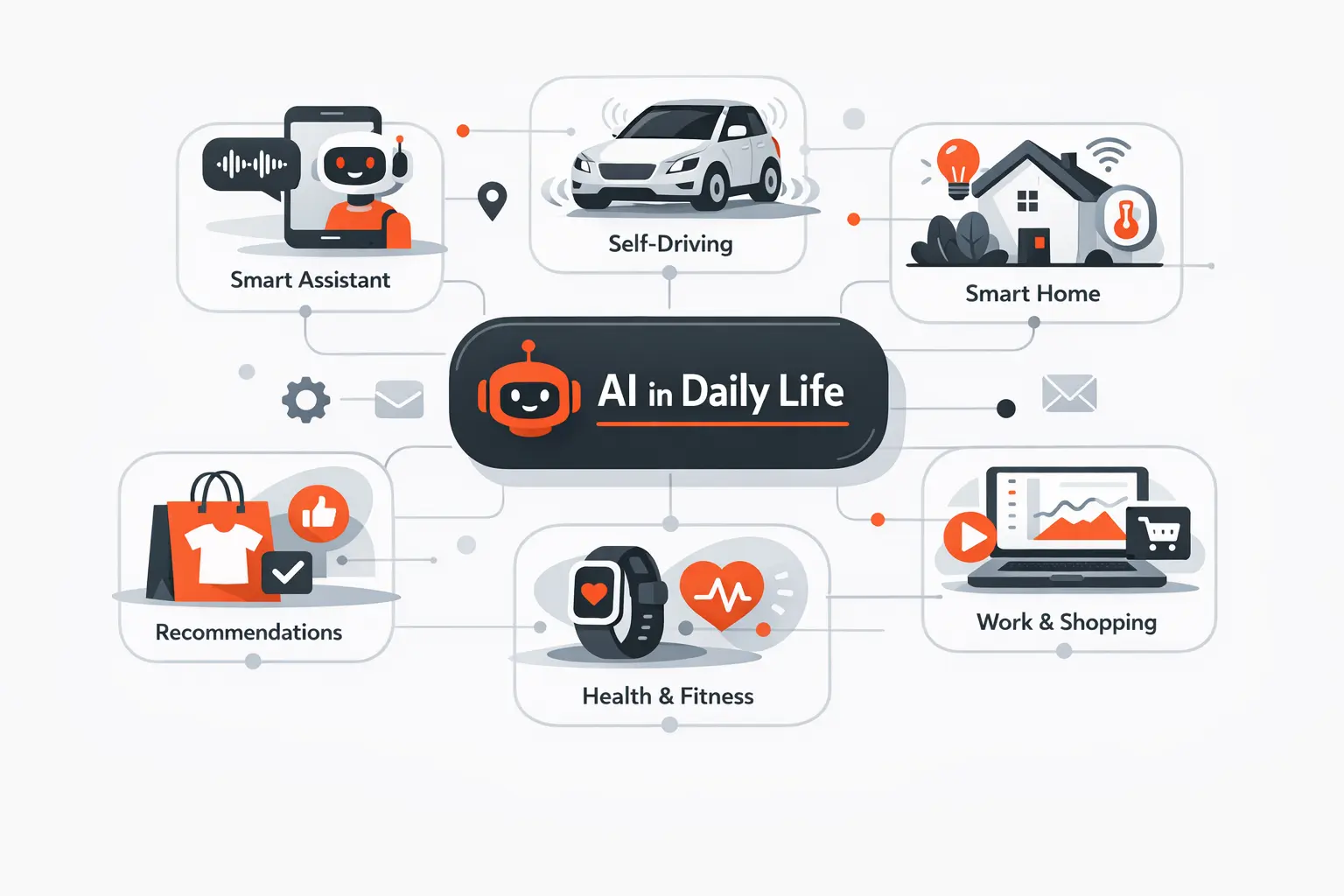
1. What AI Is and How It Works
In plain language, AI is software that detects patterns in data. Then it uses those patterns to classify, predict, rank, recommend, or generate output. Beneath the interface, the core loop is usually simple. Teams collect data, train a model, and run inference on new inputs. Then feedback helps improve the system. We explain it to clients as probability wrapped in product design. What users experience as “smart” is often a stack of statistical decisions shaped by rules and human goals.
2. How AI Moved From Science Fiction to Everyday Routines
The jump from science fiction to routine happened because cloud infrastructure, smartphones, sensors, and mature APIs turned AI from a lab experiment into a reusable service layer. Search, spam filtering, navigation, and recommendation engines normalized machine learning long before generative AI became a public talking point. From our seat in software delivery, the real milestone was not a viral demo; it was the moment users began expecting software to anticipate intent instead of merely waiting for clicks.
3. Why AI Often Works Behind the Scenes
Much of the most effective AI stays invisible. Google’s ranking and spam systems work quietly in the background. Meanwhile, Amazon’s forecasting models position inventory before a shopper even taps buy. Banks also score suspicious activity without forcing every payment into manual review. To us, this hidden quality explains why people underestimate AI’s daily impact. When intelligence removes friction cleanly, the experience feels effortless instead of theatrical.
Recommended reading: How to Build RAG from Scratch
How AI Affects Our Daily Lives at Home and on the Go
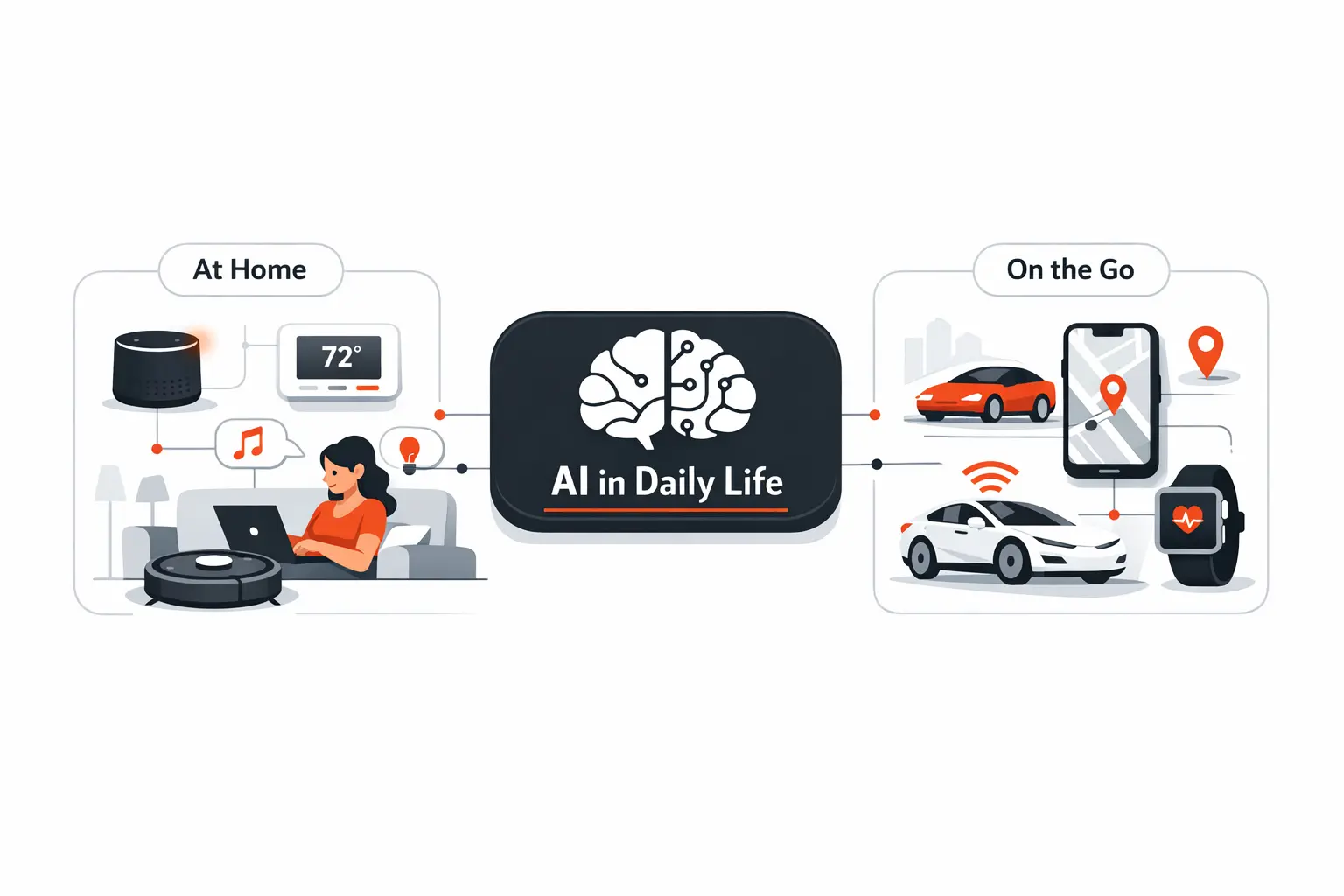
AI is no longer something we only meet inside enterprise dashboards or experimental labs; it is quietly moving into the small routines of daily life, shaping how we live, travel, save time, and make decisions.
While Gartner expects more than 80% of enterprises will have used generative AI APIs or deployed GenAI-enabled applications by 2026; that market shift already feels concrete when a Nest Learning Thermostat adapts to household behavior or Waymo One extends autonomous ride-hailing into another city.
1. Smart Home Devices That Learn Routines
At home, AI often shows up as adaptation. Google says the Nest Learning Thermostat uses Smart Schedule to learn preferred temperatures over time. It also adapts when household behavior changes. This small feature reflects a much larger pattern. Software observes signals and updates defaults automatically. For consumer products, that matters because learning systems can strengthen retention. Once a device understands routines, switching costs become behavioral, not just financial.
2. Digital Assistants for Reminders, Schedules, and Voice Control
Voice assistants turn language into interface. Apple’s Siri can create reminders and message contacts, while Amazon’s Alexa Routines coordinate repeated actions across devices and times of day. The technical leap is not simply speech-to-text; it is intent detection, entity extraction, and task orchestration, which is why assistants become genuinely useful when they are tied to calendars, home controls, and workflow systems rather than treated as novelty speakers.
3. Navigation, Traffic Management, and Smarter Transportation
On the move, AI is a prediction engine. Google explains that Google Maps uses AI to predict traffic and determine routes, and the same logic now stretches into autonomous mobility as Waymo One prepares for riders in Washington, D.C. As developers, we care about the stack underneath those experiences: graph models, map matching, live sensor fusion, and decision policies that continuously recalculate risk, time, and efficiency.
Recommended reading: What Is DSPy? A Practical Guide to Programming Language Models
How AI Shapes Search, Media, and Online Shopping
1. Search Engines and Smarter Online Services
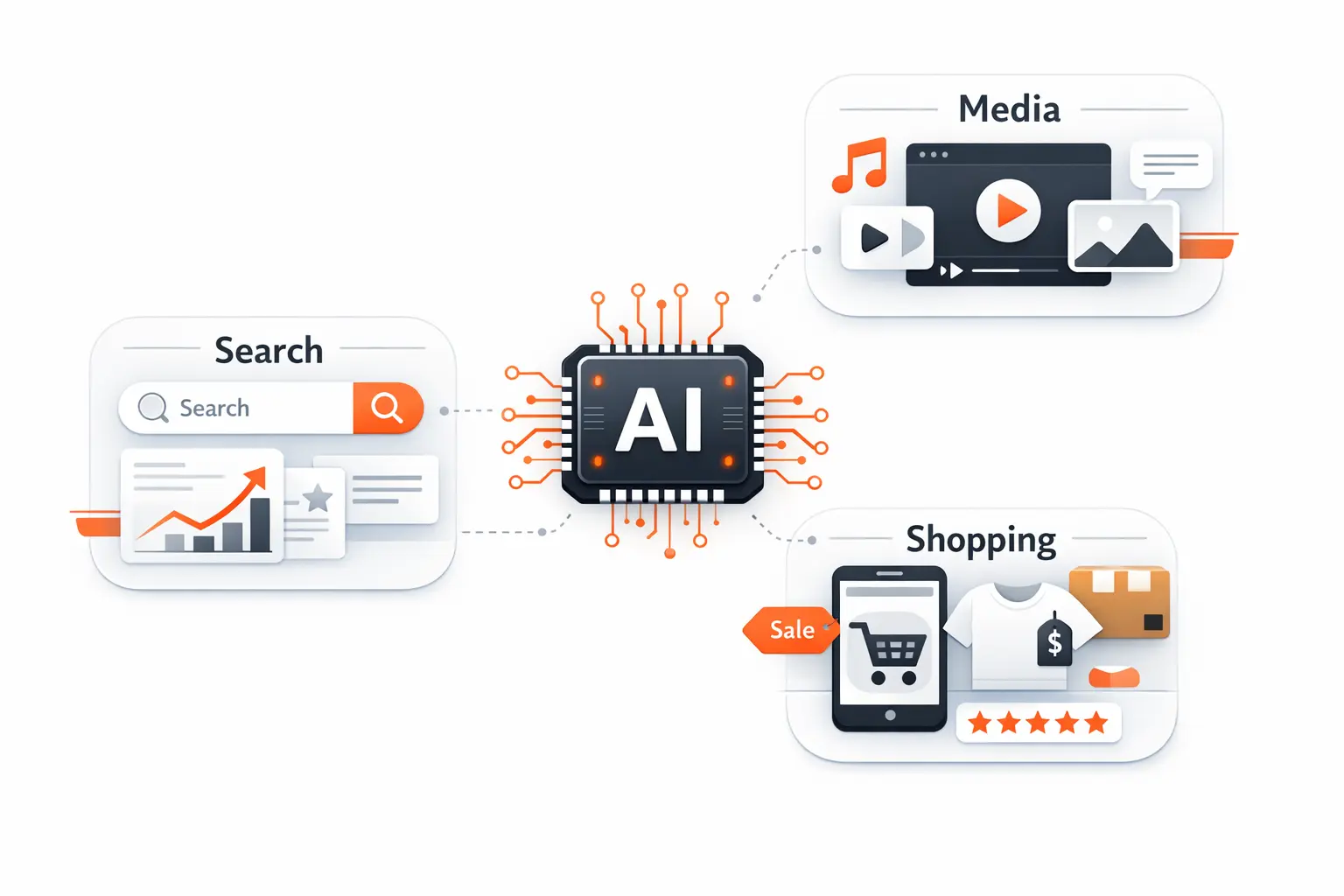
Search is one of the oldest mass-market AI products, even when users do not describe it that way. Google says its language-modeling work improved results in over 30% of searches across languages, and its ranking systems sort through massive indexes by weighing query meaning, page relevance, source expertise, freshness, location, and settings. For businesses, that means discoverability is no longer about keyword stuffing; it is about being genuinely useful to both people and machine-learned ranking systems.
2. Streaming, Social Media, and Personalized Content
Entertainment platforms have trained people to expect curation instead of catalogs. Netflix says its recommendation system creates multiple layers of personalization across the service, TikTok says the For You feed ranks content from signals such as user interactions, video information, and device settings, and Spotify’s DJ now accepts spoken requests to reshape a listening session in real time. Under the hood, these systems rely on embeddings, collaborative patterns, session context, and constant feedback from what people skip, replay, like, or ignore.
3. Online Shopping Recommendations and Virtual Fitting Rooms
Commerce may be the clearest case of AI turning indecision into action. Google says its Shopping Graph now maps 50 billion products, which is why virtual try-on, visual search, and conversational narrowing feel increasingly natural, while Amazon’s Interests feature translates everyday language into persistent product discovery. We like this category because the business logic is brutally clear: better relevance lifts conversion, and better visualization can reduce returns.
4. AI Tools That Help Detect Fake Content and Misinformation
Trust is now a product feature. Google says over 20 billion AI-generated pieces of content have been watermarked using SynthID, TikTok says its labeling tool has been used by over 37 million creators since last fall, and Adobe’s Content Credentials add provenance metadata to help people inspect how a file was made. Even so, we do not think provenance eliminates misinformation; it simply gives platforms, publishers, and users a better evidentiary trail.
Recommended reading: Is Vibe Coding Legal for Businesses, Founders, and Developers
How AI Transforms Healthcare, Finance, and Learning
1. Healthcare Diagnostics, Telemedicine, and Drug Discovery
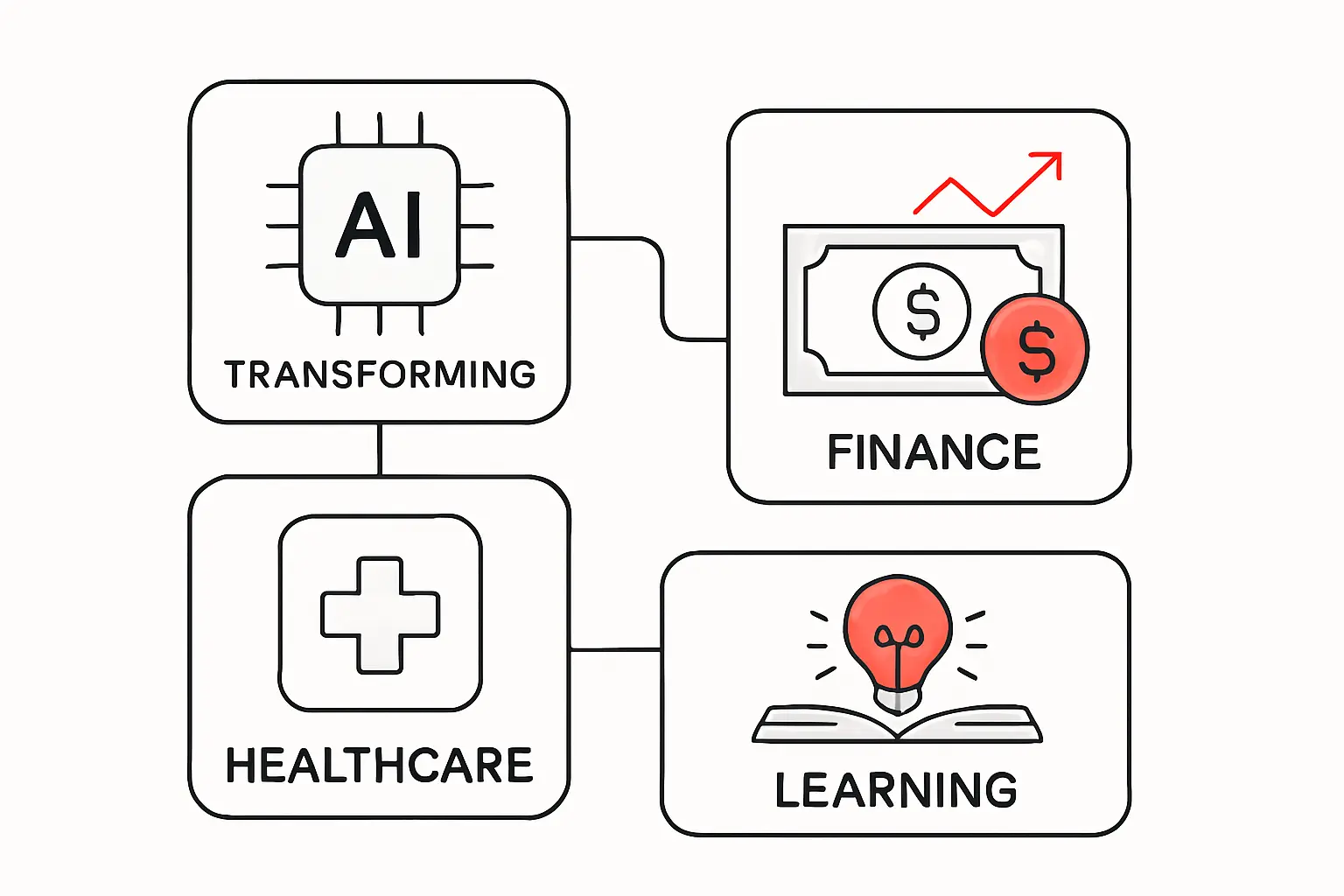
In healthcare, AI’s value comes from narrowing time-to-insight. The FDA now maintains a public page for AI-enabled medical devices, telehealth guidance from HHS increasingly assumes connected monitoring workflows, and research tools such as AlphaFold have accelerated how scientists reason about protein structure in early-stage discovery. We are especially interested in systems that shorten the path between signal and action, because that is where software starts to support clinicians instead of distracting them.
2. Wearables, Health Tracking, and Preventive Insights
Wearables turn passive sensing into preventive nudges. Apple says the irregular rhythm notification feature on Apple Watch checks for patterns that may suggest atrial fibrillation, Fitbit’s Daily Readiness Score estimates whether the body is primed for exertion or recovery, and Oura’s Readiness Score combines sleep and recovery signals into a daily recommendation. From a software perspective, these are personalization engines built on baseline comparison rather than one-size-fits-all thresholds.
3. Personal Finance, Investing, Banking, and Fraud Detection
Money software has become increasingly predictive. Bank of America says Erica interactions exceed 3.2 billion, while Mastercard says its Decision Intelligence platform helps score 143 billion transactions a year. That scale matters because fraud detection is a ranking problem under extreme time pressure: the model must weigh context, behavior, merchant patterns, device signals, and network history fast enough to stop abuse without breaking legitimate purchases.
4. Education, Virtual Tutors, and Accessibility Tools
Learning tools are becoming more adaptive, conversational, and accessible at the same time. Khanmigo positions AI as a tutor and teaching assistant, Duolingo’s Explain My Answer gives learners feedback on grammar and vocabulary, and Microsoft says Immersive Reader is used by more than 15 million users. We see the deepest promise here in scaffolding: AI can meet a learner at the right level, in the right format, at the right moment, especially for reading differences, language learners, and overwhelmed students.
Recommended reading: AI-Driven Decision Making: How It Works, Benefits, and Real-World Use Cases
How AI Changes Work and Customer Experiences
1. Chatbots and Round the Clock Customer Support
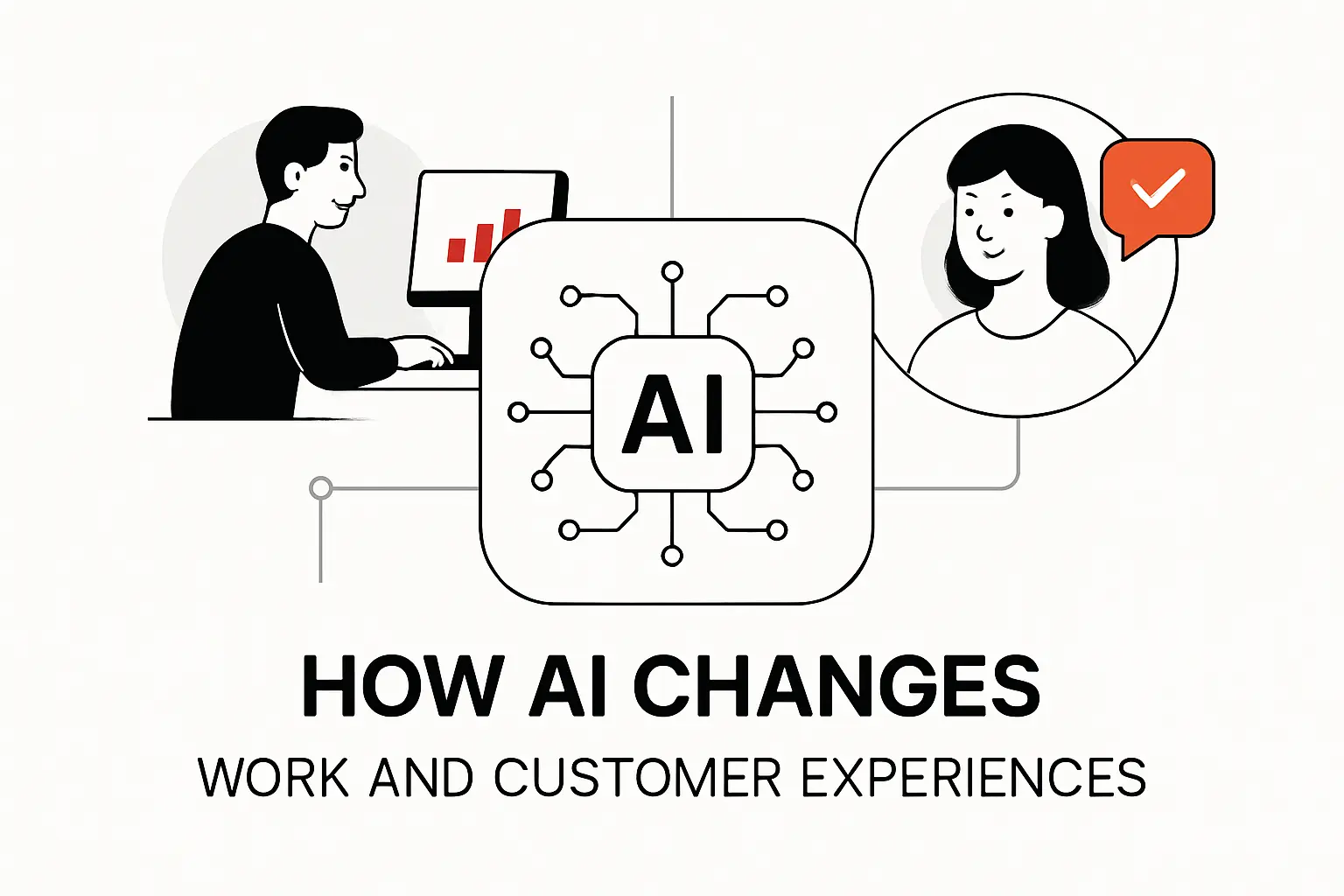
When customer support works well, AI feels less like a bot and more like queue compression. Klarna said its assistant handled two-thirds of customer service chats in its first month, and platforms such as Intercom now position AI agents and human agents as a single support system rather than competing channels. Our view is blunt: automated support is excellent for repetitive intent and terrible for unresolved emotion, so the design challenge is handoff, not bravado.
2. Data Driven Decisions for Businesses and Startups
Better decisions begin with better prediction. Amazon says its new supply-chain model delivered a 20% improvement in regional forecasts for millions of popular items, and Intuit Assist shows how the same pattern can be applied to small-business finance through personalized recommendations. For startups and enterprise teams alike, forecast accuracy changes real economics: inventory sits for fewer days, staffing gets tighter, cash is planned earlier, and leadership stops making every decision by spreadsheet intuition alone.
3. Automation in Manufacturing, Logistics, and Supply Chains
In operations, AI is increasingly paired with robotics and industrial monitoring. Amazon says its next-generation fulfillment centers use 10 times more robotics, while Siemens showcases AI-based predictive maintenance to catch equipment problems before they become downtime. We pay close attention to this category because it reveals what enterprise AI really is: not a chatbot floating above the business, but a decision layer embedded inside machines, warehouses, routes, and service intervals.
Recommended reading: DSPy vs LangChain: Key Differences, Best Use Cases, and How to Choose
The Biggest Benefits of AI in Everyday Life
1. More Convenience and Less Repetitive Work
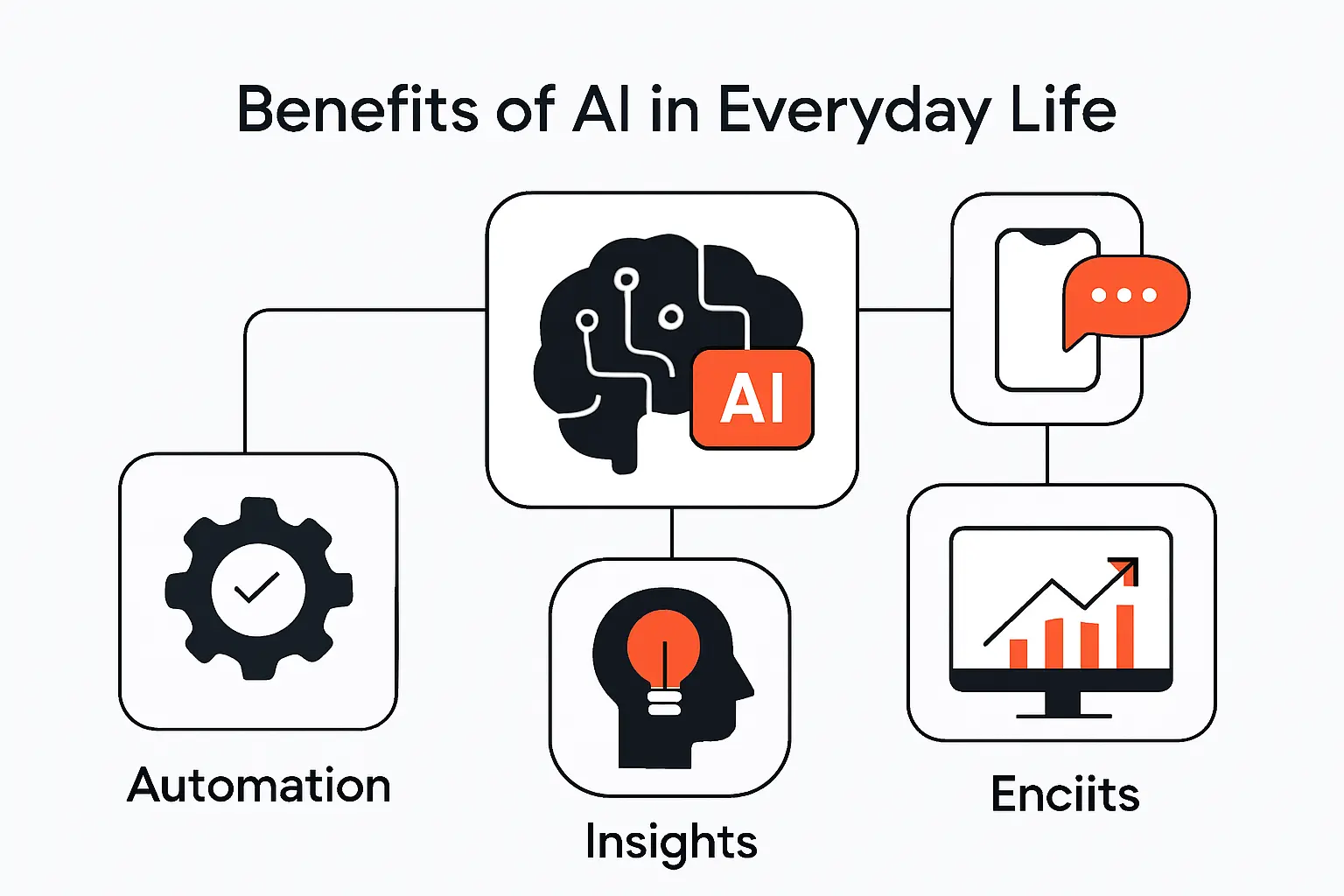
The first everyday benefit of AI is mundane, which is precisely why it matters. Smart schedules, route predictions, reminders, auto sorting, spam filtering, and draft responses remove dozens of micro decisions that would otherwise drain attention. We have learned that companies do not win by making users marvel at AI. They win by helping people finish ordinary tasks with less friction, less waiting, and less repetitive input.
2. Better Personalization and Faster Decisions
Personalization is the second major dividend. Recommendation systems, tutoring assistants, adaptive finance tools, and health trackers can respond to history, context, and goals. Instead of offering one generic flow, they adapt experiences to each user. Technically, that depends on better ranking, stronger context handling, and disciplined feedback loops. Commercially, it leads to faster decisions, stronger retention, and fewer abandoned journeys.
3. Stronger Security, Sustainability, and Economic Growth
The third benefit is structural rather than cosmetic. Mastercard and Visa use AI to detect suspicious patterns, Google DeepMind showed it could reduce the amount of energy used for cooling by up to 40 percent in data centers, and the same McKinsey analysis that framed this article suggests the upside reaches far beyond novelty. We believe this is where executives should focus: AI is most valuable when it protects margins, reduces waste, and strengthens resilience at scale.
The Challenges and Risks of AI in Daily Life
1. Privacy, Data Security, and Surveillance Concerns
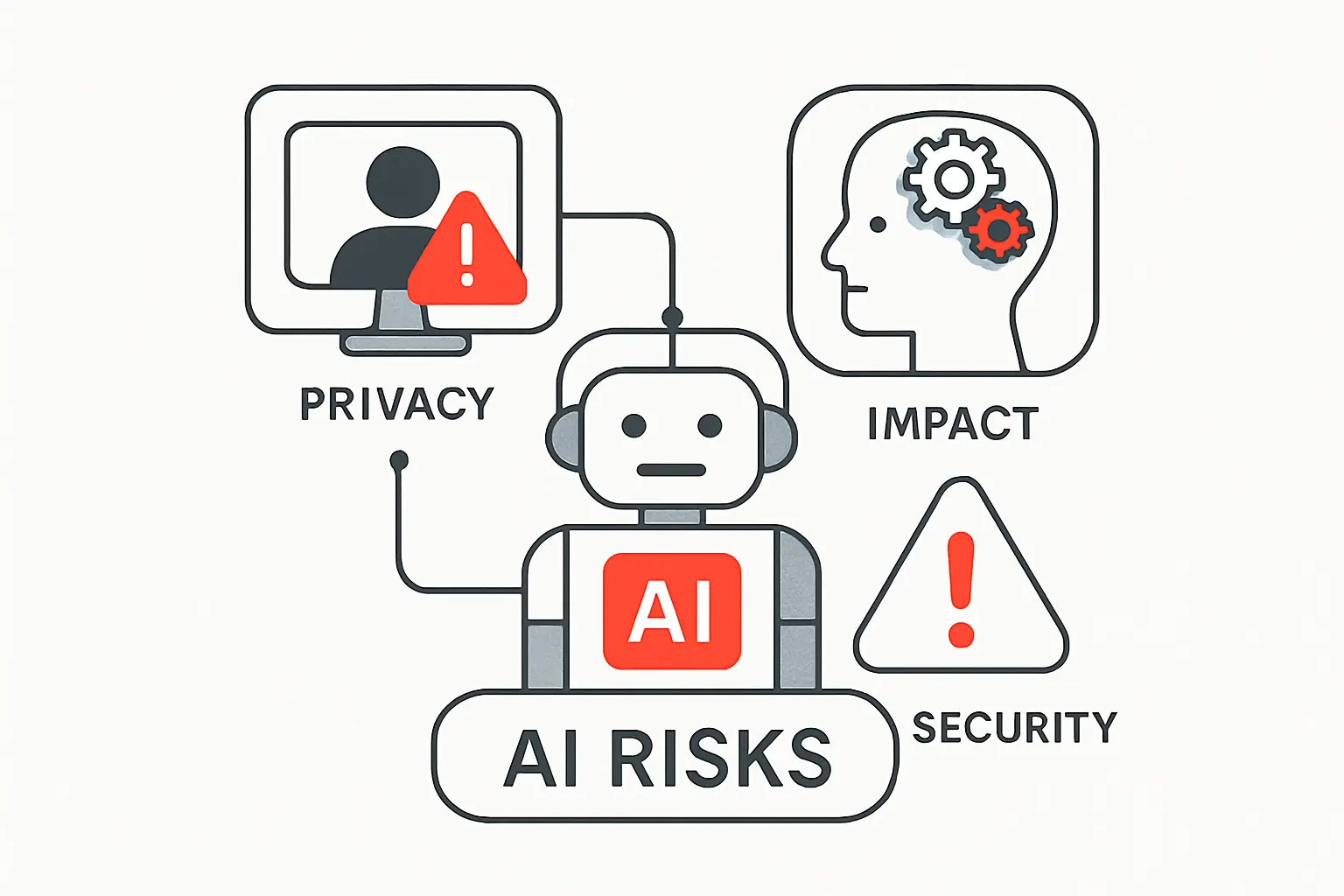
Every system that learns from behavior also creates a governance question. Smart homes, wearables, telehealth platforms, banking apps, and work assistants all depend on logs, identifiers, and behavioral traces, which is why HHS warns providers to address privacy and security risks to protected health information when using remote communication technologies for telehealth. From our perspective, the right design posture is data minimization: capture what improves the experience, protect it well, and resist the temptation to hoard just because storage is cheap.
2. Bias, Fairness, and Accuracy Problems
AI can be fast, confident, and wrong at the same time. NIST’s AI RMF 1.0 exists because trustworthy AI requires attention to validity, reliability, safety, security, accountability, transparency, and harmful bias, not just model performance. We think businesses often underestimate this point: if biased data or brittle evaluation enters the pipeline early, the product can scale unfairness more efficiently than any human team ever could.
3. Job Changes, Reskilling, and Human Oversight
Job disruption is real, but the picture is more complex than simple replacement. The World Economic Forum projects 170 million new roles set to be created and 92 million displaced, resulting in a net increase of 78 million, which reinforces what we tell clients: automate tasks, redesign workflows, and invest in reskilling before you redraw org charts. In our judgment, human oversight will remain non-negotiable wherever stakes are legal, medical, financial, or deeply reputational.
The Future of AI in Daily Life
1. Multimodal AI and Stronger Virtual Agents
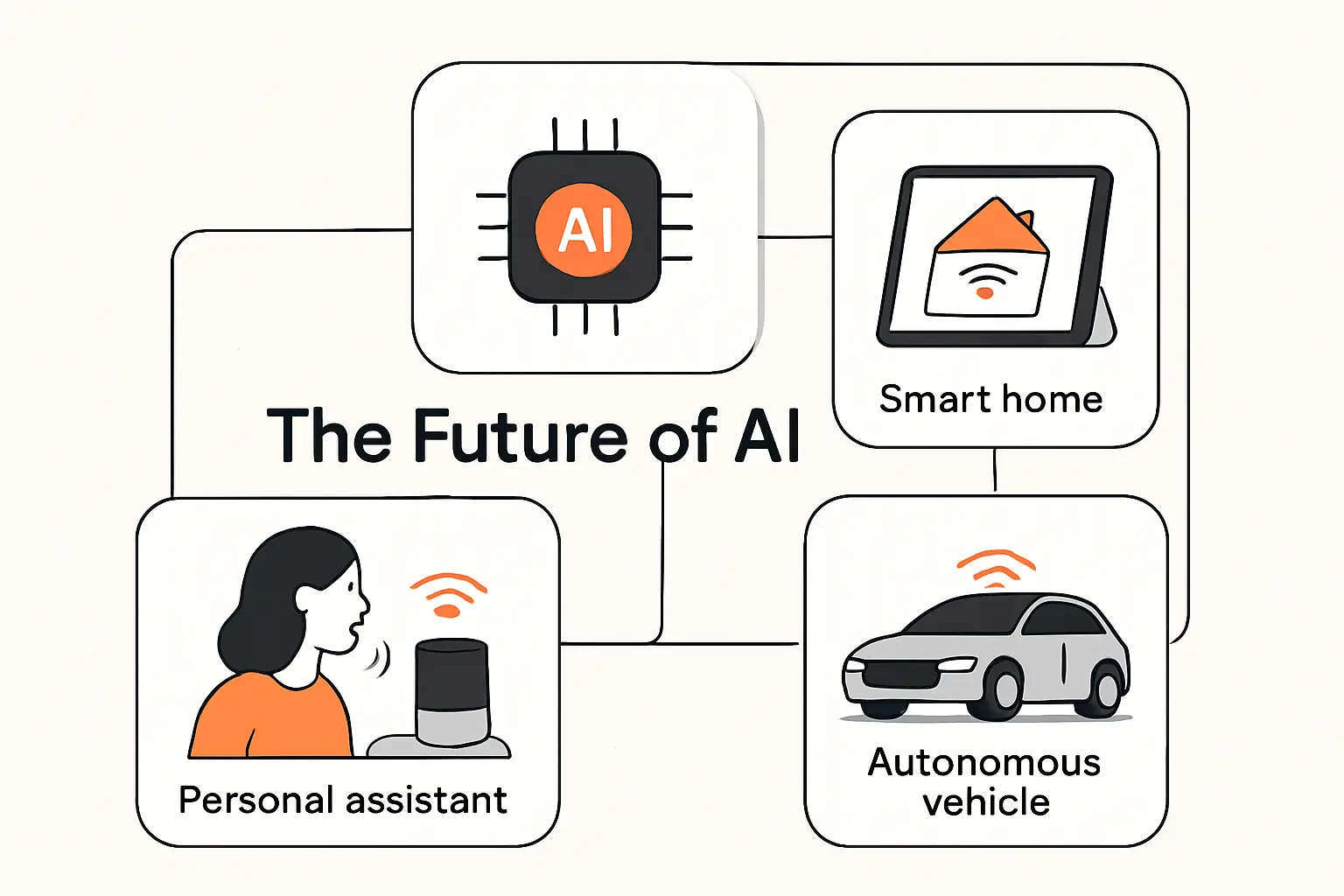
The next wave of everyday AI will be multimodal by default. Google’s Gemini app can now inspect images and video for SynthID watermarks, while Spotify’s Prompted Playlist is already stretching from music into podcasts, signaling a broader shift from text-only assistants to agents that can reason across voice, image, video, and action. We expect the strongest virtual agents to feel less like chat windows and more like coordinated software coworkers.
2. Smarter Cities, Transportation, and Public Services
City systems are also becoming more predictive. Google Maps keeps improving traffic estimation. Waymo continues expanding public autonomous service. Guidance backed by HHS shows remote monitoring can extend care beyond clinic walls. For governments and regulated industries, the hard part is not inventing isolated AI tools. Instead, they must integrate them with legacy infrastructure, procurement rules, public trust, and accessibility requirements.
3. Ethical Rules and Human Skills for the Future
We do not believe the future belongs to raw automation alone. It belongs to teams that pair strong human judgment with governance frameworks like NIST’s AI RMF and Content Credentials. Trust, provenance, and escalation paths are now part of the product itself. As a result, the most valuable human skills extend beyond coding or prompting. Teams need people who frame problems well, validate outputs, communicate uncertainty, and make accountable decisions.
FAQ About AI in Daily Life
1. What Are the Most Common Everyday Uses of AI?
Today, AI often powers search ranking, spam filtering, navigation, and recommendation engines. Elsewhere, it supports smart assistants, customer support, fraud detection, wearables, and adaptive learning tools. In practice, most people use AI constantly without opening a dedicated AI app. Instead, the intelligence lives inside services they already trust and use every day.
2. What Drawbacks Should People Know About AI in Everyday Life?
Main drawbacks include privacy exposure, misinformation, biased outputs, over-automation, and misplaced confidence. Some systems sound certain even when they are wrong. We advise organizations and individuals to ask four questions before trusting any AI result. Where did the data come from, and what is the model allowed to do? How are errors handled, and when can a human step in?
3. How Does AI Make Home and Work Tasks Easier?
AI makes home and work tasks easier by removing low-value repetition: setting reminders, optimizing routes, drafting text, sorting information, answering routine questions, and learning personal preferences over time. The business meaning is straightforward. Every minute saved on repetitive coordination can be reassigned to judgment, service, sales, or creative work that software still cannot own end to end.
4. How Is AI Improving Healthcare and Education?
In healthcare, AI helps surface signals from scans, devices, and remote monitoring so clinicians can act earlier. In education, it supports tutoring, explanations, translation, read-aloud experiences, and accessible formatting. Neither field should hand authority entirely to automation, but both gain real value when AI reduces delay, adapts support to the individual, and keeps a human expert in the loop.
5. Will AI Replace Jobs or Create New Kinds of Work?
AI will replace some tasks, compress some teams, and create new roles in data, operations, product design, compliance, and supervision. We think the practical question is not whether jobs disappear. Instead, ask which responsibilities humans should keep and which tasks software should accelerate. Organizations that answer early adapt better. Teams that wait for disruption usually lose time and flexibility.
How TechTide Solutions Helps Build Custom AI and Software Solutions
1. Turning Unique Needs Into Tailored Product Roadmaps
At Techtide Solutions, we start with the workflow, not the buzzword. We map decision bottlenecks, data sources, failure points, and integration constraints first, then turn that discovery into a product roadmap that makes sense for the business, the users, and the compliance environment. In our experience, the strongest AI products are born from sharp problem definition rather than generic model enthusiasm.
2. Building Custom Web and Mobile Solutions With Intelligent Features
We build custom web and mobile products with intelligent features where intelligence truly earns its keep: search that understands intent, assistants that retrieve the right internal knowledge, recommendations that reflect real context, and automation that reduces operational drag. We are careful here. Not every product needs a chatbot, and not every workflow benefits from generation when ranking, classification, or orchestration would be more reliable.
3. Integrating Automation, Data, and Scalable Software Systems
Just as important, we integrate AI into secure, scalable software systems instead of treating it as a disconnected experiment. That means APIs, data pipelines, observability, permission models, human-review controls, analytics, and architecture that can grow from pilot to production without collapsing under success. We enjoy this part because it is where ambitious ideas become durable business tools.
Final Thoughts on How AI Affects Our Daily Lives
1. AI Is Already Part of Everyday Routines
AI is already woven into everyday routines, whether we are searching, shopping, commuting, learning, banking, or managing a home. The daily question is no longer whether we encounter AI; it is whether the systems around us use it well, quietly, and in ways that actually respect our time.
2. Responsible Development Will Shape the Value of AI
Responsible development will decide whether AI feels empowering or exhausting. We want products that explain themselves, protect data, expose provenance, and keep humans accountable when stakes rise, because trust will be the true differentiator as intelligent features become ordinary.
3. Human Judgment Will Remain Essential as AI Expands
Human judgment will remain essential as AI expands, not because machines are useless, but because goals, values, tradeoffs, and accountability still belong to people. If your team is ready to move from curiosity to execution, why not ask a harder question with us: which everyday process should become intelligently simpler next?

