


At TechTide Solutions, we build software for people who sell outcomes. Freelancers do that daily. Clients do it too, when they “buy” time to reduce risk. The best freelance websites are not just lists. They are labor markets with product design choices baked in.
We treat each platform like a system. Matching rules create incentives. Payment rails shape trust. Dispute tooling changes behavior. Even a tiny UX decision can tilt a marketplace toward long contracts or churn.
Market overview, in one breath: Gartner projects $723.4 billion in 2025 in public cloud end-user spending, McKinsey finds More than 20 percent of the workforce could work remotely three to five days a week as effectively as they could if working from an office, and Deloitte’s latest Gen Z and Millennial Survey covers 23,482 Gen Z and millennial respondents across 44 countries, which mirrors what we see when clients staff with Upwork-style flexibility and Toptal-style depth.
So “best” is contextual. A solo designer selling brand kits needs different mechanics than a backend engineer shipping regulated data pipelines. Our goal here is practical clarity. We want you to pick platforms that reinforce your pricing, not erode it.
What “Best Freelance Websites” Really Mean in 2026
1. Freelance marketplaces vs remote job boards vs portfolio networks
Marketplaces monetize transactions, so they optimize for throughput. That can reward responsiveness over depth. Remote job boards behave differently. They optimize for applicant flow and employer branding.
Portfolio networks sit in a third bucket. They trade on reputation and visibility. In our experience, those networks work best when your work is easy to judge quickly.
2. Gig-style packaged services and instant-purchase workflows
Packaged gigs feel like e-commerce. Clients choose a defined deliverable and click buy. That reduces negotiation friction, which is good for speed.
Still, packaging shifts risk onto the freelancer. Scope has to be crisp. We like gigs most for repeatable work, like audits, landing pages, or short video edits.
3. Bidding and proposal-driven platforms and how competition shows up
Proposal markets create a visible supply stack. You feel competition immediately. Clients see it too, and they can treat talent like interchangeable bids.
Our view is blunt. Bidding works when you have a clear wedge. That wedge can be a niche, proof, or a faster first milestone.
4. Vetting and exclusivity: what “screened talent” changes for your pipeline
Vetted networks sell reduced search cost. Screening also changes who applies. That usually raises the floor on communication and delivery habits.
Exclusivity cuts both ways. Fewer listings can mean fewer shots. Yet each shot often has a higher expected value.
5. Fees, commissions, and subscriptions: what you actually keep
Freelancers often compare posted rates, not kept income. That is a mistake. The real number is net revenue after platform costs and time overhead.
Subscriptions can be predictable. Commissions can be painful early. We suggest modeling both with your close rate and your average cycle time.
6. Payments and protection: escrow, milestones, and hourly tracking safeguards
Payment protection is product, not policy. Escrow reduces nonpayment risk for fixed bids. Hourly tracking reduces disputes when scope shifts midstream.
From a builder’s angle, protection features are trust primitives. They create the confidence needed for larger contracts. Without them, markets stay small and noisy.
7. Client quality, scope clarity, and long-term engagement potential
Client quality shows up in the brief. A clear scope signals budget realism and internal alignment. A vague scope often signals stakeholder chaos.
Long-term potential is also shaped by platform norms. Some sites encourage “one and done.” Others nudge clients toward retainers and teams.
8. Platform tools that shape outcomes: matching, messaging, disputes, and AI helpers
Tools are not neutral. A fast messaging flow favors fast sellers. Rich brief templates favor careful buyers.
AI helpers can accelerate drafting. They can also amplify generic proposals. We recommend using AI to clarify, not to camouflage.
9. Geographic reach: global, local, and regional opportunities
Global reach widens demand, but it also widens competition. Local reach can boost trust and reduce onboarding friction. Regional platforms can match language and payment expectations better.
We treat geography as a conversion lever. The best region is the one where your credibility travels farthest.
10. Alternative models: design contests and crowdsourcing-style work
Contest platforms invert the usual order. You do work first, then maybe get paid. That can be useful for practice and exposure.
For experienced professionals, contests are usually a branding play. Our stance is cautious. Winning can happen, but opportunity cost is real.
Recommended reading: Top 30 WordPress Alternatives for Faster, Safer Websites in 2026
Quick Comparison of best freelance websites
We keep this comparison practical. The “best” tool is the one that matches how you sell. Think in workflows, not hype.
| Tool | Best for | From price | Trial/Free | Key limits |
|---|---|---|---|---|
| Upwork | Longer contracts and teams | Free to start | Free signup | Heavy competition in broad niches |
| Fiverr | Packaged services and fast buyers | Free to list | Free signup | Packaging can compress scope |
| Toptal | High-end client work | Application-based | No public trial | Screening is demanding |
| Contra | Direct deals and brand-forward profiles | Free to use | Free signup | Inconsistent demand by niche |
| Braintrust | Vetted network work | Application-based | No public trial | Smaller marketplace surface area |
| Arc | Remote developer roles | Free to apply | Free signup | Developer-focused categories |
| Dribbble | Design visibility and inbound leads | Free to browse | Free tier | Portfolio quality must be high |
| We Work Remotely | Direct-apply remote roles | Free to browse | Free browsing | Not a managed marketplace |
| FlexJobs | Curated remote listings | Membership required | Limited previews | Less useful for quick gigs |
| 99designs | Design projects and contests | Free to join | Free signup | Contest model can be inefficient |
Our bias is to start where the platform mechanics fit your offer. A mismatch forces you to discount. Alignment lets you raise standards without fear.
Recommended reading: Top 30 Best AI Resume Builder Tools to Create an ATS-Friendly Resume
Top 30 best freelance websites to find freelance work online
Lists get noisy fast, so we built this one around outcomes. Each pick below is scored on the same rubric, using a 0–5 scale. The goal is simple. Help you choose a platform that matches how you want to earn.
We look at seven criteria with fixed weights. Value-for-money and feature depth each get 20%. Ease of setup and integrations each get 15%. UX and performance get 10%. Security and trust get 10%. Support and community get 10%.
In practice, we reward sites that shorten the path to paid work. We also penalize “hidden friction,” like pay-to-apply models or unclear fees. A beautiful UI matters less than getting booked.
Finally, we keep the reviews buyer-focused. That means you will see who it fits, what makes it distinct, and what can break the deal. No halo. No hype. Just a clear pick for your next move.
1. Upwork
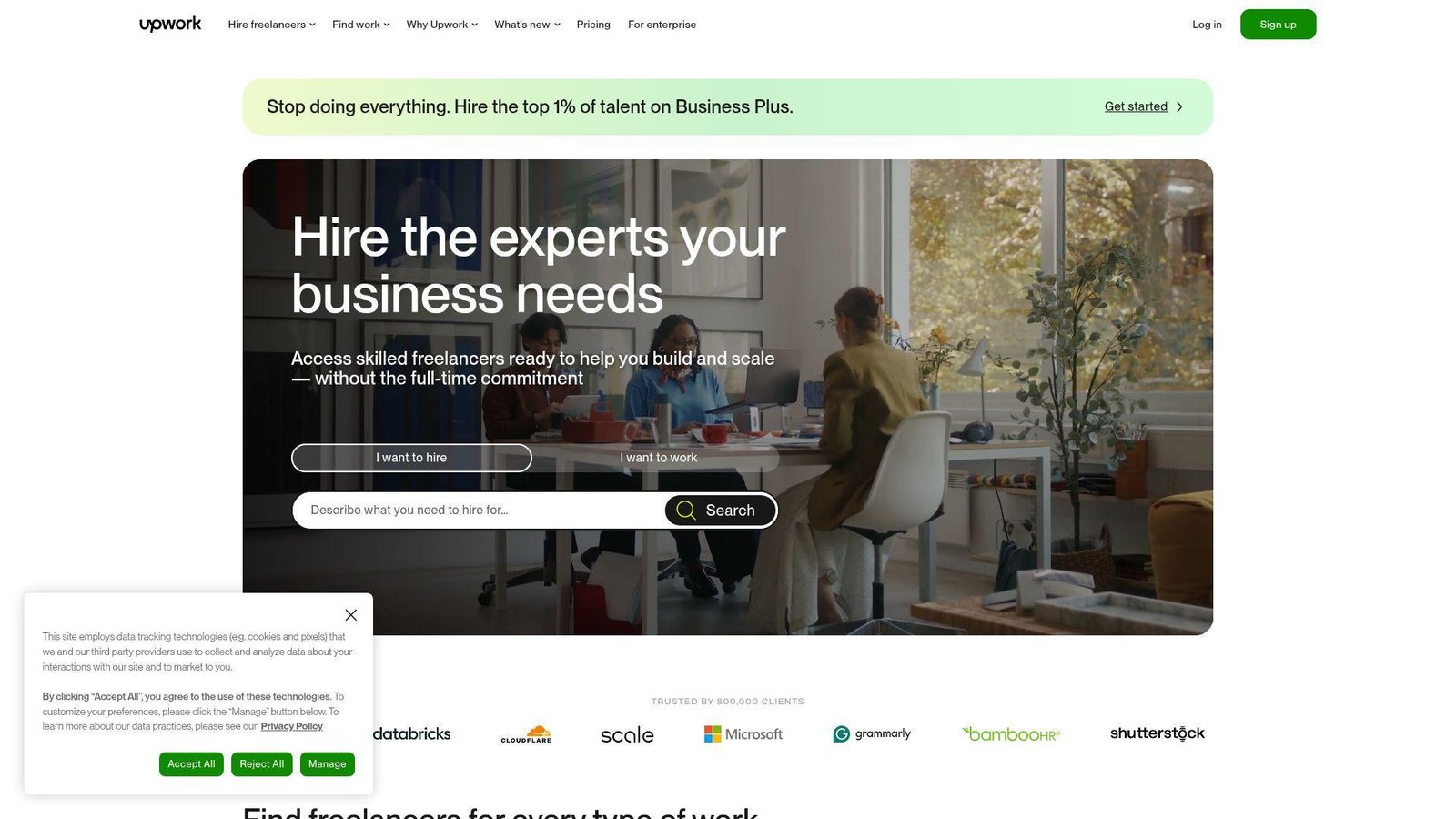
Upwork runs a giant, global marketplace with payments, dispute support, and trust teams behind it. The scale is real. So is the competition.
Win repeatable client work with built-in billing and protection.
Best for: solo service pros who can write strong proposals, and small studios chasing steady retainers.
- Hourly tracking and escrowed milestones → get paid with fewer “where’s my money” loops.
- Connects-based proposals and saved searches → skip 3–5 dead-end leads per week.
- Templates and “Project Catalog” style packaging → reach first publishable profile in about 45 minutes.
Pricing & limits: From $0/mo for Basic, or $19.99/mo for Plus. Trial: none. Caps: Basic includes 10 Connects monthly, and extra Connects cost $0.15 each. Service fees vary per contract, and are shown before you apply.
Honest drawbacks: Pay-to-apply adds pressure to “spray and pray.” The variable fee model can make your net income harder to forecast.
Verdict: If you want a high-volume pipeline, this helps you land a first paid contract in 2–6 weeks.
Score: 4.3/5
2. Fiverr
Fiverr is a huge gig marketplace with product, search, and trust teams tuned for fast buying. It shines when your service can be packaged. It struggles when work needs deep discovery.
Turn a defined offer into daily inbound orders.
Best for: solo creatives with productized services, and generalists who want quick one-off projects.
- Gig packages and add-ons → sell without writing proposals for every lead.
- Seller Plus tools and analytics → cut 2–4 “where’s my order” messages per week.
- Clear storefront UX → get a live listing in about 30 minutes.
Pricing & limits: From $0/mo to sell, plus a flat 20% seller fee on earnings. Trial: none. Caps: Seller Plus is $25/mo or $49/mo, with message and coupon limits by tier. Buyer service fees can also raise total checkout costs.
Honest drawbacks: The 20% cut is a loud tax forever. Many categories turn into a race to the bottom on price.
Verdict: If you want fast transactions, this helps you get paid for small wins within days.
Score: 3.7/5
3. Freelancer
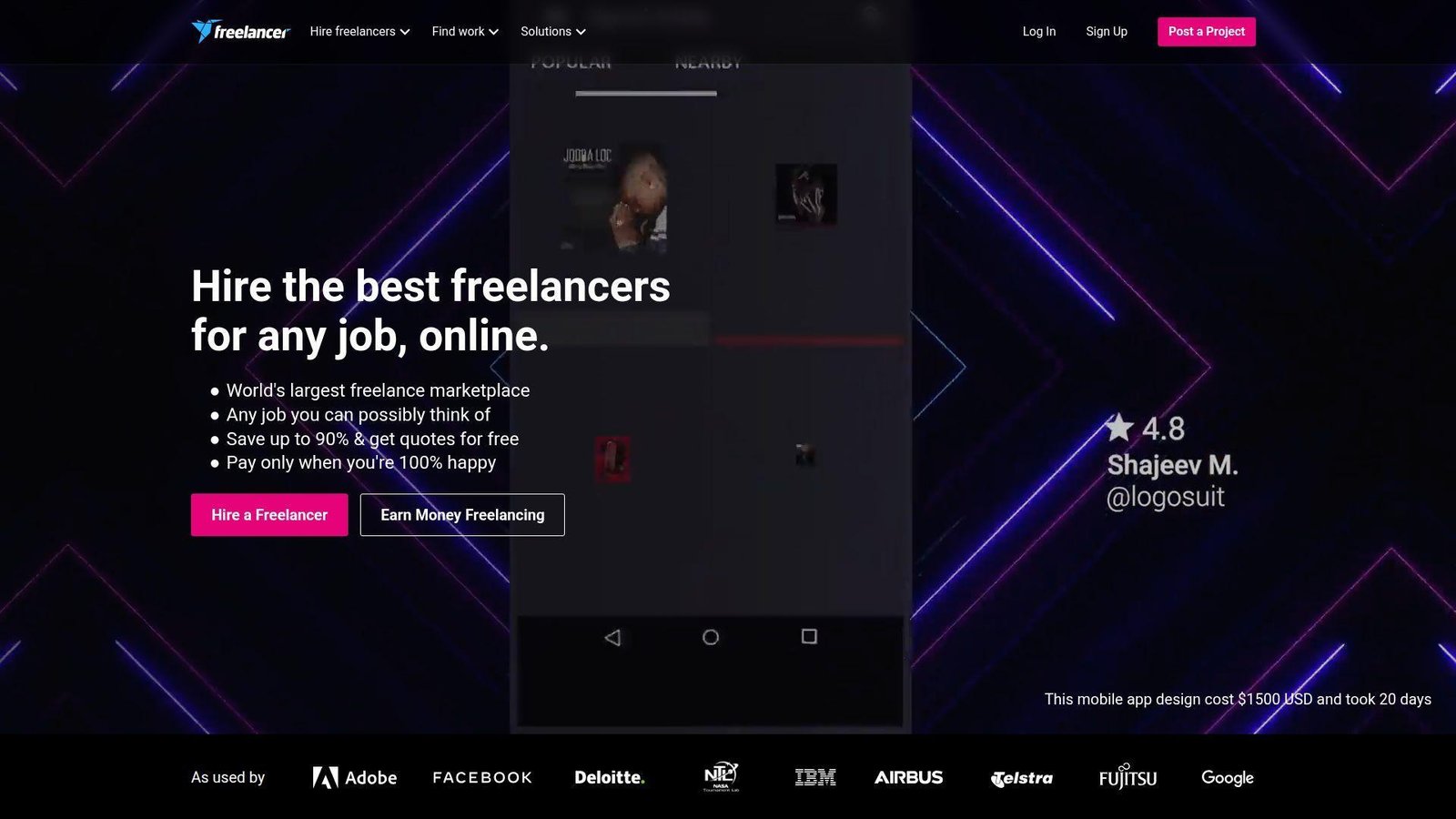
Freelancer.com is a long-running marketplace with projects, contests, and a membership layer. The platform has breadth. The workflow can feel crowded.
Bid on lots of work, then win by speed and clarity.
Best for: price-flexible freelancers who can bid often, and designers willing to play contests.
- Project bidding and contest lanes → find work even with a thin portfolio.
- Membership bid boosts and highlights → save 10–20 manual refreshes per week.
- Quick proposal flow → reach first bids in about 20 minutes.
Pricing & limits: From $4.99/mo for Basic membership. Trial: Plus includes a free 1 month trial, then $9.99/mo. Caps: fees are 10% or $5 minimum on fixed-price projects, and 10% on hourly.
Honest drawbacks: The $5 minimum makes small gigs expensive. The interface can push you toward paid visibility upgrades.
Verdict: If you want volume and can compete on bids, this helps you find leads the same day.
Score: 3.6/5
4. Toptal
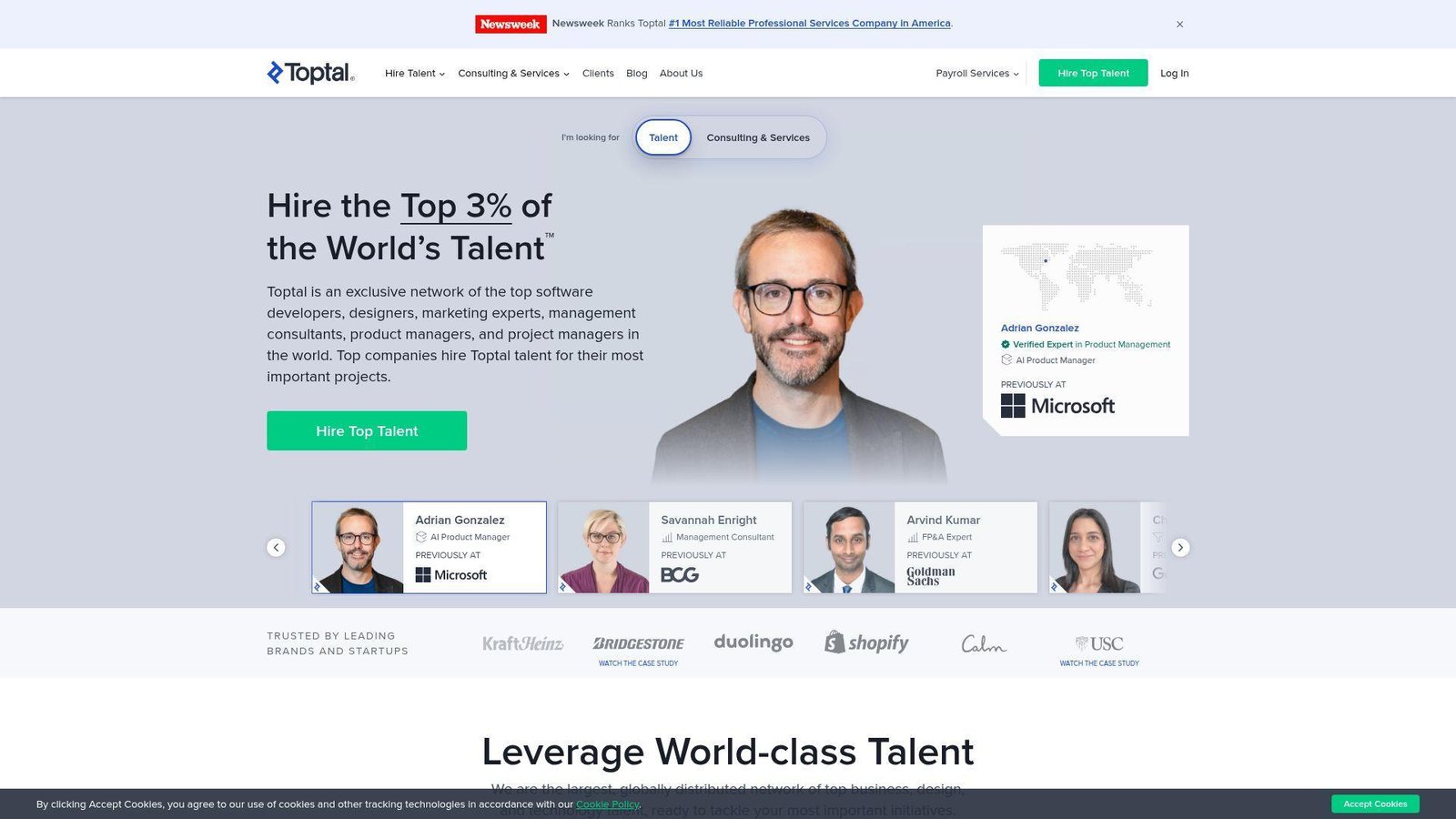
Toptal operates like a talent agency with screening, matching, and account support. The bar is high. The upside is fewer tire-kickers.
Trade a harder entry for higher-trust clients.
Best for: senior engineers and designers, and specialists who want long engagements over gig churn.
- Vetting and matching → spend less time “proving you’re real” to clients.
- Trial-first engagements → skip 3–6 calls with misfit clients per month.
- Managed pipeline → reach first interview in about 1–3 weeks after acceptance.
Pricing & limits: From $0/mo for talent, with no direct listed fee to freelancers. Trial: client engagements can start with up to a two-week trial. Caps: client access can include a $79 monthly subscription and a $500 deposit.
Honest drawbacks: Getting accepted can take real effort. You also give up some marketplace-style control over lead generation.
Verdict: If you want fewer, bigger clients, this helps you secure a serious engagement within 1–2 months.
Score: 4.0/5
5. FlexJobs
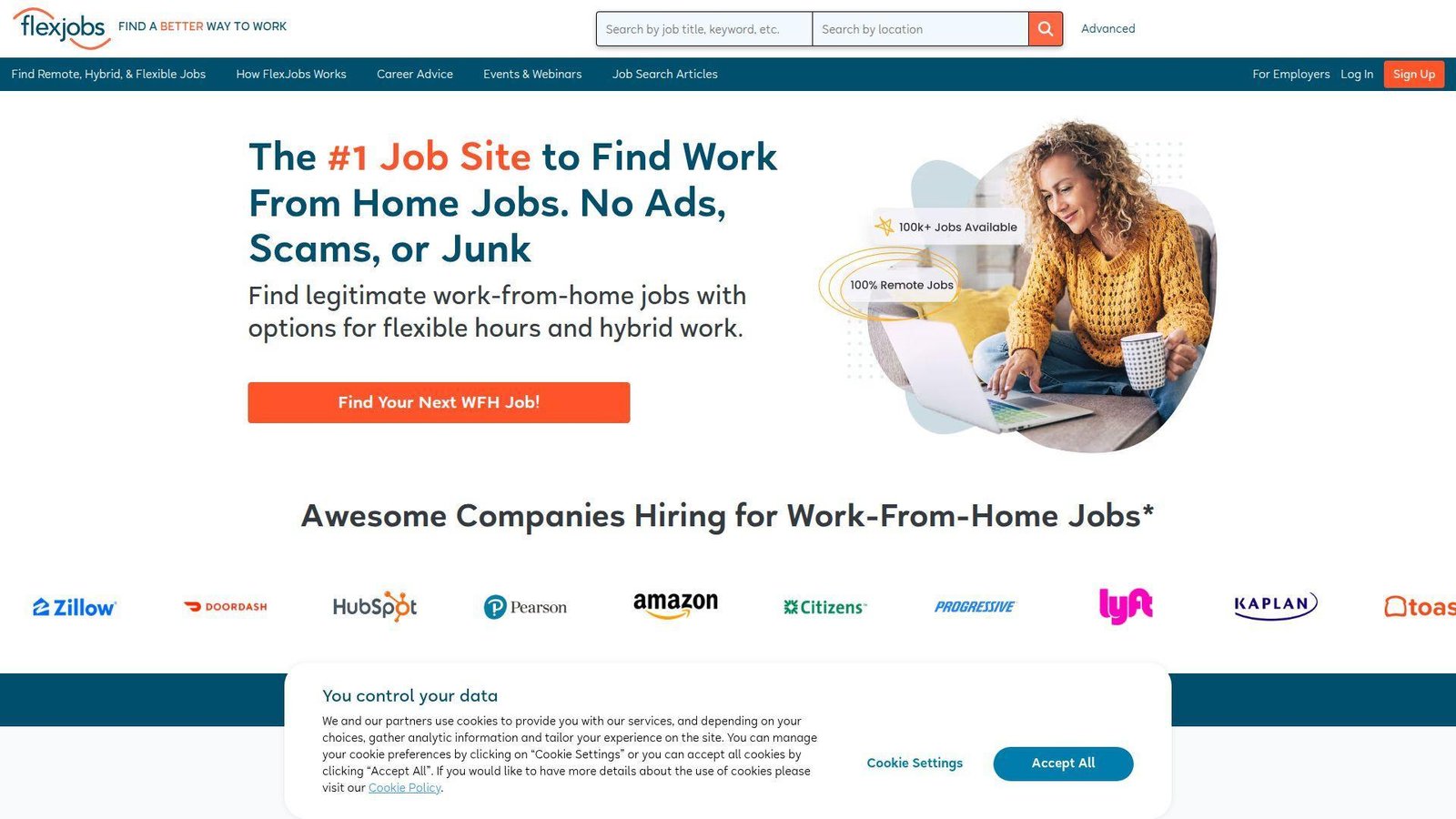
FlexJobs is a curated job board with a team focused on screening listings. It is less about gig marketplaces. It is more about steady remote work, including freelance roles.
Find legit remote listings without drowning in spam.
Best for: remote-first job seekers, and freelancers who want contract roles from real employers.
- Hand-screened listings → waste fewer hours on fake posts.
- Email alerts and saved searches → cut 10–15 minutes daily on hunting.
- Fast signup and profile basics → reach first applications in about 25 minutes.
Pricing & limits: From $2.95 for a 14-day trial. Trial: 14 days. Caps: subscription is required for full access, and refunds are offered within 14 days under their guarantee.
Honest drawbacks: It is not a built-in payments platform. You still negotiate contracts and invoicing off-site.
Verdict: If you want safer leads, this helps you apply to credible roles within a single afternoon.
Score: 4.1/5
6. PeoplePerHour
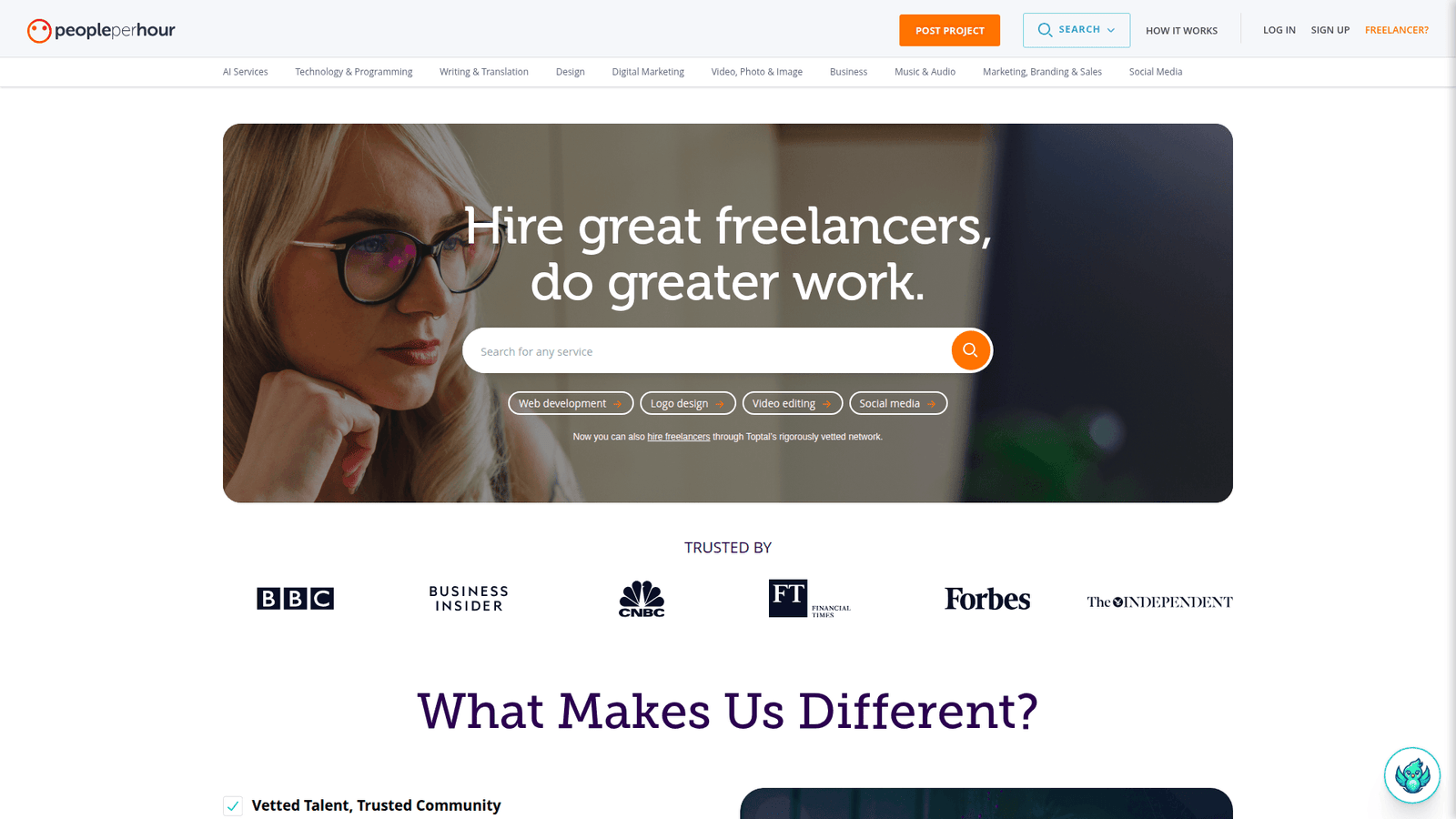
PeoplePerHour is a UK-rooted marketplace with support and policy teams that lean into invoicing and fee transparency. It feels more “freelance business” than “gig app.” The early fees can sting, though.
Start small, then earn lower fees as relationships grow.
Best for: EU-leaning freelancers, and solo operators building repeat client accounts.
- Invoice-based workflow → keep billing tidy as projects expand.
- Tiered commission by buyer lifetime spend → save meaningful fees after the first few projects.
- Simple onboarding → reach first proposal in about 30 minutes.
Pricing & limits: From $0/mo to join. Trial: none. Caps: service fees are 20% below £250 lifetime billing per buyer, 7.5% between £250 and £5000, and 3.5% above £5000.
Honest drawbacks: That 20% starting tier is brutal for small projects. Job volume can vary a lot by category and region.
Verdict: If you want repeat clients, this helps you build a fee-lighter book in 1–3 months.
Score: 3.5/5
7. 99designs

99designs is a design-first platform with community curation and project support teams. It blends contests with 1-to-1 projects. The structure favors designers who can iterate quickly.
Get matched to design work, with platform guardrails.
Best for: visual designers who want structured briefs, and specialists who can move fast on concepts.
- 1-to-1 projects plus contests → choose between stable work and high-variance shots.
- Level-based platform fees → save real money as you rank up.
- Guided profile setup → reach first eligible projects in about 60 minutes.
Pricing & limits: From $0/mo to sign up. Trial: none. Caps: 1-to-1 work includes a $100 introduction fee spread across a client’s first $500, plus a 5–15% designer platform fee by level.
Honest drawbacks: Contest time is unpaid unless you win. The fee stack can surprise you early.
Verdict: If you want design-only work with guardrails, this helps you land briefs in 2–8 weeks.
Score: 3.9/5
8. Dribbble
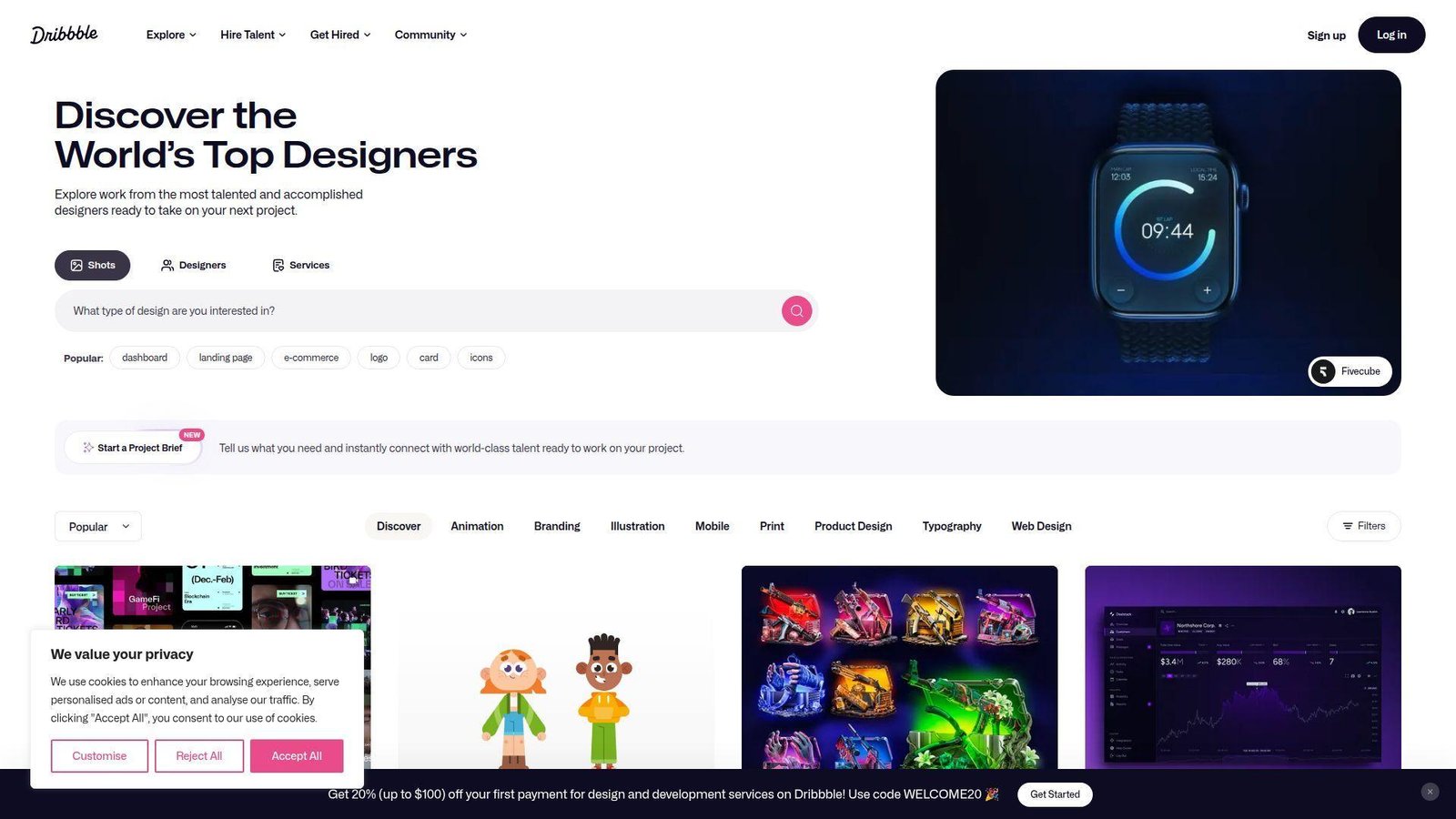
Dribbble is a design community with subscription and marketplace teams building lead-gen products. Think of it as a portfolio engine. The best outcome is inbound work, not endless applications.
Turn your portfolio into a quiet, steady lead stream.
Best for: UI designers with strong visuals, and freelancers who win on taste and clarity.
- Pro discovery and services listings → get contacted without bidding wars.
- Project Briefs and calendar tools → save 2–3 back-and-forth messages per lead.
- Portfolio-first UX → reach first polished profile in about 45 minutes.
Pricing & limits: From $0/mo. Trial: none listed. Caps: Pro Monthly is $16, and Pro Annual is $96 billed yearly. Plan limits can include daily shot uploads and monthly brief credits.
Honest drawbacks: You need strong work to stand out. It is weaker than Upwork for immediate “apply and win” volume.
Verdict: If you want inbound design leads, this helps you get your first serious inquiry in 2–6 weeks.
Score: 3.8/5
9. TaskRabbit
Taskrabbit is a local services marketplace with operations and safety teams built for in-person jobs. It is not for remote freelancing. It is for getting booked in your city.
Fill your calendar with local, paid tasks fast.
Best for: hands-on freelancers, and side hustlers who want weekend and evening work.
- Location-based matching → spend less time marketing to strangers.
- In-app booking and messaging → save 3–6 scheduling steps per job.
- Quick approval flow after signup → reach first availability in about 1–2 hours.
Pricing & limits: From $0/mo, plus a one-time $25 registration fee. Trial: none. Caps: registration does not guarantee approval, and clients may pay separate fees at checkout.
Honest drawbacks: Demand is highly location dependent. You are doing real-world work, so cancellations and travel time matter.
Verdict: If you want local income, this helps you get booked within days in busy metros.
Score: 3.4/5
10. Codeable
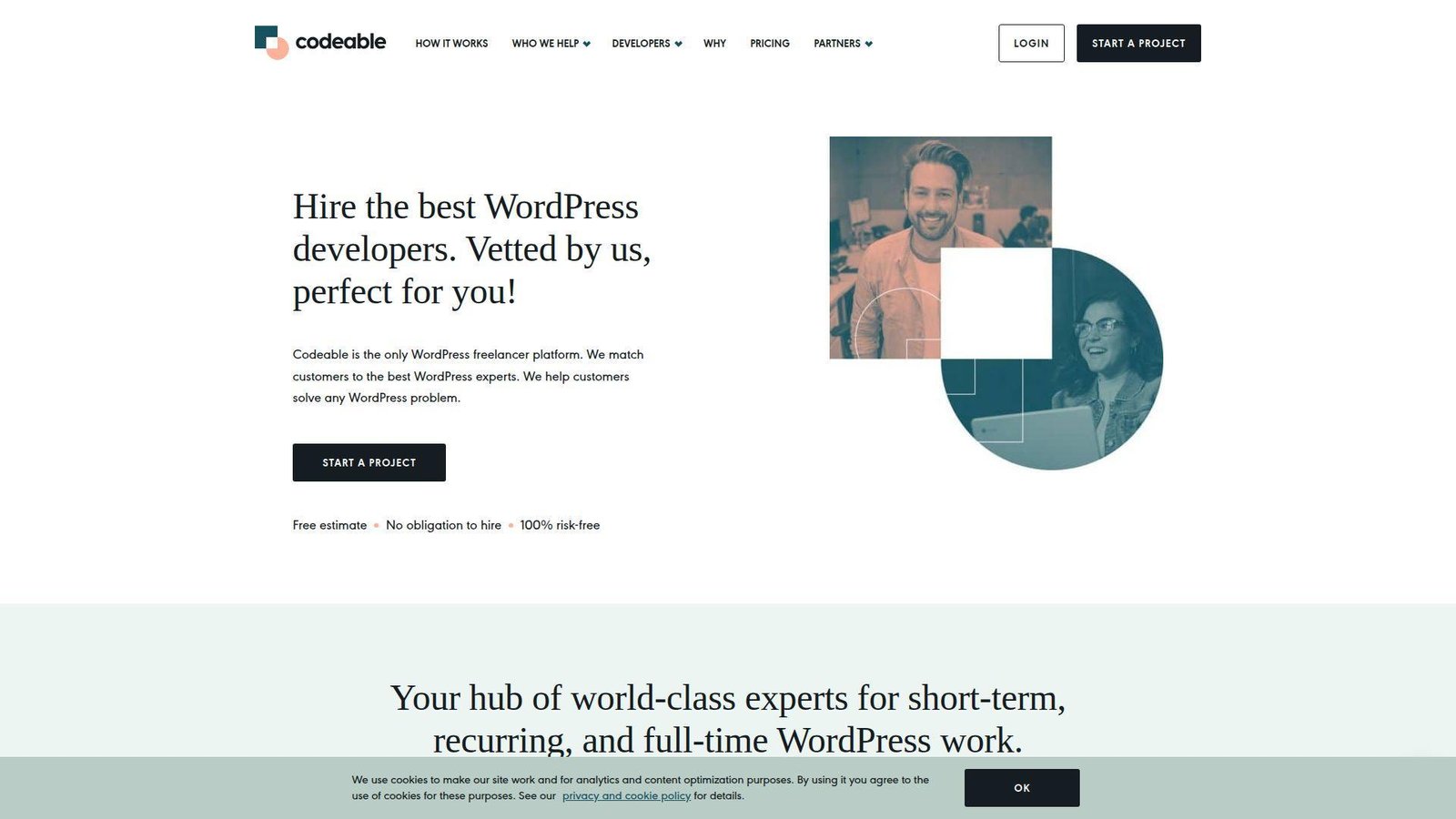
Codeable is a WordPress-focused network with a vetting and support team that enforces quality. It is intentionally not a bargain marketplace. Clients come expecting premium outcomes.
Get WordPress work priced for expertise, not speed alone.
Best for: WordPress specialists, and senior devs who want fewer, better projects.
- No bidding wars and scoped estimates → spend more time building, less time selling.
- Single-price estimates and platform support → save 2–3 negotiation rounds per project.
- Focused niche onboarding → reach a client-ready profile in about 60–90 minutes.
Pricing & limits: From $0/mo to pursue work. Trial: none. Caps: recommended rates are often framed in the $80–$120 USD hourly range, and client estimates include a 17.5% service charge.
Honest drawbacks: The niche is narrow by design. Getting in, and staying in demand, can be harder than broad platforms.
Verdict: If you want premium WP clients, this helps you land a well-scoped project in 3–8 weeks.
Score: 4.0/5
11. Wellfound
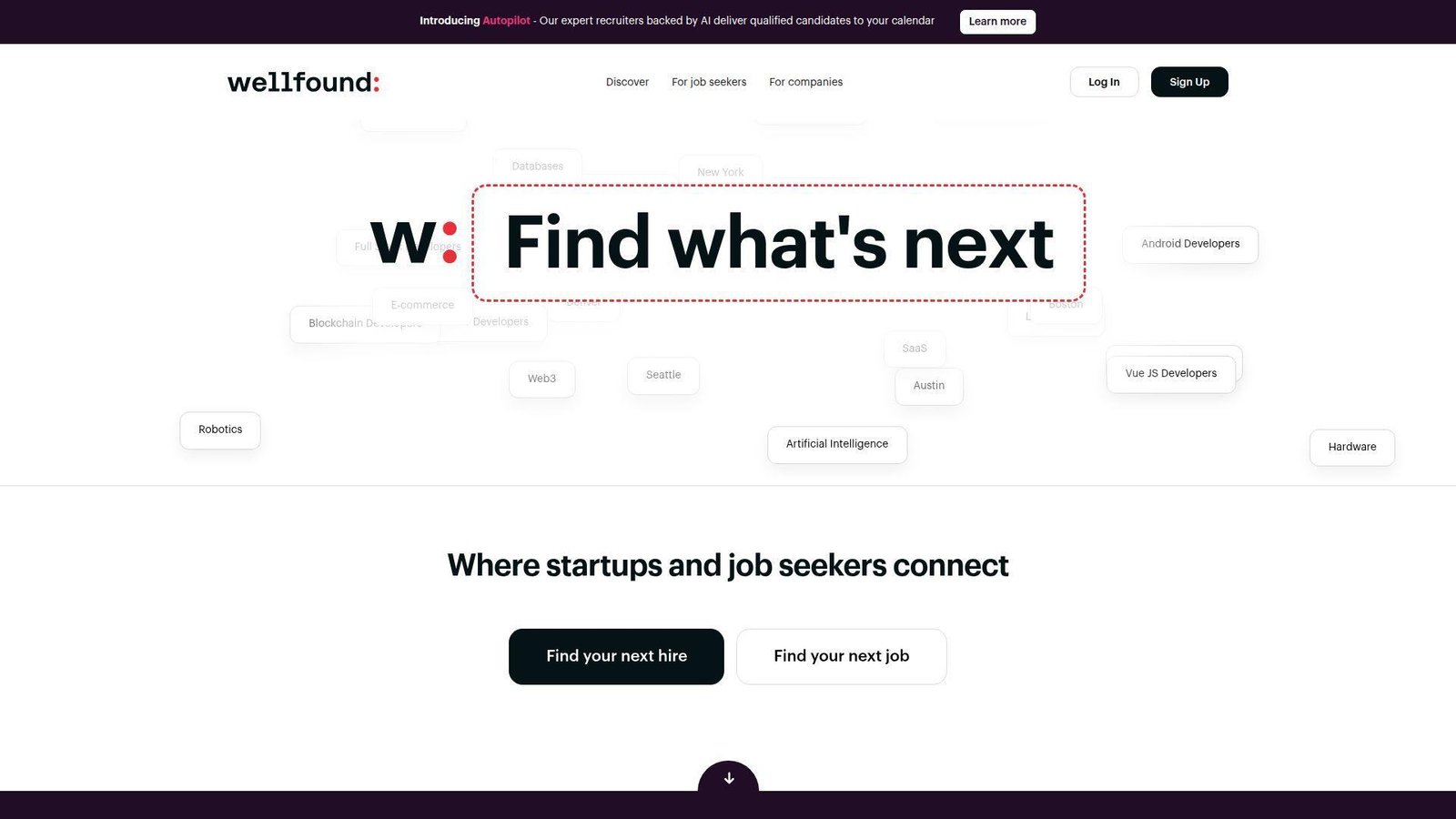
Wellfound is a startup hiring platform with product teams built around matching and listings. It is not a payments marketplace. It is a lead source for startup work, including contract roles.
Get discovered by startups that move fast.
Best for: startup-friendly operators, and freelancers open to contract-to-hire paths.
- Startup profiles and role context → qualify leads faster from day one.
- Search and alerts → save 15–20 minutes per day on filtering.
- Clean application flow → reach first applications in about 20 minutes.
Pricing & limits: From $0/mo for job seekers. Trial: none. Caps: N/A, since you contract off-platform and terms vary by company.
Honest drawbacks: Many roles skew full-time. You will still handle contracts, invoicing, and scope in your own tools.
Verdict: If you want startup clients, this helps you start conversations within a week of outreach.
Score: 3.6/5
12. SimplyHired
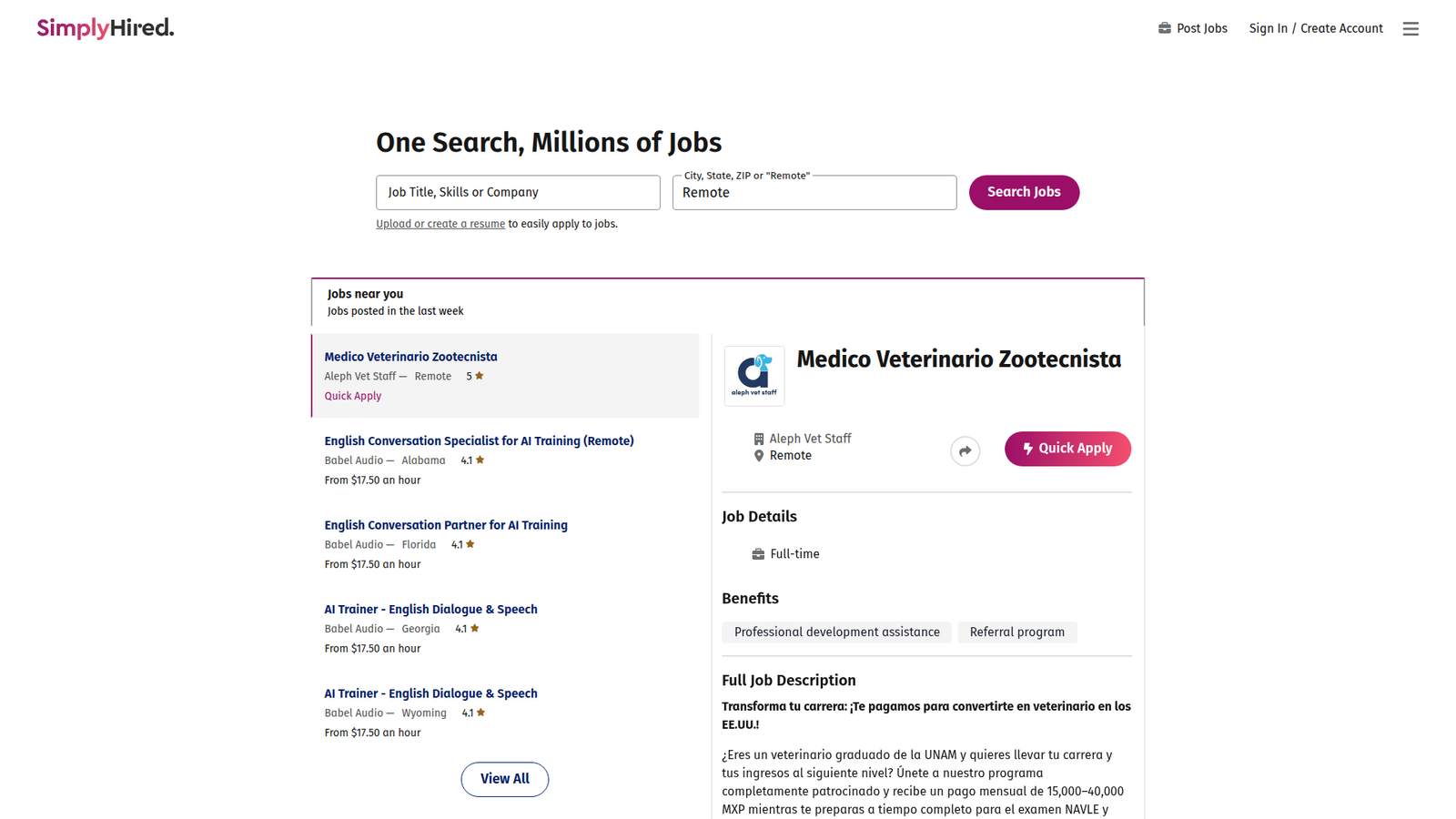
SimplyHired is a job search engine with teams focused on aggregation and search UX. It is less a freelance platform. It is more a wide net for contract listings.
Scan the market fast, then apply where it counts.
Best for: generalists testing new niches, and freelancers who want contract roles beyond marketplaces.
- Aggregated listings → spot opportunities you would otherwise miss.
- Filters and saved searches → save 10 steps per search session.
- Low-friction browsing → reach first shortlist in about 15 minutes.
Pricing & limits: From $0/mo. Trial: none. Caps: N/A, since each application routes to an external employer site.
Honest drawbacks: Duplicates happen across sources. Quality control varies, so you must verify each listing.
Verdict: If you want breadth, this helps you build an application list in one sitting.
Score: 3.2/5
13. Designhill

Designhill is a design marketplace with contests, 1-to-1 projects, and a support team running payouts. It caters to volume and variety. The economics depend on how often you win.
Compete on concepts, then get paid when you place.
Best for: contest-ready designers, and creatives who can produce many strong drafts quickly.
- Contest workflow and handover gates → reduce non-payment risk on winning work.
- Paid invites and 1-to-1 invoicing → skip 2–3 cold-start steps per client.
- Contest browsing filters → reach first submissions in about 20–30 minutes.
Pricing & limits: From $0/mo to start. Trial: none. Caps: some contest packages can limit designers to 10 designs, with extensions driven by client ratings. 1-to-1 invoices can add a 5% processing fee to clients.
Honest drawbacks: Contest time is speculative. Terms reference commissions and designer subscription charges, but details can be hard to pin down quickly.
Verdict: If you can win contests reliably, this helps you earn prize-based income within weeks.
Score: 3.0/5
14. Arc
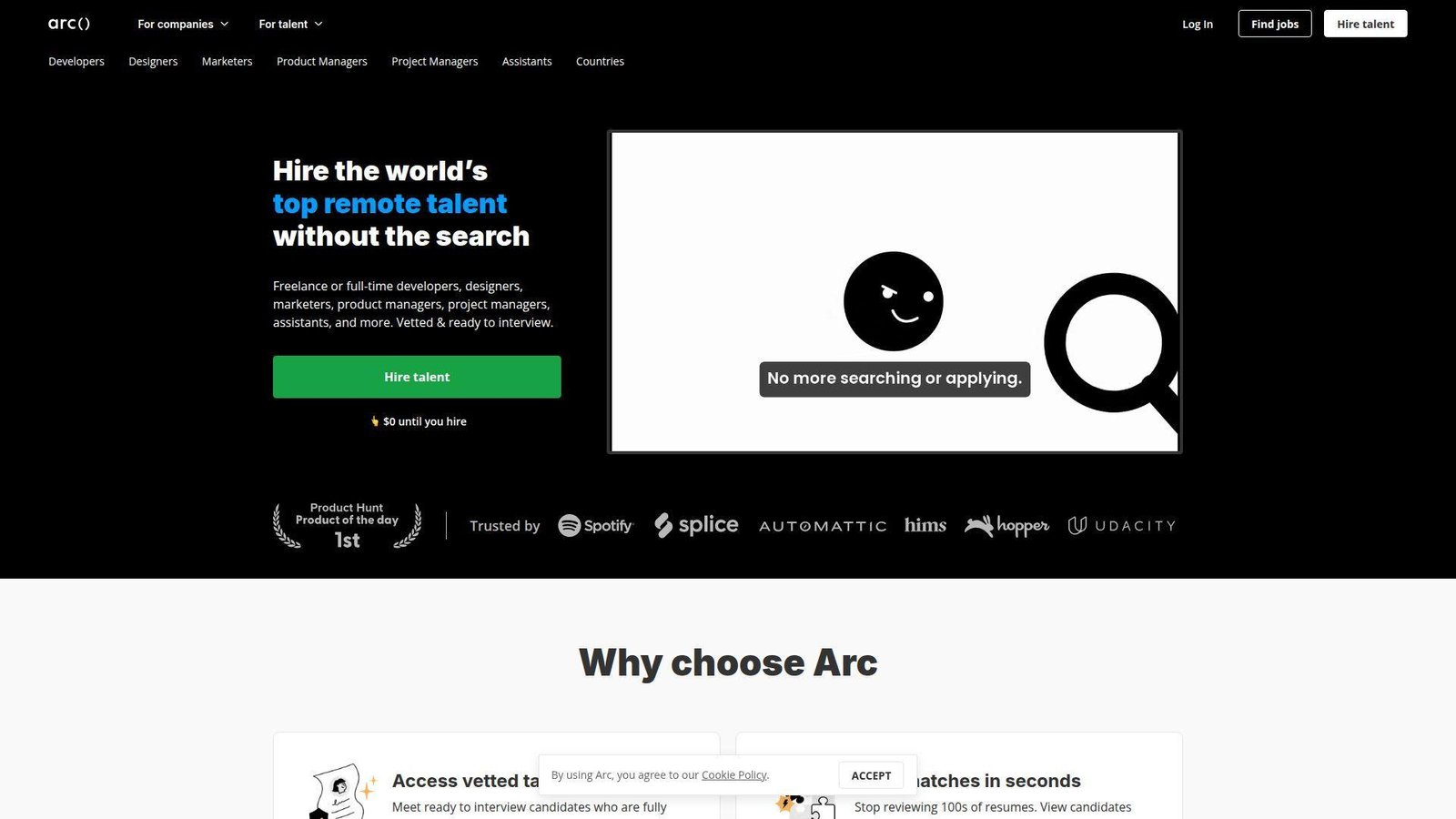
Arc positions itself as a remote talent marketplace with recruiting and matching support. The pricing pages focus on employers. For freelancers, the practical job is getting surfaced to serious buyers.
Skip the bargain aisle and meet remote-first teams.
Best for: experienced developers, and product-minded freelancers who want longer contracts.
- Vetted talent positioning → get filtered into higher-intent conversations.
- Recruiter support and sourcing automation → save 3–5 hours per month on outbound.
- Profile-first setup → reach first applications in about 30–45 minutes.
Pricing & limits: From $0/mo for talent. Trial: none for freelancers. Caps: N/A on your side, while employer pricing varies by hire type and may include a two-week trial language.
Honest drawbacks: Most pricing detail is employer-facing. Volume may be lower than open marketplaces.
Verdict: If you want curated leads, this helps you reach interviews in 1–3 weeks.
Score: 3.7/5
15. Gun.io
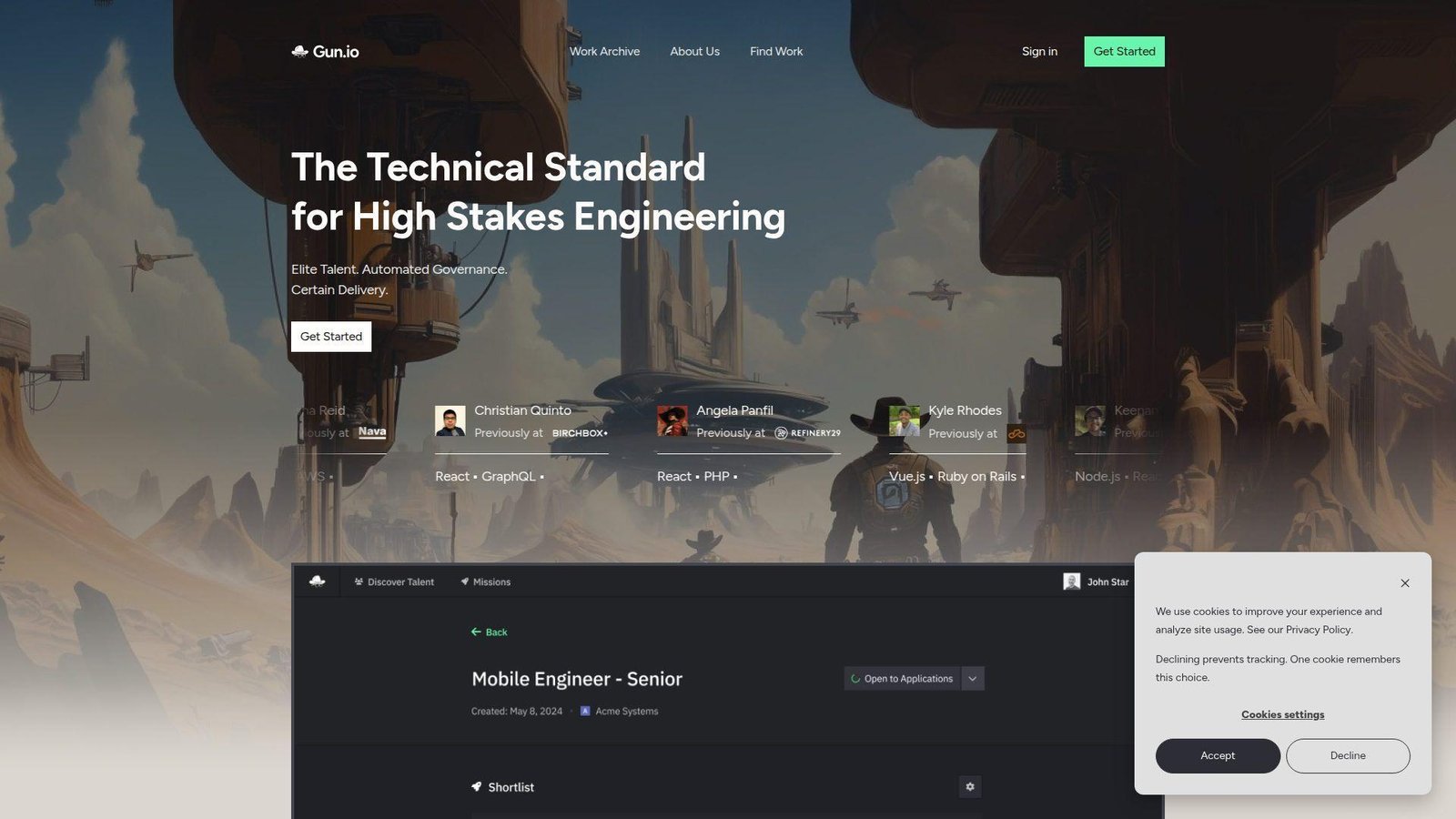
Gun.io is a developer-focused hiring network with senior technical matchers. It aims to protect quality. The pitch is less “marketplace,” more “managed introductions.”
Get matched to serious engineering work, without fee nibbling.
Best for: senior developers, and small dev shops that want fewer, higher-value clients.
- Human-led matching → avoid 10 low-fit calls per month.
- Managed billing and tracking → cut 3–4 admin steps per invoice cycle.
- Clear rate setting → reach a client-ready profile in about 45–60 minutes.
Pricing & limits: From $0/mo for developers. Trial: none listed for talent. Caps: developers set their own rates and keep 100% per their pricing page.
Honest drawbacks: Work volume depends on matching demand. The network fit is strongest for experienced, interview-ready engineers.
Verdict: If you want fewer, better conversations, this helps you land a matched intro in a few weeks.
Score: 3.6/5
16. Belay
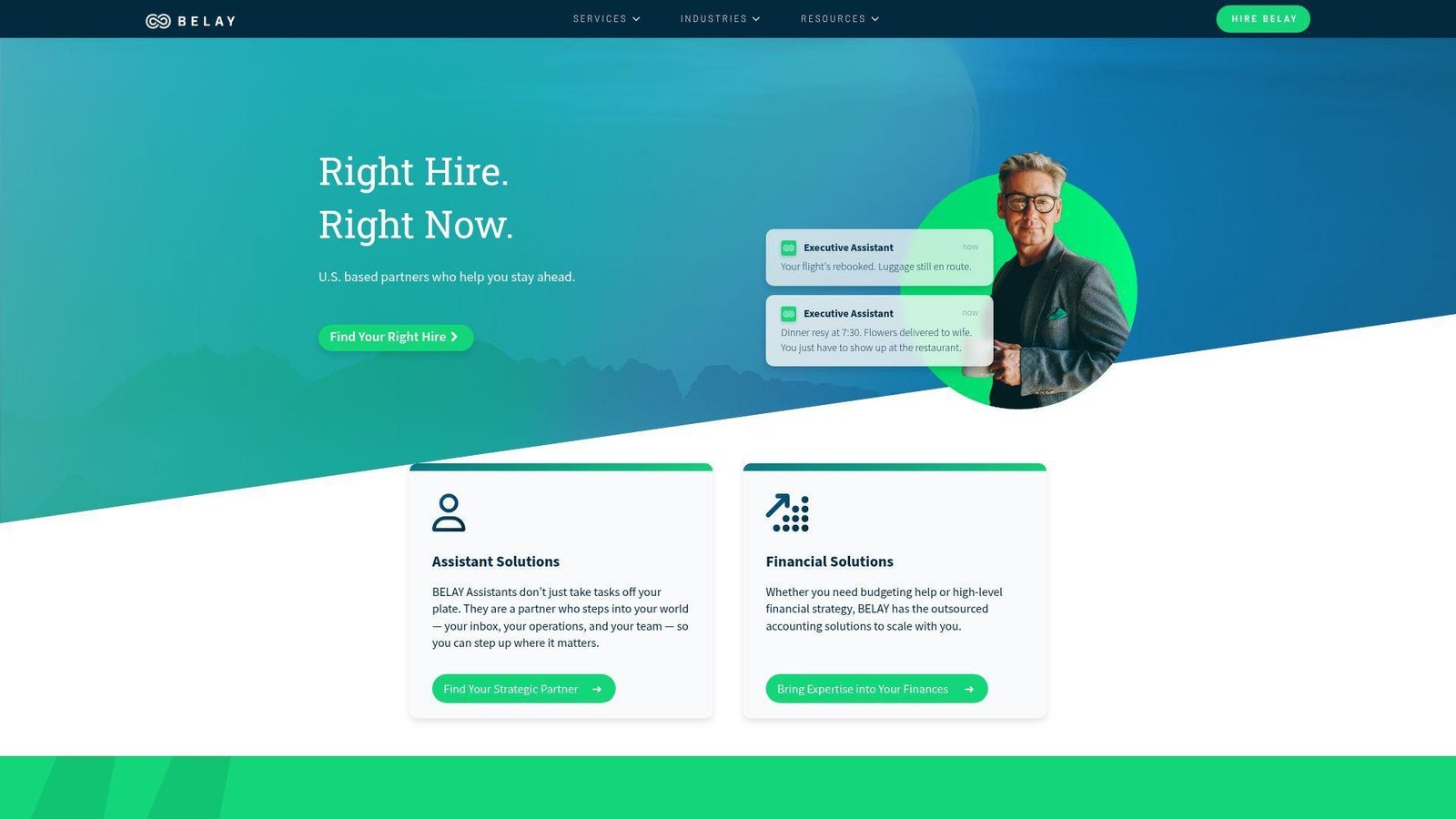
Belay is an operations and staffing company with teams focused on matching and client service. It is not a self-serve freelance marketplace. It is closer to a managed talent bench.
Get placed into ongoing support work, not random gigs.
Best for: experienced virtual assistants, and operators who want stable client rhythms.
- Managed matching → spend less time pitching from scratch.
- Process-heavy client expectations → save 2–3 clarification calls per month.
- Application-led entry → reach a complete submission in about 45 minutes.
Pricing & limits: From $0/mo to apply. Trial: none. Caps: N/A, since engagement terms depend on placement and role type.
Honest drawbacks: It can feel less flexible than marketplaces. Selection can be strict, and roles may be narrower than your full skill set.
Verdict: If you want steadier work, this helps you move from application to placement over several weeks.
Score: 3.5/5
17. Braintrust
Braintrust is a talent network with a strong “talent keeps their rate” stance. The platform layers fees on the client side. Support and onboarding are built for higher-end roles.
Keep your rate, while clients cover the platform fee.
Best for: senior tech and design talent, and independents who want fewer fee surprises.
- Talent sets market rate → protect your pricing without platform bargaining.
- Client-side platform fee model → save 2–3 awkward “why so expensive” talks.
- Network onboarding → reach first role matches in about 1–2 hours setup time.
Pricing & limits: From $0/mo for talent. Trial: none. Caps: clients pay a 15% platform fee on top of your invoice, rather than deducting from your pay.
Honest drawbacks: Role volume is smaller than mass marketplaces. You may wait longer for a perfect-fit match.
Verdict: If you want to keep more per invoice, this helps you build a premium pipeline over 1–2 months.
Score: 4.1/5
18. A.Team
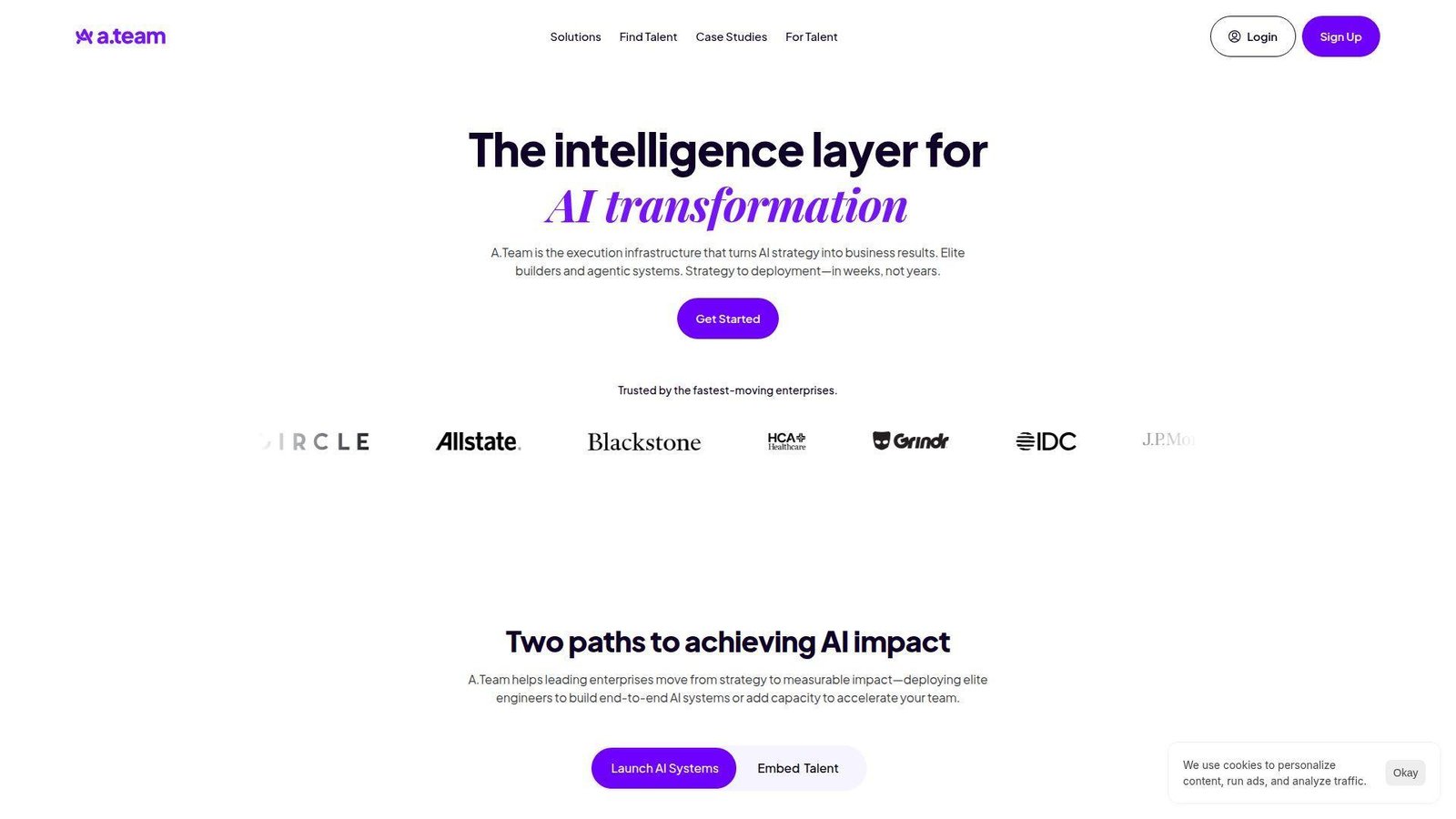
A.Team presents itself as a network built around teams and project delivery. The feel is closer to “build with a crew” than “bid alone.” It fits freelancers who like product outcomes.
Join teams that ship, instead of chasing random tickets.
Best for: senior builders, and multidisciplinary freelancers who thrive in squads.
- Team-based matching → land work that already has momentum.
- Network effects and referrals → save 5–10 outbound messages per week.
- Profile plus vetting steps → reach first eligibility in about 1–2 hours.
Pricing & limits: From $0/mo to apply. Trial: none. Caps: N/A, since engagements depend on team needs and client timelines.
Honest drawbacks: If you want total solo control, it can feel constrained. Availability can be lumpy if you need immediate income.
Verdict: If you want collaborative builds, this helps you join a staffed project within a month.
Score: 3.8/5
19. ClearVoice
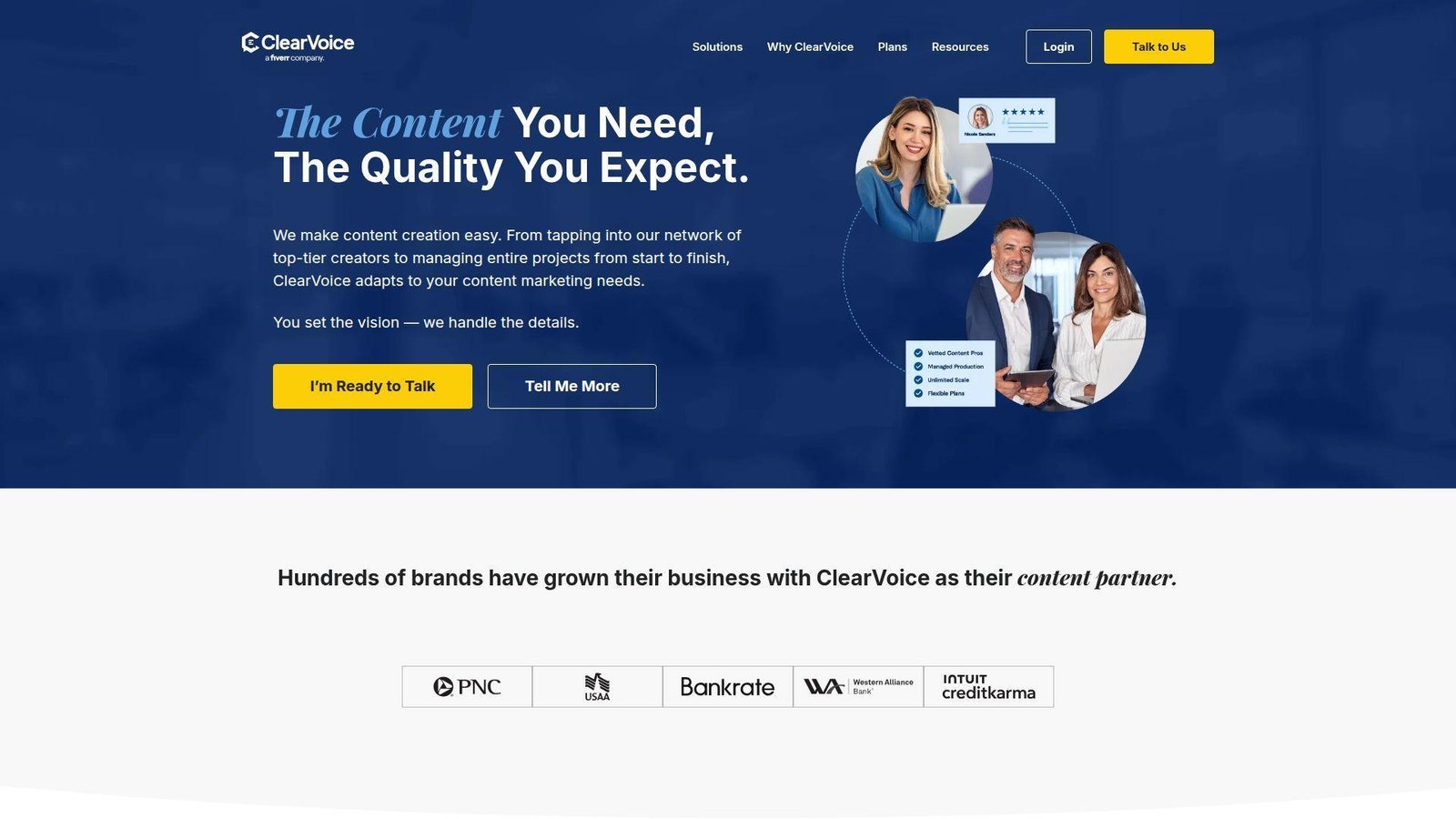
ClearVoice is a content and talent platform with teams focused on matching and content operations. It is built for brands. Writers benefit when they can deliver reliably and fast.
Get content work that runs on systems, not chaos.
Best for: experienced writers, and editors who want recurring brand assignments.
- Brand-managed briefs → reduce scope creep and endless rewrites.
- Workflow support and repeat assignments → save 2–3 pitching hours weekly.
- Portfolio-based entry → reach a credible profile in about 45 minutes.
Pricing & limits: From $0/mo to be considered. Trial: none. Caps: N/A, since assignments, rates, and volume vary by brand program.
Honest drawbacks: Access can feel gated. Newer writers may struggle to get traction without strong samples.
Verdict: If you want operationalized content work, this helps you build a repeatable client lane in 4–8 weeks.
Score: 3.4/5
20. ProBlogger
ProBlogger is a well-known writing community with a long-running job board. The “team” here is largely editorial and community-driven. It works best as a lead source you screen yourself.
Find writing gigs, then win them off-platform.
Best for: freelance writers, and niche bloggers who pitch with strong samples.
- Job board simplicity → spot opportunities without learning a marketplace system.
- Direct-to-employer applications → skip 2–3 platform steps per submission.
- Fast browsing → build a shortlist in about 20 minutes.
Pricing & limits: From $0/mo. Trial: none. Caps: N/A, since contracts and payments happen directly with employers.
Honest drawbacks: There is no escrow or platform protection. Quality varies, so you must vet employers and contracts.
Verdict: If you want straightforward leads, this helps you send solid pitches in a single session.
Score: 3.1/5
21. Workana
Workana is a marketplace with a strong presence in Latin America and Spanish-speaking markets. Its help docs emphasize tiered commissions. It rewards long client relationships with lower fees.
Build client relationships that get cheaper over time.
Best for: bilingual freelancers, and LatAm-based pros seeking regional clients.
- Relationship-based commission tiers → keep more as a client repeats.
- Platform messaging and proposals → save 5–10 cold outreach steps weekly.
- Easy first proposal flow → reach first bids in about 25 minutes.
Pricing & limits: From $0/mo to join. Trial: none. Caps: freelancer commission is 20% from $0–$300 with a client, then 10% to $3000, then 5% above $3000.
Honest drawbacks: The 20% starting tier can hurt small projects. Some categories can feel price sensitive, depending on region.
Verdict: If you want regional clients, this helps you build a first repeat customer within 1–2 months.
Score: 3.4/5
22. Contra
Contra is a freelancer-first network built around “commission-free” positioning. The team has built lightweight contracts, invoicing, and profile discovery. It is strongest when you bring your own demand.
Keep 100% of your rate, and look premium doing it.
Best for: established independents with an audience, and creatives tired of marketplace taxes.
- Portfolio and proposals in one place → close clients without stitching tools together.
- No commission model plus fee controls → save 3–6% versus classic marketplaces on many deals.
- Fast profile builder → reach first sharable portfolio in about 30 minutes.
Pricing & limits: From $0/mo. Trial: none. Caps: Pro is $29/mo or $199/year, and Max is $99/mo or $999/year. Payment-related platform fees can apply on lower tiers, with published per-payment caps.
Honest drawbacks: Job volume is smaller than Upwork. You may need to drive traffic to your profile for best results.
Verdict: If you want clean, commission-free ops, this helps you get paid like a business within days.
Score: 4.2/5
23. Behance
Behance is a portfolio network with product teams optimized for showcasing creative work. It is not a built-in freelance marketplace. The job is visibility that converts into conversations.
Show the work, attract the work.
Best for: designers and illustrators, and freelancers who win with strong case studies.
- Project storytelling format → build trust before the first DM.
- Creative network discovery → save 5–10 outbound pitches weekly.
- Quick publishing flow → post a first project in about 20 minutes.
Pricing & limits: From $0/mo. Trial: none. Caps: N/A, since contracts, payments, and scope live off-platform.
Honest drawbacks: Leads can be unpredictable. You must do your own intake, contracts, and payment protection.
Verdict: If you want inbound visibility, this helps you earn interest over time, not overnight.
Score: 3.6/5
24. Guru
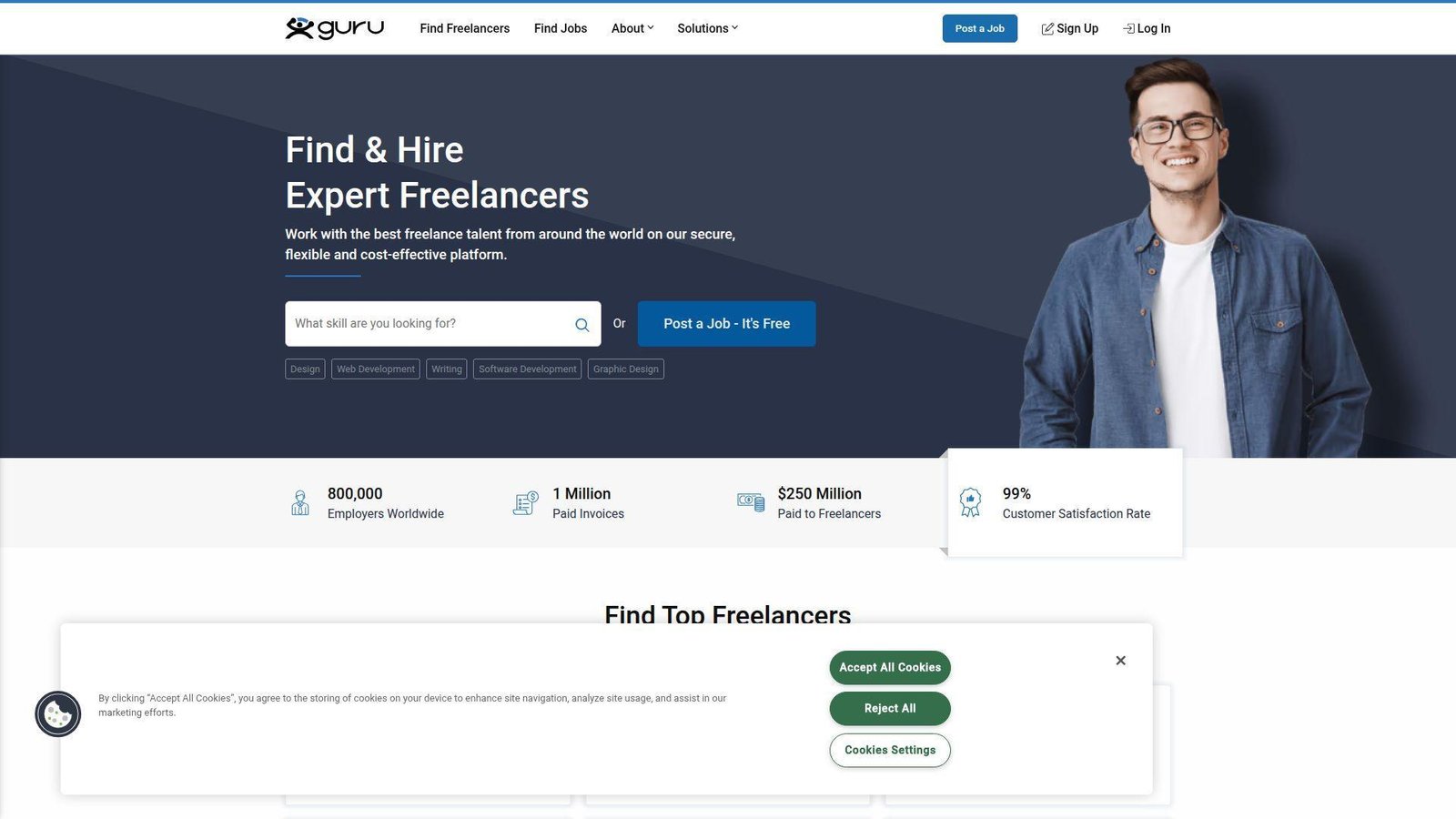
Guru is a marketplace with “WorkRooms,” SafePay, and a membership system. The platform team leans into structure and long-term client relationships. It can feel old-school, in a useful way.
Run projects in-platform, with clear fees and bid limits.
Best for: freelancers who like formal workflows, and teams that want repeat clients.
- SafePay and WorkRooms → reduce payment anxiety and project sprawl.
- Paid memberships and bid currency → save 10–20 quote constraints per month at higher tiers.
- Guided profile plus agreements → reach first quote in about 45 minutes.
Pricing & limits: From $0/mo for Free, or $11.95/mo for Basic+. Trial: none listed. Caps: job fees range from 9% on Free down to 5% on Executive, and bids per month are capped by plan.
Honest drawbacks: Some messaging features are paywalled. The UX can feel dated next to newer platforms.
Verdict: If you want structured client work, this helps you send credible quotes in one afternoon.
Score: 3.3/5
25. We Work Remotely
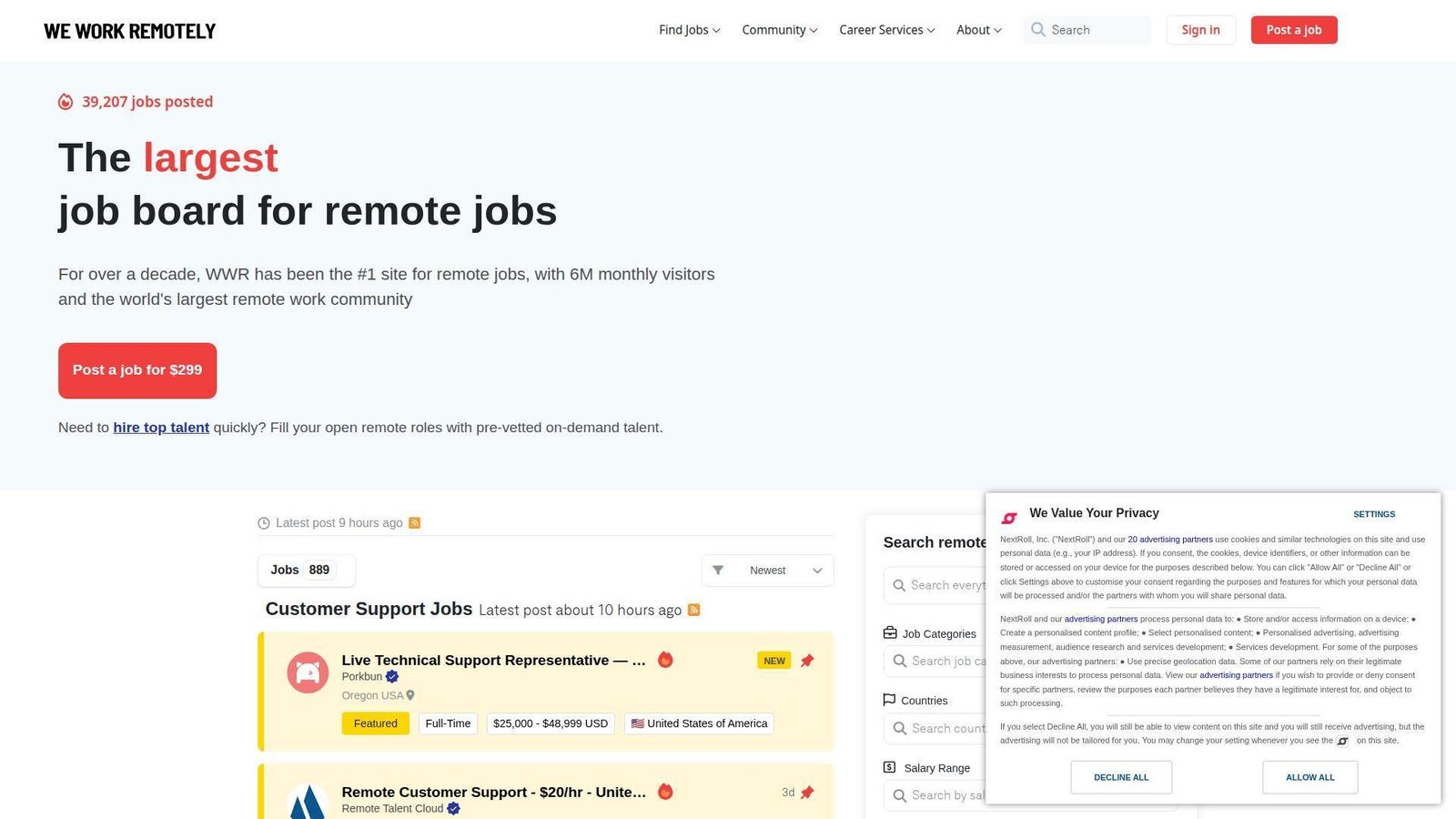
We Work Remotely is a job board with a team focused on remote roles. It is not a freelance escrow platform. Treat it like a curated window into remote demand.
Find remote work leads without joining a marketplace.
Best for: remote-first professionals, and freelancers open to contract or part-time roles.
- Remote-only focus → filter faster than general job sites.
- Simple listings → save 5–10 clicks per application cycle.
- Low setup overhead → reach first applications in about 20 minutes.
Pricing & limits: From $0/mo to browse. Trial: none. Caps: N/A, since hiring and payment happen directly with employers.
Honest drawbacks: No payment protection. Many listings skew toward employment, not project work.
Verdict: If you want remote leads, this helps you assemble a strong application batch in a morning.
Score: 3.5/5
26. LinkedIn
LinkedIn is a professional network with teams building search, messaging, and job products. It is not a single freelance marketplace. It is the place where trust gets borrowed from your brand.
Turn your network into warm leads and referrals.
Best for: B2B freelancers, and consultants who sell higher-ticket, relationship-driven work.
- Credibility signals and social proof → shorten the “are you legit” phase.
- Search, groups, and DMs → save 5–15 outreach steps by targeting better.
- Profile polishing workflow → reach a client-ready page in about 60 minutes.
Pricing & limits: From $0/mo. Trial: none for the free tier. Caps: messaging and search reach can be limited without paid upgrades, which vary by plan and region.
Honest drawbacks: The feed is noisy, and outreach can feel salesy. Converting attention into contracts takes consistent effort.
Verdict: If you want premium clients, this helps you start warm conversations within weeks.
Score: 4.0/5
28. SquadHelp
SquadHelp is now closely associated with Atom’s contest and marketplace ecosystem. The operating team runs contest escrow and payout operations. The creative job is ideation at scale.
Get paid for naming wins, with escrow behind the prize.
Best for: brand namers with sharp instincts, and creatives who like high-volume idea generation.
- Guaranteed contests and escrowed awards → reduce non-payment risk on wins.
- Clear payout requests and timelines → save 2–3 support steps when withdrawing.
- Simple entry workflow → reach first contest submissions in about 15 minutes.
Pricing & limits: From $0/mo. Trial: none. Caps: payouts can require a $25 minimum balance, and processing is typically 7 days, or 1–3 business days after 5+ wins. Withdrawal fees are stated as none, with a noted $3 Payoneer transfer fee.
Honest drawbacks: Winning is subjective, and time is unpaid unless you win. The best creatives treat it like a volume game.
Verdict: If you can generate strong names fast, this helps you earn prize payouts within weeks.
Score: 3.0/5
29. Revelo
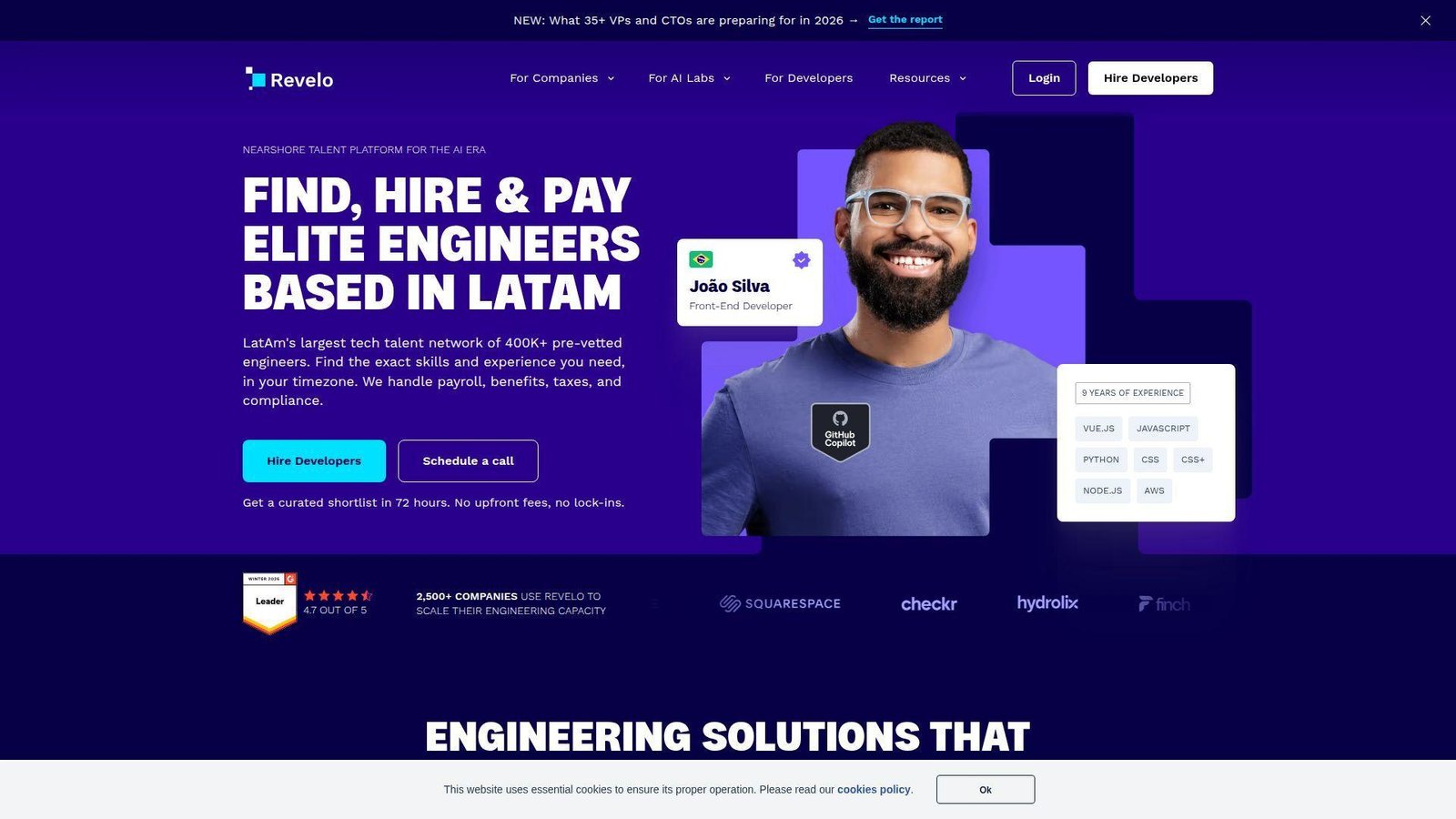
Revelo is a talent platform focused on placing vetted developers, often across nearshore time zones. The company emphasizes matching, hiring support, and trial language for clients. For talent, it reads more like job placement than gig bidding.
Get matched to serious dev roles, without grinding proposals daily.
Best for: LatAm developers, and engineers who want longer, stable engagements.
- Matching team shortlists → avoid 20 low-fit applications per week.
- Single application model on role postings → save repeated form-filling steps.
- Clear process pages → reach a complete candidate profile in about 45–60 minutes.
Pricing & limits: From $0/mo to apply. Trial: none for talent. Caps: N/A, since compensation, role type, and timelines vary by placement.
Honest drawbacks: Geography can be a limiter. If you want tiny gigs, the model may feel too “employment adjacent.”
Verdict: If you want longer dev work, this helps you reach interviews in 1–3 weeks after approval.
Score: 3.7/5
30. Jobbers
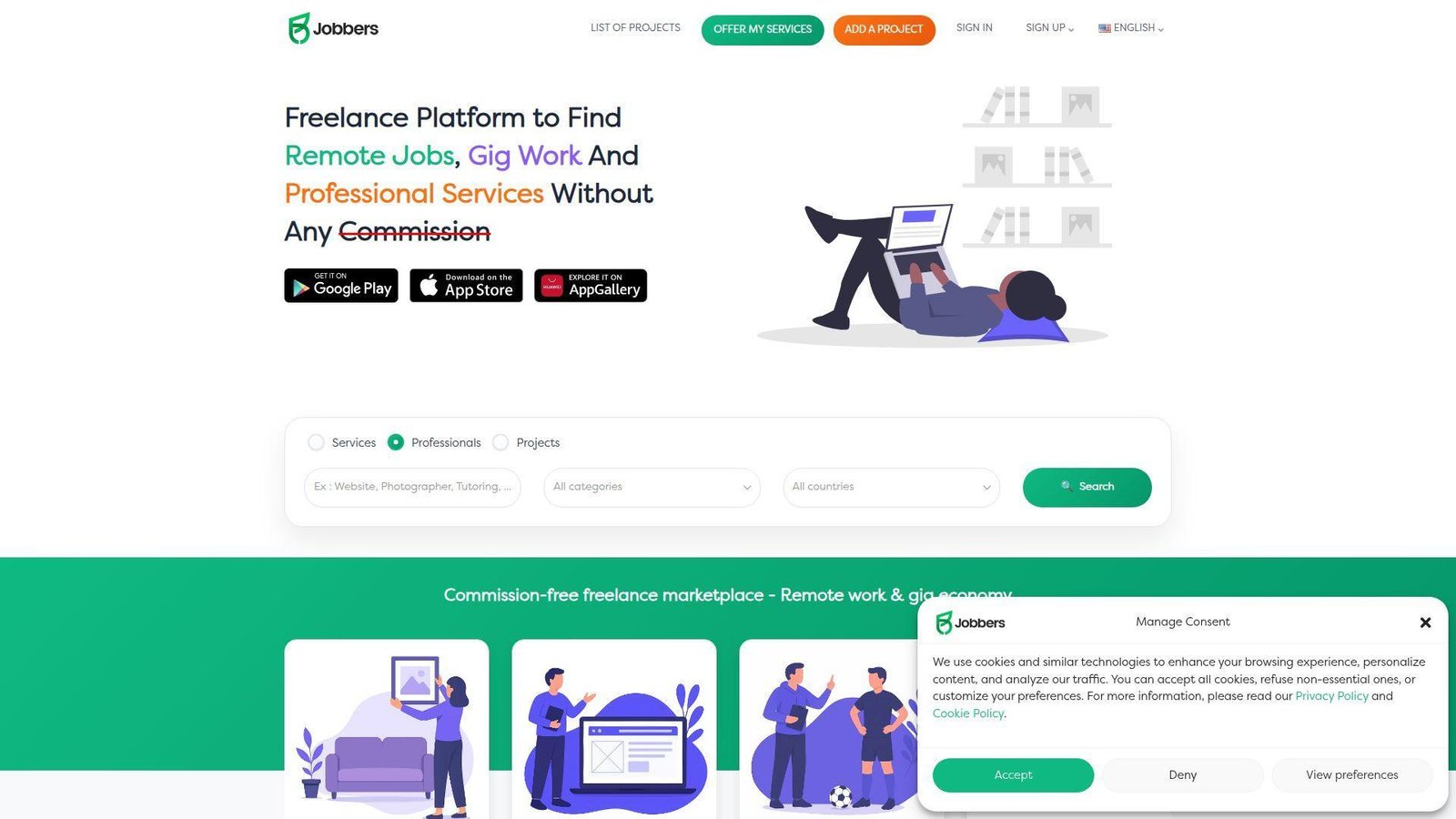
Jobbers is a commission-free marketplace that pushes direct client-freelancer contact. The team positions itself as a connector, not a payment middleman. That simplicity is the point, and also the risk.
Keep 100% of earnings by handling payments directly.
Best for: freelancers who already know how to scope work, and local pros who want direct clients.
- Direct messaging and negotiation → close without platform take-rate friction.
- Optional boost packs for profiles and services → save 3–5 weeks of slow visibility building.
- Fast signup and service listing → reach first publishable offer in about 20 minutes.
Pricing & limits: From $0/mo to use the platform. Trial: some boost packs say “Try it for free,” with no duration stated. Caps: optional profile boosts show monthly pricing, including $6/mo and $9/mo tiers on the boost page.
Honest drawbacks: No built-in escrow means you must manage payment risk. You also need your own contract and invoicing habits.
Verdict: If you want zero commission, this helps you start client chats the same day.
Score: 3.3/5
Recommended reading: Top 30 Best AI Email Writer Tools to Streamline Email Copywriting in 2026
Best Freelance Websites by Work Style: Where You Fit Best
1. Generalist marketplaces for broad categories: from one-off gigs to longer contracts
Generalist markets are the big bazaars. They work when you can differentiate fast. Strong positioning matters more than raw experience.
- Upwork for structured hiring and longer client relationships
- Freelancer.com for bidding-heavy, wide-category projects
- Guru for profile-led discovery and repeat clients
- PeoplePerHour for service listings plus proposals
- Workana for regional demand, especially in Latin America
2. Gig storefronts for repeatable deliverables: when clients buy predefined packages
Storefronts reward clarity. They also reward production discipline. We recommend gigs for services you can deliver without custom discovery.
- Fiverr for productized creative and digital services
- Kwork for catalog-style packages and fixed deliverables
3. High-end vetted networks: fewer clients, higher expectations, larger budgets
Vetted networks can feel quieter. That quiet is often the point. Clients pay for confidence and speed to competency.
- Toptal for senior talent across software, design, and finance
- Braintrust for network-based matching and vetted pipelines
- A.Team for product builders who like fast-moving startups
- Catalant for experienced consultants and strategy-heavy work
4. Developer-focused platforms: remote engineering roles and specialized matching
Developer platforms often emphasize signal over polish. Tests, interviews, and work history matter. Matching can be tighter than generalist markets.
- Arc.dev for remote engineering roles and ongoing matches
- Lemon.io for startup-friendly developer placements
- Gun.io for vetted engineering work and team augmentation
5. Design-first communities: portfolio visibility plus inbound opportunities
Design communities reward taste and presentation. A strong portfolio can generate inbound without daily proposals. That changes your weekly rhythm.
- Dribbble for discoverability and brand-forward presentation
- Behance for portfolio reach and creative credibility
- Working Not Working for curated creative profiles and roles
6. Contest-driven platforms: competing for naming, branding, and design work
Contests can be a learning ground. They can also be a trap. We suggest contests only if you enjoy competing publicly.
- 99designs for design projects and contest formats
- Crowdspring for naming, logos, and creative campaigns
- Squadhelp for naming contests and brandable assets
7. Remote job boards: curated listings and direct-apply workflows
Remote boards suit freelancers who want stability. Many listings resemble contract-to-hire. Others are part-time roles with clear expectations.
- We Work Remotely for broad remote categories
- Remote OK for tech-heavy remote roles and startups
- FlexJobs for curated, scam-resistant listings
- Remotive for remote-first companies and newsletter discovery
- Wellfound for startup roles with direct founder access
8. Local task platforms: location-based work and quick payouts
Local platforms are underappreciated by digital freelancers. They can bridge cash flow gaps. They also build local trust that leads to referrals.
- TaskRabbit for hands-on tasks and local services
- Thumbtack for lead-based home and business services
9. No-commission or direct-negotiation models: keeping 100% with off-platform payments
Direct-negotiation tools reduce platform drag. They also increase your responsibility. You own scope, invoicing, and conflict resolution.
Contra is the cleanest example in this list. We like it for freelancers who already know their niche buyers.
10. Writing and content ecosystems: marketplaces vs job boards for recurring assignments
Writing work often turns into retainer relationships. Consistency matters more than flashy one-offs. Editorial process fit becomes a competitive advantage.
- ProBlogger Job Board for recurring blogging and content roles
11. When to use networking-first channels instead of a traditional marketplace
Sometimes the best “platform” is a graph, not a market. Networking-first channels work when trust and context carry the sale.
LinkedIn outreach, niche Slack groups, and open-source communities can outperform marketplaces for complex engineering and strategy work.
Recommended reading: Top 30 AI Presentation Maker Tools to Create Stunning Slides Faster
How to Choose the Best Freelance Websites for Your Niche and Income Goals
1. Prioritize industry-specific platforms when you have a clear niche
Niches reduce competition because they reduce substitutability. Clients search with more specific language. Your profile can mirror that language precisely.
We advise writing a niche promise, then picking platforms where that promise is already in demand.
2. Look for platforms that cover both local and global opportunities
A blended strategy stabilizes your pipeline. Local work can shorten sales cycles. Global work can raise your ceiling.
In practice, we like pairing one global marketplace with one job board or community channel.
3. Trust and safety signals: vetting, reputation checks, and scam resistance
Trust signals are part of your conversion rate. Verified payment methods matter. Identity checks can matter too, depending on the platform.
We look for enforced messaging rules and strong reporting workflows. Those reduce the platform’s “noise floor.”
4. Understand fee structures: marketplace fees, service fees, and add-on costs
Fees are not just a percentage. They are time costs, bid costs, and opportunity costs. Some platforms charge for visibility rather than transactions.
Our suggestion is simple. Calculate your effective hourly rate after all platform friction.
5. Compare payment methods and withdrawal timelines before you commit
Payout speed affects stress and decision quality. Slow payouts push freelancers into desperate pricing. Fast payouts can fund better work habits.
We also recommend checking currency conversion and chargeback exposure for your region.
6. Pick the right contract model: hourly, fixed-price, and longer-term engagements
Hourly works well when requirements evolve. Fixed price works when scope is stable. Longer engagements work when the client has roadmap depth.
We typically steer freelancers toward fixed-price milestones early. That creates crisp acceptance points.
7. Favor protections that reduce payment risk: escrow, milestones, and disputes
Protection features are a proxy for platform maturity. Escrow and milestones reduce “will they pay” anxiety. Dispute systems reduce power imbalance.
We encourage freelancers to learn the dispute rules before the first proposal, not after a conflict.
8. Evaluate discoverability: how profiles rank, get recommended, and get searched
Discoverability is the hidden algorithmic tax. Platforms rank what they can measure. Clear positioning and consistent keywords help those models.
From our marketplace builds, we know ranking systems reward early engagement. A weak first week can haunt a profile for months.
9. Usability matters: workflows that work well on both desktop and mobile
Usability is revenue. If replying feels painful, you reply later. If you reply later, you lose the deal.
We suggest testing the whole funnel. Search, apply, message, invoice, and withdraw, all before investing deeply.
10. Customer support quality: how issues get resolved when stakes are high
Support becomes crucial during disputes and payment holds. Many freelancers only discover support quality when they are already stuck.
We look for clear escalation paths. We also watch for transparent policy pages that do not contradict UI prompts.
11. Consider upgrades and extras that improve visibility without eroding margins
Visibility upgrades can be worth it. They can also become a treadmill. The key question is whether upgrades increase qualified leads, not vanity views.
Our rule is to buy upgrades only after you have a baseline conversion rate to improve.
Recommended reading: Top 30 Best AI PowerPoint Generator Tools for Fast, Editable Slide Decks
How to Succeed on the Best Freelance Websites Without Racing to the Bottom
1. Put clients first: communicate clearly and deliver on time
Client-first is not people-pleasing. It is clarity. We recommend summarizing scope in writing after every call.
Reliability beats brilliance surprisingly often. A client who trusts you will pay more and churn less.
2. Build a portfolio that matches the exact work you want to be hired for
Portfolios are filters. They should repel the wrong work. They should attract the work you want repeatedly.
We prefer fewer samples with deeper context. Show the problem, the constraints, and the outcome.
3. Keep learning and continually update your profile with new skills
Profiles decay. Markets shift. New tools change what clients expect as “normal.”
We suggest adding skills that reduce client risk. Testing, observability, accessibility, and security are evergreen trust builders.
4. Stay visible beyond marketplaces: communities, groups, and LinkedIn activity
Visibility compounds when it is diversified. Marketplaces can throttle reach. Communities rarely do.
From our experience, one thoughtful technical post can beat dozens of generic proposals.
5. Validate a new offer with a small fixed-price package and one milestone
Validation reduces fear for both sides. A small package proves competence quickly. A single milestone creates a clean accept-or-adjust moment.
We like offers like “audit then roadmap.” They are easy to buy and easy to expand.
6. Reduce proposal rejections with clarity, proof, and a named first milestone
Most proposals fail because they are interchangeable. Specificity fixes that. Proof seals it.
Name the first milestone. Make it about risk reduction, not features. Clients buy confidence before they buy code.
7. Avoid time sinks: skip oversaturated job posts and prioritize fit
Not every listing deserves a reply. Many posts exist to benchmark pricing. Others are vague because nobody owns the project internally.
We advise using a simple filter. If scope is unclear and the buyer is absent, move on.
8. Manage long projects with structured milestones and calendar buffer time
Long projects fail in the gaps. Milestones create rhythm. Buffers absorb reality without breaking trust.
We also recommend explicit acceptance criteria. Ambiguity becomes a silent dispute.
9. Use direct contracts safely: keep scope notes and approvals documented
Direct contracts give freedom. They also remove platform guardrails. Documentation becomes your safety net.
We like lightweight sign-offs. A short recap message can prevent weeks of confusion later.
10. Track performance metrics that actually move growth: acceptance, repeats, time-to-pay
Vanity metrics distract. Growth metrics guide. Acceptance rate tells you if your positioning works.
Repeat work tells you if delivery works. Time-to-pay tells you if your business is financially safe.
11. Diversify across multiple platforms to reduce income risk
Platform risk is real. Policies change. Search placement changes. Entire categories can get saturated overnight.
We recommend a portfolio of channels. One marketplace, one job board, and one networking channel is a solid baseline.
12. Watch for platform friction: connects, subscriptions, upsells, and quality issues
Friction is sometimes a feature. It can reduce spam. Yet friction can also become rent extraction.
Our advice is to notice resentment early. If you feel trapped, change channels before you discount your standards.
How TechTide Solutions Builds Custom Solutions for Freelance Marketplaces and Teams
1. Custom web platforms for freelance marketplaces, job boards, and service catalogs tailored to customer needs
We build marketplaces when off-the-shelf platforms do not fit. That usually happens when a niche needs custom workflows. Think compliance-heavy industries or multi-step approvals.
Our approach starts with the transaction. We map how trust is created, then we design around that path.
2. Payment workflows designed around real-world projects: milestone tracking, invoicing, and payout integrations
Payments are where marketplaces become real. We implement milestone releases, partial approvals, and clear audit trails. That reduces dispute heat.
In our builds, payout design is a product decision. Faster payouts can increase supply quality, even when it costs more operationally.
3. Automation and dashboards that fit your process: matching logic, messaging workflows, analytics, and admin tooling
Admin tooling is usually the hidden cost center. We automate reviews, flags, and queue-based operations. That keeps support teams sane.
Matching logic can be rules-based, ML-assisted, or hybrid. We prefer transparent matching that can be tuned without drama.
Conclusion: Picking the Best Freelance Websites and Building Long-Term Client Relationships
1. Start with one or two best freelance websites that match your work model and strengths
Focus beats frenzy. Pick platforms that match how you sell, not how others brag. A good match makes your best habits easier.
We recommend starting where your proof is strongest. Momentum matters more than novelty.
2. Optimize for protection and cash flow: fees, payout timing, escrow, and milestones
Protection lets you take bigger swings. Cash flow lets you think clearly. Together, they reduce the temptation to underprice.
From our perspective, professional freelancing is risk management dressed as creativity.
3. Build repeat business and referrals that reduce dependence on any single platform
Platforms are channels, not identities. Repeat clients are compounding assets. Referrals are trust transferred at zero marketing cost.
We like to treat every delivery as a future sales page. Clear results create effortless word-of-mouth.
4. Next steps: test, measure, refine your offers, and expand your platform mix intentionally
Run a small experiment. Track what converts and what drains you. Then refine your offer until your pricing feels calm.
If you could redesign one part of your client pipeline this month, what would we optimize first: discovery, trust, or payment safety?

