


At Techtide Solutions, we think the backlink conversation is too often trapped in an older internet. Market overview: Gartner says traditional search engine volume will drop 25% by 2026, while McKinsey reports 88 percent of organizations are using AI in at least one business function. That shift changes how buyers discover, compare, and trust brands.
Meanwhile, tools like HubSpot’s AI Search Tool and Ahrefs’ free SEO tools exist because visibility is no longer a single-channel problem. We no longer define link building as a hunt for raw volume. In our view, how to get backlinks in 2026 is really about becoming reference-worthy: publishing assets people cite, building relationships that create editorial trust, and shaping a brand footprint that search engines and AI systems can both understand.
The companies that win are usually the ones that make it easy for others to quote them, compare them, recommend them, and link to them in context. That is the lens we use throughout this guide.
How Link Building Has Changed in 2026
1. Why backlinks still matter for SEO and AI visibility
Google’s ranking systems still evaluate how pages link to each other, and PageRank continues to be part of Google’s core ranking systems. Meanwhile, Google says the same foundational SEO best practices remain relevant for AI features, so backlinks still influence whether your pages are discoverable and citeable in AI-assisted search journeys. For businesses, that means link building still affects discovery, trust, and commercial visibility even when the click path now runs through AI summaries, follow-up prompts, and complex comparisons.
Google also notes that visits from AI surfaces tend to be higher quality, which is exactly why we care more about authoritative references than about vanity traffic alone. If a buyer arrives after seeing your brand cited in a useful answer, that click often carries stronger intent than a casual visit from a broad informational query.
2. Why relevance, brand mentions, and co-citations matter more now
Relevance has become the filter that separates durable authority from noisy link accumulation. When Google describes AI responses as using a query fan-out approach and surfacing a wider range of supporting pages, we read that as a practical reason to earn repeated mentions across the sources your audience already trusts. In our experience, a brand that appears in analyst roundups, partner ecosystems, customer reviews, technical documentation, and niche publications is easier for machines to interpret than a brand with a few random high-metric links and no coherent footprint.
A backlink is still the cleanest explicit citation on the web. Yet the surrounding mentions that repeatedly place your brand next to a topic, category, or method now do more work than many teams realize. Search engines and answer engines both need corroboration, and co-citation creates that surrounding context.
3. Why quality beats quantity when you build backlinks
Volume alone is a weak strategy. In Backlinko’s large ranking study, the leading Google result had 3.8x more backlinks than positions #2-#10, but the lesson is not to spray links everywhere. Rather, it is that strong links still correlate with visibility, which makes low-value acquisition even more wasteful because it pollutes the same channel you are trying to strengthen.
We would rather earn an editorial mention from a relevant trade publication than piles of footer links from sites no buyer will ever read. Strong backlinks carry topical context, editorial judgment, and audience overlap. Weak ones inflate dashboards and rarely move revenue.
Recommended reading: How Does a Search Engine Work
What Makes a High-Quality Backlink
1. Authoritative and trustworthy referring sites
The best backlinks come from sites that already deserve trust themselves. A publication, association, software partner page, university lab, or niche industry blog that consistently publishes helpful, reliable, people-first content sends a cleaner signal than a site built mainly to sell placements. For businesses, this matters because authority only transfers well when the source has real readers, real standards, and a genuine reason to mention you.
We usually assess the referring site the way a buyer would. Does it have a recognizable audience, identifiable contributors, editorial focus, and content someone would actually bookmark? If the answer is no, we do not want the link just because a metric looks flattering.
2. Topical relevance and natural placement
Topical relevance is what turns a link into evidence. Google says Google uses links as a signal when determining the relevancy of pages, so the surrounding topic, sentence context, and anchor language all matter. An in-context citation inside a relevant article almost always beats a bio box, sidebar, or template link because it teaches both readers and crawlers why the destination belongs there.
Natural placement also improves conversion. If someone is reading about cloud governance and your software appears as a cited example, the click carries intent. By contrast, a random anchor on an unrelated page may count as a link in a report while doing almost nothing for pipeline.
3. Unique links that strengthen your backlink profile
Unique links from distinct relevant domains usually strengthen a backlink profile more than repeated links from the same source type. Search engines learn more when your brand is vouched for by different corners of your market: a customer story, an integration partner, a respected newsletter, a conference resource page, and a data citation all tell slightly different versions of trust. Together, they make your authority graph harder to dismiss.
We think of this as reference diversity. If every backlink comes from the same class of site, your profile starts to look manufactured. When links arrive from multiple credible contexts, your brand begins to look established.
Recommended reading: SEO On Site Off Site: Differences, Ranking Factors, and a Balanced Strategy
Quick Wins for Getting Backlinks
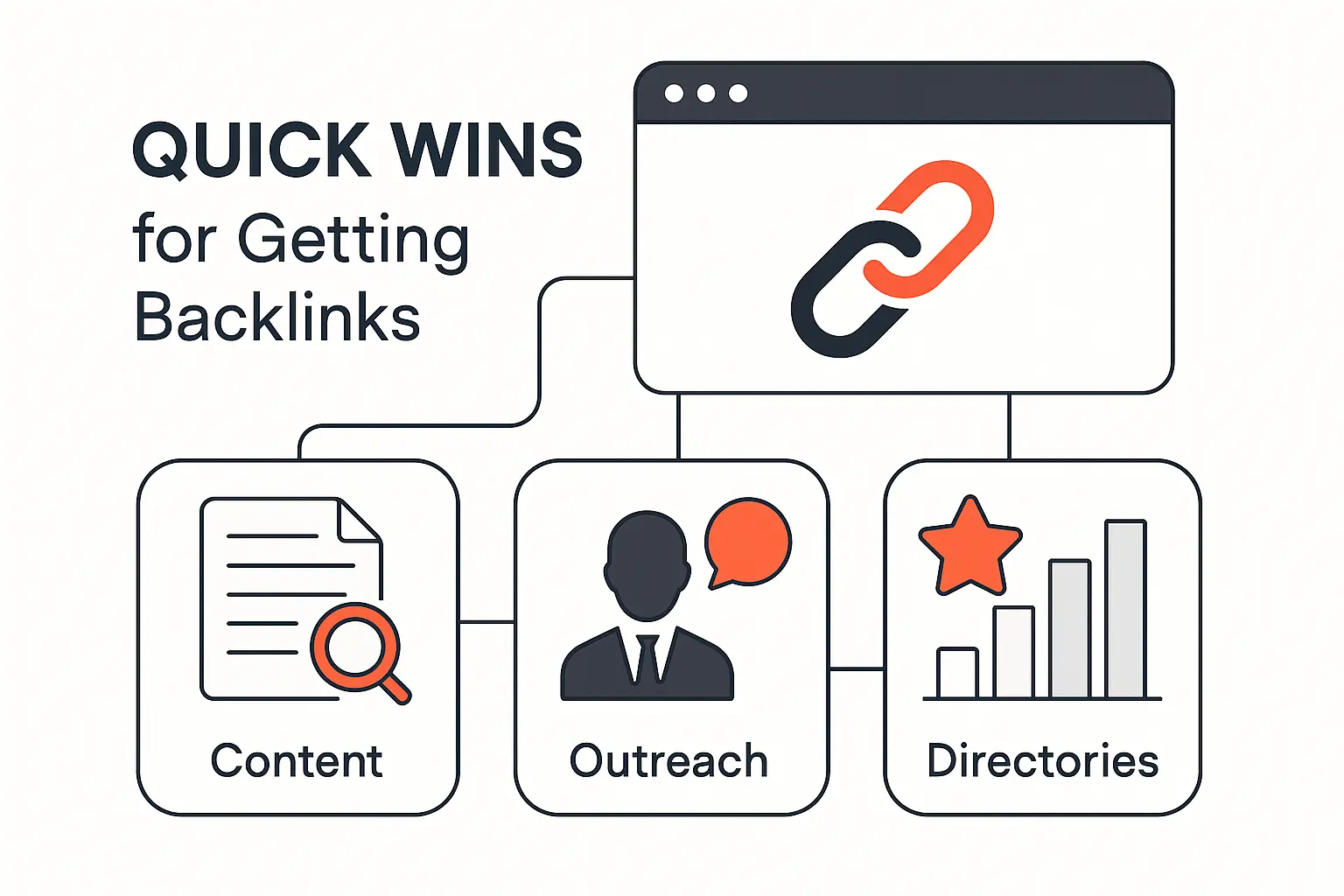
1. Reclaim unlinked brand mentions
The fastest backlinks are often hiding inside attention you already earned. Search for mentions of your brand, product, executives, proprietary terms, studies, and event appearances; then ask publishers to turn plain-text references into links that help readers find the underlying resource. Because the editor already chose to mention you, this outreach feels more like a service than a cold pitch.
Our rule is simple: send the exact URL, explain why it improves reader experience, and keep the request frictionless. If an article references a statistic, offer the study page. If it mentions your platform, send the most relevant solution page rather than a generic homepage.
2. Fix broken and outdated links
Broken links are link equity leaks. Rebrands, CMS migrations, deleted PDFs, renamed tools, and old campaign URLs regularly leave useful mentions pointing at dead pages. Before chasing net-new backlinks, audit lost referring URLs, restore pages that still deserve to exist, and redirect obsolete assets to the closest high-intent replacement.
Publisher-side cleanup is another easy win. When a partner or blogger links to an old slug, send a short note with the updated destination and a brief explanation of what changed. Editors appreciate maintenance requests that save their readers from dead ends.
3. Earn placements in existing articles and resource pages
Existing articles can be easier to win than brand-new coverage because the page already ranks, already attracts readers, and already has an editorial frame. We target resource pages, software roundups, glossary pages, statistics articles, and “best tools” lists where our client truly fills a gap. Then we pitch a specific addition: a missing data point, a better template, a clearer tutorial, or a tool that solves a subproblem the page has not covered.
Precision matters here. A generic “please add our site” email gets ignored. A tailored suggestion that improves a live article gives the editor a real reason to update the piece.
Recommended reading: How to Increase Website Traffic with SEO Content Promotion and Analytics
Relationship-Driven Backlink Strategies
1. Leverage partnerships, testimonials, and member directories
Some of the safest backlinks come from legitimate business relationships. Integration partners, certification bodies, accelerators, industry associations, software vendors, and ecosystem directories already have a logical reason to list you. An AWS Partner Solutions Finder profile, for example, can validate a real capability while creating a discoverable citation surface for both buyers and search systems.
Testimonials are similarly underused. If your team relies on a platform and can share a thoughtful result, many vendors will feature the quote on a customer page or case study. We like this tactic because the link emerges from genuine product use rather than a manufactured exchange.
2. Respond to media requests and become a source
Journalist request platforms still work when the response is expert, specific, and fast. Services like Qwoted and HARO on Featured create structured opportunities to contribute quotes, examples, and analysis to reporters who already need sources. What wins is not volume; it is a tight answer that sounds like a person who has actually done the work.
We encourage teams to build a reusable source kit: approved bio, headshot, company description, proof points, contrarian opinions, and short examples from real projects. Once that foundation exists, earned media becomes operational instead of chaotic.
3. Get featured on podcasts and niche publications
Podcasts and specialist publications are powerful because they reward depth more than scale. A strong conversation on a niche show can lead to an episode page link, a newsletter mention, secondary social sharing, and branded searches from exactly the audience you want. In business-to-business markets especially, we often see a focused industry outlet outperform a broader publication that has bigger reach but weaker intent alignment.
Rather than pitching your company, pitch your perspective. Hosts and editors want frameworks, lessons, disagreements, and stories from the field. If your team can explain what changed, why it matters, and where most companies get it wrong, links tend to follow naturally.
Recommended reading: SEO Affiliate Marketing: A 2026 Playbook for Ranking, Trust, and Revenue
Guest Content That Earns Relevant Backlinks
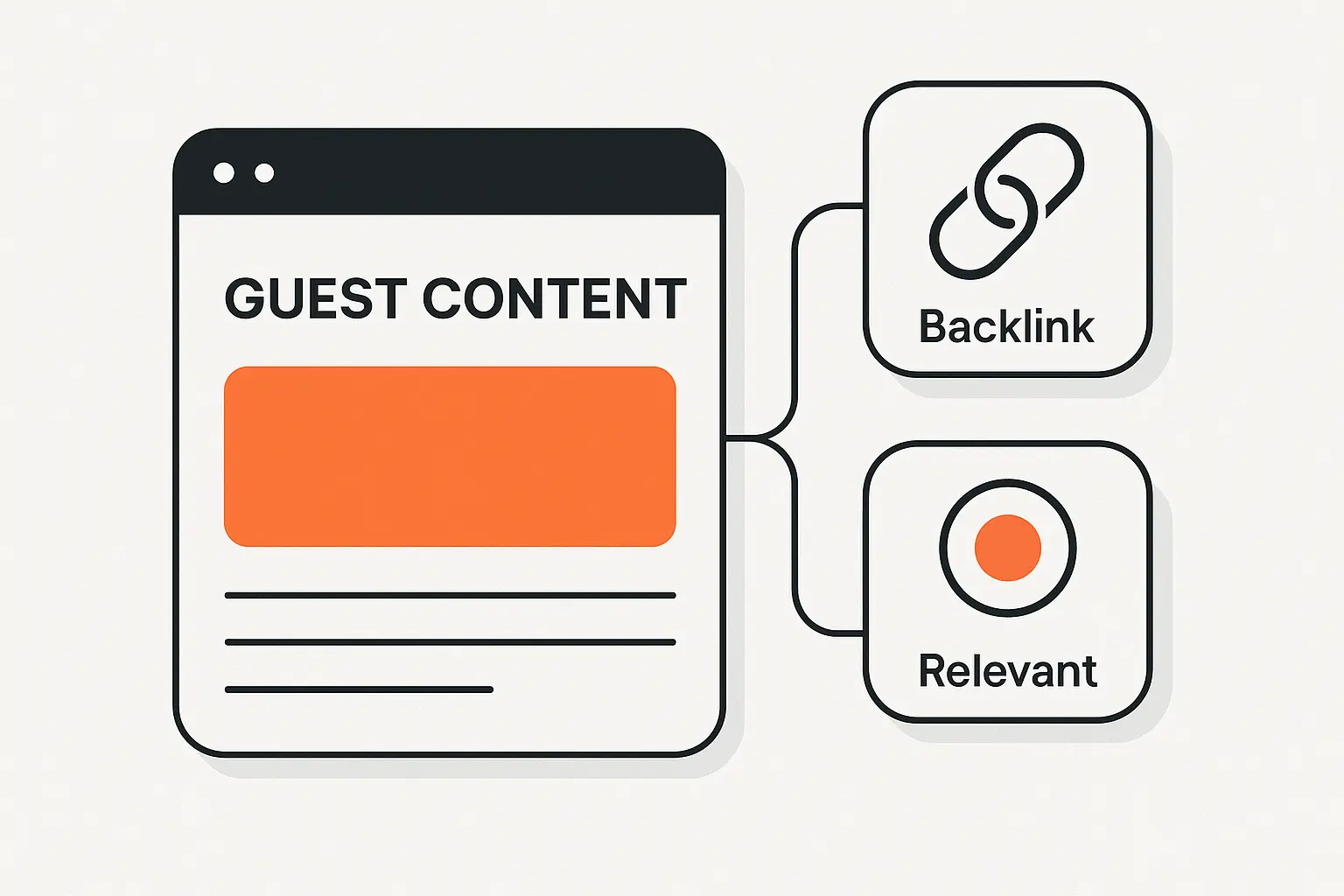
1. Find contextually aligned sites in your niche
Guest content still earns relevant backlinks when the host site genuinely overlaps with your niche. We look for publications that already speak to the same buyer, operate on related topics, maintain editorial standards, and publish at a healthy cadence. If the site covers every imaginable category or exists mainly to sell contributor spots, we pass.
Audience adjacency is the filter. A security vendor might contribute to cloud infrastructure blogs, developer communities, and compliance publications because the readers share a problem space. That same vendor has no business guest posting on a lifestyle site just to land a link.
2. Pitch useful topics that match the audience
The best pitches start with the host’s audience need, not your target keyword. Bring an angle the publication can publish with pride: a teardown of a common mistake, a field guide drawn from implementations, a benchmark summary, or a practical checklist that fills a gap in the site’s current coverage. Editors respond when the idea clearly makes their publication better.
From our perspective, the easiest way to sabotage guest posting is to force commercial anchors into a weak concept. A strong topic earns editorial freedom; a weak topic creates defensive editing and thin backlinks.
3. Write citable content and promote published guest posts
Citable guest content contains more than opinion. Screenshots, mini case examples, process diagrams, attributed insights, and original observations give later writers a reason to reference the article. When a piece becomes a citation source, the host wins, the readers win, and your backlink keeps producing value after publication day.
Promotion matters too. Once the post is live, share it in your newsletter, social feeds, sales enablement, and community channels. Editors remember contributors who bring attention to the work, and that reputation makes future placements easier.
Recommended reading: 7 SEO Tips for WordPress: A Practical Outline for Better Rankings and Clicks
Link-Worthy Assets That Attract Backlinks
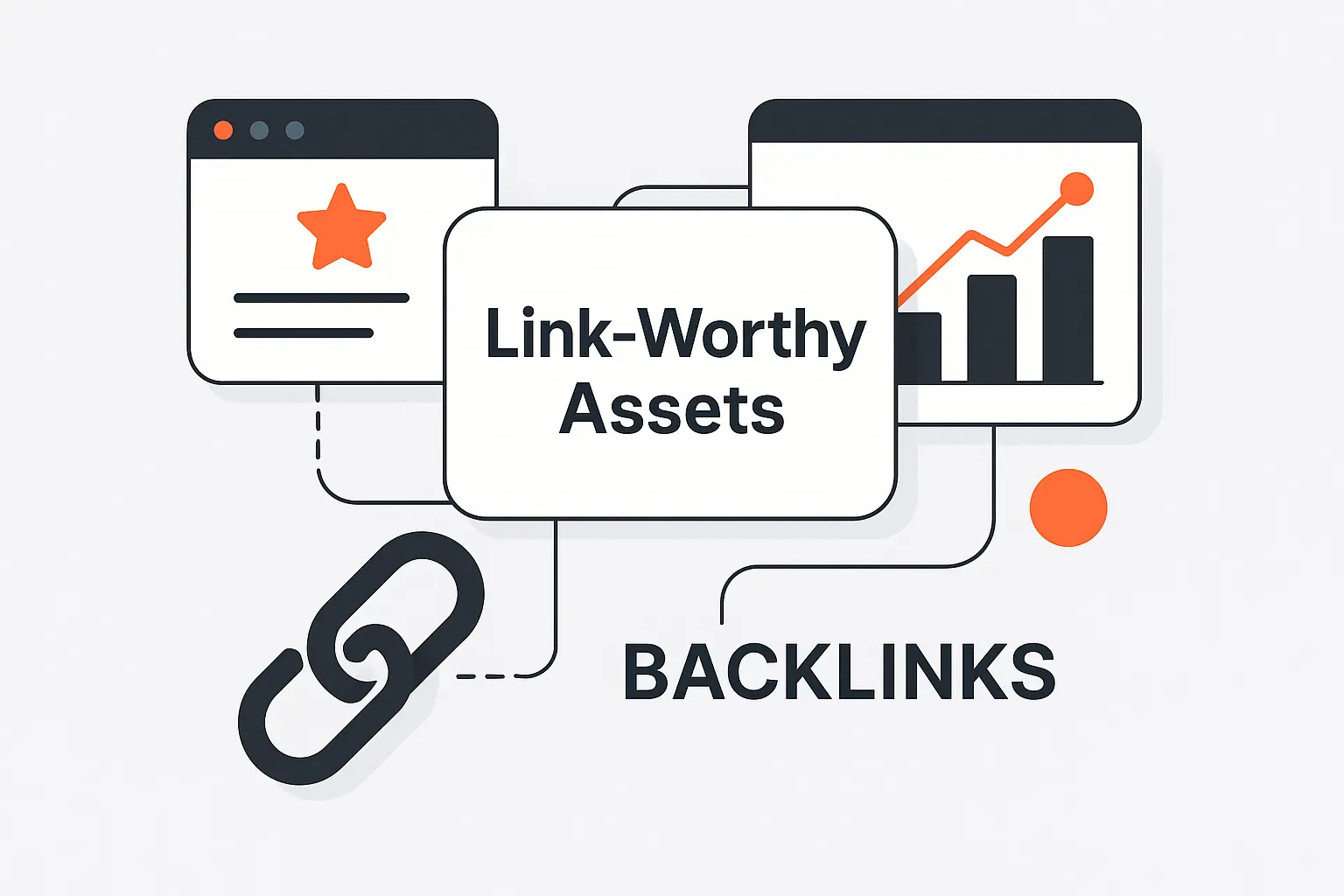
1. Publish original research and statistics roundups
Original research is one of the few backlink tactics that can scale without looking manipulative. Reporters need fresh evidence, marketers need credible numbers, and sales teams need proof points they can quote. If you can publish a benchmark, survey, teardown, or internal product dataset with clear methodology, you create something the market can reference repeatedly.
Transparency is the difference between a statistic and a citation magnet. We publish sample definitions, data windows, limitations, source notes, charts, and quotable takeaways so another writer can confidently reuse the material. Even a smaller study can outperform a bigger one when the methodology is easier to trust.
2. Create comprehensive guides and visual resources
Comprehensive guides earn backlinks because they reduce research time for everyone else. The strongest versions are not just long; they are structurally useful. Comparison tables, diagrams, decision trees, glossaries, templates, and annotated examples give readers a reason to save, share, and cite the page instead of treating it as another generic article.
Visual resources are especially effective when a topic is hard to explain in text alone. An architecture map, workflow illustration, or evaluation matrix can become the reference image another author embeds or links to when explaining the same concept.
3. Build free tools, templates, and calculators on standalone pages
Utility-led assets often attract the cleanest backlinks because they solve a job immediately. We see this pattern in products like HubSpot’s AI grader and Ahrefs’ free utilities: people reference them because they are useful, not because they were pitched. Templates, estimators, graders, snippet generators, and audit checkers can all play this role when the utility is obvious.
Put these assets on standalone pages with clear titles, supporting copy, strong internal links, and indexable HTML. When a tool is buried behind a campaign page or hidden inside an app, it becomes harder for search engines, AI systems, and human writers to cite.
Advanced Ways to Scale Backlinks and Brand Mentions
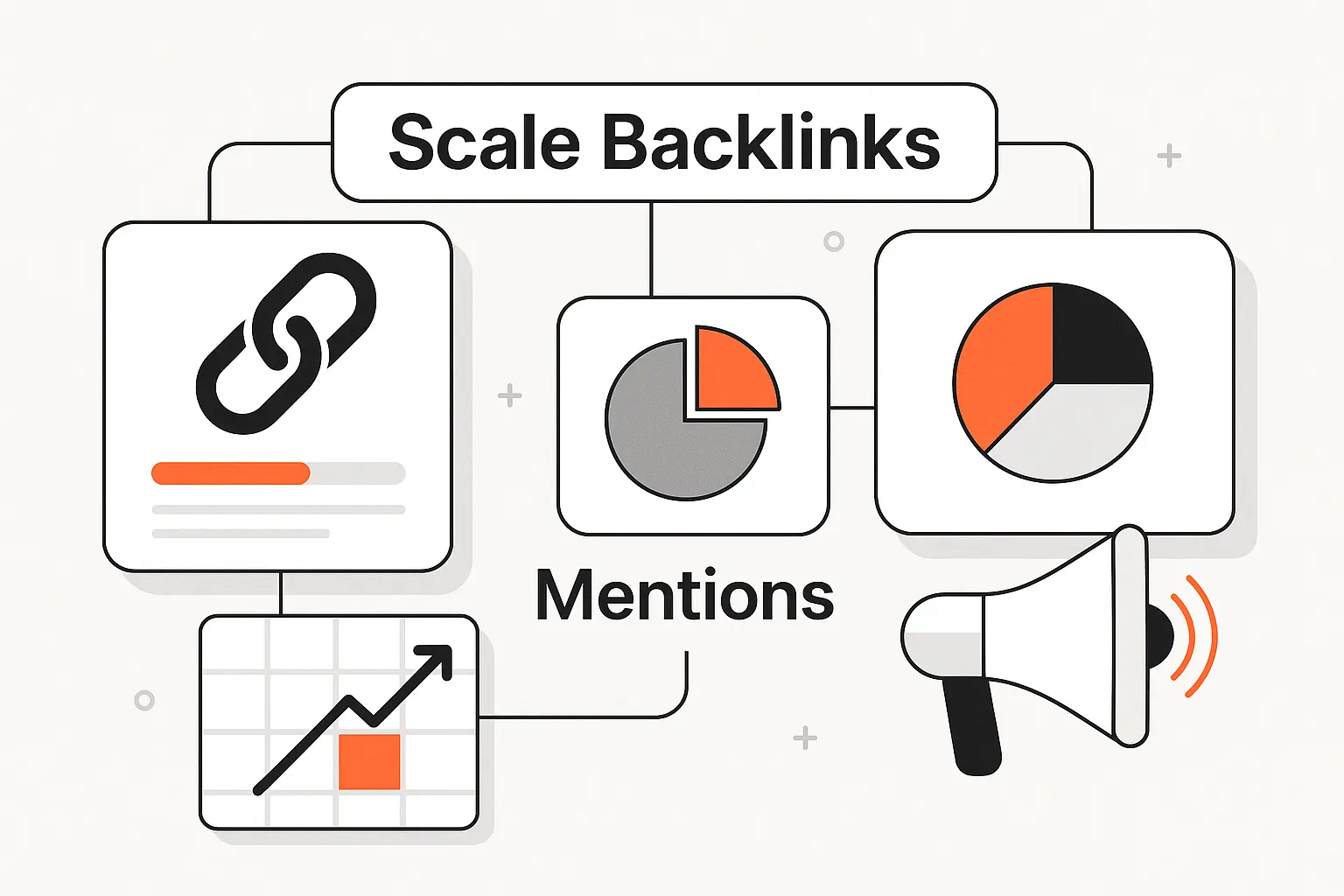
1. Replicate competitor backlinks with gap analysis
Competitor backlink replication works best when you study why a link was earned, not just where it lives. We export competitor links and classify them by pattern: data citation, resource page, partner listing, guest article, review, comparison, press mention, or testimonial. That reveals which assets and outreach motions already work in your market.
Once the patterns are visible, prioritization becomes much sharper. If several competitors earn links from implementation guides and integration pages, that is an asset gap. If they dominate analyst roundups and founder interviews, that is a thought-leadership gap.
2. Name your methods and publish case studies that earn citations
Named frameworks travel farther than vague advice. When a process has a memorable label, a clear sequence, and a concrete result, people can cite it in presentations, newsletters, LinkedIn posts, and follow-up articles. At Techtide Solutions, we like to turn repeatable methods into defined playbooks because naming an idea makes it easier for others to reference accurately.
Case studies amplify that effect. Show the business context, the technical constraints, the decisions, the trade-offs, and the outcomes without turning the piece into brag-heavy fluff. A strong case study teaches something transferable, and that is what earns secondary citations.
3. Use creator and affiliate partnerships to expand relevance
Creator and affiliate partnerships can expand your brand’s relevance when they are built around honest evaluation rather than synthetic link placement. Niche creators often have tighter audience trust than traditional publishers, which makes their reviews, tutorials, and comparison content valuable discovery layers. For software companies, the right creator can introduce you to a concentrated buying community that search alone may not reach.
That said, governance matters. If compensation is involved, use rel=”sponsored” where appropriate, disclose the relationship clearly, and judge the collaboration by audience fit, assisted conversions, and brand lift rather than by whether a link passes ranking credit.
Mistakes to Avoid When Building Backlinks
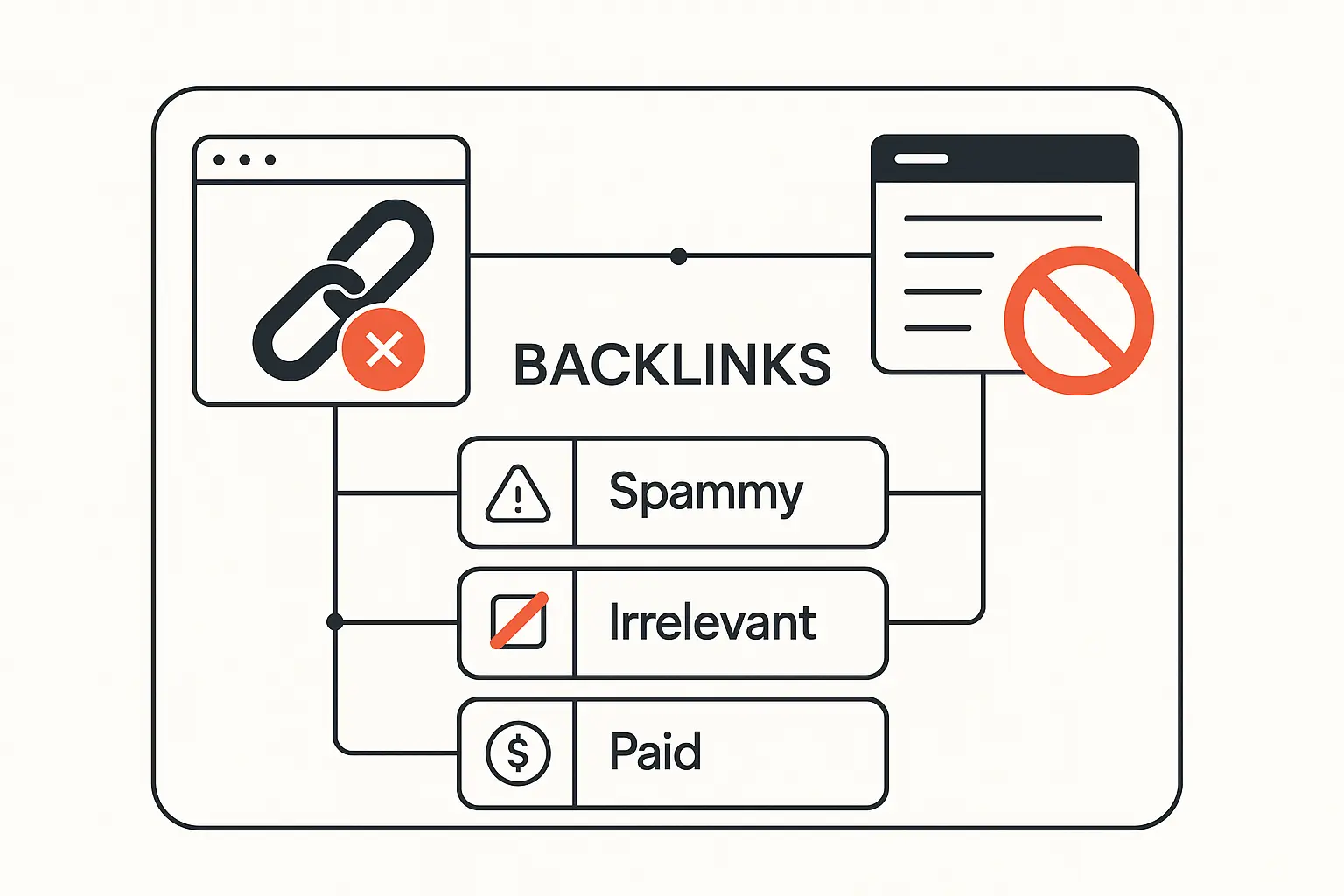
1. Buying low-quality links and unsafe link swaps
The biggest mistake is treating backlinks like inventory. Google’s link spam policy explicitly calls out buying or selling links for ranking purposes, excessive link exchanges, product-for-link arrangements, and large-scale guest content with optimized anchors. Those tactics may create a short-term feeling of progress, but they increase long-term risk while crowding your profile with weak signals.
We also avoid informal swap networks that sound harmless in private communities. Once the main reason for the link is mutual ranking manipulation, the strategy is already pointed in the wrong direction.
2. Generic mass outreach and forced anchor text
Template-heavy outreach fails because it ignores the editor’s context. If every pitch sounds the same, your message becomes operational noise. Forced anchor text makes the problem worse by signaling that the link exists for your keyword map, not for the reader.
Natural language converts better anyway. Editors are more likely to add or keep a link when it fits the sentence, helps the audience, and sounds like a human wrote it. In our experience, specificity beats scale almost every time.
3. Spammy sites and quantity-first link building
Spammy sites rarely help a serious brand. Low-value directories, recycled network blogs, unrelated placements, hacked pages, widget links, and buried footer mentions create clutter without building real authority. Even when they do not trigger a visible penalty, they can distort reporting and waste time that should go into assets people actually use.
Our bias is simple: we would rather finish with fewer links and better relevance than with a swollen backlink count that no prospect, partner, or journalist would ever trust.
FAQ About How to Get Backlinks
1. Is link building legal
Yes, link building is legal when it is based on PR, partnerships, citations, expert contributions, and useful resources. Problems begin when teams cross into deception, undisclosed paid endorsements, hacking, or manipulative schemes. If there is a commercial relationship behind an endorsement, the FTC says material connection should be clearly and conspicuously disclosed.
2. How can I get free backlinks
Start with assets and relationships you already control. Unlinked brand mentions, partner pages, testimonials, resource pages, founder quotes, community contributions, and original research can all earn free backlinks. Google also reminds site owners that it doesn’t cost any money to appear in Google Search results, so we think free link earning should be your default model and paid shortcuts your exception.
3. Are backlinks still important in 2026
Absolutely. Search rankings still rely on link analysis, and AI search experiences still surface supporting web pages. The role of backlinks has evolved from raw volume toward trusted references, but the underlying need for authority, discovery, and corroboration has not disappeared.
4. Is it worth paying for backlinks
We would not pay for manipulative backlinks. We will pay for things that can lead to earned visibility, such as research, digital PR, design, tools, creator collaborations, conference sponsorships, or co-marketing campaigns. The distinction is crucial: invest in creating citeable demand, not in purchasing fake authority.
5. Can beginners get backlinks
Yes. Beginners often do best with straightforward plays: expert comments, testimonials for tools they genuinely use, local and industry associations, community posts, guest insights on smaller niche sites, and resource-page inclusion. Early wins come from clarity and persistence more than from elaborate tactics.
6. How long does it take to get backlinks
It depends on the tactic and the asset. Mention reclamation and broken-link fixes can move quickly because the awareness already exists. Original research, podcast features, and editorial citations usually take longer because they depend on publication cycles and relationship development. We tell clients to judge link building as a compounding program, not a short sprint.
Final Thoughts on How to Get Backlinks
1. Start with quick wins that are easy to execute
If we were prioritizing from scratch, we would begin with the easiest authority already within reach: unlinked mentions, broken links, partner opportunities, testimonials, and high-fit resource pages. Those moves clean up the foundation and produce early traction without teaching the team bad habits.
2. Invest in assets and outreach that compound over time
Once the foundation is solid, put more energy into assets that keep earning attention: research, tools, case studies, definitive guides, and recurring expert commentary. Outreach works best when it distributes something genuinely useful rather than pleading for a favor.
3. Build authority across search, AI, and your industry
The deeper lesson is that backlinks are no longer just an SEO metric. They are part of your brand’s reference layer across search engines, AI systems, media, partner ecosystems, and buying committees. If your team wants better backlinks in 2026, our recommendation is to choose a quick-win tactic and a compounding asset this month, then ask a harder question: what would your market cite if it had to explain why your company matters?

