
Software budgets continue to track strategic growth agendas, and the stakes are rising. Enterprise demand now spans cloud, mobile, data, and AI in one continuous roadmap. Mobile and web ecosystems alone generated US$585.68bn in 2025, which shapes how buyers scope outcomes and how vendors design engagement models within complex programs.
What custom application development companies deliver: scope, services, and outcomes
We have spent years building and rescuing programs in regulated and high-growth settings. The common thread is disciplined alignment between vision, architecture, and the teams doing the work. When that alignment holds, velocity follows, risk drops, and value arrives predictably. When it frays, costs drift upward and trust erodes fast. The following scope areas reflect what leading partners actually deliver when the brief says “custom application development.”
1. End-to-end SDLC discovery, architecture, UX, development, and QA
Great software begins with discovery that clarifies the job to be done. We map stakeholders, define journeys, and challenge assumptions parked in slide decks. Architecture emerges from constraints and goals, not vendor fashion. Our teams then position UX as a decision engine, not decoration, to frame what must be usable on day one.
Engineering turns these choices into running code with a test-first posture. We layer QA across unit, integration, contract, and exploratory passes. That stack keeps regressions contained, avoids brittle features, and preserves future changeability. Done well, this end-to-end path reduces rework and creates options, which is the real currency in changing markets.
Deliverables checklist that moves the needle
- Capability map tied to business goals and measurable outcomes.
- Service and domain boundaries shaped by real data flows.
- Design system assets and UX research notes linked to jobs-to-be-done.
- Automated tests and pipeline definitions checked into the main repo.
- Runbooks and decision logs that document why choices were made.
Anti-patterns we refuse to ship
- Designs that cannot be tested without full end-to-end environments.
- Feature roadmaps without value hypotheses or kill criteria.
- Architecture slides that ignore latency, data gravity, or change rates.
2. Legacy application modernization and cloud migration
Modernization is less about lifting servers and more about retiring risk. We decompose brittle systems with a strangler approach to carve coherent slices off aging cores. Interfaces stabilize first, then we move hot paths to cloud foundations that do not recreate on‑prem mistakes. Parallel runs, feature flags, and data backfills help avoid cliff-edge cutovers.
Real progress comes from observability and deprecation discipline. We archive features that no longer earn their keep. Contracts between new and old components allow teams to move independently. The goal is steady shrinkage of the legacy surface, not a heroic “big bang” that stalls at the halfway mark.
3. Cloud-native development and microservices with CI/CD
Cloud‑native is a delivery philosophy before it is a tech stack. We design for blast radius control, graceful degradation, and operational empathy. Services earn their right to exist; small where independence helps, combined where cohesion matters. Eventing, idempotency, and backpressure are first-class concerns, not afterthoughts.
CI/CD pipelines gate quality and speed. Trunk‑based workflows with short‑lived branches keep drift low and feedback fast. Blue‑green or canary releases plus progressive delivery let product owners move while risk stays bounded. This is how teams release without ceremony and still sleep at night.
4. Mobile app development as part of custom application programs
Mobile is not a side quest. It is often the front door to the brand, the checkout lane, and the loyalty program. We pair native builds where latency and platform affordances matter with cross‑platform layers where consistency rules. The right choice balances performance, access to device capabilities, hiring realities, and product cadence.
We focus on session starts, activation flows, and in‑app trust signals. Growth features ride alongside core value: push orchestration, deep links, and lightweight experiments that never compromise privacy. Store review compliance becomes a habit, not a scramble, and analytics align to the funnel we actually manage.
5. Data platforms, analytics, and pragmatic AI and ML
Data programs succeed when governance, usability, and latency align. We shape event schemas, enforce contracts, and publish source‑of‑truth semantics. Analytics work only when product and finance can reconcile the same numbers without late‑night spreadsheets. Feature pipelines for AI sit on that bedrock, not on one‑off hacks.
Our principle with AI is pragmatic value. We do not bolt on models for theater. We build data products that serve users and automate rote steps while respecting safety, bias, and provenance. MLOps comes with monitoring for drift and a clear rollback path, so experimentation never outruns accountability.
6. Platform-based solution implementation and integrations
Many programs blend custom builds with platforms such as ERP, CRM, and commerce suites. The trick is resisting over‑customization while preserving differentiation. We standardize where it helps and extend where it pays back. Integrations use contracts and event bridges to avoid brittle point‑to‑point webs.
Vendor ecosystems evolve fast. Our playbook prefers adapter layers, not direct calls scattered across codebases. That stance contains change and makes upgrades boring, which is a feature, not a bug.
7. DevOps enablement and agile delivery practices
DevOps is culture expressed as tools and habits. We coach teams to collaborate around runbooks, health checks, and shared on‑call empathy. Agile delivery works when product, design, and engineering commit to thin slices and continuous validation. Standups and demos are not theater; they are risk control mechanisms.
Tooling remains simple until it needs to be complex. Teams adopt platforms because they remove toil, not because they are fashionable. Cadence wins over speed; predictable flow supports better budgeting and happier stakeholders.
8. Dedicated teams, staff augmentation, and full outsourcing models
Engagement models exist on a spectrum. Staff augmentation helps when you need specific expertise embedded with your crews. Dedicated teams own streams end to end with product management, architecture, and QA included. Full outsourcing makes sense when the outcome is clear, and you want a partner to carry delivery responsibility.
We advise clients to mix models by risk and clarity. When uncertainty is high, start small and learn through a prototype. As knowledge hardens, move to a team that can scale throughput without losing context.
9. Security-by-design and compliance-conscious engineering
Security only works when baked into design and daily routines. We ground decisions in threat models and data classification, not blanket controls. Secrets management, least privilege, and static analysis sit in pipelines alongside tests. Privacy and consent are features, not policy footnotes.
Compliance follows from traceability. Audit‑ready logs, immutable artifacts, and change histories turn hard questions into routine evidence. Teams move faster when the secure path is the paved path.
10. Industry-tailored solutions and domain expertise
Domain fluency sharpens roadmaps. A claims workflow, a card ledger, and a fulfillment engine operate with different constraints and failure modes. We encode that knowledge in domain models, validation rules, and safe defaults. Strategy then aligns to what the industry rewards, not generic platitudes.
Examples abound. A marketplace needs trust and dispute mechanisms baked in. A digital bank needs reconciliation as a citizen feature. A manufacturer needs stable integrations with plant systems and supplier portals. The code tells those truths.
11. Post-launch operations, maintenance, and SLO-driven support
Launch day is the starting line. Reliability comes from SLOs that users feel and engineering can measure. We instrument for latency, error rates, and saturation, then negotiate error budgets that align to business appetite. Feedback loops route incidents back into designs and roadmaps.
Support evolves with product maturity. Early phases prioritize triage and fast patching. Later phases emphasize debt payoff, tuning, and preventative tasks. This cycle sustains value while headcount stays steady and morale stays high.
Quick Comparison of custom application development companies
Funding momentum hints at where innovation capacity concentrates. Private AI companies alone attracted $116.1B in the first half of 2025, which pushes buyers to expect intelligent capabilities in new applications and to choose partners skilled at integrating models safely into production systems.
| Company/Service | Best for | From price | Trial/Free | Key limits |
|---|---|---|---|---|
| Accenture | Enterprise transformation with complex estates | Custom | No | High entry thresholds; governance heavy |
| IBM Consulting | Regulated data and AI on hybrid cloud | On request | No | Tool preference may steer architecture |
| TCS | Global delivery at scale | Custom | No | Large‑program overhead |
| Cognizant | Intelligent operations with experience design | On request | No | Alignment work needed in early phases |
| Capgemini | SAP‑heavy and platform integration | Custom | No | Complex sign‑offs in multi‑country rollouts |
| EPAM Systems | Engineering‑led builds and platform work | Custom | No | Demand spikes can stretch niche skills |
| Globant | Design‑forward digital platforms | On request | No | Creative bets require strong product alignment |
| Thoughtworks | Modernization and microservices programs | Custom | No | Lean squads expect engaged product owners |
| SoftServe | Cloud‑native data and AI builds | On request | No | Specialist teams may rotate by phase |
| Endava | Agile nearshore engineering | Custom | No | Regional scale varies by domain |
Our research‑based shortlist for broad vendor scans
- Accenture
- IBM Consulting
- TCS
- Infosys
- Cognizant
- Capgemini
- HCLTech
- Wipro
- EPAM Systems
- Globant
- Thoughtworks
- SoftServe
- Endava
- Persistent Systems
- Nagarro
- Luxoft
- DataArt
- Grid Dynamics
- Avanade
- Deloitte Digital
- Slalom Build
- EY Technology
- PwC Cloud & Digital
- LTIMindtree
- NTT DATA
- DXC Technology
- Sopra Steria
- Virtusa
- Mphasis
We curated the mix to help buyers compare depth in cloud, data, and design, plus track records in regulated sectors. Our own experience adds color around engineering culture, release hygiene, and how each partner handles uncertainty under pressure.
Top 30 custom application development companies to consider in 2025
As a build-first software company, we at Techtide Solutions approach shortlists like engineers approach architecture diagrams: pragmatic, opinionated, and accountable to evidence. Below, we profile 30 custom application partners that matter in 2025 across scale, sector depth, and engineering rigor. For each, we call out who they serve best, why they win, and where public proof supports claims. While buzzwords ebb and flow, certain patterns don’t: platform fluency, product-minded delivery, security-by-design, and measurable outcomes. In our client work, the partnerships that compound value tend to pair strong discovery with disciplined delivery and an obsession with total cost of ownership over time. If your 2025 roadmap spans GenAI-enabled workflows, event-driven architectures, composable applications, or regulated data estates, use this guide as a filter before your RFP. Want a quicker pass? Tell us your stack, constraints, and budget window—we’ll triangulate a shortlist calibrated to your risk profile.
1. Accenture
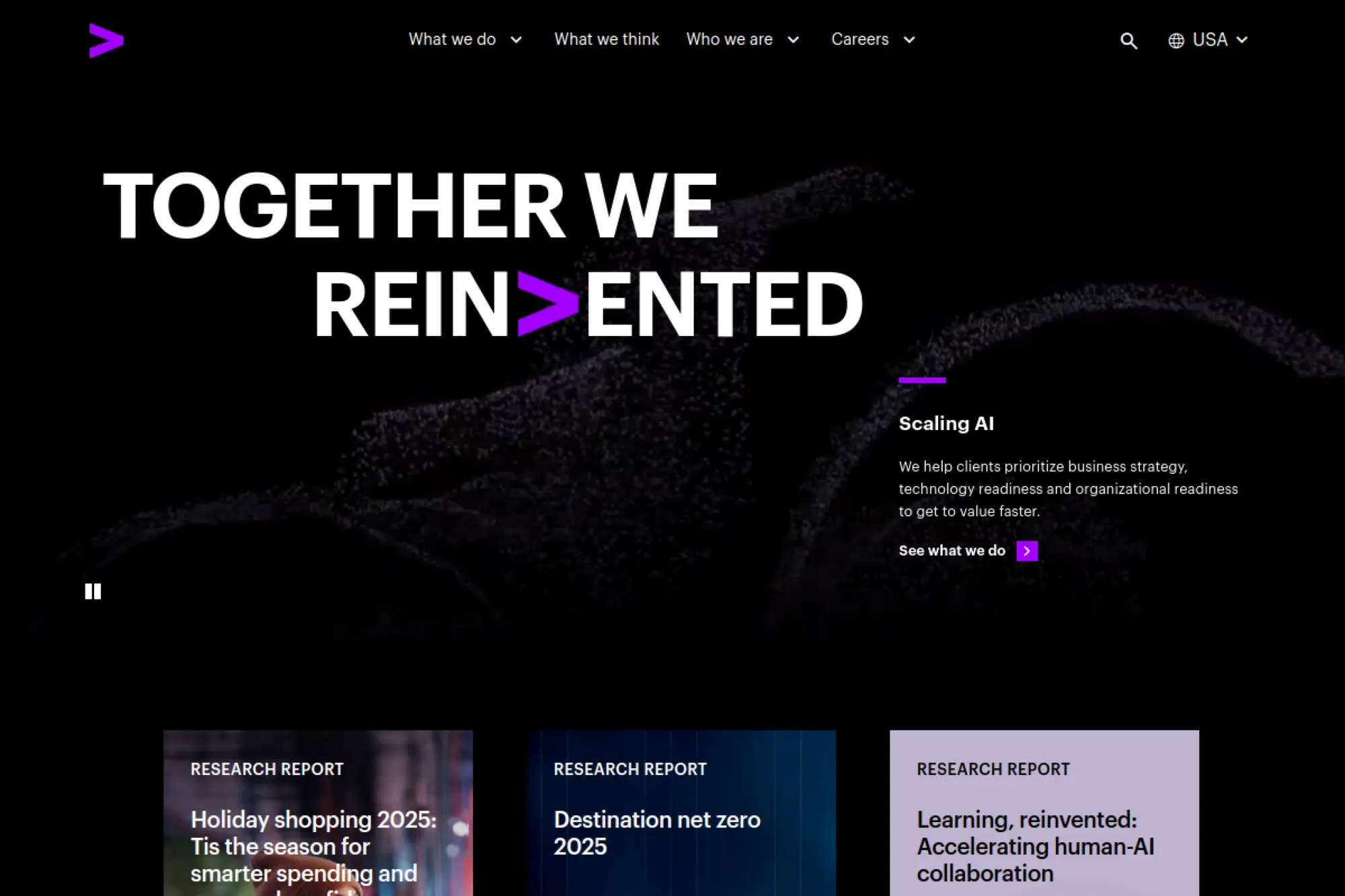
Accenture is a multi-industry systems integrator and product builder with a deep bench across strategy, design, and engineering. With well over 700,000 employees globally, it has operated since 1989 (~36 years) and is headquartered in Dublin, Ireland. Its product-centric unit, Song, brings brand, experience, and growth together with software delivery.
Recent recognition includes topping the IT services industry in Fortune’s 2025 World’s Most Admired Companies for the 12th consecutive year and being named among the 2025 World’s Most Ethical Companies honorees.
On delivery, Accenture’s strengths show in large-scale cloud modernization, omni-channel commerce, and data platforms. Public case stories span consumer goods, banking, telecom, and public sector, often combining hyperscaler-native build-outs with platform engineering and SRE practices to tighten feedback loops and reliability at scale.
Best fit for Fortune 1000 and upper mid-market buyers seeking large, globally distributed teams, enterprise change management, and vendor governance. Suits complex estates (multi-region, multi-cloud) where platform strategy, shared services, and compliance cadence are decisive for long-term ROI.
2. EPAM
EPAM blends product engineering roots with consulting and design, focusing on software platforms, data, and digital experiences. With 50,000+ employees, founded in 1993 (~32 years), EPAM is headquartered in Newtown, Pennsylvania, with strong delivery in Central and Eastern Europe and Latin America.
EPAM has been recognized in custom build markets, including being named a Leader in Gartner’s coverage via external announcement for high-growth recognition and inclusion in Gartner’s treatment of custom software development services (2024 Magic Quadrant).
Where EPAM excels is platform productization: internal developer platforms, composable commerce, and cloud-native re-platforming. Public case evidence across financial services, retail, media, and healthcare emphasizes design systems, headless architectures, and data-driven growth loops for measurable impact.
Ideal for product-led enterprises and digital natives needing strong engineering throughput and co-creation. A fit when you want squads that treat “software as a product,” with CI/CD maturity, automated testing, and performance budgets integral to the operating model.
3. TechTide Solutions
We’re a remote-first, product engineering studio focused on custom applications, platform engineering, and data-intensive systems. We keep a compact senior core (under 100 FTEs) and scale with vetted partners. We’ve operated for ~10+ years and run a distributed headquarters across the U.S. and EU to stay talent-proximate to clients.
Our experience spans greenfield builds and modernization: cloud-native back ends, event streaming, secure APIs, and responsive front ends. We prioritize measurable outcomes: latency, reliability, and cost-to-serve. Our public project narratives emphasize discovery, domain modeling, and a bias for automation—because toil is technical debt in disguise.
Best for mid-market to enterprise teams that want hands-on senior builders, crisp technical leadership, and collaborative rituals. We’re a match when you value transparency, production-readiness, and architecture decisions that consider five-year TCO—not just first release velocity.
4. IBM
IBM Consulting pairs domain consulting with engineering on hybrid cloud, AI, and industry platforms. They employs 280,000+ people, was founded in 1911 (~114 years), and is headquartered in Armonk, New York. Its strength is end-to-end modernization with regulated data and mission-critical workloads.
IBM appears among the 2025 World’s Most Ethical Companies honorees, reflecting governance and controls that matter to heavily audited buyers.
Public cases frequently highlight AI-enabled experiences and operations, such as sports analytics and event workloads, plus mainframe-to-cloud journeys where uptime and data lineage are non‑negotiable. IBM’s pattern libraries for MLOps, integration, and security hardening often shorten time to value.
Best for enterprises with complex estates (SAP, mainframe, VMware) that require hybrid strategies, strong compliance, and AI orchestration without compromising controls. A fit when line-of-business innovation must ride alongside rock‑solid reliability.
5. Cognizant
Cognizant is a broad-based technology services firm with deep delivery in application modernization, data, and intelligent process automation. With 340,000+ employees, founded in 1994 (~31 years), it is headquartered in Teaneck, New Jersey.
Cognizant was named among the 2025 World’s Most Ethical Companies, underscoring operating discipline vital to regulated clients.
Service lines cover platform build-outs, cloud re-platforming, and analytics programs. Public case documentation spans life sciences, financial services, and retail, with emphasis on measurable conversion lifts, operational SLAs, and responsible AI guidelines embedded into delivery.
Ideal for large enterprises seeking global scale, mature delivery frameworks, and robust vendor management. A match when your portfolio needs parallel execution across multiple programs with tight governance and business case traceability.
6. HCLTech
HCLTech brings engineering-led delivery across applications, digital workplaces, and product engineering. Headquartered in Noida, India, HCLTech counts 225,000+ employees, was founded in 1976 (~49 years), and is known for “Mode 2/3” digital programs and hyperscaler-native builds.
HCLTech is included among the 2025 World’s Most Ethical Companies honorees, reflecting sustained compliance and governance maturity.
Proof points include digital workplace transformation, application modernization, and platform engineering for global brands, with an emphasis on experience-level agreements (XLAs) and zero‑touch operations. Their playbooks often reduce MTTR and improve developer throughput.
Best for enterprises wanting industrialized delivery with a strong focus on operations, cost optimization, and platform reliability. Suits organizations standardizing on cloud-native tooling and KPI-driven workplace experiences.
7. Wipro
Wipro is a global services and consulting provider known for cloud, data, and engineering services. Founded in 1945 (~80 years), headquartered in Bangalore, India, it employs 245,000+ people. Its FullStride Cloud unit focuses on accelerated cloud migration, FinOps, and app modernization.
Wipro has been recognized in Gartner coverage of public cloud transformation providers ( 2023 Magic Quadrant), underscoring scale in cloud-native modernization and managed services.
Public case materials spotlight modernization programs across banking, manufacturing, and retail that link cloud platform engineering, security baselines, and analytics to measurable time-to-market gains and cost-to-serve reductions.
Well-suited for global enterprises needing a multi-country delivery model, hyperscaler depth, and aggressive cloud economics. Strong fit when executive sponsors demand modernization roadmaps tied to business KPIs and governance.
8. NTT DATA
NTT DATA offers consulting and application services with strong regional depth in APAC, the Americas, and Europe. Headquartered in Tokyo, Japan, with ~190,000+ employees, and founded in 1967 (~58 years), it blends sector expertise with a broad technology portfolio.
NTT DATA is recognized in Gartner’s 2025 Magic Quadrant for Outsourced Digital Workplace Services, reflecting scaled capabilities in endpoint experience and secure collaboration.
Service stories include workplace transformations, core system modernization, and industry platforms in healthcare, manufacturing, and public sector. Public references emphasize experience analytics, automation, and compliance-aware delivery in regulated environments.
Best for multinational buyers prioritizing regional proximity plus scale. A match when you need unified governance across countries and consistent delivery playbooks for experience, security, and operations.
9. Capgemini
Capgemini spans consulting, digital engineering, and managed services with deep European presence and global reach. Founded in 1967 (~58 years), headquartered in Paris, it employs 360,000+ people. Its engineering arm Altran (now Capgemini Engineering) strengthens embedded and IoT builds.
Capgemini appears among Ethisphere’s 2025 World’s Most Ethical Companies honorees, signaling disciplined controls that enterprises value.
Public proof spans telecom, automotive, and finance: from 5G-enabled edge platforms to composable banking and omnichannel retail. Delivery often aligns product management, experience, and DevSecOps to reduce release risk and improve customer outcomes.
Ideal for enterprises in Europe and beyond seeking full-stack transformation with strong compliance posture, rich ecosystem alliances, and cross-border delivery assurance.
10. DXC Technology

DXC delivers applications, cloud platforms, and workplace services at scale. Headquartered in Ashburn, Virginia, it has 100,000+ employees, founded in 2017 (~8 years). It is known for enterprise workplace transformation and hybrid infrastructure services.
DXC is covered in Gartner’s 2025 Magic Quadrant for Outsourced Digital Workplace Services, underscoring capabilities in employee experience, automation, and support at global scale.
Public case narratives show global device management, collaboration modernization, and contact center transformation—often tying AI-assisted support and proactive remediation to uptime and satisfaction metrics.
Best for large organizations aiming to standardize end-user experiences and modernize collaboration while controlling cost. A fit when your service desk, device lifecycle, and collaboration stack need a unified, KPI-driven operating model.
11. Deloitte
Deloitte combines strategy, design, data, and engineering under one roof for sector-specific transformations. Founded in 1845 (~180 years), headquartered in London, and with 450,000+ employees, it is built for high-complexity programs spanning technology and operating model change.
Deloitte was named a Leader in the 2023 Gartner Magic Quadrant for Public Cloud IT Transformation Services and ranked prominently in Forbes’ 2025 America’s Best Management Consulting Firms.
Delivery strengths: cloud-native modernization, data platforms, and AI-infused processes with controls. Public cases across consumer, finance, and government highlight outcome-first roadmaps that align C-suite sponsorship with engineering throughput.
Ideal for enterprises seeking a single accountable partner across strategy, data, and build. Suits board-level programs where value realization, risk management, and change enablement are as critical as code quality.
12. Globant

Globant is a digital native consultancy with strong design, engineering, and product chops. Headquartered in Luxembourg with roots in Buenos Aires, it employs 28,000+ and was founded in 2003 (~22 years). It is known for experience-led platforms and digital products.
Globant is included in Gartner’s coverage of custom software build providers ( 2024 Magic Quadrant), reflecting recognition in product development and modernization services.
Public case narratives show work in media, travel, and retail: composable commerce, scalable streaming platforms, and personalization engines delivered with product analytics embedded into release cadences.
Best for digital-forward enterprises prioritizing experience, rapid iteration, and measurable product metrics. Strong fit when you need a partner comfortable operating like an internal product team.
13. Thoughtworks
Thoughtworks is a product engineering firm known for continuous delivery, platform thinking, and engineering culture. Founded in 1993 (~32 years), headquartered in Chicago, with 10,000+ employees. It has outsized influence on practices like CI/CD and evolutionary architecture.
Recognized within Gartner’s 2024 coverage of custom software development services, Thoughtworks remains a reference point for modern build practices.
Public case evidence highlights domain-driven design, test automation, and platform build-outs that speed developer onboarding and reduce change failure rate. They often align squads to business capabilities to keep architecture and organization in step.
Ideal for buyers who want to elevate engineering practices while shipping. A fit when you seek platform baselines (IDPs, golden paths) that cut cognitive load and amplify team throughput.
14. Persistent Systems
Persistent Systems is an India‑headquartered engineering company focused on product engineering, SaaS platforms, and data. Founded in 1990 (~35 years), headquartered in Pune, with 20,000+ employees. It blends ISV DNA with enterprise modernization.
Persistent is included in Gartner’s 2024 Magic Quadrant for Custom Software Development Services, attesting to breadth in platform builds and modernization.
Public cases span BFSI, healthcare, and software platforms—showcasing API-led modernization, patient engagement apps, and data mesh patterns that translate into faster releases and governed data access.
Best for enterprises and ISVs wanting product-quality engineering, cloud-native design, and sustained velocity beyond initial launch. A match when SLAs must coexist with rapid iteration.
15. Virtusa
Virtusa focuses on digital engineering, cloud, and data in regulated industries. Founded in 1996 (~29 years), headquartered in Southborough, Massachusetts, with 30,000+ employees. It blends domain frameworks with reusable accelerators.
Virtusa appears in Gartner’s 2024 analysis of custom software development providers, indicating maturity in modernization and experience build services.
Public case materials showcase digital onboarding, loan origination, and claims platforms, often leveraging domain accelerators to compress time-to-value without sacrificing compliance and auditability.
Ideal for financial services and healthcare organizations seeking domain-aware engineering with strong controls, where throughput and regulatory completeness must advance in lockstep.
16. SoftServe
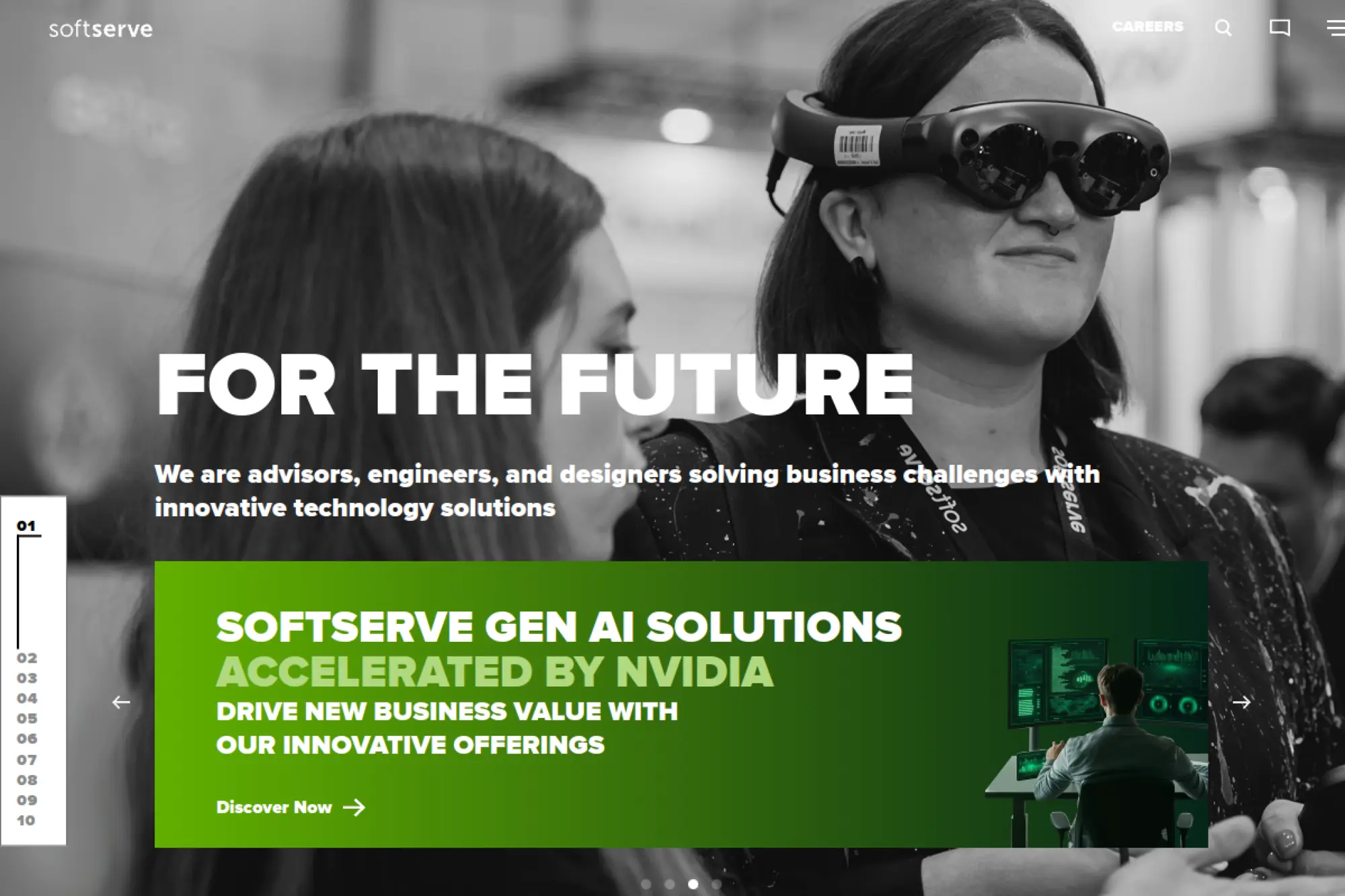
SoftServe is a product engineering and data company with strong expertise in AI/ML and cloud-native systems. Founded in 1993 (~32 years), headquartered in Austin, Texas, with 13,000+ employees and robust Eastern European delivery.
SoftServe is recognized in Gartner’s 2024 Magic Quadrant for Custom Software Development Services, underscoring competence across product build and modernization.
Public cases highlight MLOps platforms, personalization, and IoT data pipelines, with opinionated reference architectures and guardrails to accelerate adoption while addressing data governance.
Best for mid-market and enterprise buyers seeking AI-infused applications tied to measurable metrics (conversion, efficiency) and a partner that can harden data pipelines for scale.
17. Itransition

Itransition is a custom software firm with strong .NET, Java, and Salesforce practices. Founded in 1998 (~27 years), with 3,000+ professionals, it operates globally with hubs across Europe and the U.S. Headquarters are listed in London with distributed delivery centers.
Itransition has been highlighted in Clutch research, including top specialty listings such as Top .NET Developers, reflecting verified client feedback and project outcomes.
Public case materials cover B2B platforms, CRM-centric transformations, and content-heavy apps. Their engagement model often aligns fixed-scope discovery with agile build teams to keep scope, risk, and throughput transparent.
Ideal for mid-market buyers that need dependable engineering capacity with strong Microsoft and Salesforce ecosystems, and pragmatic governance suitable for multi-release programs.
18. BairesDev
BairesDev is a nearshore development firm specializing in augmenting teams with senior LATAM engineers across web, mobile, data, and QA. Founded in 2009 (~16 years), it employs 4,000+ engineers and is headquartered in Mountain View, California, with delivery across the Americas.
Recognition includes repeat appearances on the Inc. 5000; in 2025 it was honored again, as announced via GlobeNewswire.
Public case stories emphasize time zone alignment, rapid team spin‑up, and full-stack platform engineering across consumer, media, and fintech. Their operating model often reduces cycle time for product roadmaps while preserving code quality via peer review and automation.
Best fit for companies wanting elastic capacity with strong English fluency and cultural fit, especially when continuous delivery, product analytics, and value tracking are central to the engagement.
19. Centric Consulting
Centric Consulting blends management consulting and technology with a U.S. footprint and India delivery. Founded in 1999 (~26 years), headquartered in Dayton, Ohio, and employing ~1,300+, it focuses on data, AI, cloud, people and change, and modern delivery.
It is a multi-year honoree in Forbes’ America’s Best Management Consulting Firms (2025), reflecting peer and client recognition across strategy and execution.
Public case narratives highlight transformation in healthcare, insurance, and manufacturing, connecting operating model change with cloud platforms, data governance, and product-oriented delivery methods.
Ideal for mid-market and enterprise buyers who want tailored, collaborative engagements—particularly when people, process, and technology must move together (e.g., AI adoption, platform rollouts, and culture change).
20. Buildfire
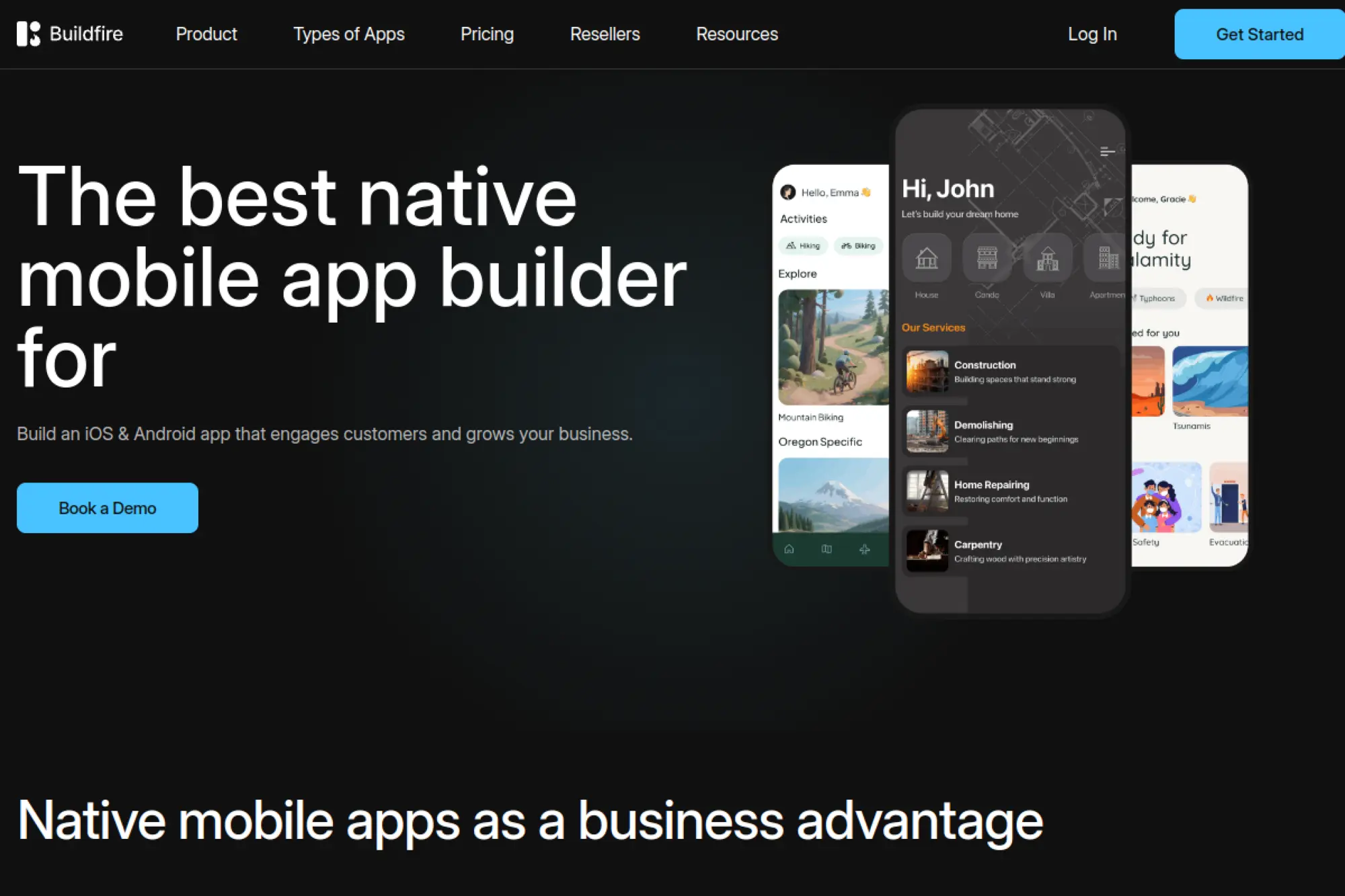
BuildFire markets a platform-plus-services model for mobile apps, offering a drag-and-drop builder with custom development when needed. Founded in 2014 (~11 years), headquartered in San Diego, it operates as a mid-sized team serving SMBs to mid-market customers.
Delivery model combines a no-code core with bespoke modules, integrating payments, analytics, and push workflows. Public project descriptions show rapid MVPs for events, communities, and content businesses, with analytics baked into onboarding and engagement loops.
Best for marketing-led teams and SMBs that prioritize speed-to-launch with an upgrade path to custom functionality, where TCO and admin usability matter as much as the code behind the curtain.
21. ScienceSoft
ScienceSoft is a U.S.-headquartered software developer and systems integrator with European delivery. Founded in 1989 (~36 years), headquartered in McKinney, Texas, with 700+ employees, it works across healthcare, retail, manufacturing, and BFSI.
Public case materials and references emphasize end-to-end delivery—discovery, architecture, build, and support—covering data analytics, eCommerce, and L1–L3 support with ISO-driven quality and security baselines.
Best for mid-market buyers seeking a reliable engineering partner with breadth across Microsoft, Java, and cloud stacks, and a preference for process maturity and predictable throughput.
22. Naked Development
Naked Development is a boutique product studio focused on mobile and web apps with strong brand and UX emphasis. Operating for ~10+ years from Southern California, it employs a small, senior-heavy team oriented to startup and scale-up velocity.
Public project write-ups show sprint-driven discovery, brand-integrated UX, and iterative releases, with a penchant for crisp onboarding flows and analytics to validate product-market fit hypotheses.
Best for founders and business leaders who want concept-to-MVP speed and design-led differentiation, with access to senior product thinkers rather than large program management layers.
23. Trango Tech
Trango Tech is a custom development and product design shop serving SMBs and mid-market buyers across eCommerce, logistics, and on-demand services. It operates with a compact team footprint and regional delivery hubs, focusing on pragmatic, budget-aware builds.
Public examples highlight marketplace, subscription, and operations dashboards—often leveraging headless CMS, mobile-first UX, and cloud hosting that aligns cost with usage growth.
Best for growth-stage companies seeking transparent pricing, rapid prototypes, and a path to scale that doesn’t over-engineer day one.
24. Zco Corporation
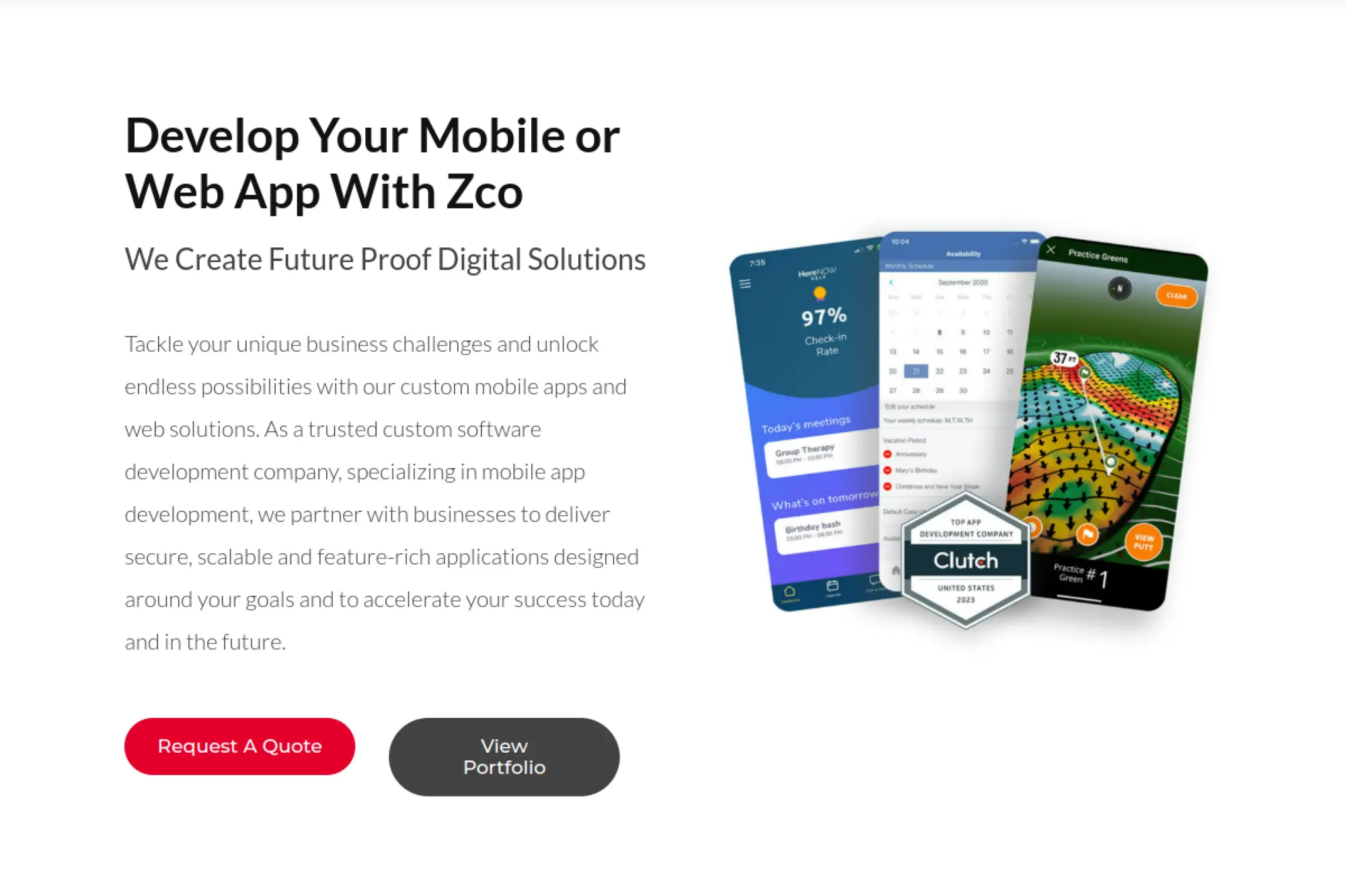
Zco is a U.S.-based application developer with a history in mobile, gaming, and custom software. Founded in 1989 (~36 years), headquartered in Nashua, New Hampshire, it fields hundreds of professionals across multiple U.S. locations.
Zco has appeared in independent rankings, including the Clutch 1000, reflecting verified customer feedback and portfolio breadth.
Public projects span enterprise mobility, AR/VR, and field operations—often integrating native mobile performance with cloud services and edge capabilities for offline resilience.
Best for organizations wanting seasoned mobile and cross‑platform experience, with an emphasis on device capabilities, graphics, and UX polish for demanding consumer or field environments.
25. Lounge Lizard
Lounge Lizard is a digital agency and app development firm with strong branding and UX capabilities. Founded in 1998 (~27 years), headquartered in New York, it serves SMB to mid-market clients seeking top-of-funnel brand differentiation and conversion-optimized digital products.
Public artifacts show end-to-end work—from brand identity to web/app development—often pairing headless CMS, performance budgets, and analytics instrumentation to translate design into measurable growth.
Best for marketing-led organizations needing cohesive brand, web, and app execution, prioritizing time-to-market and conversion uplift over large-program complexity.
26. Chop Dawg
Chop Dawg is a product design and development studio focused on startup and scale-up clients. Founded in 2009 (~16 years), it’s headquartered in the U.S. with a lean, senior-weighted team emphasizing transparent roadmapping and budget stewardship.
Public case content highlights MVP launches, iterative pivots, and multi-tenant SaaS builds with attention to unit economics (e.g., infra costs per tenant) and analytics-informed prioritization.
Best for founders and non-technical executives needing a hands-on product partner who balances scope, quality, and runway—and treats vendor communication as a core deliverable.
27. Jafton

Jafton delivers mobile and web applications with a focus on consumer and on‑demand experiences. Operating for ~10+ years, U.S.-headquartered, and staffed by a compact product and engineering team, it pairs fast UX cycles with native and cross‑platform builds.
Public case materials showcase social, marketplace, and geolocation features, tying growth to push strategies, cohort analytics, and lifecycle messaging tuned for retention.
Best for product owners seeking rapid iteration, growth experimentation, and pragmatic engineering that scales post product‑market fit with clearer signals.
28. The NineHertz
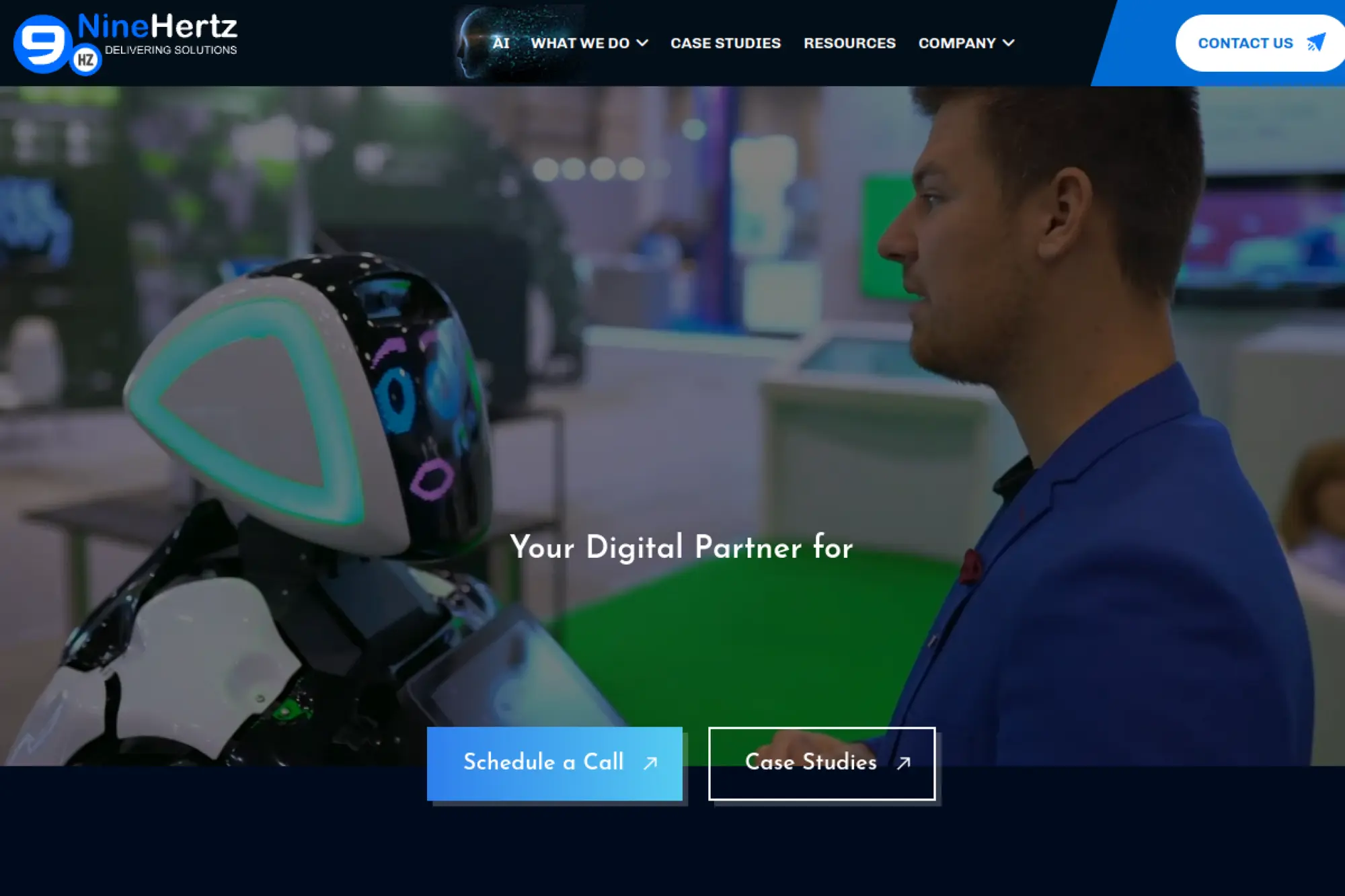
The NineHertz is a custom development firm delivering mobile, web, and game builds across SMB and mid-market segments. Founded in 2008 (~17 years), India‑headquartered with U.S. presence, it staffs hundreds across multiple tech stacks and industries.
Public examples span logistics, eLearning, and B2B portals with modular architectures that enable iterative expansion, often pairing native mobile with React, Node, and cloud services for scale and maintainability.
Best for cost-sensitive buyers who want velocity with a well-worn delivery process, especially when requirements evolve and roadmap governance is necessary to avoid scope drift.
29. Glorium Technologies
Glorium focuses on healthcare and real estate software with a product‑led mindset. Founded in 2010 (~15 years), U.S.-headquartered with Eastern European delivery, it brings domain accelerators to HIPAA‑aware apps, patient portals, and property platforms.
Public case materials emphasize interoperability, performance, and privacy by design—HL7/FHIR integration, audit logging, and latency budgets that align with clinical usability and compliance.
Best for healthtech and proptech teams that need a partner conversant in domain constraints, who can ship features while meeting security and regulatory expectations.
30. Cheesecake Labs
Cheesecake Labs is a Brazil‑born product studio known for polished mobile and web apps with strong product management and design. Founded in 2013 (~12 years), it operates globally from Florianópolis and São Paulo, supporting U.S. and LATAM clients.
Public write‑ups highlight consumer‑grade UX and engineering quality, from onboarding and payments to data synchronization, with analytics‑driven iteration and QA automation underpinning release quality.
Best for product leaders who want design excellence coupled with pragmatic engineering, where time-to-value and measurable user outcomes are primary success criteria.
Shortlists are only as good as their fit to your constraints. If you share your tech stack, regulatory boundaries, and target outcomes, we’ll help you map a partner slate and evaluation plan that gets you from discovery to first value with fewer surprises. Ready to narrow the field?
How to choose among custom application development companies
Selection rigor matters because usage patterns shift fast. AI adoption across organizations jumped to 72 percent, so vendor due diligence must probe how partners weave data and machine intelligence into everyday delivery practices rather than treating them as add‑ons.
1. Define scope, MVP, and success metrics before engaging vendors
Clarity beats ambition. We translate business goals into a thin slice that demonstrates value and teaches the team about risks. That slice includes non‑functional expectations like responsiveness, reliability, and support readiness. Vendors then estimate against shape, not against fantasies, and alignment starts on solid ground.
2. Assess relevant portfolios and shipped case studies in your domain
Evidence outweighs glossy reels. We ask for shipped systems, not pitch prototypes. Good partners explain tradeoffs they accepted and the scars they earned. Strong case studies show how teams managed change, integrated platforms, and handled failure with grace. That candor predicts how collaboration will feel.
3. Verify references, reviews, and ratings on credible directories
Outside perspectives expose patterns. We look for consistency across references, especially on communication, escalation, and release predictability. Directory reviews help, yet we weight first‑person calls higher. What matters most is how the partner behaved when things did not go to plan.
4. Validate technical depth across the stacks and platforms you need
Technology fluency is table stakes. We probe understanding of cloud primitives, data contracts, and observability. For mobile, we test how teams choose native versus cross‑platform and how they manage releases. For AI, we review model lifecycle, evaluation rigor, and prompt safety. Depth shows up in details.
5. Align on communication cadence, time‑zone overlap, and culture fit
Delivery thrives on rhythms everyone respects. Cadence includes demos, planning, and incident reviews. Overlap windows and decision rights must be explicit. Culture fit emerges through how feedback lands and how uncertainty is handled. Great teams argue well and keep empathy intact.
6. Choose an engagement model (agency vs. freelancers) that matches risk tolerance
Agencies reduce coordination load and provide continuity. Independent talent increases flexibility and can unlock niche expertise. Many buyers blend both. The right mix depends on appetite for orchestration, need for governance, and the criticality of the system. Ownership of outcomes should stay unmistakable.
7. Use clear contracts covering IP, repo access, milestones, and SLAs
Contracts should protect collaboration, not constrain it. We define IP terms, repository access, and handover obligations early. Milestones focus on outcomes and working increments, not document counts. SLAs reflect user expectations and escalation paths everyone can honor. Future you will be grateful.
8. Pilot with a paid discovery or prototype to test the collaboration
Pilots reveal more than pitches. A short discovery or prototype surfaces how teams frame decisions, manage ambiguity, and handle scope changes. It also calibrates estimates and validates engineering fit. The result informs whether to scale and how to structure the next phase.
9. Set ROI and delivery KPIs up front to track progress
Metrics serve alignment when they tie to outcomes. We baseline current pain and define a small set of indicators the business trusts. Engineering health measures accompany them to prevent short‑term wins from creating long‑term debt. Dashboards then become conversation starters, not vanity walls.
10. Plan post‑launch support, maintenance, and knowledge transfer
Support planning starts during build. We document runbooks, on‑call rotations, and paging policies while code evolves. Knowledge transfer includes shadowing, pair sessions, and written guides. This approach preserves flow and reduces single‑person risk as teams change roles.
11. Optimize for value over the lowest bid to avoid false economies
Lowest sticker prices can produce the highest total cost. Rework, missed windows, and brittle systems erase early savings. Better partners earn trust through transparency, not through aggressive discounts followed by change orders. Value shows up in resilience, speed of learning, and measurable business impact.
Pricing, engagement models, and timelines for custom application projects
Market signals suggest buyers will keep investing in external capacity. Across outsourcing programs, 80% of executives plan to maintain or increase third‑party investment, which places a premium on engagement models that balance flexibility with accountability while avoiding hidden coordination taxes.
1. Staff augmentation to add senior engineers quickly
Staff augmentation plugs expertise gaps inside existing teams. It shines when internal product and architecture direction already exist. The onboarding plan should cover environments, coding standards, and release rituals. Success depends on giving augmented talent real ownership and clear decision boundaries.
2. Dedicated teams delivery pods for end‑to‑end streams
Dedicated pods own outcomes, not hours. They combine product leads, engineers, designers, and testers around a shared backlog. This model improves continuity and reduces handoffs. It also supports stronger cross‑functional decisions, since tradeoffs happen inside one unit with shared goals.
3. Full‑cycle outsourcing with outcome ownership
Full outsourcing suits well‑defined outcomes with stakes that require single‑throat accountability. Vendors handle discovery through support, aligned to milestones tied to value. Buyers still need a strong product owner and a governance backbone. Clarity on acceptance criteria keeps momentum and trust intact.
4. Nearshore collaboration and time‑zone alignment benefits
Nearshore teams reduce friction in real‑time collaboration. Overlap windows support faster decisions and fewer context switches. Cultural proximity often simplifies product storytelling and user research. This model pairs well with global talent networks when security and compliance constraints are manageable.
5. Kick‑off timelines of 2–4 weeks from signature
Fast starts come from preparation. Environment access, stakeholder calendars, and seed backlogs should be ready when contracts close. Teams move faster when decision makers attend early sessions and approve scope changes promptly. Clear intake paths help avoid thrash during the first sprints.
6. Discovery and prototyping investments to de‑risk scope
Discovery lowers uncertainty by turning guesses into knowledge. Prototypes test core assumptions and integration points before code hardens. This investment pays back through smoother delivery, fewer surprises, and clearer stakeholder expectations. It also creates artifacts that accelerate onboarding.
7. DevOps and CI/CD accelerators for predictable releases
Accelerators help teams avoid reinventing pipelines. Templates, guardrails, and observability defaults reduce setup time and improve reliability. They also bring a common language for performance and security, which makes incident response calmer and postmortems more useful.
8. Budget signals from directories (hourly bands and typical project ranges)
Directories and peer networks provide directional signals. We treat those signals as starting points, not quotes. Real budgets follow from scope clarity, risk, and the engineering environment. The best estimates are co‑created, transparent, and revised as reality teaches.
9. Governance with change control, SLAs, and steady cadences
Governance aligns people around how decisions get made. Change control protects flow without blocking progress. SLAs mirror user needs and operational realities. Regular cadences keep the program honest and allow course corrections before small issues become large problems.
Technologies and delivery approaches used by custom application development companies
Technology choices reflect budget gravity as well as product ambition. Analysts expect worldwide IT spending to reach $6.08 trillion in 2026, and that capital flows to cloud foundations, data platforms, and AI‑aware applications that reduce toil while improving customer experience.
1. Cloud‑native architectures, containers, and Kubernetes
Cloud‑native design favors small, replaceable pieces with clear contracts. We package workloads in containers to make environments predictable. Kubernetes provides orchestration, but we keep the platform simple until scale or compliance demands more. Golden paths, not forced choices, guide service teams toward healthy defaults.
Operational maturity depends on the platform team’s empathy. Self‑service paved roads, good docs, and curated add‑ons beat a catalog of ad‑hoc tools. The result is faster delivery and calmer on‑call shifts.
2. Microservices and modular design for scalable apps
Microservices pay off when boundaries match business capabilities and change rates. We use domain events and versioned contracts to reduce coupling. Modules stay small enough to understand yet large enough to deliver value. Where a monolith is right, we choose that and optimize for simplicity.
3. PaaS‑based builds and reuse of components/services
PaaS can shorten lead time by removing undifferentiated plumbing. We reuse internal packages and platform services when they do not erode portability or lock‑in risk. Abstractions earn their keep by reducing toil and not hiding critical behavior. Clear escape hatches keep teams from getting trapped.
4. Mobile stacks: native iOS and Android plus cross‑platform frameworks
Stack choice follows product needs. Native delivers platform fidelity and performance. Cross‑platform favors speed and shared code. We standardize navigation, state management, and testing across both. Feature toggles and staged rollouts make releases safe and reversible.
5. Data platforms, BI, and analytics pipelines
Data platforms work when contracts, quality checks, and lineage are first‑class. We create self‑serve analytics with trusted metrics that finance and product can share. Pipelines push fresh, governed data to models and dashboards. That discipline makes insights credible and decisions defensible.
6. AI and ML capabilities woven into modern applications
AI belongs inside flows users already trust. We enrich search, recommendations, and support with models that stay grounded in enterprise data. Evaluation frameworks compare model behavior to baselines and human expectations. Safety reviews check privacy, consent, and explainability before features ship.
7. Secure SDLC with zero‑trust and continuous scanning
Security is a lifecycle, not a gate at the end. We scan dependencies, containers, and infrastructure as code throughout delivery. Secrets management and identity boundaries reduce blast radius. Zero‑trust means verifying every request and logging decisions that affect user data.
8. QA automation and continuous testing practices
Automation catches regressions before users do. We balance unit, contract, and end‑to‑end tests to maximize signal while minimizing maintenance. Flaky tests get fixed or removed quickly. Test data management keeps environments realistic without risking sensitive information.
9. DevOps pipelines, trunk‑based development, and blue‑green deploys
Pipelines encode quality and compliance. Trunk‑based development reduces drift and makes integration boring. Blue‑green and canary techniques keep releases safe and observable. Post‑release checks validate behavior, and rollback stays one command away.
10. Platform implementations (ERP, CRM, commerce) tailored to workflows
Platforms succeed when configured to match real work. We keep the core clean and extend with well‑designed adapters. Integrations use events and APIs that resist vendor churn. That posture future‑proofs operations and smooths upgrades while leaving room for differentiated experiences.
How TechTide Solutions helps users build custom applications aligned to unique needs
Velocity and quality can coexist when teams pair discipline with empathy. In controlled experiments, developers completed coding tasks twice as fast using generative tools, provided governance and reviews were in place, which mirrors our experience on complex delivery streams that fuse product discovery with platform reuse.
1. Discovery‑to‑delivery partnership for bespoke software aligned to business goals
We begin with outcomes and constraints. Discovery clarifies the smallest slice that proves value and informs architecture. Product owners and engineers co‑author hypotheses and acceptance criteria. That collaboration reduces ambiguity and protects flow once sprint rhythms begin.
We keep stakeholders close. Demos show working increments, not storyboard dreams. Each iteration pressures the riskiest assumptions and hardens release paths. The process earns political capital by putting reliable software in users’ hands while documenting choices for future audits.
2. Architecture, integrations, and cloud‑native implementation tailored to your stack
Our architects start from your reality. We preserve what works and retire what hurts. Service boundaries reflect real business change points, and integrations prefer stable contracts over accidental complexity. When platforms are involved, we extend through adapters and events to avoid brittle forks.
Operations shape design. Observability, resilience, and security are built in, not tacked on. The resulting systems scale with demand and adapt gracefully as priorities shift. That flexibility beats over‑engineered blueprints every time.
3. Agile sprints with transparent reporting and rigorous QA for reliable releases
Transparency is our default. Backlogs, metrics, and risks stay visible to sponsors and teams. QA partners across planning and implementation, using automation where it helps and targeted manual checks where nuance matters. Releases follow a repeatable path supported by runbooks and rollbacks.
We close loops through blameless reviews and crisp follow‑ups. Improvements land quickly, and decisions leave a documented trail. That rhythm builds trust, reduces interruptions, and sustains momentum through long programs.
Conclusion: Shortlist the right custom application development company for your 2025 roadmap
Selecting a partner is a strategic bet on execution quality, not a procurement checkbox. The most durable wins come from teams that align business goals, engineering judgment, and humane delivery practices. Culture, cadence, and clarity will matter as much as frameworks or tool choices.
If you could test only one thing in the next intake cycle, which vendor behavior would most increase your confidence that outcomes will arrive on time and without drama?
We would be glad to compare notes on a pilot brief and co‑create a small, high‑signal experiment that turns that question into evidence your sponsors can trust.
From all of us at Techtide Solutions, may your next release be boring in the best possible way.