

As a software partner operating across ASEAN, we follow spending signals because they shape hiring decisions and roadmaps. Global IT outlays are expected to reach $5.43 trillion in 2025, and that rising tide is already visible in Singapore’s procurement cycles and multi‑year transformation goals.
We write this guide as Techtide Solutions. We speak from delivery rooms, not ivory towers. Our teams have shipped products for finance, retail, transport and public service missions in the region. We know the stakes when compliance, uptime and user adoption must align. We also know the joy when a release finally delights its intended users. This piece combines market intelligence with hard‑won delivery craft. It is written to help founders and leaders hire well, scope wisely and build software that compounds value.
Singapore is a unique launchpad. The city’s digital infrastructure, policy clarity, and regional connectivity create a test‑and‑scale sandbox that few hubs can match. Yet choice overload is real. Hundreds of agencies, studios and global integrators advertise similar capabilities. We cut through noise with a practical lens: verifiable reviews, regulated‑industry proof, security posture, delivery patterns, and post‑launch discipline. Along the way, we name concrete examples, note Singapore‑specific constraints, and suggest fit‑for‑purpose ways to engage.
What to know about app development in Singapore
Demand rests on a resilient regional backbone. Southeast Asia’s digital economy is on track to surpass $300 billion in GMV by 2025, with revenues accelerating and profitability improving as platforms mature. That macro trend feeds Singapore’s pipeline for consumer, enterprise and public apps.
1. Verified directories and real client reviews to shortlist app development in Singapore firms
We start with proof before polish. Client reviews on recognized directories reveal delivery hygiene and stakeholder empathy. Narrative reviews help you read between the lines. They show how teams handled change, communication, and complexity under pressure. We parse for patterns across multiple projects rather than one bright spot. Where possible, we validate references privately, because tone and detail matter more than star counts.
Beyond directories, we scan case studies for traceable outcomes. We assess whether a vendor shows domain depth or a generic showcase then look for ownership of outcomes, not just features. We then test the firm’s own product thinking by running a discovery spike. That small exercise surfaces responsiveness, estimation realism, and how teams reason about constraints. Good partners welcome transparent tests because it de‑risks both sides.
2. Core services across iOS, Android, cross‑platform, web, UX/UI, backend, QA and cloud
Great mobile experiences rarely stand alone. They depend on UX research, secure backends, integration layers, analytics, observability, and reliable release trains. We prefer partners who articulate how design, engineering, QA and DevOps mesh. Robust shops bring battle‑tested design systems and component libraries. Those assets compress time without forcing sameness. We also probe whether QA is shift‑left by default, with test automation embedded in CI rather than tacked on at the end.
In Singapore, cloud patterns influence app choices. Firms that understand IAM, network segmentation, secret management and cost governance save months later. Teams that model telemetry upfront help product owners learn faster after launch. When everything aligns, mobile, web and backend threads advance in sync. The end result is a coherent product, not disjointed surfaces held together by meetings.
3. Security and compliance focus including ISO 27001 and government‑grade credentials
Security posture is a non‑negotiable. We ask about secure SDLC, code scanning, penetration testing, and incident playbooks. We examine data classification approaches and key management discipline. One mention of ISO 27001 on a website is not sufficient. We want evidence of living controls, not shelfware. In regulated projects, familiarity with MAS Technology Risk Management expectations and PDPA principles prevents rework. Singapore’s new guardrails for app distribution platforms also raise the bar on content safety and child protection. Partners who track evolving norms design for trust by default.
4. Singapore‑relevant case studies in finance, eCommerce, transport and public sector
Context shapes constraints. A wallet for local consumers must respect payments interoperability and support schemes like PayNow and SGQR. An insurance companion app must align with straight‑through workflows and robust identity checks. A transport app must embrace real‑time conditions and accessibility needs. A public service app should uphold clarity, inclusivity and resilience. We favor teams that have shipped in these lanes already. Their playbooks shorten discovery and reduce surprises.
We also look for evidence of thoughtful integration work. Real projects stitch with identity providers, policy engines, messaging brokers, and observability stacks. We examine how vendors manage rollout risk with staged releases and feature flags. That rigor matters when your user base is diverse, vocal and mission‑driven.
5. Cross‑platform options (React Native, Flutter) alongside native builds
Technology choice follows the job to be done. Cross‑platform toolkits excel when teams need shared codebases and rapid iteration across platforms. Native paths shine for experiences that demand platform‑specific finesse or specialized hardware access. We often blend approaches. A cross‑platform core handles common flows while native modules cover device‑specific needs. The best vendors explain trade‑offs in plain language and back recommendations with prior outcomes.
We push for architecture that isolates business logic from UI scaffolding. That separation makes future migrations easier. It also lets multiple teams work in parallel without stepping on each other. Good architecture buys speed later. It also contains risk when requirements evolve in flight.
6. Plan for post‑launch maintenance, iteration and growth
Launch is the start of learning. We plan for support, updates, risk fixes, and fresh features from day one. Then we define service levels, incident windows, and escalation paths that fit real business rhythms. We wire analytics that answer the right questions and guard against vanity metrics. Strong partners treat post‑launch as core work. They plan experimentation, instrument churn risks, and harden the data layer for trustworthy decisions. That mindset sustains momentum after the first applause fades.
Quick Comparison of app development in Singapore
Market readiness shows in device ubiquity. Singapore’s mobile landscape features a penetration rate of 169.6 percent, so mobile touchpoints are natural front doors for services across sectors.
| Company/Service | Best for | From price | Trial/Free | Key limits |
|---|---|---|---|---|
| Codigo | Consumer apps and loyalty | Custom quote | Paid discovery | Limited enterprise depth outside partnerships |
| Buuuk | Design‑led enterprise mobility | Custom quote | No | Selective project intake |
| Vinova | SMB to mid‑market builds | Custom quote | Scoped workshops | Complex compliance needs may require partners |
| Singsys | Full‑stack mobile and web | Custom quote | No | Product strategy demands client leadership |
| Swag Soft | Campaigns, games and AR pilots | Custom quote | No | Long‑term scaling needs careful scope |
| SleekDigital | Startup MVPs and growth loops | Startup‑friendly | Paid discovery | Enterprise governance requires augmentation |
| PALO IT | Agile transformation plus delivery | Mid‑to‑enterprise | No | Premium day rates |
| Monstarlab | Global scale builds with local team | Mid‑to‑enterprise | Workshops | Complex programs need strong client product owners |
| Zühlke | Regulated‑industry engineering | Enterprise | No | High selectivity |
| NCS | Government‑grade systems integration | Enterprise | No | Slower cycles without decisive governance |
We promised thirty. Here is a curated bench to explore beyond the ten above: Vinova, Singsys, Codigo, Buuuk, Swag Soft, SleekDigital, Orfeostory, Tinkerbox Studios, PALO IT, Monstarlab, Zühlke Engineering, NCS, Ufinity, Xtremax, HokuApps, Affle mTraction Enterprise, Robosoft Technologies, TechTIQ Solutions, Awebstar Technologies, Octal IT Solution, Hyperlink InfoSystem, Applify, R/GA Singapore, AKQA Singapore, Thoughtworks Singapore, EPAM Systems Singapore, Cognizant Singapore, Accenture Song Singapore, Valtech Singapore, TCS Singapore.
We have worked beside and opposite several of these firms on large programs. That vantage point helps us advise on fit, governance and escalation. We also know where lean studios outplay large integrators, and where big ships are the safer choice. Style and cadence matter as much as talent when deadlines converge and audits loom.
Top 30 app development in Singapore companies and services
We’re Techtide Solutions, and we spend our days building, scaling, and tuning apps that need to be both delightful and dependable in Singapore’s demanding digital ecosystem. When we evaluate peers and potential partners, we look past surface gloss: which teams sustain a readable codebase after V1, which teams ship measurable business outcomes, and which ones understand Singapore’s regulatory texture (PDPA, MAS TRM, IMDA guidelines) and the realities of multi‑market rollouts across ASEAN. In this 2025 edition, we’ve profiled 30 companies active in Singapore.
For each, we share an overview of focus areas and footprint, note awards where verifiable, and outline the kind of buyer we believe they best serve. Along the way, we add our own practitioner’s lens—what technical bets these teams seem to favor (Flutter vs. Kotlin Multiplatform, serverless vs. containerized back ends, analytics stacks), and where we’ve seen approaches succeed in the wild. If you’re weighing vendors, read these with your own context in mind: the right partner is the one whose delivery muscle and engagement model best mirror your risk profile, speed requirements, and governance needs.
1. Codigo
Codigo is a Singapore-based studio oriented around consumer-grade mobile and web experiences, with a track record that spans loyalty programs, media streaming, and lifestyle platforms. The firm’s footprint is local by design—close to brand marketers and operators—while its output suggests a team size in the dozens, focused squarely on design-forward product engineering. Active for well over a decade, the company is headquartered in Singapore and is best known for polished UI and tight product-market iteration cycles in retail and media use cases.
Codigo’s body of work reads like a stress test for concurrency, caching, and event-driven architectures in the wild: think video catalogues, coupon issuance, and geo-aware carsharing. We’ve seen similar stacks succeed by pairing React Native or native mobile with bespoke CMS and queue-backed microservices, and their portfolio hints at that mindset. Using techniques like server-side feature flags, they can roll out experiments cleanly without shipping new binaries—critical for app stores with staggered review times.
Services & proof: Their public showcases include lifestyle and commerce experiences alongside a regional streaming platform and large-scale mobility application—evidence of cross-domain competence in payments, identity, and content delivery. What stands out is the ability to juggle mass-market UX polish with operational considerations such as customer support tooling and fraud signal collection—capabilities that don’t appear on a Dribbble shot but determine real-world uptime.
Ideal fit: Mid‑market brands and growth-stage ventures in retail, mobility, and media that want a Singapore-first partner to co-own outcomes, run design sprints onshore, and deploy iteratively with strong analytics ownership (Mixpanel/Amplitude/GA4) and experimentation discipline.
2. Vinova

Vinova is headquartered in Singapore with engineering depth distributed across Vietnam and other APAC offices. The team is known for cross-platform mobile (Flutter is a headline capability) and pragmatic backend engineering for enterprises and scale-ups. Operating in Singapore for roughly 15 years, their structure looks like a central product/PM nucleus in Singapore with delivery pods in lower-cost hubs, which is a sensible model for long-running programs and multi-product portfolios.
Awards: Recognized on The Straits Times’ Singapore’s Fastest Growing Companies 2025 list, which profiles 100 local firms by three-year revenue growth. Singapore’s Fastest Growing Companies 2025.
Services & proof: Public client rosters include banks, insurers, and electronics brands—contexts where security testing, data residency, and performance budgets are non-negotiable. We see this in the way they lean on robust component libraries, test automation (Widget/Golden tests in Flutter), and CI pipelines that enforce linting, storybook catalogs, and regression gates. That discipline pays off when legal or compliance teams jump in late with change requests.
Ideal fit: Enterprises and mid-sized firms that need a dependable cross‑border delivery model—onshore product leadership with offshore velocity—to ship mobile-first portals and internal tools while keeping OPEX under control and governance tight.
3. TechTide Solutions
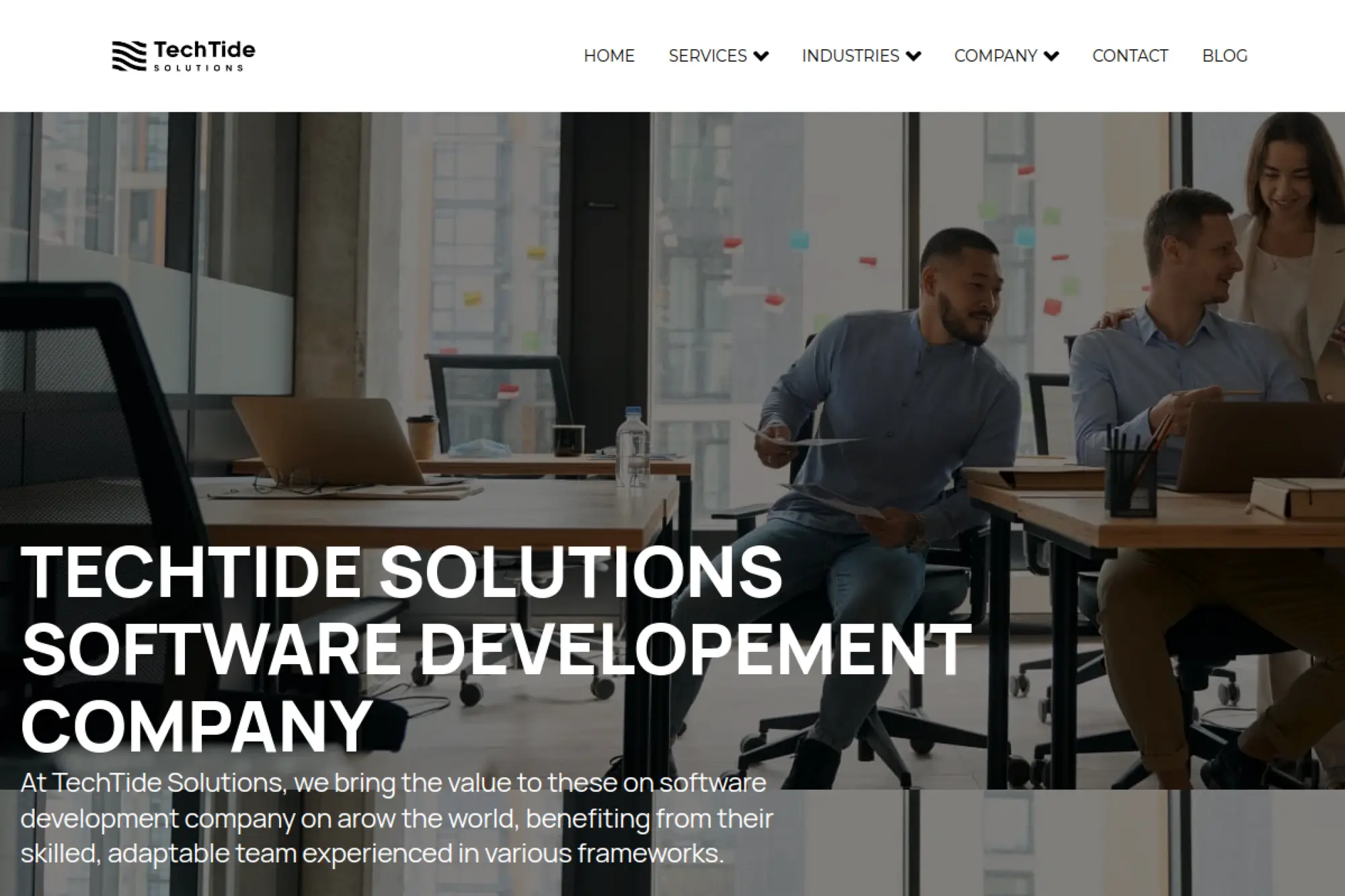
As a Singapore-rooted product engineering company, we focus on mobile, cloud, and data for regulated and performance-sensitive use cases. Our team structure is intentionally hybrid: product, security, and architecture leadership in Singapore; delivery pods across Asia for elasticity. We’ve been operating long enough to have opinions on what lasts—domain-driven designs that resist entropy; telemetry-rich apps; and platform choices that age well (Kotlin Multiplatform for shared logic, Swift/Kotlin native when you need low-level control).
Our vantage point is shaped by projects where scale and scrutiny coexist—financial services apps with MAS TRM obligations, healthcare products navigating PDPA, and logistics apps that must remain useful offline. We’re pragmatic about trade-offs: if a team lives in Flutter, we insist on platform channel hygiene and native capability mapping to avoid overreach later. If you’re choosing serverless, we ensure observability is first-class and cold starts won’t sabotage SLAs.
Services & proof: We architect mobile apps and the invisible machinery behind them—feature flag systems, event streams, consent management, and AB testing scaffolds. We’re comfortable stepping into “brownfield” codebases to stabilize velocity, introduce test pyramids (unit/UI/contract), and establish SLOs with error budgets that business can understand.
Ideal fit: Leaders who want a Singapore-based partner to co‑own business metrics, not just story points. We do our best work with product owners who value clean interfaces, reproducible builds, and a roadmap that balances new features with renovation of critical paths.
4. Originally US
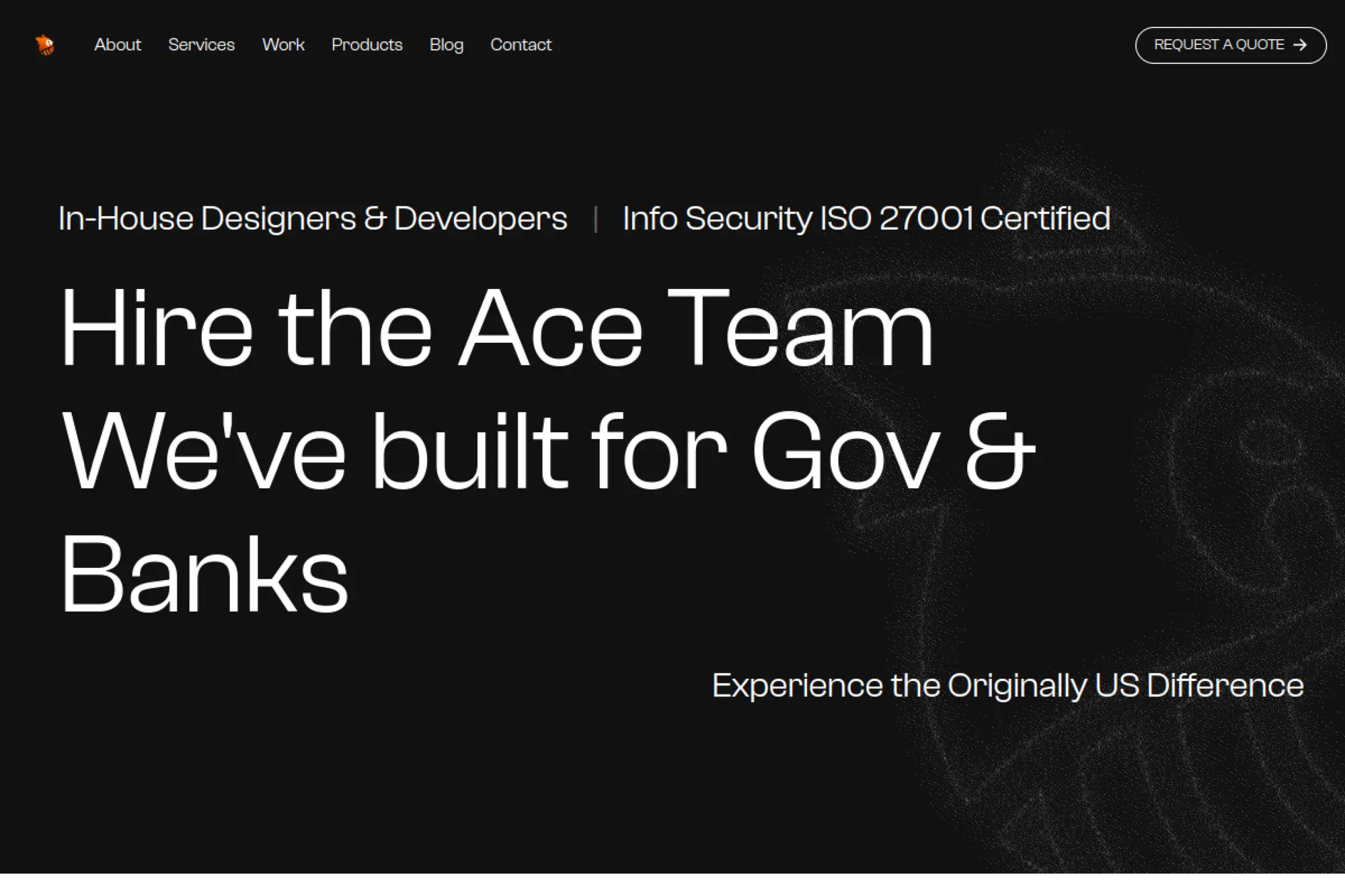
Originally US is a Singapore-founded, security-conscious mobile specialist known for building consumer and citizen-facing apps with tight reliability envelopes. Operating since the mid‑2010s, they maintain an in-house team and emphasize information security (their published practices and ISO posture reflect this). Headquartered in Singapore, they cut their teeth on projects for government bodies, BFSI, and national brands—domains that punish sloppy engineering.
Awards: Their work with Central Provident Fund Board took Gold (Best Launch/Re‑launch) and Silver (Best Use of Mobile Customer Engagement) at the 2024 Mob‑Ex Awards, validating the team’s ability to blend policy, scale, and UX. Mob‑Ex Awards 2024 winners.
Services & proof: Public references include national initiatives and insurers, where they’ve implemented features like secure in‑app journeys, on‑device cryptography, and carefully gated OS integrations (e.g., background location for walking challenges). We like how they treat content and operations: feature toggles, scheduled content, and entitlement models wired to identity providers—these are the unglamorous choices that keep launches boring (the highest compliment).
Ideal fit: BFSI and public-sector teams that demand ISO‑aligned SDLCs, aggressive security testing, and end‑to‑end ownership from research to rollout—with a partner that’s comfortable facilitating legal, risk, and comms stakeholders through a build.
5. Appinventiv
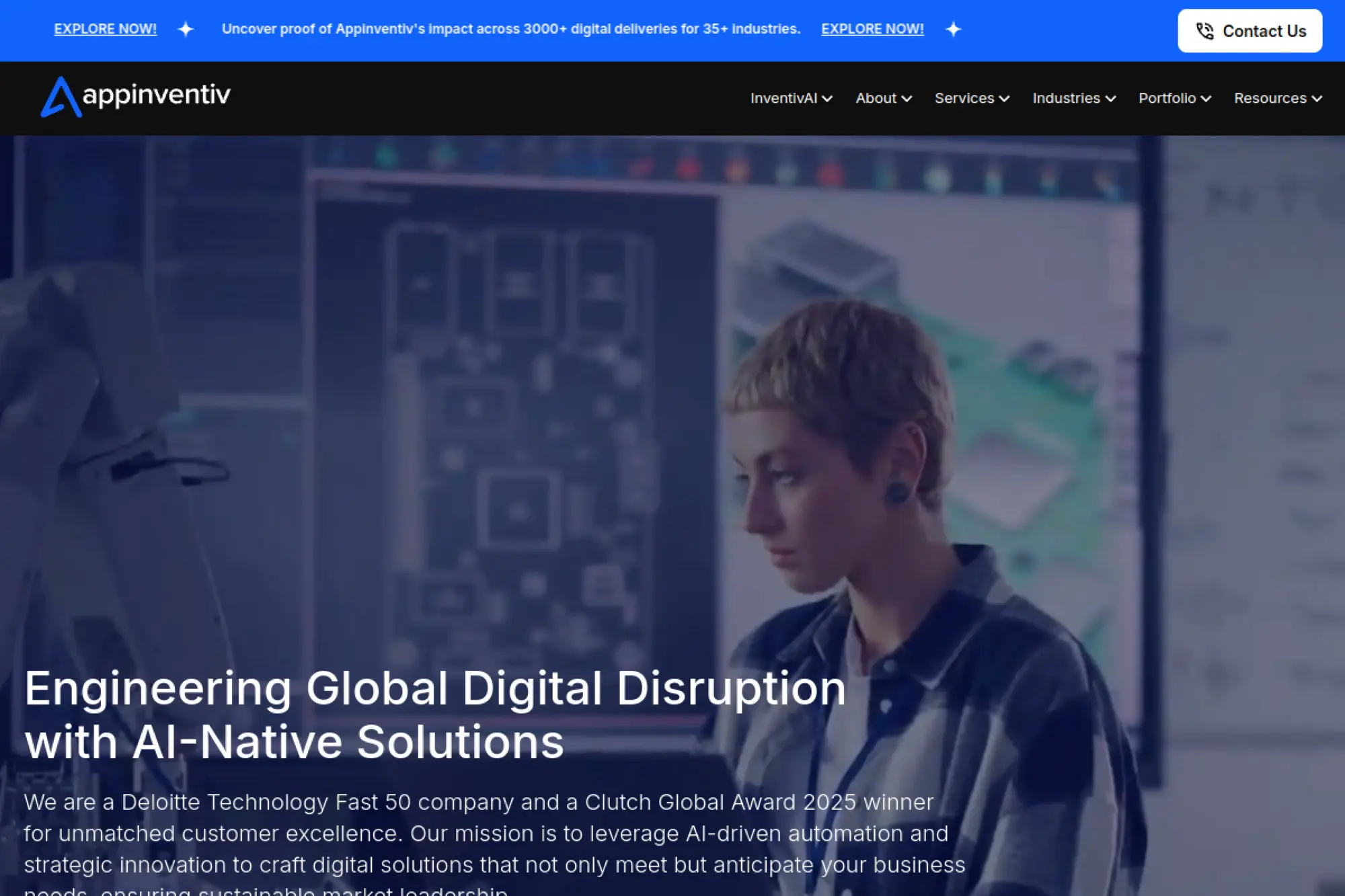
Appinventiv is a global product engineering firm with a presence in Singapore engagements and significant delivery capacity across India, the US, and the Middle East. Active for about a decade, they’ve grown into a thousand-plus engineer organization covering mobile, web, data, and cloud transformations. We encounter them often in enterprise RFPs requiring parallel workstreams and standardized governance (design systems, QA automation, scaled agile ceremonies).
At scale, the challenge isn’t writing more code; it’s preventing codebase entropy while multiple squads touch the same bounded contexts. Appinventiv’s published case studies hint at modular architectures, heavy use of CI/CD, and an appetite for DevSecOps guardrails—SAST/DAST, dependency checks, and policy as code. This is how you keep velocity without inviting fragility, especially when releasing to dozens of app store locales.
Services & proof: Publicly visible programs include multi-country retail and QSR apps, where they’ve orchestrated high RPS checkouts, multi‑tenant offers, and kernels for per‑market legal variance. That work usually drags in observability—tracing and real‑user monitoring on mobile—to defend against “it feels slow” escalations from operations.
Ideal fit: Large enterprises and well-funded scale-ups that require enterprise-grade governance, multi-squad coordination, and a bench of specialists (security, data, cloud) alongside strong mobile capability; expect a formal PMO and SLAs.
6. SleekDigital
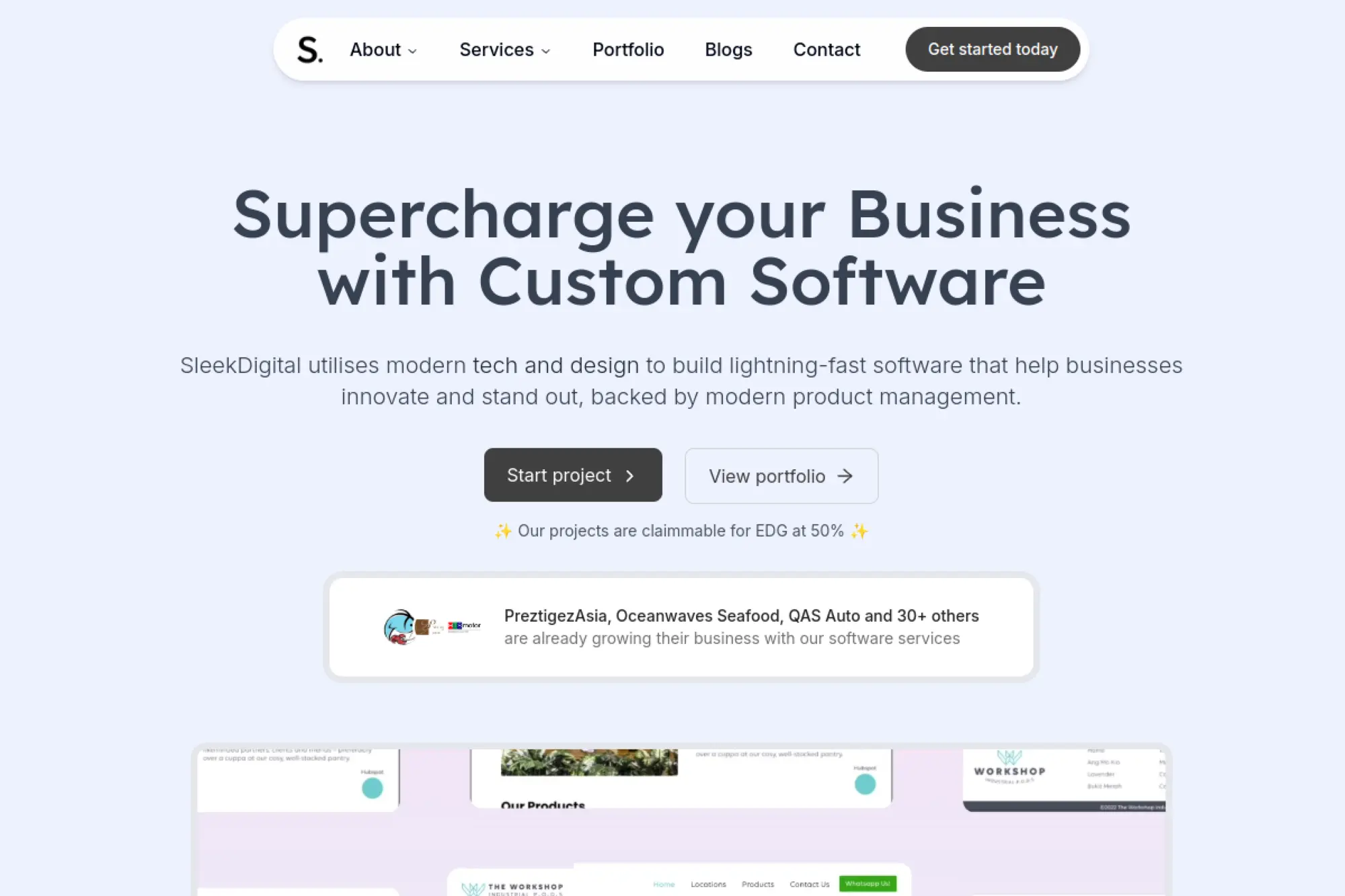
SleekDigital is a Singapore boutique that turns around MVPs and business software for local SMEs and founder-led startups. Operating since the late 2010s, the team’s bias is toward modern web stacks (Next.js/React) and practical cross‑platform mobile (React Native/Flutter) with product leadership engaged directly by the founder. Their HQ in Singapore keeps discovery and UX close to customers—a real advantage when requirements shift weekly.
We appreciate their emphasis on shipping something small, measurable, and extensible—then instrumenting it. In our experience, this is the only rational way to converge toward product‑market fit. The team’s blogs hint at practical growth work: funnel instrumentation, optimizing sign‑in completion, and trimming rendering hot paths on low‑end Androids that dominate many target segments in Southeast Asia.
Services & proof: Their public portfolio spans booking, internal operations, and commerce builds. The common thread: straightforward architecture, predictable sprints, and the willingness to carve out clean internal APIs so mobile and web can progress in parallel without stepping on each other’s toes.
Ideal fit: SME operators and startup founders who want hands-on collaboration, rapid prototyping, and steady iteration—without enterprise ceremony—while still getting robust QA and post‑launch support.
7. Apptunix

Apptunix is a global shop with delivery roots in India and commercial reach across the Gulf and Southeast Asia. Their mobile teams are comfortable with Flutter and native stacks and often combine app work with platform buildouts—admin consoles, partner dashboards, and basic analytics. Years in market put them around the mid‑sized bracket; headquarters outside Singapore is common for price elasticity, but they service Singapore-based buyers routinely.
What we’ve seen from similar outfits that do a lot of cross‑platform work is a pragmatic posture: shared UI where it makes sense, native modules where the device really matters (camera, secure enclaves, audio). Done well, you keep costs down without painting yourself into a corner when a single platform suddenly needs custom behavior.
Services & proof: Public client stories include marketplace, services, and logistics apps. Their value tends to show up when you need greenfield speed, a product admin that non‑engineers can operate, and predictable maintenance for a known backlog of quarterly improvements.
Ideal fit: Cost‑sensitive builds—startup or SME—where a cross‑functional team (design, mobile, back end, QA) can run the full lifecycle and where velocity and budget control matter more than deep platform specialization.
8. Buuuk
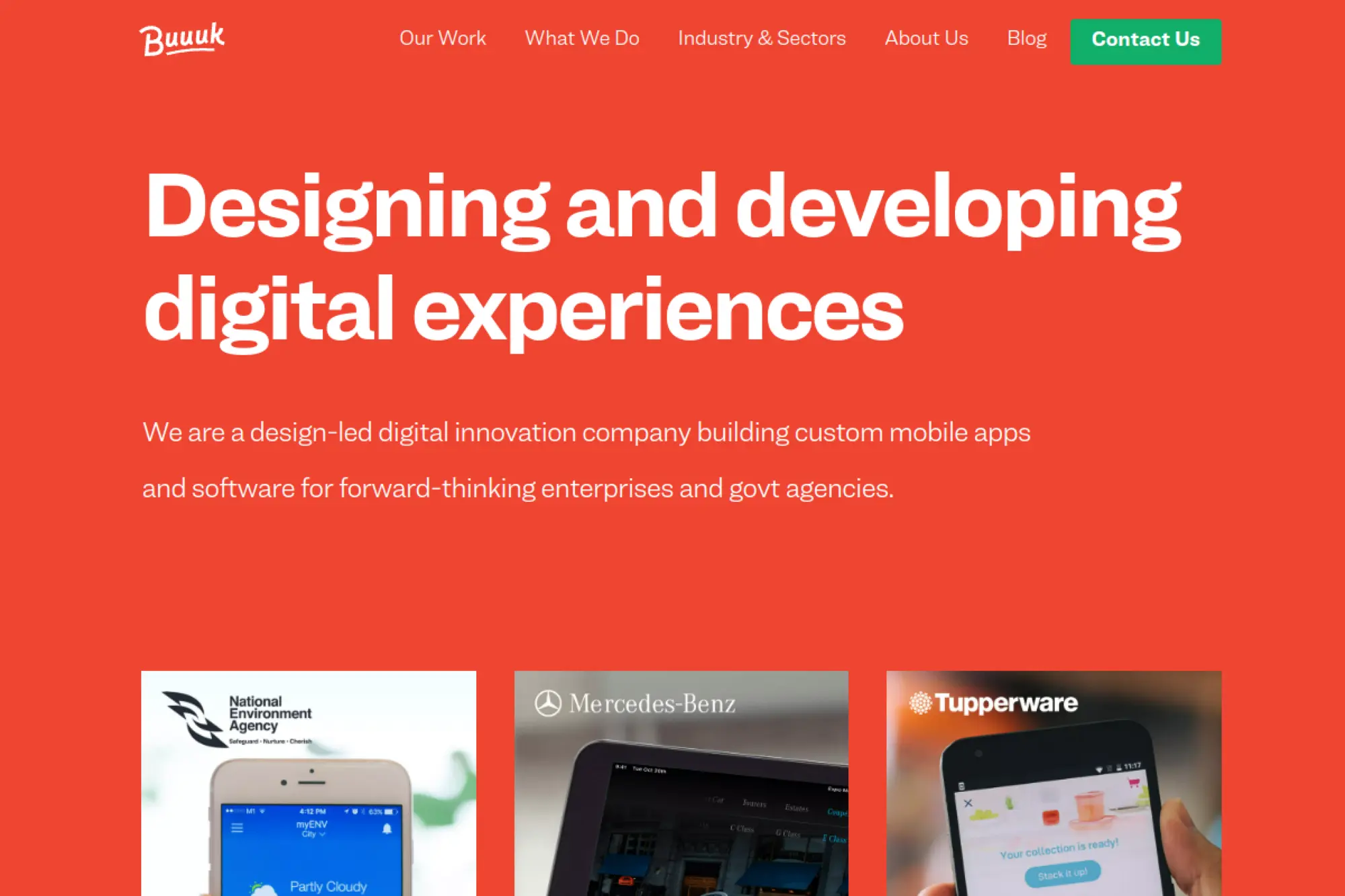
Buuuk is a design-led Singapore agency founded in 2008 that has matured into an enterprise-grade mobile partner. Their industry profile hits public sector, automotive, retail, and utility use cases, with a reputation for thoughtful UX and robust engineering. The team size appears to be in the dozens, split between Singapore and a Vietnam office, which lets them run design in-market and scale build capacity flexibly.
Awards: Named among Singapore’s best-performing B2B companies by Clutch in 2021, highlighting leadership in custom software and mobile app development. Clutch Singapore B2B Leaders 2021.
Services & proof: Public case studies show delivery for national agencies and global brands in the region. We’ve admired how they turn complicated service maps—think citizen data, weather services, or multi‑step sales processes—into crisp, on‑device journeys. That usually implies a careful separation between domain logic and the UI layer, a proven design system, and unwavering attention to empty states and offline modes.
Ideal fit: Enterprises and agencies seeking a partner comfortable with public-scrutiny releases, accessibility (WCAG) considerations, and the need to balance bold UI with the constraints of government or corporate IT estates.
9. InApps Technology
InApps is a Vietnam-headquartered software company that supports Singapore buyers with dedicated teams and fixed-scope deliveries. Their specialities cover mobile, web, and ODC (offshore development center) models, making them effective when you need sustained capacity at predictable cost. The team size looks mid-market, with enough bench strength to rotate specialists into long-running programs.
Awards: Recognized by Clutch as one of Vietnam’s leading B2B service providers, reflecting strength in mobile and web development. Clutch Vietnam Leaders 2021.
Services & proof: Public descriptions point to blockchain, OTT, and marketplace builds alongside traditional mobile projects. Where ODCs shine is in backlog durability: if you plan quarterly drops for two years, a stable InApps squad can internalize your domain language, reducing rework and meeting the “we move fast but don’t break compliance” standard Singapore buyers require.
Ideal fit: Product leaders who want a cost‑efficient, long‑horizon team with the stamina to maintain velocity after V1, especially for B2B/B2C hybrids that need steady enhancements, integration upkeep, and performance tuning.
10. MLTech Soft
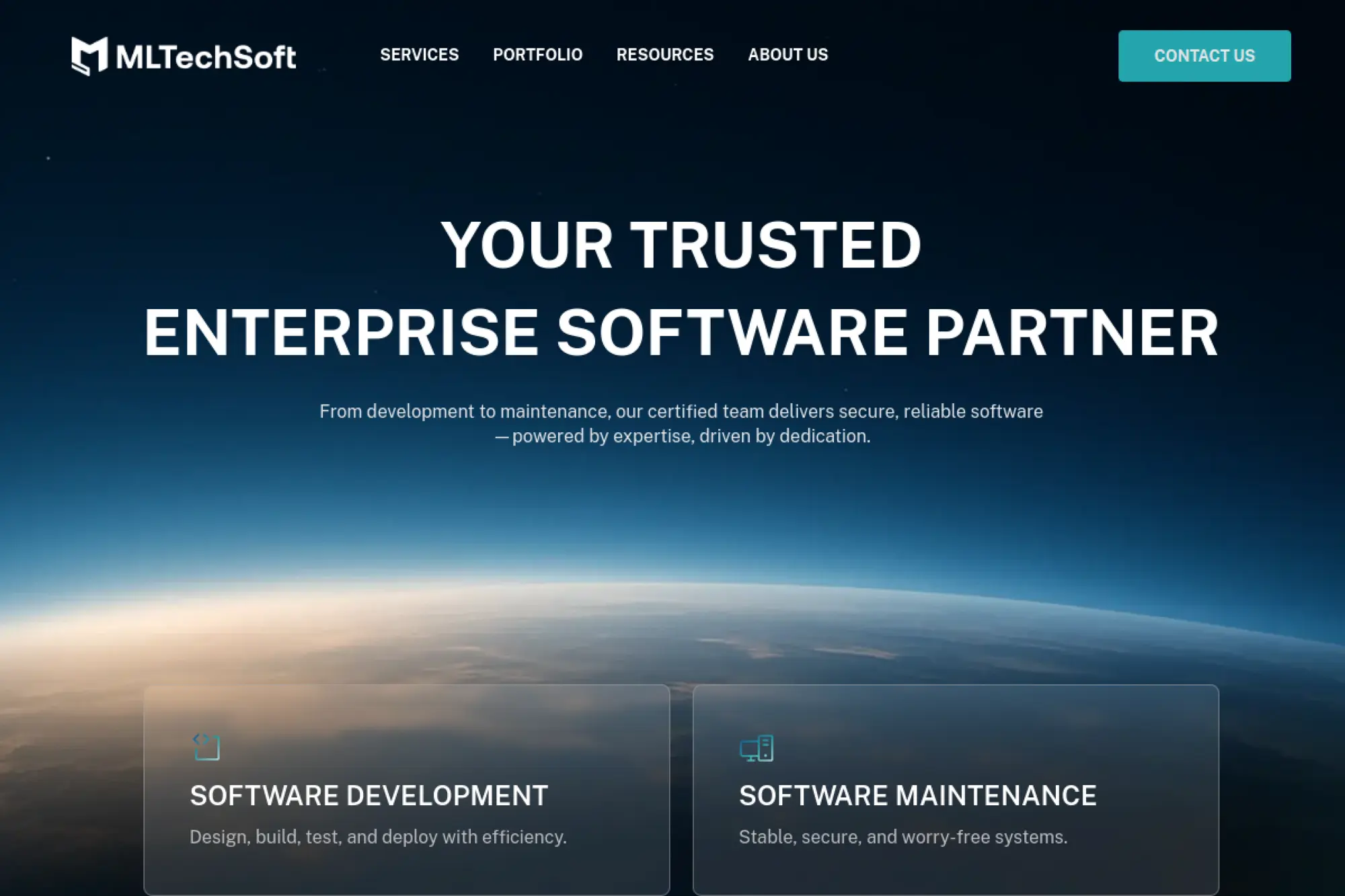
MLTech Soft operates a Singapore–Vietnam–US triangle with delivery centered in Ho Chi Minh City and client-facing presence in Singapore. The team favors enterprise web and mobile apps, plus steady maintenance programs to keep systems secure and current. Their growth profile looks like a 50+ engineer shop—large enough for parallel workstreams but compact enough for senior oversight on critical paths.
Awards: The company’s startup arm earned a third-place finish in a Southeast Asia pre‑competition tied to the 2023 K‑Startup Grand Challenge, securing progression to the main round—useful signal of product thinking beyond pure delivery. Ministry of SMEs and Startups (Korea) – regional qualifiers.
Services & proof: Public work spans education and commerce apps with strong admin back ends. We’ve found teams like MLTech Soft helpful where budgets are finite but expectations are serious: they’ll ship a well‑scoped MVP, wire in telemetry and error reporting, and keep the backlog flowing with incremental UX upgrades and performance fixes.
Ideal fit: SMEs and mid‑market firms that need a hands-on team to ship an MVP in weeks, then evolve it into a stable product with regular releases, documentation, and a sensible on-call/support arrangement.
11. Blink22
Blink22 is a MENA-rooted development company with strong mobile and web chops that increasingly serves cross‑border customers, including Singapore engagements. The team profile suggests 50–200 staff with multi‑squad capability for mobile, web, and backend. We see them particularly in product builds that mix consumer UX with operationally heavy admin tools.
Their published reviews emphasize communication quality and agility—two traits that matter when your product surface spans iOS, Android, and a web back office. From a technical angle, they show comfort with modern mobile stacks and opinionated state management, which is what keeps large React Native or native apps predictable as the feature set grows.
Services & proof: Public references cover fintech, social, and industrial tools. We read their posture as pragmatic and durable—codebases with unit tests and integration tests in place, and design systems to keep the UI coherent across multiple squads and sprints.
Ideal fit: Founders and product leaders who want a partner that won’t blink at complexity—API-heavy builds, integrations, and data visibility features—while keeping UX and release cadence tight.
12. Singapore Ecommerce App Pte. Ltd
Better known through the group’s consumer brands, this Singapore‑headquartered technology company operates some of the region’s most downloaded apps in e‑commerce, payments, and gaming. While not a services vendor in the classic sense, their engineering footprint in Singapore is vast and relevant to enterprise partnerships and developer ecosystems, from payment rails to APIs and partner integrations.
We include them here because they shape expectations: buyers, sellers, and gamers in Southeast Asia benchmark app performance and usability against this group’s portfolio. That means your own app must match baseline behaviors—stable payments, near‑instant search, and smooth-order lifecycles—or risk being compared unfavorably the moment you launch.
Services & proof: As a product-led organization, their “service” to partners is primarily via ecosystems—merchant tools, payment SDKs, and platform programs—rather than bespoke builds. For many businesses, tapping into those rails is faster than building equivalents from scratch, provided the partnership model and margins make sense.
Ideal fit: Brands exploring platform partnerships, co-marketing, or ecosystem integrations (e.g., payment gateways, marketplace storefronts) where leveraging existing infrastructure beats greenfield complexity.
13. Orfeostory Pte Ltd
Orfeostory is a Singapore creative engineering shop working across websites, mobile apps, and brand digital assets. The company appears to blend in‑house design with app development, which often suits clients who want brand alignment carried consistently from the website through to mobile product and campaign microsites. Headquarters is in Singapore with delivery anchored locally.
The strength of a one‑roof brand + build team is speed of alignment. Engineers sit close to designers, content, and SEO, so the inevitable “micro-adjustments” don’t bottleneck. From a technical perspective, mobile work here tends to rely on proven cross‑platform frameworks unless a use case (e.g., device‑level capabilities) argues for native.
Services & proof: Public work spans corporate sites, marketing properties, and mobile applications for local organizations. The throughline is consistency—design systems, reusable components, and QA that targets the device mix actually seen in Singapore rather than global averages.
Ideal fit: Marketing and product teams at SMEs and local enterprises that want a unified partner for brand‑level assets and app delivery, with quick feedback loops and direct access to the people doing the work.
14. Atta Systems
Atta Systems is a product engineering company with offices in Bucharest and Singapore that concentrates on medtech and edtech. Active since 2015 with a compact, senior-leaning team, they bring a European craftsmanship ethos to Singapore projects—clean architecture, test discipline, and a strong product discovery process.
Awards: Their work has been recognized in Romania’s software industry awards ecosystem, including finalist recognition at ANIS Gala 2024 for a software outsourcing project—useful validation of their ability to deliver complex, impact‑driven systems. ANIS Gala 2024 finalists.
Services & proof: Public case studies include data-heavy platforms for social services and international institutions, where strict privacy rules and multi‑stakeholder workflows demand well‑modeled domains and mature release engineering. We’ve seen similar teams succeed by enforcing contract tests at API boundaries and keeping feature flags pervasive for safer releases.
Ideal fit: Product leaders with complex workflows, compliance loads, or research-heavy roadmaps who want a senior team to pair product discovery with engineering that scales gracefully as scope grows.
15. ROCKETECH
ROCKETECH is headquartered in Singapore with delivery hubs in Eastern Europe—an arrangement that offers time‑zone overlap with Asia and cost-effective engineering. Their portfolio covers greenfield apps and platform builds, and the team appears comfortable with analytics‑driven iteration, measuring the impact of UX changes in production rather than debating hypotheticals.
Technically, their projects signal a bias toward modular architectures and an emphasis on problem-solving within constraints—particularly relevant for education and content apps that must balance offline usability with consistent content sync. We also see evidence of robust product operations: release notes that matter, backlog hygiene, and acceptance criteria that survive scale.
Services & proof: Public references include education and legal-learning apps built for Singapore startups, with work spanning from MVP to production-scale releases. The craft shows in details: state management that doesn’t leak, clear persistence strategies, and rollback plans that make stakeholders sleep better.
Ideal fit: Founders and product teams who want a Singapore‑anchored partner with European delivery depth, rigorous sprint ceremonies, and an analytics-first mindset to inform what gets built next.
16. Suffescom Solutions Inc
Suffescom Solutions blends mobile development with web3 and platform work, servicing clients across North America, the Gulf, and Southeast Asia. While based outside Singapore, they are a fixture in regional RFPs where hybrid solutions are needed—mobile front ends plus smart contracts or digital asset infrastructure when appropriate.
In practice, many “web3” requests in 2025 are about identity, provenance, and programmable value rather than speculation. The teams that add value here are the ones who keep a skeptical eye on complexity, proposing simpler ledgers or centralized registries if they meet the same goals with fewer runtime risks. Suffescom’s success depends on that pragmatism: don’t fetishize tech; chase business value.
Services & proof: Public references include marketplaces and finance‑adjacent products. The cores that matter: security posture, key management UX that real users can handle, and guardrails to prevent contract‑level bugs from becoming enterprise‑level incidents.
Ideal fit: Ventures exploring tokenized workflows or provenance that want a delivery partner who will balance ambition with operational safety, and who can also deliver conventional mobile and web surfaces that normal users enjoy.
17. Probey Services
Probey Services presents as a boutique technology and services firm with a Singapore footprint, oriented toward practical custom software and digital ops for SMEs. Teams like this typically combine app development with integration and data cleanup—work that doesn’t win awards but makes dashboards honest and workflows less brittle.
From a technical standpoint, we expect a modern cross‑platform stack paired with a cloud back end and third‑party integrations (accounting, payments, CRM). The value such boutiques bring is obsessive attention to the day‑two realities: backups, monitoring, admin affordances for non‑technical staff, and the documentation that helps new team members take over without mystery.
Services & proof: Publicly visible work is modest but pragmatic—exactly where many SMEs find ROI. What we look for here is not flash but reliability: Kanban boards that move, acceptance criteria that get tested, and the humility to suggest simpler automations before proposing an app where a webhook would suffice.
Ideal fit: SME owners and operations leaders who want a responsive, Singapore‑based partner to streamline processes, ship a simple mobile interface if needed, and stand behind the system after go‑live.
18. Newwave Solutions
Newwave Solutions is a Vietnam-based engineering firm that supports Singapore customers through staff augmentation and end‑to‑end projects. Expect coverage across mobile, web, and data, with battle-tested delivery in e‑commerce and logistics. Their cost structure and bench breadth make them suitable for multiyear programs where value comes from sustained momentum rather than one‑off heroics.
Technically, these teams succeed when they establish strong interface contracts early—GraphQL or REST with clear versioning—so squads can run independently. We also look for solid dev tooling: scaffolded repos, shared linting rules, and pre‑commit hooks. That kind of hygiene prevents regressions when the team rotates or scales.
Services & proof: Public stories include projects for SEA and Europe, with a pattern of standing up whole product teams. We’d press for the usual guardrails: coding standards, ENV switching, secrets management, and a realistic device matrix for QA reflecting Singapore’s Android majority in many target segments.
Ideal fit: Product owners who want predictable velocity at sensible rates and who are ready to invest in a long-term backlog with a partner capable of keeping knowledge alive as people roll on and off.
19. Saigon Technology

Saigon Technology is a large Vietnamese engineering company with Singapore client relationships and an appetite for enterprise transformations. Their offer spans mobile, web, and cloud, and they often appear in tenders that need multiple squads and senior oversight across architecture, QA, and DevOps.
We’ve found value in pairing a Singapore-based PM or architect with their offshore delivery squads for on‑the‑ground context. Technically, success looks like clean separation of concerns, strong test automation (including contract tests between services), and explicit service‑level objectives to align everyone on “what good looks like.”
Services & proof: Public references cover finance, healthcare, and media; deployments of this size live or die by release engineering. We like to see canary releases, telemetry that captures user flow breakage, and rollback strategies the operations team trusts.
Ideal fit: Enterprises and scale‑ups that want a scaled partner with a track record in regulated domains, plus the management maturity to keep multi‑squad efforts aligned across time zones.
20. Brainvire Infotech
Brainvire is a global digital engineering company that touches Singapore through commerce, mobile, data, and cloud work. With large headcount and a broad technology surface, they’re a sensible candidate when you must orchestrate multiple initiatives—mobile app revamps, commerce migrations, and data platform builds—under one governance umbrella.
Large programs aren’t just about writing features; they are about ensuring platform stress doesn’t produce user-visible failure. We look for features like rate limiting, circuit breakers, pre‑computation for catalog pages, and graceful degradation during peak traffic (promo days), all coupled with mobile clients that understand stale‑while‑revalidate patterns for snappy UX.
Services & proof: Public case studies range from commerce to ERP‑heavy builds. Their value emerges when they can amortize platform investments across surfaces—mobile, web, kiosks—without losing the nuance each surface needs for great UX.
Ideal fit: Mid‑to‑large organizations that want a one‑throat‑to‑choke partner to align mobile, commerce, and integration initiatives, with the expectation of formal SLAs and a governance cadence that satisfies management and auditors alike.
21. A3Logics
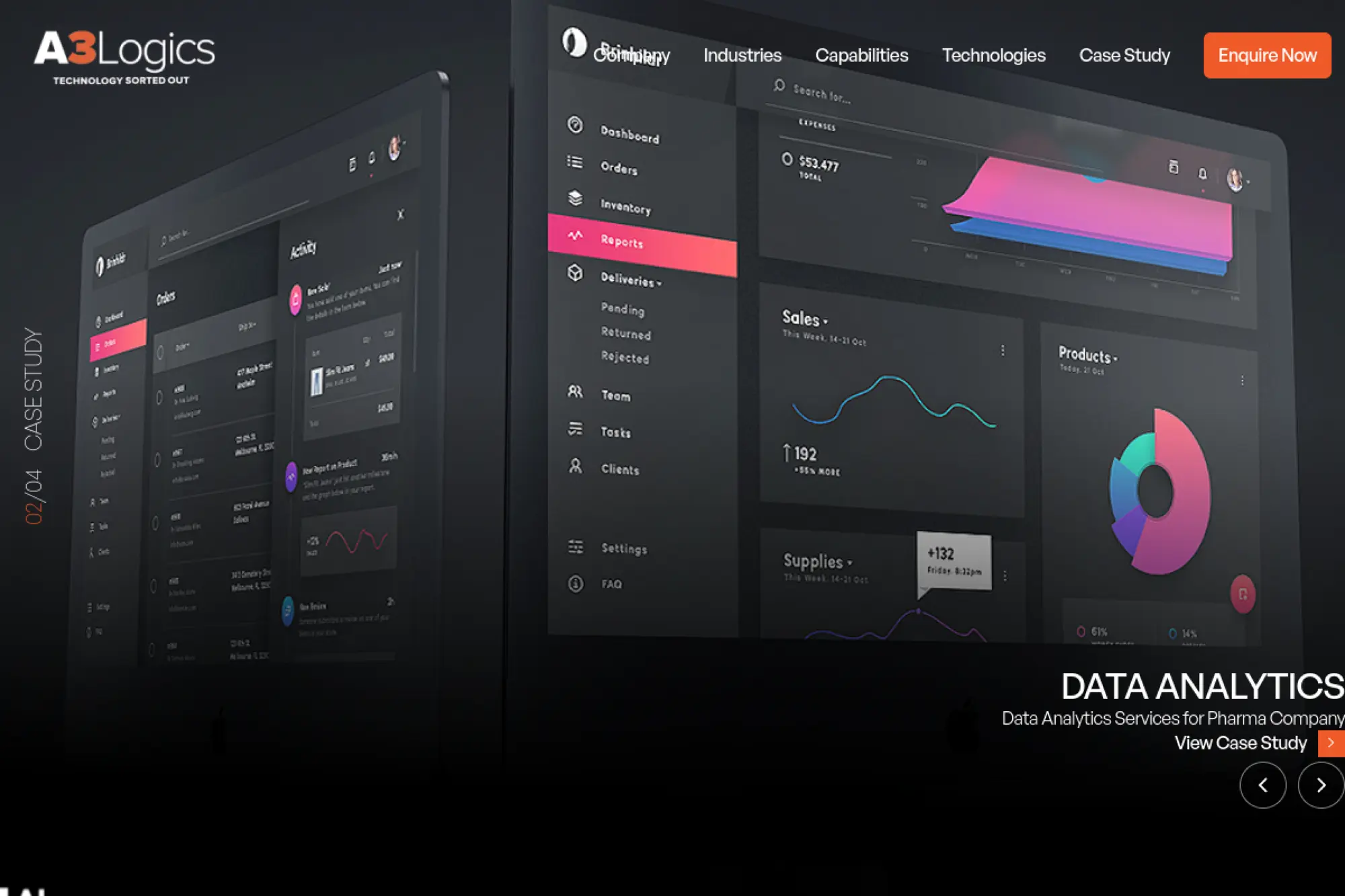
A3Logics is an Indian engineering company working with Singapore buyers across mobile and enterprise build‑outs. Their span includes mobile, web, and platform integration, with the ability to field teams for months‑long implementations and post‑launch run support. We see them a lot in HRTech, logistics, and custom B2B portals.
The pattern for success in these domains is predictable: domain modeling upfront, careful attention to permissions and roles, and performance budgets for the typical devices in your user base. For mobile, we like to see permission hygiene, background sync scheduling that respects battery life, and robust analytics that survive intermittent networks.
Services & proof: Public programs include long‑horizon product roadmaps where “done” is a rolling concept. Ensure you align on artifact quality—architecture decision records, sequence diagrams, post‑mortems—so institutional knowledge persists.
Ideal fit: Organizations that want a cost‑effective build partner to own feature delivery and maintenance for internal and external apps, with an emphasis on predictable releases and clear communication.
22. TechTIQ Solutions
TechTIQ is a Singapore‑headquartered software company with a hybrid Singapore–Vietnam delivery model. Operating since 2017, they deliver mobile and web builds with QA and PM anchored in Singapore. That split aligns well with buyers who want onshore accountability coupled with offshore throughput for backlog velocity.
For mobile, their emphasis on cross‑platform stacks (Flutter/React Native) is matched by pragmatic back‑end choices and ISO‑aware processes. That matters when you need to satisfy procurement checklists and ship iteratively without compromising security or maintainability.
Services & proof: Public materials highlight projects across finance, logistics, and enterprise services, often integrating with legacy systems. We like that they prioritize environments, data migration planning, and admin affordances—underrated factors that de‑risk handovers from build to run.
Ideal fit: SMEs and mid‑market enterprises seeking a Singapore point‑of‑contact and predictable delivery out of Vietnam—a good balance for multi‑quarter programs that must deliver value early and often.
23. Kuchoriya TechSoft
Kuchoriya TechSoft is a development firm with roots in India serving clients across APAC and the Gulf, including Singapore engagements. Their offer spans mobile and web across mainstream stacks with an emphasis on sensible pricing for founder‑led product builds and SME digitization.
Where teams like this add value is in their willingness to ship the boring but necessary pieces: back office tools, content controls, and reliable data exports. On mobile, good cross‑platform engineering plus careful device test matrices can deliver 90% of the experience users want at a fraction of the cost of two fully native apps.
Services & proof: Public work includes marketplaces, booking flows, and service management apps. Press for quality gates—linting, unit tests, and basic instrumentation—so you don’t inherit an opaque codebase after go‑live.
Ideal fit: Early-stage founders and SMEs that need a first release quickly, with an eye toward extendability and the option to harden the stack once product‑market fit is visible.
24. Scopic
Scopic is a fully distributed development company that supports customers in Singapore through remote squads. Their mobile work is typically paired with desktop and web—useful when your product surface spans multiple contexts (field staff, back office, and end consumers) and needs consistent behavior and data semantics across all.
Distributed teams thrive when documentation and process are good. We look for async‑friendly habits: proper ticketing, ADRs (architecture decision records), and CI pipelines that flag regressions automatically. On mobile, expect conscientious handling of offline/fallback flows and careful SDK selection to avoid bloat.
Services & proof: Public projects include healthcare, imaging, and specialized B2B tooling—domains that reward investment in test harnesses and robust analytics to illuminate rare but impactful edge cases.
Ideal fit: Buyers with multi-surface products who want a partner adept at orchestrating consistent UX and state across mobile, web, and desktop, and who value asynchronous collaboration and predictable delivery.
25. Synodus
Synodus is a Vietnam-based firm with projects across Singapore that combines mobile, analytics, and ERP/CRM integrations. This combination is pragmatic: most meaningful apps are only as valuable as their integrations and the quality of the data flowing through them.
Technically, teams like Synodus succeed by agreeing early on data contracts and identity strategy (SSO, OpenID Connect), so mobile engineers don’t stumble on backend ambiguities. We also like to see data observability investment—event schemas, lineage, and privacy-safe telemetry—so troubleshooting and growth experiments are grounded in reality.
Services & proof: Public work touches finance, retail, and operations. In all cases, durability after go‑live increases with solid release management, meaningful monitoring, and a runbook your ops team trusts.
Ideal fit: Mid‑market firms that want mobile experiences attached to serious business systems, where integration stability and data truth matter as much as UI sheen.
26. Kyanon Digital
Kyanon Digital is a Vietnam‑headquartered digital services house that partners with Singapore clients on mobile, commerce, and platform work. Their team size and case mix suggest comfort managing multi‑discipline squads and running parallel workstreams with a product mindset.
We pay attention to how such teams handle design systems and component libraries across surfaces. A common pitfall is letting mobile and web design drift apart; the cure is a single source of truth, documentation, and a cadence to update components in sync—especially during brand refreshes or replatforming.
Services & proof: Public references indicate scaled enterprise programs as well as startup builds. Expect standard governance—grooming, demos, retros—and insist on environment parity and infrastructure‑as‑code to avoid snowflake servers.
Ideal fit: Companies that need a multi‑disciplinary partner to steer a mobile/composable commerce roadmap with strong engineering hygiene and long‑term maintainability.
27. SoloWay Technologies
SoloWay is an engineering company with Eastern European delivery and a growing footprint in APAC projects. Their appeal for Singapore buyers is cost-effective squads that can ship modern mobile apps and back ends without drama, provided the interfaces and expectations are well-defined.
We look for clarity on the testing story—unit, integration, and UI tests—plus solid CI that auto‑runs the suite on merge requests. On mobile, that includes snapshot (golden) tests for Flutter or UI tests for Swift/Kotlin and a known set of target devices to reflect your actual users.
Services & proof: Public outputs include consumer and enterprise apps with sensible choices—sane state management, minimalistic dependency graphs, and platform‑idiomatic UX where needed.
Ideal fit: Teams that want dependable execution on a clear backlog, with a partner that will flag over‑engineering and keep the solution as simple as possible for the job at hand.
28. Ziffity
Ziffity is best recognized for commerce engineering (Adobe Commerce/Magento and headless stacks), with mobile as part of a broader customer experience program. They support Singapore clients that treat mobile not as an isolated app but as a node in a composable commerce architecture—catalog, content, search, payments, and personalization all stitched together.
Their value in mobile comes through accelerators and battle-tested integration patterns: checkout flows that cope with multiple PSPs, offline baskets, and store‑aware experiences. For clients already in Adobe or a headless world, Ziffity’s ability to wire mobile into that fabric is often the shortest path from “idea” to “revenue.”
Services & proof: Public materials highlight Adobe partnerships and contribution history; in our experience, that usually translates into predictable releases and fast remediation for edge‑case issues that crop up in promo traffic spikes.
Ideal fit: Retailers and direct‑to‑consumer brands that need mobile experiences fused tightly with their commerce stack, plus a partner who can speak merchandising and marketing as fluently as APIs and SDKs.
29. Indus Net Technologies
Indus Net is a long‑established Indian digital engineering company that services Singapore mandates across mobile, portals, and data-driven applications. Their scale allows for parallel initiatives—modernizing a portal while building a mobile app and cleaning up analytics—in a single, coordinated program.
On mobile, they tend to favor resilient architectures and strong governance: code review rituals, security scanning, and living documentation. In integrations-heavy contexts, that discipline makes the difference between a launch that sticks and a release that unravels under load.
Services & proof: Public casework spans government, BFSI, and enterprises. Expect formal project management and a mature support model (L2/L3), which is often the make‑or‑break for adoption in large organizations.
Ideal fit: Organizations with multifaceted roadmaps who need a partner experienced in balancing new builds, integration clean‑up, and the unavoidable change‑management work of bringing people along.
30. Nimble AppGenie
Nimble AppGenie is a smaller, mobile-first development company with delivery roots in South Asia and customer reach that includes Singapore startups. Teams like this make their name on responsiveness and founder‑friendly collaboration—rapid prototypes, crisp sprint demos, and straight‑talk on trade-offs.
Technically, we look for disciplined cross‑platform engineering (when chosen), adequate unit/UI tests, and basic performance profiling to keep startup apps responsive on mid‑tier devices popular across ASEAN. The winners are those who maintain clean project hygiene—CI, sprints, PR reviews—so handovers to in‑house teams are painless later.
Services & proof: Public references include finance and marketplace apps with design and build responsibilities. If you’re an early‑stage founder, the attention here matters: Figma prototypes that reflect real user journeys, clickable demos to test messages, and analytics to validate assumptions fast.
Ideal fit: Early-stage startups that need a high‑touch partner to reach a convincing MVP quickly and then evolve it into a stable app with the metrics and instrumentation investors expect.
Selecting the right partner is not about chasing logos; it’s about the fit between your risk tolerance, governance needs, and the team’s delivery habits. If you’d like a second set of eyes on a shortlist—or help translating business intent into a technical brief vendors can price and deliver against—tell us your top three objectives and the constraints you’re working under. We’ll help you narrow the field to the few who can actually deliver what you need, when you need it.
How to choose a partner for app development in singapore
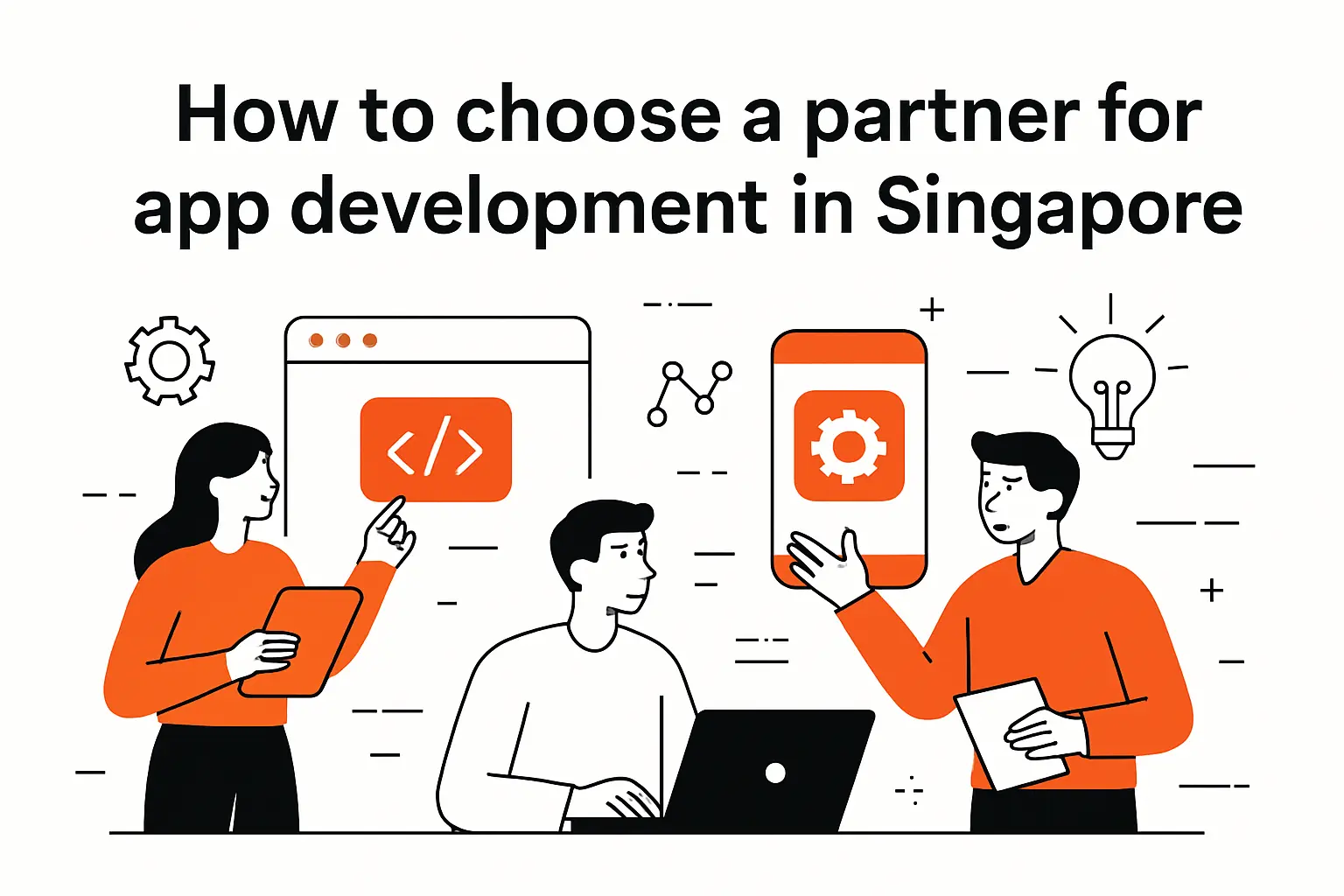
Outsourcing patterns have shifted with automation. A recent global survey shows that 83% of leaders already leverage AI as part of outsourced services, which changes vendor selection, contracting, and success metrics.
1. Use Clutch and DesignRush listings to shortlist vendors with verified reviews
Directories are a starting point, not the finish line. We cross‑reference ratings with project details and delivery scope. We check recency because teams change and portfolios age also note whether leaders publish roadmaps, postmortems, or technical blogs. That signal often correlates with coaching culture and engineering hygiene.
2. Prefer in‑house teams and ISO 27001‑level security for sensitive builds
For regulated workloads, we favor largely in‑house squads. Clear accountability limits supply chain exposure. We then check how the vendor proves security maturity and ask for control mappings, not only certificates. We verify data handling designs for production, staging and developer environments. Mature vendors can speak to secrets sprawl, ephemeral environments, and tenant isolation without spin.
3. Validate end‑to‑end capabilities: UX/UI, mobile, web, backend, QA, DevOps and cloud
End‑to‑end delivery wins when requirements evolve quickly. We ask vendors to walk us through collaboration between designers, engineers, testers and platform teams. Then look for evidence of meaningful design research and measurable outcomes. We also review pipeline design for security gates and rollout safety. Strong players integrate automated tests with feature flags and progressive exposure strategies.
4. Look for regulated‑industry case studies (banking, government, transport, eCommerce)
Regulated contexts shape choices across identity, consent, audit, and resilience. We ask for stories that show constraint‑aware creativity. We also ask about change approvals and traceability under pressure. Case studies that detail failure handling and rollback plans are especially useful. Those details reveal how teams anticipate the unexpected.
5. Choose the right engagement model: Dedicated Team, Fixed‑Price, Time & Materials, BOT
Model choice follows uncertainty. When scope is fluid, a dedicated team with clear velocity targets outperforms fixed bids. When requirements are stable and bounded, fixed‑price gives budgeting comfort. Time and materials fits spikes and exploration. Build‑operate‑transfer suits firms building lasting capabilities with near‑term vendor help. We map model to risk and adjust as uncertainty shrinks.
6. Align skills with your stack: native iOS and Android, React Native, Flutter, web
Technology resumes can look similar. The differentiator is depth with your operational reality. If your estate runs on particular cloud primitives, choose engineers who have shipped with those services under incident pressure. If your roadmap needs experiments, choose teams fluent in rapid prototyping and graceful deprecation. Fit beats buzzwords every time.
7. Confirm post‑launch maintenance and iteration roadmap
We ask for a living sustain plan. It should cover on‑call patterns, release trains, OS updates, dependency patching, and observability. We expect backlog care, not backlog inflation. The partner should also propose growth experiments and a cadence for user research. That ensures the product keeps earning its place on the home screen.
8. Assess ability to integrate AI/ML, analytics, payments and third‑party systems
Even simple apps depend on solid integration. We test whether vendors can wire analytics responsibly, employ privacy‑aware machine learning, and build robust payment flows. For Singapore builds, partners must understand local payment rails and identity patterns. Mature integration practices reduce churn, improve conversion, and lower operational surprises later.
Trends shaping app development in Singapore
Cloud economics and AI adoption are reshaping platform choices. In Asia Pacific, public cloud services are projected to reach $131 billion by 2029, driven by modernization and AI‑enabled workloads.
1. AI/ML and RAG chatbots moving into mainstream product roadmaps
We are embedding retrieval‑augmented assistants inside customer and agent workflows. The practice demands careful data scoping, prompt safeguards, and human‑in‑the‑loop patterns. Singapore’s policy guidance on data use nudges teams toward explicit consent and transparent controls. We design guardrails that operational teams can understand and adjust. That is the difference between a demo and a dependable assistant.
2. AR/VR pilots for training, retail and experiential commerce
Experiential interfaces are maturing. We see retailers piloting try‑before‑you‑buy experiences and enterprises using immersive training. The best pilots tackle a discrete pain point rather than a showroom flourish. We also consider accessibility and fatigue. Short, purposeful interactions often deliver more value than cinematic scenes.
3. IoT and wearables powering connected services across sectors
Apps are becoming control planes for connected ecosystems. In health, wearables feed longitudinal views with consented data. In facilities, sensors inform maintenance and energy choices. We design for intermittent connectivity and graceful degradation. We also prioritize secure provisioning and lifecycle management because devices live far from the comfort of a data center.
4. Cloud‑native, serverless and DevOps practices for scalable, secure delivery
Cloud primitives reduce undifferentiated heavy lifting. We prefer managed services for queues, auth, secrets and observability when SLAs fit the mission. Then we adopt infrastructure as code to keep environments reproducible. We design autoscaling policies around events and user behavior rather than blanket thresholds. That discipline maintains performance without runaway costs.
5. Blockchain dApps and tokenized use cases in select verticals
We see pragmatic traction where tokenization aligns with settlement, provenance or identity. The strongest cases hide complexity behind familiar interfaces. Compliance and custody drive architecture choices here. We examine whether off‑chain components introduce centralization risks that undercut the intent. We also ensure users keep recovery options that do not require arcane rituals.
6. Design‑first discovery, MVPs and co‑incubation to de‑risk delivery
Discovery sprints and hypothesis‑driven MVPs remain the best way to validate assumptions. Co‑incubation with stakeholders builds ownership and reduces late‑stage surprises. We keep a short loop between insight and iteration. That loop lets us pivot without drama when users tell a different story than the brief.
Pricing, timelines, and team sizes for app development in Singapore
Team productivity links to tooling and operating model. Research on Developer Velocity shows organizations with strong tools are 65 percent more innovative than laggards, which often translates into faster delivery and clearer value capture.
1. Budget and hourly rate ranges visible across Singapore agency directories
Pricing varies with uncertainty, compliance scope and integration depth. We build ranges from discovery findings rather than wishful thinking. Service levels, support windows and reporting cadence also influence cost. In our proposals, we separate changeable scope from core commitments. That transparency helps leaders make informed trade‑offs when priorities shift.
2. Expect 3–6 months to first release for custom app builds
Release timing depends on clarity, complexity and integration readiness. We decompose scope into valuable slices and right‑size milestones. We recommend a pilot cohort before a wider rollout when workflows carry operational risk. That staggered path increases confidence and reduces stress on support teams during early learning.
3. Team sizes span from sub‑10 studios to 1000+ global engineering groups
Boutique studios move fast with strong cohesion. Global integrators bring depth, reach and redundancy. We match partner scale to program risk, procurement needs and governance overhead. Culture fit matters. A nimble studio can outperform a giant if your roadmap values speed, dialogue and product intuition. Large programs need consistent distributed delivery and tested escalation paths.
4. Plan ongoing maintenance, OS updates and feature growth post‑launch
We plan for runway, not a photo finish. Maintenance budgets cover platform updates, dependency patching, and performance work. We keep an experimentation backlog with hypotheses tied to specific metrics. Stakeholders stay aligned through cadence reviews and shared dashboards. That rhythm keeps product health and momentum in balance.
How TechTide Solutions helps with custom app development in Singapore
Across Singapore builds, we anchor every engagement in discovery, value tracing and risk management. Analysts expect continued digital investment, and local policies keep raising trust expectations. Our job is turning that context into well‑governed software that users adopt and businesses can sustain.
1. Discovery‑led scoping tailored to your business goals, users and KPIs
We start by clarifying goals, user jobs, constraints then map value streams and identify technical and operational risks. We run design sprints, user interviews and rapid prototyping to sharpen scope. Leadership sees trade‑offs clearly before committing to code at scale. That early alignment saves time and earns credibility with stakeholders.
Discovery deliverables we standardize
- Experience maps that link user intent to system responsibilities.
- Technical spikes for risky integrations and identity flows.
- Architecture options with security and operability implications.
- Backlog slices prioritized by value and learning potential.
2. Full‑stack engineering for mobile, web and integrations aligned to your tech stack
Our engineers ship iOS, Android, and web clients backed by robust services. We design for observability, graceful failure and continuous delivery. Then integrate with identity, payments, messaging and analytics responsibly. We favor patterns that protect user trust while preserving flexibility. Teams co‑create with your product owners and platform leads, which keeps progress measurable and decisions grounded.
How we handle security and compliance
- Threat modeling and secure code practices embedded in pipelines.
- Environment design that limits data exposure during development.
- Defense‑in‑depth for authentication, authorization and secret handling.
- Evidence capture to ease audits and satisfy enterprise governance.
3. Quality assurance, security best practices and long‑term support cycles
Quality is a habit, not an event. We push testing left and track coverage that matters. We build feature flags for controlled releases, and we monitor real‑world behavior carefully. Our support cycles include OS updates, dependency patching and continuous hardening. We organize shared rituals that keep product, engineering and operations walking in step.
Conclusion: App development in Singapore takeaways
Budgets are growing and expectations are higher. Forecasts point to worldwide spending exceeding $6.08 trillion in 2026, and Singapore leaders will continue to demand security, resilience and clear value in return. Winning partners blend domain fluency, disciplined delivery and honest collaboration. Winning products tie user outcomes to business goals and keep iterating with care.
If you are shortlisting partners now, we would enjoy a working session to pressure‑test your brief. Shall we co‑map the first release and de‑risk the riskiest assumptions together?