


Shortlisting web design companies in Vietnam is easy. Choosing the right one is harder. Vietnam’s IT services market is expected to reach US$2.14bn in 2025, which is one reason the local vendor pool now stretches from boutique design studios to large engineering firms. From our seat at TechTide Solutions, that means buyers need to compare fit, not just price, visuals, or a crowded shortlist.
The backdrop is broader than software outsourcing alone. Vietnam’s digital economy reaches $39B in 2025, and that momentum shows up in the kinds of agencies operating here, from enterprise-scale players to focused studios with strong vertical work. We also see real range on the ground. Firms like FPT Software work at multinational scale, while teams like ViiVue and Alive Vietnam stay much closer to brand and content craft.
We built this guide to help readers make an actual decision. So we lean into trade-offs. Some companies here are better for commerce. Some are stronger for web apps. A few are clearly better for brand-led redesigns. And yes, we include TechTide Solutions in the list, because readers deserve context on where we fit and where we do not.
Quick Comparison of Web Design Companies in Vietnam
We would not treat these as universal rankings. We treat them as fit signals. The same agency can feel perfect for one brief and wrong for the next, so this table is meant to speed up your first shortlist, not finish it.
| Agency | Best for | Strength | Potential drawback | Good question to ask |
|---|---|---|---|---|
| Newwave Solutions | Websites that may grow into platforms | Broad engineering bench | Less boutique creative feel | Who leads design versus engineering? |
| Synodus | Web apps and regulated products | Domain-heavy product teams | Not a pure brand studio | How do you run discovery in our sector? |
| TechTide Solutions | Custom sites tied to workflows | Web plus software thinking | Younger company | What should be custom versus off-the-shelf? |
| Designveloper | Startups and SaaS products | UI/UX plus product engineering | Less enterprise heft | Who owns product strategy and QA? |
| BSS Commerce | Shopify and Magento commerce | Deep B2B e-commerce focus | Narrower outside commerce | How do you manage migration risk? |
| Tigren | Magento-focused stores | Nimble commerce specialist | Smaller team | What is custom code versus extensions? |
| ViiVue | Premium brand-led websites | Polished custom WordPress work | Smaller app development bench | How much strategy is included up front? |
| FPT Software | Enterprise transformation | Scale and governance | Overkill for small sites | What is the minimum practical engagement? |
| Savvycom | Web platforms with AI or data needs | Strong sector depth | Less boutique design feel | Who leads UX versus solution architecture? |
| Orient Software | Long-term engineering partnerships | Mature delivery model | Less brand-led positioning | How is ongoing support structured? |
Recommended reading: Top 20 ERP Companies for Smarter Operations and Scalable Growth
Top 20 Web Design Companies in Vietnam
We did not rank these firms by who shouts loudest. We ranked them by fit, service mix, delivery style, and how likely each team is to help a real business decision. Because we are TechTide Solutions and included in the list, we apply the same lens to ourselves as to everyone else.
1. Newwave Solutions
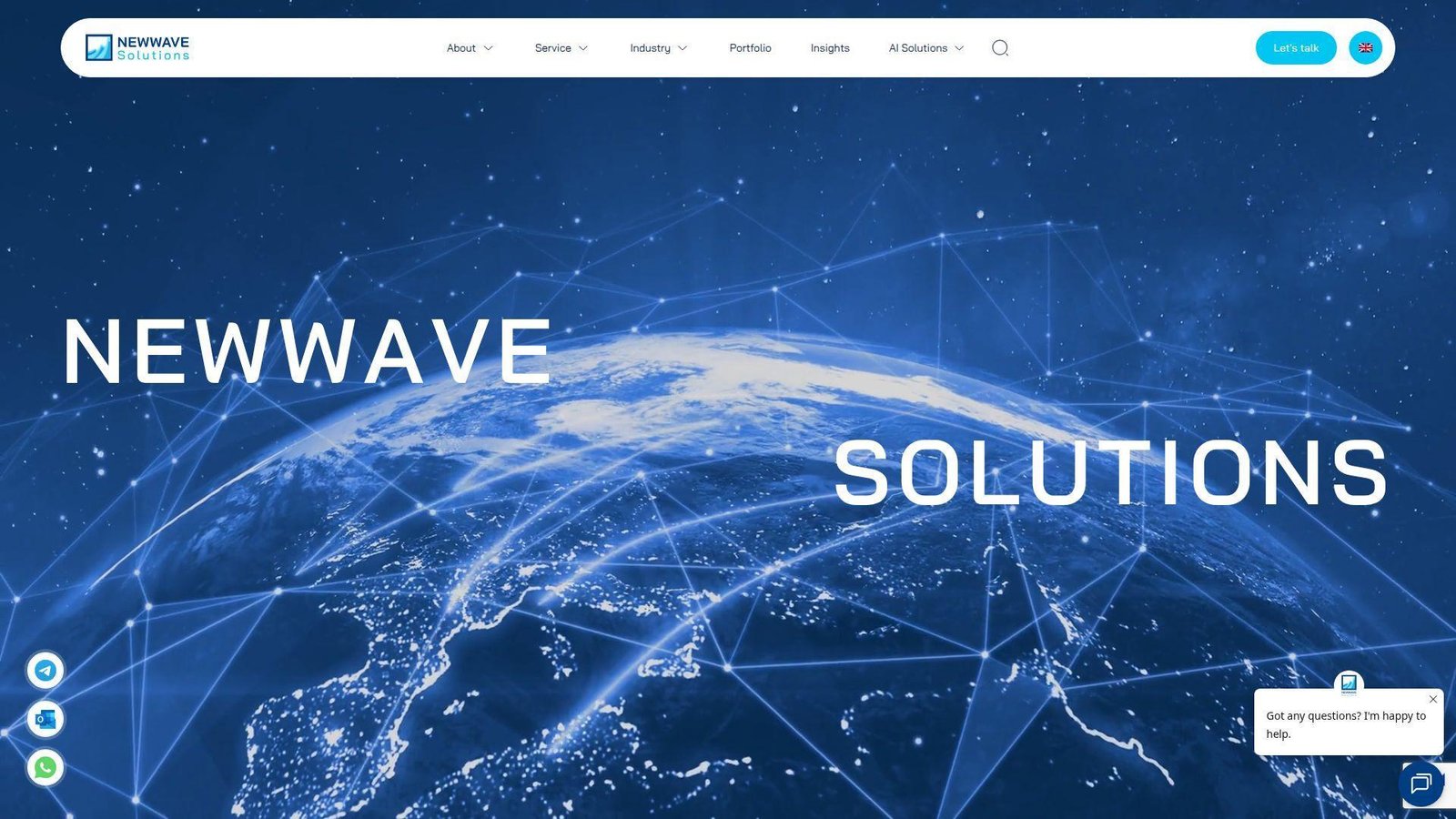
Newwave Solutions is a Hanoi-based software development and outsourcing firm with a mid-sized team, roughly in the 201 to 500 range, while its site highlights 300+ professionals. Founded in 2011, it sits in the camp of broad delivery partners rather than narrow design boutiques. We would shortlist Newwave when a website may turn into a portal, dashboard, marketplace, or multi-system product later on.
What we like is the range. Newwave covers website design, custom websites, e-commerce work, UI/UX, QA, maintenance, and newer capabilities like AI and blockchain. That matters for brands that do not want to re-bid the project the moment marketing pages need account logic or integrations. The trade-off is creative intensity. We would ask who exactly leads visual direction, because a large engineering vendor can under-invest in brand nuance unless you pin it down early.
- Service scope: Websites, UI/UX, custom software, QA, and maintenance.
- Industry specialization: Broad, with added AI and blockchain capacity.
- Ideal client size: Growing SMBs, scale-ups, and enterprise teams.
- Pricing model: Usually custom quote or dedicated team.
- Onboarding process: Requirements review, solution framing, then scope.
- Communication style: Structured and delivery-focused.
- Proof/case-study requirements: Ask for live sites with integration work.
- Red flags to check before hiring: Thin senior design access.
- Questions to ask before signing: Who leads UX, QA, and maintenance?
2. Synodus
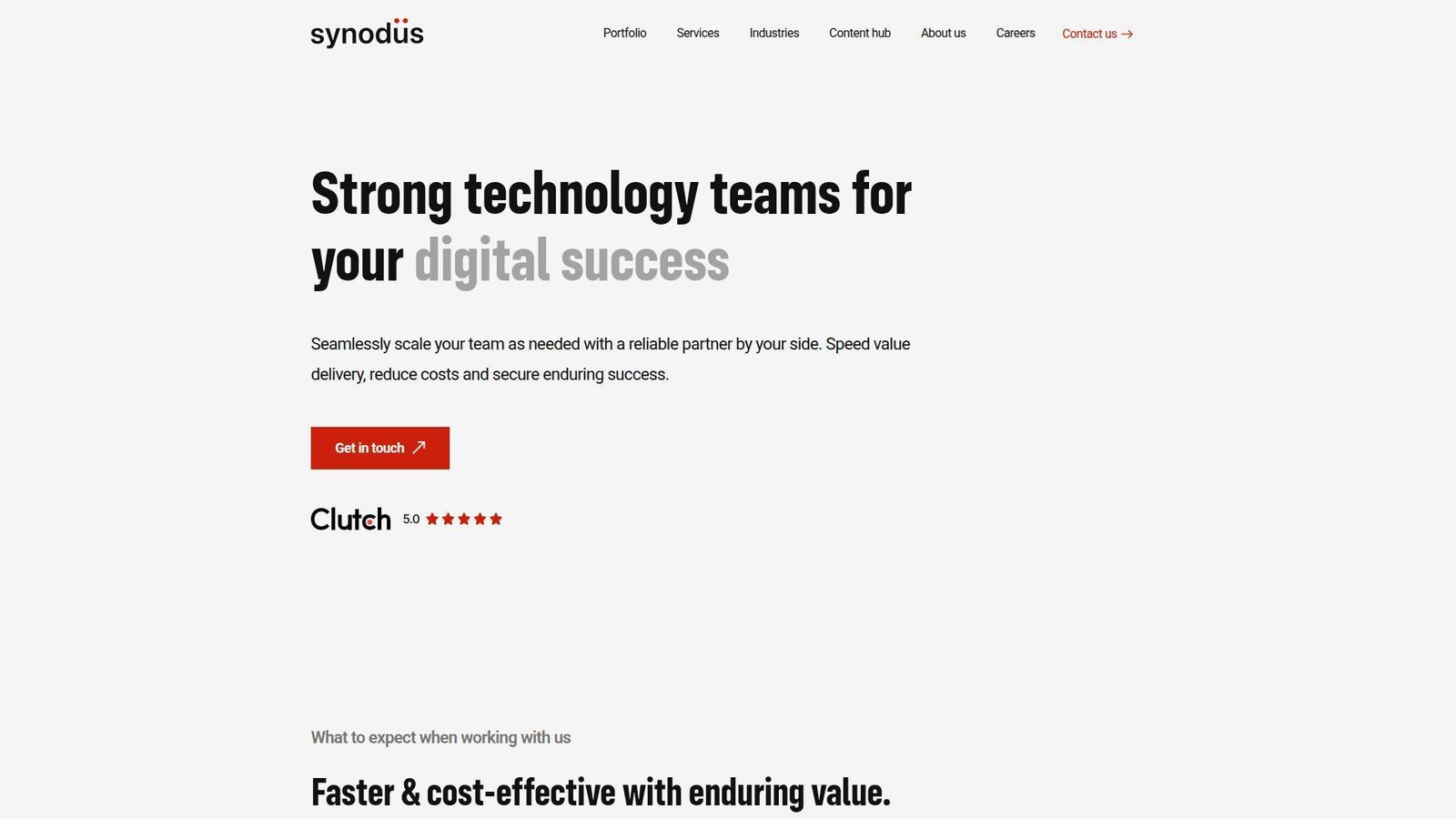
Synodus is a Hanoi-based technology consultancy and product development company. LinkedIn puts it in the 201 to 500 range, and the company says it has more than 250 experts. Founded in 2019, it is much younger than some firms here, but it has built a strong profile in fintech, healthcare, data work, low-code, and custom software. We think it makes more sense for product-heavy web projects than for pure brand storytelling sites.
If your website is really a front door to a bigger platform, Synodus deserves a look. The team’s pitch is domain depth first, code second, and we generally like that posture in regulated sectors. The limitation is creative specialization. We would confirm how much senior brand and content thinking you will get if the brief is more about positioning than product logic.
- Service scope: Custom software, web development, data, blockchain, and low-code.
- Industry specialization: Fintech, healthcare, public sector, and product teams.
- Ideal client size: Funded startups, scale-ups, and enterprise units.
- Pricing model: Project-based or dedicated team.
- Onboarding process: Business discovery, solution mapping, then team setup.
- Communication style: Consultative and product-oriented.
- Proof/case-study requirements: Ask for sector-relevant apps, not only websites.
- Red flags to check before hiring: Glossy AI claims without clear product context.
- Questions to ask before signing: Who owns discovery, compliance, and post-launch change requests?
3. TechTide Solutions
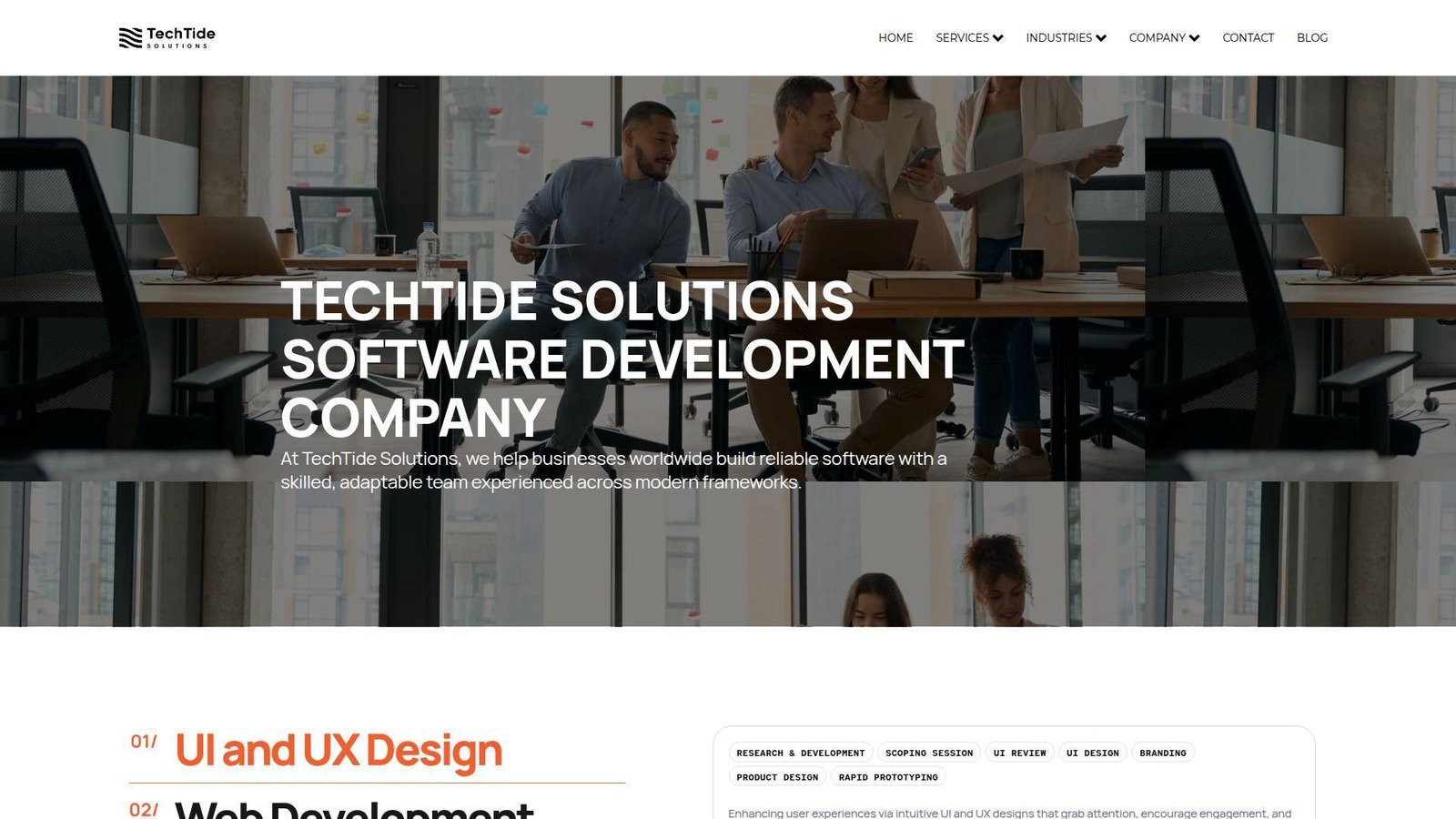
TechTide Solutions is our own company, so we should be direct about where we fit. LinkedIn lists us as a Vietnam-based software development company founded in 2022, with a team size in the 51 to 200 range and headquarters in Ngai Giao Town, Ho Chi Minh City. We focus on custom web and mobile development rather than pure visual re-skin work. That means we are strongest when a site is tied to workflows, SEO structure, integrations, or product logic.
We would not position ourselves as the right pick for every brand-led redesign. If a client mainly needs naming, brand systems, and art direction, studios like ViiVue, Bean Creative, or Xolve may feel more natural. Where we usually add more value is when marketing pages, portals, CMS choices, integrations, and future software plans need to be designed together from the start. We think that reduces costly rewrites later.
- Service scope: Custom websites, web apps, mobile apps, and software.
- Industry specialization: Operational systems, healthcare, and business tools.
- Ideal client size: SMBs, product teams, and organizations with custom needs.
- Pricing model: Custom scope based on features and support needs.
- Onboarding process: Workflow mapping, discovery, then technical recommendation.
- Communication style: Collaborative and plain-English.
- Proof/case-study requirements: Ask us for architecture rationale and maintenance planning.
- Red flags to check before hiring: Unclear change control or vague ownership.
- Questions to ask before signing: What must be custom, which CMS fits best, and who supports launch?
4. Designveloper
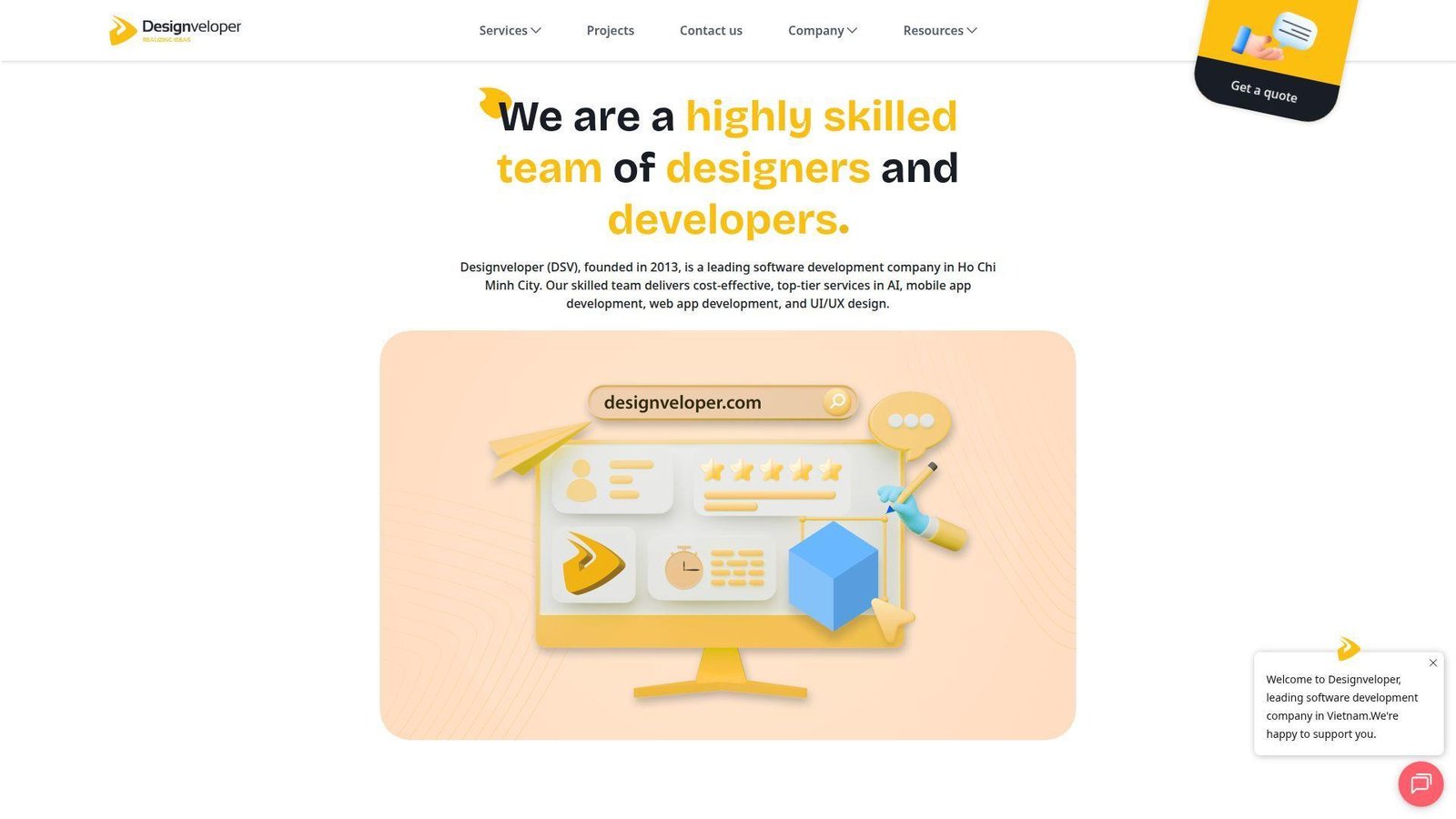
Designveloper is a Ho Chi Minh City company founded in 2013 with a 51 to 200 person team. Its mix spans web, mobile, UI/UX, and product development, which puts it in the sweet spot between startup studio and established software house. We would consider Designveloper when the job calls for a modern product feel, not just brochure pages.
What stands out is the product mindset. Designveloper talks about helping clients solve business problems, and its service mix supports that. For SaaS dashboards, admin flows, member portals, and startup MVPs, that orientation usually pays off. The trade-off is that some marketing-led brands may want a more specialized brand strategist or content partner beside them.
- Service scope: Web, mobile, UI/UX, and product development.
- Industry specialization: Startups, SaaS, and digital product teams.
- Ideal client size: Startups through mid-market firms.
- Pricing model: Custom project or team extension.
- Onboarding process: Product discovery, wireframes, then sprint planning.
- Communication style: Agile and fast-moving.
- Proof/case-study requirements: Ask for live portals or dashboards, not only landing pages.
- Red flags to check before hiring: No dedicated product or UX lead.
- Questions to ask before signing: Who handles QA, design systems, and scope changes?
5. BSS Commerce
BSS Commerce is a Vietnam-rooted e-commerce agency founded in 2012. LinkedIn lists a team size in the 201 to 500 range, while the company describes itself as a large global commerce partner with major delivery hubs in Hanoi and Ho Chi Minh City and a global headquarters listing in London. We see BSS as one of the clearest choices here for merchants, wholesalers, and brands that live or die by catalog logic, promotions, and platform integrations.
Its advantage is platform focus. BSS works across Magento, Shopify, BigCommerce, migration, wholesale or B2B, extensions, and maintenance. That is exactly what many commerce teams need. We would not choose it first for an image-led microsite or a highly experimental brand experience. But for store architecture, B2B pricing rules, and platform moves, it has real depth.
- Service scope: Store development, migration, support, apps, and B2B commerce.
- Industry specialization: Magento, Shopify, BigCommerce, and wholesale commerce.
- Ideal client size: Mid-market merchants and larger commerce teams.
- Pricing model: Project-based, custom quote, or support retainer.
- Onboarding process: Platform audit first, then migration or build plan.
- Communication style: KPI-minded and e-commerce focused.
- Proof/case-study requirements: Ask for same-platform case studies with measurable outcomes.
- Red flags to check before hiring: Heavy app stacking without performance discipline.
- Questions to ask before signing: How do you handle migration risk, B2B rules, and post-launch support?
6. Tigren
Tigren is a Hanoi-based e-commerce specialist founded in 2012 with a small team in the 11 to 50 range. It focuses heavily on Magento, Hyvä, Shopify, WordPress, PWA, and mobile commerce. In our view, Tigren is a strong fit for merchants who want specialist attention rather than a giant multi-service vendor.
We like Tigren most when the brief is practical. Faster storefronts, platform migrations, extension decisions, and conversion-minded improvements are its home turf. The downside of a small specialist team is scope boundaries. If your project drifts into brand repositioning, custom product design research, or enterprise integration across several business units, you should verify who covers that work and whether they do it in-house.
- Service scope: E-commerce sites, Hyvä, PWA, Shopify, WordPress, and apps.
- Industry specialization: Magento-centered e-commerce.
- Ideal client size: SMB and mid-market online stores.
- Pricing model: Custom quote by platform and scope.
- Onboarding process: Store audit, requirements review, then technical plan.
- Communication style: Direct and tactical.
- Proof/case-study requirements: Ask for speed, migration, and conversion examples.
- Red flags to check before hiring: Too many off-the-shelf extensions.
- Questions to ask before signing: What is theme work, what is custom, and what is the support window?
7. ViiVue
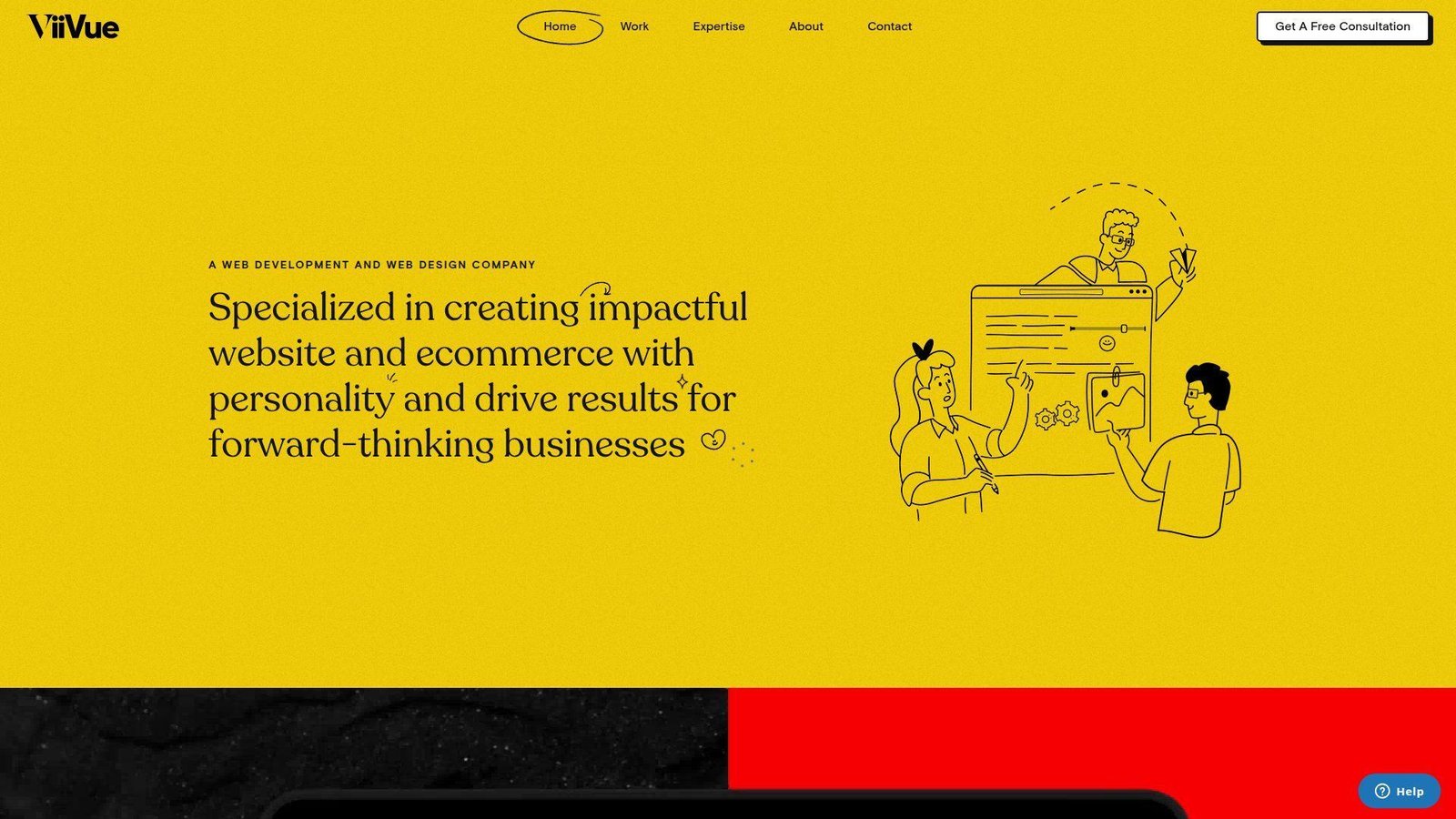
ViiVue is a Ho Chi Minh City boutique agency founded in 2009, with public sources placing it in the 11 to 50 range. It focuses on custom website design and build, strategy, e-commerce, and technical SEO, with a portfolio that includes corporate, hospitality, manufacturing, and B2B work. This is one of the firms we would show to brands that care deeply about visual polish and structured discovery.
ViiVue feels design-led in the right way. Its case studies show attention to brand expression, content hierarchy, animation restraint, and business context, not just pretty screenshots. We especially like it for premium brand sites, hotels, exporters, architecture firms, and corporate groups that need a site to look serious without feeling stiff. The main trade-off is size. For heavy custom application logic, you may want a broader engineering partner or a two-vendor model.
- Service scope: Website strategy, custom WordPress, e-commerce, and technical SEO.
- Industry specialization: Premium brand sites, hospitality, corporate, and B2B.
- Ideal client size: Mid-market brands and serious SMEs.
- Pricing model: Custom project scope.
- Onboarding process: Discovery, information architecture, then design direction.
- Communication style: High-touch and detail-focused.
- Proof/case-study requirements: Ask for live sites and content strategy examples.
- Red flags to check before hiring: No clarity on copy or content ownership.
- Questions to ask before signing: Who writes content, who trains your team, and what happens after launch?
8. FPT Software
FPT Software is the enterprise outlier on this list. Founded in 1999 and headquartered in Hanoi, it is a global IT services provider with a LinkedIn company size of 10,001+ employees. That scale changes the buying equation. We would not compare FPT to a boutique studio. We would compare it to global system integrators and large digital engineering firms.
If your website is one workstream inside a wider transformation, FPT becomes relevant fast. Think multinational rollouts, system integration, legacy modernization, data work, security review, and governance that has to satisfy several stakeholders. The flip side is simple. Small and mid-sized brands can get swallowed by the process. If you only need a marketing site or light e-commerce build, FPT is probably more structure and procurement than you actually need.
- Service scope: Enterprise development, consulting, cloud, data, and integration.
- Industry specialization: Large regulated and multinational sectors.
- Ideal client size: Enterprise and global organizations.
- Pricing model: Enterprise scope and formal procurement.
- Onboarding process: Multi-stakeholder discovery and governance planning.
- Communication style: Formal and process-heavy.
- Proof/case-study requirements: Ask for projects at your organization’s scale.
- Red flags to check before hiring: Oversized team for a small site brief.
- Questions to ask before signing: What is the minimum engagement, and who owns the design layer?
9. Savvycom
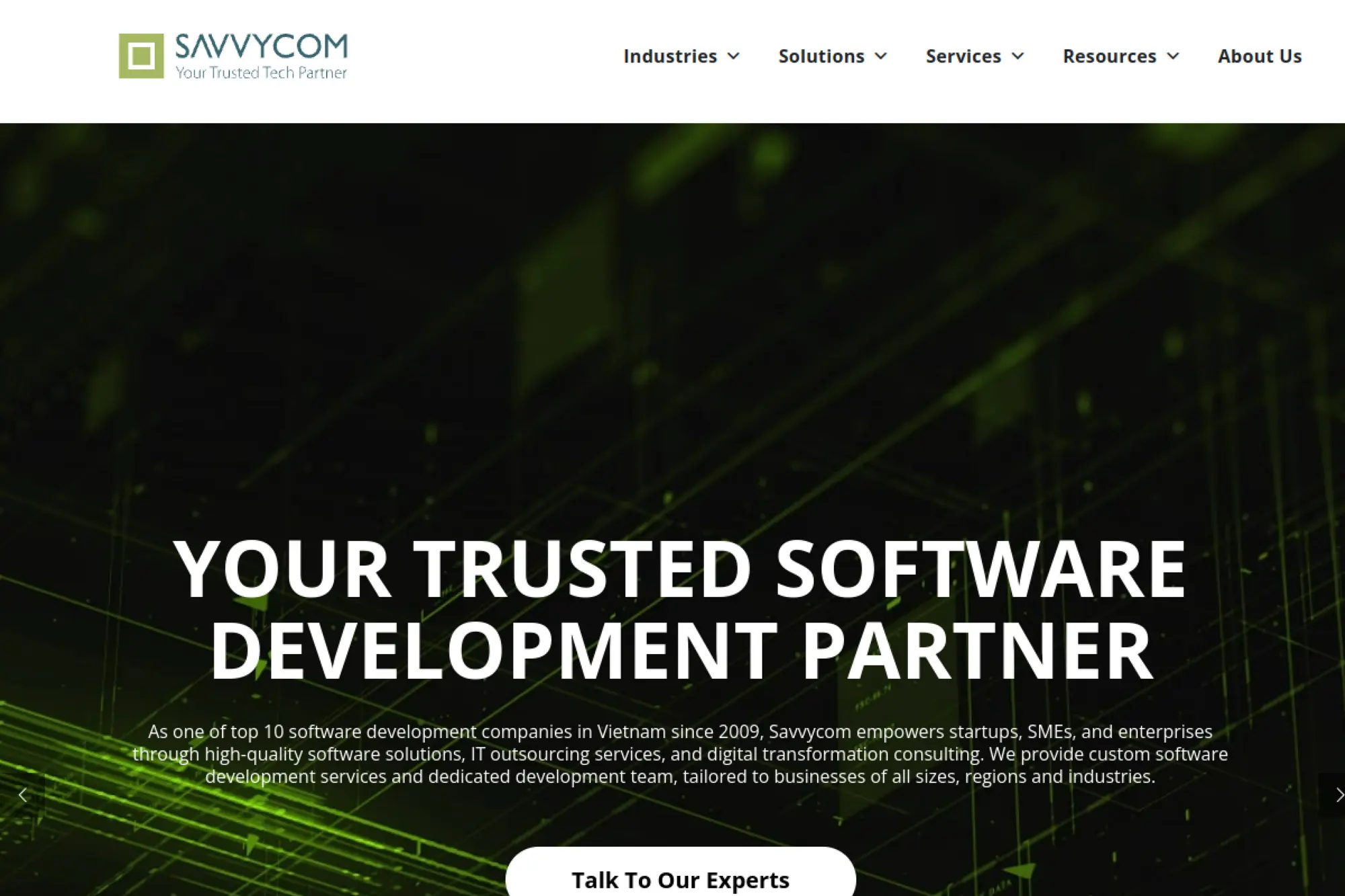
Savvycom is a Hanoi-based technology partner founded in 2009. Public company data places it in the 501 to 1,000 employee range, and the firm positions itself around AI, data, digital platforms, and enterprise delivery across finance, healthcare, retail, and other complex sectors. We see Savvycom as a fit when the website is only one layer of a bigger digital product or operations program.
Savvycom’s strength is domain-heavy transformation work. That is useful if the site must connect to onboarding, identity checks, analytics, partner portals, or internal systems. It is less compelling if your main problem is brand voice, motion art direction, or a small brochure redesign. In other words, Savvycom is stronger on business systems and product execution than on boutique brand theater, and that is not a criticism. It is just a category fit issue.
- Service scope: AI, data, web, mobile, QA, cloud, and enterprise platforms.
- Industry specialization: Finance, healthcare, retail, and enterprise operations.
- Ideal client size: Mid-market through enterprise.
- Pricing model: Custom scope and consulting-led proposal.
- Onboarding process: Discovery workshop, technical framing, then roadmap.
- Communication style: Consultative and solutions-focused.
- Proof/case-study requirements: Ask for domain-specific web platform examples.
- Red flags to check before hiring: Too much AI jargon and thin UX ownership.
- Questions to ask before signing: Who owns frontend UX, compliance, and post-launch change work?
10. Orient Software
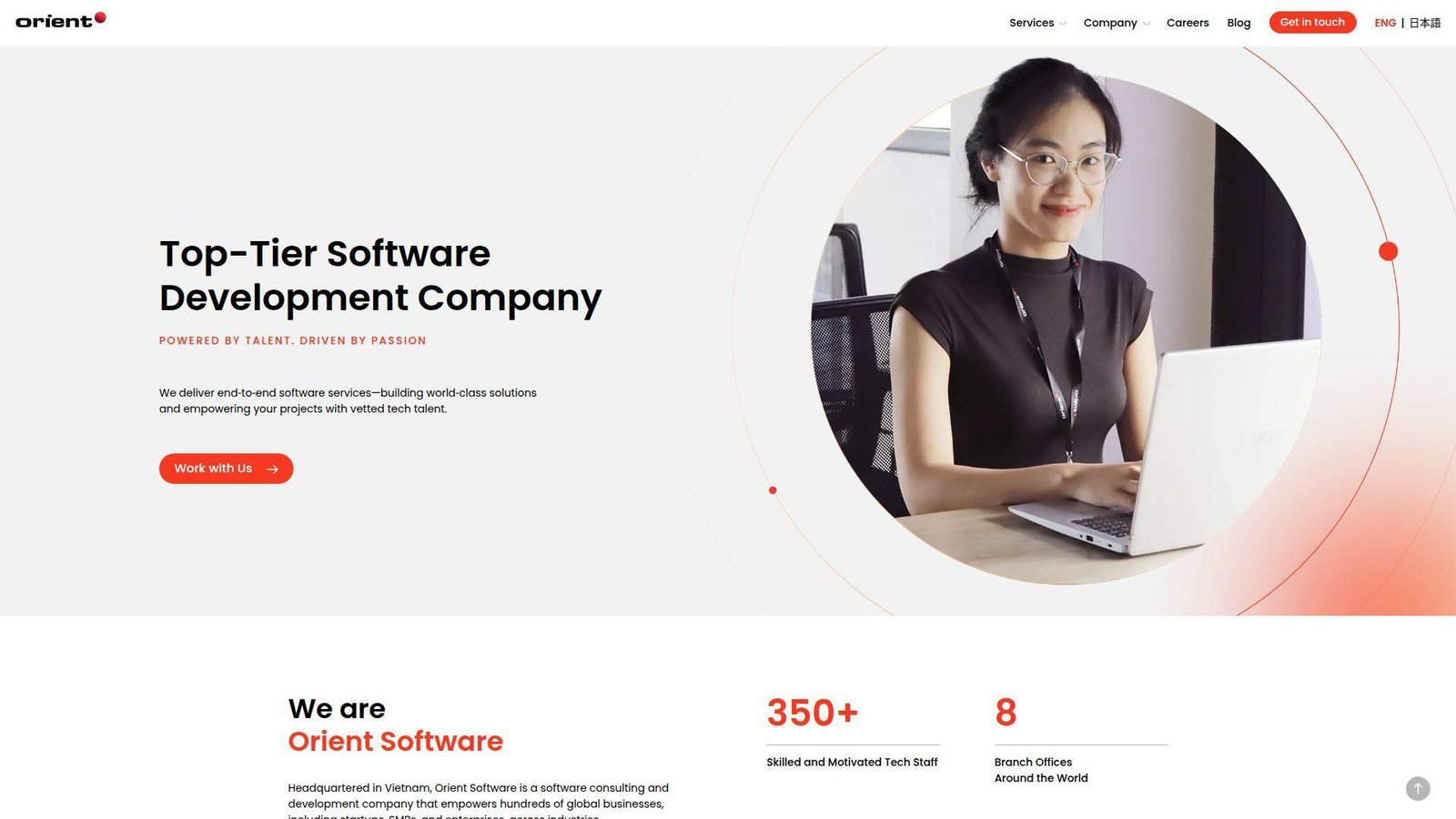
Orient Software is a Ho Chi Minh City engineering partner founded in 2005, with a public team size in the 201 to 500 range and official messaging around long-term partnerships, software quality, and transparent communication. We would put Orient on the shortlist when a company wants a dependable product and web engineering partner, not a flashy creative shop.
What we like is maturity. Orient has been around long enough to show staying power, and its positioning is refreshingly adult. It talks about long-term value, not hype. That makes it attractive for web apps, portals, e-commerce systems, and product roadmaps that will keep evolving after launch. The trade-off is aesthetic leadership. If your project is heavily brand-driven, we would test the design bench early and ask to meet the actual UX and visual leads.
- Service scope: Custom software, web apps, data, AI, and e-commerce.
- Industry specialization: Long-term engineering partnerships.
- Ideal client size: Mid-market and enterprise clients.
- Pricing model: Custom project or dedicated team.
- Onboarding process: Workshops, solution mapping, then staffing.
- Communication style: Transparent and delivery-oriented.
- Proof/case-study requirements: Ask for long-running client examples.
- Red flags to check before hiring: Unclear in-house design ownership.
- Questions to ask before signing: How do you structure governance, maintenance, and code ownership?
11. CMC Global
CMC Global was established in 2017, though its roots inside CMC Corporation go back to a 2016 outsourcing division. LinkedIn places it in the 1,001 to 5,000 employee range and lists Hanoi as headquarters, with offices in Ho Chi Minh City, Da Nang, Singapore, Japan, Korea, Malaysia, and the US. We see it as an enterprise delivery option far more than a classic web design shop.
That does not mean CMC Global cannot deliver websites. It can. The question is whether it is the right tool for your problem. We would look here for digital transformation programs, testing, cloud, AI, CRM, RPA, and larger outsourcing mandates. We would look elsewhere first for founder-led rebrands or highly crafted visual websites. If you shortlist CMC, ask who owns the design layer and whether your project will receive senior UX attention or sit inside a broader engineering pipeline.
- Service scope: Cloud, DX, testing, CRM, RPA, and software delivery.
- Industry specialization: Enterprise and large organizational programs.
- Ideal client size: Large companies and complex procurement teams.
- Pricing model: Enterprise-led custom scope.
- Onboarding process: Solution assessment and formal planning.
- Communication style: Process-heavy and structured.
- Proof/case-study requirements: Ask for web-specific work, not only transformation claims.
- Red flags to check before hiring: No named design lead.
- Questions to ask before signing: Which UX resources are dedicated, and what is the escalation path?
12. TMA Solutions
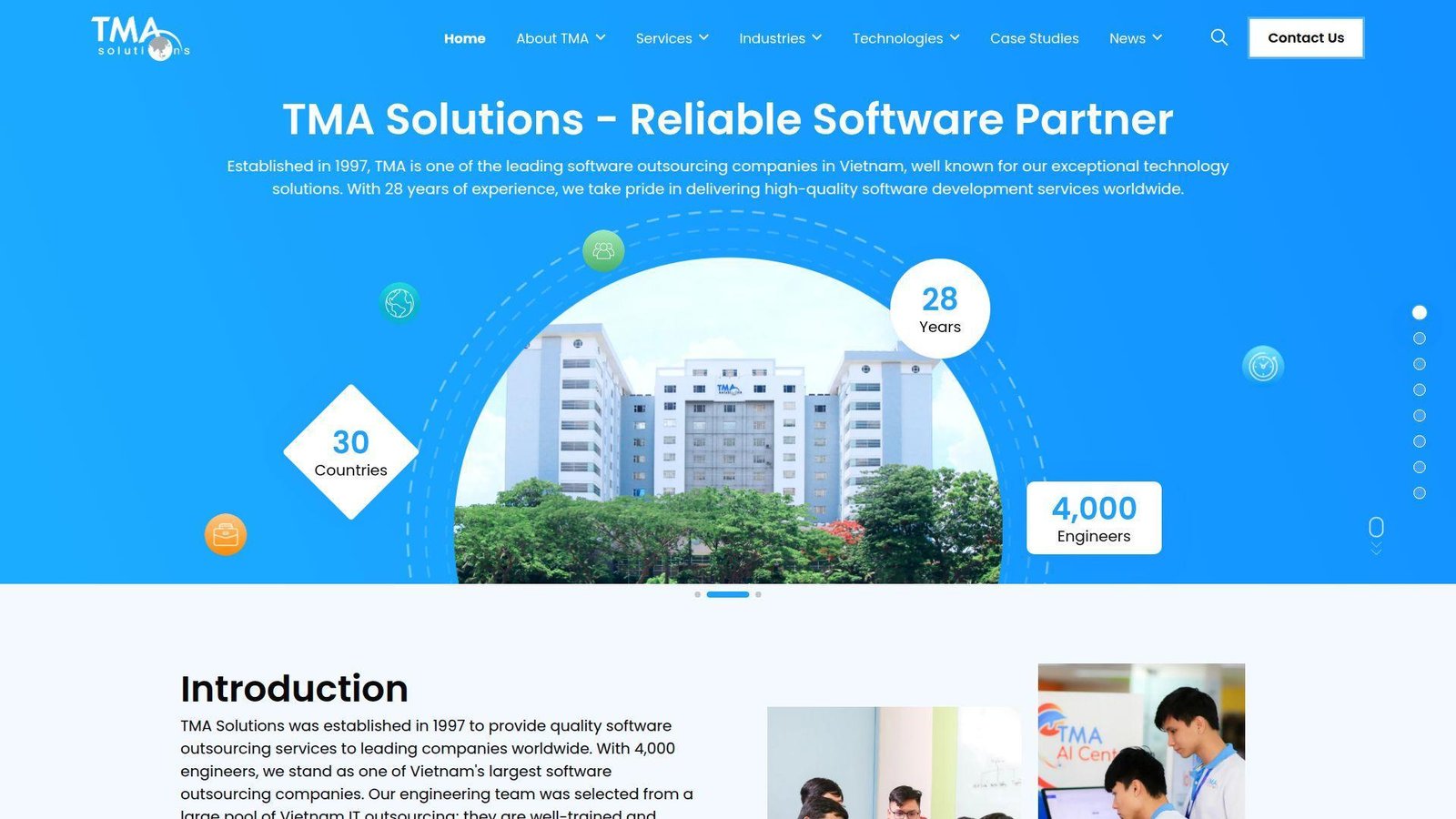
TMA Solutions is one of Vietnam’s longest-standing software outsourcing names. Founded in 1997 and headquartered in Ho Chi Minh City, the company says it has about 4,000 employees. For buyers, that means TMA belongs in the mature engineering and R&D conversation, not the small agency conversation.
We would consider TMA for complex product development, offshore delivery centers, telecom or enterprise systems, and multi-year technology programs where continuity matters. The company’s age is a real advantage. Teams that have survived this long usually know how to hire, retain, and document better than younger shops. The trade-off is creative fit. If your problem is sharper storytelling, stronger art direction, or conversion-focused content structure, a design-led agency will usually feel quicker and more attentive. TMA works best when engineering depth is the real bottleneck.
- Service scope: Custom software, R&D, offshore teams, and enterprise systems.
- Industry specialization: Large technical programs and long-term delivery.
- Ideal client size: Enterprise and product companies.
- Pricing model: Long-term contract or dedicated team.
- Onboarding process: Technical scoping and governance setup.
- Communication style: Structured and engineering-led.
- Proof/case-study requirements: Ask for similar long-term engagements.
- Red flags to check before hiring: Using TMA for a simple marketing site.
- Questions to ask before signing: How do you handle team continuity, documentation, and support?
13. Alive Vietnam
Alive Vietnam is a Ho Chi Minh City creative and branding firm founded in 2015. LinkedIn lists it in the 11 to 50 range, while the company’s Japanese profile says it has about 60 employees in Vietnam and about 140 across the group. With offices in Ho Chi Minh City and Hanoi, Alive sits in an interesting middle ground between boutique studio and cross-border creative partner.
We especially like Alive for Japanese companies operating in Vietnam, or for Vietnamese brands that want a design process shaped by Japanese quality expectations and clearer cross-cultural communication. Its scope stretches beyond websites into branding, UI/UX, app design, marketing, graphics, and production. That is helpful when the web project is really part of a bigger market-entry or brand-building move. The only caution is fit. If you need heavy custom application engineering, make sure the build layer is as strong as the strategy and design side.
- Service scope: Branding, UI/UX, web, app design, marketing, and production.
- Industry specialization: Japan-linked brands and market-entry work.
- Ideal client size: Mid-market brands and cross-border teams.
- Pricing model: Custom project scope.
- Onboarding process: Workshops with detailed requirement alignment.
- Communication style: High-context and detail-oriented.
- Proof/case-study requirements: Ask for bilingual or Japan-market examples.
- Red flags to check before hiring: Unclear engineering ownership.
- Questions to ask before signing: Who reviews quality, in which language, and how are revisions handled?
14. 3FORCOM
3FORCOM has been operating since 2008 and is based in Ho Chi Minh City. Public profiles place it in the 11 to 50 employee range, and the company describes itself as having grown toward a roughly 50-person team. It offers web and mobile development, business applications, e-commerce, SEO, and dedicated team models. We see 3FORCOM as a practical, engineering-led option for SMEs and startups.
Its appeal is straightforwardness. 3FORCOM talks openly about dedicated teams, agile delivery, and long-running work across business websites, mobile apps, and enterprise tools. That can be useful for buyers who care more about execution and handoff than about a polished agency pitch. The trade-off is brand impression. Compared with newer design boutiques, 3FORCOM feels less visually refined in its own presentation. That is not a deal breaker, but it is a reminder to review live client work carefully, especially if design sophistication is a top priority.
- Service scope: Websites, apps, e-commerce, SEO, and dedicated teams.
- Industry specialization: SMEs, startups, and practical business systems.
- Ideal client size: Small and mid-sized businesses.
- Pricing model: Project or dedicated team engagement.
- Onboarding process: Scope review and agile delivery planning.
- Communication style: Direct and engineering-led.
- Proof/case-study requirements: Ask for recent live sites and admin-heavy builds.
- Red flags to check before hiring: Dated design quality for a design-first brief.
- Questions to ask before signing: What is the sprint cadence, QA process, and handover plan?
15. One Pixel Media
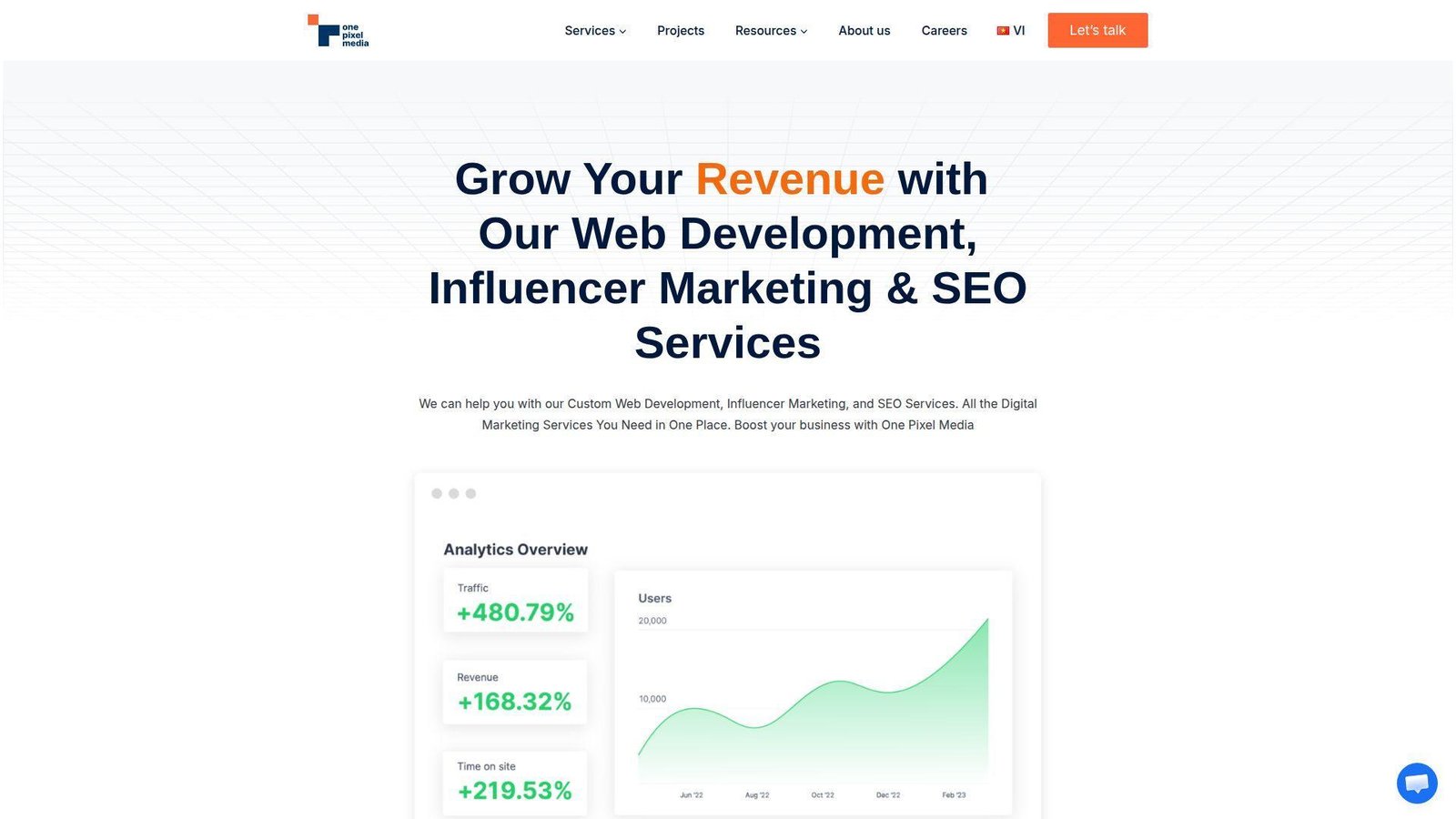
One Pixel Media is a Ho Chi Minh City agency founded in 2021, with a public team size of 2 to 10. Its services combine web design and development with SEO, influencer marketing, social media, and branding. We view One Pixel Media as a smart option for smaller companies that want a website partner who also thinks about traffic and marketing after launch.
The upside of a small team is directness. Projects can move quickly, and strategy does not get buried under layers of management. We would consider One Pixel for local businesses, early-stage brands, and marketing-first websites where SEO structure, content support, and promotional execution matter as much as the build. The trade-off is scale. For heavy custom platforms, complex integrations, or enterprise stakeholder management, you will likely outgrow this kind of team. Ask for the exact senior people involved and how technical QA is handled before launch.
- Service scope: Web design, development, SEO, social, and influencer support.
- Industry specialization: Marketing-led SMB websites.
- Ideal client size: Small businesses and early-stage brands.
- Pricing model: Custom package or project scope.
- Onboarding process: Goal review, content discussion, then site plan.
- Communication style: Close to the founder or core team.
- Proof/case-study requirements: Ask for live SEO and website examples.
- Red flags to check before hiring: Thin QA or over-reliance on marketing buzz.
- Questions to ask before signing: Who develops the site, who manages analytics, and how many revisions are included?
16. Magenest
Magenest is a Hanoi-based e-commerce and digital transformation agency with a public team size of 51 to 200. Its site says it was founded in 2015, while LinkedIn lists 2014, so we would simply treat it as a decade-old player with serious experience in commerce systems. The company works across Adobe Commerce, Odoo, HubSpot, cloud, ERP, CRM, mobile apps, and related digital services.
We like Magenest best for commerce-heavy builds where the website is one part of a larger operational stack. Think product catalogs, customer data, order flow, CRM sync, and internal process cleanup around the storefront. That is where platform partnerships and systems thinking matter. The trade-off is that Magenest may feel too commerce-centered for clients seeking a pure brand or content site. If you go this route, ask how much of the engagement focuses on design thinking versus platform implementation.
- Service scope: E-commerce, ERP, CRM, cloud, mobile, and digital systems.
- Industry specialization: Commerce platforms and operational back-office work.
- Ideal client size: Mid-market retailers and multi-channel brands.
- Pricing model: Custom scope by platform and systems needs.
- Onboarding process: Platform and operations audit first.
- Communication style: Platform-aware and process-focused.
- Proof/case-study requirements: Ask for same-platform case studies.
- Red flags to check before hiring: Too much platform bias for a brand-led brief.
- Questions to ask before signing: Who owns design, data migration, and maintenance?
17. Afocus
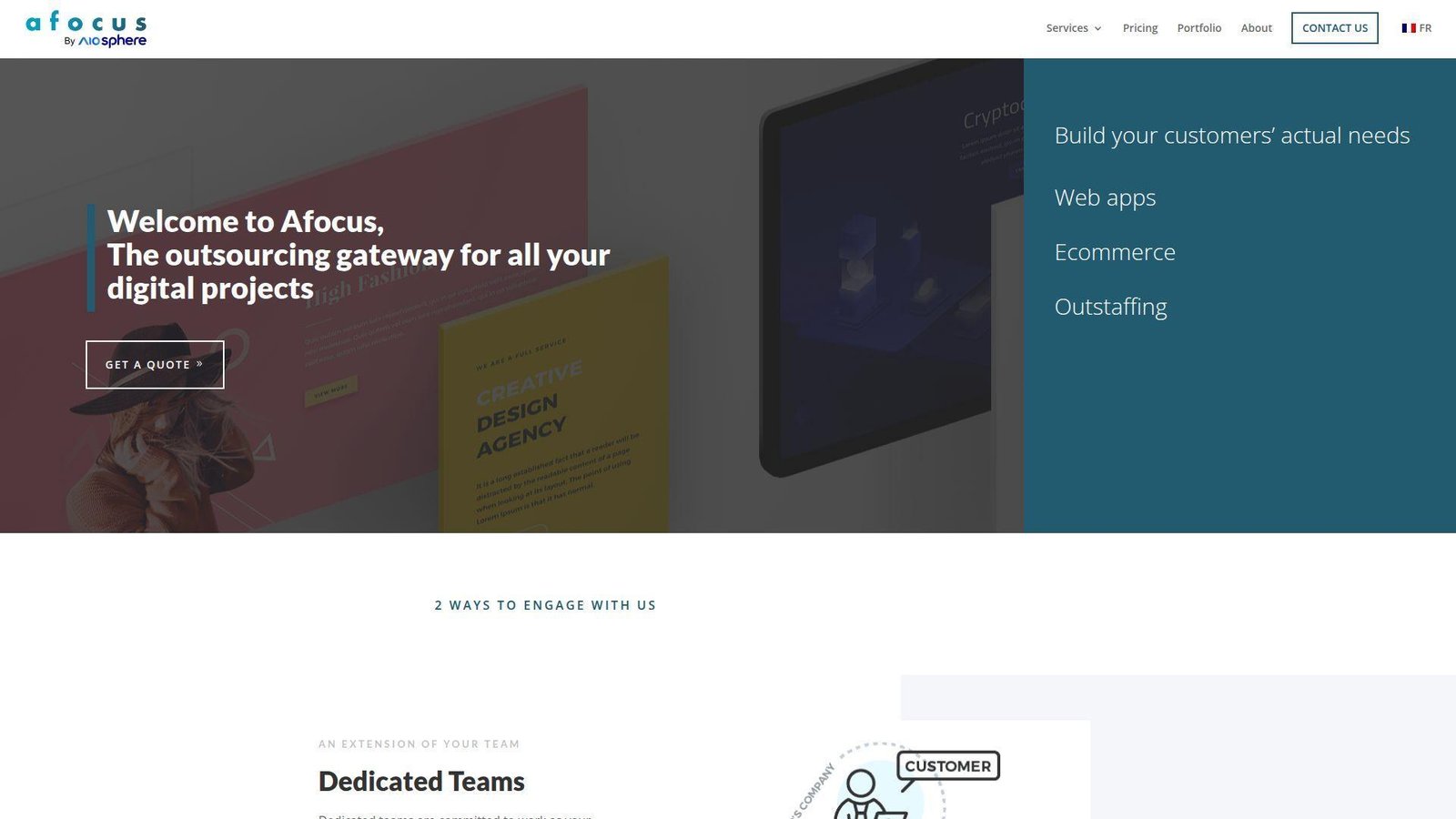
Afocus is a Ho Chi Minh City outsourcing and product development firm founded around 2018, with public sources suggesting a small team, likely under 50 people. The company positions itself around staff augmentation, custom web app development, e-commerce, MVP work, QA, and offshore collaboration. We see Afocus as a practical fit for founders and overseas teams that want a lean build partner rather than an agency with lots of ceremony.
What makes Afocus interesting is its international management angle and product-first tone. The company speaks directly to remote collaboration, transparent processes, and faster access to Vietnamese talent, which can be attractive for Western clients. Its portfolio also covers websites, web apps, and e-commerce builds across several markets. The limitation is depth of public proof compared with more established names. We would ask for recent live projects, a clear staffing plan, and specific examples of how product discovery is handled before development starts.
- Service scope: Staff augmentation, web apps, e-commerce, MVP, and QA.
- Industry specialization: Offshore product teams and startup builds.
- Ideal client size: Startups and overseas SMB teams.
- Pricing model: Dedicated team or project mode.
- Onboarding process: Discovery, staffing, then delivery model setup.
- Communication style: Transparent and remote-first.
- Proof/case-study requirements: Ask for named team roles and live products.
- Red flags to check before hiring: Thin bench for larger scopes.
- Questions to ask before signing: What is the PM model, timezone overlap, and team tenure?
18. Amit Group
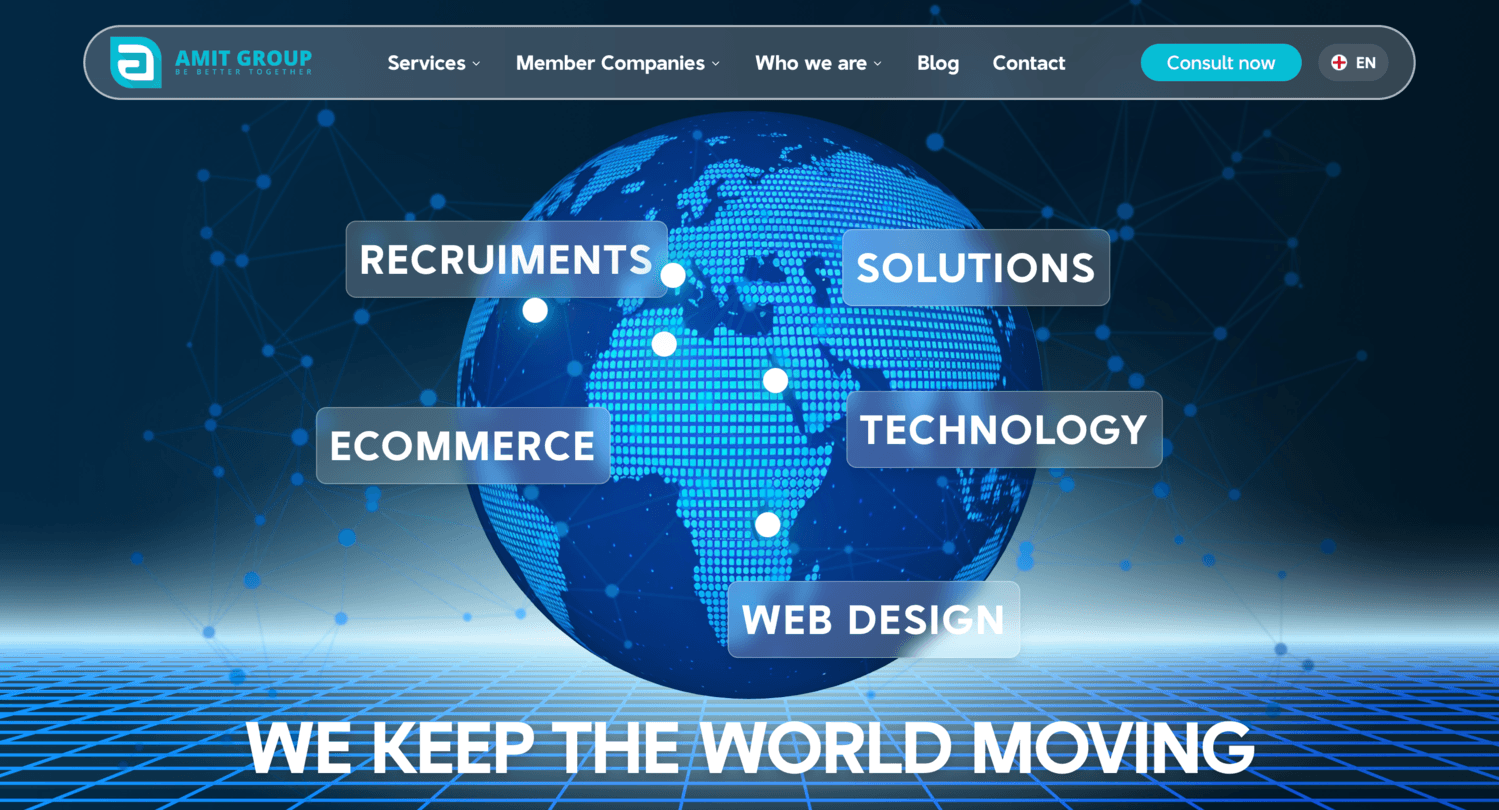
Amit Group is a Ho Chi Minh City technology company founded in 2019, with public sources placing it in the 11 to 50 employee range. Its current positioning spans website design, software outsourcing, mobile app development, IT staffing, and broader digital transformation support. On paper, that makes Amit a flexible option for businesses that want one vendor to cover several digital needs.
Our caution here is not about service breadth. It is about proof. Parts of the current site still use generic, template-like language and testimonials, so we would verify recent live projects, named team members, and concrete case studies before signing. That does not rule Amit out. Many capable smaller firms have imperfect marketing. It simply means the diligence burden shifts to the buyer. If Amit shows you strong recent work and a clear delivery team, it may be a cost-effective fit. If not, move on quickly.
- Service scope: Web, software, mobile, staffing, and digital support.
- Industry specialization: Broad SMB digitization needs.
- Ideal client size: Small and midsized businesses.
- Pricing model: Custom quote.
- Onboarding process: Needs review and proposal.
- Communication style: Verify the actual PM lead before signing.
- Proof/case-study requirements: Demand recent live work and named references.
- Red flags to check before hiring: Template-like sales material without solid proof.
- Questions to ask before signing: Who is on the team, what is custom, and what support is included?
19. Bean Creative
Bean Creative is a Ho Chi Minh City branding agency founded in 2022, with LinkedIn placing it in the 11 to 50 employee range. The firm talks about practical branding solutions and shows work that crosses identity, art direction, packaging, and website design or development. We see Bean as a good match for young brands that need their visual system and website to grow together.
What we like is focus. Bean is clearly trying to build a reputation around brand thinking, not generic digital services. That can be valuable when a founder has a product, a rough story, and no consistent brand expression yet. The trade-off is relative newness and lighter public evidence on complex engineering work. We would happily shortlist Bean for brand-led websites, campaign pages, or launches. We would be more cautious if the brief includes deep integrations, custom portals, or larger back-office logic.
- Service scope: Branding, art direction, and website design or development.
- Industry specialization: Early-stage brands and consumer-facing launches.
- Ideal client size: Startups and growing lifestyle brands.
- Pricing model: Project-based creative scope.
- Onboarding process: Brand workshops before visual execution.
- Communication style: Creative and collaborative.
- Proof/case-study requirements: Ask for full site deliverables, not identity boards alone.
- Red flags to check before hiring: Limited engineering depth for a technical build.
- Questions to ask before signing: Who codes the site, which CMS is used, and what timeline is realistic?
20. Xolve Branding
Xolve Branding is a Ho Chi Minh City strategy-first brand consultancy founded in 2019, with public sources placing it in the 11 to 50 employee range. Its emphasis is clear, research, brand strategy, identity systems, communication, and website development that supports a larger brand story. We think Xolve is one of the stronger options here for businesses that need positioning discipline before pixels.
This is the kind of partner we would bring in when the problem is fuzzier than “we need a new site.” If leadership is unclear on audience, differentiation, naming, or brand architecture, a strategy-led studio can save a lot of wasted design rounds later. Xolve looks strongest on identity-rich projects in lifestyle, hospitality, healthcare, education, and growing consumer brands. The obvious trade-off is engineering depth. For large custom web applications, we would pair a studio like this with a stronger software development partner or confirm its technical bench in detail.
- Service scope: Strategy, identity, communication, and website development.
- Industry specialization: Brand transformation and identity-rich websites.
- Ideal client size: Growth brands and ambitious mid-market businesses.
- Pricing model: Strategy-led project scope.
- Onboarding process: Research and positioning before design.
- Communication style: Senior strategy-led and structured.
- Proof/case-study requirements: Ask for full brand-to-site transformations.
- Red flags to check before hiring: Vague technical build details.
- Questions to ask before signing: Who owns development, content governance, and handoff?
Recommended reading: Top 20 WordPress Website Design Companies for Custom, Scalable Websites
Why Businesses Choose Web Design Companies in Vietnam
Vietnam is not interesting only because it is affordable. McKinsey notes the country’s economy grew 7.96 percent in the second quarter of 2025, and we see the same momentum in digital spending, brand refresh work, commerce upgrades, and offshore product demand. The point for buyers is simple. This market now has enough depth to support both creative sites and system-heavy builds.
1. Competitive Costs and Strong Value for Money
We do not think the best pitch is “cheapest web design in Asia.” Better Vietnam firms win on value. A buyer can choose a tiny marketing-led team, a boutique design studio, a commerce specialist, or a larger engineering partner without leaving one market. That range gives you more pricing control and better scope fit than hiring a giant international network agency for every job.
2. Deep Technical Talent Across Modern Web Stacks
The stronger agencies here do more than static front ends. We see teams working across modern JavaScript frameworks, Python, PHP, Magento, Odoo, cloud environments, and product engineering stacks. That is why Vietnam works especially well when a site needs to connect to a portal, commerce layer, CRM, or mobile roadmap instead of stopping at mockups.
3. Reliable Collaboration, Transparency, and Communication
International buyers often worry about handoff and clarity more than code. We think Vietnam does better when agencies show their operating style up front. French-managed Afocus emphasizes transparent remote processes, Alive Vietnam is built for Japanese-Vietnamese coordination, and Orient and Synodus both stress communication as part of delivery. Those signals matter because a beautiful homepage is useless if daily decisions stall.
4. Strong Delivery Hubs in Ho Chi Minh City, Hanoi, and Da Nang
The strongest clusters remain Ho Chi Minh City, Hanoi, and Da Nang. That spread matters because it gives buyers real choice. Ho Chi Minh City is rich in boutique and brand-led teams, Hanoi has many larger software and product vendors, and Da Nang shows up often in the office footprint of bigger engineering firms. In practice, that means the talent base is not locked into one city or one operating style.
Recommended reading: Top 20 Professional SEO Services for Finding the Right SEO Partner
How to Compare Web Design Companies in Vietnam
We prefer proof over slogans. For example, ViiVue’s REE Corporation case study reports 90-100 on desktop across all pages, which is far more useful than a generic claim that a site “loads fast.” When we compare agencies, we look for this kind of measurable evidence.
1. Minimum Project Size, Hourly Rate, and Team Scale
A 2-to-10 person shop and a 10,001+ enterprise vendor should not be compared on the same sheet. Smaller teams often move faster and stay closer to the founder. Larger vendors handle governance, deeper QA, and technical scale. Before you compare proposals, decide whether you need a compact team, a specialist pod, or a much larger delivery structure.
2. Portfolio Strength, Case Studies, and Verified Reviews
We like portfolios that show live URLs, before-and-after context, business goals, and measurable outcomes. A case study with real constraints tells us more than a gallery of polished homepage shots. The same rule applies to commerce and web app firms. Ask what changed, why it changed, who approved it, and what happened after launch.
3. Industry Fit, Client Focus, and Service Breadth
Industry fit matters more than many buyers admit. BSS Commerce is built for e-commerce. Alive Vietnam is especially useful for Japanese-linked business and branding work. Savvycom leans toward enterprise sectors like finance and healthcare. A firm can be excellent and still be wrong for your brief if its core experience lives in another type of project.
4. CMS, E-Commerce, and Custom Development Expertise
We always ask a simple question, is this a CMS job, a commerce job, or a custom product job pretending to be a website project? Tigren, BSS Commerce, and Magenest are stronger when platforms and storefront logic dominate. Afocus, Designveloper, Newwave, and Synodus make more sense when the project starts drifting toward custom app behavior, staff tools, or broader product development.
Recommended reading: Top 20 Sydney Web Design Companies for Businesses That Want Better Results
Core Services Offered by Leading Agencies
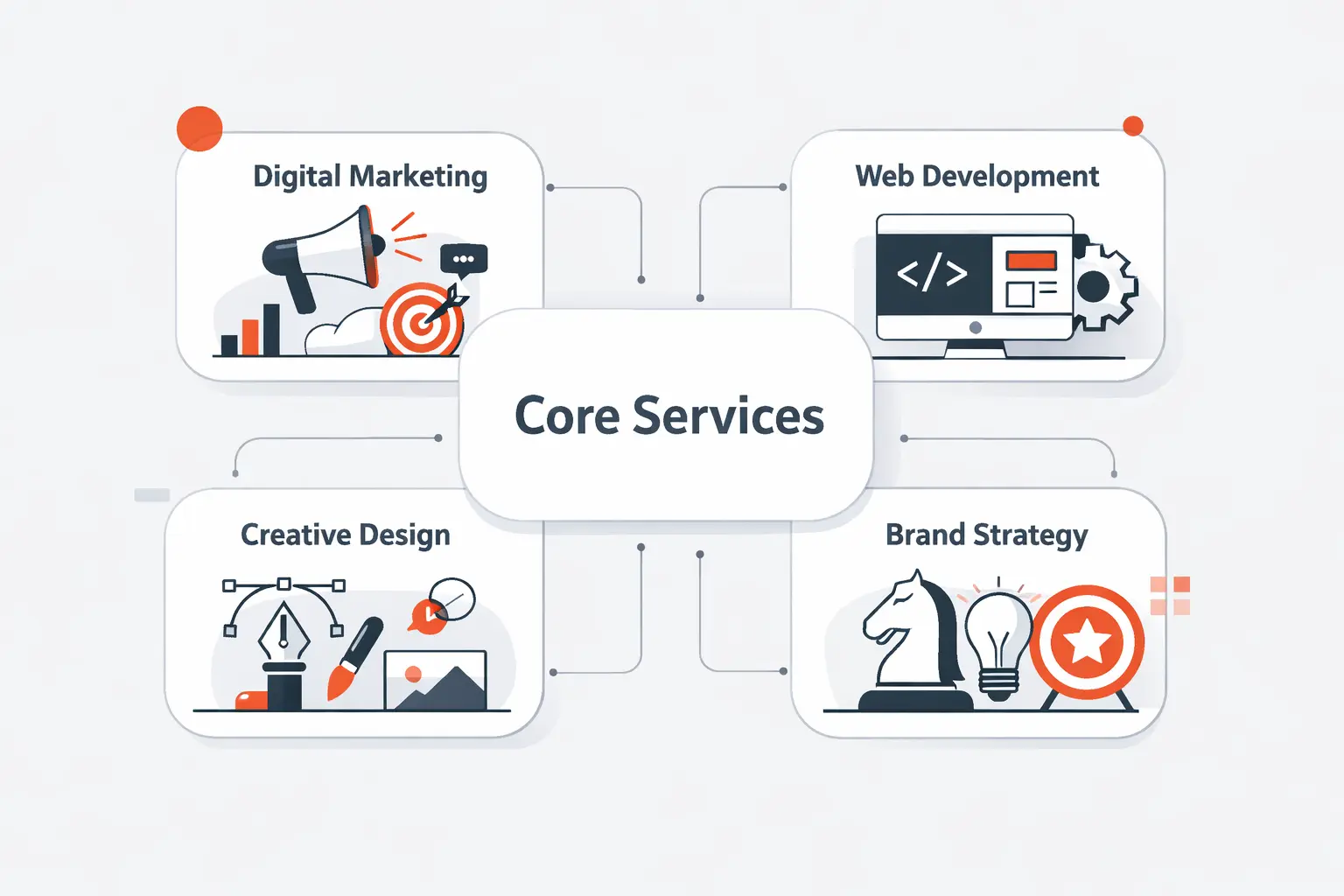
The category is wide. BSS Commerce says it has 400+ professionals, while smaller studios stay intentionally lean. That matters because “web design” in Vietnam can mean anything from identity work to platform migration to dedicated development support. We always ask what is actually included.
1. Website Design, UI/UX, and Brand Identity
This is the service layer most buyers think they are purchasing, but it varies a lot. ViiVue, Alive Vietnam, Xolve Branding, and Bean Creative all come at it from a more brand-aware angle. They think about structure, visual language, tone, and how a site should feel to the right audience. That matters when perception is part of the business problem.
2. E-Commerce, Web Apps, and Custom Website Development
For many companies, the project is no longer a simple marketing site. It is a store, a portal, a dashboard, or a system with user roles and business logic. BSS Commerce, Tigren, Magenest, Newwave, and Afocus all play in this territory, but not in the same way. Some are platform specialists. Others are closer to product engineering partners.
3. SEO, Content, and Performance Optimization
A good-looking site that nobody finds is a weak investment. That is why we like agencies that can discuss technical SEO, content structure, page speed, and image or script discipline in the same breath as layout. One Pixel Media, ViiVue, and Tigren all show this blend more clearly than firms that talk only about visuals.
4. Maintenance, Dedicated Teams, and Ongoing Support
Launch is not the end of the work. It is the point where real users start finding flaws. Newwave highlights maintenance, 3FORCOM talks openly about dedicated development teams, and larger engineering vendors like TMA are built for longer delivery relationships. Buyers who ignore support terms often regret it fastest.
Recommended reading: Top 20 IT Outsourcing Companies for Growth, Innovation, and Scale
Best Fits by Project Type
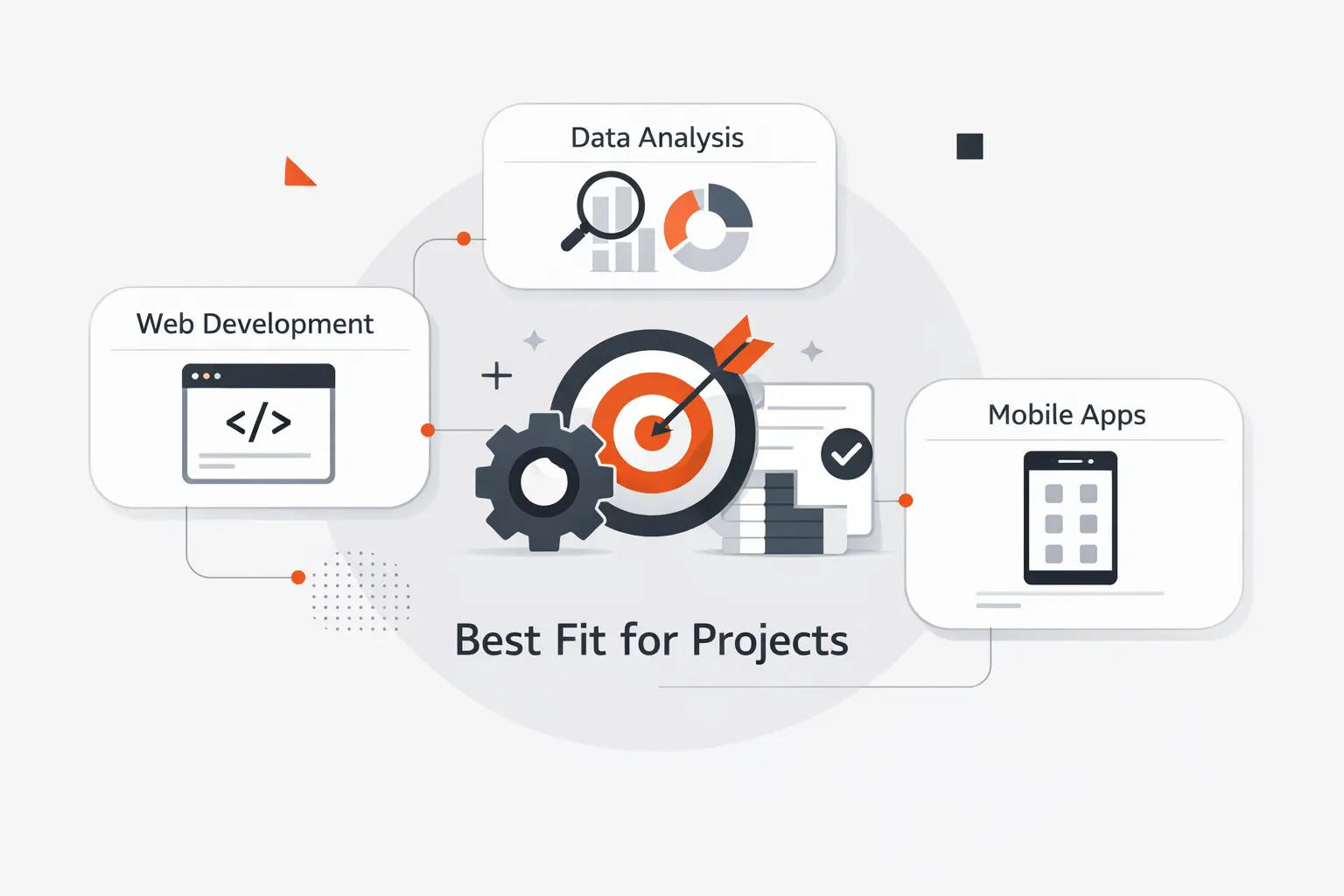
At the enterprise end of the market, FPT Software reports over 33,000 employees in 30+ countries, which tells you how different this vendor landscape can be from a five-person design studio. That is why we prefer project-type shortlists over one-size-fits-all rankings.
1. Brand-Led Website Redesigns
For brand-led redesigns, we would usually start with ViiVue, Alive Vietnam, Bean Creative, and Xolve Branding. These firms are more likely to care about positioning, tone, information hierarchy, and visual coherence, not just development tickets. If the website’s real job is to make the business look sharper, clearer, and more credible, that bias matters.
2. E-Commerce and Conversion-Focused Builds
For commerce, we would lean toward BSS Commerce, Tigren, and Magenest first, with Afocus in the conversation for leaner builds. These teams are better aligned to catalog structure, migration risk, platform decisions, store speed, and B2B pricing logic. In other words, they speak merchant problems more naturally.
3. Custom Web Apps and Platform Development
When the project starts acting like a product, we would look harder at Synodus, Designveloper, TechTide Solutions, Orient Software, and Newwave Solutions. These firms are more believable when user roles, workflows, integrations, dashboards, or future mobile extension are part of the brief. They are not all design-first shops, but they are better bets for custom logic.
4. Enterprise Transformation and System Integrations
For enterprise transformation, the shortlist changes again. FPT Software, CMC Global, TMA Solutions, and Savvycom make more sense when web design sits inside a larger systems program. These are the names we would consider when procurement, security review, global stakeholders, or long-term platform work carry more weight than homepage aesthetics.
Agencies Versus Freelancers in Vietnam
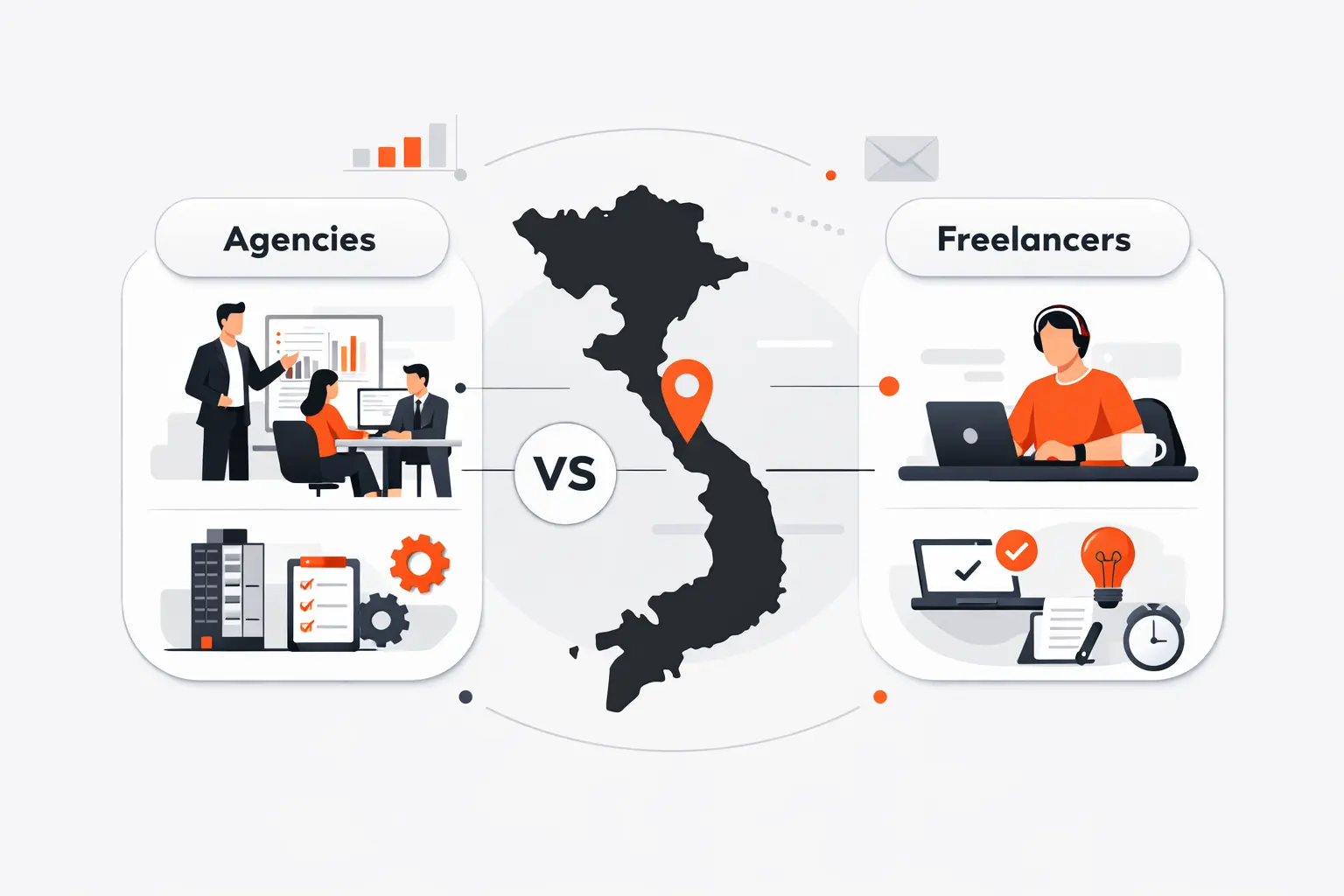
For smaller jobs, a solo designer can still be the right answer. Binh Nguyen, for example, presents himself as a Ho Chi Minh City web designer and developer with 5 years of experience, which is the sort of profile we would consider for a contained brochure site or landing page project. The question is not agency versus freelancer in the abstract. It is scope versus risk.
1. When a Boutique Agency Is the Better Choice
A boutique agency is usually the better choice when several stakeholders are involved, the brief is still moving, or the site needs design, content structure, development, QA, and support under one roof. Agencies also make more sense when launch is only phase one and the client expects post-launch maintenance, SEO fixes, or further feature work. In short, agencies absorb more delivery risk.
2. When a Freelancer Like Binh Nguyen Can Be a Strong Fit
A freelancer can be a strong fit when the problem is narrow and decision-making is fast. Think a founder-led brochure site, a landing page refresh, a portfolio site, or a visual cleanup where one person can work directly with the client. We would choose this route only when the scope is contained, content is mostly ready, and there is no hidden app logic waiting under the surface.
3. How Behance Portfolios Help Shortlist Web Designers
We use Behance as a visual filter, not a hiring decision. It is useful for spotting typography taste, composition, motion sense, and presentation skill. It is weak at proving delivery discipline. So when we review a Behance portfolio, we also want live site links, mobile views, CMS or tech details, and some evidence that the designer can survive real client feedback.
What to Ask Before Hiring a Vietnam Web Design Company
This is where many buyer mistakes happen. The first sales call sounds great. Nobody has defined content ownership, CMS boundaries, review rounds, or who answers the phone after launch. We like to make those points explicit before any proposal turns into a contract.
1. What Business Goals, Audience Needs, and Inspirations Matter Most?
Start with the business problem, not the color palette. Ask what the site must help you do, attract better leads, explain a hard offer, support sales calls, sell products, recruit, or serve partners. Then ask how the agency turns those goals into structure, messaging, and page priorities. If they jump to design before clarifying the problem, we worry.
2. What Platforms, CMS Options, and Tech Stacks Do You Recommend?
You want to hear a reasoned recommendation, not a reflex. Ask why they suggest WordPress, Shopify, Magento, a headless setup, or a custom stack. Good teams will explain trade-offs in editing freedom, performance, security, integration needs, and future cost. We especially like vendors who can tell you when custom development is unnecessary.
3. How Do You Handle Revisions, Reporting, and Day-to-Day Communication?
This is where hidden friction shows up. Ask who your point of contact is, how often updates happen, what counts as a revision, and how scope changes are priced. Also ask what happens when feedback conflicts internally. A calm answer here is often worth more than an impressive homepage.
4. What Support Do You Provide After Launch?
Post-launch support should be spelled out. Ask about bug-fix windows, maintenance options, CMS training, analytics checks, backups, hosting handoff, and future improvement work. If the agency treats launch as the finish line, that is usually a warning sign for any business expecting the site to keep evolving.
FAQ About Web Design Companies in Vietnam
These are the questions we hear most often when companies first compare agencies in Vietnam. The short answers are below, but the real answer almost always depends on how simple or how technical your project actually is.
1. How Much Does Web Design Cost in Vietnam?
Costs vary by category more than by city. A small brochure site sits at one end. A custom e-commerce build, portal, or web app sits at the other. We suggest comparing line items, discovery, design, development, content entry, QA, analytics setup, training, and support, instead of reacting to a single headline number.
2. What Is the Difference Between Web Design and Web Development?
Web design covers structure, visuals, user flow, and content presentation. Web development is the build layer, the code, CMS setup, integrations, performance work, and functional logic. Some agencies handle both well. Others are clearly stronger on one side, which is exactly why shortlisting by fit matters.
3. Which Vietnam Agencies Also Handle E-Commerce and Web Apps?
From this list, BSS Commerce, Tigren, Magenest, Afocus, Newwave Solutions, Synodus, Designveloper, and Savvycom all extend beyond brochure-style websites into commerce, portals, or web application work. We would separate the platform specialists from the product engineering firms before requesting proposals.
4. Are Web Design Companies in Vietnam a Good Fit for International Clients?
Yes, often very much so, but the best fit depends on the working style you need. Alive Vietnam is useful for Japanese-linked work, Afocus speaks directly to Western-managed remote delivery, and firms like FPT Software, Orient Software, Savvycom, and Synodus all show broader international reach or office footprint. The safe move is to test communication style early, not assume it.
5. What Should I Review Before Signing a Web Design Contract?
Review scope, revision limits, timeline assumptions, content responsibilities, CMS choice, hosting handoff, access ownership, intellectual property, maintenance terms, and change-request pricing. We also like to see the actual team structure in writing. If the contract is vague on who does what, trouble usually starts later.
How TechTide Solutions Helps Build Custom Web and Software Solutions
At TechTide Solutions, we usually work where a website stops being just a marketing asset and starts touching real operations. That may mean a custom portal, a content-heavy site with SEO requirements, or a system that needs to grow into web and mobile products later.
1. Custom Solutions Tailored to Your Goals and Workflows
We build around the actual workflow, not a generic theme and a sales promise. If a client needs a custom process for users, staff, or internal teams, we map that first and then shape the website or platform around it. That is usually a better route than forcing the business into a template that was built for somebody else’s process.
2. Web, Mobile, and Software Development Under One Team
Our advantage is not that we can build a homepage. Many firms can. Our advantage is that we can connect the website layer to web applications, mobile work, and broader software requirements when the project keeps growing. For clients with a longer roadmap, that keeps decisions more consistent from the start.
3. Flexible Delivery for Long-Term Digital Growth
We prefer delivery models that match the real project, not the other way around. Some clients need a defined website scope. Others need a longer product path with ongoing iteration. In both cases, we aim to keep the communication clear, the technical choices practical, and the handoff clean enough that the system stays usable after launch.
Final Thoughts on Choosing Web Design Companies in Vietnam
The best web design companies in Vietnam are not all solving the same problem. Some sell brand clarity and commerce depth. Some sell engineering scale. Our advice is simple, decide which of those problems you actually have before you shortlist.
If we were choosing, we would start with three questions. Do we need a brand studio, a commerce specialist, or a product engineering team? How much post-launch support will matter? And who on the vendor side will own decisions when the project gets messy? Answer those honestly, and the right Vietnam partner becomes much easier to spot. Which type of partner do you need next?

