


The best web design companies do more than make a site look polished. They shape messaging, user flow, technical foundations, content structure, and post-launch support in ways that can either help growth or quietly block it. We researched these agencies through their official sites, public process pages, pricing signals, and third-party review profiles so readers can make a short list without opening ten more tabs. If you need a fast answer, Clay, SmartSites, DD.NYC, and UPQODE are the strongest all-around picks, while TechTide makes more sense when the website is tied closely to broader software or product work.
How We Compared These Web Design Companies
We compared these agencies with a buyer’s lens, not an awards-show lens. The point was to figure out who is actually easy to shortlist for a real project, with real budget limits, real timelines, and real internal stakeholders. That meant looking for evidence of process clarity, service depth, platform fit, and public review quality, then weighing that against how transparent each company is about scope, pricing signals, and ideal client type.
Quick Comparison of the Best Web Design Companies
If you only need the shortlist, start here. This table focuses on the ten agencies we would put in the first round for most serious growth projects, with public budget signals pulled from the sources we reviewed and our editorial score based on fit, clarity, depth, and review strength.
| Agency | Best For | Min. Project Size | Hourly Signal | Score |
|---|---|---|---|---|
| Clay | Enterprise and brand-led digital experiences | $50,000+ | $150-$199/hr | 4.8 |
| TechTide | Software-heavy website builds tied to product work | N/A | Custom quote | 4.1 |
| SmartSites | Growth-focused small and midsize businesses | $1,000+ | $100-$149/hr | 4.7 |
| DD.NYC | High-end brand presentation and visual storytelling | $10,000+ | $150-$199/hr | 4.7 |
| UPQODE | WordPress and Shopify builds for mid-market teams | $10,000+ | $50-$99/hr | 4.6 |
| Lounge Lizard | Brands wanting design plus marketing under one roof | $25,000+ | Undisclosed | 4.5 |
| Dotlogics | Revenue-minded redesigns with stronger business framing | $25,000+ | $150-$199/hr | 4.5 |
| Huemor | B2B industrial, construction, and engineering firms | $25,000+ | $150-$199/hr | 4.4 |
| SPINX Digital | Custom enterprise-style projects in Los Angeles | N/A | $150-$199/hr | 4.3 |
| Intero Digital | Search-led redesigns with broader marketing support | $1,000+ | Undisclosed | 4.2 |
How We Researched and Evaluated Each Agency
Our scores are editorial judgments from documented research, not recycled badge counts. We read official service and process pages, checked public pricing signals where available, and used independent review listings to sanity-check how the agency is described by clients and how reviews are verified through its published review rules.
- Capability fit: we looked at whether the agency’s published services genuinely match what a serious website growth project usually needs, including UX, development, content structure, integrations, and launch support.
- Process clarity: agencies scored higher when their pages explained how discovery, planning, design, development, approvals, and launch actually work.
- Pricing transparency: we rewarded companies that at least offer public budget bands, minimum project size signals, or clear engagement models instead of hiding every commercial clue.
- Platform and technical depth: we looked for real evidence of CMS, ecommerce, front-end, or product capabilities rather than generic “we build websites” language.
- Review strength: we weighed public third-party ratings, review volume, and recurring themes such as communication, timeliness, and value for cost.
That framework favors agencies that make buying easier. Great creative matters, but for most teams, clear fit beats vague prestige.
Recommended reading: Top 30 Best Cloud Server for Game Hosting Providers and Tools in 2026
Top 10 Best Web Design Companies
These are the ten agencies we would put in front of a serious buyer first. They are not identical, and that is the point. Some are stronger for brand-heavy enterprise work, some are better for SMB growth, and some sit closer to software product development than classic agency design.
1. Clay
- Category: Branding, UX, and digital product agency
- Best for: Enterprise and high-growth brands that want design leadership
- Location: San Francisco, with additional U.S. and international offices
- Pricing: Custom quote, with a high-end market position
- Standout: Brand, website, product, and development work under one team
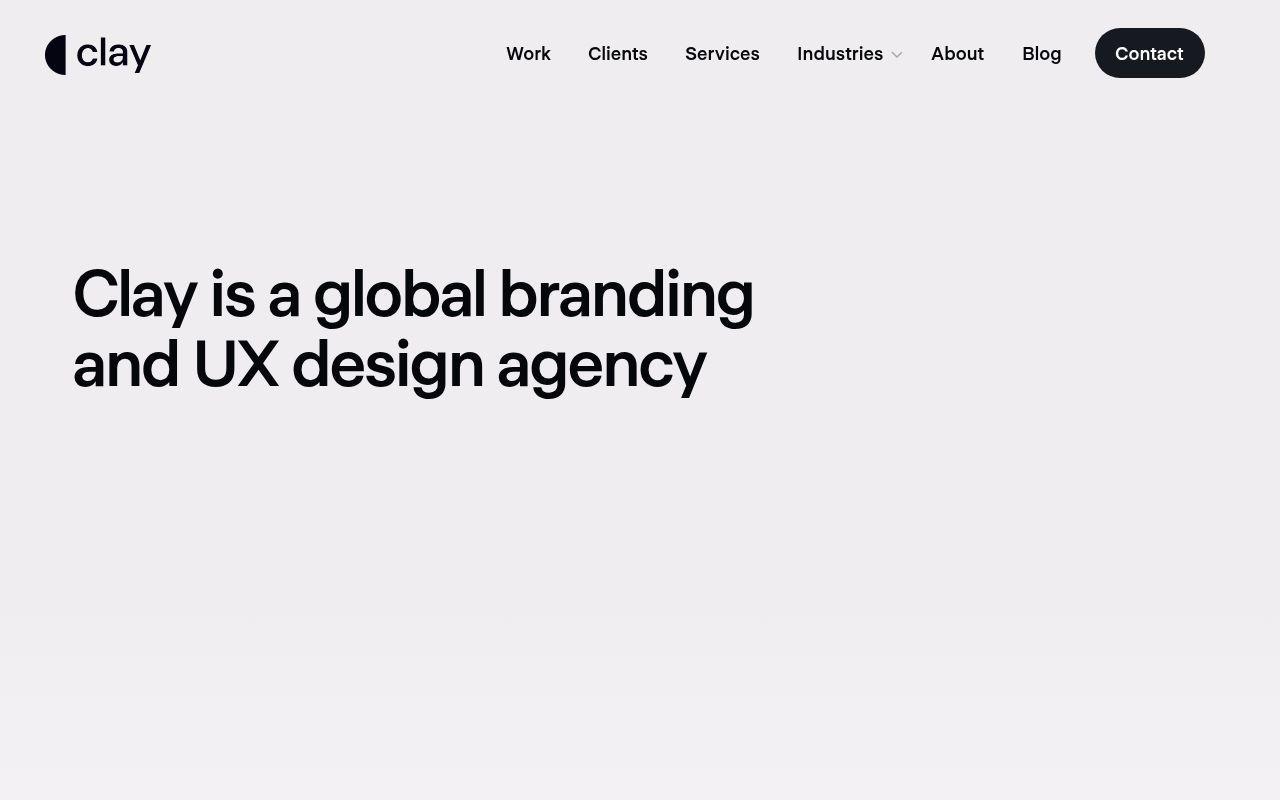
Clay earns the top spot because it looks the most complete for companies that need a website to carry brand, UX, and product-level sophistication at the same time. The official site makes it clear that this is not a quick brochure-site shop. Clay positions itself around branding, digital products, websites, development, content, and generative AI, and the case mix backs that up with work spanning Slack, Grayscale, Marqeta, Tipalti, Yahoo Games, and Vantara. For buyers who want a visually ambitious site that still feels grounded in strategy and systems, that combination is hard to ignore.
How Clay works
From the site and FAQ, the workflow starts from discovery conversations and project briefings rather than fixed packages. Clay says it brings together strategy, branding, UX design, development, and content production, which matters because many website projects break down when those pieces are split across different vendors. On the website side, it explicitly covers marketing websites, web and mobile development, and an in-house content studio for copy, illustration, motion, video, and photography. We also like that Clay does not pretend SEO is a separate miracle service. Its FAQ says SEO considerations are integrated into web projects, but not offered as a standalone service.
That makes the agency easier to read. If you hire Clay for a growth website, the likely motion is discovery, brand and product framing, UX and interface work, development, and launch with strong design oversight. The case studies shown on the homepage also suggest it is comfortable with design systems, 3D elements, interactive demos, fintech UX, and ecommerce presentation, so the site work is closer to digital experience design than templated production.
Who is Clay for?
Clay is best for funded startups, enterprise teams, and brand leaders who need the website to do more than capture leads. It fits teams that want a site to feel like part of the product, especially in SaaS, fintech, crypto, or polished consumer categories. It also makes sense when brand identity and website execution need to happen together instead of in separate tracks.
Smaller businesses should probably look elsewhere. If your main need is a practical WordPress rebuild with a tight budget, Clay’s positioning and public cost signals point well above that lane.
Clay pricing
- Time & materials: Clay lists this as one of its engagement models for flexible scope and evolving work.
- Fixed fee: available when the project scope is defined after discovery conversations and briefings.
- Retainer: suited to ongoing design and development support rather than a one-off launch.
- Public budget signal: Clutch lists a $50,000+ minimum project size and a $150-$199 hourly range.
Pros and cons
Pros
- Official scope covers branding, websites, digital products, development, content, and AI, which is broader than most design-led agencies.
- Case mix shows comfort with enterprise, fintech, ecommerce, and interactive experience work.
- FAQ clearly spells out three engagement models instead of hiding how projects are structured.
Cons
- SEO is integrated into web projects, but not sold as a standalone service.
- Public budget signals place it firmly in premium territory.
- This is more agency than many SMBs need if the project is mostly executional.
Clay rating and reviews
- Clutch: rated 4.8/5 across 32 reviews.
Our verdict is simple: when the website is a brand system, not just a marketing asset, Clay is one of the easiest premium agencies to justify. We would shortlist it first for ambitious, design-sensitive teams that can support a premium scope.
2. TechTide
- Category: Software development company with website development capabilities
- Best for: Businesses that need a website tied closely to broader product or platform work
- Location: U.S.-founded, global team
- Pricing: Custom quote
- Standout: Website development sits alongside SaaS, mobile, AI, and cybersecurity services
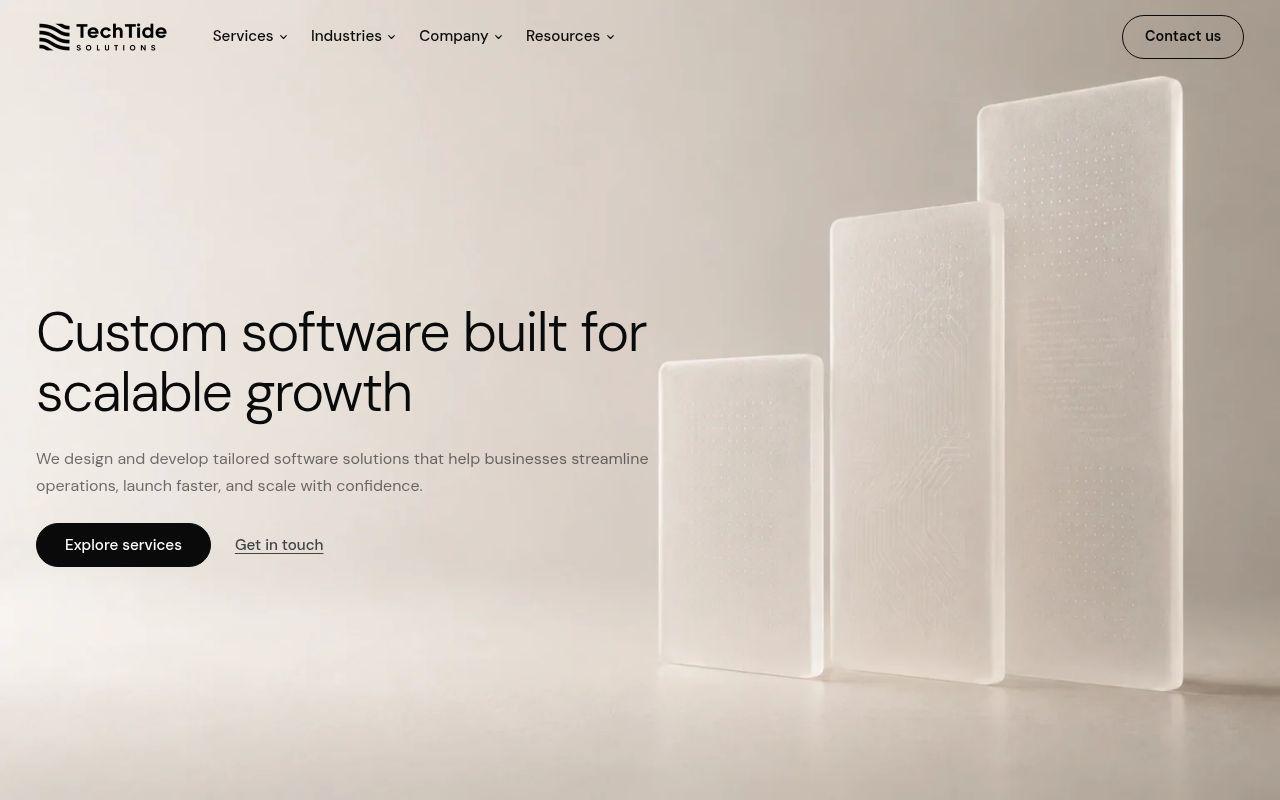
TechTide is the most software-first name in this list, and that is exactly why it lands second instead of lower. If your “website project” is really a front end for a larger digital product, customer portal, SaaS platform, or industry workflow, TechTide’s homepage gives it a broader build profile than a classic creative studio. The company presents website development next to software development, mobile app development, UI and UX design, cybersecurity consulting, and generative AI development, which gives it a different shape from a branding-led agency.
How TechTide works
The official homepage frames TechTide around end-to-end building rather than one isolated design service. It says the team designs and develops tailored software solutions for scalable growth, then breaks its work into six areas: software development, website development, mobile app development, UI and UX design, cybersecurity consulting, and generative AI development. On the website side, the page specifically mentions fast, SEO-ready websites and headless front ends engineered for performance and conversion.
We also found the industry framing useful. TechTide shows dedicated coverage for SaaS, retail, healthcare, logistics, fintech, and blockchain. That matters for companies whose websites need to connect to billing, dashboards, APIs, marketplaces, compliance workflows, or operational systems. The contact flow is structured like a project intake, with fields for service, project budget, project timeline, and project details, so the process appears closer to scoped delivery than casual agency quoting.
Who is TechTide for?
TechTide fits companies that need web design as part of a broader software engagement. SaaS businesses, fintech teams, logistics operators, retailers, and healthcare organizations will likely get more value from that model than from a design-only shop. It also makes sense for teams that expect future app, AI, or platform work and would rather start with one partner.
Pure brand refresh projects should look elsewhere. If the main goal is high-end storytelling, campaign aesthetics, or luxury visual polish, several agencies below are more specialized in that lane.
TechTide pricing
- Custom quote: the linked page does not publish packages, retainers, or hourly rates.
- Project intake model: the contact form asks for service, project budget, project timeline, and project details, which suggests pricing is set after scoping.
Pros and cons
Pros
- Website development is supported by adjacent services in SaaS, mobile, AI, cybersecurity, and blockchain.
- Industry coverage is unusually broad for a company that also offers web work.
- Homepage language is practical about headless front ends, APIs, dashboards, and production-grade AI work.
Cons
- The site is less explicit about classic creative web process steps such as wireframes, revisions, and content approvals.
- No public prices are shown on the linked page.
- Its brand presentation is more software-focused than design-led.
TechTide rating and reviews
- Clutch: rated 5.0/5 across 1 review.
We would shortlist TechTide when the website is only one layer of a bigger digital build. If you need design plus software architecture, it is more compelling than a pure agency. If you need a visually elite marketing site first and foremost, keep reading.
3. SmartSites
- Category: Web design and digital marketing agency
- Best for: Small and midsize businesses that want design tied to SEO and paid growth
- Location: Paramus, New Jersey
- Pricing: Fixed-price website projects plus ongoing support options
- Standout: Strong process transparency for practical business websites
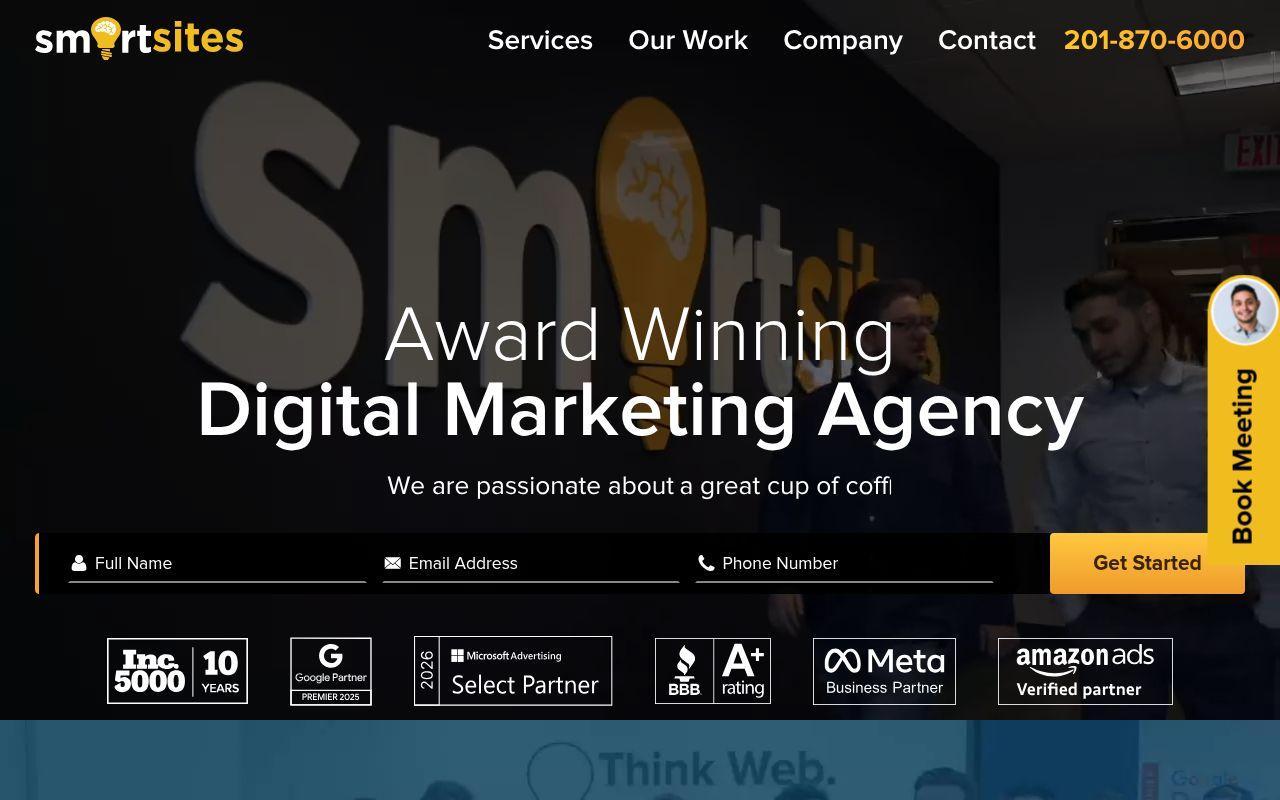
SmartSites is one of the easiest agencies here to picture in an actual buying process. The official site is less art-school, more business-ready, and for many readers that is a plus. It clearly ties web design to SEO, PPC, content, integrations, site ownership, analytics, and maintenance. We also found more step-by-step process detail here than on most agency sites, which makes SmartSites especially appealing to buyers who want fewer surprises.
How SmartSites works
The strongest part of SmartSites’ research trail is the web design service page. It says website projects begin with a Website Plan & Strategy phase, then spells out client involvement in kickoff and onboarding, questionnaire review, website plan approval, and webpage design approvals. That is exactly the kind of detail buyers need, because it shows where stakeholder time is required. The same page says SmartSites plans sites with keyword and competitor research, builds clear calls to action into the structure, and designs for speed and responsive use across devices.
The feature list is practical rather than flashy. SmartSites calls out responsive design, security, Google Analytics, on-site SEO, CMS options like WordPress and Magento, ongoing support, and full ownership of what it builds. It also highlights custom development, integrations and automation, content writing, and certified Zapier expertise. In plain terms, this looks like a capable growth agency for companies that want the site to work as a sales asset, not just a design deliverable.
Who is SmartSites for?
SmartSites is a strong fit for local businesses, multi-location brands, service companies, healthcare groups, B2B firms, and ecommerce operators that want design, search, and paid media in one relationship. It is especially good for teams that need help deciding what pages, functionality, and integrations the site should have in the first place.
Large enterprise replatforming projects may want a more specialized UX or product-led agency. SmartSites looks strongest in commercially practical web work, not prestige digital experience work.
SmartSites pricing
- Fixed-price website projects: SmartSites says website projects are generally fixed-price and pay-and-own.
- Support plans: the web design page mentions ongoing support plans, though no public package amounts are listed there.
- Public budget signal: Clutch lists a $1,000+ minimum project size and a $100-$149 hourly range.
Pros and cons
Pros
- The process page is unusually specific about onboarding, planning, approvals, and collaboration.
- Practical web stack includes SEO planning, analytics, CMS management, integrations, and ownership clarity.
- Public cost signals are more approachable than many premium agencies in this list.
Cons
- The creative positioning is more conversion-led than premium brand-led.
- Enterprise UX depth is less central to the pitch than on agencies like Clay.
- The service menu is broad, so buyers should confirm who will own design versus marketing scope.
SmartSites rating and reviews
- Clutch: rated 4.9/5 across 362 reviews.
SmartSites is one of the safest shortlists for businesses that want a site to generate leads, support campaigns, and remain manageable after launch. It is not the flashiest option here, but it may be the most commercially practical for many teams.
4. DD.NYC
- Category: Creative design agency
- Best for: Brand-forward companies that want high-end visual presentation
- Location: Manhattan, New York
- Pricing: Custom scope with visible budget bands on the contact form
- Standout: Strong work in branding, web design, packaging, and visual storytelling
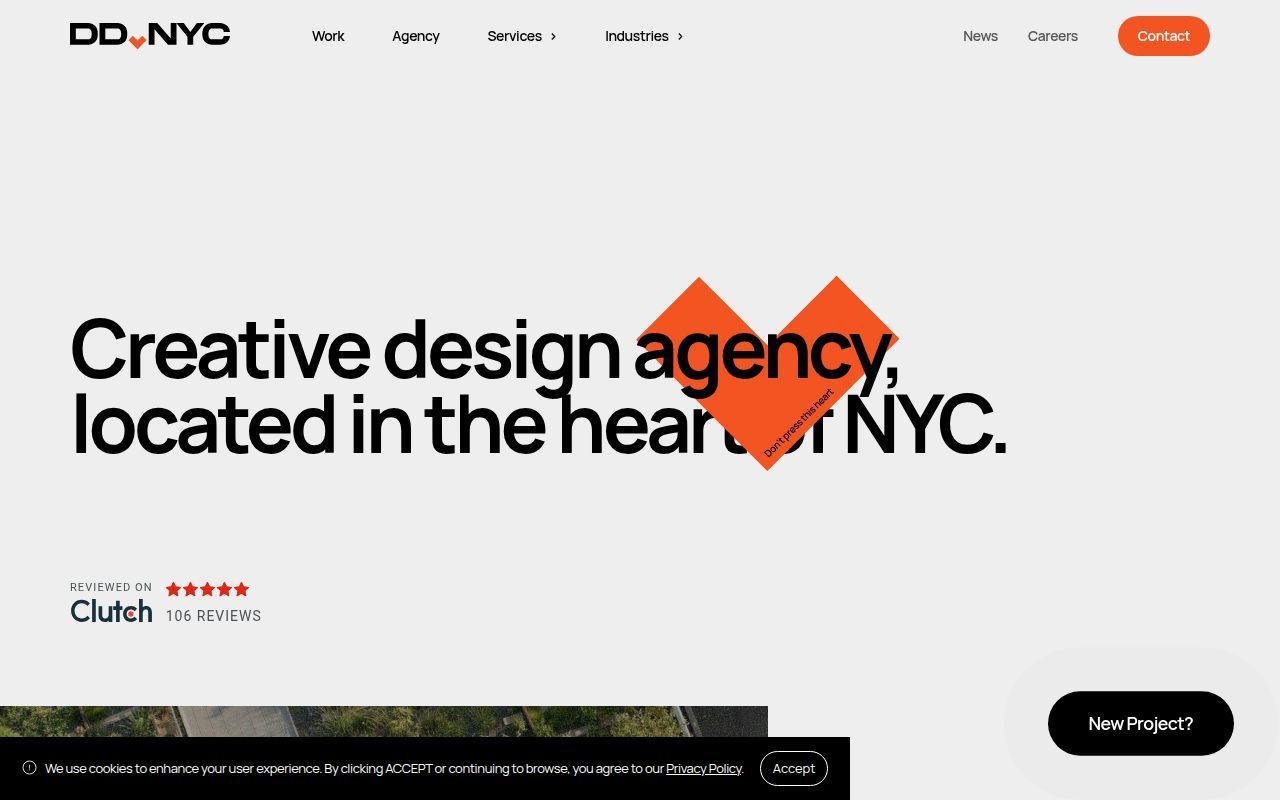
DD.NYC sits in the sweet spot between a premium creative agency and a website partner that still looks commercially usable. The homepage shows a sharp portfolio, a heavy design orientation, and solid web work across real estate, education, sports, healthcare, and luxury categories. If your company needs the site to impress stakeholders, investors, or premium customers fast, DD.NYC has one of the strongest brand-presence cases in this roundup.
How DD.NYC works
The official site outlines a defined process more clearly than most brand agencies do. It says projects begin with a complimentary discovery call to cover brand, objectives, timelines, and success metrics. After that, DD.NYC says it develops a customized scope, timeline, and investment framework, then onboards the team and moves through strategy, art direction, design, development, and launch. It also calls out an AGILE process and tools such as Figma, Adobe, and Sketch.
On the service side, DD.NYC lists web design formats including landing pages, brochure sites, corporate websites, ecommerce, and Web 3.0. It also pairs web design with UI/UX, branding, packaging, video, 3D design, and motion. That makes it especially strong when the site is one piece of a broader visual identity system. We would not treat it as the most technical agency here, but we would absolutely treat it as one of the best at making a brand feel expensive and intentional online.
Who is DD.NYC for?
DD.NYC is for founders, marketers, and brand teams that care deeply about presentation. Real estate, hospitality, education, healthcare, and premium consumer brands look like especially natural fits based on the work it highlights. It also works for companies that want one creative partner across website, collateral, packaging, and event-style brand assets.
If your project is mostly about technical integrations, complex application behavior, or a deep CMS migration, a more development-heavy partner may be a better match.
DD.NYC pricing
- Up to $10,000: shown as a selectable budget band on the official contact form.
- $10,000 to $25,000: listed as another public budget band.
- $25,000 to $50,000: listed as a public budget option for inbound projects.
- $50,000 to $100,000 and over $100,000: both appear on the official form, which is more transparent than most agencies offer.
Pros and cons
Pros
- Excellent visual presentation and a portfolio that feels genuinely brand-led.
- Clear discovery-to-launch sequence on the official site.
- Public budget bands help buyers self-qualify early.
Cons
- Technical platform depth is less foregrounded than at software-leaning agencies.
- The creative emphasis may be more than a utilitarian B2B site needs.
- Hourly signal and review profile place it in premium-agency territory.
DD.NYC rating and reviews
- Clutch: rated 5.0/5 across 103 reviews.
DD.NYC is one of the strongest choices here when brand image is part of the business case. We would shortlist it quickly for premium presentation, investor-facing sites, and visually demanding redesigns.
5. UPQODE
- Category: Custom web design and digital marketing agency
- Best for: Mid-market businesses that need a polished site without enterprise-agency overhead
- Location: Nashville, Tennessee
- Pricing: Custom quote with mid-market budget signals
- Standout: Strong WordPress and Shopify orientation
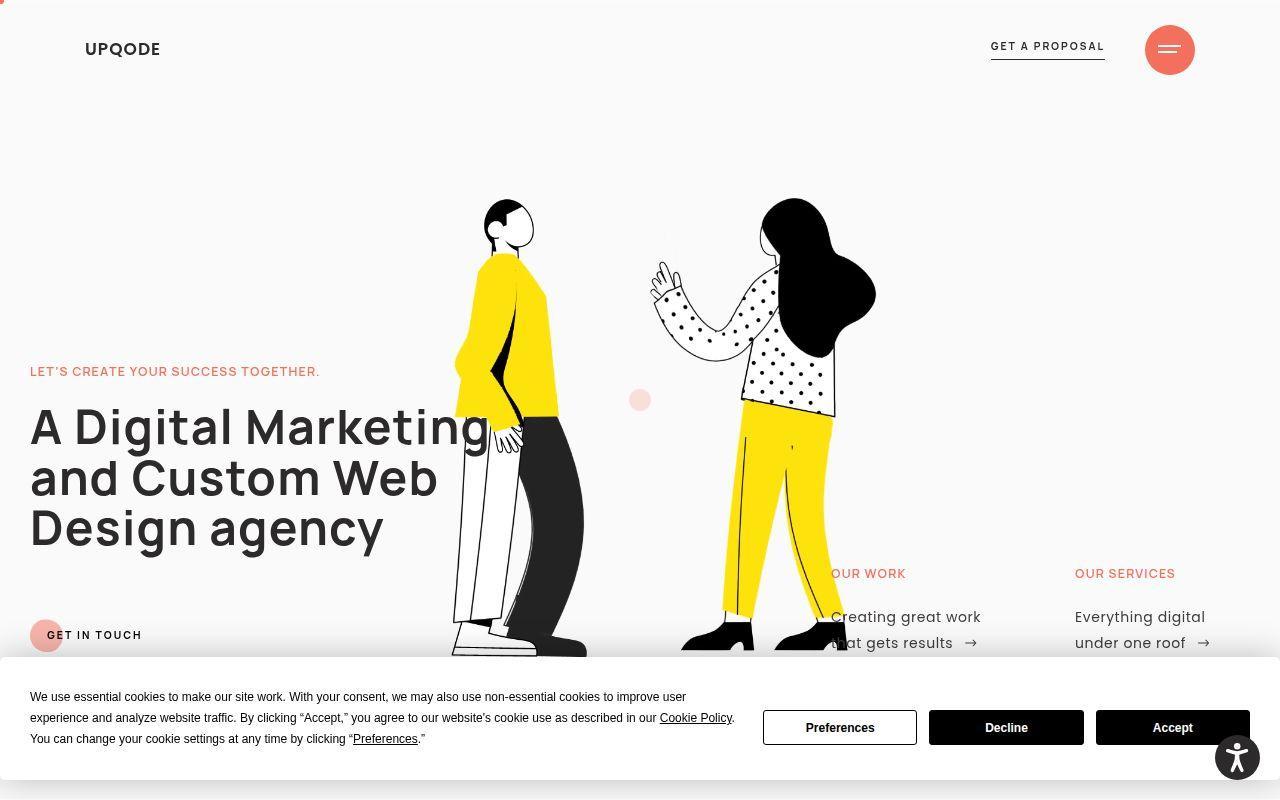
UPQODE feels like a well-balanced middle-market pick. It is clearly more web-focused than a broad digital consultancy, but it is not boxed into small-business template work either. The official site leans hard into customer focus, quality, responsiveness, and a service mix that covers web design and development, responsive websites, Shopify web design, SEO, PPC, website maintenance, social media marketing, and Google Analytics service. For many companies, that is exactly the right amount of range.
How UPQODE works
The homepage is not as process-detailed as SmartSites or DD.NYC, but it does show a clean service structure. UPQODE presents website presence as its first service block, followed by online marketing and supporting services. It also gives enough portfolio cues to show it works across software, healthcare, finance, transportation, communications, and security-related brands. Client testimonials on the site repeatedly mention responsiveness, task tracking in sprints, WordPress expertise, mobile and desktop fidelity, and accessible website delivery.
That adds up to an agency we would treat as dependable for mainstream custom business sites. It is especially appealing for organizations that want WordPress or Shopify competence without jumping straight to a high-priced design studio. The tone of the site also suggests a fairly hands-on, service-minded engagement model, which can matter a lot for lean internal teams.
Who is UPQODE for?
UPQODE is best for companies that want a serious custom website and a collaborative team, but do not necessarily need brand-film theatrics or enterprise product strategy. It looks like a natural fit for marketing teams, growing B2B companies, and organizations that want WordPress or Shopify done well.
Teams seeking a deeply specialized enterprise UX partner or a software architecture partner should look at other names higher in the list.
UPQODE pricing
- Custom scope: UPQODE does not publish package pricing on the official homepage.
- Public budget signal: Clutch lists a $10,000+ minimum project size.
- Hourly signal: Clutch lists a $50-$99 hourly range, which is more approachable than many premium peers here.
Pros and cons
Pros
- Good service spread for web, Shopify, SEO, maintenance, and analytics.
- Testimonials repeatedly point to responsiveness, sprint-based task management, and WordPress expertise.
- Budget signals are friendlier than several agencies above it.
Cons
- The official site is lighter on detailed process documentation.
- Brand differentiation is less pronounced than at more premium creative shops.
- Large enterprise programs may want a partner with deeper published discovery and governance detail.
UPQODE rating and reviews
- Clutch: rated 4.9/5 across 104 reviews.
UPQODE is a smart shortlist for buyers who want custom work, strong service, and less premium-agency friction. It may not be the most glamorous pick here, but it looks like one of the best value-for-fit options.
6. Lounge Lizard
- Category: Web design and digital marketing agency
- Best for: Brands that want storytelling, UX, and marketing in one shop
- Location: New York, New York
- Pricing: Custom quote
- Standout: Long track record and broad in-house web service menu
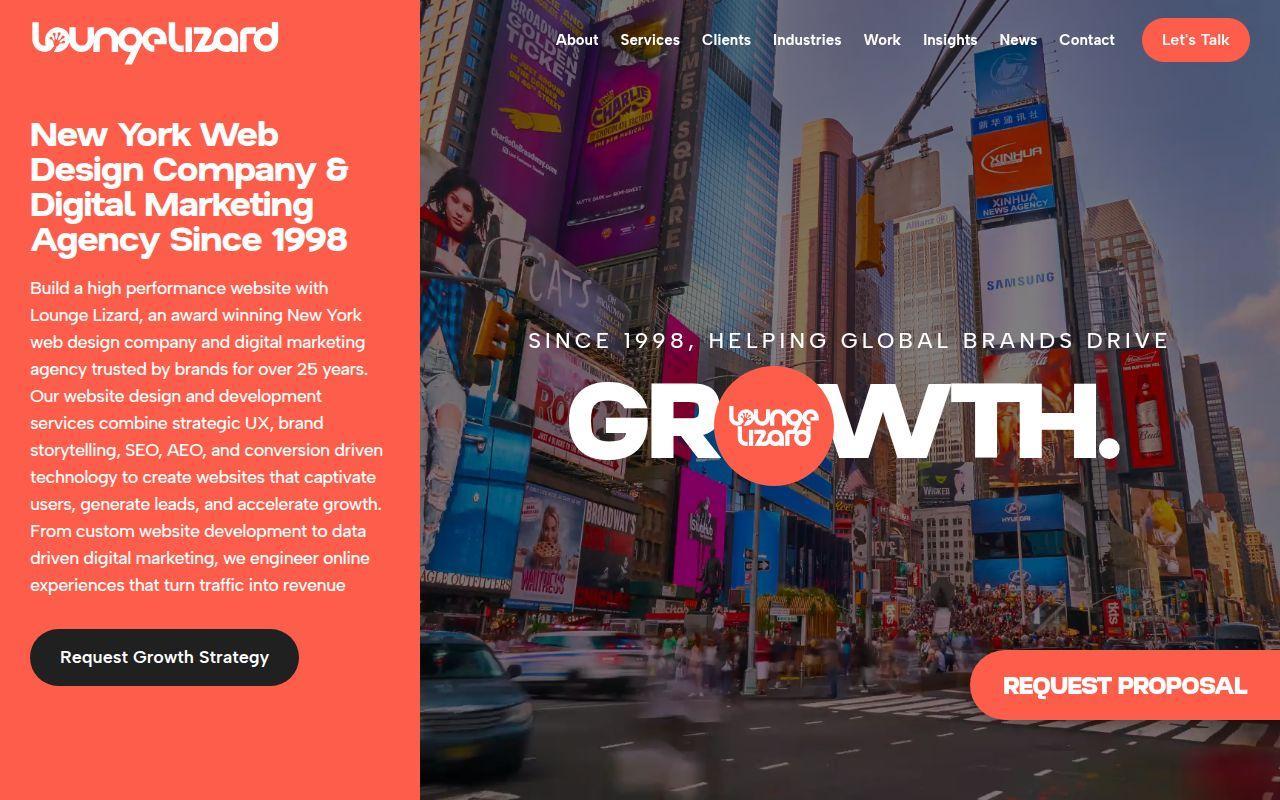
Lounge Lizard has one of the clearest “full-service web agency” profiles in this list. It leans into web design, development, digital marketing, branding, ecommerce, AI search visibility, and what it calls conversion-driven technology. That is a lot of surface area, but unlike some agencies with overly vague service menus, Lounge Lizard backs it with specific service pages and a long-running portfolio. If you want website storytelling plus marketing follow-through, it is easy to see the appeal.
How Lounge Lizard works
The official pages say Lounge Lizard works directly with clients across design, content, SEO, development, testing, and launch. Its web design service page says the team starts by learning about the company, then builds a custom web design that tells the brand story and goes through final testing and launch. Services called out include branding, UX/UI design, graphic design, custom WordPress design, responsive design and development, content strategy, website maintenance, Shopify web design, and Magento web design.
There is also a clear problem-solution framing on the homepage. Lounge Lizard talks about redesigning for more traffic, improving lead generation, ecommerce sales recovery, and digital marketing ROI, plus it offers a free website audit. That makes the agency stronger for teams that want the website connected to real commercial outcomes, not just a nicer look and feel.
Who is Lounge Lizard for?
Lounge Lizard fits brands that want one partner for site design, content direction, ecommerce, and marketing support. It is especially useful for companies that know the website is underperforming but have not fully diagnosed whether the issue is brand clarity, UX, SEO, or lead-generation structure.
Buyers who only want a lightweight, budget-conscious rebuild may find the agency broader and pricier than necessary.
Lounge Lizard pricing
- Custom quote: the official site pushes consultations, custom quotes, and audits rather than public packages.
- Support model: maintenance and audit services are offered, but prices are not listed publicly.
- Public budget signal: Clutch lists a $25,000+ minimum project size, while the hourly rate is undisclosed.
Pros and cons
Pros
- Very broad service menu, from WordPress and Magento to branding and marketing.
- Official copy explains the client-facing process better than many agency homepages do.
- Free audit offer is useful for companies that know something is wrong but are not sure where.
Cons
- Public rates are mostly quote-based, with few hard pricing clues.
- The pitch is broad, so buyers should define priorities clearly before scoping.
- Teams seeking a narrowly focused enterprise UX specialist may prefer a different profile.
Lounge Lizard rating and reviews
- Clutch: rated 4.8/5 across 43 reviews.
Lounge Lizard remains a very credible full-service pick. We like it most for businesses that want a redesign tied to lead generation, ecommerce, or broader digital marketing rather than design in isolation.
7. Dotlogics
- Category: Digital transformation and web solutions agency
- Best for: Companies that want a website framed as a business system
- Location: New York
- Pricing: Custom quote
- Standout: Revenue-minded positioning instead of purely aesthetic positioning
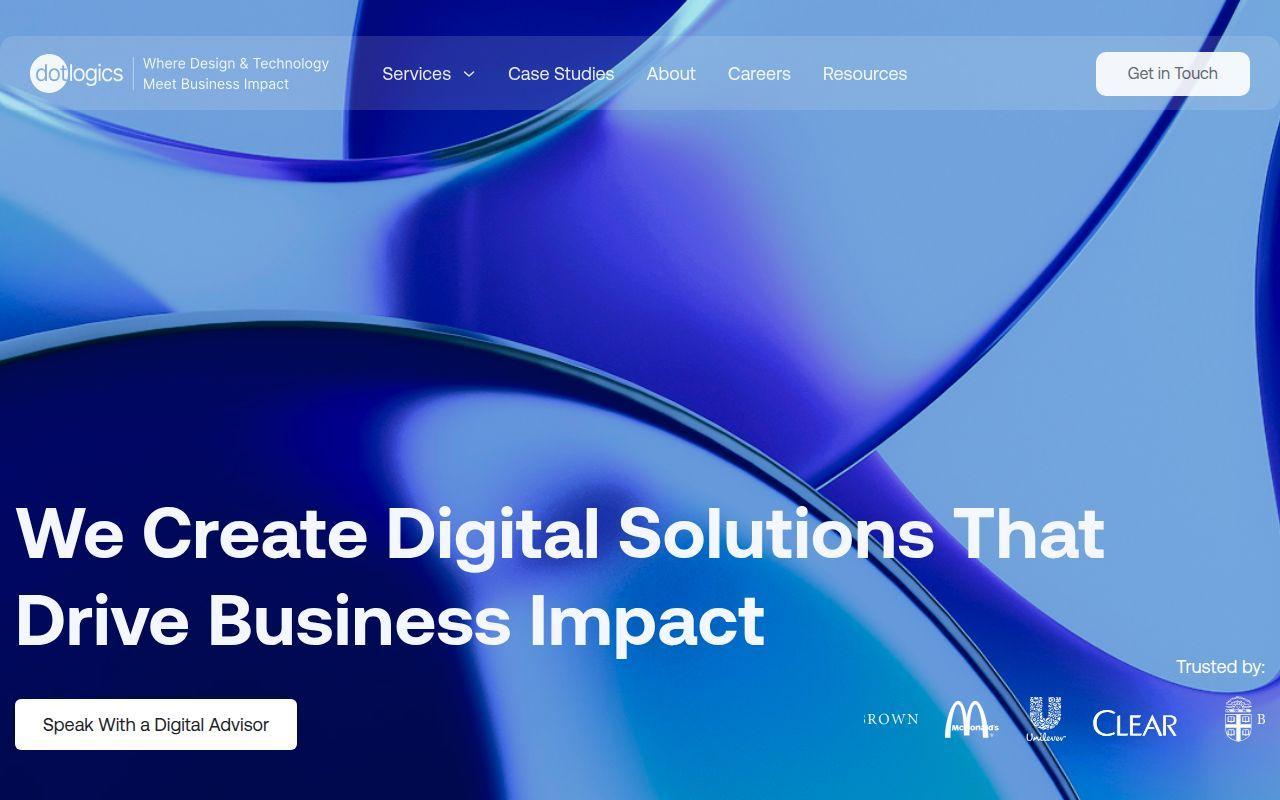
Dotlogics takes a more operational tone than many design agencies, and that is its edge. The official site speaks in terms of digital experiences, technology solutions, AI agents, automation, and business impact. The Clutch profile reinforces that same angle, describing the firm as treating websites like revenue systems rather than isolated design projects. We think that framing will resonate with growth leaders who are tired of vague creative talk.
How Dotlogics works
The official site is fairly concise, but it is clear about three main areas: digital experience and websites, technology solutions, and AI agents and automation. That gives Dotlogics a broader mandate than a front-end-only design shop. The stronger process detail comes from client feedback on its review profile, where one client describes a redesign flow that began with need discussions, then moved through five design options, framework creation, page planning, page design, and ongoing maintenance.
That is a useful picture because it suggests structured option-setting early in the engagement. We also like that the public examples span ecommerce transformation, market-positioning updates, and technology-backed experience work. Dotlogics looks especially good when the website needs to support measurable business outcomes, operational efficiency, or integration-heavy growth plans.
Who is Dotlogics for?
Dotlogics is a good fit for mid-market and growth-focused companies that want a redesign justified in revenue or operational terms. It also suits teams that like a strategic partner but do not want the conversation to drift into brand-theater for its own sake.
Very small businesses may find its positioning and minimums too enterprise-leaning. If you mainly want a basic local-business site, there are cheaper routes.
Dotlogics pricing
- Custom quote: the official site does not publish package pricing.
- Project-based scope: services are framed around websites, technology solutions, and automation programs rather than standardized plans.
- Public budget signal: Clutch lists a $25,000+ minimum project size and a $150-$199 hourly range.
Pros and cons
Pros
- Clear business-outcome framing that will appeal to serious buyers.
- Service mix extends beyond design into technology and automation.
- Review themes highlight professionalism, clear communication, and organized projects.
Cons
- Official site provides less step-by-step process detail than some peers.
- Budget signals place it in a premium bracket.
- May be more agency than a modest site refresh requires.
Dotlogics rating and reviews
- Clutch: rated 5.0/5 across 32 reviews.
Dotlogics is one of the better picks for leadership teams that want the redesign tied to revenue logic, not just prettier screens. It is a strong shortlist when the website has to pull real commercial weight.
8. Huemor
- Category: B2B digital agency
- Best for: Construction, engineering, industrial, and other serious B2B sectors
- Location: Pittsburgh, Pennsylvania
- Pricing: Custom quote with instant estimate option
- Standout: Strong sector fit for technical B2B firms
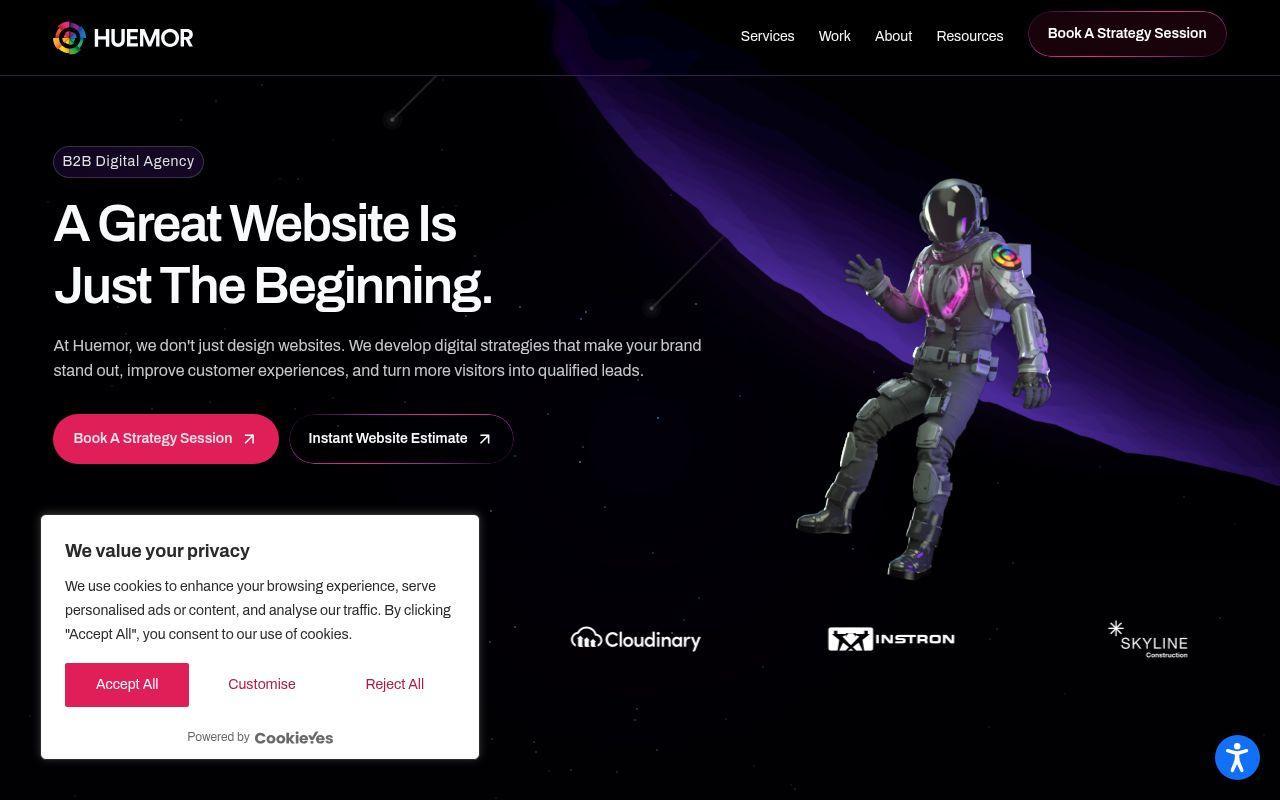
Huemor stands out because it does not try to be for everybody. Its homepage speaks directly to ambitious construction, engineering, and industrial companies, and that focus gives it a clearer identity than a lot of generalist agencies. If you sell complex services, technical products, or high-trust B2B solutions, that specialization is worth paying attention to.
How Huemor works
The official site frames Huemor as a strategic partner that can guide messaging, design, and technology. It lists three ways it helps, including building the website itself through customized digital strategy, UI/UX design, copywriting, and full-stack web development. It also emphasizes support with proactive malware detection, performance optimization, a 99.9% uptime guarantee, and strategic website improvements. That is a nice mix of launch and post-launch thinking.
On the review side, Huemor’s public feedback adds useful detail. One project description specifically mentions a discovery phase that included mood boards and competitive analysis before a Shopify build and mobile-responsive work. That tells us Huemor is not just coding pages. It is doing front-end strategy work that helps shape the final site.
Who is Huemor for?
Huemor is best for B2B firms in technical or trust-heavy industries that need better messaging and clearer market credibility online. We especially like the fit for industrial, manufacturing, and engineering brands that want the site to feel more modern without losing authority.
Fashion, lifestyle, or luxury-first brands may find stronger aesthetic fits elsewhere. Huemor’s tone is more credible B2B than expressive editorial design.
Huemor pricing
- Custom quote: the official site offers a strategy session and instant estimate rather than package pricing.
- Support-led add-ons: post-launch services include security, performance optimization, and strategic improvements.
- Public budget signal: Clutch lists a $25,000+ minimum project size and a $150-$199 hourly range.
Pros and cons
Pros
- Very clear B2B positioning, especially for industrial and technical sectors.
- Official site includes both build services and ongoing support language.
- Review themes point to responsive communication and strong discovery work.
Cons
- Niche positioning means it is not the best stylistic fit for every category.
- No public package pricing is listed.
- Premium minimums rule out many small projects.
Huemor rating and reviews
- Clutch: rated 4.8/5 across 72 reviews.
Huemor is one of the best niche shortlists in this roundup. For technical B2B brands, it may actually feel more relevant than several bigger-name generalists.
9. SPINX Digital
- Category: Web design and development agency
- Best for: Custom website builds that need structured discovery and strategy
- Location: Los Angeles, California
- Pricing: Custom quote
- Standout: Clearly documented discovery-to-strategy-to-design workflow
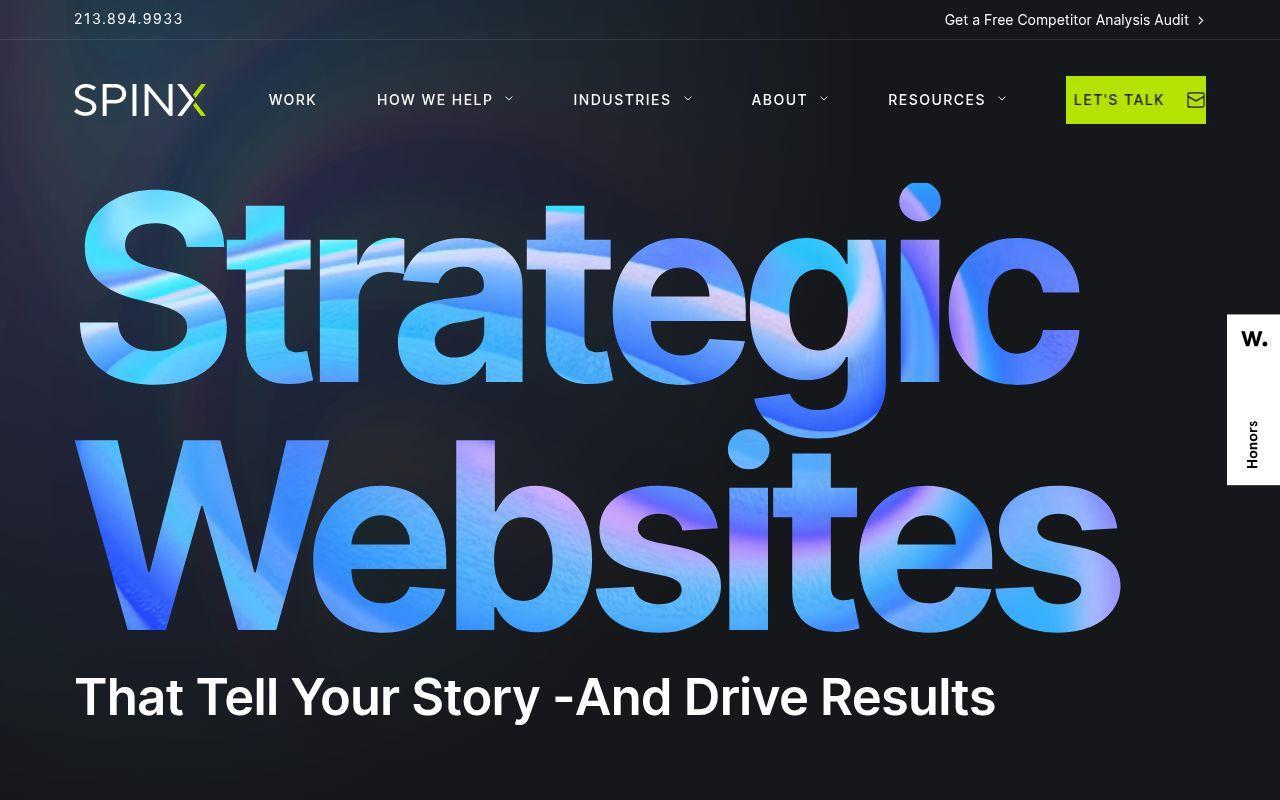
SPINX Digital makes the list because its process pages are stronger than its public review footprint. The agency clearly thinks in terms of discovery, strategy, information architecture, design, development, CMS, ecommerce, and support. For buyers who want a custom build with serious front-end planning, that is a solid foundation. We would not rank it higher mainly because the public third-party footprint looks smaller than several peers.
How SPINX Digital works
The process page is the key source here. SPINX says projects begin with Discovery, where project management, design, UX, development, and client stakeholders define goals, personas, messaging, and essential functionality. It then moves into Strategy, where UX and information architecture planning map user journeys and key interactions. The agency also lists website design, website development, enterprise CMS solutions, open-source CMS solutions, ecommerce websites, custom software development, and support and maintenance in its service structure.
That is exactly the sort of workflow we like to see from an upper-mid-market web partner. The official site also shows coverage across finance, healthcare, legal, ecommerce, public sector, consumer goods, and technology. So while the brand feel is creative, the service structure is fairly disciplined.
Who is SPINX Digital for?
SPINX fits organizations that want a guided custom build with upfront strategy and architecture, especially when multiple stakeholders need to align before design starts. It is also a reasonable fit for teams that expect CMS or ecommerce complexity.
Buyers who want a huge public review sample may prefer agencies with deeper third-party footprints. That is the main reason we would not move SPINX higher.
SPINX Digital pricing
- Custom quote: the official site pushes consultation and audit-style lead-in rather than public packages.
- Platform breadth: pricing likely varies by strategy, CMS, ecommerce, or custom software scope because those are all named service areas.
- Public budget signal: Clutch lists an undisclosed minimum project size and a $150-$199 hourly range.
Pros and cons
Pros
- Process documentation is strong and buyer-friendly.
- Good service breadth across CMS, ecommerce, custom software, and maintenance.
- Discovery and IA emphasis is reassuring for complex builds.
Cons
- Public review footprint is smaller than most agencies this high on the list.
- Minimum project size is not publicly disclosed on the review profile we checked.
- Harder to price-fit quickly than agencies with clearer public budget signals.
SPINX Digital rating and reviews
SPINX Digital has a public Clutch listing, but its review footprint is still comparatively small, and we are not citing a third-party aggregate score here because the page details we reviewed did not surface a stable overall score in a way we were comfortable reproducing.
SPINX is still a credible shortlist for structured custom builds. We simply like to see a bigger review signal before ranking it alongside the most established review-heavy agencies.
10. Intero Digital
- Category: Digital marketing agency with web design and development services
- Best for: Search-led redesigns that need marketing integration
- Location: Colorado Springs, Colorado
- Pricing: Custom quote
- Standout: Web design is tightly tied to SEO, CRO, paid media, and content
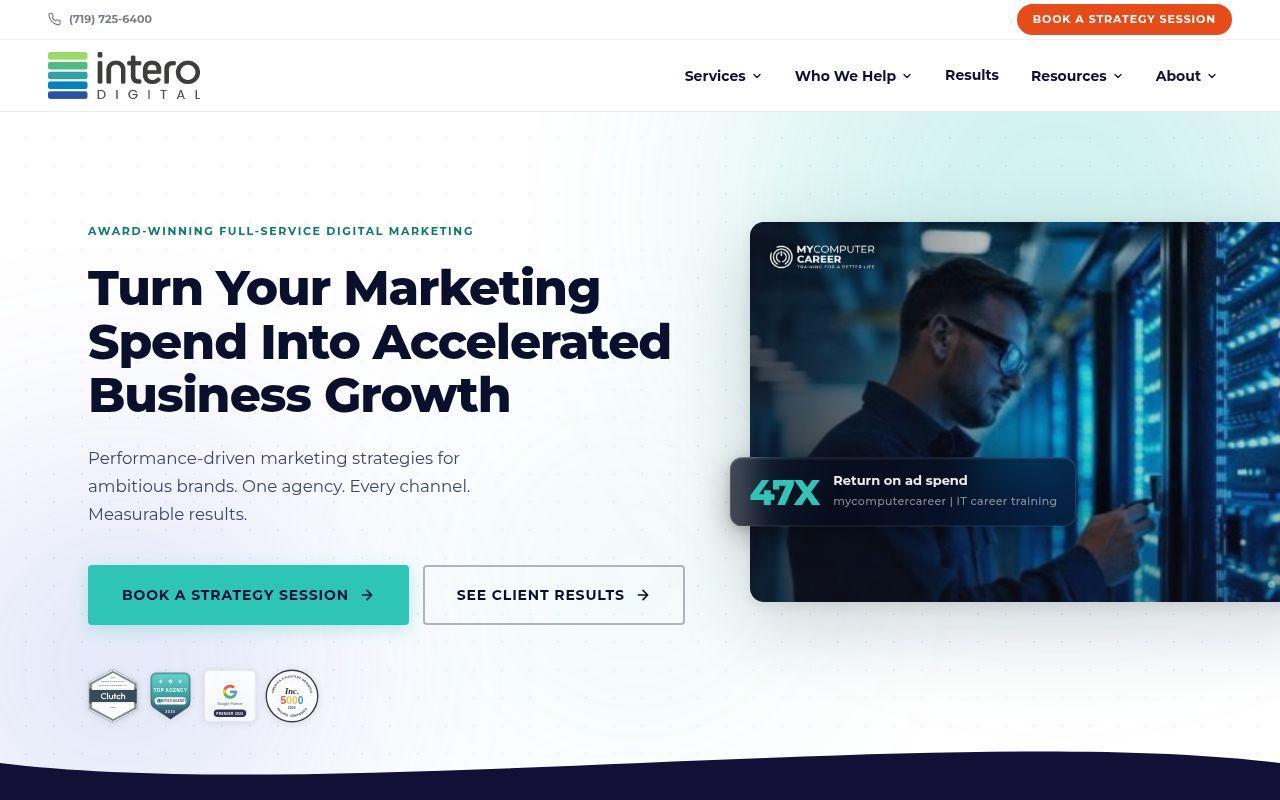
Intero Digital closes the top ten because it is better understood as a marketing-led growth partner with web capabilities than as a pure web design studio. That is not a knock. For the right buyer, it is a real strength. If your website relaunch lives or dies by search visibility, conversion rates, and broader campaign performance, Intero’s integrated model can be more valuable than a prettier standalone redesign.
How Intero Digital works
The official site puts web design and development inside a much broader service stack that includes SEO and GEO, paid media, content and PR, branding and creative, ecommerce integration, conversion rate optimization, and UI and UX. The web service page also frames redesign work around practical business problems: low organic traffic, weak engagement and conversion, poor brand alignment, and lack of qualified leads. That language is useful because it shows what kind of brief Intero wants.
In other words, the agency appears to approach the site as one part of a revenue system. The web page talks about landing pages, calls to action, sales funnels, and user-experience optimization, not just aesthetics. That makes Intero a better fit for performance-minded teams than for design-first brands looking for a visual statement.
Who is Intero Digital for?
Intero Digital is best for companies that treat a website redesign as a search, content, and lead-generation project as much as a design project. It is a sensible fit for ecommerce brands, service firms, and B2B companies that already care about traffic quality and conversion paths.
If your priority is premium brand storytelling or a highly distinctive visual identity, other agencies on this list are more specialized in that kind of work.
Intero Digital pricing
- Custom quote: the official pages present web design as a strategy service rather than a fixed package.
- Integrated scope: pricing likely changes significantly depending on whether SEO, paid media, content, CRO, or ecommerce integration are included.
- Public budget signal: Clutch lists a $1,000+ minimum project size, while the hourly rate is undisclosed.
Pros and cons
Pros
- Excellent fit when the redesign is tightly tied to search and conversion outcomes.
- Service stack covers SEO, CRO, ecommerce integration, UI/UX, and paid media.
- Large review footprint suggests a well-established operating model.
Cons
- Less clearly design-led than the agencies ranked above it.
- Public rate transparency is limited.
- Buyers seeking a distinct visual style may find the positioning too performance-oriented.
Intero Digital rating and reviews
- Clutch: rated 4.8/5 across 147 reviews.
Intero Digital is a good shortlist when the website is part of a bigger search and performance engine. We would not pick it first for pure design ambition, but we would absolutely consider it for growth-led redesign programs.
Recommended reading: Top 20 Web Design Companies in Vietnam for Modern Brands and Digital Growth
5 More Web Design Companies Worth Considering
The next five agencies are still credible picks. They just land slightly behind the top tier because their fit is more specialized, their review footprint is smaller, or their strongest value sits closer to adjacent services like product strategy or performance marketing.
11. Digital Silk
- Category: Full-service digital agency
- Best for: B2B, B2C, and enterprise brands that want design plus ongoing optimization
- Location: Multiple U.S. city pages are listed on the official site
- Pricing: Clutch lists $10,000+ minimum project size
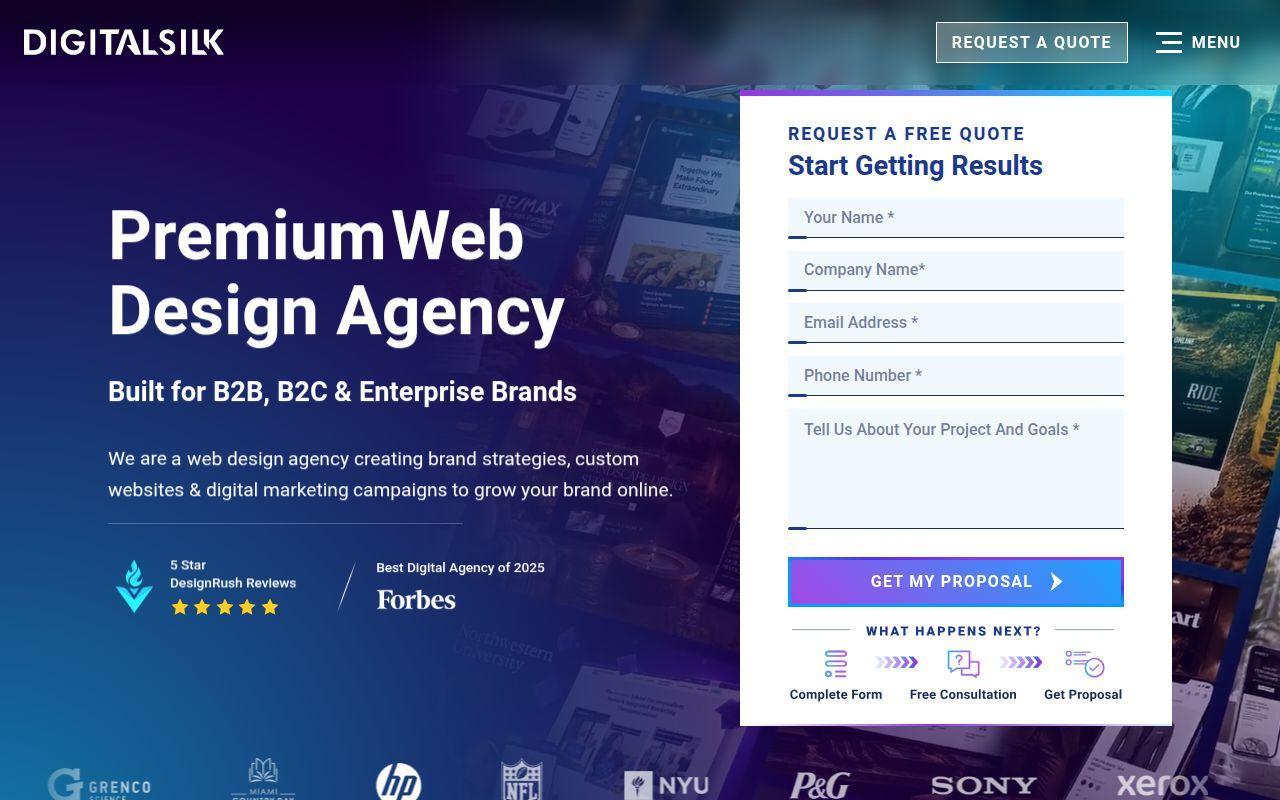
Digital Silk is one of the more polished full-service options just outside our top ten. The official site makes a clear promise: strategy, UX, design, development, branding, marketing, and optimization after launch all sit under one roof. That is helpful for companies that do not want to hand off from one vendor to another after the site goes live.
What it does better than several higher-ranked agencies is combine premium presentation with broad industry packaging. The homepage is explicitly built for B2B, B2C, and enterprise brands, and it shows custom website, ecommerce, WordPress, and Shopify work alongside branding and marketing. If you want a partner that can speak both brand and growth, Digital Silk has a convincing case.
We also like that the site presents real before-and-after style transformation thinking and a substantial project gallery. It feels like an agency that knows how to reposition a company visually and structurally, not just refresh templates. On the commercial side, the public Clutch profile lists a $10,000+ minimum project size and a $100-$149 hourly range, which places it in the middle of this roundup rather than at the ultra-premium end.
Why is it not in the top ten? Mainly because several agencies above it were clearer about either process detail, niche differentiation, or pure review strength. Still, for a broad commercial redesign with ongoing growth work, Digital Silk is easy to take seriously.
Who is Digital Silk for?
Digital Silk is a good fit for companies that want one agency to handle brand strategy, custom web execution, and post-launch marketing support. It is less ideal for buyers who only need a technical rebuild and already have brand and growth strategy covered internally.
12. RNO1
- Category: Branding, UX, and digital growth agency
- Best for: Venture-backed and innovation-led brands
- Location: San Francisco, California
- Pricing: Clutch lists $25,000+ minimum project size
RNO1 is the most startup-and-innovation-coded agency in this lower tier. The official site positions it as a global branding, UX, and digital growth agency that works with VC-backed startups through Fortune 500 brands. That language could feel overcooked in the wrong hands, but the work samples and partnership statements make it credible enough.
The agency’s edge is not generic web production. It is the overlap of brand, UX, and growth for companies that need to reinvent categories or sharpen digital positioning fast. The homepage highlights partnerships and ongoing relationships more than one-off site launches, which tells us RNO1 likely works best when the website is part of a broader brand growth motion.
Clutch adds a useful technical layer here. The profile we reviewed shows service weight in UX/UI, web design, branding, and low/no-code work, plus WordPress and Drupal as the named CMS mix. It also lists a $25,000+ minimum project size, which tells smaller buyers right away that this is not a bargain build.
We kept RNO1 out of the top tier because the review footprint is still smaller than many peers and the official site is more positioning-heavy than process-heavy. For the right brand, though, that may not matter. If you are a modern startup or tech company choosing between safe and bold, RNO1 is one of the bolder names here.
Who is RNO1 for?
RNO1 suits innovation-led brands that need strong digital identity and UX thinking, especially around funding, repositioning, or category differentiation. Traditional businesses looking for a straightforward marketing site may prefer a more grounded agency profile.
13. Goji Labs
- Category: Strategy-first digital product agency
- Best for: Product-heavy teams that need UX and web work tied to software goals
- Location: Los Angeles, California
- Pricing: Clutch lists $25,000+ minimum project size
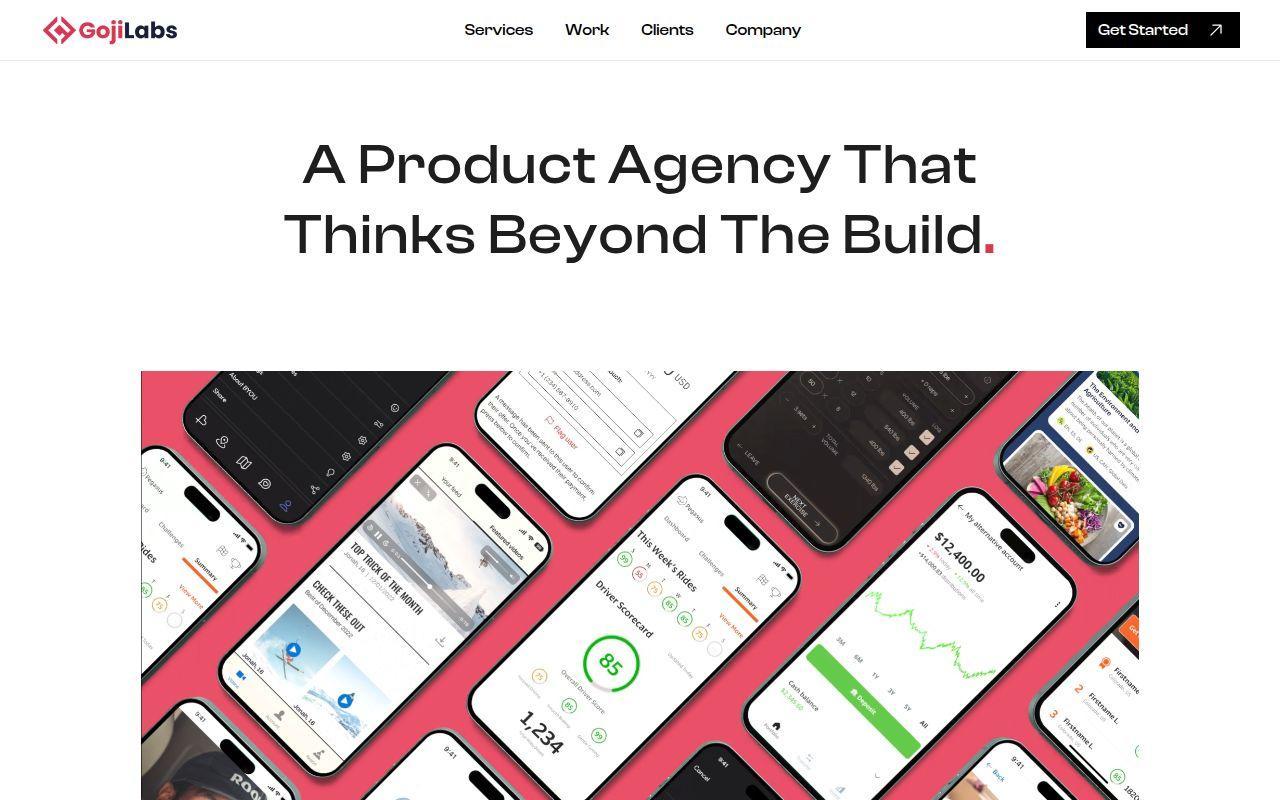
Goji Labs is another option that sits closer to product design than classic agency web design. The official site says it helps clients turn complex challenges into intuitive digital products through strategy, UX/UI design, AI product development, and app and software development. That makes it more compelling for web experiences tied to platforms, applications, or product-led growth than for simple corporate brochure work.
The agency’s one big differentiator versus many web shops is strategic product framing. Goji Labs leads with product strategy consulting and UI/UX design, then connects that to software development. If you are building a marketing site that also needs account logic, application behavior, or deeper user flow thinking, that mix can be valuable.
The Clutch profile reinforces the premium product-agency angle. It lists a $25,000+ minimum project size and a $100-$149 hourly range, and it describes the firm as discovery-led, with tailored estimates after initial conversations. That is a sensible fit for software-oriented organizations but a weaker fit for buyers who just want a conventional website vendor.
We would not put Goji Labs ahead of the top ten for pure web design shopping because its center of gravity is broader than that. Even so, if your site is a front door to a product, member portal, or platform experience, it becomes much more interesting.
Who is Goji Labs for?
Goji Labs is best for startups, SaaS teams, nonprofits with platform needs, and product organizations where the line between website and application is blurry. It is less ideal for simple local-business redesigns or brand-only refreshes.
14. WebFX
- Category: Digital marketing agency with web capabilities
- Best for: Buyers who care as much about reporting and revenue tracking as design
- Location: Harrisburg, Pennsylvania
- Pricing: Custom quote, with Clutch describing many engagements as larger projects
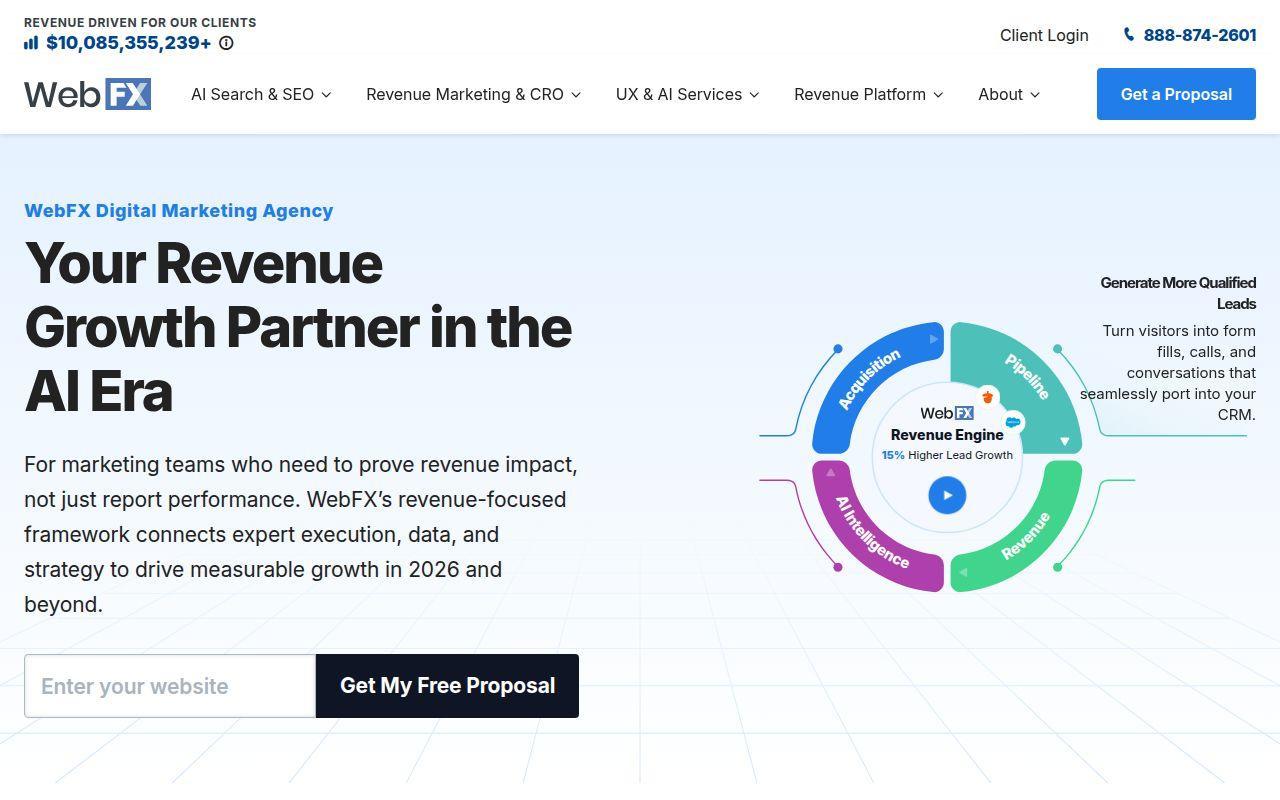
WebFX is less of a pure design pick and more of a measurement-heavy growth partner. The official site leans hard into revenue contribution, proprietary technology, AI-assisted optimization, and case-study-driven marketing performance. That will not appeal to everyone, but for some buyers it is exactly what they want to see.
The main thing WebFX does differently is operationalize the website inside a larger revenue system. Its pages emphasize strategic execution, platform support, and data-backed decision-making rather than visual direction as the headline. If you already know that design alone is not your bottleneck, this kind of partner can make a lot of sense.
The review footprint is a real strength. Among agencies in this roundup, WebFX has one of the deepest public review benches, which makes the firm easier to trust on operational maturity. At the same time, that scale can make it feel less bespoke than smaller specialist shops above it.
We kept WebFX in the consideration tier because readers searching specifically for a web design company are often after stronger design-led differentiation than WebFX’s official positioning provides. Still, if you want the site launch tied tightly to marketing attribution, it belongs on the board.
Who is WebFX for?
WebFX fits performance-minded companies that want strong reporting, revenue framing, and marketing integration around the website. It is a weaker fit for buyers whose top priority is a distinctive visual identity or premium creative expression.
15. NEWMEDIA.COM
- Category: Digital marketing and web design agency
- Best for: Growth-focused brands that want web, SEO, and paid media tightly linked
- Location: New York and Denver
- Pricing: Clutch lists $10,000+ minimum project size
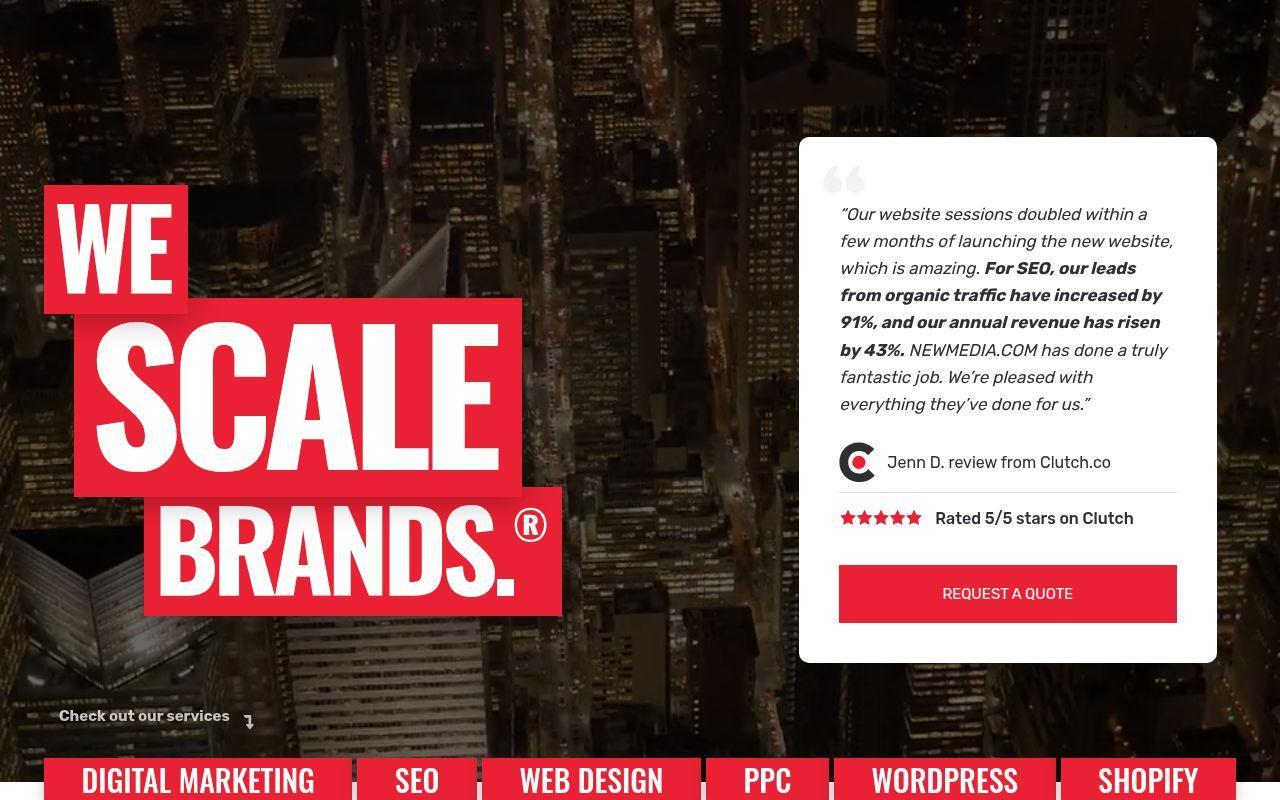
NEWMEDIA.COM is a credible growth-first agency that narrowly missed our top ten. The official site says its work runs through a holistic integrated process that combines earned and owned media, paid media, website design, ecommerce development, and conversion rate optimization. That makes it more than a design shop, but still closely aligned with web-led growth work.
Its clearest differentiator is the explicit tie between website execution and broader performance marketing. Services named on the site include web design, WordPress, Shopify, SEO, PPC, and digital marketing, and the agency leans into AEO, SEO, PR, and its RankOS positioning. For companies already thinking about traffic quality and visibility across search environments, that is a relevant angle.
We also like the official case-study language around multi-site redesigns and ecommerce work. The site does not read like a portfolio gallery first. It reads like a commercial growth agency that happens to have strong website capability. Clutch reinforces that with a $10,000+ minimum project size and a $100-$149 hourly range.
Why does it sit at fifteen? Mostly because the agencies above it were a bit easier to classify and compare for a pure web design buyer. Still, NEWMEDIA.COM is strong enough that many performance-oriented marketers may rank it higher than we do.
Who is NEWMEDIA.COM for?
NEWMEDIA.COM is best for brands that want a web redesign connected directly to SEO, PPC, CRO, and long-term revenue growth. If you want a visually elite but marketing-light redesign, other agencies here are more natural fits.
Recommended reading: Top 20 ERP Companies for Smarter Operations and Scalable Growth
How To Choose Among the Best Web Design Companies
The right agency is usually the one that matches your buying situation, not the one with the loudest homepage. If you need a fast way to narrow the field, look at fit in three layers: can they handle your type of site, do they work at your budget level, and do they explain their process in a way your team can actually live with. Everything else is secondary.
Portfolio, Reviews, And Industry Fit
The first filter is simple: does the agency regularly ship the kind of site you need? A law firm redesign, a headless SaaS marketing site, a Shopify storefront, and an investor-facing corporate site may all be “web design,” but they are not the same job.
We recommend reading portfolios for structure, not just style. Look for similar complexity, similar customer journeys, and similar industries. Then read third-party reviews for recurring patterns like communication, scope control, and post-launch support. Review quality matters more than award badges, especially when reviews are backed by a published verification process like this one.
Industry fit matters too. Huemor looks stronger for industrial B2B than for luxury lifestyle. DD.NYC feels more natural for premium visual positioning than for a purely utilitarian rebuild. SmartSites is easier to justify for a practical lead-gen site than for a prestige brand statement. That kind of fit saves time, money, and revision rounds.
Process, Support, And Long Term Scalability
A pretty homepage is cheap. A process you can survive for three months is rare. We would favor agencies that explain discovery, approvals, design handoff, development, testing, launch, and post-launch responsibilities in plain English.
Support questions matter earlier than most buyers think. Ask who owns content entry, who handles redirects, what happens to analytics during relaunch, who maintains plugins or integrations, and whether your team will be trained on the CMS. Also ask what happens if phase two includes new landing pages, ecommerce expansion, localization, or custom integrations. The best web design companies are the ones that leave you with room to grow, not just a better-looking site on launch day.
Recommended reading: Top 20 WordPress Website Design Companies for Custom, Scalable Websites
Website Cost And Timeline Expectations
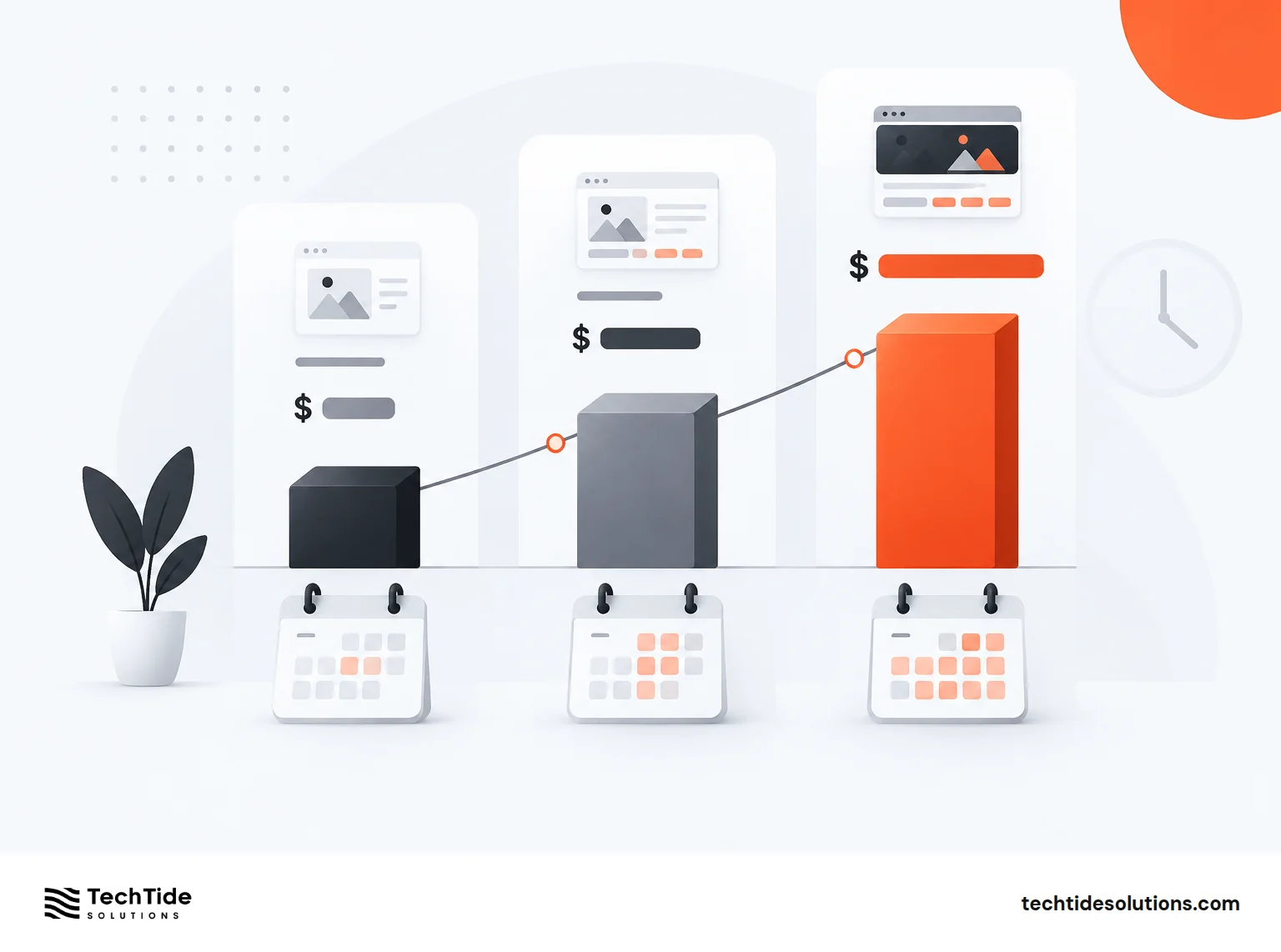
Website cost and timeline are not fixed numbers, but they are not random either. Across the agencies in this list, public minimums and budget bands paint a fairly useful planning picture. Small brochure work can land in the lower five figures, solid custom business sites usually move into the mid five figures, and enterprise, ecommerce, or integration-heavy projects climb from there fast.
Budget Ranges for Basic Sites and Custom Builds
For planning purposes, we would split budgets into three rough bands. A lighter marketing site or smaller redesign often starts around the low five figures. A more custom growth site with stronger UX, content, integrations, and CMS work often lands in the mid five figures. Once you add ecommerce complexity, multi-site structure, headless builds, or product-level functionality, costs can move well beyond that.
Public signals in this list support that pattern. Some agencies show $10,000+ minimums, some start at $25,000+, and Clay’s public signal begins higher still. Our practical advice is to decide whether you need a marketing site, a revenue platform, or a product surface. That one decision usually does more to clarify budget than any spreadsheet debate.
Typical Delivery Timelines by Project Scope
As a practical planning guide, a lighter rebuild may run in the 4-8 week range, a custom mid-market site often needs 8-12 weeks, and more complex platforms can take several months. Those are editorial planning ranges, not agency promises, but they line up with how much discovery, writing, design, development, and QA these projects usually require.
The main timeline killers are almost always internal. Content delays, stakeholder disagreement, unclear page ownership, legal review, and late integration surprises will drag a build more than design work itself. Agencies that document approvals clearly, like SmartSites and SPINX, tend to give buyers a better shot at staying on schedule.
Recommended reading: Top 20 Professional SEO Services for Finding the Right SEO Partner
Features Every Strong Web Design Company Should Cover
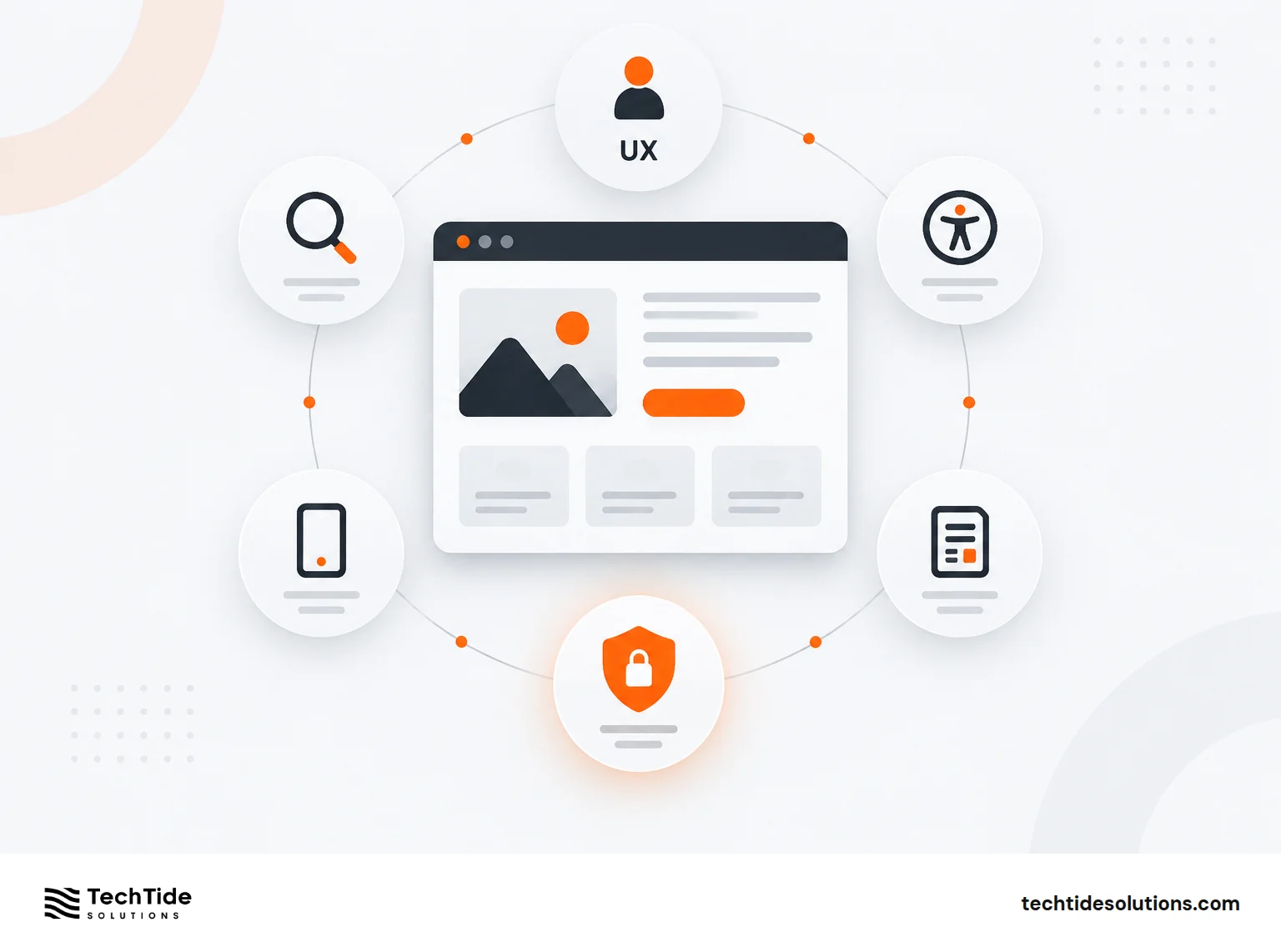
A strong web design company should be able to explain how it handles fundamentals, not just visuals. The must-have list is not glamorous, but it is what separates a real growth-ready site from a flashy relaunch that quietly underperforms. At minimum, we want to see UX thinking, search basics, accessibility, security, responsive execution, CMS clarity, integrations, and analytics planning.
UX, SEO, Accessibility, And Security
Good agencies do not treat UX and SEO as separate afterthoughts. They shape navigation, page hierarchy, messaging, and calls to action together so the site is understandable to both users and search engines. Accessibility belongs in that same baseline, and the clearest general benchmark remains WCAG 2.2.
Security should also be built into the project scope early. That can mean CMS hardening, hosting decisions, form protection, role controls, and post-launch maintenance, depending on the stack. Huemor’s support language and SmartSites’ security references are good examples of agencies at least acknowledging that a website is an operational asset, not a one-time mockup.
Responsive Design, CMS, Integrations, And Analytics
Responsive behavior is table stakes, but it is still worth checking how seriously an agency treats mobile. Google’s own mobile-first guidance makes it clear that mobile experience is part of the indexing reality modern sites live in. We would be wary of any agency that still treats mobile as a second pass.
CMS choice matters because it shapes who can manage the site after launch. WordPress, Shopify, and more custom React-based stacks can all work well, but the right answer depends on who will own content, what integrations are needed, and how often layouts need to evolve.
Analytics deserves a real implementation plan too. In GA4, important site actions are tracked as events, and agencies should be able to define which ones matter before the site launches. If a team cannot explain what counts as a conversion, it is too early to celebrate the redesign.
Design Approaches Top Agencies Use Today
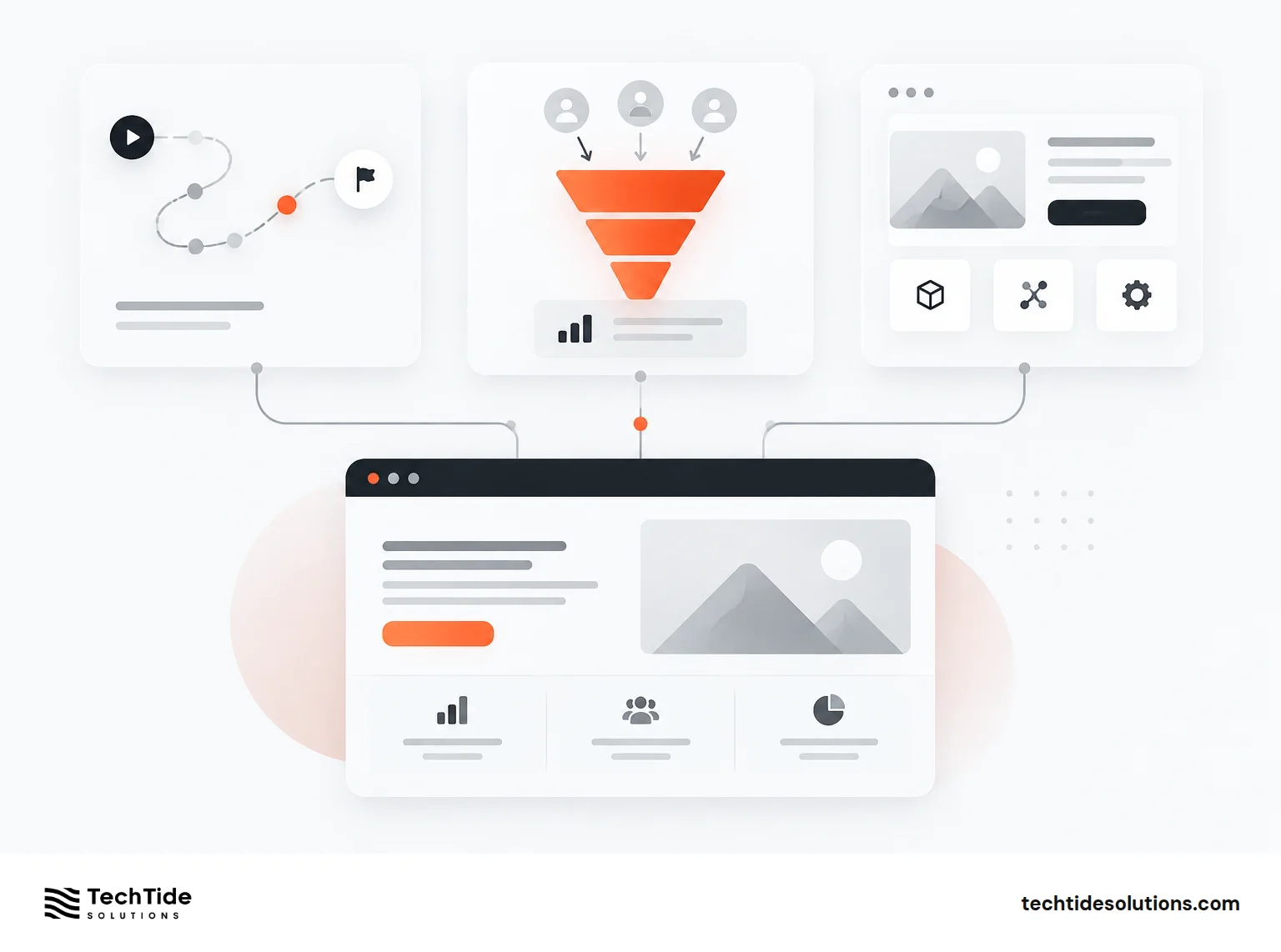
The agencies at the top of this list are not all chasing the same aesthetic, and that is a good thing. Some lean into motion and storytelling, some focus on conversion clarity, and some treat the website as a product surface. The best choice depends on what your buyer needs to understand, trust, and do.
Interactive Storytelling, Motion, And Visual Hierarchy
Interactive storytelling works best when the brand needs emotional buy-in or category education. Clay and DD.NYC are strong examples of agencies that use design systems, motion, visuals, and layout rhythm to create a more memorable experience. That can be powerful for premium brands, enterprise launches, or companies introducing something unfamiliar.
Still, motion should serve hierarchy. If animation slows comprehension, buries the CTA, or bloats load times, it is not helping. The best web design companies use movement to direct attention, reveal context, and make the message easier to grasp, not simply to look expensive.
Webflow, React, Shopify, And Modern Stacks
Modern agencies increasingly work across no-code, CMS, and app-style stacks depending on the brief. For marketing-heavy sites, Webflow and WordPress often win on editor friendliness. For commerce, Shopify is a common choice. For more custom application-like experiences, React has become a standard building block, and the official docs now recommend starting new React projects with a framework rather than piecing everything together ad hoc.
This is where agency fit matters. UPQODE and Lounge Lizard make their CMS and ecommerce comfort easy to see. TechTide and Goji Labs make more sense when the website is part of a broader product stack. Buyers should ask not just “what do you build with?” but “why is that stack right for our editing model, performance needs, and next two years of growth?”
Choosing the Right CMS or Commerce Platform
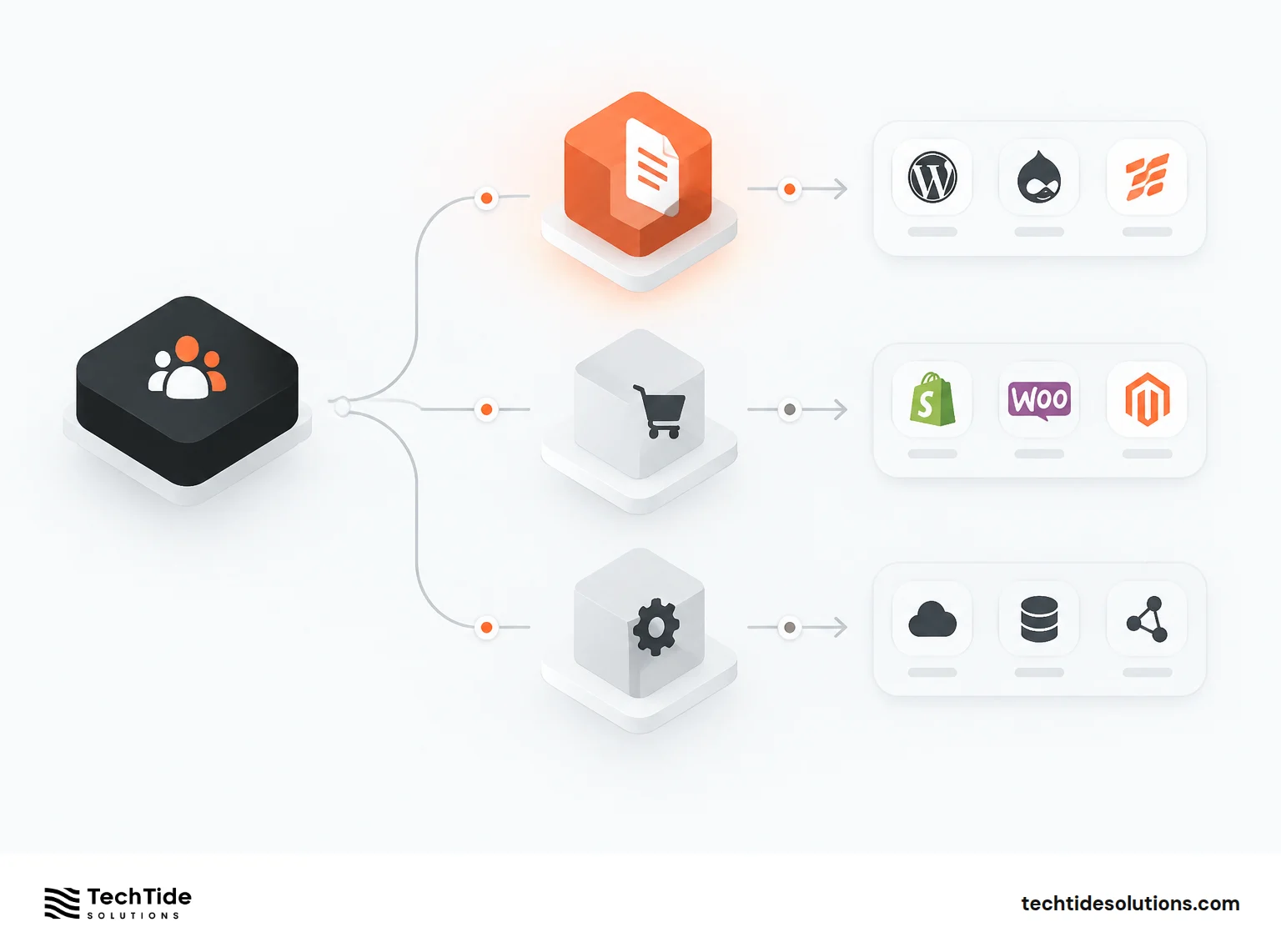
The CMS or commerce platform decision is one of the biggest long-term choices in any website project. It decides who can publish, how flexible the site stays, how hard upgrades become, and how painful integrations will be later. A good agency should guide this choice instead of defaulting to whatever it already sells most often.
WordPress, Drupal, And Joomla Considerations
WordPress remains the default choice for many marketing sites because it balances editor familiarity and broad ecosystem support. The most basic hosted-versus-self-managed tradeoff is summarized in this comparison, and it is a useful reminder that governance and ownership matter as much as theme choice.
Drupal is usually the stronger fit for organizations that need heavier governance, more structured content, or more complex permission models. Joomla can still work for the right team, but in this market it appears less frequently in agency positioning than WordPress or Drupal. In practice, the right question is not “which CMS is best?” It is “which CMS fits our content team, workflow, and maintenance tolerance?”
Shopify, Magento, And Ecommerce Complexity
Shopify is often the fastest path for brands that want reliable ecommerce operations without building too much from scratch. Agencies like UPQODE, Lounge Lizard, and Digital Silk all surface Shopify clearly in their public materials, which is usually a good sign for merchants who need launch speed and ecosystem support.
Magento or Adobe Commerce-style builds make more sense when catalogs, pricing logic, account structures, or integration needs become more demanding. That said, complexity carries overhead. If you do not need advanced B2B workflows, wholesale logic, or major ERP integration, a lighter platform may be the smarter choice.
FAQ
These are the questions we expect most buyers to ask before moving from shortlist to outreach. The direct answer usually comes down to business context, not agency prestige alone.
What Are the Best Web Design Companies
The best web design companies in this roundup are Clay, SmartSites, DD.NYC, UPQODE, and Lounge Lizard for most buyers. Clay is strongest for premium brand and enterprise-grade digital experience work, SmartSites is the most practical growth pick for many SMBs, DD.NYC is excellent for high-end visual presentation, and UPQODE is one of the best middle-market value picks. If your website is tightly tied to broader software work, TechTide deserves a serious look.
What Is the Average Cost for a Website Designer
The average cost varies too much by scope to use one honest number. In this list alone, public minimums range from entry points around the low five figures up to premium-agency thresholds starting much higher. As a practical rule, expect a basic business site to cost far less than a custom lead-gen platform, ecommerce build, or enterprise redesign with integrations.
How Do I Choose the Best Web Design Company for My Business
Choose the agency that best matches your site type, budget level, internal bandwidth, and growth goals. Start by filtering for industry fit and technical fit, then look at process clarity, pricing signals, and review themes. If two agencies look equal on portfolio quality, pick the one whose workflow your team can realistically support.
Should I Hire a Web Design Company or Use a Website Builder
You should hire an agency when the website is important enough that messaging, UX, technical setup, integrations, SEO, and post-launch support all affect revenue or trust. A builder is often enough for a simple brochure site or a very early-stage business that mainly needs a live presence. Once the site becomes a sales tool, recruiting asset, investor surface, or commerce channel, agency help usually starts paying for itself.
What Are the 7 Cs of Web Design
The 7 Cs are commonly described as context, content, community, customization, communication, connection, and commerce. In practice, they are just a way to check whether the site is clear, useful, connected to the business model, and built for the audience it serves. We would use them as a thinking tool, not as a strict scoring rubric.
Conclusion
The best web design companies are the ones that match your real project, not your fantasy project. If we were building a quick shortlist today, we would start with Clay for premium digital experience work, SmartSites for commercially practical growth builds, DD.NYC for brand presentation, UPQODE for value and platform balance, and TechTide when the website is part of a bigger software roadmap. Which camp are you in: brand-first, growth-first, or product-first?

