


When we compare the top cybersecurity companies, we do not start with hype. We start with fit. The right provider for a global bank is often wrong for a lean SaaS team. The right choice for a branch-heavy retailer can also be wrong for a cloud-first startup. That is why this guide focuses on trade-offs, not just brand recognition.
Security budgets are still climbing fast. Gartner expects end-user security spending to reach $212 billion in 2025, which tells us buyers now have more options than ever, and more room to make an expensive mistake.
The cost of a weak fit is not abstract. IBM put the average global breach cost at $4.88 million in 2024, and we keep seeing the same practical split in buying behavior: Microsoft-heavy organizations often try to consolidate around Defender and Entra, while branch-heavy manufacturers and retailers often get faster operational value from Fortinet or Cisco because network control still drives the risk.
We wrote this as a buyer’s guide, not a generic SEO roundup. We focus on where each company is strongest, where each one can create overhead, and what questions we would ask before signing a contract.
Quick Comparison of Top Cybersecurity Companies
If you need a quick first pass, start with this table. We mapped the first ten companies by best fit, strongest edge, likely downside, and the one question we would ask in a real evaluation meeting.
| Agency | Best for | Strength | Potential drawback | Good question to ask |
|---|---|---|---|---|
| Palo Alto Networks | Large enterprise consolidation | Very broad platform coverage | Licensing and rollout can sprawl | What can we retire in year one? |
| CrowdStrike | Endpoint-led cloud security | Strong detection and threat intel | Modules add up fast | Which gaps still need other tools? |
| TechTide Solutions | Custom security workflow builds | Tailored software and integrations | Not a boxed security suite | Who owns code and long-term support? |
| Microsoft | Microsoft-first environments | Bundle depth across identity and endpoint | Configuration and licensing complexity | What value do current licenses already cover? |
| Fortinet | Branch and network-heavy teams | Security and networking together | Management can get messy | Who will own central policy governance? |
| Cloudflare | Internet-facing apps and remote access | Edge performance plus protection | Less depth in endpoint security | Which edge tools can we replace? |
| Zscaler | Zero-trust access | Strong SSE model | Requires architecture change | What traffic still needs VPN? |
| Cisco | Hybrid enterprise estates | Network reach and broad portfolio | Portfolio can feel stitched together | What will the day-two operating model be? |
| Check Point Software Technologies | Prevention-first network security | Stable policy control | Less cloud-native buzz | How consistent is policy across environments? |
| CyberArk | Privileged access and machine identity | Deep identity security focus | Narrow as a sole platform | Which privileged identities go live first? |
Recommended reading: Top 20 Sydney Web Design Companies for Businesses That Want Better Results
Top 20 Top Cybersecurity Companies to Shortlist First
We would not throw all 20 of these vendors into one bake-off. That wastes time. Instead, we would group them by your architecture, your team maturity, and the control gaps that matter most right now. Some are broad platform bets. Others are category leaders that solve one painful problem better than a giant suite can.
1. Palo Alto Networks
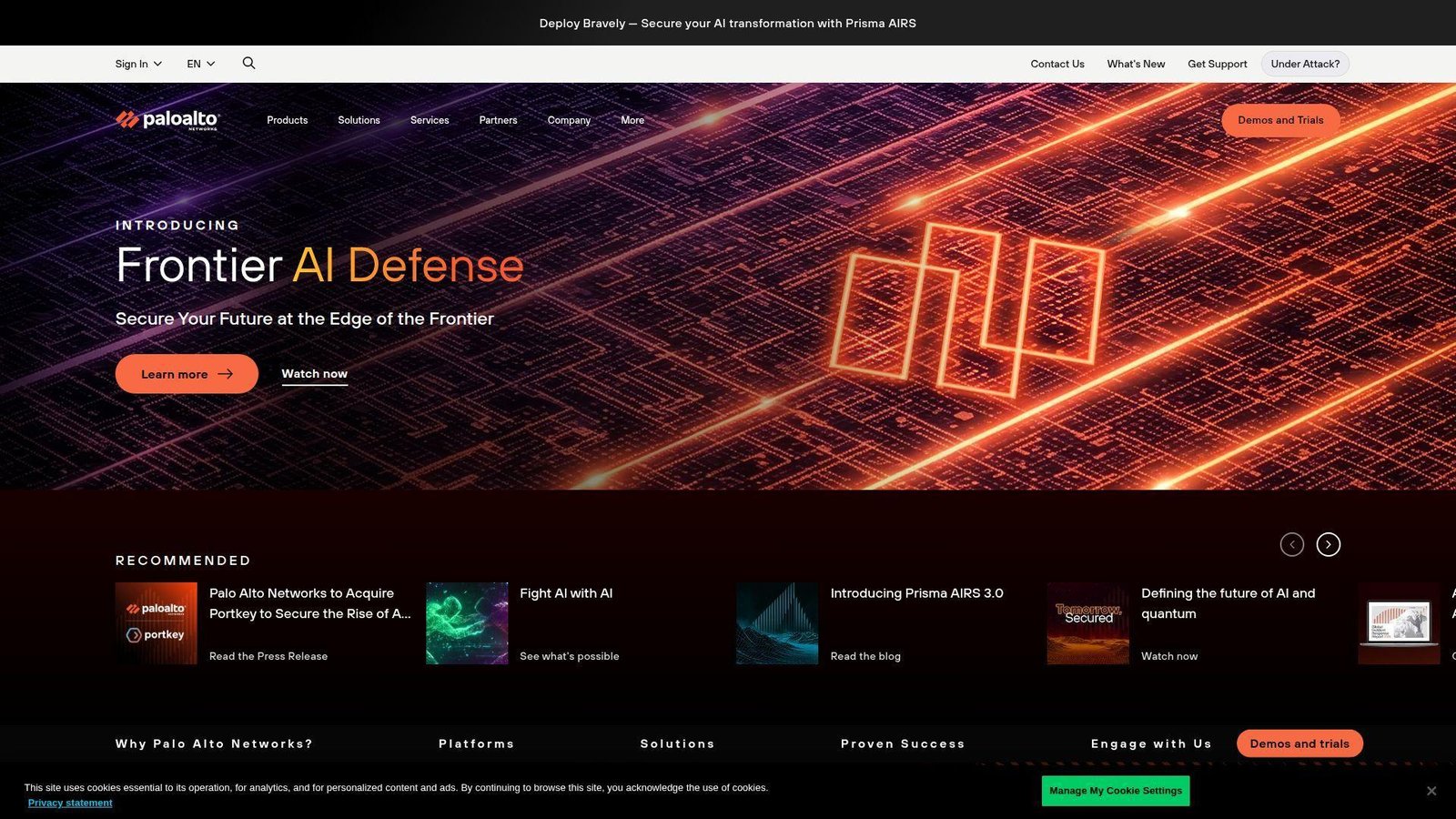
Palo Alto Networks focuses on enterprise cybersecurity across network security, cloud security, and security operations. It has about 15,300 employees, has operated since 2005, and is headquartered in Santa Clara, California.
We place Palo Alto near the top when a buyer wants one serious vendor across firewalls, SASE, cloud posture, and SOC tooling. The upside is breadth with real enterprise depth. The trade-off is that buyers can over-license the platform and then struggle to operationalize it. In our view, Palo Alto is strongest when the security team already knows which tools it wants to replace first and has the staff to own policy cleanup. It is less attractive when a smaller team just wants a light, fast rollout with minimal architecture work.
- Service scope: Firewalls, SASE, CNAPP, XDR, SIEM, threat intelligence.
- Industry specialization: Large enterprise, public sector, finance, healthcare, hybrid IT.
- Ideal client size: Upper midmarket to global enterprise.
- Pricing model: Quote-based subscriptions, often module-based, plus hardware where needed.
- Onboarding process: Assessment, pilot, policy cleanup, then phased rollout by domain.
- Communication style: Enterprise sales-led with strong partner and engineer involvement.
- Proof/case-study requirements: Ask for consolidation examples with both network and cloud controls.
- Red flags to check before hiring: Too many modules sold before owners and workflows are defined.
- Questions to ask before signing: Which tools can we retire in the first contract term?
2. CrowdStrike
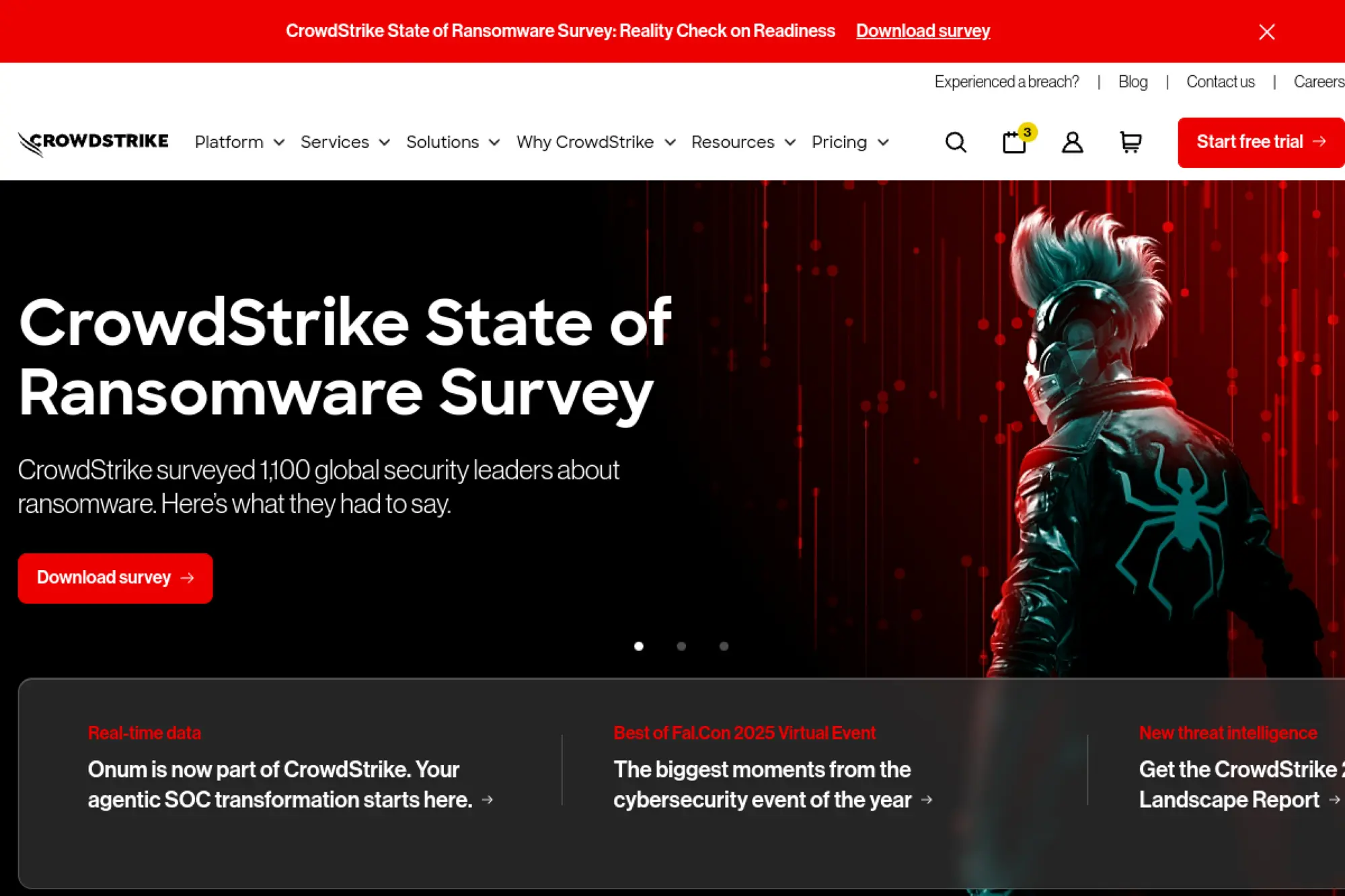
CrowdStrike focuses on endpoint security, XDR, identity protection, cloud security, and managed detection services. It has about 10,100 full-time employees, has operated since 2011, and is headquartered in Austin, Texas.
We usually shortlist CrowdStrike when endpoint visibility is the center of the buying decision. Falcon remains one of the cleanest stories in the market for modern endpoint-led security, and the company has also extended well into identity, cloud, and next-gen SIEM. The risk is module creep. Teams can start with EDR, add more modules, and then discover they still need separate answers for network controls, email, or data governance. CrowdStrike is a smart fit for cloud-first security teams that want speed, tight detections, and a strong hunting culture. It is a weaker fit if the main problem is branch networking or identity governance at the core.
- Service scope: Endpoint, XDR, MDR, identity, cloud, SIEM, exposure management.
- Industry specialization: Cloud-first enterprises, tech, finance, healthcare.
- Ideal client size: Midmarket to enterprise.
- Pricing model: Annual subscription, usually by module or workload.
- Onboarding process: Sensor rollout, policy tuning, detection review, optional managed service handoff.
- Communication style: Fast, technical, and outcome-focused.
- Proof/case-study requirements: Ask for examples of faster triage and fewer analyst handoffs.
- Red flags to check before hiring: Buying several modules before confirming operating ownership.
- Questions to ask before signing: What still sits outside Falcon after phase one?
3. TechTide Solutions
TechTide Solutions focuses on custom software development, integrations, and security-minded internal tools. Our public site points to 150+ full-time professionals, roughly 10+ years in operation, and headquarters in Ho Chi Minh City, Vietnam.
We include ourselves on this list for a different reason than the platform vendors. We are not a turnkey EDR, firewall, or email security company. TechTide Solutions fit when off-the-shelf platforms leave workflow gaps behind. That usually means secure internal portals, approval flows for privileged access, evidence capture tools, custom dashboards, or integrations across identity, monitoring, and data systems. In practice, many teams already own strong security products but still lose time in manual routing, duplicate data entry, or brittle handoffs between systems. That is where custom engineering matters. If you need a packaged security stack, we would not put ourselves first. If you need the missing connective tissue, we should be in the conversation.
- Service scope: Custom web apps, mobile apps, internal tools, integrations, workflow systems.
- Industry specialization: Fintech, healthcare, insurance, blockchain, workflow-heavy teams.
- Ideal client size: Startups, midmarket firms, and enterprise teams with tooling gaps.
- Pricing model: Custom quote by scope, team shape, and engagement model.
- Onboarding process: Discovery, scoping, architecture, sprint planning, then staged delivery.
- Communication style: Embedded, collaborative, and product-minded.
- Proof/case-study requirements: Ask us to show similar internal tools or secure integration work.
- Red flags to check before hiring: Any builder that cannot explain access control, audit trails, and handoff.
- Questions to ask before signing: Who owns the code, hosting, testing, and long-term maintenance?
4. Microsoft
Microsoft spans enterprise software, cloud, identity, endpoint management, and security. It has about 228,000 employees, has operated since 1975, and is headquartered in Redmond, Washington.
We almost never ignore Microsoft in a serious enterprise security shortlist. If a company already runs Microsoft 365, Azure, Intune, and Entra, the economic and operational gravity is obvious. Defender, Sentinel, Purview, and Entra can cover a surprising amount when configured well. The challenge is that “already included” does not mean “already useful.” We see many teams paying for strong Microsoft security features while leaving them half-configured. Microsoft is at its best when buyers want fewer vendors and already accept a Microsoft-first way of operating. It is less attractive for teams that want best-of-breed depth in one niche and do not want licensing or ecosystem complexity.
- Service scope: Endpoint, identity, SIEM, email, device management, data protection, cloud security.
- Industry specialization: Microsoft-heavy enterprises, public sector, regulated organizations.
- Ideal client size: Midmarket to enterprise.
- Pricing model: Bundled licensing plus add-ons across Microsoft 365 and Azure.
- Onboarding process: License review, tenant hardening, baseline policies, phased workload rollout.
- Communication style: Ecosystem-driven, documentation-heavy, partner-supported.
- Proof/case-study requirements: Ask where Microsoft replaced third-party tools without creating blind spots.
- Red flags to check before hiring: Assuming bundled licenses equal a finished deployment.
- Questions to ask before signing: Which controls are mature in the license tier we already own?
5. Fortinet

Fortinet focuses on network security, secure networking, SASE, security operations, and OT protection. It has about 14,100 employees, has operated since 2000, and is headquartered in Sunnyvale, California.
We like Fortinet most in network-driven environments. If your world includes branches, SD-WAN, firewalls, campus traffic, and operational technology, Fortinet can make a lot of sense. Its value comes from pulling security and networking closer together. That matters more than many buyers admit. The trade-off is management discipline. Fortinet’s portfolio is broad, and it is easy to buy several parts without a clean ownership model. We would put Fortinet high on the list for distributed enterprises that still live and die by the network edge. We would place it lower for teams whose main pain point is human risk, insider data access, or privileged identity.
- Service scope: NGFW, SD-WAN, SASE, NAC, EDR, SIEM, OT security.
- Industry specialization: Branch networks, service providers, manufacturing, education, healthcare.
- Ideal client size: Midmarket to enterprise, especially distributed sites.
- Pricing model: Hardware plus subscription, or software subscriptions for cloud and SASE controls.
- Onboarding process: Network assessment, appliance sizing, staged migration, centralized management setup.
- Communication style: Channel-led, practical, and network-operations friendly.
- Proof/case-study requirements: Ask for branch rollouts and SD-WAN plus security consolidation examples.
- Red flags to check before hiring: No clear plan for who runs policy governance after launch.
- Questions to ask before signing: Can one operating team realistically own the stack?
6. Cloudflare
Cloudflare focuses on edge security, application security, network services, and zero-trust access. It has about 5,100 full-time employees, has operated since 2009, and is headquartered in San Francisco, California.
Cloudflare earns a shortlist spot when the buying problem starts with internet exposure. Public websites, APIs, DDoS risk, bot abuse, remote access, and secure connectivity are where it shines. We also like its developer-friendly feel. Buyers often understand faster what Cloudflare will actually replace. The trade-off is category depth. Cloudflare is not the first place we would go for deep endpoint security or privileged identity control. It is the first place we would go when the edge, the web app, or remote access is the pain. For SaaS teams, e-commerce brands, and fast-moving engineering organizations, Cloudflare can move quickly from pilot to practical value.
- Service scope: CDN, DDoS, WAF, API security, zero-trust access, network services.
- Industry specialization: SaaS, e-commerce, media, developer-led internet businesses.
- Ideal client size: SMB to enterprise with public-facing apps.
- Pricing model: Tiered plans at the low end, enterprise quotes for advanced controls.
- Onboarding process: DNS planning, app discovery, policy mapping, staged traffic inspection.
- Communication style: Fast, internet-native, and documentation-first.
- Proof/case-study requirements: Ask for application protection and remote access results, not only speed gains.
- Red flags to check before hiring: Treating it as a full substitute for endpoint or PAM depth.
- Questions to ask before signing: Which separate edge tools can we actually retire?
7. Zscaler
Zscaler focuses on secure service edge, zero-trust access, web security, CASB, and data protection. It has about 8,200 employees, has operated since 2007, and is headquartered in San Jose, California.
Zscaler belongs near the top for distributed teams that want to move away from perimeter thinking. If a company is tired of VPN sprawl, flat network assumptions, and awkward internet breakouts, Zscaler can be a strong architectural move. The flip side is that it is not a small change. Teams need cleaner identity, a better application map, and clearer policy ownership. We would not sell Zscaler as an easy lift. We would sell it as a high-value one for buyers that are serious about secure access modernization. It is especially strong in remote and hybrid workforce environments where the old perimeter model has already broken down.
- Service scope: Secure web gateway, ZTNA, CASB, DLP, browser isolation, SSE.
- Industry specialization: Distributed workforces, SaaS-heavy businesses, global enterprises.
- Ideal client size: Midmarket to enterprise.
- Pricing model: User or workload subscriptions, quote-based.
- Onboarding process: Traffic discovery, identity mapping, pilot groups, policy refinement, VPN reduction planning.
- Communication style: Architecture-led and detail-oriented.
- Proof/case-study requirements: Ask for migration stories from legacy proxy or VPN environments.
- Red flags to check before hiring: Weak identity hygiene or poor app inventory before rollout.
- Questions to ask before signing: What traffic still needs VPN, and why?
8. Cisco
Cisco focuses on networking, hybrid infrastructure, zero-trust access, security operations, and adjacent security controls. It has about 86,200 employees, has operated since 1984, and is headquartered in San Jose, California.
Cisco makes the most sense when network reality still shapes the security program. Large campuses, branches, hybrid data centers, switching, wireless, remote access, Duo, Talos intelligence, and now the Splunk connection all create a broad story. The catch is portfolio cohesion. Cisco can cover a lot, but buyers need a clear operating model or they end up with multiple consoles, overlapping capabilities, and too many owners. We would look closely at Cisco when the network and security teams already work closely together. We would be more cautious when the buyer wants a clean, single-purpose platform with minimal cross-team coordination.
- Service scope: Firewalls, zero-trust access, email, Duo, XDR, networking, observability.
- Industry specialization: Hybrid enterprise, campus and branch environments, large IT teams.
- Ideal client size: Enterprise and upper midmarket.
- Pricing model: Mixed hardware, enterprise agreements, and subscriptions.
- Onboarding process: Estate review, architecture mapping, product rationalization, phased deployment.
- Communication style: Account-team heavy, partner-assisted, and process-driven.
- Proof/case-study requirements: Ask for integration examples across Cisco security and Splunk if both are proposed.
- Red flags to check before hiring: Overlap created by separate budget owners buying separate Cisco products.
- Questions to ask before signing: What will the day-two operating model look like?
9. Check Point Software Technologies
Check Point focuses on network security, cloud security, workspace protection, and prevention-led enterprise defense. It has about 6,500 employees, has operated since 1993, and is headquartered in Tel Aviv, Israel.
Check Point is easy to underestimate because it is not always the loudest vendor in the room. That can be a mistake. We still see it fit well in organizations that care about prevention, stable administration, and strong policy control more than marketing heat. It remains a serious option for firewall-led environments and for buyers who value operational steadiness. The main trade-off is that its cloud-native and developer-friendly story often feels less front-of-mind than some newer rivals. We would shortlist Check Point when the buyer wants mature control, consistent management, and lower drama. We would test alternatives harder when the center of gravity is cloud development speed or internet edge transformation.
- Service scope: Firewalls, SASE, endpoint, email, cloud security, centralized policy management.
- Industry specialization: Enterprises that value prevention, stable operations, and controlled change.
- Ideal client size: Midmarket to enterprise.
- Pricing model: Quote-based appliance and subscription mix.
- Onboarding process: Policy audit, migration planning, gateway rollout, management tuning.
- Communication style: Structured and conservative in a useful way.
- Proof/case-study requirements: Ask for prevention and admin efficiency examples in similar environments.
- Red flags to check before hiring: Weak cloud-native roadmap discussion if cloud app security is central.
- Questions to ask before signing: How much policy can we standardize across network, cloud, and users?
10. CyberArk
CyberArk focuses on identity security, privileged access, secrets management, endpoint privilege, and machine identity. It has about 3,800 employees, has operated since 1999, and is headquartered in Petach-Tikva, Israel.
When privileged access is the weak point, CyberArk is one of the first names we bring up. This is not a “nice to have” category anymore. Admin access, service accounts, developer secrets, certificates, and machine identity can become the shortest path to major damage. CyberArk is strongest when the buyer knows identity security is the real project, not a side feature under another suite. The trade-off is scope. CyberArk is a category leader, not a single answer to every control domain. That is fine. In fact, we often prefer that kind of clarity. If your risk sits in privileged access and machine identity, a specialist usually beats a vague platform promise.
- Service scope: PAM, secrets management, endpoint privilege, workforce identity, machine identity.
- Industry specialization: Regulated industries, privileged access programs, DevOps-heavy teams.
- Ideal client size: Midmarket to enterprise, especially regulated buyers.
- Pricing model: Quote-based subscription and platform licensing.
- Onboarding process: Privileged account discovery, vault design, phased onboarding, workflow tuning.
- Communication style: Security-architect heavy and detail-oriented.
- Proof/case-study requirements: Ask for onboarding speed and admin adoption, not only platform demos.
- Red flags to check before hiring: No plan for service accounts, machine identities, or break-glass access.
- Questions to ask before signing: Which identities go live first, and who owns the backlog?
11. SentinelOne
SentinelOne focuses on endpoint security, XDR, cloud security, and AI-assisted security operations. It has over 2,800 employees, has operated since 2013, and is headquartered in Mountain View, California.
We see SentinelOne as a strong option for buyers that want modern endpoint control without defaulting to the biggest suite vendor. It has a good reputation for autonomous response and endpoint visibility, and it has expanded into cloud and data-rich security operations use cases. The smart buying move here is to test workflow fit, not just detection claims. That means analyst experience, alert explainability, integrations, and reporting. SentinelOne is appealing to midmarket and enterprise teams that want speed and a clear endpoint-first posture. It is less natural if the real buying problem is network architecture, secure access transformation, or email-centric human risk.
- Service scope: Endpoint, XDR, cloud security, SIEM, threat hunting, managed services.
- Industry specialization: Modern endpoint programs, tech, finance, and lean SOC teams.
- Ideal client size: Midmarket to enterprise.
- Pricing model: Subscription, usually module-based.
- Onboarding process: Agent rollout, baseline tuning, control validation, optional MDR setup.
- Communication style: Direct, technical, and fast-moving.
- Proof/case-study requirements: Ask for examples of false-positive handling and response workflow quality.
- Red flags to check before hiring: Buying on AI claims without testing day-to-day analyst usability.
- Questions to ask before signing: How does SentinelOne fit with our SIEM, identity, and cloud stack?
12. Akamai Technologies
Akamai Technologies focuses on application security, API protection, DDoS mitigation, edge services, and zero-trust access. It has over 10,700 employees, has operated since 1998, and is headquartered in Cambridge, Massachusetts.
Akamai should be taken seriously when the front door of the business is the internet. If your revenue depends on global applications, APIs, media delivery, e-commerce traffic, or low-latency web performance, Akamai’s security story becomes much more valuable. We like it most when app security and edge resiliency matter as much as classic security controls. The trade-off is straightforward. Akamai is not the first answer for endpoint, PAM, or human risk. It is the right answer when web-scale protection, application availability, and edge enforcement shape the threat model. For large digital businesses, that is often a bigger deal than a generic endpoint bake-off.
- Service scope: App and API protection, DDoS defense, zero trust, CDN, edge security.
- Industry specialization: Media, gaming, e-commerce, global platforms, high-traffic applications.
- Ideal client size: Midmarket to enterprise with critical web properties.
- Pricing model: Quote-based, often traffic or service driven.
- Onboarding process: App discovery, traffic baselining, rule tuning, staged enforcement.
- Communication style: Technical and edge-operations minded.
- Proof/case-study requirements: Ask for API abuse, bot, and DDoS outcomes in similar traffic profiles.
- Red flags to check before hiring: Using Akamai to solve endpoint or PAM problems it was not built for.
- Questions to ask before signing: Which internet-facing risks drop first after deployment?
13. Rapid7
Rapid7 focuses on exposure management, vulnerability management, MDR, and practical security operations. It has about 2,600 full-time employees, has operated since 2000, and is headquartered in Boston, Massachusetts.
Rapid7 often lands well with teams that want practical security operations rather than a sprawling mega-suite. That matters. Not every buyer needs the largest platform in the market. Many just need visibility, prioritization, and response workflows that a mid-sized team can actually run. We like Rapid7 for buyers that want a sensible middle ground between point-tool chaos and overbuilt enterprise complexity. The trade-off is that data source coverage and process design still matter a lot. If the right telemetry is not connected, the platform will disappoint. In our experience, Rapid7 is strongest where the team values usable workflows and fast adoption over vendor theater.
- Service scope: Vulnerability management, MDR, SIEM, exposure analytics, cloud visibility.
- Industry specialization: Midmarket teams, practical SecOps programs, mixed IT estates.
- Ideal client size: SMB to enterprise, strongest in midmarket.
- Pricing model: Subscription, often platform plus service add-ons.
- Onboarding process: Asset and log source connection, playbook setup, analyst workflow tuning.
- Communication style: Straightforward and operator-friendly.
- Proof/case-study requirements: Ask for time-to-value and triage improvement examples.
- Red flags to check before hiring: Poor telemetry coverage during scoping.
- Questions to ask before signing: What must be connected before the platform becomes useful?
14. Tenable
Tenable focuses on exposure management, vulnerability management, attack surface visibility, and cloud and OT risk. It has about 2,000 employees, has operated since 2002, and is headquartered in Columbia, Maryland.
Tenable is one of the clearer picks on this list because its role is well defined. If your core issue is asset sprawl, weak visibility, unmanaged exposures, or compliance pressure around vulnerability management, Tenable deserves a close look. We like vendors that know what they are for. Tenable is not trying to be every control plane at once. The trade-off is obvious too. It is not a full SOC platform, and it will not replace identity, email, or endpoint leadership. That is fine. In a lot of organizations, exposure management is the first step that makes the rest of the stack more rational.
- Service scope: Vulnerability management, exposure management, attack surface, cloud and OT visibility.
- Industry specialization: Compliance-heavy teams, infrastructure-rich estates, industrial environments.
- Ideal client size: Midmarket to enterprise.
- Pricing model: Subscription, usually asset or module based.
- Onboarding process: Asset discovery, scanner planning, exposure prioritization, reporting setup.
- Communication style: Practical and risk-focused.
- Proof/case-study requirements: Ask for prioritization outcomes, not just vulnerability volume.
- Red flags to check before hiring: Treating Tenable as a full SOC platform.
- Questions to ask before signing: How will we act on findings faster than we do today?
15. Varonis
Varonis focuses on data security, insider risk, data security posture management, and access control visibility. It has about 2,700 employees and contractors, has operated since 2005, and is headquartered in Miami, Florida.
We like Varonis when the real problem is data sprawl. Many security programs think they have a tool problem when they actually have a permissions problem, an ownership problem, or a sensitive-data visibility problem. Varonis is good at dragging those issues into the light. Buyers should be ready for that. The platform can reveal messy access patterns that are politically harder to fix than they are technically hard to find. That is not a weakness in the product. It is part of the value. Varonis is a strong fit for regulated, collaborative, and data-heavy organizations, especially those deep in Microsoft 365 or shared file environments.
- Service scope: Data security posture, file and SaaS visibility, insider risk, automation.
- Industry specialization: Finance, healthcare, legal, education, and data-heavy organizations.
- Ideal client size: Midmarket to enterprise with sensitive data sprawl.
- Pricing model: Quote-based subscription.
- Onboarding process: Data source connection, permissions analysis, alert tuning, remediation planning.
- Communication style: Investigation-oriented and hands-on.
- Proof/case-study requirements: Ask for permission cleanup and exposure reduction examples.
- Red flags to check before hiring: No business owner assigned to sensitive repositories.
- Questions to ask before signing: Who approves remediation when bad access patterns are exposed?
16. Darktrace
Darktrace focuses on AI-driven cybersecurity across network, cloud, email, identity, and OT environments. It has 2,300+ employees, has operated since 2013, and is headquartered in Cambridge, United Kingdom.
Darktrace is one of the more polarizing names on this list, which is exactly why buyers should evaluate it carefully rather than casually. We think it is strongest in complex environments where unknown behavior matters and classic rules alone are not enough. Its appeal is behavioral visibility across messy estates. The caution is simple. Do not buy the AI story by itself. Buy it only if the detections are explainable to your team, the workflows fit your analysts, and the platform maps to how you will investigate and respond. When that fit is real, Darktrace can be powerful. When it is not, the buyer can end up with interesting signals but muddy operations.
- Service scope: Network detection, email, cloud, identity, OT, autonomous response.
- Industry specialization: Complex environments, critical infrastructure, global enterprises, mixed networks.
- Ideal client size: Midmarket to enterprise.
- Pricing model: Subscription, quote-based by modules and environment.
- Onboarding process: Telemetry hookup, behavioral baselining, detection review, response rule tuning.
- Communication style: Technical and research-heavy.
- Proof/case-study requirements: Ask how anomalies become decisions in a real analyst workflow.
- Red flags to check before hiring: Buying the AI story without clear escalation ownership.
- Questions to ask before signing: How explainable are detections to our analysts and auditors?
17. KnowBe4
KnowBe4 focuses on human risk management, security awareness training, phishing simulation, and related user-focused controls. It has about 2,150 employees, has operated since 2010, and is headquartered in Clearwater, Florida.
We do not treat KnowBe4 as a replacement for technical controls, and neither should buyers. We treat it as a serious answer to a specific problem, human behavior risk. That matters because security failures are often helped along by curiosity, fatigue, weak reporting habits, and social engineering. KnowBe4 is one of the clearest vendors in the market for training and measurement. We like it most when security and people teams both care about the outcome. It becomes less effective when it is used as a compliance box-tick with no link to policy changes, email controls, or incident reporting habits.
- Service scope: Awareness training, phishing simulation, human risk scoring, email security options.
- Industry specialization: Human risk programs across nearly every sector.
- Ideal client size: SMB to enterprise.
- Pricing model: Subscription by user and module.
- Onboarding process: Baseline phishing test, user segmentation, content rollout, reporting cadence.
- Communication style: Education-led, clear, and easy to share across teams.
- Proof/case-study requirements: Ask for behavior change over time, not just course completion.
- Red flags to check before hiring: Treating training as the only answer to phishing or BEC.
- Questions to ask before signing: How will training results change policy, controls, and coaching?
18. Proofpoint
Proofpoint focuses on email security, human-centric security, data loss controls, insider risk, and compliance-related protection. It has roughly 5,000 team members, has operated since 2002, and is headquartered in Sunnyvale, California.
Proofpoint remains one of the strongest names when the threat starts with people and lands through email. That still describes a huge portion of real-world business risk. We think Proofpoint is especially compelling for large enterprises that face targeted phishing, business email compromise, and compliance pressure around data and communications. The trade-off is that smaller teams can buy more than they can manage. Proofpoint works best when email, human behavior, and sensitive data are already strategic concerns, not afterthoughts. It is also a good reality check for organizations that assume Microsoft’s built-in email layers are always enough.
- Service scope: Email security, targeted attack protection, DLP, insider risk, compliance.
- Industry specialization: Large enterprises, regulated sectors, phishing-prone user populations.
- Ideal client size: Midmarket to enterprise, strongest in large enterprise.
- Pricing model: Quote-based subscriptions.
- Onboarding process: Email flow review, policy design, identity mapping, staged enforcement.
- Communication style: Enterprise and risk-focused.
- Proof/case-study requirements: Ask for executive protection and BEC reduction examples.
- Red flags to check before hiring: Overbuying advanced modules without clear internal owners.
- Questions to ask before signing: How does Proofpoint fit with the email security we already have?
19. Trend Micro
Trend Micro focuses on cloud security, endpoint protection, XDR, network security, and email protection. It has about 7,000 employees, has operated since 1988, and is headquartered in Tokyo, Japan.
Trend Micro deserves more shortlist attention than it sometimes gets in U.S.-centric conversations. We see it as a balanced vendor with real cloud workload history, broad enterprise security coverage, and a long operating track record. It is often a sensible fit for hybrid environments where cloud, servers, endpoints, and email all matter, but where the buyer does not want a giant, sprawling vendor motion. The challenge is portfolio clarity. Buyers need to scope carefully and avoid signing for a bundle that is wider than the team can absorb. When positioned well, Trend Micro can be a steady and credible choice.
- Service scope: Endpoint, cloud workload, email, network, XDR, attack surface management.
- Industry specialization: Hybrid environments, global organizations, cloud and server-heavy teams.
- Ideal client size: SMB to enterprise.
- Pricing model: Subscription, often platform or bundle based.
- Onboarding process: Estate mapping, sensor rollout, policy alignment, cloud connector setup.
- Communication style: Balanced and methodical.
- Proof/case-study requirements: Ask for workload security and XDR outcomes in similar hybrid estates.
- Red flags to check before hiring: Vague scoping across too many product names.
- Questions to ask before signing: Which modules solve our immediate risk, and which can wait?
20. Bitdefender
Bitdefender focuses on endpoint security, MDR, XDR, and business security products for small and midsize organizations. It has about 1,800 employees, has operated since 2001, and is headquartered in Bucharest, Romania.
Bitdefender is a name we like for value-conscious buyers that still want credible endpoint protection. It is especially relevant for SMBs, upper midmarket teams, and MSP-driven environments where price discipline and admin simplicity matter. That does not mean it is only for smaller buyers. It means the buying case is often clearest there. The trade-off is breadth. Bitdefender is not the vendor we would start with for deep identity governance, broad SASE transformation, or full enterprise platform consolidation. We would start with it when endpoint security quality, manageable cost, and practical operations are the goal.
- Service scope: Endpoint protection, EDR, XDR, MDR, MSP-friendly security operations.
- Industry specialization: SMB, midmarket, MSP channels, cost-sensitive enterprise segments.
- Ideal client size: SMB to upper midmarket.
- Pricing model: Subscription, often per endpoint or service tier.
- Onboarding process: Agent deployment, policy baseline, test incident runs, optional MDR handoff.
- Communication style: Direct and practical.
- Proof/case-study requirements: Ask for detection quality, admin time, and support responsiveness.
- Red flags to check before hiring: Expecting broad SASE or deep identity governance from an endpoint-led buy.
- Questions to ask before signing: What do we gain over the endpoint tool we already own?
Recommended reading: Top 20 IT Outsourcing Companies for Growth, Innovation, and Scale
How We Judged the Top Cybersecurity Companies
We did not rank these companies by brand heat alone. We looked at what buyers actually inherit on day two, policy work, alert quality, integration friction, ownership clarity, and whether the product can reduce tool sprawl instead of just adding another console.
1. Innovation, Product Effectiveness, and Market Presence
We gave more weight to vendors that shape architecture decisions, not just vendor slides. Palo Alto Networks, CrowdStrike, Microsoft, Zscaler, Cloudflare, and CyberArk keep showing up because they influence how buyers think about network, endpoint, zero-trust, and identity. Still, market presence only matters if the product works in production. A specialist can beat a giant when the problem is narrow and painful enough, which is why CyberArk, Varonis, Proofpoint, and KnowBe4 remain important even in platform-heavy buying cycles.
2. Integration, Support, False Positives, and Response Time
A polished demo means very little if the product floods analysts with junk. We score vendors higher when integrations are clean, data models are understandable, policy behavior is explainable, and support teams can help buyers stabilize operations quickly. False positives matter because every bad alert trains the team to trust alerts less. Response time matters too. Some vendors are easier to get useful value from in weeks, while others ask for a larger architecture project before the gains become obvious.
3. Coverage Across Endpoint, Cloud, Identity, Data, and Operations
Modern incidents do not stay in one lane. A weak identity can expose cloud assets, email can become a data loss event, and a workstation compromise can become a privilege escalation problem. That is why we rewarded either broad platform coverage or category depth that solves a specific blind spot. Palo Alto Networks, Microsoft, Fortinet, Cisco, and Trend Micro score well for breadth. CyberArk, Varonis, Proofpoint, and KnowBe4 score well because they solve problems broad suites still leave behind.
Recommended reading: Top 20 Product Development Companies: Complete Guide and Selection Criteria
Which Security Needs These Top Cybersecurity Companies Fit Best
Shortlists should start with your dominant risk, not the loudest vendor story. Verizon’s 2025 breach analysis said third-party involvement in breaches rose to 30 percent, which is one more reason we now map vendors against real operating dependencies before we compare logos.
1. Broad Platforms for Network, Endpoint, Cloud, and Security Operations
When the goal is tool consolidation, we usually start with Palo Alto Networks, Microsoft, Fortinet, Cisco, and sometimes Trend Micro. These vendors make the most sense for complex estates where several security domains need to work together under one operating model. A branch-heavy retailer, for example, may care more about firewalls, SD-WAN, and secure access than about fancy endpoint storytelling. In that case, Fortinet or Cisco can beat an endpoint-first rival. A Microsoft-heavy enterprise may prefer to double down on Microsoft because the identity, endpoint, and SIEM layers already live in the same gravity well.
2. Cloud-Native and Zero-Trust Leaders for Distributed Teams
For remote and hybrid environments, we usually look first at CrowdStrike, Zscaler, Cloudflare, SentinelOne, and Akamai. The common thread is that these vendors tend to perform well when the business is internet-facing, SaaS-heavy, fast-moving, or cloud-led. A distributed software company with little branch networking and lots of public apps might move the needle faster with Zscaler plus Cloudflare than with another appliance refresh. That is a different security problem, and the shortlist should reflect it.
3. Identity, Data, Email, and Human-Risk Specialists
If the hardest problem is privileged access, sensitive data exposure, targeted phishing, or user behavior, specialists usually win. CyberArk is the identity security choice when privileged access and machine identity are the issue. Varonis is strong when sensitive data lives everywhere and nobody can say who should still have access. Proofpoint stands out when the threat lands through people and email. KnowBe4 is a strong companion purchase when the organization needs to change user reporting and phishing resilience, not just deploy more controls.
Recommended reading: Top 20 Web Design Companies in Singapore: How to Choose and Custom Solutions
Why AI, Zero-Trust, and Cloud Security Keep Separating Leaders
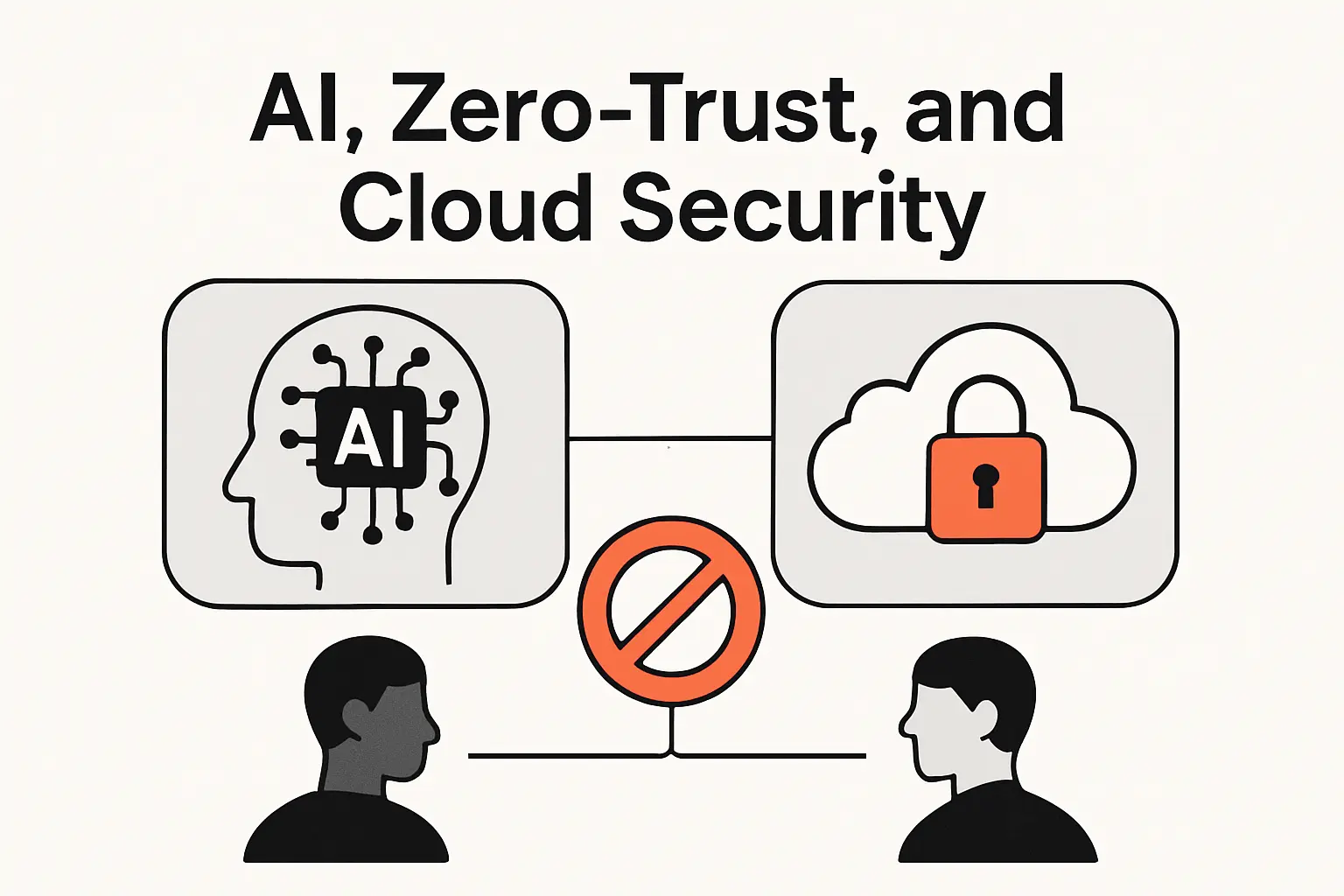
Three themes keep dividing the serious contenders from the crowded middle, AI that improves real analyst work, zero-trust access that reduces old perimeter assumptions, and cloud security that goes beyond checkbox posture. McKinsey found 53 percent of organizations already acknowledge cybersecurity as a generative AI-related risk, so buyers now want proof, not buzzwords.
1. Predictive Detection, AI, and Threat Intelligence
AI is only useful when it sharpens real decisions. CrowdStrike, Palo Alto Networks, Microsoft, SentinelOne, and Darktrace all push hard on AI-assisted detection and response. We think the smart way to judge those claims is simple. Ask whether the platform helps analysts decide faster, cuts bad alerts, adds context, and makes response safer. If AI only makes dashboards look futuristic, it is marketing. If it changes triage quality, response speed, and coverage, it matters.
2. Zero-Trust Access and Secure Service Edge
Zero-trust has become a practical architecture question, not a slogan. Zscaler and Cloudflare are strong when buyers want to reduce VPN dependence and move toward identity-led access. Palo Alto Networks, Cisco, Microsoft, and Akamai also belong in this conversation, especially in hybrid environments. The key question is not who says “zero-trust” the loudest. It is who can actually reduce implicit trust in the places your business still depends on it.
3. Cloud Security, Exposure Management, and Resilience
Cloud security now separates leaders because cloud risk is no longer just a posture problem. It is a workflow problem, an ownership problem, and sometimes a speed problem. Palo Alto Networks, CrowdStrike, Fortinet, Tenable, and Trend Micro all bring something useful here. We care less about who has the biggest cloud checklist and more about who can help the team see assets, reduce exposure, connect findings to response, and keep operations stable during change.
Recommended reading: Top 20 SEO Web Solutions to Improve Rankings, Traffic, and Revenue
Market Cap, Ratings, and Awards Versus Real-World Fit
Public market strength and industry lists can influence every shortlist. That is understandable. Statista estimates cybersecurity revenue reached nearly $200 billion in 2025, so the biggest names naturally draw the most attention. We still think buyers should treat those signals as context, not as the answer.
1. What Scale and Public Market Strength Usually Signal
Large public vendors usually signal deeper R&D budgets, broader support ecosystems, stronger partner networks, and more staying power. That matters, especially for global enterprises that need multilingual support, regional coverage, and long roadmap continuity. Bigger companies can also invest faster through acquisitions and platform expansion. We respect that. We just do not confuse it with automatic fit.
2. Why Reputation Lists Can Help but Should Not Decide the Deal
Peer lists, awards, and analyst reports are useful for trimming noise. They tell us who is visible, who is improving, and who has market momentum. They do not tell us whether your team can run the product well and how painful the rollout will be. And they do not tell us whether a bundled platform will quietly duplicate tools you already own. Those answers only show up in architecture reviews, pilots, and operating model discussions.
3. When a Specialist Is the Better Buy Than a Bigger Suite
We often prefer a specialist when the pain is obvious and concentrated. If privileged access is weak, CyberArk can be a smarter buy than a broad suite with shallow identity depth. If sensitive data permissions are the real mess, Varonis can do more for the program than another endpoint expansion. And if human risk is driving incidents, KnowBe4 or Proofpoint may move the business faster than a platform that barely touches those areas. Bigger is not always better. Sometimes clearer is better.
How to Choose the Right Cybersecurity Company for Your Team
We tell buyers to start with subtraction. What tools do you want to retire, what risks matter first, and which team will run the control after the vendor leaves? Those three questions usually clean up the shortlist fast.
1. Best Fits for Enterprise Security Teams Running Complex Stacks
Enterprise teams with multiple environments, regional operations, and larger budgets should usually start with Palo Alto Networks, Microsoft, Cisco, CrowdStrike, and Fortinet. These vendors can support broader operating models and larger transformation programs. The buyer’s job is to avoid overlap and define ownership early. If the security team, network team, cloud team, and identity team do not agree on the operating model, even the best platform will underperform.
2. Best Fits for Midmarket Teams Needing Faster Time to Value
Midmarket teams often need faster wins and less internal friction. That is where Rapid7, SentinelOne, Bitdefender, Trend Micro, Cloudflare, and Tenable can become very attractive, depending on the risk focus. We usually favor tools that are easier to deploy, easier to explain, and easier for a smaller team to own. A midmarket buyer should be ruthless about simplicity. Fancy breadth is not helpful if nobody can run it.
3. Best Fits for High-Compliance, High-Trust, and Hybrid Environments
For regulated and high-trust environments, we put more weight on identity control, data visibility, auditability, and communication risk. CyberArk, Proofpoint, Varonis, Microsoft, Check Point, and Akamai often show up here for good reason. Hybrid environments also need disciplined policy design. Buyers in this camp should ask more detailed questions about logging, access review, privileged workflows, reporting, and evidence production than they do about glossy dashboards.
FAQ About Top Cybersecurity Companies
Buyers usually ask the same core questions after the first round of demos. We do too. Here are the answers we find most useful when narrowing a serious shortlist.
1. Which Cybersecurity Companies Usually Lead the Shortlist?
In broad enterprise buying, Palo Alto Networks, CrowdStrike, Microsoft, Fortinet, Zscaler, and Cisco usually show up early. After that, the shortlist should narrow by problem. CyberArk is a common identity security add, Proofpoint for email and people-centric risk, Varonis for data exposure, and KnowBe4 for human risk. The real answer is that the shortlist should reflect the control gap, not just the market leaderboard.
2. Which Cybersecurity Company Leads the Market Right Now?
There is no single honest answer across every category. Palo Alto Networks often leads broad platform shortlists. CrowdStrike leads many endpoint and XDR conversations. Microsoft has huge built-in enterprise footprint. Zscaler is a major zero-trust access name. CyberArk is a leader in privileged access. We would not crown one universal winner because the market is too segmented for that to be useful.
3. Who Are Often Seen as the Big Four in Cybersecurity?
Among pure-play security names, Palo Alto Networks, CrowdStrike, Fortinet, and Check Point are often mentioned in that kind of shorthand. In real buying rooms, though, Microsoft is almost always part of the conversation. That is why we prefer category-based shortlists over catchy labels. They reflect how teams actually buy.
4. How Should You Compare Cybersecurity Companies Beyond Price?
Compare architecture fit, staffing burden, alert quality, integration depth, policy ownership, support quality, contract flexibility, and what you can retire after deployment. Price matters, but operational drag matters too. A cheaper tool that creates extra analyst load, policy confusion, or duplicate controls can cost more in practice than a cleaner, pricier option.
5. Do You Need One Platform or Several Specialists?
Most teams need a mix. We usually like a core platform where it meaningfully reduces sprawl, then specialists where the platform is clearly weaker. Identity, data security, email protection, and human risk are the most common areas where specialists still win. The right balance depends on your team’s capacity. If your staff is small, fewer major vendors may matter more than theoretical best-of-breed perfection.
How TechTide Solutions Helps Teams Build Custom Security-Focused Solutions
Most companies do not fail because they bought no security. They fail because their tools do not fit how work actually flows. That is where we usually come in. We help teams build the software, integrations, and internal workflows that make security controls usable in real operations.
1. Custom Web, Mobile, and Internal Tools Built for Security Workflows
We build internal tools that security vendors do not sell out of the box. That can mean a secure evidence intake portal, an exception request workflow for access reviews, a dashboard that pulls alerts into business context, or a mobile approval flow for time-sensitive access decisions. These are not flashy projects. They are the kind that remove manual gaps, messy spreadsheets, and risky one-off workarounds.
2. Tailored Integrations That Connect Identity, Monitoring, and Data Systems
Security tools often fail to work together the way buyers expect. We build integrations that connect identity providers, ticketing systems, monitoring platforms, internal data stores, and reporting layers so teams can move faster with fewer handoffs. In plain terms, we help the right data reach the right person at the right moment, with the right controls around it.
3. Custom Solutions That Fill Gaps Off-the-Shelf Platforms Leave Behind
Off-the-shelf platforms are strong at common controls. They are weaker at the edge cases that matter to a specific business. We build the missing layer when a company needs special approval logic, custom reporting, secure partner access, audit-ready workflows, or internal tools tied to its own data model. That is usually where custom software stops being “nice to have” and starts being the thing that makes the security stack actually usable.
Final Thoughts on Choosing the Right Cybersecurity Partner
The right cybersecurity company is the one that changes your risk curve without creating more operational drag than your team can absorb. Some buyers need a broad platform. Some need a sharp specialist. Others already own good tools and simply need custom engineering to connect the pieces.
If you are building a shortlist now, map your top three risks, name the team that will run each control, and ask every vendor what you can retire in the first contract term. Which gap matters most for your business right now, endpoint visibility, cloud exposure, identity control, data protection, or the workflow glue between them?

