


When we compare outsourcing software development companies in Vietnam, we are really comparing operating models. Some firms are built for global transformation programs. Others work better for product teams that need speed and direct access to engineers. That matters. The global IT outsourcing market grew by 13 to 18 percent per year across 2021, 2022, and 2023, and Vietnam now spans giants like FPT Software and TMA Solutions as well as leaner, more hands-on product teams.
Delivery expectations have changed too. Buyers now want teams that can handle cloud work, AI-assisted features, test automation, and modernization. McKinsey found that 88 percent report regular AI use in at least one business function, which raises the bar for every offshore partner on your shortlist. We wrote this guide as builders and did not sort vendors by size alone. We weighed product fit, communication style, specialization, and how likely each firm is to help a real buyer make progress.
If we had to boil the advice down, it would be this. Buy fit, not brand. A giant vendor can overwhelm a small team with process. A small vendor can buckle under enterprise governance, audit demands, and integration sprawl.
Quick Comparison of Outsourcing Software Development Companies in Vietnam
This quick scan helps us narrow the field fast. We focus on the first ten firms from the full list because they cover most buyer scenarios, from enterprise transformation to startup delivery.
| Agency | Best for | Strength | Potential drawback | Good question to ask |
|---|---|---|---|---|
| FPT Software | Large enterprise programs | Scale, governance, global reach | Can feel heavy for smaller teams | How much senior architecture time is included? |
| TMA Solutions | Long-running engineering teams | Deep technical centers, long track record | Process may feel more traditional | How do you ramp a 20 to 50 person team? |
| TechTide Solutions | Direct, custom product work | Hands-on communication, flexible scoping | Not built for giant procurement-led rollouts | Who stays hands-on after kickoff? |
| Saigon Technology | Startups and SMEs | Agile product mindset | Smaller bench than top-tier giants | How do you replace a key engineer mid-project? |
| KMS Technology | Product engineering | US-rooted delivery culture | May price above smaller boutiques | How do you split consulting and build work? |
| CMC Global | Enterprise DX and ODCs | Security maturity and larger capacity | Less natural fit for tiny MVPs | Which roles come from the core team? |
| NashTech | Complex enterprise delivery | Strong governance and advisory depth | Can be too structured for early startups | How much product ownership can your team take? |
| Orient Software | Dependable SME delivery | Steady process and clear communication | Smaller scale than enterprise leaders | Which roles are in-house from day one? |
| Rikkeisoft | Japan-linked and fast-scaling projects | Broad tech range and growth engine | Check seniority mix closely | What percentage of the proposed team is senior? |
| Savvycom | Consulting plus delivery | Fintech and healthcare focus | Public team-size messaging is mixed | What is your current core delivery headcount? |
Recommended reading: Top 20 Custom Application Development Companies to Compare Before You Build
Top 20 Outsourcing Software Development Companies in Vietnam
Below is our judgment-led shortlist. We are not ranking by logo size alone. We are asking a tougher question: which company makes sense for a specific buyer, team shape, and delivery risk profile?
1. FPT Software
FPT Software focuses on enterprise IT services, digital transformation, AI, cloud, and large-scale software engineering. It has over 30,000 employees, was founded in 1999, and is headquartered in Hanoi. We place FPT in the top enterprise tier. It is built for buyers who need scale, formal governance, and a partner that can support complex programs across regions.
In our view, FPT is strongest when the project is big, politically visible, and hard to staff internally. That includes modernization programs in manufacturing, automotive, banking, healthcare, and utilities. The upside is breadth. The trade-off is weight. Smaller product teams may not get the same day-to-day flexibility they would get from a mid-sized firm. If we were shortlisting FPT, we would insist on meeting the actual delivery manager, technical lead, and security owner early. A giant logo helps, but the proposed team still decides the outcome.
- Service scope: Custom software, modernization, AI, cloud, QA, ERP, managed services, BPO.
- Industry specialization: Automotive, manufacturing, banking, healthcare, logistics, utilities.
- Ideal client size: Large mid-market, enterprise, public sector.
- Pricing model: Enterprise SOWs, dedicated teams, managed services, long-term programs.
- Onboarding process: Formal discovery, security review, architecture planning, phased ramp-up.
- Communication style: Structured, executive-friendly, documentation-heavy.
- Proof/case-study requirements: Ask for programs with similar scale, compliance needs, and integrations.
- Red flags to check before hiring: Too many account layers, generic CVs, unclear senior mix.
- Questions to ask before signing: Who owns architecture, KPIs, transition, and escalation?
2. TMA Solutions
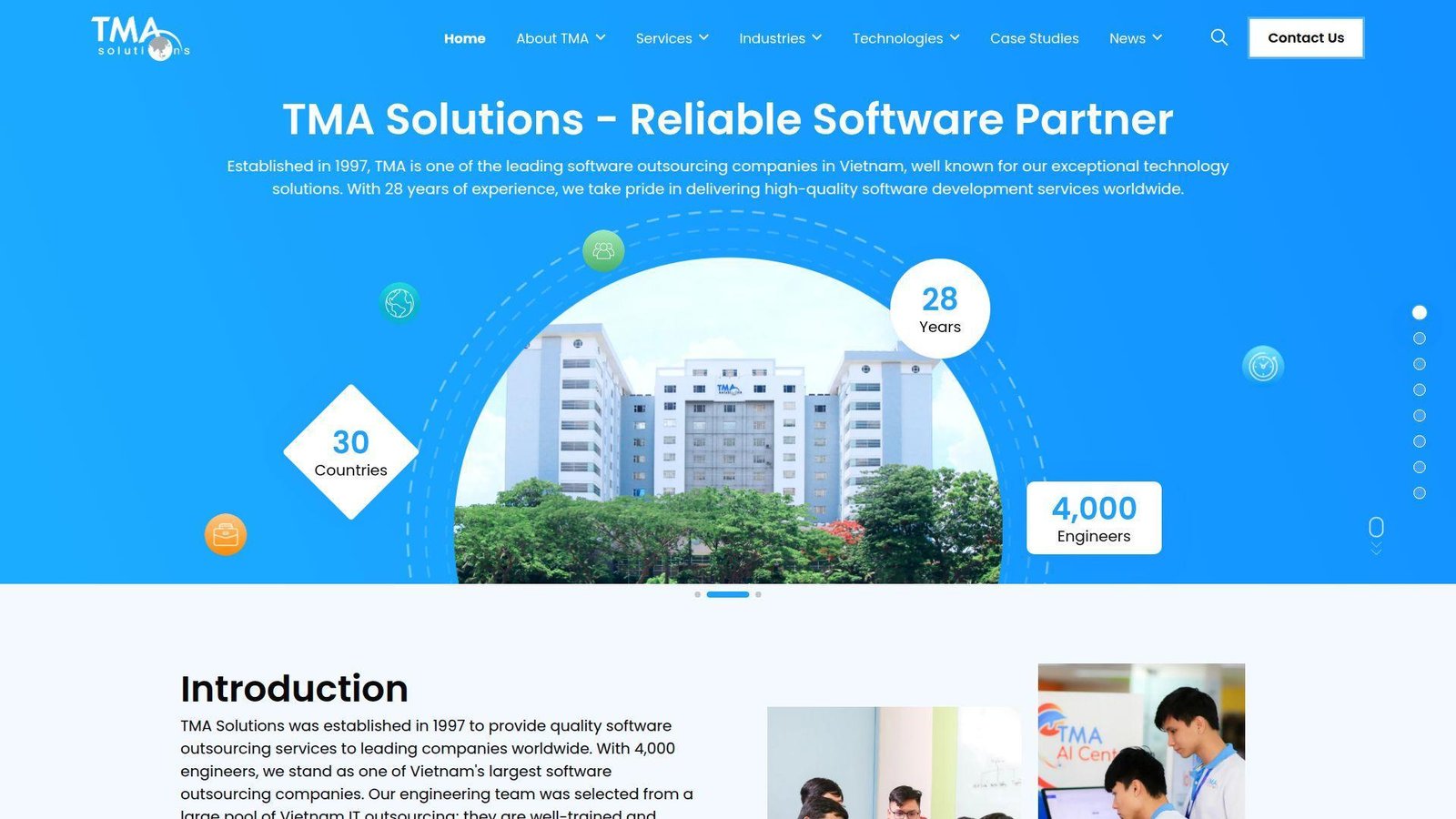
TMA Solutions is one of Vietnam’s long-standing outsourcing names. It focuses on software outsourcing, telecom and 5G, healthcare, fintech, embedded work, AI, and large engineering centers. Public company materials point to about 4,000 engineers. It was founded in 1997 and is headquartered in Ho Chi Minh City. We see TMA as a strong fit for buyers that want depth, longevity, and a company that has done offshore delivery for decades.
TMA’s appeal is not flash. It is operating muscle. We would shortlist it for long-running products, telecom stacks, device-connected systems, and programs that need a sizable team without rebuilding the process from scratch. The practical question is whether its delivery style matches your internal tempo. Some clients like mature structure. Others want a looser product setup with fewer layers. If your team is startup-like, test that early. Ask how much product thinking the team brings versus pure execution against specs. That answer matters a lot.
- Service scope: Custom development, telecom, embedded, AI, healthtech, fintech, QA, ODCs.
- Industry specialization: Telecom, healthcare, finance, retail, automotive, logistics.
- Ideal client size: Mid-market to enterprise, especially long-term buyers.
- Pricing model: Dedicated teams, project delivery, offshore centers.
- Onboarding process: Structured technical review, staffing proposal, staged team formation.
- Communication style: Professional, process-led, generally predictable.
- Proof/case-study requirements: Ask for systems with similar uptime, scale, and device or telecom demands.
- Red flags to check before hiring: Senior staff only in pre-sales, weak product ownership, vague English coverage.
- Questions to ask before signing: What does onboarding look like for your exact team size?
3. TechTide Solutions
For transparency, this is our company. TechTide Solutions focuses on custom software development, web applications, mobile apps, UI and UX work, and business systems for teams that need a direct collaboration model. Public company pages suggest an estimated 51 to 200 employees. We were founded in 2022 and operate from Ho Chi Minh City. We fit buyers who want close access to the people doing the work rather than a thick account-management layer.
Techtide are not the right fit for every project, and we think saying that plainly helps buyers. If you need a very large bench, a multi-country rollout, or a highly formal procurement setup, larger firms in this list are safer. Where we tend to fit is custom product work, mid-market software, startup builds, and projects where discovery is still shaping scope. We prefer to surface trade-offs early, prototype risky pieces fast, and keep communication practical. If a buyer wants polished slides but vague ownership, that is not our style. We would rather answer the hard questions early and keep the build grounded.
- Service scope: Custom software, web, mobile, UI and UX, product delivery.
- Industry specialization: Fintech, healthcare, blockchain, insurance, custom business systems.
- Ideal client size: Startups, SMEs, focused mid-market teams.
- Pricing model: Discovery-first, dedicated teams, project-based delivery.
- Onboarding process: Discovery, scope mapping, prototype planning, delivery roadmap.
- Communication style: Direct, hands-on, fast feedback loops.
- Proof/case-study requirements: Ask us for delivery examples close to your workflow and risk profile.
- Red flags to check before hiring: If you need heavy procurement ceremony, we may be too lean.
- Questions to ask before signing: Who will stay active after kickoff, and how do we handle change?
4. Saigon Technology
Saigon Technology is a Vietnam-based agile software development company with a clear outsourcing and dedicated-team focus. Public sources suggest roughly 300 to 400 engineers. It was founded in 2012 and is headquartered in Ho Chi Minh City. We usually place Saigon Technology in the sweet spot for startups and SMEs that want more maturity than a tiny boutique can offer, without jumping all the way to enterprise-heavy process.
If we were running a SaaS build or a funded startup product, Saigon Technology would be a serious call. Its pitch is practical. Build teams, staff augmentation, QA, cloud, web, and mobile. That works well for buyers who want momentum and steady communication. The caution is simple. Mid-sized firms live or die on team continuity. Ask how they replace engineers, how much domain context is documented, and whether the same lead stays with you after discovery. Those details separate a smooth year from a messy one.
- Service scope: Custom software, web, mobile, cloud, QA, dedicated teams.
- Industry specialization: SaaS, fintech, healthcare, logistics, e-commerce.
- Ideal client size: Startups, SMEs, growth-stage products.
- Pricing model: Staff augmentation, dedicated team, project-based.
- Onboarding process: Scoping call, role matching, sprint setup, phased ramp.
- Communication style: Agile, fairly direct, client-facing.
- Proof/case-study requirements: Ask for product examples with ongoing releases, not one-off builds.
- Red flags to check before hiring: Weak succession plan for leads, unclear QA ownership.
- Questions to ask before signing: How do you protect continuity if a core engineer leaves?
5. KMS Technology
KMS Technology feels different from a pure labor-arbitrage shop. It focuses on product engineering, software development, quality engineering, AI and data services, and consulting. Official company information points to more than 1,100 people globally. KMS was founded in 2009 as a U.S.-based company and has major delivery hubs in Vietnam. Its corporate roots are in Atlanta, Georgia. We tend to shortlist KMS when product thinking matters as much as coding output.
KMS makes the most sense for SaaS companies, digital products, and firms that want a partner comfortable speaking in product, platform, and quality terms. We would expect a more consultative motion here than with a commodity outsourcing vendor. That can be a strength if you want guidance. It can also push pricing and process upward if you already know exactly what to build. So the key question is fit. Do you want a team that challenges decisions, or do you want straight execution? KMS is better in the first scenario.
- Service scope: Product engineering, QA, consulting, AI and data, platform modernization.
- Industry specialization: SaaS, healthcare tech, enterprise software, digital products.
- Ideal client size: Mid-market, ISVs, enterprise product teams.
- Pricing model: Dedicated teams, consulting-led engagements, project delivery.
- Onboarding process: Discovery workshops, solution framing, role-by-role staffing.
- Communication style: Strong English, consultative, product-aware.
- Proof/case-study requirements: Ask for examples where KMS owned quality, velocity, and technical decisions.
- Red flags to check before hiring: Paying consulting rates for work that is purely executional.
- Questions to ask before signing: What advisory work is included, and what is billed separately?
6. CMC Global
CMC Global sits closer to the enterprise side of Vietnam’s market. It focuses on digital transformation, software outsourcing, cloud, AI, data, low-code, and managed delivery. Public materials describe 3,000+ certified engineers across the business, and its ODC materials point to a large specialist pool. It was founded in 2017 and is headquartered in Hanoi. We see CMC Global as a sensible option for buyers that need security posture and capacity, not just lower rates.
The company’s strongest case is enterprise digital work with clear governance needs. Banking, manufacturing, logistics, healthcare, and automotive projects fit that shape. We would not pick CMC Global for a rough, pre-seed MVP unless the buyer already knew the need would grow into a larger team. It is better when the roadmap is real, the systems matter, and there is enough scope to justify a formal setup. Ask who will actually do the work, though. Large firms can show wide capability while proposing a thinner delivery core than you expect.
- Service scope: Software outsourcing, DX consulting, cloud, AI, data, low-code, ODCs.
- Industry specialization: Banking, manufacturing, logistics, healthcare, automotive.
- Ideal client size: Mid-market to enterprise.
- Pricing model: Project-based, staff augmentation, hybrid, results-based, ODC.
- Onboarding process: Solution review, team proposal, security and access setup.
- Communication style: Formal, sales-supported, governance-aware.
- Proof/case-study requirements: Ask for similar migration, integration, or regulated delivery examples.
- Red flags to check before hiring: Broad pitch, thin proposed team, vague escalation route.
- Questions to ask before signing: Which roles are core employees, and who owns delivery reporting?
7. NashTech
NashTech is less of a boutique Vietnam agency and more of a global delivery business with a major Vietnam engine. It provides custom software development, technology advisory, business process management, and application management services. Public career materials point to more than 1,700 software engineers across its Vietnam delivery centers. Its origins go back to 2000, and its headquarters are in London. We like NashTech for clients that need strong governance with UK or US-facing expectations.
In practical terms, NashTech is a fit when the buyer wants a mature vendor that can speak both delivery and corporate process. That can be helpful in financial services, large platforms, education systems, and enterprise modernization work. We would not send a very early-stage startup here first. The structure may be more than they need. For an established product team that wants steadier reporting and less operational improvisation, though, NashTech can be a strong match. The key is to confirm how much product ownership the Vietnam team will actually hold.
- Service scope: Custom software, advisory, BPM, application management, modernization.
- Industry specialization: Enterprise platforms, finance, education, retail, digital services.
- Ideal client size: Mid-market and enterprise.
- Pricing model: Managed teams, long-term delivery, structured project engagements.
- Onboarding process: Discovery, governance setup, staffing and reporting alignment.
- Communication style: Structured, stakeholder-friendly, process-conscious.
- Proof/case-study requirements: Ask for examples with similar governance and cross-border collaboration.
- Red flags to check before hiring: Too little clarity on decision ownership or overlap hours.
- Questions to ask before signing: How much product decision-making sits with your Vietnam team?
8. Orient Software
Orient Software is one of the steadier mid-sized firms in this market. It focuses on software consulting and development, web and mobile engineering, cloud, data and AI, and dedicated delivery. Recent company materials point to 400+ staff. The company was founded in 2005 and is headquartered in Ho Chi Minh City. We usually place Orient in the dependable mid-market category rather than the giant-enterprise bucket.
That is a compliment. Many buyers do not need maximum size. They need a partner that communicates clearly, keeps staffing stable, and delivers without drama. Orient has that kind of profile. We would shortlist it for SMEs, funded startups, and enterprise sub-programs where a clear scope and dependable execution matter more than global theater. The main trade-off is bench size. If you suddenly need a very large ramp, bigger firms may move faster. Still, for buyers who value stability and clarity, Orient is easy to justify.
- Service scope: Custom software, web, mobile, cloud, data and AI, dedicated teams.
- Industry specialization: Fintech, insurance, healthcare, logistics, manufacturing.
- Ideal client size: SMEs, growth-stage products, focused enterprise teams.
- Pricing model: Dedicated teams, project-based work, long-term partnerships.
- Onboarding process: Technical review, role definition, sprint launch planning.
- Communication style: Clear, measured, fairly transparent.
- Proof/case-study requirements: Ask for work similar in complexity, not just similar in industry.
- Red flags to check before hiring: Thin DevOps or architecture coverage on larger builds.
- Questions to ask before signing: Which roles are committed from day one, and for how long?
9. Rikkeisoft
Rikkeisoft has grown fast and now operates as a broad technology services company with strong international ambitions. It covers software development, cloud, AI, digital transformation, enterprise systems, and tech staffing. Recent public company materials point to 2,200+ employees. Rikkeisoft was founded in 2012 and is headquartered in Hanoi. We see it as a serious contender for buyers who want a large, fast-moving partner with strong Japan ties and expanding U.S. reach.
The upside is obvious. It can cover a lot of ground, and it is comfortable in cross-border delivery. That makes it appealing for companies with Japan-facing work, multi-office operations, or a need to scale beyond a tiny pilot team. The caution is also obvious. Fast-growing firms can vary in seniority from team to team. We would push hard on proposed team composition, technical leadership, and how much of the solution is delivered by seasoned staff versus newer hires. Growth is great. Consistency is what buyers pay for.
- Service scope: Custom software, cloud, AI, staffing, enterprise solutions, digital transformation.
- Industry specialization: Japan-linked systems, enterprise platforms, fintech, retail, manufacturing.
- Ideal client size: SMEs to enterprise, especially global buyers.
- Pricing model: Dedicated teams, staff augmentation, project delivery.
- Onboarding process: Solution discussion, team proposal, phased ramp and governance setup.
- Communication style: Energetic, growth-oriented, international-facing.
- Proof/case-study requirements: Ask for client references tied to your region and technical stack.
- Red flags to check before hiring: Bench-heavy proposal without enough named senior leads.
- Questions to ask before signing: What percentage of the proposed team is senior and long-tenured?
10. Savvycom
Savvycom positions itself as an AI-driven solution partner with strong roots in custom software and digital transformation. It works across fintech, healthcare, blockchain, cloud, cybersecurity, and enterprise solutions. Public company materials show mixed size signals, but a conservative read suggests a core delivery base of 700+ engineers and experts, with a broader ecosystem that appears larger. Savvycom was founded in 2009 and is headquartered in Hanoi. We view it as a consulting-plus-delivery option, not just a coding vendor.
That matters because some buyers need more framing help up front. Savvycom can be attractive when the brief is still moving, especially in regulated or operationally messy sectors. At the same time, mixed public team-size messaging is a small caution flag. It does not mean the company is weak. It means buyers should verify the current shape of the delivery organization and exactly which capabilities are in-house. We would ask that question directly rather than assume.
- Service scope: Custom software, DX consulting, cloud, blockchain, cybersecurity, AI.
- Industry specialization: Fintech, healthcare, enterprise digitalization, blockchain.
- Ideal client size: SMEs, enterprises, transformation-heavy teams.
- Pricing model: Project-based, dedicated teams, consulting-led delivery.
- Onboarding process: Discovery, business framing, technical proposal, delivery setup.
- Communication style: Consultative, client-facing, strategy-aware.
- Proof/case-study requirements: Ask for regulated-domain work and current team structure.
- Red flags to check before hiring: Unclear distinction between ecosystem partners and core staff.
- Questions to ask before signing: What is your current core delivery headcount for our domain?
11. SmartOSC
SmartOSC is best known as a digital transformation and enterprise commerce specialist rather than a general custom app shop. It works across e-commerce, digital experience, platform implementation, data, and business operations support. Official materials point to 1,000+ employees. The company was founded in 2006 and is headquartered in Hanoi. We put SmartOSC near the top of the shortlist for buyers whose project lives inside commerce, content, or customer experience platforms.
This is where category fit matters. We would not hire SmartOSC for a plain internal admin system if commerce expertise were irrelevant. That would be like buying a race bike for a grocery run. But if your needs center on Adobe Commerce, Sitecore, Salesforce, omnichannel retail, or a regional digital experience rollout, SmartOSC becomes much more compelling. It has the platform depth and partner ecosystem many firms in this list do not. Ask how much custom engineering versus platform configuration your project really needs, because that will shape both value and cost.
- Service scope: Digital commerce, DXP, platform implementation, data, operations support.
- Industry specialization: Retail, e-commerce, banking, customer experience platforms.
- Ideal client size: Mid-market and enterprise, especially platform-led buyers.
- Pricing model: Project delivery, managed services, platform-led engagements.
- Onboarding process: Platform assessment, roadmap, implementation planning, rollout setup.
- Communication style: Strategic, partner-ecosystem aware, stakeholder-friendly.
- Proof/case-study requirements: Ask for platform work with similar customization depth and region count.
- Red flags to check before hiring: Paying platform-specialist rates for a generic software build.
- Questions to ask before signing: How much of our scope is custom code versus platform implementation?
12. SotaTek
SotaTek has built its brand around AI, blockchain, and software development services for global clients. It also covers web, mobile, ERP and CRM, QA, and product development. Public company pages point to more than 1,300 consultants and developers. It was founded in 2015 and is headquartered in Hanoi. We see SotaTek as a strong option when the project includes emerging technology work, but we would still evaluate it like any other serious vendor.
That means asking whether the company is strongest in the exact area you need, or simply broad enough to pitch it. We like SotaTek for blockchain-heavy work, AI experiments that need delivery support, and cross-border product builds where cost still matters. We would push harder if the project is highly regulated, long-lived, or architecture-heavy. In those cases, you want proof of delivery discipline beyond innovation language. A good specialist can be excellent. A hype-heavy one can be expensive.
- Service scope: AI, blockchain, web, mobile, ERP and CRM, QA, custom software.
- Industry specialization: Banking, finance, insurance, automotive, media, retail.
- Ideal client size: Startups to enterprise innovation teams.
- Pricing model: Dedicated teams, project delivery, consulting support.
- Onboarding process: Use-case review, technical scoping, staffing and sprint launch.
- Communication style: Fast-moving, innovation-led, international-facing.
- Proof/case-study requirements: Ask for production work, not only pilots or prototypes.
- Red flags to check before hiring: Buzzword-heavy pitch with light governance detail.
- Questions to ask before signing: How do you handle architecture review and security for our stack?
13. HDWEBSOFT
HDWEBSOFT is a practical full-cycle software firm with a clear Vietnam delivery base. It focuses on web and mobile development, offshore software teams, testing, and tailored software solutions for businesses of different sizes. Official materials point to 250+ employees. The company was founded in 2012 and is headquartered in Ho Chi Minh City. We usually place HDWEBSOFT in the value-driven mid-market tier.
What we like here is clarity. The company presents itself as a software builder, not as an everything-to-everyone consultancy. That tends to work well for startups, founders, and SMEs that want a serious delivery partner without enterprise overhead. We would consider it for web platforms, internal business tools, marketplaces, and product support work. We would be more cautious on very large transformation programs or work that needs heavy local consulting. In those cases, the brief may simply be bigger than the firm’s natural shape.
- Service scope: Web, mobile, custom software, offshore teams, QA, support.
- Industry specialization: Healthcare, logistics, marketing, real estate, utilities, custom apps.
- Ideal client size: Startups, SMEs, practical mid-market builds.
- Pricing model: Offshore team, dedicated team, project-based work.
- Onboarding process: Requirement review, team recommendation, sprint and access setup.
- Communication style: Straightforward, delivery-focused, less ceremonial.
- Proof/case-study requirements: Ask for systems close to your workflow and support expectations.
- Red flags to check before hiring: Thin architecture or business analysis coverage on larger scopes.
- Questions to ask before signing: Who owns QA, support, and post-launch fixes?
14. Kyanon Digital
Kyanon Digital blends software development with digital transformation consulting, data work, AI, and digital operations support. Recent official materials point to 500+ technology experts and engineers. It was founded in 2012 and is headquartered in Ho Chi Minh City. We think Kyanon is a better fit for buyers who want business context with their software delivery, especially across APAC markets.
That business context is the point. Kyanon is not just selling coding capacity. It is selling a broader transformation story. That can be useful in retail, food and beverage, banking, and customer-facing platforms where process and data matter as much as the app itself. It is less useful if you already know exactly what to build and simply want the lowest-cost implementation team. We would shortlist Kyanon when the buyer needs both implementation and some front-end business thinking. We would be more selective when the need is narrow and purely technical.
- Service scope: Software development, DX consulting, AI, data, BPO, cloud solutions.
- Industry specialization: Retail, food and beverage, banking, APAC digital platforms.
- Ideal client size: Growth-stage firms, enterprises, regional operators.
- Pricing model: Project delivery, dedicated teams, consulting-led engagements.
- Onboarding process: Business discovery, technical framing, role and roadmap setup.
- Communication style: Consultative, business-aware, workshop-friendly.
- Proof/case-study requirements: Ask for measurable change in operations, not just launch screenshots.
- Red flags to check before hiring: Strategy-heavy pitch without enough delivery detail.
- Questions to ask before signing: How much strategy work is included before engineering begins?
15. Golden Owl Solutions
Golden Owl Solutions is a smaller, more startup-friendly firm with strengths in web and mobile development, UX and UI, Odoo ERP, AI, data work, automation testing, and dedicated team models. Public company materials point to roughly 150 team members. It started in 2013 with Singapore roots and has built a strong Ho Chi Minh City delivery presence. We see Golden Owl as a good fit for buyers who want speed, accessibility, and less corporate weight.
That usually means startups, SMEs, new products, and founder-led teams. Golden Owl can make sense when the budget is meaningful but not huge, and when the client wants direct contact with the delivery team. The trade-off is scale. We would not expect the same bench depth or governance muscle you would get from a far larger vendor. So the buying move here is to test practical fit. Meet the proposed lead. Review how QA is handled. Ask how design, engineering, and support work together after launch.
- Service scope: Web, mobile, UX and UI, ERP, AI, automation testing, dedicated teams.
- Industry specialization: Startups, e-commerce, MVPs, Ruby projects, business software.
- Ideal client size: Startups, SMEs, founder-led product teams.
- Pricing model: Dedicated teams, BOT, project-based delivery.
- Onboarding process: Intro workshop, team matching, fast sprint kickoff.
- Communication style: Accessible, direct, startup-friendly.
- Proof/case-study requirements: Ask for shipped products with ongoing maintenance and support.
- Red flags to check before hiring: Too little senior architecture or QA for a complex build.
- Questions to ask before signing: Who leads architecture, and how is quality checked every sprint?
16. LogiGear
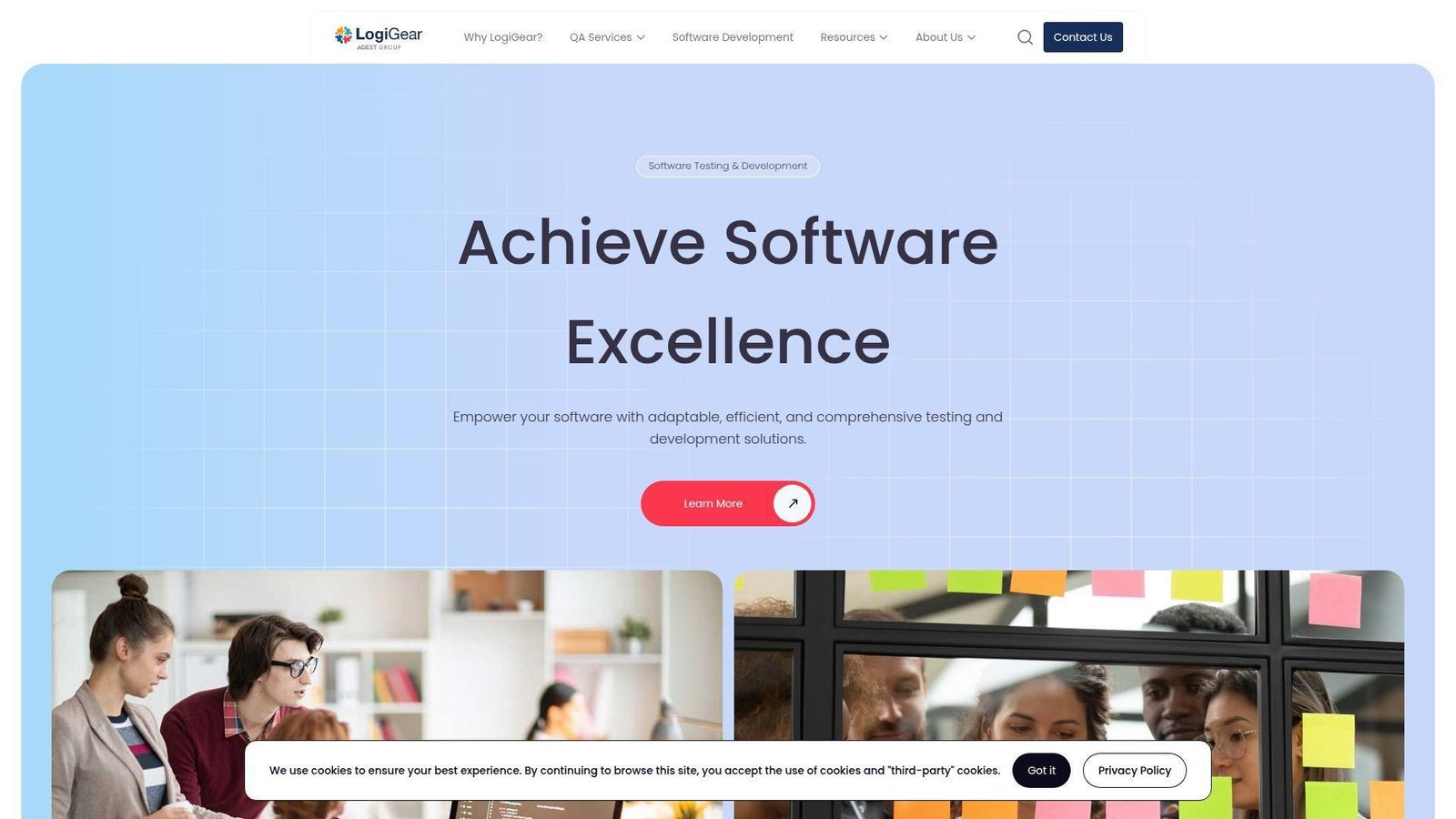
LogiGear earns its place because quality engineering is not an afterthought there. It is the core story. The company focuses on software testing, test automation, QA consulting, and selected software development work. Official materials point to 500+ team members. LogiGear was founded in 1994 in Silicon Valley and is headquartered in San Mateo, California, with major engineering teams in Vietnam. We rate it highly for buyers whose biggest risk is quality failure, not coding capacity.
If your internal team can build but struggles to test well, LogiGear becomes far more interesting than a generic development vendor. We would especially look here for regulated systems, enterprise releases, platform testing, and test automation programs that need leadership. We would be less likely to use LogiGear as the first pick for discovery-heavy greenfield product design. That is not because it cannot code. It is because its sharpest edge is quality. Good buyers should buy the sharp edge.
- Service scope: Software testing, test automation, QA consulting, software development.
- Industry specialization: QA-heavy systems, enterprise platforms, regulated releases.
- Ideal client size: Mid-market and enterprise teams with quality bottlenecks.
- Pricing model: Managed QA, augmentation, project-based testing programs.
- Onboarding process: Assessment, test strategy, tooling plan, phased execution.
- Communication style: Methodical, quality-focused, detail-oriented.
- Proof/case-study requirements: Ask for defect reduction, automation coverage, and release stability examples.
- Red flags to check before hiring: Using a QA specialist when product discovery is the main gap.
- Questions to ask before signing: How do you integrate your QA team with our developers?
17. Newwave Solutions
Newwave Solutions is a broad services firm that covers software development, mobile apps, QA, design, maintenance, game development, and emerging technology work. Public company information points to 300+ tech experts. It was founded in 2011 and is headquartered in Hanoi. We view Newwave as a flexible mid-market option for buyers who want range and reasonable accessibility, especially if the work spans several service lines.
That range can help when a product team needs more than plain app development. It can also create a familiar risk. Broad firms sometimes look strong on paper but vary widely by practice. So we would validate the exact delivery unit, not just the master service list. For startup, SME, and product support work, Newwave can be a useful shortlist name. We would just push harder on leadership continuity, post-launch support, and how mature its process is in the exact area you care about most.
- Service scope: Software development, mobile, QA, maintenance, game and emerging tech.
- Industry specialization: Finance, retail, healthcare, real estate, blockchain-related projects.
- Ideal client size: Startups, SMEs, multi-service product teams.
- Pricing model: Project-based work, dedicated teams, support engagements.
- Onboarding process: Requirement review, unit assignment, phased launch planning.
- Communication style: Practical, service-oriented, flexible.
- Proof/case-study requirements: Ask for examples from the exact practice that would handle your work.
- Red flags to check before hiring: One team sells, another team delivers, with little continuity.
- Questions to ask before signing: Who owns post-launch support and technical debt cleanup?
18. Axon Active
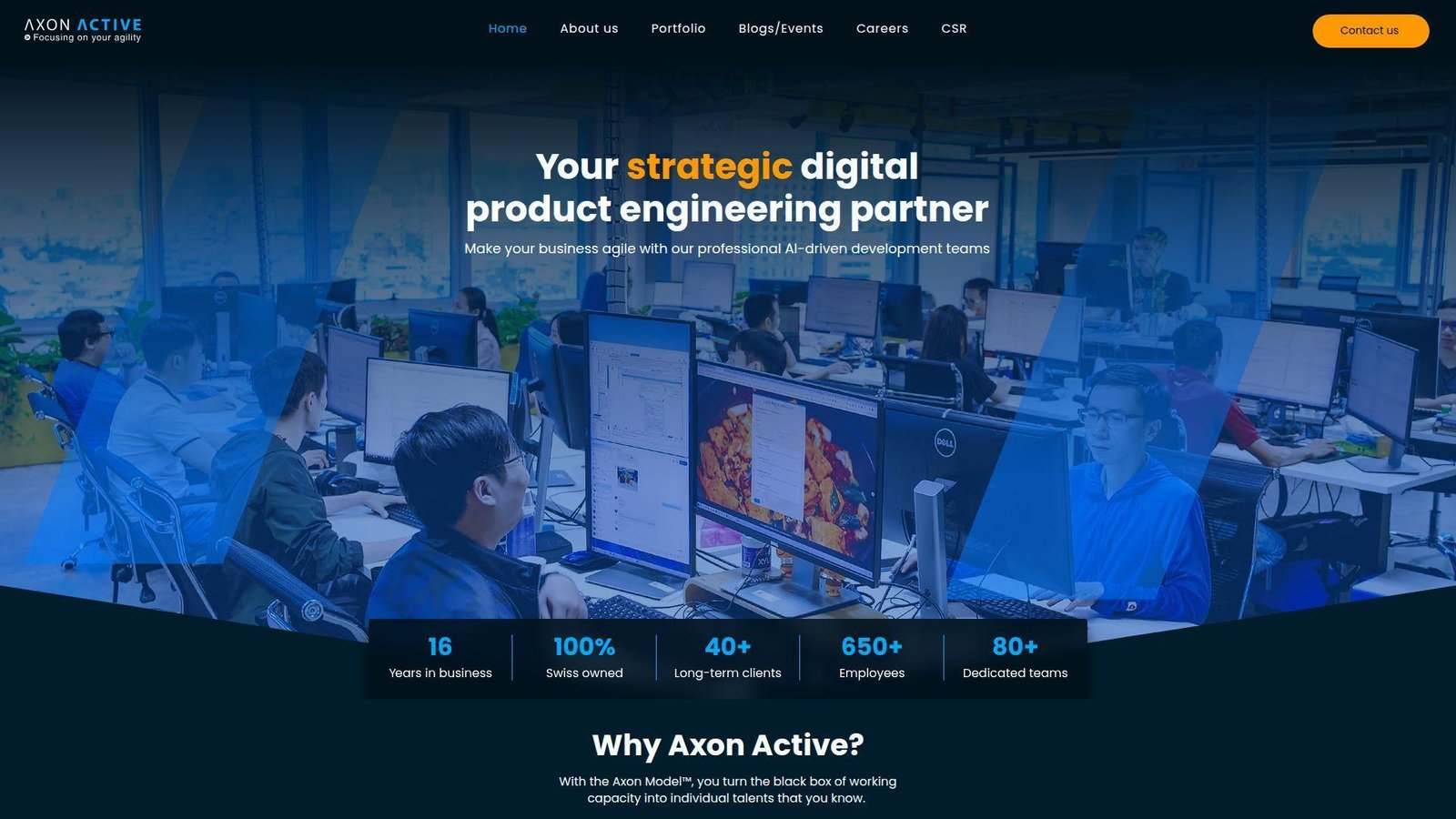
Axon Active is a strong example of a European-managed Vietnam delivery model that has matured over time. It focuses on agile software development through stable, dedicated teams rather than one-off project staffing. Public materials point to roughly 600 employees, while broader group information is higher. It was founded in 2008 and has roots in Lucerne, Switzerland, with major delivery centers in Ho Chi Minh City, Da Nang, and Can Tho. We like Axon Active for long-term product development.
The key here is team model fit. Axon Active is especially attractive when the client wants a steady squad that behaves like an extension of the in-house product team. That works well for product companies, European buyers, and roadmaps that evolve continuously. It is less compelling if you want a fixed-price, tightly boxed project with very little client involvement. Axon is at its best when both sides treat the relationship like a real product partnership and keep the feedback loop active.
- Service scope: Dedicated software teams, custom development, agile delivery, testing.
- Industry specialization: Long-term product development, digital platforms, European client work.
- Ideal client size: Product companies, SMEs, established digital businesses.
- Pricing model: Dedicated teams and long-term delivery relationships.
- Onboarding process: Team formation, shared process setup, iterative product integration.
- Communication style: Collaborative, agile, team-extension oriented.
- Proof/case-study requirements: Ask for multi-year client engagements, not short project samples.
- Red flags to check before hiring: Weak product ownership on the client side.
- Questions to ask before signing: Which decisions stay with us, and which sit with your team?
19. Luvina Software
Luvina Software is one of the clearest Japan-focused names on this list. It specializes in software outsourcing, business systems, maintenance, and quality-led delivery for Japanese and international clients. Official company materials point to about 750 employees. Luvina started operating in 2003 and was formally established in 2004. It is headquartered in Hanoi. We see Luvina as a strong option when process discipline and Japan-facing communication matter more than flashy positioning.
That focus is useful. Plenty of firms say they can support Japanese clients. Far fewer build their culture around it. If your project involves Japanese stakeholders, bridge communication, or long-term maintenance of business-critical systems, Luvina deserves attention. If your project is a fast-moving consumer app for the U.S. market, the fit is less automatic. It may still work, but the advantage is not as obvious. We would buy Luvina for reliability, continuity, and process confidence, not for startup theater.
- Service scope: Software outsourcing, maintenance, DevOps, business systems, custom development.
- Industry specialization: Japan-linked enterprise systems, maintenance-heavy work, business software.
- Ideal client size: SMEs and enterprises, especially Japan-facing organizations.
- Pricing model: Dedicated teams, maintenance contracts, project-based delivery.
- Onboarding process: Requirement clarification, bridge setup, team alignment, delivery plan.
- Communication style: Careful, quality-first, process-disciplined.
- Proof/case-study requirements: Ask for long-running maintenance and change-request management examples.
- Red flags to check before hiring: Weak fit if you need fast, loose startup-style iteration.
- Questions to ask before signing: How do you handle bilingual delivery and knowledge transfer?
20. S3 Corp
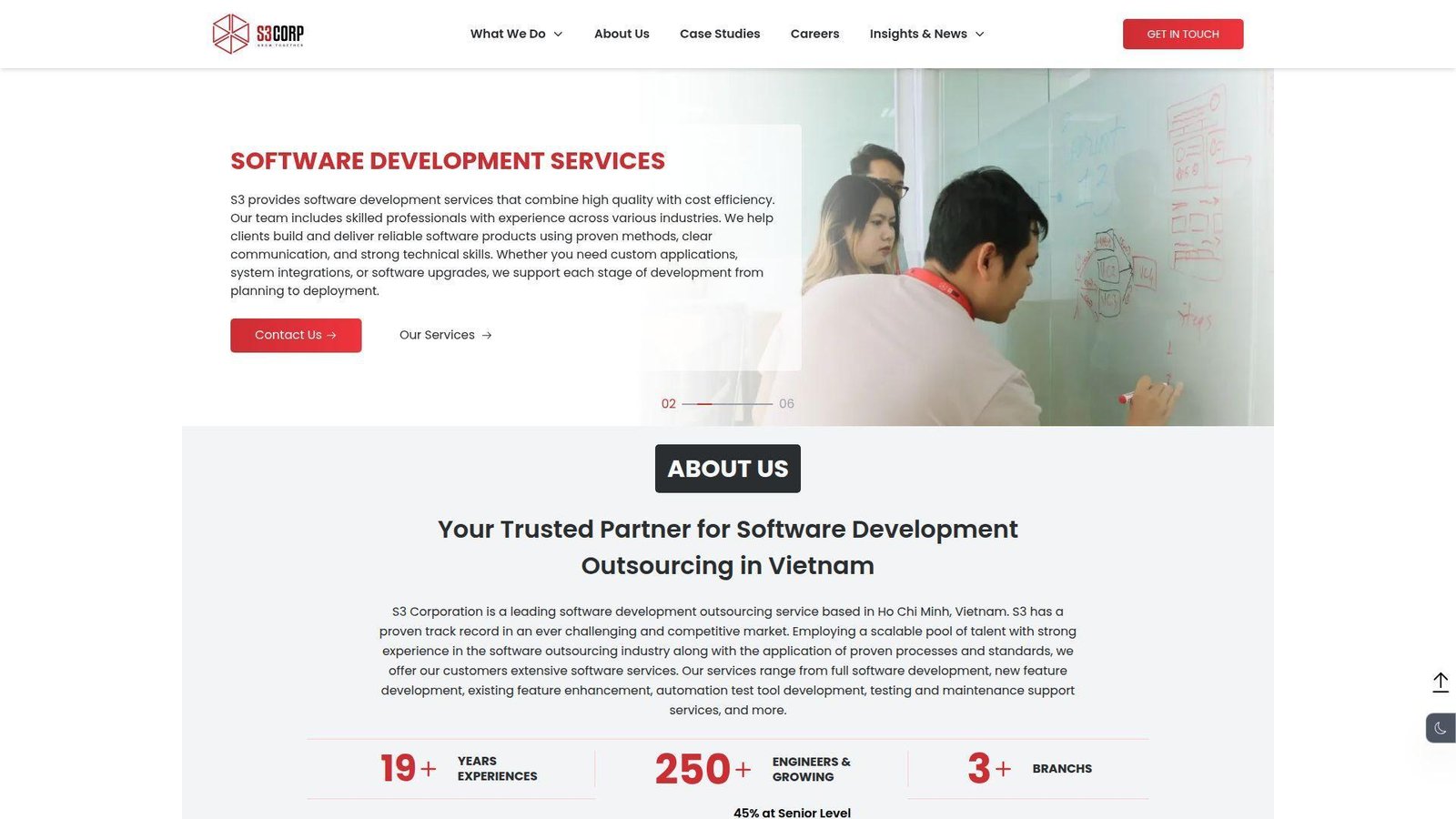
S3 Corp, also known as Sunrise Software Solutions, is a smaller full-cycle software services company with strengths in web, mobile, testing, and product development support. Public materials point to 250+ skilled workers. The company was founded in 2007 and is based in Ho Chi Minh City. We see S3 Corp as a practical shortlist choice for buyers that want a manageable partner size and care about direct delivery attention.
The upside of firms in this band is simple. Buyers can often get closer to the real team, faster. That helps when the project still needs active shaping. The trade-off is capacity. We would not expect S3 Corp to feel like FPT or TMA on very large programs, and that is fine. Its value is usually better in SME delivery, focused product builds, and projects where testing matters alongside development. If you are considering S3 Corp, spend time on process depth. Smaller does not mean weaker, but it does mean you should verify how quality, security, and leadership are handled.
- Service scope: Web, mobile, software development, testing, product support.
- Industry specialization: SME software, product builds, testing-led delivery, digital solutions.
- Ideal client size: Startups, SMEs, focused mid-market engagements.
- Pricing model: Project-based work, dedicated teams, support arrangements.
- Onboarding process: Scope review, team assignment, sprint planning and access setup.
- Communication style: Direct, collaborative, less layered.
- Proof/case-study requirements: Ask for recent work with similar scope and delivery pace.
- Red flags to check before hiring: Thin security process or weak technical leadership visibility.
- Questions to ask before signing: Who owns quality control, and how are blockers escalated?
Recommended reading: Top 20 Ecommerce App Development Companies in Vietnam for Shopify, Magento, and Custom Commerce Apps
Why Vietnam Still Works for Software Outsourcing
Vietnam is no longer a hidden bargain market, and that is a good thing. The better firms are selling reliability, delivery range, and team quality. We still like the market because it can serve both enterprise buyers and smaller product teams without forcing them into the same delivery model.
1. Cost Efficiency Without a Low-Quality Trade-Off
We still like Vietnam because buyers are shopping for more than a cheap coding bench. Deloitte says skilled talent and agility join cost reduction as key drivers, and that lines up with what we see in serious vendor searches.
Cheap and efficient are not the same thing. Vietnam usually works best when you want a solid blended team at a lower cost than the U.S., Canada, the U.K., or Australia, but you still need regular overlap, decent English, and repeatable delivery habits. In other words, it is rarely the absolute cheapest market on paper. It is often the better value market once you factor in QA, communication, and the cost of rework.
That is the real trade-off buyers should care about. If a vendor quote looks unusually low, we assume something is missing. It is often seniority, testing depth, product management, or the time needed to understand your business rules.
2. Large Engineering Talent Pool and Faster Team Scaling
Vietnam has real depth across Ho Chi Minh City, Hanoi, Da Nang, Can Tho, and other growing tech hubs. That gives buyers more options than a one-city market. Large firms can ramp faster. Mid-sized firms can often move faster on smaller teams because they need fewer approval layers.
We have found that team scaling works best when the buyer knows the first squad shape before sending the RFP. If you ask for “full-stack developers” and nothing else, most vendors will fill the box. If you ask for a product lead, back-end engineer, front-end engineer, QA, and part-time DevOps, the proposals get much better.
Talent pool size helps, but role clarity helps more. The best Vietnam vendors can usually grow a team in stages without stopping the project. That matters when your roadmap changes after month two, which it usually does.
3. Flexible Delivery with Dedicated Teams, ODCs, and BOT Models
Vietnam is strong because it supports several engagement shapes. Dedicated teams work well for long-running products. Offshore development centers make sense when you want a stable team that feels like your own remote branch. Build-operate-transfer models are useful when you want the vendor to help establish the team first, then transfer operations later.
We do not think every buyer needs an ODC or BOT. Those models make sense when there is enough runway, budget, and management attention to justify the setup. Smaller buyers are often better off with a dedicated team and clean ownership rules. That is simpler, faster, and easier to unwind if priorities change.
The good news is that Vietnam vendors are used to these choices. You do not have to force a one-size-fits-all contract. You can usually buy the delivery shape that matches your stage.
Recommended reading: Top 20 App Development in Singapore Companies to Compare Before You Hire
How to Shortlist the Right Outsourcing Software Development Company in Vietnam
Most bad vendor decisions happen before the first proposal lands. Buyers compare logos before they define scope. Then they wonder why quotes are all over the place. We think the shortlist gets easier once the buyer writes down what must be true at launch, what can wait, and who owns decisions.
1. Define Scope, Stack, Timeline, and Ownership Before You Compare Vendors
If the brief is fuzzy, every vendor will sell a different version of the project. One will assume design is included. Another will assume you already have design. One will include QA and DevOps. Another will bury them in “optional” lines. That makes price comparison almost useless.
We prefer a shortlist brief that covers product goal, users, must-have features, current stack, integrations, security needs, target timeline, and ownership rules. Say who owns the backlog, the repo and approves scope changes. Those basics remove a lot of noise.
You do not need a perfect specification. You do need a common frame. Without it, you are comparing sales instincts, not delivery plans.
2. Check Engineering Depth, Team Stability, and Relevant Case Studies
A logo slide is not a case study. We want to see what the team actually built, what went wrong, how it was fixed, and what was learned. That is especially true in regulated or integration-heavy work.
We also want to meet the real people. Ask to speak with the proposed lead engineer, project manager, QA lead, or architect. If the vendor cannot put delivery leaders in the room early, that tells you something. Team stability matters too. A brilliant proposal does not help if your core team turns over every few months.
Look for depth that matches your actual problem. A healthcare dashboard is not the same as a patient data platform. An e-commerce site is not the same as a global commerce rollout with ERP and payment integrations.
3. Verify Security, IP Protection, QA Discipline, and Communication Habits
We think these checks should happen before legal review, not after. Ask how access is controlled, laptops are managed who can touch production. Ask how test data is masked. Then ask how bugs are triaged, how code is reviewed, and what the release process looks like.
Communication habits matter just as much. We want to see a sample status report and understand the escalation path. We want to know what happens when a sprint slips, a key engineer leaves, or a scope assumption breaks. Good vendors have answers ready. Weak ones talk in generalities.
IP protection should be plain. Repo ownership, work-product ownership, handover rules, and transition support should all be clear before development starts. If any of that feels fuzzy, pause.
Recommended reading: Top 20 Android App Development Companies in USA for Startups and Enterprises
Which Type of Outsourcing Partner in Vietnam Fits Your Team Best
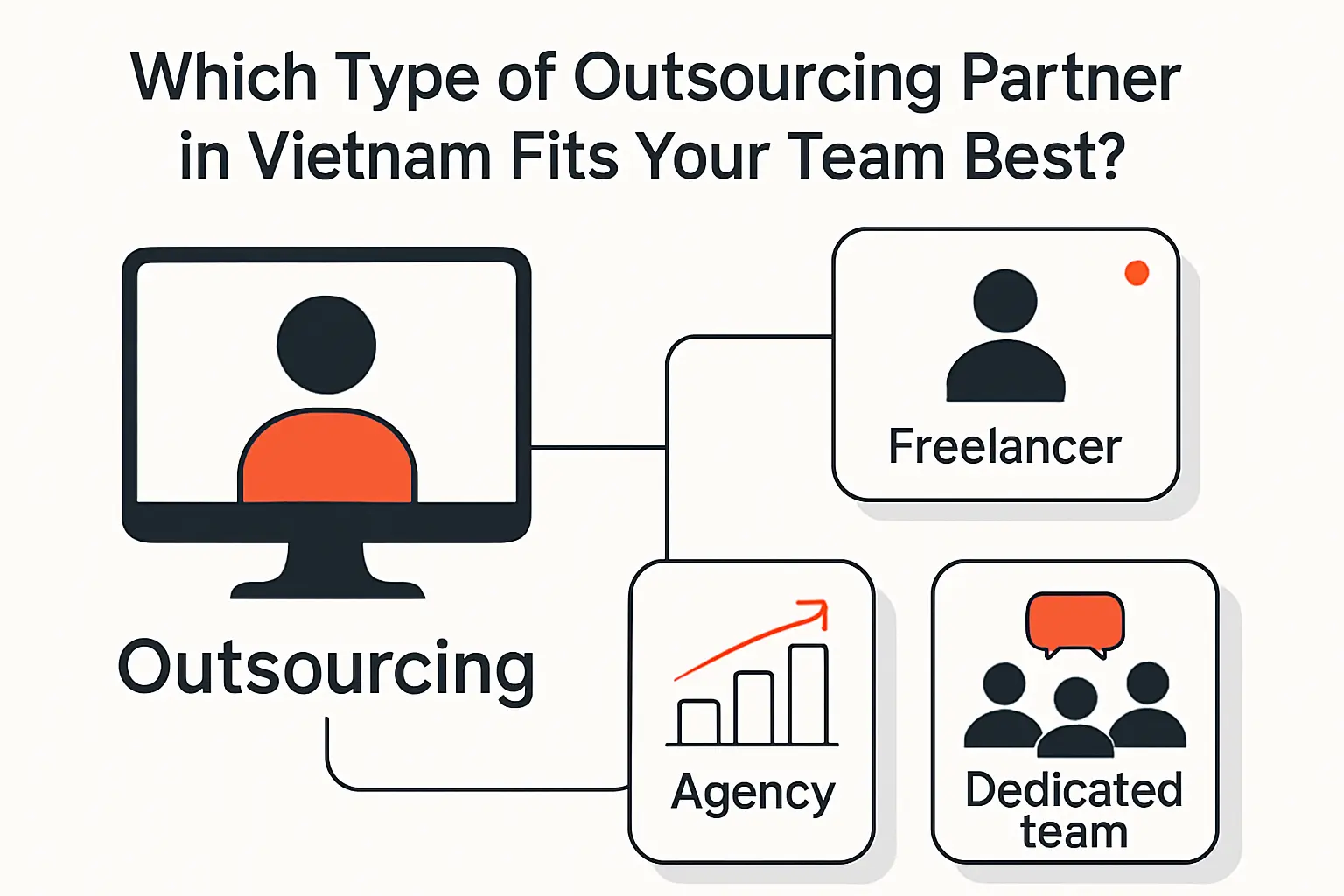
The right partner depends on your team shape. A Fortune 500 migration program and a startup MVP should not buy the same vendor. We would rather see buyers group the market by fit first, then compare names inside that group.
1. Enterprise Partners for Large-Scale Transformation and Regulated Work
If you need multi-country delivery, formal reporting, security reviews, or a large ramp, we would start with FPT Software, TMA Solutions, NashTech, CMC Global, and in some commerce-heavy cases, SmartOSC. These firms are better set up for governance, audit trails, and stakeholder management.
The trade-off is speed at the edges. Enterprise vendors can feel heavier. That is usually fine when the project itself is heavy. It is a poor fit when a small product team wants fast decisions and direct access to the people writing code.
We would pick this category when failure is expensive, procurement is involved, and internal politics matter almost as much as technical delivery.
2. Agile Product Teams for Startups, SMEs, and Fast MVPs
If the goal is to launch, test, and improve a product quickly, we would usually look at Saigon Technology, Orient Software, TechTide Solutions, HDWEBSOFT, Golden Owl Solutions, and often Axon Active. These firms tend to be easier for product teams to work with day to day.
That does not mean they are casual. It means the communication path is often shorter, the teams are easier to meet early, and the process can flex with product learning. For startups and SMEs, that is often more useful than enterprise theater.
The caution is scale. When the roadmap or compliance load expands sharply, the smaller or mid-sized partner still has to prove it can keep up. Ask that question before you need the answer.
3. Specialists for E-Commerce, QA-Heavy Work, AI, Data, and Blockchain Projects
Some problems deserve a specialist shortlist. For enterprise commerce and platform implementation, SmartOSC stands out. For QA-heavy programs, LogiGear is hard to ignore. Blockchain and AI-heavy projects, SotaTek is worth a close look. If APAC digital transformation and data-led work, Kyanon Digital deserves attention. For Japan-facing delivery, Luvina and Rikkeisoft can be especially relevant.
We would not default to a specialist unless the specialist edge matches the real bottleneck. If your issue is product strategy, a testing specialist will not fix it. If your issue is release quality, a generic dev team may not help enough either.
The rule is simple. Buy the expertise that sits closest to the risk.
Recommended reading: Top 20 React Native App Development Companies in India for 2026
Pricing, Engagement Models, and the Trade-Offs Behind Them
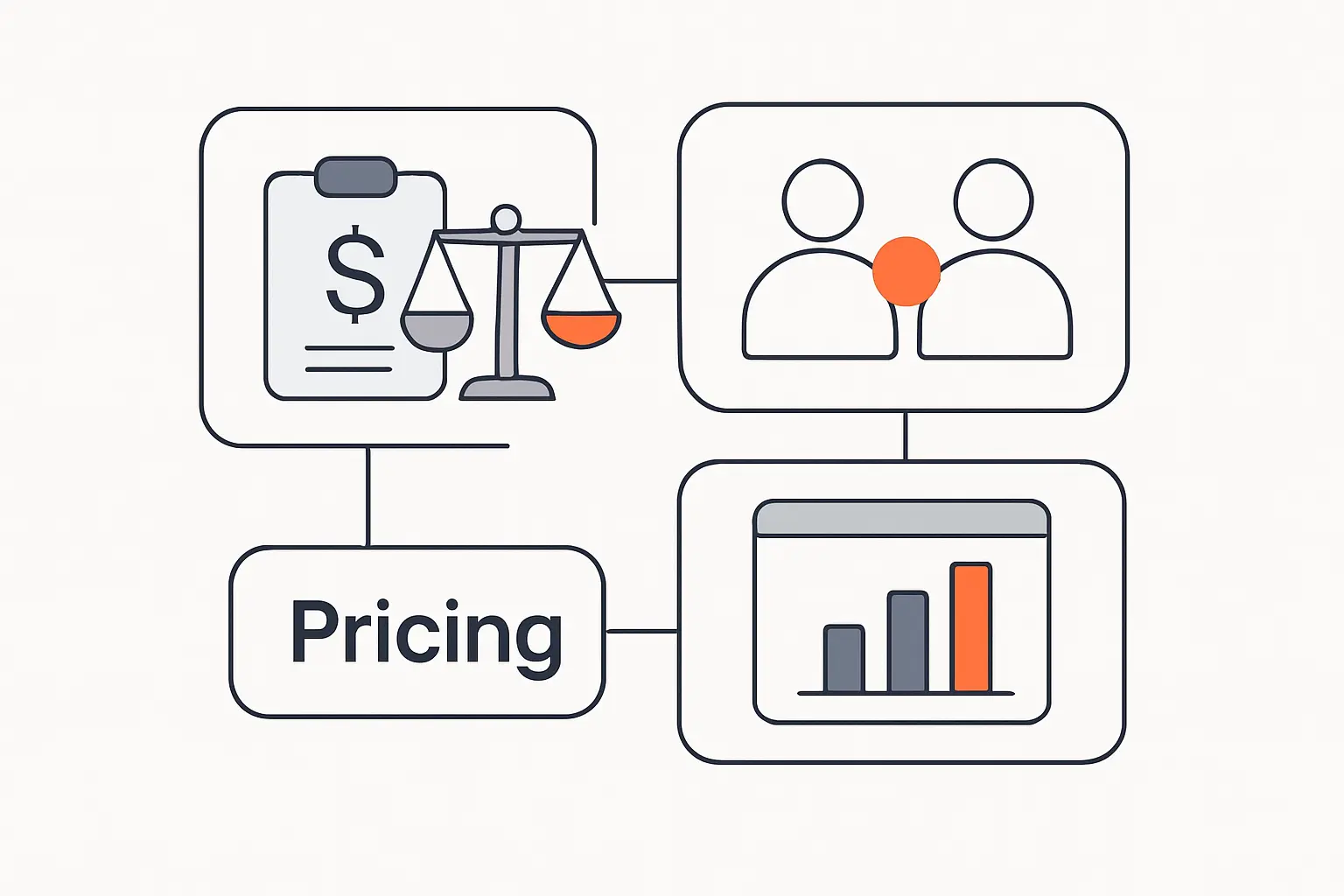
Pricing is where buyers get fooled fastest. One quote includes QA, DevOps, sprint rituals, and support. Another leaves them out, then adds them later as change requests. We try to compare scope first, rate second.
1. Typical Hourly Rates by Role, Seniority, and Delivery Setup
Published Vietnam market guides often cluster mainstream software delivery around $18 to $45 per hour, with senior architecture, AI, data, or compliance-heavy roles landing above that band. We treat that as a starting point, not a buying rule.
The real quote depends on who is in the team and what is included. Junior web delivery is cheaper than senior back-end design. A blended dedicated team can look efficient because QA and project management are spread across roles. A fixed-price quote can look cheaper up front, then get expensive once assumptions break.
We always ask for a role map with the price. If the vendor cannot explain who is doing product management, testing, DevOps, and release ownership, the quote is not ready.
2. Dedicated Teams, Staff Augmentation, Fixed Price, ODCs, and BOT Compared
For long-term product development, we usually prefer dedicated teams. The incentives are cleaner. The vendor is helping build a product over time, not trying to defend every change request. Staff augmentation works well when you already have a strong internal product owner and engineering manager.
Fixed price can work, but only when the scope is tight, the integrations are known, and the buyer is ready to freeze decisions. Otherwise, the contract turns into a negotiation machine. Offshore development centers are better for multi-year programs that need stable team identity. BOT models are for buyers that already know they may want their own local capability later.
In short, choose the model that matches how much change you expect. Most software products change a lot.
3. Why the Cheapest Bid Often Creates More Cost Later
The cheapest bid often hides the most expensive assumptions. We see this all the time. Senior roles are replaced with juniors. QA is too thin. Discovery is skipped. Architecture gets rushed. Reporting looks fine until the first real blocker appears.
Then the buyer pays twice. First through rework. Second through internal management time. Someone on the client side has to close the gaps, clarify decisions, and clean up avoidable defects. That cost rarely shows up in the vendor quote, but it is real.
We would rather pay a fair rate for a believable team than a low rate for a fantasy plan. Ask every vendor what is excluded, what is assumed, and what would force a re-estimate.
Common Risks and How to Reduce Them Before You Sign
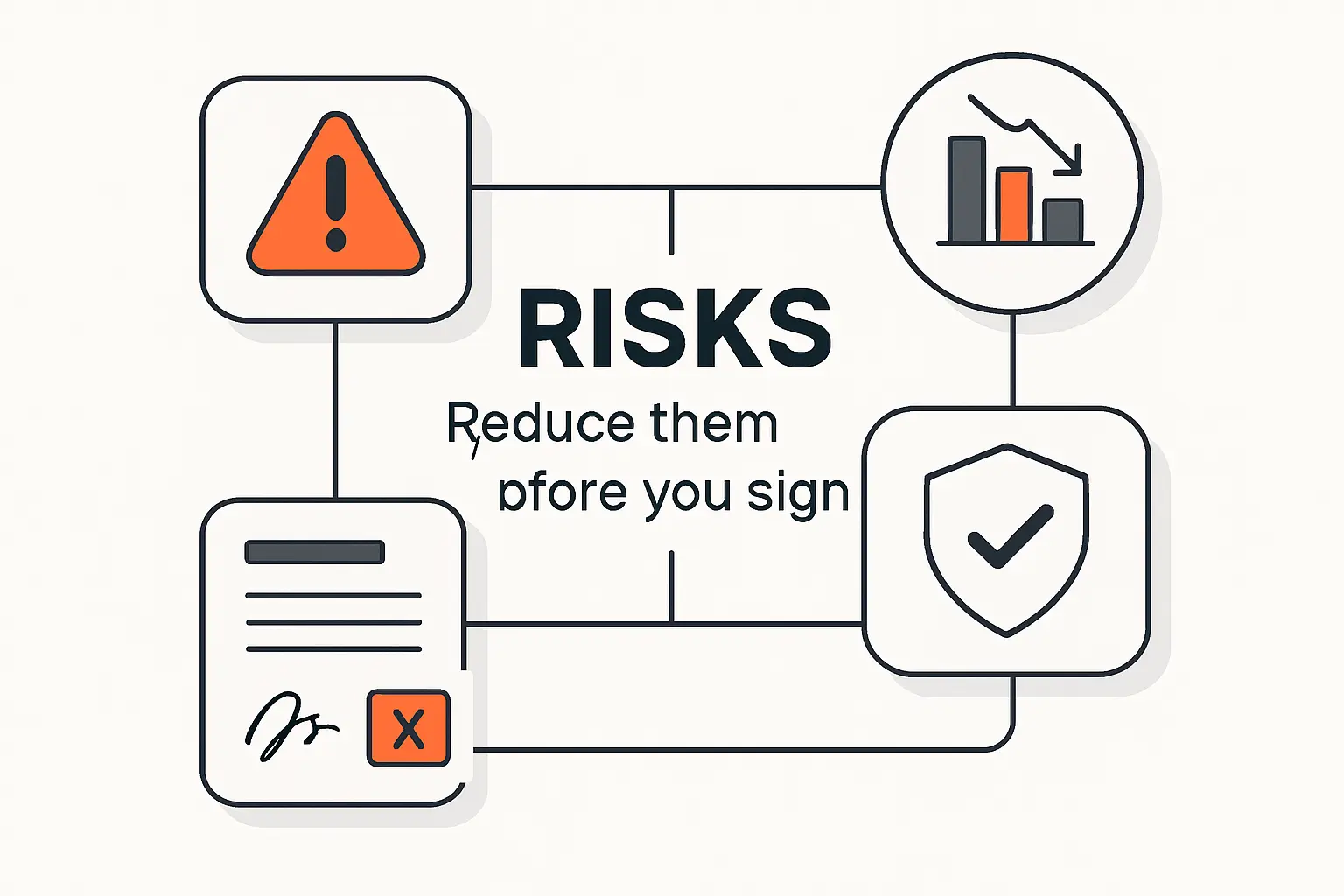
Vietnam is strong, but no outsourcing market is risk-free. The real move is to price governance into the deal before anything goes wrong. Buyers who wait until month three usually end up solving preventable problems.
1. Time Zone Overlap, Escalation Paths, and Decision Speed
For U.S.-based clients, overlap is usually manageable, but it is not endless. That means decisions must be routed well. If a blocker waits a full day for approval, the project slows down fast.
We want a named escalation path from day one. Who answers when the lead engineer is blocked and resolves a scope question? Who joins the urgent call if production fails? Good vendors have a real chain. Weak vendors have a shared inbox and optimism.
Even a great team will stall if the client side is slow. So this cuts both ways. Short response windows and clear owners help far more than a nice Slack channel.
2. Quality Control, Delivery Governance, and Technical Debt Risk
Quality problems usually start quietly. A rushed sprint. A skipped review. Thin tests. A feature pushed live because the date mattered more than the details. Then six sprints later, the team is stuck cleaning up old shortcuts.
We reduce that risk by asking about code review policy, QA ownership, release readiness, architecture decisions, and how the vendor defines done. If the vendor mostly talks about output speed, we worry. Speed matters. Quality habits matter more over a year.
Technical debt is not evil. Hidden technical debt is. A good partner calls it out early and helps the buyer choose what to fix now versus later.
3. Data Security, Repo Access, and Contract Clarity
Security diligence is where too many deals stay shallow. IBM reported that the average U.S. breach cost reached $10.22 million, which is far more expensive than spending extra time on vendor review.
We want clean rules on repo ownership, least-privilege access, test data, subcontractors, device policy, IP assignment, and termination support. We also want the contract to say what happens during transition. If you leave the vendor later, who hands over infrastructure knowledge, documentation, and admin access?
That is not distrust. It is just good buying. Clear contracts make healthy relationships easier, not harder.
FAQ About Outsourcing Software Development Companies in Vietnam
These are the questions we hear most often from buyers comparing an outsourcing software development company in Vietnam. The short answers matter, but the context matters more.
1. How Much Does It Cost to Outsource Software Development to Vietnam?
Usually less than hiring the same mix of roles in the U.S., Canada, the U.K., or Australia. The real price depends on seniority, overlap needs, security requirements, and whether QA, DevOps, design, and product management are included. We compare quotes by blended team shape, not by the headline developer rate.
2. How Long Does It Take to Ramp Up a Vietnam Development Team?
A small core squad can often start within a few weeks if the scope, access, and budget are clear. Larger teams take longer. The main delays are usually approvals, environment setup, and hiring for niche roles, not a lack of developers overall.
3. Which Engagement Model Works Best for Long-Term Product Development?
In our view, dedicated teams usually work best. They align better with changing backlogs and product learning. Staff augmentation works when you already manage engineering well internally. Fixed price works only when the scope is stable. ODC and BOT models suit longer, more strategic programs.
4. What Services Do Vietnamese Outsourcing Firms Usually Offer?
Most serious firms offer web development, mobile apps, custom software, QA, cloud support, maintenance, and staff augmentation. Many also provide UI and UX design, DevOps, data services, AI work, and modernization. A few are much stronger in niche areas like e-commerce, QA, Japan-facing delivery, or blockchain.
5. What Security Certifications Should You Look for in a Vietnamese Vendor?
We look for ISO 27001 first when the project handles important data. ISO 9001 can help on quality management. Mature CMMI practices can also matter for enterprise buyers. Certifications are useful, but we still ask how access is controlled, how incidents are handled, and who owns production credentials.
6. What Questions Should You Ask Before Choosing a Partner?
Ask who will actually be on the team, what similar systems they have built, how they handle QA, who owns the repo, what happens if a lead leaves, how change requests are priced, how much overlap they can provide, and what support looks like after launch. If the answers feel polished but vague, keep digging.
How TechTide Solutions Helps Teams Build Custom Software That Fits Their Needs
Because we included ourselves in this comparison, we want to be clear about where we fit and where we do not. We are not trying to be the biggest firm in this market. We are trying to be a strong fit for teams that want direct collaboration, honest trade-off calls, and custom software that matches real business use.
1. Discovery, Scoping, and Rapid Prototyping for Custom Requirements
We like to start with discovery, not guesswork. That means mapping workflows, clarifying the launch scope, identifying risky integrations, and building quick prototypes when the product still has open questions. It is a simple approach, but it saves a lot of confusion later.
We have found that many custom software projects go off track because the team starts coding before everyone agrees on ownership, edge cases, and what “version one” actually means. We would rather slow down briefly at the start and build with fewer bad assumptions.
2. One Team for Web, Mobile, UI and UX, and Custom Software Delivery
We work best when design, front-end, back-end, QA, and product thinking stay close together. That keeps handoffs shorter and makes trade-offs easier to discuss in plain English. If a design choice affects performance or release timing, we want that conversation to happen early, not after the sprint is already committed.
For buyers, that usually means fewer translation layers. You are not chasing one vendor for design, another for development, and another for QA. We prefer one delivery loop with shared context and visible ownership.
3. Industry-Specific Solutions for Fintech, Healthcare, Blockchain, and Insurance
We are especially useful when the product sits inside a more demanding business environment. Fintech systems need clean transaction logic and careful access control. Healthcare products need thoughtful workflows and privacy awareness. Insurance tools need clear business rules, claims logic, and dependable reporting. Blockchain work needs technical judgment, not just enthusiasm.
That is why we start by asking domain questions, not just stack questions. The code matters. The business rules behind it matter just as much.
Final Thoughts on Choosing an Outsourcing Software Development Company in Vietnam
Vietnam gives buyers a real range of options. That is the upside, and it is also the trap. Too many articles flatten the market into one promise about “good quality at low cost.” We do not think that helps anyone. FPT Software, TMA Solutions, SmartOSC, LogiGear, Orient Software, Saigon Technology, TechTide Solutions, and the rest of this list are not interchangeable. They solve different problems for different buyers.
Our advice is simple. Shortlist three firms that match your product stage, risk level, and communication needs. Then run the same buying test with each one: a discovery call, a team interview, a sample delivery plan, and a security review. Which company gives you the clearest trade-off calls, the most believable staffing plan, and the least fuzzy answer on ownership? That is usually the partner worth trying first.
If you are deciding now, start by writing a one-page brief before your next vendor call. What are you building, who owns product decisions, what must launch first, and what cannot break? Once that is clear, the right outsourcing software development company in Vietnam becomes much easier to spot.

