


This article is a paid placement. It was provided by the sponsor and does not necessarily reflect the views of TechTide Editorial. See our Advertising Disclosure.
Medical practices and law firms depend on phone calls to arrange appointments, respond to existing clients, and hear from people seeking professional help. Yet reception teams can only manage so many conversations at once. During busy periods, calls may go unanswered, while after-hours inquiries often end up in voicemail. An AI answering service, such as the one from ElevenLabs, is attracting attention as a way to keep those first conversations moving.
The global AI voice agents market was valued at an estimated $2.5 billion in 2025, according to Grand View Research. For professional practices, these services can answer calls, gather information, and direct requests to the appropriate team. Its usefulness depends on careful configuration and clear boundaries around professional judgment.
Why AI Answering Services Are Gaining Attention
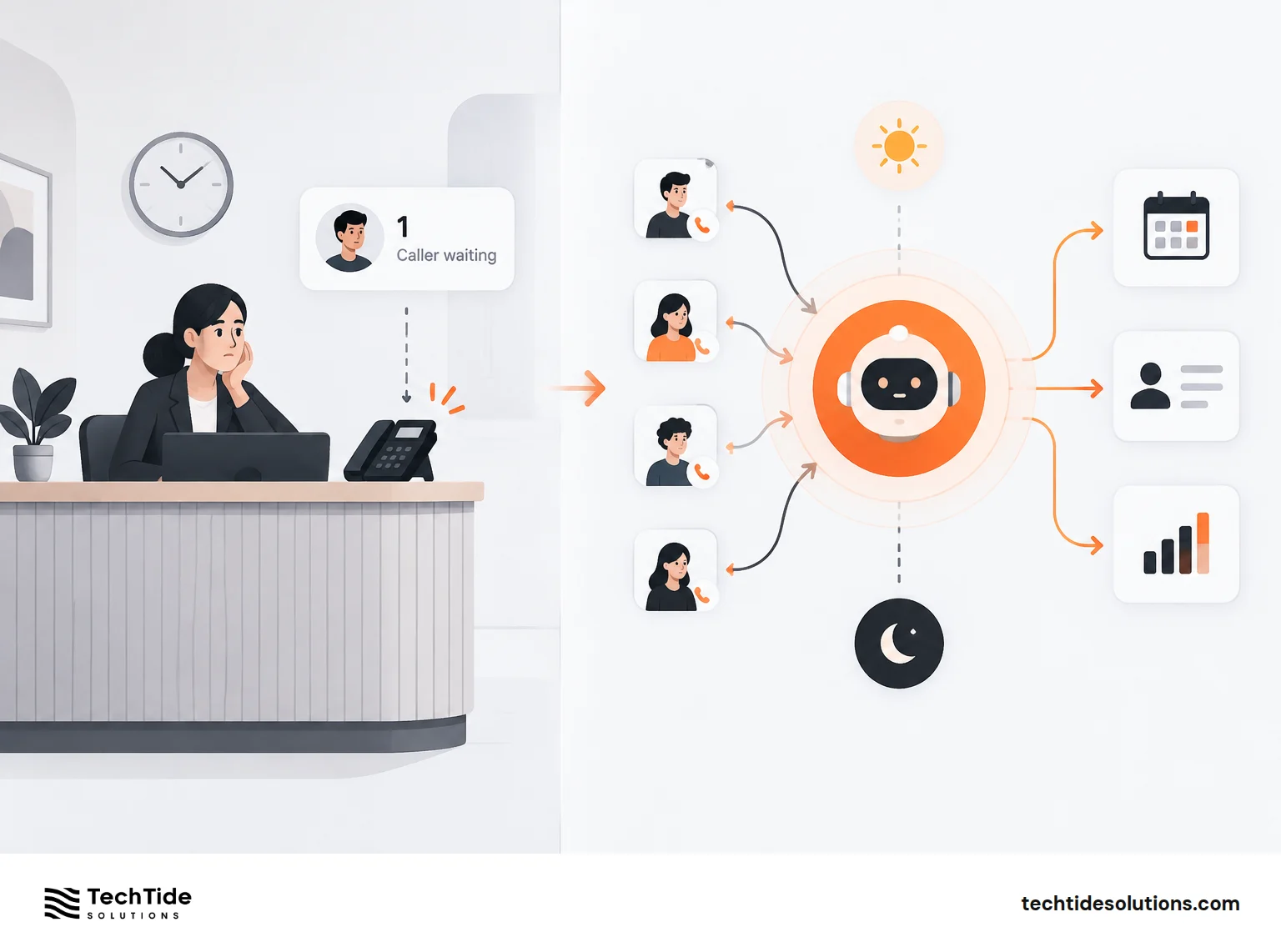
Traditional phone systems have familiar limitations. A caller may be placed on hold while reception staff helps someone at the front desk. Calls arriving outside business hours may go unanswered until the next working day. AI voice agents can respond at any time and handle tasks that follow a clear process.
When connected to approved business systems, they may be able to:
- Answer common questions about office hours, location, and services
- Check appointment availability and help schedule visits
- Collect caller details and the reason for the call
- Route inquiries to the appropriate department
- Arrange a callback when a team member is unavailable
Callers can explain what they need in their own words instead of navigating a sequence of keypad menus. The agent responds using its instructions and available information. That flexibility is useful only when it gives accurate answers and recognizes when a request needs human attention.
Recommended reading: From Data to Delivery: Using AI for Dynamic Presentations
Applications in Medical Practices
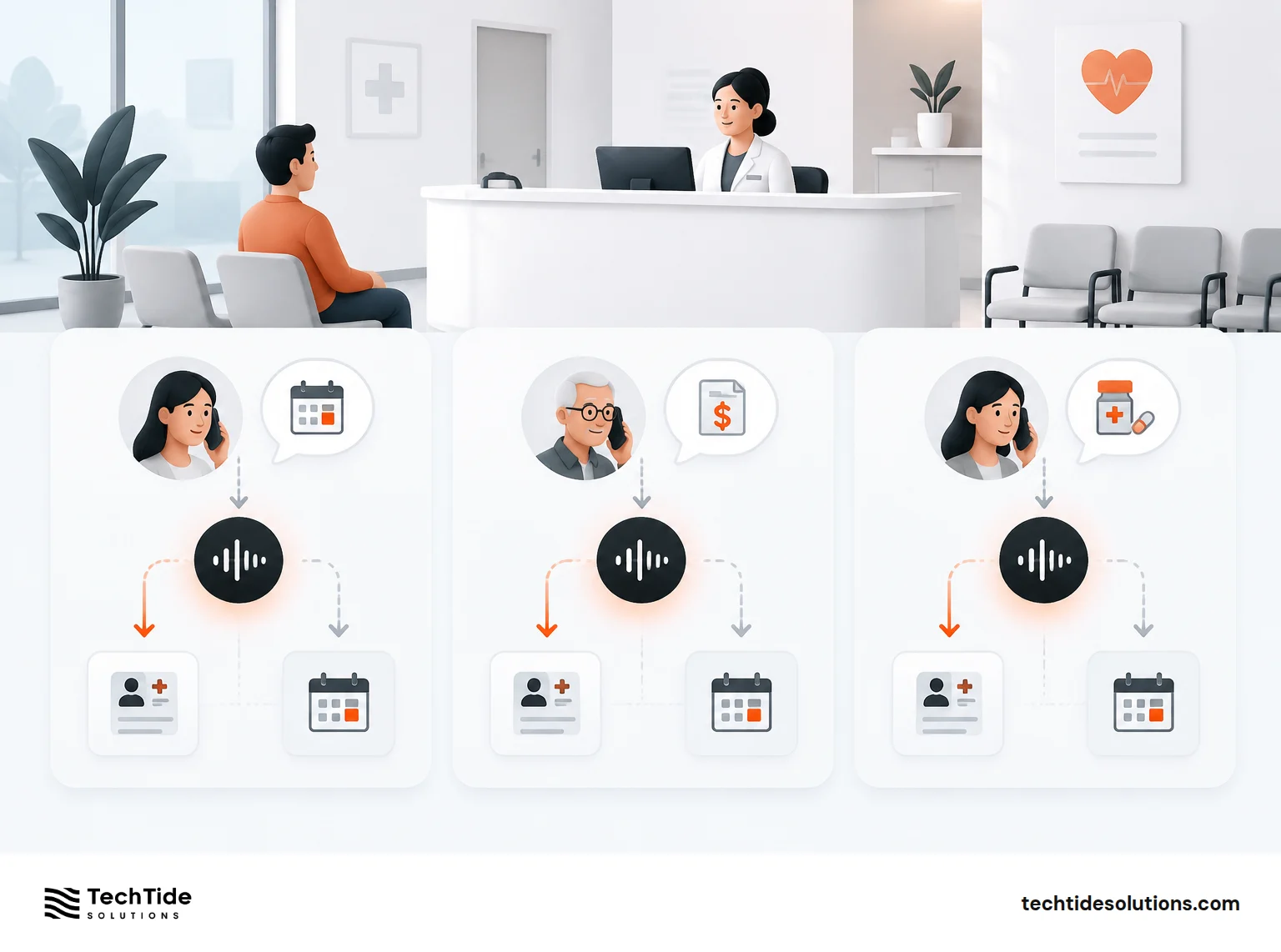
Medical offices receive calls about appointment scheduling, opening hours, billing, referrals, and prescription procedures. Many inquiries follow familiar patterns, making them suitable for carefully configured voice agents.
Connected to scheduling software, an agent may help callers book, change, or cancel appointments. It can also collect basic details before passing a request to reception. This is particularly useful after hours, when a patient wants to arrange a visit without waiting for the office to reopen.
The system can help direct calls, too. A question about an upcoming appointment may be handled through an approved response, while a request involving symptoms or treatment needs to reach clinical staff. An AI answering agent should never diagnose a condition or recommend medication.
Practices should explain when callers are speaking to an AI system and how to reach a person. This is especially important when someone is anxious or unsure which department can help.
Recommended reading: What Hardware Do You Need for Large Language Model Training?
How Law Firms Can Use Voice Automation
For law firms, the first phone conversation often marks the beginning of a client relationship. A prospective client may be dealing with an accident, a family dispute, or a business problem and want to know whether the firm handles that type of matter. If nobody answers, the person may call another office.
An AI voice agent can collect contact details and a brief description of the inquiry before sending the information to the intake team. Depending on the firm’s workflow, it may arrange a callback or transfer the caller to an available staff member. This gives legal professionals an initial record to review before speaking directly with the person.
The agent should not offer legal opinions, assess the strength of a case, or promise a particular outcome. Firms must decide what information is appropriate to collect, especially when a caller may disclose confidential details before any formal client relationship exists.
Recommended reading: How Answer Engine Optimisation Can Unlock New Leads and Revenue
Privacy, Security and Human Oversight
Medical and legal practices handle information that requires careful protection. Before adopting a service, they should understand where recordings and transcripts are processed, who can access them, and how long information is retained. They should also review the vendor’s security documentation and data-use terms.
Questions worth addressing include:
- Is call information encrypted during transfer and storage?
- Can the organization control retention and deletion?
- Who can access recordings and transcripts?
- Does the configuration meet relevant legal and professional obligations?
- How can a caller reach a person?
Healthcare organizations subject to HIPAA must confirm that the service and its configuration meet applicable requirements. ElevenLabs states that HIPAA-related use requires an eligible service arrangement, a business associate agreement, and Zero Retention Mode. Legal practices must assess their confidentiality duties and the privacy laws that apply to their work.
Human oversight remains central. Callers may raise an urgent concern or ask something outside the agent’s approved scope. The system should recognize these moments and offer a clear route to staff rather than keeping someone in an automated loop. Regular reviews can help teams identify recurring problems and improve responses.
Recommended reading: Robostral Navigate benchmark and integration requirements
Introducing AI Without Disrupting the Practice
A gradual rollout gives staff time to understand how the technology behaves. A practice might begin by automating opening-hours questions or appointment requests, then review whether the agent handles those calls accurately. More complex workflows can follow once the initial setup is reliable.
Staff should know how to receive transferred calls and access the information collected. The practice also needs a fallback plan for system outages or failed integrations. Automation should make the phone process easier to manage, and a single outage shouldn’t leave callers with no way through.
Recommended reading: How AI Integrations Are Changing What Zendesk Teams Can Actually Automate
The Future of AI-Assisted Call Handling
AI answering services are becoming part of a wider shift toward more responsive business communication. In medical and legal settings, their strongest role is handling routine contact and helping callers reach the right person. Clear boundaries, secure data practices, and dependable human handoffs will determine whether the technology earns a lasting place in professional offices.

