


This article is a paid placement. It was provided by the sponsor and does not necessarily reflect the views of TechTide Editorial. See our Advertising Disclosure.
Five hundred tags a day is about 11,000 reads a month, and that is the number where most tracking systems stop telling the truth. The dashboard still loads. The numbers just drift, quietly, until your stock counts disagree with reality and nobody trusts the reports anymore. I have watched this happen in a warehouse with pallet racks and in a studio supply closet. The software had nothing to do with it. The volume did. Tag counts grow faster than anyone plans for, and the systems that survive are the ones that tie the physical tag to a real record instead of treating the scan as the whole job.
That is the idea behind rfid asset tracking software built around tag-level events rather than one-time labels, and it is the angle this guide takes: not how to start tracking, but how to keep tracking honest once the volume climbs. Here is the promise. You’ll get a clear picture of where volume pressure actually shows up, a simple framework I use to spot the breaking point before your numbers drift, and three checkpoints you can test this week. Just the mechanics.
Where Volume Pressure Actually Breaks Your System
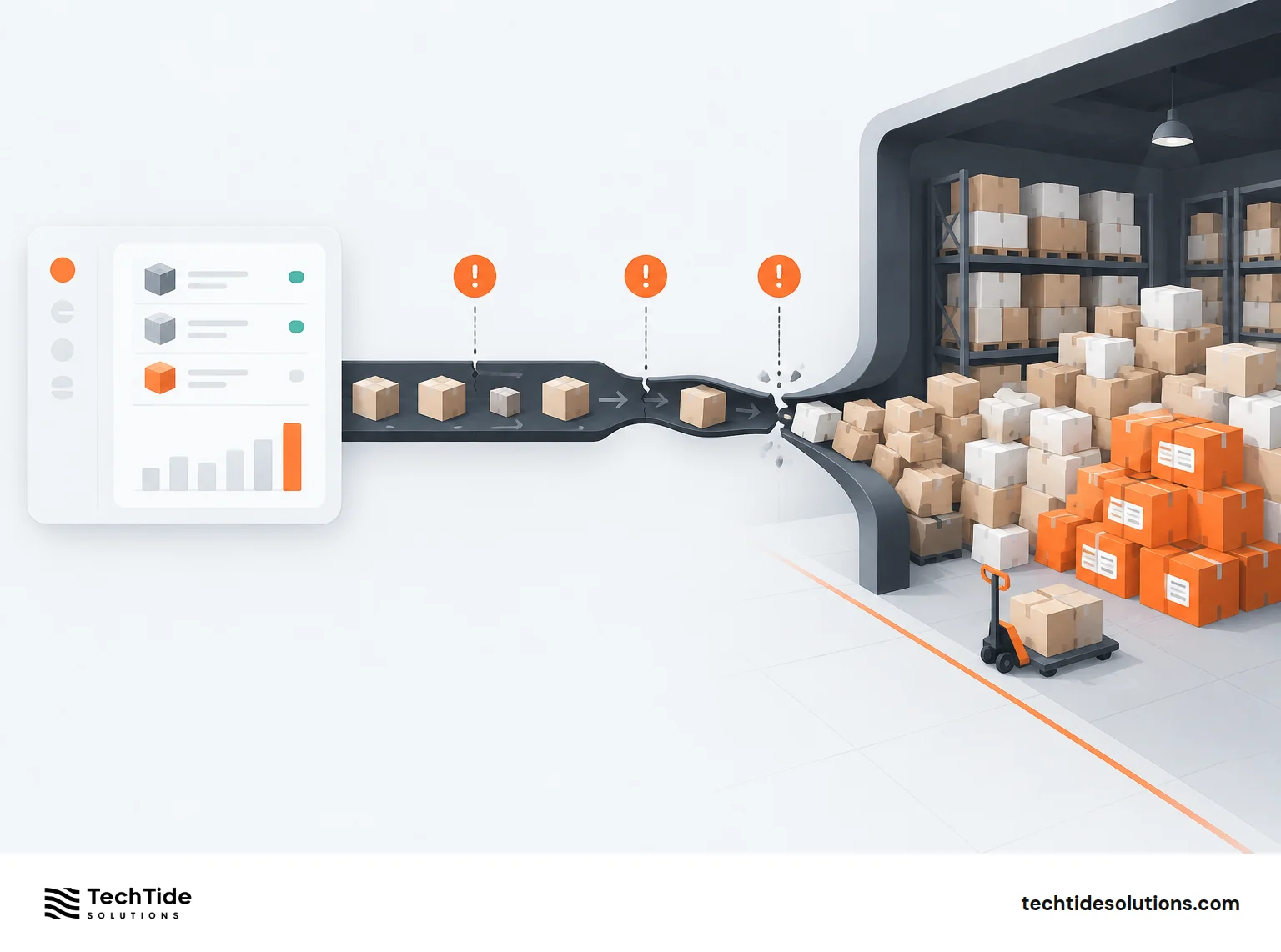
Most tracking setups get designed around a calm number: a few hundred assets, a handful of shipments, one person checking things in. Then the operation grows. Pallet volume triples, a second site comes online, and suddenly you’re asking a system built for dozens to handle thousands of individual reads a day.
Three things crack in that order.
- Record hygiene. Duplicate records and orphaned tags start piling up because nobody owns the cleanup. Two tags point at one asset. One tag points at a retired pallet. Every report you run after that is a guess dressed as a fact.
- Reader coverage. A single checkpoint that was fine at low volume becomes a bottleneck when pallets queue up during receiving. Reads get skipped, and skipped reads look exactly like lost items.
- Reconciliation time. Someone has to manually chase the gaps. That person’s hours are the real cost of volume, and they compound month over month.
The tricky part is that none of this shows up as an error message. Your system happily counts what it sees, and what it sees gets thinner as volume rises. I’d rather catch that drift at 200 tags a day than during a quarterly audit, and so would you.
Recommended reading: The Digital Footprint You Never Created: How Data Brokers Build Your Online Profile
A Checkpoint Framework for Tagging at Scale
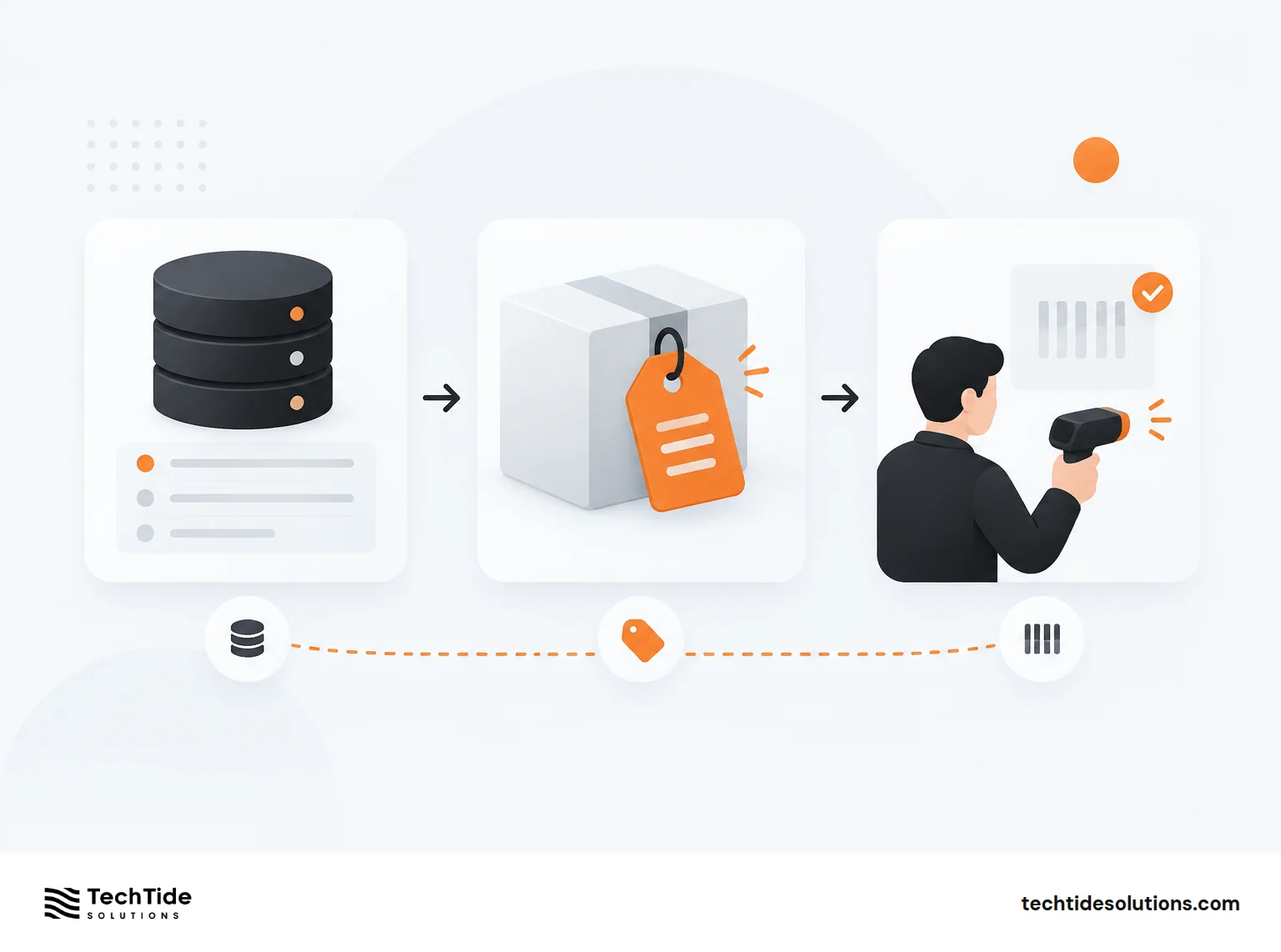
I call this the three-checkpoint test, and it exists because tag programs usually skip a step: they measure success by whether the system runs, not by whether the data stays trustworthy as volume climbs. You need checkpoints at the record level, the physical level, and the human level, because those are the three places volume pressure lands.
Checkpoint One: The Duplicate Hunt
Pull a count of every tag ID in your system and a count of every distinct asset record. If the first number is meaningfully larger than the second, you have record clutter. Run this weekly, not quarterly. Most systems will let you export both lists to a spreadsheet in a few minutes.
Checkpoint Two: The Trailing Read
Set up a printable barcode or tag at a dock door and have a colleague walk a full pallet through during a normal shift. Do it three times. Note how many reads register versus how many items should have. If you’re missing anything, your reader coverage is the issue, and more tags won’t fix it. More reader geometry will.
Checkpoint Three: The Time-To-Reconcile
Pick a random day, export your records, and time how long someone spends matching what the system says against what’s physically on the floor. If that number climbs week over week, your system is failing under load even if the dashboard looks peaceful. A stable floor is fine. A rising floor means you’re paying interest on volume.
Recommended reading: Importance of Testing Your Mobile Apps on Cloud-Based Testing Tools
Why Tag Standards Matter More as Counts Grow
At low volume, a sloppy tag is an inconvenience. At 500 a day, it’s a data integrity problem with a compounding tax. The standards body for product identification sets the numbering conventions that let readers, systems, and partners agree on what a tag actually means. Businesses that follow those conventions get cleaner reads and fewer duplicates because every tag maps to a predictable identifier instead of a custom code somebody invented in a hurry.
If you’re past the pilot stage, build on standardized identifiers now. Retrofitting them later means re-tagging everything, and re-tagging during an active shipping cycle is the worst kind of project. I’d rather spend two weeks getting identifiers right than two months fixing them.
Recommended reading: Why Post-Purchase Communication Is a Technology Problem Worth Solving
The People Part Nobody Plans For
Volume also stresses the people running the system. A scanning process that takes four seconds per item feels fine at 50 items. At 500, that’s 33 minutes of scanning a day, every day, and someone will start cutting corners by the second week. That’s why your best system design treats the scan as a small piece of a workflow, not the whole job.
The Bureau of Labor Statistics tracks the labor side of these operations, and anyone who has watched a receiving dock knows the story: throughput depends on whether the process fits human habits, not whether the hardware is nice. If you want to see how the same issue plays out across offices and studios, there’s a separate look at fixed asset tracking across different industries that covers how other teams handle mounting tag volume. My take: design for the tenth scan of the hour, not the first. The first one always works.
Recommended reading: Azumo vs Azumo Tech: What’s the Difference Between the Two Companies?
What a Stable System Looks Like at Scale
Healthy doesn’t mean zero mistakes. It means the mistakes surface within minutes and stay small enough to fix without a project plan. You’ll know your setup can handle volume when your duplicate count stays flat week to week, your trailing reads catch everything at the dock, and your reconcile time holds steady instead of creeping upward. Those three signals matter more than any feature list, and you can measure them yourself without buying anything new.
So test your system this week. Run the three checkpoints, record the numbers, and repeat them at 30 days. If any of them drift, you’ve found your break point at a moment when it’s still cheap to fix. That’s the whole game with tag volume. It’s not about whether your system works today. It’s about whether it will still be honest when your tag count doubles. Where do you think your first crack will show?

