
Market overview: Worldwide ad spending is forecast to reach US$1.17tn, so organic visibility now competes with louder paid channels. At TechTide Solutions, we treat SEO as product engineering. Rankings are the byproduct. The real asset is a site that loads fast, answers intent, and converts cleanly. That blend takes strategy, design, development, and ongoing operations. When it works, it compounds. When it fails, it quietly bleeds margin.
We also see a shift in what “search” even means. People still use classic engines. They also ask AI assistants. They skim summaries, not blue links. That change rewards brands with structured content, strong authority signals, and clean technical foundations. Our goal here is practical. We want you to pick solutions that fit your business model and your team’s reality.
What Are seo web solutions and Why They Matter in 2025
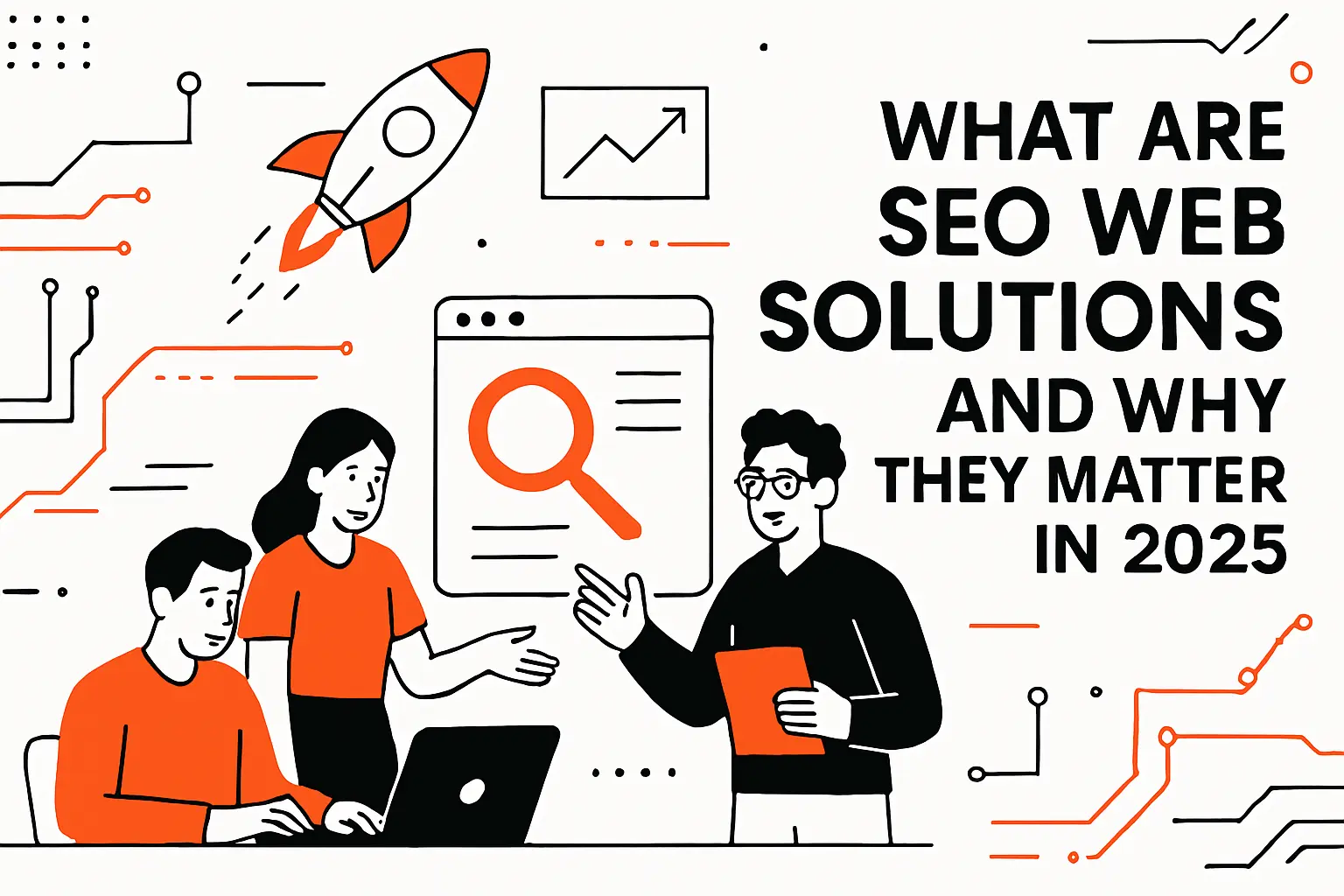
Market overview: Gartner reports marketing budgets have flatlined at 7.7% of overall company revenue, so every channel must prove impact. That pressure is why “seo web solutions” matters as a category. It is not just SEO work. It is a combined system of tech, content, UX, and measurement. When those parts align, marketing becomes less dependent on rented attention.
1. SEO web solutions combine SEO, web design, and development to drive measurable growth
SEO rarely fails because someone picked “bad keywords.” It fails because the website cannot carry the strategy. We see brittle CMS setups, slow templates and forms that do not track. In those cases, SEO is like pouring water into a cracked bucket.
In our work, “SEO web solutions” means the website is the growth engine. Design supports scanning and trust. Development supports speed and indexability. Analytics supports learning. A modern provider should own the whole loop, not just the checklist.
2. Data-driven SEO strategies backed by systems, tools, and tested processes
Strategy without execution is theater. Execution without measurement is noise. We prefer systems that turn inputs into predictable outputs. That includes a repeatable audit, a content pipeline, and an engineering backlog.
A Practical Stack We Trust in Production
We keep our stack boring on purpose. Boring stacks scale. Here are the solutions we see delivering reliable results across industries.
- WordPress for flexible publishing and wide plugin support.
- Webflow for design-forward teams with fast iteration cycles.
- Shopify for ecommerce velocity and stable hosting defaults.
- BigCommerce for catalog-heavy stores needing strong native features.
- Adobe Commerce for complex merchandising and enterprise integrations.
- WooCommerce for stores that need WordPress-level customization.
- HubSpot CMS for tight CRM alignment and simple editorial governance.
- Drupal for structured content models and robust permissions.
- Craft CMS for custom content architecture and clean templating.
- Contentful for headless delivery and multi-channel reuse.
- Next.js for performant, component-driven sites with flexible rendering.
- Nuxt for teams that prefer a Vue-centered developer experience.
- Gatsby for static-first builds and strong content deployment workflows.
- Screaming Frog SEO Spider for crawl diagnostics and technical triage.
- Sitebulb for visual audits and stakeholder-friendly reporting.
- Ahrefs for backlink analysis and competitive content planning.
- Semrush for keyword research, content tools, and market visibility.
- Moz Pro for tracking, link insights, and prioritization workflows.
- Google Search Console for index coverage and query performance insights.
- Google Analytics for behavioral signals and conversion attribution.
- Looker Studio for shared dashboards and executive reporting.
- Google Tag Manager for controlled event tracking and experimentation.
- PageSpeed Insights for performance diagnostics and actionable hints.
- Lighthouse for repeatable lab tests and CI-friendly checks.
- Cloudflare for caching, security, and edge performance improvements.
- Google Business Profile for local discovery and branded trust signals.
- BrightLocal for citation workflows and local rank tracking.
- Yext for directory consistency at scale and listing governance.
- Yoast SEO for editorial guidance and structured metadata defaults.
- Google Ads for paid search support and demand capture testing.
Tools do not replace thinking. They do reduce friction. The best providers turn those tools into habits. That is where repeatable growth comes from.
3. AI SEO for visibility in ChatGPT, Gemini, Perplexity, and other AI-driven discovery
AI discovery changes the game. Classic SEO fights for a click. AI often answers without sending one. That makes brand presence and authority signals more important.
We approach AI visibility like technical PR plus structured publishing. First, we make pages easy to extract and cite. Second, we build entity clarity. Third, we earn mentions from sources AI systems trust. Finally, we measure assisted conversions, not just last-click traffic.
What We Build for “Cite-Worthy” Pages
- Clear definitions near the top, written for fast extraction.
- FAQs that mirror real questions from sales calls and support tickets.
- Schema markup aligned to page intent and content type.
- Unique first-hand details that competitors cannot easily copy.
- Author and brand pages that establish experience and accountability.
AI systems reward consistency. They also punish ambiguity. That is why we treat content models as engineering work.
4. Ecommerce and lead generation focus: attracting visitors who convert
Traffic is not the KPI that pays salaries. Revenue does. That is why we separate “informational” growth from “transactional” growth early.
For ecommerce, we care about category architecture, filters, and internal search. For lead generation, we care about intent alignment and friction removal. A law firm site and a parts distributor site do not need the same SEO. They need different conversion math.
Real-World Patterns We See Repeatedly
- Lead-gen sites win by clarifying services, proof, and next steps.
- Ecommerce wins by controlling duplicates and strengthening category intent.
- B2B wins by mapping content to sales stages and objections.
- Local brands win by connecting pages to places and reviews.
We like to tie every major page to a measurable action. That includes calls, forms, demos, and add-to-cart flows.
5. On-page vs off-page foundations: relevance, authority, and credibility
On-page work is what you control. Off-page work is what you earn. Both matter. Most teams overweight one and underfund the other.
On-page relevance comes from clear intent targeting. It also comes from internal linking and topical coverage. Off-page credibility comes from mentions, reviews, and references. We treat those signals as reputation infrastructure, not a one-time campaign.
6. Local, enterprise, and multi-location scalability for growing brands
Scaling SEO is mostly a content governance problem. It is also a template problem. Multi-location sites break when each page becomes a snowflake.
We push for reusable components. We push for structured fields. Location pages should share a model. Enterprise sites should have a taxonomy. When that foundation exists, publishing stays consistent and safe.
Scalability Checks We Run Early
- Can editors publish without breaking titles, canonicals, or indexing rules?
- Can product and location templates support unique content where it matters?
- Can analytics segment by region, service line, and acquisition channel?
- Can engineering deploy SEO fixes without a risky redesign?
When those answers are “yes,” growth is smoother. When they are “no,” SEO becomes a constant firefight.
7. Why proof matters: case studies, retention, and verified reviews
SEO is full of confident promises. That is why proof is a buying criterion. We advise clients to ask for specifics. Ask for what changed, what did not work and how churn is handled.
In our experience, the best providers talk about process, not magic. They show retention, explain trade-offs and also show you how they measure conversions, not vanity rankings.
Quick Comparison of seo web solutions
Market overview: McKinsey estimates generative AI could add $2.6 trillion to $4.4 trillion annually in value, and marketing workflows will absorb much of that change. That shift favors stacks that integrate content, performance, and measurement. The goal is not a perfect toolset. The goal is a toolset your team will actually use.
| Tool | Best for | From price | Trial/Free | Key limits |
|---|---|---|---|---|
| WordPress | Content-heavy sites | Free | Yes | Plugin sprawl risk |
| Webflow | Design-led marketing sites | Paid | Yes | Complex CMS limits |
| Shopify | Ecommerce speed | Paid | Yes | Theme constraints |
| Next.js | Performance-focused builds | Free | Yes | Needs engineering support |
| Screaming Frog SEO Spider | Technical audits | Paid | Limited | Desktop workflow |
| Semrush | Keyword and competitor research | Paid | Yes | Data is directional |
| Ahrefs | Link intelligence | Paid | No | Costly for small teams |
| Google Search Console | Index and query insights | Free | Yes | Sampling and delays |
| Cloudflare | Speed and protection | Free | Yes | Misconfig risks |
| BrightLocal | Local citations and tracking | Paid | Yes | Local-only focus |
We recommend picking a “core” platform first. Then add auditing and measurement. After that, add local or ecommerce layers. Too many teams buy tools before they fix fundamentals. That leads to dashboards full of regret.
Top 30 seo web solutions for Businesses That Want Sustainable Growth
We scored these solutions like a buyer, not a fan club. Each pick earns its place by helping a real business job: get found, get trusted, and get chosen. Some entries are agencies. Others are platforms or supporting pages that keep your marketing machine running.
Our scoring uses a 0–5 scale with weighted criteria. Value-for-money and feature depth each carry 20%. Ease of setup and learning carries 15%. Integrations and ecosystem carries 15%. UX and performance carries 10%. Security and trust carries 10%. Support and community carries 10%.
In practice, that means a flashy tool can still lose. A clunky setup, weak reporting, or shaky trust signals will drag the score down. Meanwhile, “boring” foundations can win. Clean workflows, predictable delivery, and clear limits tend to compound into durable growth.
1. Coalition Technologies
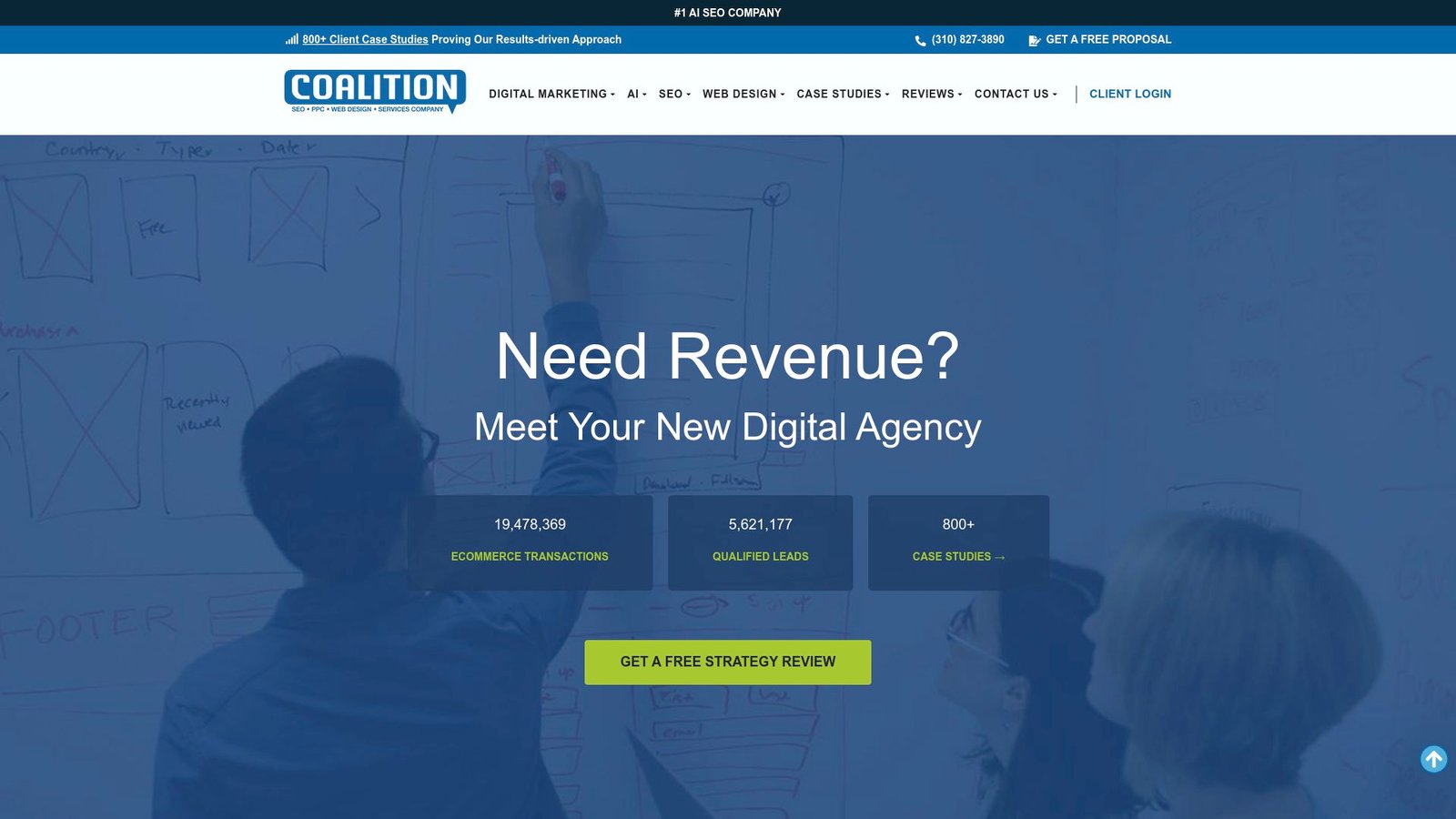
Coalition Technologies operates as a full-service SEO and ecommerce marketing agency. Their team mix leans technical and conversion-aware. Expect strategy, execution, and reporting under one roof.
Tagline: Build rankings that turn into revenue, not just screenshots.
Best for: ecommerce teams and mid-market marketers who want an operator, not a consultant.
- Technical SEO + content roadmaps → reduce crawl waste and lift high-intent pages first.
- Analytics + rank tracking → save 3–5 reporting steps each week with one narrative.
- Repeatable campaign process → reach first measurable fixes in about 2–3 weeks.
Pricing & limits: From $2,000/mo; Trial: n/a; Caps: scope is defined per site and statement of work.
Honest drawbacks: Custom work can create dependency on their team. Also, small budgets may feel underpowered in competitive categories.
Verdict: If you want steady SEO traction, this helps you ship fixes and content in weeks, then compound results quarterly.
Score: 3.9/5 and .
2. SEO.com
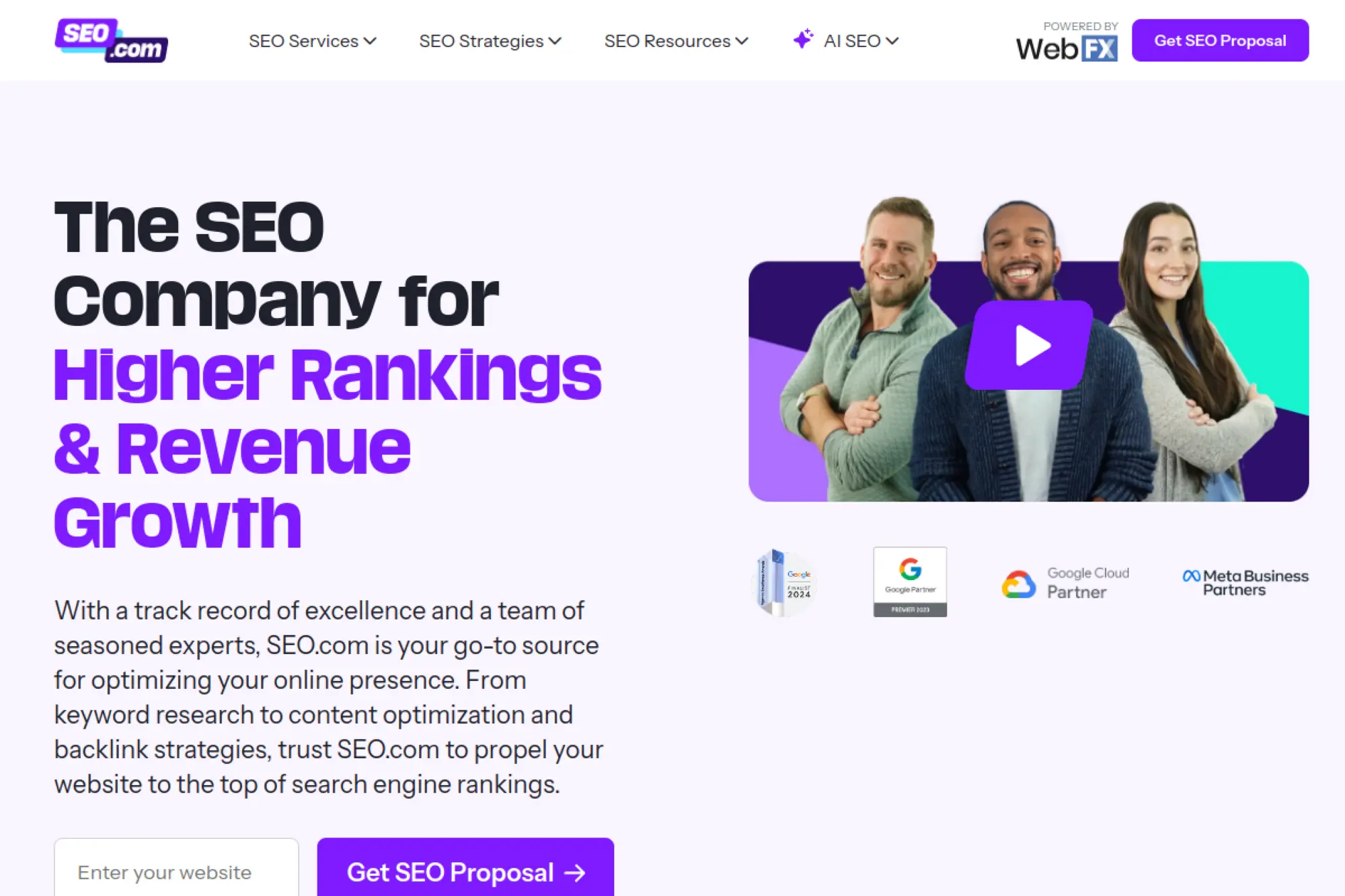
SEO.com positions itself as an SEO-first agency brand with a content-heavy education layer. The team message is practical and process-led. You get fewer theatrics and more “here’s the plan.”
Tagline: Turn search confusion into a clear monthly growth routine.
Best for: SMB owners and lean marketing teams who need guidance plus execution.
- Structured SEO program → keep priorities tight and avoid random “SEO tasks.”
- Reporting and planning cadence → save 2–4 coordination steps per month.
- Clear onboarding flow → reach first roadmap in about 1–2 weeks.
Pricing & limits: From $1,500/mo; Trial: n/a; Caps: deliverables vary by plan and site size.
Honest drawbacks: Pricing and scope can feel “range-based,” not menu-clear. Also, deep engineering work may require your dev team’s time.
Verdict: If you need a steady SEO operating system, this helps you move from guesswork to repeatable gains within the first month.
Score: 3.8/5 and .
3. Straight Line Web Solutions

Straight Line Web Solutions is a boutique web and SEO shop. Their team voice emphasizes clarity and plain language. That matters when stakeholders hate jargon and still want results.
Tagline: Make your website pull leads like a quiet, reliable salesperson.
Best for: local service businesses and SMBs that want web, SEO, and process help together.
- Growth-driven site rebuilds → fix “pretty but pointless” pages that do not convert.
- HubSpot-style process thinking → save 2–3 handoff steps between marketing and sales.
- Guided onboarding culture → see first improvements in about 2–4 weeks.
Pricing & limits: From $1,200/mo; Trial: n/a; Caps: monthly hours and response windows depend on the support tier.
Honest drawbacks: If you want a giant bench of specialists, this may feel small. Also, SEO pricing is less “package-like” than some competitors.
Verdict: If you want fewer surprises, this helps you launch and improve a lead-first web presence over the next 30–90 days.
Score: 3.8/5 and .
4. Effective Web Solutions
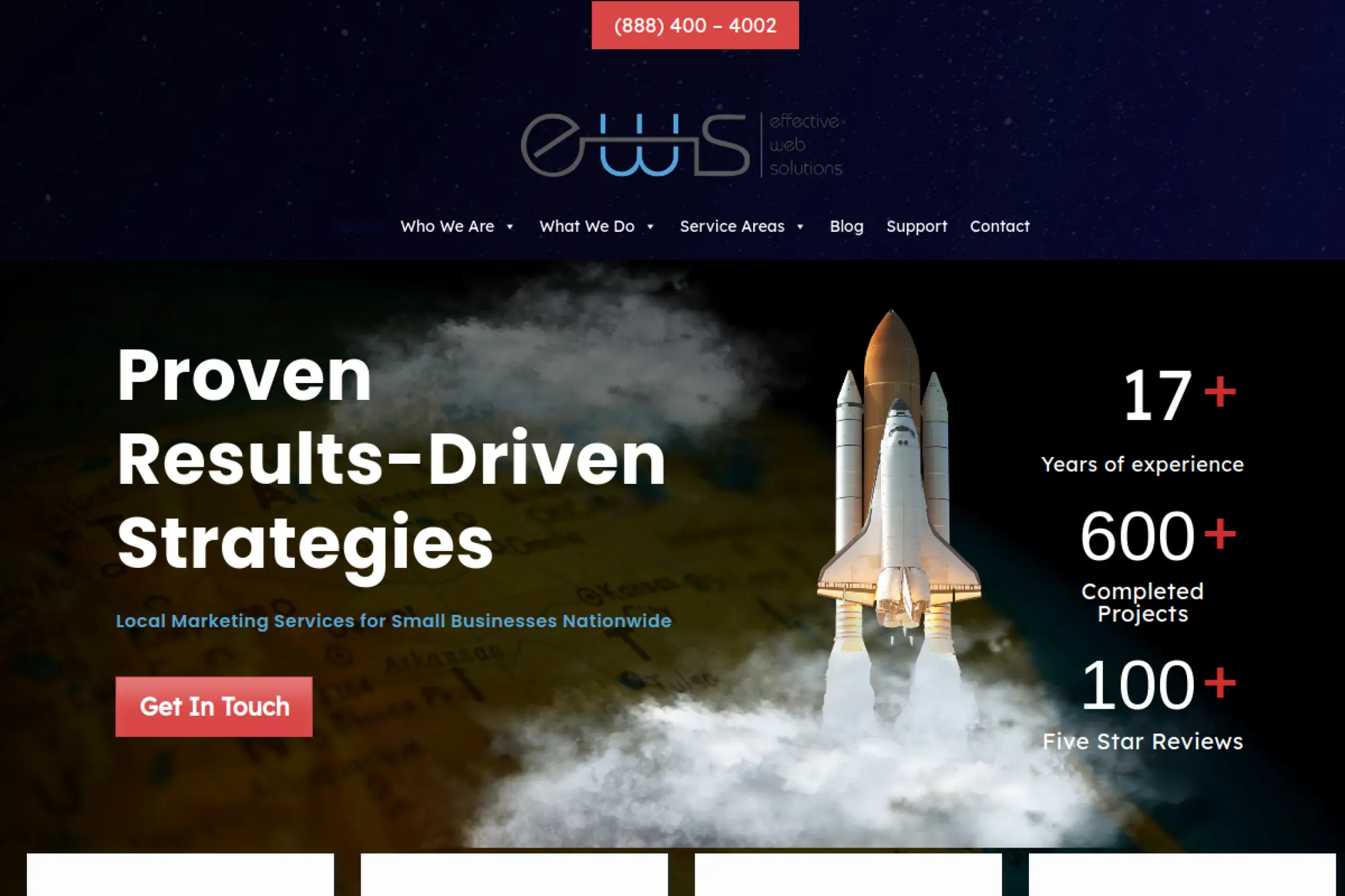
Effective Web Solutions is a digital marketing agency focused on SEO-led lead generation. Their team pitch leans on hands-on guidance. The tone aims for “real humans” over mystery dashboards.
Tagline: Get more qualified calls without living inside marketing tools.
Best for: local and regional SMBs that need lead flow and accountability.
- Local SEO + content execution → win nearby searches that drive calls and form fills.
- Campaign management support → save 3–6 weekly steps by offloading SEO upkeep.
- Guided communication cadence → reach first reporting rhythm in about 2–3 weeks.
Pricing & limits: From $1,500/mo; Trial: n/a; Caps: campaigns are typically contract-based with scope set in the agreement.
Honest drawbacks: A contract requirement can be a deal-breaker for testers. Also, teams wanting fully self-serve tooling may feel constrained.
Verdict: If you want a partner to run the SEO engine, this helps you build momentum in the first 60–90 days.
Score: 3.7/5 and .
5. Network Solutions Professional SEO Services
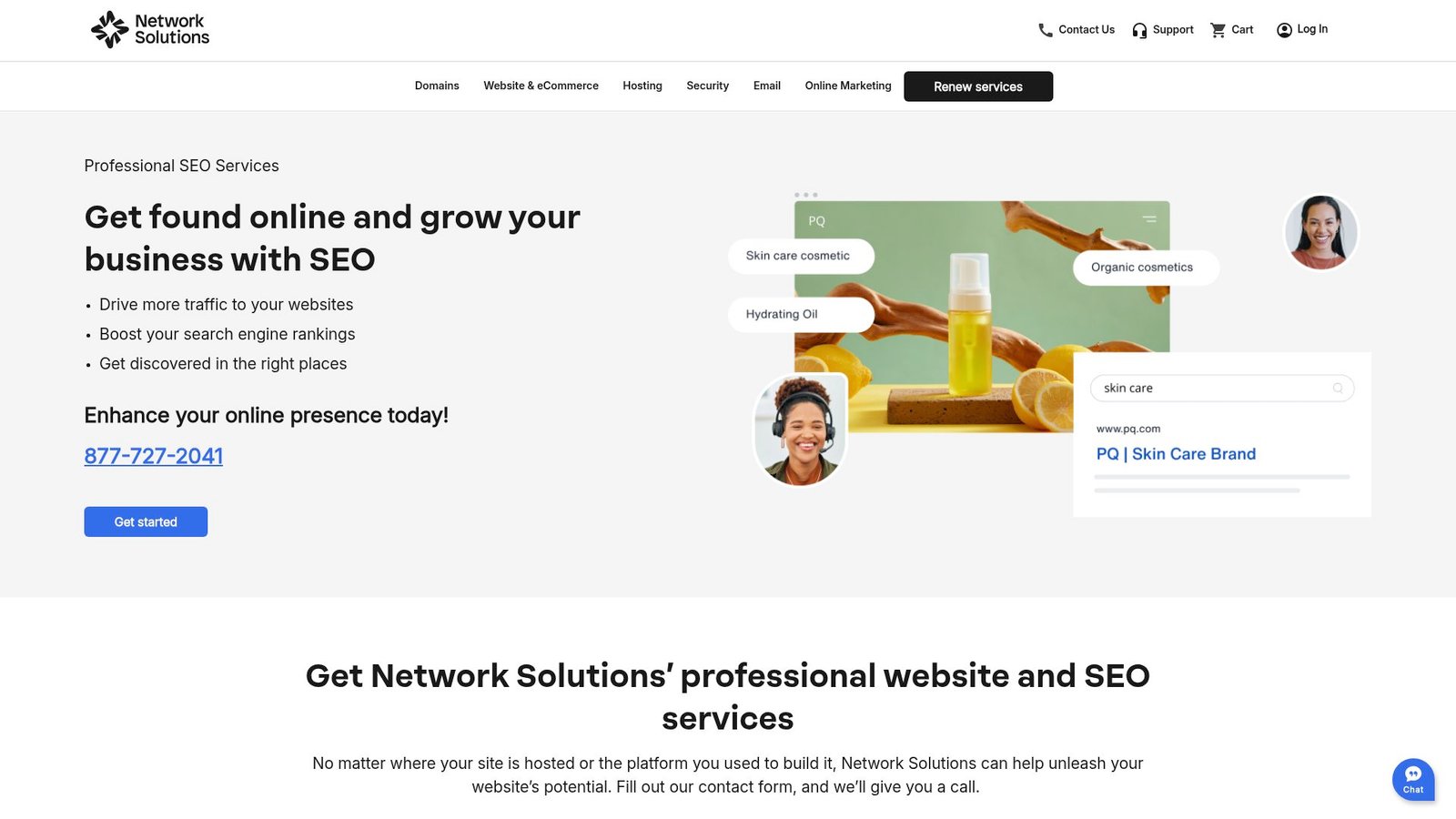
Network Solutions comes from the “web essentials” world: domains, hosting, and business tooling. Their SEO services sit close to that ecosystem. The team value is convenience and bundling.
Tagline: Keep your site managed and visible without juggling five vendors.
Best for: small business owners already using Network Solutions for domains or hosting.
- Bundled SEO guidance → reduce vendor sprawl and keep site basics consistent.
- All-in-one account approach → save 2–4 admin steps across billing and support.
- Quick start setup → reach first checklist actions in about 60–90 minutes.
Pricing & limits: From $20.50/mo; Trial: n/a; Caps: tool scope is per account, while services are quote-based.
Honest drawbacks: Advanced SEO strategy may feel lighter than specialist agencies. Also, customization can be limited when bundled.
Verdict: If you want simple SEO support tied to your web stack, this helps you stabilize basics within the first month.
Score: 3.4/5 and .
6. Thrive SEO Services
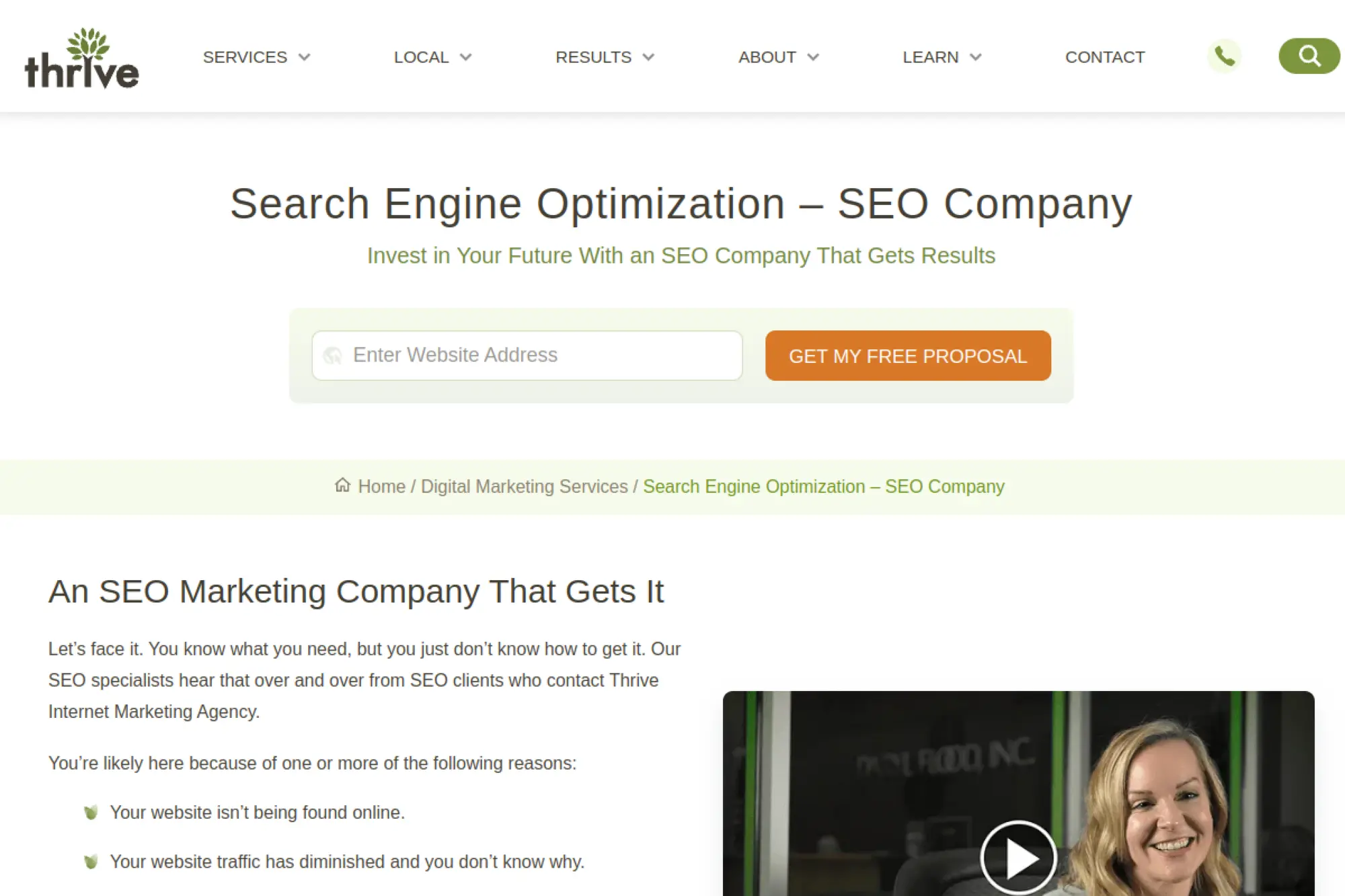
Thrive is a digital marketing agency offering SEO as a core service line. Their team positioning leans modern, with language around adapting to search changes. Expect a managed-service relationship.
Tagline: Keep organic growth moving while algorithms keep changing.
Best for: growing SMBs and marketing managers who want SEO execution handled end-to-end.
- Full-funnel SEO approach → connect rankings to leads, not vanity traffic.
- Process plus tooling stack → save 2–5 coordination steps across audits and updates.
- Onboarding playbook → reach first prioritized fixes in about 2–4 weeks.
Pricing & limits: From $1,500/mo; Trial: n/a; Caps: deliverables and locations depend on your plan and scope.
Honest drawbacks: Like most agencies, transparency varies by account manager. Also, highly technical sites may need your developers on standby.
Verdict: If you need an SEO partner to carry the load, this helps you build steadier visibility over the next quarter.
Score: 3.8/5 and .
7. WebFX
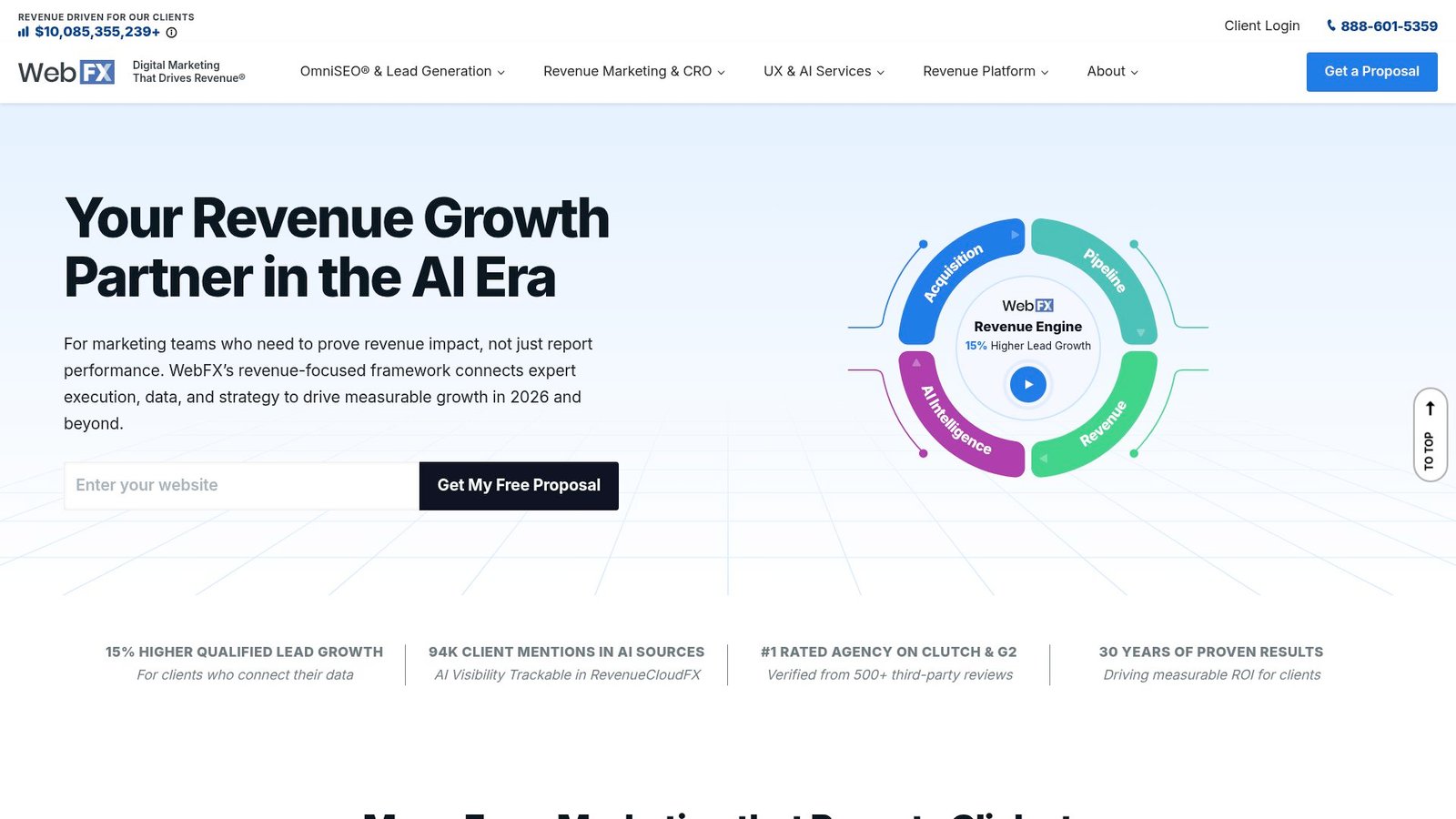
WebFX is a large digital marketing agency with a productized delivery feel. Their teams are built for scale and recurring execution. That can be a relief when you need output every month.
Tagline: Turn SEO into a predictable production line for leads.
Best for: mid-market teams and multi-location businesses that need consistency.
- SEO services at scale → keep technical fixes, content, and reporting moving together.
- Integrated reporting systems → save 3–6 manual reporting steps each month.
- Established onboarding process → reach first deliverables in about 2–3 weeks.
Pricing & limits: From $3,000/mo; Trial: n/a; Caps: plan scope is defined by deliverables, site size, and locations.
Honest drawbacks: Boutique-level customization can be harder in a scaled model. Also, smaller businesses may find the starting price steep.
Verdict: If you want a steady cadence of SEO improvements, this helps you ship meaningful work within the first 30 days.
Score: 4.2/5 and .
8. Ecommerce Store Apps
Ecommerce Store Apps is an app builder focused on ecommerce platform extensions. Their team targets practical store operations and content workflows. The vibe is “make the platform do more.”
Tagline: Clean up your catalog fast, so SEO and UX stop fighting.
Best for: Shopify and BigCommerce store owners managing large catalogs.
- Bulk editing utilities → fix titles and fields quickly without risky CSV roundtrips.
- Automation-friendly app design → save 3–6 repetitive catalog steps during updates.
- Lightweight install pattern → reach first value in about 30–60 minutes.
Pricing & limits: From $1.99/mo; Trial: 5 days; Caps: limits vary by app and store platform.
Honest drawbacks: You may juggle multiple apps for different jobs. Also, app performance depends on your theme and store complexity.
Verdict: If you need faster catalog hygiene, this helps you ship SEO-friendly edits in one afternoon, not one weekend.
Score: 3.6/5 and .
9. ResellerClub
ResellerClub provides hosting infrastructure for resellers and agencies. Their team focus is packaging, billing, and scalable hosting tiers. SEO gains come indirectly through uptime, speed, and clean operations.
Tagline: Sell hosting reliably, so your clients’ sites stay fast and findable.
Best for: web agencies and IT providers building recurring revenue via hosting resale.
- Reseller hosting tiers → keep multiple client sites stable without separate vendor accounts.
- cPanel and WHM style management → save 2–4 admin steps per client per month.
- Quick provisioning → reach first hosted site in about 60–120 minutes.
Pricing & limits: From $22.79/mo; Trial: n/a; Caps: plans include set disk, transfer, and cPanel account limits.
Honest drawbacks: Intro pricing and renewal differences can surprise budget planning. Also, support quality can vary by ticket complexity.
Verdict: If you want predictable hosting operations, this helps you launch client sites quickly and maintain performance week to week.
Score: 3.5/5 and .
10. Newfold Digital

Newfold Digital is a web and commerce technology company behind multiple web brands. Their corporate team steers portfolio strategy and shared capabilities. For buyers, it matters when vendors and policies connect.
Tagline: Understand the parent ecosystem behind your hosting, domains, and web tools.
Best for: ops-minded SMBs and agencies managing multiple web properties across brands.
- Portfolio visibility → reduce vendor confusion when brands share systems and policies.
- Centralized contact pathways → save 1–3 steps when routing support and compliance questions.
- Fast discovery → reach clarity in about 15 minutes of research.
Pricing & limits: From $0/mo; Trial: n/a; Caps: pricing depends on the specific Newfold brand and product.
Honest drawbacks: Corporate pages will not solve tactical SEO problems. Also, product experiences vary widely across brands.
Verdict: If you manage risk and renewals, this helps you map ownership and support paths in a single sitting.
Score: 3.4/5 and .
Social & Blogging Platforms That Improve Your SEO
1. Google
Google is the primary search ecosystem most SEO work is built around. Its product teams span Search, Ads, and analytics tooling. You do not “buy SEO” here, but you do earn visibility here.
Tagline: Understand demand, fix indexing, and grow trust where searches begin.
Best for: every site owner, plus teams doing technical SEO and local visibility.
- Search performance tooling → spot query drops early and protect revenue pages.
- Connected Google products → save 2–4 steps when sharing data across teams.
- Fast setup basics → reach first insights in about 30–60 minutes.
Pricing & limits: From $0/mo; Trial: n/a; Caps: access depends on property verification and product-specific limits.
Honest drawbacks: Support is mostly self-serve and documentation-heavy. Also, interfaces change, and workflows can break without warning.
Verdict: If you want sustainable search growth, this helps you diagnose and improve visibility within days, then monitor continuously.
Score: 4.4/5 and .
2. Facebook
Facebook is part of Meta’s social platform stack. Product teams optimize distribution, groups, and advertising systems. It is not an SEO tool, yet it can manufacture demand that SEO captures.
Tagline: Create brand attention that later converts through search.
Best for: local businesses and community-led brands that need consistent reach.
- Groups and local presence → drive repeat engagement that boosts branded searches.
- Ads and retargeting options → save 2–3 campaign steps with built-in audiences.
- Quick page setup → reach first public presence in about 20–40 minutes.
Pricing & limits: From $0/mo; Trial: n/a; Caps: organic reach varies, and ad spend is user-controlled.
Honest drawbacks: Organic distribution is volatile and often pay-to-play. Also, account issues can be hard to resolve quickly.
Verdict: If you need awareness that feeds your funnel, this helps you drive demand in days, then refine weekly.
Score: 3.6/5 and
3. X

X is the current identity of the Twitter platform. Its teams emphasize “everything app” ambitions, with evolving creator and ad products. For SEO-adjacent work, it is a signal amplifier.
Tagline: Push ideas into the bloodstream of the internet, fast.
Best for: creators and product teams that benefit from rapid discovery.
- Thread-based education posts → turn expertise into clicks and later branded searches.
- Automation via scheduling tools → save 2–4 steps per week on posting routines.
- Low setup overhead → reach first audience touch in about 15 minutes.
Pricing & limits: From $0/mo; Trial: n/a; Caps: visibility and API access depend on account and policy tiers.
Honest drawbacks: Audience volatility is real, especially for new accounts. Also, moderation and impersonation risks can increase workload.
Verdict: If you want fast feedback loops, this helps you validate messaging in days, then recycle winners into durable content.
Score: 3.3/5 and .
4. Instagram

Instagram is Meta’s visual-first platform with heavy creator tooling. Its teams optimize Reels, discovery, and messaging. SEO impact is indirect, but demand creation is very real.
Tagline: Make your brand memorable, so searchers choose you by name.
Best for: DTC brands and local services with strong visuals and social proof.
- Reels and Stories workflows → build familiarity that lifts click-through on branded search.
- Shop and messaging features → save 2–3 steps between discovery and inquiry.
- Quick creator setup → reach first publish in about 20 minutes.
Pricing & limits: From $0/mo; Trial: n/a; Caps: organic reach varies, and ads are budget-based.
Honest drawbacks: Link-out options are limited compared to other channels. Also, consistent content production can strain small teams.
Verdict: If you need top-of-funnel energy, this helps you generate demand within weeks, then turn it into search-driven sales.
Score: 3.6/5 and .
5. Pinterest

Pinterest runs as a discovery engine with a long content half-life. Product teams focus on pins, boards, and shopping integrations. It behaves more like visual search than pure social.
Tagline: Keep sending traffic months after you publish.
Best for: ecommerce brands and bloggers in home, fashion, food, or DIY categories.
- Evergreen pin distribution → drive recurring clicks to SEO landing pages over time.
- Catalog and shopping features → save 2–3 steps from browsing to product discovery.
- Simple publishing rhythm → reach first traffic signals in about 1–2 weeks.
Pricing & limits: From $0/mo; Trial: n/a; Caps: ad spend is optional, and account limits are policy-based.
Honest drawbacks: Some industries see weak traction without strong visuals. Also, creative testing takes time and patience.
Verdict: If you want compounding referral traffic, this helps you seed evergreen clicks within a month, then build steadily.
Score: 3.4/5 and .
6. Tumblr

Tumblr is a long-running publishing community with niche fandom gravity. Its teams maintain a lighter, blog-centric experience. For most businesses, it is a specialty channel, not a default one.
Tagline: Own a niche corner of culture, then funnel curiosity back to your site.
Best for: creative brands and publishers with strong community-driven content.
- Reblog culture → amplify posts without constant reinvention.
- Simple publishing tools → save 1–2 steps compared to heavier CMS workflows.
- Low setup time → reach first post in about 10 minutes.
Pricing & limits: From $0/mo; Trial: n/a; Caps: reach depends on community fit and platform dynamics.
Honest drawbacks: Business-focused targeting is limited. Also, traffic quality can be inconsistent without clear content strategy.
Verdict: If you have a strong creative angle, this helps you build a niche audience over weeks, then redirect attention to SEO assets.
Score: 2.8/5 and .
7. YouTube
YouTube is Google’s video platform and the world’s biggest “how-to” library. Its teams invest heavily in search, recommendations, and creator tools. For SEO, it doubles as a second search engine.
Tagline: Answer questions on video, then win trust before the click.
Best for: experts, educators, and product-led brands with demonstrations to show.
- Evergreen video SEO → rank for tutorials that your site may not win early.
- Repurposing pipeline → save 3–5 steps by turning one video into many content assets.
- Fast channel launch → reach first publish in about 60 minutes.
Pricing & limits: From $0/mo; Trial: n/a; Caps: monetization and features vary by eligibility and policies.
Honest drawbacks: Production time is the real cost. Also, consistency matters more than a single great upload.
Verdict: If you want durable authority, this helps you earn trust within weeks, then compound views and clicks for years.
Score: 4.1/5 and .
8. LinkedIn
LinkedIn is Microsoft’s professional network with strong B2B distribution. Product teams focus on feeds, newsletters, and recruiting tools. For SEO, the win is demand creation and credibility signals.
Tagline: Build B2B trust that makes your brand the “safe choice.”
Best for: B2B founders and sales-led teams who need authority at scale.
- Thought leadership posting → increase branded search and referral traffic from decision-makers.
- Native newsletters and events → save 2–4 steps versus external email tooling.
- Quick profile optimization → reach first traction in about 1–2 weeks.
Pricing & limits: From $0/mo; Trial: n/a; Caps: reach and tools vary by account and paid upgrades.
Honest drawbacks: Organic reach depends on consistency and personal brands. Also, ads can get expensive in competitive B2B niches.
Verdict: If you want pipeline-friendly visibility, this helps you build authority in weeks, then turn it into search and conversions.
Score: 3.9/5 and .
9. TikTok
TikTok is a short-form video platform with an algorithmic discovery engine. Its teams prioritize creators, trends, and fast feedback loops. For SEO, it can spark searches that never existed before.
Tagline: Create demand fast, then let SEO harvest it steadily.
Best for: consumer brands and local businesses with a story to show, not just tell.
- Trend-led content loops → generate discovery that turns into branded search spikes.
- Creator-friendly editing tools → save 2–3 production steps per post.
- Rapid testing cycle → reach signal within about 7–14 days.
Pricing & limits: From $0/mo; Trial: n/a; Caps: performance varies, and paid promotion is optional.
Honest drawbacks: Trend dependency can feel exhausting. Also, attribution to sales can be fuzzy without disciplined tracking.
Verdict: If you want quick awareness, this helps you learn what resonates in days, then feed proven topics into long-form SEO.
Score: 3.7/5 and .
10. Reddit
Reddit is a community network built around topic-focused subreddits. Teams balance conversation, moderation tooling, and ad products. It can be a trust forge, or a reputation bonfire.
Tagline: Earn credibility in public, where buyers ask brutally honest questions.
Best for: technical products and founders who can show up with receipts.
- Community participation → build authority that influences research and purchase decisions.
- Searchable discussions → save 2–4 research steps by reading real buyer language.
- Low setup cost → reach first engagement in about 30 minutes.
Pricing & limits: From $0/mo; Trial: n/a; Caps: posting and promotion depend on community rules.
Honest drawbacks: Promotion-first behavior gets punished quickly. Also, moderation standards differ widely across communities.
Verdict: If you want sharper positioning, this helps you learn customer language in days, then turn it into better SEO pages.
Score: 3.5/5 and .
11. Behance
Behance is Adobe’s portfolio community for creative work. Its teams focus on showcasing projects and discovery flows. For SEO, it helps with authority and referral traffic, not rankings alone.
Tagline: Show your work so prospects stop guessing and start trusting.
Best for: creative agencies and freelancers who sell taste and execution quality.
- Project case studies → convert “maybe” leads with visual proof and process clarity.
- Adobe ecosystem adjacency → save 1–2 steps when publishing from creative workflows.
- Fast portfolio setup → reach first publish in about 1–2 hours.
Pricing & limits: From $0/mo; Trial: n/a; Caps: customization is limited compared to a full website.
Honest drawbacks: You do not fully own the platform or its reach. Also, lead capture is weaker than dedicated landing pages.
Verdict: If you need credibility fast, this helps you publish proof in a day, then funnel visitors to your main site.
Score: 3.2/5 and .
Core seo web solutions Services to Expect from a Modern Provider
Market overview: Google found 53% of mobile website visitors will leave if a webpage doesn’t load within three seconds, so technical performance is now conversion work. A modern provider should treat speed, crawling, and UX as SEO. That mindset separates real operators from slide-deck vendors.
1. Keyword research, keyword optimization, and intent-driven phrasing
We start with intent, not volume. Intent tells us what the visitor expects next. That shapes the page structure and the call to action.
We also map keywords to pages, not to blog posts. One page should own one primary job. Supporting pages should strengthen the cluster, not cannibalize it.
2. On-page SEO: title tags, headers, body content, metadata, and internal linking
On-page SEO is information architecture in miniature. Titles set expectations. Headers create scanning paths. Internal links distribute authority and clarify relationships.
At TechTide Solutions, we often rebuild internal linking like a product flow. We connect “how it works” pages to “pricing” pages. We connect service pages to proof pages. That improves both rankings and conversion paths.
3. Technical SEO adjustments in site code to improve crawlability and performance
Technical SEO is where engineering discipline pays off. Crawlability comes from clean routing, sane canonical rules, and consistent status handling. Performance comes from lean assets, caching, and smart rendering choices.
We also look at build pipelines. A site that deploys safely can improve faster. A site that deploys slowly will stagnate, even with good ideas.
Technical Fixes That Usually Pay Back
- Reducing template bloat and unused scripts.
- Improving image delivery and responsive sizing.
- Cleaning duplicate URLs from filters and tracking parameters.
- Hardening redirects and canonicalization logic.
- Making sitemap generation consistent and automated.
4. Onsite content strategy and SEO-friendly content creation for pages and blogs
Content strategy is not “write more.” It is “write what closes gaps.” We look for questions sales teams repeat. We also look for objections that stall deals.
Then we decide where content should live. Some answers belong in a landing page. Others belong in a guide. We prefer fewer, stronger assets over endless thin posts.
5. Link building, referrals, and authority-building through credible mentions
We treat links as outcomes of reputation, not transactions. The safest links come from real coverage and real partnerships. That takes time, but it lasts.
In practice, this means creating assets others want to reference. It also means building relationships with industry publishers. When providers hide their methods here, risk rises.
6. Off-page SEO: citations, directory listings, and reputation signals
Off-page SEO includes citations, listings, and reviews. For local brands, these signals often decide map visibility. For enterprise brands, they reinforce legitimacy.
We like to standardize business data early. Inconsistent names and phone numbers create a slow leak. Providers should have a repeatable way to fix and monitor it.
7. Local SEO web solutions: location pages and geo-targeted optimization
Local SEO is partly proximity. It is also relevance and trust. Location pages should answer local intent without becoming copy-paste duplicates.
We often build location templates with structured fields. That supports unique details like services, hours, and staff bios. It also supports scalability when new locations launch.
8. Ecommerce SEO web solutions across major platforms and shopping cart builds
Ecommerce SEO is architecture. Category hierarchy, filters, and facets can create index chaos. That is why we start with crawl maps and rules.
Then we focus on merchandising content. Category pages need real copy and clear sorting logic. Product pages need unique value, not generic manufacturer text.
9. PPC and SEM support, including Google Ads campaign strategy
PPC helps in two ways. It captures demand while SEO ramps. It also tests messaging fast. Those insights can feed landing page copy and SEO titles.
We like shared measurement. A provider should align paid and organic tracking. Otherwise, teams argue about attribution instead of improving outcomes.
10. Social, email, and SMS marketing to support acquisition and retention
SEO performs best when it is not alone. Social can seed early visibility. Email can reactivate visitors who are not ready today. Retention signals can also strengthen brand demand over time.
We often treat SEO content as an owned-media library. Each new guide becomes material for newsletters and social snippets. That reduces content waste and increases ROI.
11. Transparent reporting and performance updates that are easy to understand
Good reporting reduces anxiety. It also creates focus. We prefer dashboards that tie work to outcomes, not just rankings.
Our baseline includes what changed, what shipped, what broke, and what we learned. A modern provider should show trade-offs clearly. If reporting feels like a magic show, something is wrong.
How to Choose the Right seo web solutions Provider
Market overview: The CMO Survey reports AI now powers 17.2% of all efforts, so providers must blend automation with accountability. That pressure makes vendor selection more strategic. A strong partner builds durable systems. A weak partner sells busywork.
1. Start with business goals: leads, revenue, ecommerce transactions, and growth targets
We start by asking what the business needs next. Some teams need pipeline now. Others need stronger unit economics. The answer changes the strategy.
A provider should ask about sales cycles, margins, and capacity. If they only talk about rankings, they are missing the point.
2. Prioritize customized strategies over cookie-cutter SEO packages
Packages can hide shallow work. They also ignore constraints. A regulated industry needs careful content rules. A startup needs speed and iteration.
We look for providers who build a roadmap tied to your site reality. That includes CMS limits, dev bandwidth, and stakeholder approvals.
3. Validate proof: case studies, reviews, and real performance examples
Proof should be specific. It should include context and constraints. It should show what actions drove the lift.
We also look for negative lessons. A provider who never failed is either lucky or vague. We trust teams who can explain course corrections.
4. Confirm execution scope: action plan vs full-service implementation
Some providers deliver audits and walk away. Others implement end to end. Neither is always wrong, but confusion is expensive.
We recommend writing scope in verbs. “Implement,” “configure,” and “deploy” are different from “advise.” Clarity prevents stalled backlogs.
5. Check for full-funnel thinking: traffic plus conversion strategy and UX
SEO without UX is like opening a store with no checkout. We want providers who talk about messaging, layout, and trust cues. Those affect conversions more than small ranking changes.
In our builds, we treat conversion tracking as a first-class feature. That makes optimization faster and less political.
6. Assess AI search readiness and multi-platform visibility beyond traditional SEO
AI search readiness is partly content format. It is also brand authority. Providers should know how to build pages that summarize well.
We also like providers who understand distribution. If a guide ranks but never gets cited, it is under-leveraged. Good teams plan for mentions and references.
7. Evaluate contract terms and flexibility, including month-to-month options
SEO needs time. It also needs trust. Long lock-ins can hide weak delivery.
We suggest looking for break clauses and clear milestones. A good provider is confident in their process. They do not rely on paperwork for retention.
8. Clarify who you’ll work with and how communication will be handled
Names matter more than logos. Ask who writes, who codes and who reviews technical changes. Then ask how feedback loops work.
We prefer a tight triad. Strategy, content, and engineering should collaborate weekly. That cadence prevents “handoff rot.”
9. Verify ability to work with your existing website provider and access requirements
Many businesses cannot switch platforms quickly. That is fine. The provider should still improve what exists.
Access planning matters. Providers should request Search Console, analytics, and CMS roles early. Delays here can kill momentum.
10. Look for ongoing support systems that help resolve issues proactively
SEO is ongoing operations. Algorithm shifts happen. CMS updates happen. New pages create new risks.
We like support models that include monitoring and alerts. Proactive issue detection beats reactive panic. That is especially true for ecommerce sites.
Pricing, Contracts, and Timelines for seo web solutions
Market overview: Clutch notes monthly SEO retainers often fall between “,000 – ,000, so buyers need a clear definition of “done” and “better.” Pricing is not just a number. It is a reflection of scope, risk, and accountability. We encourage teams to budget for engineering time, not just SEO labor.
1. Typical monthly SEO pricing ranges and what “basic” vs “comprehensive” can mean
Monthly retainers usually cover a mix of planning and execution. “Basic” often means reporting, light on-page work, and limited content. “Comprehensive” usually includes technical work, content production, and link earning support.
We advise you to ask how many deliverables ship each month. Also ask what happens when priorities change. Flexibility is part of value.
2. Project-based SEO web solutions budgets and when they make sense
Projects fit well for audits, migrations, and redesign support. They also fit when you need a one-time cleanup. The risk is stagnation after the project ends.
We like a project that rolls into a smaller operations phase. That keeps the gains from decaying over time.
3. Hourly SEO consultant pricing and when specialist help is the best fit
Hourly work makes sense for narrow expertise. Think migrations, schema strategy, or a technical triage sprint. It also helps when you already have an internal team.
We recommend defining a small set of outcomes. Hourly work without a tight brief can drift fast.
4. Expected SEO timeline: long-term compounding results over months, not days
SEO is a compounding channel. Early work often removes friction and improves crawl behavior. Content improvements take longer to earn authority signals.
We set expectations around sequencing. First comes technical stability. Next comes content depth. Then comes authority building and conversion tuning.
5. PPC ramp-up timelines: learning phase and realistic expectations for early months
PPC can start faster than SEO. It still needs a learning period. Ads also need landing pages that convert, or spend gets wasted.
We like using PPC to validate intent. Those lessons often improve SEO copy and page layout later.
6. On-page vs off-page cost drivers, including authority and directory work
On-page costs rise with page count and complexity. Off-page costs rise with competitiveness and credibility gaps. Local directory work adds ongoing maintenance overhead.
We encourage teams to separate one-time cleanup from ongoing upkeep. That makes budgeting more honest.
7. When DIY tools are enough vs when professional SEO services are required
DIY tools work when your site is small and your market is not brutal. They also work when you have strong writers and disciplined editors. Many teams start here, and that is sensible.
Professional services become necessary when technical debt blocks growth. They also help when coordination across teams becomes the bottleneck.
8. How to plan a phased roadmap: audit, action plan, implementation, ongoing optimization
We like phased roadmaps because they reduce risk. An audit identifies the big rocks. An action plan sets order and dependencies. Implementation ships changes. Optimization then tests and iterates.
Good providers attach effort estimates and owners. That prevents the roadmap from turning into a wish list.
9. Reporting cadence and ROI tracking: rankings, traffic, leads, and revenue impact
Rankings are diagnostic signals, not business outcomes. We track them, but we do not worship them. ROI tracking needs conversion definitions and clean attribution.
We recommend a consistent reporting rhythm. Regular updates reduce fear and improve decision speed. That rhythm also exposes what is not working early.
How TechTide Solutions Delivers Custom seo web solutions for Unique Business Needs
Market overview: The same Gartner budget findings reinforce a simple truth. Teams must produce more value from stable spend. Our approach is built for that constraint. We merge engineering discipline with growth strategy, so improvements are shippable and measurable.
1. Requirements-first discovery to align seo web solutions with your goals and users
Discovery is where we save the most money. We interview stakeholders, review analytics and map user journeys to intent.
Then we translate goals into requirements. That includes content models, tracking needs, and performance targets. Clear requirements prevent rework and scope creep.
How We Turn Discovery into a Build Plan
- We document the pages that drive revenue and the pages that support them.
- We define measurement events that match sales and customer success workflows.
- We build a backlog that mixes quick wins with foundational fixes.
- We align stakeholders on what “launch-ready” means for SEO.
2. Custom software development for tailored workflows, integrations, and automation
Many SEO problems are workflow problems. Publishing is slow. Reviews are inconsistent. Data is siloed. We solve these with software, not meetings.
We build integrations between CMS, CRM, and analytics systems and also automate repetitive checks. That reduces human error and speeds iteration.
Examples of Custom Builds We Deliver
- Schema generators tied to CMS fields and content types.
- Internal linking suggestions based on taxonomy and page performance.
- Editorial guardrails that prevent indexing mistakes at publish time.
- Dashboards that connect content changes to pipeline impact.
3. Ongoing optimization with clear reporting, iterative improvements, and scalable support
We treat SEO as operations. That means shipping improvements continuously. It also means monitoring, alerting, and fast fixes.
Our reporting stays plainspoken. We show what shipped, what moved and also explain what we will try next, and why.
Conclusion: Building Long-Term Growth with seo web solutions
Market overview: With ad spending still climbing globally, organic visibility has become a long-term hedge against rising acquisition costs. We believe “seo web solutions” is the right framing because it forces integration. Strategy must connect to design. Design must connect to development. Development must connect to measurement.
When we step back, the best SEO programs look like good product teams. They ship improvements, learn from user behavior. They treat content as an asset, not a chore and they also invest in credibility, because trust is the real ranking factor.
If you want a next step, start with a single decision. Do you need a faster site, a clearer message, or a stronger authority footprint? Once you answer that honestly, which part of your stack deserves the first rebuild?