

At TechTide Solutions, we’ve built software for founders who want more than “growth at all costs.” They want a business that funds a life: school pickup, travel that isn’t squeezed into a single week, long runs on weekday mornings, or simply the quiet satisfaction of owning their calendar. That aspiration isn’t naïve; it’s architectural. A lifestyle startup succeeds when the business model, operating system, and product choices are designed to protect time and energy, not just maximize revenue.
In the field, “lifestyle business” gets treated like a synonym for “small,” yet some of the most resilient businesses we see are intentionally small and systematically run. The founders are not lazy; they’re disciplined. They pick models that compound—through retainers, memberships, subscriptions, or evergreen products—then they automate the boring parts until the company feels less like a treadmill and more like a flywheel.
Below, we’ll lay out lifestyle startup ideas across digital products, services, ecommerce, creator businesses, and software. Along the way, we’ll explain why each model works, where it breaks, and what we’d build (and refuse to build) if we were launching it ourselves.
What are lifestyle startup ideas? Defining a lifestyle business
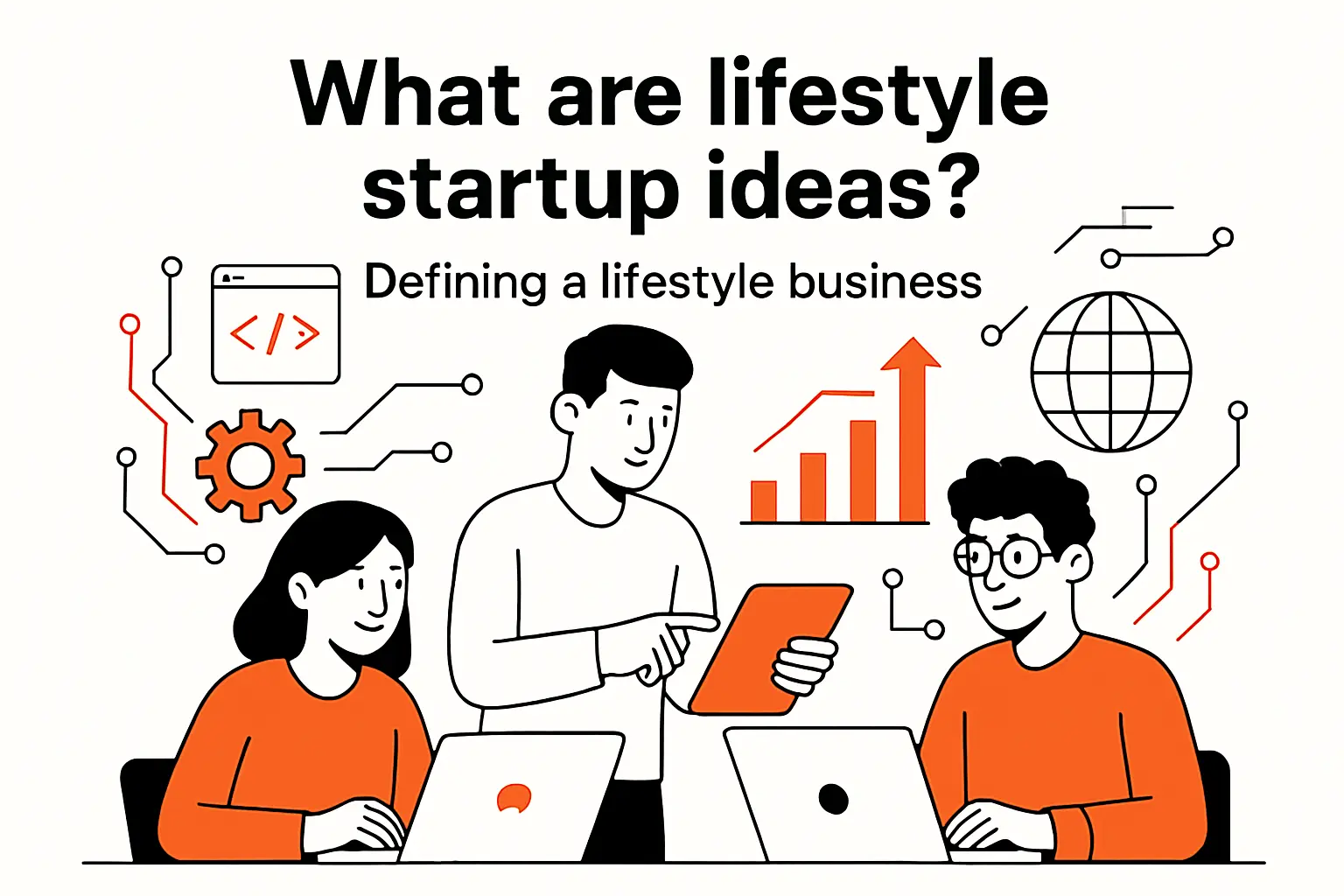
Lifestyle startup ideas are business concepts chosen as much for the life they enable as for the revenue they generate. That may sound sentimental, but in practice it’s a set of design constraints: control over hours, control over clients, and a path to recurring income that doesn’t demand constant reinvention.
1. Lifestyle business meaning: income that supports your preferred way of life
A lifestyle business, as we define it, is a company where the founder sets a “life spec” first—daily schedule, travel goals, family commitments, health routines—and then engineers the business around those requirements. The revenue target is real, but it is subordinate to sustainability. When founders get this right, the business becomes a tool, not an identity.
From our vantage point, the most important move is to treat time as a cost on the profit-and-loss statement, even if it doesn’t show up in accounting software. If a new offer adds revenue but also adds after-hours support, context switching, and emotional labor, that offer is more expensive than it looks. In other words, lifestyle entrepreneurship is less about “escaping work” and more about insisting on a healthier relationship with work.
2. Core characteristics: passion-driven, owner-operated, flexible, and often low startup cost
Most lifestyle businesses share a handful of characteristics we see repeated across industries. First, they’re owner-operated in the early days, which allows fast iteration and tight quality control. Second, they’re often niche by design: founders choose a specific audience where trust can travel quickly through referrals. Third, they emphasize flexibility over headcount; founders prefer systems, templates, and automation rather than hiring a sprawling team.
Low startup cost is common, but it’s not the point. The real advantage is low complexity. A one-person consultancy with a clean proposal process and a narrow service menu can outperform a larger agency that constantly custom-quotes and re-scopes. Likewise, a single digital product with strong positioning can beat a catalog of mediocre offers. Passion matters, yet we’ve learned to interpret “passion” pragmatically: it’s the stamina to keep improving the same offer for a long time without boredom winning.
3. Why lifestyle businesses are rising: remote work, digital platforms, and the entrepreneurship boom
Remote work normalized a new operating reality: many people can produce value without living near a corporate office, and that same infrastructure makes solo entrepreneurship easier. In research on remote work potential, McKinsey found that 20 to 25 percent of workforces in advanced economies could work from home in the range of three to five days a week, which helps explain why digital-first small businesses now feel less like an eccentric choice and more like a logical extension of modern work.
Platforms also lowered the “distribution tax.” A decade ago, selling a template required a shopping cart, an email service, a file delivery mechanism, and plenty of duct tape. Now, creators can ship through marketplaces, link-in-bio tools, and payment platforms with minimal friction. Meanwhile, software infrastructure has become rent-able and modular, letting founders launch real products without owning servers or negotiating enterprise contracts.
Market overview matters here, because these lifestyle businesses increasingly ride on cloud platforms rather than building everything from scratch. Gartner forecasts that worldwide end-user spending on public cloud services is expected to total $723.4 billion in 2025, and we see that growth showing up in the everyday reality of small teams shipping surprisingly capable products.
How to choose the right lifestyle startup idea for your schedule and goals
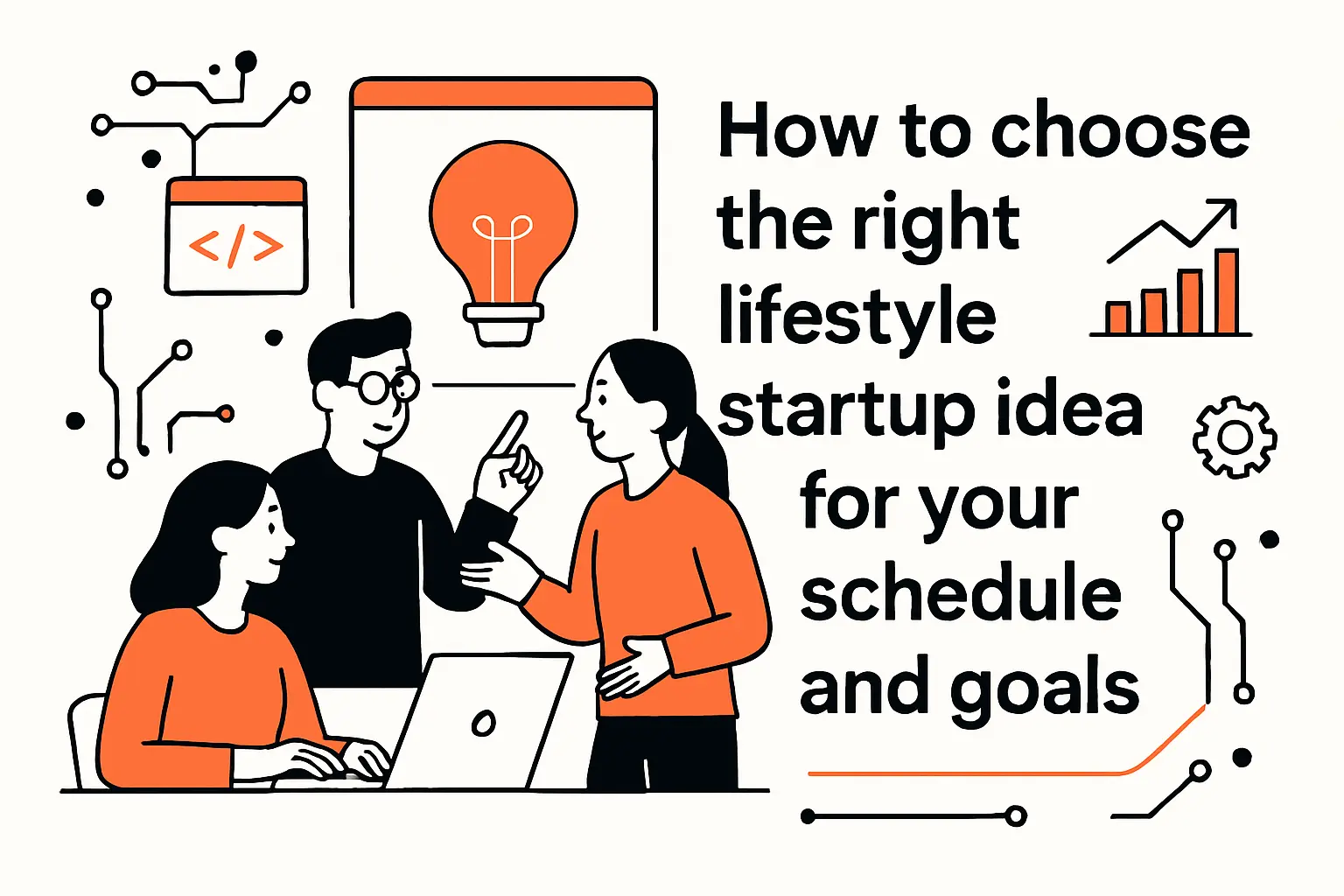
Choosing a lifestyle startup idea is less about brainstorming clever concepts and more about matching constraints. The best idea for you is the one that still works on your worst week: when your energy is low, your kid is sick, or you’re traveling with spotty Wi-Fi.
1. Align your idea with your skills, interests, and the lifestyle you want to protect
Alignment starts with an honest inventory: what you can do reliably, what you enjoy enough to repeat, and what you refuse to sacrifice. For instance, a founder who values uninterrupted mornings might avoid offers that require live calls across time zones. Similarly, someone who wants to take long travel breaks should avoid models where support tickets pile up daily unless they can design around that load.
In our experience, the most sustainable “skills to monetize” are not trendy skills, but durable ones: writing that clarifies decisions, analytics that reduce uncertainty, design that removes friction, and engineering that automates labor. Interests matter too, but we push founders to separate “what you like consuming” from “what you like producing.” Plenty of people love fitness content; fewer love writing training plans, updating programs, and answering anxious customer questions.
2. Choose a model: service-based income vs product-based passive income potential
Service businesses tend to monetize faster because they sell time, expertise, and outcomes directly. Product businesses can scale more gracefully, yet they usually demand a longer runway, sharper positioning, and more deliberate distribution. In practice, we often recommend a hybrid path: start with a service to learn the market, then turn repeated work into a product.
What looks like “passive income” is usually deferred labor: you work intensely upfront to build a product and a funnel, then you maintain it through updates, marketing, and customer support. The win is not zero work; it’s predictable work. A well-built digital product can be updated in planned batches, whereas service work can explode unpredictably if boundaries aren’t clear.
3. Plan realistic runway: typical startup costs, timelines, and starting part-time first
Runway planning is the difference between a calm launch and a frantic one. Rather than fantasizing about quitting immediately, we prefer a phased plan: validate demand while employed, sell a small pilot offer, and only then expand. This approach forces clarity because the market is not impressed by your intention; it only responds to your offer.
Part-time starts also pressure-test your operations. If you can deliver value in tight windows—without missing deadlines or burning out—you’ve likely chosen a model compatible with a lifestyle business. If everything breaks the moment you have less time, the problem is rarely discipline; it’s usually that the offer requires too much customization or too many synchronous interactions.
4. Tools and systems that keep lifestyle businesses manageable as you grow
Systems are not a corporate obsession; they’re the foundation of founder freedom. The first systems we advocate are boring but powerful: a single source of truth for tasks, a standardized intake form, a repeatable proposal template, and a “definition of done” checklist for delivery. Those pieces reduce decision fatigue and prevent work from multiplying invisibly.
Operational primitives we keep coming back to
- Intake forms that collect requirements up front, reducing endless back-and-forth and protecting deep work time.
- Automated scheduling rules that limit calls to specific days, preventing the calendar from turning into confetti.
- Templated delivery checklists that ensure quality stays consistent even when your energy does not.
- Client or customer portals that centralize updates, files, and progress so communication doesn’t sprawl across inboxes.
From a software perspective, we treat every repeated manual step as a candidate for automation. When founders say they want “more freedom,” they often mean “fewer tiny obligations.” Removing those tiny obligations is where tooling pays off.
Digital products and information marketing lifestyle startup ideas
Digital products are attractive because they decouple income from hours, but they demand disciplined positioning. A template that solves a specific workflow for a clear audience often beats a “mega course” that tries to teach everything to everyone.
1. Create digital products: templates, ebooks, and online courses
Templates work because they compress expertise into a reusable artifact. We’ve seen Notion workspaces sold for content calendars, CRMs, hiring pipelines, and client onboarding. What makes them succeed is not the tool; it’s the promise. A template should reduce anxiety and save time, ideally producing a visible “before vs after” in the customer’s first hour.
Ebooks can perform similarly when they’re actionable rather than inspirational. A strong ebook is not a memoir; it’s a field guide with scripts, checklists, and examples. Courses are the highest leverage but the highest expectation: customers want transformation, not lectures. For lifestyle founders, we recommend building courses that rely on asynchronous delivery and structured community rather than endless live cohorts, because live cohorts often reintroduce the very scheduling constraints founders wanted to escape.
2. Sell printables and downloadable resources that can be created once and sold repeatedly
Printables—meal planners, habit trackers, budgeting sheets, classroom resources—are often dismissed as small money. We disagree. They are a training ground for learning positioning, SEO, and conversion design, and they can become meaningful when bundled into themed packs and distributed through the right channels.
The technical edge here is packaging and delivery. A clean checkout, instant file delivery, license clarity, and email onboarding can lift conversions without changing the product itself. On the backend, versioning matters: customers will find broken links and outdated files faster than you think. We like building lightweight “download hubs” where customers can always retrieve the latest version, because it reduces refund requests and support churn.
3. Launch a membership program with recurring monthly or annual revenue
Memberships work when they deliver ongoing value that customers can’t easily replicate alone: feedback loops, accountability, curated resources, or community access. The mistake we see is treating a membership like a content landfill. More content rarely equals more retention; what keeps members is progress and belonging.
From an engineering and operations standpoint, memberships are a retention game. Access control must be reliable, billing must be graceful about failed payments, and onboarding must get members to the “aha moment” quickly. We also encourage founders to build a simple content cadence that is sustainable: one live Q&A per month, one template drop, one community prompt—then repeat. The goal is not to overwhelm; it’s to become a dependable rhythm in the customer’s life.
Service-based lifestyle startup ideas you can run from anywhere
Service businesses are often the fastest path to cash flow. They also teach you what customers actually pay for, which is rarely what founders assume in their first draft of an offer.
1. Freelancing and consulting: contract work built around specialized expertise
Freelancing becomes a lifestyle business when it stops being generic. “Web developer for hire” is a commodity; “conversion-focused landing pages for local med spas” is a niche with clearer outcomes. Specialization reduces sales friction because prospects can see themselves in your positioning. It also improves your delivery speed because the work patterns repeat.
Consulting is similar, but the deliverable is often clarity: audits, roadmaps, strategy workshops, or implementation plans. In our world, a strong consulting offer might be a product discovery sprint that outputs a prioritized backlog, wireframes, and an MVP plan. The founder wins twice: they get paid to learn the market, and they generate reusable frameworks that can later become a product.
2. Virtual assistant services: remote admin support for entrepreneurs and teams
Virtual assistant services are underestimated because people conflate them with generic admin tasks. The best VAs build micro-specializations: podcast guest outreach, inbox triage with SOPs, CRM cleanup, or appointment setting for a specific industry. Those specialties make pricing easier and delivery smoother.
Operationally, VA businesses thrive on clear boundaries and documented processes. The work is often asynchronous, which supports flexible schedules, but only if clients know what to expect. We like a client portal approach here: tasks submitted through a form, tracked in a shared board, and delivered with predictable status updates. The portal is not “extra”; it is how you prevent your business from being swallowed by scattered messages.
3. Social media marketing agency and strategy services for businesses that need consistent content
Social media work can either be liberating or exhausting, depending on how it’s packaged. If you sell “daily posting on every platform,” you’ve built yourself a content treadmill. If you sell a content system—strategy, batching, templates, and performance reviews—you can deliver higher value with fewer chaotic demands.
From a technical angle, the advantage is measurement. Founders who treat social as an art project often struggle; founders who treat it as a funnel do better. We recommend building lightweight dashboards that pull in key metrics and tie them to business outcomes like leads, bookings, or sales. When results are measurable, renewals become easier, and scope creep becomes easier to resist.
4. Hands-on and professional service options: notary work, videography, audio editing, coaching, and tutoring
Not every lifestyle business is purely digital. Notary services, videography, and coaching can be excellent lifestyle models when you control the schedule and standardize delivery. The hidden lever is productization: packages, clear pricing, defined turnarounds, and a narrow target market.
Coaching and tutoring become sustainable when you protect your calendar. Instead of selling unlimited access, consider structured programs with clear start and end points, asynchronous check-ins, and an optional community layer. For audio and video editing, we’ve seen lifestyle operators thrive by specializing in a format (short-form clips, podcast episodes, webinar repurposing) and then building repeatable workflows with templates for intros, captions, and file naming conventions. The craft stays creative, while the operations become predictable.
Ecommerce lifestyle startup ideas: online stores, handmade goods, and fulfillment models
Ecommerce can be lifestyle-friendly, but only if logistics are designed intentionally. Inventory, returns, and customer service can quietly consume the freedom you were trying to buy.
1. Handmade and made-to-order goods: building a small brand on marketplaces or your own store
Handmade brands win on story, quality, and consistency. Marketplaces can provide early discovery, while a standalone store gives you control over customer relationships and margins. The lifestyle advantage comes from limiting SKUs and focusing on repeatable production, not infinite customization.
As market context, global demand is clearly present: Statista reports global retail e-commerce sales reached an estimated six trillion U.S. dollars, and even a tiny slice of that activity can support a small, well-positioned brand. The founder challenge is to build a brand identity strong enough that customers seek you out rather than comparison-shop purely on price.
2. Dropshipping: how the fulfillment model works and what it does not solve
Dropshipping is often sold as “no inventory, no problem,” but the truth is sharper: it removes warehousing while introducing supply-chain opacity. If your supplier ships late, you own the angry customer. If product quality is inconsistent, your brand is the one that suffers. In short, dropshipping is a fulfillment choice, not a business model.
We advise founders to treat dropshipping like a marketing and trust business. The differentiator must be audience, curation, or expertise, because the products are rarely defensible. A lifestyle-optimized dropshipping operation also needs automation: order routing, customer notifications, and refund workflows. Without those systems, founders end up doing manual customer service—precisely the kind of always-on labor that breaks lifestyle goals.
3. Print-on-demand merchandise and niche subscription box businesses
Print-on-demand can be a lifestyle-friendly way to monetize a niche identity—local pride, a hobby community, or a creator brand—because it reduces inventory risk. The trap is treating merchandise as the core product when the real value is the brand. Merchandise performs best as an extension of an existing audience or a tightly defined subculture.
Subscription boxes can produce recurring revenue, yet they bring operational complexity: sourcing, packing, shipping, churn management, and customer support. For founders who still want the model, we recommend simplifying the box concept so it’s repeatable, and investing early in customer communication. Shipping delays are survivable when customers feel informed; silence is what triggers cancellations and chargebacks.
4. Eco-friendly and sustainable product stores built around a lifestyle aesthetic
Eco-friendly commerce is not just a product choice; it’s a trust contract. Customers ask hard questions about sourcing, materials, and packaging, and they notice when the story doesn’t match the reality. A lifestyle founder can thrive here by choosing a narrow theme—refillable home goods, minimalist travel gear, low-waste personal care—and becoming a curator with standards.
From a systems standpoint, the operational edge is transparency. Product pages should include clear policies, care instructions, and shipping expectations. On the backend, returns and replacements need a consistent playbook. When sustainability is part of the brand promise, customer support becomes brand support, and that’s worth engineering carefully rather than improvising in email threads.
Creator-led lifestyle startup ideas: blogging, podcasting, and influencing
Creator businesses can be wonderfully lifestyle-aligned because they reward consistency more than constant availability. Still, creators often underestimate how much “business” sits behind the content: operations, deal flow, contracts, and analytics.
1. Start a blog in a specific niche and monetize with affiliate links, ads, and brand partnerships
Blogging remains a strong lifestyle model because it compounds. A useful article can drive traffic for years, and the best blogs become libraries of trust. The key is niche selection: “travel” is too broad, while “carry-on packing systems for frequent business travelers” has a clearer audience and intent.
Monetization typically blends affiliates, display ads, and partnerships, but the long-term leverage comes from owning the relationship through email. On the technical side, blogging is a performance and data problem: site speed, search visibility, structured content, and conversion flows. We’ve watched creators double revenue not by writing twice as much, but by improving how readers move from article to newsletter to offer.
2. Build a podcasting business with multiple revenue streams beyond sponsorships
Podcasting is intimate, which is why it sells. Listeners give you their commute, their chores, their gym session—time that feels personal. Sponsorships are the obvious revenue stream, but lifestyle-friendly podcast businesses often diversify: listener-supported memberships, premium feeds, digital products, live workshops, and consulting tied to the show’s niche.
Operationally, the win comes from batching. Recording multiple episodes in a single session protects the calendar. Editing workflows can be templated, and show notes can be standardized. From our perspective, the best podcast “tech stack” is not complicated; it’s consistent: an intake form for guests, an asset folder structure, and a repeatable publishing checklist that reduces the odds of last-minute chaos.
3. Become an influencer or creator: content consistency, engagement, and platform strategy
Influencing is often marketed as effortless, but the serious operators treat it like a media business. The work is creative, yet the advantage comes from systems: content calendars, repeatable formats, and feedback loops with the audience. Engagement is less about going viral and more about building recognizable patterns that make followers feel “this is for me.”
Distribution risk is real because platforms change. That’s why we encourage creators to build an owned channel—email, community, or membership—so the business doesn’t disappear when reach dips. Industry data also suggests earnings concentrate heavily at the top: a CreatorIQ report noted that the top 10% of creators received 62% of total ad payments, which is a sober reminder that consistency alone isn’t enough; creators need a monetization plan they control.
Software lifestyle startup ideas: apps, SaaS, and recurring revenue

Software is our home turf, and it can be the ultimate lifestyle lever: sell a digital system once, deliver value continuously, and let recurring revenue fund a calmer life. Yet software can also become an anxiety factory if the product scope is too broad or support demands are uncontrolled.
1. Develop apps as an indie hacker by solving narrow, high-value user problems
Indie apps succeed when they feel like a sharp tool, not a platform. A simple example is an app that converts messy spreadsheets into clean invoices for a niche profession, or a scheduling tool tailored to a specific kind of appointment. Narrow scope reduces bugs, reduces support, and increases the odds of finishing.
In our experience, the indie hacker advantage is speed and proximity to users. Instead of building a massive roadmap, founders can ship a core workflow, watch usage, and iterate. The lifestyle angle comes from choosing problems that don’t demand constant moderation—compare a B2B utility app to a social product with complex community issues. Calm businesses are designed, not wished into existence.
2. Build a SaaS product designed for monthly recurring revenue and long-term customer retention
SaaS can be lifestyle-friendly because it creates predictable income, but only if retention is engineered. That means solving a recurring problem tied to an ongoing workflow: payroll, scheduling, client communication, compliance checklists, content production, or reporting. If the problem is “one-and-done,” subscriptions feel forced and churn rises.
Technically, a lifestyle SaaS needs a clean core: authentication, permissions, billing, and auditability. Multi-tenancy should be simple, and feature flags should allow safe experimentation without breaking production. Just as importantly, observability matters. When founders can see where users drop off, they can improve onboarding without guessing, which is how you reduce support load and protect your calendar.
3. Package software tools as digital products using no-code or lightweight development approaches
Not every software lifestyle startup requires a full custom build. Plenty of founders can ship valuable “software-like” products through no-code tools, scripts, and integrations: automated reporting dashboards, lead routing systems, onboarding sequences, or internal tools for niche businesses.
The lifestyle advantage is speed and maintainability. A lightweight approach can reduce technical debt and make it easier to keep the product stable without a full engineering team. Still, we encourage founders to be honest about risk: no-code can become fragile at scale, especially when workflows grow complex. The goal is to ship quickly, validate demand, and then invest in custom software only where it meaningfully improves reliability, margins, or user experience.
4. Monetization add-ons: subscription tiers, recurring commissions, and productized services
Monetization design is where lifestyle businesses either stabilize or spiral. Subscription tiers can work when each tier matches a meaningful step up in value, not just a random pile of features. Recurring commissions can work when you’re embedded in a transaction flow, such as a booking or payments layer. Productized services—like a monthly optimization review—can complement software by giving customers confidence and giving founders predictable delivery work.
From our viewpoint, the best monetization add-ons reduce founder stress. That often means fewer bespoke enterprise deals and more standardized self-serve upgrades. When the product can sell itself through clear onboarding, transparent pricing, and measurable outcomes, the founder gets to spend time improving the system rather than constantly negotiating it.
How TechTide Solutions supports lifestyle-driven founders with custom software
We built TechTide Solutions around a simple belief: software should buy founders freedom, not buy them more work. That philosophy changes how we scope products, how we design architectures, and how we define success after launch.
1. Product discovery and roadmap planning to match the business model to customer needs
Product discovery is where lifestyle businesses are protected or destroyed. A founder might have a compelling vision, but the wrong roadmap can create a monster: too many features, too many edge cases, too much support. Our discovery process focuses on the smallest coherent product that delivers a complete outcome for a specific user.
How we keep scope honest
- First, we map the user journey from trigger to outcome, then strip anything that does not move the user forward.
- Next, we define the data model early, because unclear data becomes unclear features and endless rework.
- Then, we identify what must be automated at launch to protect founder time, such as billing, confirmations, and access control.
- Finally, we write a roadmap that prioritizes retention drivers over vanity features, because churn is the silent killer of lifestyle goals.
In plain language, we would rather ship a smaller product that stays stable than a larger product that drains the founder through constant firefighting.
2. Custom web and mobile app development for MVPs, automation, and customer self-service
MVP development is not about building something flimsy; it’s about building something focused. Our team typically emphasizes self-service flows: onboarding, account management, booking, payments, and support knowledge bases. Self-service is not a “nice to have” in a lifestyle business—it is the mechanism that prevents your customer base from turning into an endless stream of pings.
Automation is another leverage point. When a customer action triggers reliable workflows—welcome emails, receipt delivery, calendar updates, CRM tagging, analytics events—the founder gets out of the loop. That is how lifestyle businesses scale without adding headcount or surrendering evenings to admin tasks.
3. Scalable SaaS engineering and integrations for payments, analytics, email marketing, and operations
Integrations are where lifestyle founders often win quickly. Payments, email marketing, analytics, and operations tools can combine into a cohesive “business machine” when the glue code is designed well. Our engineering approach favors modularity: clear boundaries between billing, core product logic, and messaging so that changes remain safe and understandable.
Reliability also matters more than founders expect. A SaaS product that occasionally fails at login or checkout doesn’t just lose money; it creates support debt. On the other hand, a stable product can run quietly for weeks, which is the dream for lifestyle entrepreneurs. For ecommerce and retail-adjacent founders, we watch the rise of AI-driven customer interactions closely; Salesforce data reported in Reuters noted a 42% increase in usage of AI-powered chatbots during a major shopping period, which reinforces a broader pattern we see: customers increasingly expect instant self-service, and software can meet that expectation without forcing founders to be always on.
Conclusion: Turning lifestyle startup ideas into a sustainable business
Lifestyle businesses are not “accidental” wins. They are designed through deliberate constraints: fewer offerings, clearer promises, tighter systems, and technology that absorbs repeatable labor.
1. Start with a clear target audience and build a simple offer that delivers real value
Clarity is the first competitive advantage. A lifestyle founder should be able to say who the offer is for, what outcome it produces, and what it replaces in the customer’s life. When the promise is simple, marketing becomes simpler, delivery becomes faster, and word-of-mouth becomes more likely.
From our experience, real value is often a reduction: fewer steps, fewer tools, fewer decisions, less anxiety. A simple offer that reliably removes a headache can outperform a complex offer that theoretically does more. If you can describe your product or service without a long feature list, you are usually closer to something people will actually buy.
2. Systemize early so the business supports your lifestyle instead of consuming it
Systemizing early is not premature optimization; it is lifestyle insurance. The first systems should protect your time: onboarding, scheduling boundaries, delivery checklists, and self-service customer flows. As revenue grows, the temptation is to say yes to everything, but lifestyle businesses are built by saying no with discipline and then building a repeatable engine behind what remains.
Looking ahead, the question we’d ask is simple: if your business doubled its customers next month, would your life get better—or would your calendar collapse? If the honest answer is “collapse,” what is the next system, automation, or product constraint you’re willing to implement this week to protect the life you’re trying to build?