
Market pulse: McKinsey estimates IoT could enable $5.5 trillion to $12.6 trillion in value globally by 2030, and that scale changes every platform decision we make for clients. At TechTide Solutions, we treat “open source IoT platform” as a practical spectrum. Sometimes it is a single product. More often, it is a composable stack that we own end to end. That framing keeps us honest about cost, risk, and operations.
Most teams start by chasing features. We start by tracing failure modes. Device identity breaks first. Observability fails next. Data contracts drift quietly. Then someone asks for multi-tenant billing, and the platform groans.
Open source helps because it is inspectable and adaptable. Yet it also demands leadership. Someone must curate components, set upgrade policy, and own the “paved road.” When we do that well, we get leverage that closed platforms rarely match. When we do it poorly, we inherit a science project.
How to Choose the best open source iot platform for Your Project
Market pulse: IDC forecasted worldwide IoT spending at $805.7 billion in 2023, so “good enough” platform choices now become portfolio-level bets later. Our selection method is blunt on purpose. We eliminate options that cannot survive real operations. Only then do we debate developer ergonomics.
1. Define your device scope and lifecycle needs for a best open source iot platform
Device scope is not a count problem. It is a diversity problem. A fleet of identical sensors behaves politely. A mixed fleet behaves like an unruly city.
Lifecycle needs drive the platform shape. Provisioning, credential rotation, and decommissioning must be routine. Otherwise, every “small change” becomes an incident. In our work, lifecycle gaps create the longest outages.
What We Write Down Before We Pick Anything
First, we document the device story in plain language. Next, we translate it into platform contracts. That single exercise reveals hidden requirements fast.
- Connectivity reality: stable links, flaky links, or long offline windows
- Ownership model: internal fleet, customer-owned fleet, or shared responsibility
- Update constraints: safe rollout expectations and rollback expectations
2. Confirm target deployment model: edge-only, cloud, or hybrid best open source iot platform
Edge-only architectures reward simplicity. They also punish poor automation. Cloud-first architectures reward elasticity. They punish sloppy data governance.
Hybrid is where most serious IoT lands. Gateways handle local resilience. Cloud handles global coordination. That split forces decisions about which logic lives where.
We like to decide “what must be local” early. Safety interlocks stay close to machines. Latency-sensitive control stays near the line. Everything else competes for cloud budget.
A Pattern We Reuse Often
We push filtering and buffering to the edge. We keep policy, identity, and analytics centralized. That balance reduces bandwidth surprises and keeps auditability strong.
3. Map required protocols and data formats before selecting a best open source iot platform
Protocol choices are rarely neutral. They encode assumptions about reliability and message shape. The platform must embrace your reality, not your wish.
In brownfield factories, gateways often speak industrial dialects. In consumer products, phones become accidental gateways. Each path changes how we onboard and debug devices.
We also map data formats as contracts. A stable schema is operational calm. A drifting schema is slow chaos. Open source does not fix schema drift by itself.
- Northbound contract: event naming, units, and timestamp rules
- Southbound contract: command vocabulary and acknowledgement rules
- Intermediary contract: gateway normalization responsibilities
4. Evaluate extensibility: plugins, rules engine, and custom integrations
Every IoT program outgrows its first integrations. That is not a failure. That is success. The platform should welcome extension without forking core.
We look for clean boundaries. Connector frameworks matter. Rules engines matter. A reliable plugin story matters most of all.
In one logistics build, we started with simple geofence events. The client later needed customer-specific alert policies. A pluggable rules layer saved months.
Extensibility Signals We Trust
- Externalized rules: declarative policies, versioned, and testable
- Integration surface: stable APIs plus event hooks
- Upgrade posture: extensions survive core upgrades with minimal friction
5. Validate operational needs: monitoring, logging, and multi-tenant administration
Operations is where IoT platforms earn their keep. Devices fail silently. Networks degrade politely. Data pipelines break loudly.
We insist on first-class observability hooks. Logs must be correlated to device identity. Metrics must describe ingestion health and command success. Traces must show where latency hides.
Multi-tenant administration is also not optional in many businesses. Even internal programs behave like tenants. Without isolation, one noisy group punishes everyone.
- Operator workflow: triage, replay, and safe reprocessing
- Tenant workflow: quotas, role delegation, and self-service dashboards
- Audit workflow: who changed policy, and when it changed
6. Shortlist by community activity, documentation quality, and release cadence
Open source is a relationship. Community activity indicates future risk. Documentation quality predicts onboarding speed. Release cadence predicts security posture.
We read issue trackers like diaries, look for respectful maintainer behavior. We also look for clear contribution paths. Those social cues matter in production.
Finally, we test the “new engineer test.” If a capable developer cannot succeed quickly, the platform will become tribal knowledge. Tribal knowledge does not scale.
Quick Comparison of best open source iot platform
Market pulse: Statista projects global IoT revenue at $419.8 billion in 2025, which explains why so many “platforms” now look alike at first glance. Our comparison is biased toward production reality. We favor projects that survive upgrades, audits, and on-call pressure.
| Tool | Best for | From price | Trial/Free | Key limits |
|---|---|---|---|---|
| ThingsBoard CE | Fast dashboards and rules | Free (self-host) | Free | Ops load is yours |
| FIWARE | Context data and smart cities | Free (self-host) | Free | Integration work is heavy |
| EdgeX Foundry | Industrial edge integration | Free (self-host) | Free | Cloud layer is separate |
| Eclipse Hono | Device-to-cloud ingestion | Free (self-host) | Free | Build your UI layer |
| Eclipse Ditto | Digital twin patterns | Free (self-host) | Free | Modeling discipline required |
| Mainflux | Lean, API-driven platforms | Free (self-host) | Free | Less turnkey UX |
| Kaa | Device management foundations | Free (self-host) | Free | Design choices matter early |
| OpenRemote | Building automation style IoT | Free (self-host) | Free | Best in its niche |
| ChirpStack | Low-power network backends | Free (self-host) | Free | Not a full platform |
| Node-RED | Rapid integrations and flows | Free (self-host) | Free | Governance needs work |
Now, our broader “thirty picks” view. We include full platforms and the core building blocks we actually ship. This list reflects what we trust in real client systems.
- ThingsBoard Community Edition
- FIWARE
- EdgeX Foundry
- Eclipse Kapua
- Eclipse Hono
- Eclipse Ditto
- Eclipse Mosquitto
- Eclipse Kura
- Mainflux
- Kaa IoT Platform
- OpenRemote
- DeviceHive
- SiteWhere Community
- ThingsBoard Gateway
- Node-RED
- ChirpStack
- OpenThread
- Zephyr Project
- EMQX
- VerneMQ
- RabbitMQ
- NATS
- Apache Kafka
- Apache Pulsar
- Apache Flink
- InfluxDB
- Timescale
- Apache IoTDB
- Grafana
- Keycloak
Some teams will object to that mix. We sympathize. Yet scalable IoT is rarely “one repo.” It is a supply chain of open components. A best open source iot platform choice, for us, is the set you can operate calmly.
Top 30 best open source iot platform Options to Consider
Picking an open source IoT platform is less about “more features” and more about fewer broken handoffs. Our shortlist focuses on the jobs that make IoT real: onboarding devices, moving telemetry safely, acting on events, and proving uptime. We score each option on a 0–5 scale using a weighted model. Value-for-money and feature depth carry the most weight at 20% each. Ease of setup and integrations follow at 15% each. UX and performance matter, but stay practical at 10%. Security and trust get 10%, because IoT lives in hostile networks. Support and community also get 10%, since you will need answers at 2 a.m. Scores reflect typical self-hosted use, not best-case demos. When pricing is unclear or varies, we treat open source self-hosting as $0/mo. Limits are stated as hard caps when they exist, and as infrastructure-driven when they do not.
1. Best open source iot platform option 01
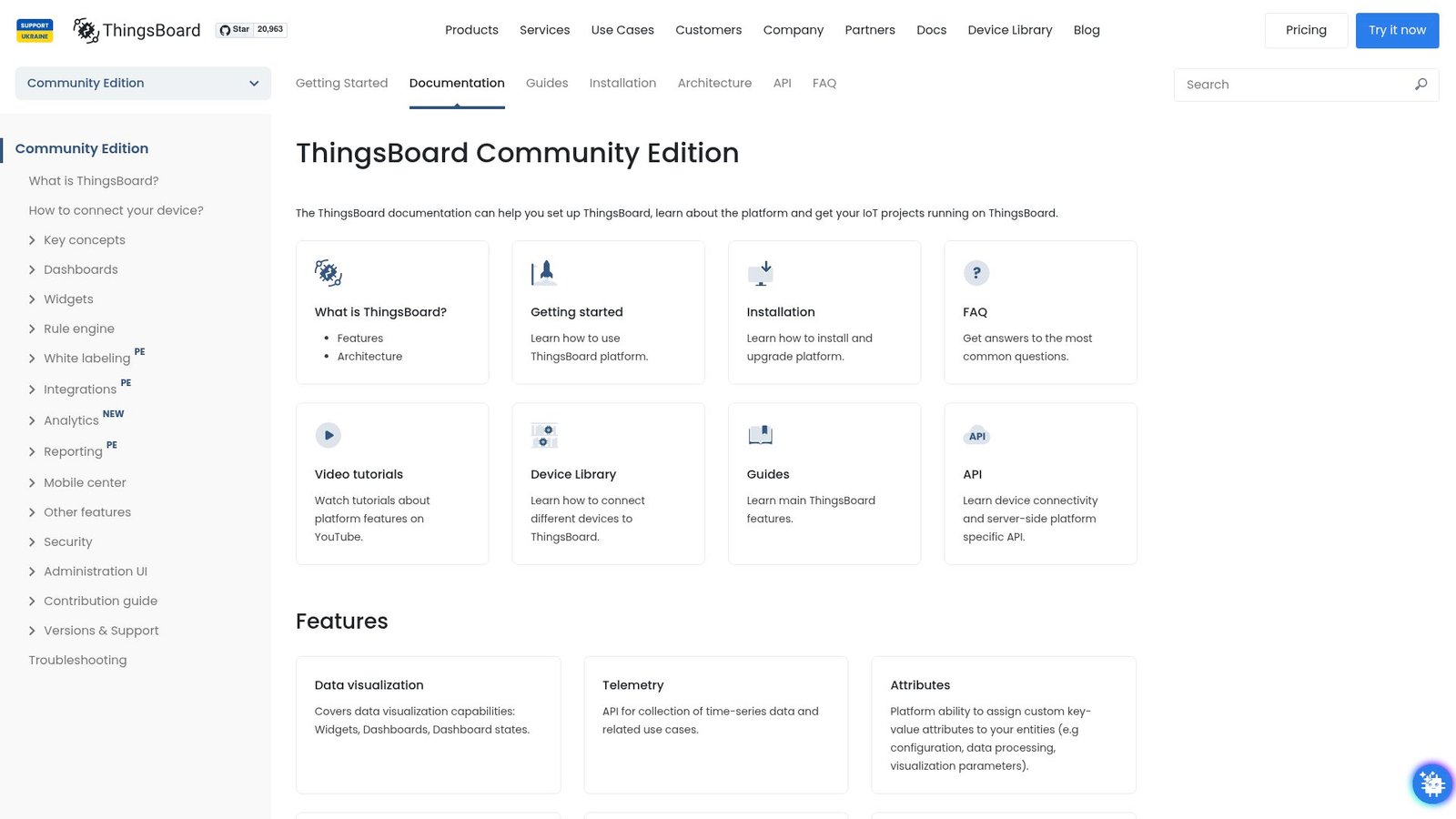
ThingsBoard Community Edition is built by the ThingsBoard team and a busy open-source community. The project shows up often in real deployments because it bundles the “whole loop” in one place. You get device management, telemetry storage, dashboards, and automation patterns under one roof. That saves teams from stitching five tools together.
Outcome: Turn device data into dashboards and alerts without building a platform first.
Best for: an SMB ops team, or a product team launching its first connected device.
- Rule chains for telemetry → trigger actions and tickets from one event stream.
- REST and MQTT workflows → cut glue code steps during onboarding and routing.
- Docker-first setup → reach first live dashboard in about 60–90 minutes.
Pricing & limits: From $0/mo to self-host. Trial: not applicable for the community edition. Limits: no enforced caps, but storage and broker throughput become your ceiling.
Honest drawbacks: The “all-in-one” design can feel heavy for tiny edge projects. Some advanced enterprise controls may require extra components or a paid edition.
Verdict: If you need a full IoT backend fast, this gets you from telemetry to action in days. Beats bare brokers at dashboards; trails best-in-class device update tools on OTA depth.
Score: 4.2/5 and .
2. Best open source iot platform option 02
FIWARE is steered by the FIWARE Foundation and a broad ecosystem of contributors. It is less a single product and more a set of interoperable components. The center of gravity is context data, not device dashboards. That makes it attractive for smart city and industrial “system of systems” work.
Outcome: Normalize messy device data into a shared, queryable context layer.
Best for: a public-sector integrator, or an enterprise data platform team.
- Context brokers and models → keep apps consistent while devices change underneath.
- Standardized APIs and data patterns → reduce custom integration steps across vendors.
- Composable architecture → see first end-to-end flow in about 1–2 days.
Pricing & limits: From $0/mo to self-host components. Trial: not applicable for core open source. Limits: practical caps depend on broker sizing and your chosen database stack.
Honest drawbacks: Setup can feel like assembling a toolkit, not installing a product. You may need strong architectural ownership to avoid “component sprawl.”
Verdict: If you are building an IoT data backbone, FIWARE helps you standardize faster over months. Beats monolith platforms at interoperability; trails ThingsBoard-style tools on out-of-box dashboards.
Score: 4.0/5 and .
3. Best open source iot platform option 03
EdgeX Foundry is a Linux Foundation LF Edge project with contributors across the edge ecosystem. It focuses on edge-first data collection and device service patterns. The design aims to keep hardware quirks close to the edge. Then it forwards clean data northbound to your cloud.
Outcome: Collect and normalize edge device data without custom gateway code.
Best for: an industrial edge team, or an OEM shipping gateway appliances.
- Device services pattern → reuse drivers and cut repeated protocol work.
- Northbound export services → save routing steps into MQTT, HTTP, or pipelines.
- Containerized microservices → get first device reading in about 2–4 hours.
Pricing & limits: From $0/mo to run on your edge hosts. Trial: not applicable for open source. Limits: service count and message volume depend on edge CPU and memory.
Honest drawbacks: The microservice layout adds operational overhead for small teams. UI expectations vary, since EdgeX is more plumbing than product.
Verdict: If you need reliable edge ingestion, this helps you stabilize protocols in weeks. Beats DIY gateways at structure; trails heavier platforms on built-in analytics screens.
Score: 3.8/5 and .
4. Best open source iot platform option 04
Kaa is developed by the Kaa team with open-source contributors around its platform core. It targets end-to-end device connectivity and management patterns. The project sits between “just a broker” and “full data platform.” That middle ground can be exactly what a product team needs.
Outcome: Stand up device connectivity and management without building everything yourself.
Best for: a connected product startup, or a small platform team at an OEM.
- Device management flows → onboard devices and keep configs consistent across fleets.
- API-driven integrations → cut manual steps when wiring apps and telemetry stores.
- Modular deployment → reach first device heartbeat in about 1–3 hours.
Pricing & limits: From $0/mo for self-hosting open source. Trial: not applicable for the community code. Limits: no hard caps, but databases and message queues set throughput.
Honest drawbacks: Documentation and examples can lag behind fast-moving versions. You may still need extra tools for dashboards and time-series analytics.
Verdict: If you want a pragmatic IoT backend core, Kaa helps you ship faster in weeks. Beats raw MQTT stacks at fleet basics; trails FIWARE on shared data modeling.
Score: 3.7/5 and .
5. Best open source iot platform option 05
OpenRemote is maintained by the OpenRemote team and its community contributors. It leans into “asset and building” style IoT, not just telemetry pipes. The platform emphasizes rules, dashboards, and device integrations in one package. That makes it feel closer to an application platform.
Outcome: Manage assets and automate real-world behavior from one control plane.
Best for: a building automation team, or an energy and facilities operator.
- Assets, rules, and insights → turn sensor data into actions and scheduled control.
- Protocol and API connectors → reduce custom adapter steps during integration work.
- Opinionated UI and model → get first control dashboard in about 1–2 hours.
Pricing & limits: From $0/mo to self-host. Trial: not applicable for the open-source core. Limits: scale depends on your database and message throughput configuration.
Honest drawbacks: If you only need message ingestion, it can feel like too much product. Some niche protocols may still require custom connector work.
Verdict: If you need operational dashboards and automation, this helps you deliver outcomes in days. Beats broker-only stacks at usability; trails EdgeX on deep edge driver patterns.
Score: 3.8/5 and .
6. Best open source iot platform option 06
Mainflux is built by its maintainers and an engineering-led open-source community. The project focuses on messaging, identity, and secure device connectivity. It is designed for teams who want clean primitives. You assemble the “platform” from those primitives.
Outcome: Create a secure IoT messaging backbone that you can extend safely.
Best for: a backend team, or a security-minded IoT product group.
- Identity and access patterns → keep device auth consistent across services.
- MQTT and HTTP integration paths → save steps when bridging into existing backends.
- Container-based deployment → see first authenticated publish in about 2–3 hours.
Pricing & limits: From $0/mo to self-host. Trial: not applicable for open source. Limits: no licensing caps, but your broker and database sizing will constrain volume.
Honest drawbacks: You will still need a dashboard layer and analytics tools. Teams without DevOps muscle may struggle with the multi-service setup.
Verdict: If you want a secure core you can own, this helps you ship reliably in weeks. Beats DIY auth at consistency; trails ThingsBoard on built-in visualization.
Score: 3.7/5 and .
7. Best open source iot platform option 07
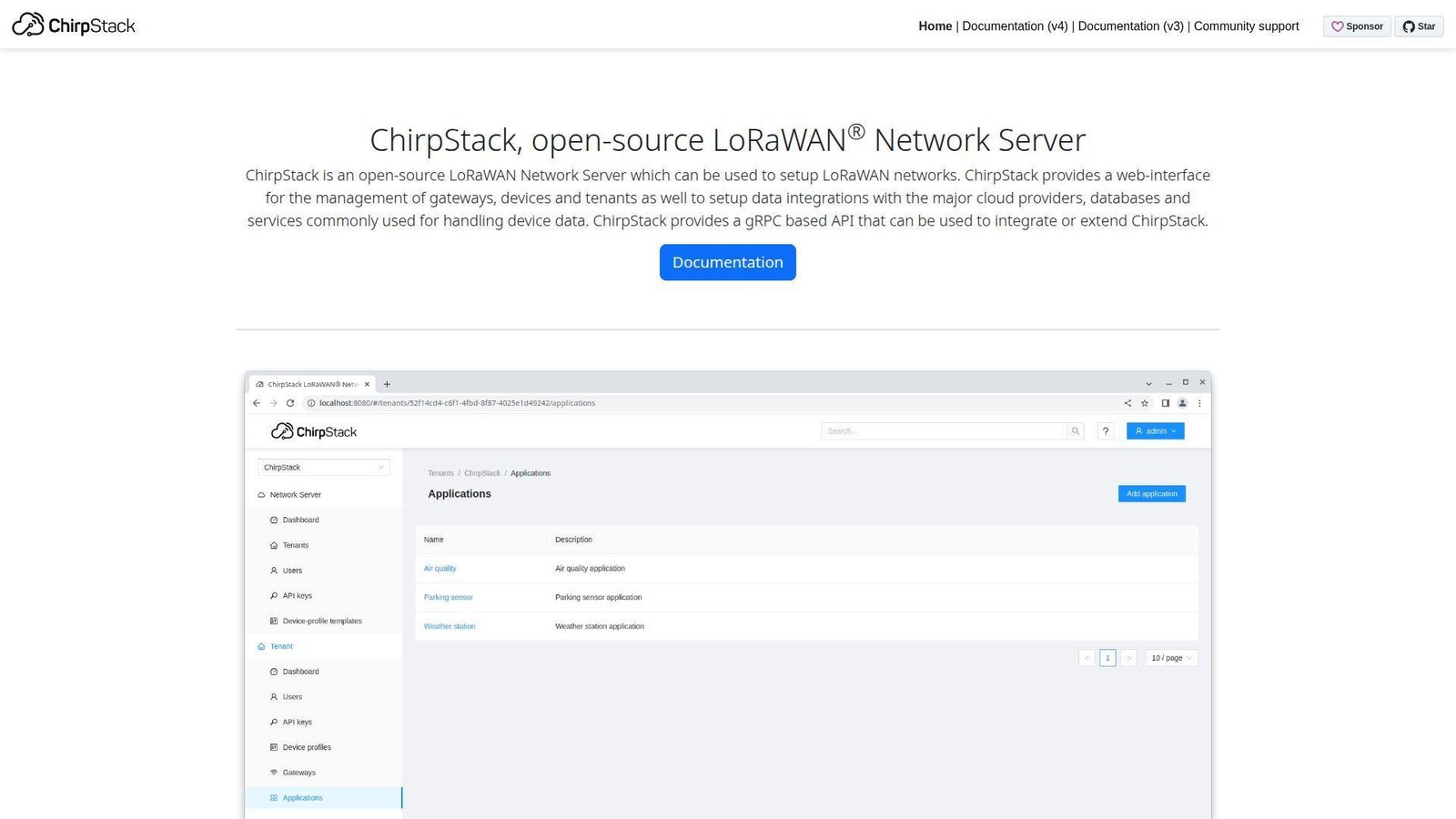
ChirpStack is led by its maintainers and a strong LoRaWAN community. It is purpose-built for LoRaWAN network and application server needs. The focus is clear: long-range, low-power devices. That clarity keeps complexity in the right places.
Outcome: Run your own LoRaWAN stack and own the device-to-app path.
Best for: a LoRaWAN network operator, or an IoT team deploying remote sensors.
- LoRaWAN network and app server → bring devices online without vendor lock-in.
- Integrations for common backends → cut handoff steps from uplink to storage.
- Self-hostable services → reach first uplink decode in about 1–2 hours.
Pricing & limits: From $0/mo to self-host. Trial: not applicable for the open-source stack. Limits: capacity depends on gateway load, database performance, and regional duty-cycle realities.
Honest drawbacks: It is not a general IoT platform for every protocol. You will need separate tooling for dashboards, rules, and device OTA updates.
Verdict: If your fleet is LoRaWAN, ChirpStack helps you stabilize ingestion in days. Beats general platforms at LoRaWAN focus; trails The Things Stack on some managed-network conveniences.
Score: 3.8/5 and .
8. Best open source iot platform option 08
The Things Stack Community Edition is now The Things Stack Sandbox (TTSS). It is driven by The Things Industries and an open community. It targets LoRaWAN connectivity with a strong emphasis on standards. The stack covers the core network workflows and integrations. It often fits teams who want LoRaWAN done “the right way.”
Outcome: Connect LoRaWAN devices and route data cleanly to your applications.
Best for: an IoT platform engineer, or a team operating LoRaWAN for a product.
- LoRaWAN-compliant network stack → reduce interoperability headaches across device vendors.
- Integration options for app delivery → save steps when pushing uplinks to services.
- Guided configuration paths → reach first successful join in about 1–3 hours.
Pricing & limits: From $0/mo to self-host community edition. Trial: not applicable for self-hosted open source. Limits: operational limits come from your infra and LoRaWAN region rules.
Honest drawbacks: Some advanced features may live in commercial offerings or add-ons. Operational concepts can be dense if you are new to LoRaWAN.
Verdict: If you need standards-first LoRaWAN, this helps you ship a stable network in weeks. Beats generic brokers at LoRaWAN semantics; trails ChirpStack on “lighter” deployments.
Score: 3.9/5 and .
9. Best open source iot platform option 09
Eclipse Ditto is an Eclipse Foundation project with contributors who care about digital twins. It focuses on representing devices as APIs, not just streams. The twin model becomes a contract between hardware and software. That can simplify teams that build many downstream apps.
Outcome: Expose devices as a consistent twin API, even when hardware changes.
Best for: a platform team, or an enterprise building multiple IoT applications.
- Digital twin abstraction → reduce app rewrites when device firmware evolves.
- Eventing and API hooks → save integration steps between telemetry and business services.
- Deployment-ready components → reach first twin update in about 3–6 hours.
Pricing & limits: From $0/mo to run self-hosted. Trial: not applicable for open source. Limits: scaling depends on your message bus, storage, and twin update rates.
Honest drawbacks: You still need ingestion and protocol handling upstream. The learning curve is real if your team has never modeled twins.
Verdict: If you want a clean device contract layer, Ditto helps you de-risk app growth in months. Beats ad-hoc JSON topics at consistency; trails ThingsBoard on turnkey dashboards.
Score: 3.8/5 and .
10. Best open source iot platform option 10
Eclipse Hono is an Eclipse Foundation project aimed at secure, scalable device messaging. It provides protocol adapters and a consistent API for downstream systems. The project is often paired with other components for a full platform. That pairing is the point, not a weakness.
Outcome: Standardize device ingestion across protocols and route data reliably.
Best for: a cloud platform team, or an industrial IoT group with mixed protocols.
- Protocol adapter approach → connect new device types without rebuilding ingestion logic.
- Consistent downstream APIs → cut steps when feeding stream processing and storage.
- Cloud-native deployment model → see first authenticated telemetry in about 4–8 hours.
Pricing & limits: From $0/mo to self-host. Trial: not applicable for open-source builds. Limits: throughput is shaped by your messaging layer and adapter scaling.
Honest drawbacks: It is not a dashboard-first platform, so you will assemble the UI. Setup can be heavy if you do not already run Kubernetes or similar.
Verdict: If you need ingestion you can scale and govern, Hono helps you stabilize pipelines in weeks. Beats broker-only stacks at protocol structure; trails EdgeX on edge-local device services.
Score: 3.7/5 and .
11. Best open source iot platform option 11
Eclipse Kapua is an Eclipse Foundation project focused on IoT gateway and device management foundations. It provides a modular server-side platform with core IoT services. Kapua often appeals to teams who want a base they can extend. It is more framework than “polished SaaS clone.”
Outcome: Build a customizable IoT management layer on open foundations.
Best for: a gateway vendor, or a team building a managed IoT service.
- Multi-tenant foundations → separate customers cleanly as you scale deployments.
- Extensible service APIs → reduce custom wiring steps for new modules.
- Modular setup path → reach first device registration in about 1 day.
Pricing & limits: From $0/mo to self-host. Trial: not applicable for open source. Limits: practical caps follow your database, message broker, and tenant design.
Honest drawbacks: The project can feel less “batteries included” than modern platform suites. You may need extra work for dashboards and current UX expectations.
Verdict: If you want a base you can shape, Kapua helps you own your stack in months. Beats one-off scripts at structure; trails ThingsBoard on quick wins and UI polish.
Score: 3.6/5 and .
12. Best open source iot platform option 12
Eclipse Kura is an Eclipse Foundation project centered on IoT gateways at the edge. It gives you a Java-based runtime and services for field devices. Kura is practical when you need local control and offline tolerance. It is less about cloud dashboards, and more about stable edge behavior.
Outcome: Run reliable edge gateway logic that survives bad networks.
Best for: an industrial gateway team, or an integrator shipping rugged edge boxes.
- Gateway runtime services → standardize local IO, buffering, and reconnection behavior.
- Connectivity and protocol tooling → cut steps when bridging field devices to cloud.
- Edge-first packaging → reach first local-to-cloud publish in about 2–6 hours.
Pricing & limits: From $0/mo for self-hosted deployments. Trial: not applicable for open source. Limits: device count depends on your gateway hardware and workload.
Honest drawbacks: Java and OSGi concepts can be a hurdle for some teams. If you want dashboards, you will still add a cloud layer.
Verdict: If you need dependable edge execution, Kura helps you get stable gateways in weeks. Beats pure cloud platforms at offline resilience; trails EdgeX on container-native modularity.
Score: 3.7/5 and .
13. Best open source iot platform option 13
Eclipse Leshan is an Eclipse Foundation project for LwM2M device management. It is not a “platform suite,” and that is its charm. Leshan focuses on a narrow, high-value job: manage constrained devices efficiently. It is best used as a building block inside a larger system.
Outcome: Manage constrained devices with LwM2M without reinventing the protocol.
Best for: an embedded team, or an IoT engineer standardizing device management.
- LwM2M server implementation → get device management right without custom protocol code.
- Clean APIs for integration → save steps when wiring into your backend services.
- Lightweight setup footprint → reach first device registration in about 2–4 hours.
Pricing & limits: From $0/mo to self-host. Trial: not applicable for open-source components. Limits: scaling depends on your chosen persistence, load balancing, and network conditions.
Honest drawbacks: You must provide your own dashboards and fleet workflows. LwM2M is powerful, but it is another concept stack to learn.
Verdict: If you need standards-based device management, Leshan helps you ship stable control paths in weeks. Beats ad-hoc HTTP polling at efficiency; trails Mender on full OTA update workflows.
Score: 3.5/5 and .
14. Best open source iot platform option 14
Eclipse hawkBit is an Eclipse Foundation project built for OTA software updates. It does one job with discipline: rollout management. hawkBit is often paired with a device agent and your existing IoT backend. That pairing lets you keep update concerns separate from telemetry concerns.
Outcome: Roll out firmware and software updates with control, not chaos.
Best for: an embedded fleet team, or a QA-driven organization managing staged releases.
- Rollout and targeting logic → reduce bricked devices by shipping updates in safe waves.
- Update APIs and agents ecosystem → cut manual steps in release and device tracking.
- Server setup patterns → reach first test rollout in about 4–8 hours.
Pricing & limits: From $0/mo to self-host. Trial: not applicable for open source. Limits: rollout scale depends on storage, bandwidth, and device agent behavior.
Honest drawbacks: hawkBit is not a full IoT platform, so you need other components. Integrating agents across diverse hardware can take real engineering time.
Verdict: If you need disciplined OTA rollouts, hawkBit helps you reduce risk in weeks. Beats homegrown update scripts at governance; trails Mender on end-to-end “fleet plus OTA” packaging.
Score: 3.6/5 and .
15. Best open source iot platform option 15
Fledge is an LF Edge project aimed at industrial edge data collection. It specializes in pulling from OT protocols and pushing northbound cleanly. The plugin approach keeps integrations modular. That matters when every site has different equipment.
Outcome: Bridge industrial data to modern systems without rewriting gateway software.
Best for: an OT-to-IT integration team, or a plant operations engineering group.
- Southbound plugin model → connect industrial protocols and reduce one-off gateway code.
- Northbound export plugins → save steps when sending data to MQTT or historians.
- Edge install workflow → get first sensor value flowing in about 2–5 hours.
Pricing & limits: From $0/mo to self-host. Trial: not applicable for open source. Limits: message rates depend on gateway hardware and the plugins you load.
Honest drawbacks: You will still need a cloud platform for dashboards and fleet controls. Some protocol plugins may require careful tuning for reliability.
Verdict: If you need industrial edge bridging, Fledge helps you connect sites in days. Beats generic agents at OT focus; trails EdgeX on breadth of device service patterns.
Score: 3.7/5 and .
16. Best open source iot platform option 16
EMQX is developed by the EMQX team with an active open-source community. It is best known as a high-performance MQTT broker, but it often becomes the heart of a platform. The tooling around rules and bridging can reduce extra middleware. Many teams start with EMQX when reliability becomes the bottleneck.
Outcome: Move IoT messages fast and reliably, even under messy client behavior.
Best for: a platform engineer, or an IoT team scaling beyond a basic broker.
- MQTT at scale features → keep connections stable while fleets grow.
- Bridging and rule-style routing → cut steps between topics and downstream systems.
- Quick start packages → reach first connected device in about 30–60 minutes.
Pricing & limits: From $0/mo for the open-source edition. Trial: not applicable for community builds. Limits: clustering and throughput depend on nodes, network, and storage choices.
Honest drawbacks: You still need device management and dashboards elsewhere. Some advanced enterprise governance features may sit outside the open core.
Verdict: If your pain is message reliability, EMQX helps you regain headroom in days. Beats Mosquitto at clustering; trails ThingsBoard on end-user dashboards and workflows.
Score: 4.0/5 and .
17. Best open source iot platform option 17
Eclipse Mosquitto is maintained under the Eclipse umbrella with long-running community trust. It is small, sharp, and predictable. Mosquitto does not pretend to be a full platform. Instead, it gives you a clean MQTT core you can embed anywhere.
Outcome: Get a dependable MQTT broker running with minimal overhead.
Best for: an embedded team, or a startup needing a simple broker today.
- Lightweight broker core → keep infrastructure small while devices still publish reliably.
- Standard MQTT compatibility → save steps when integrating diverse clients and libraries.
- Fast installation → reach first publish-subscribe loop in about 10–20 minutes.
Pricing & limits: From $0/mo to self-host. Trial: not applicable for open source. Limits: no license caps, but single-node performance and HA design are on you.
Honest drawbacks: Clustering and advanced routing require extra architecture work. You will also need separate tools for auth UX, dashboards, and device lifecycle.
Verdict: If you need MQTT basics without drama, Mosquitto helps you ship in hours. Beats heavier brokers at simplicity; trails EMQX on clustering and platform-style routing features.
Score: 3.8/5 and .
18. Best open source iot platform option 18
VerneMQ is maintained by its contributors and is known for Erlang-based reliability patterns. It is an MQTT broker designed with distribution and resilience in mind. The project often appeals to teams that want control over HA. Its strength is steady message delivery under load.
Outcome: Keep MQTT traffic flowing through failures with a broker built for resilience.
Best for: a backend team running HA MQTT, or a fleet operator with uptime targets.
- Distributed broker design → reduce downtime risk during node failures.
- Auth and plugin patterns → save steps when integrating custom identity systems.
- Ops-friendly setup → reach first HA proof in about 1–2 days.
Pricing & limits: From $0/mo to self-host. Trial: not applicable for open source. Limits: scaling depends on cluster design, storage choices, and client behavior.
Honest drawbacks: UI tooling is not the focus, so teams want good observability practices. Learning Erlang-flavored operational concepts can slow adoption for some groups.
Verdict: If you need HA MQTT without vendor lock-in, VerneMQ helps you stabilize in weeks. Beats Mosquitto at distribution; trails EMQX on turnkey rule routing and management UI.
Score: 3.8/5 and .
19. Best open source iot platform option 19
Node-RED is maintained by the OpenJS ecosystem and a huge community of flow builders. It is not a classic “IoT platform,” but it becomes one fast. The visual flow model turns integrations into something you can see. For prototypes and internal tooling, it is a cheat code.
Outcome: Automate IoT data flows and actions without writing a full middleware layer.
Best for: a solo maker, or an SMB team building internal IoT automations.
- Visual flows for events → turn telemetry into actions without custom services.
- Node ecosystem and connectors → save hours by reusing integrations and templates.
- Quick local deploy → reach first end-to-end automation in about 20–40 minutes.
Pricing & limits: From $0/mo to self-host anywhere. Trial: not applicable for open source. Limits: scale depends on runtime resources and how complex your flows become.
Honest drawbacks: Large deployments can turn into “spaghetti flows” without discipline. Security hardening is your job, especially on internet-facing instances.
Verdict: If you need fast integrations, Node-RED helps you go from idea to working flow in hours. Beats heavier platforms at speed; trails ThingsBoard on governance and fleet management depth.
Score: 4.3/5 and .
20. Best open source iot platform option 20
Home Assistant is driven by the Home Assistant project and its commercial steward, Nabu Casa. It is community-first, but the product experience is unusually cohesive. The platform shines in integrations and local control. Many people start for home use, then grow into serious automation.
Outcome: Unite devices and automations into one dependable control center.
Best for: a power user, or a small facilities team running smart spaces.
- Integration library depth → connect devices fast and avoid custom drivers.
- Automation engine and helpers → cut manual “if this then that” steps daily.
- Guided onboarding UX → reach first useful automation in about 30–60 minutes.
Pricing & limits: From $0/mo to self-host. Trial: not applicable for open source. Limits: scale depends on your hardware and how many integrations you run.
Honest drawbacks: It is optimized for “spaces,” not industrial fleets. Complex commercial IAM and audit needs may require extra layers.
Verdict: If you want automations that actually run, Home Assistant helps you deliver daily value in a weekend. Beats openHAB on onboarding ease; trails FIWARE on enterprise data architecture and modeling.
Score: 4.4/5 and .
21. Best open source iot platform option 21
openHAB is built by a long-running community with structured governance. The project has deep roots in home and building automation. It favors flexibility and a strong abstraction model. When you need to mix weird devices, that flexibility matters.
Outcome: Orchestrate diverse devices with rules that keep running for years.
Best for: a hobbyist with complex setups, or a small building automation operator.
- Item and binding model → keep device changes from breaking automations.
- Rules and scripting options → save steps when building rich control logic.
- Self-host workflows → reach first working rule in about 1–2 hours.
Pricing & limits: From $0/mo to self-host. Trial: not applicable for open source. Limits: capacity depends on host performance and binding load.
Honest drawbacks: The learning curve can be steeper than newer tools. UI polish varies by module, and some setups feel manual.
Verdict: If you value long-lived flexibility, openHAB helps you run stable automations for years. Beats Home Assistant at deep abstraction; trails it on beginner-friendly onboarding and defaults.
Score: 4.0/5 and .
22. Best open source iot platform option 22
openBalena is maintained by the balena community and is designed for device fleet operations. It focuses on deploying containerized apps to edge devices. The value is operational repeatability, not dashboards. For teams shipping gateways, that repeatability is everything.
Outcome: Push updates and manage edge apps across fleets with container discipline.
Best for: a hardware startup, or an OEM managing gateway software in the field.
- Fleet device management → reduce manual SSH sessions and configuration drift.
- Container-based deployments → save steps when releasing and rolling back software.
- Install-to-run path → reach first remote deployment in about 1 day.
Pricing & limits: From $0/mo to self-host openBalena. Trial: not applicable for open source. Limits: device counts depend on server sizing and network bandwidth.
Honest drawbacks: It is not a telemetry analytics platform, so you will add data tooling. Containerizing legacy apps can take real refactoring time.
Verdict: If you need repeatable edge deployments, openBalena helps you reduce ops pain in weeks. Beats DIY scripts at fleet hygiene; trails Mender on some OTA update specialization and artifact patterns.
Score: 3.8/5 and .
23. Best open source iot platform option 23
Mender is built by its maintainers and used widely as an open-source OTA update system. It targets secure, robust updates for embedded Linux devices. The design emphasizes rollback safety and artifact control. That is the difference between “update shipped” and “fleet survived.”
Outcome: Deliver reliable OTA updates with rollback safety and fleet visibility.
Best for: an embedded Linux team, or a product team with staged release needs.
- Update workflows with rollback → reduce downtime from bad releases.
- CI-friendly artifact pipeline → cut steps from build to deploy to verify.
- Deployable server and client → reach first update test in about 1 day.
Pricing & limits: From $0/mo to self-host open source. Trial: not applicable for community builds. Limits: bandwidth and storage define scale, plus device client behavior.
Honest drawbacks: It solves updates, not the entire IoT data plane. Some advanced fleet features may require careful configuration or non-core components.
Verdict: If updates keep you awake, Mender helps you ship safer releases in weeks. Beats hawkBit at end-to-end “client plus server” packaging; trails openBalena on container app deployment workflows.
Score: 3.9/5 and .
24. Best open source iot platform option 24
KubeEdge is a CNCF project focused on extending Kubernetes to the edge. It is not an IoT platform UI. Instead, it gives you a control plane story for edge workloads. Teams pick it when they want Kubernetes patterns outside the datacenter.
Outcome: Run and manage edge workloads with Kubernetes-style control and policies.
Best for: a platform team, or an enterprise standardizing edge compute.
- Edge workload orchestration → keep deployments consistent across sites and gateways.
- Kubernetes ecosystem leverage → save steps by reusing CI, policy, and tooling.
- Cluster-to-edge bootstrap → reach first edge workload in about 1–2 days.
Pricing & limits: From $0/mo to self-host. Trial: not applicable for open source. Limits: scale follows your cluster sizing, edge node capacity, and network stability.
Honest drawbacks: It assumes Kubernetes comfort, which not every IoT team has. Device protocol ingestion still needs separate components like brokers or edge services.
Verdict: If you want one ops model from cloud to edge, KubeEdge helps you standardize in months. Beats ad-hoc edge scripts at governance; trails EdgeX on device-centric services and protocol adapters.
Score: 3.8/5 and .
25. Best open source iot platform option 25
Zephyr RTOS is a Linux Foundation project with broad industry participation. It is a real-time OS, not a cloud platform. Still, it is often the foundation of IoT products. When the device firmware is unstable, no platform can save you.
Outcome: Build dependable device firmware that can talk securely to your platform.
Best for: an embedded engineer, or a product team shipping constrained devices.
- RTOS primitives and drivers → ship responsive firmware without reinventing core scheduling.
- Networking and security options → reduce steps when adding TLS and protocol support.
- Board support workflows → reach first sensor sample in about 1–2 days.
Pricing & limits: From $0/mo to use and ship. Trial: not applicable for open source. Limits: constraints are your MCU, RAM, power budget, and certification needs.
Honest drawbacks: It will not manage your fleet or store telemetry by itself. Hardware-specific debugging can still dominate timelines.
Verdict: If you need stable embedded foundations, Zephyr helps you reach reliable firmware in weeks. Beats rolling your own RTOS at maturity; trails Linux-based stacks when you need rich local compute.
Score: 3.7/5 and .
26. Best open source iot platform option 26
OpenWrt is a community-driven Linux distribution for routers and embedded devices. It is not an IoT platform, but it is a common IoT gateway substrate. You get package management, networking control, and a mature admin model. For edge gateways, that is the job.
Outcome: Turn cheap hardware into managed, secure gateways with reproducible configs.
Best for: a gateway builder, or an integrator deploying many small edge boxes.
- Package and config management → reduce “snowflake gateway” drift across deployments.
- Network tooling depth → save steps when setting VPNs, VLANs, and firewall rules.
- Flash-and-config path → reach first managed gateway in about 1–3 hours.
Pricing & limits: From $0/mo to use and distribute. Trial: not applicable for open source. Limits: storage and CPU on the gateway define what you can run.
Honest drawbacks: You must add your own IoT services like MQTT, OTA, and telemetry storage. Hardware compatibility varies, so procurement discipline matters.
Verdict: If your priority is gateway control, OpenWrt helps you harden deployments in days. Beats generic Linux images at router-grade tooling; trails KubeEdge on centralized workload orchestration patterns.
Score: 3.8/5 and .
27. Best open source iot platform option 27
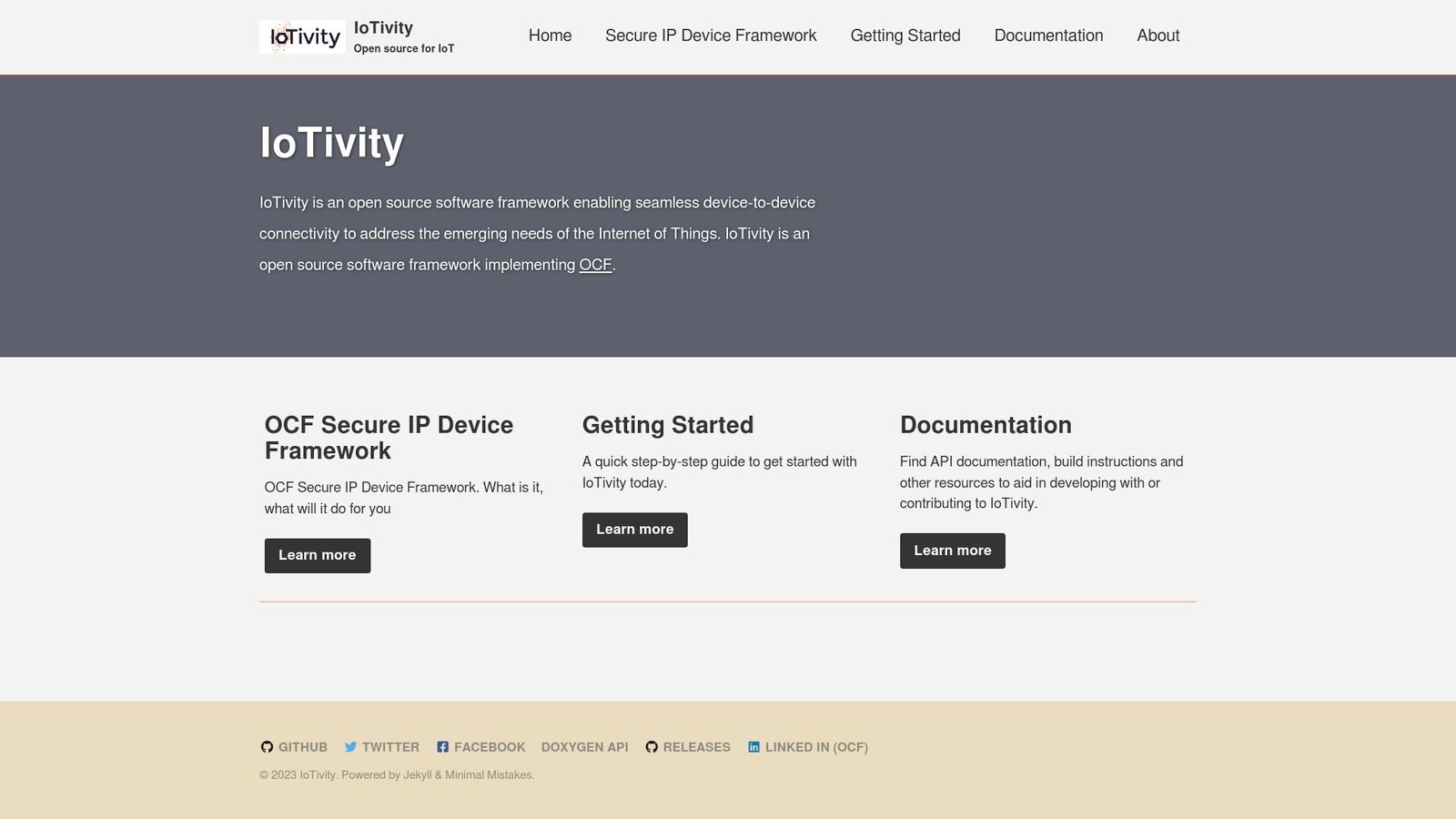
IoTivity is an open-source implementation aligned with OCF device interoperability goals. It focuses on device-to-device communication and resource models. The promise is reduced fragmentation across vendors. In practice, it works best when you commit to its ecosystem choices early.
Outcome: Improve device interoperability using shared resource models and discovery.
Best for: an embedded ecosystem team, or a company building interoperable device lines.
- Resource model and discovery → reduce custom pairing logic between devices.
- Interoperability patterns → save steps when adding new device classes to apps.
- SDK adoption path → reach first discover-and-control demo in about 1–2 days.
Pricing & limits: From $0/mo to use in products. Trial: not applicable for open source. Limits: constraints depend on device resources, network topology, and security requirements.
Honest drawbacks: It is not a full fleet management or cloud telemetry platform. Interop standards can be hard to align across product roadmaps and partners.
Verdict: If you need device interoperability foundations, IoTivity helps you reduce fragmentation over months. Beats bespoke LAN protocols at standardization; trails Home Assistant on immediate integration breadth for mixed consumer gear.
Score: 3.5/5 and .
28. Best open source iot platform option 28
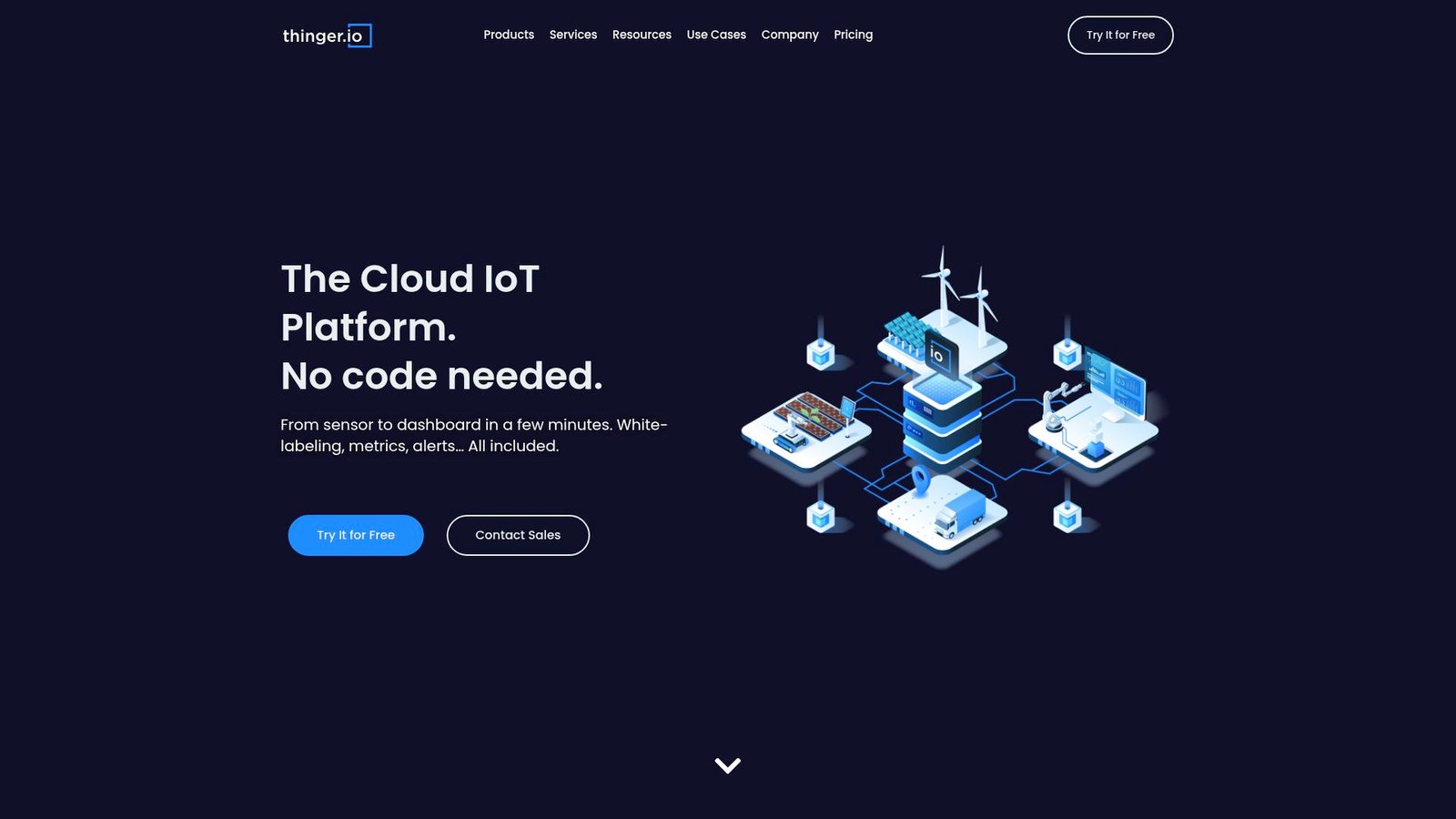
Thinger.io Community Edition is built by the Thinger.io team with an open-source footprint. It aims to be an approachable IoT platform with dashboards and device connections. The platform tends to feel “product-like” compared to pure frameworks. That is useful when you want results, not architecture debates.
Outcome: Connect devices and build dashboards with less custom backend work.
Best for: a solo developer, or a small team building an MVP and demos.
- Device and dashboard flows → turn telemetry into visuals without a custom UI stack.
- API and integration options → cut steps when pushing data into other services.
- Quick deployment path → reach first live dashboard in about 1–2 hours.
Pricing & limits: From $0/mo for community self-hosting. Trial: not applicable for open source. Limits: practical caps depend on host resources and retention needs.
Honest drawbacks: Enterprise IAM and audit controls may not be as deep as large suites. You may outgrow it if you need complex multi-team governance.
Verdict: If you want fast dashboards for connected prototypes, this helps you show value in days. Beats Node-RED at structured dashboards; trails FIWARE on large-scale data modeling and interoperability.
Score: 3.7/5 and .
29. Best open source iot platform option 29
DeviceHive is an open-source IoT platform project with a history in device connectivity and APIs. It aims to cover device management, messaging, and integration patterns. Many teams use it as a base for custom platforms. The appeal is a ready-made starting structure.
Outcome: Get a starter IoT backend with device APIs you can extend.
Best for: a software team building a custom IoT product, or a proof-of-concept group.
- Device API foundation → reduce time spent designing core CRUD and messaging contracts.
- Integration-friendly architecture → save steps when wiring into your existing services.
- Deployable server stack → reach first device event in about 4–8 hours.
Pricing & limits: From $0/mo to self-host. Trial: not applicable for open source. Limits: capacity depends on your database, broker choices, and retention policies.
Honest drawbacks: You may need to invest in docs reading and code spelunking. Some teams will want more modern UX and built-in observability patterns.
Verdict: If you need a platform base to customize, DeviceHive helps you move faster in weeks. Beats greenfield builds at head start; trails ThingsBoard on turnkey dashboards and rules UX.
Score: 3.5/5 and .
30. Best open source iot platform option 30
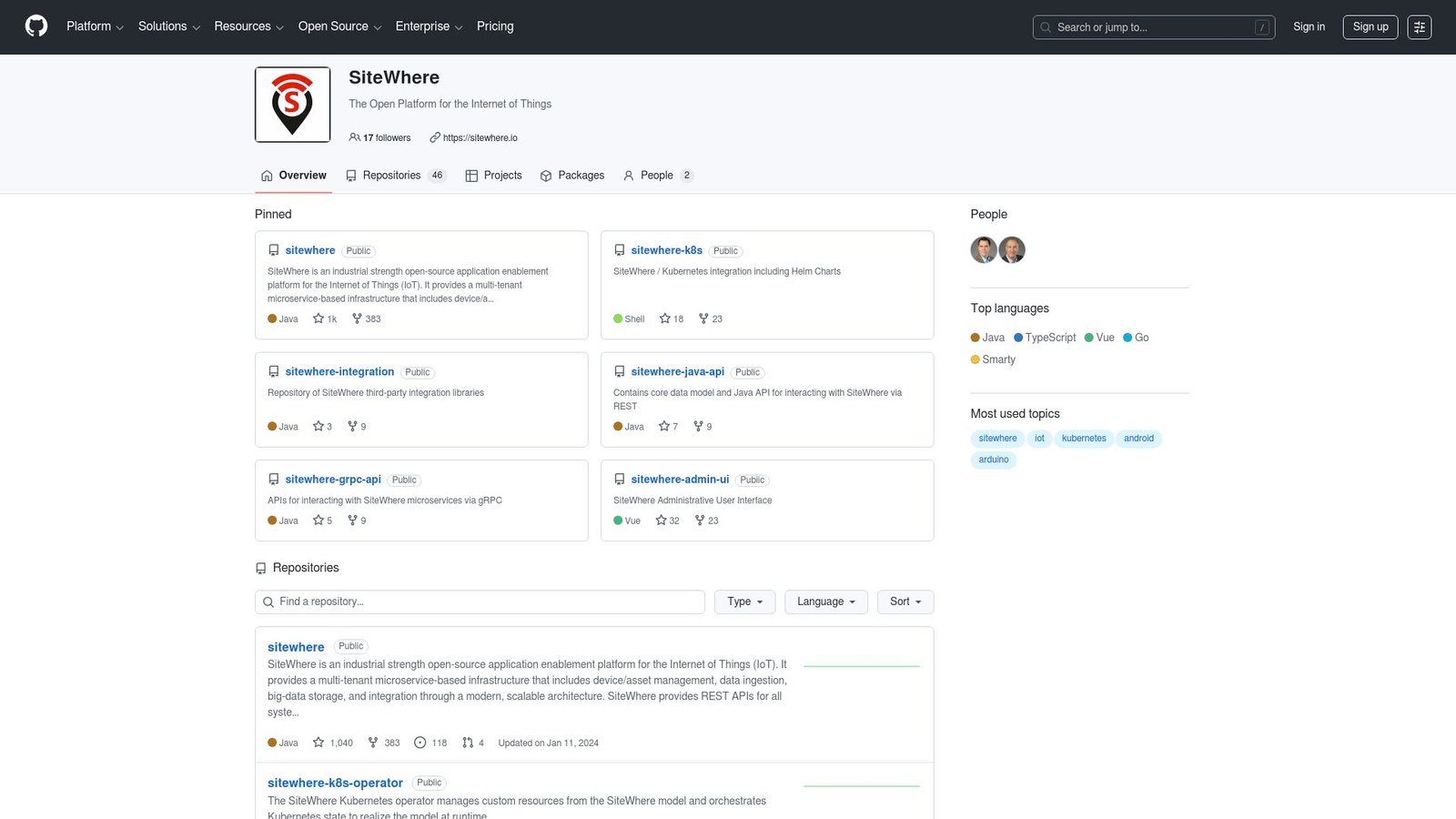
SiteWhere Community Edition is known as an open-source IoT platform approach with enterprise-style concepts. It targets device management, event processing, and multi-tenant patterns. The model can fit organizations with complex organizational needs. It is best approached as a platform you operate, not a tool you “install and forget.”
Outcome: Run a structured IoT backend with tenant-aware device and event organization.
Best for: an enterprise prototype team, or a systems integrator needing tenant separation.
- Tenant-aware modeling → keep customer data separated without custom isolation logic.
- Event processing structure → reduce steps when routing device events to business systems.
- Deploy-and-config workflow → reach first device event stored in about 1–2 days.
Pricing & limits: From $0/mo to self-host community code. Trial: not applicable for open source. Limits: operational caps depend on your deployment architecture and storage planning.
Honest drawbacks: Setup and maintenance can be heavier than newer lightweight stacks. If you want “instant dashboards,” you may need extra UI work or companion tools.
Verdict: If you need enterprise structure in your IoT backend, this helps you formalize operations in months. Beats DIY services at tenant modeling; trails Node-RED on rapid prototyping speed.
Score: 3.5/5 and .
Core Capabilities to Look for in a best open source iot platform
Market pulse: Gartner projects end-user spending on AI-optimized infrastructure at $37.5 Billion in 2026, and IoT platforms increasingly feed those inference-heavy pipelines. Capability checklists are easy to copy. The hard part is behavior under load and failure.
1. Device onboarding and provisioning workflows
Provisioning is a security workflow disguised as a convenience feature. We want deterministic steps and clear states. Anything “manual” becomes a factory for mistakes.
In practice, we prefer staged onboarding. A device appears, proves identity, and gets assigned policy. Only then do we allow telemetry into trusted streams. That reduces blast radius when keys leak.
We also design for returns and refurbish cycles. Consumer devices get resold. Industrial devices get redeployed. A platform that cannot reset cleanly will leak data across customers.
2. Device registry, metadata, and digital twin modeling
A registry is more than a table. It is the backbone for debugging and governance. When a technician calls support, the registry becomes the truth source.
Metadata must be versioned and auditable. A device’s location, role, and firmware lineage affect analytics. They also affect liability. We keep “who changed what” visible to operators.
Digital twins become useful when they are humble. We model what we can validate. We avoid fantasy properties that no sensor can support. That discipline keeps rules reliable.
3. Telemetry ingestion and scalable message handling
Ingestion is where theory meets physics. Bursts happen at shift changes. Retries create storms. Gateways reconnect and dump buffers.
We want backpressure controls and explicit retry behavior. Queues should protect downstream systems. Streaming pipelines should degrade gracefully. Operators should see saturation before data loss occurs.
We also watch “message semantics.” At-least-once delivery is common. That means idempotency becomes a product requirement. Without it, dashboards lie during outages.
4. Rules engine and event processing
Rules engines are the business layer of IoT. They translate telemetry into action. That action could be an alert, a command, or a ticket.
We treat rules like code. They need reviews, tests, and rollbacks. A platform that edits rules live without control invites disasters. The best open source iot platform options make governance possible.
Event processing also benefits from a clear separation. Fast, simple rules belong near ingestion. Slow, rich analytics belong downstream. That split reduces accidental coupling.
5. Dashboards, visualization, and reporting
Dashboards sell the platform internally. They also create operational muscle memory. When a graph is wrong, trust evaporates.
We like dashboard layers that separate queries from presentation. That enables caching and review. It also keeps domain teams from inventing inconsistent metrics. Consistency matters more than beauty.
Reporting tends to creep into compliance territory. That is where retention policy and audit trails surface. If reporting is critical, we design storage and access around it early.
6. User roles, tenant isolation, and access control
Access control is not a checkbox. It is a product boundary. Tenants map to customers, departments, or plants. Roles map to real job functions.
We prefer policy models that support least privilege cleanly. Operators need global views. Customers need their slice only. Vendors may need temporary access. That nuance must be designed, not patched.
Tenant isolation also affects performance. One noisy tenant can degrade shared brokers. Rate limits and quotas become part of customer experience. That is why we model tenancy early.
7. APIs and SDKs for extending your best open source iot platform
APIs are the platform. Everything else is a client. We look for stable resource models and predictable error handling.
SDKs are helpful, but not required. Clear API docs are required. We also want webhooks or event subscriptions for integrations. Polling is an anti-pattern at scale.
From our builds, API ergonomics affects staffing. A clean API lets product teams self-serve. A messy API creates a queue for the platform team.
8. Data storage choices: time-series, relational, and object storage
Storage is where costs hide. Time-series stores shine for telemetry. Relational stores shine for configuration and business entities. Object storage shines for blobs and archives.
We design storage around query patterns, not fashion. Dashboards need fast ranges and downsampling. Analytics needs raw history. Audits need immutability. Those needs conflict if you pretend one store does all.
We also plan for deletion requests and tenant offboarding. Data retention is legal risk and cost risk. A platform with clear retention controls is easier to govern.
9. Alerting and incident workflows for IoT operations
Alerts are customer experience in disguise. Too many alerts create fatigue. Too few alerts create outages that customers notice first.
We prefer alert pipelines that support deduplication and routing. Plant teams should get plant alerts. Product teams should get systemic alerts. Security teams should get identity anomalies.
Incident workflows also need context. A ticket without device metadata is noise. A ticket with lineage and recent changes is actionable. The platform should enrich alerts automatically.
10. Observability: logs, metrics, and traces for platform reliability
Reliability in IoT is a story told by signals. Logs explain discrete failures. Metrics show trends. Traces reveal cross-service latency.
We insist on correlation IDs across ingestion, rules, and storage. That lets on-call engineers answer “where did this message go.” It also reduces blame games between teams.
Observability must include device perspective too. A device that stops talking may be broken. It may also be muted by policy. Seeing both sides avoids costly misdiagnosis.
Integration & Deployment Patterns for a best open source iot platform
Market pulse: Forrester reported global tech spend expected to reach $4.7 trillion in 2024, and IoT platforms increasingly compete for the same integration budgets as everything else. Integration is where “open” becomes real. Deployment is where “scalable” becomes measurable.
1. Edge-first vs cloud-first best open source iot platform architectures
Edge-first designs prioritize autonomy. They keep local systems useful during outages. They also demand robust update and fleet tooling.
Cloud-first designs prioritize centralized control. They simplify analytics and governance. They also increase dependency on connectivity quality.
We pick based on consequences, not ideology. If downtime is dangerous, edge gets more responsibility. If data consistency is king, cloud takes the lead.
2. Gateway patterns for constrained devices and legacy protocols
Gateways are translators and shock absorbers. They normalize protocols, buffer during network gaps. They also become attack surfaces.
We like gateway patterns with explicit responsibilities. Translation should be deterministic. Buffering should be bounded. Local rules should be explainable to operators.
Legacy integrations often arrive late in a project. That is when gateways save schedules. A flexible edge stack prevents frantic rewrites.
3. Message broker integration and stream processing pipelines
Message brokers give IoT its spine. They decouple producers from consumers. They also surface ordering and replay questions.
We design for fan-out early. Operations wants one view. Product wants another view. Data science wants raw history. A broker-plus-stream pipeline makes those views independent.
We also decide replay strategy. Replay is essential for debugging and reprocessing. Yet replay can overload consumers. So we isolate replay lanes from live lanes.
4. Connecting to data lakes, warehouses, and analytics stacks
Analytics wants clean data contracts. Warehouses want stable schemas. Data lakes want inexpensive history. IoT wants speed and resilience.
We bridge these needs with curated layers. Raw telemetry lands in an immutable stream. Curated facts land in analytics-friendly shapes. The platform team owns the contract boundary.
In a cold-chain deployment, this pattern made audits painless. Operators saw real-time exceptions. Analysts saw long-term drift. Both views stayed consistent.
5. Identity integration: SSO, OAuth, and enterprise directory mapping
Identity integration is political and technical. Security teams want centralized control. Product teams want frictionless access. Customers want their own directory to work.
We map identity to tenancy and roles. Then we map roles to actions. Finally, we verify audit events are complete. Without that sequence, access control becomes folklore.
We also separate human identity from device identity. Mixing them creates messy logs and brittle policies. Clean separation keeps investigations faster.
6. Containerized deployment with Docker and Kubernetes
Containers help standardize deployments. Orchestration helps standardize scaling. Yet neither fixes poor configuration discipline.
We package platform components with explicit defaults. We externalize secrets properly and run migrations carefully. Those details decide whether upgrades are routine or terrifying.
In our practice, clusters are the easy part. The hard part is release engineering. A best open source iot platform still needs a release train.
7. High availability and scaling strategy for production IoT
High availability starts with failure assumptions. Brokers can fail. Databases can fail. Regions can fail. Devices can flood you.
We plan redundancy where it matters most. Ingestion must survive spikes. Identity must remain trustworthy. Storage must avoid corruption during failover. Each layer needs a deliberate strategy.
Scaling is also about testing. We simulate reconnect storms. We simulate gateway buffer dumps. Those tests reveal the real bottlenecks faster than any benchmark blog.
8. Multi-region deployments and latency-sensitive ingestion design
Latency shapes user trust. Operators expect near-real-time visibility. Commands must arrive predictably. Multi-region designs reduce long-haul delays.
We often ingest close to devices and replicate downstream. That keeps local responsiveness strong. It also reduces cross-region chatter under normal load.
Data consistency becomes the trade. Some views can be eventually consistent. Security events should be consistent faster. We document those expectations for stakeholders.
9. Backup, disaster recovery, and data retention planning
Backups are not a button. They are a process. Recovery drills are the proof. Retention policies are the budget constraint.
We define recovery objectives in business terms. Then we map them to storage tiers and replication. Finally, we rehearse restores with real operators.
Retention planning also prevents quiet cost explosions. IoT data grows relentlessly. Without retention controls, every dashboard becomes a tax on the future.
Security, Compliance, and Governance in the best open source iot platform
Market pulse: Deloitte reported 48% saying they experienced at least one kind of security failure in the past year, and IoT ecosystems amplify that exposure through sheer surface area. Security is not a module you install later. It is a set of defaults you defend every day.
1. Secure device identity and certificate-based authentication
Device identity is the root of trust. Without strong identity, telemetry is gossip. Commands become dangerous. Audits become meaningless.
We assign each device a unique identity and a renewable credential. We also bind identity to manufacturing or onboarding evidence. That reduces spoofing and accidental duplication.
When identity is clean, everything downstream gets easier. Access policies become simpler. Incident response becomes faster. Customer trust becomes more durable.
2. Encryption in transit and at rest across your best open source iot platform stack
Encryption in transit protects data on hostile networks at rest protects data in compromised environments. Both are required in serious deployments.
We treat encryption as an operational feature. Key rotation must be supported. Cipher changes must be manageable. Performance impact must be measured, not guessed.
We also avoid bespoke crypto choices. Standard, well-reviewed tooling wins. Open source helps here because we can inspect configurations and libraries.
3. Least-privilege authorization and role-based access controls
Least privilege is a daily discipline. Roles must map to real responsibilities. Permissions must be narrow and testable.
We design authorization around resource hierarchies. Devices belong to sites. Sites belong to tenants. Tenants belong to orgs. That hierarchy powers both security and usability.
We also build “break glass” workflows. Emergencies happen. Temporary privilege should be explicit, time-bounded, and audited. That keeps operators effective without creating permanent risk.
4. Firmware and OTA updates: signing, rollout, and rollback plans
Updates are where IoT becomes software. They are also where IoT becomes risky. A bad rollout can brick devices or disrupt operations.
We insist on signed artifacts and verifiable provenance. We stage rollouts in cohorts monitor health signals during deployment. Then we stop when signals drift.
Rollback plans must be real, not theoretical. Some devices cannot roll back safely. In those cases, we design forward-only recovery steps. Honesty here prevents disasters.
5. Vulnerability management and patching playbooks
Vulnerability management is a supply chain problem. Dependencies shift. Base images age. Device firmware lags behind cloud services.
We keep an inventory of components and versions. We also run routine scans and track exposure. Then we patch in a predictable cadence. Predictability reduces panic.
Open source projects vary widely in responsiveness. That is why community health matters. A quiet repo can be a hidden liability in regulated environments.
6. Audit logs, compliance reporting, and operational governance
Audit logs are the memory of the platform. They should be tamper-resistant and searchable. They should also be understandable to humans.
We log identity events, policy changes, and privileged actions. We also log deployment events from the platform pipeline. That link between code and behavior is critical during investigations.
Governance is the habit of reviewing that data. Regular access reviews catch creep. Change reviews catch risky patterns. Those rituals are cheaper than breaches.
7. Secure key management and secrets handling
Secrets handling is where good teams trip. Keys leak through logs. Tokens end up in configs. Backups capture secrets unintentionally.
We centralize secrets and restrict access paths. We rotate keys routinely and also ensure developers never need production secrets locally. That separation prevents “temporary shortcuts” from becoming permanent risk.
Device-side secrets deserve special care. Physical access is common in IoT. So we assume attackers can touch hardware. That assumption changes design choices fast.
8. Threat modeling for IoT: device, gateway, and cloud attack surfaces
Threat modeling gives the platform a map of danger. Devices face physical tampering and impersonation. Gateways face lateral movement and protocol abuse. Cloud services face credential theft and injection attacks.
We run threat modeling as a shared workshop. Product, engineering, and operations must participate. That alignment avoids security theater and focuses budget on real risk.
We also revisit the model after major changes. New integrations create new paths. New tenants create new incentives. Security must evolve as the platform evolves.
How TechTide Solutions Helps You Build a Custom best open source iot platform
Market pulse: IDC forecasted worldwide spending on digital transformation at almost $4 trillion by 2027, and IoT platforms succeed only when they plug into that broader program. We build custom platforms as products, not projects. That means clear ownership, roadmaps, and operational standards.
1. Requirements-driven architecture and platform selection aligned to customer needs
Our first move is to write down the operational story. Then we map it to architecture choices. Only then do we shortlist open source components.
We also identify “non-negotiables” early. Some clients need offline tolerance. Others need strict auditability. Those drivers eliminate many tools quickly, which is a gift.
Finally, we design around change. New device types arrive. New regions appear and new regulations land. A platform that cannot adapt becomes a rewrite waiting to happen.
2. Custom development: connectors, dashboards, rules, and domain-specific workflows
Most value lives in the seams. Connectors turn raw telemetry into clean events. Dashboards turn those events into decisions. Rules turn decisions into action.
We build domain workflows that match real operations. Maintenance teams need work orders, not raw metrics. Logistics teams need exception handling, not generic charts. Executives need leading indicators, not sensor trivia.
We also invest in developer experience. Templates, scaffolds, and shared libraries reduce drift. That makes the platform easier to extend without fear.
3. End-to-end delivery: security hardening, deployment, and long-term support
Delivery is where many IoT efforts stall. The code works. The rollout fails. The on-call load becomes unsustainable.
We harden configurations, automate deployments, and define operational playbooks. Then we train teams to own the platform with confidence. That handoff matters as much as the build.
Long-term support is also a design input. We plan upgrade paths from day one. We also plan for component replacement when communities shift. Open source demands that realism.
Conclusion: Choosing the best open source iot platform for Long-Term Success
Market pulse: the same McKinsey research emphasizes that value concentrates in specific settings, which mirrors what we see in platform economics. Long-term success is less about picking a popular repo. It is about aligning platform shape with business reality.
1. Match platform strengths to your devices, integrations, and operational maturity
Platform fit is contextual. A UI-heavy platform can accelerate pilot wins. A composable stack can accelerate long-term differentiation.
We recommend mapping your maturity honestly. If your team lacks on-call muscle, avoid overly DIY stacks. If you have strong SRE practice, composability becomes an advantage.
When strengths match reality, the platform becomes calm. Calm platforms scale better than heroic platforms.
2. Prioritize maintainability, security posture, and production readiness
Maintainability is the hidden ROI. It shows up in upgrade speed and incident recovery. It also shows up in hiring, because new engineers ramp faster.
Security posture is equally structural. Default-safe configuration beats bolt-on security. Governance beats hope. Observability beats guesswork.
Production readiness is the final filter. If you cannot explain failure behavior, you are not ready. That is a hard sentence, but it saves budgets.
3. Validate with a proof of concept before scaling organization-wide
A proof of concept should be operational, not theatrical. It should include onboarding, monitoring, and incident drills. It should also include at least one real integration target.
We like to prove the “boring paths.” Can you rotate credentials safely and replay events without chaos? Can you isolate a tenant cleanly?
If you want, we can help you design that proof quickly. Which part of your IoT stack feels riskiest right now: devices, data, or operations?