


At TechTide Solutions, we use AI business name generators as research tools, not as magic answer machines. The best ones help us test angles faster, spot dead-end domains sooner, and judge whether a name still works once it hits a logo, website header, or product page. The weak ones just dump out word mashups and leave us to do the real work.
That shift is part of a much bigger AI habit. McKinsey found 71 percent of respondents say their organizations regularly use gen AI in at least one business function, so it makes sense that founders now reach for AI before they hire a naming consultant. In our own tests, Namelix kept pushing compact invented names for a mock SaaS brand, while LegalZoom leaned safer and more literal. That difference is exactly why tool choice matters.
We reviewed these tools the way real buyers use them. We looked at name quality, prompt controls, domain checks, launch tools, trademark guidance, price clarity, and how fast each product gets you to a shortlist worth keeping. If you want one quick take before the deep dive, start with Namelix for inventive short names, LegalZoom for compliance-first launches, Atom for deeper validation, and Shopify or Wix if a store or website is part of the same decision.
Quick Comparison of AI Business Name Generators
If you want the fast version, start here. This table compares the first 10 tools in our shortlist and shows where each one fits best.
| Tool | Best for | From price | Trial/Free | Key limits |
|---|---|---|---|---|
| Namelix | Short invented names | $0 | Free | No trademark or social checks |
| Namify | Domain-ready brand names | $0 | Free generator | Free logo tied to domain purchase |
| Looka | Visual brand kits | $8/mo | Free to explore | Best value after paid logo purchase |
| Wix | Beginners building a site | $0 | Free generator | Up to 30 names per run |
| LegalZoom | Compliance-first founders | $0 + state fees | Free generator | More conservative output |
| Namecheap | Domain + logo pairings | $0 | 100% free to use | Logo download needs account |
| Shopify | Ecommerce stores | $29/mo | 3-day trial | Fewer style filters |
| GoDaddy | Domain-first buyers | $0 | Free generator | Limited brand controls |
| Hootsuite | Social-first brands | $99/mo | Free tool, 30-day platform trial | No domain or trademark workflow |
| NameSnack | Budget .com hunting | $0 | 100% free | No trademark search |
Recommended reading: Top 20 Professional SEO Services for Finding the Right SEO Partner
Top 20 AI Business Name Generators Worth Trying
We did not treat these tools as interchangeable. Some are better at raw brainstorming. Some are really website bundles with naming attached. A few are premium-domain marketplaces in disguise. That trade-off matters, because the right choice depends on whether you need ideas, validation, or a launch-ready brand package.
1. Namelix
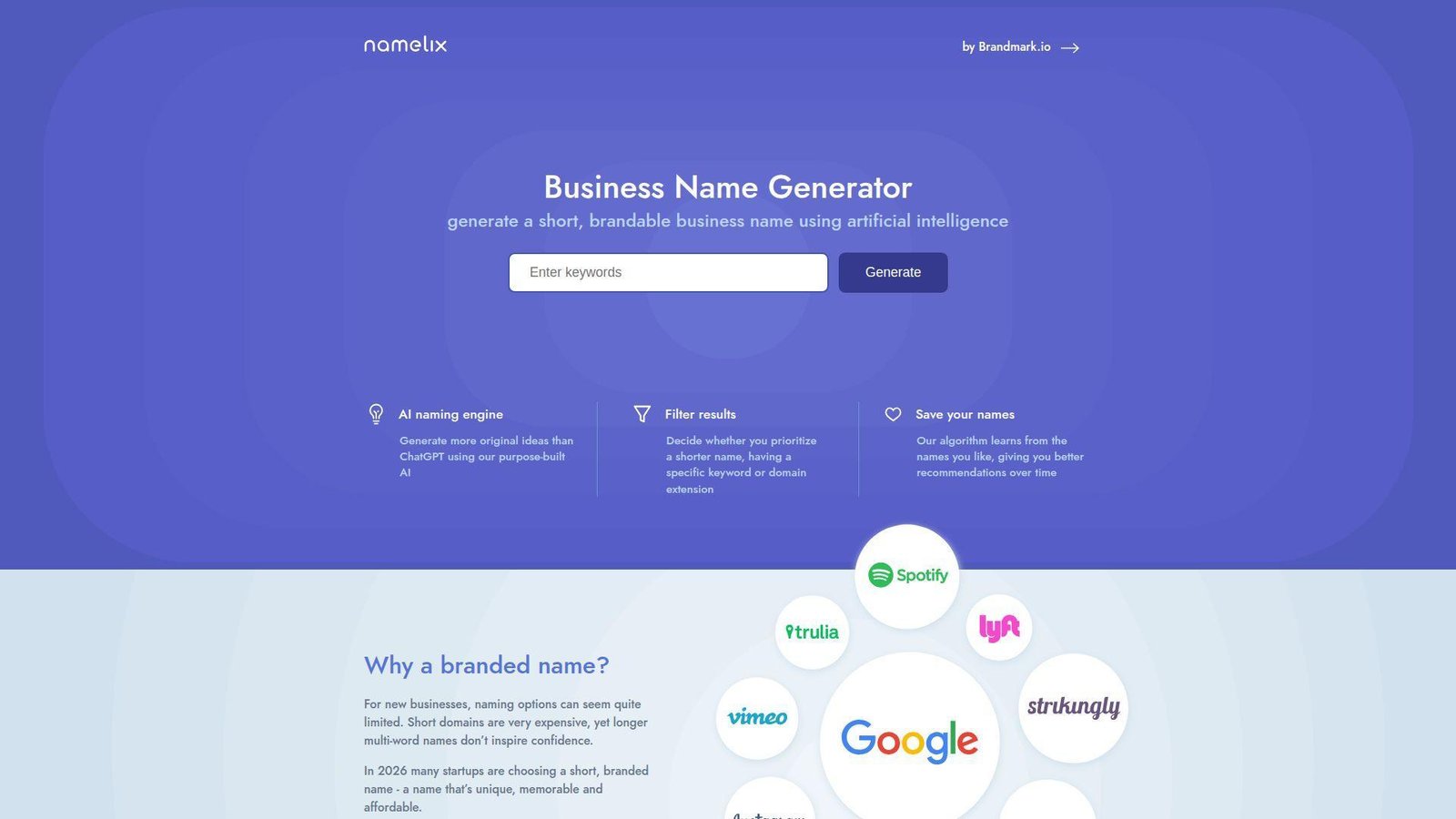
Namelix comes from the Brandmark team, and that background shows. We see it as a naming-first tool built by people who care about how a word looks, sounds, and behaves once it becomes a brand. It is one of the few generators that consistently gives us short, brandable options instead of bloated phrase names.
Best for: solo founders and SaaS builders.
- Style controls for brandable, compound, real-word, and alternate-spelling names → you narrow the type of name you want before you waste time reviewing weak matches.
- Saved-name learning and domain-extension filters → you cut extra prompt rounds and remove dead-end domain ideas early.
- Minimal interface → you usually reach a usable shortlist in about 5 minutes.
Pricing & limits: From $0/mo. The generator is free and there is no trial wall. Paid Brandmark branding starts at $35 one time. Trademark and social checks are still on you.
Honest drawbacks: Namelix works best when you want startup-style names. It can drift into clever names with thin meaning. It beats Wix at invented brandables, but trails Atom once you need stronger validation.
Verdict: If you want short, brand-ready ideas fast, this helps you go from a blank page to a real shortlist in one working session.
2. Namify
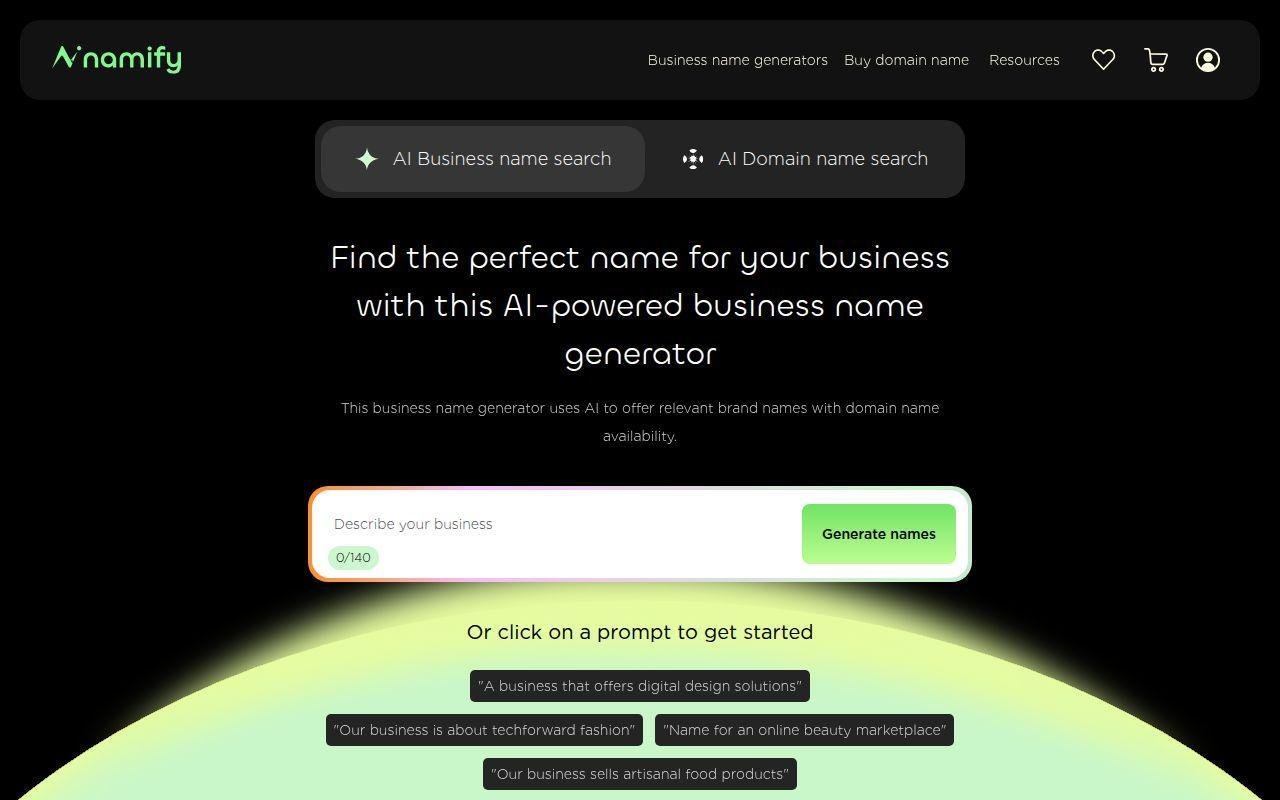
Namify sits somewhere between a business name generator, domain search tool, and lightweight brand starter kit. We see it as a practical choice when you want name ideas that already come with availability signals, instead of a pretty list that collapses the moment you check domains manually.
Best for: ecommerce brands, tech startups, and founders who want name, domain, and basic brand assets in one flow.
AI-powered name generation with 1000+ suggestions → you get a large pool of ideas quickly, which helps when your first keyword is too narrow or too obvious.
Domain, username, and trademark checks → you can remove weak candidates early instead of falling in love with a name that is already taken.
Free logo with eligible domain purchases → you can move from name discovery to basic visual identity without opening five different tools.
Pricing & limits: From $0/mo. The business name generator is free to use. The free logo is tied to purchasing a qualifying domain extension, so it is not a completely free branding package. Domain costs vary, and proper trademark clearance is still your responsibility.
Honest drawbacks: Namify leans heavily toward domain-first naming, especially newer extensions like .tech, .store, and .online. That is useful if you are open to modern TLDs, but less helpful if you only want a clean .com. It feels more practical than flashy. It beats basic generators on availability checks, but trails Namelix when you want sharper invented brandables.
Verdict: If you want a name that can become a domain, username, and simple brand asset quickly, Namify is a strong replacement for Design.com. It will not do the whole brand strategy job for you, but it cuts through a lot of naming fog before the coffee gets cold.
3. Looka
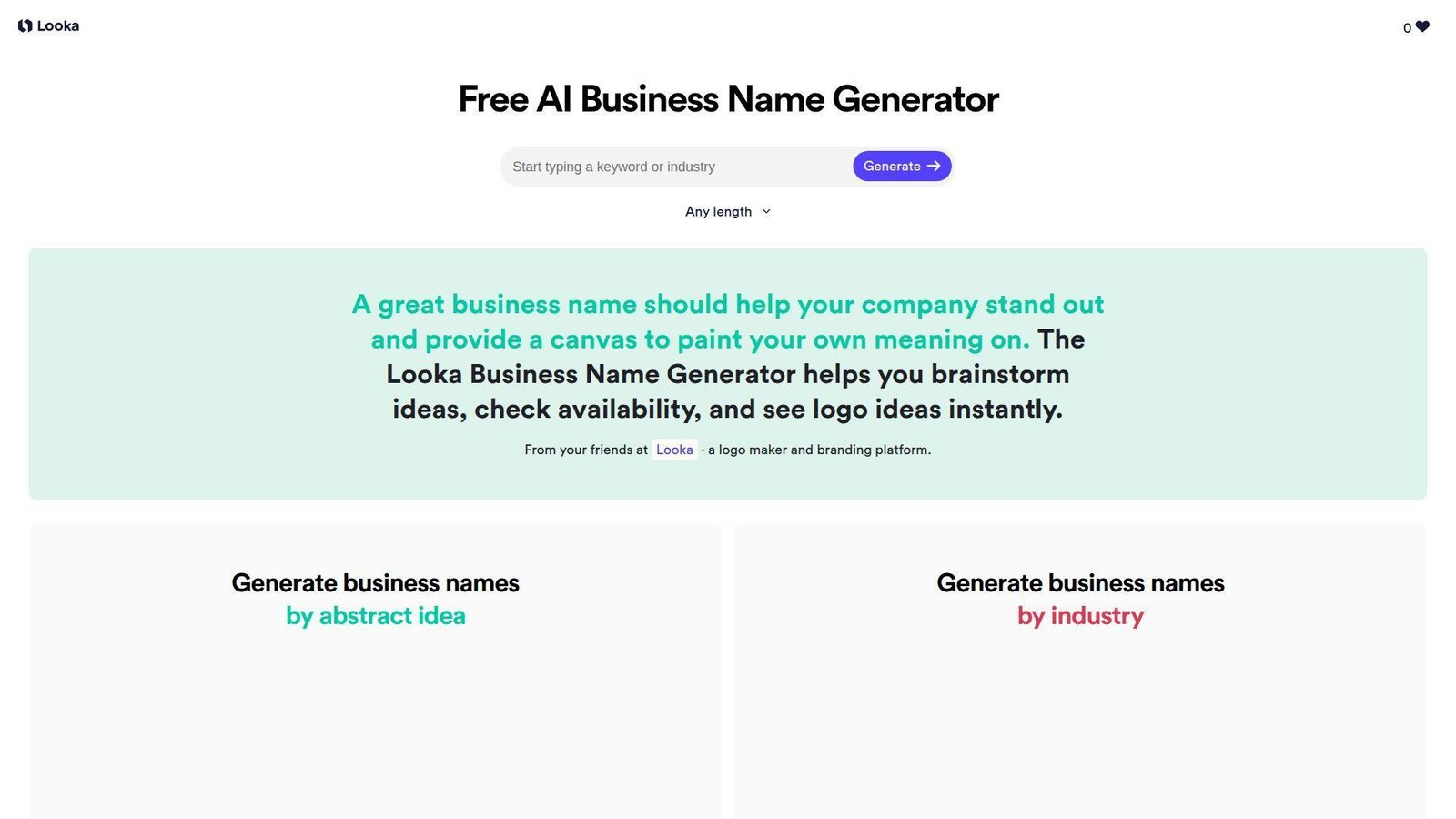
Looka comes from the logo-and-brand-kit world. The team has clearly optimized for entrepreneurs who want naming, visual identity, and a lightweight website flow in the same place. We find it strongest when buyers are highly visual and want a polished first impression fast.
Best for: consultants and ecommerce side hustles.
- Name-to-logo workflow → you spot weak names before you invest in the rest of your brand stack.
- Brand Kit with ready-made assets → you skip repetitive setup across cards, signatures, posts, and basic brand files.
- Guided interface → you can reach a polished concept in about 15 minutes.
Pricing & limits: From $8/mo billed annually for Brand Kit. Logo-only packages are sold separately as one-time purchases. You can explore ideas before paying. The basic web bundle still needs an upgrade if ecommerce matters.
Honest drawbacks: Looka is better at visual identity than deep naming strategy. It beats Design.com on tidy brand-kit packaging, but it trails Namelix and Atom when you want more naming control.
Verdict: If your decision depends on whether a name looks premium, this helps you leave with a brand draft by the end of the afternoon.
4. Wix
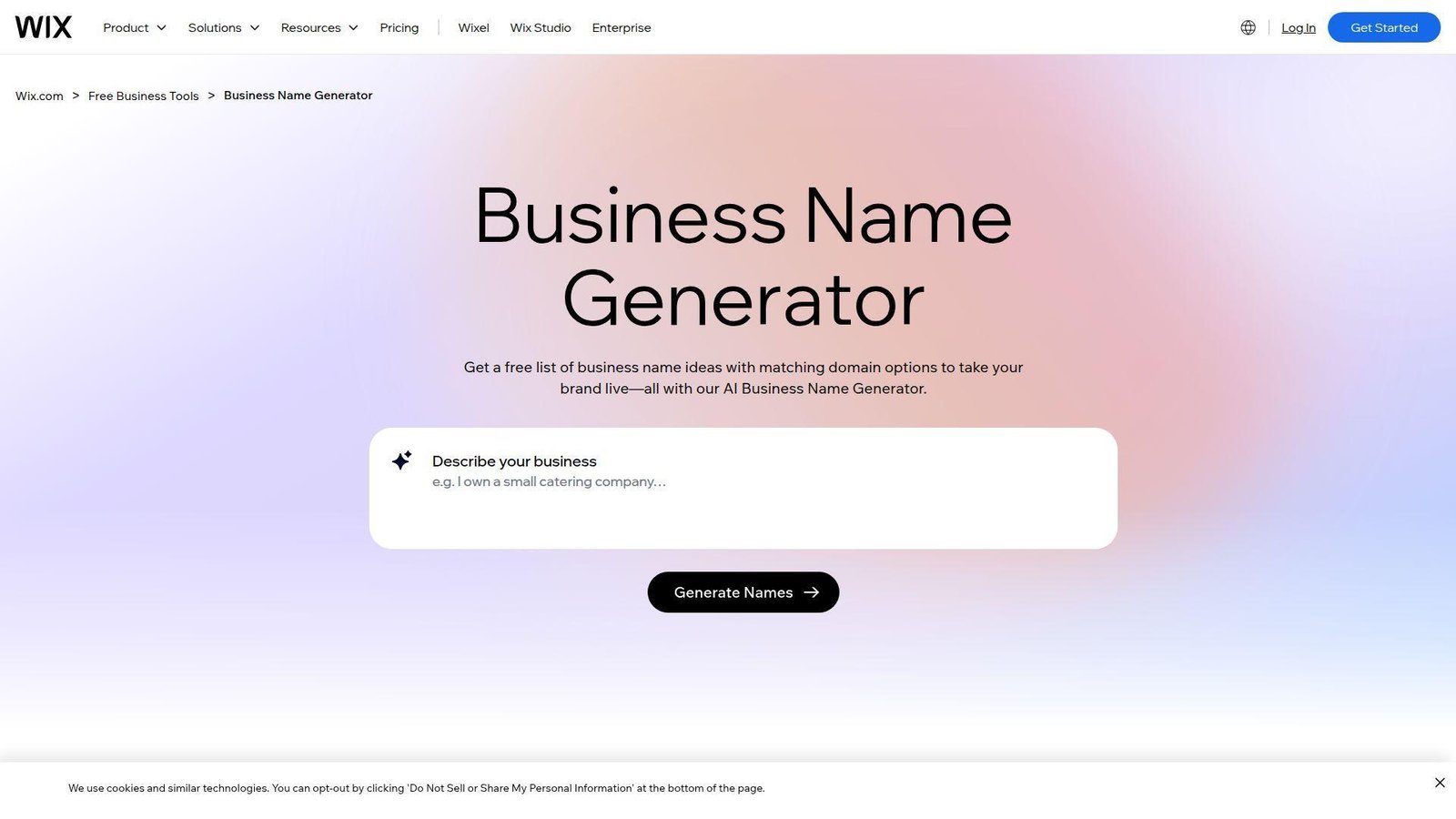
Wix treats naming as the first step in a broader website journey. That makes the tool feel practical, approachable, and genuinely beginner friendly. We see it less as a pure naming lab and more as a safe launch funnel.
Best for: local service providers and non-technical founders.
- Unlimited ideas with matching domains → you get more usable lists and fewer fantasy names that collapse later.
- Direct path to logo maker, site builder, and business email → you remove several startup chores in one pass.
- Smooth onboarding → you can get a shortlist in minutes and a basic site the same day.
Pricing & limits: From $0/mo. The generator is free. Paid website plans start at $17/mo with a 14-day money-back window. Each run returns up to 30 names, so broader exploration can take a few passes.
Honest drawbacks: Suggestions often skew literal. You also need an account for the fuller flow. Wix is safer than Namelix, but much less inventive.
Verdict: If you want a practical name and a fast route to a working site, this helps you get moving without piecing together separate tools.
5. LegalZoom
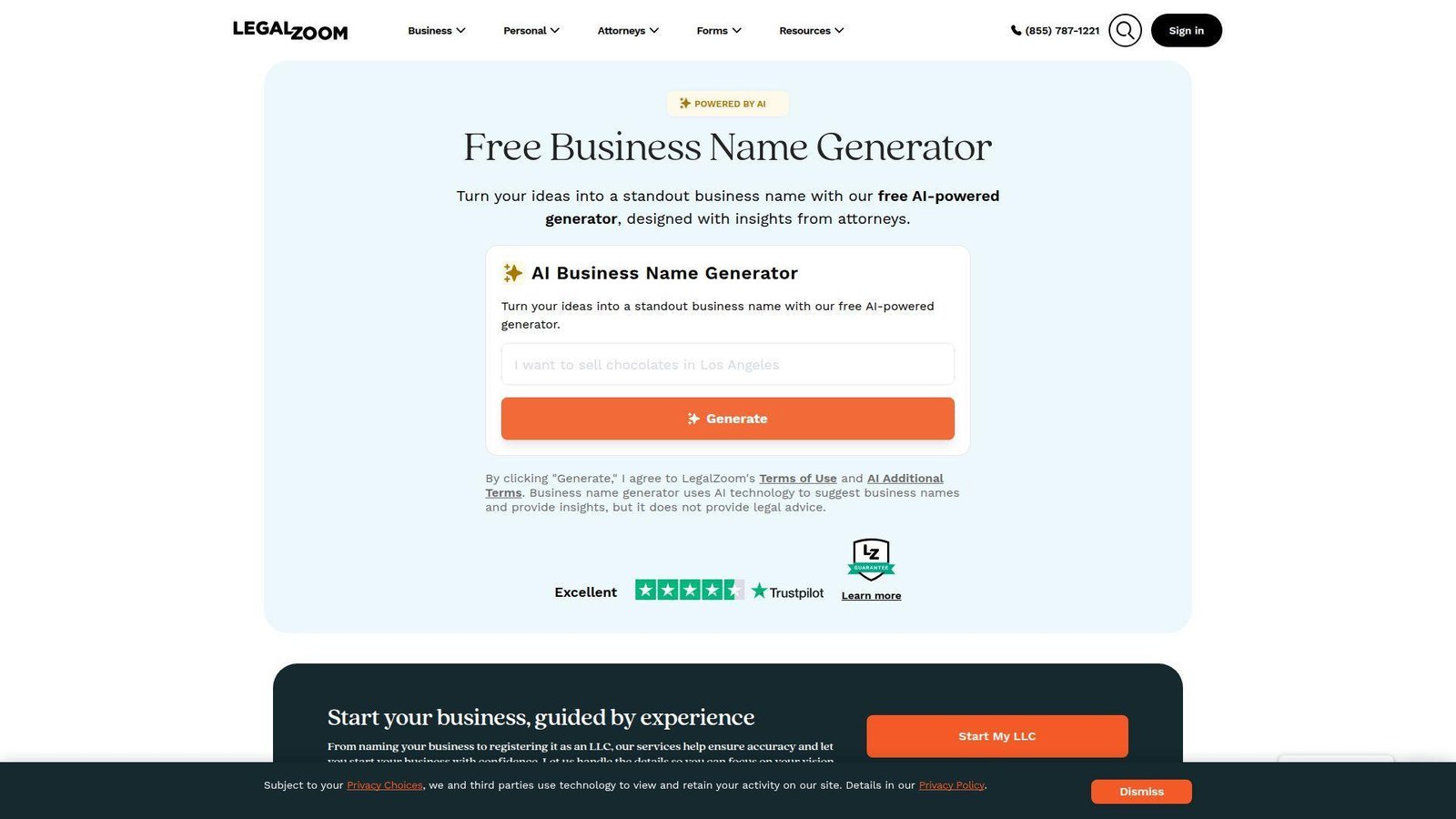
LegalZoom enters from the legal-services side, not the branding side. We like that because naming is often a legal problem in disguise. The tool is less playful than some rivals, but it stays close to what many first-time founders actually need next.
Best for: first-time LLC founders and compliance-first service businesses.
- Attorney-informed generator with tone controls → you lower the odds of shortlisting something obviously risky or unserious.
- Handoff to LLC, DBA, and trademark services → you cut the gap between choosing a name and making it official.
- Structured flow → you can get a decision-ready shortlist in around 10 minutes.
Pricing & limits: From $0 plus state fees for LLC formation. The generator itself is free. DBA services start at $99 plus state fees, and trademark filing service starts at $649 plus government fees.
Honest drawbacks: Output is more conservative than Namelix. It can also feel upsell-heavy once you move past the generator. That said, it beats most tools here on legal follow-through.
Verdict: If your next step after naming is paperwork, this helps you move from idea to filing faster than most competitors.
6. Namecheap Business Name Generator
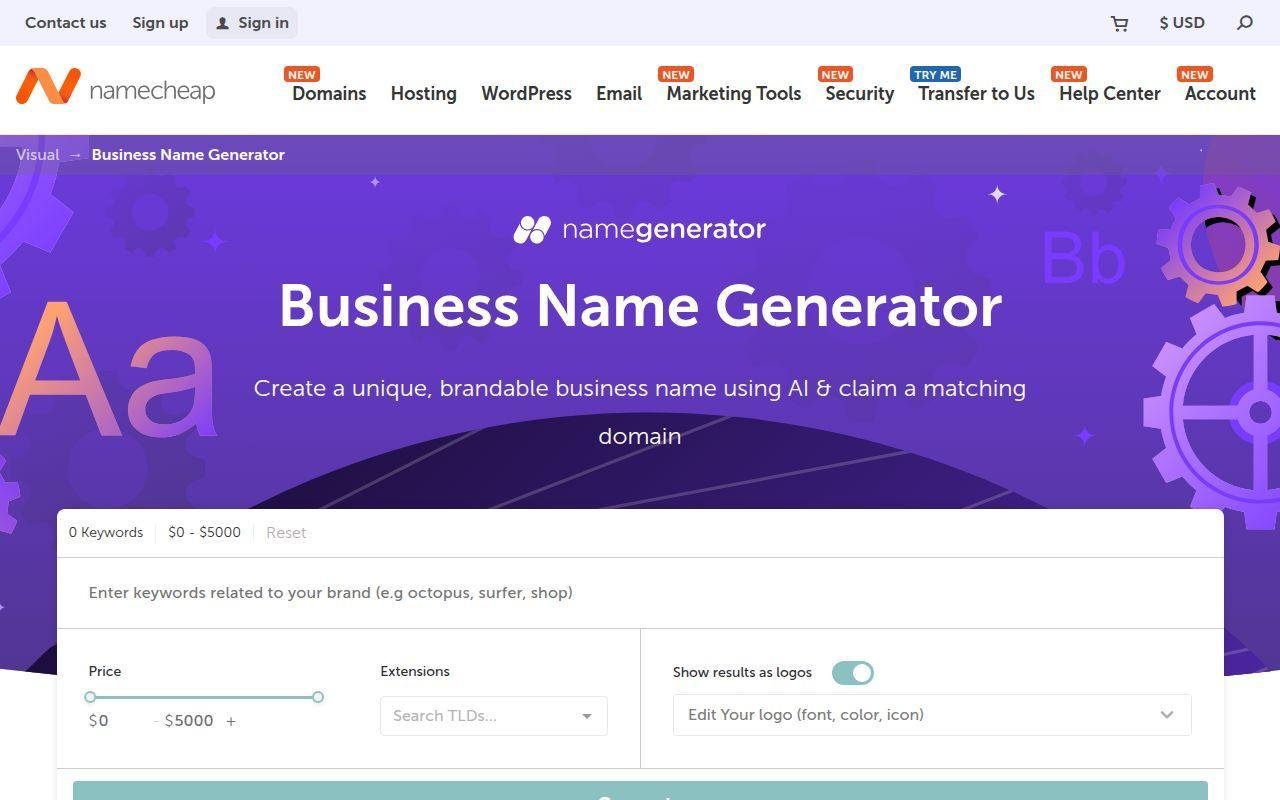
Namecheap Business Name Generator is more than a simple brainstorming tool. It works best when you want business name ideas that connect directly to domain availability and early brand assets. Since Namecheap already lives in the domain world, the tool feels practical: less “cute name machine,” more “can I actually build this brand online?”
Best for: small businesses, ecommerce projects, and founders who want name ideas with domain options.
AI-generated business name ideas → you can quickly turn a few keywords into a broad list of brandable suggestions without starting from a blank page.
Domain suggestions alongside names → you can check whether a name has a realistic web address before getting emotionally attached. Very useful, because heartbreak over a taken domain is not a business strategy.
Custom logo support through Namecheap’s visual tools → you can move from name discovery to a basic brand look without jumping into a separate design platform.
Pricing & limits: From $0/mo. The business name generator is free to use. Namecheap’s logo tool is also free to try, and logos can be downloaded after signing into a Namecheap account. Domain registration costs vary depending on the extension and availability. Trademark checks are still your responsibility.
Honest drawbacks: Namecheap is stronger on practicality than creative taste. Some suggestions can feel keyword-heavy or domain-led, so you still need to filter hard. It beats BrandCrowd when domain planning matters, but trails Namelix when you want sharper, more startup-style invented names.
Verdict: If you want a business name that can quickly become a domain and a basic brand identity, Namecheap is a clean replacement for BrandCrowd. It will not magically hand you a legendary brand name, but it gives you a useful shortlist without making the naming process feel like wandering through fog with a broken compass.
7. Shopify
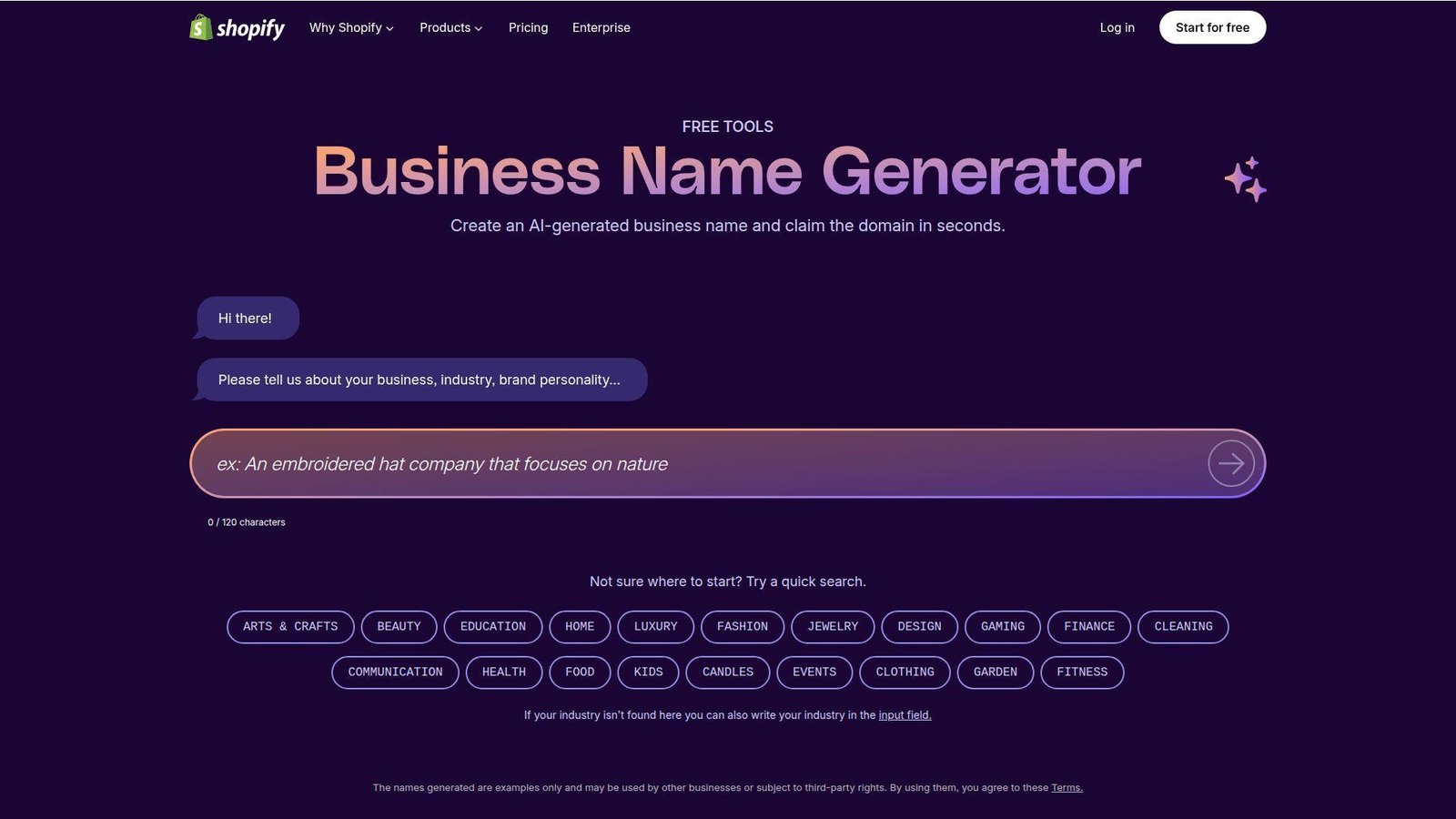
Shopify built this tool for merchants, and that commerce DNA shows in almost every result. We see more store-ready, domain-aware suggestions here than in many general AI business name generators. That makes it especially useful when selling online is the real goal.
Best for: DTC founders and side-hustle sellers.
- Domain-aware suggestions → you get fewer shortlist names that collapse once you try to launch.
- Direct path into store setup → you remove several steps between naming and first product page.
- Simple interface → you usually get a usable shortlist in just a few minutes.
Pricing & limits: From $0/mo for the generator. Shopify plans start at $29/mo after a 3-day free trial, with a short $1-per-month introductory period on the current offer. Trademark and handle checks remain manual.
Honest drawbacks: Filters are thinner than Atom or Namelix. Many outputs sound very ecommerce. Shopify beats Wix when a store is the obvious next step, but trails it for broader local-business naming.
Verdict: If you want a name you can turn into a store quickly, this helps you start selling without extra tool hopping.
8. GoDaddy
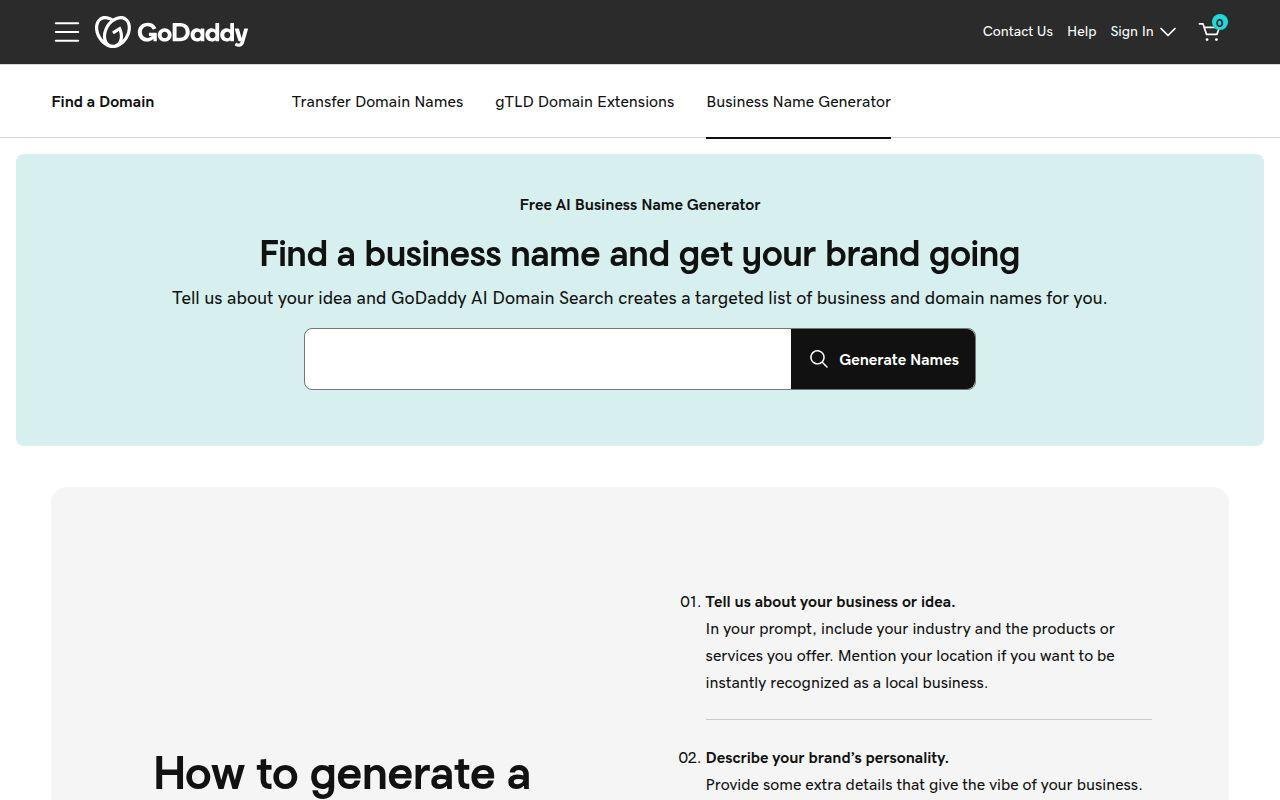
GoDaddy approaches naming like a registrar should. That creates a useful bias toward names you can actually connect to a domain and website without a long second search. We see it as a practical choice for buyers who care more about availability than wordplay.
Best for: domain-first buyers and local businesses that want one vendor.
- Business and domain suggestions together → fewer shortlist names die in follow-up searches.
- Handoff to domains, email, and site builder → you remove several launch steps right away.
- Quick onboarding → you can get a first online draft in one short session.
Pricing & limits: From $0/mo to generate and search. The Website Builder includes a 7-day free trial. Paid site and domain costs vary by plan and extension, so the total depends on how much stack you buy.
Honest drawbacks: The creative range is narrower than Namelix, Atom, or Hootsuite. We also think first-year domain promos can distract buyers from renewal reality.
Verdict: If your first priority is locking down a usable domain and moving on, this helps you make a practical choice quickly.
9. Hootsuite
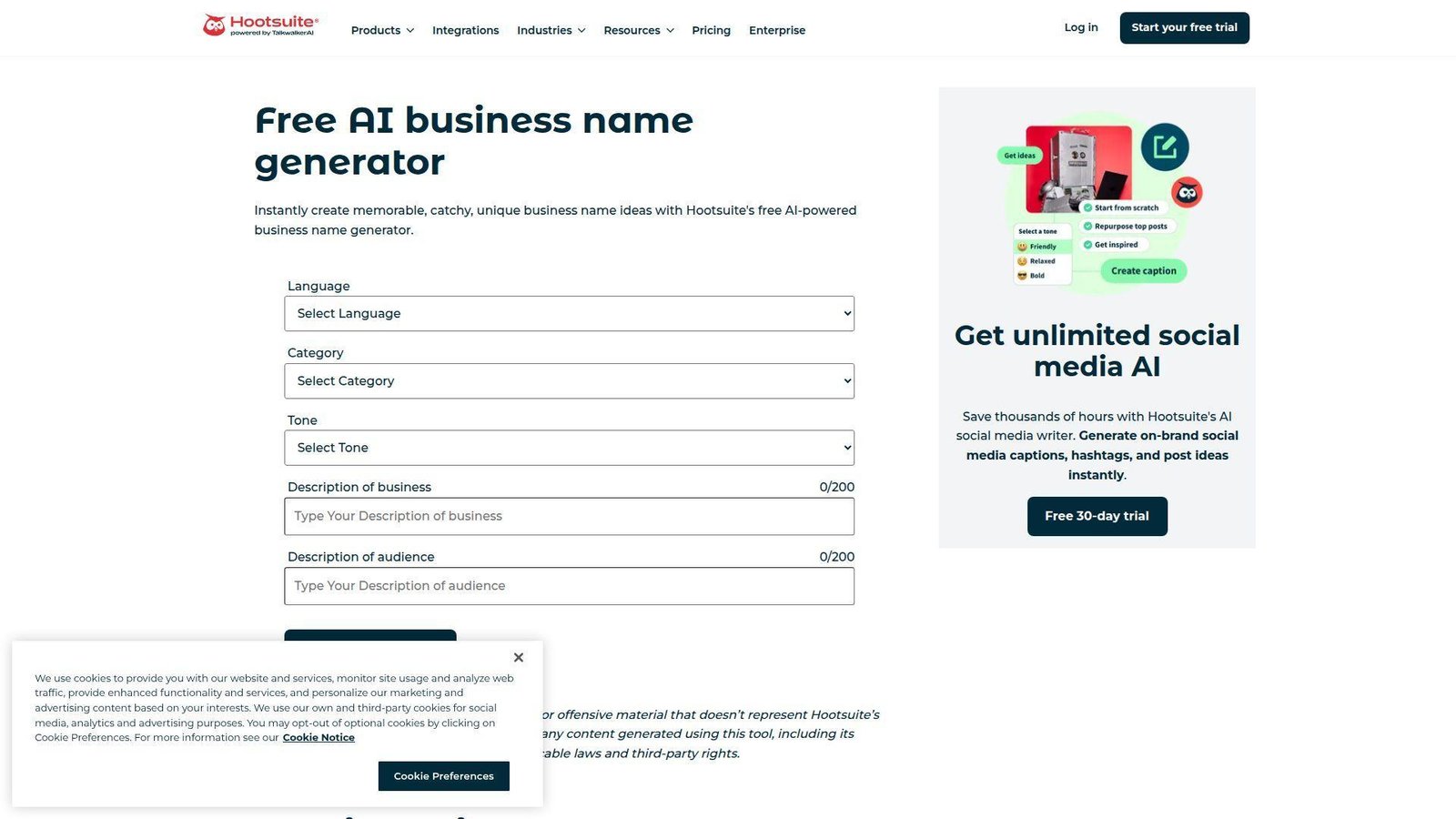
Hootsuite is the odd entry here because it comes from social media management. That makes the generator better at tone, audience, and brand voice than most domain-first tools. We like it when a brand will live on social before it lives anywhere else.
Best for: creators and social-first startups.
- Language, category, tone, and audience inputs → you get sharper brand voice on the first pass.
- Ten names per click with a natural fit to Hootsuite’s AI writing stack → you move faster from naming into bios, captions, and launch copy.
- Lightweight form → you can build a usable list in under 3 minutes.
Pricing & limits: From $0/mo for the naming tool. Full Hootsuite plans start at $99/mo and include a 30-day free trial. The generator itself does not solve domains, trademarks, or filing.
Honest drawbacks: Voice control is strong, validation is weak. It beats generic tools on tone, but trails Shopify, Wix, and GoDaddy on immediate domain practicality.
Verdict: If your brand will rise or fall on social identity, this helps you create a shortlist with clearer personality fast.
10. NameSnack
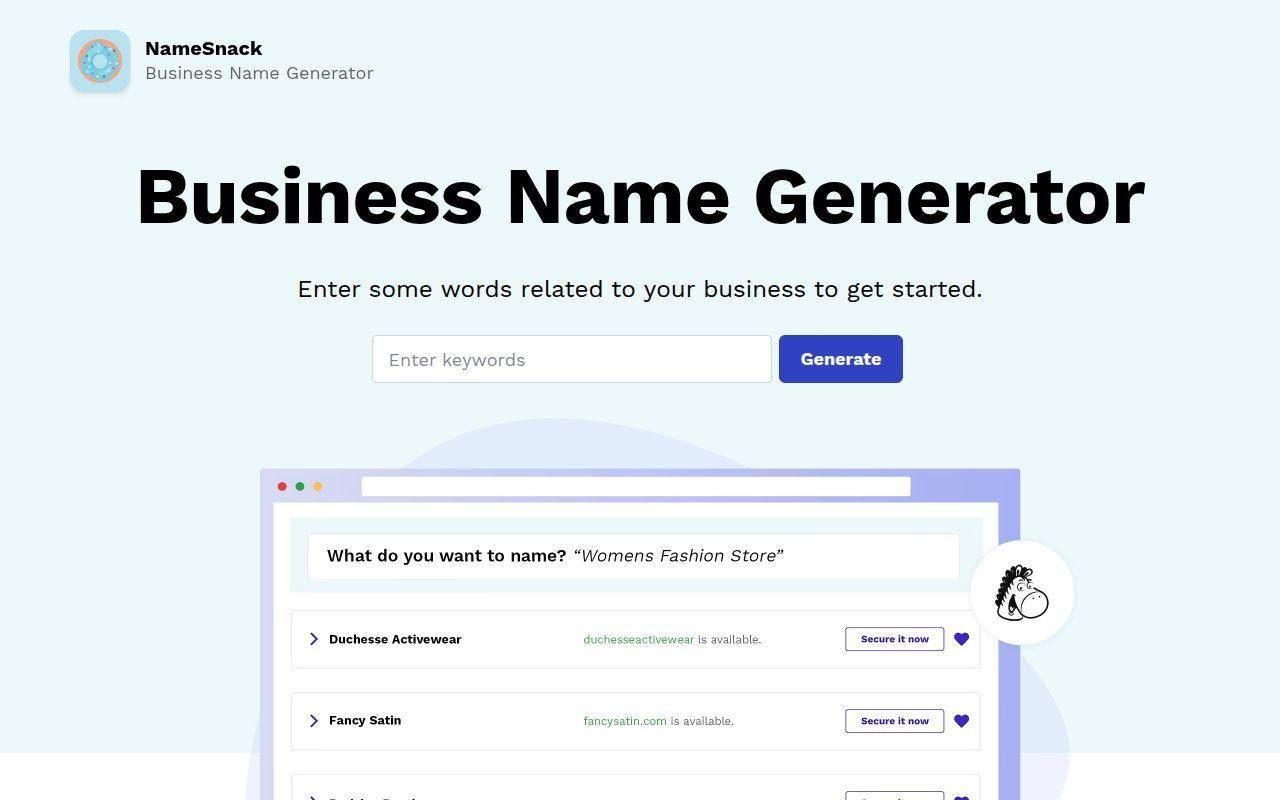
NameSnack has stayed relevant because it does the basics well. The team mixes machine learning, keyword combinations, and instant .com checks without burying users in extras. We still like it because free does not always have to mean flimsy.
Best for: bootstrappers and local service businesses.
- Multiple name styles plus .com focus → you get more realistic shortlists on the first pass.
- Free logo generation and registrar handoff → you remove one more tool swap after choosing a name.
- No-login feel → value starts almost immediately.
Pricing & limits: From $0/mo. It is fully free. There is no trial limit or seat cap. Names are built around .com availability, but trademark checks are still manual.
Honest drawbacks: The .com bias can narrow creativity. The UI also feels more functional than premium. Even so, it beats many flashier tools on raw practicality.
Verdict: If you want free, fast, and domain aware, this helps you build a realistic shortlist with very little friction.
11. Atom
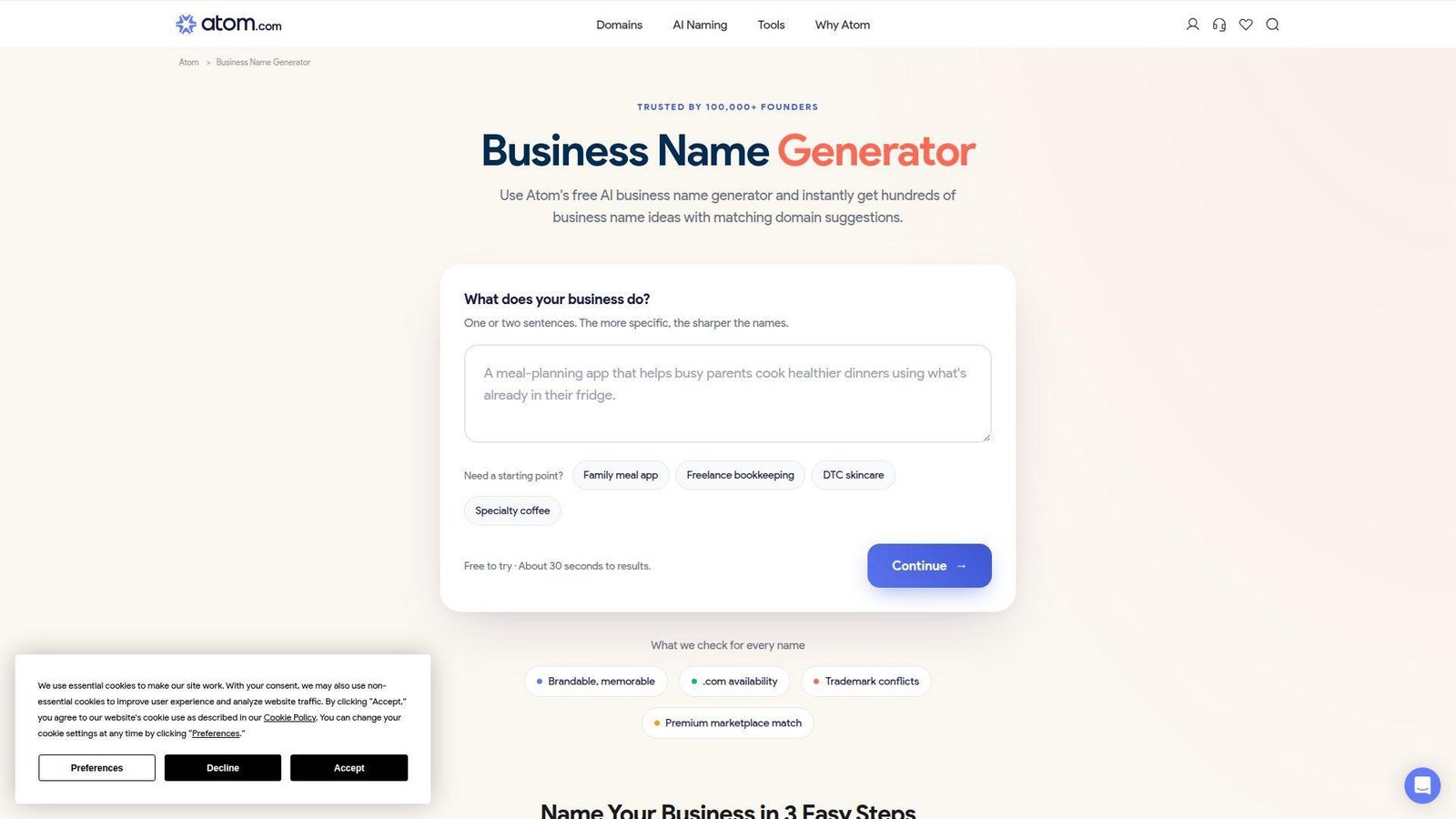
Atom is the most strategic tool on this list. The team has built more than a generator. They have built a naming workflow that can stretch into premium domains, contests, audience testing, and trademark support. That makes it feel closer to a naming platform than a single-purpose toy.
Best for: funded startups and teams naming long-term brands.
- Multi-step brief with business details, keywords, and styles → you get higher-signal suggestions than with a plain one-box prompt.
- Domain suggestions, free AI rounds, contests, and research services → you replace several separate tools and review steps.
- Guided workflow → you can get to a serious shortlist in 10 to 15 minutes.
Pricing & limits: From $0/mo to generate names and use free rounds. Naming contests start at $299. Trademark research costs $49, and filing service starts at $649 plus fees. Premium domain prices vary widely.
Honest drawbacks: The platform can pull you toward higher-spend options quickly. That is useful for venture-backed launches, but too much for a hobby project. Atom beats nearly everyone here on validation depth.
Verdict: If the name will sit at the center of a serious brand strategy, this helps you make a better call with less guesswork.
12. Hostinger
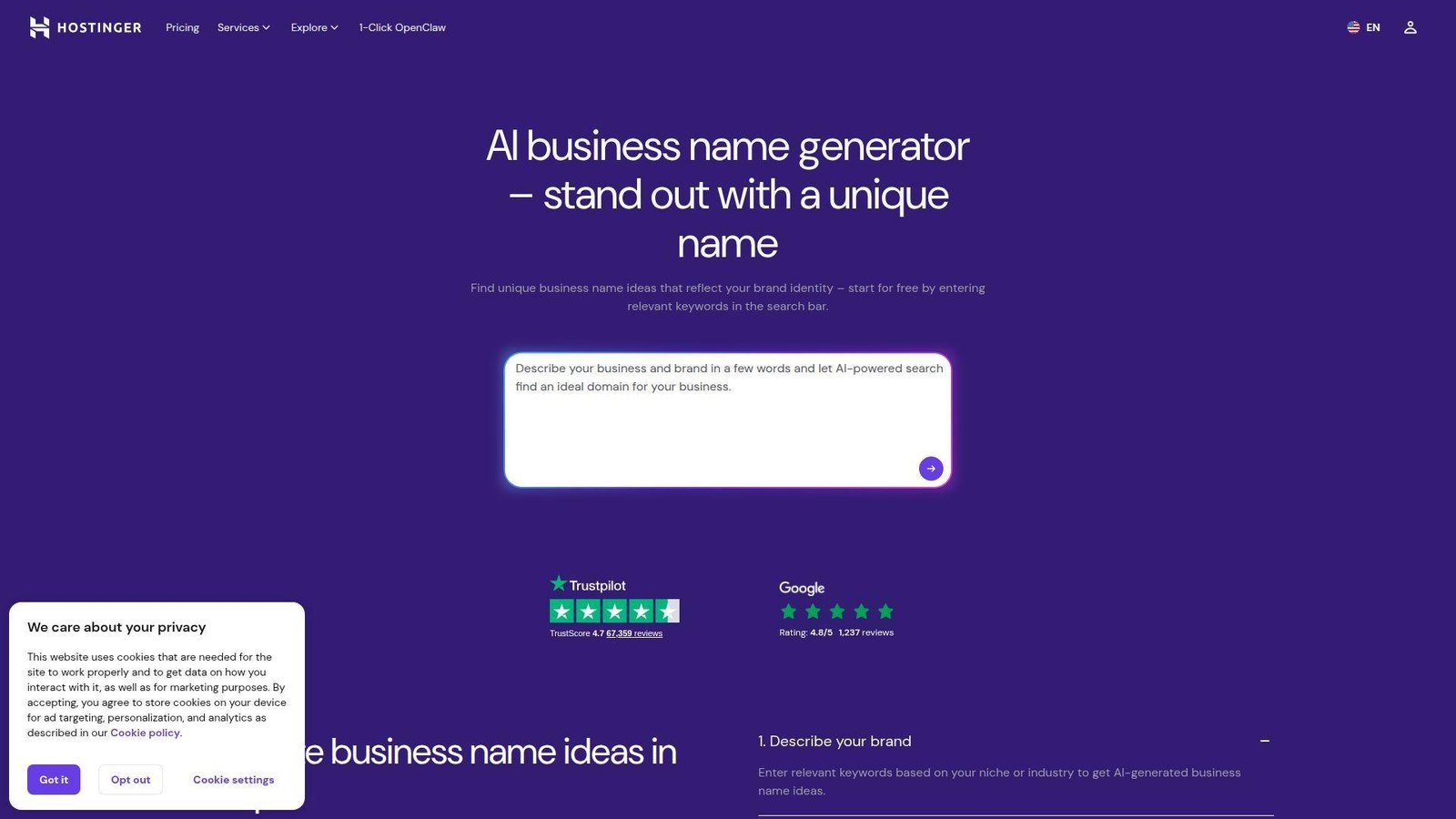
Hostinger treats naming like an on-ramp to an affordable website stack. We like the team’s focus on small businesses that want a usable name, a domain, and a simple site without overspending. That makes the tool more practical than flashy.
Best for: freelancers and budget SMBs.
- Keyword-based naming with domain checks → you remove dead-end ideas earlier in the process.
- Connected builder, logo, SEO, and ecommerce tools → you cut several setup steps after you pick a name.
- Friendly UI → you can get a shortlist fast and a first site draft the same day.
Pricing & limits: From $0/mo for the generator. Website Builder starts at $2.99/mo with a 30-day money-back guarantee. The Business plan starts at $3.99/mo and supports up to 1,000 products.
Honest drawbacks: Naming controls are not as rich as Namelix or Atom. The biggest upside appears only if you also want Hostinger hosting and site tools.
Verdict: If cost matters and you need more than a name, this helps you move from idea to launch without blowing the budget.
13. 10Web
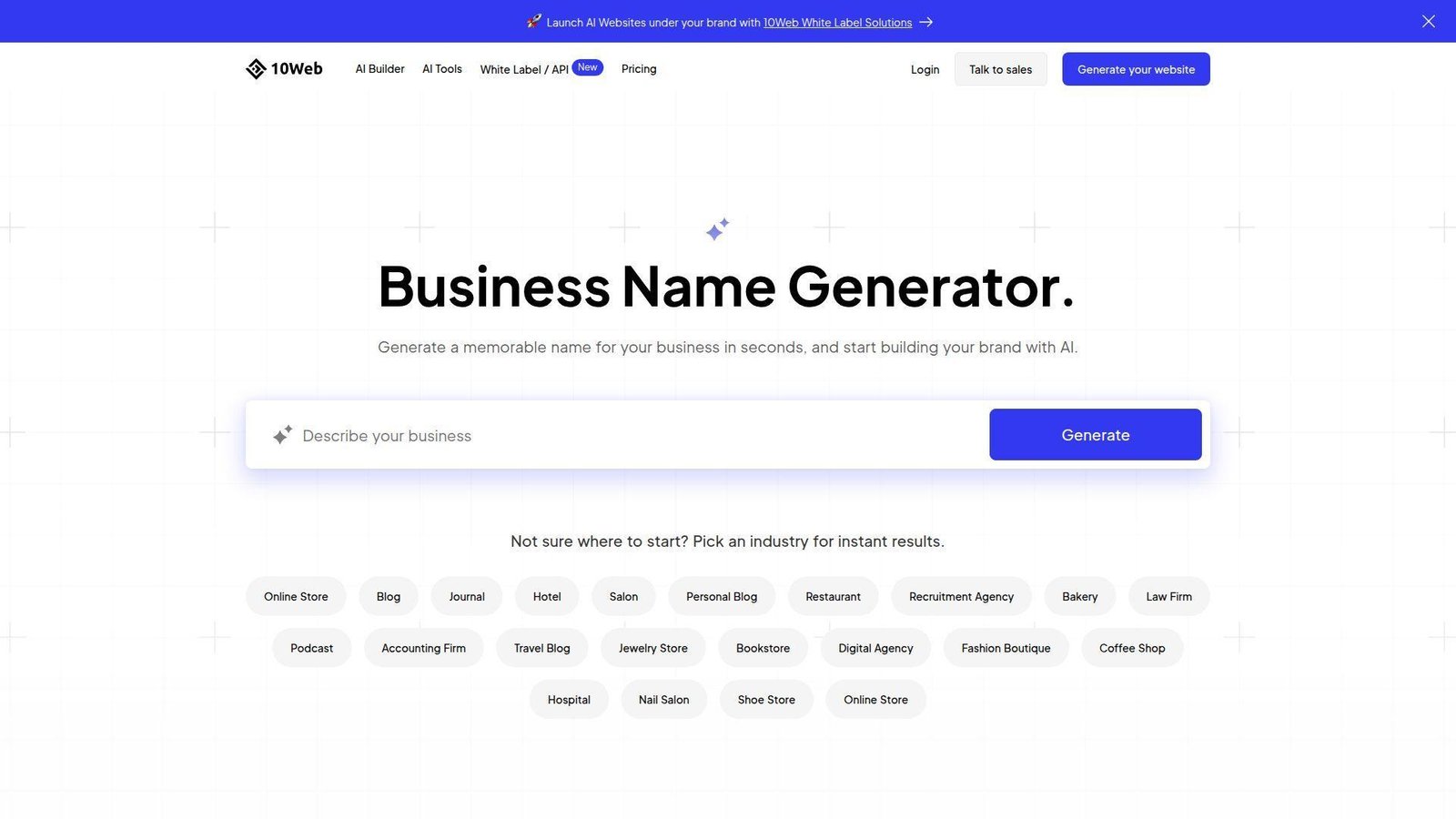
10Web comes from the AI website builder space, so the team thinks about naming as part of a website creation flow. We find it more useful when a WordPress launch is already part of the plan. That context changes what counts as “best.”
Best for: WordPress users and small agencies.
- Name generator linked to logo and site creation → you move faster from shortlist to real brand mockup.
- 7-day free trial with Pro features → you can compress naming, site generation, and editing into one workflow.
- WordPress-first setup → you often reach first real value in a weekend, not a week.
Pricing & limits: From $10/mo billed annually for AI Starter, or $20 monthly. There is a 7-day free trial. Free users can generate one website, while starter plans include 5 website regenerations, 10K visitors, and 10GB storage.
Honest drawbacks: The naming layer is lighter than dedicated brand tools. It also makes the most sense only if you want 10Web hosting and builder.
Verdict: If you want your naming tool to end with a working WordPress draft, this helps you get there fast.
14. Durable
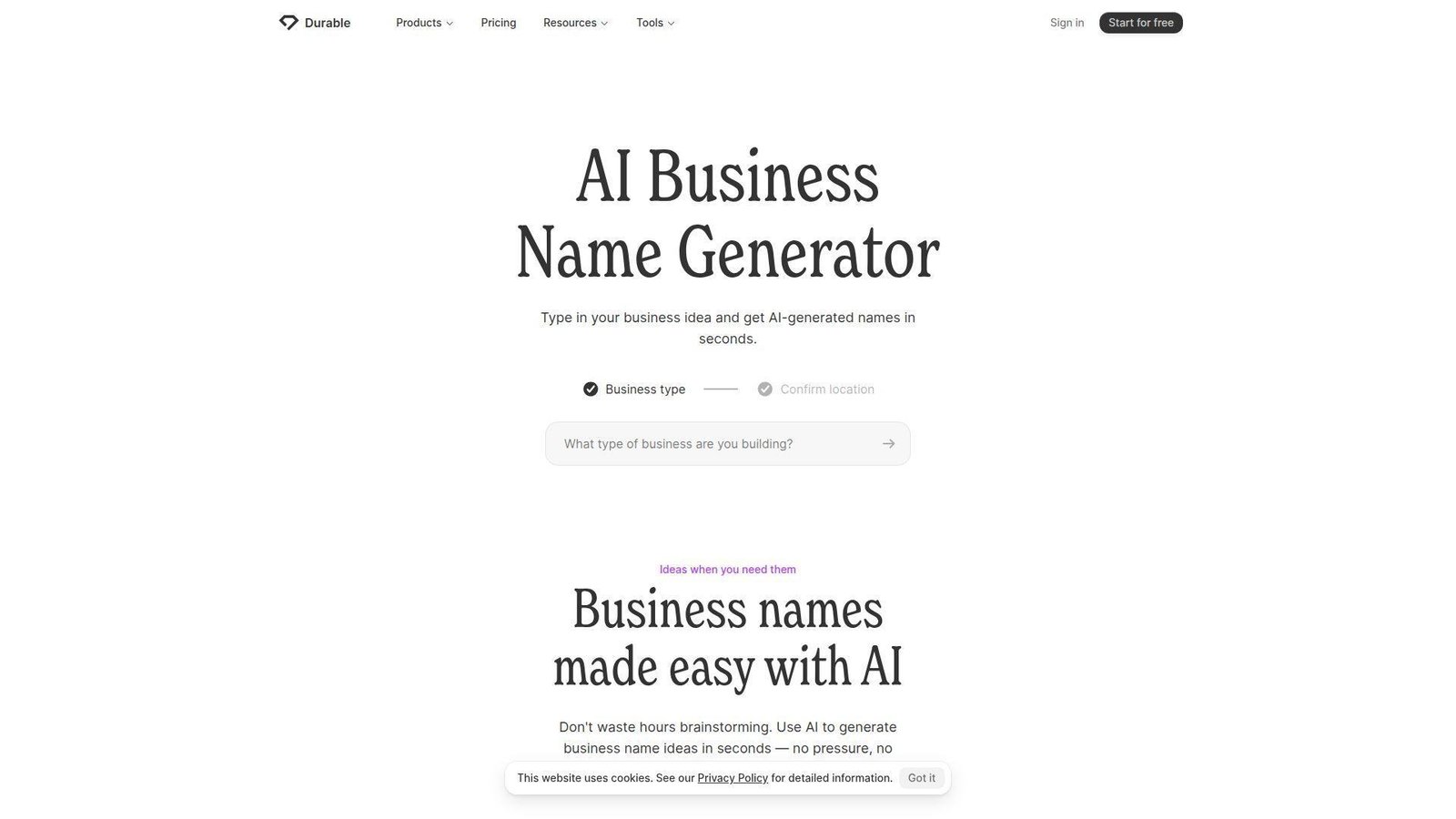
Durable is built for speed. The team wants a solo operator to go from idea to website, CRM, and brand starter with very little setup. We think of it as a launch pad first and a naming tool second.
Best for: local service businesses and solo operators testing an idea.
- Generator next to AI website and logo tools → you judge names in business context almost immediately.
- CRM, AI chat, and AI image tools in the same stack → you avoid buying extra early-stage tools.
- Fast onboarding → you can get a usable business draft in under an hour.
Pricing & limits: From $0/mo on the free plan. Launch starts at $25/mo. Free includes a durable.site subdomain, 5 AI images per month, 10 AI chat messages per month, and up to 10 customers.
Honest drawbacks: Naming controls are thin compared with Namelix or Atom. Free limits also get tight quickly if you use Durable for more than a quick test.
Verdict: If you want to test a service brand quickly and cheaply, this helps you get a name, site, and basic ops layer on the same day.
15. Ahrefs
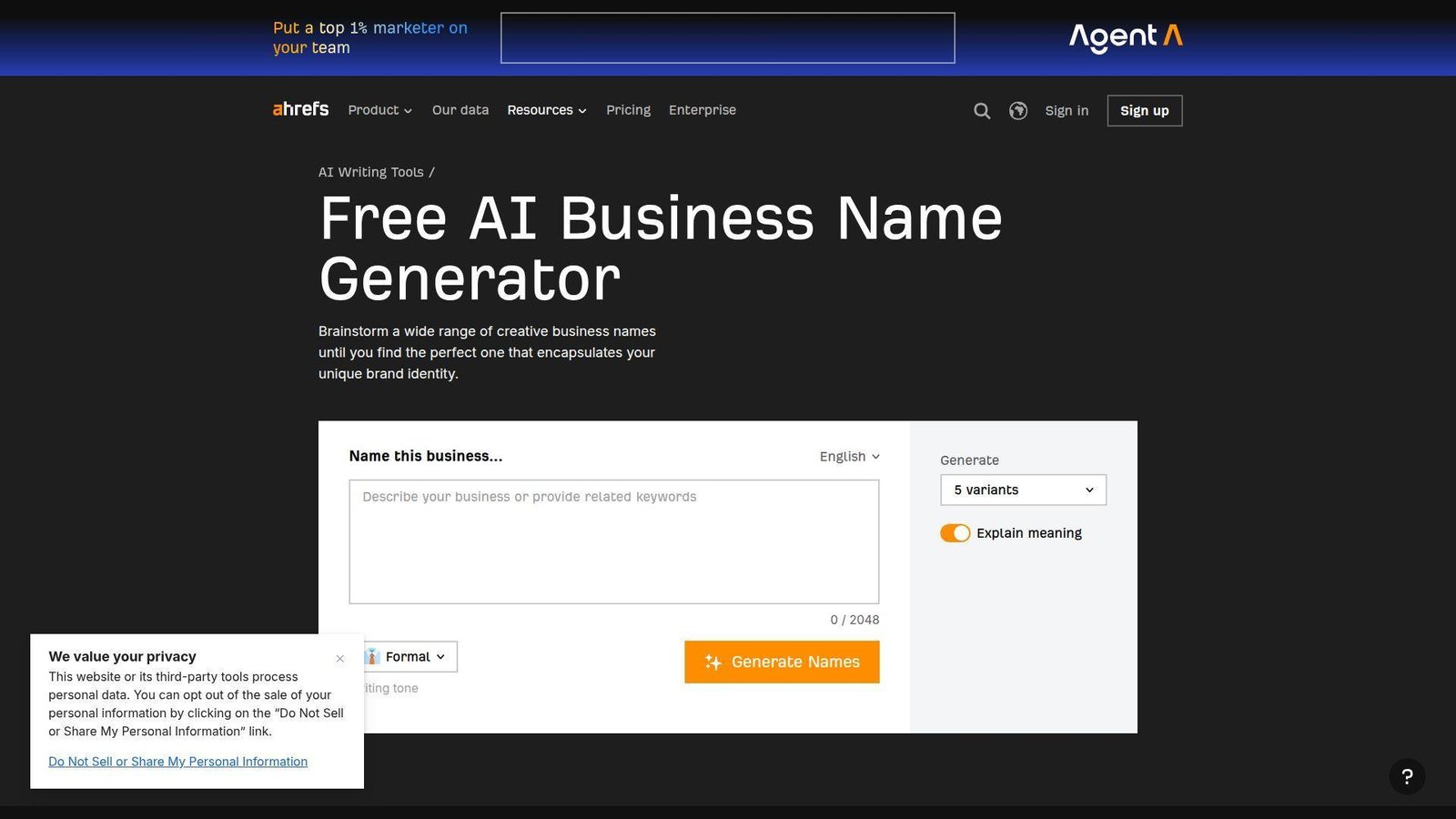
Ahrefs is not trying to be a full branding suite. The team comes from SEO, so its naming approach feels stripped down, practical, and search minded. We like that focus when discoverability matters more than visuals.
Best for: SEO-focused founders and marketers naming tools or content brands.
- Low-friction generator flow → you get fast ideation without branding fluff.
- Natural fit with search data and site tools → you can pressure-test discoverability later with less context switching.
- Minimal UI → you can reach a shortlist in minutes.
Pricing & limits: From $0/mo for the free tools and writing tools. The broader Ahrefs platform has paid tiers beyond that. There is no trial clock, but free access is limited.
Honest drawbacks: You do not get logo previews, domain workflows, or rich tone filters. It beats design-heavy tools on focus, but trails them on brand-building extras.
Verdict: If you care most about whether a name can work in search, this helps you generate ideas with a cleaner SEO lens.
16. Copy.ai
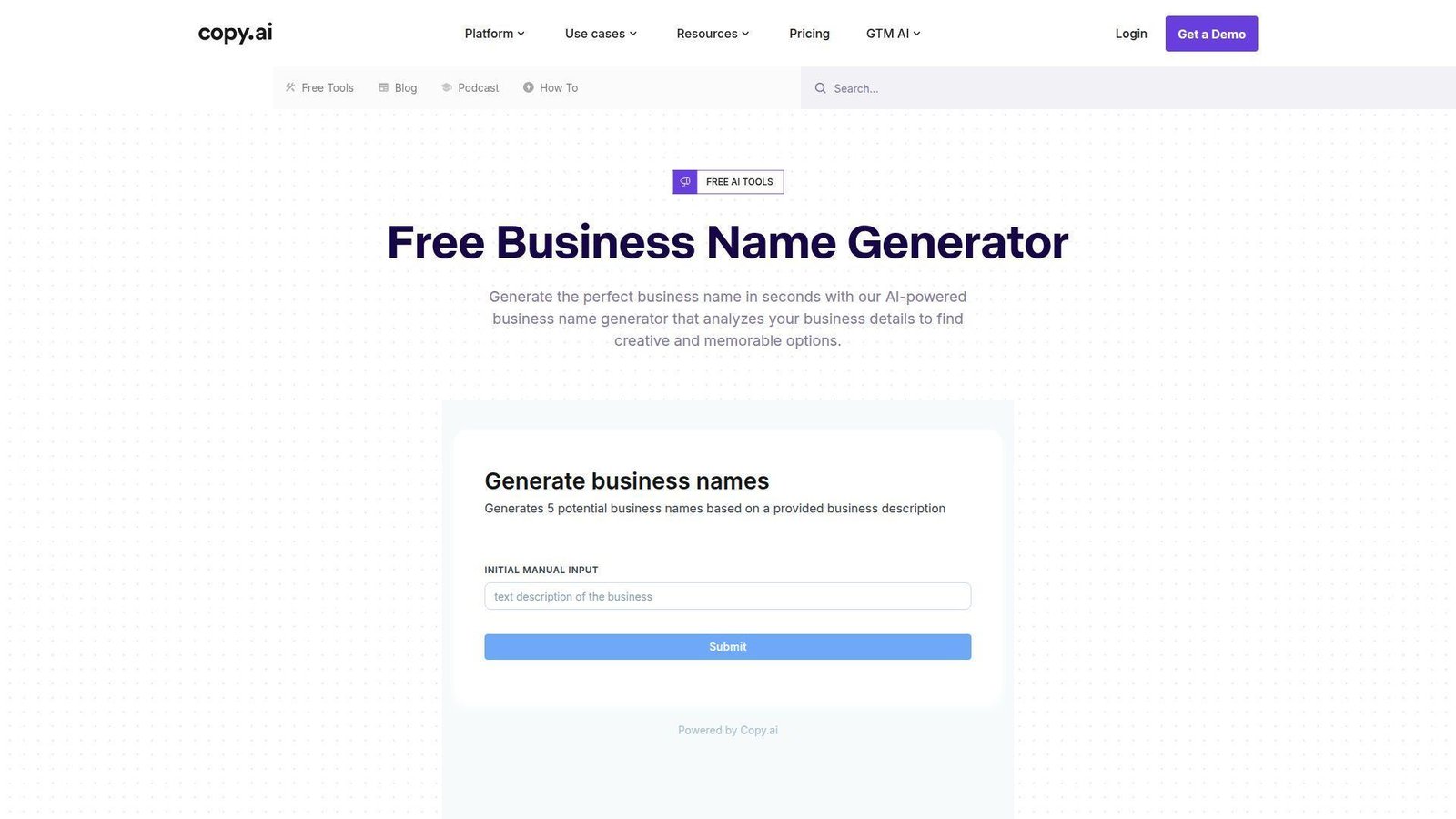
Copy.ai has grown from an AI writer into a go-to-market platform, and that background shapes its naming tool. The team thinks in prompts, positioning, and messaging systems. That makes it more useful for product and offer naming than many buyers expect.
Best for: product marketers and startup teams naming offers.
- Prompt-driven ideation → names align better with positioning, not just random wordplay.
- Broader AI workflows and model access → you can move from naming to messaging without switching tools.
- Clean interface → you usually get a first batch in a few minutes.
Pricing & limits: From $0/mo for casual use. Paid Chat starts at $29/mo monthly or $24/mo billed annually. The Chat plan includes 5 seats, unlimited chat words, and unlimited chat projects.
Honest drawbacks: It is not a domain or trademark tool. We also see more campaign-style phrasing here than pure brandable naming. It beats generic chat apps on structure, but trails Atom on validation.
Verdict: If you are naming products, features, or campaigns inside a larger GTM motion, this helps you connect naming and copy much faster.
17. BrandBucket
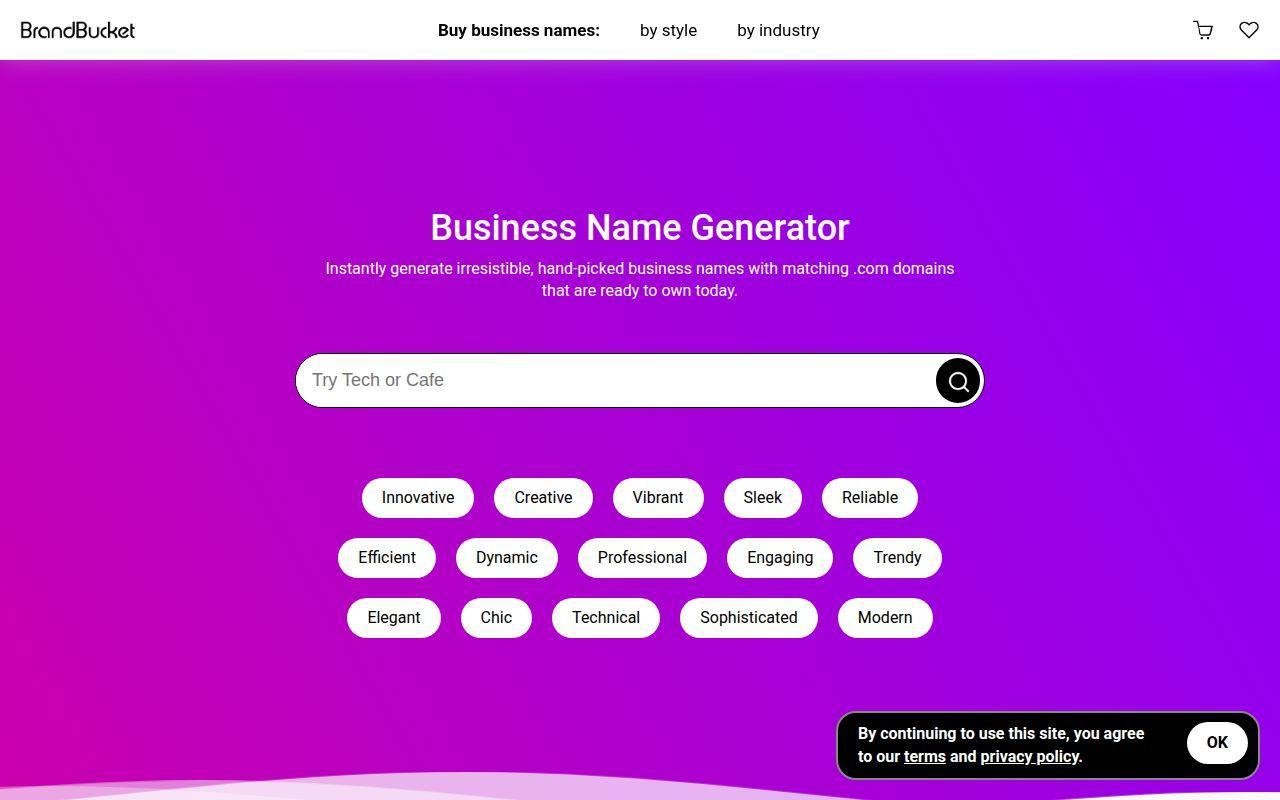
BrandBucket is really a marketplace, not just a generator. The team curates premium names that already come with matching domains and logos, which changes the whole buying equation. We treat it like buying inventory, not brainstorming.
Best for: funded founders and buyers who want a strong .com immediately.
- Curated premium inventory → you avoid the classic “great name, impossible domain” problem.
- Matching domain and logo with each listing → you remove major post-choice tasks right away.
- Clear filters and upfront pricing → you can build a serious shortlist in one session.
Pricing & limits: From roughly $2,285 based on current listings we sampled, with many names priced far higher. There is no trial. You are buying an owned asset, not just browsing ideas.
Honest drawbacks: Budget is the obvious deal-breaker. Flexibility is lower too, because you are choosing from what exists. BrandBucket beats free tools on domain quality, but not on cost.
Verdict: If speed and premium .com quality matter more than bargain pricing, this helps you buy a launch-ready brand immediately.
18. Brandroot
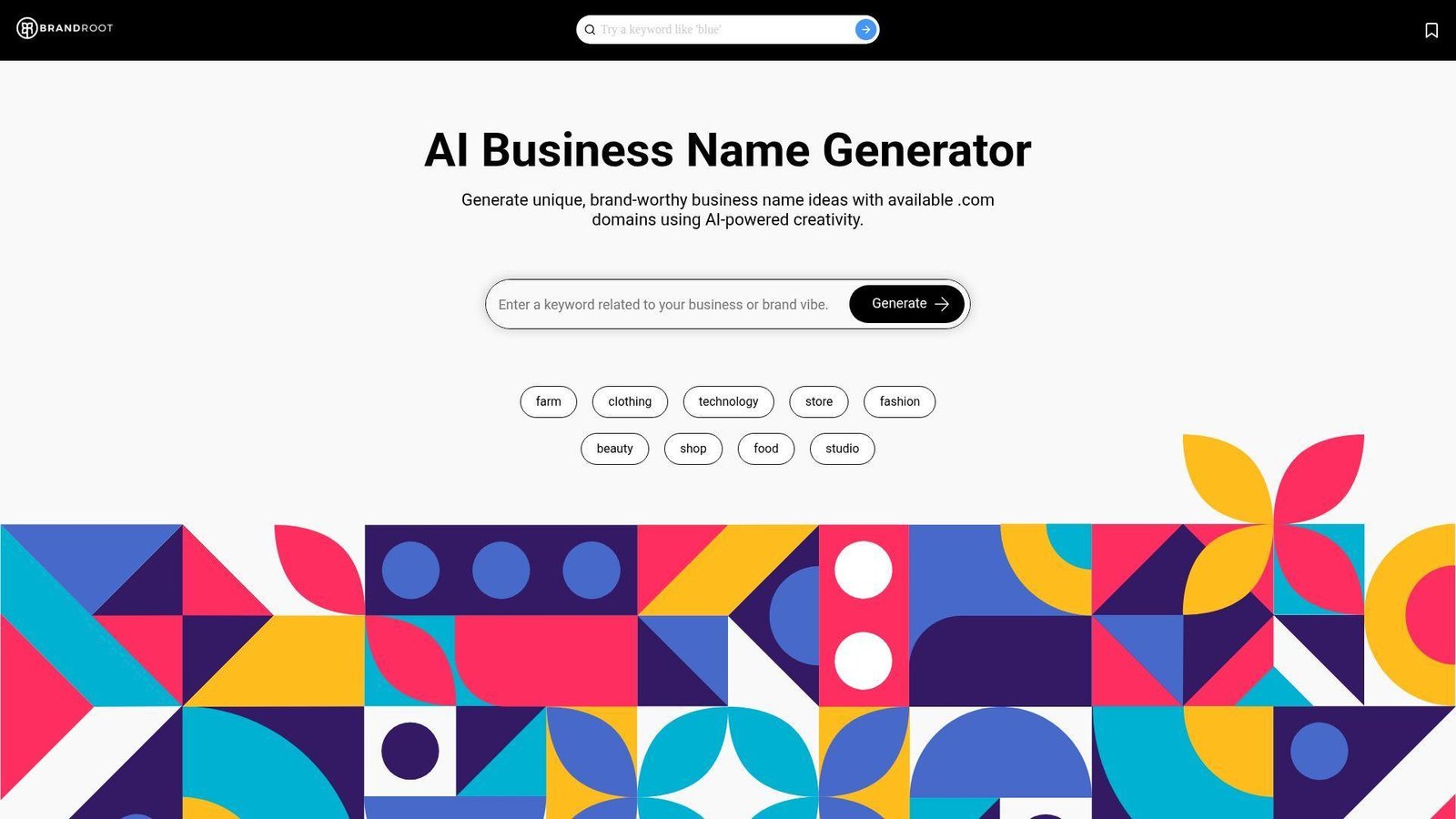
Brandroot sits near BrandBucket in the market, but feels a bit looser and more search driven. The team aggregates premium brand-style names with matching .com options and fixed buy-now pricing. We see it as a premium shortcut, not a creative sandbox.
Best for: founders who want premium .com choices and agencies buying names for clients.
- AI-powered search across premium inventory → you get to serious, purchasable options faster.
- Matching .com domain and logo → you remove more post-purchase setup work.
- Buy-now model → you move from shortlist to decision without negotiation delays.
Pricing & limits: From $0/mo to search, while actual premium domain prices vary by listing. There is no trial. Prices are fixed and not negotiable.
Honest drawbacks: Open-ended ideation is much weaker than with Namelix, NameSnack, or Atom. Premium inventory can also push spend up quickly.
Verdict: If your shortlist only counts when a clean .com is attached, this helps you narrow strong buy-now options in one research session.
19. BusinessNameGenerator.com
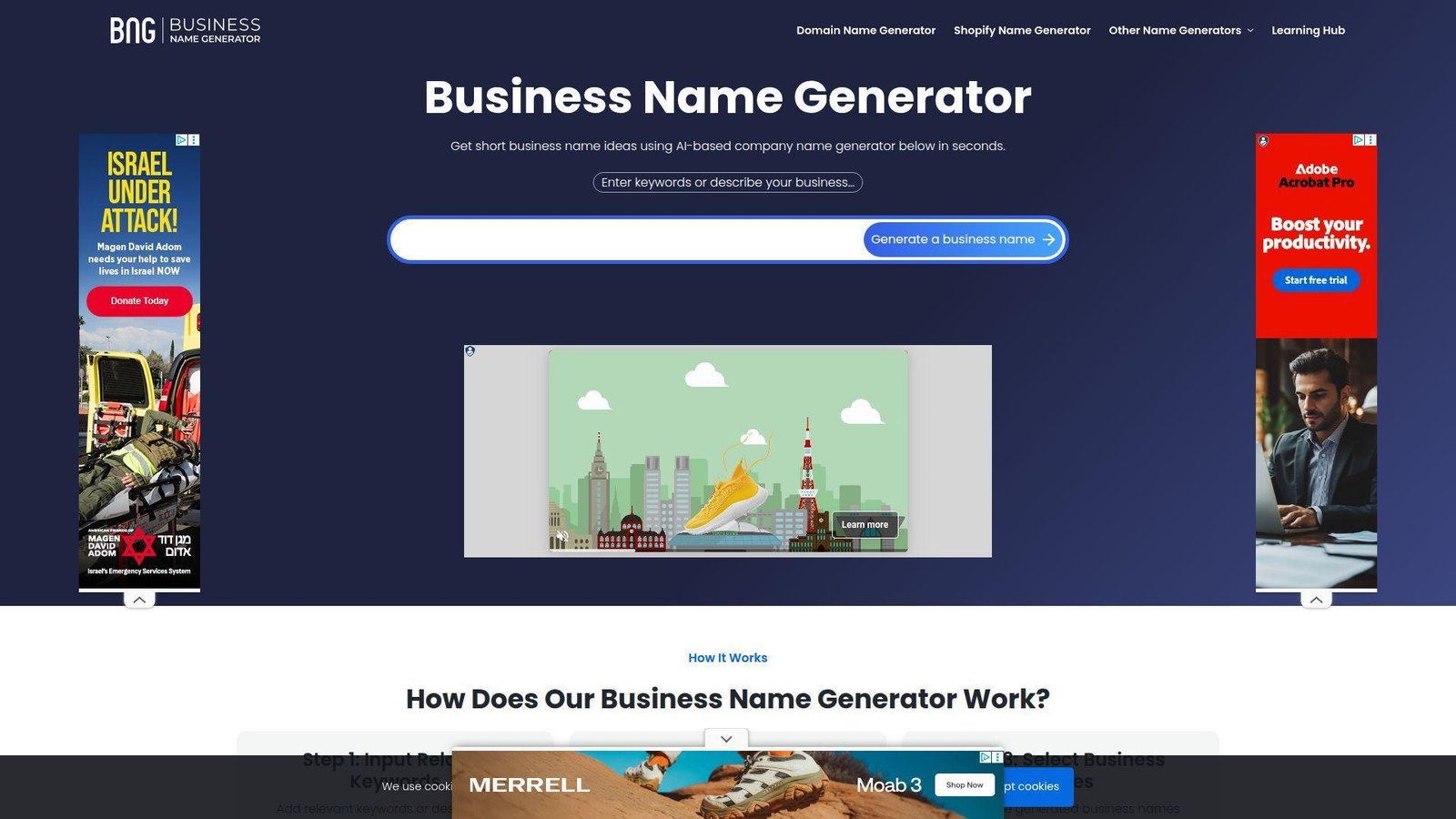
BusinessNameGenerator.com is a breadth play. The team focuses on high-volume idea generation, useful filters, and multilingual support rather than boutique brand strategy. That makes it especially handy when you want options before you want polish.
Best for: beginners and multilingual idea testing.
- Thousands of ideas with length and style filters → you spot patterns and usable directions much faster.
- Domain availability checks and broad language support → you can explore wider markets without changing tools.
- Save-for-later options → you build a shortlist quickly and compare later with less friction.
Pricing & limits: From $0/mo. The tool is free and there is no trial wall. Runs are effectively unlimited, but trademark and deeper brand review are still manual.
Honest drawbacks: Quality varies more because the tool generates so much. The site also feels heavier and less curated than premium options.
Verdict: If you want range first and refinement second, this helps you discover naming directions before you spend money anywhere else.
20. TRUiC Business Name Generator
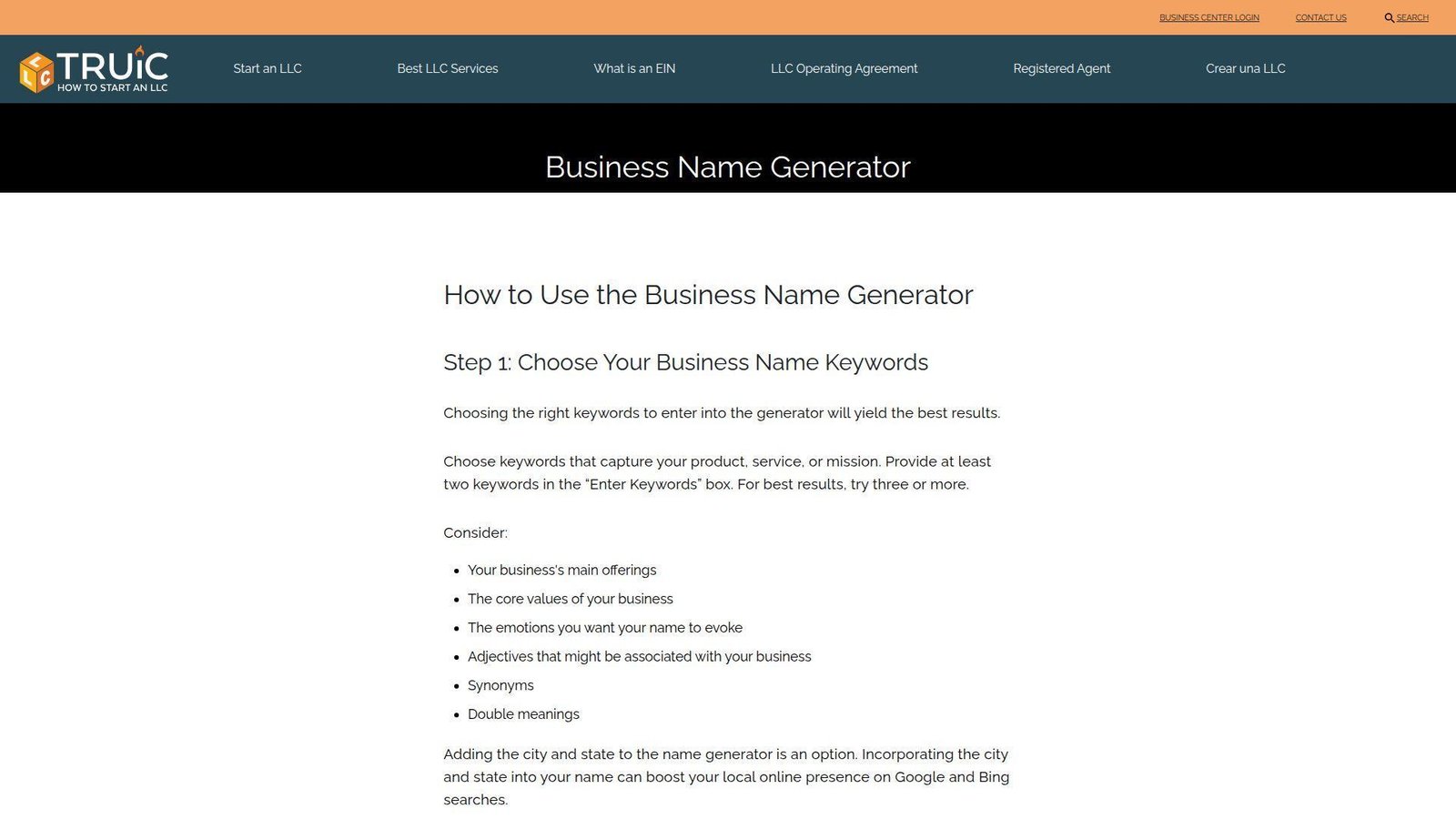
TRUiC builds startup education and formation tools, so its naming experience is designed to get first-time founders unstuck. We see it as a practical starter tool, not a pure branding lab. That is a feature for some buyers, not a weakness.
Best for: first-time LLC founders and local business owners who want guidance.
- Free business tools and startup education → you turn naming into a practical launch checklist.
- Logo maker and related launch resources → you reduce the number of beginner tools you need to stitch together.
- Friendly, low-pressure flow → you reach first value quickly even if this is your first business.
Pricing & limits: From $0/mo. The tools and account options are free to access. There is no trial clock, and paid business services sit outside the generator.
Honest drawbacks: Creative depth is lighter than Namelix, Atom, or Hootsuite. The product is more educational than experimental.
Verdict: If you want a safe first step with business setup guidance attached, this helps you move from blank page to action plan in one evening.
Recommended reading: Top 20 Canva Alternatives for Creators, Marketers, and Small Businesses
What Makes the Best AI Business Name Generators Stand Out
The best tools do not just generate more names. They narrow the field faster, show trade-offs sooner, and reduce the odds that you fall in love with a name you cannot really use.
1. Brandable Short Names, Invented Words, and Compound Styles
Good tools let us choose between invented names, compound words, real words, and short phrases. That matters because each style solves a different problem. Invented names are easier to own. Real-word or descriptive names are easier to understand on day one. Namelix is especially strong at short, brandable outputs. LegalZoom stays more literal. Neither approach is “better” in every case. The right one depends on whether you care more about originality or instant clarity.
2. Tone, Length, Language, and Industry Filters
Filters are where mediocre generators usually fall apart. We want tone, audience, length, language, industry, and sometimes randomness. Hootsuite does tone and audience well. BusinessNameGenerator.com does broad filtering well. NameSnack does practical domain-aware narrowing well. When those controls are missing, we end up doing cleanup by hand. That slows buyers down and makes the tool feel smarter than it really is.
3. Domain, Social Handles, and Availability Checks
We rarely trust a shortlist unless domain availability is part of the same workflow. Shopify, Wix, GoDaddy, Hostinger, and NameSnack make this practical. A tool that gives you a brilliant name with no domain path is only doing half the job. Even then, availability is not ownership. A good workflow helps you act immediately, not just admire an available name and hope nobody else grabs it later.
4. Logo Previews, Brand Kits, and Website Launch Tools
This is where Design.com, Looka, 10Web, Durable, and Hostinger pull away from pure idea generators. Seeing a name on a logo or home page changes decisions fast. We have dropped names we liked in plain text once we saw them inside a mock header or on a cramped mobile logo. That is useful friction. It is better to learn a name looks awkward in ten minutes than after you register a domain and file paperwork.
5. Trademark Support, Name Protection, and Registration Guidance
Trademark support is still the weakest part of this category. It activity stayed busy worldwide in 2024, so we do not trust any generator that stops at domain availability. LegalZoom and Atom do the best job here because they push buyers toward screening, filing support, or both. Everyone else still needs a manual registry and trademark pass before the name is safe enough to use.
Recommended reading: Top 20 Low Code Development Platforms for Internal Tools, Portals, and Enterprise Apps
How to Get Better Results Using AI Business Name Generators
Most weak results come from weak prompts. When we give these tools better context, they almost always give us better names back.
1. Using Clear Keywords, Audience Details, and Brand Personality
We start with three inputs. One, what the business sells. Two, who buys it. Three, how the brand should feel. “Bookkeeping app for independent electricians, calm and trustworthy” is far better than “finance app.” It gives the model a market, a customer, and a mood. That alone can change a useless result set into a shortlist worth saving.
2. Refining Prompts Through Tone, Length, Language, and Style
Do not stop at one prompt. We usually run the same business through several versions. We test “short and modern,” “premium and minimal,” “friendly and local,” and “invented but easy to pronounce.” Then we compare patterns. If one style keeps producing names we actually like, that tells us something about the brand, not just the tool.
3. Saving Favorites and Regenerating Until a Pattern Emerges
We almost never choose the best name from the first batch. Instead, we save anything with the right shape, sound, or tone. After two or three rounds, patterns start to show up. Maybe we keep choosing two-syllable names and prefer compound words. Maybe every strong option avoids industry jargon. That pattern is often more valuable than any single result.
4. Choosing Names That Are Short, Memorable, and Easy to Pronounce
Short names win more often because they are easier to remember, easier to type, and easier to say out loud. We test every finalist in conversation. Can someone spell it after hearing it once? Does it sound awkward on the phone? Does it look clumsy in a logo? If a name fails those basic tests, we drop it, even if the generator thinks it is brilliant.
5. Comparing Searchability, Differentiation, and Long-Term Flexibility
A name should fit the business you are launching now and the business you might become later. We avoid names that are too narrow, too trendy, or too close to direct competitors. A strong name should be searchable, distinct enough to own in people’s minds, and flexible enough to survive a product shift. If you may expand from candles into home goods, “Oak & Wick” gives you more room than “Soy Candle Shed.”
Recommended reading: 30 Best CRM for Startups 2026: Buyer’s Guide, Toplist, and Implementation Outline
What to Do After Choosing a Business Name
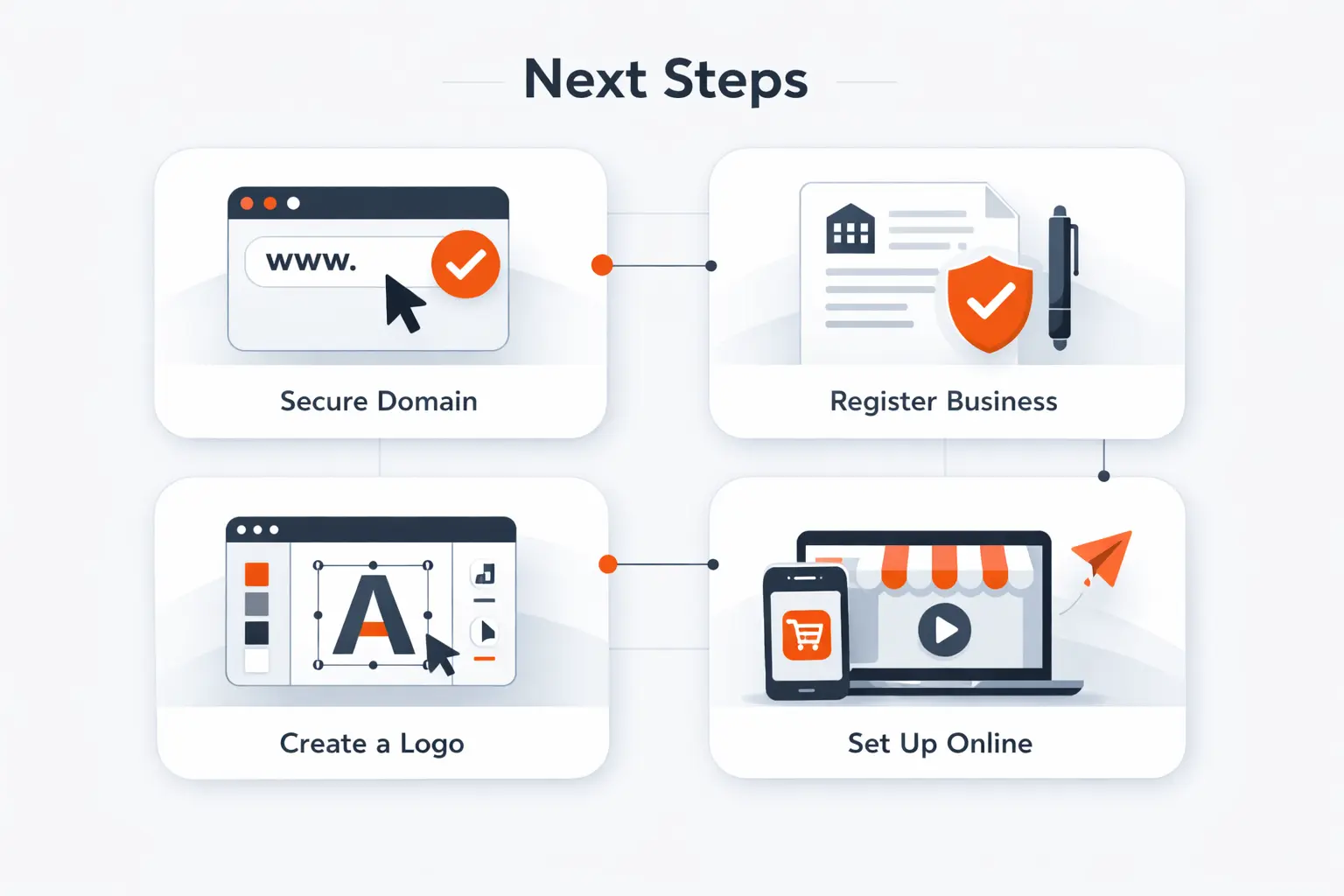
Picking a name is only half the job. The next steps are what turn a favorite into a usable business asset.
1. Checking State Rules and Required Entity Designators
State rules are boring until they block your filing. Many states expect entity designators for LLCs or corporations, and some words can trigger extra approval or licensing rules. We always check the state naming rules before we get too attached to a finalist, especially if the business will register as an LLC.
2. Reserving the Domain and Social Handles Early
Once we have a favorite, we try to secure the domain and core social handles immediately. Tools like Shopify, Wix, Hostinger, and NameSnack make the domain side easier, but none of them reserve anything until you act. Waiting even a short time can be enough to lose a clean match.
3. Searching Business Registries and Trademark Databases
We also run every finalist through state business registries and trademark databases. LegalZoom, Atom, and TRUiC all push users in that direction, and for good reason. An AI suggestion can still be taken, too close to another brand, or too narrow for where you want the company to go.
4. Testing the Name Across Logos, Websites, and Packaging
This is the stage where many names quietly fail. We drop finalists into a simple logo, a homepage mockup, a mobile header, and a social bio. If the name wraps badly, looks hard to read, or sounds clunky next to your tagline, we keep moving. The goal is not to prove a name is good. The goal is to find reasons it will break before customers do.
5. Choosing a Name That Supports Long-Term Brand Growth
We prefer names that can stretch. That does not mean vague. It means flexible. A name should leave room for adjacent products, new services, or a broader audience later. If you think there is even a decent chance your business will expand, pick a name that grows with it instead of one that traps you in version one.
FAQ About AI Business Name Generators
Most FAQ sections stay too surface level. These are the answers we think buyers actually need before they choose a tool.
1. How Do AI Business Name Generators Work?
Most AI business name generators combine keywords, industry context, naming patterns, and language models to suggest lists of names. Some, like Namelix and NameSnack, also apply style filters or learn from what you save. Others, like Hootsuite, ask for tone and audience details first. The better the input, the better the output.
2. Are AI Business Name Generators Really Free to Use?
Many are free to generate ideas, but free does not always mean the whole workflow is free. NameSnack and BusinessNameGenerator.com are free idea tools. LegalZoom makes the generator free, then charges for formation or trademark help. Durable gives you a free starting plan, but broader launch tools sit behind paid tiers.
3. How Can I Get Better Results From an AI Business Name Generator?
Give the tool more context. Include what you sell, who you serve, what tone you want, and whether you prefer short brandables, real words, or descriptive names. Tools from Hootsuite, Namelix, and BusinessNameGenerator.com all work better when you use the extra inputs instead of a single vague keyword.
4. Can AI Business Name Generators Check Domain Availability?
Yes, many can. Wix, Shopify, Hostinger, and NameSnack all build domain checking into the naming flow. That does not replace actual registration, but it does make it much easier to avoid wasting time on names that are already gone.
5. Do AI Business Name Generators Check Social Handles and Trademarks?
Usually not well enough to trust blindly. Domain checks are common. Social handle checks are less consistent. Trademark checks are the biggest gap in this category. LegalZoom and Atom offer stronger help around trademark screening or filing, but most generators still expect you to do that work yourself.
6. How Do I Know Whether a Business Name Is Taken?
We recommend a three-part check. Search your state business registry, search trademark databases, and search domain and social availability. A name can look clear in one place and still create problems somewhere else. That is why shortlist validation matters as much as generation.
7. What Makes a Good AI-Generated Business Name?
A good name is short enough to remember, clear enough to pronounce, distinct enough to stand apart, and flexible enough to grow with the business. We also want it to survive real-world tests. Say it out loud. Spell it over the phone. Put it in a logo. If it still feels strong, you are closer.
8. Can You Change a Business Name After Registration?
Yes, but it adds work you would rather avoid. Depending on the structure and the state, that may mean filing an amendment or using a DBA. It is possible, but we treat it as a cleanup step, not a preferred plan. It is much cheaper to pressure-test the name early.
How TechTide Solutions Creates Custom AI Naming Solutions
Sometimes an off-the-shelf generator is enough. Sometimes the business really needs a naming system that fits its own workflow, legal rules, brand standards, and approval process. That is where custom software starts to make more sense.
1. Custom AI Tools Built Around Your Naming Process
At TechTide Solutions, we build custom AI naming tools around the way a team already works. That can mean prompt libraries, restricted-word lists, multilingual variants, approval rules, or ranking logic based on names your team has accepted before. We do not try to replace brand judgment. We build software that makes that judgment faster, cleaner, and easier to explain.
2. Web Apps That Connect Naming, Domains, and Branding
We also build web apps that connect name generation to domain APIs, shortlist voting, logo previews, and downstream brand workflows. Instead of copying options from one tool into five others, teams can generate, compare, vote, export, and hand off from one place. When needed, we can also add similarity alerts, trademark pre-check flows, and role-based review steps.
3. Software Solutions Tailored to Your Business Needs and Growth Goals
Some companies need a naming tool once. Others need a repeatable naming system for products, sub-brands, locations, or international rollouts. We build software for both cases. If your current naming process still lives in scattered spreadsheets, long message threads, and disconnected tools, that is usually the first problem we solve.
Conclusion: Choosing the Right AI Business Name Generator
The right AI business name generator depends on what you are actually trying to buy. Namelix is our pick for inventive short names. LegalZoom is the safer compliance-first option. Atom is the strongest choice for deeper validation. Shopify, Wix, Hostinger, 10Web, and Durable make more sense when the name is only one part of a bigger launch stack.
Our advice is simple. Run the same prompt through two tools with different strengths, shortlist five names, and test them aloud, in search, on a logo, and on a domain page. Which one still feels right after that? Start there.

