
Digital leaders are funding search like a core growth engine, not a side project. Gartner reports that digital channels now account for 61.1% of total marketing spend, and that reality keeps SEO decisions tied to revenue discussions.
At TechTide Solutions, we build software for teams who treat SEO as an operating system. That mindset matters, because SEO touches content, code, analytics, and sales enablement. When any one piece lags, the entire engine sputters. In this guide, we lay out what “professional SEO services” really include. We also show how managed engagements run, how pricing usually works, and how specialization changes the playbook. Along the way, we share what we see in real delivery work.
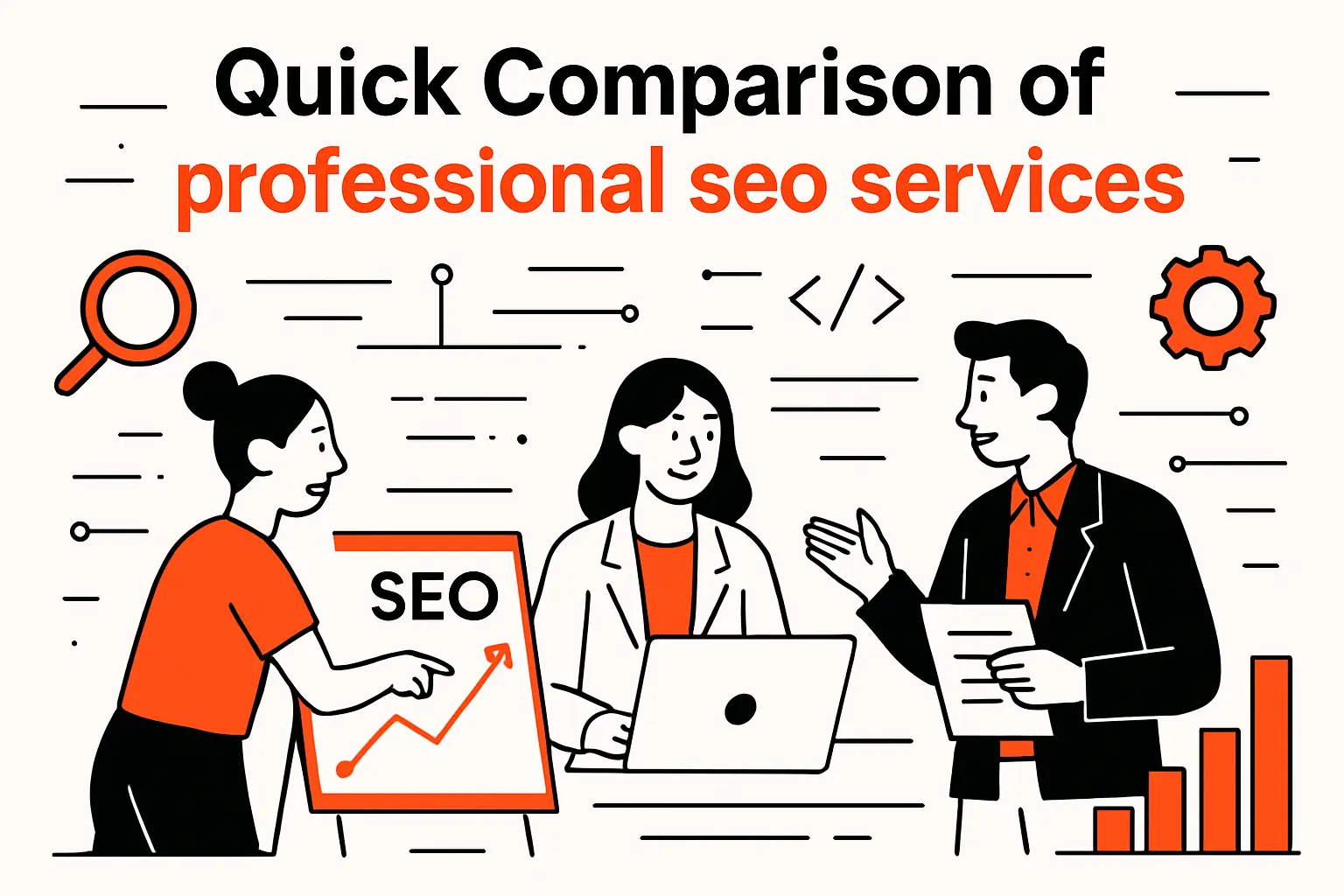
Quick Comparison of Professional SEO Services and Tools
Paid search remains a giant, and it shapes what clients expect from organic growth. Statista forecasts search advertising will reach US$355.10bn in 2025, which increases pressure on SEO teams to prove efficiency and compounding value.
Below is a short shortlist we use when we need fast orientation. It mixes service providers and platforms that often sit inside a service stack. In reality, the best results come from combining process with tooling.
| Tool | Best for | From price | Trial/Free | Key limits |
|---|---|---|---|---|
| WebFX | Full-service SEO with content support | Custom quote | Free consultation | Less flexible for niche workflows |
| Victorious | Strategy-led SEO and reporting | Custom quote | Discovery call | Content volume may be add-on |
| Ignite Visibility | SEO plus multi-channel coordination | Custom quote | Initial assessment | Process depends on assigned team |
| Straight North | Lead generation and sales alignment | Custom quote | Intro call | Best fit for clear lead funnels |
| OuterBox | Ecommerce SEO and merchandising | Custom quote | Site review | Strongest on ecommerce contexts |
| SmartSites | Growing local and mid-market brands | Custom quote | Consultation | Less specialized for enterprise |
| Ahrefs | Research and link intelligence | Subscription | Limited access promotions | Does not execute work |
| Semrush | Workflow tooling and competitive tracking | Subscription | Free account tier | Signals still need human judgment |
| Screaming Frog | Deep crawling and technical audits | License | Free crawl limits | Requires analyst skill |
| Looker Studio | Lightweight reporting dashboards | Free | Free | Complex models need engineering |
Our practical advice is simple. Pick a provider for accountability, and pick tools for repeatability. Then decide who owns execution when priorities collide.
5 Leading SEO Companies for Professional Services
Selection here is outcome-first, not brochure-first. We look for tools and providers that move rankings, traffic quality, and lead flow with the least wasted motion. Each entry is judged on what a real team can ship in a normal week. That means clear onboarding, repeatable workflows, and reporting you can defend in a meeting.
We score every option on a 0–5 scale using a weighted rubric. Value-for-money and feature depth carry the most weight. Ease of setup, integrations, UX, security, and support fill out the rest. The goal is simple: reward products that deliver durable SEO work, not just dashboards.
Pricing is listed as a starting point when it is publicly available. For service firms, actual scope can shift fast, so treat numbers as a floor. For platforms, limits matter as much as the sticker price. Those caps are called out because they shape your real cost curve.
1. Coalition Technologies professional SEO services
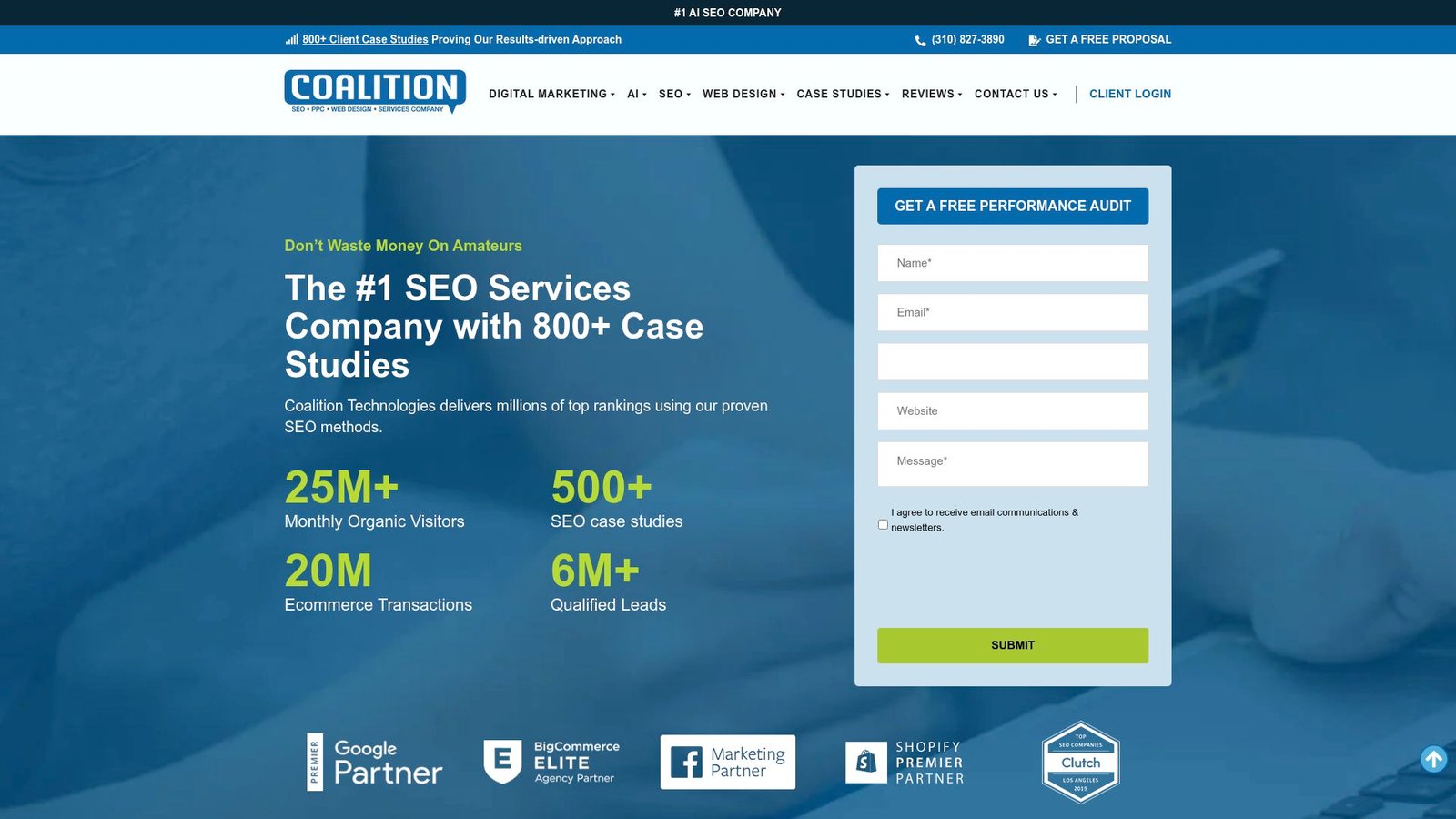
Coalition Technologies is a full-service digital agency with a dedicated SEO delivery team. Their pitch centers on disciplined execution and steady optimization, not flashy hacks. You’re typically working with strategists, technical specialists, and writers under one roof.
Outcome: Turn search demand into qualified leads and revenue, month after month.
Best for: SMB founders who want a done-for-you SEO engine; ecommerce teams needing technical and content help.
- Research-to-roadmap planning → turns “we should rank” into a prioritized shipping list.
- Cross-channel coordination → can reduce handoffs from many threads to one monthly plan.
- Managed onboarding → first technical fixes often land within 2–4 weeks.
Pricing & limits: From about $2,000/mo, depending on site type and scope. Trial length is not standard, but you can start with an assessment. Caps are defined in the statement of work, often per domain and market.
Honest drawbacks: It’s not a bargain option, and smaller budgets can feel light on content volume. If you want daily Slack access, you may need to negotiate it.
Verdict: If you want consistent execution, this helps you ship SEO improvements in weeks, not quarters.
Score: 3.9/5
2. SEO.com professional SEO services
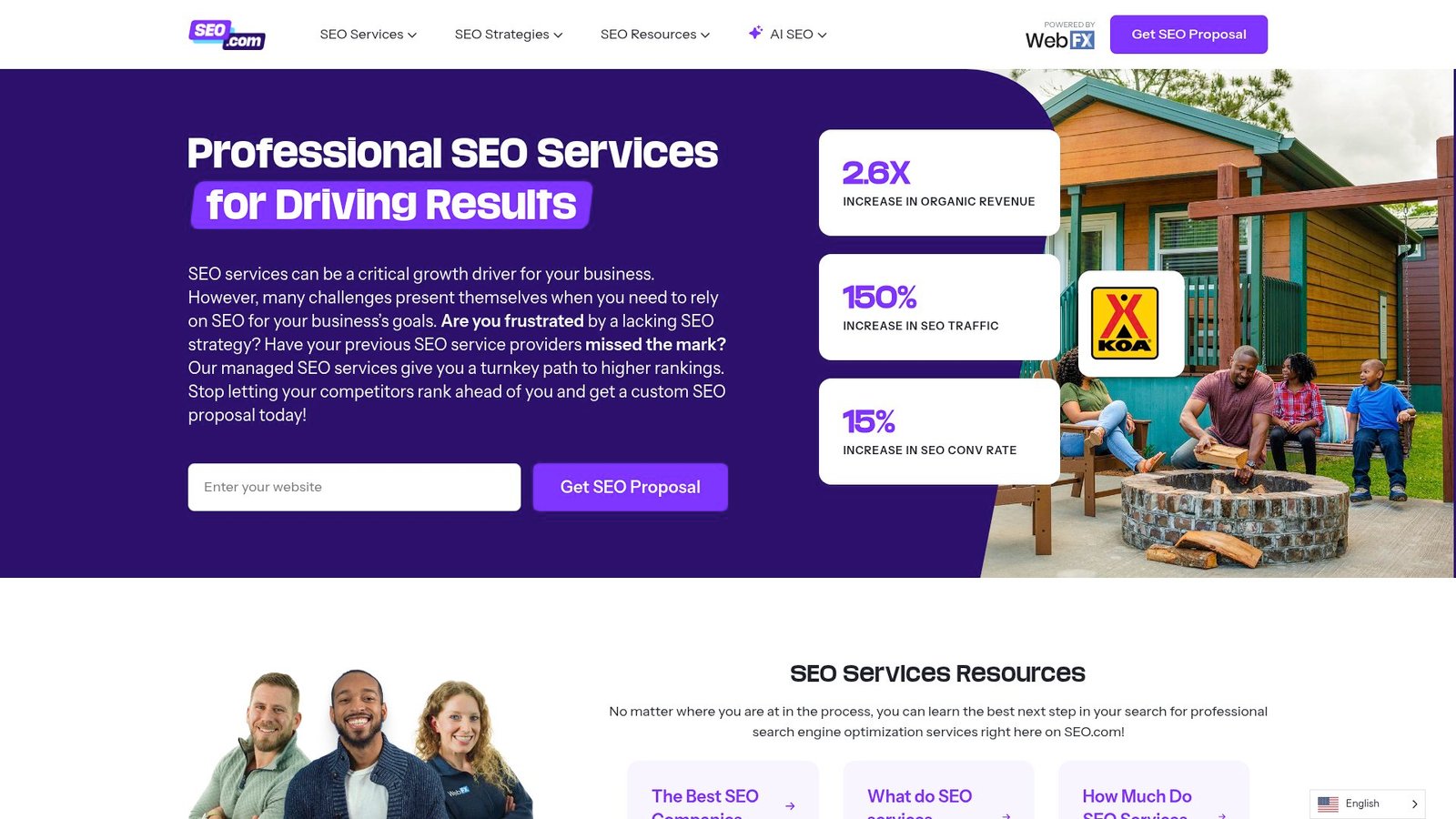
SEO.com is positioned as a professional SEO services provider with a process-forward team. The brand messaging leans practical: strategy, implementation, and reporting tied to business goals. Expect a structured engagement rather than a loose consulting retainer.
Outcome: Build a measurable SEO program you can report without squinting.
Best for: Marketing managers who need dependable delivery; lean in-house teams needing an external SEO partner.
- Strategy plus execution cadence → keeps content, technical, and links moving together.
- Reporting discipline → can shrink monthly stakeholder updates into a repeatable template.
- Guided kickoff → first clarity often arrives in 1–2 weeks.
Pricing & limits: From $1,500/mo for ongoing SEO work as a common starting range. Trial length is not typically a self-serve offer. Caps depend on the plan scope, such as number of pages optimized and content produced.
Honest drawbacks: Custom pricing can make comparisons harder across agencies. If you want ultra-niche technical SEO, ask who staffs that work.
Verdict: If you need a steady SEO operating rhythm, this helps you drive progress and prove it within a quarter.
Score: 3.8/5
3. Stan Ventures managed professional SEO services
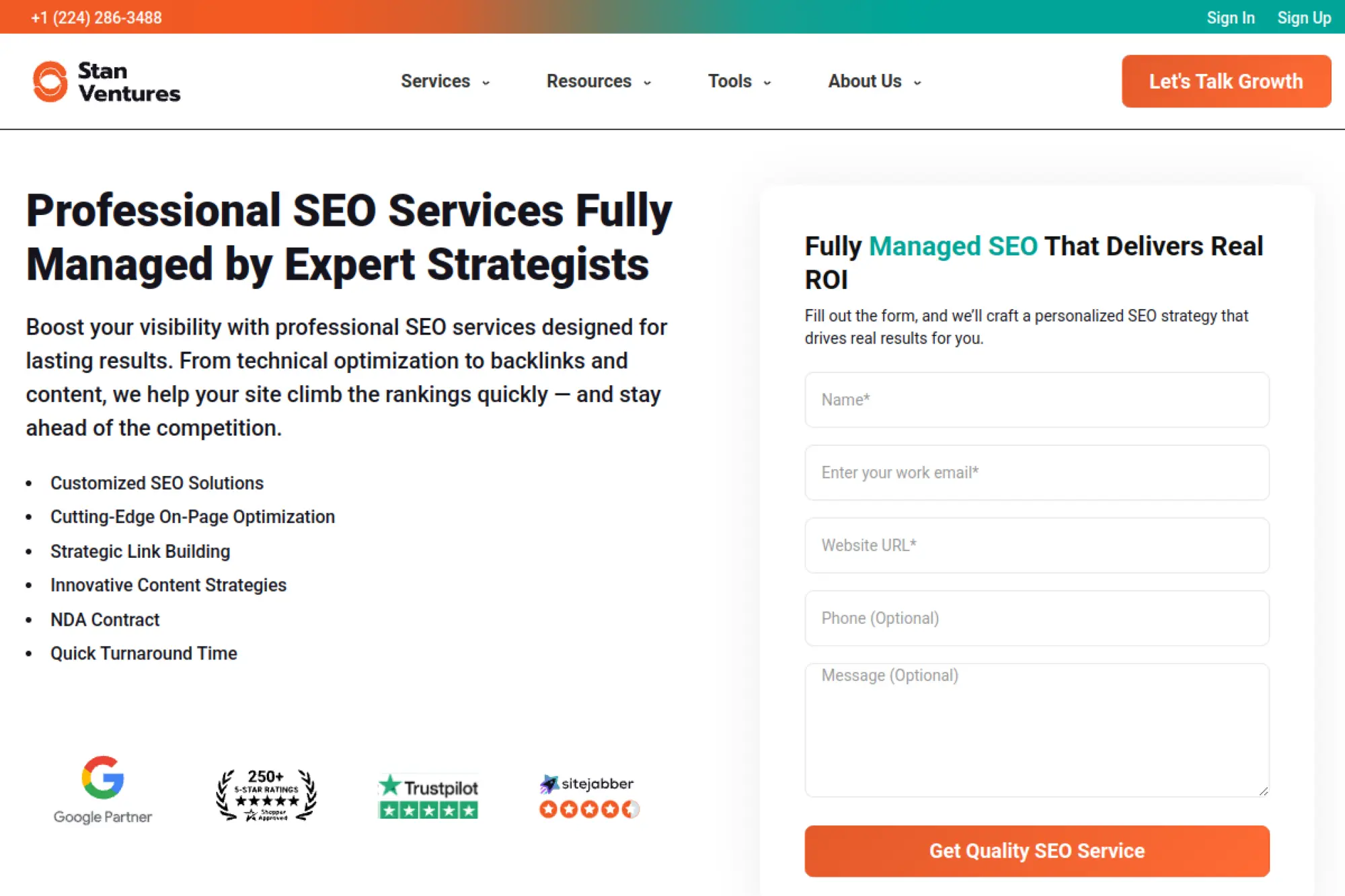
Stan Ventures operates as a scalable SEO delivery shop with account management and fulfillment depth. Their model is built for repeatable production, including content and link acquisition work. The team positioning also suits agencies that need extra hands.
Outcome: Scale SEO output without hiring a full in-house bench.
Best for: Agencies needing white-label fulfillment; SMBs that want affordable, ongoing SEO help.
- Managed SEO fulfillment → turns a backlog into shipped deliverables, week by week.
- Packaged local SEO options → can cut setup from many emails to a simple plan choice.
- Dashboard-style progress tracking → first visible activity often appears in 1–3 weeks.
Pricing & limits: From $159/mo for entry packaged local SEO options. Trial length is not typical, but a money-back guarantee may apply on certain services. Caps vary by package, such as review replies, posts, and outreach volume.
Honest drawbacks: The scaled model can feel less bespoke for complex brands. If you need deep on-site engineering, validate technical coverage early.
Verdict: If you want more SEO production with less hiring pain, this helps you deliver faster within the first month.
Score: 3.6/5
4. Network Solutions professional SEO services
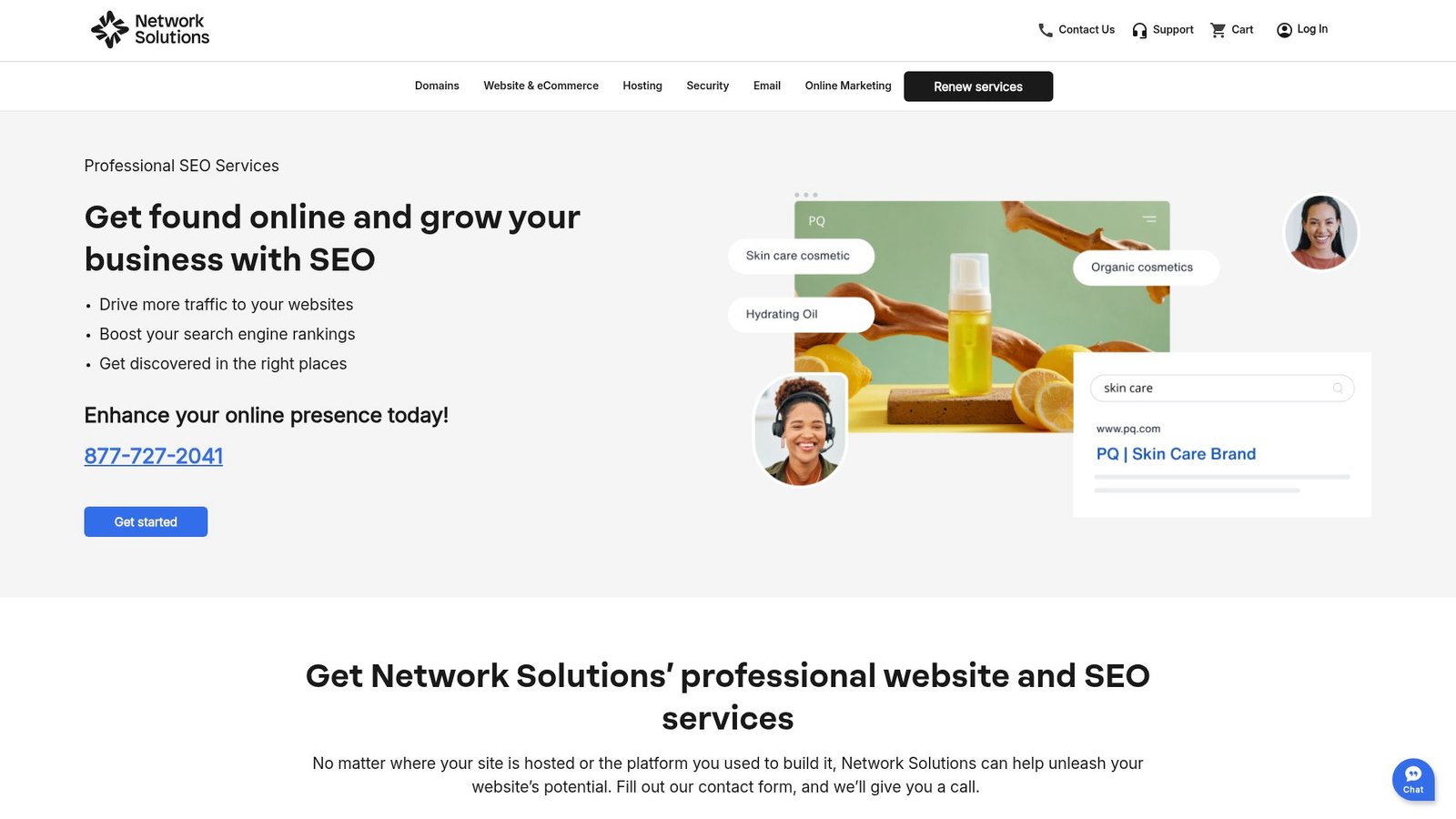
Network Solutions is a long-standing web services company with bundled marketing offerings. Their SEO sits close to domains, hosting, and small-business site operations. The team model tends to favor packaged guidance over bespoke technical sprints.
Outcome: Get basic SEO moving without building a marketing stack from scratch.
Best for: Very small businesses; owners who prefer one vendor for web and marketing.
- Bundled SEO guidance → helps you cover fundamentals without chasing ten specialists.
- Built-in tools approach → can reduce tool switching to one login and one checklist.
- Quick start packaging → time-to-first-value can be a few days for simple sites.
Pricing & limits: From $20.50/mo for their Simple SEO tool offering, while service engagements are typically customized. Trial length is not clearly standardized for services. Caps depend on package scope, such as tracked keywords and audit frequency.
Honest drawbacks: Advanced SEO teams may find the depth limiting. Integrations and customization can trail specialist SEO platforms.
Verdict: If you need a gentle ramp into SEO basics, this helps you establish a baseline in the first month.
Score: 3.1/5
5. Blurbpoint professional SEO services

Blurbpoint is an SEO services provider with an emphasis on local and SMB-friendly engagements. Their team positioning suggests practical, service-led delivery over DIY tooling. Expect a mix of consultation, execution, and ongoing maintenance work.
Outcome: Win local visibility so nearby customers find you first.
Best for: Local service businesses; small companies that need rankings without an in-house marketer.
- Local SEO execution → improves map and local intent coverage with repeatable tasks.
- Consult-first intake → can cut strategy confusion into a single agreed action plan.
- Fast consultation start → first value can land in 1–2 weeks after kickoff.
Pricing & limits: From $499/mo for local SEO starting points, depending on niche and goals. Trial length is not a standard free trial, but an initial consultation may be offered. Caps depend on the package, such as locations, citations, and content volume.
Honest drawbacks: If you need enterprise-grade technical SEO, ask about engineering depth. Multi-location brands may outgrow starter packages quickly.
Verdict: If you want local leads without building an SEO department, this helps you get traction within a few months.
Score: 3.5/5
Top Platforms to Find Professional SEO Services
6. Clutch agency reviews
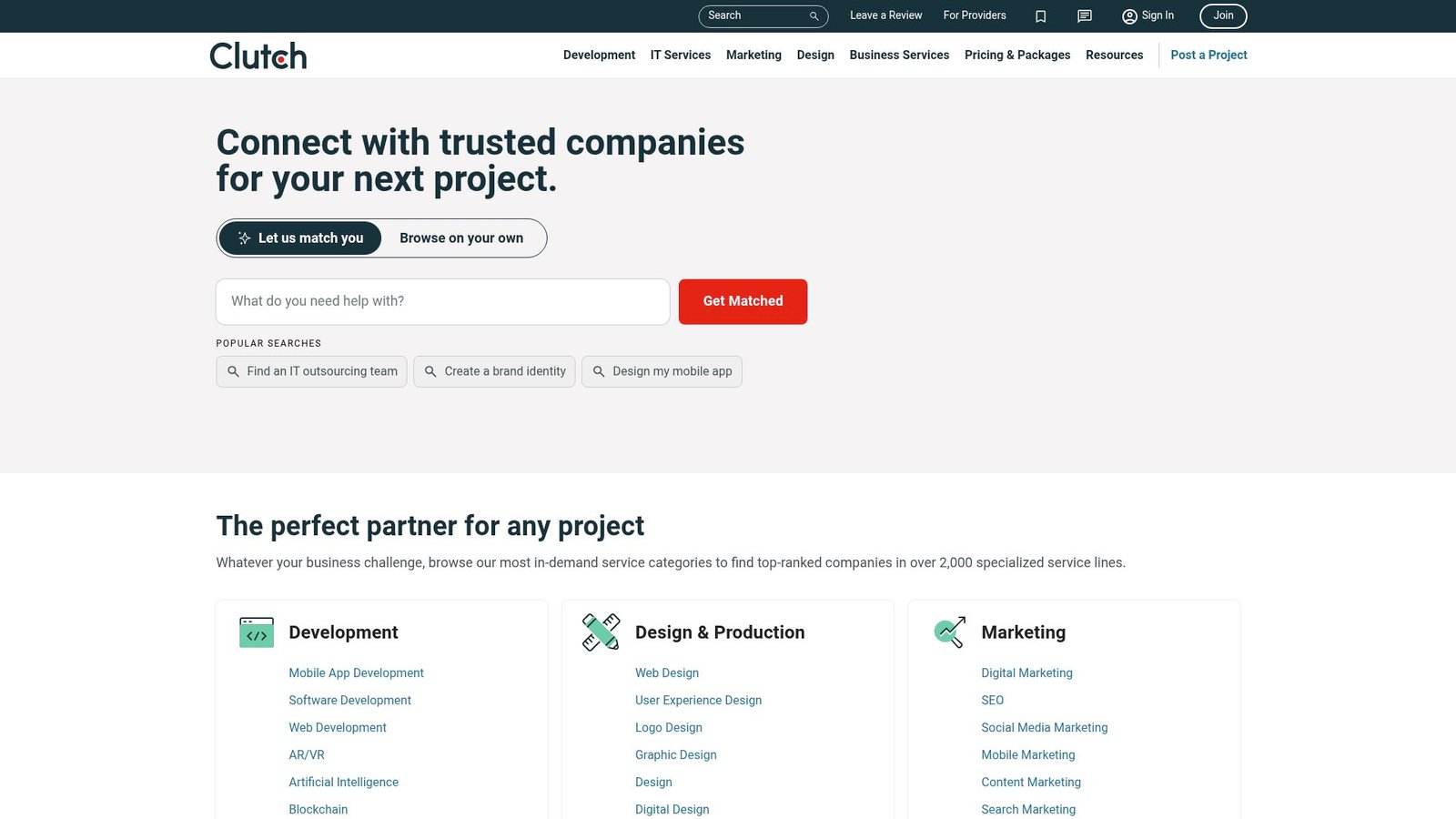
Clutch is a B2B directory and reviews platform with an internal research and editorial operation. The “team” value shows up in structured profiles and review collection processes. For buyers, it’s a shortlist engine, not a guarantee.
Outcome: Reduce agency shopping from chaos to a manageable shortlist.
Best for: Marketing leads hiring an SEO agency; founders vetting providers fast.
- Review-driven filtering → helps you narrow options based on fit, not just buzz.
- Category and location discovery → can cut outreach from dozens of emails to a handful.
- Fast browsing → time-to-first-value can be under an hour for shortlist creation.
Pricing & limits: From $0/mo for buyers to browse and compare. Trial length is not applicable for free usage. Caps are minimal for research, while provider advertising products require contracts and budgets.
Honest drawbacks: Reviews can lag behind a team’s current reality. Some categories are crowded, so you still need a sharp screening call.
Verdict: If you need to hire with less guesswork, this helps you build a credible shortlist in one session.
Score: 3.6/5
7. G2 reviews for SEO platforms and service providers
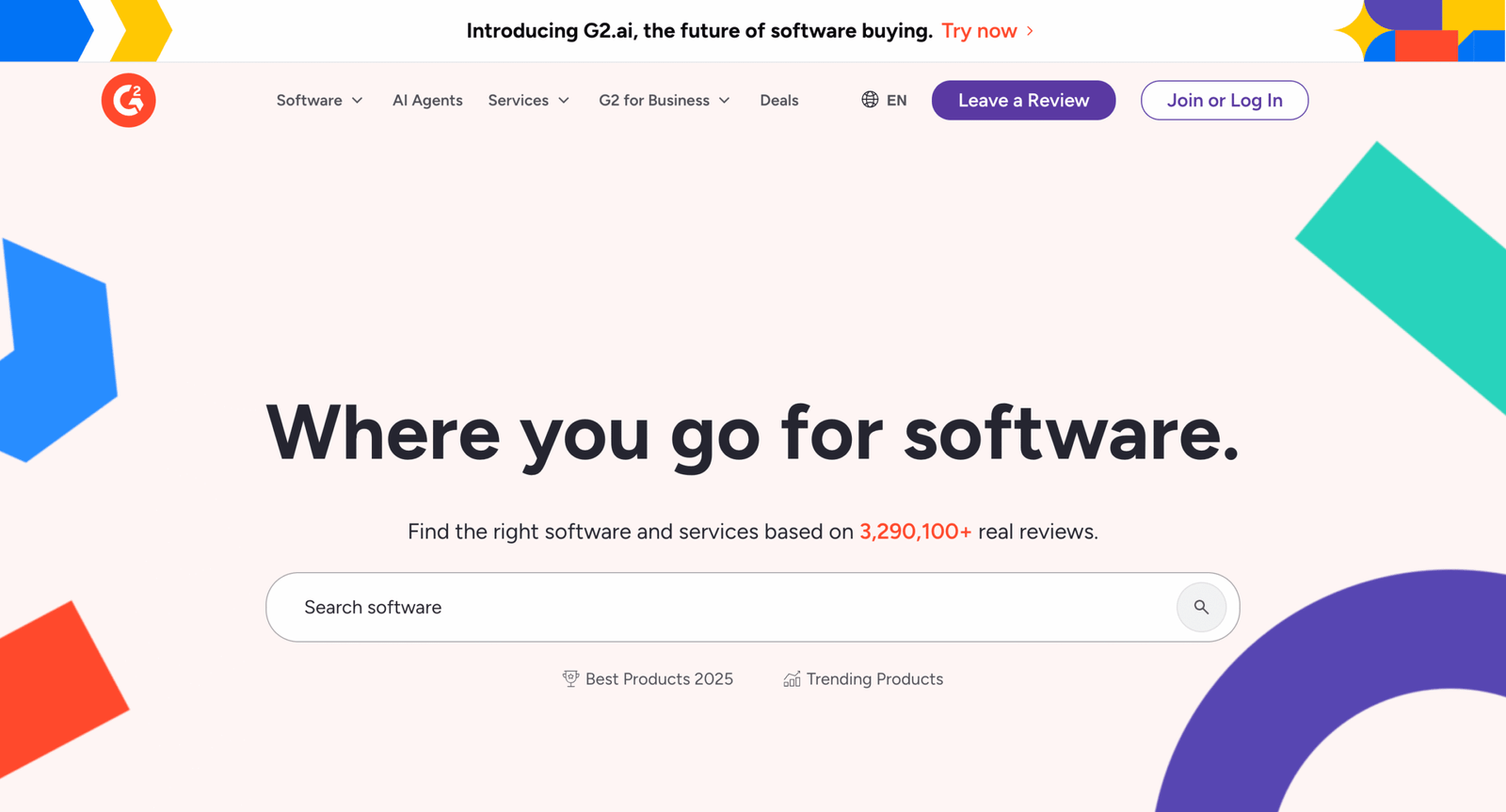
G2 is a software reviews marketplace with a large platform team and heavy category coverage. It’s strongest when you want pattern recognition across many user opinions. For SEO buying, it helps you compare tools quickly.
Outcome: Sanity-check SEO tool choices before you commit budget.
Best for: SMB teams buying SEO software; marketers comparing options across categories.
- Category-based comparisons → turns “which tool” into a manageable set of contenders.
- Review volume and segmentation → can reduce demo overload by filtering early.
- Quick research loop → time-to-first-value can be 30 minutes for a first pass.
Pricing & limits: From $0/mo for reading reviews and browsing categories. Trial length is not applicable for the buyer experience. Caps are mainly about what vendors choose to disclose and how complete profiles are.
Honest drawbacks: Reviews skew toward active software users, not always SEO purists. Incentives and review campaigns can introduce noise, so read critically.
Verdict: If you want faster software selection, this helps you narrow choices before you waste time in demos.
Score: 3.6/5
8. Fiverr professional SEO services marketplace
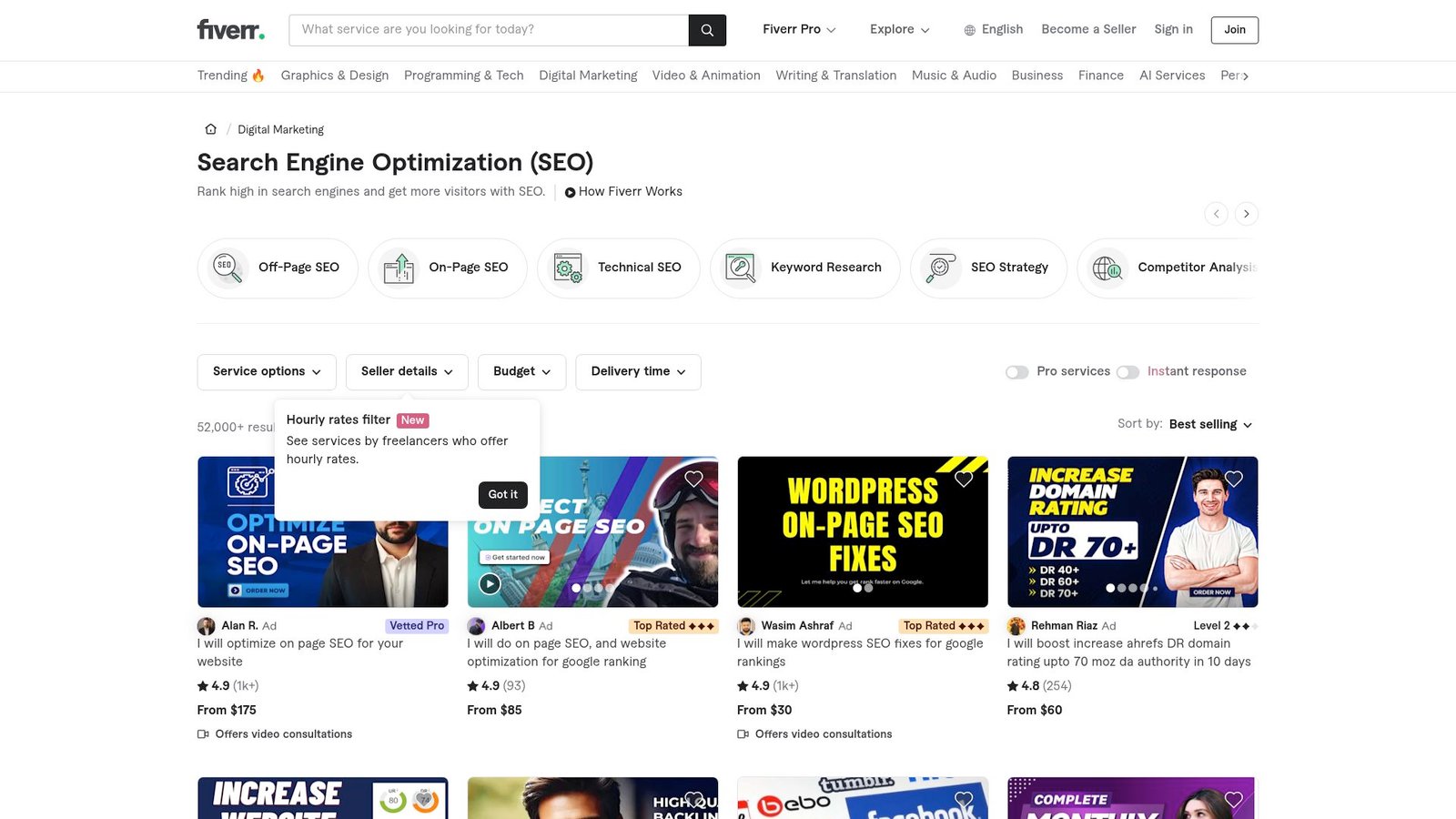
Fiverr is a marketplace, not an agency, so the “team” is whoever you hire. The platform’s strength is speed and variety. The risk is uneven quality, so your selection process becomes the real product.
Outcome: Buy targeted SEO help for a single job, fast.
Best for: Solo marketers who need quick deliverables; founders testing SEO before committing to retainers.
- Gig-based buying → turns vague needs into one scoped deliverable you can review.
- Searchable categories and filters → can cut vendor outreach from days to an hour.
- Instant checkout model → time-to-first-value can be 24–72 hours for small tasks.
Pricing & limits: From $0/mo to use the marketplace, with services priced per gig. Trial length is not applicable, since purchases are transactional. Caps depend on each seller’s offer, like pages optimized or links delivered.
Honest drawbacks: Quality control is the buyer’s burden, and deliverables can be inconsistent. For strategic SEO, you may end up stitching gigs together poorly.
Verdict: If you need a small SEO task done quickly, this helps you ship it this week, not next month.
Score: 3.4/5
9. Sitejabber review platform for credibility and trust signals
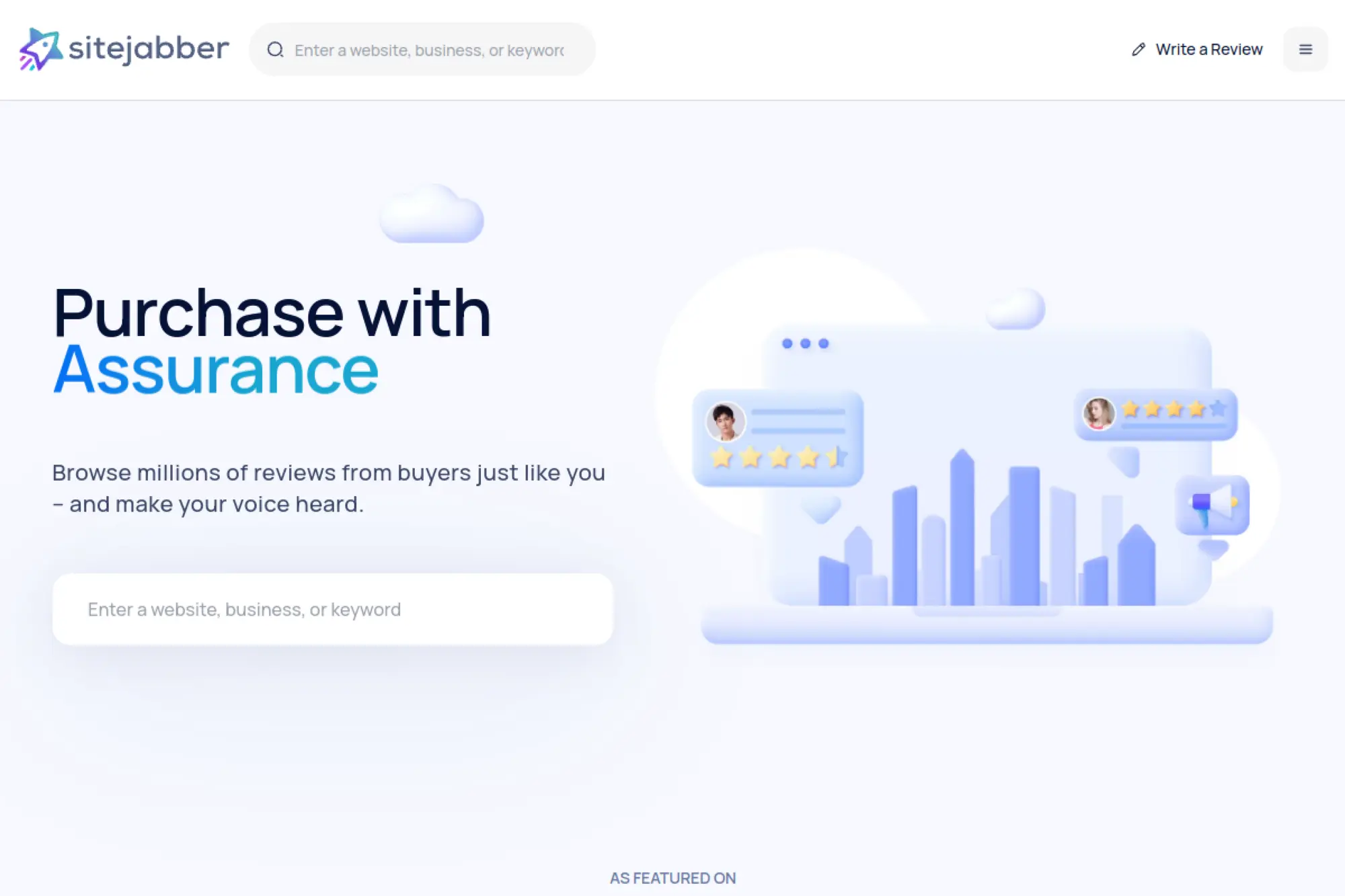
Sitejabber runs a review management platform with onboarding support and review distribution features. The product is designed to help brands collect reviews, respond, and publish proof where buyers will see it. In SEO terms, it’s about trust and fresh UGC.
Outcome: Collect and publish reviews that reduce buyer hesitation.
Best for: Ecommerce and DTC brands; service businesses needing more verified feedback.
- Review sourcing workflows → turns post-purchase moments into steady review volume.
- Distribution and aggregation → can reduce manual reposting into automated publishing steps.
- Concierge onboarding → time-to-first-value can be 1–2 weeks with guided setup.
Pricing & limits: From $200/mo for entry plans like Liftoff. Trial length is not clearly advertised as a standard free trial. Caps are explicit by tier, such as 500 review requests per month at entry levels.
Honest drawbacks: If you need heavy customization, you may hit tier limits quickly. Review platforms can also attract spam, so moderation matters.
Verdict: If you want more trust at the point of decision, this helps you collect and display reviews within the first month.
Score: 3.6/5
Top eCommerce Platforms for Professionals in 2026
10. Shopify platform for ecommerce SEO

Shopify is an ecommerce platform company with product teams spanning storefront, checkout, and app ecosystem. SEO on Shopify is a mix of solid defaults and smart operational habits. The best results come from shipping content and fixing technical edges.
Outcome: Launch a store that’s SEO-capable from day one.
Best for: DTC operators; small ecommerce teams that need speed and stability.
- SEO-friendly storefront foundation → gets you indexed quickly with clean templates.
- App ecosystem and automations → can turn repetitive merchandising updates into a few clicks.
- Guided setup flow → time-to-first-value can be a weekend for a basic store.
Pricing & limits: From $1/mo for 3 months, then plans start at $39/mo on monthly billing. Trial: start free, then the $1/mo intro period applies. Caps vary by plan, such as staff accounts and inventory locations.
Honest drawbacks: Apps can quietly raise your monthly spend. Some SEO control points require theme edits or developer support.
Verdict: If you want to sell fast and still earn organic traffic, this helps you launch and iterate within weeks.
Score: 4.3/5
11. BigCommerce platform for ecommerce SEO
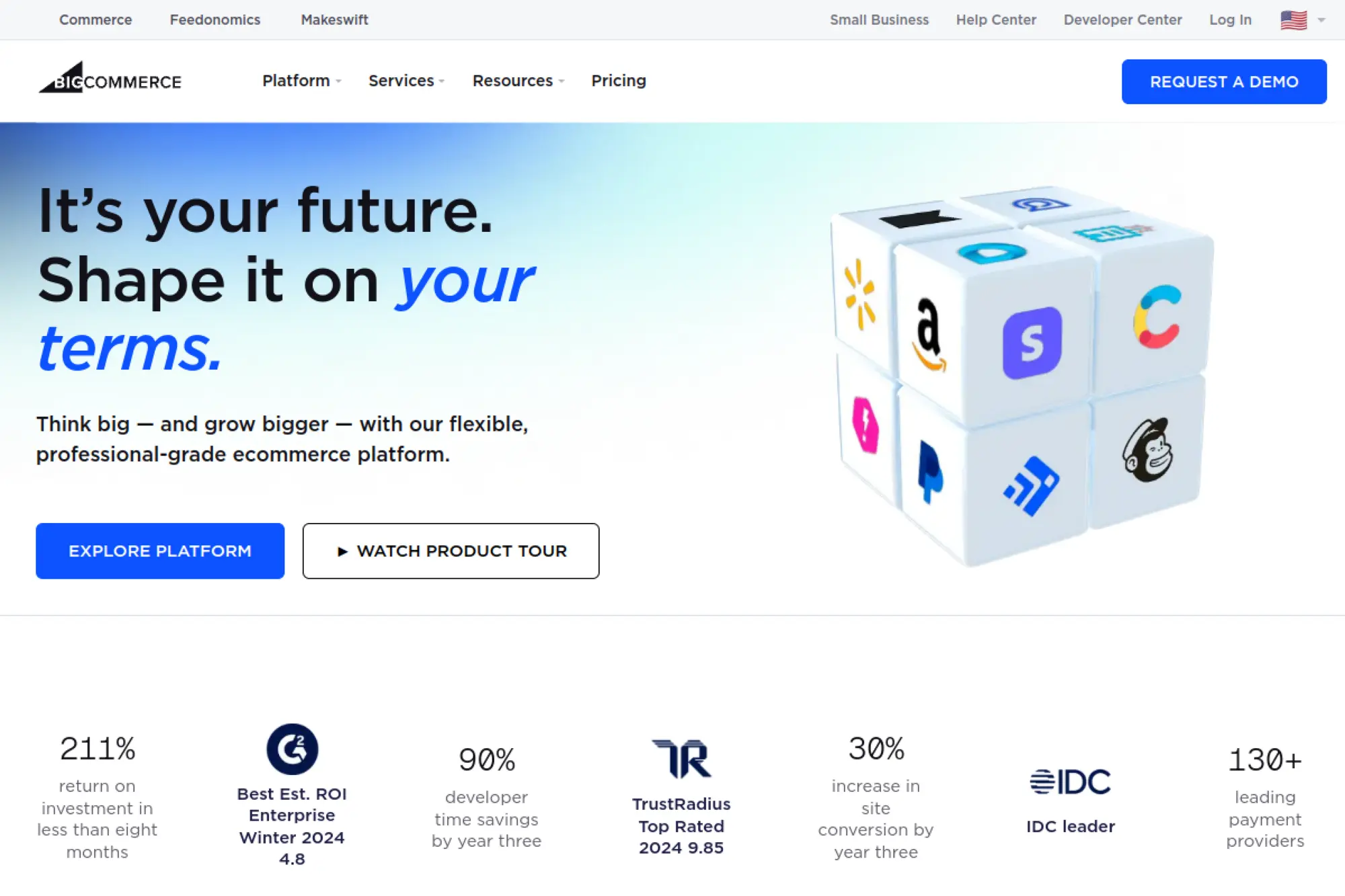
BigCommerce is an ecommerce platform built for businesses that want structure and scalability. The product team emphasis shows up in strong core commerce features and predictable plan tiers. SEO work here benefits from clean architecture and good merchandising hygiene.
Outcome: Run an ecommerce site that scales without SEO breaking.
Best for: Growing online brands; teams that want fewer paid apps for core features.
- Robust catalog handling → supports SEO at scale for categories and product discovery.
- Built-in commerce capabilities → can reduce extra app steps during launch and upgrades.
- Free trial onboarding → time-to-first-value can be 3–7 days for a working storefront.
Pricing & limits: From $39/mo on monthly billing after a 15-day free trial. Caps are explicit on entry plans, such as up to $50K online revenue for Standard. Seats and advanced features increase by tier.
Honest drawbacks: Template flexibility can feel more rigid than open-source stacks. Some SEO customizations still require technical comfort.
Verdict: If you want structured ecommerce growth, this helps you scale catalog SEO within the first quarter.
Score: 4.0/5
12. WooCommerce platform for ecommerce SEO
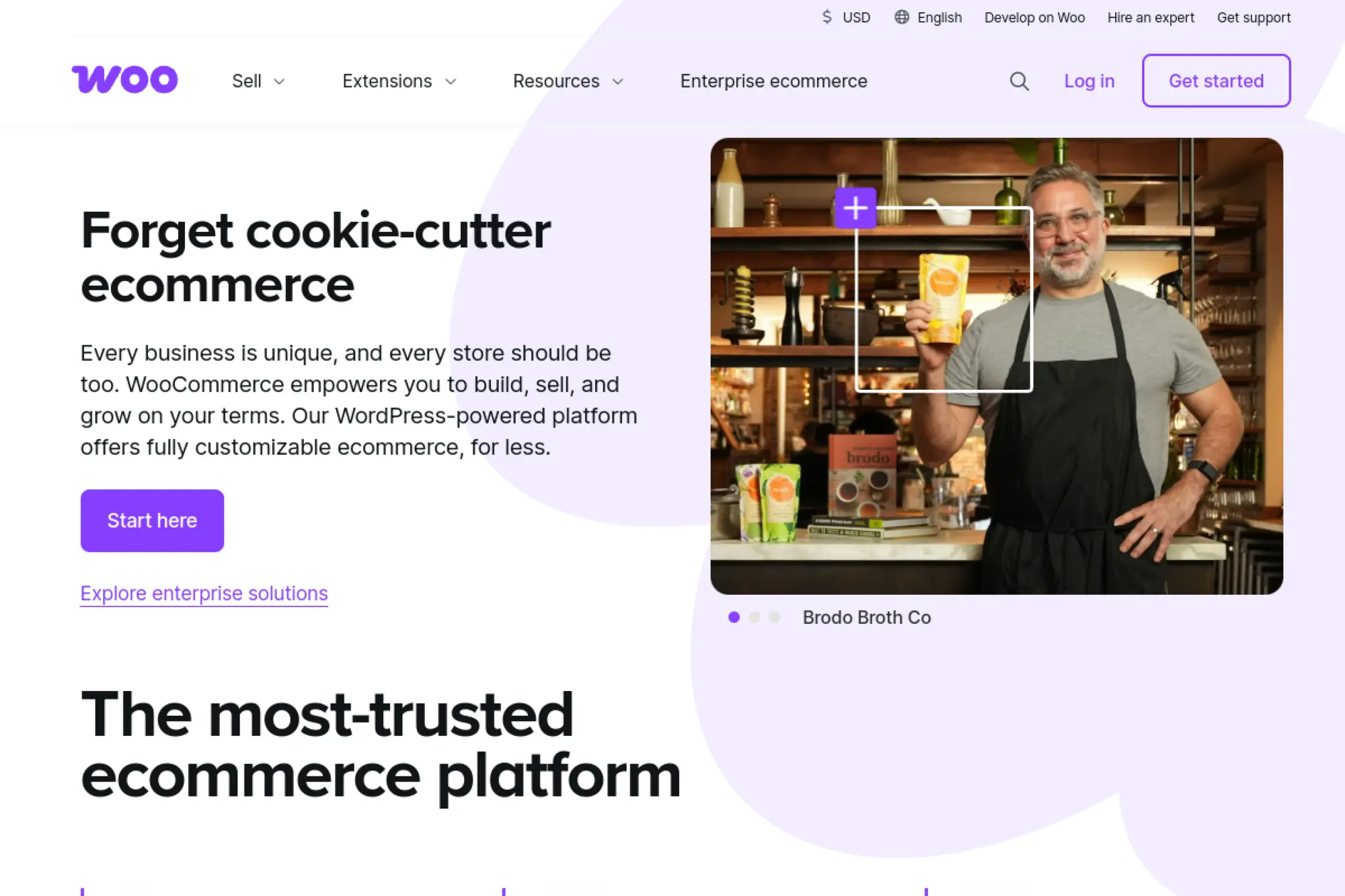
WooCommerce is built by teams in the WordPress ecosystem and supported by a large developer community. It’s flexible, familiar, and often powerful enough for serious stores. Your SEO success depends on hosting quality and plugin discipline.
Outcome: Build an SEO-flexible store you fully control.
Best for: WordPress-native teams; ecommerce builders who want customization without platform lock-in.
- WordPress content plus commerce → makes editorial SEO and product SEO live together.
- Plugin ecosystem → can cut custom development into configurable modules and add-ons.
- Fast initial setup → time-to-first-value can be a day on managed Woo hosting.
Pricing & limits: From $0/mo for the core plugin. Trial length is not applicable for open-source software. Caps depend on your hosting plan, payment providers, and any paid extensions you add.
Honest drawbacks: Too many plugins can slow sites and complicate troubleshooting. Security and updates are your responsibility, not a vendor’s promise.
Verdict: If you want maximum SEO control, this helps you ship custom content and store improvements every week.
Score: 3.9/5
13. Magento ecommerce platform for scalable SEO

Magento, now under the broader Adobe Commerce umbrella, is built for complex ecommerce operations. The ecosystem includes agencies, developers, and enterprise teams. SEO here is strong when architecture is clean and performance is funded.
Outcome: Support large catalogs and complex SEO requirements at scale.
Best for: Mid-market and enterprise ecommerce; teams with engineering resources.
- Deep catalog and rules flexibility → supports complex category logic and SEO scaling.
- Extensive integration options → can reduce manual ops through ERP and PIM connections.
- Serious build-out path → time-to-first-value is often 4–12 weeks for real stores.
Pricing & limits: From $0/mo for Magento Open Source software. Trial length is not applicable for open-source. Caps depend on hosting, developer hours, and extensions, while Adobe Commerce licensing is quote-based.
Honest drawbacks: Implementation is heavy, and costs can surprise teams that expect “just a CMS.” Performance tuning is not optional if you care about SEO.
Verdict: If you need enterprise ecommerce flexibility, this helps you build a scalable SEO foundation over a full quarter.
Score: 3.6/5
14. FeaturedCustomers for reputation signals and reviews
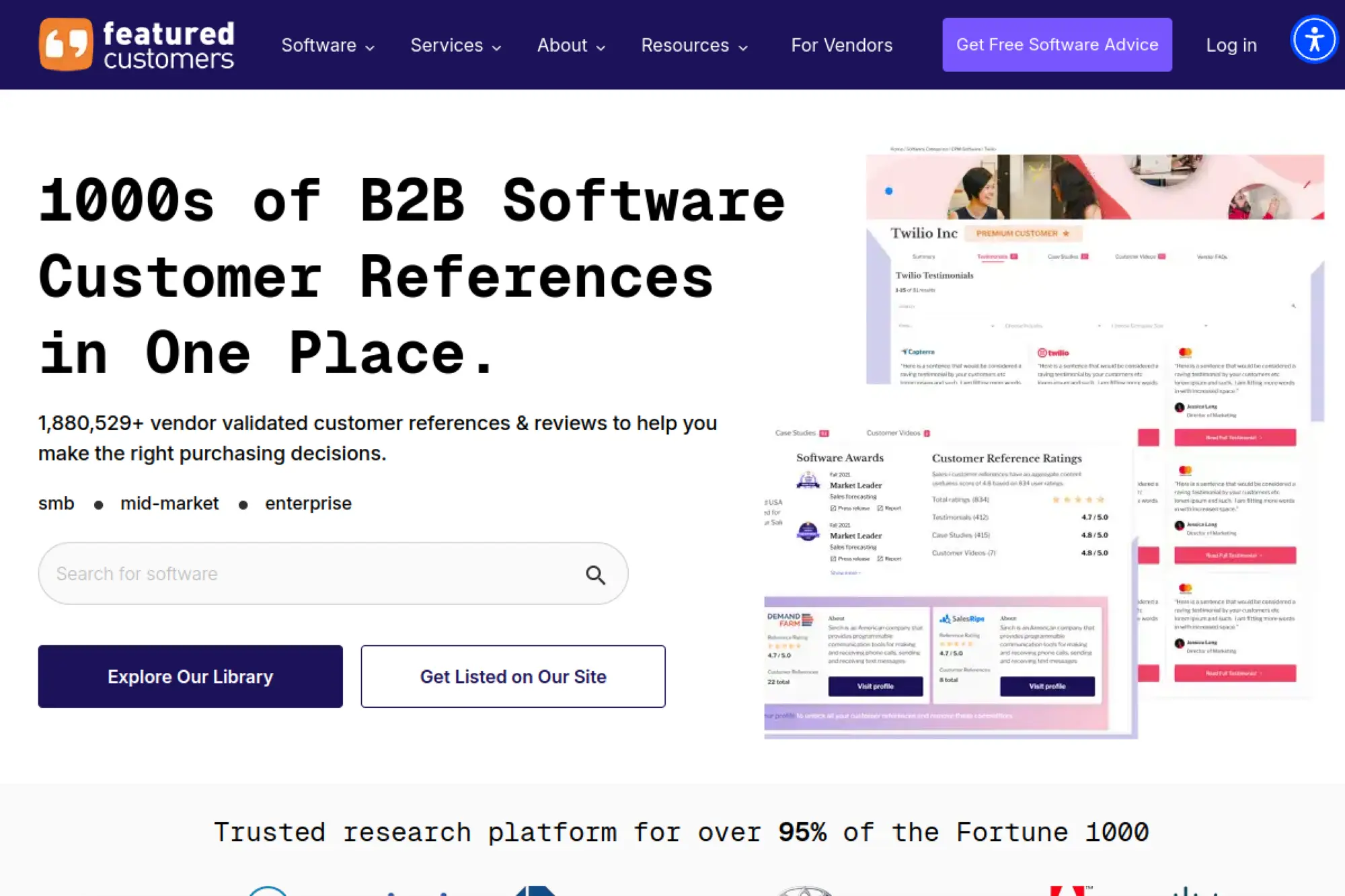
FeaturedCustomers is a reviews and customer story platform with a focus on B2B credibility. The team value shows up in how stories are structured and displayed. For SEO, it’s a trust layer that can support conversions and earned mentions.
Outcome: Turn customer proof into credibility that closes deals faster.
Best for: B2B SaaS marketers; sales teams that need stronger proof during evaluation.
- Customer story showcase → reinforces trust when prospects are comparing vendors.
- Shareable proof assets → can reduce sales follow-up steps with one clear reference hub.
- Quick claiming and setup → time-to-first-value can be a day for basic presence.
Pricing & limits: From $0/mo to browse and read reviews. Trial length is not applicable for the research side. Caps and paid vendor features vary, and pricing is not always posted publicly.
Honest drawbacks: Impact depends on getting real customers to participate. If your niche is tiny, discovery benefits may be limited.
Verdict: If you want stronger trust signals around your brand, this helps you reinforce evaluation-stage confidence within weeks.
Score: 3.5/5
15. Shopper Approved review platform for trust and social proof
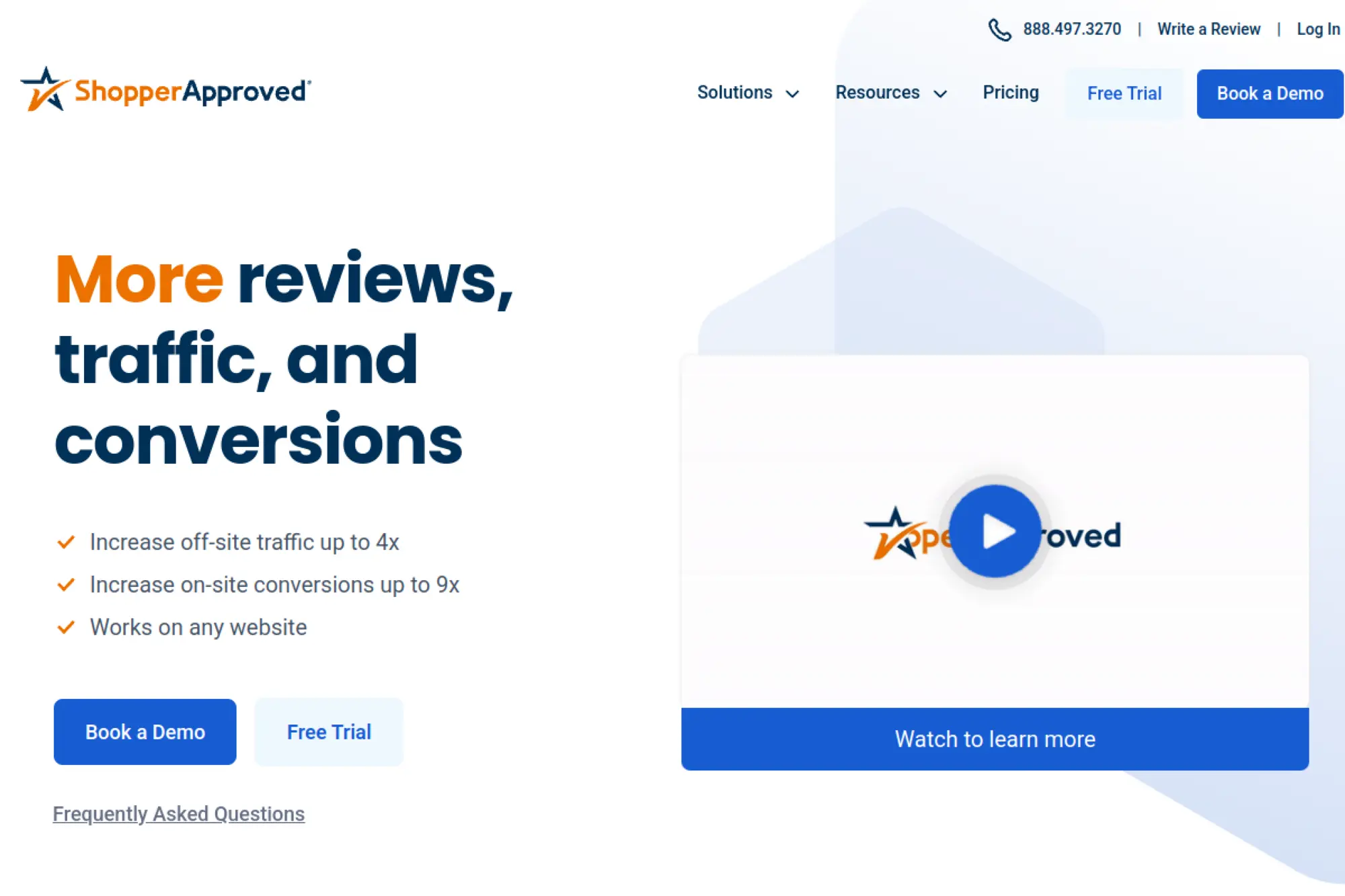
Shopper Approved is a reviews platform with a team focused on post-purchase verification and syndication. The promise is credibility that search engines and shoppers can trust. For SEO, consistent UGC can strengthen long-tail relevance and conversion rates.
Outcome: Generate verified reviews that lift trust and conversion.
Best for: Ecommerce stores; brands that want more review volume with fewer fakes.
- Verified post-purchase reviews → builds trust that supports both rankings and conversion.
- Integration-led setup → can reduce implementation steps through common ecommerce platforms.
- Hands-on installation support → time-to-first-value can be 1–2 weeks for live widgets.
Pricing & limits: From $0/mo during the 15-day free trial. Trial: 15 days, and some entry offerings may include longer free trial windows for specific modules. Caps depend on the package, such as review collection volume and syndication coverage.
Honest drawbacks: Ongoing pricing is typically quote-driven, so budgeting needs a call. If you want full control over display and styling, you may need developer help.
Verdict: If you want more trustworthy reviews without gaming the system, this helps you grow proof signals within weeks.
Score: 3.9/5
16. Amazon marketplace for Amazon SEO

Amazon is a marketplace with massive internal product and search teams optimizing buyer intent. This platform is really merchandising meets keyword relevance. The platform rewards clarity, conversion rate, and operational reliability.
Outcome: Get found inside Amazon when shoppers are ready to buy.
Best for: Ecommerce brands expanding channels; marketplace sellers optimizing listings and ads.
- Listing optimization loop → improves discoverability and conversion with title and image rigor.
- Seller tools and bulk workflows → can reduce catalog updates from hours to a short batch task.
- Quick publishing mechanics → time-to-first-value can be same-day for listing changes.
Pricing & limits: From $0/mo on the Individual plan, plus $0.99 per item sold. The Professional plan is $39.99/mo. Trial length is not structured like SaaS trials. Caps differ by plan, including bulk listing tools and advanced reporting access.
Honest drawbacks: You do not own the customer relationship like you do on your site. Policy changes and competition can disrupt visibility overnight.
Verdict: If you want high-intent buyers, this helps you gain marketplace visibility within weeks of disciplined listing work.
Score: 3.8/5
CRM Solutions for SEO Professionals
17. Nutshell CRM for connecting SEO leads to sales workflows
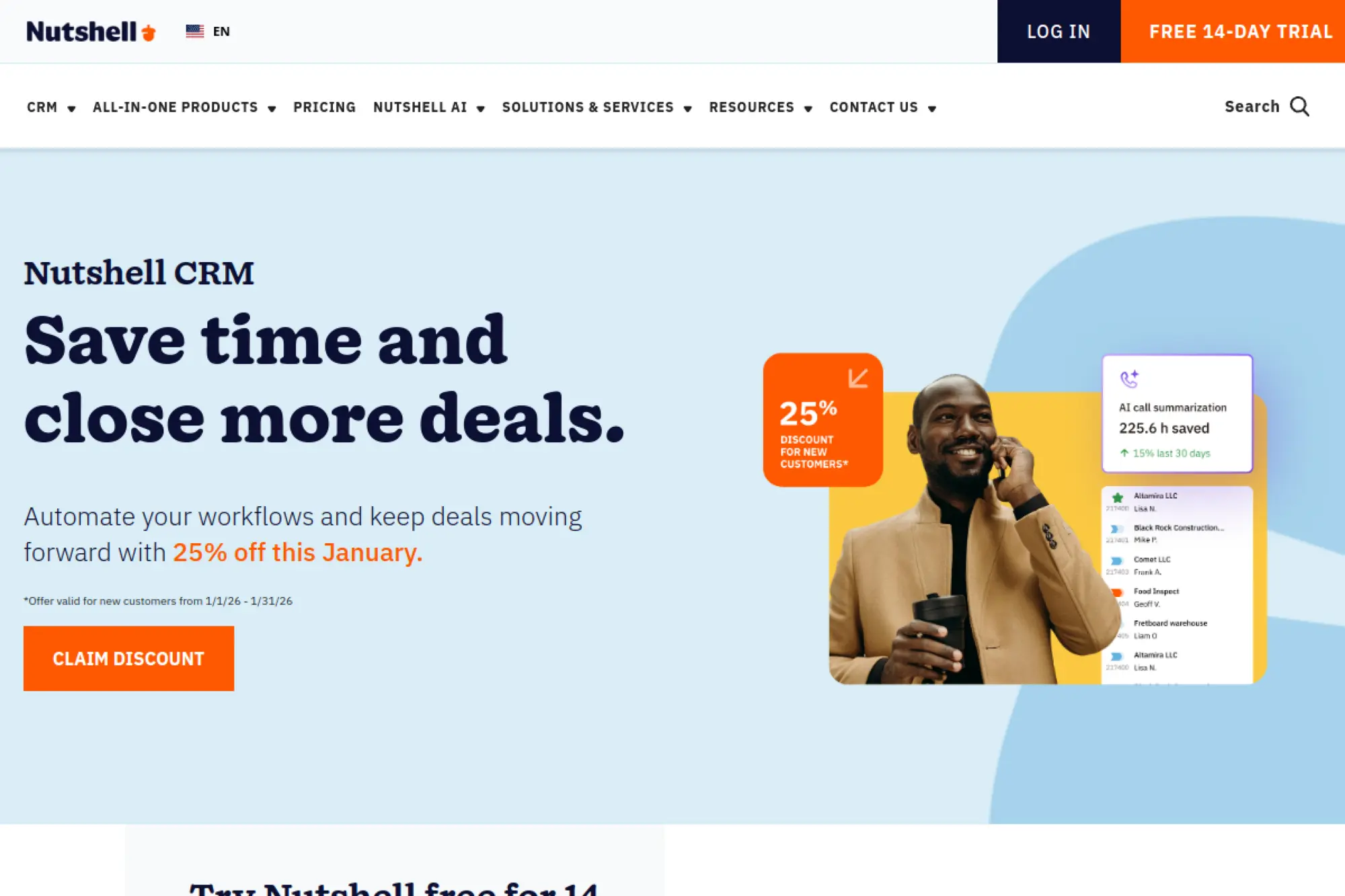
Nutshell is a CRM company with a product team focused on “less setup, less busywork.” The platform is designed for small and mid-sized sales teams. For SEO, the value is clean handoff: lead captured, followed up, tracked.
Outcome: Make SEO leads measurable, owned, and followed up reliably.
Best for: SMB sales teams; marketing managers who need SEO tied to pipeline.
- Pipeline and lead management → turns form fills into tracked deals, not lost emails.
- Built-in marketing tools → can reduce tool sprawl by keeping chat, forms, and emails together.
- Guided trial onboarding → time-to-first-value can be 1–2 days for a working pipeline.
Pricing & limits: From $13/user/mo with a 14-day free trial. Caps on core plans include per-user billing, while storage and contacts are positioned as unlimited. Advanced automation and reporting grow by tier.
Honest drawbacks: If you need deep enterprise customization, you may outgrow it. Some teams will still want a more expansive ecosystem like Salesforce.
Verdict: If you want SEO to feed sales cleanly, this helps you connect leads to follow-up within the first week.
Score: 4.1/5
18. WordPress CMS commonly supported by professional SEO services
WordPress is an open-source CMS supported by a massive global community. The “team” is the ecosystem: core contributors, hosts, and plugin builders. SEO work on WordPress is usually about consistency and technical cleanliness.
Outcome: Publish content at scale without fighting your CMS.
Best for: Content-heavy brands; small teams that need speed and flexibility.
- Publishing workflow strength → turns SEO briefs into live pages without dev bottlenecks.
- Plugin and theme ecosystem → can reduce custom work into configurable building blocks.
- Quick launches → time-to-first-value can be a day on managed WordPress hosting.
Pricing & limits: From $0/mo for the open-source software. Trial length is not applicable. Caps depend on your host, theme, and plugins, plus how well you manage updates and performance.
Honest drawbacks: Security and performance vary wildly by hosting and plugin choices. Bad themes can quietly sabotage Core Web Vitals and crawl efficiency.
Verdict: If you want to publish and iterate, this helps you ship SEO pages weekly and measure results monthly.
Score: 4.1/5
19. Wix website platform for SMB SEO

Wix is a website platform with product teams focused on visual building, hosting, and SMB marketing tools. The experience is guided and opinionated. SEO is workable, especially when you stick to clean site structure and strong content.
Outcome: Publish a decent SEO-ready site without touching code.
Best for: Local SMBs; solo operators who need a site live quickly.
- All-in-one builder and hosting → removes technical setup friction for first-time site owners.
- Built-in SEO tooling → can reduce setup into a guided checklist and repeatable tasks.
- Fast publishing flow → time-to-first-value can be a single afternoon for a basic site.
Pricing & limits: From $17.77/mo on yearly subscriptions for the Light plan. Trial: no classic trial, but a 14-day money-back guarantee is offered on upgrades. Caps vary by plan, like storage and collaborator counts.
Honest drawbacks: Deep technical control is limited compared with WordPress. Some SEO workflows feel constrained by templates and platform rules.
Verdict: If you need a clean site fast, this helps you go live and start ranking work within days.
Score: 3.8/5
Top SEO Tools for Professionals
20. Ahrefs SEO tool for backlink analysis and research
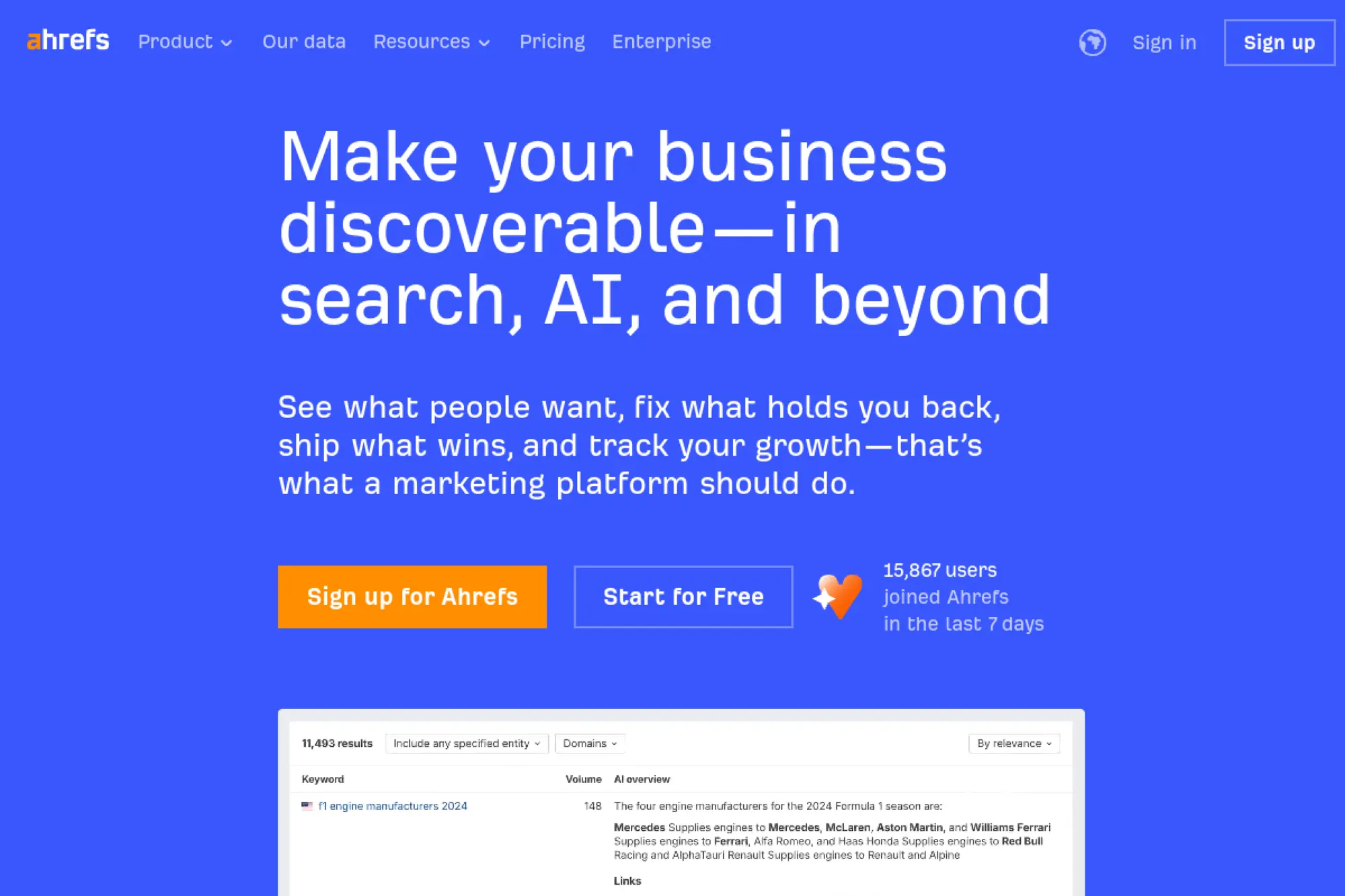
Ahrefs is a specialist SEO software company with a product team built around web-scale crawling and link intelligence. The toolset is designed for practitioners who want crisp answers, fast exports, and deep competitive views.
Outcome: Find link and content opportunities you can act on today.
Best for: In-house SEO leads; agencies doing competitive research and backlink work.
- Backlink and competitor research → reveals why rivals rank, not just that they rank.
- Audit plus rank tracking workflows → can compress separate tools into one planning loop.
- Clear project setup → first useful insights often appear in under an hour.
Pricing & limits: From $0/mo via Ahrefs Webmaster Tools with limited access. Trial length is not a classic trial, but the free tier covers basic site auditing. Caps vary by plan, such as projects, tracked keywords, and crawl credits.
Honest drawbacks: Paid tiers can get expensive as you add users and data. Beginners may feel overwhelmed by the depth and terminology.
Verdict: If you need serious SEO research, this helps you build a better roadmap in a single afternoon.
Score: 4.0/5
21. Google Analytics for SEO performance tracking
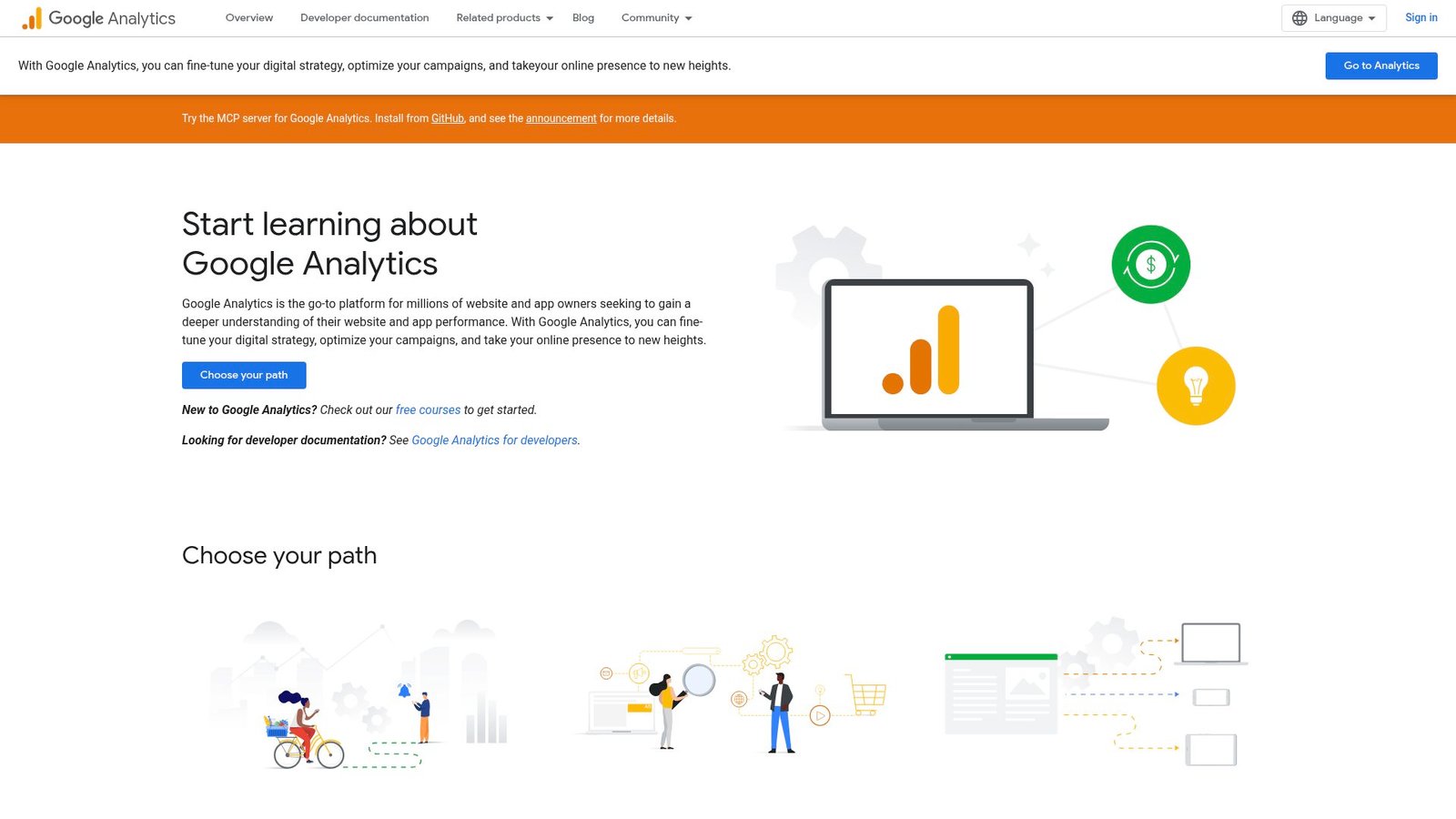
Google Analytics is built by Google’s analytics product teams and designed for behavioral measurement at scale. GA4 is less about vanity traffic and more about user journeys, events, and conversions.
Outcome: Prove which SEO traffic actually converts, not just visits.
Best for: Any site owner tracking SEO ROI; growth teams tying content to pipeline.
- Event-based measurement → connects landing pages to signups and purchases cleanly.
- Google ecosystem fit → can reduce reporting steps across Ads, Search, and BigQuery.
- Quick tag setup → time-to-first-value can be 30–90 minutes on most sites.
Pricing & limits: From $0/mo for standard GA4. Trial length is not applicable for the free product. Caps exist through quotas and sampling behavior, plus configuration limits per property.
Honest drawbacks: The learning curve is real, especially if you grew up on Universal Analytics. Some reports require customization before they feel “SEO-ready.”
Verdict: If you want SEO to answer to revenue, this helps you connect content to outcomes within a week.
Score: 4.0/5
22. Bing Webmaster Tools for search performance monitoring
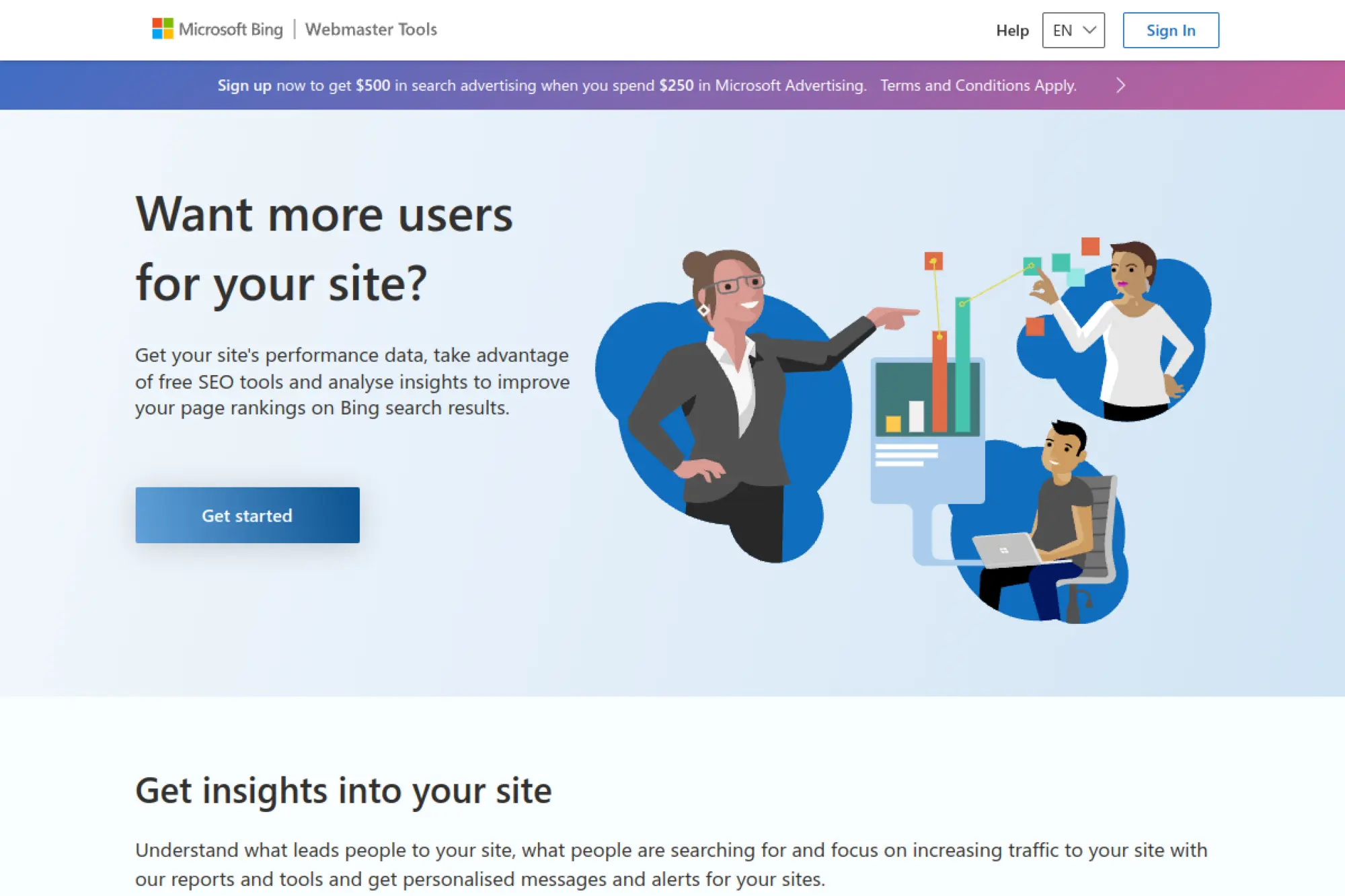
Bing Webmaster Tools is built by Microsoft’s search and webmaster product teams. It gives you direct visibility into how Bing crawls and interprets your site. The vibe is practical and diagnostics-driven.
Outcome: Catch indexing issues before they quietly cost you traffic.
Best for: Site owners who want broader search coverage; SEO teams monitoring technical health.
- Indexing and crawl insights → helps you fix discoverability gaps with clear signals.
- Search performance dashboards → can cut manual rank checks into one daily glance.
- Simple verification flow → time-to-first-value can be under an hour.
Pricing & limits: From $0/mo. Trial length is not applicable for this free tool. Caps are tied to account verification and platform usage limits, such as how many sites you manage.
Honest drawbacks: It is not a replacement for Google Search Console, so you’ll run both. Some features are Bing-specific, which can limit universal SEO conclusions.
Verdict: If you want better technical visibility beyond Google, this helps you spot issues in days, not months.
Score: 3.6/5
23. Schema.org structured data markup reference
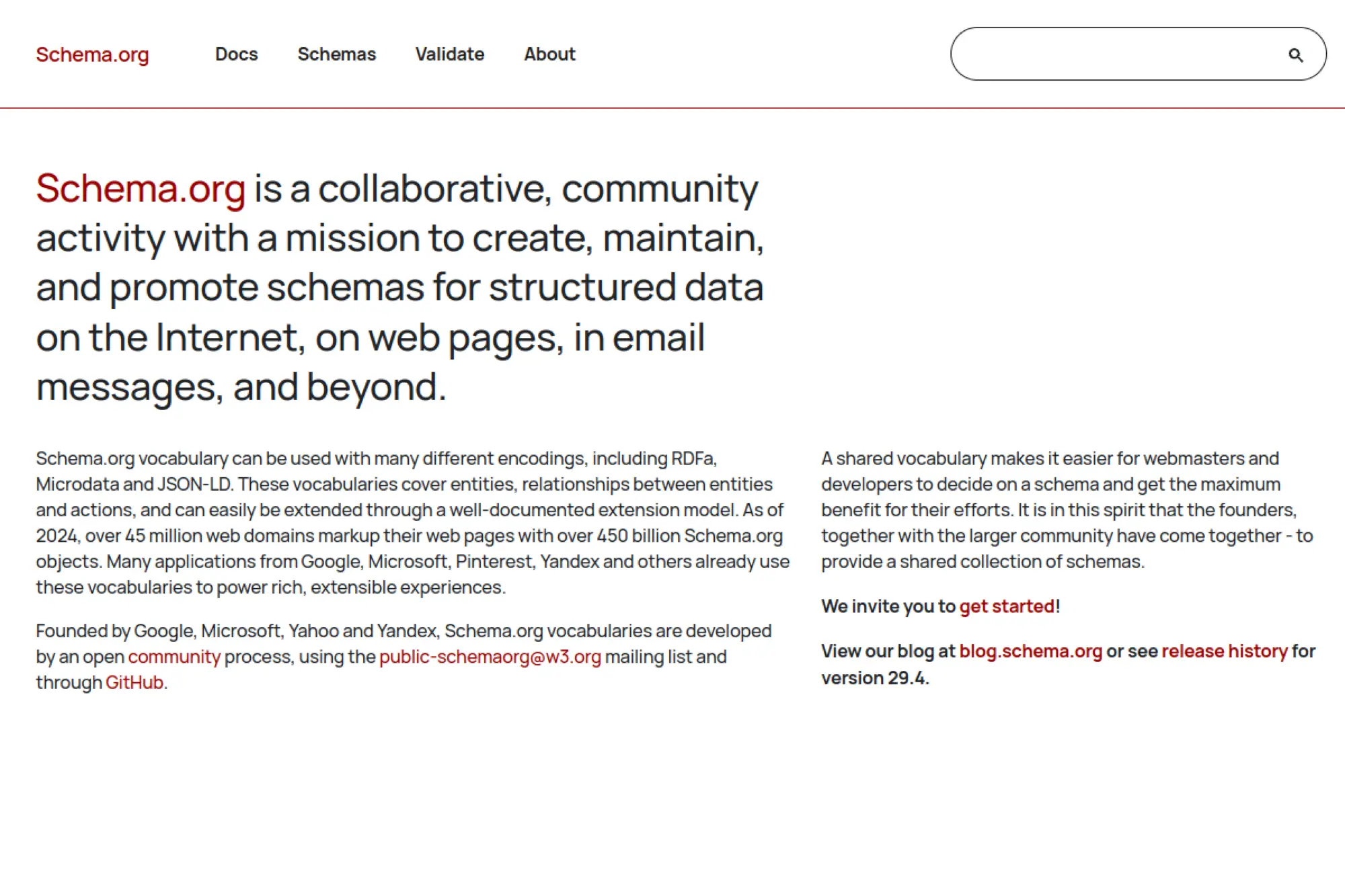
Schema.org is a community-backed structured data reference used across the web. There’s no “company team” in the classic sense. Instead, it’s a shared vocabulary maintained through collaboration and governance.
Outcome: Make your content easier for machines to understand and surface.
Best for: Technical SEOs; developers implementing rich-result-friendly markup.
- Canonical vocabulary reference → reduces guesswork when modeling entities and attributes.
- Search-engine alignment → can cut rework by matching markup to known expectations.
- Immediate usefulness → time-to-first-value can be minutes once you pick a schema type.
Pricing & limits: From $0/mo. Trial length is not applicable, since it’s a public reference. Caps are none, though implementation limits depend on your CMS and engineering capacity.
Honest drawbacks: Schema is easy to overdo, and bad markup can confuse more than it helps. You still need testing tools and validation discipline.
Verdict: If you want cleaner machine readability, this helps you implement correct structured data in a single sprint.
Score: 3.6/5
24. Perplexity for AI-driven discovery and emerging search visibility

Perplexity is an AI search company with product teams focused on answer quality, citations, and research modes. For SEO teams, it’s both a research assistant and a signal of where discovery is going. It also nudges you to write content that answers cleanly.
Outcome: Research faster and adapt content for answer-first discovery.
Best for: Content strategists; SEO leads exploring AI-driven visibility shifts.
- Answer-led research → turns messy topics into outlines, angles, and follow-up questions.
- Model switching and summaries → can cut research steps by consolidating tools and tabs.
- Fast onboarding → time-to-first-value can be minutes for content planning.
Pricing & limits: From $0/mo for the free plan. Pro is $20/mo. Trial length is not a standard trial, since a free tier exists. Caps vary by plan, such as daily Pro searches and upload limits.
Honest drawbacks: You still must fact-check, especially for sensitive topics. If your team needs strict data controls, you may need enterprise tiers.
Verdict: If you want faster research and sharper briefs, this helps you plan content in hours instead of days.
Score: 3.8/5
25. TeamAI tools supporting AI-forward marketing workflows
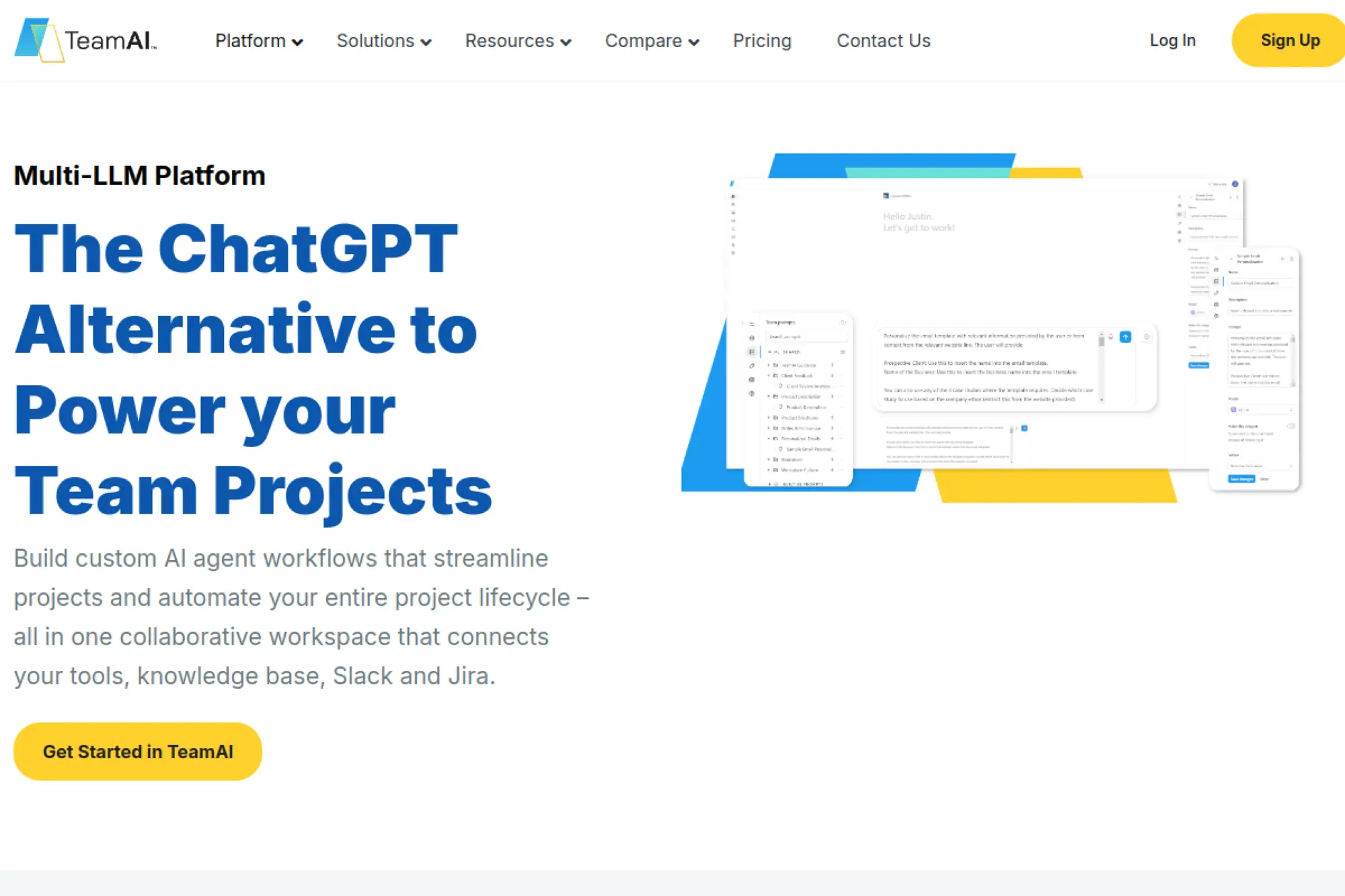
TeamAI is an AI workspace platform built for teams that want shared prompts, agents, and multi-model access. The product positioning is cost control and centralized workflows. For SEO and marketing, it’s about repeatable output with fewer tabs.
Outcome: Standardize AI-assisted marketing work without paying per heavy user.
Best for: Small marketing teams; operators building AI workflows for content and ops.
- Shared agents and prompt libraries → turns tribal knowledge into reusable workflows.
- Multi-model access in one place → can reduce context switching across separate AI tools.
- Fast workspace setup → time-to-first-value can be under an hour for a shared library.
Pricing & limits: From $5/mo for Individual. Trial length is not positioned as a classic trial on pricing pages. Caps are clear, such as 500 chat credits per month and up to 100 documents on Individual.
Honest drawbacks: Credit-based systems require monitoring to avoid surprises. If your team needs strict enterprise controls, you may need higher tiers.
Verdict: If you want repeatable AI workflows for marketing, this helps you standardize output within days of rollout.
Score: 3.8/5
Social Platforms That Improve Your SEO
26. YouTube for video SEO and content discovery
YouTube is operated by Google with teams focused on discovery, recommendations, and creator tools. For SEO, YouTube is its own search engine with its own ranking signals. The platform rewards watch time, clarity, and topic consistency.
Outcome: Turn how-to content into evergreen discovery and demand.
Best for: Content marketers building authority; product teams creating demos and tutorials.
- Searchable video library → captures intent for queries that never hit your blog.
- Metadata and chaptering workflows → can reduce editing confusion into a repeatable publish checklist.
- Fast publishing → time-to-first-value can be same-day visibility for existing audiences.
Pricing & limits: From $0/mo to publish and manage a channel. Trial length is not applicable. Caps exist via platform policies, channel settings, and monetization eligibility rules.
Honest drawbacks: Production takes time, and consistency matters more than a single great video. Attribution to revenue can be fuzzy unless you build strong tracking habits.
Verdict: If you want discoverable content beyond Google SERPs, this helps you earn compounding views over months.
Score: 4.2/5
27. Facebook platform supporting promotion that amplifies SEO content reach

Facebook is operated by Meta with teams built around distribution, community, and advertising. For SEO, it’s not a ranking lever directly. It is a reach amplifier that can seed links, shares, and repeat visitors.
Outcome: Put your best content in front of the people who will share it.
Best for: SMB marketers promoting content; community-driven brands building repeat traffic.
- Community distribution → helps content reach people who can link and reference it.
- Scheduling and targeting options → can reduce promotion into a repeatable weekly routine.
- Quick posting loop → time-to-first-value can be minutes once your page is set.
Pricing & limits: From $0/mo for organic posting. Trial length is not applicable. Caps depend on ad spend choices, account permissions, and platform policies.
Honest drawbacks: Organic reach is inconsistent, especially for brand pages. Audience building takes time, and pay-to-play pressure is real.
Verdict: If you want more eyes on SEO content, this helps you drive early momentum within days of publishing.
Score: 3.8/5
28. Instagram platform supporting promotion that amplifies SEO content reach

Instagram is a Meta platform with teams focused on visual discovery and creator formats. It won’t fix your technical SEO. Still, it can build brand demand that later shows up as branded searches and direct traffic.
Outcome: Grow brand pull so people search for you by name.
Best for: Ecommerce brands; creators repurposing content into short, visual formats.
- Short-form content reach → keeps your brand present between blog and product launches.
- Reels and story workflows → can turn one article into several posts with minimal extra work.
- Fast publishing cadence → time-to-first-value can be same-day engagement for active audiences.
Pricing & limits: From $0/mo for an account and organic posts. Trial length is not applicable. Caps relate to account permissions, content formats, and advertising decisions.
Honest drawbacks: Link sharing is limited, so direct traffic impact can be muted. Content creation is continuous, and fatigue is common.
Verdict: If you want stronger brand demand that supports SEO indirectly, this helps you build recognition over a few months.
Score: 3.8/5
29. LinkedIn platform supporting earned media and authority-building

LinkedIn is operated by Microsoft with product teams centered on professional identity and content distribution. For SEO, its superpower is authority-building through people. A strong executive voice can pull links, mentions, and referrals.
Outcome: Build credibility that makes outreach, PR, and links easier.
Best for: B2B marketers; founders and sales leaders growing thought leadership.
- Authority posting and networking → increases brand mentions that support off-site signals.
- Repurposing workflow → can turn one SEO article into several posts and comments threads.
- Low setup friction → time-to-first-value can be a day once profiles are tight.
Pricing & limits: From $0/mo for organic posting and company pages. Trial length is not applicable. Caps are mainly around feature access unless you add paid plans or ads.
Honest drawbacks: Organic reach can fluctuate with feed changes. The best results require consistent posting and real interaction.
Verdict: If you want B2B authority that supports SEO and sales, this helps you earn trust within a quarter.
Score: 3.7/5
30. TikTok Shop ecosystem for channel-specific growth strategies
TikTok is operated by a large platform organization focused on algorithmic discovery and commerce expansion. The Shop ecosystem blends content and buying intent tightly. While not “SEO,” it can create demand that lifts branded search later.
Outcome: Create discovery-driven sales and brand demand through short video.
Best for: Ecommerce sellers; brands that can demonstrate products on camera.
- Algorithmic discovery engine → gets products seen without waiting for search rankings.
- Shop plus creator workflows → can reduce funnel steps by selling inside the platform.
- Fast experimentation → time-to-first-value can be a week with consistent posting.
Pricing & limits: From $0/mo to create an account and post. Trial length is not applicable. Caps depend on seller requirements, content policies, and any transaction or ad fees you incur.
Honest drawbacks: Volatility is high, and formats change quickly. If you dislike constant creation, this channel can drain your team.
Verdict: If you want demand fast, this helps you test offers and messaging within weeks, then feed wins back into SEO.
Score: 3.6/5
What Professional SEO Services Include in a Full-Service Engagement
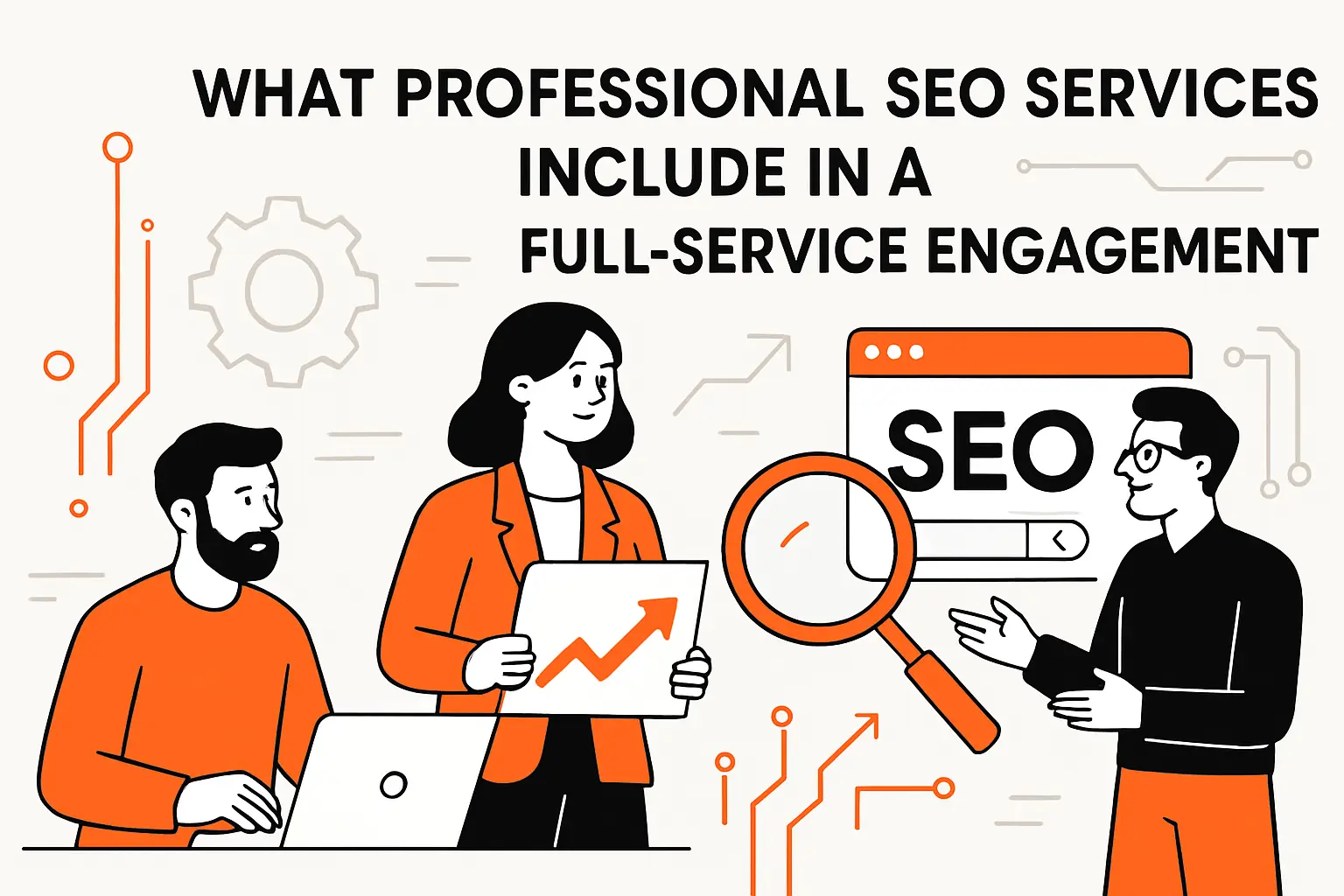
SEO budgets compete with every other growth lever, so scope discipline matters. Gartner found average marketing budgets dropped to 7.7% of overall company revenue in 2024, which pushes teams toward measurable, staged delivery.
Full-service SEO is not “doing some keywords” and waiting. A professional engagement is a coordinated program across research, content, engineering, authority, and measurement. We treat it like product work with a roadmap and releases.
1. Keyword research and search intent mapping for qualified traffic
Intent mapping is where professional SEO starts to feel like strategy work. Instead of chasing volume, we group queries by job-to-be-done. That lets us match page types to outcomes, like demos, calls, or store visits.
In SaaS, we often separate “problem aware” from “solution aware” topics early. Doing that prevents blog sprawl. It also clarifies which pages deserve product screenshots and which need educational depth.
2. On-page SEO improvements for titles, meta descriptions, and content relevance
On-page work is not just edits in a content tool. It is a relevance system that ties headings, entities, internal anchors, and topical coverage together. Small changes compound when they align with a clear intent model.
In regulated industries, we build on-page templates that keep compliance language stable. Meanwhile, we allow controlled variation in titles and headers. That protects brand risk while still improving relevance.
3. Technical SEO audits and fixes that improve crawlability and indexation
Technical audits are where we see the biggest gap between “SEO advice” and “SEO delivery.” Many sites have hidden blockers, like inconsistent canonicals or duplicated parameter paths. Those issues quietly waste crawl attention.
From our engineering lens, we prioritize fixes by blast radius. We also tag each item with an owner, a test method, and a rollback plan. That reduces fear when shipping changes.
4. Page speed optimization and Core Web Vitals-focused performance work
Performance work is business work, not just engineering pride. Deloitte observed that Retail conversions increased by 8.4% after a small natural mobile speed improvement, which reframes speed as a revenue lever.
In practice, we target the biggest offenders first. Heavy hero images and render-blocking scripts usually lead the list. After that, we align caching, delivery, and frontend budgets with content needs.
5. Off-page SEO through backlink acquisition, citations, and authority signals
Authority is still a differentiator in crowded search results. Professional off-page work avoids spam tactics and focuses on earning relevance. That often means digital PR, partnerships, and credible mentions from niche communities.
For founders, we frame link building as reputation distribution. A strong placement on an industry association site can beat a pile of generic directories. Quality wins when algorithms evolve.
6. Content creation plus content pruning and content refreshes
Content creation without pruning becomes content debt. Mature SEO programs regularly refresh high-potential pages and remove weak ones. That improves clarity for both users and crawlers.
In our workflow, we treat refreshes like version upgrades. We keep what performs, rewrite what misaligns with intent, and consolidate overlaps. The result is fewer pages doing more work.
7. Local SEO optimization to improve visibility in local results and Maps
Local SEO is a trust game with structured signals. Listings, categories, services, and review velocity all interact. Professional service providers manage those signals consistently across platforms.
For multi-location brands, we prefer a repeatable location-page framework. It should support unique services and unique proof. That prevents thin pages that fail to convert.
8. Conversion rate optimization integrated with professional SEO services
Rankings are not a finish line if the page does not persuade. CRO inside SEO means aligning intent, copy, UX, and friction removal. We want visitors to feel understood within seconds.
In lead gen, we often test “proof blocks” near the top. That includes outcomes, reviews, and case snapshots. A clear next step then becomes a natural decision.
9. Analytics setup, reporting, and performance tracking for measurable ROI
Measurement is where many SEO programs fall apart. Professional SEO reporting ties visibility to pipeline signals and customer actions. That requires consistent tagging, clean conversions, and agreed attribution rules.
At TechTide, we like dashboards that answer one question per view. Executives want outcomes, not raw keyword tables. Operators want diagnostics and action queues.
10. Ongoing optimization and maintenance vs one-time professional SEO services
One-time SEO work can fix foundational issues. Ongoing SEO keeps the system healthy as competitors publish and search features change. Most businesses need both, but in the right order.
We often start with a stabilization sprint. After that, we shift into a cadence of publish, improve, and measure. Momentum becomes a competitive moat.
11. Visibility in AI search experiences like AI Overviews and LLMs
AI search surfaces reward clear, attributable answers. That shifts emphasis toward structured explanations, credible citations, and tight topical coverage. We also see stronger payoff from brand authority signals.
In our builds, we make content easier to quote. That means strong definitions, scannable sections, and consistent terminology. When answers travel, brands travel with them.
Our Top Service Checklist We Actually Deliver
- Discovery workshops and stakeholder interviews
- Technical crawl and index review
- Search intent map and page-type model
- Keyword clustering and topical segmentation
- Information architecture planning
- Internal linking strategy design
- Title and snippet improvement recommendations
- Content briefs with entity coverage guidance
- Content production support and editing
- Content refresh and consolidation plan
- Redirect and consolidation execution guidance
- Canonical and duplication resolution
- Structured data recommendations
- Robots and crawl policy review
- Sitemap strategy and validation
- Pagination and faceting guidance for catalogs
- Mobile UX and accessibility checks
- Core Web Vitals performance backlog
- Image, script, and font optimization guidance
- International and language targeting review
- Local listing and profile optimization
- Review strategy and response playbooks
- Citation cleanup and consistency work
- Digital PR planning support
- Link risk review and cleanup guidance
- Competitor SERP feature analysis
- SEO governance and publishing workflows
- Analytics configuration and conversion alignment
- Dashboards and reporting cadence setup
- Quarterly roadmap refresh and prioritization
How Managed Professional SEO Services Work: Process and Collaboration
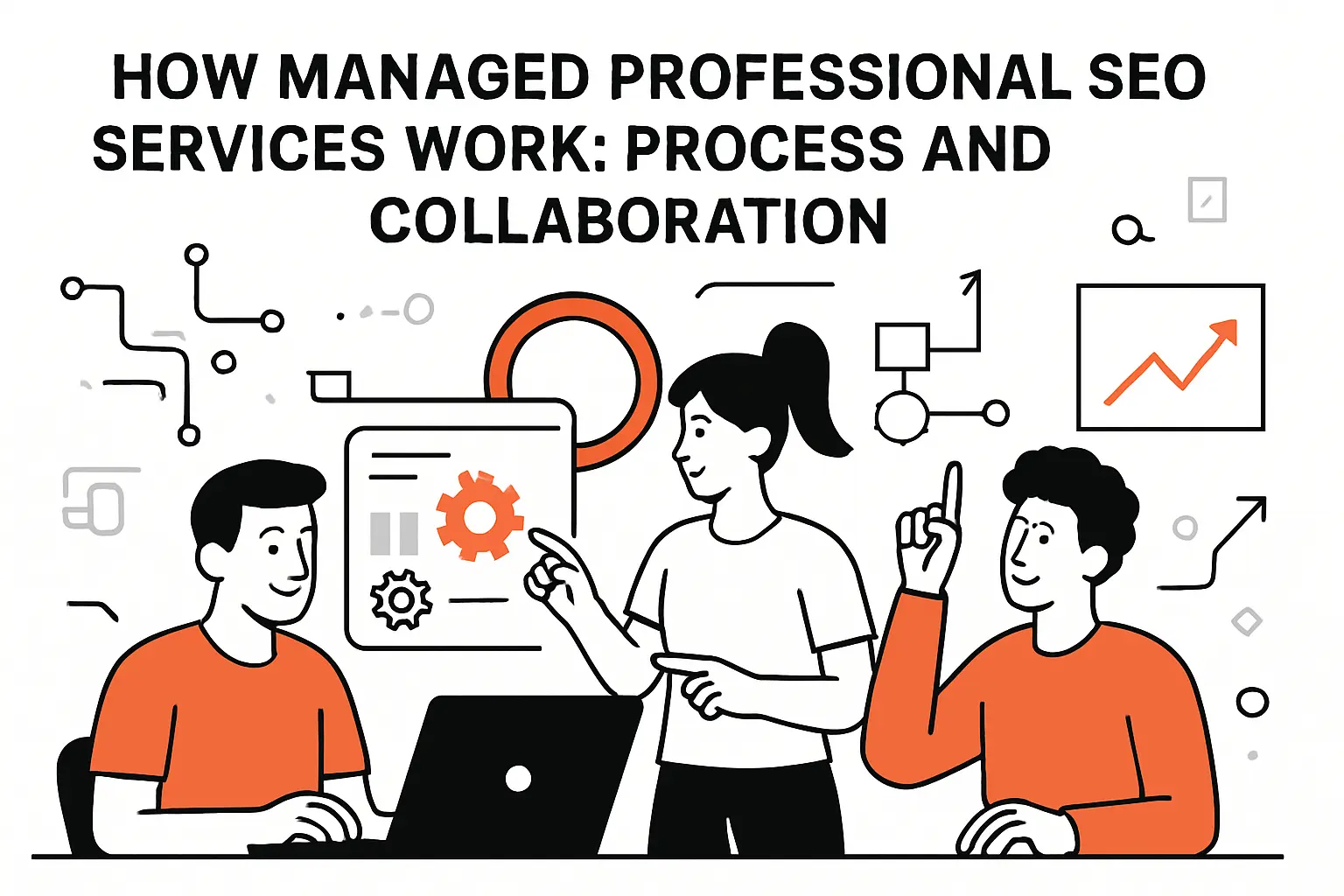
Trust signals shape how buyers choose, and SEO is a trust channel at scale. Forrester reports that 82% of buyers say coworkers and management are trusted, which is why professional SEO also supports internal confidence and buy-in.
Managed SEO works best when it resembles a product team. Everyone knows the goals, the backlog, and the release cadence. Collaboration is then less about opinions and more about evidence.
1. Dedicated account management with regular strategy and performance check-ins
A good account manager translates between marketing goals and delivery reality. They keep scope crisp and remove blockers quickly. In healthy engagements, calls produce decisions, not vague optimism.
From our side, we prefer shared artifacts over slide decks. Roadmaps, issue trackers, and change logs create continuity. That matters when stakeholders change midstream.
2. Audience research to align SEO strategy with customer needs
Audience research is more than persona templates. It is the practice of learning how buyers describe problems. Those phrases become the raw material for topics and page narratives.
In services businesses, sales calls are gold. We often turn objection patterns into FAQ sections and comparison pages. That is where qualified traffic starts to self-select.
3. Competitor analysis to identify gaps and winning opportunities
Competitor analysis should reveal patterns, not just envy. We look at page types, internal linking depth, and content freshness. Then we map which patterns match your capabilities.
In local markets, competitors often win with consistency. They publish clearer service pages and collect better reviews. That is solvable without chasing every keyword.
4. Keyword gap audits and targeting strategy for achievable rankings
A keyword gap audit is an opportunity filter. It highlights what competitors rank for that you do not cover. The professional part is choosing targets that match intent and brand fit.
We also separate “must win” from “nice to have.” That keeps content teams focused. It also reduces the temptation to chase vanity topics.
5. Content gap audits to plan SEO-friendly pages and content improvements
Content gaps show up as missing page types. Examples include comparison pages, implementation guides, or pricing explainers. Filling those gaps often improves conversion, not just visibility.
At TechTide, we like to map gaps to funnel stages. That prevents publishing only top-of-funnel blogs. A balanced library reduces reliance on retargeting.
6. Backlink analysis to identify harmful links and authority opportunities
Backlink analysis is partly risk management. Strange link spikes and irrelevant domains can signal trouble. A professional team documents decisions, because link cleanup can be sensitive.
Opportunity work looks different. We focus on earning mentions where your buyers actually learn. Industry newsletters, associations, and integration partners matter more than generic lists.
7. Technical health, security, and performance reviews to prioritize fixes
Technical health is a triage exercise. A managed partner should translate audit findings into a prioritized list. Each item needs a reason, an expected impact, and a clear owner.
Security work belongs in the conversation too. A hacked site can lose trust fast. Search performance rarely survives a prolonged security incident.
8. Execution across on-page, off-page, and technical SEO disciplines
Execution fails when teams treat SEO as a checklist. A managed provider should coordinate changes across content, code, and authority. Otherwise, improvements fight each other.
In our delivery projects, we insist on staging and validation. SEO changes are production changes. They deserve release discipline like any feature work.
9. Ongoing monitoring, maintenance, and iteration because SEO never stops
SEO is a moving target because competitors publish and products evolve. Monitoring catches regressions early. Maintenance keeps internal linking, index coverage, and templates stable.
Iteration is where compounding happens. A small content refresh can unlock a cluster. A template tweak can improve dozens of pages at once.
Pricing and Contracts for Professional SEO Services
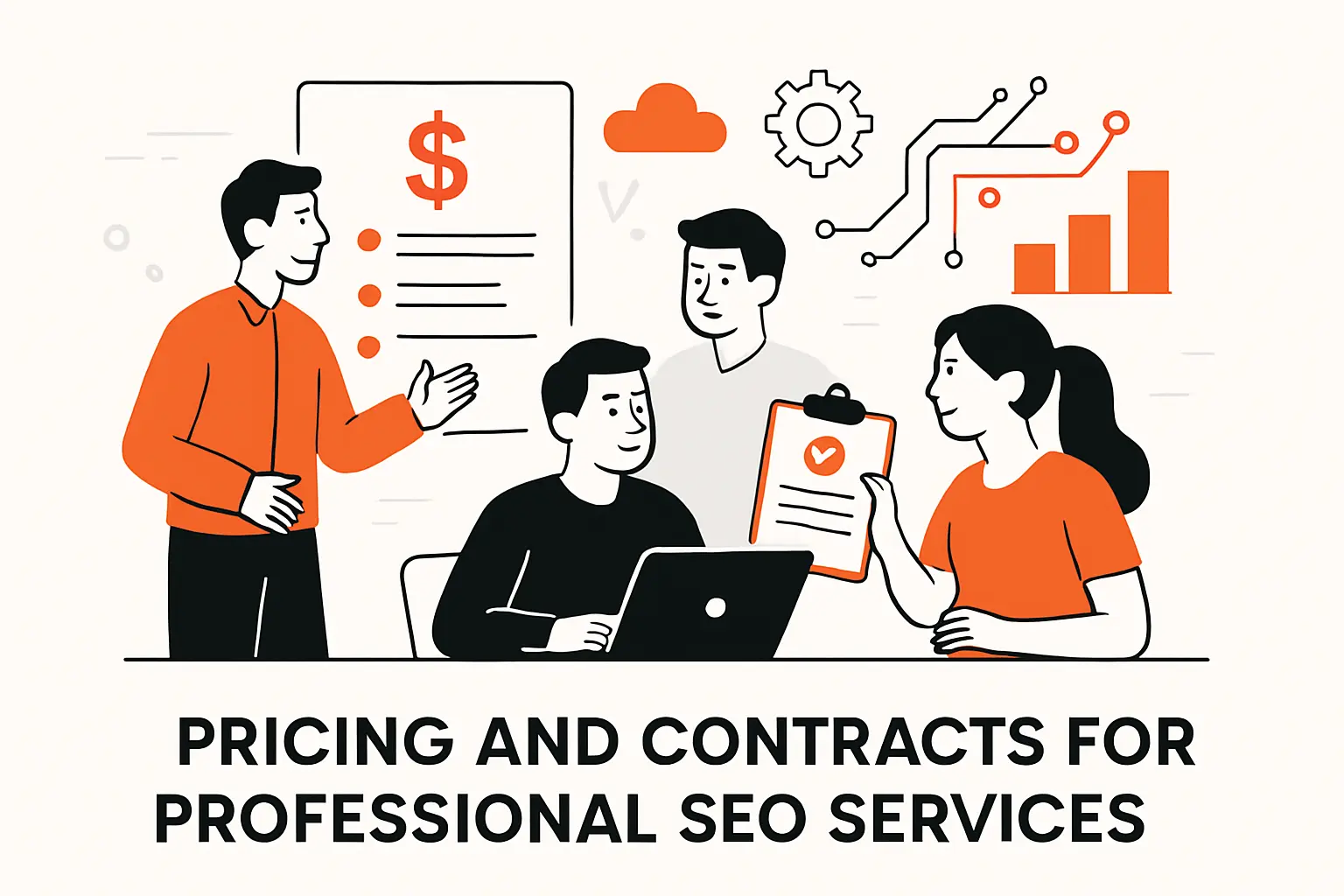
Pricing is easier to justify when outcomes connect to revenue mechanics. Speed is one example, and Deloitte’s research shows conversion sensitivity can be dramatic in real user behavior. That is why scopes that include performance work often pay back faster.
Still, pricing is not just a rate card. It is a trade between focus, speed of execution, and risk. Contracts should clarify what gets shipped, not just what gets discussed.
1. Typical monthly managed professional SEO services pricing ranges
Monthly managed SEO usually bundles strategy, content guidance, and technical support. The biggest variable is execution depth. Some retainers advise, while others ship changes directly.
We recommend asking how much work is “hands-on.” The answer reveals whether you are buying labor or leadership. Both can be valid, but they are different products.
2. One-time SEO projects and audits as an alternative engagement model
One-time projects work when you need clarity fast. Technical audits, content audits, and migration reviews fit well here. The deliverable should be a prioritized backlog, not a generic document.
In our experience, audits fail when they ignore implementation reality. A perfect recommendation that cannot ship is just trivia. Professional teams tailor advice to your stack.
3. Key cost drivers: website size, scope, competition, and SEO goals
Cost drivers are usually structural. Large catalogs add complexity in crawling and internal linking. Competitive spaces require deeper content and stronger authority work.
Goals also change the shape of work. Local lead generation differs from national ecommerce. A serious provider explains tradeoffs instead of promising everything at once.
4. Agency vs in-house vs freelancer options for professional SEO services
Agencies bring breadth and bench strength. In-house teams bring context and speed of alignment. Freelancers can bring sharp expertise, but coverage can be narrower.
We like hybrid models for many teams. An in-house owner sets priorities. A specialist partner then executes the heavy lifts across content and engineering.
5. Month-to-month vs long-term agreements and what they mean for flexibility
Month-to-month agreements lower commitment risk. Long-term agreements can lower cost and create stability for planning. The right choice depends on your internal readiness to implement changes.
From a delivery standpoint, we prefer clear exit clauses either way. That forces transparency. It also reduces the temptation to hide behind jargon.
6. What a proposal should include: deliverables, timelines, and reporting cadence
A professional proposal reads like an execution plan. It should list deliverables, owners, and review points. Timelines should reflect dependencies, especially engineering availability.
Reporting cadence matters more than reporting volume. Weekly updates keep momentum. Monthly reviews support decisions. Quarterly planning keeps the roadmap honest.
7. Measuring ROI beyond rankings with leads, sales, and conversion metrics
Rankings are a proxy, not an outcome. ROI should tie to conversions, sales cycles, and retention. That requires shared definitions of qualified leads and meaningful actions.
At TechTide, we encourage teams to track assisted influence too. Organic content often supports later conversions through trust. When you measure only last click, you underfund the engine.
Specialized Professional SEO Services by Channel, Platform, and Industry
Specialization matters more as search expands into AI-assisted discovery. McKinsey estimates generative AI could add $2.6 trillion to $4.4 trillion annually, and SEO teams are already adapting content operations around that shift.
We see specialization as a stack decision. Platform constraints, compliance rules, and buyer behavior all change what “good SEO” means. A professional provider should show a playbook, not just confidence.
1. Ecommerce SEO for platforms like Shopify, BigCommerce, and WooCommerce
Ecommerce SEO lives in templates and taxonomy. Collections, filters, and product variants can explode into duplication. Professional ecommerce SEO manages index policy and builds internal linking that supports discovery.
We also focus on merchandising language. Buyers search by use case, not SKU logic. When category pages speak buyer language, conversion improves without extra traffic.
2. Amazon SEO for marketplace search visibility
Amazon SEO behaves like retail search, not web search. Titles, bullet points, images, and reviews drive visibility. Professional work includes listing quality, brand registry assets, and keyword placement discipline.
From a systems view, we treat Amazon as a separate search product. It needs its own reporting, because rankings shift faster. The feedback loop should be tight and practical.
3. Enterprise SEO for large sites and competitive keyword environments
Enterprise SEO is governance plus automation. Large sites need rules for templates, internal links, and publishing controls. A professional team designs systems that prevent regressions across thousands of pages.
We often build guardrails into CI workflows. That can include checks for broken canonicals and indexing flags. The goal is safer shipping at scale.
4. Local SEO and citation building through directory listings
Citations are boring, and that is why they matter. Consistency across listings reduces confusion for users and platforms. Professional local SEO includes cleanup, monitoring, and category alignment.
We also treat reviews as content. Review responses can reinforce services and locations. Done well, they read like helpful customer support, not marketing noise.
5. SEO services for lawyers with ROI-driven lead generation strategies
Legal SEO is constrained by ethics rules and high competition. Professional legal SEO leans on clarity, authority, and local trust. Practice area pages must educate while still moving prospects forward.
In our experience, intake alignment is critical. If the call handling is weak, SEO looks “bad” unfairly. Great providers coordinate with intake and tracking early.
6. Voice search SEO and conversational query targeting
Voice queries are often longer and more direct. They favor clear answers and structured phrasing. Professional work includes FAQ architecture, schema guidance, and concise definitions.
We recommend building “answer blocks” inside key pages. Those blocks also help AI-driven experiences. One clean explanation can serve multiple channels.
7. AI SEO and generative search optimization for emerging SERP experiences
AI SEO is about being quotable and credible. Content should show sources, explain tradeoffs, and stay consistent in terminology. Professional teams also monitor how brand mentions appear in AI summaries.
At TechTide, we consider retrieval patterns early. We structure content so an AI can lift a correct snippet. That reduces hallucination risk around your brand.
8. On-page SEO programs that scale page creation and content updates
Scaling on-page work requires templates with guardrails. Professional programs define content blocks, linking rules, and publishing checks. That makes quality repeatable across teams.
We often implement “brief to publish” workflows with approvals. The goal is faster shipping without sacrificing accuracy. In regulated spaces, that balance is non-negotiable.
9. Off-page SEO built on referral links, citations, and earned media approaches
Earned media works best when it matches the buyer’s learning path. Professional off-page programs pitch stories that have a reason to exist. That reason is usually data, expertise, or a strong opinion.
We also watch for link durability. A short-lived press mention can fade quickly. Evergreen partner links and resource citations often outlast hype cycles.
10. Technical SEO for speed, site structure, indexation, and ongoing maintenance
Technical SEO is where software habits shine. Version control, staging environments, and automated checks reduce risk. Professional teams work with engineers, not around them.
Our favorite technical wins are structural. Clean navigation, clear taxonomies, and consistent canonical logic create a stable base. Content teams then build on solid ground.
TechTide Solutions: Custom Software to Support Professional SEO Services
SEO is increasingly a data and automation problem, especially for teams with many pages and stakeholders. IDC forecasts worldwide AI spending will reach $632 billion in 2028, and that wave is pushing SEO operations toward smarter tooling.
At TechTide Solutions, we build the connective tissue that agencies and in-house teams often lack. Off-the-shelf tools are useful, but custom systems can turn SEO into a controlled process. That is where consistent ROI becomes easier to defend.
1. Building custom SEO dashboards and reporting portals aligned to stakeholder KPIs
Generic dashboards rarely match how leadership thinks. We build portals that map pages to outcomes and owners. That turns SEO reporting into an operating review, not a spreadsheet ritual.
In practice, we include drill-down paths from goal to cause. A leader sees outcomes first. An operator then sees what changed and what to do next.
2. Automating SEO workflows like audits, keyword tracking, and content operations
Automation reduces time spent on repetitive checks. We often automate crawl comparisons, template regressions, and content inventory changes. That frees specialists to do judgment work.
Our approach is “alerts with context.” An alert should include impact, suspected causes, and ownership. Otherwise, it becomes noise and gets ignored.
3. Developing tailor-made integrations that match customer requirements and existing systems
SEO touches many systems, including CMS platforms and CRMs. Custom integrations remove friction between publishing and measurement. They also reduce manual tagging and tracking gaps.
When integrations are done well, teams ship faster. Marketing stops waiting on exports and imports. Engineering stops firefighting tracking debt.
Conclusion: Choosing Professional SEO Services That Fit Your Goals
Search is becoming more complex, but professional SEO is still about fundamentals and execution discipline. The research we cited shows budgets are scrutinized, speed influences outcomes, and AI is reshaping how answers travel. Those forces make provider selection more consequential than ever.
At TechTide Solutions, we prefer partners who can explain the “why” and ship the “how.” When SEO becomes a repeatable system, it stops feeling like a gamble. It starts behaving like compounding growth.
1. Clarify business objectives and define measurable KPIs before selecting a provider
Clear goals prevent mismatched expectations. Decide whether you need pipeline, ecommerce revenue, or local calls. Then map SEO work to those outcomes through a shared measurement plan.
We recommend agreeing on leading indicators too. Content velocity, technical health, and conversion friction are controllable. Those signals keep teams aligned between reporting cycles.
2. Validate claims with case studies, reviews, and proof of results
Strong providers show their work without hiding behind jargon. Case studies should explain constraints, decisions, and tradeoffs. Reviews should mention communication quality, not just outcomes.
In our experience, a good sign is specificity. Great teams can describe what they did, why it mattered, and what they would do differently now.
3. Prioritize transparent execution across on-page, off-page, and technical SEO
Transparency is operational safety. You should see backlogs, changelogs, and testing plans. That reduces surprises and helps internal teams support the work.
We also like providers who admit uncertainty. Search changes constantly. Honest teams adjust quickly and document their reasoning.
4. Commit to ongoing optimization to adapt to market shifts and search changes
SEO rewards consistency more than bursts of activity. Ongoing improvement keeps your content accurate and your site technically stable. It also prevents competitors from slowly surrounding your core topics.
If you want a practical next step, start with a shared backlog and one measurable conversion goal. Then ask: which provider will help us ship the first meaningful improvement this month?