


As Techtide Solutions, we’ve spent years pairing demanding roadmaps with the right global talent, and the throughline is simple: your geography strategy is a force multiplier. To set the stage, note that enterprise buyers continue to prioritize services; Gartner projects IT services spending to reach $1.73 trillion in 2025, underscoring why choosing the right destination now pays dividends across cost, quality, and speed.
First, we outline how we evaluate locations and which countries excel for common use cases. Then, we show how we build accountable teams that protect your IP and ship production-grade software without compromising velocity.
Top 20 Services And Companies For The Best Countries To Outsource Software Development
When we choose where to build and scale, we think in systems. Talent density, time-zone alignment, engineering culture, IP protection, data rules, infrastructure, and geopolitical risk matter. Over the last decade, our deal rooms spanned Central and Eastern Europe. We also worked with Southern Europe, Latin America, and Asia. Examples include Poland, Ukraine, Romania, and Bulgaria. Also Portugal and Spain; Mexico, Colombia, Argentina, Brazil; India, Vietnam, and the Philippines. Each region brings a distinct strength. Poland offers computer science rigor and Ukraine delivers platform engineering chops. Mexico excels at near-time collaboration with U.S. product teams. India brings enterprise breadth and deep cloud certifications. Vietnam wins on mobile speed and cost efficiency. The right “best country” is really the right “best capability mix,” assembled from a global bench.
Decision-Centered Consulting: Start with the Decision
In practice, the highest‑performing outsourcing programs blend three truths. First, governance beats geography. Shared ways of working—definition of done, ADRs, and test gates—unlock consistent velocity; time zone alone won’t. Second, product outcomes trump resource inputs. We use outcome-oriented contracts with measurable KPIs—engagement, conversion, MTTR, and lead time for changes—rather than counting heads. Third, resilience is a portfolio decision. We distribute work across two to three countries to de-risk continuity, while keeping PII and secrets tight via zero-trust patterns and auditable deployment pipelines.
Below we share twenty services and the partner companies we’ve seen deliver reliably across those “best countries.” For each vendor, we share our field view on what it’s built for. When recognition is credibly documented, we include it. We show how they prove it in the wild. Finally, we name who they’re the best fit for. We write as practitioners who pair with these teams, inherit their codebases, and ship to production alongside them. If you’re shortlisting vendors, treat this as a signal‑rich map you can tailor to your constraints and ambitions.
1. EPAM — Custom Software Development
EPAM is a global digital engineering firm focused on large‑scale custom software, platform modernization, and product development across industries from financial services to retail. Headquartered in Newtown, Pennsylvania, it employs an estimated 50,000+ engineers and consultants, has been operating since 1993 (~32 years), and runs distributed delivery from Central/Eastern Europe, Latin America, India, and APAC.
Among broad‑market recognitions, EPAM’s inclusion in the S&P 500 is a durable signal of scale and market credibility. That status tends to correlate with mature controls around reporting, risk, and operational continuity—attributes enterprise buyers often require in high‑stakes custom builds.
On the ground, EPAM is known for cross‑functional pods that blend product managers, architects, SDEs, SREs, and data engineers. We’ve watched them stand up greenfield platforms and untangle legacy estates, often in cloud‑native stacks (Kubernetes, service meshes, IaC) and modern frontends. Their engineering playbooks (testing pyramids, ADRs, trunk‑based development) travel well across regions, which reduces integration friction on multi‑vendor programs.
Best fit: global enterprises or late‑stage scaleups that need a multi‑country bench, deep platform engineering (payments, e‑commerce, data platforms), and the governance discipline to scale. If your org requires SOC‑2/ISO controls, intricate change‑management, and high uptime SLAs, this is on‑label EPAM territory.
2. Appinventiv — Mobile App Development
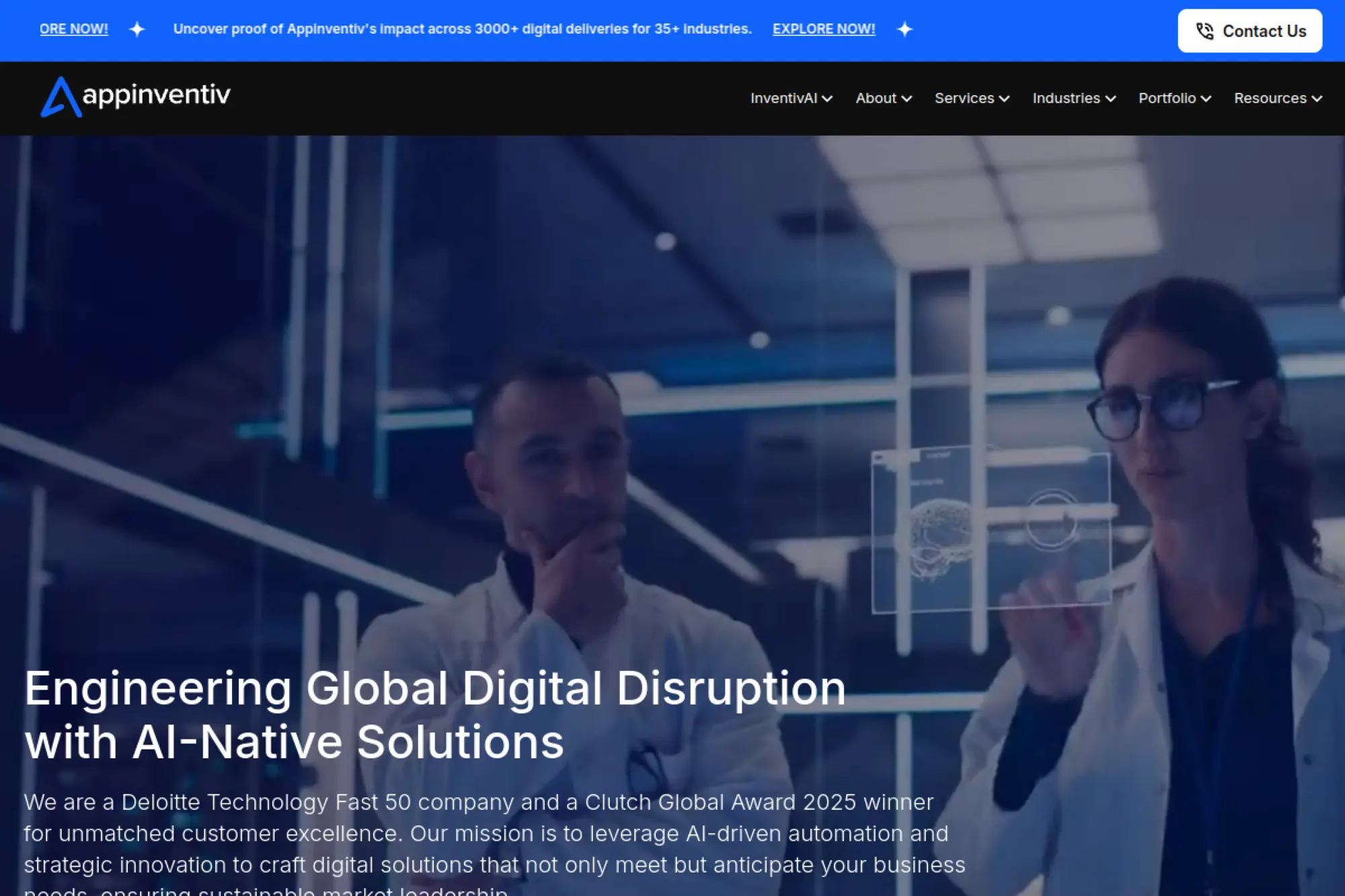
Appinventiv, headquartered in Noida, India, is a product engineering and mobile‑first specialist with an estimated 1,500–1,600 employees and ~10 years in market (founded 2015). We see them most often on greenfield iOS/Android, Flutter/React Native, and mobile‑centric backend/API engagements across fintech, healthcare, and retail.
The team’s growth trajectory has been recognized in India’s tech ecosystem, including Deloitte’s Technology Fast 50 India 2023, which tracks revenue growth and operational maturity among high‑performing firms. For mobile buyers, that tends to validate sustained demand and delivery capacity.
In delivery, we’ve seen Appinventiv excel at product increments tightly coupled to conversion and retention goals—rapid test cycles on onboarding, payments, and notifications; careful attention to App Store/Play policies; and telemetry‑driven iteration. Public case work spans consumer and enterprise use cases, and the shop is comfortable owning both app code and the cloud‑side scaffolding that makes mobile experiences reliable at scale.
Best fit: venture‑backed startups to mid‑market firms needing a mobile‑first partner who can move quickly, A/B test aggressively, and own end‑to‑end delivery (from product discovery to MLOps‑adjacent personalization). If you want fast metabolic rate without sacrificing code health, they’re worth a look.
3. TechTide Solutions — TechTide Solutions
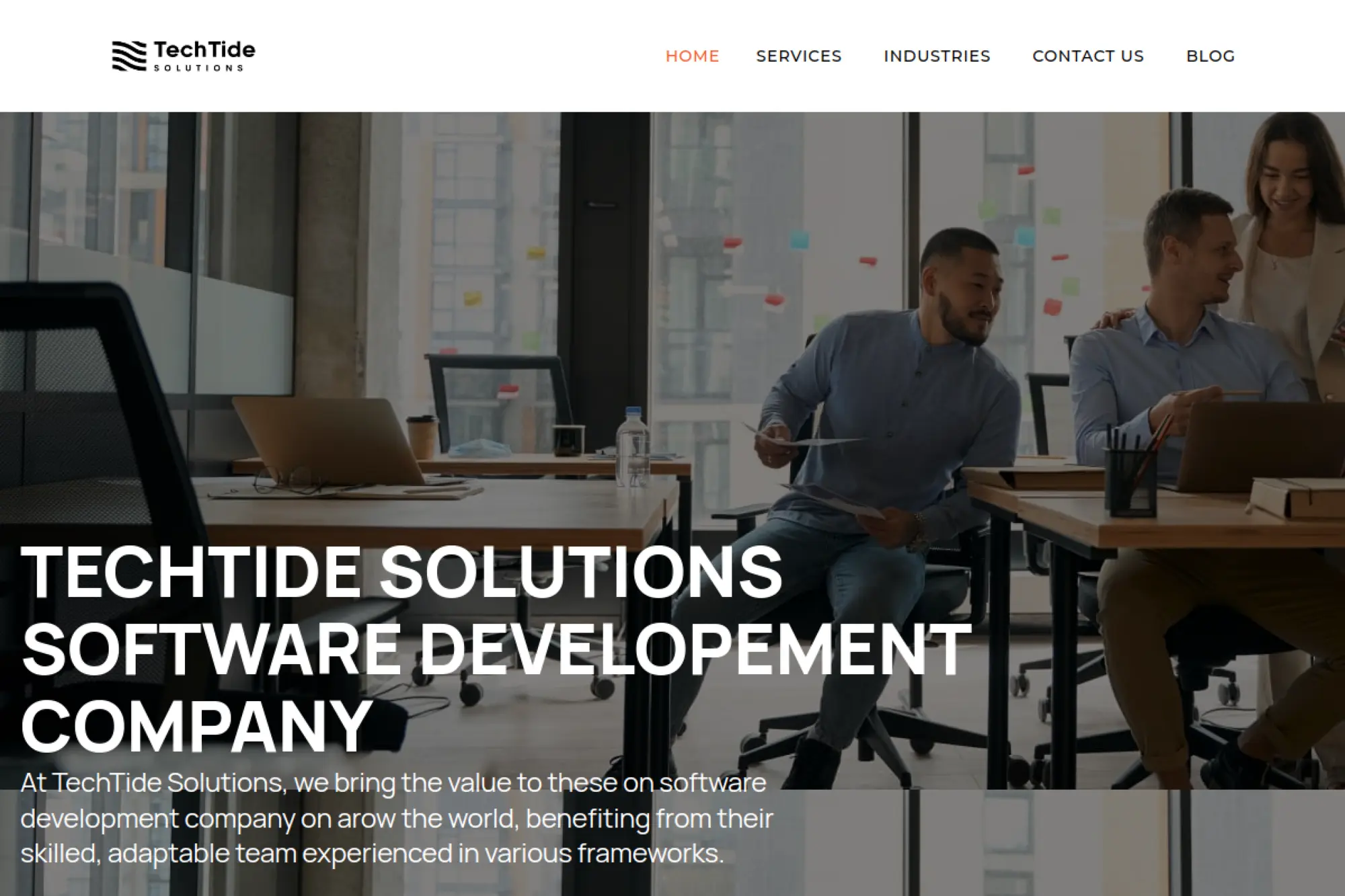
We are TechTide Solutions, a software development company founded in 2019 with hubs in Ho Chi Minh City and distributed collaborators across Europe and Latin America (~150 engineers). Our focus areas are custom web/mobile development, cloud modernization, and AI‑augmented product engineering. Being builders ourselves, we emphasize pragmatic architecture, measurable outcomes, and transparent delivery.
We keep our recognition simple—client outcomes over trophy cases—so you won’t see us chasing award banners. What we do invest in is engineering excellence: consistent CI/CD, automated testing with strong contract tests, run‑booked operations, and an obsession with metrics that tie code to business impact. That’s the “award” our leads care about.
Proof for us is in shipping. We’ve helped startups turn seed decks into shipping MVPs, and mid‑market firms migrate monoliths into modular platforms with clear SLOs. On AI‑adjacent work, we’ve embedded chat automation, retrieval‑augmented generation, and content moderation safely into customer journeys—always with governance and observability top of mind.
Best fit: founders and product leaders who want a sleeves‑rolled partner, not just a vendor. If your priorities are speed with guardrails, cost clarity, and a team that says “no” when scope harms outcomes, we’re your people. We love messy codebases, thorny integrations, and hard metrics.
4. Globant — Web App Development
Born in Argentina and now operating worldwide, Globant blends product studios with cloud and data capabilities. With 27,000+ people and ~20 years in operation, they’ve delivered web platforms at enterprise scale—content‑rich sites, e‑commerce, and complex back‑office portals—out of LATAM and Eastern Europe with strong time‑zone coverage for the Americas and EMEA.
On the partner ecosystem front, Google Cloud highlighted Globant in its 2024 awards as the services winner for Media and entertainment, which aligns with Globant’s long‑standing footprint in digital media, gaming, and streaming supply chains. Awards like this typically reflect referenceable outcomes on marquee programs.
We’ve paired with Globant on web stacks that prize resilience and content velocity: modern JS frameworks, headless CMS, edge delivery, and composable commerce. Their “studio” model brings domain specialists to the table—design systems, experimentation, accessibility—that matter when a site is a revenue engine, not just a brand surface.
Best fit: brands with heavy content operations, omnichannel customer journeys, or catalog‑rich commerce that need a partner who can sustain high throughput and deep integration work (ERP, PIM, CDP) without losing sight of performance budgets and accessibility.
5. Endava — Cloud Application Development
Endava is a UK‑listed engineering company with deep delivery centers in Romania, Bulgaria, Moldova, and neighboring CEE countries, complemented by LATAM. With ~10,000+ people and over two decades of operations, they show up strongest in payments, fintech, and telco‑grade cloud services—precisely where uptime and regulatory constraints are unforgiving.
Analyst recognition has followed their ascent, including Gartner’s Magic Quadrant 2023 entry for custom software development services. We treat that as signal, not verdict—but it tracks with the steady maturity we’ve observed in their cloud implementation and modernization programs.
We’ve seen Endava teams design cloud‑native backbones (microservices on Kubernetes with service meshes), decouple brittle monoliths via strangler patterns, and implement robust CI/CD with blue‑green/canary release strategies. In payments and mobility, they’re comfortable with high‑throughput, high‑availability realities—rate limits, fraud detection hooks, strong observability.
Best fit: regulated or volume‑intense businesses (fintech, telco, mobility, retail) with cloud modernization agendas that must balance velocity and risk. If you need cloud apps that live comfortably under load on Friday nights and during holiday spikes, Endava’s a fit.
6. Itransition — SaaS Application Development
Itransition is a long‑standing Eastern European‑born vendor now operating globally from hubs in the U.S. and CEE. With ~3,000+ staff and ~27 years in operation (founded 1998), they’re often tapped for building multi‑tenant SaaS products: subscription architecture, tenant isolation, metering/billing, role models, and upgrade pipelines that don’t break SLAs.
We haven’t found recent third‑party awards we’d consider decisive—no problem; their track record in shipping subscription products at scale is the meaningful proof for SaaS work. We advise focusing more on their reference architectures and ops stories than on badges.
In delivery, their teams handle data partitioning strategies (schema‑per‑tenant vs. shared with discriminator), feature flagging for safe rollout, and SSO/SAML/OIDC integration for B2B SaaS. We’ve seen them partner well with product orgs on freemium‑to‑paid funnels, entitlement services, and usage‑based billing patterns that keep finance and engineering aligned.
Best fit: founders and product leaders turning domain IP into a secure, multi‑tenant platform; enterprises carving productized services out of internal tools. If your success depends on clean tenancy, frictionless onboarding, and painless versioning, they’re aligned with that mandate.
7. Quantiphi — AI Consulting
Quantiphi is an AI‑first consultancy founded in 2013 with delivery strength in India, North America, and Europe. Headcount is ~2,000–3,000, and engagements span machine learning platforms, data foundations, and applied AI for contact centers, healthcare, and financial services. Their center of gravity is Google Cloud and AWS.
Google Cloud’s 2024 partner program recognized Quantiphi as the specialization winner for Contact Center AI (CCAI), which lines up with our experience of their depth in conversational AI and speech analytics. Awards tied to specific customer outcomes in partner ecosystems tend to be more informative than generic lists.
We’ve seen Quantiphi land data platforms (stream/batch, feature stores), orchestrate MLOps with reproducible training and model registries, and deploy agent‑assist solutions that blend LLMs with retrieval‑augmented generation under strong guardrails. Their workshops are practical, not performative—focused on model governance, prompt evaluation, and cost controls.
Best fit: enterprises ready to move from AI pilots to operating models—where experiments become production systems with clear SLAs and monitorable drift. If you value cloud‑native AI with measurable CX/EX impact, Quantiphi is a strong contender.
8. SoftServe — Generative AI Development

SoftServe is a Ukrainian‑founded, U.S.‑headquartered engineering company (~13,000+ people; ~30 years in market) with a large presence across CEE and LATAM. We see them at the intersection of cloud, data platforms, and applied AI—now increasingly, generative AI embedded in enterprise workflows.
On the hyperscaler front, SoftServe was an inaugural launch partner for the AWS Generative AI Competency, and later received NVIDIA’s Americas NPN Partner of the Year 2025 for service delivery—both credible signals of hands‑on capability with production‑grade GenAI stacks.
In delivery, SoftServe teams help clients build the safer half of GenAI: retrieval pipelines, vector stores, prompt/response testing harnesses, system prompts and policy layers, and evaluation frameworks that quantify hallucination risk. We’ve seen them integrate LLMs into supply‑chain insights, customer support, and developer productivity without turning the cloud bill into a cliff.
Best fit: enterprises with existing cloud/data foundations who want a measured path to GenAI—pilot quickly, evaluate rigorously, scale what works. If your program demands model governance, cost observability, and traceable outputs, SoftServe’s operating patterns are aligned.
9. Kore.ai — AI Chatbot Development
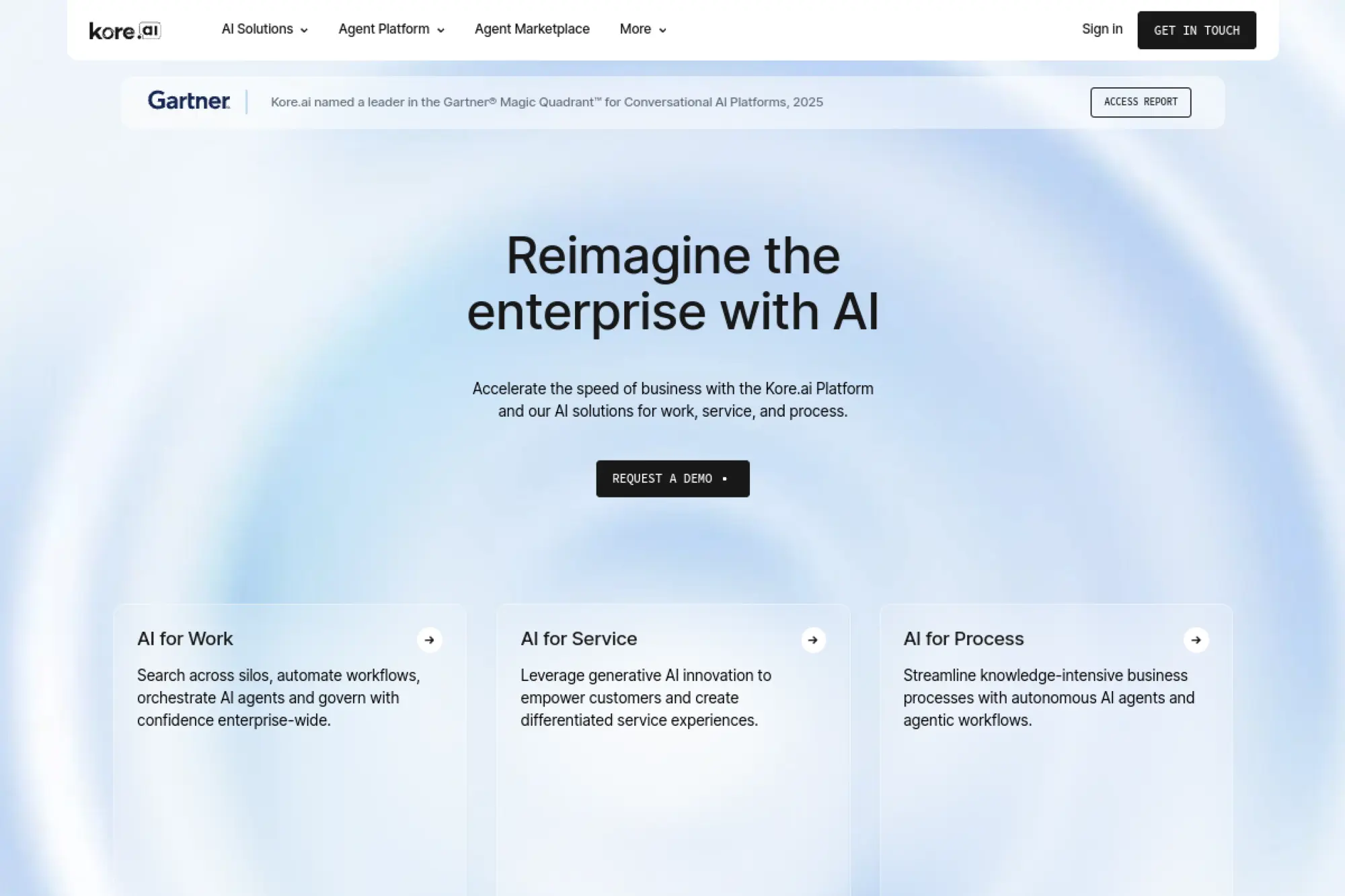
Kore.ai builds an enterprise‑grade conversational AI platform and solutions used across customer and employee experience. Headquartered in Orlando with global delivery, the company has ~1,000+ staff and over a decade in market. We see their stack in contact centers, HR ITSM, and complex self‑service flows that must meet enterprise security and compliance needs.
Analyst validation has been consistent; for instance, Kore.ai was named a Leader in Gartner’s Magic Quadrant 2023 for enterprise conversational AI platforms, which dovetails with how often we encounter Kore.ai in large, regulated deployments.
In buildouts, they shine on orchestration: blending LLMs with deterministic bots, integrating with CRMs/CCaaS, and instrumenting flows for containment and NPS/CSAT impact. We’ve seen success where a “bot of bots” strategy is needed—triaging intents, routing to the right skill, and escalating with full context to a human when it matters.
Best fit: organizations with high call/chat volumes, multi‑language needs, and the desire to reduce handle times without eroding brand voice or compliance posture. If your CX roadmap includes agent assist, PCI‑aware flows, and real‑time analytics, Kore.ai aligns.
10. Intellias — Machine Learning Development
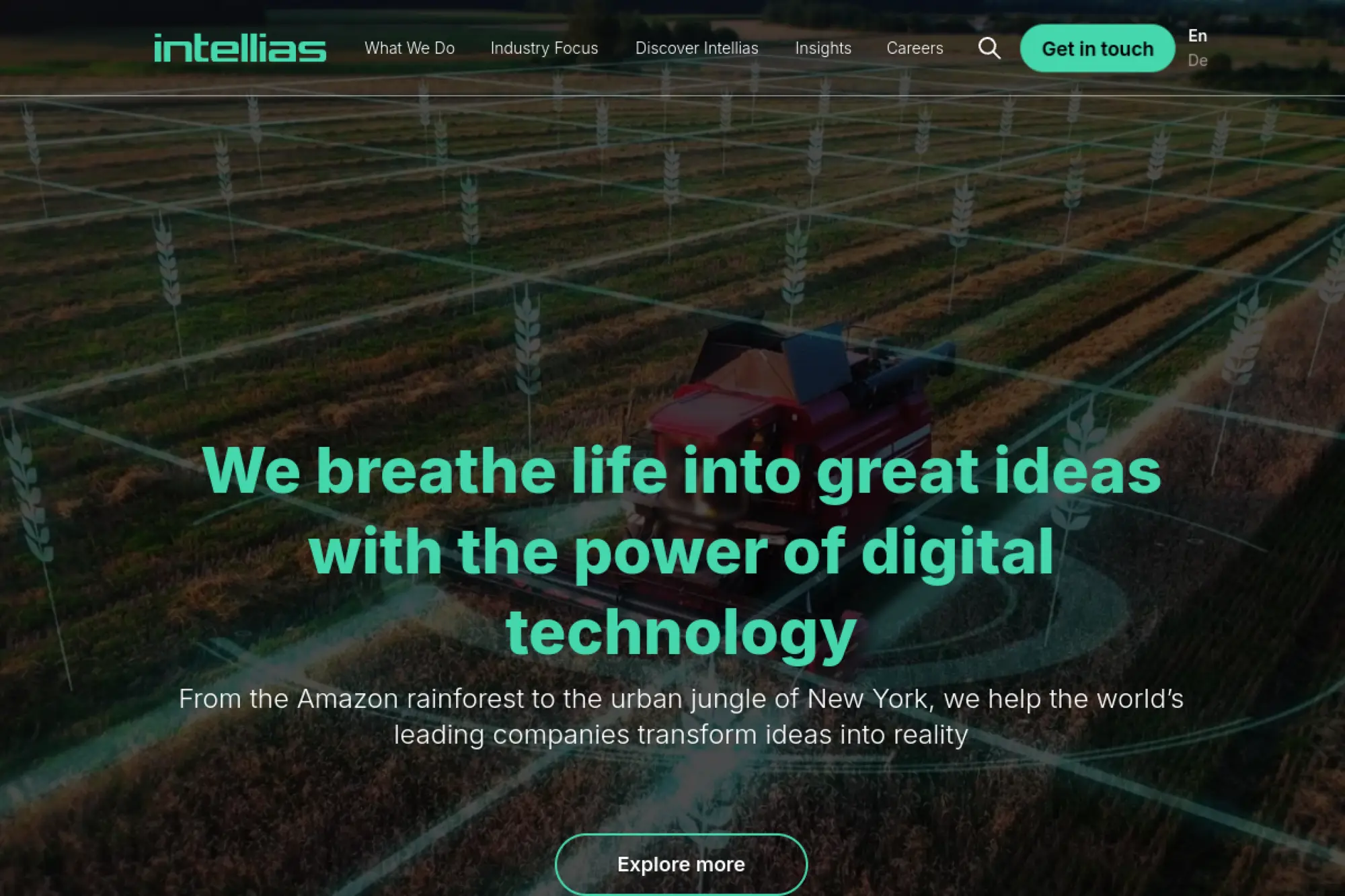
Intellias is a Ukrainian‑born, global software engineering partner (~3,000+ employees; ~21 years operating) with strong domain footprints in automotive, location‑based services, and fintech. We engage them on classical ML meets modern data engineering: sensor analytics, routing/optimization, risk scoring, and ML‑infused product features.
We haven’t leaned on awards here; instead we look at their domain depth—especially in mapping, navigation, and ADAS/infotainment—where ML reliability matters. Their continued expansion across Poland, Croatia, and other EU sites has strengthened talent availability and resilience.
In delivery, Intellias teams are comfortable building feature stores, online/offline inference paths, and model governance pipelines that satisfy both product managers and auditors. We’ve seen them pair data scientists and platform engineers effectively so models don’t languish in notebooks.
Best fit: product companies and enterprises whose ML problems are deeply tied to real‑world constraints—latency, data drift, regulation. If your ML must live in production, not slides, Intellias is a pragmatic ally.
11. deepsense.ai — Computer Vision Development
deepsense.ai is a Poland‑based applied AI firm (~150–250 people; ~9+ years in market) that punches above its weight in computer vision and predictive analytics. We’ve seen them deliver in manufacturing quality control, retail analytics, and environmental monitoring where labeling strategies and model efficiency make or break ROI.
No single third‑party award defines deepsense.ai; the more compelling “recognition” is a long track record of competition‑grade CV work translated into production—efficient architectures, distillation/quantization, and robust MLOps for edge and cloud deployments.
In our collaborations, they’ve architected vision systems that respect real‑world constraints—varying lighting, occlusion, motion blur—while implementing human‑in‑the‑loop review and active learning to keep datasets improving. Their documentation and experiment tracking are disciplined, which shortens the path from PoC to production.
Best fit: mid‑market industrials and retailers with camera‑rich environments who want measurable reductions in defects, shrink, or cycle times. If you need CV that pays for itself quickly, they bring the right bias for impact.
12. Netguru — UX UI Design
Netguru is a Poland‑headquartered product studio (~1,000+ people; ~16 years in operation) with a reputation for clean product thinking and scalable design systems. They slot into engagements where UX/UI is a growth lever: onboarding flows, information architecture, design tokens, and cross‑channel cohesion.
We skip trophies here and focus on portfolio depth: multiple shipping products across fintech, retail, and mobility with consistent heuristics and measurable lift in conversion/retention. Their designers and engineers speak the same language, which keeps design systems honest in code.
In mixed teams, Netguru has excelled at product discovery sprints, rapid prototyping, and running usability studies that get beyond “nice” to “effective.” When design debt threatens roadmap velocity, they can industrialize a design system and hand it to development with guardrails and governance.
Best fit: growth teams and product leaders who need design that moves the needle—not just visually, but in metrics. If your org needs design embedded with engineering and analytics, Netguru integrates well.
13. AltexSoft — Product Discovery
AltexSoft is a Ukraine‑born, U.S.‑based consultancy (~400–600 staff; ~16 years operating) known for product discovery in travel, logistics, and marketplaces. We’ve watched them turn ambiguous ideas into validated backlogs and low‑risk MVPs through discovery techniques that surface feasibility, desirability, and viability early.
Awards aren’t the story here; repeatable discovery is. AltexSoft’s strength is narrowing uncertainty: stakeholder alignment, high‑signal user research, service blueprints, and technical spikes that expose risks before they become sunk costs.
In delivery, their discovery outputs map cleanly to engineering—domain models, prioritized epics, acceptance criteria, and instrumented KPIs. That handoff discipline avoids the common pitfall where discovery artifacts don’t survive first contact with code.
Best fit: founders and product owners with complex domains (travel inventory, pricing, logistics) who need a fast path to product‑market fit without burning runway. If you want to de‑risk the first 90 days, they’re a strong option.
14. DataArt — Software Product Development
DataArt is a New York‑headquartered engineering firm with deep benches across Eastern Europe and LATAM (~6,000+ people; ~28 years in operation). Their core is product development in finance, media, retail, and travel—particularly where data platforms and integration complexity are high.
We look past generic accolades and focus on consistency across clients with demanding uptime, security, and compliance. DataArt’s longevity in highly regulated sectors is itself a signal: you don’t stick in those markets without strong engineering hygiene and reliable delivery.
We’ve seen them lead multi‑year product roadmaps, stabilize aging estates, and introduce platform thinking (service catalogs, golden paths, internal developer platforms) that pays compounding dividends. Their teams are pragmatic and strong on refactoring and test investments that create sustainable velocity.
Best fit: organizations with complex integration landscapes and multi‑product portfolios that need steady product development, not just one‑off projects. If your roadmap spans years and teams, they’re well‑suited.
15. 10Clouds — MVP Development
10Clouds is a Poland‑based product studio (~200–300 people; ~14 years operating) that excels at turning concepts into shipping MVPs quickly. We bring them in when time‑to‑market is existential and the MVP must be “viable” in production, not just “minimum.”
We don’t weigh awards here; what matters is their ability to stand up a coherent slice of the product—auth, core flows, billing, telemetry—in weeks, not quarters, with code that can scale and a path to hardening.
On the ground, 10Clouds teams commit fully to sprint goals, ruthlessly cut non‑essentials, and keep documentation and infra (IaC) just ahead of delivery. The result is a product you can put in front of real customers—and learn from—without heroic rewrites later.
Best fit: early‑stage companies or corporate venture teams that need a capital‑efficient path to validated learning and investor/customer traction. If you value velocity with a credible upgrade path, this is their lane.
16. Brainhub — Frontend Development
Brainhub, headquartered in Poland (~100–200 people; ~9 years in market), focuses on modern frontend engineering for web applications. When our backlog leans heavily on performance‑sensitive, component‑rich interfaces—think design systems, complex state management, data‑heavy visualizations—we’ve seen Brainhub teams shine.
We don’t anchor on third‑party lists for them; we anchor on repeatable results: fast, accessible interfaces with disciplined testing (unit, visual regression, e2e) and performance budgets that keep web vitals green under real‑world conditions.
On delivery, they partner well with backend teams, co‑design API contracts, and build CI pipelines that catch regressions early. Their care for accessibility and internationalization shows up in user feedback and reduced rework.
Best fit: product orgs where the frontend is the product—dashboards, editors, trading views, configurators—requiring performance and quality discipline. If your UI is your moat, Brainhub’s a fit.
17. Andersen — Backend Development
Andersen is an international engineering company with strong delivery centers in CEE (~3,000+ people; ~16 years operating). We see them on backend‑heavy engagements: API platforms, microservices, evented architectures, and data‑intensive backends that must be reliable and evolvable.
No single external award is dispositive here; instead, the reliable signal is architecture discipline: clear domain boundaries, robust observability (tracing/metrics/logs), and production hygiene that makes backend services boring—in the best way.
In our programs, Andersen teams have built event‑driven backends with idempotent processing, graceful degradation, and clear SLOs. They’re comfortable with message queues/streams, caching layers, and security patterns that keep both auditors and users happy.
Best fit: companies with complex backend logic—pricing, fulfillment, identity, risk—who need services that are easy to change and hard to break. If “mean time to restore” is a key KPI, they align to that standard.
18. N‑iX — Full Stack Development
N‑iX is a Ukrainian‑founded engineering partner with ~2,400+ people and 20+ years in market, expanding across Poland, Bulgaria, Colombia, and beyond. Their teams are comfortable owning both frontend and backend, shipping durable features, and managing the edges where systems meet (auth, billing, observability).
N‑iX’s inclusion on the 2024 Global Outsourcing 100 aligns with what we see in their multi‑year client relationships and steady delivery across regions—useful external validation for buyers seeking resilience and scale.
In delivery, N‑iX engineers build across slices: React/Angular frontends, service backends, and data‑side integrations—with a strong bias to instrument everything. We’ve seen them keep tech debt in check through ADRs and clear code ownership, which matters when multiple teams touch the same surface area.
Best fit: product orgs that want one partner to own a vertical slice end‑to‑end, not a patchwork of narrow roles. If you prize predictable velocity, quality gates, and clarity in ownership, this is their playing field.
19. Qualitest — QA And Software Testing
Qualitest is a quality engineering specialist with global delivery (~4,000+ people; founded 1997). We tap them for programs where test strategy, automation at scale, performance/security testing, and data‑driven quality gates determine whether velocity is sustainable.
Rather than rely on broad awards, we pay attention to their depth in regulated sectors—healthcare, banking, insurance—where compliance and traceability matter as much as defect rates. Their test management rigor and tooling integrations are the real “badge.”
In practice, Qualitest helps teams define risk‑based test strategies, build test data safely, expand automation beyond UI (API, contract, component), and wire quality into CI/CD so defects are cheap to fix. Their performance and security testing capabilities integrate cleanly into release criteria.
Best fit: enterprises and scaleups that need quality to be engineered in, not inspected at the end. If your pipeline needs quality gates that executives can trust—and developers don’t hate—Qualitest fits.
20. Andela — IT Staff Augmentation
Andela began in Africa and now operates as a global talent marketplace and managed delivery firm focused on senior engineers. With ~1,500+ internal staff and a vetted talent community across Africa, Eastern Europe, and LATAM, they’ve been operating for ~9 years in this model and have grown alongside remote‑first teams.
We don’t anchor on trophy lists here; the credible signal is their vetting process, match quality, and retention on long‑running assignments. In our experience, their senior engineers integrate quickly and bring maturity to code review and delivery rituals.
On the ground, Andela has been most effective when embedded in outcome‑driven pods with clear DOD/DOR, not as isolated contractors. Their model can flex from individual staff aug to turnkey squads, which helps when headcount plans and product roadmaps are in flux.
Best fit: product organizations that need senior talent “yesterday,” value cultural fit and communication, and want the option to scale up/down without sacrificing quality. If your priorities are speed, seniority, and global reach, Andela is a practical choice.
If your shortlist is forming and you want a second set of eyes, we’re happy to compare notes. Would it help if we mapped your goals to a country‑by‑capability portfolio and pressure‑tested two or three vendor stacks against your next two quarters of releases?
Recommended reading: Top 20 Blockchain Companies: 2026 Guide to Categories, and Custom Solutions
How to evaluate the best countries to outsource software development
Market context matters before scorecards: the dedicated IT outsourcing segment alone is projected at US$588.38bn in 2025, which means talent supply, wage inflation, and vendor maturity vary widely across hubs and niches.
1. Pricing range in the best countries to outsource software development
Hourly rates are a mirage if you ignore total cost of outcomes. We benchmark on cost-to-value: productivity per sprint, rework avoided, QA escape rate, and cost of delay. For example, a team with stronger domain fluency and tighter DevEx (local tooling, cloud credits, golden paths) will out-deliver a cheaper but fragmented vendor. In our experience, treat rate cards as an input, not the decision.
2. Technical expertise and skills depth
Map your stack to local strengths. Some ecosystems skew toward cloud-native back ends and data engineering; others excel in embedded, telecom, or game engines. We probe for evidence: reference architectures, internal guilds, OSS contributions, and battle-tested patterns for your runtime (e.g., eventing, idempotency, and observability guardrails). Depth beats breadth when your roadmap has hard edges.
3. Pool of services and niche fit
Large hubs offer the full lifecycle—discovery, product, design, engineering, platform, and L3 support—while boutique markets specialize in a few lanes. If you need model lifecycle operations or embedded security testing, don’t assume generic web shops can stretch; verify line-of-business case studies and artifact quality upfront.
4. Legal safety and IP protection
We de-risk with jurisdictional design: governing law in a predictable venue, well-defined IP assignment, tailored DPAs, and export controls awareness for cryptography or dual-use tech. Add step-in rights, code escrow, and invention assignment at the individual contractor level. Contracts are necessary; operational controls (least-privilege repos, gated secrets, ephemeral dev environments) are sufficient.
5. English proficiency in the best countries to outsource software development
Assess the communication surface area you really need. Client-facing roles demand crisp spoken and written communication; back-end platform roles can succeed with strong written docs and async discipline. We audition teams through discovery notes, RFCs, and demo narratives to ensure nuance isn’t lost once work gets fast and ambiguous.
6. Time zone compatibility and overlap
Time zones aren’t just standup logistics; they shape your operating model. If you require tight product-engineering design loops, favor nearshore overlap. If your pipeline thrives on asynchronous flow (autonomous squads, clear acceptance criteria, strong CI), offshore follow-the-sun can shorten lead times. We intentionally choose one operating mode per stream to avoid hybrid confusion.
7. Cultural fit and business etiquette
Decision cadence, escalation comfort, and calendar norms differ by region. We look for healthy dissent, proactive risk surfacing, and a preference for written clarity. Dry runs during discovery help reveal alignment: how teams trade speed for certainty, how they document tradeoffs, and whether they push back on unclear scope.
8. Business environment and vendor maturity
Vendor maturity shows up in the boring but critical things: hiring funnels, bench strategy, career ladders, and attrition control. We evaluate whether the partner maintains a learning culture, reusable accelerators, and a secure SDLC with routine audits. Mature shops invest in internal platforms that remove toil and stabilize delivery.
9. Talent pool size and graduation pipeline
Sustainable delivery depends on the inflow of engineers plus mid-career upskilling. Inspect university-industry ties, bootcamp ecosystems, and presence of product-led companies that cross-pollinate practices. Strong pipelines coexist with strong mentorship; otherwise teams become senior-light and velocity stalls.
10. Social and political stability risk
Continuity planning is table stakes. For sensitive projects we require dual-location failover, cloud region redundancy, and secure remote work playbooks. In higher-risk geographies we split teams, keep artifacts mirrored, and practice controlled cutovers. Stability isn’t binary; it’s a resilience design problem.
11. Nearshore versus offshore alignment by region
Map your headquarters to natural neighbors. U.S. buyers tend to favor Latin America for synchronous collaboration and Eastern Europe for deeper specialization; Western Europe often leans toward Central/Eastern Europe and North Africa; APAC firms tap Southeast and South Asia. The right answer depends on your cadence and compliance footprint.
12. Data security standards and compliance
Ask how security is built into the work, not bolted on. We expect secure-by-default repos, well-managed secrets, dependency hygiene with SBOM, automated SAST/DAST, and privacy-by-design for regulated data. Certifications help, but day-to-day discipline—least privilege, code review, threat modeling, and incident drills—keeps you safe.
Recommended reading: Top 20 Startup Consulting Firms: Strategy, Services, and How to Choose
Best countries to outsource software development by region
Vibrant ecosystems compound advantage; capital intensity often correlates with practitioner communities and modern tooling. CB Insights reports that AI captured 37% of venture funding in 2024, a signal that certain hubs are investing heavily in the skills and platforms that commercial teams will expect from vendors.
1. India
Strengths: enterprise-scale delivery, cloud and data engineering depth, and a vast ecosystem of vendors from boutique to global. We lean on India for sustained product engineering and platform build-outs where knowledge continuity matters. Watchouts: hot markets can see brisk talent mobility; counter with compelling work, upskilling paths, and clear architecture ownership.
2. Ukraine
Strengths: algorithmic rigor, security-minded engineering, and a strong product mindset that challenges requirements thoughtfully. Many teams operate in distributed configurations with resilient infrastructure practices. We rely on Ukraine for advanced back-end, analytics, and cybersecurity work where precision matters. Contingency planning remains prudent; splitting capacity across neighboring EU hubs keeps delivery steady.
3. Poland
Strengths: EU regulatory alignment, strong English in client-facing roles, and mature communities across back-end, DevOps, and game tech. Excellent fit for fintech, e-commerce platforms, and enterprise integration. Expect solid documentation habits and high ownership in production contexts.
4. Romania
Strengths: multilingual talent, balanced cost-to-skill profile, and growing security and data specialties. We’ve had success with platform modernization and integration programs here. Vendor ecosystems are collaborative, which helps when you need to blend niche partners under one governance model.
5. Mexico
Strengths: proximity to U.S. product and design teams, cultural fluency, and increasingly strong platform and SRE capabilities. Ideal for high-collaboration streams, DevOps, and customer-facing feature velocity. We emphasize joint ceremonies to capitalize on overlap and reduce context switching.
6. Argentina
Strengths: creative engineering culture, strong data science and back-end skills, and pragmatic product thinking. Great for greenfield prototypes and analytics-heavy features. Plan for currency and policy shifts with priced-in buffers and flexible invoicing constructs; the engineering value is there if you set the right rails.
7. Brazil
Strengths: a deep domestic market breeds robust mobile, payments, and platform engineering. Data privacy regulation encourages disciplined design, which is useful for regulated workloads. Navigate tax and procurement complexity with experienced local partners; once set up, teams integrate smoothly with U.S. time zones.
8. Philippines
Strengths: exceptional customer experience operations, application support, and growing full-stack capability. Ideal for 24×7 production support, QA at scale, and service desk-to-engineering handoffs with precise runbooks. As engineering depth expands, we pilot contained feature work before scaling.
9. China
Strengths: hardware-software integration, embedded systems, and mobile super-app patterns. Suitable for edge devices, firmware-heavy projects, and performance-centric mobile. Cross-border data and IP controls require airtight governance; with the right structure, outcomes can be excellent in hardware-adjacent domains.
10. Colombia
Strengths: fast-rising nearshore hub with strong design sensibilities and cloud-native practice. We like Colombia for platform extensions, integrations, and data pipelines where sync time with U.S. product leadership amplifies clarity. Public-private programs have nurtured communities that value clean code and observability.
11. Hungary
Strengths: precision engineering and embedded/automotive talent. Ideal for performance-critical services and systems work where determinism and testing rigor matter. Teams communicate directly and prefer well-specified interfaces, which keeps integration friction low.
12. Czech Republic
Strengths: enterprise integration, industrial IoT, and UX engineering rooted in strong design schools. We’ve seen standout results on modernization programs that balance legacy realities with modern platform patterns and careful change management.
Recommended reading: Top 20 IoT App Development Companies: 2026 Guide to Services and Selection
How TechTide Solutions helps you build custom solutions aligned to your needs
We engineer teams and architectures to fit your constraints, not the other way around. As one signal of what’s possible, McKinsey observes that developer productivity can improve by 35 to 45 percent with the right combination of talent, tooling, and working methods—gains we’ve realized only when governance and DevEx mature together.
1. Tailored discovery and roadmap to match your outsourcing goals
We start with a discovery sprint that clarifies outcomes, de-risks unknowns, and selects the right country mix. Our location scorecard weighs cost-to-value, talent depth for your stack, compliance posture, and operating model fit. The deliverables—product hypotheses, architecture options, and a risk register—become the North Star for partner selection and contract shaping.
2. Custom-built teams and architectures for your specific use case
We compose squads around the work: product-first for rapid iteration, platform-first for reliability, or hybrid for dual-track delivery. Architecturally, we favor modular designs—service boundaries aligned to domain seams, evented integration where it simplifies change, and platform tooling that enforces quality gates by default. When AI is in scope, we add model governance, data contracts, and evaluation harnesses so experiments can safely reach production.
3. End-to-end delivery with QA IP protection and ongoing support
Secure SDLC practices anchor everything we ship: encoded coding standards, threat modeling, dependency hygiene, and non-negotiable review gates. IP is protected through clean-room practices, explicit assignment, and restricted access to sensitive repos. After go-live, we stabilize with SLOs, playbooks, and blameless incident reviews so improvements compound rather than drift.
Recommended reading: Top 20 Education App Development Companies: A Research-Backed Guide
Conclusion: choosing the best countries to outsource software development
The market is still leaning into external partners, with Deloitte finding that 80% of executives plan to maintain or increase third‑party outsourcing—yet the winners pair procurement diligence with a delivery model that fits how their product teams actually work.
1. Consider geography when choosing a country to outsource
Decide whether synchronous collaboration trumps continuous delivery for your program, then pick nearshore or offshore accordingly. The wrong operating mode can erase any rate advantage.
2. Check the legal requirements of each chosen destination
Align governing law, data transfer mechanisms, and IP assignment before kickoff. Add operational controls—least privilege, secrets management, and artifact escrow—so the contract’s promises are enforced by the platform.
3. Set up clear communication rules and SLAs
Codify rituals and formats: RFC templates, demo cadence, definition of ready/done, and escalation paths. Great teams make decisions visible so momentum survives leadership attention shifts.
4. Familiarize yourself with remote work instruments
Invest in DevEx: paved paths, golden images, trunk-based workflows, and shared observability. The right toolchain shortens onboarding and reduces variance between squads.
5. Start small with a test project
Pilot with a slice that touches core concerns—build, test, deploy, and operate—so you validate both code quality and collaboration. If the pilot proves out, scale in measured increments to preserve standards.
Curious which two or three locations best match your roadmap and risk posture? We’d be glad to run a rapid location-fit workshop and turn your priorities into a concrete sourcing plan.

