


Professional SEO services are harder to compare than most business software. One firm sells a cheap local package. Another gives you strategists, writers, developers, and digital PR under one contract. At Techtide Solutions, we think the right choice starts with fit, not hype. This guide compares agencies, specialists, matchmakers, directories, and freelance marketplaces so you can choose an SEO partner that actually matches your site, team, and growth model. Search is still a major commercial channel. Global search advertising is forecast to reach US$355.10bn in 2025, which is a good reminder that buyer intent in search still commands serious budget.
Quick Comparison of Professional SEO Services
We do not think a price table should decide this purchase, but it does expose the buying model fast. The biggest differences here are scope, senior attention, and how much implementation sits inside the engagement. Use this as a first cut, then read the reviews for the trade-offs.
| Tool | Best for | From price | Trial/Free | Key limits |
|---|---|---|---|---|
| Coalition Technologies | Mid-market SEO plus site execution | Low four figures/mo | Free audit | Quote-based scope, broad agency model |
| SEO.com | Full-service growth teams | Around $3k/mo | Free proposal | Best when you need content and dev too |
| Victorious | Strategy-led SEO for funded brands | Premium custom | No trial | High-budget fit, not small-business friendly |
| HigherVisibility | Local and franchise programs | Custom retainer | Free consult | Value can vary by scope |
| OuterBox | Ecommerce and platform SEO | Low four figures/mo | Free audit | Retainers rise with catalog complexity |
| Searchbloom | Performance-focused SMB SEO | Low four figures/mo | Free action plan | Custom plans, not ultra-cheap |
| Straight North | Lead-gen B2B and B2C | Low-mid four figures/mo | Free audit | Structured process over scrappy flexibility |
| Digital Commerce Partners | Shopify Plus and DTC ecommerce | Mid four figures/mo | Consultation | DTC only, capped client roster |
| W3era | Budget-conscious small businesses | Budget tier | Free proposal | Page and topic caps by package |
| Oyova | SEO plus web development help | Project-led custom | Free consult | More hybrid agency than pure SEO shop |
Recommended reading: Top 20 Sydney Web Design Companies for Businesses That Want Better Results
Top 20 Professional SEO Services to Compare by Fit, Scope, and Buying Model
The spend mix backs that up. Gartner says digital channels now account for 61.1% of total marketing spend, and it specifically calls search advertising a high-spend, high-impact channel. The shape of the work is changing, though. McKinsey reports nearly nine out of ten organizations now use AI in at least one business function, so modern SEO partners need to think about content systems, structured data, and answer-engine visibility, not just blue links. Google made that shift plain when it said AI Overviews were expanding to more people. For us, that means a good SEO service now has to care about how a page gets summarized, cited, and trusted.
We mixed agencies, specialists, matchmakers, directories, and marketplaces on purpose. Buyers rarely compare like with like, and that is where bad SEO purchases begin. Our read below focuses on who each option fits, where it is strong, and where it can disappoint.
1. Coalition Technologies
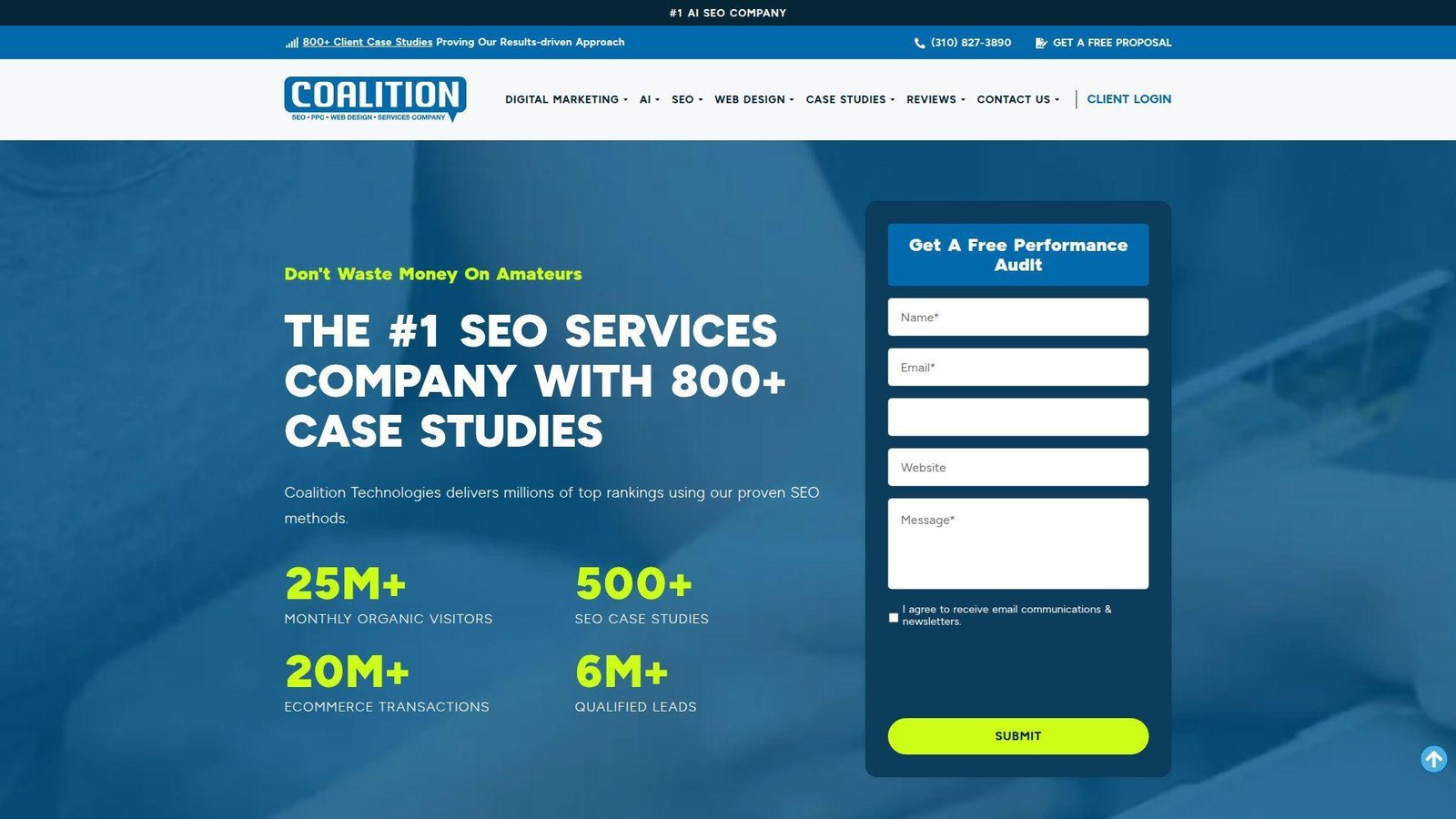
Coalition Technologies is one of the more scaled options on this list. It operates like a broad digital growth agency, not a tiny SEO boutique. We like that when a campaign needs technical fixes, copy updates, design changes, and AI-search work to move together instead of across several vendors. Its positioning leans hard into proof, case studies, and breadth.
Best for: mid-market ecommerce teams and lead-gen companies that want one agency to handle rankings plus site execution.
- Large audit and case-study engine → makes internal buy-in easier when a marketing lead has to justify the spend to leadership.
- SEO, paid media, web design, and AI-search work under one roof → cuts two or three vendor handoffs that usually slow implementation.
- Free performance audit and no long-term lock-in → you can usually see a usable roadmap within the first couple of weeks.
Pricing & limits: From $1,800/mo based on publicly reported package data. There is no free trial, but there is a free proposal and audit path. Limits are proposal-based, not self-serve. In practice, that means scope, content volume, and implementation load all expand with the retainer.
Honest drawbacks: Coalition can feel heavy if you only want a senior strategist and a short punch list. We would also expect a more process-driven experience than you get from a founder-led boutique. Beats smaller agencies at bench depth, trails tighter shops on executive intimacy.
Verdict: If you need a broad SEO partner that can also help ship real website work, this helps you move from audit to execution inside the first quarter.
2. SEO.com
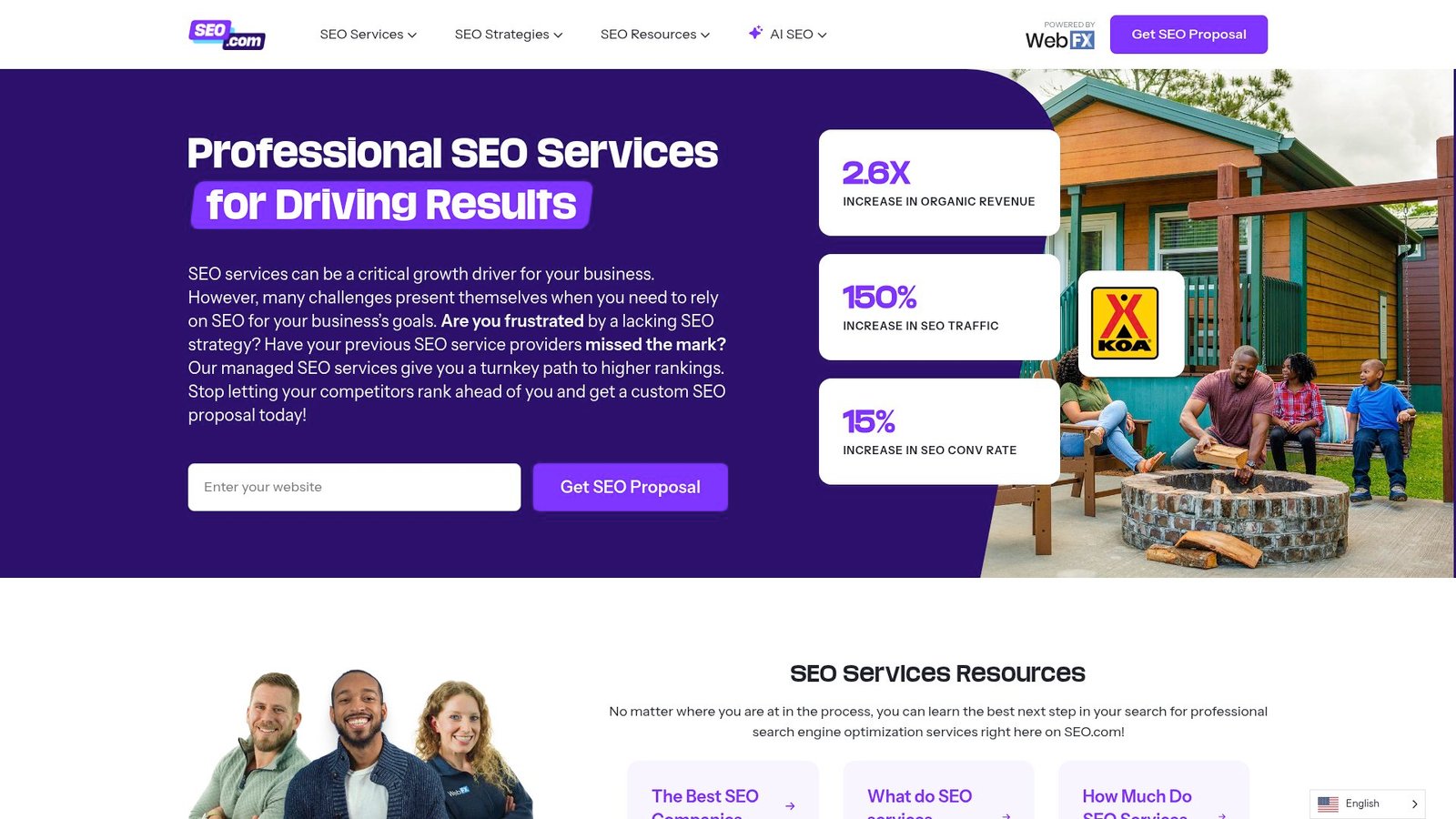
SEO.com looks best when we treat it as a full-service operating model, not just an SEO label. Its public material makes clear that buyers get access to a large in-house bench across SEO, writing, editing, development, design, martech, and business consulting. That matters when your growth problem is bigger than title tags.
Best for: marketing managers at SMBs and mid-market firms that need one accountable partner for SEO, content, and technical work.
- Full in-house SEO team model → fewer blockers when content, design, and development all need to move in the same sprint.
- 24/7 performance access and ROI tracking → saves weekly manual report-building and reduces back-and-forth with leadership.
- Established project-management flow → most buyers should get to a structured plan in two to three weeks, not after endless discovery.
Pricing & limits: From $3,000/mo based on publicly reported starting packages. There is no free trial. You can request a strategy proposal at no charge. Limits are custom, which is good for larger programs, but it also means you need to check exactly how much writing, implementation, and reporting live inside the retainer.
Honest drawbacks: This is not the right fit if you want one named strategist doing everything personally. The model is scaled and process-led. Some buyers love that. Others will want a more boutique feel. It beats smaller agencies on bench strength, but it trails top niche specialists on category-specific depth.
Verdict: If you need one partner to cover SEO plus the surrounding execution work, this helps you build a stable growth program without stitching together freelancers.
3. Victorious
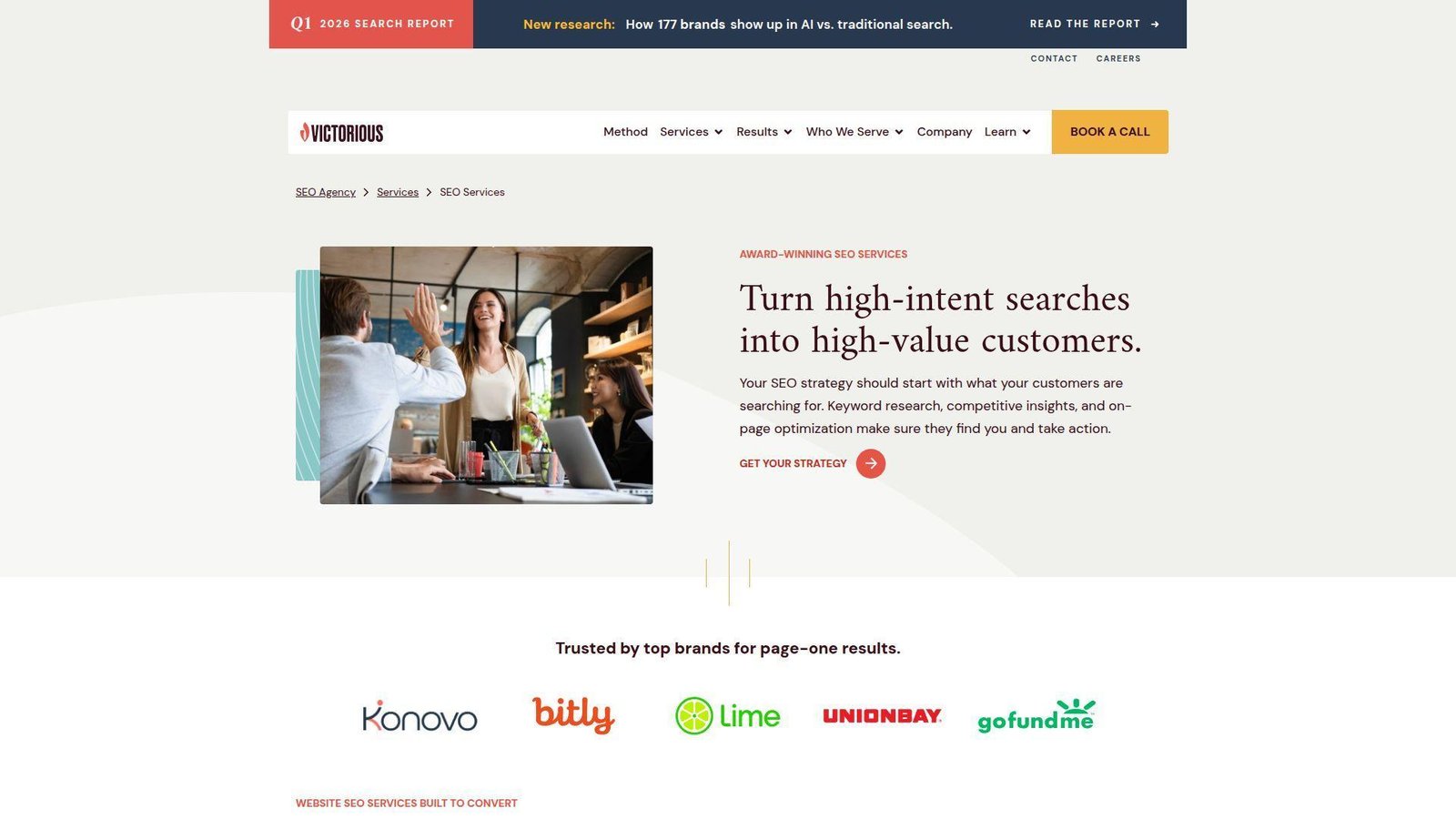
Victorious feels like a strategy-first SEO shop aimed at serious budgets. Its positioning is cleaner and more specialist than most full-service agencies, and that will appeal to buyers who already have some internal marketing muscle. We read Victorious as a better fit for teams that can act on recommendations quickly.
Best for: funded B2B or SaaS teams, plus in-house marketers who want an SEO specialist rather than an all-channel agency.
- Search-first planning and ongoing audits → gives leadership a clearer priority stack instead of a generic monthly to-do list.
- Works well with in-house content and dev resources → reduces duplicate work and removes extra approval loops between multiple agencies.
- Structured onboarding and clear strategic framing → time-to-first-value is usually the first month, assuming your team can execute.
Pricing & limits: From roughly $10,000/mo based on reported client spend ranges. There is no free trial. This is a premium engagement, and the practical limit is budget plus internal readiness. Small businesses without content or dev support may feel the model is too expensive for the pace they can sustain.
Honest drawbacks: Victorious will be overkill for many local businesses and lean startups. It is also not the cheapest way to buy implementation. Beats generalists at strategic SEO focus, trails larger full-stack agencies when you need lots of code, design, and production help bundled together.
Verdict: If you want a strategy-led SEO partner and already have a team that can ship changes, this helps you turn search priorities into measurable progress over the next few months.
4. HigherVisibility
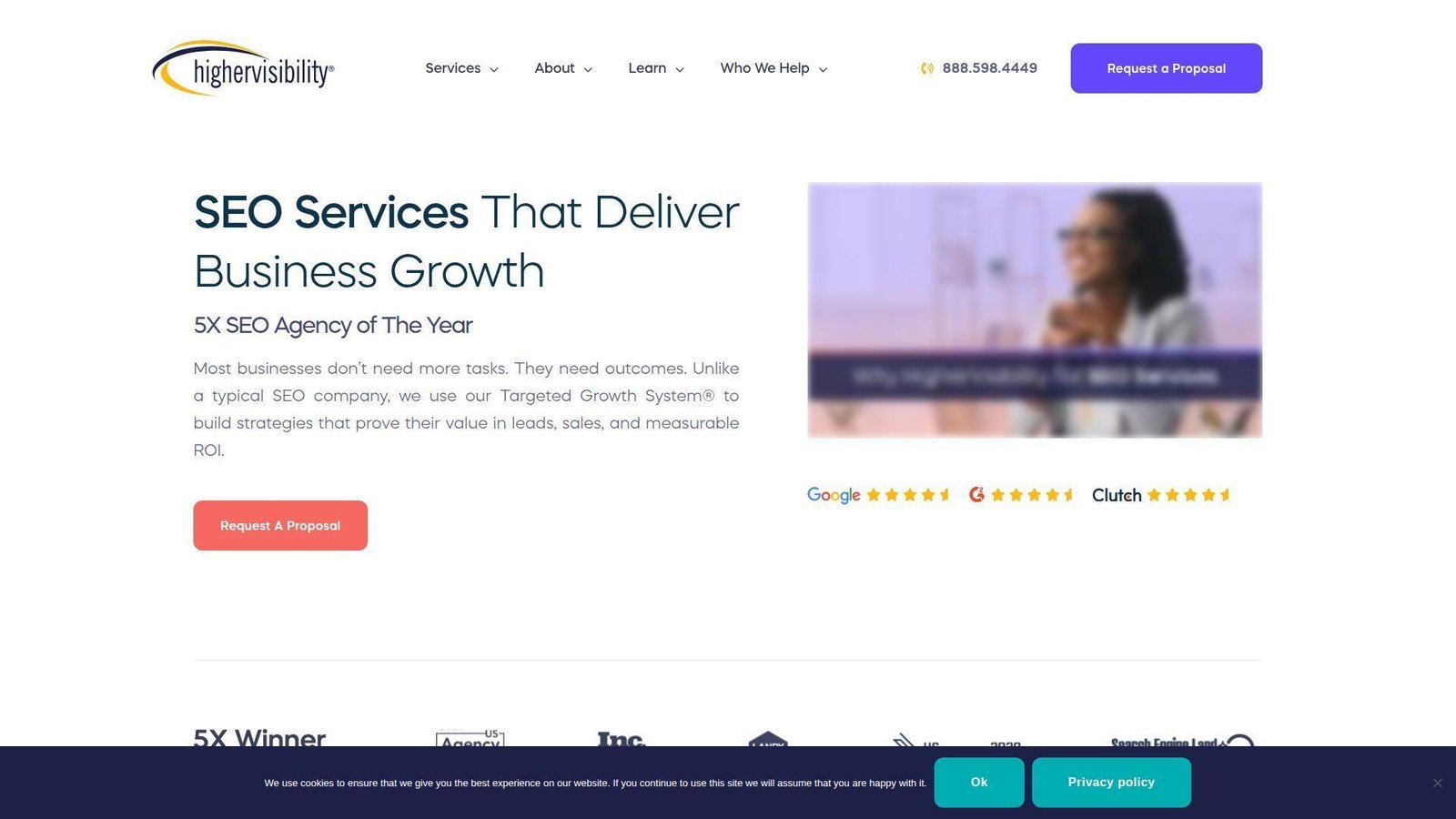
HigherVisibility stands out more for account structure than for flashy packaging. Its process centers on a Brand Success Manager, internal strategy work, a reporting dashboard, and regular review rhythms. We like that. In SEO, buyers often leave agencies because they feel lost, not because the tactic list is obviously wrong.
Best for: local or multi-location brands, plus marketing directors who want a visible cadence and a clear point of contact.
- Brand Success Manager plus dashboard model → gives buyers better visibility into tasks, priorities, and what is actually getting done.
- Strategy sessions that include ICP, technical audit, and keyword research → saves a round of internal discovery and speeds up alignment.
- Scheduled meetings and quarterly reviews → most teams should feel whether the relationship works within the first month.
Pricing & limits: From about $1,500/mo based on publicly reported client spend patterns, with no free trial. Consultations and audit conversations are available. Limits vary widely by proposal, which means you need to ask how much writing, local-page work, and implementation support are actually included.
Honest drawbacks: Reported value seems more uneven here than with some peers. We would read the proposal closely. This is also less attractive if your need is extremely narrow, such as link building only or a one-time technical fix.
Verdict: If you want an agency with a stronger communication spine and regular strategic checkpoints, this helps you build a steadier SEO program without feeling in the dark.
5. OuterBox
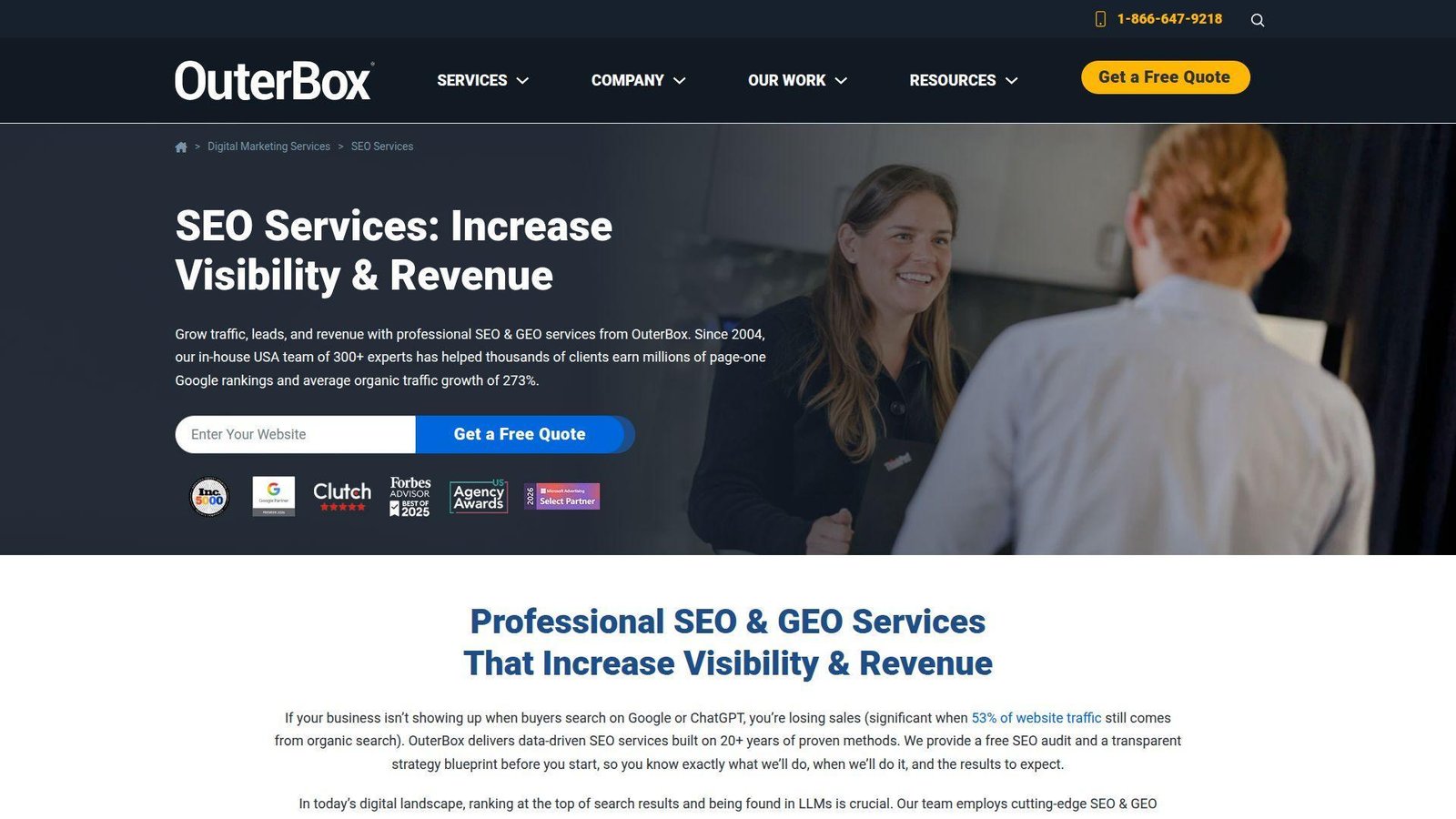
OuterBox is one of the strongest ecommerce-leaning agencies on the list. We especially like how much attention it gives to platform fit. That sounds basic, but it is not. Shopify, Magento, WooCommerce, and WordPress sites break in different ways, and the better SEO partner already knows where the landmines are.
Best for: ecommerce directors and B2B teams on major CMS or ecommerce platforms that need SEO plus real implementation depth.
- Platform-specific SEO playbooks → reduces dev guesswork and cuts down on recommendations your team cannot actually ship.
- Free blueprint before signup → trims early discovery time and makes the first decision call far more concrete.
- Strong in-house specialist bench → most buyers should see a working roadmap and prioritized fixes inside three to four weeks.
Pricing & limits: From $2,000/mo, with many retainers rising into much larger custom scopes. There is no free trial, but there is a free audit and quote path. The main limit is complexity. Big catalogs, layered navigation, and multi-store setups drive scope upward quickly.
Honest drawbacks: OuterBox is not a bargain choice. If you only need local listings, a few content refreshes, or light consulting, it is more agency than you need. It beats generalists at ecommerce platform depth, but budget-focused buyers will find better entry points elsewhere.
Verdict: If your site architecture and platform details are central to growth, this helps you fix the parts that usually hold back revenue-driven SEO.
6. Searchbloom
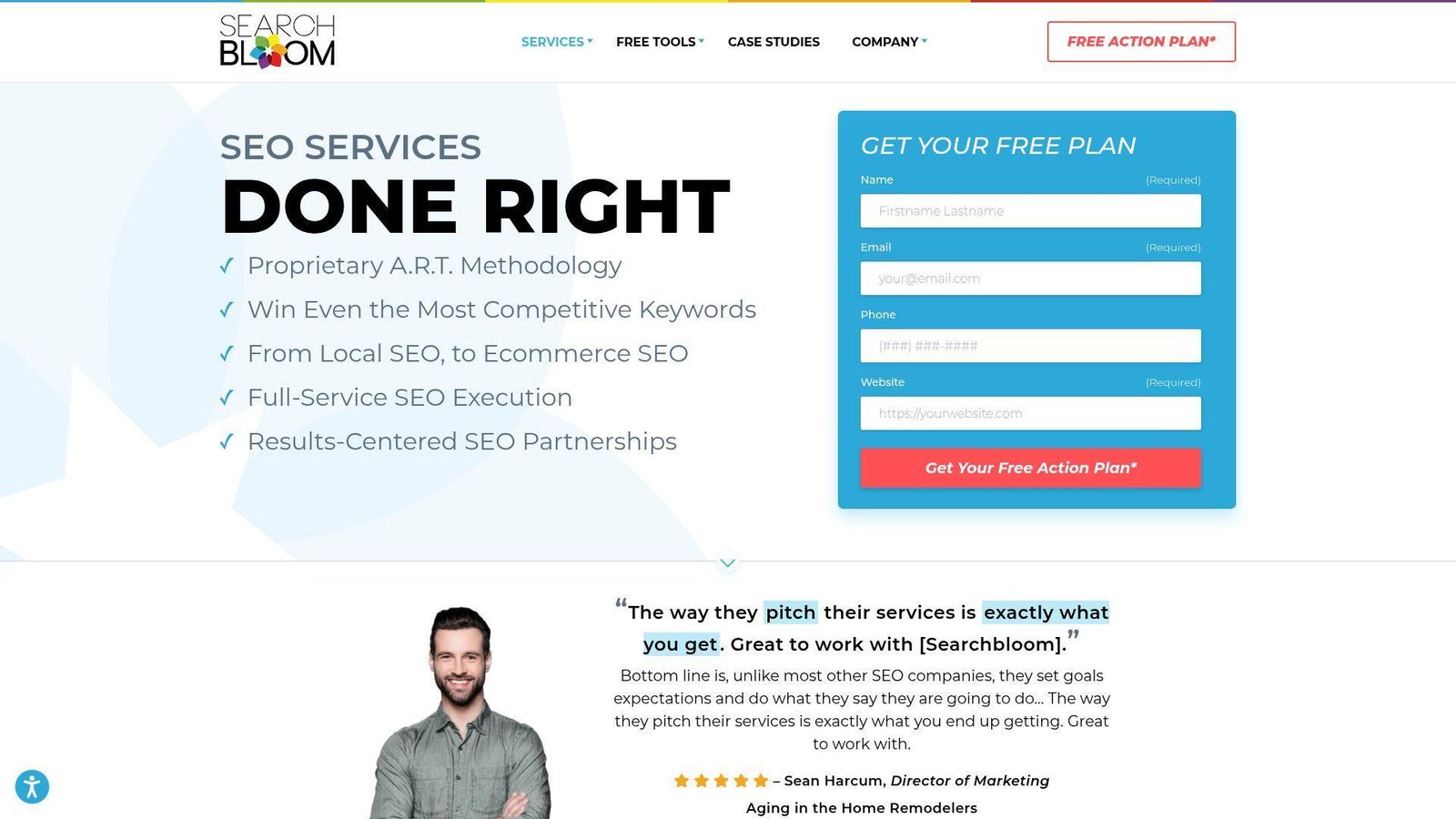
Searchbloom reads like a performance-minded SEO agency with a tighter focus than the huge full-service shops. Its public messaging centers on authority, relevancy, and technology, which is a neat way to frame the work when buyers want a simpler story than endless tactic lists. We like it most for SMBs that still want serious execution.
Best for: growth-focused SMBs and ecommerce teams that want a more focused SEO partner without jumping to enterprise prices.
- Dedicated analyst model → gives campaigns a more consistent owner and lowers the chance of work disappearing into a larger queue.
- Local, national, and ecommerce specialization → saves time when a buyer needs one core partner without adding multiple niche vendors.
- Free action-plan style entry point for qualified prospects → you can get directional value quickly before committing to a bigger retainer.
Pricing & limits: From $2,000/mo, with many engagements starting in the low-to-mid four figures and rising from there. There is no free trial. Searchbloom does offer upfront planning help for qualified leads. The limit is mostly scope depth. The more content, dev, and CRO you expect, the bigger the engagement becomes.
Honest drawbacks: Searchbloom has a smaller bench than the largest agencies here, so buyers needing lots of adjacent services may want a broader shop. It beats broad agencies at focus, but it trails ecommerce-heavy operators like OuterBox on platform breadth.
Verdict: If you want a more concentrated SEO partner with a performance angle, this helps you tighten priorities and start moving on the highest-impact work fast.
7. Straight North
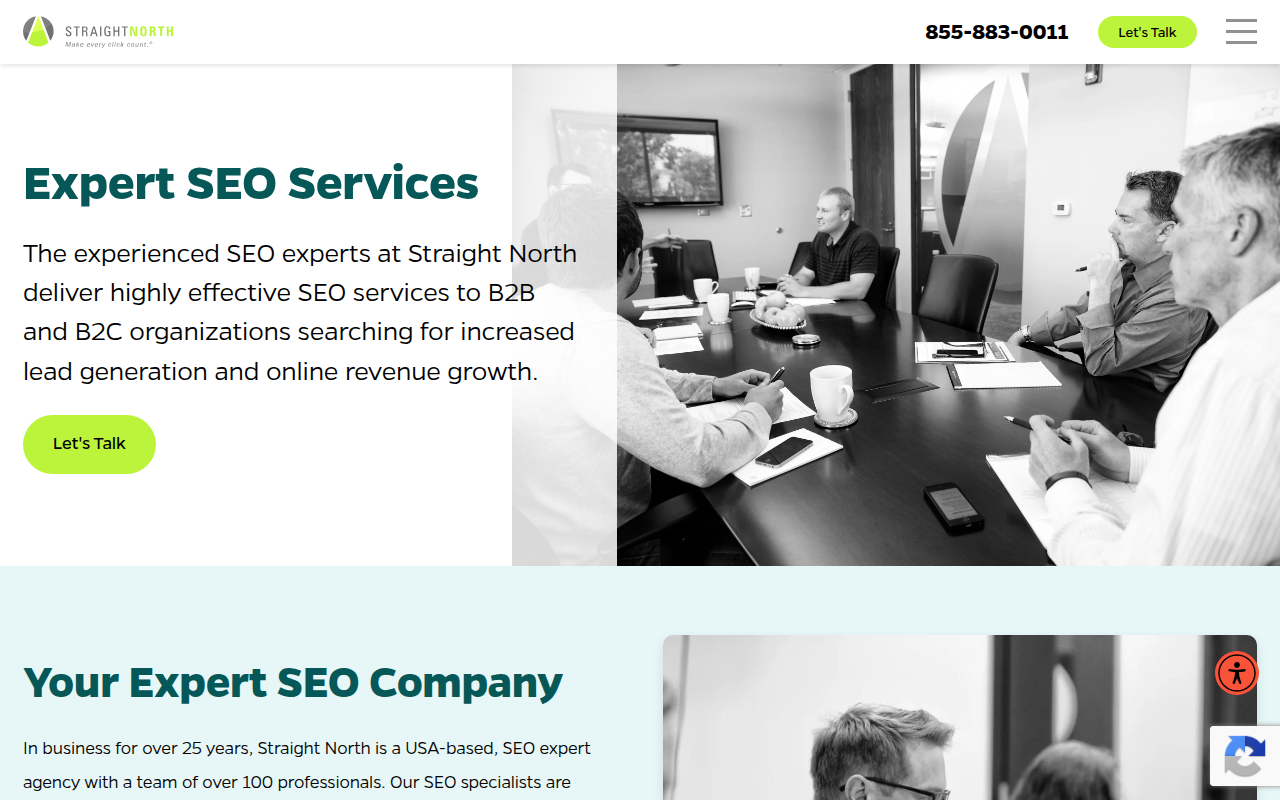
Straight North is a long-running U.S. agency that still presents SEO in a very practical way. It talks less like a trendy AI shop and more like a lead-generation business. That is not a bad thing. In fact, we think that bias toward leads and revenue will suit many B2B buyers better than flashy visibility talk.
Best for: B2B demand-gen teams and established service businesses that care about lead quality as much as rankings.
- Lead-generation framing → pushes campaigns toward service pages, calls, and bottom-funnel content instead of vanity traffic.
- GoNorth reporting platform → reduces manual reporting overhead and gives buyers one home for campaign progress.
- In-house full-time SEO team → a new client should usually get into a structured workflow fairly quickly, often within the first month.
Pricing & limits: From about $2,000/mo based on public client spend ranges, with no free trial and a free audit path. Limits are retainer-based, not package-based. You need to confirm how much writing, outreach, and implementation support is included before signing.
Honest drawbacks: Straight North can feel more structured than scrappy. Fast-moving brands that want constant experimentation may find the tone conservative. It beats marketplaces on accountability and reporting, but it trails premium strategy boutiques on executive-level handholding.
Verdict: If you want SEO tied tightly to qualified lead growth, this helps you build a clearer reporting and execution system over the next few months.
8. Digital Commerce Partners

Digital Commerce Partners is the clearest specialist on this list. It is not trying to be everything. It is explicitly DTC and retail ecommerce, with senior strategists and a tight client cap. We love that honesty. If your problem is category architecture and AI-search visibility on Shopify Plus or enterprise ecommerce, that focus is a strength.
Best for: heads of ecommerce and DTC growth teams on Shopify Plus or enterprise stores with category-level SEO problems.
- Category-first SEO approach → helps category pages rank for non-branded demand instead of leaving authority stuck in the catalog.
- AI visibility tracking and ghost-ranking diagnosis → saves extra manual research across answer engines and clarifies where your brand is still missing.
- Senior strategist on every account → buyers get high-signal guidance early, not weeks of junior handoff friction.
Pricing & limits: From $5,000/mo, with larger plans climbing well above that. There is no free trial. Consultations are available. Limits are very clear here. DCP works with DTC and retail ecommerce only, and the agency keeps a small active roster by design.
Honest drawbacks: This is a narrow fit. Local businesses, general B2B service firms, and smaller stores will likely pay for expertise they do not need. It beats generalists at Shopify information architecture, but it trails full-service agencies on broader channel mix.
Verdict: If your ecommerce site needs structural SEO more than generic blog advice, this helps you fix the foundations that drive category growth over the next quarter.
9. W3era
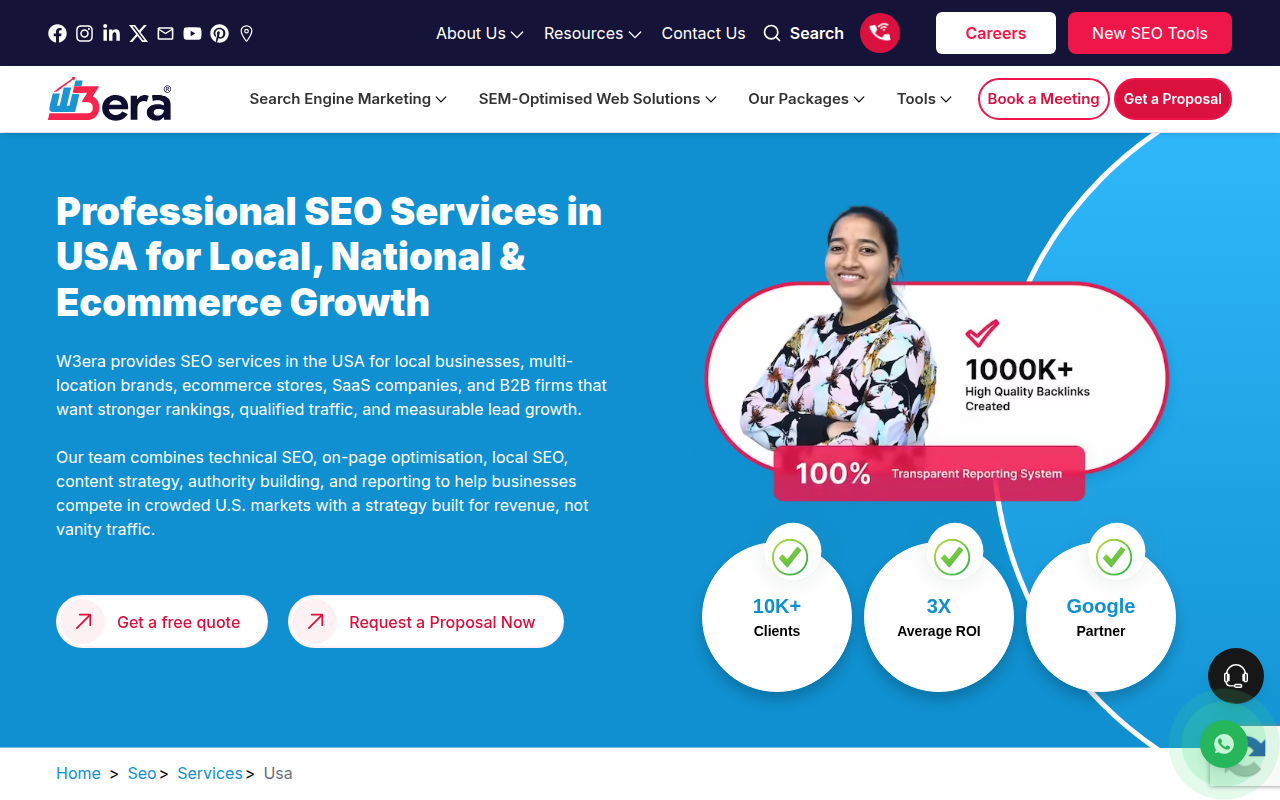
W3era is the easiest budget-first option to understand because it publishes clear package tiers. We do not always love packaged SEO. It can become templated fast. Still, price transparency is useful, especially for startups and smaller businesses that need to know whether the math works before taking a sales call.
Best for: startups, local businesses, and cost-sensitive teams that want a defined starter package instead of a custom agency pitch.
- Tiered packages with page and topic limits → buyers can see what work is covered without decoding agency jargon.
- SEO, PPC, and web capabilities in one company → reduces the need to patch together separate low-cost vendors.
- Fast proposal path → many small businesses can get from inquiry to kickoff quickly, often inside a short buying cycle.
Pricing & limits: From $499/mo. There is no free trial, but there is a free proposal process. The caps are explicit, which we appreciate. Entry tiers limit page coverage and keyword clusters, so buyers need to watch for outgrowing the plan as their site expands.
Honest drawbacks: Package SEO can become checkbox SEO if you do not manage priorities tightly. Larger U.S. companies may also want more senior strategy and stronger content QA than a low entry price can realistically support. It beats premium agencies on affordability, but it trails specialists on depth.
Verdict: If you need a clearly priced way to get foundational SEO moving, this helps you start without jumping straight into a high-retainer agency commitment.
10. Oyova
Oyova is a good example of the hybrid model. It blends SEO, content, development, and design. We like this when the website itself is part of the bottleneck. A lot of SEO stalls because no one can touch the site. Oyova is more useful than a pure strategy shop in that situation.
Best for: SMB owners and marketing managers who need SEO plus actual web changes from the same partner.
- Audit and roadmap-heavy approach → turns vague SEO needs into a clearer list of fixes, content work, and priorities.
- Development and marketing in one team → cuts the usual back-and-forth between agency recommendations and freelance implementation.
- Dedicated account structure → most buyers should know within a few weeks whether the team can turn advice into shipped work.
Pricing & limits: From custom monthly retainers after discovery, with publicly reported project minimums around $5,000. There is no free trial, though consultations are free. Limits are proposal-based, so you need to check whether off-page work, content production, and developer hours are truly included.
Honest drawbacks: Oyova is not as pure-play as a deep SEO specialist. If authority building is your only problem, a link-focused or ecommerce-focused shop may move faster. It beats pure SEO shops when code and UX work matter, but it is not the sharpest option for narrow off-page campaigns.
Verdict: If your rankings problem is tied to site issues and not just strategy, this helps you get meaningful fixes shipped in the first month of work.
11. Sixth City Marketing
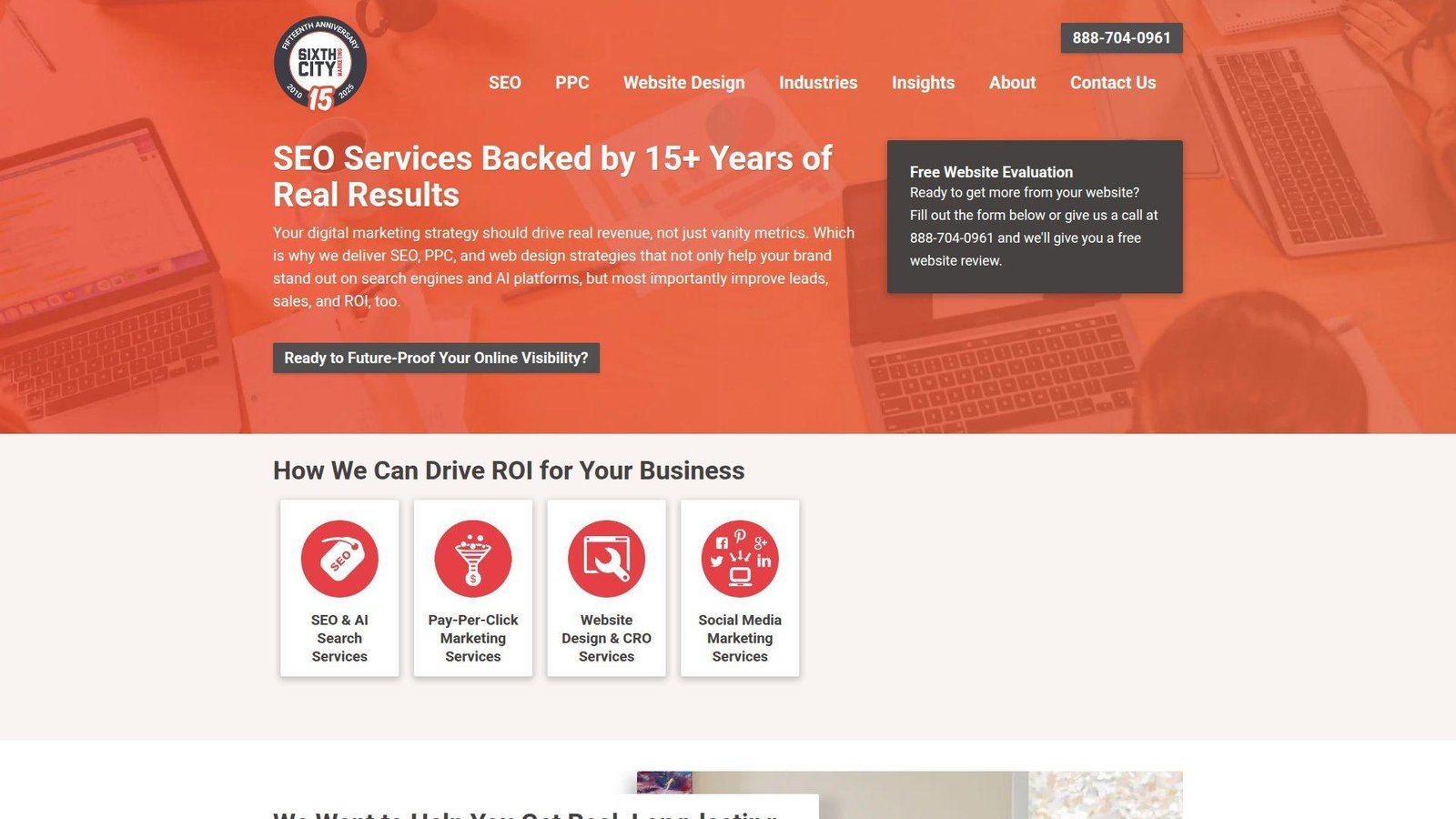
Sixth City Marketing feels grounded. Its positioning is ROI-focused, U.S.-based, and month-to-month, with clear comfort across industries like manufacturing, education, legal, healthcare, and home services. We think that mix is appealing for buyers who want serious SEO without getting pulled into a big, abstract agency system.
Best for: B2B manufacturers and service businesses, plus marketing managers who want a flexible U.S.-based partner.
- Industry specialization in practical sectors → produces more useful page strategy for businesses that live on leads, not on social buzz.
- SEO, AI-search, PPC, and CRO under one roof → saves time when traffic, conversion, and paid search all influence the same funnel.
- Month-to-month model → lowers commitment risk and gives buyers a quicker read on whether the relationship is working.
Pricing & limits: From $1,000/mo based on public directory data. There is no free trial, but free evaluations are available. The main limit is scale. This is a real agency, yet it is not trying to be a giant national platform with huge offshore capacity.
Honest drawbacks: Smaller teams can mean less overflow capacity on very large programs. Buyers also need to confirm who handles writing and technical implementation for more complex sites. It beats generic local shops on industry clarity, but it trails the biggest agencies on pure bench size.
Verdict: If you want a practical SEO partner with flexible terms and a stronger eye on revenue, this helps you start testing fit without locking into a long contract.
12. SmartSites
SmartSites is the clearest package-led full-service agency in the list. It has scale, many reviews, and public SEO plans that already bundle content writing, link building, onsite SEO, technical work, and a project manager. We like that clarity for buyers who hate vague agency scoping.
Best for: SMBs and mid-market brands that want predictable packaging and a broad digital agency behind the SEO work.
- Public SEO packages → makes budgeting simpler and shortens the awkward first pricing conversation.
- Dedicated project manager plus broad service bench → saves coordination time if SEO later expands into PPC, design, or email.
- Fast, standardized onboarding → buyers usually get to a working cadence quickly instead of waiting through a custom scoping marathon.
Pricing & limits: From $2,600/mo, with higher public tiers above that. There is no free trial. Free consultations are available. Limits are defined by package depth, which is a plus for transparency, but it can feel restrictive if your site needs a custom mix of heavier technical work and lighter content production.
Honest drawbacks: Package-led execution can feel standardized. Very specific niches may want a more tailored operator. SmartSites beats custom-only agencies on price clarity, but it trails niche specialists when category expertise matters more than operational scale.
Verdict: If you want a large, proven agency with a clear entry point and broad support around the SEO campaign, this helps you get moving without a confusing proposal cycle.
13. Mimvi
Mimvi has a local-agency feel, and we mean that as a compliment. Its public process is easy to follow. Audit, consult, plan, execute, evaluate, then manage. Buyers who find SEO sales talk slippery will probably like that straightforward structure. We would look here first for local service businesses, especially around New York.
Best for: local business owners and small marketing teams that need hands-on local SEO more than enterprise strategy decks.
- Clear step-by-step engagement model → helps buyers understand what happens next instead of guessing through jargon.
- Heavy local-market focus → speeds up work on local pages, map visibility, and nearby service intent.
- Free audit-first entry → time-to-first-value is fast because you can see the problem framing before paying.
Pricing & limits: From about $1,000/mo based on public review and directory data. There is no free trial. The initial active project window is often described like a several-month push before ongoing management. Limits show up when you move beyond local SEO into bigger technical or enterprise content needs.
Honest drawbacks: Mimvi looks far better for local SEO than for complex ecommerce or heavy developer-led SEO. Buyers with large sites should ask harder questions about technical depth. It beats national generalists on local feel, but it trails operators like OuterBox or DCP on platform complexity.
Verdict: If your main goal is to win more local visibility and turn nearby searches into leads, this helps you get a practical local SEO program moving quickly.
14. Growwwise
Growwwise sits at the more affordable end of this list, and it openly packages some of that work. We think it is most interesting for smaller businesses that want SEO blended with content, web, and brand support without U.S. big-agency pricing. That said, buyers still need to judge the strategy behind the deliverables, not just the deliverables themselves.
Best for: small businesses and lean ecommerce teams that need an affordable SEO starting point with some broader growth help.
- Public monthly deliverables → easier to compare than custom proposals full of vague promises.
- SEO plus content, branding, web, and CRO support → saves time for teams that cannot manage several vendors at once.
- Light meeting cadence and quick proposal flow → first useful direction can arrive fast for buyers with simple sites.
Pricing & limits: From $349/mo on starter plans, with higher monthly tiers for broader coverage. There is no free trial. Limits are explicit. Lower plans cap optimized pages, content output, and meeting depth, so the value falls off quickly in more competitive markets.
Honest drawbacks: Buyers should not confuse a lower package price with strategic completeness. Some off-page deliverables can look old-school if they are not anchored to a stronger plan. It beats many U.S. agencies on entry cost, but it trails premium specialists on depth and senior attention.
Verdict: If you need a budget-conscious on-ramp into SEO and related growth work, this helps you stand up the basics without jumping into a heavyweight retainer.
15. Solvid
Solvid positions itself as an international SEO company, but what stands out to us is the blend of managed SEO, copywriting, guest posting, link building, and digital PR. That stack tends to work well for B2B, SaaS, and expert-led brands that need authority as much as technical cleanup. We see Solvid as a specialist-leaning content and authority option.
Best for: B2B marketers and founder-led brands that need content, outreach, and international SEO support together.
- Copywriting, guest posting, and digital PR in one model → gives campaigns a tighter authority narrative instead of disconnected content and outreach.
- International SEO orientation → reduces wasted effort when visibility has to span more than one market or audience.
- Managed campaign structure → buyers can usually get to usable priorities quickly without building an in-house playbook first.
Pricing & limits: From custom monthly retainers, with no public package starter and no free trial. Limits depend on campaign scope, target markets, and how much content or link acquisition you need. That flexibility is helpful, but it also slows apples-to-apples comparison.
Honest drawbacks: The lack of public pricing adds friction. We would also view Solvid as stronger for authority building and content-led SEO than for deep developer-heavy programs. It beats general agencies at editorial-style authority work, but it trails more technical operators when the CMS is the core problem.
Verdict: If your growth plan depends on content quality, authority signals, and international reach, this helps you build a steadier visibility layer over the next quarter.
16. Editorial.Link
Editorial.Link is a specialist, plain and simple. It is not pretending to run your whole SEO program. It is selling link building with more process control than most agencies offer. We like that honesty. Buyers who already have decent content and technical health can get real value from a narrowly scoped partner like this.
Best for: SaaS SEO managers, in-house teams, and agencies that need cleaner editorial backlinks without handing off full strategy.
- Trial backlink before commitment → lowers risk and gives buyers a better feel for quality before a longer engagement.
- Pre-approved prospecting and transparent reporting → cuts review loops and saves time usually lost to messy link-vetting back-and-forth.
- Clear package structure → teams can see value early because live placements arrive on a predictable rhythm.
Pricing & limits: From $1,750/mo. There is no software-style trial, but the trial link acts as a proof step. Caps are unusually clear for an agency service. Smaller plans cover a fixed number of links, and larger plans scale volume rather than pretending scope is unlimited.
Honest drawbacks: This is not a full-service SEO retainer. If your site has crawl, content, or local SEO problems, backlinks alone will not solve them. Editorial.Link beats general agencies on link-process control, but it trails them on total campaign coverage.
Verdict: If your site is already decent and you mainly need authority growth, this helps you add higher-trust links without buying a bloated agency retainer.
17. Credo
Credo is not an SEO agency. It is a vetted matchmaker. That distinction matters. We like Credo for buyers who are stuck at the shortlist stage and do not want to waste weeks sorting through noisy directories and cold sales calls. That is a real problem, especially for founders and lean marketing teams.
Best for: founders and marketing leads who need help finding credible agencies more than they need another list of options.
- Vetted matching process → shrinks the shortlist and cuts out a lot of low-quality discovery calls.
- Free intro path plus paid strategy help → saves time when the team needs both vendor options and clearer hiring criteria.
- Hands-on guidance → buyers can get to real agency conversations faster than if they build a shortlist from scratch.
Pricing & limits: From $0 on the free plan. VIP and Agency Finder options are custom. Standalone strategy sessions are priced separately. There is no trial because Credo is a service layer, not a software tool. The limit is obvious. It introduces and advises, but it does not execute the SEO work.
Honest drawbacks: You still need to assess fit, chemistry, and proposal quality yourself. If you already know exactly which specialist you want, Credo adds a layer you may not need. It beats directories on guidance, but it trails them on raw search breadth.
Verdict: If shortlisting is the hardest part of the buying process, this helps you get to better agency conversations in a few weeks instead of getting buried in research.
18. Semrush Agency Partners
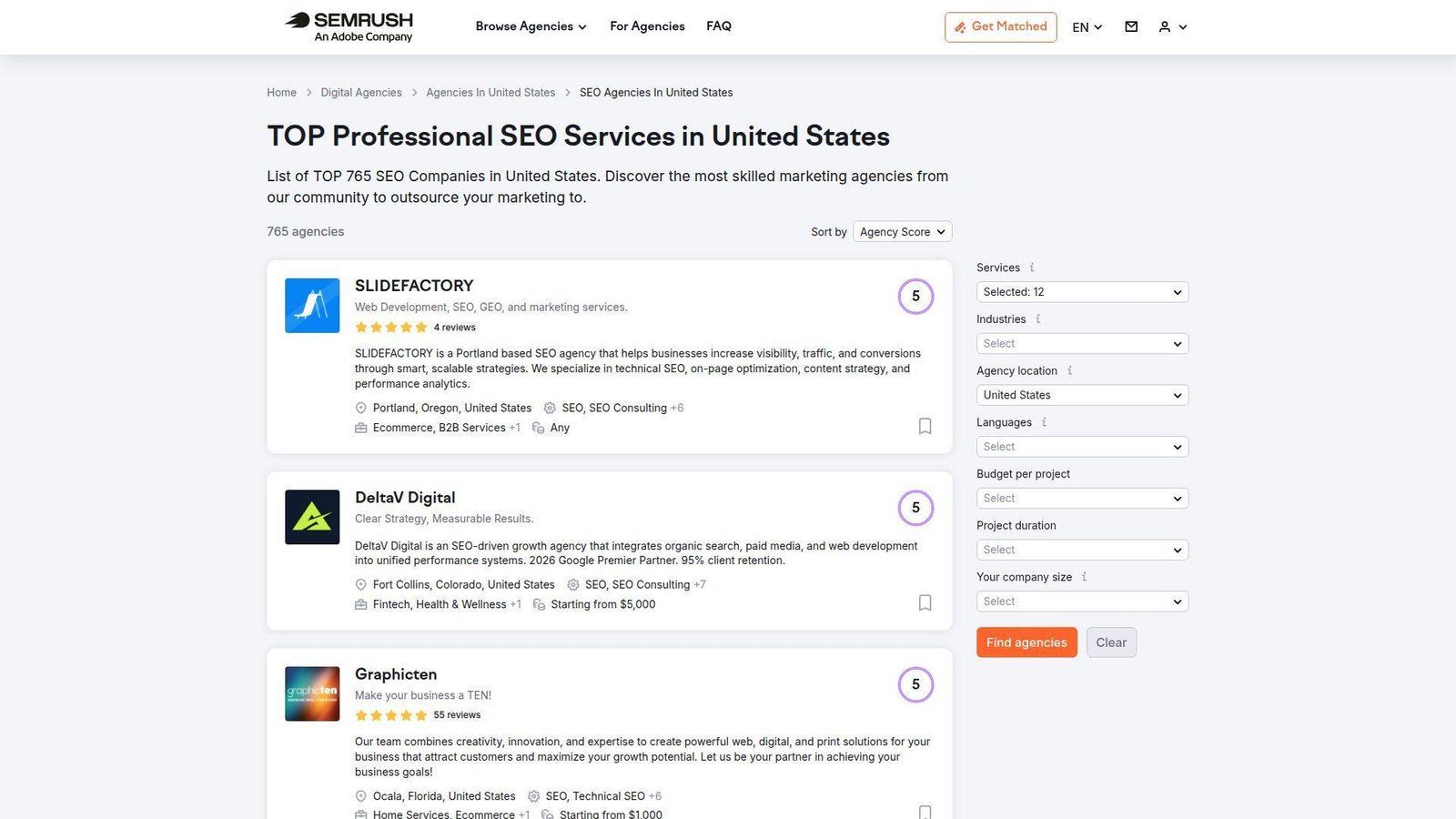
Semrush Agency Partners is a directory, and we think buyers should treat it that way. Its advantage is searchability. Budget filters, service tags, review counts, location filters, and category coverage make it easier to build a shortlist than starting from open web search. It is a strong research tool, not a quality guarantee.
Best for: procurement teams and in-house marketers who already know their budget, specialty, and geography filters.
- Strong filtering by budget, size, and service → speeds up shortlist building and reduces random sales calls.
- Visible reviews and service tags → saves time by eliminating agencies that obviously do not fit the scope.
- Large agency supply → lets buyers build a shortlist in one sitting if they already know what they need.
Pricing & limits: From $0 to browse and contact agencies. There is no trial to worry about. Limits sit with the agencies themselves, not the directory. One listing may be a budget local shop. The next may be a premium specialist.
Honest drawbacks: A directory badge and a polished profile do not prove execution quality. You still need to inspect case studies, reporting, team makeup, and contract terms. It beats generic Google search for filtering, but it trails Credo on hands-on matching and guidance.
Verdict: If you know your category and want a broad, structured way to compare agencies, this helps you build a practical shortlist quickly.
19. Upwork SEO Services
Upwork is not where we would buy a full SEO operating system. It is where we would buy a specific task when we already know what good looks like. The service listings make that clear. Audits, backlinks, competitor reports, page-speed help, and on-page work dominate. That can be useful if your team can manage QA.
Best for: startup founders and in-house marketers who need one-off SEO tasks executed fast and cheaply.
- Task-based service listings → make scoping clearer for audits, schema work, page speed, and similar small jobs.
- Fast hiring and clear delivery windows → can save days of proposal work for narrow, low-risk needs.
- Huge talent pool → time-to-first-value is often very fast when the task is simple and well-defined.
Pricing & limits: From $40 per project on visible service listings, with no trial required. Limits depend on the seller package, revision count, and delivery window. In other words, you are buying the individual operator, not a managed system.
Honest drawbacks: Quality swings hard. Many freelancers are task-doers, not strategists. You own the brief, the review, and the cleanup if something goes sideways. Upwork beats agencies on flexibility, but it trails them badly on accountability and joined-up strategy.
Verdict: If you need a discrete SEO task done this week and can review the output yourself, this helps you move faster without an agency retainer.
20. Fiverr SEO Services
Fiverr is the cheapest and riskiest option here. We would use it with a very tight brief, a low-stakes task, and a clear QA plan. The marketplace is huge. That helps on speed and price, but it also means you will see a lot of commodity SEO offers that look good on the surface and age badly in practice.
Best for: micro-business owners and solo operators who only need a tiny, low-risk SEO task done quickly.
- Very low entry pricing → makes testing simple when you do not want to commit to a retainer or even a large project.
- Massive supply of sellers → shortens comparison time if you are buying something narrow like a small audit or keyword list.
- Package-based delivery → time-to-first-value can be immediate for simple tasks with clear acceptance criteria.
Pricing & limits: From $10 per project on many visible listings, with no trial needed. Limits are seller-defined and vary wildly. The real limit is quality control. Cheap “full SEO” packages often hide thin work, risky links, or recycled reports.
Honest drawbacks: We would be very cautious with backlink gigs and guaranteed ranking promises here. Cheap link building can create long-term cleanup costs. Fiverr beats every other option on upfront price, but it trails almost all of them on consistency and risk control.
Verdict: If you only need a narrow, low-risk task and you know how to judge the output, this helps you get it done fast. For serious SEO, we would treat Fiverr as a scalpel, not a partner.
Recommended reading: Top 20 IT Outsourcing Companies for Growth, Innovation, and Scale
How to Match the Right Service Model to Your Business
The fastest way to narrow this market is to match the service model to the problem. We would not buy the same provider for a post-migration traffic drop, a weak backlink profile, and a shortlisting headache. Different problems need different operating models.
Choose a Full-Service Agency If You Need One Accountable Partner
Choose a full-service agency when you do not have an in-house SEO lead or when your blockers span content, code, analytics, and off-page work. In that setup, one accountable partner matters more than getting the cheapest specialist for each task. SEO.com, Coalition Technologies, SmartSites, OuterBox, Oyova, and Sixth City all fit this model in different ways.
The buying question is simple. Who owns the result when developer tickets stall, page briefs go unwritten, or reports do not connect to leads? If the answer is fuzzy, the agency is not really full-service. We would also ask who handles implementation versus advice, because many agencies still hand you a list and call that delivery.
Choose a Specialist If Ecommerce SEO, Local SEO, or Link Building Is the Bottleneck
Specialists win when you already know the bottleneck. If your Shopify store has weak category architecture, DCP or OuterBox makes more sense than a generic local SEO agency. If the problem is authority, Editorial.Link is more direct than a broad retainer. If you mainly need local visibility, Mimvi, HigherVisibility, or W3era may fit better than an ecommerce-heavy shop.
This is where buyers save money. A specialist can be cheaper overall because the scope is tighter. The risk is blind spots. A link-building partner will not fix bad internal linking. A local agency may not handle catalog SEO well. We like specialists most when the rest of the site is already in decent shape.
Choose a Vetted Matchmaker or Agency Directory If Shortlisting Is the Hard Part
Sometimes the real problem is not execution. It is vendor selection. Credo and Semrush Agency Partners solve that differently. Credo gives you more guided matching. Semrush gives you more searchable breadth. Both are useful when your team knows the goal but does not trust itself to sort through a noisy market quickly.
We think this route works well for founders, procurement teams, and in-house marketers who need two or three credible conversations fast. It works less well if you want the platform itself to own results. A matchmaker or directory can narrow the field. It cannot replace proposal review, reference checks, and fit validation.
Choose a Freelance Marketplace If Flexibility Matters More Than Strategic Depth
Freelance marketplaces make sense when you need a defined task, not a growth system. Upwork is useful for audits, schema work, page speed cleanup, and one-off technical help. Fiverr can work for very small, low-risk jobs if you write a precise brief and know how to review the output.
We would not use either marketplace as the primary engine for a competitive SEO program unless we had a strong in-house operator managing every detail. Strategy gets fragmented fast. Reporting gets thin. Accountability gets blurry. The flexibility is real, but so is the cleanup cost when low-priced work introduces risk.
Recommended reading: Top 20 Product Development Companies: Complete Guide and Selection Criteria
What the Best Professional SEO Services Actually Include
The vendor market is getting noisier too. CB Insights recently highlighted 8 GEO companies with the most momentum, which tells us buyers now face more AI-search positioning and more room for empty claims. A multi-location law firm that needs GBP cleanup, location pages, and call tracking should not hire the same provider as a Shopify brand with duplicate collection pages and thin category copy. We built this list around that reality.
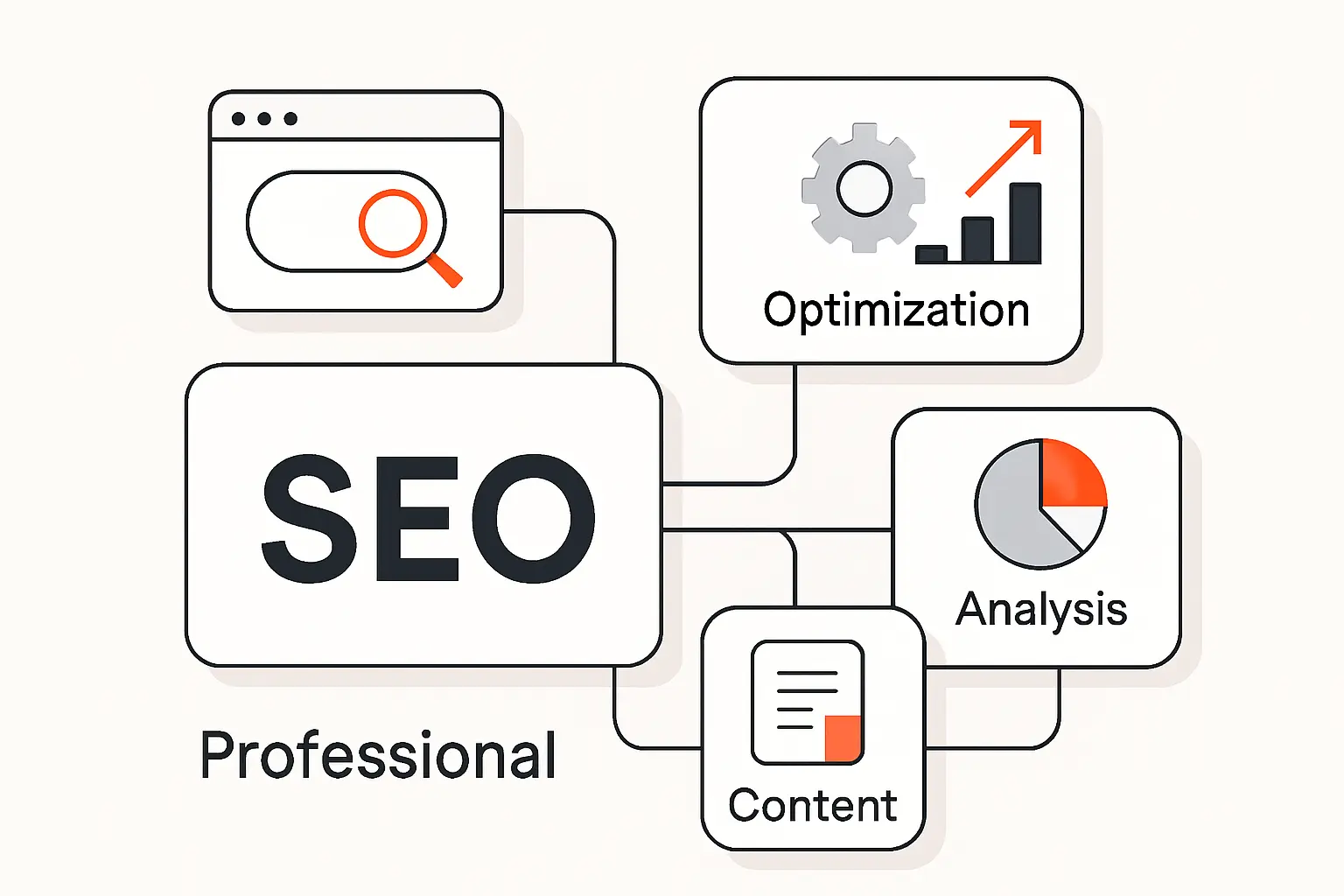
Good SEO services are a mix of strategy, execution, and measurement. If a proposal skips how pages get fixed, who writes or edits content, and how results connect to leads, we see that as a red flag. Here is what the stronger providers usually cover.
Technical SEO, Crawlability, Site Speed, and Structured Data
Technical SEO is the part buyers underestimate until it breaks. We have seen migrations erase visibility because redirects were wrong, canonicals pointed to the wrong pages, or large sections of a site quietly became harder to crawl. A serious provider should audit crawl paths, indexation, internal linking, site speed, mobile rendering, and structured data.
We do not need every agency to speak in developer jargon. We do need them to translate technical issues into plain business impact. The best ones show which fixes matter now, which can wait, and how the work gets shipped. A vague “technical health check” is not enough.
On-Page Optimization, Keyword Research, and Search Intent Mapping
Good keyword research is not a spreadsheet dump. It is a map. The service should show which queries belong on which pages and where gaps exist. That means service pages, local pages, category pages, and support content all need a reason to exist. Otherwise, teams publish content that cannibalizes itself.
On-page optimization should then tighten titles, headings, internal links, copy structure, and page focus around that map. We care less about how many keywords an agency tracks and more about whether it can explain why a page deserves to rank for a specific intent. That is where strategy turns into outcomes.
Content Strategy, Local SEO, Ecommerce SEO, and Platform Expertise
The right content model depends on the business. A law firm may need strong local landing pages and reputation signals. A B2B company may need service pages, comparison pages, and case-study support. An ecommerce brand needs product, category, and site architecture working together. Those are not interchangeable motions.
Platform knowledge matters too. Shopify, WordPress, Webflow, Magento, and custom builds create different constraints. We would rather hire a provider with real experience in our CMS than one with a prettier pitch deck. If the team cannot explain how recommendations fit your platform, expect delays and weak execution.
Link Building, Digital PR, and Authority Signals That Do Not Create Long-Term Risk
Authority building still matters, but the method matters even more. Good services earn relevant editorial links, brand mentions, useful citations, and digital PR placements that make sense for the business. Bad services buy garbage links in bulk, inflate reports, and leave a long tail of cleanup work.
We push buyers to ask simple questions. How are target sites chosen? Can we review them? Is the work relevant to our niche? Does the agency care about link quality and page context, or just volume? If the answer sounds like a package mill, we would walk.
Reporting That Ties Rankings to Leads, Revenue, and Retention
Rankings are a diagnostic, not the whole story. Strong SEO reporting should explain what changed, what happened after those changes, and what the next sprint will target. We want to see movement in qualified traffic, calls, form fills, sales opportunities, or revenue, depending on the business model.
We also want honest reporting when the answer is “not yet.” SEO takes time. A good partner can explain why a page is moving, why a page is stuck, and what trade-offs come next. A dashboard dump with green arrows and no interpretation does not help a real buyer make decisions.
Recommended reading: Top 20 Web Design Companies in Singapore: How to Choose and Custom Solutions
How to Vet Proof, Reporting, and Long-Term Fit
Proof matters more than polish. A deck full of logos and rankings may look convincing, but it tells you very little about execution risk. We focus on evidence that matches your site type, your sales model, and your internal capacity.
Case Studies Should Show Traffic, Leads, and Revenue, Not Just Rankings
We want to know the starting point, the actions taken, the timeframe, and the business outcome. A page-one ranking screenshot is weak proof on its own. It tells us nothing about conversion quality or whether the result came from brand terms, thin keywords, or meaningful commercial queries.
Ask for examples that look like your business. A local contractor case study does not prove ecommerce skill. A SaaS content win does not prove franchise SEO ability. Fit beats fame almost every time.
Reviews, Vetting, and Platform Badges Help, but Fit Still Matters More
Clutch reviews, Semrush profiles, agency badges, and curated networks help reduce risk. We use them. Still, they are screening tools, not final answers. A highly rated agency can still be wrong for your budget, CMS, or internal pace. A smaller provider with fewer badges can still be the better fit.
We look for review patterns, not just star counts. Do buyers praise communication, clarity, and follow-through? Or do they keep mentioning missed expectations and vague reporting? That pattern tells us more than one shiny badge ever will.
Reporting Should Explain Actions, Outcomes, and Next Steps
Before signing, ask for a sample report. We want to see completed work, impact, and what happens next. If the report is mostly screenshots and broad commentary, that is a warning sign. Good SEO reporting should help your team make decisions, not just confirm that a meeting happened.
The best reports also show what the agency needs from you. Maybe it is page approval, developer access, or sales feedback. SEO works better when responsibilities are visible on both sides. We like agencies that document that clearly.
CMS, Industry, and Website Complexity Should Shape the Shortlist
A simple brochure site and a complex ecommerce catalog should not share the same shortlist. Nor should a regulated healthcare brand and a local home-service company. Industry rules, content review cycles, website complexity, and internal team speed all change what “good SEO” looks like.
That is why we shortlist around context. If the provider cannot show experience with your platform, your content model, or your buying cycle, the partnership will likely slow down once the easy wins are gone.
Recommended reading: Top 20 SEO Web Solutions to Improve Rankings, Traffic, and Revenue
How AI Search Is Changing Professional SEO Services

AI search has changed the buying brief. It has not erased the classic SEO work, but it has widened it. The better providers now think about rankings, summaries, citations, and brand mentions as one connected visibility problem.
Google AI Overviews and AI Answer Engines Are Now Part of the SEO Scope
We now expect serious SEO partners to think beyond ten blue links. That does not mean promising guaranteed placement in AI answers. It means understanding how pages get selected, summarized, and trusted across Google and other answer-driven surfaces.
The practical buying question is this. Does the provider know how to build pages that answer questions directly, support claims clearly, and strengthen brand recognition beyond one page rank? If not, the service is already behind the market.
Answer-First Content, Structured Data, and Brand Mentions Matter More
Pages now need to do more than stuff keywords into headings. They need crisp answers, clear entities, useful structure, and enough authority signals around the brand to deserve trust. That is where structured data, clean content formatting, and off-site mentions become more important together.
We also think answer-first content forces agencies to write better. Fluffy intros and generic filler are less useful when a system is trying to pull the clearest, most grounded answer from the page. Clarity wins more often than sheer length.
AI Search Readiness Only Works When the Core SEO Basics Are Strong
We would not buy AI-search messaging from a provider that cannot fix crawl issues, cannibalized pages, weak internal links, or thin category templates. AI visibility does not replace the basics. It depends on them. Broken site structure is still broken site structure.
That is why we like agencies that talk about AI search as an extension of solid SEO, not as a magic replacement for it. You cannot paper over weak foundations with a new label.
Pricing, Contracts, and Scope Trade-Offs
Scope is where SEO pricing gets slippery. Two agencies can both charge a monthly retainer and deliver completely different work. We push buyers to price the labor model, the implementation load, and the reporting quality, not just the line item.
Monthly Retainers Fit Ongoing Growth Better Than One-Off Fixes
Monthly retainers usually make the most sense when SEO is an active acquisition channel. Rankings move, competitors respond, content ages, and technical debt creeps back in. A retainer lets the partner keep improving the site rather than dropping a single audit and disappearing.
We like retainers most when they define real monthly outputs. That means priorities, content work, technical fixes, authority tasks, and reporting cadence. A retainer without clarity is just a subscription to ambiguity.
Project-Based SEO Works Best for Audits, Migrations, and Recovery Work
Project SEO makes sense when the problem is discrete. A site migration, a technical audit, a penalty recovery, or a one-time local cleanup can fit that model well. Buyers just need to remember that projects solve a moment, not a market.
If you buy project SEO, ask how the handoff works after delivery. Who implements the fixes? Who rechecks them? Who owns the next phase if the business wants growth work after the project ends? Those answers matter more than the project price.
Hourly Consulting Fits In-House Teams That Can Execute Fast
Hourly consulting is underrated when the company already has writers, developers, and analytics ownership in-house. In that case, you may not need a fully managed agency. You may need a smart operator to set priorities, review work, and steer the team away from waste.
It is a bad fit when nobody can ship the recommendations. Then the cheapest advice becomes the most expensive option because it sits in a doc while competitors keep moving.
Cheap Packages and Guaranteed Rankings Usually Create More Risk Than Value
We are blunt here. Very cheap SEO packages and guaranteed ranking promises are usually trouble. The common failure modes are recycled reports, low-quality links, weak content, and shortcuts that look efficient until they create a mess.
Buyers do not need the most expensive option. They do need a credible one. If the provider cannot explain the work, the trade-offs, and the risks in plain English, we would not trust the low price.
Professional SEO Services FAQ
These are the questions we hear most often from teams comparing professional SEO services for the first time. We answered them the same way we would in a real vendor shortlisting call.
Is SEO Dead or Evolving in 2026?
SEO is evolving, not dead. Search behavior is spreading across classic search results, AI summaries, maps, ecommerce search, and answer engines. That makes the work broader, but it does not make it irrelevant.
We would frame it like this. Good SEO now means making your site easy to crawl, easy to trust, easy to understand, and useful enough to earn attention across several surfaces, not just one ranking position.
Is It Worth Paying for Professional SEO Services?
Yes, when organic search is a meaningful acquisition channel and your team lacks the time or expertise to do the work well. No, when the real problem is a weak offer, a broken website, or no capacity to publish and implement anything.
We like paid SEO most when it closes a capability gap fast. If a partner gives you strategy, execution, and measurement that your team cannot create alone, the spend can make sense. If it only gives you reports, it does not.
How Much Should You Pay for Professional SEO Services?
The honest answer is that scope drives price. Local small-business SEO can live at the lower end of the market. Ecommerce, multi-location, regulated, or content-heavy SEO often costs much more because the work is wider and the risks are higher.
We would compare labor, not sticker price. Who writes? Who edits? Who handles developer coordination? Who builds links or digital PR? Who owns measurement? Those answers explain price better than a package label does.
How Long Do Professional SEO Services Usually Take to Show Results?
Some technical fixes show value quickly. Bigger growth usually takes longer. New content, authority building, and category growth need time to compound. Competitive markets take longer still, especially when the site starts from a weak base.
We normally look for early leading indicators first, better crawling, cleaner indexing, stronger page focus, improved engagement, and a clearer reporting story. The full business lift tends to follow after that, not before.
What Should a Professional SEO Service Package Include?
A real package should include discovery, technical analysis, on-page priorities, content planning, authority work, reporting, and a clear owner for the relationship. It should also spell out what the client must provide, such as approvals, access, or internal implementation support.
If any of those pieces are missing, we would ask why. SEO works when strategy, production, and measurement stay connected. When one of those breaks, the whole program slows down.
Final Verdict on Professional SEO Services: Start With Service Model, Then Compare Proof, Scope, and Price
Our final take is simple. Start with the service model, not the brand name. If you need one accountable partner, shortlist full-service agencies like SEO.com, OuterBox, SmartSites, Coalition Technologies, Oyova, or Sixth City. If you know the bottleneck, go specialist with DCP, Editorial.Link, Mimvi, HigherVisibility, or Searchbloom. If shortlisting itself is the pain, use Credo or Semrush Agency Partners. If you just need a narrow task done fast, Upwork can work, and Fiverr should stay limited to low-risk jobs.
At Techtide Solutions, we would compare proof next, then scope, then price. We want to see how the provider thinks, how it reports, and how it handles the messy middle where SEO success is usually won or lost. A cheaper partner that cannot ship is not cheaper. A premium partner that does not fit your site is not premium. It is just mismatched.
So here is the next step we would take. Write down your real bottleneck in one sentence. Is it technical debt, content velocity, local visibility, authority, or vendor selection? Once that is clear, which of these professional SEO services still belongs on your shortlist?

