


At TechTide Solutions, we compare IT outsourcing companies through a builder’s lens, not a brochure lens. The worldwide market is expected to reach US$588.38bn in 2025, so buyers have more choice, more specialization, and, frankly, more noise to cut through.
Cloud economics now sit at the center of the outsourcing decision. Gartner forecasts $723.4 billion in 2025 in public cloud end-user spending, which means the vendor you pick can shape architecture, security, release speed, and AI readiness just as much as staffing.
In our experience, the cheapest rate card often hides the most expensive coordination problems. That is why we wrote this guide to focus on fit, proof, delivery model, and technical depth. Some organizations need a mega-integrator. Others need a sharper engineering partner that can move without turning every sprint into a board meeting.
Quick Comparison of IT Outsourcing Companies
We built the snapshot below for readers who want a fast first pass. It is intentionally concise, because in outsourcing, clarity beats poetry.
| Company/Service | Best for | From price | Constraints |
|---|---|---|---|
| Accenture | Global enterprise change | Custom enterprise quote | Premium and process-heavy |
| Tata Consultancy Services | Long-term managed services | Custom enterprise quote | Best at large scale |
| TechTide Solutions | Custom product builds | Custom project quote | Smaller global footprint |
| Capgemini | Consulting-led transformation | Custom enterprise quote | Structured delivery style |
| Wipro | AI and modernization | Custom enterprise quote | Formal onboarding |
| HCLTech | Cloud, infra, engineering | Custom enterprise quote | Enterprise bias |
| Cognizant | Regulated operations | Custom enterprise quote | Less ideal for tiny builds |
| Infosys | Platform-heavy transformation | Custom enterprise quote | Formal delivery cadence |
| NTT DATA | Global and local balance | Custom enterprise quote | Highest value at scale |
| IBM | Hybrid cloud and core systems | Custom enterprise quote | Premium pricing |
Recommended reading: Top 20 Product Development Companies: Complete Guide and Selection Criteria
Top 20 IT Outsourcing Companies to Consider
Our shortlist mixes enterprise heavyweights, regional specialists, and product engineering partners. We did not rank only by size. We looked at service breadth, public proof, delivery fit, and the kinds of buyers each firm tends to serve best in the real world.
1. Accenture
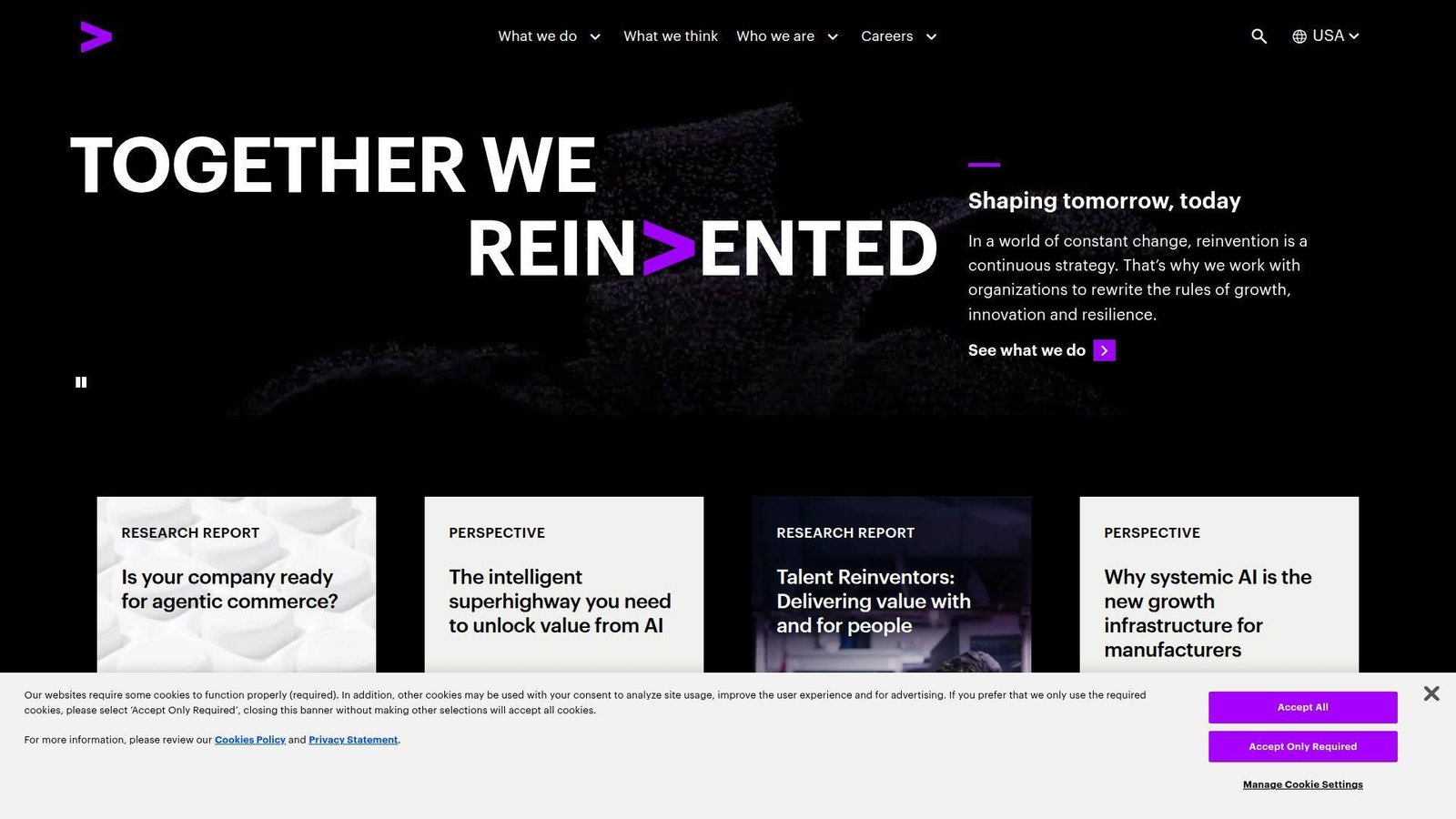
When we assess Accenture, we see a full-spectrum enterprise integrator serving nearly every major industry. It employs roughly 786,000 people, is headquartered in Dublin, Ireland, and brings more than three decades of modern consulting heritage.
Its strengths span strategy, cloud, data, cybersecurity, operations, and large change programs. Public client stories with the NFL, Marriott International, and Thames Water show clear depth in platform modernization and operating-model redesign.
We think Accenture fits global enterprises with multi-country transformations or regulated programs. It is strongest when budgets are healthy and governance needs are heavy.
2. Tata Consultancy Services
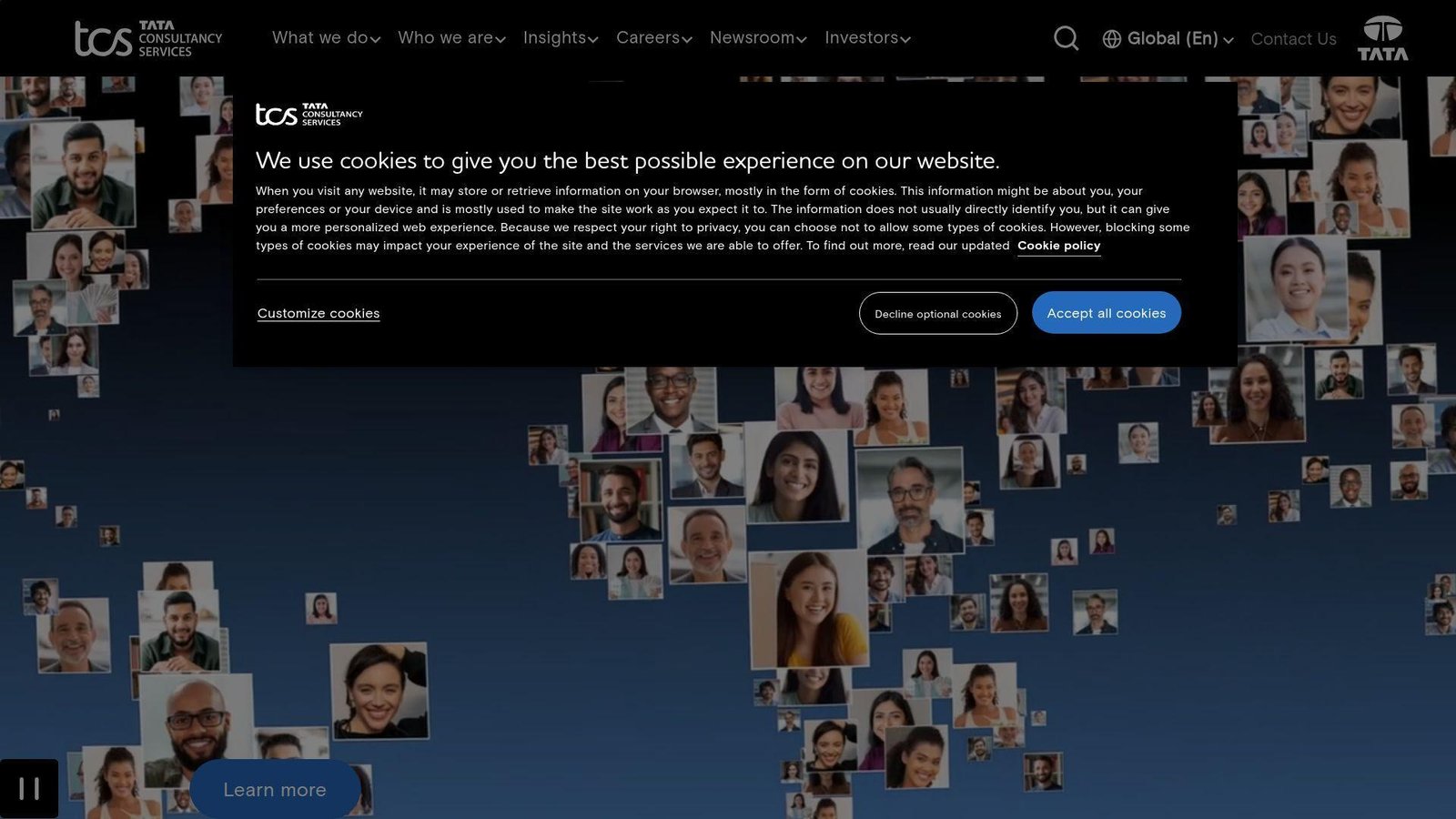
TCS strikes us as one of the most durable large-scale outsourcing brands in the market. It has about 584,000 employees, was founded in 1968, and is headquartered in Mumbai, India.
Its portfolio covers application services, cloud, infrastructure, AI, business operations, and industry platforms. Public customer stories reference Air France-KLM, BT, General Motors, Takeda, and Walgreens Boots Alliance.
We usually place TCS high on the shortlist for companies that want steady delivery and mature processes. It fits best where there is ongoing modernization, run-the-business support, and a real appetite for a long partnership.
3. TechTide Solutions
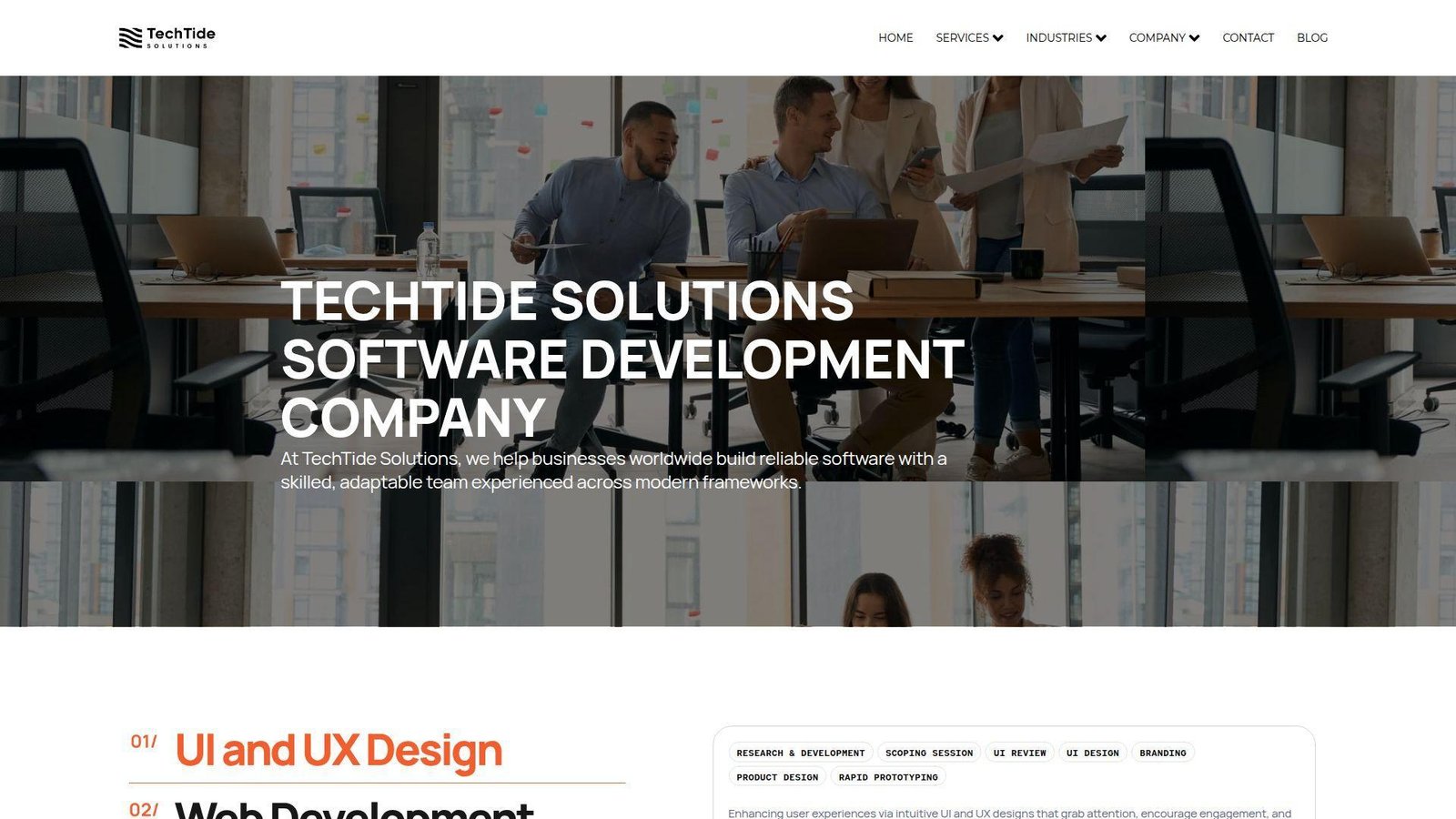
We built TechTide Solutions around hands-on product engineering rather than generic capacity selling. Our team includes 150+ full-time professionals, we bring 10+ years of delivery experience, and we operate from Ho Chi Minh City, Vietnam.
We focus on custom software, web platforms, mobile apps, UI/UX, and sector-focused delivery in fintech, healthcare, and blockchain-adjacent products. Our published case studies and solution pages show practical work in business platforms, automation, and applied AI use cases.
We fit startups, SMBs, and mid-market teams that want fast iteration and direct access to builders. Clients also choose us when they want strategy, delivery, and post-launch refinement in one close partnership.
4. Capgemini
Capgemini sits in the consulting-plus-engineering tier of the market. It has roughly 420,000 people, was founded in 1967, and is headquartered in Issy-les-Moulineaux, France.
Its work spans consulting, applications, data, AI, cloud, engineering, and managed services. Public client stories show strong work in banking, insurance, manufacturing, and life sciences, especially where process change and platform change meet.
We view Capgemini as a good fit for enterprises that want structure and executive alignment. It shines in complex programs with many workstreams and formal governance.
5. Wipro
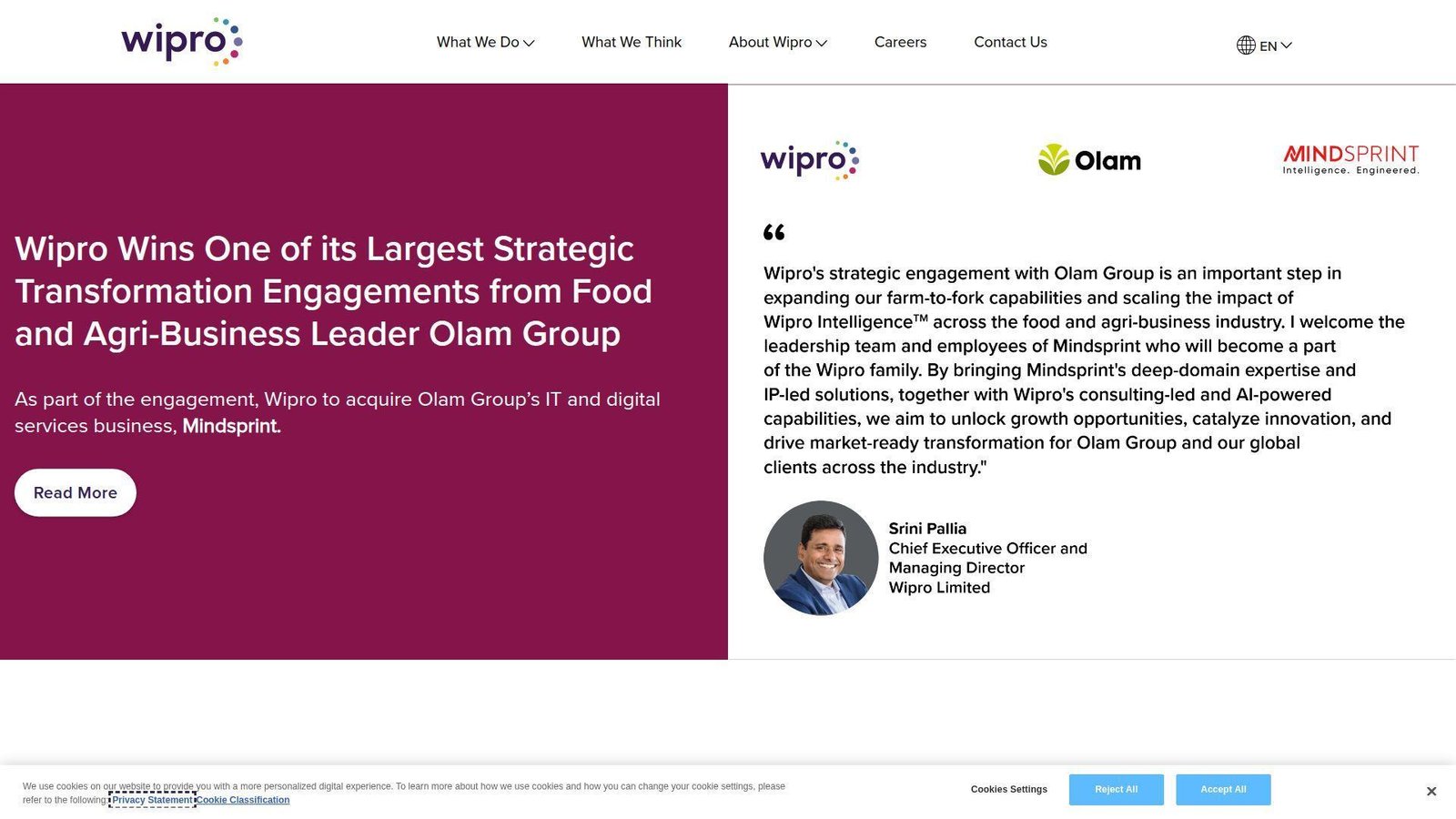
Wipro feels like a broad enterprise services firm with growing AI positioning. It has about 230,000 employees, traces its roots to 1945, and is headquartered in Bengaluru, India.
Its delivery spans consulting, cloud, cybersecurity, applications, engineering, and data programs. Public case studies with JFK International Air Terminal, Sipchem, and Hamburg Commercial Bank suggest solid experience in modernization and AI-enabled operating change.
We think Wipro works best for large organizations that want an established vendor for multi-tower transformation. It is most compelling when SAP, infrastructure, process modernization, or sector-heavy consulting are part of the brief.
6. HCLTech
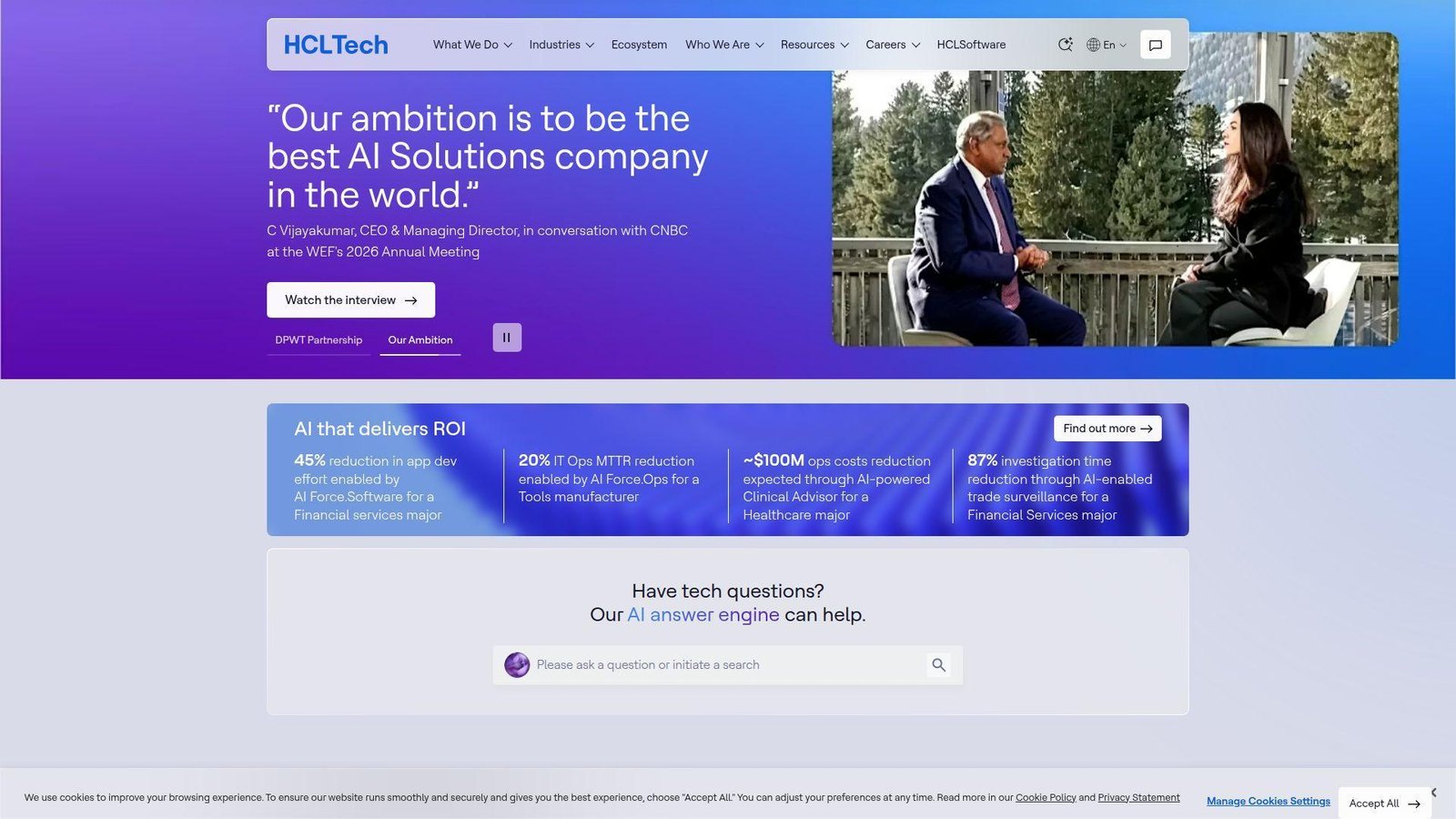
HCLTech stands out to us for its mix of infrastructure heritage and engineering scale. It has more than 223,000 people, was founded in 1976, and is headquartered in Noida, India.
The company is strong in digital engineering, cloud, managed infrastructure, cybersecurity, and AI-led transformation. Public stories with Unilever, Volvo Cars, C.H. Robinson, Pearson, and Keurig Dr Pepper show range across supply chain, cloud, and customer platforms.
We typically recommend HCLTech when a business has complex estates to run and modernize at the same time. It fits enterprises that need both operational reliability and engineering depth.
7. Cognizant
Cognizant remains one of the most familiar names in enterprise outsourcing, especially in regulated sectors. It lists about 351,600 employees, has over 30 years in the market, and is headquartered in the United States.
Its services cover digital engineering, application services, operations, automation, AI, and consulting. Many public case studies emphasize healthcare plans, financial services, automakers, and media transformation, even when client names are withheld.
We see Cognizant as a strong choice for large organizations that care about domain expertise as much as delivery scale. It fits well when operational complexity, compliance, and business-process change sit at the center of the program.
8. Infosys
Infosys is a mature global provider with a clear consulting and delivery model. It has more than 328,000 employees, was founded in 1981, and is headquartered in Bengaluru, India.
Its work covers cloud, cybersecurity, enterprise applications, engineering, data, and digital experience. Public case studies and testimonials include Ferroglobe, Equatex, Hilti, Kellogg Company, Palo Alto Networks, and ABN AMRO.
We like Infosys for enterprises that want a disciplined partner with strong platform alliances and repeatable governance. It is particularly well suited to large modernization programs that need scale without losing architectural control.
9. NTT DATA
NTT DATA combines global reach with a more understated delivery style than some peers. It employs about 197,800 people, was established in 1988, and is headquartered in Tokyo, Japan.
The company covers consulting, industry solutions, IT modernization, managed services, and business process services. Public client cases include BMW Group and other large transformation programs, which signals comfort with strategic AI and cloud work.
We think NTT DATA fits multinational organizations that want local account presence backed by global delivery. It is a solid option when clients need industry nuance, long-term support, and multi-region coordination.
10. IBM
IBM is not a pure-play outsourcer, but it still belongs on serious enterprise shortlists. It has roughly 270,000 direct employees, was founded in 1911, and is headquartered in Armonk, New York.
Its strengths include hybrid cloud, AI, cybersecurity, consulting, data, and mainframe modernization. Public case studies with the Masters, Pfizer, Sixt, and Cleveland Clinic show how IBM ties consulting to platforms and industry-grade engineering.
We place IBM highest when the environment is technically complex, heavily regulated, or tightly connected to existing IBM estates. It is also a strong fit when AI, data governance, or core systems modernization drive the business case.
11. DXC Technology
DXC Technology looks strongest where old and new systems need to coexist without drama. It has more than 120,000 employees, draws on over 60 years of heritage, and is based in Virginia.
Its portfolio emphasizes managed infrastructure, application modernization, security, and industry software. Public company material highlights deep work with global enterprises and public sector organizations, though many case references are framed at the sector level.
We think DXC is best for large organizations carrying legacy-heavy environments, especially where uptime and governance matter more than glossy innovation theater. It is a practical choice for modernization with operational continuity.
12. ELEKS
ELEKS feels more engineering-led than many traditional outsourcers, and that matters. It has over 2,000 professionals, was founded in 1991, and is headquartered in Tallinn, with deep delivery roots in Ukraine.
The firm focuses on custom software, product design, data, AI, QA, and technology consulting. Public proof includes work with Aramex, alongside a long record of serving enterprise and upper-mid-market clients.
We often see ELEKS as a smart fit for organizations that want strong product engineering without jumping straight to mega-integrator overhead. It suits innovation programs, platform builds, and modernization projects that need architectural sharpness.
13. Andersen
Andersen presents as a large, fast-scaling custom software partner with broad geographic reach. It has roughly 3,700 in-house experts, was founded in 2007, and is headquartered in Warsaw, Poland.
Its services span application development, cloud, AI and data, digital transformation, cybersecurity, and team augmentation. Public company materials reference long-term work with Siemens, S&P Global, Ryanair, IHS Markit, TUI, Johnson & Johnson, and T-Systems.
We think Andersen fits businesses that want sizable extension teams and strong execution across web, mobile, and enterprise software. It works especially well for firms that need cross-border delivery with modern engineering depth.
14. Itransition
Itransition is one of the steadier mid-to-large outsourcing brands in custom software. It has 3,000+ employees, has been in the market since 1998, and operates through a global office network.
The company covers IT consulting, managed IT, application development, product engineering, QA, and smart team models. Public case studies name The Economist, TradeStops, and AiBUY, giving buyers concrete proof across media, fintech, and digital commerce.
We see Itransition as a good fit for enterprises, mid-market firms, and startups that want breadth without enterprise-theater pricing. It is especially useful where clients need long-running dedicated teams and cross-stack capability.
15. Sigma Software Group
Sigma Software Group strikes us as a strong European engineering partner with product DNA. It has over 2,100 professionals, was founded in 2002, and is headquartered in Stockholm.
The group works across software development, consulting, embedded systems, AI, testing, and design. Public case studies include Siemens Healthineers and Ankorstore, which points to meaningful experience in healthcare technology and digital commerce.
We would shortlist Sigma Software for product companies and enterprises that want nearshore-style collaboration with serious engineering firepower. It fits well when data, platform scaling, or complex custom development define success.
16. Simform
Simform is more specialized than the mega-firms, and that focus is part of its appeal. It has 1,200+ employees, was founded in 2010, and is headquartered in Orlando, Florida.
Its core offers are cloud and DevOps engineering, data engineering, AI/ML, digital product engineering, and UX-led development. Public proof includes client testimonials from Privilee and a steady stream of platform, Azure, and data modernization case studies.
We think Simform fits high-growth ISVs, digital natives, and tech-enabled enterprises that want a co-engineering style relationship. It is best when speed, product quality, and hands-on technical depth matter more than brand grandeur.
17. Svitla Systems
Svitla Systems is a global digital solutions firm with a balanced team-extension and services model. It has 1,000+ specialists, was founded in 2003, and is headquartered in Corte Madera, California.
Its services cover custom software engineering, consulting, cloud, data, AI, and managed services. Public brand references and case materials include Logitech, Ingenico, Amplience, and Global Citizen, alongside sector-specific delivery across healthcare, logistics, and enterprise platforms.
We see Svitla as a strong option for companies that want flexible engagement models and a people-first delivery culture. It fits buyers who need a nearshore and offshore blend, domain variety, and steady communication.
18. Vention
Vention has built a strong reputation with software-led companies that want speed without chaos. It has a 3,000+ team, over 20 years in business, and is headquartered in New York.
The firm covers staff augmentation, AI, cloud, product engineering, QA, and vertical solutions for fintech, healthtech, real estate, and SaaS. Public work with DealCloud, EliseAI, Postman, Merkle, motum, and Vexcel shows clear comfort with growth-stage product companies.
We usually like Vention for VC-backed startups, scale-ups, and later-stage product teams that need fast access to vetted engineers. It is especially effective when roadmap speed and team flexibility are crucial.
19. Euvic
Euvic brings a distinctly practical style to outsourcing, with strong Central European roots. It has roughly 6,000 software engineers, was founded in 2005, and runs its U.S. headquarters from New Jersey while drawing heavily on Polish delivery talent.
Its services span software development, cloud, infrastructure, service desk, cybersecurity, and digital transformation. Public case studies feature Medsphere, Private Advisor Group, and Position Green, which suggests range across healthcare, fintech, and sustainability platforms.
We think Euvic is a smart fit for buyers who want value, engineering breadth, and less ceremony than the largest integrators. It works well for mid-market and enterprise clients that need modernization tied closely to business operations.
20. Avenga
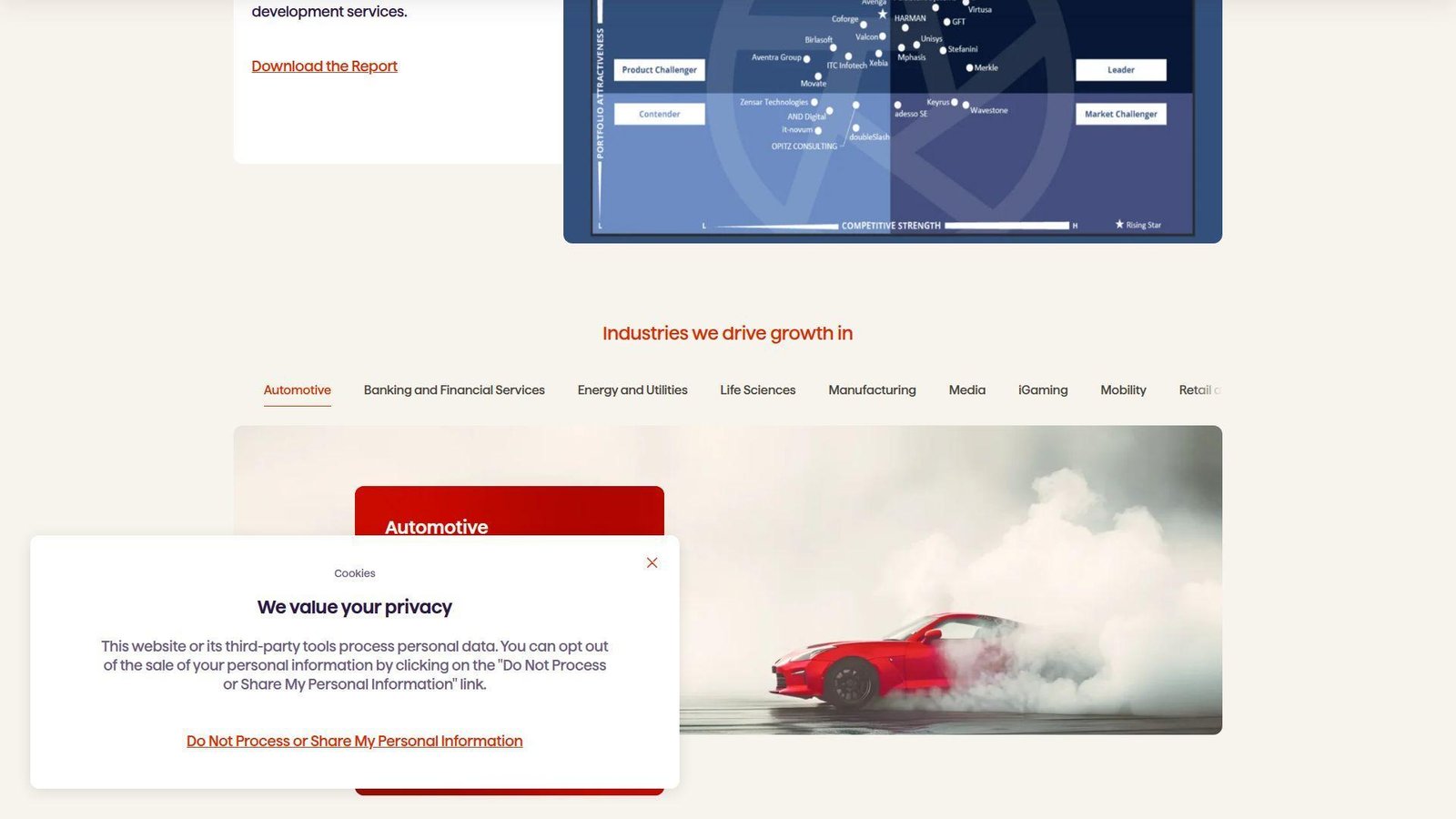
Avenga sits at the intersection of IT consulting and software engineering, with a clear enterprise slant. It has 6,000+ specialists, draws on over 30 years of combined delivery heritage, and is headquartered in Prague, Czechia.
The company offers business and tech advisory, enterprise solutions, CX and UX design, managed services, product development, and software engineering. Public materials show strong emphasis on banking, telecom, automotive, mobility, manufacturing, and life sciences programs.
We see Avenga as a solid choice for organizations that want cross-functional delivery rather than a coding shop. It fits enterprises pursuing modernization, platform work, and AI-first transformation across several business units.
Recommended reading: Top 20 Web Design Companies in Singapore: How to Choose and Custom Solutions
Why Businesses Choose IT Outsourcing Companies
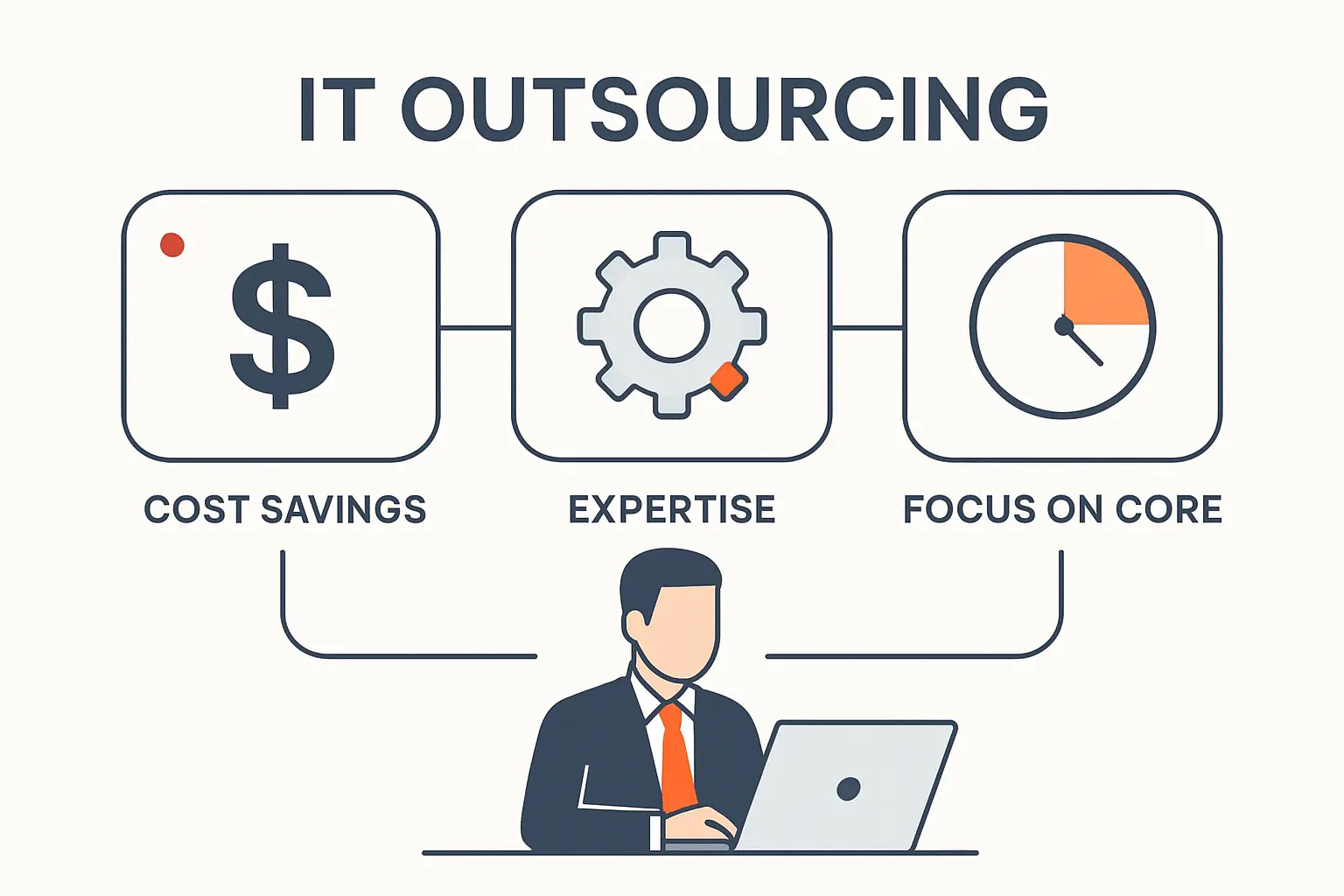
We rarely see outsourcing confined to help desk conversations anymore. Deloitte points to growth in core capabilities like sales, marketing, and R&D, and that matches what we see when software, data, and automation become central to growth plans.
1. Access to Specialized Talent and Emerging Technologies
Companies turn to IT outsourcing companies because modern stacks do not sit still. A capable partner can supply cloud architects, SREs, data engineers, QA automation leads, security specialists, SAP talent, and AI builders much faster than most internal hiring motions. That matters when the launch window is short and the internal team is already stretched.
2. Cost Efficiency, Scalability, and Faster Delivery
Cost still matters, but we prefer to frame it as cost per useful outcome. Outsourcing can reduce recruiting lag, smooth bench risk, and let a business scale up for migration, testing, or release peaks without permanently inflating payroll. The trick is simple: savings only hold when requirements are clear, ownership is crisp, and rework stays low.
3. Greater Focus on Core Operations and Innovation
When outsourcing works well, internal leaders stay focused on what truly differentiates the business. The external team handles platform migration, service operations, or execution-heavy delivery, while the in-house team owns product direction, domain logic, and executive alignment. That split keeps innovation from drowning in backlog noise.
Recommended reading: Top 20 SEO Web Solutions to Improve Rankings, Traffic, and Revenue
Core Services Offered by IT Outsourcing Companies
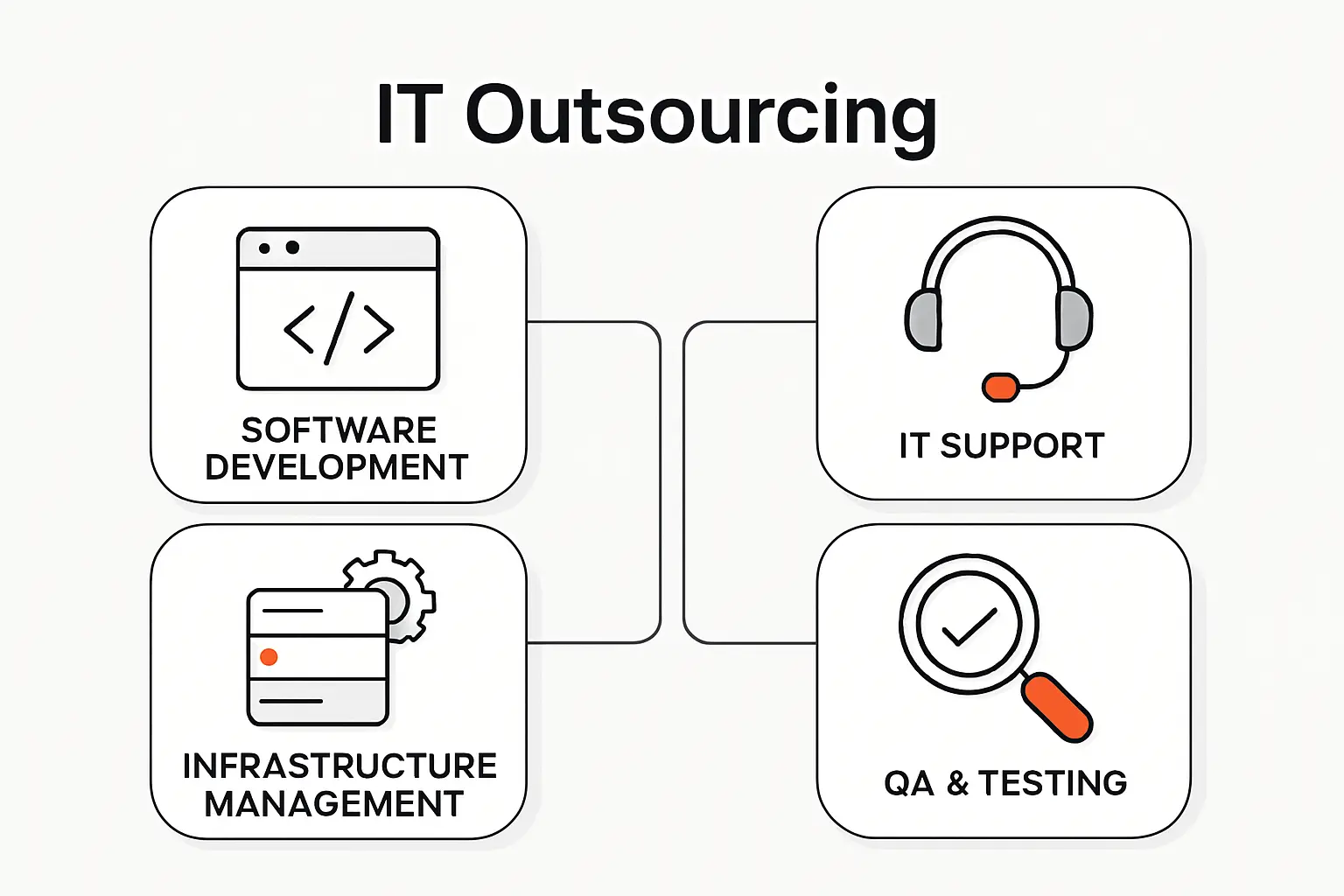
Not every provider sells the same toolkit, even when their websites sound similar. We pay close attention to whether a firm can merely supply developers or can truly own architecture, delivery quality, run operations, and post-launch improvement.
1. Managed IT, Help Desk, and Infrastructure Support
This is the bread-and-butter layer for many outsourcing relationships. It usually includes service desk coverage, endpoint support, patching, identity and access hygiene, backup monitoring, disaster recovery routines, NOC and SOC support, and SLA-based incident response. These services rarely win design awards, but they keep the lights on.
2. Custom Software, Web, and Mobile Development
This is where many growth-stage companies enter the market. Providers can help with product discovery, UX and UI, backend systems, APIs, mobile apps, QA automation, and release management. The better partners do not just code to spec. They push on architecture, scalability, usability, and the long-term cost of change.
3. Cloud Migration, DevOps, and Platform Modernization
Cloud work is often more complex than the sales deck suggests. Good partners do more than lift and shift. They refactor brittle services, set up infrastructure as code, improve CI/CD pipelines, add observability, tighten rollback paths, and bring FinOps discipline to a platform that could otherwise drift into chaos.
4. Data, AI, and Cybersecurity Services
This service stack has moved from niche to mainstream. Buyers now expect help with data pipelines, warehouses, BI, ML workflows, gen AI integration, model governance, zero-trust controls, threat detection, and secure SDLC practices. In our view, this is where shallow vendors get exposed fastest, because the work touches business logic, compliance, and reputation all at once.
Recommended reading: Top 30 Cybersecurity Companies In Vietnam For 2026
Location Models: Onshore, Nearshore, and Offshore
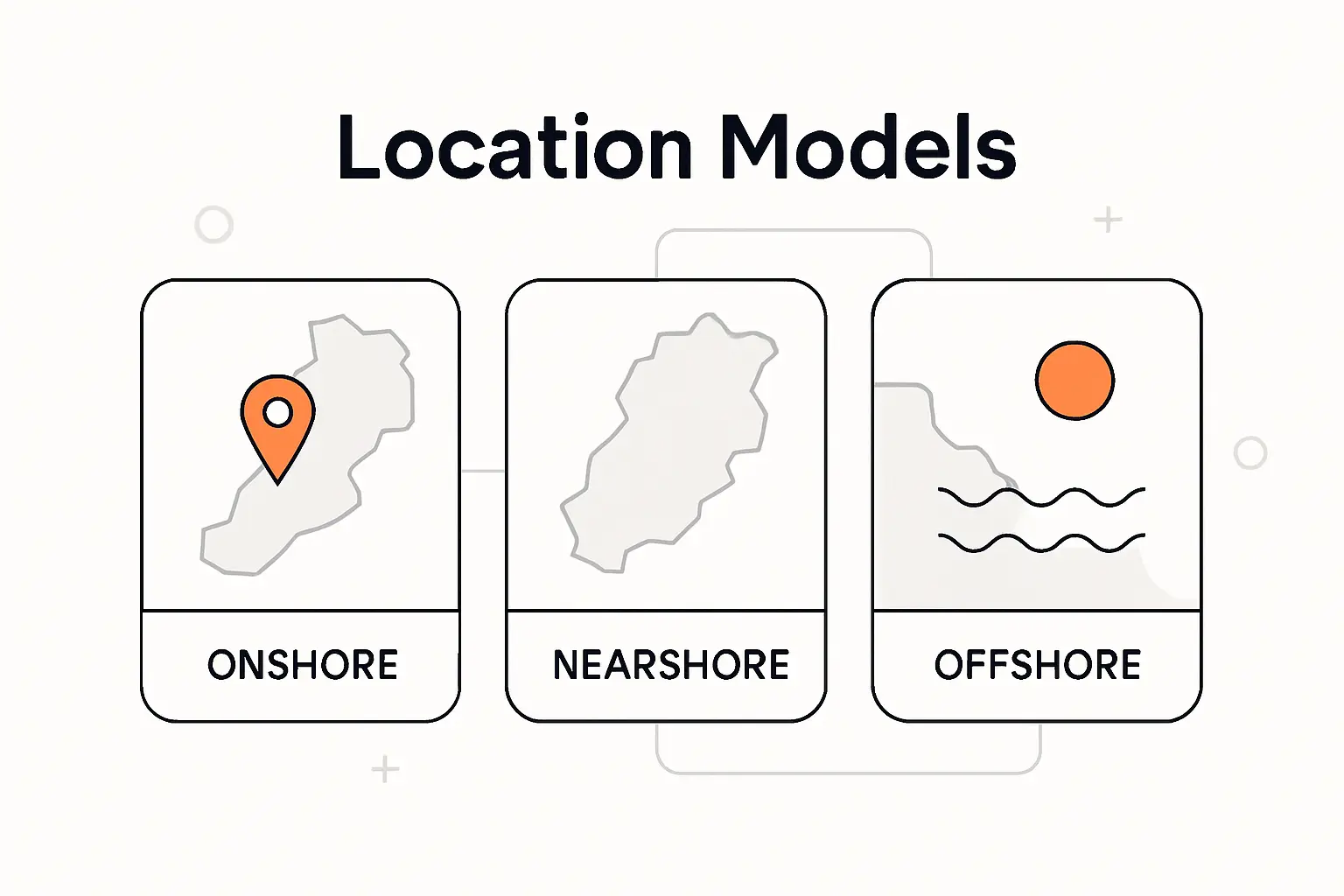
Location model is where many outsourcing deals win or wobble. Time zones, language overlap, travel friction, legal requirements, and collaboration habits shape delivery more than most pricing spreadsheets admit.
1. Onshore Models for Maximum Alignment
Onshore delivery usually offers the easiest communication and the least context loss. Workshops move faster. Legal and compliance reviews feel simpler. Executive stakeholders are more comfortable. The tradeoff is cost, which can be hard to justify if the work is execution-heavy and does not need constant real-time collaboration.
2. Nearshore Models for Time-Zone Compatibility
Nearshore is often the sweet spot for product teams. You get meaningful workday overlap, easier travel, and better odds of live collaboration during design sessions, standups, and incidents. For North American buyers, this model often balances speed and cost better than either pure onshore or far-offshore delivery.
3. Offshore Models for Cost Efficiency and 24/7 Delivery
Offshore remains powerful when the vendor has mature documentation and management discipline. It can lower delivery cost and enable round-the-clock progress, especially for QA, support, and well-scoped engineering streams. Still, the handoff burden is real. If product ownership is weak, the savings can evaporate in misunderstanding and delay.
Recommended reading: Top 30 Cheap Email Service Providers for Email Hosting and Marketing
Common Engagement Models and Pricing Structures
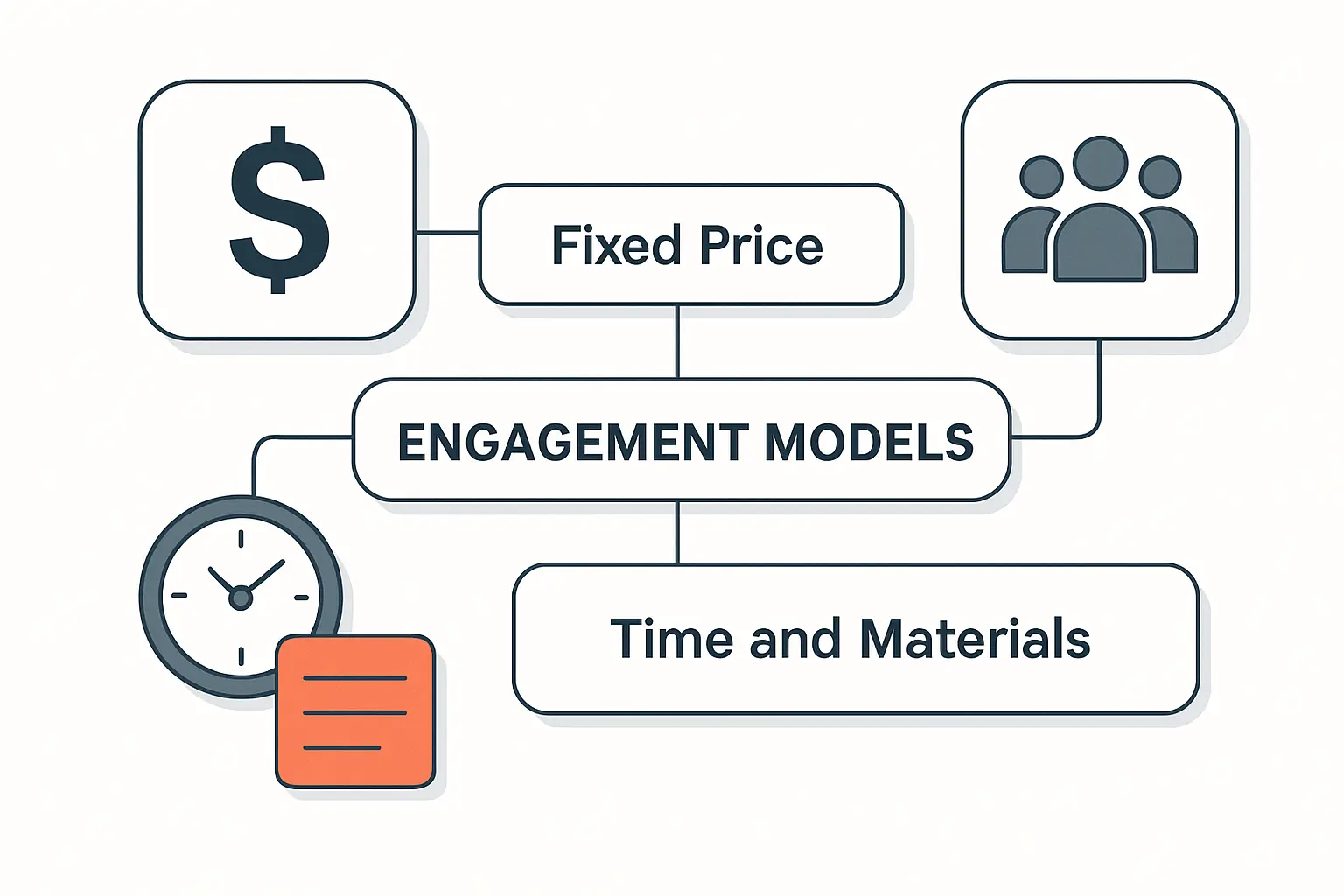
We always tell buyers to match the engagement model to the uncertainty level of the work. When the problem is still moving, the contract should breathe. When the scope is stable, the commercial model can tighten.
1. Staff Augmentation for Flexible Capacity
Staff augmentation works when a company already has strong product and engineering leadership in place. The partner supplies the missing skills or extra capacity, but the client still directs priorities, architecture, and cadence. It is flexible and fast, but it only works if someone inside the business is truly steering the ship.
2. Dedicated Teams for Long-Term Collaboration
Dedicated teams are better for long-running product or platform work. Instead of borrowing individuals, the client gets a stable pod with engineering, QA, delivery management, and sometimes design or DevOps support. This model tends to build more domain memory and better velocity over time, which is why we like it for evolving roadmaps.
3. Fixed-Price, Time-and-Materials, and Outcome-Based Models
Fixed-price works best when the scope is clear and change is limited. Time-and-materials is better for discovery, modernization, or roadmap work with moving parts. Outcome-based models can be powerful, but only when the business metric is genuinely measurable and both sides accept shared accountability. Otherwise, the contract becomes smoke and mirrors.
How to Evaluate IT Outsourcing Companies
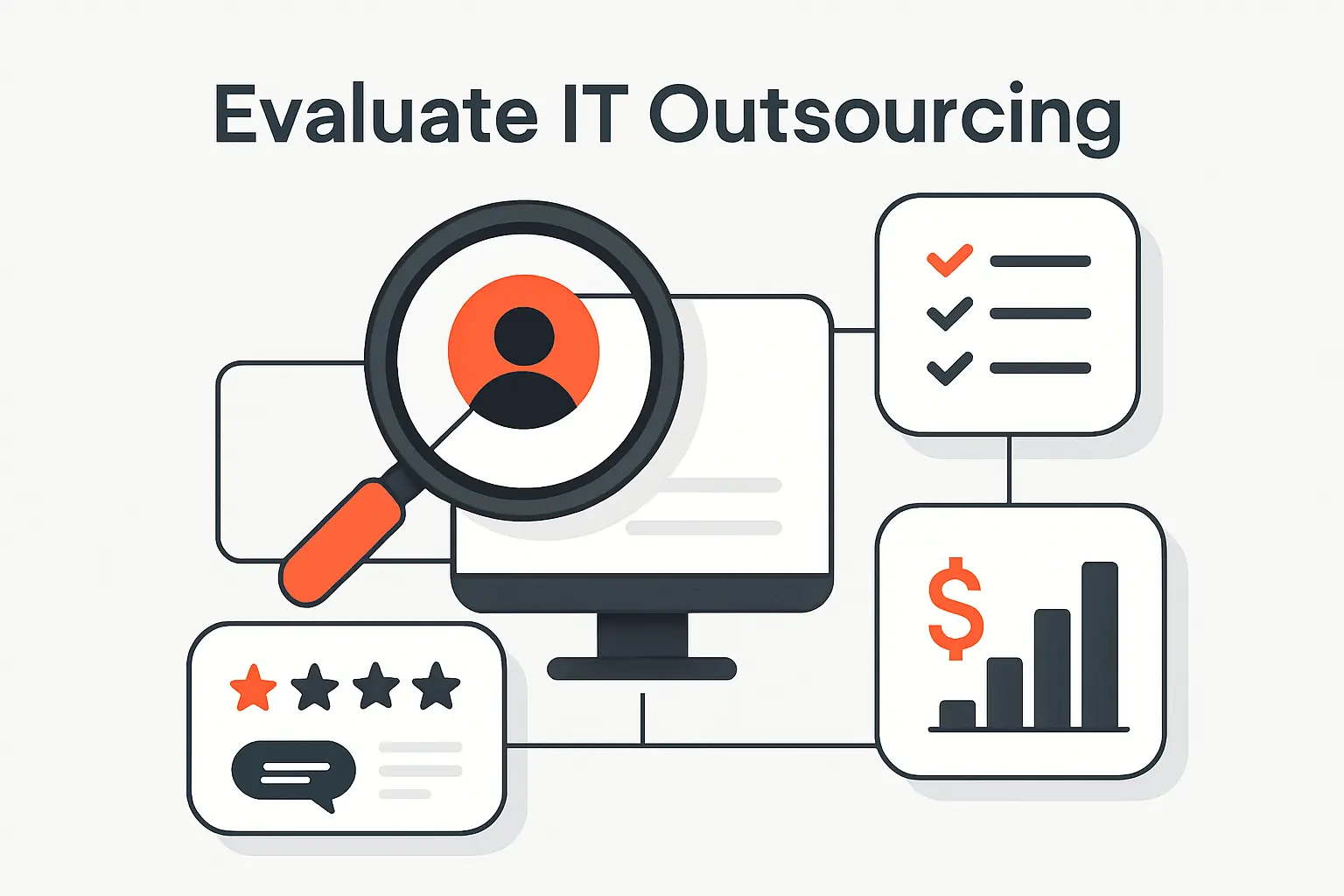
Vendor selection should feel less like shopping and more like technical due diligence. The best pitch deck means little if the team cannot communicate risk, protect your IP, or scale beyond the first sprint.
1. Define Objectives, Scope, and Budget
Write down the business outcome first. Is the goal lower cloud spend, faster releases, a new digital product, fewer support tickets, or better data visibility? Clear scope boundaries and success measures make pricing saner and reduce the bait-and-switch that plagues vague RFPs. This is where the rubber meets the road.
2. Responsiveness, Transparency, and Communication
Early communication is a preview of delivery culture. We watch how quickly a vendor answers hard questions, how clearly they discuss assumptions, and whether estimates include real caveats. If every answer sounds effortless, we assume the hard part has been hidden. Real partners talk about risk early.
3. Security, Compliance, and IP Protection
Security paperwork should never be an afterthought. We want to see code ownership terms, access controls, environment segregation, logging, incident handling, and audit support that match the work. For AI programs, data lineage, prompt handling, and model governance belong in the conversation too. Buyers who skip this step often pay for it later.
4. Technical Depth, Scalability, and Proven Delivery
Ask for architecture examples, not just polished outputs. Strong IT outsourcing companies can explain why they chose an event-driven pattern, what broke during migration, how rollback was handled, and how staffing shifted around bottlenecks. Delivery maturity shows up in details, not slogans.
How Leading Companies Use IT Outsourcing
The strongest enterprises use outsourcing with precision, not panic. NTT DATA’s work on a global generative AI platform for BMW Group shows how providers now help build strategic capability, not just staff the engine room.
1. Infrastructure, Monitoring, and Cloud Operations
Infrastructure remains the quiet backbone of the whole arrangement. Companies outsource monitoring, patching, IAM, backup testing, and after-hours response because those tasks demand constant discipline. IBM’s work with the Masters to deliver world-class fan experiences shows how run operations and digital experience often live in the same service layer.
2. Product Development, QA, and Faster Releases
We also see firms use outsourcing to accelerate release velocity. External teams handle feature squads, automated testing, mobile app builds, API integrations, and release engineering while internal product leaders stay close to market priorities. Done right, this is not throw-it-over-the-wall delivery. It is a shared product cadence with clear ownership lines.
3. Global Support, Scalability, and Business Continuity
Business continuity is another major driver. Distributed vendors can provide follow-the-sun coverage, multilingual support, backup staffing, and recovery playbooks that single-location teams struggle to maintain. That resilience matters during outages, acquisitions, expansion pushes, and the messy moments every real business eventually hits.
Trends Shaping IT Outsourcing Companies
The market is still moving under our feet. McKinsey argues providers must reposition themselves to thrive in the gen AI era, and we think buyers now feel that shift in every RFP, especially around data quality, governance, and measurable business outcomes.
1. Nearshoring and Time-Zone Alignment
Nearshoring keeps gaining ground because product work is conversational. Architecture reviews, standups, UX sessions, and incident calls all move faster when teams overlap for most of the day. For North American buyers, Latin America has become an obvious sweet spot for many programs, while Eastern Europe remains highly attractive for European firms.
2. AI, Cloud, and Cybersecurity Specialization
Generalist development shops still exist, but the stronger firms now organize around specialization. Buyers increasingly ask for platform engineers, cloud architects, FinOps support, data leaders, AI integration talent, and security professionals who understand compliance, not just code. In plain English, depth is beating headcount theater.
3. Value-Based Partnerships Over Pure Cost Reduction
The old pitch was lower hourly rates. The stronger pitch now is better business output: shorter lead time, safer releases, lower defect escape, cleaner migrations, stronger uptime, and more predictable change. We believe that shift is healthy because it forces both sides to talk about value, not vanity.
Frequently Asked Questions About IT Outsourcing Companies
Buyers often come to us with the same core questions. We have answered them plainly below, the way we would in a real discovery call.
1. What Does an IT Outsourcing Company Do?
An IT outsourcing company plans, builds, runs, or supports technology on behalf of another business. Depending on the provider, that may include help desk, infrastructure, software engineering, QA, cloud operations, cybersecurity, data services, or AI work. The better firms do not just lend hands. They assume accountable delivery inside a governance model.
2. What Service Areas Do Leading IT Outsourcing Companies Usually Cover?
Most leading firms cover a mix of managed IT, custom development, cloud migration, DevOps, QA, cybersecurity, data engineering, analytics, and platform support. Enterprise providers may add consulting, business operations, and sector-specific solutions. Product-focused firms usually go deeper into software delivery and move faster in build cycles.
3. Which Providers Are Widely Seen as Industry Leaders?
In our view, the most widely recognized leaders on this list include Accenture, TCS, Capgemini, HCLTech, Cognizant, Infosys, IBM, NTT DATA, and Wipro. That said, market leadership and buyer fit are not the same thing. A smaller specialist can easily outperform a giant firm on the right scope.
4. Which Provider Is Often Considered the Largest Global IT Outsourcing Company?
That depends on whether you mean headcount, revenue, or outsourcing revenue specifically. From the public figures we reviewed for this guide, Accenture appears to be the largest by workforce among the companies here, while TCS also sits firmly in the top tier. We always advise buyers to treat largest as context, not a verdict.
5. How Should Businesses Choose Between Onshore, Nearshore, and Offshore Models?
We usually start with three questions: how much daily collaboration is needed, how strict the compliance environment is, and how sensitive the budget is. Onshore is best for maximum alignment. Nearshore is often the best balance. Offshore is powerful when the work is well managed and the operating rhythm is mature.
6. What Should a Strong SLA and Governance Plan Include?
A strong SLA and governance plan should cover service levels, severity definitions, response and resolution times, reporting cadence, escalation paths, security obligations, environment access rules, change windows, acceptance criteria, ownership of code and data, and a clean exit process. If those points are vague, the partnership will eventually wobble.
How TechTide Solutions Helps Businesses Build Custom Solutions
When clients come to us, they usually do not need another vendor layer. They need a team that can understand the business problem, challenge assumptions, and ship reliable software without dragging every decision through red tape.
1. Custom Web, Mobile, and Software Development
We build custom web, mobile, and software solutions from discovery to deployment. That includes product scoping, architecture, UI/UX, APIs, QA, and release support. We build for maintainability, not demo-day magic, because clean handoff and long-term changeability matter.
2. Flexible Engagement Models and Dedicated Teams
We support staff augmentation, dedicated teams, and scoped delivery. Some clients want a few engineers inside an existing squad. Others want us to own a product stream end to end. We shape the model around roadmap uncertainty, governance needs, and speed.
3. Tailored Solutions for Automation, Modernization, and Growth
A lot of our work sits where automation, modernization, and growth overlap. We help companies replace manual workflows, update aging platforms, move toward cloud-native architecture, and add AI-assisted features where they truly belong. If the business case is thin, we will say so.
Conclusion: Choosing the Right IT Outsourcing Company
Choosing among IT outsourcing companies is less about finding the most famous name and more about finding the cleanest fit. The right partner matches your architecture, pace, budget, risk profile, and internal operating style. Get that fit right, and outsourcing becomes a force multiplier. Get it wrong, and every sprint feels uphill.
We would start with one sharp question: which system, workflow, or product bottleneck is hurting growth the most right now? Pick that problem, define success clearly, and test a partner on a focused engagement before expanding the relationship.

